Category Archives: Community Involvement / Social Issues

From Mysuru To Mumbai: Railway Porter Badge No. 16 Takes Her To ‘Indian Idol’ Stage

Mysuru, KARNATAKA :

Rizwana Banu’s story breaks free from dogmas of male-dominated profession.

She is alone but not broken. Her life is filled with tragedy, yet she is a dreamer. She is brave, graceful, independent, hard-working, confident and what not. Words fall short to describe her attitude towards life. Her journey of life is an inspiration to all women out there. 

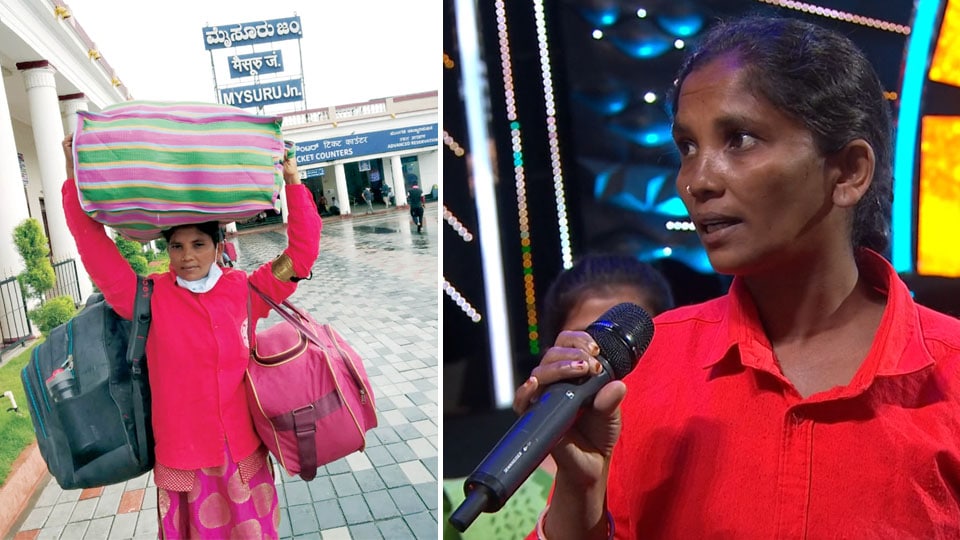
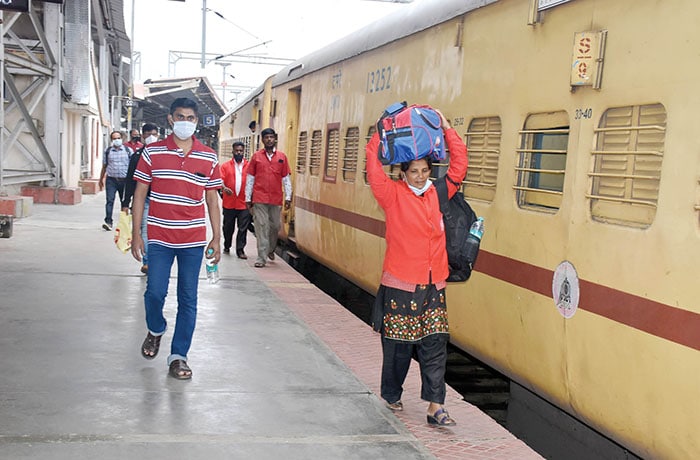
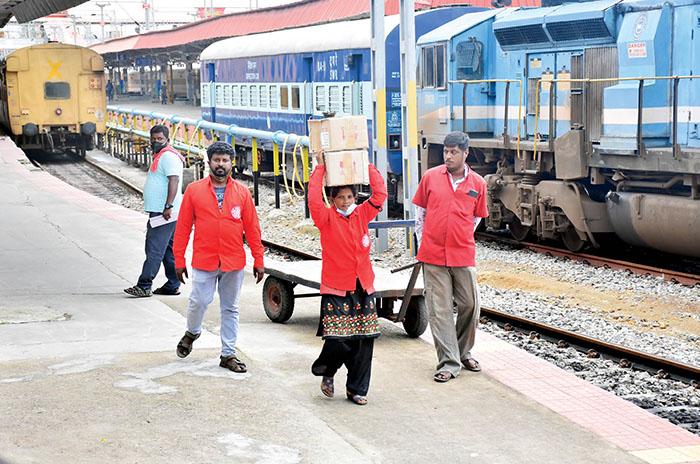
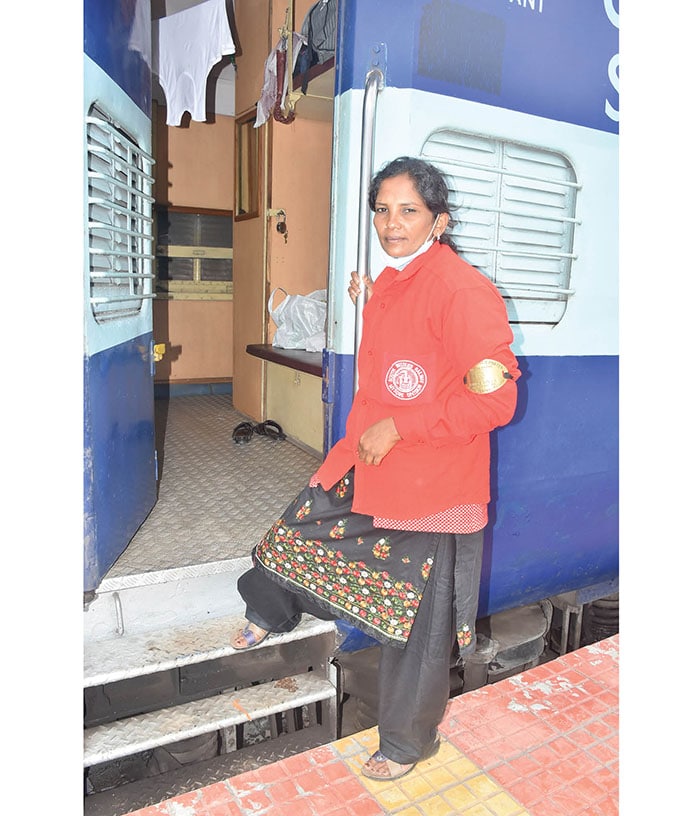
Next time when you are at the Mysuru City Railway Station, there are chances that you will come across 39-year-old Rizwana Banu, with a smiling face offering to carry your luggage. She is the only woman among the 60 porters at the Railway Station and she does the job as efficiently as the men.

Wearing Porter Badge No. 16, Rizwana has appeared on the stage of the country’s biggest singing TV reality show ‘Indian Idol’ in Mumbai on July 6 and this has made her the talk of the town. But the celebrity status has not got into her head and she still lifts passenger luggage, smiling. Her amiable approach gets her a few rupees more than the normal remuneration.
Life not a bed of roses

Rizwana lives in Shanthinagar and she lost her husband Javed Pasha in 2010. Javed was also a Porter at the Railway Station and after his death, the world came crashing on her as she had to take the responsibility of looking after the family including four children, parents and in-laws. 

She was not qualified enough to get a job and she fell back on what her husband was doing for a living. Fortunately she got the job on compassionate grounds and she became the lone woman porter. 

Sharing her life’s story with Star of Mysore, Rizwana said, “Initially I was scared to work amidst men as I was the only woman doing this job. I did not have friends and even passengers would ignore me thinking that I cannot carry heavy luggage. There were many depressing moments and many times I cursed myself for having been born as a woman.”  

“I had no other option as I am the only bread-winner in the family on whom eight are dependent. I slowly gained confidence to work among men and even passengers started showing concern towards me. They sometimes pay extra money for my hard work.  It’s been 10 long years,” she says with a sigh. 
Unexpected opportunity

On appearing on ‘Indian Idol’ stage, she said that she never thought of standing on such a huge and famed stage. “Though I was not a contestant, it happened to me unexpectedly. I got an opportunity to go to Mumbai through our mesthri Jalendra. The ‘Indian Idol’ show managers were looking for a lady surviving life despite odds. Somehow they contacted Jalendra and asked me to come to Mumbai,” she said. 

“I was flying for the first time in my life. After I reached Mumbai they arranged for accommodation at a private hotel. The next day I was invited on the stage and a video of my entire journey was shown to the audience. Show judges Anu Malik, Himesh Reshammiya and Sonu Kakkar praised me,”  Rizwana recalled. 


“Seeing the video that captured my life and struggle, everyone’s eyes welled up with tears. For me, I received the respect which I always wanted to earn. The anchor of the show Aaditya Narayan (son of singer Udit Narayan) announced that he would give me his one episode’s remuneration,” she said. 

Rizwana got Rs. 1.5 lakh from the reality show. She plans to use it to clear a part of the Rs. 5 lakh loan taken for her daughter’s marriage. “Actually I watched the show and I am a big fan of contestant Mohammad Danish. But I never imagined that I would get an opportunity to be on the live stage,” she noted. 
Life of a Porter not easy

“Earlier there were no lifts and escalators and porters had to carry the luggage using stairs. Now things have changed. I work 11 hours a day, from 6 am to 5 pm and whenever I have body ache, I take painkillers to be prompt at work the next day,” she said. 

Lockdown was tough for Rizwana and her son sold tea to make ends meet. “I earn Rs. 300 a day, which is hardly enough but I have never complained and I am thankful to have at least this much. I love watching movies and dream of meeting the ‘real coolie’ Amitabh Bachchan one day,” she said and went about her routine.

source: http://www.starofmysore.com / Star of Mysore / Home> Feature Articles / by G. Amit Kumar / July 30th, 2021
Mangaluru: Lady proves caste, religion barriers cannot stop humanitarian vibes

Mangaluru, KARNATAKA :

Mangaluru :

Innumerable incidents have exemplified the humanitarian feelings gaining upper hand over the barriers of caste, creed and religion. One such example emerged in the city on Saturday in which a man named Subrahmanya, who was shivering due to fever and hunger, having turned wet in rain, was cared for by a Muslim lady. He was also admitted into a hospital by her. This gesture of the lady has come in for lavish praise.

Sambreena Banu, daughter of Sheikh Khaleel, working for a jewellery store in the city, had visited Wenlock Hospital here on Saturday. She took pity on Subrahmanya, who was shivering on account of fever outside the hospital. She ordered food for him and gave him water. On questioning him, she came to know that the youth belonged to Kaup in Udupi district. He had left home after differences arose between him and his family members. He had no money and therefore did not have any food. As he had drenched in rain, he was also suffering from fever.

Sambreena not only took care of the helpless youth but also contacted Fayaz from Madoor, an office bearer of Blood Donors and MNG Foundation and informed him about the predicament of the youth. Subrahmanya was admitted into the hospital after which his family was informed.

Sambreena said that her grandfather, parents and people at a firm here she works, used to tell her about the virtues of social service. “I had visited Wenlock Hospital for getting medicine for my leg pain. I was pained at the condition of the youth and could not convince myself to leave without taking care of him. He too is a human being like me, and this feeling made me want to help him,” she said.

Fayaz Madoor said that after Subrahmanya was admitted into hospital, he spoke to him and informed his family. He appreciated Sambreena for the kindness she showered on a stranger and helping him.

source: http://www.daijiworld.com / Daijiworld.com / Home> Top Stories / by Daijiworld Media Network Mangaluru – (SP) / July 28th, 2021

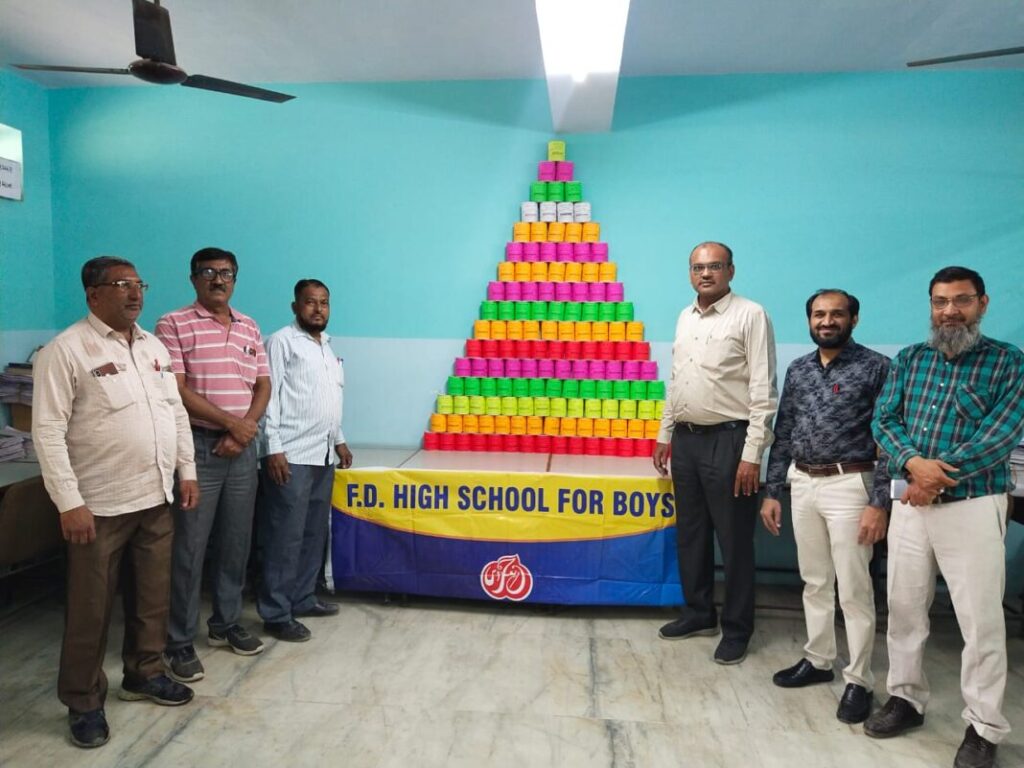
THE CAN OF CHARITY: A school in Ahmedabad has launched many initiatives for poor students

Ahmedabad, GUJARAT :

FD High School’s novel way of charity. Photo : India Tomorrow.

Ahmedabad :

India has 413,670 flat-broke beggars, the most vulnerable and downtrodden section of society. However, human rights activists say the number is three times higher, with West Bengal ranking top with 81,224 panhandlers followed by 65,835 in Uttar Pradesh, 30,218 in Andhra Pradesh, 29,723 in Bihar, 28,695 in Madhya Pradesh and 25,853 in Rajasthan.

Even after some 60 years, the Bombay Prevention of Begging Act, 1959 has abysmally failed to eradicate begging in the country. The dirt-poor freeloaders in tattered clothes could be seen soliciting alms at bustling public places like bus terminals, railway stations, traffic signals, street markets and religious shrines. The penniless ragamuffins roaming the streets are branded as ‘pickpockets’, ‘trespassers’, anarchists’ as also ‘unhygienic elements’.

Though there are countless wandering mendicants without a rupee to their name, the workshy, good-for-nothing professional beggars earn anything between Rs 20,000 and a whopping Rs 40,000, and their tribe is increasing, especially after the Delhi High Court ruled in August, 2018 that begging was not a crime.  

Brainstorming for a long time on ways to stamp out this ‘source of public nuisance’, that is, begging, the high-brow principal of a prestigious school in Gujarat’s largest city, Ahmedabad, has hit upon a novel idea.

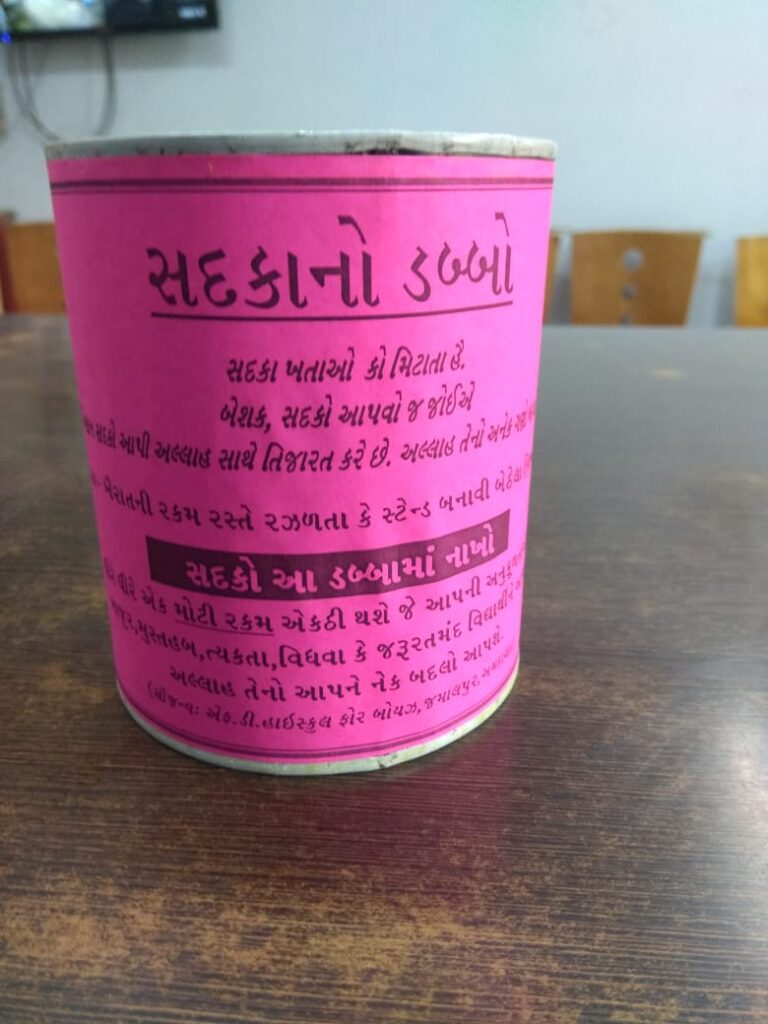
Kind-hearted students of the F D High School For Boys in Jamalpur locality no more let their hearts bleed for these knights of the roads and no more give alms to them. Instead, principal Zahid Mansuri has given them eye-catching donation boxes in the form of lightweight tin cans which they keep in their homes.

‘Can of Charity’

Students as well as their family members keep on dropping coins and currency notes in the colourful ‘can of charity’, called ‘sadqa no dabbo’ in Gujarati, for a couple of months or till the can is almost full after which the cash box is gifted to a poverty-stricken student, a widow, a sick or physically-challenged person, or to a cash-starved family.

“Instead of donating money to the poor strangers, we can hand over the cash-filled ‘cans of charity’ to the truly needy or family whose financial condition we know. Thus your hard-earned money goes to deserving people and changes their life for the better,” says Mansuri, a double post-graduate.

He has distributed some 300 cans to students, teachers, staff members and others all of whom liked the idea and those like physical training teacher A K Malek and retired bank officer M A H Kazi are demanding more dabbas.

While Malek says that it is better to avoid touching beggars while giving alms to them during corona times, Kazi feels that just giving Rs 2 to an unknown beggar does not serve any purpose.

Bleeding-heart teachers of the F D High School For Boys, part of the popular F D Education Society running 33 schools, colleges and technical institutes with 18,000 students on rolls, have dreamed up yet another way to silently lend a helping hand to underprivileged students without causing embarrassment to them.

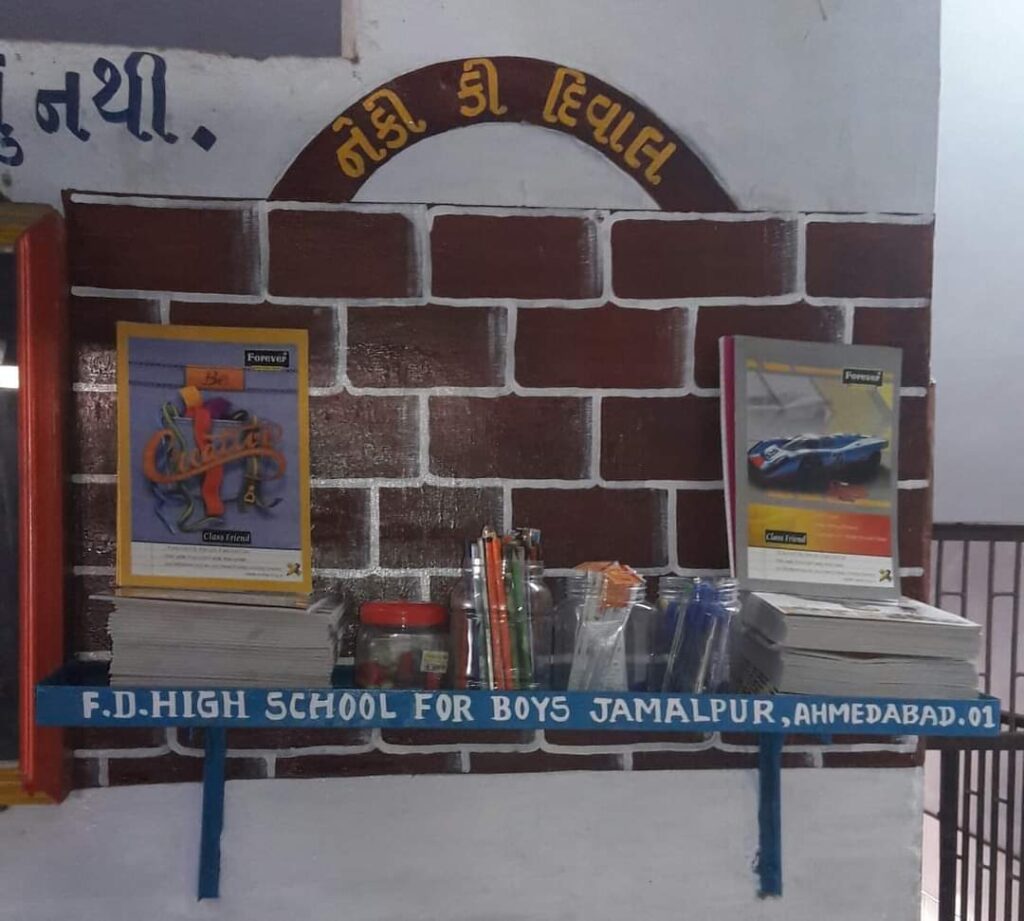
‘Wall of Goodness’

Under an initiative called ‘Neki Ki Diwar’ (The Wall of Goodness), four or five wide-mouthed, tall transparent containers are kept at one place on the school premises, and generous students and teachers put new or used pencils, erasers, paintbrush, metal or plastic scales and even notebooks into them. Down-at-heel boys and girls or even those who have forgotten or lost these items can take their pick without asking permission from anyone. 

Well, Principal Mansuri and teachers, always ready to help students, realised that a good number of cash-starved students footed it to school from their distant homes, and enjoyed snacks from the money thus saved. Over several meetings to find a solution to this problem, the principal and teachers decided to get their old ramshackle bicycles repaired and donate them to the hard-up schoolers.

“Within a month, we collected 21 such rickety bicycles which after repairs looked spick and span. Not long ago, we donated these cycles to deserving and destitute students,” Mansuri told indiatomorrow.net

In sum, there are 35,000 schools in Prime Minister Narendra Modi’s home state of Gujarat and one only hopes other schools will learn a lesson from F D High School For Boys.

source: http://www.indiatomorrow.net / India Tomorrow / Home> Education> Featured / by Mahesh Trivedi, India Tomorrow / April 02nd, 2021

UAE-Based Indian Businessman Yusuff Ali Appointed Vice-Chairman Of Abu Dhabi’s Top Govt Body

KERALA / UAE :

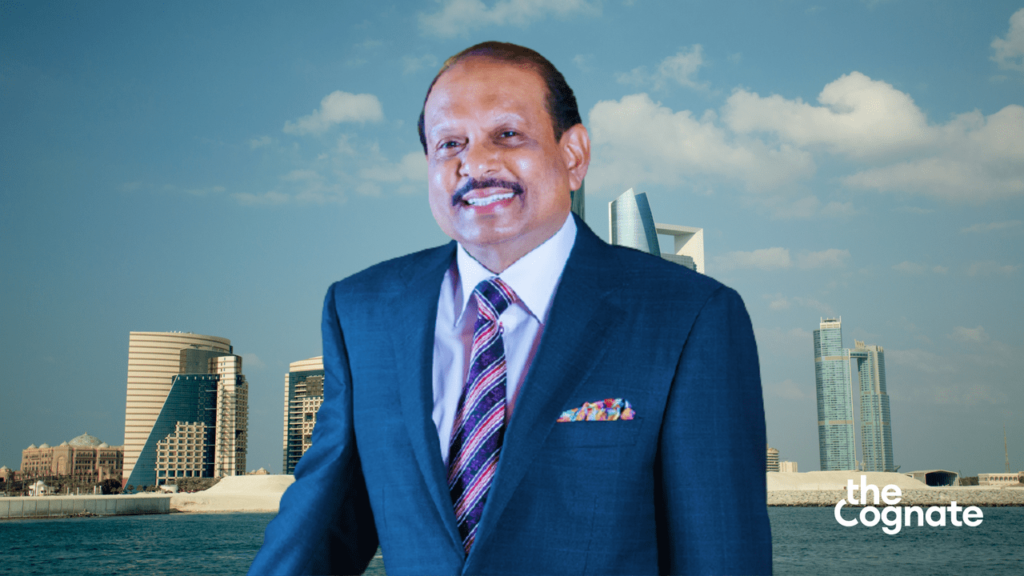
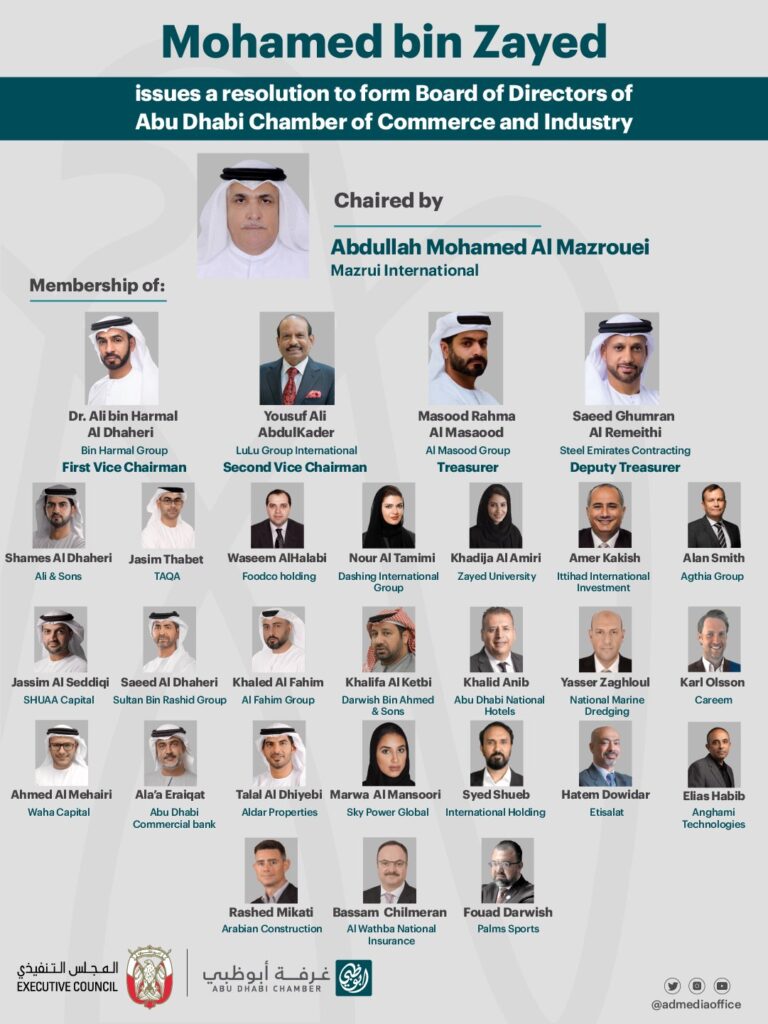
Crown Prince of Abu Dhabi Sheikh Mohamed Bin Zayed Al Nahyan has appointed prominent Indian businessman M.A. Yusuff Ali as the vice-chairman of the apex government body for all businesses operating from the UAE’s capital city, making him the only person from India on the 29-member board.

Yusuff Ali is the chairman and managing director of UAE-based Lulu Group International, which runs a chain of businesses with an annual turnover of over 8.1 billion dollars.

Twitter :

مكتب أبوظبي الإعلامي@admediaoffice

Mohamed bin Zayed has issued a resolution to form a new Board of Directors for Abu Dhabi Chamber of Commerce and Industry, chaired by Abdullah Mohamed Al Mazrouei.

65-year-old Yusuff Ali was ranked the richest expat in the UAE by Forbes magazine 2019 and is the first Indian to receive permanent residency in Saudi Arabia. Ali also has a sizeable stake in Cochin International Airport Ltd. which runs and operates the Kochi airport.

Sheikh Mohammed issued a resolution to form a new Board of Directors for the Abu Dhabi Chamber of Commerce and Industry (ADCCI), chaired by Abdullah Mohamed Al Mazrouei and Yusuff Ali as the Vice-chairman.

The ADCCI is the apex government body of all businesses established in Abu Dhabi. It will function as an effective bridge between the government and the business sector. Accordingly, every business establishment in Abu Dhabi has to be licensed by ADCCI.

Yusuff Ali described his appointment as “a very humbling and proud moment” in his life.

“My sincere gratitude to the visionary leadership of this great country and I will strive to do my best towards justifying the great responsibility entrusted upon me. Apart from working for the growth of Abu Dhabi economy & the larger business community, I will sincerely work towards further boosting the Indo-UAE trade relations,” he said.

Ali was recently honoured with the Abu Dhabi Award 2021, the highest civilian honour for his almost 5-decade long contributions in the fields of economic development and philanthropy.

source: http://www.thecognate.com / The Cognate / Home> News / by The Cognate News Desk / July 26th, 2021

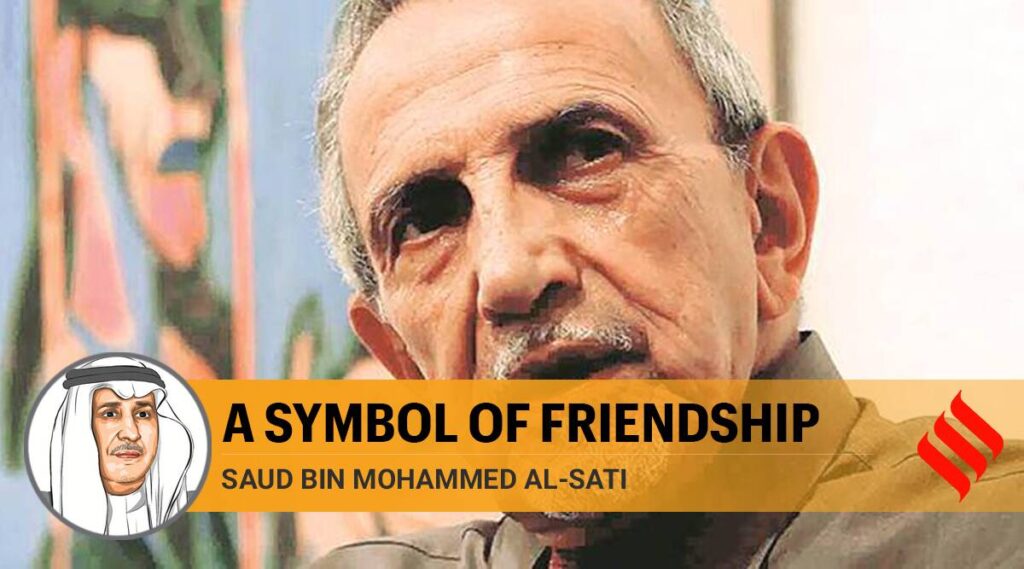
Ebrahim Alkazi’s legacy bears testimony to cultural links between Saudi Arabia, India

Pune / Mumbai, MAHARASHTRA / NEW DELHI :

Ebrahim Alkazi will continue to live in the hearts of Saudis and Indians who are on the quest to deepen the friendship and cultural heritage they share.

Ebrahim Alkazi (1925-2020)

Last week, we lost Ebrahim Alkazi, a legend of Indian theatre with Saudi Arabian roots. I fondly remember my first experience of meeting him in the spring of 2014 at his house in New Delhi. I was touched by his unique character and his passion for the arts. He greeted me with a few words spoken in the distinct Qassimi dialect. Alkazi was also a noted art connoisseur and collector, credited for fundamentally transforming Indian theatre and having etched a name for Indian theatre worldwide. His legacy will forever remain a testament to the rich intellectual and cultural links between Saudi Arabia and India.

Alkazi’s father, Hamad, was a trader from Unaiza in Saudi Arabia’s Qassim region, who subsequently settled in Pune where Ebrahim was born in 1925. Despite his early immersion in theatre, he gradually pursued his love for visual arts. He showcased the avant-garde artist in him throughout India, the US and Europe through his path-breaking work before becoming the director of the National School of Drama in Delhi and the Asian Theatre Institute in 1962. He will always be remembered for his contributions in the field of arts that resonate with our cultural bonds. The strings that bind Saudi Arabia and India are many and have become stronger and more diverse over time. However, the cultural ties that the two countries share are perhaps the deepest. Pre-Islamic Arab poetry has many references to Indian swords and several other Indian goods.

The two countries have a fascinating history of intellectual exchanges. Science, arts, literature, and languages – the mutual influence has indeed been profound. For instance, many Indian texts in the field of medicine, mathematics and astronomy were translated over the centuries into Arabic. The father of Indology is none other than the Arab scholar Al-Biruni. His monumental work Ta’rikh al-Hind is undoubtedly the most comprehensive pre-modern encyclopaedic work on India.

Another notable text, the Panchatantra, was translated by the Arabs who took it to Europe and the rest of the world, as were Hitopadesha and Chanakya’s Arthashastra. India’s famous medical treatises such as Charaka and Susruta were translated into Arabic as well.

The Arab travellers were also prolific writers and wrote extensively on India, its people and diverse cultures. Writers such as Sulaiman, Ibn-ul-Faquih, Al-Masudi and Al-Idrisi documented in great detail their impressions of south India, its people, customs and traditions. The world-famous Arabian Nights also called Alf Laila in Arabic and Adventures of Sindbad the Sailor too describe southern India. According to Ibn Nadeem, a 16th-century Arab writer, Sindbad was written in India.

These deeply-rooted cultural ties have continued to grow. For instance, Yoga has become an increasingly popular sport in Saudi Arabia. Since November 2017, the International Yoga Day is celebrated in an open area in the centre of Riyadh. In 2018, India was a guest of honour at our annual cultural festival of Al Janadriyah. The theme of the Indian pavilion at the festival was “Saudi ka Dost Bharat” (India is a friend of Saudi Arabia). This last decade has been seminal in expanding our friendship into a strategic partnership.

A most significant milestone in our ties with India was the visit of His Royal Highness Crown Prince to India in February 2019, which re-affirmed the deep commitment of the two nations to strengthen their strategic engagement.

Our shared cultural bonds are also deepened by the religious ties between our peoples. The annual pilgrimage to Makkah has facilitated the exchange of cultures and traditions as well. But above all, our ties have been strengthened by pioneers like Ebrahim Alkazi. He will continue to live in the hearts of Saudis and Indians who are on the quest to deepen the friendship and cultural heritage they share.

This article first appeared in the print edition on August 12 under the title “A symbol of friendship”. The writer is the ambassador of the Kingdom of Saudi Arabia to India

source: http://www.indianexpress.com / The Indian Express / Home> Opinion> Columns / by Saud Bin Mohammed Al Sati, Ambassador Kingdom of Saudi Arabia to India / August 12th, 2020

This Mysuru man is recycling kindness

Mysuru, KARNATAKA :

As the pandemic ravaged the world, it threw up one little golden nugget of truth: that humanity is alive and well.

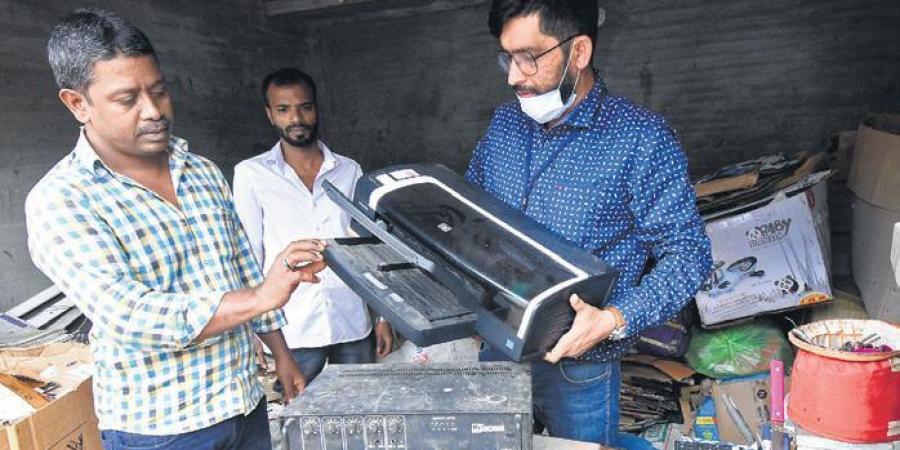
Researcher Syed Baker selling e-waste to help the underprivileged in Mysuru on Saturday | Udayshankar S

Mysuru: 

As the pandemic ravaged the world, it threw up one little golden nugget of truth: that humanity is alive and well. People reached out to each other, to offer succour and comfort. Many came forward to feed the needy, and one group of people in Mysuru went a step ahead and coupled their Good Samaritan efforts with recycling waste, thereby helping the planet too.

A 34-year-old researcher, Syed Baker, and his friends have been distributing groceries and food packets to many families since the first wave of Covid hit the country. Syed, who returned from Russia during the pandemic, said, “I came across two women who had lost their father to suicide years ago. They, along with their mother, were surviving by doing odd jobs with caterers, but were left with no work when the pandemic struck. We helped them by supplying grocery kits. It made us realise how badly people were struggling.”

However, the second wave made it worse for families like these. With more and more people getting affected by the pandemic, it became difficult as Syed’s own finances, along with that of his friends and donors, were drying up. “One day, we sold our old devices and gadgets to buy grocery kits. That is when we thought of using unwanted things as a source of funding,” he added.

The researcher, who has co-invented an AI-based social distancing and pandemic-detecting sensor, as well as a disinfecting device, says the initiative came into being in May 2021. The group reached out to their donors, friends and families to collect e-waste, old newspapers, books, packaging material and old clothes. “We would visit homes and collect recyclable goods. MB Roadways, a transport company, helped us with a vehicle. We segregated the items to sell them separately to vendors,” Syed added.

Since then, the group has been collecting recyclable waste — especially e-waste, paper and discarded online shopping packaging material and clothes.

Eventually, they started receiving help from many other friends, including Chethan Vishwanath of Rotary — that is taking the initiative forward with the help of Helping Hands, an NGO. Later, Nrisimha Datta Sai Peethika Seva Trust also pitched in to help.

Syed says this initiative made him realise the importance of recycling. “Yes, the money from selling recyclable material aided us in helping many others, but it also made us realise the excesses we take for granted. For example, among the items we collected, packaging material from e-commerce orders was one of the largest in quantity — a major part of it recyclable. They would otherwise be dumped as waste, that too unsegregated, with some of it clogging drains,” he added.

“People discard electronic devices easily, which end up constituting a huge part of waste generated in cities. Nowadays, people are quick to buy a new television when the old one develops even a minor snag. We were able to sell these discarded television sets at a good price as they were up and running after some repairs,” he said.

So far, the group has distributed food packets to over 600 families with the money from the recycling initiative, and regularly supply groceries to at least 24 families — some which had lost their breadwinner and others whose incomes were hit during the pandemic. When most of the lockdown restrictions were lifted, they were also able to buy large umbrellas for the vendors whom they had helped restart business.
They are also focusing on recycling material responsibly.

“As old books can’t always be sold to scrap paper vendors, we sometimes send them to second hand booksellers,” said Syed.

source: http://www.newindianexpress.com / The New Indian Express / Home> States> Karnataka / by Ajith M S / Express News Service / July 18th, 2021

Jamia Millia Islamia Professor Selected For Visitor’s Award 2020 For Biological Research

NEW DELHI :

Professor Mohd Zahid Ashraf will receive this award under the Biological Sciences category. His work, as per a JMI statement, has contributed towards developing strategy for an early diagnosis and treatment of thrombosis at extremely challenging environmental conditions at high altitudes.

New Delhi:

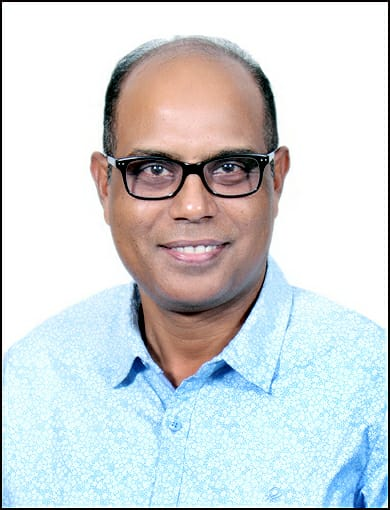
Professor Mohd Zahid Ashraf (Source: JMI)

Jamia Millia Islamia (JMI) Professor Mohd Zahid Ashraf, Head, Department of Biotechnology will be conferred with the Visitor’s Award 2020. The professor will be awarded for his research on resolving the mystery of blood clotting on exposure to hypoxia at high altitudes. Professor Ashraf will be awarded by President Ram Nath Kovind at a function to be organised at the Rashtrapati Bhavan.

Professor Ashraf will receive this award under the Biological Sciences category. His work, as per a JMI statement, has contributed towards developing strategy for an early diagnosis and treatment of thrombosis at extremely challenging environmental conditions at high altitudes.

“The outcome of his research has given insights to our understanding of blood clot formation on ascension to mountains, sports, pilgrimage and soldier’s working under hostile environments,” the JMI statement said.

Congratulating Professor Ashrah, the Vice Chancellor of JMI Najma Akhtar said that it is a recognition for the research accomplishments by the university and Professor Ashraf’s achievements will motivate other faculty members towards pursuit of excellence in research along with academics.

The Vice Chancellor said that the university is committed towards the government’s mission to increase science education, research and promote STEM.

Jamia Millia Islamia Professor Selected For Visitor's Award 2020 For Biological  Research
JMI professor to be awarded Visitor’s Award

Professor Ashraf is an elected Fellow of National Academy of Sciences, Allahabad and the Indian Academy of Sciences, Bangalore. He is a member of distinguished Guha Research Council.

Professor Ashraf, the JMI statement says, is also the recipient of ICMR’s Basanti Devi Amir Chand and DBT’s National Biosciences Award for his seminal work on high altitude related thrombosis in the Indian population.

This is the second time a JMI Professor has been selected for the Visitor’s Award. Earlier in 2015, the Cosmology and Astrophysics Research Group headed by Professor M Sami of Centre for Theoretical Physics, JMI had also received the Visitor’s Award for research carried out in the field of contemporary issues in Astrophysics and Cosmology.

source: http://www.ndtv.com / NDTV / Home> Education / by Mridusmita Deka / July 19th, 2021

Mukhtar Abbas Naqvi appointed Deputy Leader of House in Rajya Sabha

Rampur, UTTAR PRADESH / NEW DELHI :

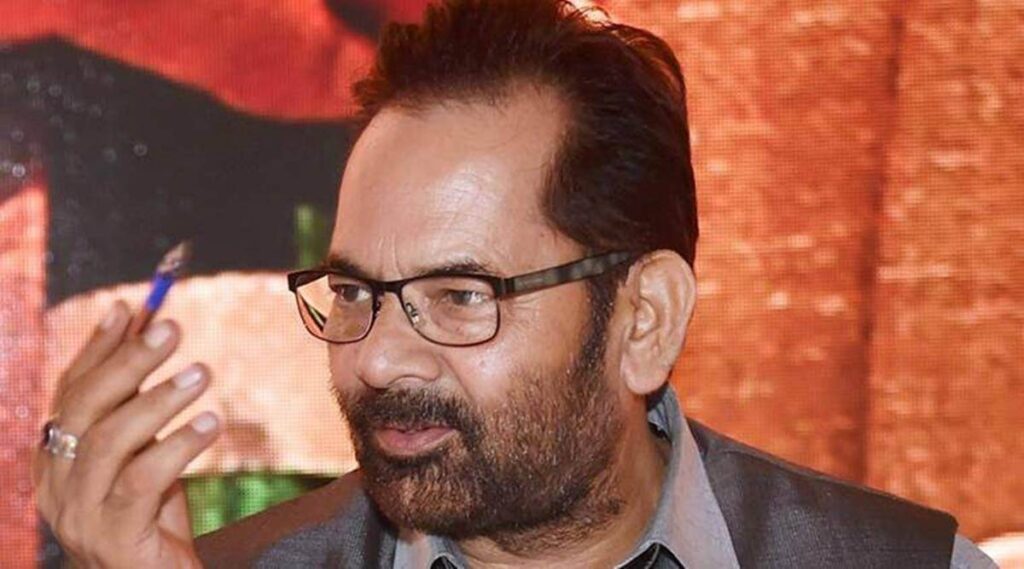
Prime Minister Narendra Modi on Monday appointed Union Minister Mukhtar Abbas Naqvi as Deputy Leader of the House in the Rajya Sabha. (File photo)

The appointment of Naqvi, who is known to have cordial relations with leaders of parties across the political spectrum, assumes significance at a time when the Opposition is aiming to target the ruling dispensation over a host of issues.

Prime Minister Narendra Modi on Monday appointed Union Minister Mukhtar Abbas Naqvi as Deputy Leader of the House in the Rajya Sabha.

Union Parliamentary Affairs Minister Pralhad Joshi informed Rajya Sabha Chairman M Venkaiah Naidu that the Prime Minister has directed him to inform that Naqvi, Union Minister of Minority Affairs, has been appointed Deputy Leader of the House in Rajya Sabha.

Naqvi succeeds Piyush Goyal , who has been named Leader of the House in Rajya Sabha. The minority affairs minister is known for his knowledge of parliamentary affairs, and has served as minister of state for parliamentary affairs during the first term of the Modi government.

Naqvi hails from Uttar Pradesh’s Rampur and was elected to the Upper House from Jharkhand. He was MoS for Information and Broadcasting and Parliamentary Affairs in the Atal Bihari Vajpayee government. He joined the BJP in 1986 as a student leader, and emerged as a prominent Muslim face of the party.

The appointment of Naqvi, who is known to have cordial relations with leaders of parties across the political spectrum, assumes significance at a time when the Opposition is aiming to target the ruling dispensation over a host of issues, including handling of the second wave of COVID-19, rise in fuel prices and farmers’ stir.

source: http://www.indianexpress.com / The Indian Express / Home> India / by Express News Service, New Delhi / July 20th, 2021

Retired Allahabad HC judge Justice Shabihul Hasnain is new DERC chairperson

UTTAR PRADESH / NEW DELHI:

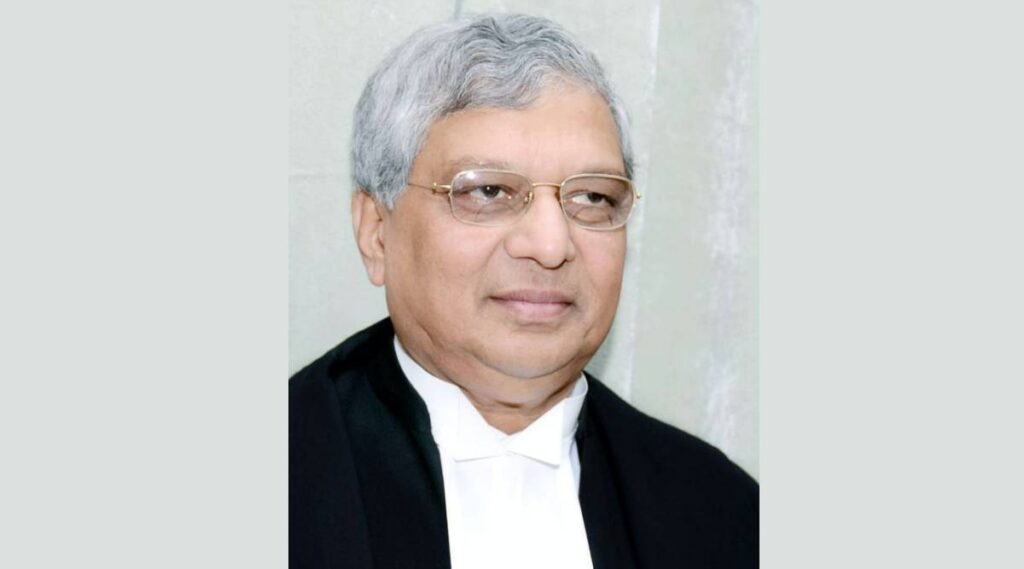
(Photo: Bar & Bench)

Hasnain will fill the vacancy created after the retirement of Justice (retd) Satyendra Singh Chauhan, who too was a judge at the Allahabad HC. Singh retired on July 4 upon turning 65.

Chief minister Arvind Kejriwal Saturday announced retired Allahabad High Court judge, Justice Shabihul Hasnain as the next chairperson of the Delhi Electricity Regulatory Commission (DERC).

Hasnain’s appointment comes at a crucial time when the commission is gearing up to announce the annual tariff order, which determines the electricity charges of domestic and industrial consumers.

“Delhi govt approves the appointment of Justice Shahibul Hasnain (Retd) as the new Chairman of Delhi Electricity Regulatory Commission (DERC) Providing cheap and uninterrupted power supply is one of the key priority areas for Delhi Govt My best wishes to him for a successful stint,” Kejriwal tweeted.

A law graduate from Lucknow University, Hasnain was enrolled as an advocate in 1984. He was elevated as an additional judge in the Allahabad HC in 2008 and took oath as permanent judge in April 2010 and served in that capacity till retiring in January, 2020.

Apart from a chairperson, the DERC can have two members. Currently, former officer of the Indian Forest Service Dr A K Ambasht is the lone member of the commission. Days before his retirement, Chauhan had written to Lieutenant Governor (L-G) Anil Baijal, seeking an extension.

Before Chauhan, who was appointed in July, 2018, the appointment of Krishna Saini to the post of DERC chairman was a flashpoint in the AAP-Lieutenant Governor ties as then L-G Najeeb Jung had struck down the appointment in September 2016 citing lack of his prior approval. As a result, the post had remained vacant for nearly two years.

source: http://www.indianexpress.com / The Indian Express / Home> Cities> Delhi / by Express News Service, New Delhi / July 17th, 2021