Category Archives: Community Involvement / Social Issues

The last Begum of Bhopal: How Begum Sultan Jahan fought patriarchy and educated a generation of women

Bhopal, MADHYA PRADESH :

Born in 1858, Begum Sultan Jahan ascended the throne in 1901. While she was the fourth female ruler of Bhopal, she is credited with many firsts. She was known for ruling in the present with her eyes set on the future. Her progressive policies for women, at a time when they were shackled by the forces of patriarchy, have made her a feminist icon even today.
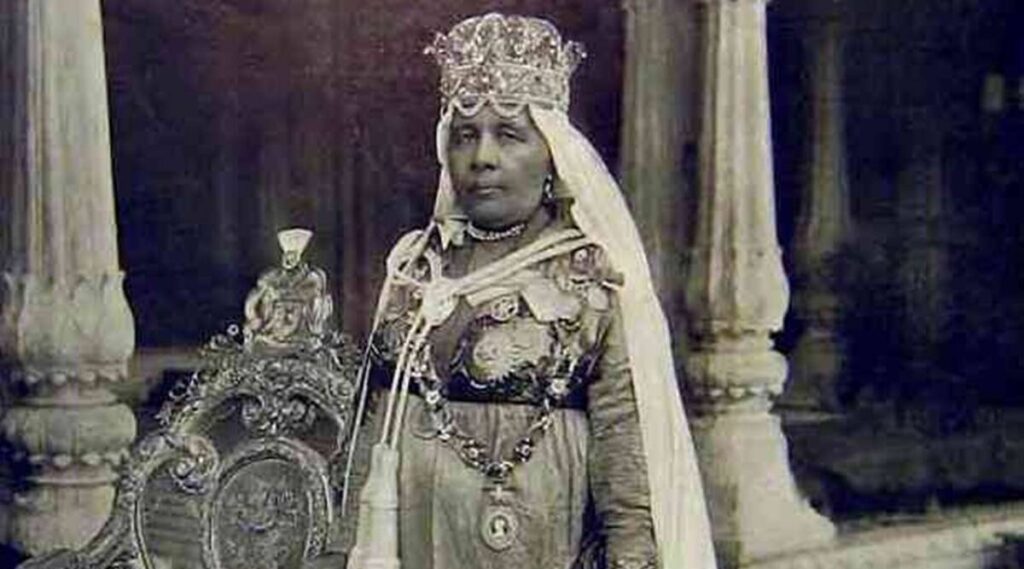
Begum Sultan Jahan was a pioneer in the field of education and even authored a book, Dars-e-Hayat, about the education and parenting of young girls.

Nearly a century ago, when the term feminism was not yet part of common parlance, the princely estate of Bhopal was run by a line of powerful women. In the absence of male successors, they initiated a matrilineal reign from 1819, which continued till 1926. These rulers are often referred to as the Begums of Bhopal.

During this era, they ruled with authority, dignity and bold reforms — disrupting the patriarchal system that had been laid down centuries before them.

The last Begum of Bhopal was Begum Sultan Jahan. She ruled from 1909 to 1926 after which she stepped down and was succeeded by her son.

Begum Sultan Jahan died on May 12, 1930 at the age of 71. She was known for ruling in the present with her eyes set on the future. Her progressive policies for women, at a time when they were shackled by the forces of patriarchy, have made her a feminist icon even today.

Apart from being a philanthropist and prolific writer, she was a symbol of women empowerment, known for taking up the cause of female education. She was the first female Chancellor of Aligarh Muslim University, which she had nurtured during its nascent stage, when it was still known as the Mohammadan Anglo Oriental College.

In a time when it was rare for women to venture out due to a strict purdah system, she famously constructed a Meeting Hall for Ladies in Lahore.

But above all, Begum Sultan Jahan was an astute ruler who restored the glory of her estate.

It is hard to find a female ruler who authored over 40 books, designed school curriculum, founded women’s clubs, travelled to Europe, met British officials with authority, funded almost all major institutions — both in the country as well as one in Saudi Arabia — and even headed a University as its first female Chancellor.

Interestingly, film actress Sharmila Tagore is the granddaughter-in-law of Nawab Hamid Ullah Khan, the youngest son of Begum Sultan Jahan.

Begum Sultan Jahan, the ruler of Bhopal

Born in 1858, Begum Sultan Jahan ascended the throne in 1901. While she was the fourth female ruler of Bhopal, she is credited with many firsts.

She was not one to stand on the sidelines. An incident from the early days of her regime is often cited to highlight her penchant for ruling from the front. When she took over as Queen, there was only Rs 40,000 in the treasury which was not enough to even pay the salary of her employees. Begum Sultan Jahan decided to tour her kingdom and interact with the village folk. After learning their concerns, she set up the municipality system and even introduced municipal elections.

She also constructed a walled city and a palace for herself. She took steps for improving public health, sanitation, and water supply in the walled city and implemented widespread vaccination drives for its residents.
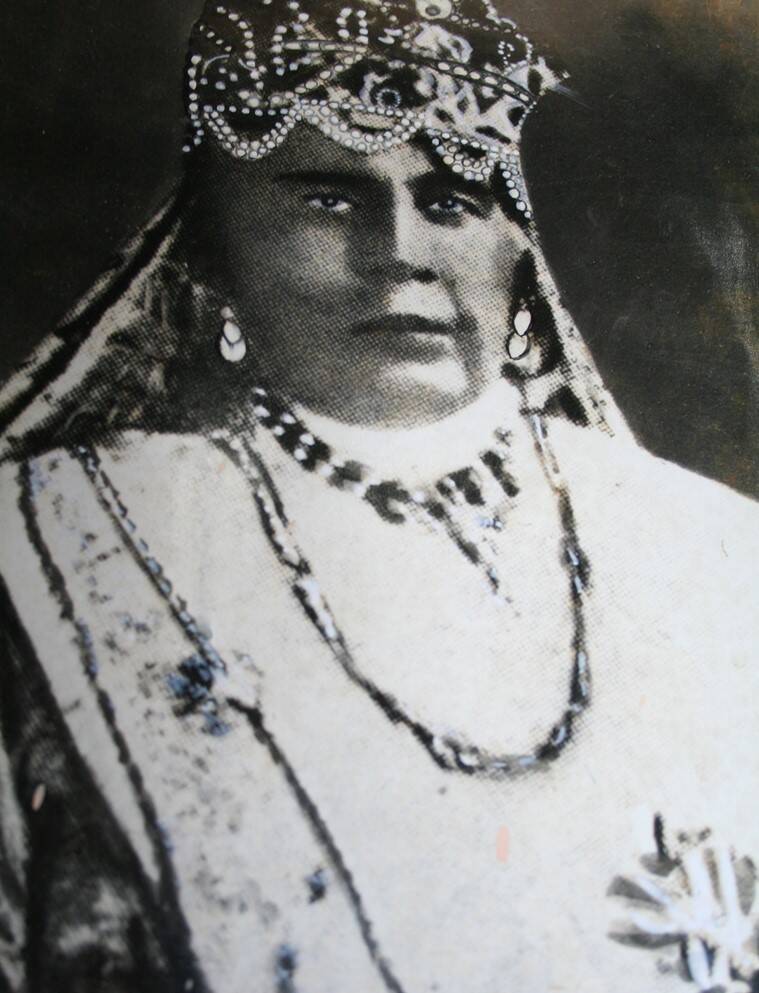
Apart from being a philanthropist and prolific writer, she was a symbol of women empowerment, known for taking up the cause of female education.

Recognising that women needed a space exclusively for them to assemble and discuss ideas, she laid the foundation stone for a meeting hall in Lahore in 1913.

To encourage women and promote handicrafts, she organised an exhibition called ‘Numaish Masunuaat e Hind’ in Bhopal, where she displayed her own creations. Queens from other kingdoms, such as Gwalior, Jhanjhar, Sultanpur, Narsinghgarh and Gulburgah also participated and displayed their handiwork.

Begum Sultan Jahan as an educationist

She was a pioneer in the field of education and even authored a book, Dars-e-Hayat, about the education and parenting of young girls. There was a time when almost every city of the country had one or more educational institutes for girls which were funded by Begum Sultan Jahan.

To encourage parents to educate their daughters, she set up several schools. However, most initially resisted the idea, as at the time it was considered socially acceptable to teach their daughters at home.

Undeterred, she started the Sultania School and also improved the condition of two existing schools — Madarsa Bilqisia and Madarsa Victoria. She even revamped the syllabus and added subjects such as English, Urdu, Arithmetic, Home Science and crafts. These schools were meant for underprivileged children and hence their expenses were borne by the Bhopal estate. Even in those times, she got the Madarsa Sultania affiliated to the Allahabad Board. This Madarsa was well equipped and even had an ambulance and sections for medicine and nursing. Later she also started a nursing school called Lady Minto Nursing School.

Begum Sultan Jahan did not solely focus on uplifting Muslim girls. She famously founded the Barjeesiya Kanya Paathshala’ and even instituted a scholarship for the underprivileged students of Jain Shwetambar Paathshala.

Despite being a small princely estate, Bhopal had an education budget of one lakh rupees. The educational institutions she supported were not confined to Aligarh alone. She was also funding a Madarsa in Deoband, Nadwatul Uloom in Lucknow and even Madarsa Sultania in Mecca, Saudi Arabia. Institutions such as Lady Hardinge Medical College, Delhi and some renowned colleges in Bombay (now Mumbai), and Calcutta (now Kolkata) received generous grants from her.

Begum Sultan Jahan established the Ladies Club in Bhopal with the aim of involving more women in her mission. She addressed the functions of the Ladies Club. Later, she even organised an event under the aegis of All India Women Association in Sadar Bhopal and established the Sultan Jahan Endowment Trust with a corpus of Rs three lakhs for helping needy students.

Begum Sultan Jahan also went as far as encouraging the rulers of other princely states to promote education. Even Lord Harding praised her efforts.

She authored 41 books, many of which were distributed for free. She also translated a number of English books into Urdu.

Begum Sultan Jahan and AMU

Around that time, more than 600 kilometres away from Bhopal, in the province of Uttar Pradesh, the Mohammedan Anglo Oriental College was taking shape in Aligarh.

In 1910, while returning from Mussoorie, she stayed in Aligarh for the first time. During her visit, she donated Rs 50,000 for the construction of the All India Muhammadan Educational Conference, which still exists today and is known as Sultan Jahan Manzil.

A monthly grant of Rs 100 was sanctioned by her for the girls school started in Aligarh by Sheikh Abdullah, which is now known as the Women’s College of AMU. She designed the syllabus herself and offered it to the school authorities. It was done at a time when there was a paucity of funds and women ’s education had taken a backseat. Later, when MAO College became AMU, she was named its first Chancellor.

During AMU’s centenary celebrations on December 22, 2020, Prime Minister Narendra Modi paid tribute to Begum Jahan and her contribution to the historic institution — “The AMU has the rare distinction that Begum Sultan Jahan took over the responsibility of its founder chancellor. How daunting it would have been one hundred years ago!”
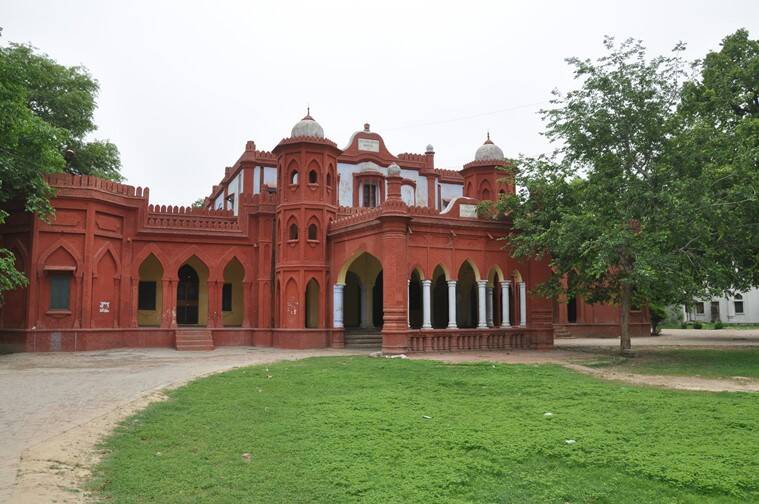
In 1910, she stayed in Aligarh for the first time. During her visit, she donated Rs 50,000 for the construction of the All India Muhammadan Educational Conference, which still exists today and is known as Sultan Jahan Manzil.

As Chancellor of the AMU, she addressed its first-ever convocation ceremony in 1922 amidst renowned scholars from across the country. She also arranged cars and lodging for 175 persons during the jubilee ceremony of the University. Begum Sultan Jahan visited Aligarh seven times, with her last visit being in 1929.

Her speech during the foundation stone laying ceremony of Sultania Boarding House in Women’s College reflects her vision. She said, “Today is the beginning of a new era in the history of Muslims. And, whenever, in the coming time, the history of this era is recorded, today’s programme will be remembered as one of its brightest chapters.”

Her prophecy came true. The school patronised by Begum Sultan Jahan has grown into a college drawing over 3,095 female students from across the country and overseas enrolled in 34 courses taught by 107 faculty members.

The women’s college attracts international students from more than 20 countries including, Afghanistan, Malaysia, Turkey, Thailand, Indonesia, Iran, UAE, Iraq, Yemen, Bangladesh, Libya, Nepal, Syria among others.

The Nasrullah Hostel for Boys in AMU, too, was constructed with her support. It is often said that whenever AMU needed help, Begum Sultan Jahan of Bhopal Estate was among the first to step up.

Following in her footsteps, her son Hamidullah Khan, who studied in Aligarh, founded a Science College in the city, and donated Rs two lakh to it.

(Nasir is Assistant Professor, Department of Law, Aligarh Muslim University; Fareed is Media Advisor, AMU)

source: http://www.indianexpress.com / The Indian Express / Home> Lifestyle> Art & Culture / by Faisal Fareed & Mohammad Nasir (Aligarh, UP) / May 27th, 2021
Why the victory of Ashraful Hussain in Assam is poetic justice

ASSAM :

The young poet represents an unapologetic Miya voice, one that the state’s new chief minister has described as a threat to Assamese identity and culture.

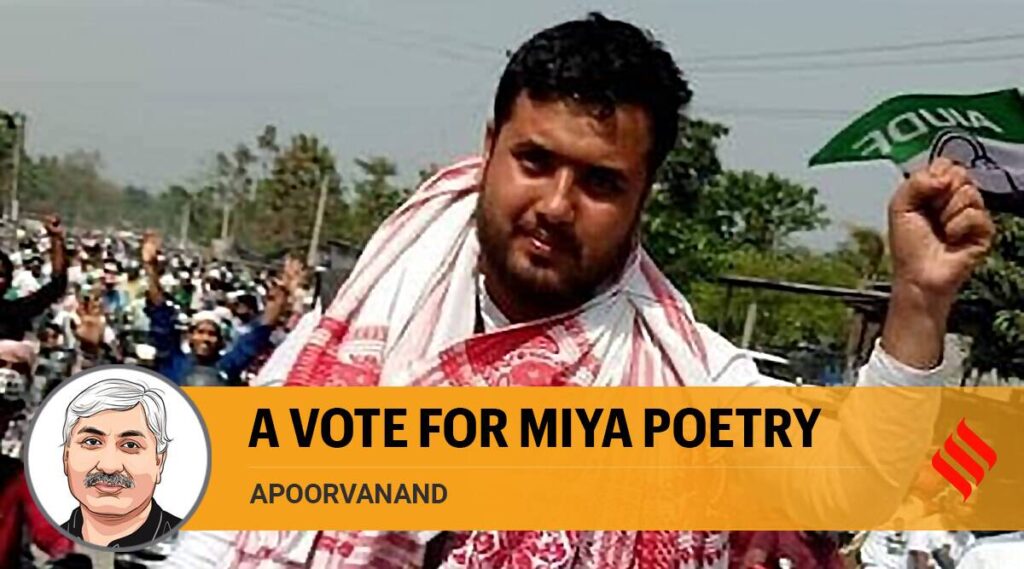
Ashraful Hussain (Twitter/Ashraful Hussain)

In an act of poetic justice, the people of Chenga, a constituency in lower Assam, have sent AIUDF’s Ashraful Hussain, a young Miya poet, as their representative to the newly elected Assam assembly. He is only one of 126 MLAs but the significance of his presence is that he represents an unapologetic Miya voice — one that the state’s new chief minister Himanta Biswa Sarma has declared as a threat to the Assamese identity and culture.

It has been said that the organisational skills of Sarma forced the BJP to prefer him as the new chief minister over the outgoing one but his brazen anti-Muslim and anti-Miya stance in the last five years can be a reason as well. He has openly said that his party did not want votes of the Miya Muslim community and that he wanted another NRC to identify these “outsiders”.

Ashraful Hussain’s victory has to be understood in this context. The word “Miya” is a slur used to describe Muslims who migrated from East Bengal to Assam over several decades, starting from the 19th century, and who live on the Char Chaporis (shifting riverine islands) of Assam. But Ashraful and his fellow poets have reclaimed it and turned it into a badge of honour. A poem written in 2016 by Hafiz Ahmed, the president of the Char Chapori Sahitya Parishad, took Assam by storm and inspired fellow poets. He wrote, “Write down/I am a Miya/My serial number in the NRC is 200543/I have two children/Another is coming/Next summer. /Will you hate him/As you hate me?”

Younger voices like Ashraful Hussain found courage in these plain words of their elder. “Who are they? Why can’t they be allowed to speak and sing the way they do? Ashraful writes: “And though I was born in Assam and pride in/Calling myself an Assamese/The language doesn’t slide down my tongue/My father wears a blue-checked lungi/My mother wears a saree/My sister wears mekhela or churidar/And me, brother, I wear jeans pants.”

For this audacity to make themselves visible and lay a claim for a space in Assam’s cultural landscape, the Miya poets had to pay a price. In 2019, FIRs were lodged against them and they had to go into hiding. I recall a meeting at the Press Club in Delhi organised by the writers of Delhi in their support. Ashraful was supposed to read his poems there but he could not come.

These were the charges against them: The Miya poets were writing in an artificial language, there was nothing like a Miya dialect and they were fracturing the Assamese identity. The truth was that the Miya poets had broken the myth of one single Assamese voice. The people of the Char Chapori use dialects of Mymensingh, Pabna, Tangail, and Dhaka, regions now in Bangladesh, with the influence of Assamese as well as other local languages of Assam.

The question before the people Ashraful calls “choruwa, bhatiya, immigrant shaykh, neo-Asomiya, Mymensinghia” in one of his poems was to describe themselves. Who are they?

Shalim Hussain, a Miya poet, asked, “So what do we call ourselves then? If and only if it is impossible for us to be known simply as Indians or Assamese let us be called ‘Miya’. The difference between Miya and Bangladeshi must be clearly demarcated.” He explained, “… in Assam Miya is a derogatory term used for a specific community — Assamese Muslims of Bengal origin. ‘Miya’ is a matrix within which fall descendants of people who migrated from Tangail, Pabna, Mymensingh, Dhaka, and other districts of present-day Bangladesh. However, there is a class angle to the equation too. An educated Bengal-origin Assamese Muslim who also speaks Assamese might be able to camouflage his ‘Miyaness’. Since I am university educated and speak decent Assamese, I might not be called a Miya, at least until I make it explicit. My cousin, on the other hand, who drives a cycle-rickshaw in Guwahati, will always be one. My class privilege might protect me from the feelings of disgust reserved for my cousin.”

So, it was not for a literary career but to identify with their lesser privileged brothers, who have to face this slur daily, that Ashraful and his colleagues decided to call their poetry Miya poetry.

Ashraful is a soft-spoken, shy person but he has with great grit and determination stood for those who are threatened by the process of the NRC. His poetry gave voice to his people but in the real world of democracy, they needed representation where it mattered. So, he decided to go to his people and ask them, “If he sings for them, can he also be given the authority to speak for them as their representative?” The people of Chenga overwhelmed him with their mandate. A greenhorn in politics, he defeated AGP’s Rabiul Hussain and Sukur Ali Ahmed, a longtime sitting Congress MLA, by more than 50,000 votes.

In the assembly, he will take oath as the representative of his people after the man who wants them disenfranchised takes oath as the Chief Minister. Ashraful Hussain will have the company of his poetry to respond to the violent politics of erasure: “I have grown a bud and two leaves on my hands/I have learnt to write two lines/I have learnt to open my mouth and say/… In the name of my mother who died/In a detention camp, I swear/That this voice in my throat will grow louder/And some day rustle the folds in your ears. /I swear sir, I swear by my dead mother.”

Let us thank the people of Chenga and celebrate this vote for Miya poetry.

source: http://www.indianexpress.com / The Indian Express / Home> Opinion> Columns / by Apoorvanand / May 13th, 2021

Kerala ambulance staff praised for saving lives of mother and newborn

KERALA :

Health Minister Veena George applauded the efforts of Ajeesh and Noufal in the middle of a raging pandemic, terming them a model for the state’s health department.

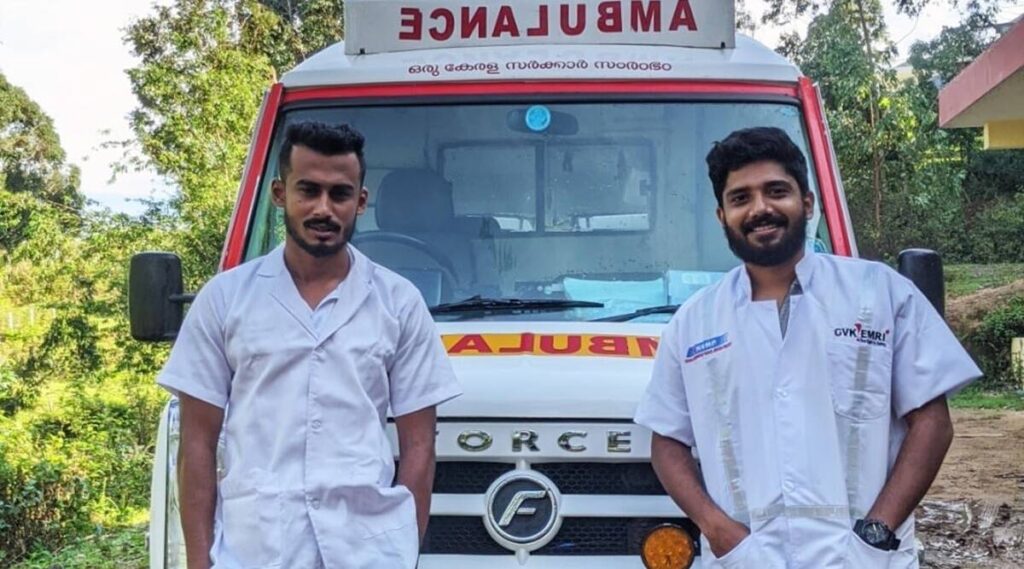
At 2:15 am, under the duo’s guidance, Kausalya gave birth to a boy inside the car without any major complications. (Photo Credit: Kerala health department)

An emergency medical technician (EMT) and an ambulance pilot came in for praise from Kerala Health Minister Veena George for their timely intervention in assisting a pregnant woman deliver her child in a car enroute the hospital.

Around 1:55 am on Tuesday, the family of Kausalya (20), a resident of Koviloor in Idukki district, set out for a hospital in a car after she developed intense labour pain. On the way, they requested for an ambulance of the Kanivu 108 network and a vehicle from the Vattavada Family Health centre with EMT BS Ajeesh and pilot Noufal Khan rushed out.

Somewhere near the Pampadum Shola National Park, the ambulance staff met Kausalya and her family. But by then, her condition had turned critical. When Ajeesh examined her, it became clear to him that she could not be transferred to the ambulance before delivering her child. Ajeesh, with the help of Noufal, then proceeded to make arrangements inside the car for childbirth.

At 2:15 am, under the duo’s guidance, Kausalya gave birth to a boy inside the car without any major complications. The mother and newborn were then transferred to the ambulance and ferried to High Range Hospital in Munnar and subsequently a private hospital in Adimali. Both mother and child are reported to be healthy.

Health Minister Veena George applauded the efforts of Ajeesh and Noufal in the middle of a raging pandemic , terming them a model for the state’s health department.

source: http://www.indianexpress.com / The Indian Express / Home> India>Kerala / by Express Web Desk, Kochi / May 25th, 2021

Dr Mumtaz Ahmed Khan, Founder Of Al-Ameen Educational Society Passes Away At 86

Bengaluru, KARNATAKA :

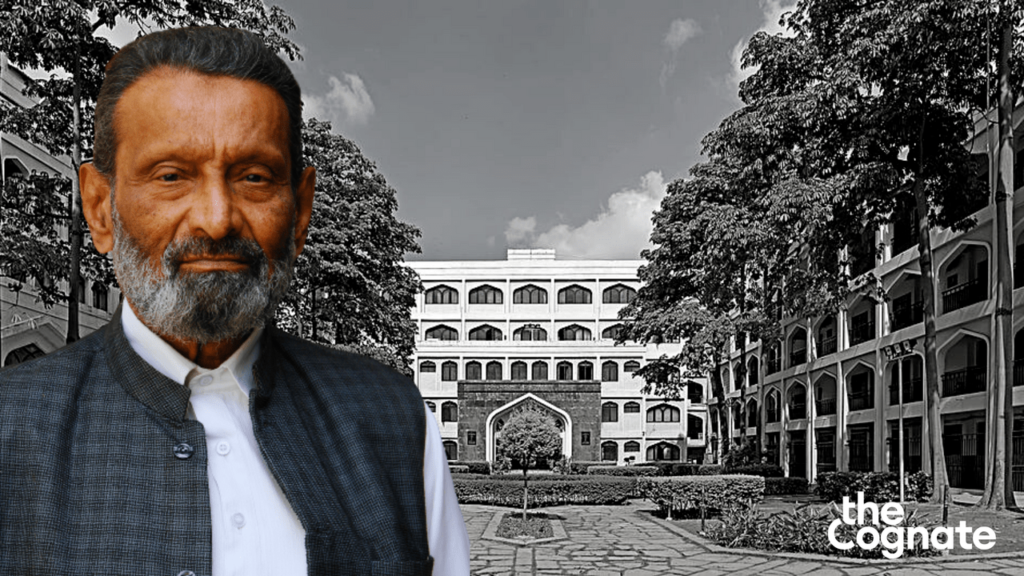
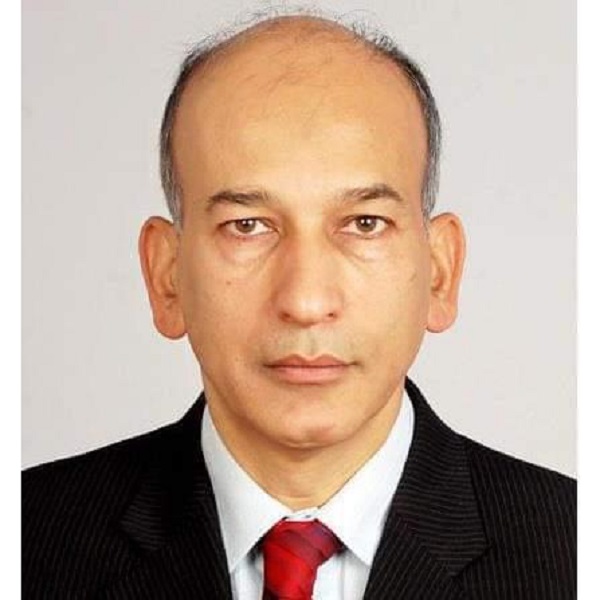
Renowned educationist, founder of Al-Ameen Educational Society and Daily Salar newspaper, and former Pro-Chancellor of Aligarh Muslim University, Dr Mumtaz Ahmed Khan passed away Thursday evening in Bengaluru. He is survived by his wife, one son, and two daughters. He was 86.

Widely referred to as ‘Baba-e-Taalim’, Dr Mumtaz Ahmed Khan founded the Al-Ameen Educational Society in 1966. The Al-Ameen group of Institutions now number more than 200 in Karnataka and all over the country. In Bengaluru, the Al-Ameen institution has various colleges catering to varied streams from pre-university, degree, post-graduation Institute of Management, College of Pharmacy, and Law College to the Al-Ameen College of Education.

Born on 6 September 1935 in Trichy in Tamil Nadu, Dr Khan did his MBBS at Madras University, Chennai in 1963. After getting married he continued his postgraduate studies, M.S. specializing in surgery at Stanley Medical College, Chennai. He moved to Bengaluru in 1965.

In 1966 at the age of 31, he started the Al-Ameen Educational Society also sometimes referred to as the Al-Ameen Movement, which was a pioneering effort to impart education, especially within the state’s Muslim community.

Dr Khan was one of the founders, trustees of ‘Salar’, an Urdu daily newspaper from Bengaluru since 1964; he was also Pro-Chancellor/Treasurer of Aligarh Muslim University.

He is a recipient of several awards like Karnataka Rajyothsava award (1990), Kempegowda Award, Junior Jayees Award and Public Relation Society of India Award.

‘Dr Mumtaz Ahmed Khan Award’ given every year in recognition of exemplary services by members of the community is named after him.

source: http://www.thecognate.com / The Cognate / Home> News / by Shaik Zakeer Hussain / May 28th, 2021

Chitradurga man on mission to bid dignified adieu to disowned Covid dead

Hiriyur Town(Chitradurga) , KARNATAKA :

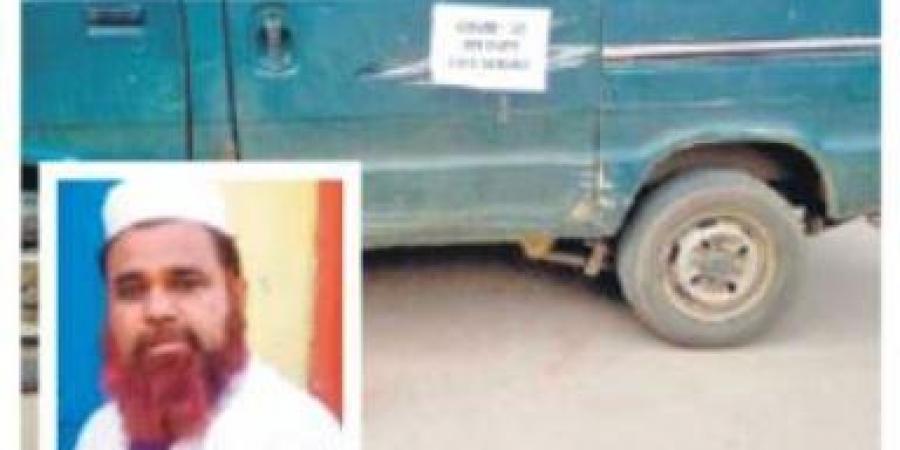
Milan Rafiq, who runs an old furniture shop in Hiriyur town, is not allowed to park his Maruti Omni in front of his house, and neither do his neighbours visit him.

Milan Rafiq (inset) and the vehicle he uses to ferry bodies of Covid victims

Chitradurga : 

Milan Rafiq, who runs an old furniture shop in Hiriyur town, is not allowed to park his Maruti Omni in front of his house, and neither do his neighbours visit him.

For he has converted his Omni into a hearse, and ferries bodies of Covid patients to graveyards and crematoriums. He also completes the last rites, and has cremated and buried more than 200 bodies, of which around 80 were of Covid patients. His aim is to give people a final dignified departure, surprising at a time when friends and families are known to abandon both the living and dead.

“Covid has killed humanity. People are not ready to take care of their near and dear ones, including ailing parents on their deathbeds,” said Rafiq. He saw disowned bodies lying in the mortuary of Hiriyur Taluk Hospital, and it disturbed him so much that he decided to take on the last duties himself, irrespective of caste, creed and religion. He doesn’t charge any money, only accepting whatever is given to him, which he uses for the next burial or cremation.

“Before taking the body, I ask the family to get the grave dug, so we can bury the body and close the grave. On an average, I cremate two bodies every day. On Sunday, I cremated four bodies in Chitradurga and Hiriyur,” Rafiq told The New Indian Express.

His has carried out cremations in Chitradurga, Bengaluru and Kolar districts, ferrying bodies from Bengaluru to Kolar, and Madhugiri in Tumakuru. At a time when ambulances charge exorbitant rates, Rafiq just asks where the body should be ferried and sets out in his Omni. The cost of petrol and repairs is met by his group of friends, standing solidly behind him ever since he took up these humanitarian duties.

“I am also using my fixed deposit, I cannot ask families for money when they are in pain. It would be a sin,” he said.

Rafiq’s wife Shahtaj Begum, son Mohammed Zubair and son-in-law Mohammed Ali support him and even help him with the last rites. They wear masks and PPE kits, and sanitise the Omni after work is done. He cites a recent ordeal where there was no one to give them even a glass of water.

“My son, son-in-law, and I conducted the last rites and drank water only after returning to Hiriyur,” he said. Rafiq freely gives his number — 7259859407 — for anytime, anywhere burials and cremations.

source: http://www.newindianexpress.com / The New Indian Express / Home> Good News / by G Subhash Chandra, Express News Service / May 25th, 2021

Hyderabad NGO to Set Up Four Oxygen Generation Plants

Hyderabad, TELANGANA :

The first plant is expected to be up and running in Hyderabad next month,” Prof Amirullah Khan, coordinator of Sahayata Trust informed. — IANS

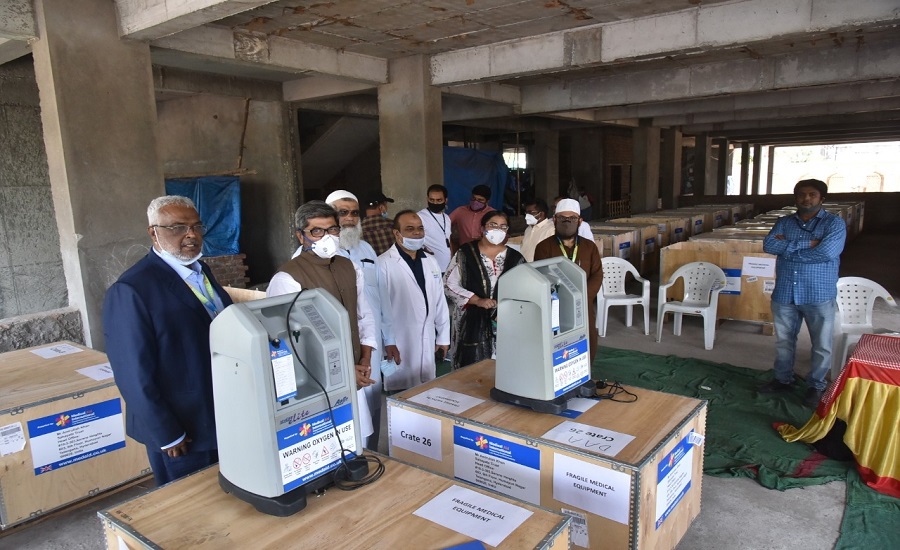
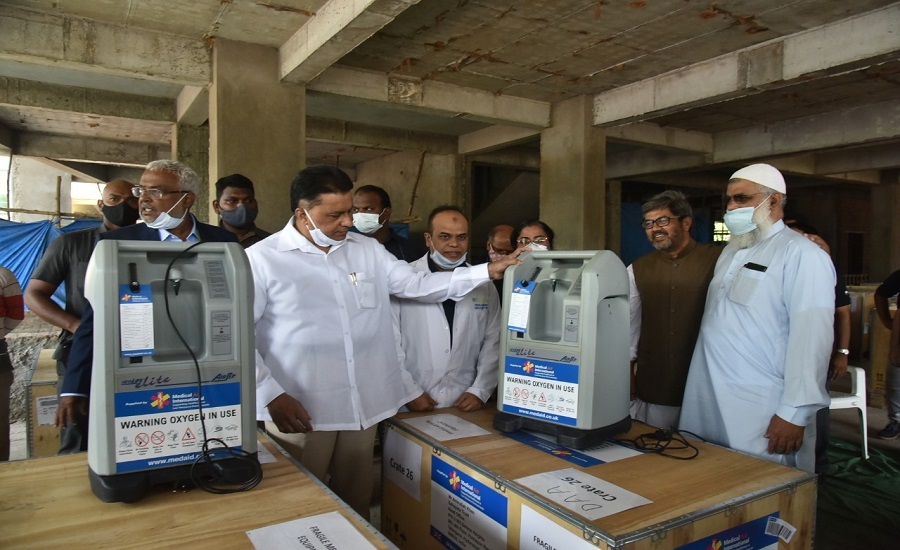
The NGO is also receiving 400 high quality oxygen concentrators from different charities in the United Kingdom and the United States which is described as the world’s largest donation of oxygen concentrators.

Hyderabad :

Sahayata Trust, a Hyderabad-based NGO, plans to set up four medical oxygen generation plants to cater to the requirements of hospitals treating Covid patients.

Each plant will have a capacity of 4,500 litres per day and will come up at a cost of Rs 1 crore each. Two plants will come up in Hyderabad and one in Gujarat. The NGO is yet to decide on the location for the fourth plant.

“The first plant is expected to be up and running in Hyderabad next month,” Prof Amirullah Khan, coordinator of Sahayata Trust, told IANS on Monday.

The development economist said the NGO would be importing the plants. He said these plants would meet the requirements of various hospitals treating Covid or other critically ill patients.

He pointed out that the NGO is also receiving 400 high quality oxygen concentrators from different charities in the United Kingdom and the United States. He described it as the world’s largest donation of oxygen concentrators.

The devices will be allocated on a per-need basis to different NGOs across Hyderabad, Lucknow, Allahabad, Delhi, Ranchi, Bhopal and other cities. — IANS

The first consignment comprising 170 devices arrived in Hyderabad from the UK by a special flight of Qatar Airways on Friday. The second consignment of 270 concentrators is scheduled to arrive next week.

Sahayata Trust has started distributing concentrators to different healthcare organisations in Telangana and other states. “The relief effort will add oxygen to the efforts of NGOs scrambling to procure oxygen to save as many lives as they can,” said Sahayata Trust CEO Syed Aneesuddin.

The devices will be allocated on a per-need basis to different NGOs across Hyderabad, Lucknow, Allahabad, Delhi, Ranchi, Bhopal and other cities. The organisation included Access Foundation, Safa Baitul Maal and SDIF.

Different NGOS across international borders have joined hands for the noble cause at a time when several lives are being lost across India due to shortage of oxygen cylinders and oxygen concentrators during the second wave of Covid-19.

Donation of concentrators is a meticulously coordinated relief effort by UK-based charities managed by the Indian diaspora including Maahir Charity, Deccan Medical College Alumni Association, and Medical Aid in coordination with the US-based Indian Muslim Relief & Charities (IMRC), the parent body of Sahayata Trust.

Syed Aneesuddin thanked Hyderabad Member of Parliament Asaduddin Owaisi who played an important role in helping the consignment reach India within a short span of time.

“These are high quality oxygen concentrators with dual outflow of oxygen enabling two patients to use the same machine at a time. We are training people to use the device using the device manuals received from England. This is a daunting task to coordinate the allocation as well as train and equip the personnel to handle the device in a very short time, especially since every passing minute increases danger of loss of life for people struggling to find oxygen support,” said Amirullah Khan.

India needs about one lakh oxygen concentrators. “The government has been able to import only 1000 from the USA, which means there is a deficit of 99%. In such savaging times, the import of 400 units is a small but significant effort in saving more lives”, said former civil servant Prof Amirullah Khan.

He thanked the state and central governments for waiving the import duty on the equipment. He also thanked Chief Secretary Somesh Kumar for taking up the matter on an urgent basis and Commissioner Commercial Taxes Neetu Prasad who went out of the way working late at night to grant ‘real-time approval’. Due to her personal interest in expediting the process, the consignment was ready for pickup within three hours after arrival. — IANS

source: http://www.clarionindia.net / Clarion India / Home> Editor’s Pick> India / by IANS / May 24th, 2021

Volleyball player in Karnataka hoists oxygen cylinders for needy, wins hearts

The patient in distress had got a bed at CG Hospital, but there was no oxygen, and the family was asked to source a cylinder.

Davengere, KARNATAKA :

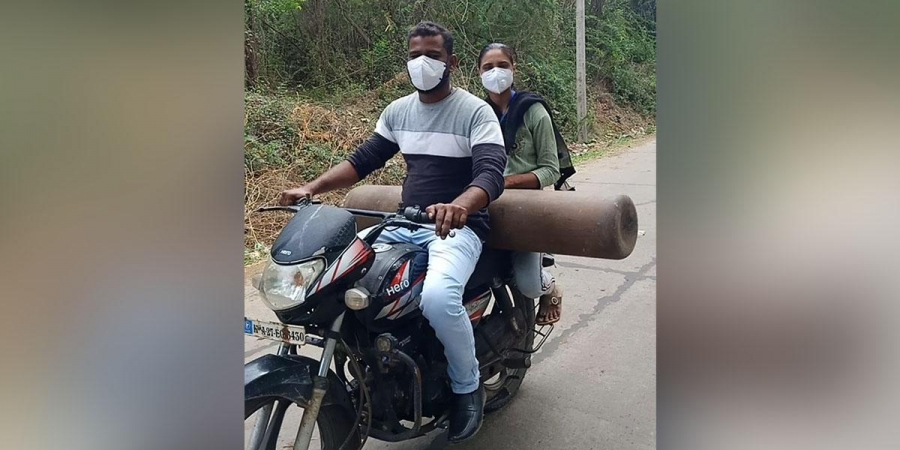
Habeebunissa en route to deliver an oxygen cylinder to the needy | Express

Davangere :

Habeebunissa may be just 19, with limited resources, but has displayed grit and initiative.

As Davanagere locked itself in to stave off the Covid second wave, this young woman ventured out to help the needy.

The international volleyball player has been winning hearts, especially after a video of her carrying an oxygen cylinder on her brother’s bike went viral last week.

The patient in distress had got a bed at CG Hospital, but there was no oxygen, and the family was asked to source a cylinder. She swung into action, collected the cylinder and rushed to hospital. She is glad that the patient survived. She went on to arrange four more cylinders.

The daughter of an autorickshaw driver, Mohammed Jabir, Habeebunissa has been active on many fronts — distributing masks, arranging for oxygen and blood, and even cooking food for stranded nomadic families. She and her mother used the PDS grains that her family gets to cook the meals.

“It is our duty to save humanity from the clutches of the Covid-19. The Youth Congress is funding my initiative to provide cylinders and other social work, with some contribution from my father,” she said.

As vice-president of the Youth Congress Davanagere unit, she has also motivated many girls to take up sports and develop leadership skills.

She is doing her final year ITI (electrical) at Millat College in Davanagere and is an ace volleyball player.

Her father Jabir, who earns Rs 800 per day, and almost nothing since the lockdown kicked in, says he is happy that his daughter is using whatever he gives her to help society.

source: http://www.newindianexpress.com / The New Indian Express / Home> Good News / by G Subhash Chandra, Express News Service / May 22nd, 2021

Sohail Razzack, Former MD, Gandour India, Passes Away

Hyderabad, TELANGANA / NEW DELHI :

Sohail Razzack.

He was also a member of the Governing Body of Delhi Education Society which runs a number of schools in Delhi including the Anglo Arabic School

New Delhi :

Former Managing Director of Gandour India Food Processing  Pvt. Ltd, Cherlapally, Hyderabad, Sohail Razzack, passed away in New Delhi on May 11 of cardiac arrest. Sohail was the only son of late Hakim Mohammed Abdur Razzack (Founder Director, CCRUM) and Tabiba Ummul Fazal. He was 58 years old.

Born in a respectable Maulvi khandaan of Hyderabad, Sohail Razzack grew up in Delhi and did his schooling from St Xavier’s High School. He went on to do MBA from XLRI, Jamshedpur.

Well known in the FMCG sector, Sohail Razzack, an international marketing and business professional, served in the corporate world and worked with several multinational companies in India and overseas like Cadbury India Limited, SmithKline Beecham, Sprint RPG, Black and Decker and ICI Paints. As Director, Marketing and Export of Pinehill Arabia Food Limited, Sohail Razzack was responsible for expanding the Indomie brand of instant noodles in the Middle East and North Africa region.

As MD, Gandour India, a leading food processing manufacturer in the Middle East, North Africa and India, Sohail’s business acumen led to the rise in popularity and sale of Safari Chocolates, Yamama cakes, Tourist wafers and other confectionary items that the 160-year-old company is famous for.

Coincidently, his first job as Field Sales Executive where he successfully launched Cadbury’s Dollops ice cream and his last as MD, Gandour India, were based out of his hometown, Hyderabad.

Sohail  was also a member of the Governing Body of Delhi Education Society which runs a number of schools in Delhi including the Anglo Arabic School. He taught and lectured at several management institutes across India, and was a popular and admired teacher and mentor.

A dreamer and romantic at heart, Sohail had three passions, Mohammed Rafi, cricket and travelling.

A die-hard fan, Sohail had a Rafi song for any occasion. No trip to Mumbai would be complete without having offered fatiha at Rafi Sahib’s grave. He had even visited the late singer’s birthplace at Kotla Sultan Singh. Sohail’s passion and deep curiosity for exploration led him to travel extensively around the world either for pleasure or to personally promote the brands he worked for, even in the smallest, most remote corners of the country. He had recently started documenting his travels to share with the world but alas, Allah had other plans for him.

Sohail was an honest, humble, down to earth and God fearing person. He emphasized on forgiveness and charity as great virtues. Always willing to lend a helping hand, he touched the lives of many people with his infinite wisdom, guidance and generosity. He will be greatly missed.

He leaves behind his mother, wife, two sons, two daughters, and several family members who loved him dearly.

May Allah grant him forgiveness and elevate him to the highest place in Jannat ul Firdaus. Aameen.

source: http://www.clarionindia.net / Clarion India / Home> Indian Muslim / May 17th, 2021

Nagpur Covid Hospital Run by Jamaat Lauded for Doing Excellent Job

Nagpur, MAHARASHTRA :

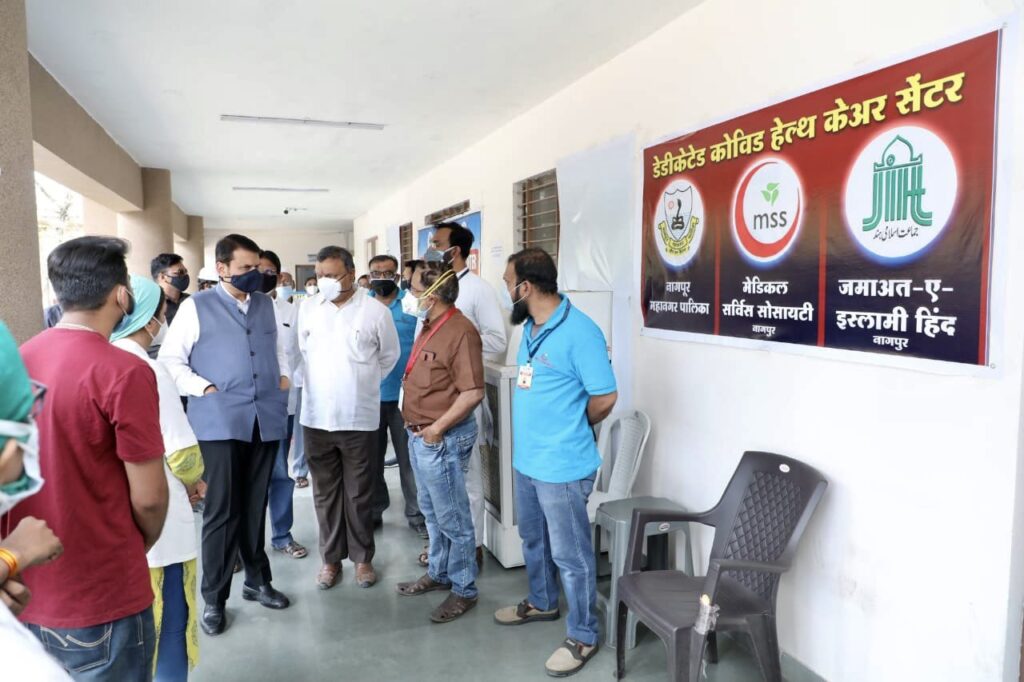
Former Chief Minister of Maharashtra Devendra Fadnavis visited the Dedicated Covid Health Center and commended the people associated with it.

The successful experience has encouraged the organisers to plan a full-fledged hospital after the pandemic is over.

New Delhi :

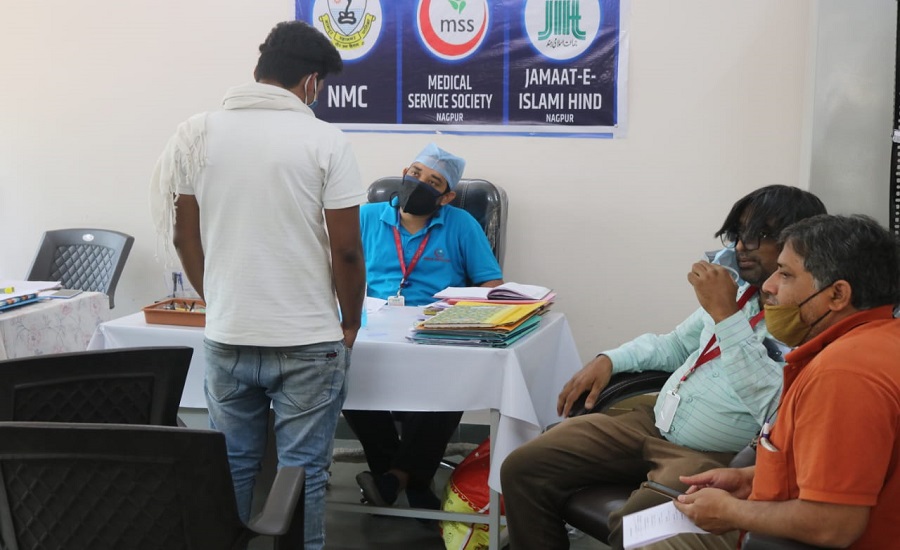
A Dedicated Covid Health Center being run by Jamaat-e-Islami Hind in Maharashtra’s Nagpur city for the last 50 days has treated up to 500 patients, say the organisers of the Centre. The 78-bed Centre or hospital is today a boon not only for the people of the city but the entire Vidarbha region as well as neighbouring Madhya Pradesh and Chattisgarh as Nagpur shares borders with the two states and serves as regional hub of medical services.

When this hospital was launched on April 1, Maharashtra was reeling under the second wave of coronavirus pandemic. Nagpur was the worst-hit in the state. Every day 8,000 new positive cases were being reported here while the health services had totally collapsed. The hospital came as a big relief as it started offering free service with dedicated staff and volunteers.

The hospital is run from a building owned by the NMC. “The building was lying unused. The NMC wanted to launch a Covid hospital but they were unable to do it. We offered our services, to which they agreed. So it’s a joint venture of the Jamaat as well as NMC. MSF, or Medical Service Society, an NGO run by the Jamaat, is the third partner,” Dr. Anwar Siddiqui told Clarion India over the phone from Nagpur. Siddiqui is in-charge of the hospital and heads the Jamaat-e-Islami in Nagpur.

The hospital was launched on April 1.

The Jamaat is bearing all the cost of running the hospital. The NMC has provided just three doctors. Rest of the 14 doctors and a host of nurses and other staff have been arranged by the Jamaat. According to Siddiqui, four doctors, including himself, are giving free service while the rest of the doctors and workers have been hired.

The hospital has been receiving mostly chronic cases. It’s notable that during the last 50 days just eight patients have died here. Rest of the patients have been discharged after treatment. “Our recovery rate is best among all the Covid centres of NMC. The Commissioner of Nagpur appreciated us saying that even after observing Ramzan fast you people are giving your services so diligently,” Siddiqui said.

The commissioner is not alone in acknowledging the dedication of people running the facility. Former Chief Minister of Maharashtra Devendra Fadnavis was among a host of dignitaries who visited the hospital and commended the people associated with it. He said in a tweet, “Today our society needs such people and organisations who understand the pain and grief of people and who try to overcome their problems. We are glad to know that the Jamaat has come forward for this work and is trying to help out during this huge pandemic”.

Other notable dignitaries who have visited the hospital are state’s health minister Rajesh Tope, state unit president of Congress Party Nana Patole, Mayor of NMC Dayashankar Tiwari and local MLA.

The 78-bed Centre or hospital is today a boon not only for the people of the city but the entire Vidarbha region as well as neighbouring Madhya Pradesh and Chattisgarh.

Initiatives like this are a sending positive message about the Muslim community which of late has been at the receiving end given the communally surcharged atmosphere created by vested interests. National media, especially Hindi newspapers and TV channels, have given good coverage to the hospital.

Siddiqui said the hospital has drawn the attention of one and all. “A number of individuals and voluntary organisations run by non-Muslims are coming to us with donations and items like face masks, sanitisers and oxygen cylinders.”

The management committee of Nagpur’s Jama Masjid has declared that the weekly Friday collections at the mosque will be sent to the hospital as long as this facility continues.

The hospital has been launched with three months’ planning. That means it will run until the end of June. Siddiqui said his team is ready to extend it for three more months if need arises. Health experts are warning that a third wave of Covid is imminent. However, right now new cases are coming down. For the last five to six days, the hospital is receiving less number of patients. “For the first 45 days all the 78 beds were fully occupied. Now our occupancy is between 60 and 65,” he said.

While hospitals and clinics elsewhere faced shortage of oxygen cylinders, the Jamaat faced no such crisis. “We had bought 100 cylinders soon after the first wave. We were already refilling and supplying them to needy patients. Therefore, supply of oxygen to our hospital has never been an issue” he said.

The experience of running this temporary facility has made the organisers realize the need to have a regular hospital. “Once the Covid pandemic is over we will start working on a full-fledged hospital. Our community especially needs it direly,” Siddiqui said.

source: http://www.clarionindia.net / Clarion India / Home> Big Story / by Shaheen Nazar, Clarion India / May 21st, 2021

These COVID-19 warriors are an inspiration for India

Indore, MADHYA PRADESH :

‘We got so many calls after the attack.’
‘Loved ones told us forget all this, nothing was more valuable than our lives.’
‘But we said, ‘No, this wasn’t the way forward — the people, society, the country needs us at this time.’
Dr Trupti Katdare and Dr Zakia Syed tell Archana Masih/Rediff.com their inspiring story.

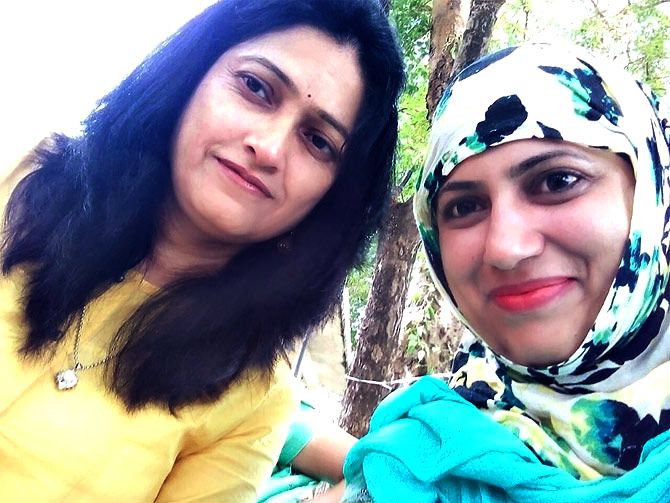
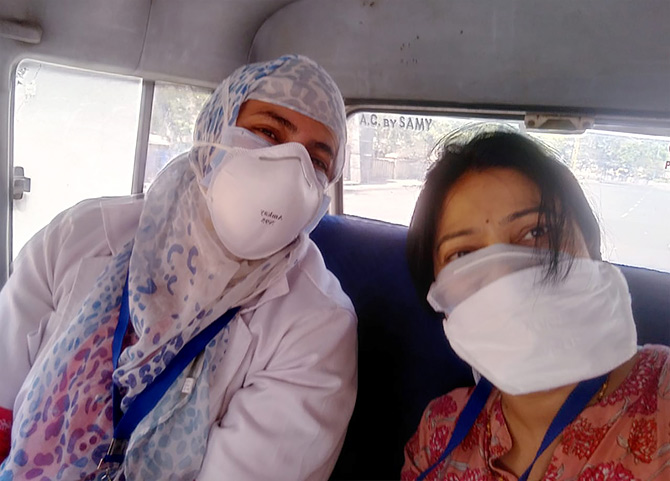
Dr Trupti Katdare, left, with Dr Zakia Syed. All images: Kind courtesy Dr Zakia Syed and Dr Trupti Katdare

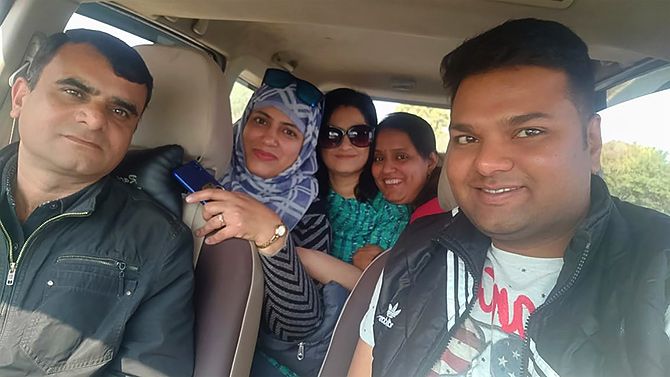
Dr Zakia Syed and Dr Trupti Katdare first met during their induction as young doctors nine years ago. The training for their appointments as doctors in the government-run public health centre in rural Madhya Pradesh lasted for a month, but they ended up with an everlasting friendship.

“We are besties till death,” says Dr Trupti, chief medical officer at the public health centre in Shipra near Indore, as she refers to Dr Zakia, who is in-charge of the primary health centre in Kampel, 40 kms away.

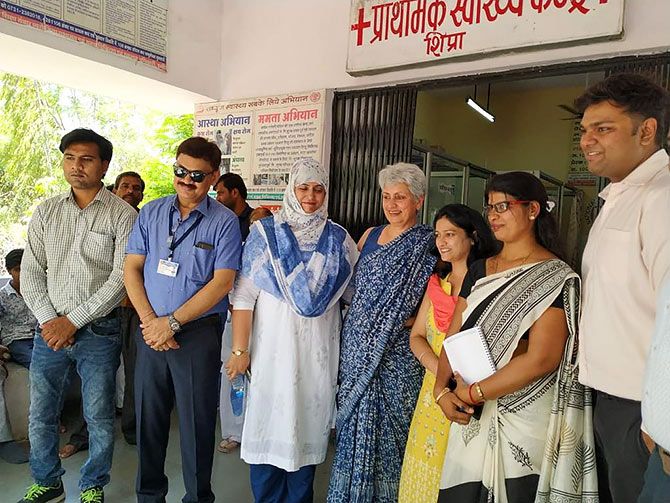
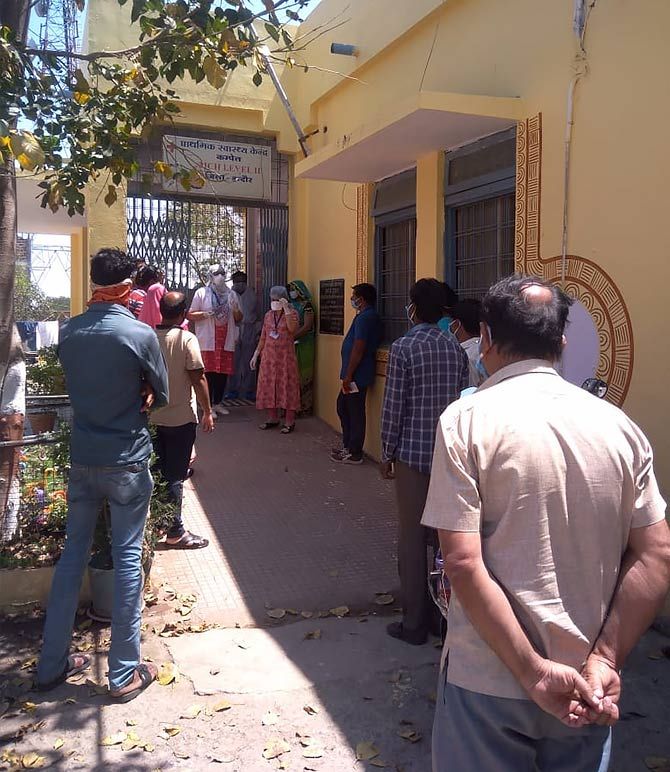
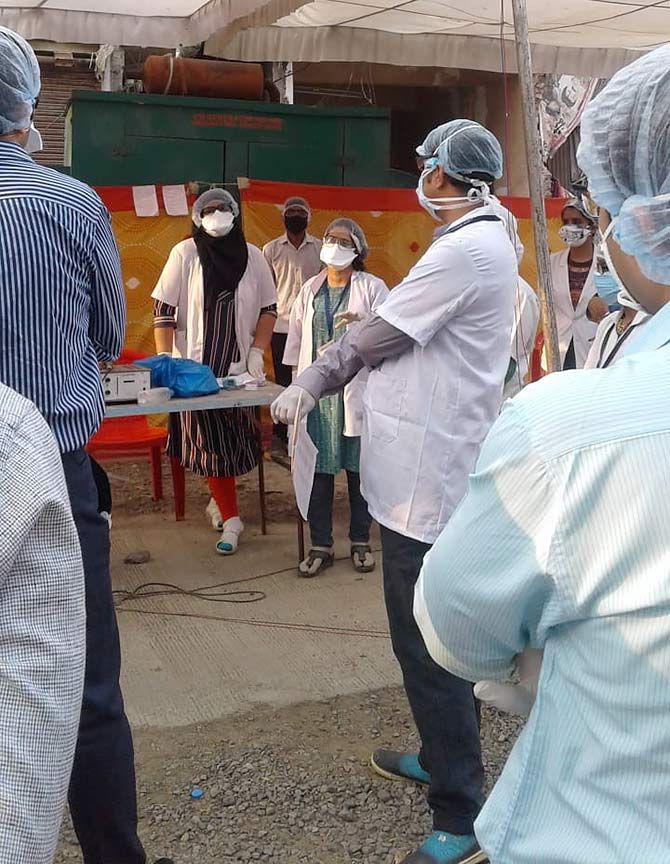
Dr Trupti Katdare and Dr Zakia Syed with other doctors and team members at the Shipra primary health centre.

For the past six weeks, the two doctor friends have been working together at the frontline of the battle against COVID-19 in Indore. They have left their families and moved into a hotel to protect their loved ones from the infection. Dr Trupti is especially concerned about her in-laws who have diabetes and asthma.

When she wanted to wish her husband on his birthday on April 29, they went to her home and wished him from outside.

Dr Zakia last saw her husband and children aged 5 and 9 two weeks ago. She stood outside the gate of her home and had a cup of tea as her son and daughter kept asking her, ‘Mama, when will you come home?’

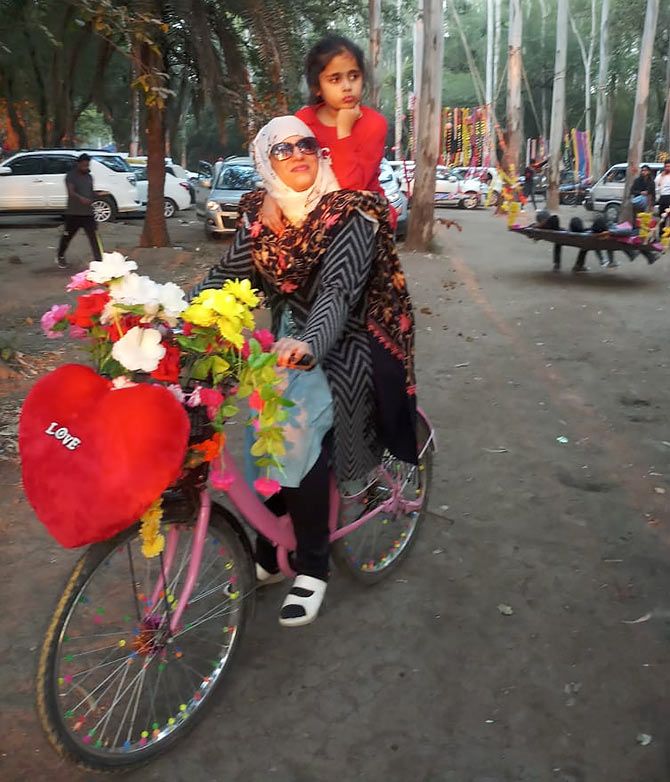
Dr Zakia Syed with her daughter

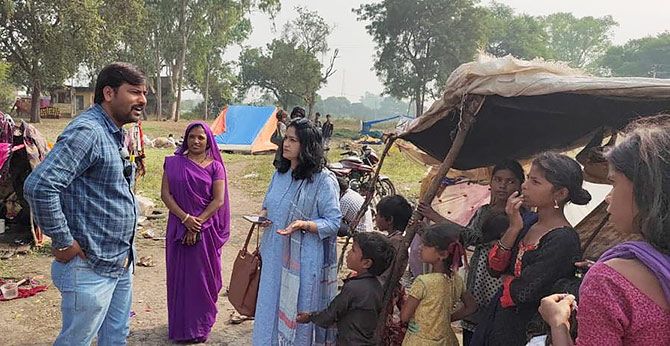
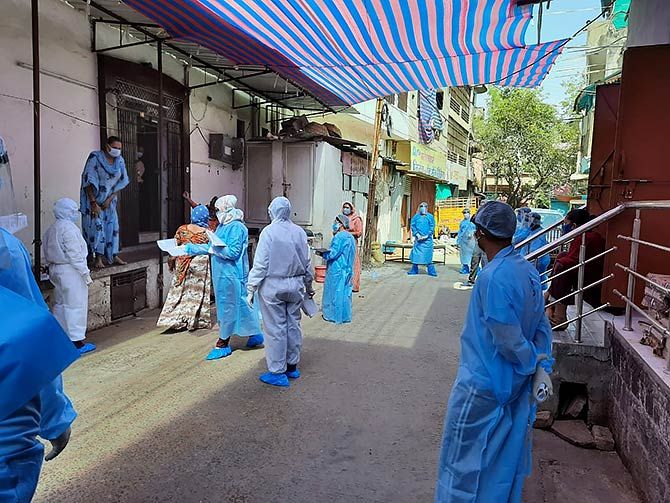
Every morning, the two friends accompanied by paramedics and government staff, set out, criss-crossing the lanes and by-lanes of a large area which falls under three police stations. They deal with positive cases, identify contacts, treat symptomatic cases, get samples collected, send high-risk individuals to quarantine centres and positive patients to a treatment facility.

They have identified 160 positive cases so far and screen around 200 people every day.

Last month, an incident they encountered became one of the triggers for a new law that will protect doctors from acts of violence

Dr Zakia Syed and Dr Trupti Katdare.

Doctors Zakia and Trupti were attacked by a mob while talking to the mother of a man who later tested positive. They were told that the man was not home. He was apprehended by the police two days later.

“We asked for his mobile number and said he should not be moving around in the first place,” remembers Dr Trupti.

This was the third consecutive day in that specific locality and they had never encountered any problem before.

The doctors with their team members.

” Suddenly there was a crowd screaming ‘maro maro‘ running towards us. They started throwing stones. The sub divisional magistrate quickly brought the car in front of us to shield us from the stones. I almost fell. Dr Zakia said she will confront and explain to them. I told her the hostile crowd was in no mood to see reason and pulled her into car. As we drove, the mob was running behind us, hurling stones,” remembers Dr Trupti, over the phone at the end of a 10-hour shift.

“It was very scary.”

“We sustained some blunt injuries where the stones struck us. We were shocked. Shaken,” adds Dr Zakia, the first one in her family to become a doctor, fulfilling the dream of her father who worked in the quality control department at the National Textile Corporation before it shut down. At one time, Indore was known for its three big textile mills.

The doctors filed an FIR. Thirteen people were arrested and the National Security Act was invoked against four. The news of the attack was quickly picked up by the media within hours.

Dr Trupti Katdare out in the field.

” Our worried husbands phoned us, we got so many calls. Loved ones told us forget all this, nothing was more valuable than our lives. But we said, ‘No, this wasn’t the way forward — the people, society, the country needs us at this time,” says Dr Zakia, who wakes up at 4 am and has oats or rusk with a cup of tea as a pre-dawn meal during Ramzan.

In the evening, she breaks her fast with Dr Trupti and Dr Piyush, the third doctor in their COVID-19 response team.

They make tea in the electric kettle in the room and sit down together over tea and dry snacks.

“We said we will not surrender and went back to the same gali the next day after the attack. It was our duty, we could not leave those people until we had screened them and provided treatment,” says Dr Trupti, who attributes her commitment for public service to her father’s zeal for social work.

“They apologised and told us ‘Do not leave us. It will never happen again.’ Now the scenario has completely changed, they cooperate fully and willingly come to be screened and quarantined.”

“After the incident, if either of us had said we will not return, we may not have gone back. But we drew strength from each other and were both determined to finish what we had started,” says Dr Trupti and credits the health department heads, the district administration, family and friends for boosting their morale.

They later discovered that the attack was instigated by rumours and negative messages on social media.

Dealing with a new virus that spreads fast, the two main challenges have been to convince people that though extremely contagious, the disease is not as serious as perceived.

“80% don’t have any symptoms,” says Dr Zakia. Since they work in an area with low socio-economic indices, the second challenge is making people follow social distancing and hygiene.

“Since many are uneducated, it takes time to convince them. Also, it is not easy to make people leave their home and go to a quarantine centre for 14 days,” she explains.

The medical team conducts a survey for possible COVID-19 cases.

A few days ago, they had to screen a community of transgenders after one person tested positive. When the panic-stricken community refused to allow them entry, the doctors had to persuade them with tact, patience and kindness.

“We were able to convince them with our words and screened 50+. They were so happy with our services that they clapped, distributed sweets and sent us away with their blessings,” says Dr Zakia, giving a glimpse into the phenomenal work public health officials have been doing around the country during this emergency.

The doctors set out every morning in a car assigned to their team. In the early days, they would go without drinking water for six hours at a stretch because they would be nervous about removing their masks in an area with several positive cases, but not anymore.

“We have been in the field since March 28 and have travelled quite far in this fight against COVID-19. We are deep into it. Now that we have gained some experience, we try to protect ourselves the best we can,” says Dr Trupti.

The team at one of their consulting sessions.

They have established a protocol where they take a water break after four hours which is usually the time it takes to deal with screening, testing, contact tracing and shifting a suspected case to the hospital.

“In the summer, you sweat a lot inside the PPE kit. We try to cover the positive area in one stretch so that we can take the PPE off and eat lunch,” explains Dr Trupti.

“We don’t waste PPE because they are very precious. While screening other contacts, we use double masks, gloves and caps.”

There is no fixed time for lunch which they mostly eat inside the car.

 Dr Zakia and Dr Trupti.

Observing roza has caused no problem on the field, says Dr Zakia. Roza strengthens your will power, it detoxifies both your body and soul. I haven’t felt weak and when you have your friend next to you, let me tell you, how can you feel weary?” she says with a ring in her voice that you can almost see her smile across the telephone line.

The doctors have planned a trip to Udaipur once the crisis is behind them.

They will continue their field duties throughout this month and are undaunted by the road ahead.

Dr Trupti in consultation with team members.

“Screening is crucial. It’s good that positive cases are being identified because then you can isolate, treat and prevent it from spreading,” points out Dr Trupti, who misses her primary healh centre and takes great pride that it has a 5-star ranking by UNICEF.

“I hope life returns to normal and I feel it will.”

While they battle on in the trenches, their homes are being held together by their husbands who have learnt how to cook and clean in their absence.

Dr Trupti visits her husband on his birthday on April 29.

“Papa has become both mummy and papa now,” says Dr Zakia.

“My husband keeps encouraging me. With the family by your side you can face any adverse situation,” adds Dr Trupti.

The doctors have 24 quarantine centres in their containment area and have provided their numbers to those under quarantine should they need any assistance.

When a set of people were leaving at the end of 14 days of quarantine, negative reports in hand, their team received a standing ovation.

“It gave us goose-bumps,” says Dr Trupti. “We’ve learnt never to give up. If soldiers can fight for the country, so can we.”

“Some people told us we are soldiers too,” says Dr Zakia, “In white uniforms.”

source: http://www.rediff.com / rediff.com / Home> News / by Archana Masih / May 02nd, 2020