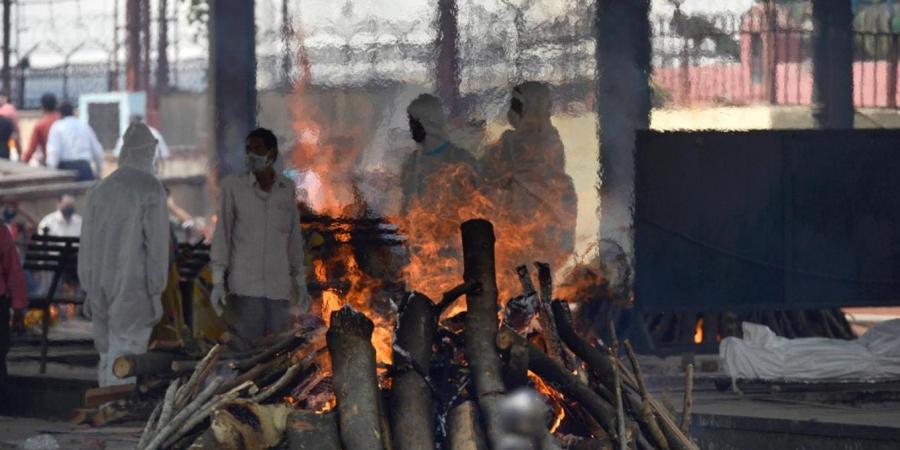
Working in place of his father in the pandemic, Shabir Ahmed, 24, says he has done 60-70 cremations in the last nine months.
Some of the Covid victims were also security personnel, mostly CRPF constables, who hailed from other parts of the country. (Representational Photo | PTI)
Srinagar :
A ‘chowkidar’ of a cremation ground in Srinagar is going beyond his brief to help grieving non-Muslim families in completing the final rituals of their beloved ones who succumbed to Covid-19.
Working in place of his father in the pandemic, Shabir Ahmed, 24, says he has done 60-70 cremations in the last nine months.
“I have been working at my father’s place and my job is 24×7. My job is to keep watch of the cremation ground,” said Ahmed.
“Some of the bodies were of non-locals, who had no family members in the Valley and were brought by the police.”
Some of the Covid victims were also security personnel, mostly CRPF constables, who hailed from other parts of the country.
“The government is making arrangements to bring family members of such victims to Srinagar for attending their last rites.”
There are two more staff both pujaris (priests) in the cremation ground at the cremation ground managed by Sanathan Dharam Trust in Srinagar’s Batamaloo area.
“I make arrangements of firewood and other items. I am doing it on humanitarian grounds as we need to be with each other in this testing time when Covid is snatching our loved ones,” said Ahmed who is yet to get PPE kits. Asked whether there was opposition from his family, Ahmed said, “No. In fact, many families praise my services and tell me that ‘I am doing punya ka kaam’ (charity work).”
“As doctors and frontline health workers have been working round the clock since last year to save precious lives, I am doing my bit in fighting the coronavirus with my efforts,” he added.
source: http://www.newindianexpress.com / The New Indian Express / Home> Nation / by Fayaz Wani, Express News Service / June 07th, 2021
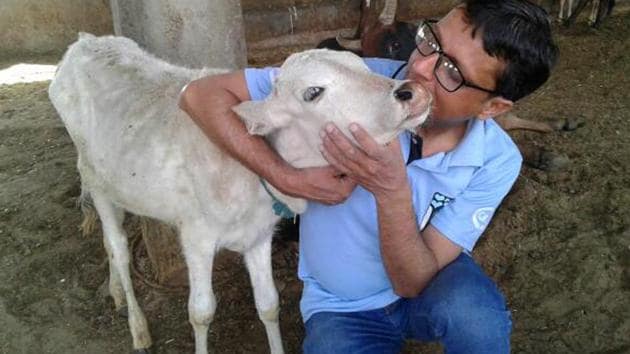
Aftab’s love for cows also made him relinquish his lucrative job in the gulf and brought him back to the country.
Dr Aftab Ahmed Khan with a calf.(HT Photo)
Aftab must be one those few people who gave up MBBS to study veterinary sciences. The decision was prompted by the death of his beloved calf that died due to want of treatment.
Aftab’s love for cows also made him relinquish his lucrative job in the gulf and brought him back to the country.
“I lost my calf, Ballu, in 1998. He suffered from anthrax and could not be treated in time as there was no vet in the area at that time,” recollects Dr Aftab Ahmed Khan.
Khan says that the incident affected him so much that he chose to become a veterinary doctor despite selected for a MBBS course in 1999.
Furthermore, Khan says that he inherited the love for cows and other animals from his mother. “My mother loved cows and other animals at our home and cared for them like her own children,” he says.
“It was her daily routine, after offering the fajr namaz (offered before dawn) she would feed cows and other animals. Even before having tea, she would give the animals water and fodder,” says the vet.
Khan too developed the habit of feeding Ballu gur (jaggery) and chapati before leaving for school.
A native of Jodhpur, Khan says that he gave up his jobs in Oman and UAE as he was asked to do ante-mortem duties there. “The duty was very distressing for me and filled me with remorse as I was certifying beef meat for human consumption,” says Khan.
He finally took a call and gave up the job and returned to India despite the fact that he was getting a monthly salary equivalent to over one lakh Indian rupees in the gulf.
Now, Khan is working with Tree of Life For Animals (TOLFA), an organisation in Kharekhari village in Ajmer, extending medical treatment and care to stray animals.
“Every day over 20 to 30 cows are brought here for various ailments,” said Khan. Last month, two cows were operated upon to extract polythene from their stomach, he added.
From a job involving certification of animals for slaughter, Khan now spends his day treating the animals, mostly cows, brought to TOLFA clinic every day.
urce: http://www.hindustantimes.com / Hindustan Times / Home> Cities> Jaipur News / by Zakir Hussain, Ajmer, Hindustan Times / April 13th, 2017
A total of eight members are elected to the Sunni Waqf based on a system of quota from different sections.
TWO CANDIDATES who had filed nomination for election to the membership of the Sunni Waqf Board withdrew their papers on Friday, paving the way for eight members to be elected unopposed and without an election. Only Sunni Muslims are allowed to contest polls for the Uttar Pradesh Sunni Central Waqf Board and the election was scheduled to be held on March 7, Sunday.
A total of eight members are elected to the Sunni Waqf based on a system of quota from different sections. Of the eight members, two are selected from mutawalli (caretaker) quota, two from MP quota, two from MLA/MLC quota and two from bar council quota.
A total of 10 candidates had filed their nomination on Thursday. Two of them withdrew their papers on Friday: Samajwadi Party MLC from Amroha Parwez Ali and SP MLA from Sambhal Iqbal Mehmood. They had filed their papers under the MLA/MLC quota.
“The two withdrew their nomination on Friday. Now, no election will be needed as there are eight candidates and the same number of seats,” said Election Officer and special secretary of UP Minority Welfare and Waqf Department, Shiwa Kant Dwivedi.
About the election of chairman of the board, he said, “Once the notification for election of these members is done, a date will be decided when the eight members can elect a chairman.”
The members who will be elected as board members are former chairman Zufar Ahmad Farooqui, Indo-Islamic Cultural Foundation (IICF) Trust member Adnan Farrukh. The two had filed their nomination under the mutawalli quota which permits caretakers of Waqf properties with an annual income of Rs 1 lakh or more to file for getting elected as a member of the Board.
The two candidates who filed under the MP quota are Samajwadi Party MP from Moradabad S T Hasan, and BSP MP from Amroha Kunwar Danish Ali. Under the MLA/MLC quota, SP MLA from Isauli (Sultanpur) Abrar Ahmad and SP MLA from Gopalpur (Azamgarh) Nafees Ahmad.
Under the Bar Council quota, lawyers Imran Mabood and Abdul Razzaq had filed their nominations and will be elected as members.
On January 25, the Allahabad High Court had set aside the state government’s order extending the term of the UP Sunni Central Waqf Board. The court appointed the Principal Secretary of Minority Welfare and Waqf the board’s administrator and the official was told to ensure that polls are held, and hand over charge to an elected board by February 28.
The last Board was appointed as per the Waqf Act of 1995 on April 1, 2015, for a five-year term. Due to the Covid-19 pandemic , the state government extended its term by six months, and on September 30 last year, extended it by six more months.
source: http://www.indianexpress.com / The Indian Express / Home> Cities> Lucknow / by Express News Service, Lucknow / March 06th, 2021
Aligarh Muslim University (AMU) has seen unprecedented number of cases and deaths during the second wave of Coronavirus pandemic
Bareilly , UTTAR PRADESH / Jubail, SAUDI ARABIA :
Rehan Alam Siddiqui
Aligarh:
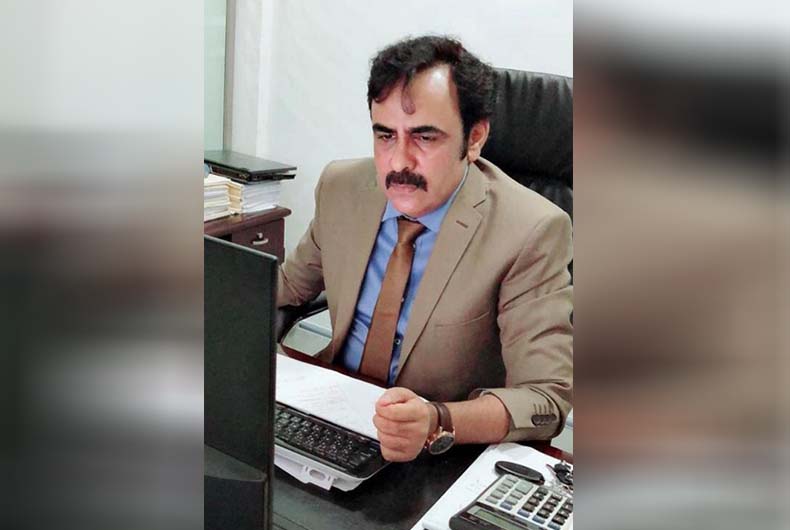
At a time when universities across the country are been adversely affected by the pandemic, Rehan Alam Siddiqui, a Non Resident Indian (NRI) based in Jubail, Kingdom of Saudi Arabia (KSA) has donated Rs 15 lakhs to Aligarh Muslim University (AMU) to set up an oxygen generation plant at its Jawaharlal Nehru Medical College (JNMC).
Aligarh Muslim University (AMU) has seen unprecedented number of cases and deaths during the second wave of Coronavirus pandemic which is yet to be brought under control.
As per the last update , as many as 18 working faculties besides a number of other retired professors and serving employees have become victim of the deadly virus so far.
“Alarming death toll”
The alarming death toll has sent shock-waves leading to apprehensions that a deadlier ‘AMU strain’ of the virus is wreaking havoc. It was also reported that for the first time in the history of the university, the AMU cemetry is running short of space and old graves are now being dug up to bury the dead.
Against this backdrop the university had issued appealed to the government and other public and private organisations and individuals for help and support.
True well wisher of AMU”
Rehan Siddiqui obliged and donated the huge sum to his alma mater. Extending gratitude on the largesse, AMU Vice Chancellor, Prof Tariq Mansoor said:
“Mr Rehan is a true well wisher of the university, whose donation will be very beneficial to upgrade the existing health infrastructure for an effective Covid Response”.
“We at AMU are making all possible efforts to contain the spread of this pandemic and Mr Siddiqui’s donation will go a long way in serving the sick and the distraught with the lifesaving oxygen supply”, he added.
Born and brought up in a middle-class family in Bareilly (UP), Rehan Siddiqui has emerged as one of the fastest growing businessmen and industrialists in the Eastern Region of KSA.
Rehan Siddiqui is promoting better relations of the Indian community with the Indian consulate in KSA. He also organises cultural and academic programmes.
“Rs 3L donation by TSA”
In another development, members of the Technical Staff Association (TSA), Aligarh Muslim University (AMU) donated Rs 3 lakhs to facilitate Medical Attendance Scheme (MAS) to purchase equipments to be used for the treatment of registered employees and to strengthen the MAS Covid Response team.
The cheque was handed over to the university officials after the TSA members, Faisal Rais (TSA President), Abid Ali Zaidi (TSA Secretary General) and Kamran Husain (TSA Treasurer) met the Vice Chancellor, Prof Tariq Mansoor and Registrar, Mr Abdul Hamid (IPS).
source: http://www.ummid.com / Ummid.com / Home> India / by ummid.com News Network / May 31st, 2021
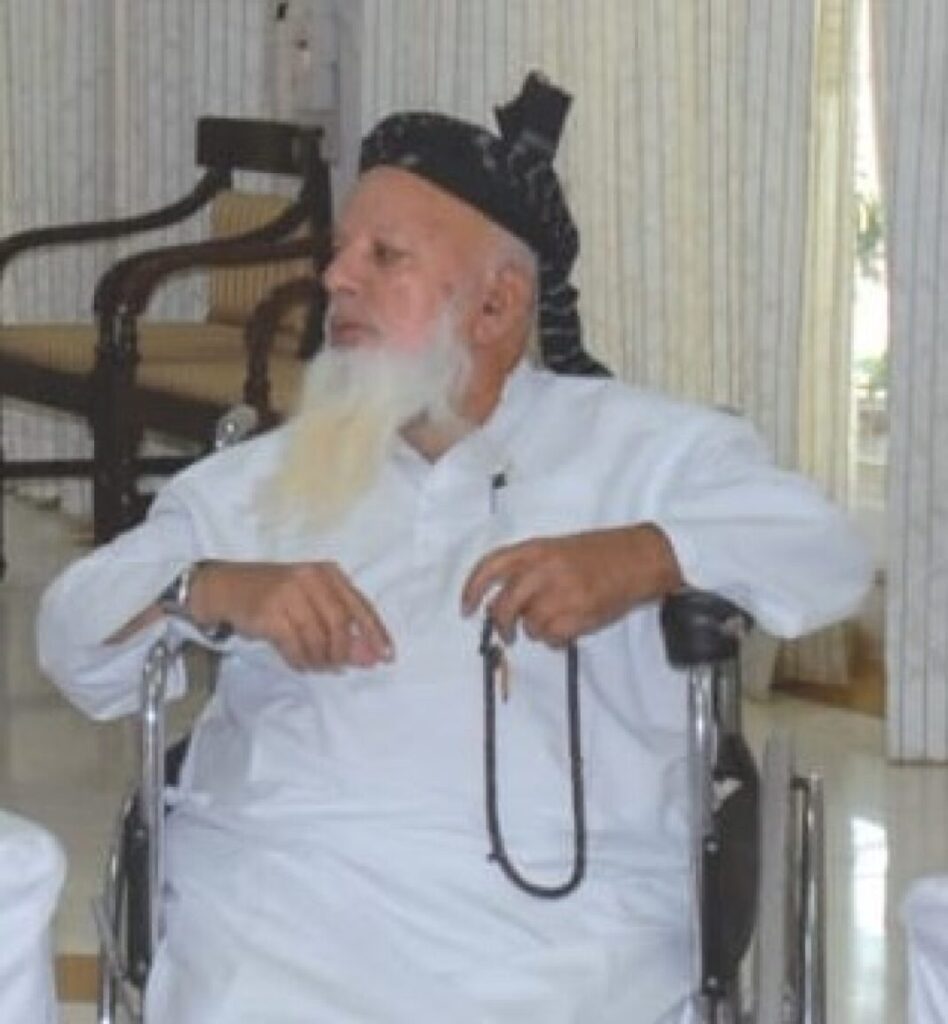
A leading Islamic scholar and freedom fighter Mufti Abd-ur-Razzaq Khan of Bhopal, who was national vice president of Jamiat Ulema-e-Hind (Maulana Arshad Madani faction), breathed his last after a prolonged illness here on May 26. He was about 96 years of age.
Mufti Abd-ur-Razzaq was laid to rest on May 27 afternoon with state Guard of Honours granted by the Madhya Pradesh Government. Since he was a popular figure and had followers cutting across the barriers of religion, cast and creed, the funeral was held amidst tight security apprehending mass turnout in the face of prevailing lockdown and Corona curfew in the city.
He had authored more than 50 books including Sarzamīn-e-Hind: Ambiyā kirām aur Islām; Qur’ān mai kya hai?, Āzādi; Aslāf aur Jamiat Ulama-e-Hind; Islāmi zindagi: paidā’ish se jannat tak; Ahle Qur’ān aur ahle kitāb etc.
Police sealed walled city
Meanwhile, considering the popularity and his large number of followers, police took precautionary measures to avoid large congregation during his last rites because of corona curfew. The police put up barricades at prominent squares and roads of old city areas and police officers along with district administration also appealed people to avoid gathering because of the Corona curfew. Bhopal entry points from all sides were also sealed to prevent followers and admirers of the cleric from all the districts of the state from entering the city.
Police barricaded the roads in old Bhopal. Only family members and limited people were allowed to attend the funeral. The heavy police force was deployed at all the prime squares and areas including Tarjama Wali Mosque, Iqbal Maidan, Peer Gate, Bhopal Talkies, Nadra bus stand, Alpana Talkies, Sangam Talkies, Moti Masjid, Ret Ghat, Kamla Park and adjoining areas. In addition to barricading all the routes to old Bhopal, the old city area was guarded by additional force of 700 policemen. The routes connecting Bhopal from borders and the roads towards old city areas remained closed.
Equally respected in all circles
Mufti Abd-ur-Razzaq in 1958 had established the Madrasa Islamia Arabia in Bhopal and a mosque popularly known as Tarjama Wali Masjid of Bhopal. He used to teach Islamic preaching in Indian language because of which the mosque gained the name Tarjama (translation) mosque. He was an Indian Muslim scholar, mufti and an activist of Indian freedom struggle, who was equally respected in political, social, civil and all circles. The Governor of Madhya Pradesh, Anandiben Patel, honoured him in January 2021 for his participation in the Indian freedom struggle.
The high point of his life was that he was able to establish a chain of Madrasas/Maktabs all over Madhya Pradesh and Chhattisgarh wherein thousands of students receive Deeni Taleem (Religious education). He was revered by leaders of all religions. He used to organise meetings of leaders of various faiths to establish inter-religious dialogue with objective of creating communal harmony among the people. He was among those religious leaders who ran one of the oldest Gaushala on the outskirt of the city.
Madhya Pradesh Chief Minister Shivraj Singh, MP Congress Committee president & former chief minister Kamal Nath, Rajya Sabha member and Digvijay Singh expressed grief over his demise.
Mufti Abd-ur-Razzaq was born on 13th August 1925. He was schooled in “Masjid Malang Shah”, Jamia Darul Uloom Ilāhiya and Jamia Aḥmadiya in Bhopal. In July 1952, he joined the Darul Uloom Deoband to complete his studies. He studied Sahih Bukhari with Hussain Ahmad Madani; Sahih Muslim with Fakhrul Hasan Moradabadi; Jami’ al-Tirmidhi with Muḥammad Ibrāhim Balyawi; Sunan Abu Dawud with Bashīr Aḥmad; Sunan Nasai and Sunan ibn Majah with Mubārak Hussain; Muwatta Imām Muḥammad with Meraj-ul-Haq Deobandi; Muwatta Imam Malik with Sayyid Hasan; Shama’il Muhammadiyah with Muhammad Tayyib Qasmi; and Sharah Wiqāyah with Muhammad Salim Qasmi. He completed studying the “Dars-e-Nizami” course in 1377 AH and then specialized in “Ifta” with Mahdi Hasan Shahjahanpuri.
Participated in freedom struggle
Mufti Abd-ur-Razzaq participated in the Indian freedom struggle. In 1947, he was part of a fight that took place in Bhopal’s Qazi camp against the British colonialism. In 1958, he established Madrasa Islamia Arabia, one of the oldest and largest Islamic seminary in Bhopal. He was patron of various Islamic seminaries in Madhya Pradesh. He was also the state-president of the Darul Uloom Deoband’s “Rābta Madāris-e-Islamiya” for Madhya Pradesh. He is credited with the growth and development of Jamiat Ulama-e-Hind in Madhya Pradesh. He served as its national vice-president and the state-president for Madhya Pradesh. In 1958, he was appointed the vice-mufti of Bhopal’s “Dārul Qadha” (Islamic court); and chief-judge in 1968. He served as the Mufti of Bhopal city from 1974 to 1983. He promoted inter-religious harmony by organizing meetings with leaders of various faiths.[10] He was a vivid speaker and instructed Muslims to cope with communal riots with ways befitting the situation.
In 2016, denouncing the RashtriyaSwayamsevak Sangh, Vishva Hindu Parishad and Bajrang Dal activities in Madhya Pradesh, he told Muslims to maintain peace and not to engage in rioting or other things that could damage the peaceful atmosphere in the State. He expressed, “if someone attacks you and you don’t have any other solution but to kill him or to die for saving others from rioters, do not hesitate and go ahead. He also asked the political leaders of Madhya Pradesh to control these right-wing organisations and stop them from attacking and abusing Muslims.
source: http://www.indiatomorrow.net / India Tomorrow / Home> Featured> Religion / by Parvez Bari, India Tomorrow / May 31st, 2021
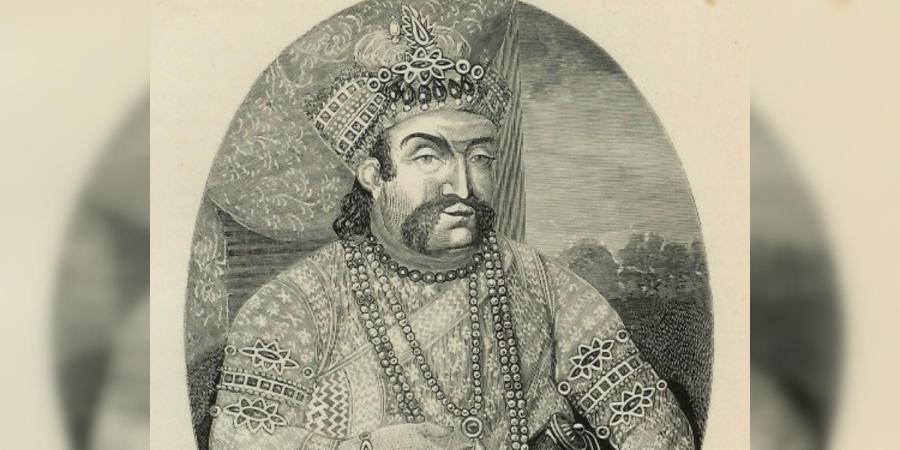
The nawab, who was deposed by the British, came to plead his case with Governor General Lord Charles Canning, only to be imprisoned at Fort William.
Nawab Wajid Ali Shah (Photo| Wikimedia Commons)
Kolkata :
Some 165 years ago, in the month of May, Nawab Wajid Ali Shah — the last ruler of Awadh — is believed to have written the now-famous lament “Babul Mora Naihar Chooto Jai…Mein Chali Piya ke Des” (O father, my home I leave behind…I go to my beloved’s land), as he made his way to Kolkata to live the next 31 years of his life in exile.
The nawab, who was deposed by the British, came to plead his case with Governor General Lord Charles Canning, only to be imprisoned at Fort William as the East India Company feared that he may turn into a rallying point for sepoy mutineers during the first war of Indian Independence, which broke out the very next year.
After he was freed two year later, Wajid Ali and many from his court who chose to join him in exile decided to live in his ‘Piya ke Des, gifting a legacy of music, dance, Urdu poetry, fashion and fusion cuisine to the syncretic culture of the metropolis.
“My great, great, grandfather Wajid Ali Shah, who landed here by steamer on May 13, could have chosen to live anywhere after he was freed…but he chose this city. We believe he fell in love with its culture and found remnants of his beloved Lucknow in Metiabruz or Matiaburj where he chose to settle,” said Shahenshah Mirza, 54, a civil servant and a history buff.
The nawab, over the years, built some 18 palaces and the landmark Sibtainabad Imambara in Calcutta, but his descendants live scattered as the British demolished the palazzos on one pretext or the other.
Mirza and his father, 86-year-old Sahebzada Wasif Mirza – the president of the Awadh Royal Family Association — now live in a modest though stately old house at Talbagan Lane, off Dargah Road, in the heart of the eastern metropolis.
“Just 500 of his followers came with him in 1856, but as news spread that he was building a Lucknow-like city within a city, at Metiabruz in Calcutta, many of his nobles, artisans and musicians followed and flourished here,” said Mirza.
Though much of the original mini-city which Wajid Ali built was taken over for Garden Reach shipyards, Metiabruz still exists and is now famous as a garment tailoring hub — reportedly accounting for Rs 15,000 crore worth of textile trade a year — mainly on account of the skilled tailors who came here as part of the Nawab’s entourage.
Wajid Ali, who used the pen name “Akhtarpiya” for his poetry, prose and thumris, was a known patron of arts, and with the destruction of Mughal cities in the aftermath of the 1857 revolt, Kolkata subsequently became the new cultural capital, attracting talent from all over north India.
As time progressed, Bengal’s zamindars and rich ‘bhadraloks’ (gentlemen) enthusiastically developed a taste for the Nawab’s leisure activities ‘mujra’ (music and dance soirees), kite-flying and pigeon games (kabootar baazi). “Even today some 3,000 people are engaged in the business of making kites in this city,” explained Mirza.
The nawab introduced the citys elite to Thumri, Dhrupad and Kathak. “Singers and dancers of the calibre of Bindadin Maharaj, Piyari Sahab, Gauhar Jaan, Malka Jaan, Jauhar Jaan came to settle here…Kolkata opened up to Kathak and thumris,” said well-known Shantiniketan-based musicologist Rantideb Maitra.
This, in later years, influenced the film industry and the dance and music forms became part of the pan-Indian culture.
The song ‘Babul Mora’ itself was popularised by Kolkata-based music director Rai Chand Boral when he got Kundan Lal Saigal to sing it for the movie ‘Street Singer’ in 1938, nearly 80 years after it was written.
“Kathak, though it started as a temple dance, had taken a stylised form under the Mughal patronage. When brought to Kolkata by Wajid Ali, who himself often danced as Krishna, it blossomed into a popular classical dance form,” said Shyam Banerjee, another musicologist and Urdu translator.
However, if the average Kolkatan remembers the Awadh ruler with fondness, it is because of the gastronomic legacy he left behind.
Said Manzilat Fatima, another of Wajid Ali’s descendants from his junior begum, Hazrat Mahal — who led mutineers in Lucknow and eventually escaped to Nepal — “He (Wajid Ali) tried to recreate Lucknow but with a difference…(among other things) his kitchen became an experimental centre for new dishes.”
Fatima (53), who runs the up-market restaurant Manzilat’s explained that experiments led to the inclusion of potato — then a rich man’s exotic vegetable favoured by Europeans — and eggs to Awadh’s Biryani. “New spices, coconut milk, mustard oil, all went into the making of Awadhi dishes and the result was the unique dum-pukht Kokata Biryani, now so popular all over,” she said.
The Nawab also set up a printing press in Metiabruz and came out with a weekly gazette in Urdu, adding to the literary and journalistic tradition of the city, which boasts of being the cradle to some of India’s oldest newspapers.
“We feel he was more popular in the city he chose to make his own than in Lucknow…When the legendary filmmaker, Satyajit Ray, asked my father how he saw Wajid Ali’s legacy, he had explained that it lives on, as is evident from the fact that ‘you chose to make your first Hindi movie – Shatranj ke Khilari – on a novel based on the the Awadh ruler’s life’,” added Mirza.
source: http://www.newindianexpress.com / The New Indian Express / Home> Kolkata / by PTI / May 23rd, 2021
Thaikkadappuram (Neeleswaram Municipality), KERALA :
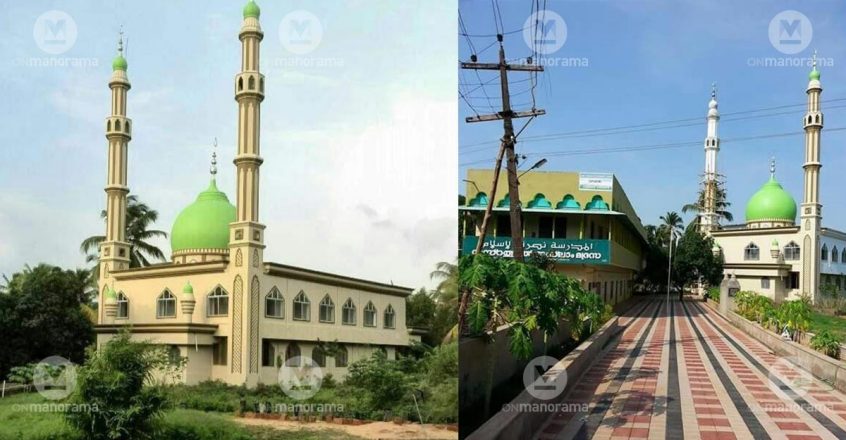
Madrassa and the Thaikadappuram Jama-ath Mosque. Photo by R Ayyappan
Since early March, when the vaccination drive began, municipality and health authorities were worried about the crowd in front of Thaikkadappuram Family Health Centre (FHC) along the coast in Kasaragod’s Neeleswaram Municipality. More than 350 people, most of them over 60 years of age and years of age and with comorbidities, came for vaccination daily to the Centre that was only recently elevated to a FHC.
But at that point, when Kerala was gearing up for an intense election campaign, there was a general impression that COVID-19 was on the wane. It was easy to brush aside worries.
However, when the second surge began in the middle of April, old worries returned. When the rains intensified by the second week of May, more space became a necessity.
“Along with those coming for vaccination, there were the regular patients. When it is windy and raining, which was almost always during the last fortnight, we could not let them stand outside. But it was also not right to let these two groups mingle,” said Dr Sarada, the FHC’s medical officer. Most were poor folk from the fishermen community.
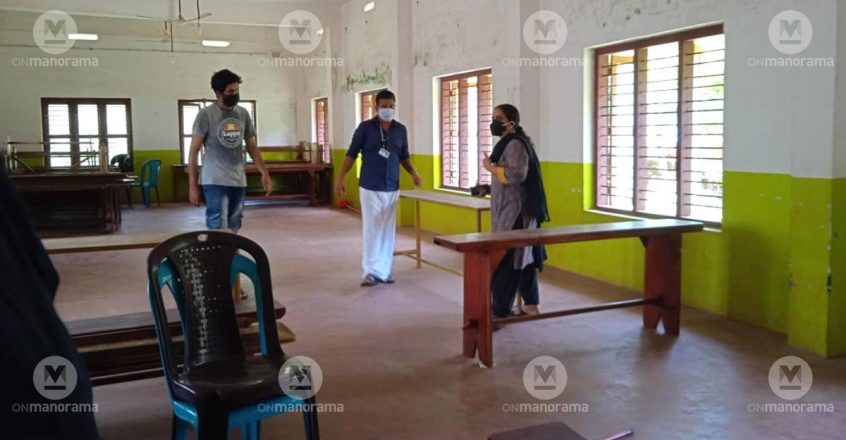
Interiors of the madrassa being rearranged for the vaccination drive. Photo from R Ayyappan
Social distancing paradise
She asked the municipality for a place nearby to carry out the vaccination drive so that social distancing could be adhered to effectively. Many places, including an aided school, were identified. But all were slightly distant. “We wanted a place nearer,” Dr Sarada said.
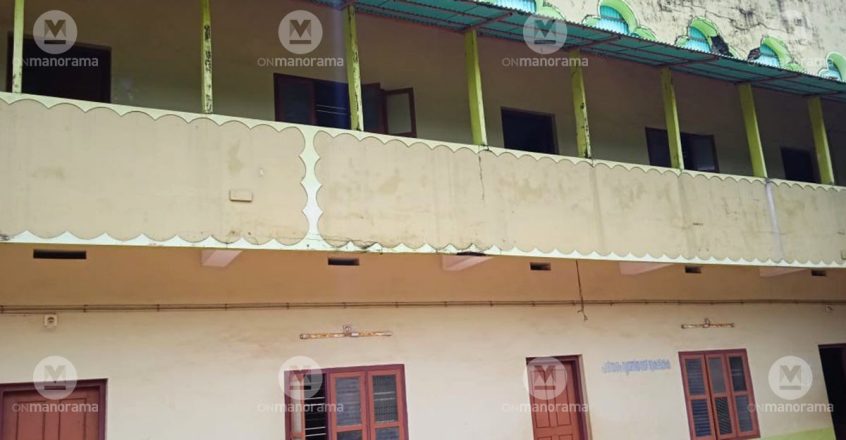
It was then that the Muslim League’s Thaikadappuram Sea Road ward councillor Anwar Sadique suggested a madrassa nearby: Thaikadappuram Jama-ath Nusrath Madrasa of the Thaikkadappuram Jama-Ath Mosque. It is a large two-storeyed structure near a newly constructed beige-coloured mosque with pastel green domes.
Anwar talked to Neeleswaram Municipality chairperson T V Santha and vice-chairman P P Muhammed Rafi, both from the CPM. All three agreed the Nusrath Madrassa, run by the Thaikadappuram Jama-ath Committee, was the right place. It was near and spacious. Importantly, the Jama-ath members were were progressive.
Secular abode
“Last year, they had willingly agreed to convert the ‘madrassa’ into a quarantine centre for migrant labourers and those returning from the Gulf,” Anwar Sadique said. “We did not use it as the need did not arise then,” he said.
This time when they asked, the Jama-ath committee was more than willing. “We did not think twice when the health and municipality officials came to us with the request,” Jama-ath secretary A Mohammed Shafi, a retired postmaster, said. “The children were not coming anyway, of COVID. But even if there were classes, we had more than enough space in the building to accommodate the children,” Shafi said.
The Jama-ath has now left the entire ground floor, over 2000 sq ft, for the vaccination drive. “It is a large space of five classrooms and we have asked them to use all our facilities,” Shafi said. Dr Sarada said that the madrassa had enough room and chairs for people to be seated at a safe distance from each other. “It has a drinking water facility and also parking space,” she said.
The madrassa is also just a five-minute walk from the FHC, diagonally across the road from it. “It is easy to carry supplies from the FHC to the madrassa,” Dr Sarada said.
Thaikadappuram Jama-ath Nusrath Madrassa. Photo from R Ayyappan
Melting pot of faiths
The Jama-ath is particular that its gesture should not be seen as some kind of a favour. “We have told Jama-ath members not to exhibit any behaviour that could even remotely be considered as patronising or dominating. People from all faiths come for vaccination and we want all of them to feel at home here,” secretary Shafi said. “Moreover, there is nothing more holy than this. It is our duty. It does not cost us any money either,” he said.
The Jama-ath members were also not comfortable with a public function to mark the handing over of the ‘madrassa’ for the vaccination drive. “We didn’t want such a function but the municipality authorities lovingly insisted,” Shafi said. A small function, with municipal councillors and health workers in attendance, was held on May 25.
The Nusrath Madrassa will be used for the first time on May 29, when the FHC has scheduled 300 shots. Chief Minister Pinarayi Vijayan, during his customary sunset briefing on May 27, spoke of the Thaikadappuram model as an example of religious generosity.
source: http://www.onmanorama.com / OnManorama / Home> News> Kerala / by Ayyappan R / May 28th, 2021
As many as six graduates have volunteered to work with the MHV, attending calls and assisting the needy.
Vijayapura (Bijapur), KARNATAKA :
For representational purposes
Vijayapura :
A 33-year-old techie from Vijayapura has set up a 24X7 helpline to assist Covid-19 patients in finding beds, oxygen cylinders and medicines. Zahoor Kazi, who works as a software engineer at a private firm in Bengaluru, started ‘Mercy Helpline Vijayapura’ (MHV) on May 14 in collaboration with doctors, activists and other software engineers.
As many as 10 doctors, settled abroad (the USA, the UK and the Middle East) and in the state, have agreed to provide free tele-consultation to the patients, mainly for those in home isolation.As many as six graduates have volunteered to work with the MHV, attending calls and assisting the needy. The team has set up a helpline number — 7848025025.
The MHV works round-the-clock and, on an average, receives 30 calls each day from Vijayapura, Bagalkot and Belagavi. It also collaborates with at least five NGOs that help people by supporting them financially in paying hospital bills, supplying grocery kits, cremating unclaimed bodies of Covid victims and other help related to Covid and black fungus.
Speaking to TNIE, Zahroor Kazi, said, “Our main objective is to help the needy in such tough times. We are working in coordination with district officials. We are also creating awareness on Covid-19.” The MHV has so far helped at least 15 patients in getting oxygen beds and about 10 people in getting ventilators. Also, 10 patients have availed the free tele-consultation services.
“Most people who call us are from urban areas. We want to reach out to those in villages too as they have limited knowledge of the disease. Now, frequency of calls to MHV has reduced owing to a dip in cases,” Kazi added.
source: http://www.newindianexpress.com / The New Indian Express / Home> States> Karnataka / by Mahesh M Goudar / Express News Service / May 29th, 2021
When Arifa Kodiyil, a Muslim woman started learning Kalaripayattu at the age of five, it raised many eyebrows. Now, the five-time-national champion is an example to strong women who fight their ground.
Mallapuram,KERALA :
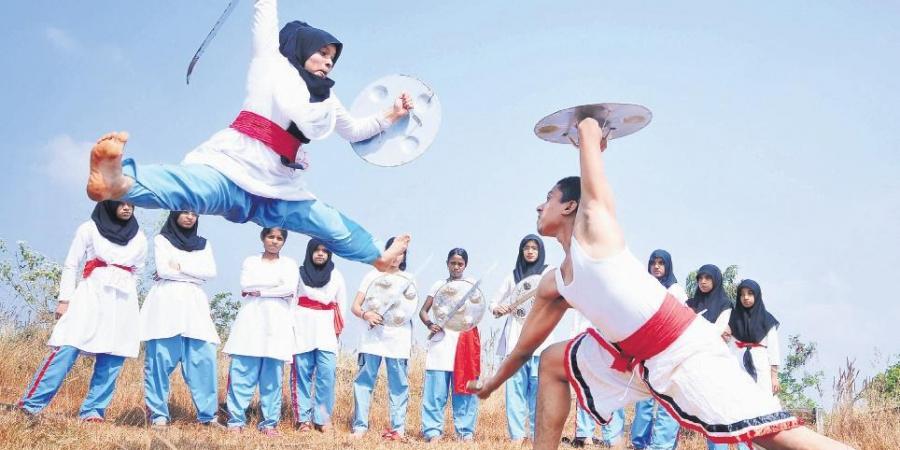
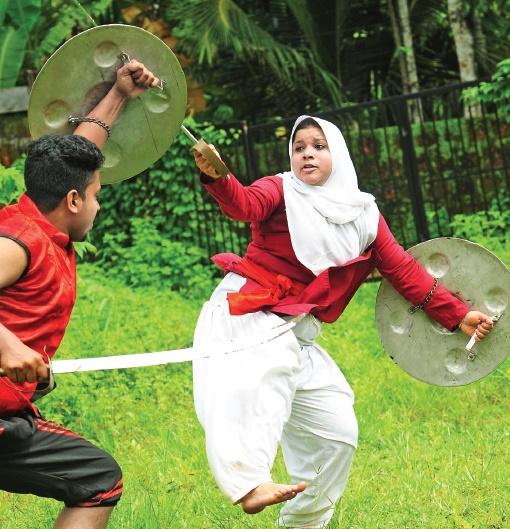
Arifa can effortlessly handle many weapons including, Urumi, Vaal and Paricha, katara (dagger), kathi, kuntham (spear), kuruvadi (blunt wood stick) and neduvadi.
Kochi :
Kalaripayattu, the traditional martial art form that originated in Kerala, has always been a man’s game. But veteran Kalari trainer, Hamzathali Gurukkal brought a change to this custom when he decided to introduce his five-year-old granddaughter Arifa Kodiyil to the artform. The Malapuram-native didn’t have a good start. A Muslim girl learning Kalari did raise many eyebrows.
Having turned 26 recently, hijab-clad Arifa slays her competitors, flashing her urumi with all might, following the footsteps of legendary warrior Arackkal Ayesha. “Growing up, I used to watch the men in my family practice and teach Kalari. I used to think everyone needed to learn Kalaripayattu. At the age of five, seeing my interest in the art form, my uppuppa decided to train me,” says Arifa.
Road less taken This five-time national champion was the first girl from Malapuram to master the art form. “Since I didn’t have any women to practice with, my brother Ashif used to spar with me. At most competitions too, I was the only girl, or rather, the only Muslim who represented Malapuram back in the day,” says Arifa.
After the demise of Gurukkal Hamzathali, his son K M Haneefa Gurukkal runs the Hamzathali Gurukkal Smaraka Kalari. “When Arifa was introduced to Kalari lessons, many people from the community asked us to not let her perform on stage, that Kalari is not ideal for a woman to practice. We, as a family never paid heed to those words. We always asked our kids not to get bogged down by the comments,” says Haneefa.
The ones who pointed fingers soon clapped for the family when they realised the importance of self-defence techniques. “We are living in a time when both genders need to know how to protect themselves. More parents have started sending kids in the age of four to our centre,” adds Haneefa.
A woman’s game Arifa believes it is essential for women to learn martial arts. “In the women-only batch, around 50 girls are being trained at the gurukulam by my father, sister Anshifa, and me,” says Arifa.
Arifa claims that if you know the right moves, a woman can use anything — bag, umbrella, pen or purse — to protect herself. “After undergoing training in ‘Drishti’ a woman will be able to intimidate an attacker or an eve teaser with just a sharp gaze,” says Arifa.
Arifa can effortlessly handle many weapons including, Urumi, Vaal and Paricha, katara (dagger), kathi, kuntham (spear), kuruvadi (blunt wood stick) and neduvadi. Kalaripayattu trainees can wield weapons only after gaining several years of practice in Meytaari, the first step of training which focuses on grip.
Eyes Forward Arifa, an optometry graduate is now living with her spouse in Chekkannor, Palakkad. Her sister, 21-year-old Ashifa, manages the women’s batch. Arifa steps in during special classes and competitions. “My students bagged gold at the recent state competition held in Thiruvananthapuram. Due to Covid, classes are being now conducted online. The training for the upcoming national event is underway,” said Arifa.
The Central Government’s decision to include Kalaripayattu in the Khelo India Youth Games will benefit many students, says Arifa “It will be a major boost to Kerala’s centuries-old art form. A few of my students have secured scholarships as well,” says Haneefa.
source: http://www.newindianexpress.com / The New Indian Express / Home> Good News / by Mahima Anna Jacob, Express News Service / May 29th, 2021
The 41-year-old, Akhbar Ali, distributes them from the very cart on which he sells vegetables from early morning to 10 am daily.
Bagaha (West Champaran District) , BIHAR :
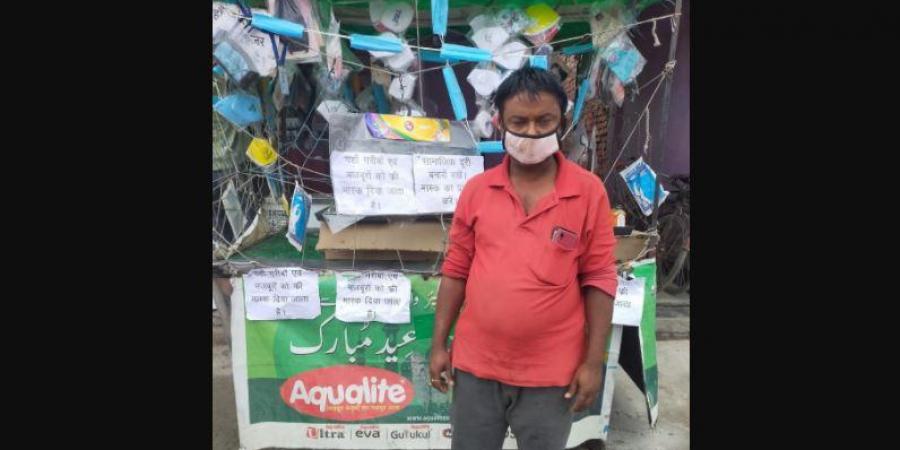
41-year-old, Bihar vegetable hawker, Akhbar Ali, istributes facemasks and hand sanitizers for free among the poor people and labourers (Photo | EPS)
Patna :
A vegetable hawker now turned humanity-server now distributes facemasks and hand sanitizers for free among the poor people and labourers at Bagaha, in Bihar’s West Champaran district.
He was moved from within at the sight of a poor man picking up a used face mask that was dumped at a roadside.
The 41-year-old, Akhbar Ali, distributes them from the very cart on which he sells vegetables from early morning to 10 am daily.
“I called that man and asked why he had been picking up the mask. He told me for wearing on his face as he wanted to live in this world safely from Corona. And his this line moved me so much that I decided to distribute free masks and sanitizer from my cart among the poor people and labourers”, Ali said. The next day he went to the market, bought facemasks and hand sanitizers and started roaming with the items on his hand-pulled cart across the market.
“I used to go where the migrant labourers came to work and the poor people lived in the town daily after 11 am to evening. Wherever I see the poor people without facemasks, I offer them free of cost and advise them to wear it for safety:” he said.
He sells masks and other Corona safety-related items to people who can afford to pay for them but gives them away for free to poor people and labourers.
He said that 50% of the total income he earns from vending vegetables is utilised for purchasing masks and sanitizers for poor people. Ali is simply only able to write and read his name but he said: “In the earning a human-being, both the country and the poor people have equal natural share and one must dedicate the share of ‘watan’ and ‘garib’ as an act of prayer to Allah”, he said.
He has Hindi signs on display at his cart. One saying “Yahan free masks garibo aur majduro ko milta hai’ (“Here mask free of cost is given to poor and the labourers”) and some others with messages in Hindi asking people to maintain social distancing.
“From vegetable hawker to humanity server, Ali has become here a name among the destitute and poor people, who seek face masks from him free”, Munna Kumar, a labourer, who was given a pair mask recently said.
Ali estimates that till date more than 10,000 masks and sanitizers from his earning have been distributed among the poor people and the labourers at Bagaha.
“Now, I sell vegetables till 10 am and thereafter go out with cart carrying masks and sanitizers to the poor people in the town”, he said.
“Wherever I saw a poor man even on a bus without mask, I run towards him with a mask to give. I will keep serving the poor people-‘garib’ (poor) and “majduro” (labourers) till the corona continues”, he said.
He has been doing it silently with a line of Mahatma Gandhi “the greatness of humanity is not being human but is being humane’
source: http://www.newindianexpress.com / The New Indian Express / Home> Nation / by Rajesh Kumar Thakur, Express News Service / May 29th, 2021