A mouth-watering collection of stories and essays, each chapter ending with a recipe
It is the season of black carrots — and a refreshing drink called kanji. Prepared with these antioxidant-rich carrots and spices, the velvety, reddish drink helps us battle the cold in North India. Chilled to the bone in a long cold spell, I had been thinking of kanji when a book arrived at my doorstep with an ode to the drink.
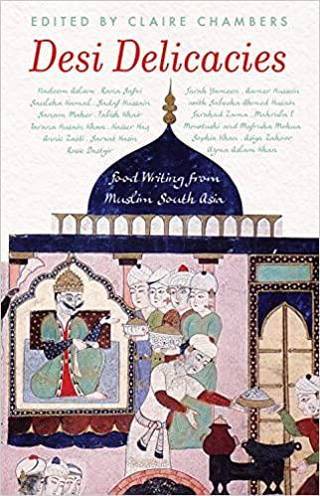
There was no kanji at home, so I had to make do with an appetising description of it in a story called A Brief History of the Carrot by Rosie Dastgir, included in the Claire Chambers-edited anthology, Desi Delicacies: Food Writing from Muslim South Asia. “He poured out two glasses that glowed in the afternoon light. Room temperature, as the aunt’s recipe specified. The taste of it was sour and pungent and strangely restorative, though not exactly as he remembered,” it goes. “Was some vital ingredient missing?”
Where’s the story?
Chambers writes that South Asian kitchens are the “engines of an entire culture”. The volume seeks to capture this essence through essays and short stories. “The picture that we get of Muslim South Asian food is extremely eclectic, taking in everything from taco parties to lotus root slow-cooked in yoghurt, and from khichri to barfi,” the York University professor says in a recent interview.
The collection is quite mouth-watering, especially since each chapter ends with a recipe. The works of fiction, however, left me a bit puzzled. These are nice food pieces, no doubt, but are they stories?
Take, for instance, Jackfruit with Tamarind by Mahruba T. Mowtushi and Mafruha Mohua. The short story is peppered with aunty this and uncle that — interesting characters, all, but each of them making only brief appearances. I would have liked to know more about them, especially about Manwara aunty, for I enjoyed the comparison between her fish curry and Amma’s.
“Amma is fussy when it comes to preparing a fish. It has to be cleaned numerous times… She then smears the pieces with turmeric and salt and lightly fries them — for a minute or two — in mustard oil. Amma has a fervid dislike of people who skip this process. Macher jhol should have a light, refreshing taste and so spices are added sparingly,” the authors write, adding, “Amma always complained of Manwara aunty’s macher jhol, which contained such inordinate quantities of vegetables and an odd assortment of greens that eating it was like walking through a virgin jungle with a machete in hand!”
It is always fun to read about food, but the problem is that this isn’t really a story. It works well as an essay, and is eminently readable, with little descriptions of dishes after every paragraph or two. But a story needs a beginning, middle and end, and this had none.
Stomach rumbling
The Hairy Curry by Asiya Zahoor does have a twist in the end. The story is about young Gulla, a Kashmiri boy who has moved to Srinagar and is working in Bibiji’s kitchen. The description of a lotus-stem dish is invigorating. “The velvety white curry was first to touch his palate. The softness and tangy taste was a delight. Each of the spices had given their essence fully to the curry. Its starchy texture, carrying the spices that complemented each other, was delectable. The lotus stems were cooked properly yet retained a certain crunchiness.”
But Gulla is troubled: there’s hair in the curry — a lot of it!
I was drawn more to the non-fiction part, and particularly enjoyed Rana Safvi’s piece (‘Qissa Qorma aur Qalia’), in which she recounts food memories and practices of Lucknow.
I relished the conversation between two uncles-in-law where they complain (in chaste Urdu) about digestive problems, which persist although they have been following their doctors’ advice and eating “vegetarian khichri”. It transpires that the cook has been adding large amounts of dried fruit and meat to the dish.
The problem with a book like this is that it sends you straight to the kitchen. I certainly felt like cooking khichri after reading Farah Yameen’s well-written story about a child and her troubled phua.
“One does not serve khichri without mash and chutney to someone who is loved,” Yameen writes. Or without papad or pickle, in my neck of the woods. Shows that food, really, has no religion.
Desi Delicacies: Food Writing from Muslim South Asia; Edited by Claire Chambers, Pan Macmillan, ₹450
The reviewer is a food columnist.
source: http://www.thehindu.com / The Hindu / Home> Books / by Rahul Verma / January 16th, 2021
Open to form alliance with Left & Cong; planning to contest all 294 seats, says Pirzada Abbas Siddiqui, the 34-year-old cleric of Furfura Sharif.
Ahead of the Assembly elections in West Bengal, Pirzada Abbas Siddiqui, the 34-year-old cleric of Furfura Sharif in Hooghly district, on Thursday launched a new political party — Indian Secular Front – and said that his party plans to contest all the 294 seats in the state with alliance partners.
His 26-year-old brother Nausad Siddiqui has been named chairman of the new party and Simul Soren the president of the party’s working committee.
“We announced our party today. Now, we will sit for talks with other parties, including AIMIM (of Asaduddin Owaisi), and then we will make clear on how many seats we will contest in this election. For now, we are considering to contest all the 294 seats,” Abbas Siddiqui told mediapersons at a press conference in Kolkata.
Stating that his “doors are open” for an alliance with the Left Front and the Congress, Siddiqui said: “CPI(M) and Congress leaders have sent feelers to us. Both the parties suggested that we first launch our political platform. Let us wait and see.”
“The party will start working from Republic Day. Thereafter, we will announce further programmes. We also plan to hold rallies including one in brigade parade ground,” he added.
He, however, ruled out contesting the elections, saying that he would like to be the “kingmaker”.
“I want to be the kingmaker. I will not contest the election but will do everything possible for the party. We will work for the betterment of Muslims, Dalits, tribals, and the poor. Our party is for all,” said Siddiqui, one of the descendants of Pir Abu Baqar Siddiqui.
Rejecting the charge that his party would enable the division of Muslim votes in the state, Siddiqui said, “So many political parties are there. Many like AAP are coming to Bengal. Some of them will get Hindu or Muslim votes. Why do you say that our party will divide Muslim votes.”
Accusing Chief Minister Mamata Banerjee of failing to deliver, Siddiqui blamed the Trinamool Congress for “allowing BJP to get into Bengal”
“We supported her and she came to power in Bengal. But then her government failed to deliver. So many unemployed youths are in Bengal. It was TMC which facilitated communal discord and allowed BJP to come here. BJP is enemy of the country,” Siddiqui added.
Furfura Sharif is the second most prominent Sufi mazar or shrine in the country after Ajmer Sharif in Rajasthan.
source: http://www.indianexpress.com / The Indian Express / Home> Cities> Kolkata / by Express News Service / Kolkata – January 22nd, 2021
These libraries are then handed over to local villagers for day-to-day management by forming a committee.
The renovated buildings – libraries — are provided a general set of books, chairs, tables and other amenities through crowd-funding and under the Corporate Social Responsibility funds.
Jharkhand :
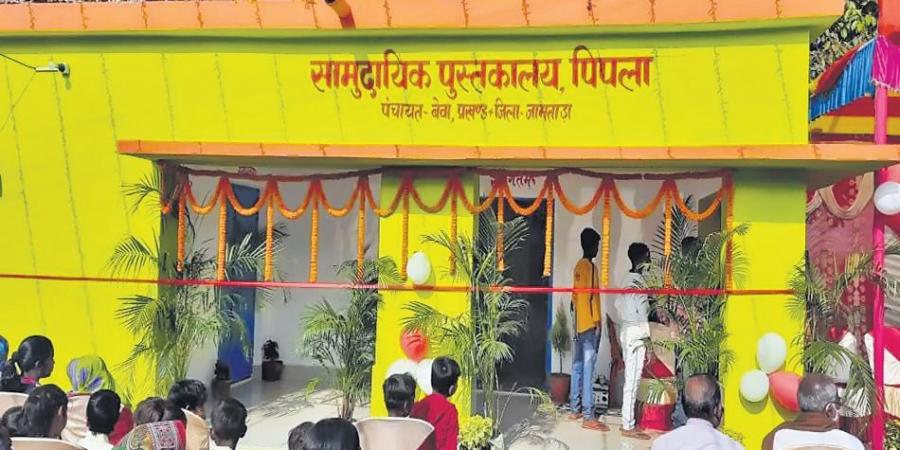
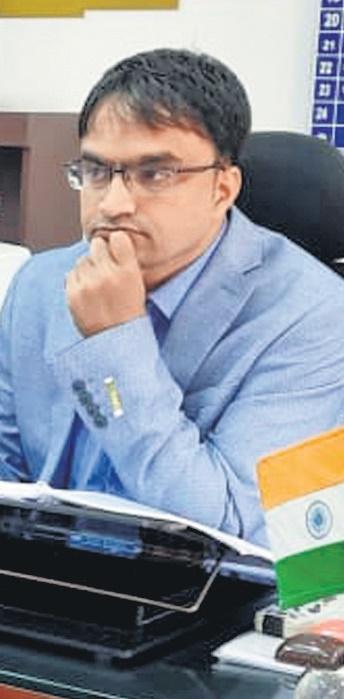
IAS officer Faiz Aq Ahmed Mumtaz has a unique task at hand — that of setting up rural libraries in remote villages of Jamtara so that the poor are motivated to read and write. For that he has made use of abandoned government buildings which have been transformed into 30 libraries under different panchayats of the district. Ahmed says the idea is to provide a better environment to develop reading habits and space at the doorstep of rural youths so that they can clear competitive exams without moving out to cities and towns.
The renovated buildings – libraries — are provided a general set of books, chairs, tables and other amenities through crowd-funding and under the Corporate Social Responsibility funds. These libraries are then handed over to local villagers for day-to-day management by forming a committee. Ahmed says his initiative serves two purposes: the dilapidated buildings are put to use after renovation and, secondly, it develops a community feeling among the villagers.
It has especially benefited girls whose parents are reluctant to send them to a city for education. The deputy commissioner hit upon the idea while holding a ‘janta darbar’ in Chengadih panchayat. A villager while pointing at the lack of education facilities said a library could be a great help for youths who have no means to travel to nearby towns for preparing competitive exams. “I thought in every gram panchayat, there is at least one government building which remains unused. I started renovating these buildings into community libraries.
A first such library was set up at Chengaidih panchayat on November 13 last year,” said Ahmed. The availability of books in these libraries is being ensured under public participation which requires only a modest expenditure, he said. Ahmed said resources are being mobilised with the help of different departments in terms of providing water and electricity to these libraries for which the committee, formed for the purpose, pays. Resources like tables and cupboards are being raised from CSR funds and books are being collected through donations and crowdfunding, he said.
“One bank account has been opened for each library which will help the local committee to raise funds through donations and other means,” said the Deputy Commissioner. The enthusiasm of local villagers has prompted him to expand the initiative to all 118 panchayat in Jamtara. “Reading and education should be given more importance and a library culture should be developed and promoted with community participation. Once this model is successful and a culture of reading develops among rural youths, inter-library competitions could be organized in order to provide a better learning environment to the people, he said. Ahmed believes that libraries can play an important role in the development of any community. “Jamtara is notorious for cyber crimes.
My initiative can help in removing the tag of ‘hub of cyber-crimes’ for Jamtara. Cyber-crimes possibly spread due to the lack of education in the region,” said the Deputy Commissioner. Jharkhand Assembly Speaker Rabindra Nath Mahto, who has inaugurated several such libraries in his Assembly constituency Nala, appreciates Ahmed’s initiative. “Libraries are the temple of knowledge. They ignite our thirst for knowledge and raise one’s mental level,” said the Speaker.
“This is a commendable step taken by the Deputy Commissioner”, he said. Youths are excited about such libraries. “We must thank the deputy commissioner for the precious gift to Chengadih panchayat. We had to travel long distances to get a book,” said Nasiruddin Ansari, a student. “The library is helping us a lot for preparing for various competitive exams”, he said. Ashraf Ali, another student, said the library has given a new hope to the youths in his village. “The library in Chengadih has brought about a positive change among the youths; they are now more serious about books and their studies,” Ali said. Dipankar Mondal, a student, said many youths like him will make him proud one day.
source: http://www.newindianexpress.com / The New Indian Express / Home> Good News / by Express News Service / January 24th, 2021
File image of Sameera Fazili, Deputy Director, National Economic Council at the White House| Twitter/ Sameera Fazili
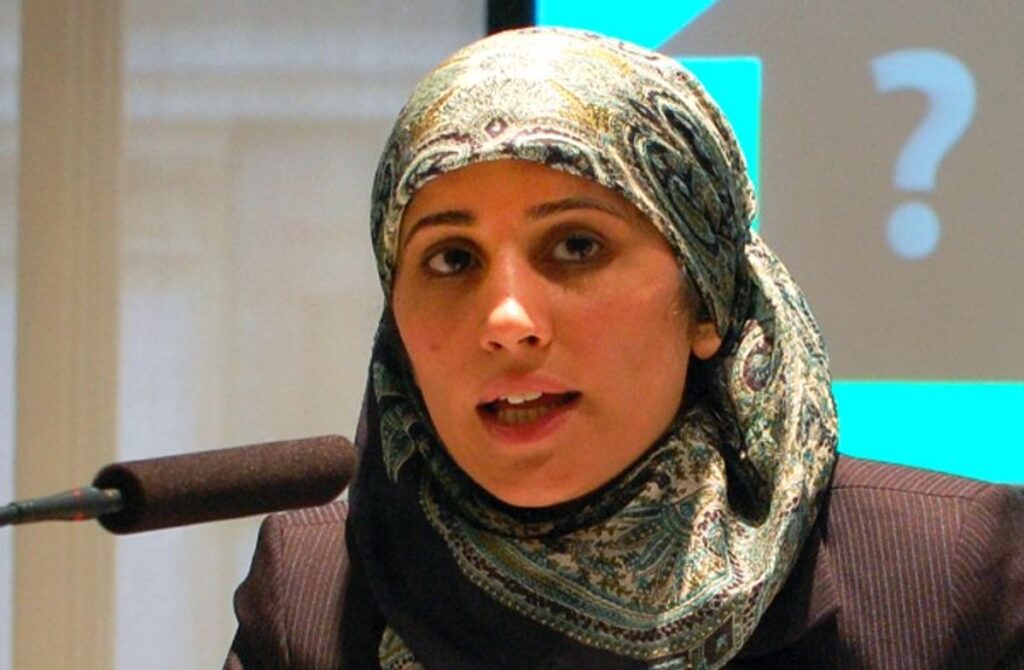
‘Sameera Fazili has been named as Deputy Director, National Economic Council at the White House, the Biden-Harris Transition announced on Friday.
US President-elect Joe Biden has appointed Indian-American Sameera Fazili to a key White House position related to economy.
Sameera Fazili has been named as Deputy Director, National Economic Council at the White House, the Biden-Harris Transition announced on Friday.
The National Economic Council coordinates the economic policy making process and provide economic policy advice to the US president.
Fazili is currently the Economic Agency lead on the Biden-Harris Transition. She was earlier posted at the Federal Reserve Bank of Atlanta where she served as the Director of Engagement for Community and Economic Development.
Fazili is the second Kashmiri-origin Indian-American appointed to a key position in the incoming Biden administration.
In December, Aisha Shah was named as Partnerships Manager at the White House Office of Digital Strategy.
In the Obama-Biden administration, Fazili served as a senior policy advisor on the White House’s National Economic Council and as a senior advisor at the US Treasury Department in both Domestic Finance and International Affairs.
Prior to that she was a clinical lecturer of law at Yale Law School. Originally from Buffalo, she now lives in Georgia with her husband and three children. Fazili is a graduate of Yale Law School and Harvard College.
Before her time in government, Fazili was a clinical lecturer at Yale Law School’s community and economic development clinic, where she helped start a CDFI bank and a local anti-foreclosure initiative, and expanded the clinic’s work to international microfinance.
She also worked at ShoreBank, the nation’s first CDFI (community development financial institution) bank. Her work in finance has spanned consumer, housing, small business and microfinance.
She received her law degree from Yale Law School and her bachelor of arts in social studies from Harvard College.
source: http://www.indianexpress.com / The Indian Express / Home> World / by PTI / Washington – January 16th, 2021
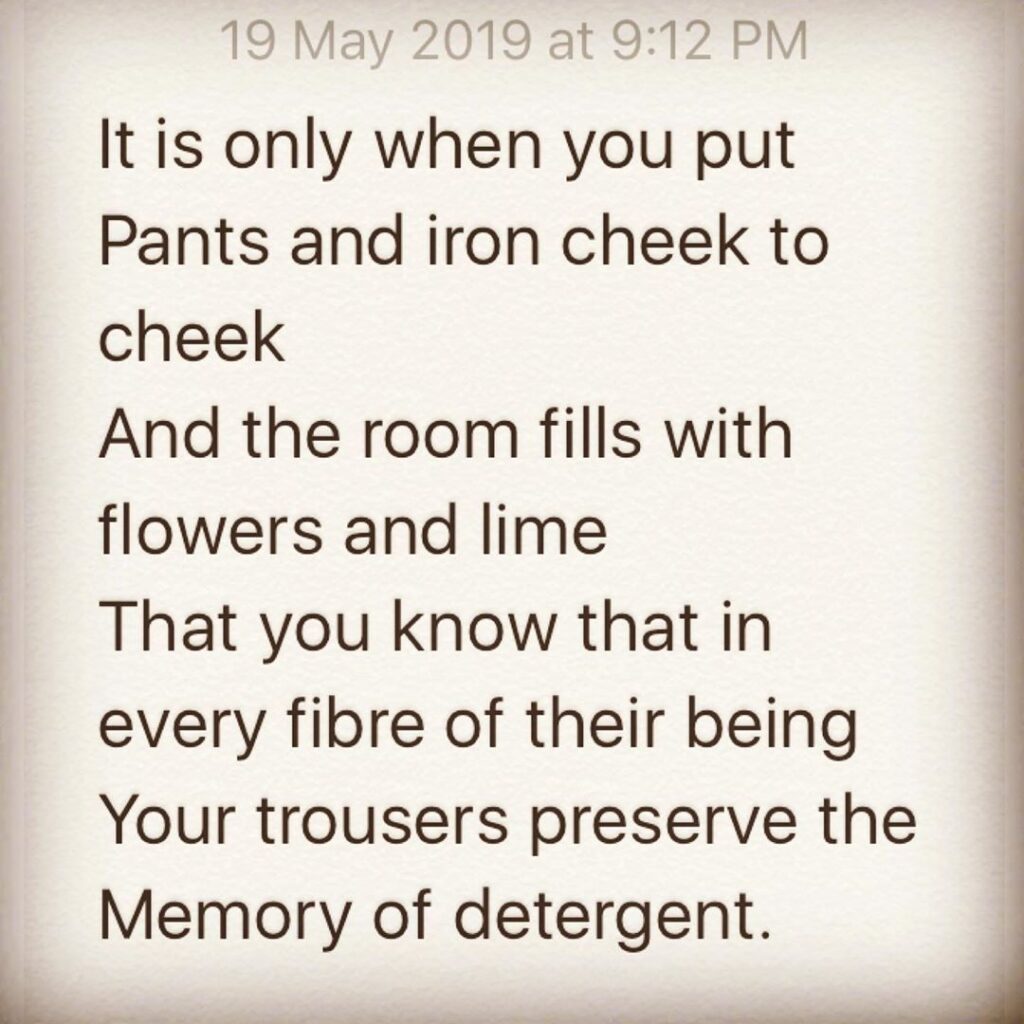
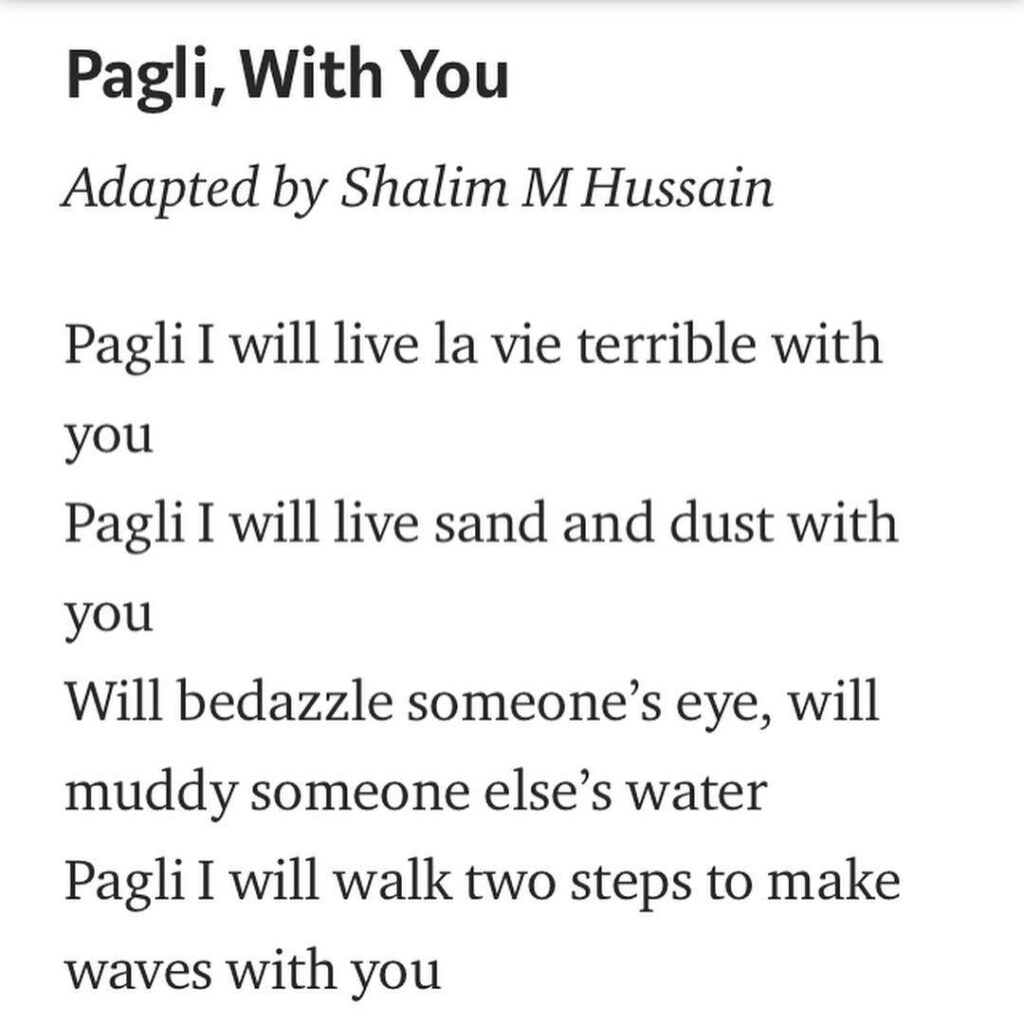
Delhi-based poet Shalim M. Hussain’s Miyah poetry provides the metaphorical loudspeaker to the long-ignored voices of the Bengali-Muslim migrants living in the riverine plains of the Brahmaputra by documenting their stories of love, loss, celebration and injustice
Nana I have written attested countersigned And been verified by a public notary That I am a Miyah Now see me rise From flood waters Float over landslides March through sand and marsh and snakes Break the earth’s will draw trenches with spades Crawl through fields of rice and diarrhea and sugarcane And a 10% literacy rate See me shrug my shoulders curl my hair Read two lines of poetry one formula of math Read confusion when the bullies call me Bangladeshi And tell my revolutionary heart But I am a Miyah See me hold by my side the Constitution Point a finger to Delhi Walk to my Parliament my Supreme Court my Connaught Place And tell the MPs the esteemed judges and the lady selling Trinkets and her charm on Janpath Well I am Miyah. Visit me in Kolkatta in Nagpur in the Seemapuri slums See me suited in Silicon Valley suited at McDonalds Enslaved in Beerwa bride-trafficked in Mewat See the stains on my childhood The gold medals on my PhD certificate Then call me Salma call me Aman call me Abdul call me Bahaton Nessa Or call me Gulam. See me catch a plane get a Visa catch a bullet train Catch a bullet Catch your drift Catch a rocket Wear a lungi to space And there where no one can hear you scream, Thunder I am Miyah I am Proud.
Shalim Muktadir Hussain is not an easy man to get a hold of. He belongs to the long tradition of Bengali-Muslims who have been sharing their lived experiences through the genre of Miyah poetry. The genre originates from the Bengal Partition-era migrants residing in Lower Assam, locally known as Char-Chapori. With stories of love, loss, celebration and injustice, it has historically served to lift up the long-ignored voices of the Bengali-Muslim migrants living in the riverine plains of the Brahmaputra and document their interactions with the world outside the region. But Hussain’s activism isn’t limited to the written word – the first time that I’m able to get in touch with him, he is attempting to rescue his fellow Miyah poets, who have been arrested on account of their ‘divisive’ poetry. I try again, and this time, I catch him in the middle of helping the victims of a bus accident. This humanitarian spirit shines through in his poetry, which I was first acquainted with at Godrej Culture Lab’s Migration Museum, a one-day pop-up that shed light on partition-era struggles. Months later, he shares his views on the Miyah genre, the under-representation of Assamese voices, and more.
Tell us about your personal journey as a poet. My journey with Miyah poetry, or the current phase of assertive Char Chapori poetry, started in 2016. Prior to it, I had been publishing poems for more than a decade. My first book of poems was published in 2017. Poetry as an art form came organically to me; I was looking at the world through a unique lens and had the ability to present this vision through carefully chosen words. Over the past few years, there has been a steady flow of literature from the Chars. This includes a strong collection of poems which depict the lived experiences of residents. Miyah poetry, in my opinion, is a continuation of the genre of Char Chapori poetry and its evolution. When the president of Char Chapori Sahitya Parishad, Hafiz Ahmed published the poem Write Down I am a Miyah on Facebook in April 2016, I responded to it with my composition titled Nana I have Written. Other poems were written in response to our poems and a small body of poetry emerged within a week. I realized that these were written primarily in Assamese and our local dialects which had to be translated to English so I started translating them and sent them out to literary journals and blogs. In the last couple of years, I have been writing poems in both English and the local dialect and translating both my own and works of other poets. Since then more translators have also emerged and by translating their works into other widely read languages such as English and Hindi, we have been able to reach wider audiences.
Do you think stories from Assam are under-represented? The national media focuses only on certain parts of the country. However, if the maximum potential of social media is harnessed, stories from not just Assam but other states too can find representation. Poetry is very personal for me, when I write about the land I was born and other fiction, the stories come from my personal experiences. The documentary films I have been involved in spotlight the performing arts of the Char Chaporis. According to me, all narratives – creative, journalistic, archival and academic are equally important. Miyah poetry gives a holistic view of life in Assam and the Chars.
How has digital media been helpful in popularising Miyah poetry? Digital media has aided in increasing reach and accessibility. For instance, one the offshoots of Miyah poetry is music videos and audio-visual recording of the poems. In August 2016, three poets started Itamugur, a YouTube channel named after a hammer-like instrument used to break hard clumps of earth before preparing the fields for sowing. That it is less aggressive and has a more meaningful purpose than a regular hammer is a telling quality of what they stand for. Their Bhatiyali music videos which have drawn great attention to the stories of the Char-Chaporis.
Do you think spoken word is more powerful to bring attention to the art form? I am just getting acquainted with spoken word but yes, it has played a huge role in the spread of Miyah poetry. We have read our poems at different venues and received great response from the audience.
Have you been able to change people’s perception about the community through this device? We have been able to change the perception of many people — even the residents of Assam — who didn’t know much about life in the Chars. Since Miyah poetry talks about lived experiences of love, loss, and celebration, it has been successful in bringing the ordinary life in the Chars to light. Until a couple of months ago, the representation of the Bengal-origin Assamese Muslims in media wasn’t positive; they were portrayed as thieves, dacoits and rapists. Today, we are representing ourselves appropriately through poetry regardless of others’ opinions. The narrative has definitely shifted.
You have explored various fields as a writer, poet, professor and filmmaker. Which one do you prefer? I like being a professor. One can communicate in real-time with their audience, which puts a lot of responsibility to be careful with the selection of material that should be used in the class and the language of communication. Writing allows me to tell my own stories, so there’s more freedom. As far as film-making is concerned, I wouldn’t call myself as a filmmaker. There are some art forms I think should be documented, and I do my best.
What is the future of Miyah poetry, according to you? As long as Miyah poems are written, the tradition will remain alive. In the absence of organisational structure, independent poets write poems and share them on social media platforms. There isn’t a formal definition of ‘Miyah Poetry’ which we abide by; poets themselves decide if their work qualifies to be termed in this genre. It is democratic, as no one decides if a work is a ‘real’ poem or critiques it as a good or bad poem. Every Miyah poet is an individual and each voice is precious for us.
*To reproduce the above poem in any form, copyright permission must be sought from Shalim.
source: http://www.vervemagazine.in / Verve / Home> Arts & Culture> Library / by Ojas Kolvankar / August 28th, 2019
Be it heirloom dishes or new-age recipes, this cookbook, penned by Badrunissa Irfan – mother of Uzma Irfan, director, Prestige Group – dishes out something for everyone
Bengaluru :
Ever wondered what makes the food coming from your grandmother’s or mother’s kitchen yummier than even the best chef in the world?
There’s something comforting in these dishes prepared by seasoned hands sans any sort of measurement.
The recipes in Duniya-e-Ziyafat, a cookbook by Badrunissa Irfan, mother of Uzma Irfan, director, Prestige Group, dishes out some recipes that are sure to give you hunger pangs. The book was launched on Saturday at Sublime Art Galleria.
In the 184-page book, Irfan spills the secrets to some mouth watering dishes like Nalli Ka Salan, Herby Chicken among a host of others. According to Irfan, minimum spices and processes are secrets behind the taste. “The recipes that are shared in the book are simple which even beginners can follow. I always try to keep my recipes minimal so that the flavours are enhanced. With extra garam masala and red chilli powder, you tend to miss out on the delicateness of the dishes,” says Irfan, adding that the other best kept secret is a clean kitchen. “I see many people who make a mayhem in the kitchen even if they just chop a cucumber. A clean kitchen provides clarity of mind,” she adds.
The book is a compilation of recipes that Irfan had written for her daughter, Uzma, when she was in London. “In uni, there’s not enough time to prepare an elaborate meal, so you need quick ones, which also give you a taste of home,” says 62-year-old Irfan, adding that she hopes the book helps people churn out some delicious recipes even during a busy schedule.
Although there is no doubt that her meat dishes steal the show, her vegetarian dishes also have an equal number of takers. With options like Stir Fried Tofu, Herb Roasted Potato and more, the book has something for everyone. “It’s mandatory to have a veggie dish in every meal that is cooked. My husband, Irfan Razack, is man of simple taste, he enjoys any vegetarian dish,” she says, adding that there are enough dessert options too.
Family ties remain strong in this book since it also contains some recipes Irfan had learnt from her mother. “I started cooking at the age of six. Coming from a joint family, it used to be such nice way to bond,” recalls Irfan, who went on to also learn how to make pickles from her grandmother. Besides some heirloom recipes, Irfan’s cookbook also contains newer recipes which she discovered over time. The book can be pre-ordered on sublime.in
source: http://www.newindianexpress.com / The New Indian Express / Home> Cities> Bengaluru / by Monika Monalisa / Express News Service / January 19th, 2021
When Suvendu Adhikari crossed over to the BJP, it was said there’s no reason to fuss over the desertion of Mir Jafars. Now actor Rudranil Ghosh has earned the sobriquet of Mir Jafar 2.0. But what is it to be the progeny of a man-turned-pejorative?
The setting of this story is Lalbagh, a locality in Murshidabad, erstwhile capital of Subah Bengal or present-day Bangladesh, Bengal, Bihar and Odisha. According to the book The Musnud of Murshidabad (1704-1904), “Being more conveniently situated than Dacca for the collection of revenue and the supervision of trade… Murshed Kuli Khan, the Great Dewan of Bengal, selected it as his headquarters and embellished it, giving it its present name after his own.” This was in the early 1700s.
Thirty kilometres away from Lalbagh is Plassey, and Calcutta is 200 kilometres away. The nawab’s estate here has an enormous entrance; it was designed such that stately elephants could saunter through. To its left there is a two-storey stretch limo of a building punctured with countless square windows. “It is the house of the Bade Nawab and the Chhote Nawab,” says local guide Swapan Chowdhury. Yes, the Government of India abolished the princely order in 1971, which means titles are not recognised; but the usage endures in various orbits of society to suggest legacy, status or power, oftentimes as veneer on a less grand present.
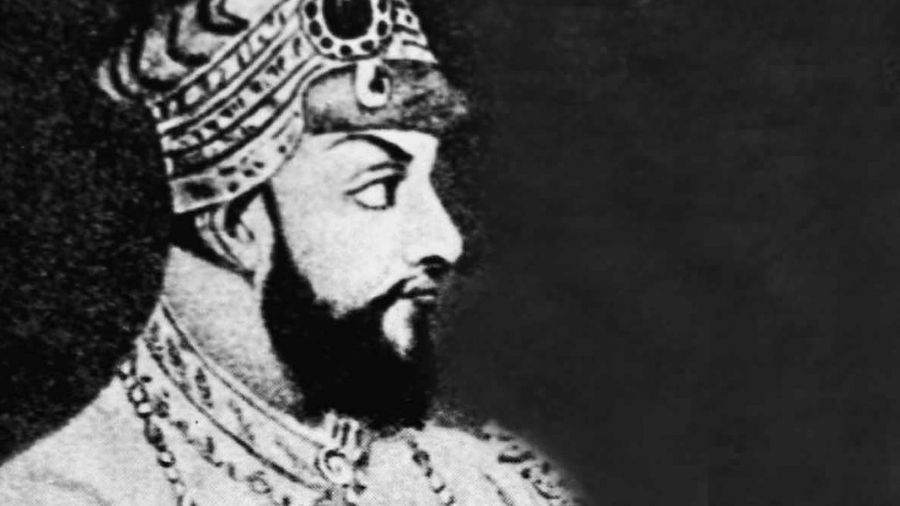
The two “nawabs” are among the living descendants — eighth generation to be specific — of Syed Mir Jafar Ali Khan Bahadur, commander of the Bengal army under Nawab Siraj ud-Daulah. He whom we today know as Mir Jafar, shorn of all gallantry, accomplishments and grandeur he might have been associated with once. The same who is synonymous with the betrayal he perpetrated on the young Siraj in Plassey in 1757.
And so you have — mir jafar (n) once man, now pejorative; most commonly used Indianism for traitor or turncoat.
***
Syed Mohammad Reza Ali Meerza or Chhote Nawab greets me as he hurriedly picks a white kurta from the clothesline and slips it over his head. “This is the building that housed the sentries during Mir Jafar’s time,” says the 79-year-old.
Reza Ali has worked as a state government employee all his life. “My tenure as a permanent employee fell short by a few days and that’s why I do not get any pension, etc.,” he lets slip a crib and thereafter quickly arranges some plastic chairs, and with a wave of his hand and a “tashreef rakhiye” continues his narration.
Pointing to the recently installed statue of Siraj ud-Daulah bang opposite his house he says, “Siraj ke aami khoob bhalobashi… I love Siraj very much. People say Mir Jafar betrayed him. Bhul bole… that’s wrong.”
And yet from what he says, it is clear this is one “wrong” he and his kin have trouble living down even today. Tourists, visitors, researchers, all continue to raise eyebrows when they learn about the family tree. What about locals? He replies, “Oh! People here love me. They say: ‘We do not care about Mir Jafar. We know you are a good human being’.”
He offers a quick tour of the andarmahal. There are pictures and memorabilia aplenty littered all over. Is any of this Mir Jafar’s?
No. Most of the belongings of the nawabs are kept in the museum inside Hazarduari Palace. That collection includes Mir Jafar’s sword, shield and dagger, his footwear, the cutlery he used.
The Hazarduari Palace, Wasif Manzil, and Begum Manzil are all part of the nawab’s estate. Reza Ali offers to take us around. On our way out, we meet Syed Mohammed Abbas Ali Meerza, or Bade Nawab.
Abbas Ali has a persona quite distinct from his younger brother’s. He is of reserved bearing and stands on ceremony. He is quick to inform that, in 2013, he won “the case” in the Supreme Court and since then he and his brother have been recognised as genuine claimants to the title of the Nawab of Murshidabad.
Without the prodding, Abbas Ali starts talking about his ancestor. “Who says Mir Jafar was a traitor? Mir Jafar hails from the Najafi dynasty. We are the direct descendants of Prophet Hazrat Mohammad.”
The Najafi dynasty was born when the Prophet’s grandchildren Hasan and Husyain’s children married. Abbas Ali explains, “Hasan’s son Hassan e Mussanah and Husyain’s daughter Hazrat Fatimah Sughra married. And then the Najafi dynasty was born. We are the descendants of Husyain Najafi. His son Ahmad Najafi was married to Zinnat-un-Nissa, daughter of Shah Jahan’s son Dara Shikoh. Mir Jafar was their son.” He adds, “Mir Jafar was much higher in status to Siraj ud-Daulah, both by bloodline and given that he was the son-in-law of Alivardi Khan, the nawab of Bengal and grandfather of Siraj.”
Says Abbas Ali, “Had he wan-ted to kill Siraj, he wouldn’t have had to go through all the drama of Plassey. He could have got the musnud (throne) from the Mughal emperor himself.”
Dr S.M. Reza Ali Khan is another descendant of Mir Jafar. The Telegraph had interviewed him in January 2020; months later he died. Khan was a professor of history and had done a lot of research on the Battle of Plassey and Mir Jafar. He had said over phone from Hyderabad, “The ignominy attached to this name does not give us a good feeling.”
Dr Khan believed it is not quite right to judge Mir Jafar by cutting him away from the age he belonged to, the environment and those circumstances. He had said, “It was the 18th century and there was no concept of nationalism. And even if there was, let me tell you Siraj was not a great nationalist either. Besides, he had killed his own brother, his uncle and even the husband of Alivardi Khan’s eldest daughter, Ghaseti Begum, to get the musnud.”
Through the lockdown Dr Khan would call many a time with this reference and that reference from history texts. He spoke about the Sheths of Murshidabad, a very powerful community in the 18th century. They did business with French and British traders. Jagat Sheth Mehtab Chand, one of the most prominent businessmen of Murshidabad, used to lend money to the British at a steep interest. Dr Khan had said, “When Siraj declared the British as his enemy, Mehtab Chand could not have been very pleased. His business would have been hampered.” It seems a fair number of Sheths had stood up against Siraj.
Abbas Ali too spoke about Siraj’s unpopularity. Siraj had planned to kidnap the daughter of Rani Bhabani, the queen of Nator. “This was not well received by the Hindu nobility… Siraj had insulted Mir Jafar once in the durbar by having his beard shaved off.”
Octogenarian Baquir Ali Meerza is yet another descendant; he too is based in Lalbagh, but in Kella Nizamat. He says, “It is true we have to suffer the ire of people because the history books say Mir Jafar did not fight in the Battle of Plassey. But these books do not say why he did not fight.”
In The Black Hole of Empire, Partha Chatterjee cites from the Fort William Select Committee Proceedings of May 1, 1757. It reads, “The Committee then took into consideration, whether they could (consistently with the Peace made with the Nabob) concur in the measures proposed by Meer Jaffir of taking the Government from Souragud Dowla, and setting himself up…” Sometime end-June, the British won Plassey. In the same book, Chatterjee writes, “The battle was over by the fall of dusk. The next day, Clive wrote to Mir Jafar: ‘I congratulate you on the victory, which is yours not mine…’”
Baquir Ali’s version differs. He says, “Mir Jafar’s tent was closest to the British forces. The British had come to fight the French, not Siraj ud-Daulah. Armed with only 2,000 soldiers, they came to Plassey and found that Siraj was waiting there with an army of 20,000. The French army stood in front of Siraj’s camp. Mir Jafar’s camp was far away.”
According to him, the British approached Mir Jafar and asked him to mediate with the nawab. Mir Jafar sent a messenger to Siraj but it would have taken a day to cover the distance. In the meantime, the French army opened fire. The British mistook it as Siraj’s rejection of their proposal and retaliated. “Mir Jafar was confused and did not know what to do… What happened at the battlefield of Plassey is a case of misunderstanding and not betrayal,” says Baquir Ali.
The Telegraph asked Abu Taher Khan, the Trinamul MP from Murshidabad, his views on Mir Jafar. A guarded Khan replied, “In this atmosphere it is best I don’t comment on Mir Jafar… But it was because of Mir Jafar that our country lost its independence. Many people say, ‘These people come from the land of Mir Jafar’. Anyone can understand in what context it is being said.”
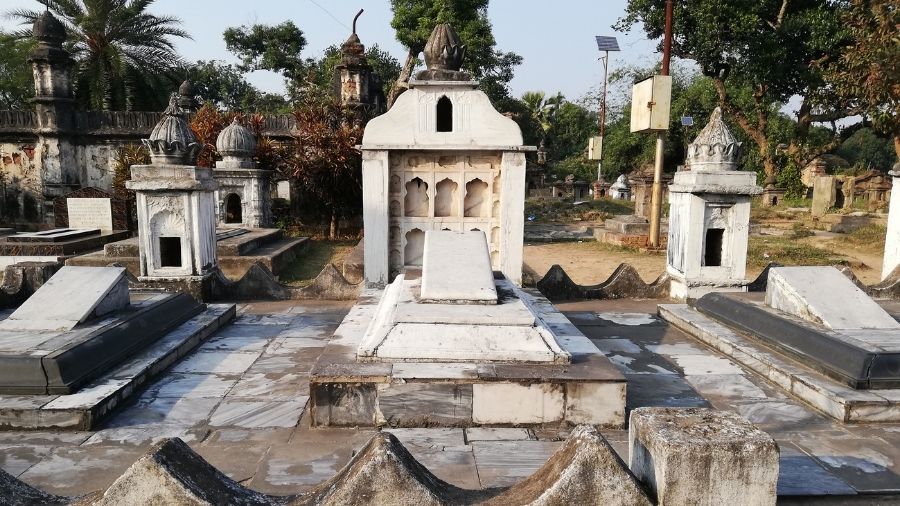
Grave Truths : Mir Jafar’s tomb in Murshidabad / Picture by Moumita Chaudhuri
On my way back from Murshidabad, I make two more stops — Mir Jafar’s palace and his tomb. As it turns out, there is no trace of the palace, only remains of what used to be its gates. The place is still referred to as nimakharam deuri or traitor’s gate. The Jafarganj cemetery that houses the tomb is also closed that day. The auto-rickshaw driver who has driven me around says, “Earlier it was always open, but then tourists would come and spit on it, kick it. That is when the local administration had it walled; a gate was installed.”
Locked too behind that gate are the graves of Heera and Panna, actors of the era’s dubious games of estate and empire. Falcons both, Heera and Panna flew spying sorties for the house of Mir Jafar — to the Siraj camp or, some say, to the British battlements, who knows? They were both killed in the line of duty, shot out of the skies — some say by Siraj’s marksmen, others that it was actually the British, who knows? Both were dear enough to be accorded resting places at the back of where Mir Jafar lies — to that there is sacrophagal evidence. The rest is contrary apocrypha, pick your version. That’s often the case with history too, narratives compete, interpretations duel.
I remembered what Abbas Ali had told me, “The British wrote our history. What I don’t understand is why the nawabs after Mir Jafar did not take it upon themselves to put out their version. If only…,” his voice had trailed off.Bloodline
Mir Jafar had three wives
Shahkhanum Begum
Offspring:
Fatima Begum and Mir Miran
Mir’s son is Murtaza Khan
Murtaza’s son is Mustafa Khan
Mustafa’s son is Asadullah Khan
Asadullah’s son is Azam Ali Khan
Azam’s son is Faiyaz Ali Khan
Faiyaz’s son is Jafar Ali Khan
Jafar’s son is *Dr S.M. Reza Ali Khan
Munni Begum
Offspring:
Nazam ud-Daulah
Saif ud-Daulah
Both died young
Babbo Begum
Offspring:
Mubarak ud-Daulah
Mubarak’s son is Babar Jung
Babar Jung had two sons, Ali Jaj and Wala Jah
Wala Jah’s son is Humayun Jah
Humayun’s son is Firadun Jah
Firadun’s son is Hassan Ali Meerza
Hassan Ali’s son is Wasif Ali Meerza
Wasif Ali’s daughter, Sahibzadi Hasmat-un-Nissa, married Sadiq Ali Meerza
Sahibzadi’s sons are
*Syed Mohammed Abbas Ali Meerza and
*Syed Reza Ali Meerza
*Descendants quoted in the story
source: http://www.telegraphindia.com / The Telegraph Online / Home> Big Story / by Moumita Chaudhuri / January 17th, 2021
How Azim Premji expanded his business from vegetable oils to info-tech and put his money where his heart is
The story of a person can be inspiring. The authors have chosen their subject well, for, everyone knows of Azim Premji, but few truly know what makes the man.
A book about such a person, if well-written, may possibly inspire the reader into action. In this case, soon after you read the book, it’s difficult not to look up the Azim Premji Foundation website, to see if it had any volunteering opportunities, even if you have done nothing like it before!
In chronicling any life, it is easy to get mired down with mind-numbing detail that comes your way if you are sifting through 50-odd years’ worth of the protagonist’s hits and misses. The authors have done well to stick to the most interesting parts of Premji’s life. Two things stand out across events and across time: his integrity and a penchant for frugality.
Zest for austerity
His insistence on paying for personal calls made on his office phone is legendary. His friends know of his love for cars but also about his unwillingness to spend fanciful amounts on one.
He once wanted to buy a Fiat that was registered in Wipro’s name. He got the finance department involved in the discussion as he wanted to play by the rules and pay for the purchase. But with depreciation, the car’s value was zero to the company. The transaction did not go through.
At one point, his friends were agog with excitement at his purchase of a Mercedes, but it was… hold your breath… a second-hand one!
At another time, when his team was preparing to welcome clients on a visit to headquarters, and took Premji over the arrangements that included meals from a five-star hotel, he quipped, “If our cafeteria is good enough for our employees, it should be good enough for clients too!”
It’s probably the same zest for austerity that had him pleased while on a U.S. visit, when two of his senior-most executives bought lunch for the three of them at a Burger King outlet for less than $7.50! And, this was a man who didn’t bat an eyelid when an employee of the vegetable oils business lost ₹25 lakh in a year in a trading position.
A long journey
The book chronicles the journey of Wipro from the time the Premjis put down roots in Mumbai. It throws light on the man’s spirit of entrepreneurship, as the company cautiously experimented with opportunities — expanding from vegetable oils to engineering products, computer hardware, tech services and consumer care and lighting. It also does not shy away from some of Wipro’s missteps such as the investment in financial services, a business which withered away despite the group’s entry into the space after much thought and preparation.
His management style
While doing justice to the man’s talent for perseverance, the authors have touched upon his management style that many say cramped some CEOs under his chairmanship. His taking over as CEO in 2005 after the abrupt exit of Vivek Paul, said to have been primed for the post, or his decision to have a joint CEO structure soon after, at a time when competitors were blazing ahead, had raised eyebrows in the world of IT services at the time.
The reader may get the sense that the authors occasionally sound deferential when talking about the man or his family. But, it’s difficult not to be overawed by someone who has never sold a single share in his company but who chose to give away $21 billion worth of wealth to his foundation, leaving his two sons with shares valued at about ₹65 crore. How can one give away so much wealth and still, on the morning the news about the latest transfer to the foundation breaks, irritably ask an employee — who speaks of congratulatory messages overwhelming social media — “What’s all the fuss about?” ?
This book is a must-read for anyone who can read English.
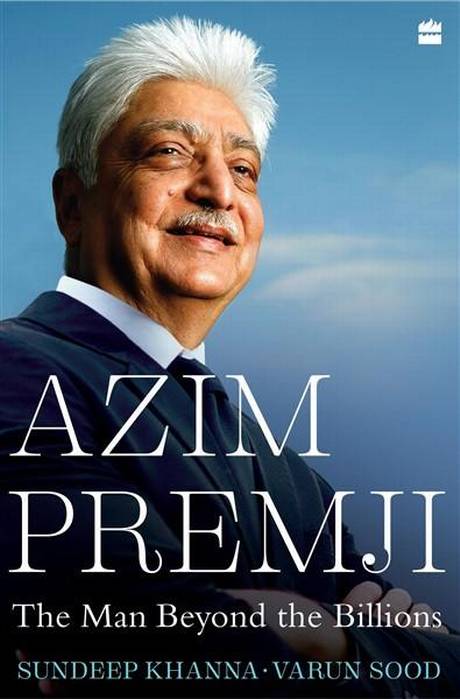
Azim Premji: The Man Beyond the Billions; Sundeep Khanna, Varun Sood, HarperCollins, ₹699.
bharatkumar.k@thehindu.co.in
source: http://www.thehindu.com / The Hindu / Home> Books> Reviews> Profile / by K Bharat Kumar / January 16th, 2021
Shabera Ansari, a resident of Indore, is posted as DSP (Women’s Cell) at Dewas in Madhya Pradesh.
New Delhi:
Parents in middle-class Muslim families generally believe that their children would hardly get a government job. Hence, they find it better to engage them in some work rather than letting them pursuing studies. But a young woman from a middle-class family has busted such myths by becoming the Deputy Superintendent of Police.
Shabera Ansari, a resident of Indore, is posted as DSP (Women’s Cell) at Dewas in Madhya Pradesh and her father is posted as a Sub-Inspector at a police station in Indore.
Shabera said she had a normal childhood and there were never big dreams to pursue. When she went to college, at the age of 19, marriage proposals started coming in but fire in the belly to do something egged her on. Finally, she joined the police forces and became a DSP. Currently, she said, she is preparing for civil services exams.
The young woman said that soon after passing her out of a government school in Indore, she enrolled in a college and started preparing for Union Public Service Commission (UPSC) examinations along with her regular studies.
From SI to becoming DSP
She was selected as Sub-Inspector in 2013, and in 2018 posted as Trainee DSP in Sidhi.
Shabera’s family originally hails from Ballia in Uttar Pradesh, but settled down in Indore about 30 years ago due to his father’s job in state police.
“I was an average student in school and also failed in Mathematics once,” she told IANS with a chuckle.
“A marriage proposal came when I was just 19. I was scared and decided to do something. I started my journey and never looked back. I started preparation for the state government services during college and tasted success in the first attempt… I have continued studying ever since,” she said with confidence.
Shabera further added:
“My mother always supported me. Initially, it was not clear if I will opt to join the police, though there was always an interest since my father is in police service.”
A Successful Journey
Surprisingly, Shabera is the first woman in her family to crack state civil service exam and has now become an inspiration for her community.
Many times, she was honoured as chief guest in various functions, including school programmes where she interact with children who are always curious to know about her journey.
“I always try to encourage children and motivate them to do something in life,” Shabera said.
“Little children seem very fond of taking selfies with me,” she smiled.
She said:
“I often do counselling of children of Muslim families, especially boys. I tell everyone to trust themselves and study seriously; hardwork will definitely change things.”
Shabera said she also got to learn a lot from her father. It could be a coincidence that Shabera was incharge of a police station during lockdown where her father was posted.
In fact, her father had gone for some work to Uttar Pradesh when the lockdown was imposed and he got stuck. Shabera tried to somehow bring her father back but to no avail. Eventually, the police authorities issued direction that he could do duty from wherever he was stuck.
She said that she had many times gone out on patrol duty at night with her father. However, once back home, she used to cook for him.
She said that her father respects her as an officer but Shabera has to many times remind him that she is an officer at office not at home.
source: http://www.ummid.com / Ummid.com / Home> Life & Style / by Mohammad Suaib / IANS / January 17th, 2021
The Punjab Cabinet had given its nod for the acquisition, conservation and use of the palace for tourism on Monday.
Begum Munawwar-ul-Nisa. (Express Photo)
After decades of neglect, 150-year-old Mubarak Manzil Palace of Malerkotla will soon be a protected monument and restored and renovated by the Punjab government, thanks to Begum Munawwar-ul-Nisa, the wife of last Nawab of Malerkotla, who has handed over the private property to the government.
The Punjab Cabinet had given its nod for the acquisition, conservation and use of the palace for tourism on Monday.
Begum Nisa, a princess, is the successor of Nawab Sher Mohammad Khan of Malerkotla, who holds a special place in Punjab’s history. He had vehemently raised his voice against the execution of the younger Sahibzadas of Guru Gobind Singh, Baba Zorawar Singh and Baba Fateh Singh, in the court of the Subedar of Sirhind, Wazir Khan, in 1705.
The 97-year-old Begum Nisa, speaking to The Indian Express on a conference phone call through former Aam Aadmi Party (AAP) leader Arshad Dali, said, I have handed over the palace to the government. Meri akhiri ichchha, aap keh sakte ho, yahi hai ke main iss mahal ko pehle ki tarah jagmagata chorr kar jayun. (My last wish, you can say, is to see the palace return to its pristine glory before I die).” Begum Nisa has no child or legal heir.
Dali has become a bridge between the government and the Begum, who wanted the government to acquire the palace. “She was worried that after her the palace would be usurped by private parties. Now it will become a government’s possession. After all, there is the important history of this place. Guru Gobind Singh had presented a sword to Nawab Sher Mohammad Sahib as a mark of honour for his support for his sons.”
Sanjay Kumar, Administrative Secretary, Tourism Government of Punjab, told The Indian Express that the government would soon initiate the process of declaring the palace a protected monument of the state. “We will declare it a protected monument after inviting objections. It will be a protected monument under the state’s Act. After that, we will start conserving and renovating the palace. We have accepted the Begum’s precondition that we should allow her to stay in the palace during her lifetime. After that, none of her successors will be allowed to stake claim on the property. It will be Punjab government’s property.”
He said that the government had offered Rs 3 crore to the Begum, “She had been apprehensive that the palace of such historical importance would be lost if there is no taker.”
About the condition of the palace, Sanjay Kumar said, “I can say it is not good. Roof of several rooms has collapsed and the entrance is also in bad shape.”
Begum Nisa had been living in penury for many years. The valuables in the palace were sold off over the years. Former Cabinet Minister Navjot Singh Sidhu had once visited her and presented her with some pieces of furniture.
Begum Nisa had written to the state government that she is the sole owner, and has absolute rights to alienate the property to any person, including state or Tourism & Cultural Affairs Department.
The palace is spread over an area of 32,400 sq ft. There are several cases involving it going on in several courts.
The expected financial liability involved in purchase of this proposed protected monument and likely financial implications arising out of existing court cases is around Rs 5 crore. The government has got the land price evaluated.
source: http://www.indianexpress.com / The Indian Experss / Home> India / by Kanchan Vasdev, Chandigarh / January 13th, 2021