Category Archives: Community Involvement / Social Issues

Aligarh and Women’s Education: A Brief Overview

Aligarh, UTTAR PRADESH :

Women’s education in nineteenth-century India was no easy task. In the case of Muslim women, the task was even more difficult due to their triply marginal identity: as colonial subjects, as women, and as Muslims. Not only did the custom of purdah added to their seclusion from the social and cultural changes, their men hated everything about the western cultural influence (being displaced as rulers by the British). As a result, the middle class (the initiators of reform) was to develop late among the Indian Muslims than their Hindu counterparts. Nevertheless, by the late nineteenth century, a middle-class among the Indian Muslims was fledging. For this, no institution of the nineteenth-century can be given more commendation than Aligarh Muslim University.

Formed in 1920, the Aligarh Muslim University just completed its hundred years as a modern residential university. There has been a perception that the Aligarh Movement, for whatever reasons, neglected the issue of modern education to Muslim women. But there is more to this argument, some things to be explored, some to be re-interpreted.

This article, therefore, attempts to trace the genesis and trajectory of women’s educational reform in Aligarh through the profile of a woman reformer – Waheed Jahan (1886-1939), wife of Shaikh Abdullah (1874-1965), and the co-founder of Aligarh’s first girls’ school. Waheed Jahan was a pioneer of Muslim women’s education at Aligarh in the early twentieth century. Her role in ending the relative isolation of Indian Muslim women, while at the same time preserving the Muslim identity of the community, is worthwhile to recall. Her biography was published in Urdu by her husband in 1954. [1]

The educational reforms among Indian women were mostly started by men. Such men started with writings advocating women’s education. In this regard, among Muslims, Nazir Ahmad (1833-1912) published his novel, Mirat-ul-Arus, in 1869; Altaf Hussain Hali (1837-1914) published Majlis-un-Nissa, in 1874. Soon, magazines and journals followed, like the Tahzib un-Niswan by Sayyid Mumtaz Ali (1860-1935), the Khatoon by Shaikh Abdullah and Waheed Jahan, and the Ismat by Rashid-ul- Khairi (1868-1936). Gail Minault regards these as ’The Big Three.’ [2] Apart from literary activism, others tried more practical measures, like opening schools for Muslim girls.

As the movement intensified, so did the opposition against it. In such an atmosphere, even the talk of women’s education by a woman herself was quite a chivalry.

Yet, unexpectedly, there were women who defied the odds and broke the ground. Rashid-un-Nissa of Patna, became the first Muslim woman to write an Urdu novel, Islah-un-Nissa in 1881 (published in 1894), when writing was a distant dream for Muslim women. Rokeya Sakhawat Husain (1880-1932), a widow herself, pioneered Muslim women’s education in Bengal. Muhammadi Begam (1878-1908) edited one of the leading ladies’ home journals, Tahzib-un-Niswan. One such icon of women’s education at Aligarh was Waheed Jahan.

Waheed was born in 1874 in a landholding family in Delhi. Her father Mirza Ibrahim Beg was of Mughal ancestry, serving as a minor municipal official in Delhi. Her only brother, Bashir Mirza went to the Mohammadan Anglo-Oriental College (MAO Colege), Aligarh, where he befriended Shaikh Abdulla (a Kashmiri convert to Islam, named Thakur Das before conversion).

As was the custom, Waheed received no formal schooling. She learnt Urdu and Persian from her father and arithmetic and elementary English from a visiting English tutoress.

Ismat Chughtai, in her autobiography, Kagazi hai Pairahan, records, how Waheed Jahan, before her marriage, had dreamt of establishing a school for the girls. She would gather the servants’ children and teach them, and soon the rudimentary school became popular among her neighbours. It is noteworthy that, at a time when others (mostly men) were still imagining a school for girls (that too only in their writings), Waheed, in her own limited capacity, was practically making a difference.

In 1902, Waheed married Shaikh Abdullah – a lawyer at Aligarh, and an ardent supporter of women’s education since his school days. Following the marriage to a woman with some education, he began to consider concrete ways to promote Muslim women’s education. The Mohammadan Education Conference (MEC, founded at Aligarh by Sir Syed Ahmad in 1886) had established a Women’s Education Section (WES) in 1896 to start a Normal School for girls and to train female (zenana) teachers. In 1902, Shaikh became the secretary of WES, which by then had merely achieved anything beyond discussions and debates around women’s education.

Luckily, Waheed’s marriage to a reformist like Abdullah helped her materialize her dream. To champion women’s education, they started an Urdu monthly, the Khatoon, in 1904 with Waheed Jahan as editor. Begum Sultan Jahan (1858-1930) of Bhopal, Binnat Nazir-al-Baqir, Suharwardiya Begum, and Binnat Nasiruddin Haider were some important female contributors to the journal.

The paucity of funds made it impossible to start a Normal School. Waheed Jahan advised her husband to start a primary school for the elite (Sharif) girls. In 1904, the Mohammadan Educational Conference passed a resolution to start a girls’ school in Aligarh. Waheed proved to be an efficient manager and fund-raiser for the cause.

Her capacities as a fund-raiser and organizer were displayed in 1905, when she organized a meeting of Muslim women in Aligarh, with participants from far corners of Lahore and Bombay. Judging from the context of the time when purdah among Muslims was so harsh, even the idea of organizing such an event was quite revolutionary.

Aware of women education in Turkey and Egypt and its benefits to society, she tried to convince other women; she said:

When women meet among themselves, there will be more solidarity. . . Now there is a division between educated and uneducated women. Uneducated women, who do not go out, think that respectability is confined to the four walls of their houses. They think that people who live beyond those walls are not respectable and not worthy of meeting. But God has ordained education for both men and women, so that such useless ideas can be dispensed with. . . [3]

The meeting was a success, the exhibition of women’s craft secured good funds; finally, the women passed a resolution favouring a girls’ school in Aligarh. In October 1906, Aligarh Zenana Madrasa (girls’ school) opened its doors, and seventeen students were enrolled. Urdu, arithmetic, needlework, and the Quran formed the curriculum. Leaving her own children in servants’ care, Waheed took the responsibility of supervising the school. Within six months, the number of students increased to fifty-six. Waheed’s efforts secured the school a cumulative grant of Rs. 15,000 and a monthly grant of Rs. 250. By 1909, the school taught 100 students and shifted to a larger building.

The opposition to girls’ school took new forms. One amusing story is recorded in Shaikh Abdullah’s Urdu memoir (1969), Mushahedaat o Taaassuraat. [4] Maintaining purdah, the girls were carried in daulis (curtained carriages) to school, and some street urchins started harassing the school going girls by lifting the curtains of their daulis. The mischief only stopped when Shaikh gave one of the miscreants a good thrashing. In another incident, Shaikh confronted a tehsildar who had accused the school of making the girls insolent.

When the Abdullahs proposed a girls’ boarding school, it invited opposition from elite corners. The European principal of MAO College, W.A.J Archbold; Ziauddun Ahmad (1873-1947); and Viqar-ul-Mulk (1841-1917) opposed vehemently.

The couple, however, succeeded in 1914, witnessing the transformation of the school into a boarding school. The same year saw the culmination of Muslim women’s activism by the foundation of Anjuman-i-Khavatin-i-Islam (AKI) at the same venue. Begum Sultan Jahan (1858-1930) of Bhopal graced the foundational ceremony of the boarding school, felicitating Waheed; she urged other women to follow her example. Fyzee sisters, Abru Begum, Begum Shafi, and Begum Shah Nawaz were the other dignitaries.

The Begum was already active in various social and educational reform projects. She served as the first chancellor of AMU from 1920 until her death in 1930. Having a woman as the first chancellor was indeed a historic feat.

Only nine girls became the residents, most of them from Waheed’s own family. By the end of the year, the enrollment rose up to twenty-five. This was the result of what the historian Gail Minault calls as Abdullahs’ portrayal of girls’ school as an extension of girls’ families and also of their own. To make the school successful, Waheed used to invite the parents of girls to Aligarh, for a few days stay in the hostel, to convince them that the conditions there were safe enough to let their daughters stay, records Sheikh Abdullah, in his Mushahedaat o Taaassuraat. She supervised everything – housekeeping, laundry, shopping, and even tasted each dish cooked for the girls.

It could be said that Waheed Jahan acted as a foster mother to these girls, counselling, nursing, and treating them as a part of her own extended family. They called each other as Apa (sister), Shaikh Abdullah as Papa Mian, and Waheed Jahan as Ala Bi. This created a sense of sisterhood among the girls.

This familial system of ethos still remains unique to the Aligarh Women’s College.

The boarding school project contained other complex problems, such as maintaining proper purdah. Both Shaikh and Waheed agreed that the purdah practiced in the Sharif society was more restrictive than purdah sanctioned by the Shari’a (Islamic Law). But to secure social acceptance for their school, they chose to go with strict purdah, building fortress-like walls to fend off the male gaze, students’ mails were scrutinized, and only close relatives were allowed inside.

This accommodation of purdah within the gamut of their reformist agenda, to gain social acceptance, was indeed very astute of the Abdullahs. Thus, Waheed Jahan succeeded in preserving both the elite and the “Muslim” identity of herself and her community while simultaneously breaking the relative isolation of Indian Muslim women. The girls’ school became an intermediate college in 1925 and started degree classes in 1937 (with 250 students). Waheed passed away in 1939, only after seeing her school becoming a degree college.

The relation between education and social change is complex, varying from culture to culture and among different classes in the same culture.

True, that Aligarh movement was late to include women’s education in its fold. Even the school founded by the Abdullahs did not fulfil all its expectations – their choosing an exclusively elite (Sharif) clientele limited the impact of their reforms.

But their efforts indeed bore fruits; the educational reforms for Muslim women at Aligarh contributed to many social developments. After the formation of AKI in 1914, the number of meetings and associations (for women-only) increased rapidly in the 1930’s. The growth in the number of educated women created a market for new publications for and by women.

The Aligarh Women’s College produced many women of substance, who made sure to shine above and beyond purdah, some figuratively and others literally. These ladies excelled in various fields, from teaching to medicine to writing.

Rashid Jahan, Waheed Jahan’s daughter, became a successful physician, a radical writer, and a staunch communist. Her short stories in Angare (1932) became the opening salvo of the Urdu Progressive Writers Movement (1936). Rakhshanda Jalil, in her biographical work on Rashid, A Rebel and her Cause: The Life and Work of Rashid Jahan, writes that Angare was a “document of disquiet”; a self-conscious attempt “to shock people out of their inertia, to show how hypocrisy and sexual oppression had so crept in everyday life”. Rashid became an inspiration for a generation of women writers such as Ismat Chughtai, Attia Hosain, Sadia Begum Sohravi, and Razia Sajjad Zaheer, among others.

Like all other reform movements of that time period, the Aligarh movement had its limitations too. For a start, it did prioritize men’s education over women’s, for various reasons (a story that needs to be told elsewhere), but by the early twentieth century, things were changing. The Aligarh movement not only took up the cause of women’s education actively, but it also let women (Like Wahid Jahan) be a part of the process.

Notes

[1] Shaikh Abdullah, Savanih-i- Umri-i- Abdullah Begum, Aligarh, 1954

[2] Gail Minault, Gender, Language, and Learning: Essays in Indo-Muslim Cultural History, Permanent Black Publications, Ranikhet, 2009, p. 87

[3] Khatoon 3, 1 (Jan 1906) “Ladies Conference”, pp 7-8

[4] Shaikh Abdullah, Mushahidat-wa-Ta’asurat, Female Education Association, Aligarh, 1969, pp. 234-6

(Ishrat Mushtaq is PhD Candidate, Centre of Advanced Study in History, Aligarh Muslim University and Sajad Hassan Khan is PhD. Candidate, Centre of Advanced Study in History, Aligarh Muslim University. Article courtesy: Mainstream Weekly.)

Janata Weekly does not necessarily adhere to all of the views conveyed in articles republished by it. Our goal is to share a variety of democratic socialist perspectives that we think our readers will find interesting or useful. —Eds.

source: http://www.janataweekly.org / Janata Weekly / Home / by Ishrat Mushtaq and Saad Hassan Khan / January 24th, 2021

Waheed Jahan Begum: A Reformer In Her Own Right l #IndianWomenInHistory

Poonch, JAMMU & KASHMIR / DELHI / Aligarh, UTTAR PRADESH :

In a time when women were relegated to the home and the hearth, and their dreams resigned to those of little other than a committed marriage and devout motherhood, Waheed Jahan Begum proved that women could want more for themselves.

  Featured Image Source: FII

Throughout India’s modern history in the struggle for women’s rights, many Indian reformers have gravitated towards upholding the crusade for women’s education as their foremost priority. For the everyday individual, the topic of women’s education tends to bring to mind a few notable Indian reformers who fought for women’s rights to pursue an education, albeit the large majority of these names are of men. 

Throughout India’s modern history in the struggle for women’s rights, many Indian reformers have gravitated towards upholding the crusade for women’s education as their foremost priority. For the everyday individual, the topic of women’s education tends to bring to mind a few notable Indian reformers who fought for women’s rights to pursue an education, albeit the large majority of these names are of men. 

Jyotirao Phule’s wife, Savitribai, was responsible for opening the first school for girls in the Indian subcontinent, yet her contributions and accomplishments are often accredited to their union than to her alone, and she is often overlooked for her importance to the movement while her husband is remembered by history as one of the leading reformers for it.

Similarly, in the union between Sheikh Abdullah and Waheed Jahan Begum, we see an identical dichotomy emerge as the husband rises to prominence for his contributions to women’s rights movements, while the wife is remembered only as his counterpart, or inspiration. 

Source: Book Women Education by Dr Nasreen Ahmad

Today we understand the importance of education in the lives of modern women, as a means to achieve financial independence in a patriarchal set-up that favours women as being financially dependent on their fathers, and later, their husbands. But despite the well-established variety of schools and colleges for women we have in India today, it was not always as such and the story of the path to women’s education would be incomplete without the role played by Waheed Jahan Begum. 

An early educator  

Waheed Jahan Begum was the youngest daughter born to Mirza Mohammad Ibrahim Beg, a minor municipal official, in a landholding family from Delhi in 1874. Though she did not have the means to pursue formal schooling, her father personally ensured she would be fluent in Urdu and Persian, while also hiring English tutors to provide her with an understanding of arithmetic and elementary English. 

She subtly began to implement her lifelong dream to start a school for girls in her surroundings growing up, by gathering up the houseworkers’ children and teaching them. Through this method, she succeeded at establishing one of the first concerted efforts at providing girls with an education in a group setting, akin to a school. She attempted to make education accessible to girls within her locality, regardless of their background, at a time when few others were able to say the same. 

In one simple gesture, she managed to lay down the foundations upon which she built her career from the ground up. 

Source: Aligarh Muslim University

But as a single Muslim woman in the Indian subcontinent, it would have been nearly impossible to single-handedly bring about concrete change. 

Sheikh Abdullah, however, was a Kashmiri lawyer who was a prominent leader in the Aligarh Movement, which encouraged the Muslim youth to pursue a modern English education. Though many in the movement rejected Muslim women’s right to an education as well, Sheikh Abdullah represented one of the few men in the movement who was outspoken regarding the need to educate girls and women. This made him a suitable candidate for Waheed Jahan Begum to partner with in her pursuit of fighting the cause for women’s education. They also later had five daughters and a son together. 

Creating a class of well educated muslim women

On marrying Sheikh Abdullah, Waheed Jahan Begum encouraged him in his quest to appeal to the issue of women’s education to the masses. Together, the couple concluded that female teachers needed to be trained to impart education to young girls. 

While Sheikh Abdullah took up the matter of women’s education in front of the Muslim Education Conference and was subsequently elected secretary of the Female Education Section, Waheed Jahan Begum became editor of an Urdu monthly, Khatoon, that the couple began publishing in 1904 to further the cause of women’s education. Additionally, they opened a primary school for the elite populace of Muslim girls. 

Waheed Jahan Begum also hosted meetings among educated Muslim women from across the country to champion the advantages and benefits of women’s education in the country, consequently securing funding for establishing a girls’ school. 

 Sheikh Abdullah with his daughters, son-in-law and grandchildren

However, Waheed Jahan Begum’s secular approach to women’s education growing up proved to be difficult to maintain going forward into her professional life as her lifelong goal to establish a school for girls proved to be a challenge amongst those in charge. 

As when the couple then moved on to start a primary school for girls on various disciplines relevant to the education of Muslim women, including Urdu, the Quran, arithmetic, and needlework, it was restricted to the daughters of elite families who could afford to educate their girls. Additionally, though the school opened with only seven students in 1906, it grew over the years to accommodate around a hundred students in 1909. 

This, however, did not come without its societal dangers, as the girls enrolled in the school faced harassment from the local boys and men in the process of travelling from their homes to the school in curtained carriages. This led to their families pulling them out of school once they reached puberty.

To counteract the threats posed to the girls in their travels, the couple then proceeded with, and succeeded at, pushing for the opening of a boarding school for girls. Leaving her children to be overseen by houseworkers’, Waheed Jahan Begum committed herself to establish the boarding school within the paradigm of a family structure, taking care of each of the girls enrolled in the boarding school as though they were her daughter.

From personally overseeing each aspect of the daily lives of her pupils regarding housekeeping, laundry, and shopping, she would even go as far as inviting the families of the girls to stay in the hostels for a few days to assure them of the safety of the boarding school and to secure their trust. 

In addition to such measures, strict purdah was enforced in the form of walls built around the facility to garner social acceptance from the Muslim elite, though both husband and wife agreed on the restrictive nature of purdah. Their battle for women’s education was riddled with compromises and concessions made which reveal the complexities of the arena of women’s education within the given historical context, as families would assign greater value to their daughters’ “honour” than their education as the former kept them marriageable. The latter held little weightage to their prospects in the market. 

A legacy to look upto

By the time Waheed Jahan Begum passed away in 1939, the boarding school had developed into a women’s college which offered several degree courses. 

Waheed Jahan Begum turned her dreams into reality, by handing down the gift of education to a new generation of Muslim women, with the women’s college she opened with her husband now boasting a strength of around 40,000 students and counting. Students travel from across the world to study at the college she opened back in the days when even moderately educated women were few and far between. 

Source: Aligarh Muslim University

To have achieved such a lasting change in the sphere of women’s education is no small feat, and while it is bleak to confront how little ability women have to bring forth a change within their material reality without the support of the progressive men in their lives, such as their husbands or fathers, it would altogether be impossible to bring to fruition without the hard work of inspiring women such as Waheed Jahan Begum.

She paved the way for the first steps to be taken in the emancipation of Muslim women in the Indian subcontinent, she believed in the power of education as a stepping stone to liberation from traditionalism which would have women confined to the knowledge of the four walls of their husband’s home and little of the vast world that lay beyond. 

As a woman who sacrificed so much of her freedom to dedicate her life to striving for the progress of future generations of Muslim women, she is deserving of recognition beyond her role as a supportive and ingenious partner to Sheikh Abdullah as he set the wheels in motion for women’s education within Muslim society at large.

In a time when women were relegated to the home and the hearth, and their dreams resigned to those of little other than a committed marriage and devout motherhood, Waheed Jahan Begum proved that women could want more for themselves, and for women at large, by leaving their mark on history in their words and actions, to inspire and leave room for future generations of women to add on to their legacy and change the world we live in, bit by bit. 

source: http://www.feminisminindia.com / Feminism in India – FII / Home / by Tanya Roy / January 13th, 2023

Begum Qudsia Aizaz Rasul: The Only Muslim Woman In India’s Constituent Assembly | #IndianWomenInHistory

Lucknow, UTTAR PRADESH :

Begum Qudsia Aizaz Rasul was one of the 28 Muslim League members to join the Constituent Assembly of undivided India, and she was the only Muslim woman to be a part of the assembly.

Begum Qudsia Aizaz Rasul was born to the royal family of Malerkotla (situated in erstwhile united Punjab) on 4th April,  1908. Her father was Nawab Zulfiqar Ali Khan. Qudsia had a progressive upbringing and was encouraged from a very early age to lead a modern life, as opposed to several stringent restrictions imposed upon other contemporary Muslim women, such as that of the purdah.

She got married at quite an early age to Nawaab Aizaz Rasul from the erstwhile province of Awadh. Her husband held the position of a taluqdar,  or a landowner. Qudsia had political exposure both before and after marriage, and her formal political participation took place after she got married.

Image Source: Wikivividly

Political Career

Qudsia, along with her husband, joined the Muslim League in mid-1930s, soon after the passing of the Government of India Act in 1935. This was also her official entry into electoral politics, as she contested in the elections of 1937 from the U.P. legislative assembly, where she successfully held her seat till 1952. Aizaz was one of the very few female candidates to have contested and won from a non-reserved constituency during the pre-independent times.

She was the first Indian woman to achieve such feats, and this was truly commendable and noteworthy at a time when most formal political positions were almost implicitly reserved for men.

As an MLA, she also held several important posts, such as the Leader of Opposition (1950 to 1952) and the Deputy President of the Council (1937 to 1940). She was the first Indian woman to achieve such feats, and this was truly commendable and noteworthy at a time when most formal political positions were almost implicitly reserved for men. Moreover, to rise to prominence at a politically significant province such as the U.P. indeed made Qudsia Aizaz Rasul a trailblazer.

Image Source: Indian Express

She is well known for her progressive, anti-feudal stances, such as the abolition of the zamindari system. Qudsia was a strong advocate for the abolition of communal electorates as well, as she believed it divided the society more than it united – which was counterproductive for the Indian electoral candidates at a time when there was an urgent need of a united Indian front to oppose the colonial rulers. She went on to create a strong and convincing case for the abolition of electoral reservations for religious minorities during her tenure as a member of the Constituent Assembly.

Qudsia was one of the 28 Muslim League members to join the Constituent Assembly of undivided India, and she was the only Muslim woman to be a part of the assembly. Her contributions in the assembly debates remain monumental till date and have been recorded in many official sources.

Her contributions in the assembly debates remain monumental till date, and have been recorded in many official sources.

After the dissolution of the League, she joined the Indian National Congress, and served as a member of the Rajya Sabha from 1952 to 1958. Later, she became a member of the legislative assembly of Uttar Pradesh from 1969 to 1989.

Other Achievements

Begum Qudsia Aizaz Rasul is also well known for her autobiography, titled From Purdah to Parliament: A Muslim Woman in Indian Politics. It provides excellent insights into the intersectional aspects of organised politics as it functions in our country. Other than this, she also wrote a travelogue titled Three Weeks in Japan.

Besides her literary prowess, Qudsia had also served as the President of the Indian Women Hockey Federation for over fifteen years, and went on to become the President of the Asian Women’s Hockey Federation.

Begum Qudsia Aizaz Rasul was awarded the Padma Bhushan in 2000 for immense, invaluable contributions to the field of social work.

References

1. From Purdah to Parliament: Begum Aizaz Rasul (A Review) by Radhika Bordia
2. Begum Aizaz Rasul: The only Muslim woman to oppose minority reservations in the Constituent Assembly by Christina George

source: http://www.feminisminindia.com / Feminism in India – FII / Home / by Ekata Lahiri / February 15th, 2019

Mewat, Haryana: The birthplace of Tablighi Jamaat and the Mewati Gharana of Indian Classical Music

HARYANA :

Arshad Shaikh digs into some amazing facts about the Mewat region in the Indian state of Haryana, which was recently in the news for the wrong reasons. Meo-Muslims have been targeted by cow-vigilantes and anti-social elements. Communal violence rocked the region last week.  Six people lost their lives, scores were seriously injured, thousands were arrested and many houses were controversially demolished. The Hindu-Muslim violence in the Mewat region was extensively covered by the media, however, not many know about some of the amazing facts of this region and how it is emblematic of the denial and deprivation that Muslims have suffered in post-Independence India.

Mewat (now officially re-named as Nuh) is a Muslim-majority district in the state of Haryana. The Mewat district was established in 2005, through the incorporation of regions from Gurgaon district and the Hathin Block of Faridabad district.

Nonetheless, in 2008, the Hathin sub-division underwent restructuring with the formation of Palwal district. In 2016, Mewat district’s name was changed to Nuh, given that Mewat represents a cultural area that extends across Haryana, Rajasthan, and Uttar Pradesh states. Mewat (Nuh) is located in the southern part of Haryana. It is one of the 22 districts of Haryana.

The region is bordered by the Aravalli Range to the north, the Gurgaon district to the northeast, the Alwar district of Rajasthan to the south, the Bharatpur district of Rajasthan to the southwest, and the Palwal district of Haryana to the west.

The following Table compares the district of Mewat (now known as Nuh) with the entire state of Haryana:

VariableHaryanaNuh districtComparison
Area44,212 sq km
(17,070 sq miles)
1,860 sq km
(720 sq miles)
4.2% of the state
Population25,351,4621,089,2634.2% of the state
% of Rural population65.12%95.36%Shows the degree of neglect by successive governments
% of Urban population34.88%4.64%
Sex ratio (number of females per 1000 males)926/1000907/100019 less than state sex ratio (this is surprising, given that Mewat is a Muslim-majority district and Islam strictly prohibits any preference for male children)
Literacy75.55%54.08%21% behind the state, again highlights a problem that poses a challenge to both the government and the community
Hindu versus Muslim populationHindu (87.46%)Muslim (7.06%)Hindu (20.3%) Muslim (79.2%)Mewat is one of the few districts in India with a Muslim population close to 80%
Languages spokenHindi – 47.9%
Haryanvi – 37.1%
Punjabi – 7.3%
Bagri – 2.1%
Mewati (1.66%)
Urdu (1.48%)
Number of Railway Stations2113Ferozepur Jhirka, Punhana and Tauru

Legislature: Mewat has three Haryana Vidhan Sabha constituencies:  Nuh, Ferozepur Jhirka and Punhana. All three are parts of the Gurgaon Lok Sabha constituency.

Roads: There are currently 5 national highways in the Mewat region of Haryana. The Delhi Mumbai Expressway will pass through the Mewat region. This expressway will connect Delhi and Mumbai via Manesar, Gurugram, Sohna, Nuh, and Palwal.

History: Mewat was once a princely state, ruled by the Meo Rajputs. The Meos are a Muslim Rajput tribe who are believed to have migrated to the region from Rajasthan in the 12th century. In the 16th century, Mewat was conquered by the Mughal Empire. The Mughals ruled Mewat for over 300 years, until the decline of the Mughal Empire in the 18th century.

In the 18th century, Mewat was conquered by the Maratha Empire. The Marathas ruled Mewat for about 50 years, until the British East India Company conquered Mewat in 1803. The British ruled Mewat until Indian Independence in 1947. After Independence, Mewat became a part of the state of Haryana.

Here are some not-so-well-known facts and “figures” from the Mewat region in India:

Raja Hasan Khan Mewati, a Khanzada Rajput ruler, held dominion over Mewat as a Muslim leader. He succeeded his father, Raja Alawal Khan, in a dynasty that had governed the Mewat State for approximately two centuries. He undertook the reconstruction of the Alwar Fort during the 15th century. In a significant historical event, he allied himself with 5,000 compatriots from the Rajput Confederation and participated in the Battle of Khanwa. Tragically, he met his demise on the battlefield, confronting the Mughal forces commanded by Babur.

Firuz Khan Mewati was a Mughal commander who served under the emperor Bahadur Shah I. He was born in Mewat in the 17th century and is known for his bravery and military prowess. He was also a skilled diplomat and administrator.

The Tablighi Jamaat was established in 1926 by Maulana Muhammad Ilyas al-Kandhlawi, in the Mewat region. According to community historian Siddique Ahmed Meo (as reported in the Hindustan Times) – “People from Mewat would travel to Delhi for work and halt for lunch near the masjid in Nizamuddin, before proceeding ahead with the journey. Maulana Ilyas took notice of the labourers and enquired about them one day. Through conversations with the Meos, he realised that while they were Muslims, they did not have a good understanding of Islamic practices.

“Driven by his interactions with Meos in Nizamuddin, Maulana Ilyas visited Ferozepur Namak in Mewat for the first time in 1925. He started surveying the region and over subsequent visits, he came to the understanding that Meo-Muslims needed to be introduced to Islamic practices and brought back into the fold. A panchayat was called in Nuh and a charter consisting of names of 103 people was shared. Some 31 proposals aimed at laying the groundwork for the Jamaat were passed in that panchayat. Finally, in 1926, the Jamaat started undertaking trips to reach out to people and spread the message of Islam.”

The Mewati Gharana is a Hindustani classical music tradition that was founded in the late 19th century by Ustad Ghagge Nazir Khan. The gharana is named after the Mewat region of India, where Ustad Ghagge Nazir Khan was born and raised. The Mewati Gharana is known for its emphasis on purity of tone, intricate taans, and expressive singing.

The gharana also has a unique style of khayal singing, which is characterised by its use of subtle ornamentation and its focus on the emotional content of the lyrics. Some of the most famous vocalists of the Mewati Gharana include Pandit Jasraj, Pandit Maniram, and Pandit Pratapnarayan. Pandit Jasraj is considered one of the greatest khayal singers of all time, and he helped to popularise the Mewati Gharana around the world.

Mewati Martial Art is a traditional martial art that originated in the Mewat region of India. It is a combination of wrestling, boxing, and stick fighting. Mewati martial arts are known for its emphasis on self-defence and its focus on using the opponent’s strength against them. Mewati martial art was further developed in the 17th century, when the Mewat region was ruled by the Mughals. This led to a fusion of Mewati martial arts with Mughal martial arts, which resulted in the development of the modern form of Mewati martial arts.

source: http://www.radiancenews.com / Radiance News / Home> Amazing Facts / by Arshad Shaikh / Radiance News Bureau / September 01st, 2023

India’s First Muslim Woman Art Conservator Reviving Heritage with Passion, Perseverance

Bahjoi (Sambhal District, Moradabad Division), UTTAR PRADESH / Jaipur, RAJASHTAN :

Maimunah Nargis

From humble beginnings in Moradabad to restoring historic monuments, manuscripts, and paintings, Maimunah Nargis blends traditional techniques with eco-friendly materials

New Delhi :

Art conservation is a field that not only preserves history but also connects generations to their cultural roots. Among the pioneers in this domain is Maimunah Nargis, India’s first Muslim woman art conservator. Her journey is a testament to passion, determination, and resilience, transforming scattered fragments of history into living heritage. 

From childhood, Maimunah nurtured an interest in fine arts, which later became both her profession and life’s calling. After completing her schooling, she enrolled in Fine Arts at Aligarh Muslim University (AMU), but facing challenges in gaining admission to the MFA programme, she opted for a one-year diploma in Museology, a decision that became a turning point in her life. This course took her to New Delhi’s National Museum, where a three-month internship allowed her to experience history beyond books, touching and restoring priceless artefacts firsthand.

In 2002, Maimunah began her career as a curator at Jaigarh Fort in Jaipur, gradually establishing herself in the field of art conservation despite societal and professional hurdles. Wearing a hijab, she often faced doubts from clients, who would sometimes withdraw projects even after they had been approved. Reflecting on these challenges, she said, “This was a lesson for me, not a loss.”

Despite taunts when she left AMU for Delhi, her parents’ unwavering support gave her the courage to pursue her dreams, and her mother even accompanied her to the exam centre, demonstrating faith in her daughter’s ambitions.

Over the years, Maimunah has undertaken numerous landmark projects. She rebuilt the 400-year-old wooden chariot of the Lodwar Jain temple in Jaisalmer, which had been destroyed by termites, using traditional materials without the help of a carpenter. She reassembled broken statues from the 6th to 13th centuries in Akbar’s Fort, Ajmer, ensuring the joints remained invisible. She restored a 400-year-old Sanskrit manuscript in gold and ink at Kota Museum, and meticulously conserved the painted ceilings of 11 rooms in Garh Palace, Jhalawar, preserving three of them without removing a single piece or causing any damage.

Her work has also reached modern spaces such as Jaipur and Mumbai airports, where she restored a 5,000-square-foot canvas painting on Maratha history, and at Rashtrapati Bhavan, she preserved historic pictures on wooden doors. At the National Museum, she safeguarded historical books including Baburnama, Akbarnama, Shahjahanama, and Jahangirnama, and brought decayed artworks and royal garments back to life.

Maimunah’s approach to conservation goes hand in hand with her respect for the environment. She has often highlighted that cement lasts only 30 years, whereas traditional Indian plaster made of red clay and lime, being both eco-friendly and cost-effective, could endure for thousands of years. She applied these methods while constructing a building in Dehradun on the site of a 400-year-old mansion and a modern farmhouse in Gurgaon.

Her dedication has earned her three national and 28 state awards, as well as recognition from institutions such as Kurukshetra and Jammu University. Her dreams include building a heritage resort in Madhya Pradesh using traditional materials and restoring a 500-year-old temple in Mathura, aiming to help India rediscover its cultural roots and architectural heritage.

Hailing from Bhajoi in Moradabad, Uttar Pradesh, Maimunah grew up in a simple household but with ambitious dreams. Her father, a UP Police officer, always encouraged her, fostering the confidence to pursue an unconventional career path. Today, she resides in Jaipur, remaining hands-on in her work, kneading lime and plastering walls herself. She proudly states, “I am the only Shia Muslim woman art conservator in the country, and this is my identity.” Maimunah Nargis’s life story demonstrates that with passion, courage, and perseverance, a woman can overcome societal barriers, make history, and inspire generations. She has become more than a name; she is a symbol of culture, dedication, and empowerment.

source: http://www.clarionindia.net / Clarion India / Home> Editor’s Pick> Indian Muslim / by Clarion India / September 21st, 2025

Jamiat sends 30 trucks of humanitarian aid to flood affected districts in Punjab

NEW DELHI / HARYANA / PUNJAB :

Jamiat Ulema-e-Hind’s Relief Center sent thirty trucks of humanitarian aid worth five million rupees to flood-affected Punjab districts.

A convoy of thirty trucks full of humanitarian aid of approximately five million rupees was sent by the Jamiat Ulema-e-Hind’s Relief Center to the districts affected by flood in Punjab.

The aid sent under the leadership of Jamiat Ulema-e-Hind president Maulana Mahmood Madani will reach areas like Sultanpur Lodhi, Kapoor Thala, Anjala, Gurdaspur, Ferozepur, Ludhiana among others.

The convoy was led by Maulana Muhammad Yahya Karimi who is Nazim-e-Ala of Haryana.

During the convoy’s departure, members of Jamiat, ministers of the Punjab government, many  activists and members of  Sikh community were also present.

The local Sikh community praised jamait for its effort to send aid and bring relief to hundreds of families.

The Jamiat asserted that it believes that it is its duty to serve people regardless of religion and nation. It reaffirmed that the whole world is like a family of Allah and the best person is the one who serves everyone.

Maulana Madani stated, “We do all of this for the sake of Allah — to please him. We stand with our sikh brothers who are well known for serving humanity and we believe Allah sends help to those who help others around them.”

source: http://www.muslimmirror.com / Muslim Mirror / Home> India> Indian Muslim / by Muslim Mirror Network / September 23rd, 2025

Mumbai Youth Congress gets its first woman president in Zeenat Shabrin

MAHARASHTRA :

Mumbai Youth Congress member Zeenat Shabrin

Mumbai :

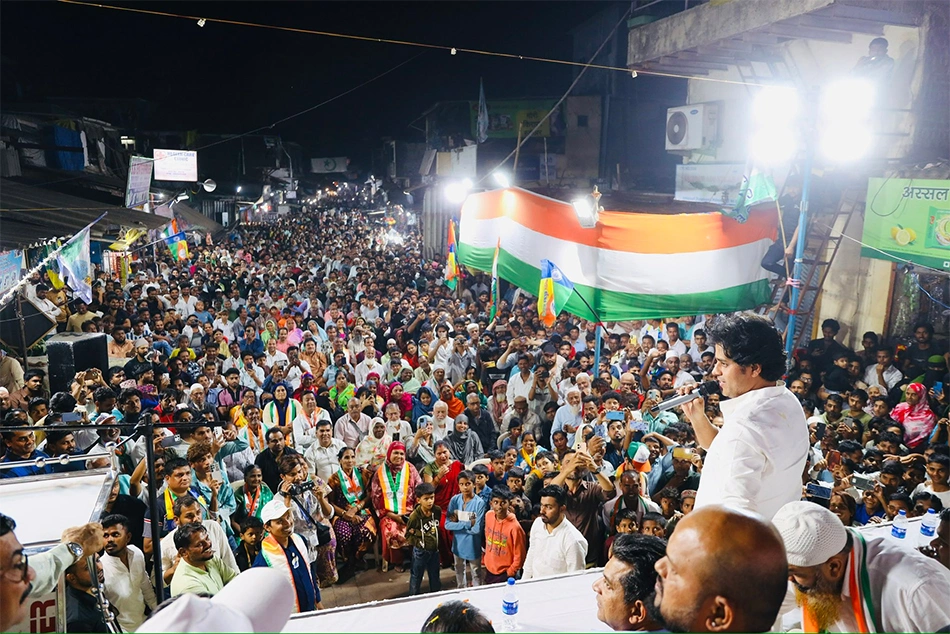
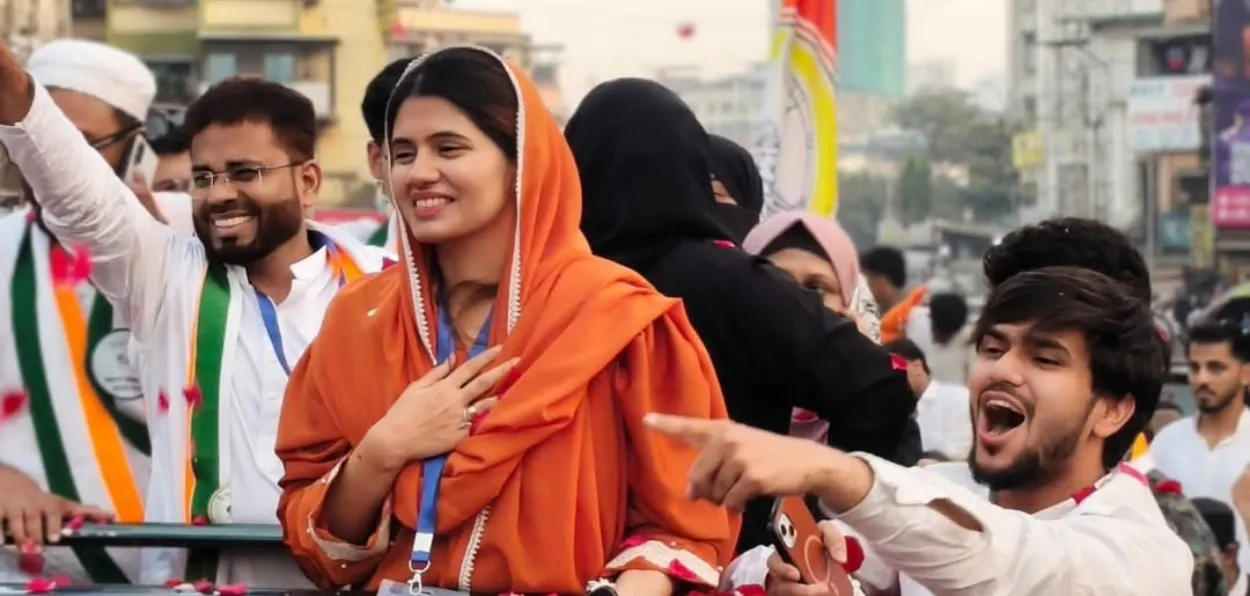
Mumbai Youth Congress member Zeenat Shabrin has been elected the new president of the outfit, becoming the first woman to hold the post after securing the highest 10,076 votes in the recently concluded organisational elections.

The elections for office-bearers in the Congress’s youth wing in Mumbai were conducted between May 16 and June 17 with nine candidates in the fray for the president’s post. The results were announced on Sunday with Shabrin, who secured the maximum 10,076 votes, emerging victorious, a party press release said on Monday.

Indian Youth Congress (IYC) office-bearers are chosen through internal elections rather than nominations.

Shabrin, who hails from a non-political background, said under her leadership, the Congress wing try to become the voice of Mumbai’s youth.

The party statement quoted her as saying, “The Indian Youth Congress has given me, a person from a non-political background, a platform. I thank the Indian National Congress, the Mumbai Congress, the Maharashtra Congress, and the Mumbai Youth Congress family for their guidance and trust. We will work to become the voice of Mumbai’s youth.”

The organisation would continue to fight under the leadership of Congress MP Rahul Gandhi and IYC national president Uday Bhanu Chib to strengthen the outfit and safeguard democracy and the Constitution, she asserted.

source: http://www.awazthevoice.in / Awaz, The Voice / Home> Sports / by PTI / posted by Vidushi Gaur / September 22nd, 2025

Ghiasuddin Babukhan’s legacy: building institutions, empowering lives

Hyderabad, TELANGANA :

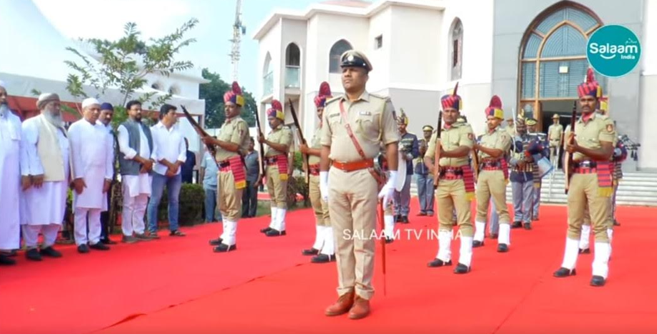
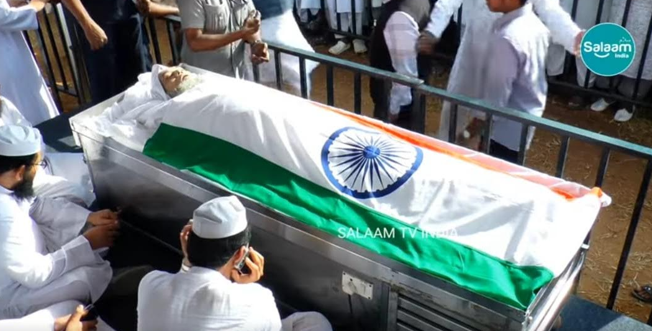
Ghiasuddin Babukhan, one of Hyderabad’s most respected builders, philanthropists, and educationists, died Monday at 83. He is survived by his wife, three sons, and a daughter.

Known for his compassion, Babukhan leaves behind a legacy that bridged stone and society — architectural heritage inherited from his father and a philanthropic network of his own making.

He was the son of Khan Bahadur Abdul Karim Babukhan, a legendary builder who left an indelible mark on India’s architectural history. Abdul Karim Babukhan’s construction empire produced some of the most celebrated structures of the 20th century, including the Arts College at Osmania University, the Hyderabad House in New Delhi, and the Kadam Dam in Nirmal, then in Adilabad district.

Ghiasuddin inherited not just this construction legacy, but also the conviction that enterprise must serve society. In the early 1990s, he shifted decisively from business to social service. In 1992–93, he founded the Hyderabad Zakat and Charitable Trust (HZCT), creating a structured and transparent system of charitable giving. For him, philanthropy was not about token donations but about building institutions that could sustain dignity and hope for generations.

The trust focused primarily on education, which Babukhan believed to be the most powerful tool for empowerment. Its annual scholarship program for orphans became one of its most impactful initiatives. For more than a decade, over 10,000 orphaned students across Andhra Pradesh and Telangana pursued education with dignity through these scholarships. Many went on to become doctors, engineers, teachers, and entrepreneurs — living proof of Babukhan’s belief that charity must enable, not merely provide.

Unlike many who confined themselves to charity within their community, Babukhan’s work cut across religious and social lines. He was committed to humanitarian relief, healthcare support, and the preservation of Hyderabad’s plural cultural ethos. His schools, social programs, and charitable initiatives reflected an inclusive philosophy rooted in compassion, justice, and service.

“The passing of Ghiasuddin Babukhan is a great loss for Hyderabad. He was a dedicated philanthropist whose efforts in educating the poor will be remembered. My condolences to his family and friends. May Allah grant him maghfirah and patience to his loved ones,” Hyderabad MP Asaduddin Owaisi said in an X post.

Jamaat-e-Islami Hind president Syed Sadatullah Husaini called him a “true champion of education and a benefactor to the Muslim community.” In a post on X, Husaini said Babukhan’s contributions through the Hyderabad Zakat and Charitable Trust transformed the lives of thousands and would be remembered for generations.

“He was a true champion of education, a liberator of the marginalised, and a benefactor of the Muslim community — an embodiment of the noble spirit of zakat and compassion. Through his philanthropic initiatives, he played a pivotal role in the educational upliftment of the Ummah, poverty alleviation, relief work, and community development,” Husaini wrote.

source: http://www.maktoobmedia.com / Maktoob Media / Home> India / by Maktoob Staff / August 26th, 2025

Malaysia Consul General honours father-son duo for service to humanity

Kayalpattinam / Chennai, TAMIL NADU :

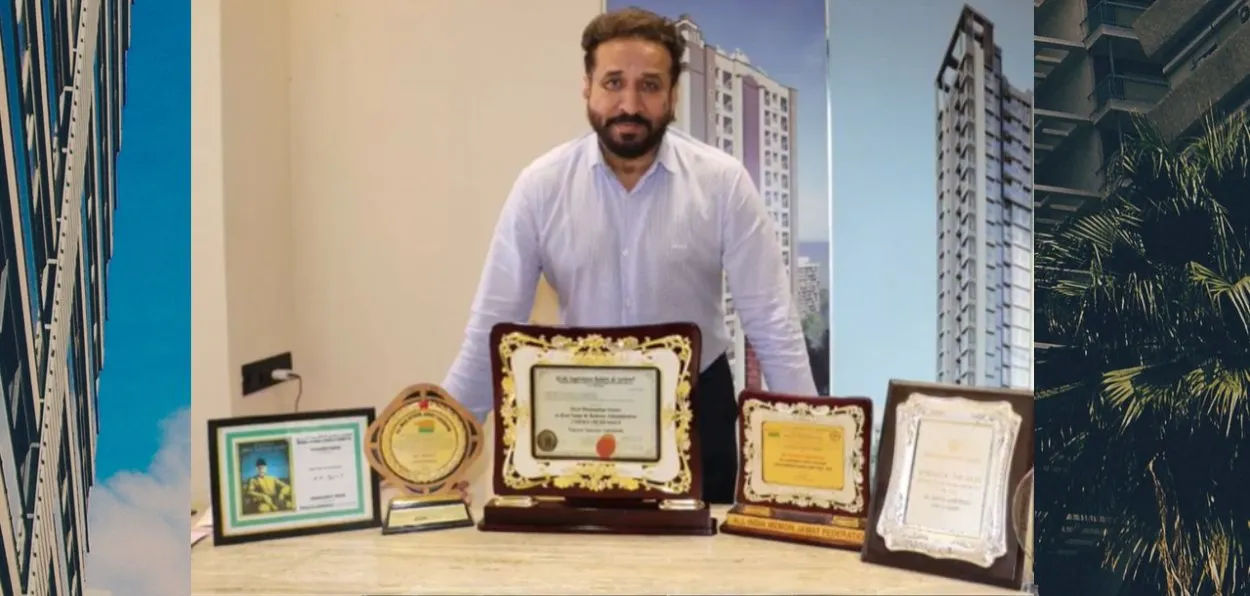
The father-son duo Kayalpattinam native Shaikh Sadaqathullah (now a resident of Mannady in Chennai), a peace activist, HAM radio operator and blood donor and Shaikh Shamsudeen were honoured by the Malaysia Consul General K Saravana Kumar with a certificate of appreciation during the flag raising ceremony to commemorate the 68th Independence Day celebrations on Aug 31 at Consulate General of Malaysia located at Cenotaph Road in Teynampet neighbourhood, Chennai Metro.

​Service to humanity is a core principle in Islam. It emphasises kindness, compassion, and charity towards all individuals, regardless of their faith, colour, race or background. This principle is well-supported by various references from the Holy Qur’an and Hadith, illustrating the importance of helping others and fostering a harmonious society.

Islam places a high value on the preservation and saving of human life. The Holy Qur’an states, وَمَنْ أَحْيَاهَا فَكَأَنَّمَا أَحْيَا النَّاسَ جَمِيعًا (“And whoever saves a life (gives life to one) – it shall be as if he had saved (given life to) mankind entirely.” – Chapter 5 Verse 32. No doubt, blood donation is an act of kindness, charity, and assistance to others, and is highly rewarded in Islam. It is also a form of relieving others’ distress, which aligns perfectly with Islamic tenets and teachings and is considered a virtuous act in Islam.

Meet the father-son duo Kayalpattinam native Shaikh Sadaqathullah (now a resident of Mannady in Chennai) a peace activist, HAM radio operator and blood donor and Shaikh Shamsudeen who were honoured by the Malaysia Consul General K Saravana Kumar with a certificate of appreciation during the flag raising ceremony to commemorate the 68th Merdeka celebrations on Aug 31 at Consulate General of Malaysia located at Cenotaph Road in Teynampet neighbourhood.

Interestingly, the Almighty has gifted both the father and son with a rare blood group of AB Negative. While Shaikh Sadaqathullah had donated blood 53 times since 1993, starting from saving a patient Narayana for the latter’s heart surgery at Perambur Railway Hospital and his son Shaikh Shamsudeen had saved lives by donating 20 times since 2016. Notably, they were invited by Tamil Nadu Chief Minister M K Stalin to his chamber and appreciated them for their noble gesture.

It may be noted that Shaikh Sadaqathullah received recognition from Tamil Nadu State Branch of Indian Medical Association (IMA) with Dr M S Ashraf award under non-medical category during National Doctor’s Day fete held in Chennai (2022). A proud moment for him as he received the award from Dr J Radhakrishnan, former State Health Secretary and presently chairman and managing director of Tamil Nadu Power Distribution Corporation Ltd (formerly TANGEDCO). A commendation certificate and a shield were presented to him on the occasion.

As a peace activist, Shaikh Sadaqathullah played an active role in taking part in communal harmony events held in Chennai city sending a strong message of Mother Teresa – “We can do no great things – only small things with great love. He was closely associated with leading luminaries like Late Dr. B.S. Abdur Rahman, founder of United Economic Forum and All India Islamic Foundation, Dr. S.K. Khadri, Founder – Murthuzaviya Educational and Cultural Foundation of South India, Nawab Mohammed Abdul Ali, Prince of Arcot, Founder Secretary-General – Harmony India and L.K.S. Syed Ahmed, Past District Governor – Lions District 324-A1, Managing Partner – L.K.S. Gold House.

To be precise, Shaikh Sadaqathullah makes it a point to attend almost all the communal harmony functions fostering Universal Brotherhood for peaceful coexistence among different faiths. It is a matter of great pride for him to get the recognition from Malaysia Consul General during the nation’s 68th Independence Day.  Prophet Muhammad ﷺ said: “If one removes a hardship of a Muslim in this life, Allah will relieve a hardship from him on the Day of Judgment”. True to the words of wisdom, Shaikh Sadaqathullah and his son Shaikh Shamsudeen are doing yeomen services to the cause of Mankind.

[The author is former Indian Express and Deccan Chronicle chief]

source: http://www.radiancenews.com / Radiance News / Home> Pride of the Nation> Awards / by M Rafi Ahmed / September 02nd, 2025

Fikrokhabar launches Online Naat Competition 2025 for children

Bhatkal (Uttara Kannada District), KARNATAKA :

Bhatkal: 

Fikrokhabar, a news portal based in Bhatkal, has announced its Online Naat Competition 2025, inviting children from coastal Karnataka to take part in the programme during the holy month of Rabi al-Awwal.

The initiative is aimed at celebrating the birth anniversary of Prophet Muhammad by encouraging children to express their devotion through Naat recitation.

According to the organisers, the contest has been designed to nurture both the spiritual and creative growth of children by giving them a platform to present Naats in a digital format. The online mode ensures easy access and wider participation across the region.

The competition is open to boys up to the age of 13 years and girls up to the age of 8 years.

Participants are required to record a video of their recital, which should not exceed three minutes, and submit it through the Google Form link shared by the organisers. 

The event has been divided into categories based on age and gender to ensure fair participation.

The organisers said that the programme is not merely a contest but also an opportunity for children to learn more about the life of the Prophet, strengthen their faith, and showcase their talent before a larger audience. It also encourages memorisation and thoughtful reflection on poetic tributes dedicated to the Prophet, fostering deeper appreciation of Islamic teachings.

Parents and guardians interested in registering their children have been asked to get in touch with the coordinators for more details regarding deadlines, judging process and prizes.

Further information can be obtained by contacting +91 9916131111, +91 9620573395 or +91 9108080800.

source: http://www.english.varthabharati.in / Vartha Bharati / Home> Karavali / by Vartha Bharati / September 05th, 2025