Muslim students, especially girls, delivered an impressive performance in the Jharkhand Academic Council Intermediate examinations, earning praise from teachers, parents and educationists across the state.
The Class 12 results, declared on Wednesday, saw minority students secure top positions in the science stream. Many observers described the achievement as an encouraging sign for educational progress within the community.
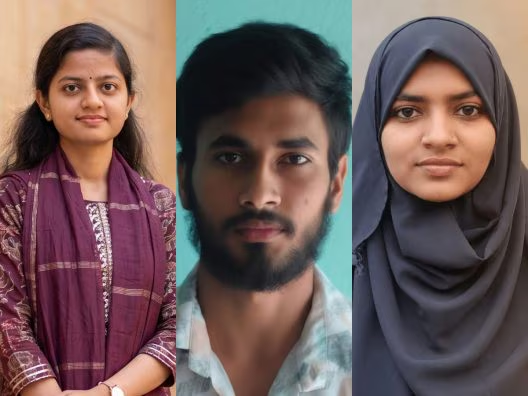
Rashida Naz from Dhanbad emerged as the topper in the science stream with 489 marks. A student of Plus Two DAV High School, Rashida brought recognition to her school and district through her performance. Teachers described her as disciplined and focused, crediting her success to dedication and strong family support.
Faizan Alam from Patan secured the second position with 483 marks. Sana Afrin from Satbarwa and Akanksha Kumari from Simaria jointly secured third place with 481 marks each.
Educationists noted that girls once again outperformed boys in several categories, continuing a trend seen in recent years. Many teachers and parents said the results reflected growing awareness about the importance of education, especially among Muslim families and girls from smaller towns.
The achievements in Jharkhand followed similar success by Muslim students in the Bihar Board examinations earlier this year. In Bihar, Shabrin Parveen from Vaishali district scored 492 out of 500 marks and became a joint state topper in the matriculation examination. Several other Muslim students also secured places in the merit list with marks above 97 percent.
Parents and community leaders welcomed the latest results and said such achievements inspire students from modest backgrounds to pursue higher education and competitive careers. Teachers stressed the need for scholarships, career guidance and better educational opportunities to support talented students further.
source: http://www.radiancenews.com / Radiance News / Home> Latest News / by Radiance News Bureau / May 08th, 2026
The sisters come from a modest background. Their father, Abdul Malik, works as a carpenter, while their mother studied up to Class 9.
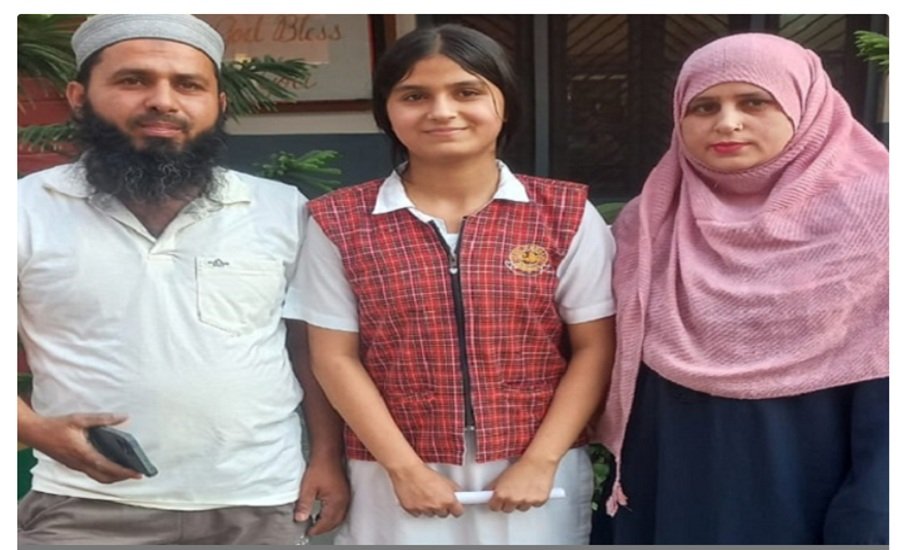
Two sisters from Meerut have drawn attention with their impressive performance in the Uttar Pradesh Madhyamik Shiksha Parishad examinations, securing the top two positions in the district.
Adeeba Malik scored 95.68 per cent in the high school examination to secure first place, while her sister Shifa Malik ranked second with 82 per cent in the science stream.
Their achievement has brought joy to the locality, with residents visiting their home to congratulate the family.
Adeeba attributed her success to discipline and consistency. “I studied for long hours every day and stayed focused. Hard work and a proper routine helped me achieve this result,” she said. She scored full marks in mathematics, her strongest subject.
Notably, she prepared entirely at home without any tuition or coaching support.
The sisters come from a modest background. Their father, Abdul Malik, works as a carpenter, while their mother studied up to Class 9. Expressing his pride, Abdul Malik said, “I could not study much myself, but my daughter is making me proud. There is no difference between a son and a daughter. I want her to study and move ahead.”
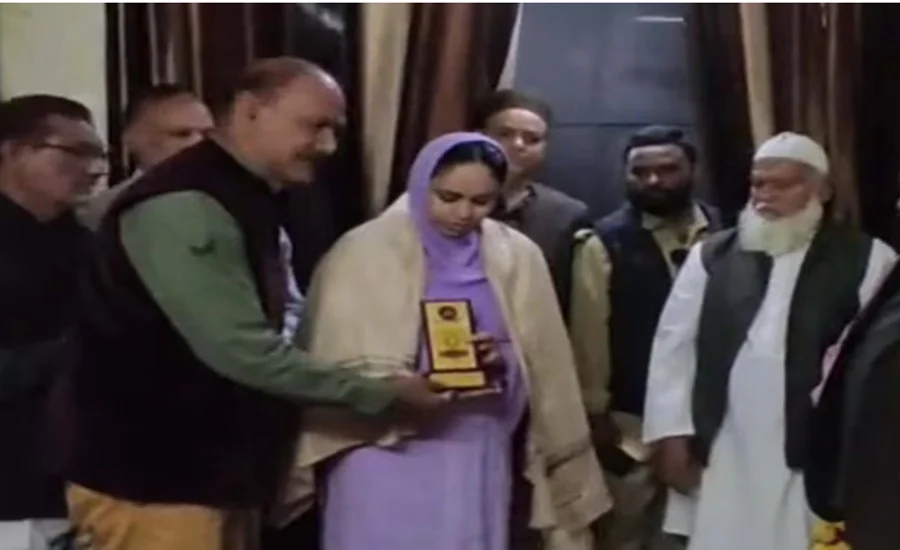
The sisters were felicitated at St Joseph Inter College, where teachers and students celebrated their success. Sweets were distributed, and similar celebrations were held at their home.
Family members said the achievement reflects the sisters’ consistent dedication and hard work.
Adeeba aspires to become an IAS officer and serve the country.
Education experts say such success stories are significant, especially in areas where awareness about girls’ education is still evolving and students often face challenges in continuing their studies. The sisters’ achievement is being seen as an inspiring example for others.
source: http://www.clarionindia.net / Clarion India / Home> Editor’s Pick> India> Indian Muslim / by Mohammad Bin Ismail / April 25th, 2026
Usia Village – Kamsarbar (Ghazipur District), UTTAR PRADESH / Kolkata, WEST BENGAL :
The daughter of Kamsarbar village in Uttar Pradesh becomes the first woman civil servant from her area, inspiring Muslim girls across the country
New Delhi :
In a moment of pride for Indian Muslims, especially young women from small towns, Saima Saraj Khan from Kamsarbar in Ghazipur district, Uttar Pradesh, has once again cleared the prestigious Union Public Service Commission (UPSC) Civil Services Examination. This time, she achieved an impressive All India Rank of 135, improving on her earlier success where she secured Rank 165. With this double achievement, Saima joins the rare group of women in the country who have passed the tough exam twice.
Saima, the only daughter among three siblings, hails from Usia village in the Muslim-majority Kamsarbar area of Ghazipur. Her family later moved to Kolkata, where she grew up and studied. Her father, Saraj Ahmad Khan, is a successful businessman and builder, and he played a big role in encouraging her education from childhood. “My father always said education is the biggest power. Once you get it, paths in life open on their own,” Saima recalled.
Most of Saima’s schooling took place in Kolkata. She completed up to Class 8 at St. Paul’s Boarding and Day School in Kidderpore, then did her Class 12 from Ashok Hall Girls Higher Secondary School. She graduated with honours in Sociology from St. Xavier’s College. During her college days, working with an NGO brought her close to real problems faced by people on the ground. “When I met people and saw their struggles, I felt I wanted to help them, even if in a small way. That need for real authority to make change pushed me towards UPSC,” she said.
Saima prepared for the exam at Educate IAS Academy in Kolkata. After clearing prelims in earlier attempts, she also guided other aspirants for some time. Her journey was not easy. She failed three times before her first success in UPSC 2023, which made her the first woman from Kamsarbar to become a civil servant. Each failure tested her deeply. “Every day after those failures, the thought of giving up came. But I had no other plan. All my dreams were tied to UPSC, so I kept going,” she shared.
To focus fully, Saima cut herself off from social media and most social events for four to five years. She rarely visited relatives or attended weddings, limiting outings to occasional meetings with childhood friends once a month. “There was no fixed study time, but I gave as many hours as possible to studies,” she explained.
Her message to other aspirants is clear and practical. “First, be honest with yourself. If you study five hours, focus on quality, not just quantity. Consistency matters most. Don’t worry too much about results—just keep preparing fully.” She also spoke directly to Muslim girls and women: “Dreaming and working to fulfil those dreams is every girl’s right. Women can succeed in any field. Never give up on your dreams.”
Saima’s success brings huge joy to her family, village, and district. People in Ghazipur and beyond see her as a strong example of self-reliance and hard work for Muslim women, where many still face limits on education and careers. Her story shows that with family support and belief in oneself, no goal is too far.
She quoted a line that sums up her journey: “Where there is a will, there is a way.” Saima often repeats that difficulties and failures are part of success. “Don’t let them take over you. Keep pushing.”
Her achievement also connects to Kolkata’s proud history—from Satyendranath Tagore, the first Indian ICS officer from united India, to now Saima becoming the first woman civil servant from Kamsarbar. “Education is the real power,” she stresses, echoing her father’s words from childhood.
As news of her Rank 135 spread, young Muslim girls in Uttar Pradesh and across India are finding fresh hope. Saima proves that with clear goals, steady effort, and strong resolve, women from humble backgrounds can reach the top. In the words of poet Dushyant Kumar that capture her spirit perfectly:
“Kaise aakaash mein suraakh nahin ho sakta
Ek patthar to tabiyat se uchhaalo yaaro”
(How can the sky not have a hole?
Just throw a stone with real courage, friends.)
Saima Khan has thrown that stone with full courage—and broken through barriers for many to follow. Her story is a shining light for education, perseverance, and the power of dreams in the Indian Muslim community.
source: http://www.clarionindia.net / Clarion India / Home> Editor’s Pick> Indian Muslims> Women / by Mohammad Bin Ismail / March 10th, 2026
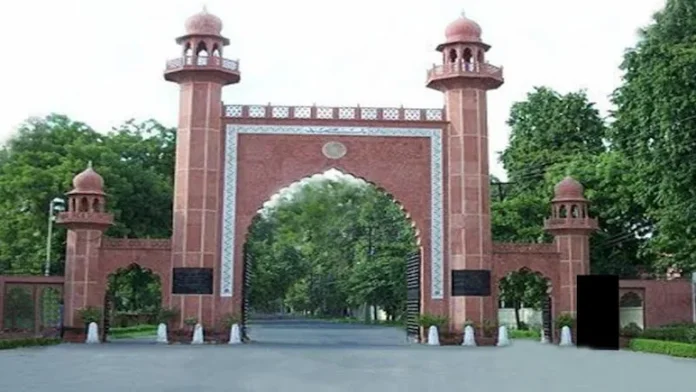
Students of the Interdisciplinary Department of Remote Sensing and GIS Applications at Aligarh Muslim University (AMU) have earned prestigious academic admissions and professional placements at leading institutions in India and abroad, underscoring the department’s growing reputation in geospatial sciences.
At the international level, Ms Areena has been selected for a PhD programme at the University of Waikato, New Zealand. Meanwhile, Mr Md Zaid Qamar has secured admission to the International PhD Programme under the UNESCO Chair in Environment, Resource and Sustainable Development at Parthenope University of Naples, Italy.
On the national front, Mr Ahsan Sayeed has gained admission to the PhD programme in Geomatics at IIT Guwahati. Additionally, Ms Mantasha, Mr Tauheed Ahmad Ansari and Mr Zuhail Abdullah have been selected as Junior Resource Persons at the National Institute of Hydrology, Roorkee.
The department’s students have also made notable strides in the corporate sector. Ms Shaista Perween has been appointed Assistant Manager at Tata Steel Limited in Jamshedpur, while Ms Juveriya Aqeel has secured a position with WSP in Bengaluru with an attractive remuneration package.
Congratulating the students on their accomplishments, Dr Haris Hasan Khan, Chairman of the department, said the achievements reflect both the students’ dedication and the department’s strong academic and research ecosystem in remote sensing and geospatial sciences.
source: http://www.radiancenews.com / Radiance News / Home> Education> Latest News / by Radiance News Bureau / February 12th, 2026
A 21-year-old third year student pursuing MBBS in UKraine shared a video with her family about a group staying in the bunker of their college. Muskaan Firoz Shaikh contacted the Indian embassy for help but they asked to stay here at the same place and said they will reach.
Muskaan’s father Firoz who is working with the Bhiwandi-Nizampur city municipal corporation claims the family is tensed as the attack is going on in the nearby areas.
“She is staying inside the bunker of Bhuko Vibiyan University in Ukraine. Muskaan said there are around 150 students inside who are from across the countries. While, around 7 of them are from Delhi and Gujarat,” said Asma Shaikh, her mother who are from Padgha in Bhiwandi.
Asma through a video had appealed to the Indian government to help her daughter who is stuck inside a bunker.
Navid Shaikh, her maternal brother, claims Muskaan had approached the Indian embassy for help. “But in reply they told her to stay at the same place for a while. Till the help reached them as they were on the way. Muskaan is in regular touch with her parents and is scared as the attacks are going on in the nearby area,” added Naved.
Muskaan had shared a video with her family which shows the person shooting it. Later, the camera reached a room where three girls including Muskan were seen holding a Persian cat. The video was shared by muskaan to confirm the parents about her safety.
Naved Shaikh said they have been staying in the bunker for the last three days. “Usually they are at home and cook food. As soon as the siren buzzes they get inside the bunker. They either stay for three hours or full night in the bunker. It depends when the siren buzzes again to give a signal about the safety and they move out. But they are staying in with fear and threat to life and need immediate help. Just like others our sister too can reach home safely if the Indian government helps them,” added Naved Shaikh.
source: http://www.freepressjournal.in / The Free Press Jounal / Home> Mumbai / by Faisal Tandel / February 22nd, 2022
Ilin Fatima, a young Muslim from Ajmer, has made history by becoming the city’s first female Chartered Accountant (CA), marking a milestone for her family and the local Muslim community. Her achievement reflects a blend of strong upbringing, determination, and a steadfast commitment to education.
Fatima was welcomed with widespread enthusiasm by the Muslim Welfare and Education Committee of Ajmer in Rajasthan, where she was felicitated for her dedication and resilience. Community members gathered to celebrate, expressing pride not only in her personal success but also in what it signifies for Muslim families across Ajmer and the state.
Her father, Abdul Hameed Khan, spoke about the significance of this accomplishment with deep gratitude to Allah. “I have three daughters, and I ensured they were educated according to Shariah law,” he said. “My daughters have succeeded in both religious and worldly knowledge. I urge every parent to prioritise education for their children. Even if you have to eat half a loaf of bread, make sure your children receive quality education.”
He referred to a Hadith (sayings of Prophet Muhammad) and emphasised the value of knowledge: “Acquire knowledge even if one has to go to China. Education is essential, and people often overlook its importance. My daughter’s success is a reminder of the power and necessity of learning.”
The community’s response has been overwhelming. Leaders and members of various organisations, including Syed Rab Nawaz Jafri, UD Khan, Dr Syed Mansoor Ali, Haji Nafees Ahmed, Advocate Manzoor Ali, Hasan Mohammad, Akram Siddiqui, Farid Hussain, and Aqeel Ahmed of the Ajmer Muslim Welfare and Education Committee have all praised Fatima’s dedication and accomplishment.
A committee spokesperson remarked, “Ilin Fatima’s achievement serves as an inspiration not only to her family but to the entire city. Her commitment to education demonstrates that the progress of daughters is vital for the development of society. When girls are educated, communities prosper, and real success is achieved.”
Ilin Fatima’s historic success is likely to encourage more Muslim families to prioritise education for their daughters, breaking barriers and inspiring future generations. Her journey is a testament to perseverance, faith, and the unwavering support of a family that values both religious and worldly knowledge.
“Her hard work shows that with determination, guidance, and faith, anything is possible,” the committee official added. “She has set an example for all young Muslim girls in Ajmer and beyond.”
As Ilin Fatima steps into her professional career, her story stands as a beacon of hope and a reminder of the transformative power of education within the Muslim community in India.
source: http://www.clarionindia.net / Clarion India / Home> Editor’s Pick> India> Indian Muslim / by Mohammad Bin Ismail / November 10th, 2025
The new Mumbai Municipal Corporation (Brihanmumbai Municipal Corporation 2026 or BMC 2026) to have 01 more Muslim corporator as compared to the community’s tally last time.
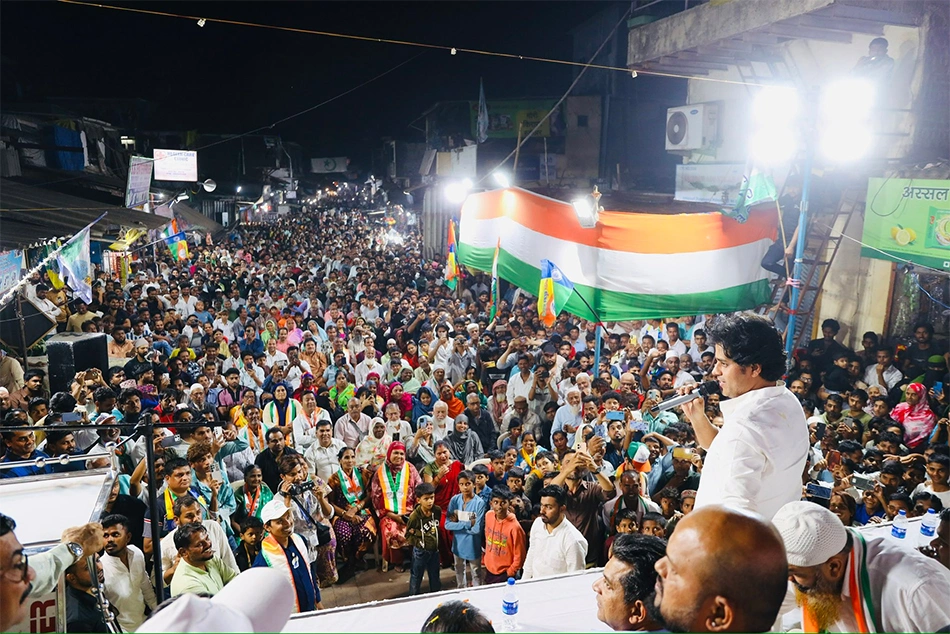
[Imran Pratapgarhi, Member of Rajya Sabha from Maharashtra and National Chairman Congress Minority Department, leading a rally in support of Congress candidates in Mumbai]
BMC 2026 Final Result:
The new Mumbai Municipal Corporation (Brihanmumbai Municipal Corporation 2026 or BMC 2026) to have 01 more Muslim corporator as compared to the community’s tally last time.
A total of 29 Muslims from different parties had won the 2017 BMC elections. As against this, number of Muslims in the Mumbai Mahanagar Palika 2026 is 30, as per the final election result announced by the Maharashtra State Election Commission Saturday.
Of the total 30 Muslim Corporators who have won the 2026 Mumbai Municipal Corporation Elections the maximum 13 are from Congress, 07 are from Asaduddin Owaisi’s All India Majlis e Ittehadul Muslimeen (AIMIM), 03 each are from NCP (Ajit Pawar) and Shiv Sena (UBT), 02 are from Samajwadi Party (SP) and 02 each from Shiv Sena (Eknath Shinde) and NCP (Sharad Pawar).
List of Muslim Corporators in Mumbai Corporation
Following is the party-wise full list of Muslim corporators in Mumbai.
Muslim Corporators of Nationalist Congress Party (NCP Sharad Pawar)
30. Bushra Nadeem Captain Malik (Ward No. 170)
What is important is that the Muslim candidates have won the BMC 2026 elections from all parties – including Congress, AIMIM, Samajwadi Party, NCP (Ajit Pawar), NCP (Sharad Pawar) and also from Shiv Sena (Eknath Shinde) and Shiv Sena (Uddhav Thackeray or UBT).
This is a clear message to the BJP, which because of its communal agenda and hate for Muslims does not give the party tickets to Muslims, and gives an excuse that the community does not vote for it.
Along with the Mumbai Municipal Corporation (BMC), civic body elections were also held in 28 other corporations of Maharashtra.
As per the final result announced by the state election commission, out of the total 2,869 seats, the BJP has won 1,420 seats, Shiv Sena (Eknath Shinde) 375, Congress 329, NCP (Ajit Pawar) 175, Shiv Sena (UBT) 160, AIMIM 125, NCP (Sharad Pawar) 40 and MNS just 13 seats. (The result of some seats have not been announced.)
source: http://www.ummid.com / Ummid.com / Home> Maharashtra / by ummid.com news network / January 18th, 2026
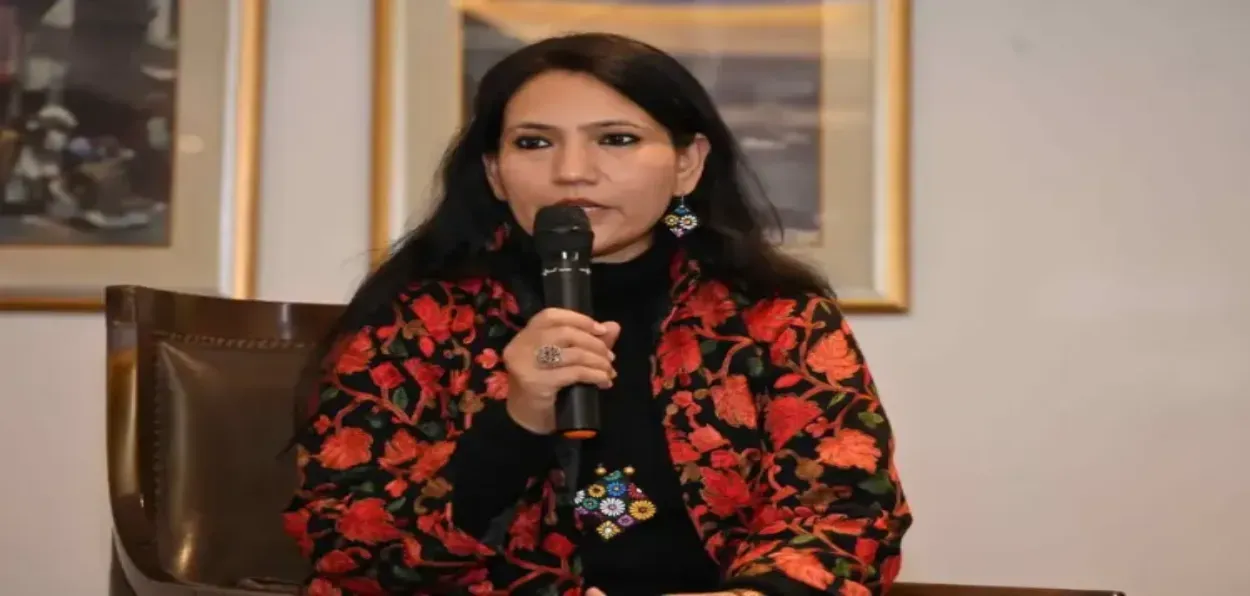
Coming from a small town and making a mark on the national scene, writer-journalist Tasneem Khan brings women’s concerns to the forefront through her journalism and literature. Her narratives are sensitive, clear, and attempt to offer solutions. Her writing and television programmes do more than narrate women’s struggles; they challenge social mindsets and inspire change.
Here are excerpts from an exclusive conversation with her:
Let’s begin with Bwalistan. What is it about?
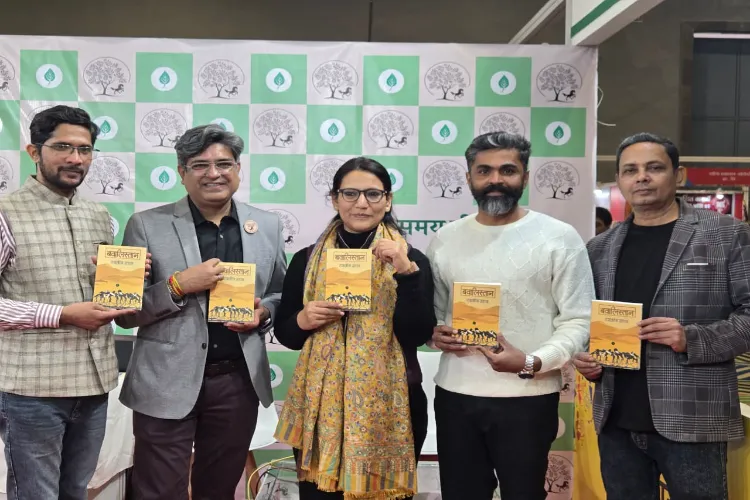
Bwalistan is a collection of stories rooted in Rajasthan, particularly its desert life. These stories belong to a distinct literary tradition that deeply portrays the complexities and struggles of life in the Thar Desert. Rajasthan’s desert is not just a physical landscape—it is defined by its people, culture, traditions, and way of life, all of which give it a unique identity.
Coming from a small town, it isn’t easy to make a mark in journalism and literature. How did your journey begin?
A: It’s true that paths have never been easy for women. I come from Didwana tehsil in Rajasthan’s Nagaur district. Though I grew up in a small town, my parents were educated, and our home had a culture of reading and learning. My mother’s love for books shaped me deeply. Growing up among books sharpened my ability to think, debate, and reason. I also won several awards during my school and college years.
When did you choose journalism as a career?
I formally entered journalism in 2005. From the very beginning, I was drawn to women-centric issues. I consistently wrote on gender sensitivity, domestic violence, and women’s social rights. For me, journalism is not just about reporting news; it is about engaging in dialogue with society.
Your television programmes gained special recognition. Could you tell us about them?
A: I hosted a programme called Samar Shesh Hai, which discussed women’s social and political concerns. Later, my regular show on Patrika TV, Aadhi Duniya, Poori Baat – with Tasneem Khan, became quite popular. The aim was to present women not merely as victims, but as thinking, reasoning individuals.
For which report did you recently receive the Ladli Media Award?
I received the award for my show “When Will Domestic Violence Go into Lockdown?”, presented by Population First and UNFPA. The jury felt the report exposed a harsh truththat during lockdown, women faced another terrifying pandemic inside their homes: domestic violence.
Your writing focuses less on complaints and more on solutions. How did this approach develop?
I don’t want to merely describe women’s pain. I believe writing should point toward solutions. If even one woman finds a way forward through my work, I would consider my life meaningful.
You began novel writing in 2015. How special is Mere Rehnuma to you?
A: Mere Rehnuma is extremely close to my heart. Published by the Jnanpith Trust, it was selected in a young writers’ competition. I became the second woman writer from Rajasthan whose debut novel was published by Jnanpith. Through this novel, I tried to establish that women’s empowerment cannot come through financial independence alone without a change in social mindset, empowerment remains incomplete.
Research has been conducted on this novel. How did that feel?
A: It was a matter of great pride that Mere Rehnuma became the subject of PhD and MPhil research. It reaffirmed my belief that my writing has connected at both academic and social levels.
Could you tell us about your other works and awards?
A: My short story collection Dastaan-e-Hazrat Mahal was published in 2019 and earned me the Chandrabai Award. In 2021, I received the Shakuntalam Award from the Rajasthan Progressive Writers’ Association. My stories have been translated into several languages. Rukh-e-Gulzar was translated by the Indian Translation Council, while The Blue of Silence was published in a Pakistani Urdu magazine and won the Mirror Award. My story My Share of Moonlight will soon appear in a collection by Oxford University Press.
What is your writing process like?
I observe people around me very closely their characters, pain, and struggles shake me from within. Until that restlessness finds words, I find no peace. That unrest gives birth to my stories.
What role did your parents play in your life?
My parents have been my greatest support. At difficult turns, they always encouraged me. I firmly believe parents’ education plays a decisive role in shaping a child’s future. I have seen many girls unable to move ahead simply because their parents did not value education.
The heroine of Mere Rehnuma is in search of liberation. How do you view this liberation?
A: For me, liberation is not just personal; it is social. Until society learns to accept strong women, their freedom will remain incomplete. If my writing can guide even one woman in this direction, that will be my greatest achievement.
You recently interacted with readers during the ‘Chaturang #LockdownLive’ session on Facebook. How was that experience?
The Rajasthan Forum organised the session. I spoke openly about my education, career, and literary journey. I emphasised that becoming a writer requires years of preparation, deep reading, and psychological analysis of society. I also read excerpts from my novel Ai Mere Rehnuma. The interaction was deeply personal and immensely inspiring for me.
Tasneem Khan’s journey shows how words, when driven by empathy and purpose, can challenge patriarchy, reshape thought, and quietly spark a revolution, one story at a time.
source: http://www.awazthevoice.in / Awaz, The Voice / Home> Stories / by Onika Maheshwari, New Delhi / January 19th, 2026
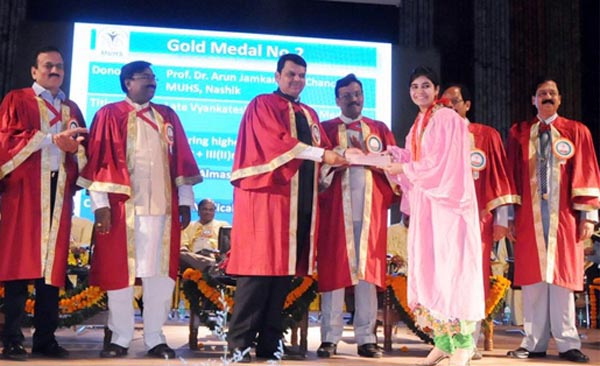
Continuing her dream run of academic success, Almas Nazim Syed of Government Medical College Nagpur, crossed yet another milestone by securing the top position in Maharashtra MBBS final exam, bagging 11 gold medals and a scholarship.
Daughter of Dr Syed Nazim, a general practitioner, Almas Nazim Syed, has topped every exam in her career, including the 2009 Maharashtra HSC board exam before the impressive performance in the Maharashtra MBBS final exams.
Maharashtra Chief Minister Devenndra Fadnavis in Nashik to address the 14th Convocation of the Maharashtra University Health Sciences (MUHS), felicitated Almas Nazim Syed and also conferred on her citation and gold medals.
Along with Almas Nazim Syed, a total of 7,478 students from different streams of medicine were awarded with the convocation. Of these 71 gold medals were given to the students. Nine students were awarded with Doctor of Philosophy (PhD).
Interestingly, after topping the 2009 HSC exams, Almas Nazim Syed, whose brother was then studying in second year MBBS, had vowed to study medical science with specialisation in gynaecology, and build a hospital for poor people.
“I want to fulfil my mother’s desire that I open a nursing home or a hospital to serve the needy,” she had said.
Almas’ motivation, however, was her grandma Safiya, a writer.
“I wanted to be gynaecologist and open a hospital since I was in class 5. It was prompted by my grandmother telling us one day that she was not able to pursue her dream of opening a nursing home to look after children’s studies,” she said.
A vivid reader of novels, Almas is fully determined to achieve her target.
“Dare to dream. Have passion to fulfill that dream. Be persistent in hard work. Don’t be aimless in life”, were her words after cracking the 2009 HSC exams.
After clearing the MBBS finals and becoming a doctor, it will now be interesting to see how Almas Nazim Syed, married to a politician’s grandson in Akola, fulfils her mother’s desire to open her dream hospital for poor.
source: http://www.ummid.com / Ummid.com / Home> Education & Career / by ummid.com news network / May 27th, 2015
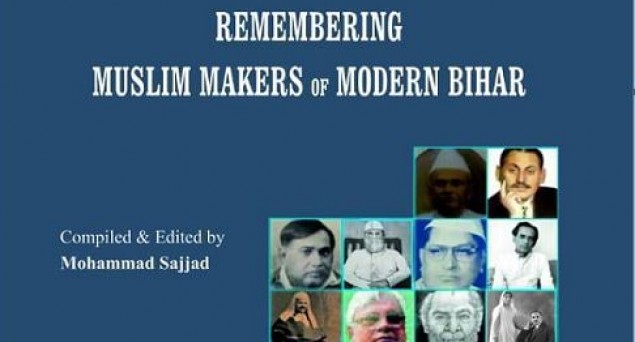
In an era of unprecedented majoritarian ascendance and anti-Muslim hatred, Bihar Collective, a platform of intellectuals and activists, has brought out a booklet highlighting the contribution of eminent Muslims in making the modern Bihar in the last 200 years.
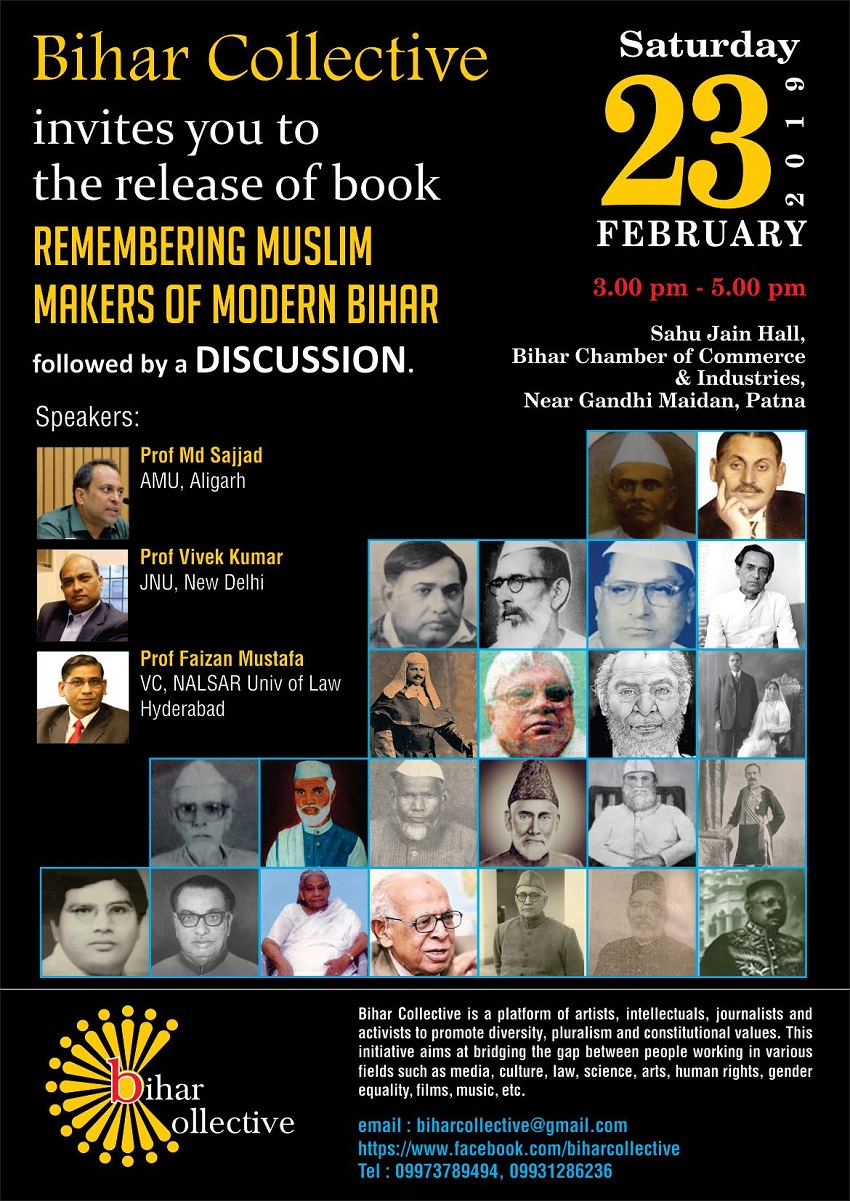
The booklet titled Remembering Muslim Makers of Modern Bihar has been compiled and edited by renowned academician and writer Prof. Mohammad Sajjad on the initiative of Bihar Collective.
The booklet will be released at an event in Patna on Saturday (February 23).
On the occasion, a discussion will also be held with Prof Faizan Mustafa, Vice Chancellor, NALSAR University of Law, Hyderabad; Prof Vivek Kumar, JNU, New Delhi; and Prof Mohammad Sajjad, AMU, Aligarh as panelists.
A Brief about Booklet:
Pre-empting a reasonable question about the title of the booklet, Prof Sajjad, who has compiled and edited it, writes in its preface: “A simple and obvious question that may readily arise is: why only Muslim makers of modern Bihar? Why not others too? This is indeed a valid and pertinent question.”
Responding to the question, he further says: “Candidly put, this is because of an unprecedentedly menacing rise of majoritarianism, bigotry, and anti-Muslim hatred, with open support of the state.
The Muslim identities are ominously threatened. There are also unabated attempts to dilute (or even take away) whatever little accomplishments have been made by the forces of social justice and secularism.
Only the Muslim segment however is threatened by the jingoist, exclusionary, violent nationalists, to be thrown out to another country. As if the other country is a dustbin, owned by these bigots, into which they can throw away everything they dislike! As if only the religious majority constitutes the nation! Notably, these jingoists had aligned with the British and had stayed away from the national movement.”
“Muslim contributions in the nation-making (and in the freedom movement) remain under-acknowledged, forgotten or even omitted. Erasure of their histories and memories seem to have become even more pronounced and vociferous, now, than ever before…The Bihar Collective therefore decided to compile a short profile of these inspiring role models, history-makers…This is small and humble step towards retrieving and restoring the nationalist provincial pantheons bearing Muslim identities,” says Prof Sajjad.
He, however, admits that the list of Muslim heroes of Bihar given in the booklet is not exhaustive as “…many have been left out essentially because of lack of documentations and researches. Not many have left their own accounts/memoirs; the available memoirs/accounts have not written much about all the personalities. In many cases, even otherwise “resourceful” descendants and/or associates of the history-makers have not been able to provide us with adequate (and credible/verifiable) details.”
Prof Sajjad hopes this small exercise may lead to some big academic work on these history-makers. “In short, this kind of venture may be said to be an ongoing exercise. This effort may hope to open up (and obtain) more details about such history-makers and would also get to know about many more of such peoples and processes, we failed to include here in this hastily prepared tiny volume, amidst constraints of resources and time.”
Names of Muslim Makers of Modern Bihar Mentioned in Booklet: 1. Syed Imdad Ali (d.1886] 2. Khuda Bakhsh (1842-1908) 3. Syed Amir Husain (1843-1910) 4. Imdad Imam Asar (1849-1934) 5. Shah Badruddin(1852-??) 6. Syed Ali Bilgrami (1853-1911) 7. Rasheed-un-Nesa (1855-1926) 8. Syed Noorul Huda (1855-1939) 9. Justice Syed Sharfuddin (1856-1921) 10. Shaikh Gulab (1857-1920) 11. Sarfaraz Husain Khan (1860-1931) 12. Maulana Mazharul Haque (1866-1930) 13. Batakh Miyan Ansari (1867-1957) 14. Sir Fakhruddin (1868-1933) 15. Syed Ali Imam (1869-1932) 16. Syed Hasan Imam (1871-1933) 17. Salahuddin Khuda Bakhsh (1875-1931) 18. Shafi Daudi(1875-1949) 19. Khwaja Md. Noor(1875-??) 20. Abdul Wadood (d.1955) 21. Syed Abul Hasan (1878-1960) 22. Sir Sultan Ahmad (1880-1963) 23. Maulana Sajjad (1880-1940) 24. Pir Mohammad Munis (1882-1949) 25. Abdul Bari (1882-1947) 26. Syed Sulaiman Nadvi (1884-1953) 27. Mohammad Yunus (1884-1952) 28. Shah Md. Zubair (1884-1930) 29. Syed Abdul Aziz (1885-1948) 30. Zubaida Begum Daudi (1886-1972) 31. Syed Tafazzul Karim (1886-1964) 32. Mr. Mohammad Shafi (1888-1955) 33. Qazi Ahmad Husain (1889-1961) 34. Dr. Syed Mahmud (1889-1971) 35. Ali Husain Aasim Bihari (1890-1953) 36. Shah Mohammad Umair (1894-1978) 37. Abdul Ahad Mohammad Noor (1894-1975) 38. Hakeem Md. Kabiruddin (1894-1976) 39. Maulana Usman Ghani (1896-1977) 40. Manzoor Ahsan Aijazi (1897-1969) 41. Shah Md Ozair Muni’mi (1899-1961) 42. Maghfur Aijazi (1900-1966) 43. Syed Jafar Imam (1900-1965) 44. Syed Badruddin Ahmad (1901-1983) 45. Mohammad Tahir (1903-???) 46. Syed Jafar Imam (1903-1979) 47. Syed Fida Husain (1904-80) 48. Abdul Qaiyum Ansari (1905-1974) 49. Wajihuddin Minhaji (1907-1984) 50. Syed Md. Aiyub (1910-1964) 51. Abdul Sami Nadvi (1913-????) 52. Abul Hayat Chand (1914-1958) 53. Ahad Fatmi(1915-1980) 54. Zawwar Husain (1916-80) 55. Shafiqullah Ansari (1917-1980) 56. Shah Mushtaq Ahmad (1917-2002) 57. Abdul Ghafoor (1918-2004) 58. Col. Mahboob Ahmad (1920-1992) 59. Taqi Raheem (1920-1999) 60. Zahra Daudi(1923-2003) 61. Shakoor Ahmad (1924-1981) 62. Syed Hasan (1924-2016) 63. Yunus Lohia (1925-2019) 64. Ghulam Sarwar (1926-2004) 65. Syed Shahabuddin (1935-2017)
A Brief about Author:
Prof Mohammad Sajjad teaches late-colonial and post-independent Indian history at the Centre for Advanced Study in History, Aligarh Muslim University. He has written several books including Muslim Politics in Bihar: Changing Contours; and Contesting Colonialism and Separatism: Muslims of Muzaffarpur since 1857.
His articles are published in reputed academic journals from Routledge, Sage, EPW etc. and also in anthologies from the Oxford University Press and Cambridge University Press.
Bihar Collective: It is a platform of artists, intellectuals, journalists and activists to promote diversity, pluralism and constitutional values. It aims at bridging the gap between people working in various fields such as media, culture, law, science, arts, human rights, gender equality, films, music, etc. Email: biharcollective@gmail.com Facebook: https://www.facebook.com/biharcollective
source: http://www.indiatomorrow.net / India Tomorrow / Home> Society / by India Tomorrow / February 21st, 2019