Category Archives: Community Involvement / Social Issues

Hyderabad professor provides free education, food and shelter to under-privileged children

Hyderabad, TELANGANA :

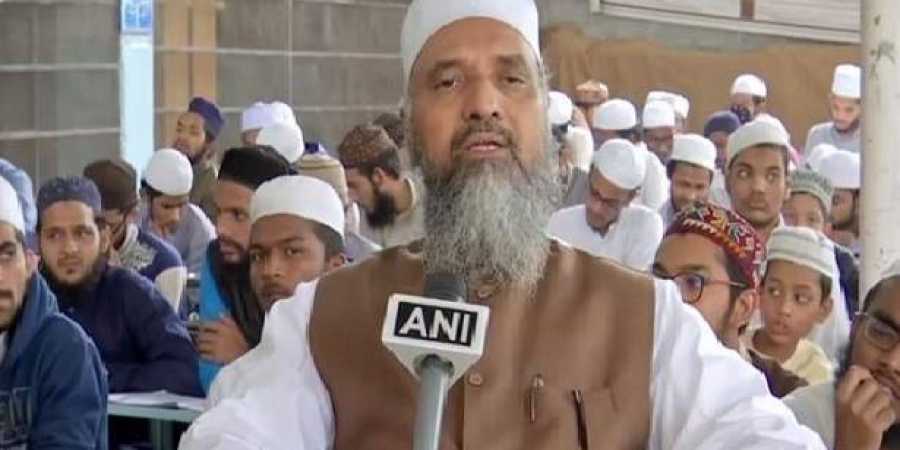
Professor Dr Syed Jahangir of the English and Foreign Language University teaches languages, social and political science to the poor children.

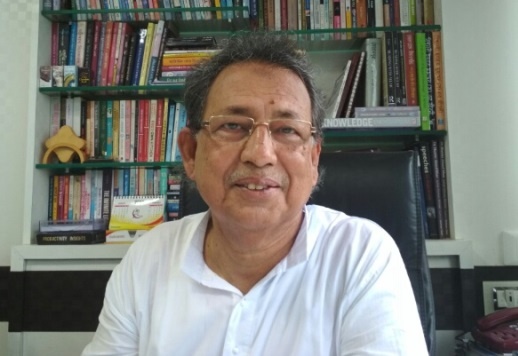
Professor Dr Syed Jahangir, Head of the Department Arab Studies, EFL (English and Foreign Language) University (Photo| ANI)

Hyderabad :

To help less fortunate children, Professor Dr Syed Jahangir, Head of the Department Arab Studies, EFL (English and Foreign Language) University. provides them free education, three meals a day and accommodation at his small education institution.

Professor Jahangir teaches languages, social and political science to the poor children. “I believe that weaker sections have a greater need for quality education. If we want our children to get the best education possible then they should get the best teacher rather than a great school. Here, I have started an English Model Islamic University where children can learn multiple languages like English, Sanskrit, Arabic, Urdu, and Parsi. They are taught in modern style here.”

“I spend the morning teaching foreign students at EFL University and the rest of the day I spend with children belonging to the backward class. I provide them free food, free education and also free accommodation. Children from different parts of the country come to us to get a quality education. Several of our former students are currently working in multinational companies as language translators,” he added.

Some former and current students shared their experiences. “I am from Bihar. I have been studying here for the last three years. Whatever we need is provided by Sir. I am happy to be studying here,” said Mohammed Sadiq, a student.

Abdul Aleem said: “I studied here eight years ago and I am here now as a science teacher. Today the cost of education is so high that many young people give up their dream of being educated, while many others graduate with debts. But here, we provide quality education and create a passion for learning amongst the students.”

source: http://www.newindianexpress.com / The New Indian Express / Home> Good News / by ANI / October 31st, 2019

In Conversation With Aaliya Sultana Babi: The Royal Paleontologist

Balasinor (Mahisagar District), GUJARAT :
AaliyaMPOs28oct2019

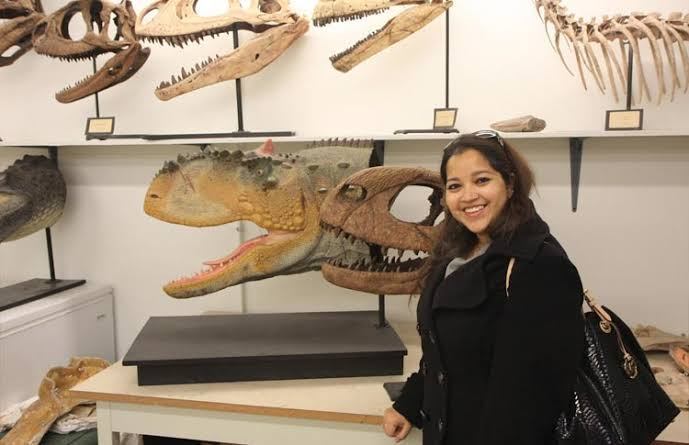
Aaliya Sultana Babi is a princess who, along with her figurative crown, also wears—quite literally—the broad-brimmed hat of a paleontologist! She is the daughter of the Nawab of Balasinor, and traces her ancestry to Sher Khan Babi, the founder of the state of Junagadh, who was bestowed the nawabship by the Mughal emperor Humayun. Tens of millions of years ago, during the Mesozoic era, the lands of Aaliya Babi’s forefathers teemed with ancient reptiles and dinosaurs, and the rocks of Rahioli village (which has earned the moniker of India’s Cretaceous Park) near Balasinor are now etched with the remains of bones, eggs, teeth, and skulls, approximately 67 million years old.

These prehistoric giants include long-necked titanosaurs, an enormous snake, and a crested abelisaur often referred to as “the T-rex of India”—the deadly Rajasaurus narmadensis. Aaliya Babi is an ardent advocate for the protection and preservation of this rare and precious fossil site in Gujarat, which is one of the largest dinosaur fossil sites in the world, and she champions the cause of dinosaur education and conservation in India.  As a dinosaur enthusiast who admires and has closely followed her work, including the Dinosaur Fossil Park and Museum that she has set up in partnership with Gujarat Tourism, I am honored to have been able to interview this Dinosaur Princess!

AALIYA BABI IS AN ARDENT ADVOCATE FOR THE PROTECTION AND PRESERVATION OF THIS RARE AND PRECIOUS FOSSIL SITE IN GUJARAT, WHICH IS ONE OF THE LARGEST DINOSAUR FOSSIL SITES IN THE WORLD, AND SHE CHAMPIONS THE CAUSE OF DINOSAUR EDUCATION AND CONSERVATION IN INDIA.

Bhavika: I really admire your contributions to the field of dinosaur conservation. What sparked your interest in dinosaurs?

Aaliya: As a young girl of about four or five, I was fascinated with dinosaurs, despite the lack of exposure to dinosaurs that we grew up amidst. While learning the English alphabet, I would say “A for Apple” and “D for Dinosaur” instead of for “Dog”! I also knew the spellings of “brontosaurus” and “diplodocus,” which were both my favourite dinosaurs! All this was forgotten when I was shipped off to a boarding school, but when I came back after completing my schooling, the interest was rekindled.

Bhavika: I wish more children in India shared your enthusiasm and fondness! Do you believe it’s important for children to be familiar with dinosaurs? What would be your advice to a child who dreams of becoming a paleontologist? 

Aaliya: Not just children, but, according to me, everyone should know about our prehistoric earth, and the fascinating creatures that inhabited it. Through our museum and fossil park, we are trying our level best to educate the people. I, in my own way, am trying to create awareness through lectures, presentations, and exhibits held across schools, colleges, universities, and museums, both in Gujarat and abroad, and have received favourable responses. If children want to take up palaeontology as a career, it is unfortunate that in India, we currently don’t have much scope in the discipline, as only limited educational institutes offer subjects related to paleontology. But we need to rectify that. There are some talks going on to include geology into school curricula in the future.

Bhavika: That’s lamentable. India has a wealth of fossils, but these are unexplored and undervalued. Why is this so? What are the current challenges? 

Aaliya: There are a lot of challenges which I have faced over the years in trying to get the fossil site protected. First and foremost, we, in India, don’t have any legislations pertaining to fossil protection, and we don’t care for our heritage. It has taken me more than twenty-two years to get the site duly recognized and protected, but still it’s open and vulnerable to vandalism, as we have limited well-trained guards. Secondly, we don’t possess the required funds for excavations and the subsequent studying of fossils, and hardly any good-quality museums exist to exhibit them. We are also lacking in trained professionals.

THERE ARE A LOT OF CHALLENGES WHICH I HAVE FACED OVER THE YEARS IN TRYING TO GET THE FOSSIL SITE PROTECTED. FIRST AND FOREMOST, WE, IN INDIA, DON’T HAVE ANY LEGISLATIONS PERTAINING TO FOSSIL PROTECTION, AND WE DON’T CARE FOR OUR HERITAGE.

Bhavika: Do you believe that there’s potential for dinosaur tourism in India?

Aaliya: There is a huge, huge, HUGE potential for dinosaur tourism in India. You see, in the earlier days, people were not very aware about dinosaurs. The Jurassic Park movie series, based on Michael Crichton’s books, has sparked interest in dinosaurs, and now we also have access to so much information and literature on them. I’ve come across both three-year-olds and eighty-year-olds who want to know about these fascinating creatures that ruled our earth for millions of years! I get children who are so deeply interested in dinosaurs that they want to become paleontologists, and so times are changing!

Bhavika: How does the Garden Palace Heritage Hotel that you run from your royal palace go toward this mission?

Aaliya: The Garden Palace was built in 1883, and we began offering the palace as a homestay around 1997. From having only 1 renovated room, to now 13 rooms, we have come a long way! When we get visitors for the fossil park, we often have them stay at our property or take their meals here, as this is the only place in the area for a comfortable accommodation and a decent meal. We are famous for our cuisine, as my mother, Begum Saheba Farhat Sultana Babi of Balasinor, is a true connoisseur of food, and has carried forward the legacy of the signature Balasinori cuisine.

Bhavika: Can you tell us about the Rajasaurus? Do you believe it should feature in one of the next films from the Jurassic World franchise?

Aaliya: Yes, definitely, the Rajasaurus should feature in the coming Jurassic World movies! The fossilized remains of the Rajasaurus narmadensis were excavated by Dr. Suresh Shrivastav and team in 1983. The dinosaur was approximately 9 meters in length and 2.4 meters in height and weighed approximately 4000 kgs. It is a genus of abelisaurid theropod carnivores from the Late Cretaceous (Maastrichtian) of India, and is represented by one species, Rajasaurus narmadensis. It was formally described in 2003 based on a partial braincase, spine, hip bone, a leg and tail—a first for an Indian theropod dinosaur. The dinosaur had a single horn-like structure on the forehead, which was probably used for display and head-butting. Like other abelisaurids, Rajasaurus was probably an ambush predator and hunted in packs. Numerous theropod eggs and nests have also been found from the Rahioli Balasinor region.

Another similar dinosaur which has been named after the village of Rahioli is the Rahiolisaurus gujaratensis. Rahiolisaurus is another genus of abelisaurid theropod dinosaur from the Late Cretaceous (Maastrichtian) of India. It fossils were excavated by teams from the GSI (Geological Survey of India), Indian Statistical Institute, Kolkata, and Texas Tech University in the USA, between 1995-1997, from the Lameta formation of Rahioli, and it was formally described as Rahiolisaurus gujaratensis in 2010. It can be distinguished from the Rajasaurus by its more slender and gracile build. It is known from a pebbly sandstone containing seven different individuals—from a juvenile to a fully-grown adult. It was 8 meters in length, 3 meters in height, and weighed approximately 2 tons.

Bhavika: Do you believe dinosaurs are linked, in anyway, to the myths and folklore of India?

Aaliya: Yes. We have heard tales of dinosaur eggs being worshipped by villagers, as they resemble shivlings. We hear that ammonite fossils (salagramas) are also worshiped, as they are believed by many to be natural manifestations and divine symbols of Lord Vishnu. The shell’s circular form, with its radial markings, resembles the discus (chakra) of the deity.

Bhavika: Is it especially challenging to be a woman in the field of science and conservation?

Aaliya: I think I am the only woman, as of now, from an aristocratic family in India, who is involved with fossil preservation and conservation. It definitely had its ups and downs, but I think I have used my family name and connection for the protection of the fossils and the betterment of the villagers.

This definitely was a roller coaster ride, but it has been a wonderful ride, nonetheless. Times are changing now, and women, today, are in all fields. I have had the support and blessings of eminent paleontologists like Dr. Ashok Sahni and Dr. Suresh Shrivastava, among others, who have helped and guided me throughout this phase, and have imparted so much of their knowledge to me. And I have a simple motto: that nothing is impossible in life; if we set our hearts and minds to it, we can achieve anything and everything! The word “IMPOSSIBLE” shouldn’t exist in our dictionary!


Featured Image Source: Indian Women Blog

source: http://www.feminisminindia.com / Feminism In India / Home> Society> Environment / by Guest Writer / posted by Bhavika Sicka / October 28th, 2019
Asaduddin Owaisi’s dream is coming true

Hyderabad, TELANGANA / MAHARASHTRA / BIHAR :

AIMIM is now more than a symbol, challenging the Muslim blackmail of secular parties in polling booths, from west to east.

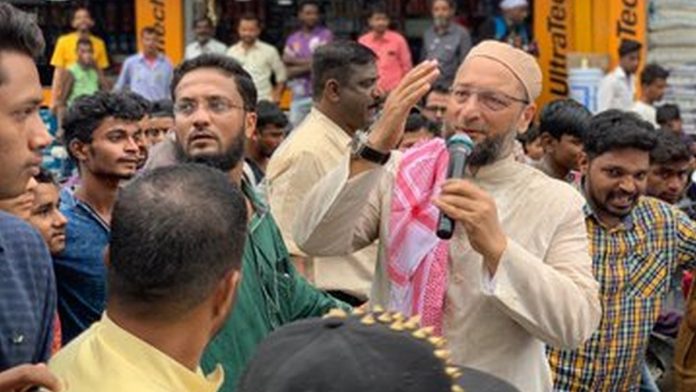
AIMIM president Asaduddin Owaisi at a party outreach programme in Aurangabad | Photo: Twitter | @aimim_national

I met Asaduddin Owaisi for the first time in Kishanganj, in Bihar’s north-eastern Seemanchal region. I asked him point-blank the question everyone wants to ask him: Are you a BJP agent? He had a logical reply: “Why would I be contesting only a few seats if I was a BJP agent? Wouldn’t the BJP like to cut Muslim votes everywhere?”

Since then, I have paid closer attention to the pattern of the All India Majlis-e-Ittehadul Muslimeen’s (AIMIM) electoral attempts. They take a handful of seats, where Muslim voters are in large enough numbers to play a decisive role. They fight these elections to win, and not to help the BJP win. For instance, the AIMIM did not put up a single candidate in Uttar Pradesh in the 2019 Lok Sabha elections since the SP and the BSP were putting up a joint fight and the AIMIM candidates would only have helped the BJP.

The idea that the AIMIM is a BJP agent, I was convinced, is a Congress conspiracy theory. For the Congress party and its sycophants, anyone who’s not with them is communal.

But this still didn’t tell me what Owaisi wanted. What was his goal? What was he trying to achieve? If he wasn’t even contesting elections on each seat, or joining any big coalitions, what could he achieve through electoral politics anyway? Muslims in his home state, Telangana, don’t care for the AIMIM outside Hyderabad .  Even in his home state, Owaisi can never dream of becoming the chief minister. The AIMIM won’t be a party of governance any time soon. I wanted the answer to the big question: What does Asaduddin Owaisi want?

What does Owaisi want?

“What I want,” he replied, “is an MLA in every state assembly. Just one is enough. And I want him to stand up in the assembly and ask the secular parties, you took Muslim votes using the BJP to blackmail them. Now how about building roads and schools in Muslim-dominated areas?”

That, I thought, was a laudable goal. Muslim voters often feel they have no choice in elections. They have to vote for a crook from a secular party because the BJP doesn’t even want their votes. The BJP-RSS worker takes a 180-degree turn when s/he reaches a Muslim neighbourhood. In such a scenario, the presence of a Muslim party that threatens the idea of Muslims as a fixed vote-bank of secular parties is a noble one.

This also means Owaisi is not trying to be the “sole spokesperson” for the Indian Muslims, a mischievous term used to describe Mohammed Ali Jinnah. Owaisi is, before anything else, a constitutionalist. Islam is his faith, the Constitution is his ideology. The point he wants to drive home is that the two can go together.

Youth icon

In Kishanganj in 2015, I saw young voters go crazy over Owaisi, like people are about their heroes. It was akin to how great sportspersons inspire hero worship. The phenomenon was explained to me by a Muslim journalist in Aligarh, who said that Owaisi was a product of post-Babri Muslim politics. The fall of the Babri Masjid in 1992 silenced vocal Muslim politicians who used to speak at mainstream public debates as Muslims. It also deepened the idea, almost to finality, that Partition had left no space for a “Muslim party” in Indian politics.

Owaisi challenges all these notions, and finds willing supporters in Muslim youth who were born after 1992. There is thus a generation divide among Muslims in Owaisi’s popularity: the pre-92 generation thinks he’s a bad idea, and the millennials think he’s just what they need. The young feel they don’t have to be apologetic about being Muslims and don’t need to accept second-class status. They think they must assert their rights as equal citizens as per the Indian Constitution, just like any other Indian, and that’s what Owaisi does on their behalf.

Obviously, Muslim votes alone are not going to help the AIMIM win seats. And why would Hindu voters want to vote for a Muslim party?

That’s why this constitutionalism is also part of the AIMIM’s appeal to Ambedkarite Dalits. The AIMIM has thus been trying, with some success, to build a coalition of the marginalised along with Dalits. A Muslim vote-bank gives the AIMIM the ability to transfer votes to a Dalit candidate, for instance. It was such an idea that led to the AIMIM’s alliance  with Prakash Ambedkar in Maharashtra.

And yet, the AIMIM lost the 2015 election in Kishanganj. I saw young voters go up to Owaisi and say – they loved him but they’ll vote for him next time. After all, the Nitish-Lalu-Congress alliance had to be supported to defeat the BJP.

Account opened

The AIMIM had stood a strong third in the Kishanganj Lok Sabha election in 2019. The Congress won the seat  and the JD(U) stood second. Had it not been for the AIMIM, the JD(U), the BJP’s ally, would have won this seat. The only seat that the UPA won and the NDA lost in Bihar was Kishanganj, thanks to the votes cut by the AIMIM.

The Congress candidate was also the sitting MLA, therefore necessitating a bypoll for the Vidhan Sabha seat. Thursday, the AIMIM won that seat . The party has opened its account in Bihar. What’s even better  is that the BJP stood second and the Congress stood third. In the Bihar assembly election in November 2020, Owaisi will be able to say that in Kishanganj it’s AIMIM versus BJP. The impact will be felt in the entire Seemanchal region.

New frontiers

The AIMIM had won two seats in the Maharashtra assembly in 2014, but lost them this time. But it picked up two new seats : Malegaon Central and Dhule City. In other words, the AIMIM has become a regular electoral party, and people are getting used to pressing the AIMIM’s kite symbol on the EVMs. The AIMIM used to be called a one-MP party, but now it has two MPs in the Lok Sabha: Imtiyaz Jaleel won the Aurangabad seat in the 2019 Lok Sabha elections.

In Uttar Pradesh, AIMIM has 30 seats in various municipal corporations – its party member was elected chairperson of the Dasna municipal council in Ghaziabad. Thursday, the AIMIM candidate in the Pratapgarh assembly bypoll stood third . Owaisi’s dream is coming true: he now has an MLA in Bihar and Maharashtra assemblies and the most important state in Indian politics, Uttar Pradesh, is within striking distance too.

The growing electoral success of the AIMIM is a reminder to secular parties that they cannot take Muslim voters for granted. If apathy or the fear of losing Hindu votes is going to make “secular” parties look away from Muslims, why blame Owaisi?

source: http://www.theprint.in / The Print / Home> Opinion / by Shivam Vij / October 25th, 2019

Owaisi’s AIMIM Wins 2 in Maharashtra, Announces Arrival in Bihar

TELANGANA / MAHARASHTRA / BIHAR  :

Asaduddin Owaisi’s AIMIM won 2 seats in Maharashtra and the Kishanganj seat in Bihar

Asaduddin Owaisi’s AIMIM won 2 seats in Maharashtra the Kishanganj seat in Bihar(Photo: Aroop Mishra/The Quint)

The elections were a mixed bag for Asaduddin Owaisi’s All India Majlis-e-Ittehadul Muslimeen. The party won two seats in Maharashtra, the same tally as 2014, and proved that its performance last time wasn’t a fluke. However, it couldn’t improve its tally even though its vote share increased from 0.9 percent in 2014 to 1.4 percent.

The more significant achievement for the party is its victory in the Kishanganj Assembly seat in Bihar, which is its first victory in the Hindi heartland.

But first the Maharashtra results.

AIMIM in Maharashtra

There is a clear pattern to the AIMIM’s performance in Maharashtra. It seems to have lost ground in Mumbai but gained aground in rest of the state.

In Malegaon Central, AIMIM’s Mohammad Ismail Abdul Khalique defeat Congress’ Aasif Sheikh by over 38,000 votes.

In Dhule City, AIMIM’s Shah Faruk Anwar defeated independent candidate Rajvardhan Kadambande by a little over 3000 votes.

The AIMIM gave a tough fight in several other seats but couldn’t manage to win. It got 41 percent votes in Aurangabad East, 35 percent in Aurangabad Central and over 20 percent in Nanded South, Nanded North, Byculla and Solapur Central.

AIMIM’s Hindu candidates made their presence felt in seats like Dharavi and Kurla getting 10-15 percent votes. However most of the other candidates fell below 10 percent.

Entry in Bihar

However, the party’s performance in Maharashtra was overshadowed by its victory in the bypoll to the Kishanganj Assembly seat in Bihar. Its candidate Qamrul Hoda defeated BJP’s Sweety Singh by over 10,000 votes.

The bypoll was necessitated after Congress MLA Mohammad Jawed vacated the seat as he was elected to the Lok Sabha earlier this year. But the Congress candidate failed to even cross 15 percent and ended up forfeiting her deposit.

The victory is a significant one as it marks the AIMIM’s entry in the Hindi Heartland. Till now the party has only won seats in Telangana and Maharashtra.

This would also boost the AIMIM’s prospects in the Muslim dominated Seemanchal region in North-Eastern Bihar.

The AIMIM also made its presence felt in the Pratapgarh Assembly bypoll in Uttar Pradesh with its candidate Mohammad Irshad securing close to 14 percent votes, ahead of the BSP and Congress and just behind the SP at 15.6 percent. The seat was won by BJP’s ally Apna Dal.

source: http://www.thequint.com / The Quint / Home> Politics / by Aditya Menon / October 26th, 2019

Abu Asim Azmi wins in Mankhurd Shivaji Nagar assembly seat of Maharashtra

Mumbai, MAHARASHTRA :

Abu Asim Azmi had won from the Mankhurd Shivaji Nagar seat in 2009 and 2014 assembly elections

AbuAsmiMPOs24oct2019

Mankhurd Shivaji Nagar Assembly Election Result 2019: Abu Asim Azmi, sitting MLA and Maharashtra Samajwadi Party (SP) President, has won in the Mankhurd Shivaji Nagar Assembly seat.

Abu Asim Azmi has got 63,697 votes and defeated his nearest rival of Shiv Sena in the seat he held since 2009.

Abu Asim Azmi had won from the Mankhurd Shivaji Nagar seat in 2009 and 2014 assembly elections.

Rais Shaikh, sitting Samajwadi Party (SP) corporator in Mumbai, has also won the 2019 election in Bhiwandi East.

In Bhiwandi West however, Shoeb Khan of Congress and Khalid Shaikh of AIMIM are trailing behind Mahesh Chougale of BJP.

Elsewhere in Mumbai, Waris Pathan of AIMIM is trailing in Byculla. But, Mufti Ismail of AIMIM is leading in Malegaon Center seat with more than 10,000 votes.

Mankhurd Shivaji Nagar Assembly Election Result 2019 Live Update

11:45 am Abu Asim Azmi, sitting MLA and Maharashtra Samajwadi Party (SP) President, is leading in Mankhurd Shivaji Nagar Assembly seat, trends available at 11:45 am said.

According to the latest trends, Abu Asim Azmi has got 53,773 votes after 4th round of votes. His nearest rival of Shiv Sena is struggling with 14,772 votes.

08:00 am The Election Commission of India has started the counting of votes in all 54 assembly constituencies, also known as Vidhan Sabha seats, of Mumbai and Thane districts polling for which was held Monday, October 21, 2019.

The porcess started at 08:00 am with counting of Postal Ballots. Postal Ballots contain the votes of government servants who are posted in different areas of the state on the polling day. Postal ballots also contain votes of army men and natives of Haryana on government duty at any other place on the polling day.

After counting of postal ballots, counting of votes stored in Electronic Voting Machines (EVMs) has started. Special arrangements have been made for the purpose by the state election department in all 90 Vidhan Sabha seats of Haryana.

Counting of votes stored in EVMs is taking place round-wise on multiple tables one at a time. While trends and lead position is expected to trickle in by 08:30 am, the final results are expected by today afternoon.

Mumbai had registered around 50.67 per cent in by and large peaceful polling on Monday.

Mumbai and Mumbai Suburbs together have a total of 36 seats. Mumbai city, which has 10 seats, recorded 48.63% voter turnout whereas the Mumbai suburban district, which has 26 seats recorded 51.17%.

Assembly seats results of which will be announced today are Byculla, Colaba, Dharavi, Mahim, Malabar Hill, Mumbadevi, Shivadi, Sion Koliwada, Wadala and Worli in Mumbai city.

Assembly seats in Mumbai Surbs results of which will be announced today are Andheri East, Andheri West, Anushakti Nagar, Bhandup West, Borivali, Chandivali, Charkop, Chembur, Dahisar, Dindoshi, Ghatkopar East, Ghatkopar West, Goregaon, Jogeshwari East, Kalina, Kandivali East, Kurla, Magathane, Malad West, Mankhurd Shivaji Nagar, Mulund, Vandre East, Vandre West, Versova, Vikhroli and Vile Parle.

Counting of votes has also started in 18 Vidhan Sabha seats of Thane district in Maharashtra. Prominent among them are Bhiwandi East, Bhiwandi West, Thane, Ulhasnagarm Mira Bhayanadar, Mumbra Kalwa, Kalyan East, Kalyan West, Kalyan Rural and Belapur.

Election resultsof Panvel, Alibag, Shrivardhan, Chiplun, Ratnagiri and other seats in Raigad district will also be announced today.

source: http://www.ummid.com / Ummid.com / by Ummid News Network / October 24th, 2019

Mumbai Corporator Rais Shaikh wins Bhiwandi East seat by over 45000 votes

Mumbai, MAHARASHTRA :

Rais Shaikh, a Commerce graduate from Sydenham College of Commerce and Economics, had started political career in 2012

RaisShaikhMPOs24oct2019

Bhiwandi East Assembly Election Result 2019: Rais Shaikh, a sitting corporator of Mumbai Municiapl Corporattion (BMC), has won the Bhiwandi East Assembly Sea, according to final result announced by state election commission.

Rais Shaikh, a Commerce graduate from Sydenham College of Commerce and Economics Mumbai, had started political career in 2012 when he had won the Mumbai Municipal Election for the first time.

Rais Shaikh has won Bhiwandi East seat by 45,133 votes. He defeated Rupesh Mahatre of Shiv Sena and Santosh Shetty of Congress.

In Bhiwandi West however, Shoeb Khan of Congress and Khalid Shaikh of AIMIM are trailing behind Mahesh Chougale of BJP.

Elsewhere in Mumbai, Abu Asim Azmi, SP Maharashtra president, is leading.

Bhiwandi East Assembly Election Result 2019 Live Update

11:15 am Rais Shaikh, a sitting corporator of Mumbai Municiapl Corporattion (BMC), is leading in Bhiwandi East Assembly Seat, trends available at 11:15 am said.

Rais Shaikh, a Commerce graduate from Sydenham College of Commerce and Economics Mumbai, had started political career in 2012 when he had won the Mumbai Municipal Election for the first time.

Trends showed that Rais Shaikh is leading in Bhiwandi East with 15,350 votes. Rupesh Mahatre of Shiv Sena and Santosh Shetty of Congress are trailing with 9,595 and 6,842 votes.

08:00 am The Election Commission of India has started the counting of votes in all 54 assembly constituencies, also known as Vidhan Sabha seats, of Mumbai and Thane districts polling for which was held Monday, October 21, 2019.

The porcess started at 08:00 am with counting of Postal Ballots. Postal Ballots contain the votes of government servants who are posted in different areas of the state on the polling day. Postal ballots also contain votes of army men and natives of Haryana on government duty at any other place on the polling day.

After counting of postal ballots, counting of votes stored in Electronic Voting Machines (EVMs) has started. Special arrangements have been made for the purpose by the state election department in all 90 Vidhan Sabha seats of Haryana.

Counting of votes stored in EVMs is taking place round-wise on multiple tables one at a time. While trends and lead position is expected to trickle in by 08:30 am, the final results are expected by today afternoon.

Mumbai had registered around 50.67 per cent in by and large peaceful polling on Monday.

Mumbai and Mumbai Suburbs together have a total of 36 seats. Mumbai city, which has 10 seats, recorded 48.63% voter turnout whereas the Mumbai suburban district, which has 26 seats recorded 51.17%.

Assembly seats results of which will be announced today are Byculla, Colaba, Dharavi, Mahim, Malabar Hill, Mumbadevi, Shivadi, Sion Koliwada, Wadala and Worli in Mumbai city.

Assembly seats in Mumbai Surbs results of which will be announced today are Andheri East, Andheri West, Anushakti Nagar, Bhandup West, Borivali, Chandivali, Charkop, Chembur, Dahisar, Dindoshi, Ghatkopar East, Ghatkopar West, Goregaon, Jogeshwari East, Kalina, Kandivali East, Kurla, Magathane, Malad West, Mankhurd Shivaji Nagar, Mulund, Vandre East, Vandre West, Versova, Vikhroli and Vile Parle.

Counting of votes has also started in 18 Vidhan Sabha seats of Thane district in Maharashtra. Prominent among them are Bhiwandi East, Bhiwandi West, Thane, Ulhasnagarm Mira Bhayanadar, Mumbra Kalwa, Kalyan East, Kalyan West, Kalyan Rural and Belapur.

Election resultsof Panvel, Alibag, Shrivardhan, Chiplun, Ratnagiri and other seats in Raigad district will also be announced today.

source: http://www.ummid.com / Ummid.com / Home> India / Ummid News Network / October 24th, 2019

Meet M Nurul Islam, the ‘Sir Syed of West Bengal’

WEST BENGAL :

M Nurul Islam, the founder of Al-Ameen Mission

Education advocate M Nurul Islam, who started coaching seven students in small room of a madrasa where he was a teacher, never knew he would be once compared to great education reformer Sir Syed Ahmad Khan.

Through hard work and a commitment towards his moral compass, he was able to set up a learning center which is credited to have produced more than 2400 doctors (MBBS & BDS) and 2500 engineers so far apart from scores of researchers, administrative officers, teachers and professors.

Islam’s journey began in 1986 when he started teaching a group of seven students in a small room of a madrasa in Hawrah district of West Bengal. Now his Al-Ameen Mission has produced more than 2400 doctors (MBBS & BDS) and 2500 engineers apart from scores of researchers, administrative officers, teachers and professors.

Today Al-Ameen Mission has over 17000 residential students and more than 3000 teachers as well as non-teaching staff in their 56 branches across 15 districts of the state.

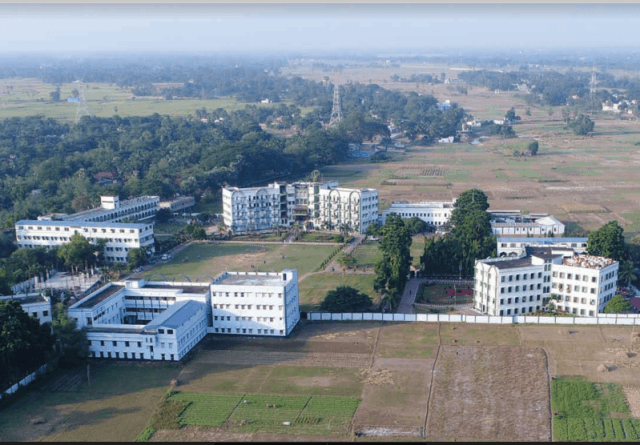
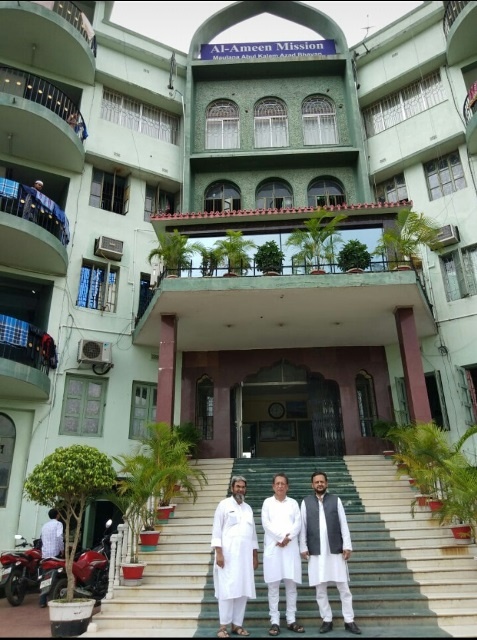
The main campus of Al-Ameen Mission located at Khalatpur village in Howrah district of West Bengal

It was in 1976 that Nurul Islam, Secretary General of the Al Ameen Mission, set up the Khalatpur Junior High Madrasa when he was still studying his 10th standard. The idea was  educational empowerment of poor and backward minority sections.

The journey was tough and tiresome.  In May 1984, he started the Institute of Islamic Culture, setting up a hostel for the institute in 1986 in the Madrasa building itself with the help of door to door collections of fistful rice in his village, Khalatpur. In January 1987, it was renamed as Al-Ameen Mission.

“I started coaching with 7 students of fifth class in 1986. In 1993 there were 11 students, four became doctors, four became engineers. Then came a feeling of satisfaction that I am doing the right thing. I never looked back,” reminiscences Islam who had revolutionized the concept of education among one of  the most unprivileged community  in one of the most backward region in India.

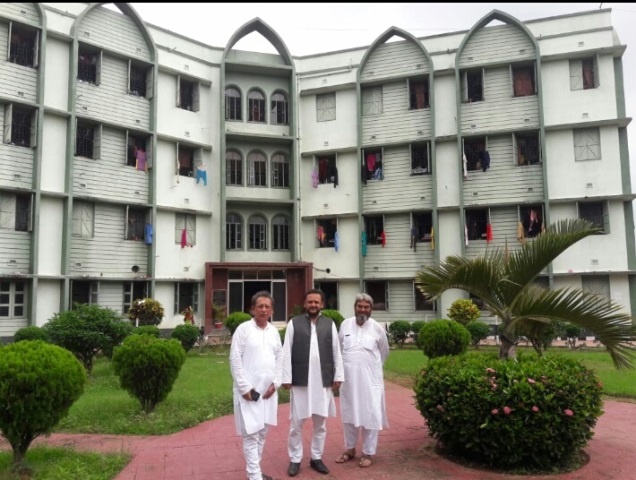
L-R, Inamul Haque, Nurul Islam and Syed Zubair Ahmad at Khalatpur campus .

“The motto was to give modern education with moral values in a fully residential system where students from all strata of the society, irrespective of their financial condition, would live, learn and grow together,” adds Islam.

The mission of the institute is to “achieve quality and excellence in the field of education and to support meritorious students who are socio-economically disadvantaged, following the principles of Fairness, Equality, Equity and Transparency.”

The main campus of  Al-Ameen Mission is located at Khalatpur (Udaynarayanpur) in Howrah district of West Bengal. It has 56 branches  spread across 15 districts of the state. It has 12000 residential students now. It also runs residential coaching classes for engineering and medicine aspirants across West  Bengal and in neighboring Assam, Bihar, Jharkhand and Tripura.

The Al-Ameen Mission also has a facility for girls at Khalatpur, Howrah from class fifth to 12th.

Girls hostel at Khalatpur campus

Al- Ameen Mission has bagged many awards for their excellent work in the field of education in West Bengal. They have been winners of The Telegraph School Award for Excellence in 2002 & 2009. The Mission has also been awarded The Telegraph School Award for the best academic performance in competitive examinations in the year 2004 and the Certificate of the Honour in the year 2005, 2006 & 2008. In 2018  Mr. M Nurul Islam also  received  the prestigious ” Banga Bhushan Award” from Mamata Banerjee,the  Chief Minister of West Bengal.

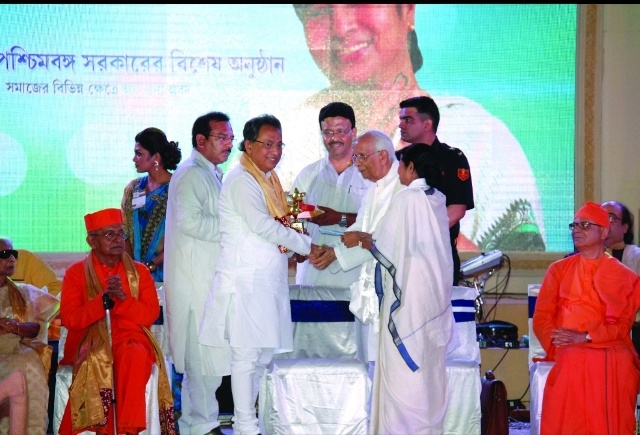
M Nurul Islam receiving the prestigious ” Banga Bhushan Award” from Mamata Banerjee , the chief minister of West Bengal and Governor Keshari Nath Tripathi

The Mission is mostly run by donation and zakat. Muslims throughout the country contribute their zakat to the Mission, which takes care of 25% of seats reserved for poor, destitute and orphans.

A part from education Al-Ameen Mission does charitable works for the Muslim community. It has helped unemployed Muslims with loans and has scholarship programs to help other communities’ needy students.

Al-Ameen gives full financial support up to six months to those needy students of Al-Ameen who get admission in medical colleges.

The Mission has a unique feature of having different fee-structure for the students of different categories depending upon their financial conditions. The students from well to do families pay their fees in full whereas remittance is given to those who can’t pay the full amount. Those, who can’t pay at all, are exempted of all kinds of fees. Moreover, a considerable number of seats are reserved for meritorious orphan students.

At present 5338 students (42%) enjoy half-free studentship and 3432 students (27%) enjoy full free studentship facilities from the Mission.

The flexible fee –structure of the Mission had made it possible for many students from most poor background to achieve their dream and become doctors and engineers.

This year too Al-Ameen Mission has broken all its previous records as its   422 students  cracked NEET,  out of which 128 (30.5%) students are from poor and BPL families, 133 (31.5%) are from middle and upper middle income group and 161 (38%) from lower middle income group.

Above all 62 students of the Mission got AIR within 1500, 147 within 25000, 246 within 35000, 367 within 45000 and 422 within 55000.

Most surprisingly 105 students from Murshidabad and  80 from Malda who were enrolled in different branches of Al-Ameen Mission among those who cracked NEET this year.

Out of 422 qualifiers 360 were boys and 62 girls.

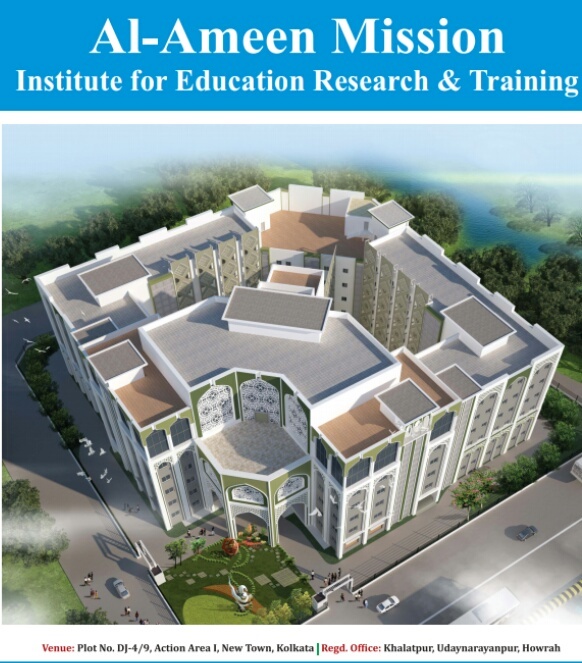
This year in February Al-Ameen Mission Trust has taken up a new project, ‘Al-Ameen Mission Institute for Education Research and Training’. This foundation stone of the institute has been laid in the Newtown. Here, under one roof there will be facilities to provide coaching for the Medical post-graduation course and Residential Training Centre for competitive examinations like IIT,IIM, CLAT,CAT,MAT,UPSC and WBCS. Besides, there will be facilities to train teachers as well as non-teaching staff. Moreover, there would be provision for higher research in different fields of social sciences. In future , it will be the leading center of the Al-Ameen Mission; the Centre  of Excellence, said Islam about his future plan.

NurulIslam06MPOs21oct2019

Proposed Al-Ameen campus.

source: http://www.muslimmirror.com / Muslim Mirror / Home> Editor’s Pick> Education> Indian Muslim> Interviews> Positive Story / by Syed Zubair Ahmad / October 08th, 2019

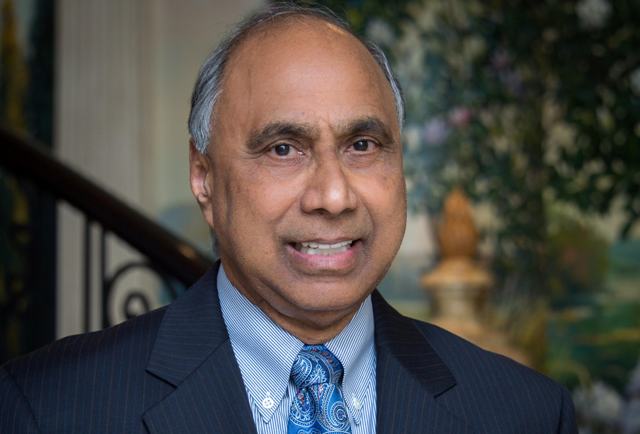
Jamia Hamdard to confer honorary doctorate to Frank F Islam

UTTAR PRADESH / NEW DELHI / U.S.A. :

Frank F. Islam
Frank F. Islam

New Delhi :

Jamia Hamdard, an institute of higher education announced that it will confer Honorary Doctorate to Dr. Frank F. Islam.

Islam will be formally conferred Doctor of Science (Honoris Causa) by the Jamia Hamdard University in a Special Convocation on 15th October, 2019, the registrar of the institute, S. S. Akhtar said in a statement.

Islam is an information technology entrepreneur, investor, philanthropist, civic leader, and writer who heads the FI Investment Group. He was the founder and CEO of the QSS Group and has served on numerous boards and advisory councils including the Board of Trustees of the John F. Kennedy Center for the Performing Arts, Board of Directors, Strathmore Center for the Arts, Ford”s Theater Society Board of Trustees and Kennedy Center International Committee on the Arts.

Islam joins the list of other distinguished recipients who have been honoured by Jamia Hamdard which includes N. R. Narayana Murthy (Co-Founder of Infosys), Bharat Ratna C.N. R. Rao, Sheila Dikshit (Former Delhi CM).

Inaugurated by late Rajiv Gandhi, former Prime Minister of India on August 1, 1989, Jamia Hamdard has recently been recommended by the Empowered Committee appointed by the Government of India for recognition as an “Institution of Eminence” and placed at the 5th rank among the 500 or so privately funded Universities of India.

–IANS

source: http://www.muslimmirror.com / Muslim Mirror / Home> Education> Indian Muslim / by IANS / October 12th, 2019

A retired official’s intensive research on Holy Quran

Coimbatore, TAMIL NADU :

Dr M Ameer Althaf
Dr M Ameer Althaf

Coimbatore:

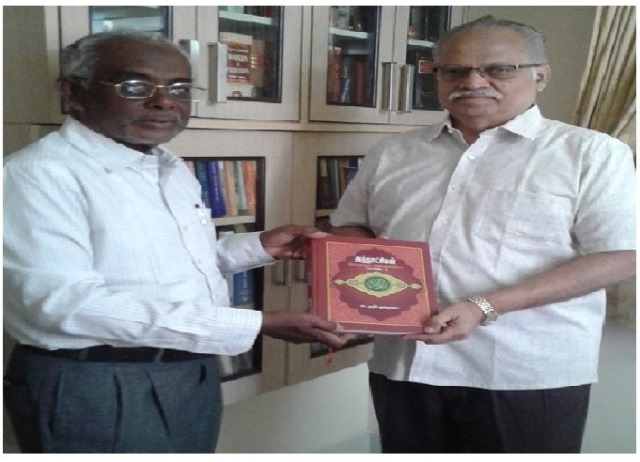
Retired, but not tired of working for former NTC official Dr M Ameer Althaf, who took up intensive research on Holy Quran for well over three decade. And in his seven yearlong untiring effort, he has penned the book ‘Athaatchigal Thirukkuran Kalai Kalanjiam’ in a four part series, which is close to his heart. Undoubtedly, this is a magnum opus for the author.

Notably, Ameer Althaf had won the heart of Kovaiites for his different avatars in Thirukkuran Arakkattalai, Coimbatore District United Jamaath, AIMMS Muslim Women Community College. Adding another feather to his cap, he brought out the book ‘Pettagam’, a compilation of 300 long history of Coimbatore Muslims which was released at a gala function in 2014.

As to the adage ‘Hardwork pays rich dividends’, his research papers on Holy Quran were presented and published in global forum like Umma-al Qura University in Mecca, King Fahad University in Madina, University Malaya, Islamic Science University Malaysia besides universities in Istanbul, Jordan, Qatar, Mali.  His four decade central government service and three decade research on Holy Quran made him go places across the globe. Significantly, he became to be known as International Holy Quran researcher.

A function is being organised under the aegis of Dhaanish Ahmed Institute of Technology (DAIT) and Al Azhar Educational Trust on October 20 at Podanur Thendral mahal to release the book ‘Athaatchigal’ by former supreme court judge Fakir Mohamed Ibrahim Kalifullah and former High Court judge K N Basha in the presence of leading luminaries Alhaj K Moosa, chairman, DAIT group, Alhaj UAK Jailani, managing trustee, Al Azhar Education Trust.

Sunnath Jamaath Federation general secretary Alhaj M A Inayathullah will preside while Ranipet Additional District and Sessions Judge A Mohamed Ziyavudeen will felicitate at the event.

Moulavi Alhaj M A Abdur Rahim, president, Coimbatore-Nilgiris-Tirupur district Jamathul Ulema Sabai, Moulavi Alhaj M A Mohammed Imdhadi, president, Coimbatore city Jamathul Ulema Sabai, social activist Aloor Shanavas, Coimbatore district United Jamaath president Alhaj A R Basheer Ahamed, Tamil Nadu Haj organisors association president Alhaj A Mohamed Rafeek, Iqra Educational Trust president Alhaj H E Iqbal Sait, Project Manager in Kuwait Haji M A Azad will address the audience at the book release event. Himayathul Muslimeen Sunnath Jamaath, Podanur secretary Haji KTS Riyas Kapoor will propose the vote of thanks. Other dignitaries who will speak at the event include Holy Quran translator Prof Mohamed Khan baqavi, TN state Jamathul Ulema deputy general secretary Moulavi Alhaj  K M Ilyas Riyaji, Chennai Anna Salai Makkah Masjid chief imam Moulana M Mohammed Mansoor Kasimi, Madras University HoD Arabic,  Persian and Urdu Dr A Zakir Hussain Baqavi and senior network consultant, Abudhabi Dr Mohamed Ibrahim.

source: http://www.muslimmirror.com / Muslim Mirror / Home> Indian Muslim> Positive Story> Religion / by M. Rafi Ahmed / October 10th, 2019

Food in Indian Muslim households is beyond biryani & kebabs: Recipes are subtle, and include various vegetables

JHARKHAND / NEW DELHI :

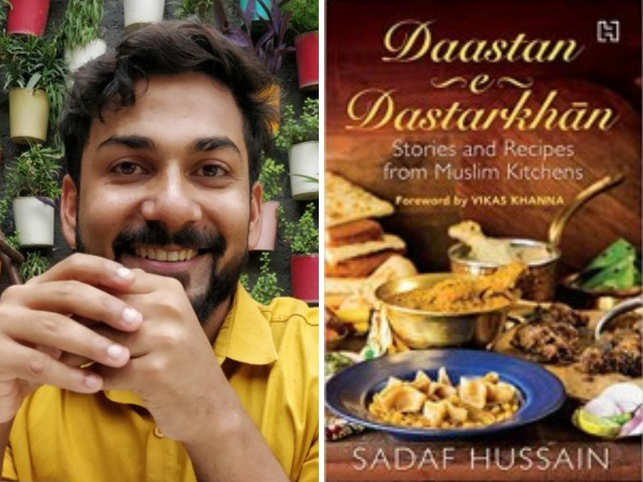
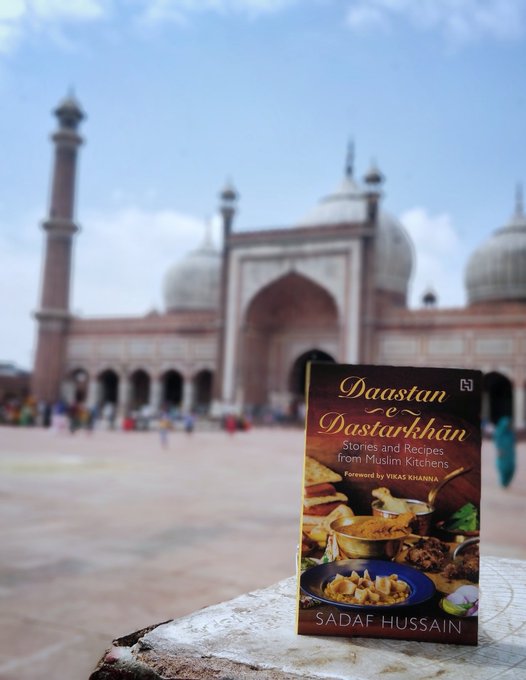
Sadaf Hussain chronicles home-made food in his new book Daastane-Dastarkhan.

​Sadaf Hussain’s charming new, first book Daastane-Dastarkhan​ has been published by Hachette India​.

Sadaf Hussain’s charming new, first book Daastane-Dastarkhan has been published by Hachette India.

Sadaf Hussain’s charming new book Daastane-Dastarkhan starts with the story of a pir who, every Thursday, visited his mother’s family in Sasaram, Bihar. But one day he appeared on a Wednesday, throwing his grandmother into panic because there was no meat for the aloo-gosht she always fed him. She had to be inventive. She used dried figs and poppy seed paste, to make a salan, threw in fried potatoes, balanced it with garam masala and chillies, and served it with rice and besan rotis. The pir was delighted: “May Allah bless you with an abundance of food and may no one ever leave your home hungry.

A recipe like this is not what many would think of as Indian Muslim food. Where is the intense meat focus? Where are the kebabs and biryanis? The problem starts with thinking there is something that can be neatly labelled Indian Muslim food. The fact that people do this might be just another way in which Indian Muslims are diminished by clubbing their many communities into one and ascribing easy stereotypes to them.

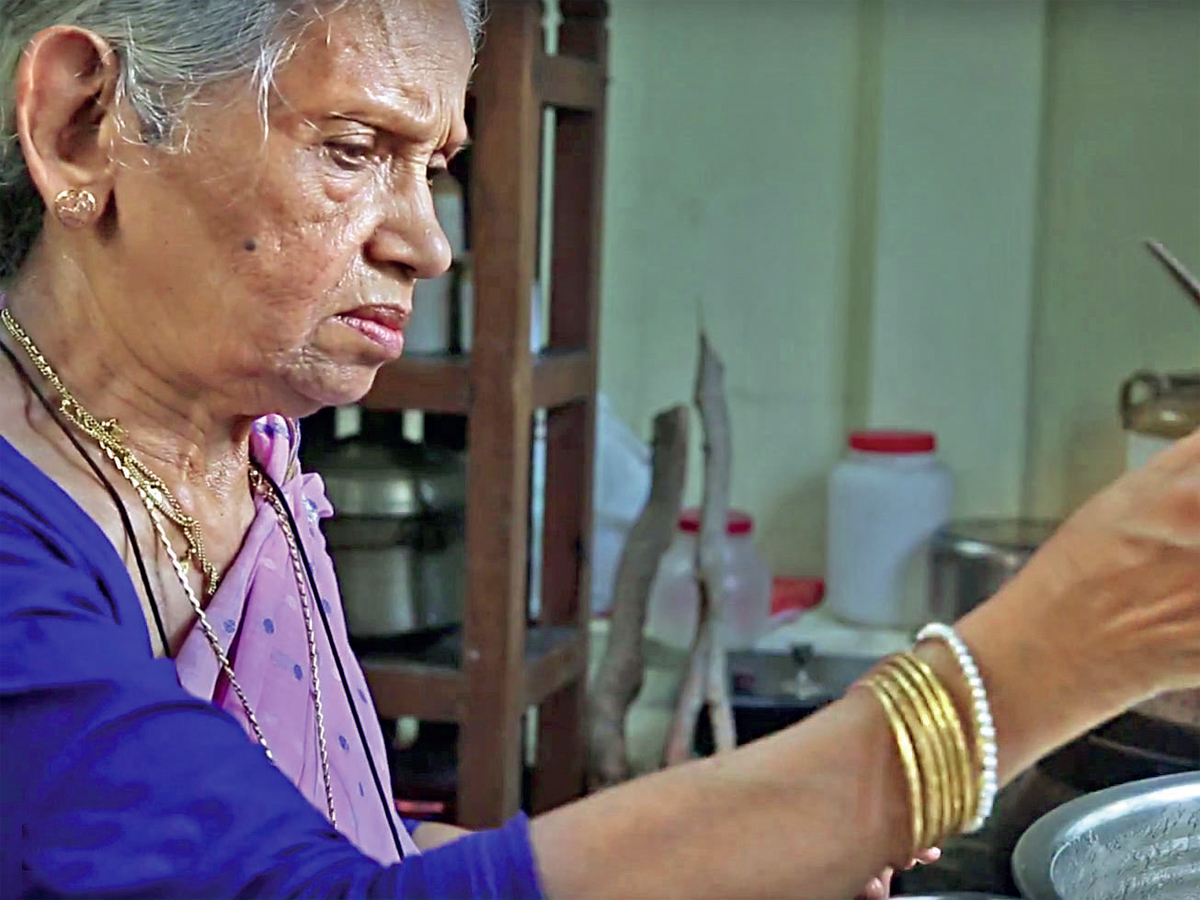
Ummi Abdulla, who has documented the food of Malabar Muslims, makes mutta mala or egg threads.

Part of the problem is that there is a market in catering to such stereotypes. Once a year during Ramzan, many people decide to have an iftar experience and go out — without fasting — to eat the rich food cooked on street sides for the occasion. But this has as little relation to regular home food in Muslim communities across India, as does a Diwali or Christmas feast have for Hindu or Christian home food.

One way people get exposed to home food of different communities is when they share food with neighbours, especially as kids. But as housing becomes increasingly segregated, this is becoming harder.

This lack of knowledge has been compounded by a curious lack of cookbooks from different Indian Muslim communities.

There are cookbooks from cities like Lucknow and Hyderabad where certain types of Muslim food dominate, but what’s presented tends to be street food or special occasion dishes, both mostly made by men. These are important, but it means that the daily, home dishes get left out.

SadafHussainMPOs14oct2019

There have been a few exceptions. Ummi Abdulla made a pioneering contribution by documenting the food of the Malabar Muslim, or Moplah, community, with all its complex interactions between the local ingredients of Kerala and influences from Arab traders.

Bilkees Latif ’s Essential Andhra Cookbook captured similar interactions from Hyderabad. Mumbai’s Inquilab newspaper brought out a collection of booklets, in Urdu and English, on Memon, Kokani, Bohra and Kashmiri food. There were a few other books printed privately or abroad, but little else.

Adil Ahmad’s Tehzeeb chronicles the home food of an upper-class Lucknow family.

Doreen Hassan’s Saffron and Pearls does the same for her husband’s family from Hyderabad, but with roots in both Persia and Uttar Pradesh. Zaiqa e-Kadwai provides a very different perspective. It is a team effort to document the food of a village in Ratnagiri district, where most of the families just happen to be Muslim, but their food is quite typically Konkani. Hazeena Syed’s Ravathur Recipes: With a Pinch of Love shows, in a very impressively produced volume, the food of this Tamil Muslim community.

 These books show the food of these communities to be, as with all communities in a region, primarily dictated by what’s locally available, but with small tweaks. As Hassan’s husband’s family shows, at a more upper-class level there were more likely to be interactions with communities across countries, and recipes travel with daughters-inlaw, who are one of the least acknowledged agents for social change.

 There is certainly a lot of meat eaten in all these communities, but the recipes are much simpler and subtler than what is served up to unthinking eaters as “Muslim” food. Meat is often cooked with vegetables as in the chuqandar gosht, beetroot and mutton; or keema kakdi, cucumbers and mince, given in Tehzeeb. There are inventive egg dishes, like boiled eggs stuffed with mince and then skewered, that Hassan discovers in Hyderabed, or eggs fried in gravy that are a favourite in Kadwai.

Other similarities might be slightly more use of some spices, like star anise, and less of others — hing rarely features since onions are widely used. Chefs will tell you that Muslims in their kitchens are particularly adept at frying, and that copper, with its excellent heat conduction, is the metal of choice for utensils. Many traditional vessels shown in these books are copper, and careful distinctions are made in types of frying: shallow, deep, braising and so on.

Books like these are important because, apart from the problems of unthinking stereotypes, the food of Indian Muslim communities faces another kind of obliterating pressure. Many cooks from the communities have gone to work in the Gulf and have picked up the kind of Lebanese-Arab food that is becoming a standard across the world. It is easy to produce, cheap and tasty enough and has the allure of being modern, rather than old-fashioned, labour-intensive home food. People shouldn’t be faulted for opting for what’s cheap and convenient, but it is important to remember, as these books remind us, that there are also other ways to nourish our roots.

NalliNihariMPOs14oct2019

source: http://www.economictimes.indiatimes.com / The Economic Times / Home> Business News> Magazines> Panache / by Vikram Doctor / ET Bureau / October 13th, 2019