Category Archives: Community Involvement / Social Issues

‘Ulema’s Role in India’s Freedom Movements’: An Academic Bid to Stop Saffron Eraser in its Tracks

NEW DELHI :

UlemasRole01MPOs13nov2019

New Delhi :

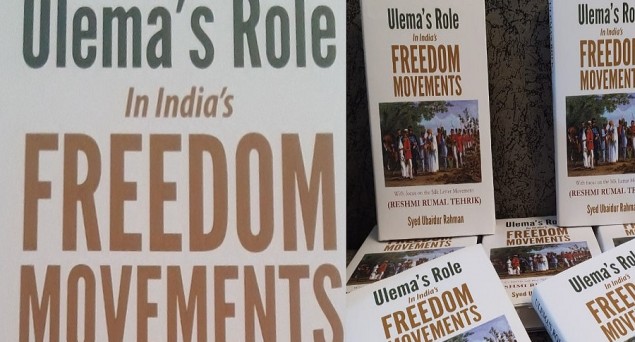
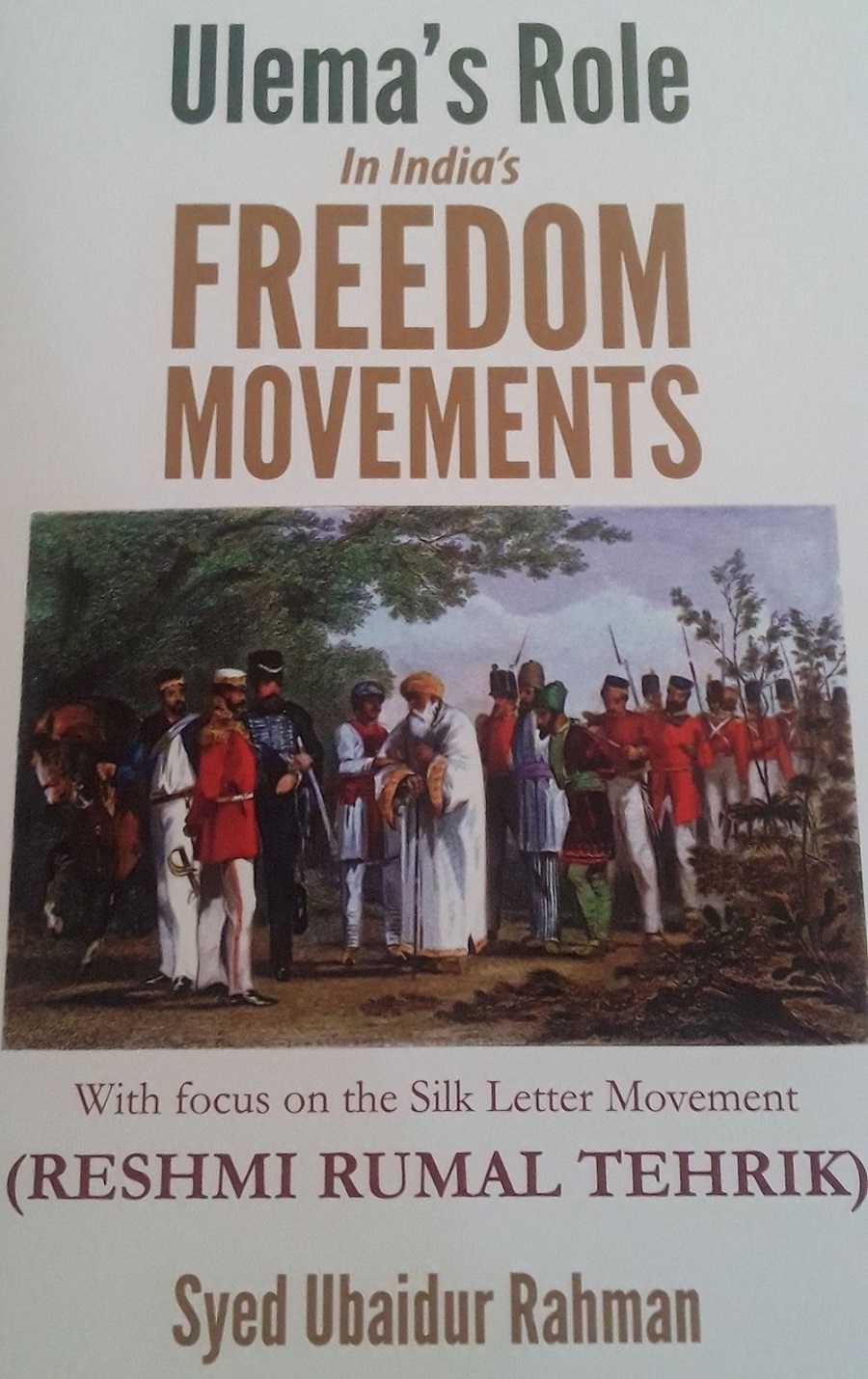
Amidst well-organized and power-backed attempts to erase M-word from the history of India’s freedom movement, has come out a humble academic bid to preserve in black and white the key role of Ulema or Muslim clerics in the ‘bloody’ freedom struggle spreading over around one century. Written by a young writer Syed Ubaidur Rahman, who is just 44, the book ‘Ulema’s Role in India’s Freedom Movements: With focus on Silk Letter Movement (Reshmi Rumal Tehrik) captures Ulema’s sacrifices in the Mutiny of 1857 and 1858, Faraizi Movement and Sayyid Ahmad Barelvi’s movement besides mainly focusing on the Silk Letter Movement as the title declares.

“The word ‘Ulema’ has become a rather very misunderstood term in the present day Indian society. Like everything Muslim, a conscious effort has been made to malign and ridicule the Muslim clergy…Over the last few centuries, the Muslim scholars have contributed immensely in seeing to it that the nation remains a single, united and cohesive unit and have made significant contributions to this end,” writes the author in the introduction of the book.

While admitting that “Ulema’s role in the society has considerably shrunk over the last several centuries,” he says that Ulema “used to have a very important place in the Indian society during Muslim rule in the country and even after the dismantling of the Mughal empire…over the centuries, on many occasions, they have led not just on spiritual front but on temporal front as well.”

“Every time in the past, when the country found itself in challenging situations, they stepped in and tried to play a much bigger role than what is usually anticipated from them. This was seen during different phases of freedom movements beginning with the first war of independence of 1857,” writes Rahman, a journalist by career who has penned several books in the last one decade, besides regularly writing articles and columns for various periodicals.

The 280-page book deals with different phases of India’s freedom struggle “with special focus on Silken Letter Conspiracy, better known as the Reshmi Rumal Tehrik.”

Highlighting the need and relevance of the book, the author says: “Not much has been written on Reshmi Rumal Tehrik or the people behind it and thus it remains shrouded in mystery. The book also discusses at length the Mutiny of 1857 and 1858, Faraizi Movement that was anti-colonial movement launched and sustained by Islamic scholars, besides Tehrik-e-Jihad of Sayyid Ahmad Barelvi in North Western Frontiers and Kashmir.”

The author says: “Despite the slide of the Muslim empire and the subsequent dismemberment, first between Muslim nawabs in the North, Deccan and South India, and later the annexation of these territories by the East India Company, Muslim scholars remained instrumental in trying to keep the Muslim empire intact. They were at the forefront in trying to stop the slide, and in posing challenges, first against those who fought the Mughals and later against the British East India Company. Shah Waliullah, the legendary Islamic scholar and reformist, did everything to stop the Mughal Empire from going to dogs. But, when despite all his efforts nothing happened, he sent a later to Ahmad Shah Abdali and also to Nawab of Oudh and Hafiz Rahmat Khan, the shrewd Ruhella chieftain. The rest is history.”

Deliberating on the core topic of the book, that is the role of Ulema in India’s freedom movement, the author writes: “Muslim ulema’s role was not limited to merely giving advice to the rulers and then become mute spectators of what was taking place. On the contrary, when they realized that there was no one coming forward to lead the masses, they took up leadership role, and fought off the invaders. From Bengal to Balakot and from Delhi to Lucknow, Muslim ulema played prominent roles in all the uprisings against the British (mis)rule. Be it Faraizi Movement, first war of independence of 1857 or the Reshmi Rumal Tehrik, they were instrumental and took leadership role. During the Mutiny of 1857, ulema were at the forefront and paid heavy price for their leadership role.”
UlemasRole02MPOs13nov2019

The book highlights the contributions of some Ulema during the Mutiny of 1857 and subsequent fights.

The author says: Maulavi Ahmadullah Shah was one of the most prominent leaders of the entire freedom movement, who led on many war fronts and collaborated with all other renowned freedom fighters. Despite being among the most prominent leaders of the 1857 Mutiny, Maulavi Ahmadullah Shah remains a rather unknown figure in the country. He was a stalwart, a shrewd military planner, a great scholar of Islamic sciences and above all a unifier beyond any iota of doubt. He allied with almost all the leading actors of the 1857 revolution, be it Tantia Topi, Nana Sahib, Begum Hazrat Mahal, Bakht Khan Ruhilla, Khan Bahadur Khan Rohilla of Bareilly or any other freedom fighter of repute. It is an irony that despite his military successes against the British East India Company in 1857 from Lucknow to Bareilly and Shahjahanpur, his name is not even mentioned. His military planning unnerved the colonial rulers and his bravery won praise from the British generals like George Bruce Malleson and Thomas Seaton.

Haji Imdadullah Muhajir Makki was another alim of repute, known for his personal piety, scholarship, courage and military exploits during the Mutiny of 1857. A father figure among ulema of his time, his most renowned disciples include Maulana Qasim Nanotwi and Maulana Rasheed Ahmad Gangohi who not just fought alongside him in Thana Bhawan and Shamli but later went on to launch Darul Ulum Deoband. Maulvi Liaqat Ali, another alim was behind the uprising in Allahabad and evicting the East India Company out of the major North Indian town. It was his personal charisma and shrewd military planning that first brought together the mutineers and later successfully beat back the Company forces. Many more ulema played prominent roles during the uprising and paid dearly when the Company came back with a vengeance. Tens of thousands of ulema were hanged to death. Even those ulema who had nothing to do with the Mutiny were implicated, jailed, sent to kalapani and unceremoniously killed. However, this dance macabre didn’t stop them from taking to the same means to defeat the colonial rulers later.

Silk Letter Movement

The author says: “Reshmi Rumal Tehrik is a freedom movement that remains largely unknown. Not much has been written on it and both its top leaders, Mahmud Hasan and Ubaidullah Sindhi, despite their stellar roles and sacrifices, remain rather unknown. While Shaikhul Hind spent three years in trying circumstances in Malta, Ubaidullah Sindhi spent more than three decades in exile, first in Afghanistan and then in Turkey and Hejaz.” 

Silk Letter Movement, known more widely as the Reshmi Rumal Tehrik, was launched by ulema of Deoband, particularly Mahmud Hasan and his renowned disciple Ubaidullah Sindhi, who later went on to become the Home Minister in the first provisional government established in Kabul. Raja Mahendra Pratap Singh was its President and Maulana Barkatullah Bhopali was its Prime Minister. The Reshmi Rumal Tehrik had a two-fold objective, one to incite the tribal people in North Western Frontier region and then forging alliance with other world powers including Afghanistan, Turkey and Germany. While Mahmud Hasan headed to Hijaz to seek help from Turkish officials, Ubaidullah Sindhi went to Kabul to forge alliance with Afghan amir. Both were very successful in their planning, but while Mahmud Hasan was still in Hijaz, Ottomans suffered heavy reverses against Sharif of Mecca who was being propped by Britain. At the same time, the entire planning of Ubaidullah Sindhi was discovered when the Silken Letters, sent by him to Mahmud Hasan were unearthed by the British CID. Hundreds of their supporters across Punjab, United Provinces and Delhi were arrested by British police.

In the introduction of the book, author Rahman says: “The pages that follow unravel a history that has been often suppressed and not much has been written on it. To many people, this side of the history may seem rather bewildering as I examine it and try to make sense as to what happened in our part of the world and how those brave men, despite the failure of 1857 mutiny rose repeatedly to defy the British Raj.”

How Important Is This Book when saffron eraser is moving fast on the canvas of freedom history of India?

Talking to India Tomorrow, the author responded to the question: “History needs to be preserved. It is the responsibility of the people, communities and the nations to preserve their histories and present right perspectives to what happened in the past. Indian Muslims have done precious little when it comes to presenting their perspective in right context. On the contrary, the Sangh Parivar, bent upon distorting the history of the last few centuries, has made strides in this field. Despite the fact they were never part of the freedom movement, they have claimed an important role for them, and have tried to co-opt major historic figures as part of their narrative. This began with Patel. Now they are trying to claim Gandhi and Ambedkar as their own, despite both being fiercely opposed to their ideology of hate. On the contrary, the Muslims have ignored this part completely. Hope this book serves its purpose and creates awareness among masses about what Muslim scholars and ulama did for the nation in the freedom struggle.”

The book has come out at a time when the BJP government in Karnataka has decided to scrap the state’s official celebrations around Tipu Sultan’s birth anniversary. Going one step ahead, the government announced to remove the lesson on the 18th century Mysore ruler from school history books.
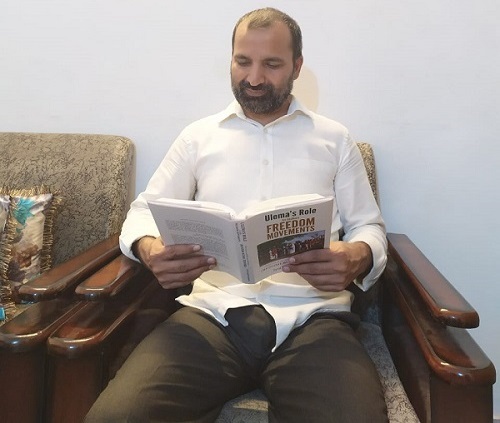
Author Syed Obaidur Rahman

Given the communal hatred widening the gulf between Hindus and Muslims, the author wants the book reaches the masses.

“While this is of paramount importance to render this book in Hindi and other vernacular languages, this seems a hard nut to crack due to want of resources. God willing, I would definitely like to bring it in Urdu, Hindi and other regional languages,” says Rahman who has several other books to his credit, including Muslim Freedom Fighters: Contribution of Indian Muslims in the Freedom MovementUnderstanding Muslim Leadership in India and Muslim Mujahideen e Aazadi, aur Tehrik e Azadi mein unki khidmaat (Urdu).

Book: Ulema’s Role in India’s Freedom Movements: With focus on the Silk Letter Movement (RESHMI RUMAL TEHRIK)

Author: Syed Ubaidur Rahman   /  Price: Rs 595  /  Pages: 280

Publisher: Global Media Publications  /  D-204, 4th Floor, Abul Fazl Enclave, Jamia Nagar, New Delhi-110025

Email: syedurahman@gmail.com, gmpublication@gmail.com / Contact: 9818327757

source: http://www.indiatomorrow.net / India Tomorrow / Home / by Mumtaz Alam, India Tomorrow / November 11th, 2019
Forgotten Muslim soldiers of World War One ‘silence’ far right

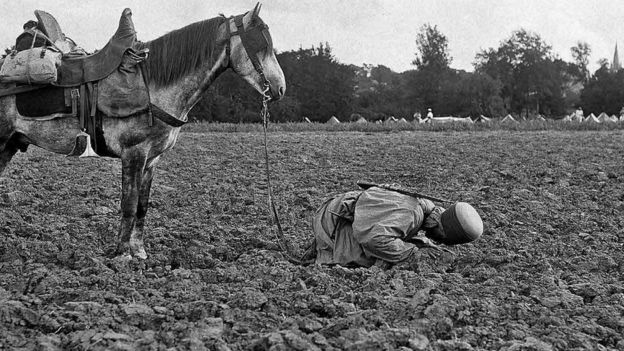
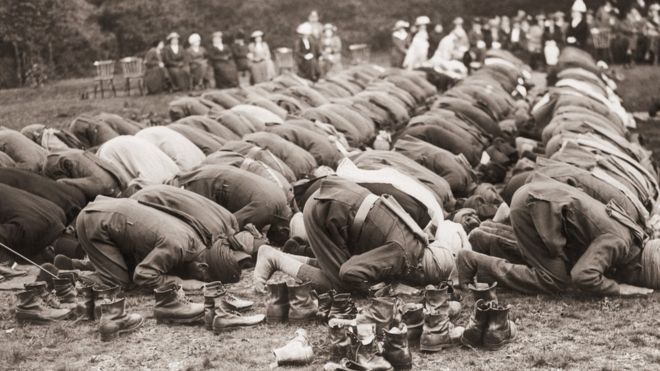
FPG/HULTON ARCHIVE/GETTY IMAGES Image caption Indian troops serving with the British army pray outside the Shah Jahan Mosque in Woking, Surrey

FPG/HULTON ARCHIVE/GETTY IMAGES
Image caption
Indian troops serving with the British army pray outside the Shah Jahan Mosque in Woking, Surrey

A hundred years since the end of World War One, historians think recognising the contribution of Muslims can help tackle contemporary issues such as Islamophobia.

“Muslim soldiers have been forgotten about over time,” Hayyan Bhabha, from the Muslim Experience, says.

“The core far-right narrative is that Muslims have never done anything for us.

“Well, actually, with facts that are over 100 years old, we can say Muslims fought and died for the history and security of Europe.”

It is estimated that 1.5 million Indian troops fought to defend Britain. Of those, 400,000 were Muslim soldiers.

The Muslim Experience is working to highlight the global contribution of Muslim soldiers to World War One and says raising awareness could silence anti-Muslim rhetoric by far-right groups in Britain today.

Mr Bhabha says his team is now opening up documents and discovering new information about their role in the War.

“Accessing archives from 19 countries, we have discovered that more than four million Muslims either fought or served as labourers during the War, from around the world,” he says.

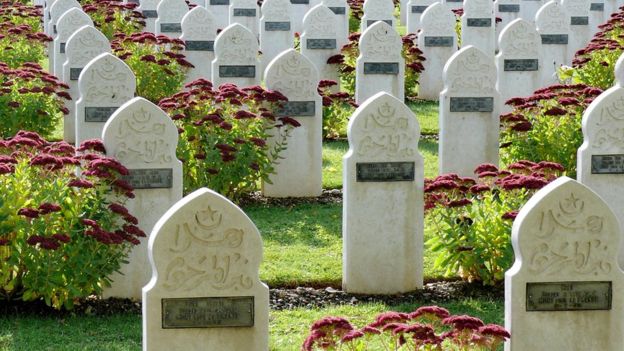
Image copyright FORGOTTEN HEROES 14-19 Image caption Muslim graves in French military cemetery Notre Dame de Lorette.
Image copyright FORGOTTEN HEROES 14-19
Image caption
Muslim graves in French military cemetery Notre Dame de Lorette.

One of those was Sepoy Khudadad Khan, an Indian soldier who fought alongside British troops.

He was the sole survivor of a team assigned to defend vital ports in France and Belgium from German forces.

According to accounts, Khan managed to hold off the enemy advance long enough for British reinforcements to arrive.

On 31 October 1914, Khan, of the 129th Duke of Connaught’s Own Baluchis Regiment, became the first South Asian to receive the Victoria Cross, Britain’s highest military honour.

‘Feel more British’

Groups such as the Muslim Experience want stories of soldiers to be heard.

They also want more British Muslims to find out if they have a personal connection to World War One.

Just as a local GP in Nottingham, Dr Irfan Malik, did after he had a chance conversation with a patient that led him to discover two of his great-grandfathers had fought for Britain.

Image copyright FORGOTTEN HEROES 14-19 Image caption It is estimated that millions of Muslims fought for the Allied forces globally
Image copyright FORGOTTEN HEROES 14-19
Image caption
It is estimated that millions of Muslims fought for the Allied forces globally

Dr Malik’s great-grandparents, Capt Ghulam Mohammad and Subedar Mohammad Khan, were two of 460 soldiers from a tiny village called Dulmial, in modern-day Pakistan, sent to fight in the 1914-18 conflict.

“One of my patients is a researcher of Commonwealth contribution to World War One and I told him about a village in modern-day Pakistan where I’m from that has a cannon commemorating the Great War,” he says.

“From that point four years ago, my journey began and I found out my two great-grandparents fought for Britain.

“I’m very fortunate to have images from 100 years ago. It means a huge amount to me. It’s made me feel more British as we have this shared history in common and I believe it helps community cohesion.”

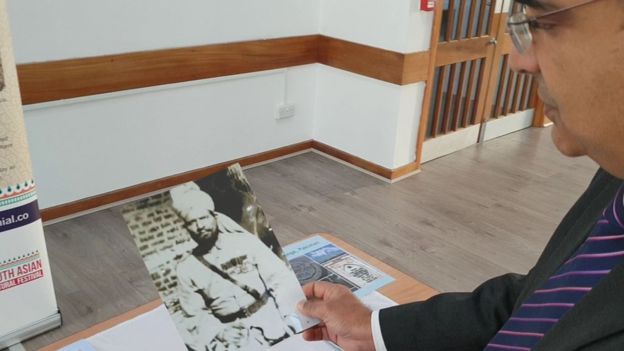
Dr Irfan Malik has collected pictures of his great-grandfather Subedar Mohammed Khan

But how connected do British Muslims feel to the War and how aware is the community itself of its links to British military history?

Mr Bhabha thinks some young Muslims in particular are not engaged with British military history.

“Most Muslims are not engaged with military history because they can’t relate to it,” he says. “The way it is taught currently is very European-centric.

“The history that is taught doesn’t show the true diversity of everyone that took part in the First World War.”

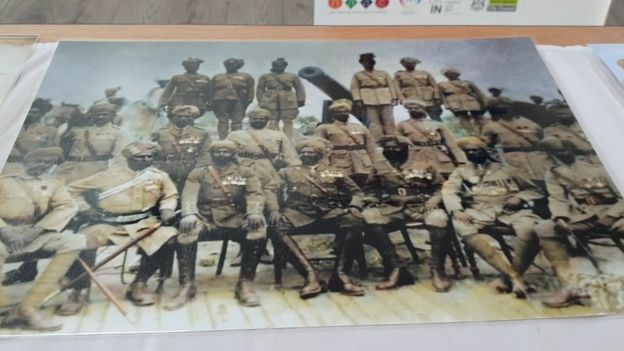
Indian Muslim soldiers in the village of Dulmial, modern-day Pakistan

study by think tank British Future found just 22% of people in Britain knew Muslims had fought in the Great War.

So, it has launched a campaign, Remember Together, to raise awareness in schools.

Steve Ballinger, from British Future, says: “Finding out that Muslim soldiers fought and died for Britain to protect us and to protect the freedoms we enjoy today, that’s an important history for everyone to know.”

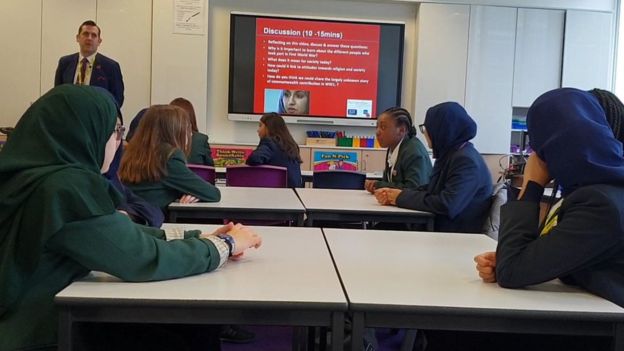
Pupils at Eden Girls School learn about the Muslim contribution to World War One

It has certainly meant a lot to Daleesha Naz, 14, of Eden Girls School, in east London.

“Today I learned that 400,000 Muslims fought in the British Indian army and it has made me feel closer and more connected to British history,” she says.

As the 100th anniversary of the end of World War One is remembered, historians, campaigners, and descendants of the soldiers are making sure the contribution of Muslims is never forgotten.

Luc Ferrier, who chairs Forgotten Heroes 14-19 – the umbrella group for the Muslim Experience – says: “If the world really wants to reach out to the international Muslim community, then they need to know the enormous contribution these people have made, fighting a war none of their making.

“Only by recognising and honouring the global Muslim sacrifices, not only these of the British colonies, we are reaching out to them and saying a genuine thank you”.

source: http://www.bbc.com / BBC News / Home>  UK / by Rahil Sheikh / BBC Asian News Network /  November 09th, 2018

From naming ‘IIT’ to setting up of UGC: Initiatives by Maulana Abul Kalam Azad

Mecca, SAUDI ARABIA / New Delhi   :

Homeschooled for the early part of his life, Azad is considered to be the father of the Indian Institutes of Technology (IITs). Here is a look at some of the major initiatives taken by him in setting up the Indian education system.

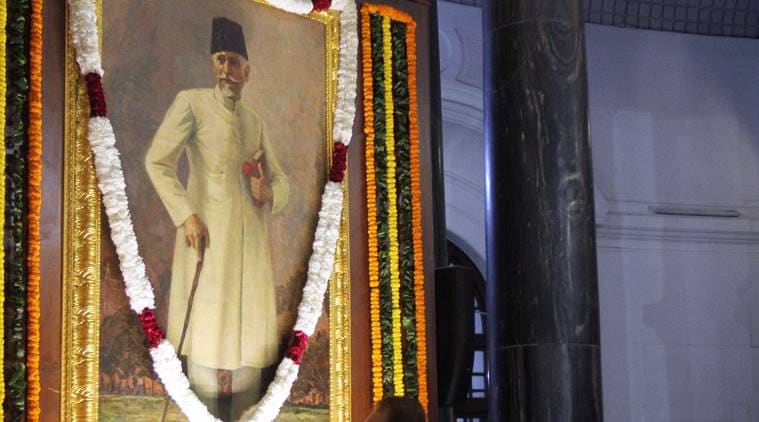
Maulana Abdul Kalam Aazad, HRD Minister of India, JMI, jamai, DU, IIT, National education day, education news

Maulana Abdul Kalam Aazad (File Photo)

Bharat Ratna awardee and India’s first Minister of Human Resource Development (HRD), Maulana Abul Kalam Azad was not only an educationalist but also a journalist. Homeschooled for the early part of his life, Azad is considered to be the father of the Indian Institutes of Technology (IITs) which are still considered among the best Indian educational institutes. Here is a look at some of the major initiatives taken by him in setting up the Indian education system.

Naming IITs – When India was looking to set up higher educational institutes which would impart knowledge in the field of science and technology, a Massachusetts Institute of Technology-like (MIT) model was thought of. The name ‘Indian Institute of Technology’ was adopted by Maulana Abul Kalam Azad before the inauguration of the institutes. The first Indian Institutes of Technology – IIT Kharagpur came into establishment in 1950.

Establishing UGC – A committee headed by S Radhakrishnan under the leadership of Azad as HRD Minister suggested extending the Universities Grant Commission (UGC)’s role to supervise work of all Indian varsities, make recommendations and grant funds. Earlier, UGC looked after three central universities, namely Aligarh, Benaras and Delhi.

DU and IISc – He laid the foundation stone of the Indian Institute of Science (IISc) in 1909, then known as the Tata Institute and granted deemed university status in 1958. Azad also oversaw the setting up of the ‘Central Institute of Education, Delhi’, which later became part of University of Delhi (DU) as the Department of Education. He was also a member of the foundation committee to establish Jamia Millia Islamia at Aligarh in UP.

Minority community – A supporter of education for poor, women and minority communities, Azad had said, “It is a birthright of every individual to receive at least the basic education without which he cannot fully discharge his duties as a citizen.”

To honour his efforts, Ministry of Minority Affairs of the Central Government of India set up the Maulana Azad Education Foundation to promote education among educationally backward sections of the society. The Ministry also provides the Maulana Abul Kalam Azad National Fellowship, an integrated five-year fellowship in the form of financial assistance to students from minority communities to pursue higher studies. The education institutes include Maulana Azad National Institute of Technology, the Maulana Azad College among others.

source: http://www.indianexpress.com / The Indian Express / Home> Education / by Education Desk , New Delhi / November 11th, 2019

Coming! Soybean-based sanitary napkins made by 2 Kerala students

Kadambur (Kannur District) KERALA :

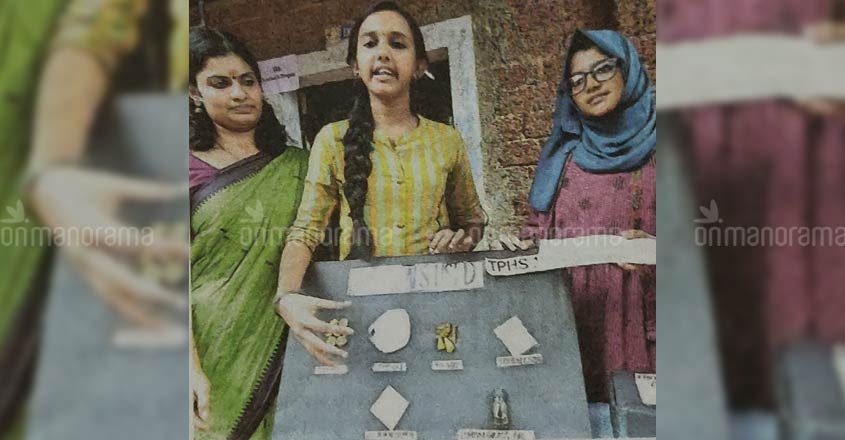
Two Class-10 students, PV Nayana and Fathimathul Nafra, introduced organic sanitary napkin made from soybean

Personal hygiene concerns are behind the recent bids to promote the production and use of affordable sanitary napkins especially among underprivileged women. A 2018 Hindi film named ‘Pad Man’ is even based on a Tamil social activist who introduced low-cost sanitary pads.

At this year’s Kerala School Science Fest, two Class-10 students — PV Nayana and Fathimathul Nafra — impressed spectators with organic sanitary napkin made from soybean.

With soybean as base for the disposable absorbent pad the duo not only introduced a unique method of making organic sanitary napkins but also pledged their commitment to nature.

Nayana and Nafra are students of the Higher Secondary School at Kadambur in Kerala’s Kannur district.

They claim that the organic napkins are safe for use as chemicals are not used in it. Besides, these biodegradable napkins pose absolutely no harm to the nature.

Napkins made using organic and biodegradable materials like coconut fibre, water hyacinth, banana stem and jute are already in the market.

Nayana and Nafra said extensive research done in this field had inspired them.

Soybean’ incredible ability to absorb water made us try out its possibilities, they added.

After making the napkins, they conducted further experiments and tests at SN College, Kannur, and also at a Bengaluru facility. The experiments there proved successful which further motivated the students to present it at this year’s School Science Fest.

Besides soybean, organic materials like beeswax and cotton too are used in this sanitary napkin. Making a single piece of this organic soybean napkin would cost Rs 3. However, the students say that it would only cost Rs 1.5 per piece if the napkins are industrially produced.

Nayana and Nafra were guided by Roshita who is a teacher at their school.

source: http://www.english.manoramaonline.com / OnManorama / Home> News> Campus Reporter / by OnManorama Staff / November 06th, 2019

Freedom to travel, use phone: How two Kerala girls fought for their rights

Kozhikode, KERALA :

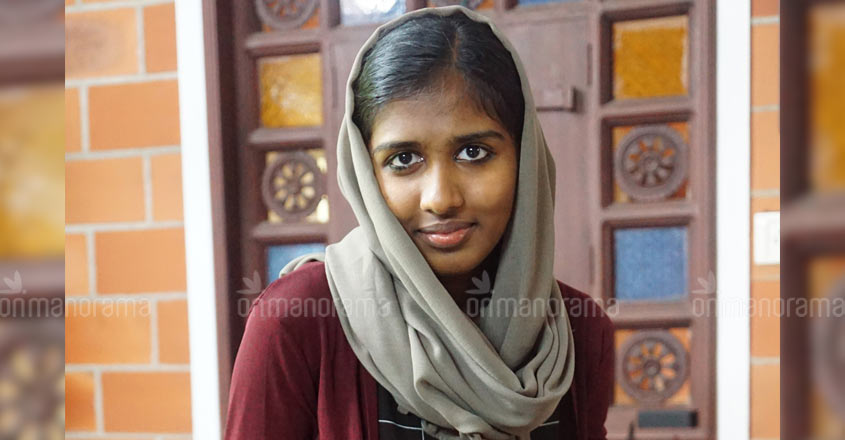
Faheema Shirin
Faheema Shirin

Wayanad native Anjitha K Jose and Faheema Shirin of Kozhikode do not have much in common. But what connects these two students from Kerala is their sheer willpower to fight for women rights !

Anjitha fought for freedom to travel at night for girls staying at hostels, while Faheema waged a legal battle to win the right for using mobile phones at hostels.

Both of them won favourable verdicts. But it was not an easy path to success.

What time is right for girls ?

If authorities of the college hostels were asked about by what time should the girls return to hostel, then some would say by 4.30 pm, others by 6 pm and for another one it would be 7 pm. However, boys have no such time restrictions.

Anjitha, a student of the Kerala Varma College in Thrissur, filed a legal petition against this. Girl students are allowed to go out for only three days in a week and then too, they have to return by 4.30 pm. However, this rule is not applicable for boys.

Though she questioned the inequality several times, college authorities did not take any action.

That’s when she heard about the Legal Collective for Students’ Rights. She spoke to the then executive director of the collective, P K Arjun and decided to take the legal course. Surya Binoy, daughter of senior CPI leader Binoy Viswam, represented Anjitha in court. The favourable verdict was out after 1.5 years.

The complaint was filed, while pointing out that freedom to travel was a fundamental right. When the case was filed, Anjitha was a final year degree student. When she completed her studies, another student Rinsha Thasni took over the case and won the favourable judgement.

Anjitha said that when the case was under court’s consideration and after the verdict was filed, she had to endure several problems. Several people made statements defaming her.

All that she asked was to give them the consideration of being humans, not even women.

After the court verdict, the government issued an order that girls and boys of the government college hostels can stay out till 9 pm.

Is mobile phone the villain ?

Even when we make tall claims of the digital revolution, girls are not allowed to use mobile phones  at hostels. At some hostels, girls were not allowed to use to phone after 10 pm. At others,  the diktat was during study time.

Though degree and PG students pointed out that smartphones and internet were vital for studying, none paid any heed. Some of the authorities asked the girls to shift the hostels if they were not ready to follow the ban on mobile use.

A second-year degree student at SN College at Chelannur in Kozhikode, Faheema also faced the same dilemma. However, when she walked out of the hostel, Faheema vowed to react against this.

Thus, she began her legal battle. Legal Collective for Students’ Rights came to her aid as well. Legith T Kottakkal agreed to represent her in court and the petition was filed.

The High Court ruled in Faheema’s favour on October 19. The court observed that the use of mobile phone was a fundamental right and nobody had the authority to stop it.

Legal protection for students

Jishnu Prannoy, a first-year engineering student, was found dead under mysterious circumstances at his college hostel in January 2017. The teenager’s death had shocked Kerala’s conscience. A bunch of law students then came together and formed the Legal Collective for Students’ Rights to give legal aid for students. The collective also started a Facebook page ‘Your Lawyer Friend.’

Fourteen law students and four advocates started the collective on February 8, 2017. The collective has helped students in 50-odd cases so far. The current executive director of the collective is J Sreenath, a fourth-year student of the National University of Advanced Legal Studies (NUALS).

source: http://www.english.manoramaonline.com / OnManorama / Home> Women / by Deepthi Pellissery / November 08th, 2019

Tipu, legend in the West

Srirangapatnam, KARNATAKA :

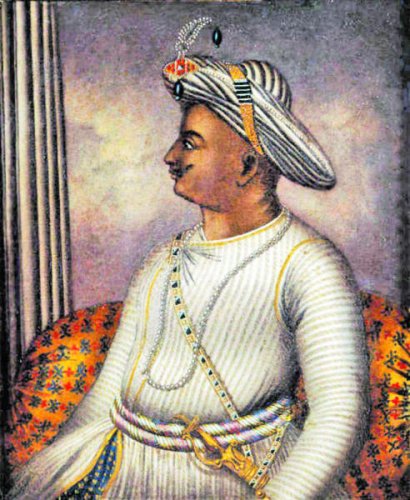
TipuSultanMPOs07nov2019

It is an irony that Tipu Sultan, the Tiger of Mysore, whom the current government in Karnataka wants to remove from its history, is celebrated in Britain, France and the US in song, drama, opera, novel, poetry and paintings. A wealth of Tipu’s  personal effects, curiosities and artifacts have found way into numerous art galleries and museums in many countries in the West. There’s not a major museum in the UK that does not exhibit some artifact related to Tipu.

The 75th Highlanders were a regiment raised in Scotland to exclusively fight Tipu. Scottish generals like Sir Hector Munro, Baillie, Beatson, Fraser, Gordon, Dunlop and others participated in the wars against Tipu. The Scots, more than the English,  were in the forefront of the British forces in all the Anglo-Mysore wars fought by Tipu as well as his father Hyder Ali. That explains the importance of the display of Tipu memorabilia in Edinburgh and Glasgow.

After Tipu was finally defeated and killed in 1799 by the British, under the command of Arthur Wellesley, the future Lord Wellington who 16 years later defeated Napoleon Bonaparte in the Battle of Waterloo, images of Tipu, his capital Srirangapatam (Srirangapatna) and his numerous impregnable forts and fortresses, proliferated throughout Britain. No other Indian ruler ever captured the imagination of the average Englishman as Tipu did. It is said that British housewives would quieten their babies by whispering “else, Tipu Sultan will come and get you.” Even three decades after Tipu’s death, his name was such a terror that when Ram Mohan Roy visited England on a mission from the then Mughal emperor, hostile crowds confronted him in London, mistaking him to be related to Tipu because his headgear resembled Tipu’s iconic turban.

Tipu Sultan, his capital city Srirangapatam, and the wars he fought against the British became favourite subjects for paintings, sketches and etchings by some of the most famous artists of the day in England and Scotland. When Ker Porter, the famous  Scottish painter’s Panorama — a single large painting of Tipu — was displayed in Edinburgh, there was euphoria among the public as they rushed to have a glimpse of it. JMW Turner, the renowned British painter, painted portraits of Tipu  and scenes of Srirangapatam and other places in Mysore kingdom. Sir David Willkie, another famous painter, was commissioned by the widow of David Baird to paint the poignant “Discovering the body of Tipu Sahib on 4 May, 1799”.  It was exhibited in 1838 in the Royal Academy of Arts in London. David Baird had spent several years in Srirangapatam as Tipu’s prisoner, and had his revenge in the final assault on him.

Alexander Allen travelled to India to personally see the hill forts of Mysore kingdom and produced captivating scenes in his paintings. William Darnell Beckford, Holmes, Hunter and many others made several stunning paintings of Tipu and his palaces. Sir Walter Scott, the great Scottish novelist, wrote works of fiction based on Tipu and his times. Charles Dickens, Wilkes Collins and Jules Verne have all depicted themes from Tipu’s life in their novels.

The numerous artifacts of Tipu Sultan, pilfered, looted and spirited away by the British after the fall of Srirangapatam, became collectors’ items. Tipu’s dismantled throne, his numerous swords, daggers, bejeweled sword belts, hookahs, ivory caskets , nutcrackers, gold watches, precious jewels and many other priceless items occupy the pride of place in museums in London, Glasgow, Edinburgh and Wales.

The most awesome of these artifacts is the life-size toy tiger depicted devouring a British soldier. It has cast a spell over generations eve since it was spirited away by Wellesley to England where it was displayed at the Kensington Museum, now  known as Victoria and Albert Museum (V& A Museum). This toy tiger in bright yellow strips has in its belly a mechanical pipe organ hidden, which creates wailing shrieks and a loud road when its handle is turned. There was near stampede for months in front of the museum when people flocked to see the wonder toy of Tipu Sultan. The fact that it is kept in an exclusive large room in the otherwise crowded V&A Museum, and with separate security, speaks of the importance that is accorded to this curious Mysore object. A replica of it is at the Scottish National Museum in Edinburgh. It was commissioned in 1999, when the bi-centenary of Tipu’s death was commemorated, as the original one at V&A could not be moved for fear of damaging it in transit.

The most significant of Tipu’s artifacts are at the Edinburgh castle. Inside the castle is the ‘National War Museum’, in which the battle honours of the Scottish Regiments are displayed. Here are seen several swords and arms used by the Scottish generals against Tipu and his Mysore armies. What is interesting are the words Carnatic, Mysore, and Srirangapatam engraved on the granite slabs displayed on the walls.

At a private museum in Powai Castle in Wales, one can see Tipu’s camp tent, made of silk and heavily embroidered, his camp cot made of sandalwood, his hookah and many other personal items, besides two large cannons.

A painting of Tipu with his war rockets hung on a wall at NASA’s Wallops Flight Facility in Virginia in the US was seen by young APJ Abdul Kalam when he was on a visit there in his early years at ISRO, about which he wrote as an inspiration many years later.

At the Edinburgh International Festival (EIF), held annually in August, Tipu’s memories come alive during the closing ceremony’s fireworks display when the Scots burst explosives and fire rockets around the castle to create scenes of their soldiers encountering deadly fires around Tipu’s forts in Nandidurg, Savandurg and other places.

Tipu Sultan, the Tiger of Mysore, died 220 years ago, but his legend continues in the lands of those he fought fiercely against, who appreciate his valour, unyielding spirit and reckless courage. In the land that he defended from them, his memory  is sought to be erased from school textbooks.

(The writer is a former Professor of History at the University of Hyderabad)

source: http://www.deccanherald.com / Deccan Herald / Home> Opinion> Comment / by K S S Seshan / November 07th, 2019

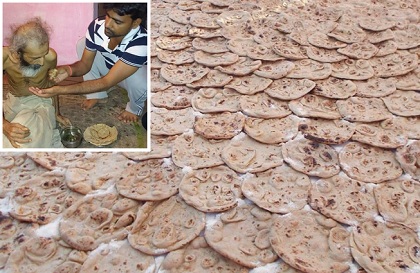
Roti Bank: Unique effort to fight hunger, provide food to the poor in impoverished region of UP

Mahoba ,  Bundelkhand Region , UTTAR PRADESH :

RotiBankMPOs04nov2019

Everyone in Mahoba knows Haji P Mohammad alias Haji Muttan and can guide a visitor to his home.

After all, he is the man who had opened the first Roti Bank, a unique initiative to ensure that no one stays hungry in the town. It has been a huge success story and similar Roti Banks were late opened in different parts of the country & even outside India.

But it was not an easy journey when Haji Muttan started the Roti Bank. The beginning was in the year 2014. It was decided that rotis would be collected–volunteers would go from house to house and collect them, in order to provide food–rotis and sabzi for the needy, so that no one went to bed with an empty stomach in the town.

In the backward and impoverished Bundelkhand, which often suffers from drought, lack of employment opportunities and extreme poverty, everyone was aware that there was a need for a public participatory movement to tackle the level of hunger and malnutrition.

However, he managed to form a team of such people–like Jaspal Singh and Pankaj Anuragi, who were ready to dedicate themselves for the cause. ‘Many households were eager to provide at least two rotis and sabzi. The request was just to ensure the food was fresh”.

There were so many needy people who had no one to look after them, some had to be provided food at their home. But people realised that it was a cause that was worth an effort. Youngsters came and joined him. “I always wanted to do some social service, something for the sake of humanity”, says Haji Muttan.

Over the years, the Roti Bank became a symbol of pride for the town. After all, hundreds were getting benefited everyday. Later, others got inspired and more Roti Banks were opened in the region and in other cities of Uttar Pradesh from Varanasi to Rampur and Gorakhpur, and then across India.

Om Narayan, who has been associated with the work from the beginning, says that the aim was service. “People from all religious communities came together, joined the movement”, he says. “After Roti Bank’s success, similar projects started in Banda, Chhatarpur and other cities in Bundelkhand”, he added.

“Apart from Haji sahab, Jagannath Prajapati and Father L Masih are also part of the team. There are many volunteers who do it with dedication”, he further said. After Tsunami, when Indonesia witnessed destruction, and there were large number of destitutes and orphans, Roti Banks was started at different places there also.

Haji Muttan also visited Indonesia. A non-governmental initiative that is being run with public support by dedicated inviduals, it has set an example how to fight hunger, especially, when a huge population still suffers from extreme poverty and the country needs to wage a war against hunger and malnutrition.

source:  http://www.newsbits.in / NewsBits.in / Home> India / by Shams Ur Rehman Alavi

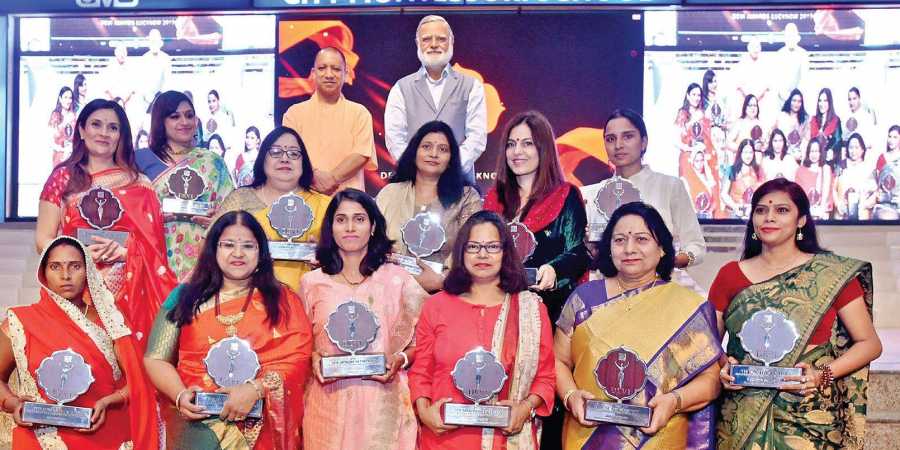
Uttar Pradesh CM Yogi Adityanath applauds work of Devi Award winners

Lucknow, UTTAR PRADESH :

Yogi also commended the ‘seamless’ implementation of NRC and said it would be adopted by the state.

Uttar Pradesh Chief Minister Yogi Adityanath and The New Indian Express Group Editorial Director Prabhu Chawla with the Devi Award winners in Lucknow on Wednesday (Photo courtesy| CMS)

Muslims in Bengal raise funds for temple demolished for road; a maulvi inaugurates it

Basapura, WEST BENGAL :

Members of the Muslim community in Basapura even raised money to rebuild the Kali temple that was demolished two years ago for widening a village road. They also purchased the land for relocating the temple.

Nasiruddin Mandal had a special job on Sunday night.

The maulvi of the local mosque in West Bengal’s Birbhum district inaugurated a temple dedicated to goddess Kali, on a night when the state was observing Kali Puja.

The show of communal amity took place in Basapara of Nanoor area, about 160 km away from state capital Kolkata, that often grabs headlines for political fights.

“I have inaugurated mosques and madrasas. But this is the first time I have inaugurated a Hindu temple. It’s a different feeling altogether,” Mandal said.

Members of the Muslim community in Basapura even raised money to rebuild the Kali temple that was demolished two years ago for widening a village road. They also purchased the land for relocating the temple.

According to the 2011 census, Muslims constitute about 35% of the population of Nanoor block.

“The temple was demolished for widening a road that was an urgent need of the locals. The temple was about 30 years old and devotees regularly came here,” a local, Nikhil Bhattacharya, said.

After the temple was demolished, locals took up the plan to rebuild it at a new location. Muslims joined the drive to raise funds and, in fact, ended up collecting Rs 7 lakh of the total Rs 10 lakh that was spent to rebuild the temple at a new site.

“We discussed the issue of rebuilding the temple with locals most of whom are from the Muslim community. They collected funds. Of the Rs 10 lakh spent for the temple, Rs 7 lakhs was raised by Muslims,” Sunil Saha, president of the temple’s puja committee, said.

Both Bhattacharya and Saha said Muslims also helped in organising Durga Puja in 2018 and 2019 that became uncertain since the puja was held in the temple. They organised funds and gave logistics support to organise the puja in the absence of the temple.

“If local Muslims did not help us, organising the puja and rebuilding the temple would not have been possible. So we invited Nasiruddin Mandal to inaugurate the temple on Sunday evening,” said Saha.

Kerim Khan, the official in charge of road affairs in Birbhum Zilla Parishad, who hails from the area, said, “We are not ready to regard it as an issue involving two communities. We all live together peacefully. We stand beside each other and this is our culture. We have played a small role in the rebuilding of the temple.”

A local leader of the Bharatiya Janata Party (BJP) praised the efforts.

“It’s indeed nice that people from both communities came together in the construction of the temple. We do believe in living together and not to be divided by religion,” Dilip Ghosh, the BJP’s vice-president of Birbhum district unit, said.

Over the past few years, there have been quite a few incidents in West Bengal where one community came forward to help the other.

In December 2018, Mohammad Faruq, a 58-year-old resident of Dubrajpur area in Birbhum district, donated land for setting up a crematorium for Hindus. The land that he gave had a market value of about Rs 10 lakh.

In 2017, a Muharram committee of Kharagpur town in West Midnapore district decided not to organise Tajia, and instead, gave the money to a Hindu cancer patient for his treatment.

In the same year, when no drum beater turned up to perform at a Tajia in Muharram in Suvur village of Bhatar area of East Burdwan district, the dhakis at the Durga Puja in the village replaced them.

In another incident in November 2017, a group of Muslims came forward to fund the wedding of a Hindu woman in Khanpur village of Malda district, when her family could not afford it.

source: http://www.m.hindustantimes.com / Hindustan Times / Home / Koushik Datta / October 29th, 2019

Islamic college donates 20 acres of land for medical college in Mayiladuthurai

Mayiladuthurai, TAMIL NADU :

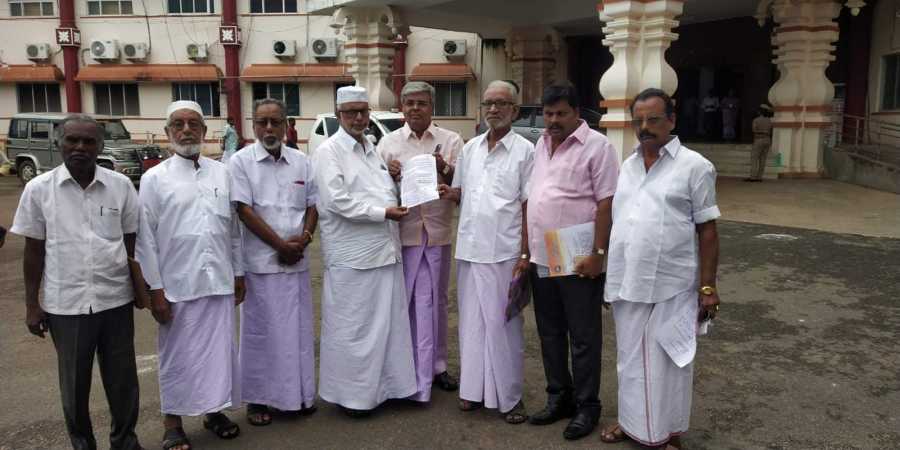
A delegation of the college met Nagapattinam district collector Praveen P Nair and gave its consent to donate land for a medical college in Mayiladuthurai.

The eight-member delegation which included members from Jamia Misbahul Hudha Arabic College

Nagapattinam :

An Islamic college from Mayiladuthurai has come forward to donate 20 acres of its land for the construction of the medical college in Mayiladuthurai.

An eight-member delegation which included members from Jamia Misbahul Hudha Arabic College in Nidur near Mayiladuthurai has met Nagapattinam district collector Praveen P Nair on Thursday and gave its consent to donate land for a medical college in Mayiladuthurai.

“We wholeheartedly wish to donate our land of 21 acres for the welfare of the public without any expectations for a return of a favour. We took this decision days ago after we realized Mayiladuthurai could get a medical college if it there is enough land available to the government. The government should now fulfil the wish of Mayiladuthurai residents to have a medical college here,” said SA Mohamed Sadeeq, the general secretary of Jamia Misbahul Hudha Trust in Needur.

Jamia Misbahul Hudha Arabic College in Needur and its trust has been functioning since 1912, and formally registered under the Indian government in 1947. The barren land they are donating is near a hamlet called Erumbukadu in Mayiladuthurai taluk. It is situated 6.5 kilometres north of Mayiladuthurai.

The delegation that met the collector also included Mayuram Bar Association’s president advocate R Seyon and former MLA of Kuthalam constituency ‘Kuthalam’ P Kalyanam. R Seyon said, “We do not wish that Nagapattinam should be deprived of a medical college. It should have one irrespective of formation of Mayiladuthurai district.”

It is to be noted that Nagapattinam district collector Praveen P Nair had already proposed Orathur in Nagapattinam taluk as the location for the establishment of the medical college in Nagapattinam district. But, it was met with sharp reactions from Mayiladuthurai.

TNIE had earlier reported that Needur near Mayiladuthurai still stands a chance as an alternative.

While speaking to TNIE, Kuthalam’s former MLA ‘Kuthalam’ P Kalayanam said, “The patients in the northern side cannot be left in the mercy of medical college in Nagapattinam, particularly after formation of the new district with Mayiladuthurai as its headquarters. It will duplicate the scenario of Karaikal being in the mercy of Puducherry as both the Union territory districts are geographically apart.”

source: http://www.newindianexpress.com / The New Indian Express / Home> Good News / by Antony Fernando / Express News Service / October 24th, 2019