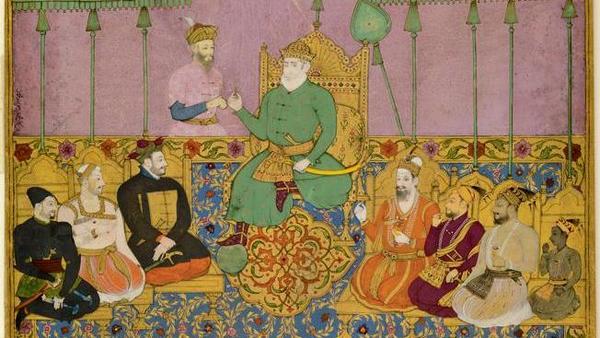
A detail of the ‘House of Bijapur’ genealogical painting depicting most of the rulers of the Adil Shahi dynasty of Bijapur. (Photo: Wikimedia Commons)
Although the Adil Shahi dynasty of Bijapur was formally Muslim, it was influenced by multiple religions and different identities
Such complicated realities were not unusual in the subcontinent, from Vijayanagar in the south to further north in Kashmir
In 1680, a few years before emperor Aurangzeb swallowed up the sultanate of Bijapur, two court artists in that city produced a striking genealogical painting. Rich in quality, with ink, watercolours, as well as gold and silver generously employed, the picture shows all the rulers of the doomed Adil Shahi dynasty, save for one who was blinded and discarded for not being up to the mark.
In the centre, on the throne, for instance, sits Yusuf, the man who sailed from Persia and founded the house with his Maratha wife in the 15th century: In a mark of the kingdom’s allegiance to the Shah of Iran (as opposed to the Mughals), Yusuf is shown receiving a key of sovereignty from the Iranian emperor. Then there is Ali, who appears in armour—a symbol of the role he played in the defeat of Vijayanagar in 1565—just as there is the boy-king Sikander, the smallest figure in the group, who would spend much of his life as Aurangzeb’s dethroned prisoner.
Created on the eve of the kingdom’s demise, the painting is at once a family tree but also, as one scholar puts it, a “painted curtain call” for the extraordinary Adil Shahi dynasty.
But the portrait is significant also in another way, in that it depicts the contrasts that can develop in the same ruling house and in interpretations of its official ideology. The Adil Shahi state was formally Muslim. From the start, however, it was influenced not only by multiple religions but also by different identities. So, for instance, Ismail (reign 1510-34) chose to highlight the family’s Persian heritage—he made his troops wear Iranian uniforms and himself adopted the 12-pointed cap, a reference, as the scholar Deborah Hutton notes, to the 12 imams of Shia Muslims.
Ibrahim II (reign 1580-1627), on the other hand, was Sunni and is depicted in a style associated with the Indian faction at court, a reflection of his own attitudes. He was, for example, not only a lover of Marathi (much to the horror of a Mughal envoy, who found Ibrahim’s Persian weak) but also a great admirer of Hindu traditions. It was he who proclaimed himself son of Saraswati and Ganapati, studied Sanskrit, and went to the extent of renaming Bijapur “Vidyapur” to honour his favourite goddess.
Only two generations divided the orthodox Shia Ismail from Sunni Ibrahim (who was rumoured to be secretly Hindu) but there was a world of difference in their outlook.
The Adil Shahs certainly presented themselves as good Muslim rulers—indeed, even Ibrahim’s grave carries an inscription denying rumours that he was an apostate, affirming that he was a true believer of the Prophet’s message. But as this column showed previously in the case of Hindu Vijayanagar, official identity and self-image did not preclude the absorption of multiple influences, or even contradictory practice. The Adil Shahs, even as Muslims, alternated between Sunnism and Shiism, and it was their latter identity that often supplied the Mughals an excuse to invade in the name of religion—this when even Aurangzeb, who led the final charge against the “heretics”, was himself the son of a Shia mother. Add to this a give and take of culture from not only the Marathas (including Shivaji’s father, who served the Adil Shahs) but also Ottomans, Europeans and African grandees at court, and Bijapur was confirmed as an eclectic, mixed universe—one where the king had a formal identity that he could interpret strictly or with deliberate laxity, depending both on his predilections and official necessities.
But in this the Adil Shahs were hardly unique. The rayas of Vijayanagar shaped their self-image in Sanskritic terms and declared themselves consciously Hindu. And yet, one of them sought a marriage alliance with Catholic Portugal; many of them used the title “sultan”; and their sartorial tastes and everyday lives were influenced visibly by Persian culture. A raya might keep the Quran in court so that his Muslim nobles could prostrate before it, even as he destroyed mosques in enemy territory—policy depended on the context in which the king found himself. Further north, in Kashmir too, as Richard Eaton shows in his India In The Persianate Age, we witness such ironies.
Sultan Sikander (reign 1389-1413), for instance, was a destroyer of Hindu shrines and burner of Sanskrit books. But his son Zain al-Abdin (reign 1420-70), officially as devout a Muslim as his father, implemented the opposite policy: Not only did he resume temple grants, but under him the court also witnessed an unprecedented production of Sanskrit literature, as well as translation of Hindu texts into Persian for the ruler’s edification.
The greatest controversy, of course, arises in understanding Tipu Sultan of Mysore. To some, he is a giver of grants to Hindu temples and a protector of his non-Muslim subjects. Others cite his cruel conquest of Malabar, where Hindus were forced to renounce their religion, their temples demolished. But, simply put, the question is not one of either/or: The same king could act in opposite ways in different settings.
In Malabar, its chiefs and people were “infidels”, but in his settled territories in Mysore, Tipu had no qualms employing “infidel” Brahmins (including the celebrated Purniah) as officials. One was a land of conquest, where destruction of significant shrines was, to him, legitimate, while forced conversions were a method of flaunting to the Islamic world his commitment to their faith; but in his home territory, he was king in a broader sense, accepting of the land’s realities as well as its people. A villain in one reading, he could be a hero in another, employing his religious identity in different degrees, determined largely by the contingencies of politics.
It was this complicated reality that the painters of that Adil Shahi family portrait inadvertently conveyed in their work: a house of Muslim kings with Maratha blood, who cheerfully switched sects as they desired, and whose dynastic roster included all types—those whose faith guided them to extremes, and others for whom religion was more a formality, engaging as they did with a land of diverse realities.
Medium Rare is a column on society, politics and history. Manu S. Pillai is the author of The Ivory Throne (2015) and Rebel Sultans (2018).
Twitter – @UnamPillai
source: http://www.livemint.com / Live Mint / Home> Explore> Medium Rare / by Manu S. Pillai / September 05th, 2019
The HDW, which has been organized by the Telangana government in partnership with India Design Forum (IDF) and the World Design Organisation (WDO), is being held parallelly with the World Design Assembly
A trailer titled, ‘Ma Saheba – The queen of Hyderabad’, explores 360-degree VR animation as the latest technology of film
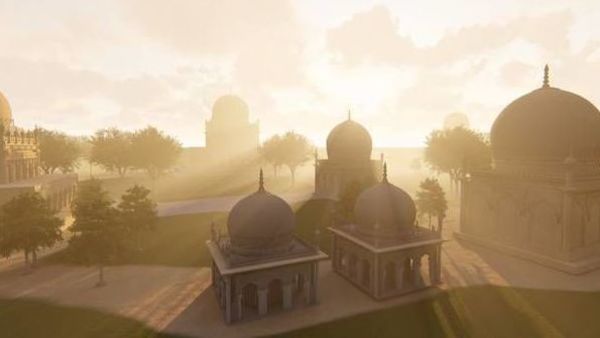
The technology enables the viewer to visit the Qutb Shahi tombs (necropolis) from the comfort of their own location, interacting with the landscape as if almost they were physically present there
Hyderabad:
A team from the Indian Institute of Technology-Hyderabad’s (IIT-H) department of design has created a Virtual Reality (VR) experience for an oral historical narrative of Begum Hayat Bakshi, one of the most influential historical figures of the Qutb Shahi dynasty (1518-1687), which founded Hyderabad (in 1591).
The story of Hayat Bakshi Begum is considered to be of women empowerment, given that she lived through the rule of three kings of the Qutb Shahi dynasty. A trailer titled, ‘Ma Saheba – The queen of Hyderabad’, explores 360-degree VR animation as the latest technology of film. Begum was the daughter of Mohammed Quli Qutb Shah (1580-1611), the founder of Hyderabad.
She was married to Mohammed Qutb Shah (1612-26), the nephew of (and king after) Mohammed Quli Shah. After the death of her husband, though her son Abdullah Qutb Shah (1626-71) became king, Hayat Bakshi Begum had a considerable influence over the affairs of the Golconda (or Qutb Shahi) kingdom, which was founded in 1518. The VR oral history narrative will be available for the public on 11 and 12 October in Hyderabad, as part of the ongoing (9 to 13 October) Hyderabad Design week (HDW).
The HDW, which has been organized by the Telangana government in partnership with India Design Forum (IDF) and the World Design Organisation (WDO), is being held parallelly with the World Design Assembly, which will be held in Hyderabad on 11 and 12 October.
“Using the premier technology in immersion, IIT-H developed a virtual exploratory landscape which lets the user experience the historical monuments (tombs, where the founders of Hyderabad and others from the kingdom are buried) of Qutb Shahi like never before. The use of virtual reality-based technology to preserve and explore history is a method that provides results with almost lifelike experiences,” said a press release from IIT-H on Wednesday.
Speaking about the initiative, Prof. Deepak John Mathew, head, department of design, IIT-H said, “This project is initiated with the support of the Design Innovation Centre at IIT Hyderabad. The objective is to create a Visual Model of the monuments in India. This is the first attempt in this series. This will be exhibited at the airport as well as HICC during the WDO Conference. This is a fusion of art and technology.”
The technology enables the viewer to visit the Qutb Shahi tombs (necropolis) from the comfort of their own location, interacting with the landscape as if almost they were physically present there. The installation aims at raising awareness about the intricate history of Hyderabad. The IIT-H’s department of design undertook a high-resolution scan of the tomb complex for the project.
source: http://www.livemint.com / Live Mint / Home> Explore / by Yunus Y. Lasania / October 09th, 2019
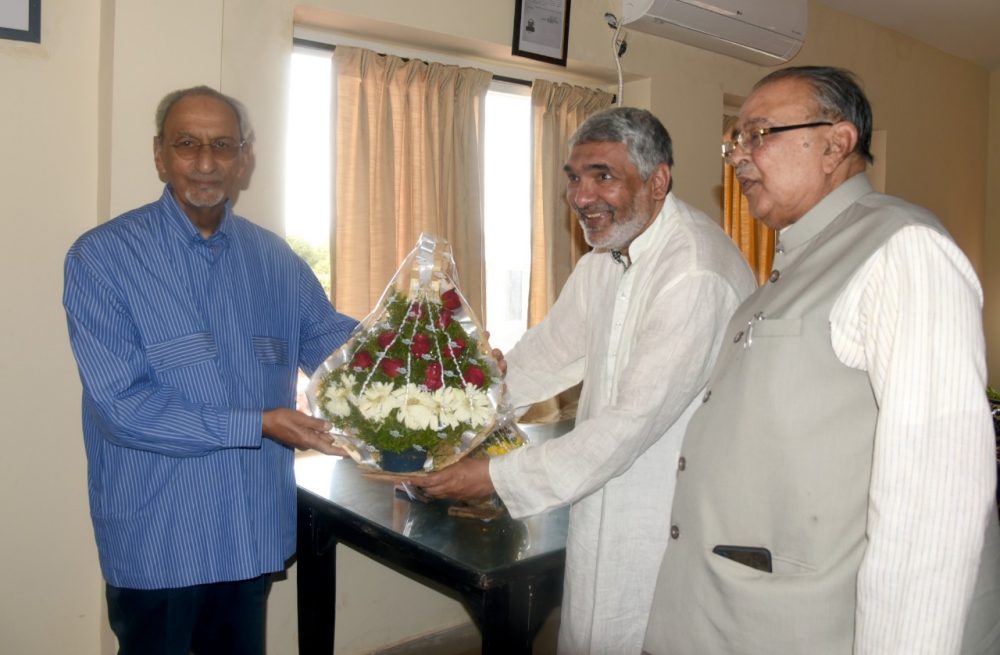
Education is very essential. There can’t be anything more pleasant than the restoration of high standard of Madarasa-e-Aliya. This was stated by Prince Muffakham Jah while addressing the inaugural function of Old Age Home, “Sukoon” yesterday which was established by Siasat Urdu Daily at Vikarabad.
Prince Muffakham Jah further told that if any steps are taken for the restoration of old standard Madrasa-e-Aliya, he is ready to provide all kind of assistance.
It may be mentioned that in his welcome address, Mr. Zahid Ali Khan had recalled the good olden days spent as a students by him and Prince Muffakham Jah at Madrasa-e-Aliya.
Mr. Zahid Ali Khan mentioned that he could find no other person suitable for the inauguration of Old Age Home than Prince Muffakham Jah. He also recalled the long association of his family with the Asif Jahi rulers and said that the contribution they made for the development of Hyderabad City cannot be undermined.
Citing the modesty and humility of Prince Muffakham Jah, Mr. Zahid Ali Khan told that quite often, prince says that Hyderabad is not identified by its Biryani and Sherwani but it is known for the humility and nobility of the Hyderabadis. He further said that he salutes this passion of humility of Prince Muffakham Jah.
He told that he and Prince Muffakham Jah are the products of Madrasa-e-Aliya.
Present on this occasion were Dr. Shahid Ali Khan, Mr. Zaheeruddin Ali Khan, Managing Editor of Siasat Urdu Daily, Mr. Amer Ali Khan, News Editor of Siasat Urdu Daily, Mr. Mohammed Jalaluddin Akbar, IFoS, Mr. Khudadad Khan, Mr. Syed Abdul Wahab Qadri, Mr. Aizazur Rehman Khan, Vice Chairman of Shadan Group of Institutions, Mr. Ali Masqati, Mr. Iftekhar Husain, Mr. Sarib Rasool Khan and others.
Addressing the gathering on this occasion, Mr. Zaheeruddin Ali Khan told that taking advantage of the presence of Prince Muffakham Jah in Hyderabad City, the inauguration of Old Age Home has been organized.
He further told that the Old Age Home provides accommodation for 100 persons. He mentioned that basic amenities and medical facilities will be ensured for the inmates of Old Age Home.
The audience congratulated Siasat Urdu Daily and said that the need for such a modern and well-furnished Old Age Home was deeply felt.
source: Siasat News
source: http://www.archive.siasat.com / The Siasat Daily / Home> Hyderabad> Top Stories / by Sameer / April 08th, 2019
Newly trained women Islamic clerics, or Qazis, have started work in towns across India, offering an invaluable support system to Muslim women, and inviting opposition from orthodox circles.
Iqra’s world fell apart in six months. In her telling, it began, as it often does, with marriage. The 23-year-old’s marriage to Ali was an exchange programme of sorts. Ali was her cousin, son of her khaala, her mother’s sister. In turn, Iqra’s brother married the same khaala’s daughter. Her khaala also became her mother-in-law. Such marriage between first cousins is commonplace among Muslims in South Asia.
Two months later, Iqra’s sister-in-law ran away from home. Her parents had apparently forced her into the marriage against her wishes.
The sister-in-law’s flight to freedom imprisoned Iqra. Her mother-in-law, upset with her own daughter’s running away, took out the anger on Iqra. “Khaala would abuse me at every chance she would get. She would give me gaalis till I would break down. She was angry with her daughter, and she would direct it at me,” she said.
One day, her husband asked her to go back to her parental home. “He told me he would come to take me back when his mother calmed down a little,” Iqra said.
Soon thereafter, Iqra found out she was pregnant. She called her husband to give him the ‘good news’. He sounded happy too. Her husband and her mother-in-law soon took her to a doctor who gave her a medicine. The doctor told her that since she needs to avoid sex, she should continue staying with her parents.
A few weeks later, Iqra had a miscarriage. “I don’t know if they had a hand in this, but my husband never came back to take me home. He stopped taking my calls and responding to my messages,” she said.
As she dealt with the trauma of the miscarriage and the betrayal, two burqa-clad women emerged as her support system. It is in their office, in Jaipur’s busy Johri Bazaar, that Iqra related her harrowing story to #KhabarLive.
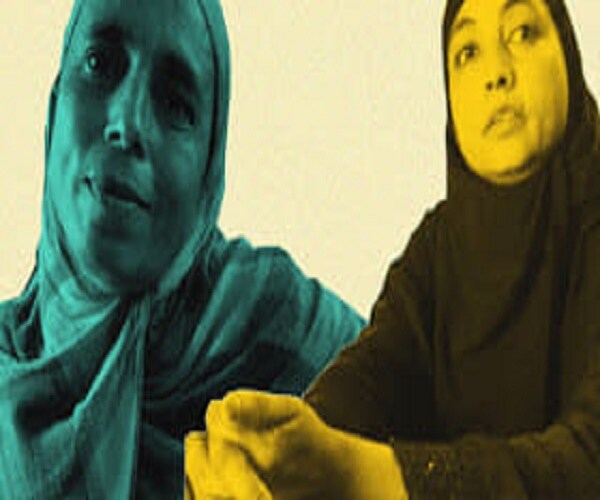
The women, who are present this day, are 45-year-old Jahan Ara and 43-year-old Afroz Begum. They are Rajasthan’s first women qazis, or clerics, social and religious adjudicators in Islam, mediating in family disputes.
“She had already filed a case with the police before she came to us,” said Ara, “So we couldn’t interfere in the matter between the families. Otherwise, we could have called her husband and her in-laws and told them it wasn’t the right way to treat their bride.”
Muslim, Woman, Qazi
The job of a qazi has been an exclusive male preserve till recently in India, as it is in most parts of the world. In recent years, activists and organisations within the Muslim world have pushed for the inclusion of women as qazis, and pushing against patriarchy and orthodoxy, more women have taken to the vocation in recent years.
It was only in April this year that Jahan Ara and Afroz Begum received their Qaziyat certificates, after completing their two-year training from Darul Uloom-i-Niswan in Mumbai, an institute established by the social organization Bharatiya Muslim Mahila Andolan. They graduated along with thirteen other women, who went on to become qazis in Maharashtra, Gujarat, Rajasthan, Madhya Pradesh, Tamil Nadu, Karnataka, Bihar, West Bengal and Odisha.
Every day, they see people like Iqra, who seek advice and adjudication, at the office of the BMMA in Johri Bazar. Nishat Hussain, the BMMA’s Rajasthan convener, set this office up ten years ago.
“We have ourselves seen women being subjected to violence since childhood. My father used to beat my mother,” says Jahan Ara. “There would be no one to help her. The male qazis, whose role as an Islamic judge is to counsel and help, always support the men. They will just say it’s ‘Allah’s choice’. No, it’s not. And we need to tell women in our community that the Holy Quran does not differentiate between a man and a woman.”
Jahan Ara, who grew up in Jaipur, went through an abusive marriage for years before she finally decided to leave her husband about 10 years ago. After the divorce, she says, her husband didn’t let her meet their children, paid her no alimony, and refused to give her the customary 15 grams of gold Muslim men must pay their wives if the marriage ends. “The local qazi refused to help me get my rights,” she says.
She knew she had to change her situation. She started working with a women’s rights organization and went on to start a Madrassa for the children in her locality. “I started thinking what is the right kind of Islam, the one that’s taught in the Quran or the one we were practicing?” she says. That led her to enroll for the course to become a woman qazi.
Jahan Ara and Begum have faced a lot of opposition from male qazis and other members of the Muslim community. Lately, things have begun to change. “The other day a qazi came and congratulated Jahan Ara for the work she’s doing. This is progress. Gradually, society will start accepting that women can be empowered,” said Nishat Hussain.
When Men Fear Women
“The role of a qazi is marriage, divorce and intervention against injustice. Male qazis have a certain world view–they want us to believe the husband has more rights. But the Quran doesn’t say so. Women becoming qazis will change that patriarchal mindset,” says Zakia Soman, one of the BMMA’s founding members.
According to her, triple talaq (the controversial Islamic practice of instant divorce) has ruined a lot of women’s lives. It is unconstitutional, she says, and not valid as per the Quran. “We no longer need to accept the treatment that’s been meted out to us for decades,” she said.
Qazi Afroz Begum echoes her words. The 43-year-old says that though there’s support from her family, her husband and her five sons, it’s still a long way before Rajasthan starts accepting women as qazis. She says unlike the male qazis, who simply indulge in “dukandaari” (business), they will follow the requirements of Muslim personal law that are often overlooked.
The women qazis need to be given a month’s notice for a nikah. They will then check all the documents–the bride and the groom’s qualifications, proof of income, medical reports and divorce certificates, if any, before they approve of the marriage. “Until women know what their rights are, how will they demand them?” asks Qazi Afroz.
As Afroz explains how they are going to bring about change, Jahan Ara receives a call. “Aap kal tashrif layenge? (Will you come tomorrow?)” she asks in a curt manner.
It was a man they have just sent a notice to. His wife came complaining to the women qazis one day of his alcoholism. Most nights, she said, he doesn’t return home. She suspected multiple affairs. “We sent him a notice, and now he’s scared,” says Jahan Ara.
Durdana Khan, 29, a local reporter in Jaipur, says it’s due to the constant support from these two women over the last year that she’s no longer scared of anyone. Durdana was married to a well-to-do family in Jodhpur in 2008. Six months into her marriage, her father-in-law started making sexual advances towards her. “He would keep touching me and would ask me to visit his room,” she said. When she complained to her husband, his response was, “Deal with it. This happens in our family.” Durdana was shell-shocked, and tried to run away several times. But each time, her husband and his family members would find her and beat her up. In 2012, her husband finally agreed to give her talaq (divorce).
“Allah has never wanted us, women, to live in deprivation. Men and women are same in the eyes of Allah. So why should we have to tolerate the subjugation of men?” Durdana asks. The 29-year old’s plight did not end with the divorce. After she returned to Jaipur to stay with her parents, her brothers started harassing her and their father, scared that they will lose their share of the property. Ara and Begum helped her resolve the property dispute, negotiating with her family members.
“A male qazi, more often than not, grants property rights to the sons alone. We are trying to change that,” she says.
The women qazis have also set up a team of about 15-20 women who work in different parts of Jaipur and its outskirts. “Every leader is responsible for their area. When they find a case of violence, they report it to us. We then approach the victim and help her,” she said.
Waiting For The First Nikah
Arbitrating disputes of property and marriage is the easy part. The difficult part is conducting marriages. Since they received their certificates only in April, they are yet to be approached by anyone to perform a nikah.
Safia Akhtar, 61, the only woman qazi from Bhopal who graduated with Jahan Ara and Afroz Begum, says that none of them have performed a nikah yet because men feel women should be under ‘purdah’ and cannot go to a mosque where the ceremony usually takes place for the groom. “Muslim marriages are male-dominated events. Now that we have our qazi certificates, they are asking us how will we conduct it in a room full of men.”
Safia says she constantly receives death threats from men. “Someone just informed me I’ll be removed from Islam for being a qazi,” she says. But the 61-year-old isn’t scared. “They want me to shut up, but I won’t. If they can prove I am wrong, I’ll leave Islam myself,” she says.
32-year-old Nasreen, who has recently become the first woman qazi in Karnataka, says it’s mostly the women who come to her with cases. “A lot of people don’t want to accept that I am a qazi. They constantly ask me how a woman could be a qazi. And my response to them is, ‘Have you read the Quran?” Nasreen says only women qazis can understand the discrimination a woman faces in the community. “Men usually don’t come to us, and that says a lot about their mentality,” said 35-year-old Aslam Banu, the woman qazi from Odisha.
About a year ago, when news of the country’s first 15 female qazis was announced, the All India Muslim Personal Law Board did not approve of the idea, declaring that female qazis were not permitted in Islam and could not be appointed. Tahir Mahmood, a former member of the Law Commission of India, which oversees adjudication over Muslim personal law, disagreed with the AIMPLB, as did the Darul Uloom Deoband, the influential Islamic school in Deoband, UP.
UnIslamic?
Khalid Usmani, Rajasthan’s chief qazi, also thinks women qazis are un-Islamic. “If I tell you I am Lord Raam, will you believe it?” he asks. Usmani says women qazis don’t know anything about Quran or Islamic laws. “How can women be qazis? They are not meant to do all this. They have a role in society, and they should let men perform their roles,” he said. The chief qazi says that people have ‘rejected’ these women as qazis. “They can’t go to a mosque. It’s not allowed in Islam. They are just fooling people. And that is why people don’t go to them either,” he said.
Whatever you might think of Usmani’s views, he’s definitely wrong about the last part. People certainly go to them. The Jaipur office of Ara and Begum is never empty. There are women who come to them to register cases against their husband for domestic violence, some come with property disputes, and others to save their marriages when the husbands have uttered triple talaq. Some women come just to sit and listen, to learn how they could stand on their own two feet after their husbands have left them.
People used to go to Aisha, Prophet Muhammad’s wife, for advice and guidance.
The chief qazi’s views on the subject don’t find universal acceptance. Akhtarul Wasey, who has taught Islamic studies at Jamia Millia Islamia, and is now the President of Maulana Azad University in Jodhpur, says the Quran doesn’t say anything to prevent women from becoming qazis. “Our holy book doesn’t differentiate between men and women. Whoever’s calling the appointment of female qazis un-Islamic, is wrong,” he says.
Wasey says people used to go to Aisha, Prophet Muhammad’s wife, for advice and guidance. “In fact, we attribute one-third of the Sharia law to Aisha. If Aisha could do it, then why can’t women be qazis? This is what I would like to ask Usmani saab.”
According to him, if women are educated and know Islamic laws and the Constitution, nothing can stop them from becoming Islamic judges. “Forget nikah, there are so many other things that a qazi does, and a woman can do all of those,” he says.
“One day women will even become Muftis and teach the Quran,” says Qazi Afroz, “We know it’s a long journey.” #KhabarLive
source: http://www.hydnews.net / Khabar Live Hyd / Home / by Dr. Fazalullah Shaikh / October 04th, 2019
Miskeen, who still practices as a chartered accountant in Thiruvarur, did his research on cheque fraud and fines concerning loan repayments.
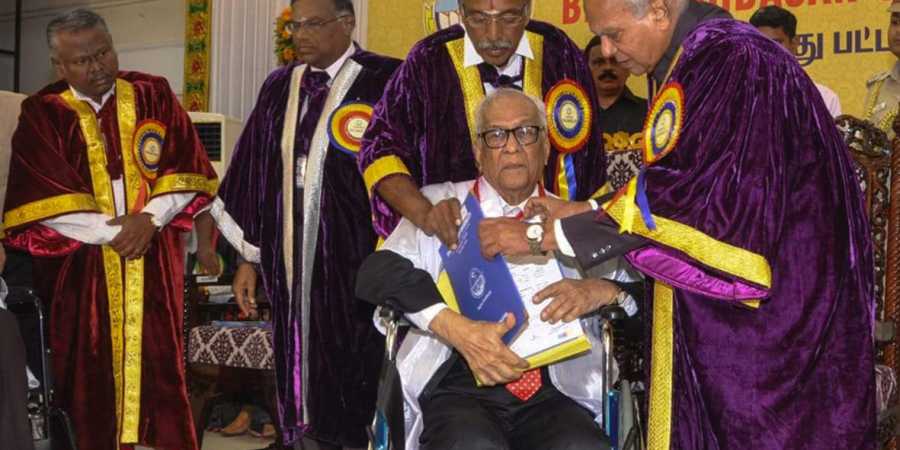
SM Miskeen receiving PhD from the governor of Tamil Nadu on Tuesday (Photo|EPS)
Tiruchi :
With a doctorate at 91, he proved that age is just a number. Nonagenarian SM Miskeen from a village in Thiruvarur village, who earned his PhD on Tuesday, received the certificate from the governor of Tamil Nadu at Bharatidasan University.
Miskeen, who still practices as a chartered accountant in Thiruvarur, did his research on cheque fraud and fines concerning loan repayments.
A chartered accountant with an active clientele, a lifetime Lions Club member who started the first eye hospital in Thiruvarur through the organisation, and an educationalist who brought the first-ever women’s college – all of these show an eventful timeline Miskeen has crafted over the years.
Miskeen was born in the hamlet of Koothanallur in Thiruvarur district in 1928. After finishing primary schooling in his village, Miseek was moved to Madras for secondary schooling. “My father believed that education was very important and moved with me to Chennai where he set up shop,” said Miskeen.
Later he completed his college at Loyola in Chennai in 1950 with a B. Com. This was followed by a three-year stint handling his family business in Vietnam.
Miskeen said he did not want to continue in Vietnam and came back to India to pursue CA, which he completed in 3 years.
In 1960, Lion’s Club International had introduced a scheme to establish eye hospitals to eliminate reversible blindness. Miskeen, who joined the organisation in 1968, gradually became the club’s Multi Council Chairman of South India. He established an eye hospital in Thiruvarur and treated over 10 lakh persons with cataract free of cost. He founded RA College for Women in 1999. At present about 2000 girls, mostly from economically backward backgrounds, are studying in the college.
While speaking about the research, he said: “Many are unaware about the penalty in cheque dishonouring. This research analysis would create awareness about it and prevent such offences among individuals, small firms and even corporates as those involved in cheque bouncing cases may be awarded up to two years in jail and fined twice the amount involved.” He said such cases were in great numbers at many high courts and even the supreme court.
Miskeen studied over 400 check dishonouring cases across India for his analysis. He took up the research in 2014 under the guidance of Dr. Issac Francis Gnanasekar from St. Jospeh’s college.
source: http://www.newindianexpress.com / The New Indian Express / Home> Good News / by Express News Service / Ocotber 01st, 2019
Tragadi Village (Mandvi Taluk, Kachchh District), GUJARAT :
In 2005/06, when coal plants were set up in Kutch District of Gujarat district, locals were promised employment. The project, set up by Adani and Tata Groups and backed by international financial institutions, was considered ‘efficient’ and aimed at selling power to other states too.
More than a decade later, locals continue to count the ecological costs of these plants.
Tragadi, one of the villages, is home to fishermen who realised that their catch has decreased dramatically after the plants were set up, while the village of Navinal, which was rich in horticulture and agricultural produce, saw damaged date palms and other fruits and reduction in farming.
Adani Power started the region’s first coal-fired power plant. The village of Navinal is about 8 km from the Adani Mundra plant. The Tata Mundra “ultra mega power project,” built by the Tata Group is also nearby.
The heated wastewater released from the plants containing saline, from the outflow channel of the plant, released in the sea waters at the rate of 600 million litres per hour, was badly affecting marine resources.
Apart from this, huge amounts of sand were deposited near wells used for drinking water, turning them saline and non-potable.
The coal dust and fly ash and the groundwater now contaminated with saline water have made farming difficult and many people have given up growing crops.
And this is when Budha Ismail Jam, a fisherman from Tragadi, and the people of Navinal came together to form MASS (Machimar Adhikhar Sangharsh Sanghathan) in 2010 and act collectively to make accountable the powers behind their woes.
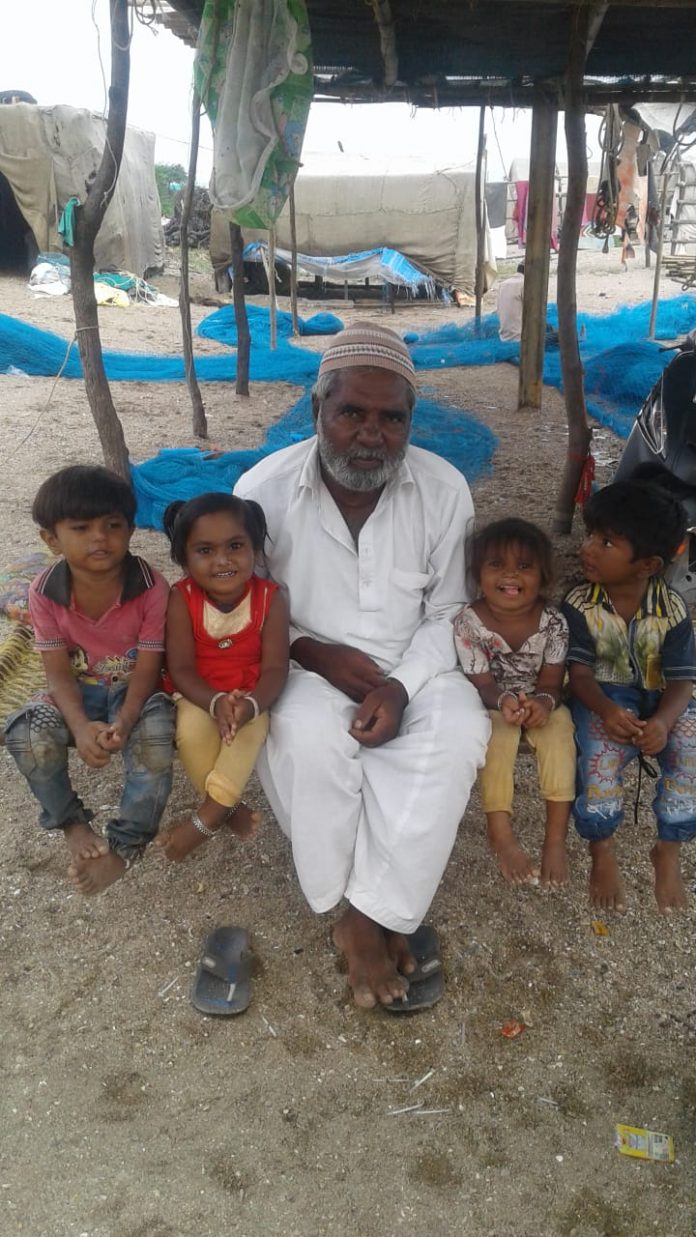
In a conversation with TwoCircles.net, Jam explained how their lives had been impacted after the power plants were set up. “Earlier, I and my sons used to catch plenty of fish within a short distance of just 2 kilometres with just one fishing boat. But gradually our catch decreased and we had to sail at least 12 kilometres to catch fish. And since one boat was not enough, I had to avail a loan and buy 3 more fishing boats.”
“Today, our catch from the 4 boats equals the catch of one boat before the power plant was set up,” he explained.
They first complained to the companies about the damage to marine life and demanded that the companies switch to a closed-cycle cooling system instead of the open cooling system that required 3 times more water. But the company refused to comply.
Then, the people had a series of meetings with the whole community and the leaders approached a Delhi-based NGO called Centre for Financial Accountability’. The executive director of this NGO, Joe Athialy, helped the fishermen and farmers moved the complaint advisor ombudsman of IFC (International Finance Corporation). The ombudsman conducted an internal audit and submitted its report in 2012 and the CRP submitted its report in 2015 but nothing changed.
The Role of the International Finance Corporation
The IFC, which has its headquarters in the United States, has partially funded the TATA power project. The entire project costs $4.14 billion and the IFC has funded $450 million, while the remaining was funded by Asian Development Bank and other agencies.
IFC, which is a member of the World Bank Group, focuses on financing private sector developmental projects in poor and developing countries. The mission of IFC is to “carry out investment and advisory activities with the intent to not harm people and the environment.”
However while investing in the TATA Mundra Plant; they went against their mission causing damage to the environment, livelihood and health of the people.
Jam, also the leader of the fishermen community which is mostly Muslim, told TwoCircles.net, “due to the water contamination, many people here keep falling sick frequently”.
The Suit in the US court
Jam, Bharat Patel from the Fishing Union and Joe Athialy sent a petition signed by 30,000 signatories to the World Bank President asking them to withdraw the funds to the TATA project due to the environmental violations caused by the plant. They even wrote to Indian tribunals that worked on environmental issues.
They tasted brief victory when the nearby plants were halted. But operations resumed when the plant got environmental clearance a year later.
But after their petition reached the World Bank, their story became known in other parts of the world and soon activist lawyers from EarthRights International came to their village and met the aggrieved fishermen.
And thus in 2015 began the Jam et al v. International Finance Corporation trial. EarthRights International (ERI), an NGO which works extensively in defense of human rights and the environment, supported Jam and the others in suing the IFC in the Federal District Court for the District of Columbia claiming damages and injunctive relief for the harm caused due to air, water and land pollution by the power plant financed by IFC.
IFC claimed immunity because groups like the World Bank were exempt from prosecution under the US International Organisation Immunities Act (IOIA), 1945. And in 2016 the court agreed that IFC enjoys ‘absolute immunity’ and dismissed the case.
But Jam and his team did not give up. They appealed again in the court of Appeals (which is like High Court) for the District of Columbia Circuit where again IFC won because the order of the district was upheld.
Just when things were becoming bleak, Stanford Supreme Court Litigation Clinic, a law school which offers hands-on legal experience in Supreme Court litigations, offered to help the litigants Jam, Patel, Earthrights International to move the Supreme Court of US in 2018.
Mundra thermal power station ( Photo from Wikipedia)
TwoCircles.net also spoke to Joe Athialy, who had attended the proceedings at Washington on behalf of the litigants back home and he explained, “We understood the importance of our case being heard in the Supreme Court when we learnt that out of 7,000 cases, the Supreme Court agrees to hear only 150 cases. And we were lucky our case was one among these. Here, all the 9 judges sit for all the cases unlike in India.”
“But in our case one judge, who was in the Appeals court, excused himself and the other 8 judges heard the case.”
He also explained that there were a lot of people present in the courtroom and that the entire proceedings were completed very fast.
And then came the verdict this year in February 2019, wherein the Supreme Court, ruled in favour of Jam and others and ruled that even International organisations can be sued and that they do not enjoy absolute immunity.
This was a landmark judgment and a huge victory, not just for the plaintiffs from India but to all the people who think that international organisations are not above the law.
On winning the suit Joe Athialy told TwoCircles.net, “This is a big deal not just for the people of Mundra but for multiple reasons because this is the first time in the world, a case against the World Bank has come to this level, this is the first time the immunity of the world bank is challenged. And this allows people anywhere in the world to sue the World Bank if there has been damage to the environment and lives of the people.”
“We believe this is another step towards holding these institutions accountable,” he added. “Now the case has been sent to the district court for further litigation.”
Apart from this case against the IFC, Jam, Patel and Joe have also written to the other financial institutions that have funded this project like ADB. They have also written to the pollution control board in India.
“We also wrote to the Indian Banks through whom the project is operating. But none of the banks has even responded”, Athilay said. “At least international banks respond. They don’t even have such policies”.
Jam says, “I am happy that our efforts have paid off and we have won the case. But I have asked for compensation for the losses we have incurred in our livelihood and I hope we will be given compensation.”
“I was offered money for not fighting the case but I stood my ground because I was not thinking of just myself but all the fishermen community,” he said proudly. But in a sad tone he added, “Earlier when our fish business was good, I had many dreams for my grandchildren. But today we are not earning half of what we did before and I don’t give much thought to my dreams.”
However, he hopes for better days if the courts order the power plant to stop the open cooling system then the wastewater outflow will be reduced and things might improve slightly better.
source: http://www.twocircles.net / TwoCircles.net / Home> Lead Story> TCN Positive / by Nikhat Faima, TwoCircles.net / September 28th, 2019
Tanaz Mohammed was just seven when she fell in love with sports. Before choosing football, Tanaz initially dabbled with playing track and field and even hockey. Thus it is not a surprise that the multifaceted sportsperson is a national level hockey player and a district-level footballer.
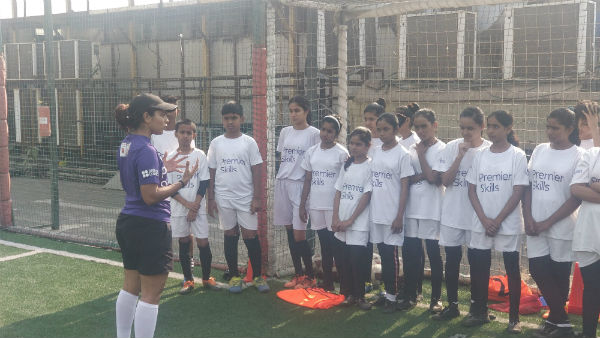
Growing up in a middle-class Muslim family, Tanaz was still finding it hard to choose just one sport. Not knowing what the future might have in store for her, she even enrolled herself in Sports Management for post-graduation program. Finishing the course as a Gold Medallist from her batch really did the rest. A new chapter in her life began when she received an offer from the ISL Franchise, Mumbai City Football Club for an internship in 2017. She accepted the offer, and today Tanaz is a grassroots development officer with the club. The Mumbaikar also is a Premier Skills-qualified Level One coach and educator, who is an advocate of women and girls’ rights in the industry. Today Tanaz, 26, is breaking the barriers by teaching hockey and football to kids and also working as a basic fitness trainer for Under-6 children.
In a candid chat with SheThePeople.TV, she speaks about playing an important role in encouraging women and girls to participate in football , especially to those belonging from the Muslim community. Excerpts of the interview.
You are a hockey player and a football coach. When did you realise that you wanted to pursue a future in football?
I was a shy kid, only into books, and it was a surprise to me and my family to know that I have had these talents inside me hidden somewhere. Because of my performance in science, my mother always thought that I’ll become a doctor in future. That’s something we both laugh about till today. It was a sure thing that I was not going to mend any bones. Ultimately, I ended up breaking a few!
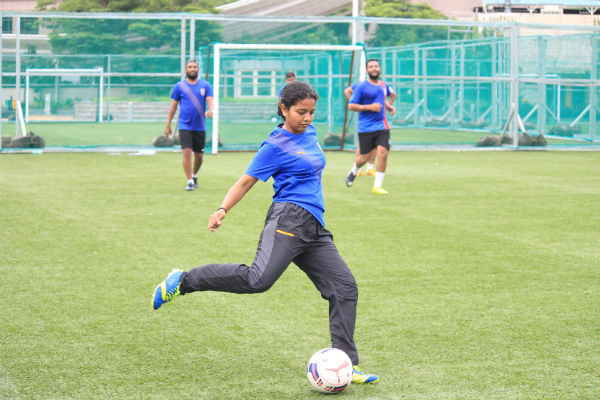
Tanaz Mohammed — a grassroots development officer with Mumbai City Football Club, a Premier Skills-qualified Level One coach and educator
My journey into sports started at the age of seven. Our school was conducting selection for interschool road races and to my own surprise, I decided to give it a try. I won and qualified for it too. My parents were a little shocked to see this change in me but they didn’t hesitate in letting me choose my own path. So I started as a track and field athlete and ended up playing in a hockey team for the school. I liked this sport instantly. Those initial months of hockey training made me realize that this was where I wanted to be. I gradually evolved from a shy, bookish and timid girl, to a confident and compact sporty one.
I went on to play hockey during my entire school and college life. I played at national level. I was also selected for a Pre Junior India Camp Training. I played international for a club called Friends United which was started by Mahindras. My own journey into sports made me realize that I was meant to be here, always!
Who is your biggest inspiration?
My inspiration is my mother!
She had to give up her profession for a while after my birth. But I saw her getting back to it with so much more power. She is a homemaker and a teacher. If she can handle it so well, why can’t I and that’s my driving force, my mother.
The amount of effort and sleepless nights that she has put in to help me achieve my dream is what inspires me to love both the sports. If she being a homemaker can do this and help me become what I am, I aim to do the same for the other kids and girls out there.
From hockey to football to becoming a trainer for children in hockey. Tell us in details about the journey. What inspired you to become a coach?
Till my graduation, I was completely into sports and also managing my studies. While I still love playing Football, Hockey remained my primary passion, a cocoon you can say.
Tanaz Mohammed in action
After completing my graduation I had to decide on a career. I tried multiple jobs, some not related to sports but I tried them anyway. Then, one day, I figured out about the sports management and without any second thought, I decided to jump headlong into it. It took me a while to explain and make my parents understand where I was heading to but then the road was way clearer.
I got myself into the management studies and along with it I continued playing hockey at the national level.
I always gave equal importance to sports and studies as I knew that I had to be dedicated to get through this journey and there is no alternative to hardwork.
I was the Gold Medalist and was also named as Student Of The Year at International Institute of Sports Management (2015-2016). I was then offered an internship at Mumbai City FC. I knew that I was shifting from hockey to football, but I also knew that if I work hard and commit myself to the fullest I will be able to bring in a change.
I went through a three-year commitment with Premier Skills which helped me become a coach first and then I successfully became a Head Coach Educator, where now I can train and certify other coaches into Community Coaching of Football.
My vision was clear: I wanted young girls to feel empowered so that they grow up to become strong women. And so I got into grassroots coaching in Football.
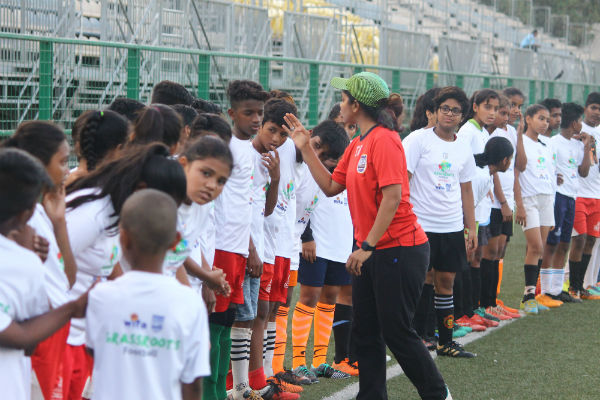
I can happily and proudly say that I gave exposure to around 500 girls from Muslim Community who belong to a traditional background. I made them and their parents realise that football can be played while wearing a Hijab too, all you need is your foot to play
Those girls are now into football . The schools in that locality have started their own girls’ football teams and they participate in various tournaments. As a result of this, their mothers are also feeling inspired and now they train beside their daughters. This, personally, has been a great achievement for me.
I decided to become a hockey coach as I wanted to give back to the game through which I got my own identity.
The career you have chosen leads you to many injuries and roadblocks. What inspires you every day?
I can say that playing sports is what I love and this is what I am. It took me sometime to realise it but now that I have I am passionately in love with it. All roadblocks and injuries seem small in front of my goal.
You are one of the few female footballers in India who made a career in the game. What does that feel like?
No doubt it’s a great feeling, but along with it comes big responsibilities. There are little girls and kids out there looking up to me and learning from me. I need to make sure every single day that my work and hard work are towards the development of sports and those kids.
How did your life change with sports?
My life has changed exceptionally. From a shy kid to a professional woman addressing a crowd of hundreds, sports has made me who I am today. I am confident and unstoppable.
What did you learn from it?
Sports taught me one important lesson: It’s okay to fail, it’s okay to keep trying, what is not okay, is to stop. We need to keep going on and listen to that little voice inside our head, that voice knows what’s best for us. People will criticise and say a lot of negative stuff, you need to do what you think is best for you to achieve that goal.
I have given exposure to around 1500 kids, and trained around 110 coaches. My aim is to work towards gender equality too, because I feel we need to start respecting each other not as women and men but as humans.
What are your biggest personal challenges?
I guess ego, I can feel that sometimes!
People look at me with a doubt that she’s a woman and how can she do it or they question my work. But all I do is smile and tell myself let your work talk and that’s what I have been doing and will continue to do so
How is the sports scene in India for women and girls? Why isn’t it popular among women here?
There are a lot of opportunities out there and women need to come out and make the most of it. The awareness among women is still developing. We now see so many women out on field organising leagues and tournaments, we see so many women winning medals and making us proud. Women often stop themselves from reaching high by self-made barriers, they need to take that one brave step and get rid of those cages.
As a woman, I completely understand that we do face a lot of roadblocks but again it depends on us, how much we let them affect us. Do we just stop or we dare?
Feature Image Credit: Tanaz Mohammed
source: http://www.shethepeople.tv / SheThePeople / Home / by Ria Das / September 26th, 2019
From its glorious status during the Nizami Deccan, Urdu has few takers today.
PU’s Urdu Dept. objects to being clubbed with foreign tongues
The Panjab University’s Urdu Department has objected to its proposed merger with other foreign tongues, asserting that Urdu is not a foreign language but an Indian one like Hindi and Punjabi.
The university recently proposed making the Urdu Department part of the School of Foreign Languages to be set up after merging departments of Russian, French, German, Chinese and Tibetan languages, said Urdu Department coordinator Ali Abbas on Saturday.
“Urdu was born, nurtured and cultured in India during the first two decades of the 13th century by Amir Khusrau. From that moment onward, Urdu and Hindi languages have not looked back. Not only this, even Punjabi language was put on the path of development by Baba Farid Ganj Shakar,” said Mr. Abbas in a letter to the PU’s Dean University Instructions (DUI). A “wrong impression” is being created by certain elements that Urdu is a foreign language”, said Mr. Abbas, asserting that “it is far from the truth”.
The Urdu script. The photo is for representative purpose only. | Photo Credit: S. Harpal Singh
Urdu, Punjabi and Hindi are the three main languages of India which were later accorded the status of State language at different times, the letter stated.
The Urdu Department raised the objection after the PU authorities recently proposed to merge small departments with less than six faculty members with each other to form one single school or centre, as per new norms laid down by the National Assessment and Accreditation Council (NAAC).
As per PU’s proposal, the merger is aimed at enhancing “academic performance by sharing infrastructure and human resources of various smaller departments”.
Mr. Abbas has, however, suggested bringing the departments of Hindi, Urdu and Punjabi under one umbrella of the department of Indian languages. “… or the Urdu Department may be allowed to function independently as per the present arrangements,” he wrote.
Final call tomorrow
Several other departments are also being merged. A 15-member panel will take a final call on the proposed mergers on September 30.
Before Partition, the Urdu Department was a major department of the then University of Punjab, Lahore, which was set up in 1882.
It was introduced in Panjab University, Chandigarh, in 1976.
source: http://www.thehindu.com / The Hindu / Home> News> National / by PTI / Chandigarh – September 29th, 2019
The period between 1371 and 1405, during the initial days of the Shahmiri Sultanate, was extremely crucial in Kashmir’s transition to Islam. It witnessed the arrival of Amir-e-Kabir, his son and their 1000-odd followers who joined a more than 200-year old campaign for Islam in a Hindu state. How these 33 years changed Kashmir forever is one of the fascinating stories of Kashmir’s quantum jump in faith and mobility, reportsMasood Hussain
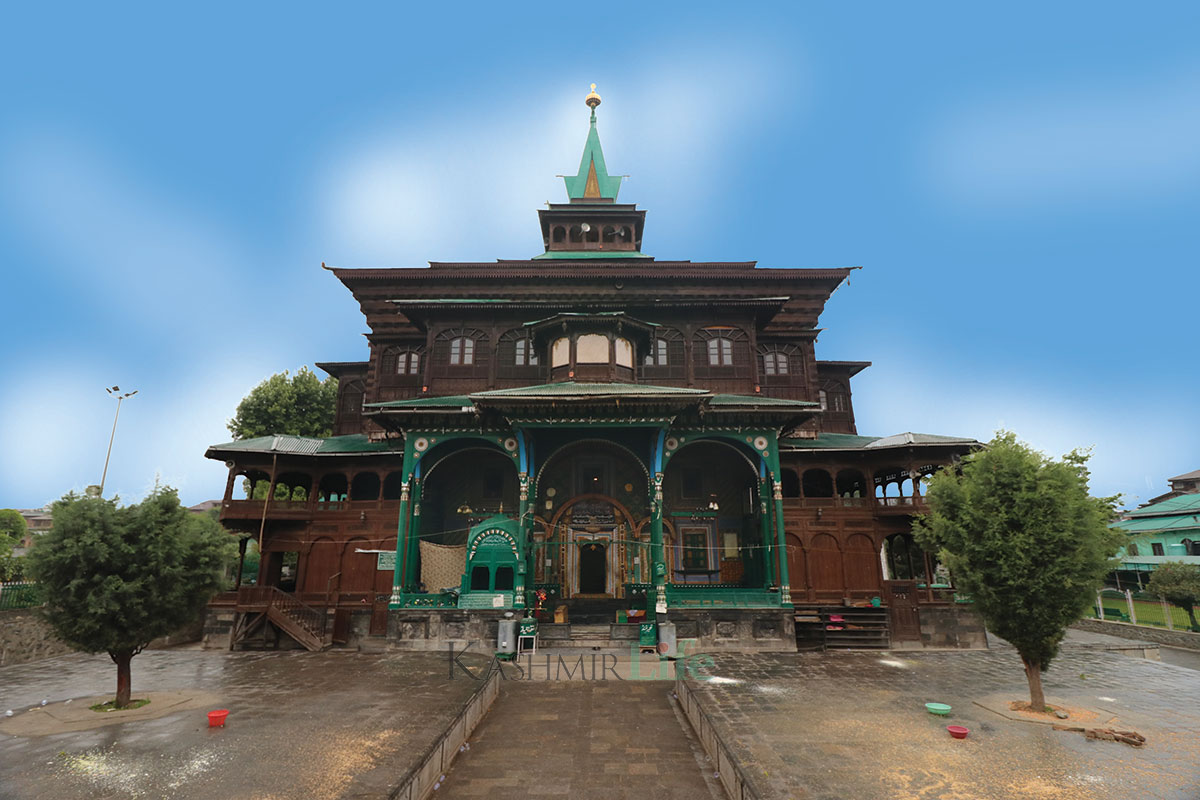
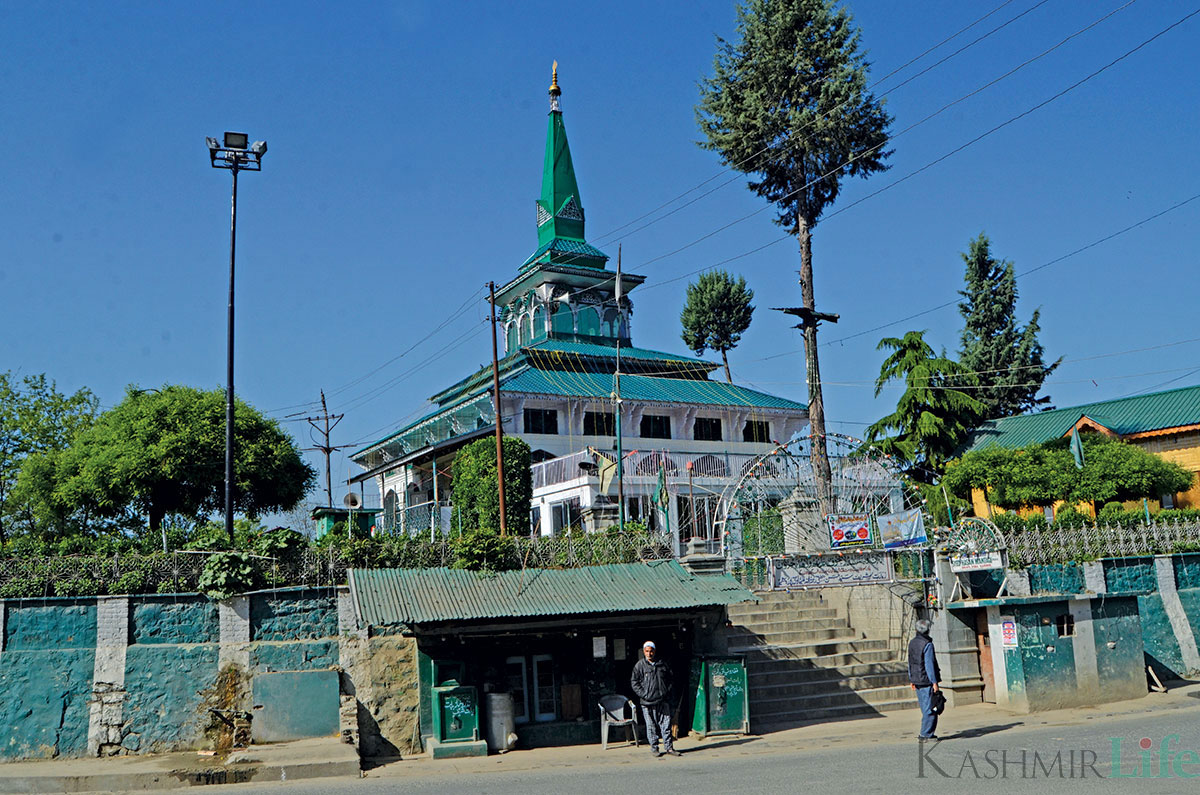
Khanqah Moula. KL Image: Bilal Bahadur
Noble of nobles, commander of Persia; whose hand is the architect of the nations; Ghazali himself learned the lesson of Allah is He; and drew meditation and thought from his stock; Guide he of that emerald land, counsellor of princes, dervishes, and Salatin; A king ocean-munificent, to that vale, he gave sciences, crafts, education, religion; That man created a miniature Iran, with rare and heart-ravishing arts, With one glance, he unravels a hundred knots rise, and let his arrow transfix your heart.”
Allama Iqbal on Shah-e-Hamadan in Javid Nama
Involving the reign of four Sultans, the history of Islam in Kashmir had a vital three decades that went into shaping the society as it is known today. This period begins with Shah-e-Hamadan visiting Kashmir in 1371, and concludes with the emigration of his son Mir Mohammed Hamadani from Kashmir in 1405. This period also witnessed the emergence of Sheikh Noorruddin Noorani, Kashmir’s bearer saint, and Lal Ded, one of Kashmir’s most popular woman ascetics, whose campaign against idolatry is unprecedented in Kashmir history.
This period falls in the first phase of Kashmir Sultanate that Shahmir built in 1339 over the ruins of a Hindu empire. The Sultanate lasted around 191 years till 1530. Muslim rule was actually established by Ladakhi prince Rinchan, who effortlessly took over a headless, mourning Kashmir in 1320 after Dulchu wrecked the Vale. Three years later, a Hindu king succeeded him for five years but the administration was controlled by Shahmir family, who eventually founded the Sultanate.
What makes this period distinct is that faith started interrupting the power politics at a time when Kashmir was still a Hindu majority state with Muslim chunks in army and administration. Mir Syed Ali Hamadani and his son Mir Mohammad Hamadani were the two major players behind these interventions. This was perhaps because Shah-e-Hamadan, the most respected Islamic scholar of his time, came from Hamadan’s ruling family. His father was the city governor.
Even though the number of visits Amir-e-Kabir made to Kashmir has divided historians, it is generally believed that he came for four months in September 1372 and then left for Mecca. He then returned in 1379 to stay for almost two and a half years. His last visit to Kashmir was in 1383 and he stayed for almost a year.
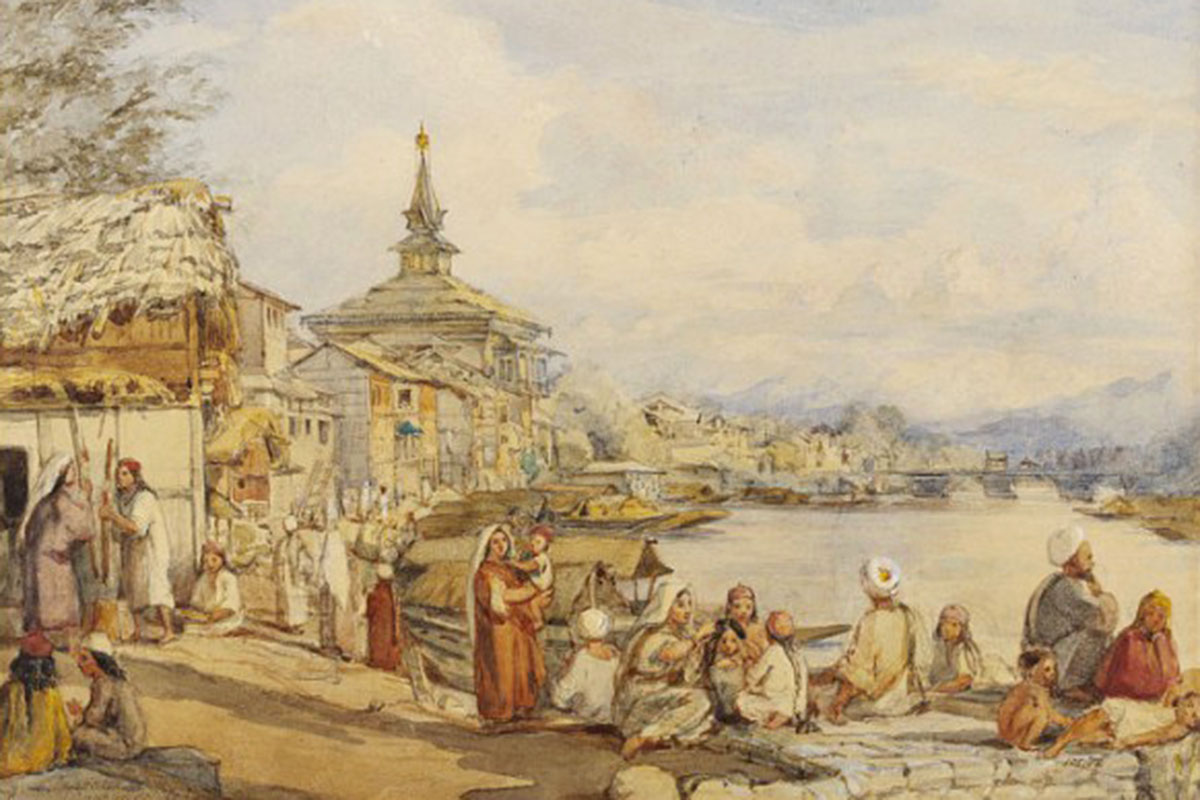
Near Khanqah-e-Moala British colourist William Carpenter Junior (1818-1899) has drawn this picture during one of his three visits to Kashmir. the most Known was in 1853.
“The most credible sources of the particular era talk of only one visit of the Amir,” Prof M Ashraf Wani, the author of Islam in Kashmir. “There is, however, a dispute over the duration of the visit between 80 days and six months.”
Historians perceive his last visit as the most consequential one since he led 700 people from Hamadan to Kashmir who eventually began working as missionaries and preachers, after settling in the valley. More than faith, they spearheaded a socio-cultural transformation of Kashmir.
Amir’s Migration
Amir-e-Kabir belonged to Alawi Sayyids who were facing problems due to Timur’s Iran takeover. Timur disliked the Sayyids who knew that circumstances may force them to migrate. In anticipation of his visit, Amir sent his cousins to Kashmir to explore if it was hospitable for missionary work, and possibly migration. The first cousin was Sayyid Tajuddin, who came in the reign of Sultan Shahabuddin (1354-73). The king built a Khanqah for him in Shahabuddin Pora in Srinagar and, according to historians, assigned revenues from Nagam village for the hospice’s maintenance. The Sultan visited him frequently. On his insistence, Tajuddin opened a few Darsgahs where Hadith and Fiqah were taught.
Later, Tajuddin invited his brother, Syed Hussain Simnani, who had already migrated to Delhi, to Kashmir along with his family and they settled in Kulgam. On his hand, Salat Sanz, Sheikh Noooruddin Noorani’s father converted to Islam. Syed Tajuddin is buried in Awantipore.
Amir followed his cousins to Kashmir. It was September 1372 and Shihabuddin was ruling Kashmir. But the Sultan was out, probably on an expedition against king of Ohind (now Attock Khurd), and Qutubuddin, in-charge ruler, writes Muhib-ul Hasan in his Kashmir Under the Sultans, went out with his chief officials and received the Amir with great warmth and respect, and brought him and his followers to the city. He started living in Alauddin Pora where a Suffa, a raised floor, was built for his prayers, which the Sultan would usually attend.
After staying in Kashmir for four months, the Amir left, and, according to G M D Sufi, the author of Kashir – Being a History of Kashmir, he visited the battleground and brought reconciliation between the two Muslim rulers.
It was his next visit in 1379 when Sultan Qutubuddin personally received him. Amir stayed for two and a half years, the longest of his three sojourns in Kashmir.
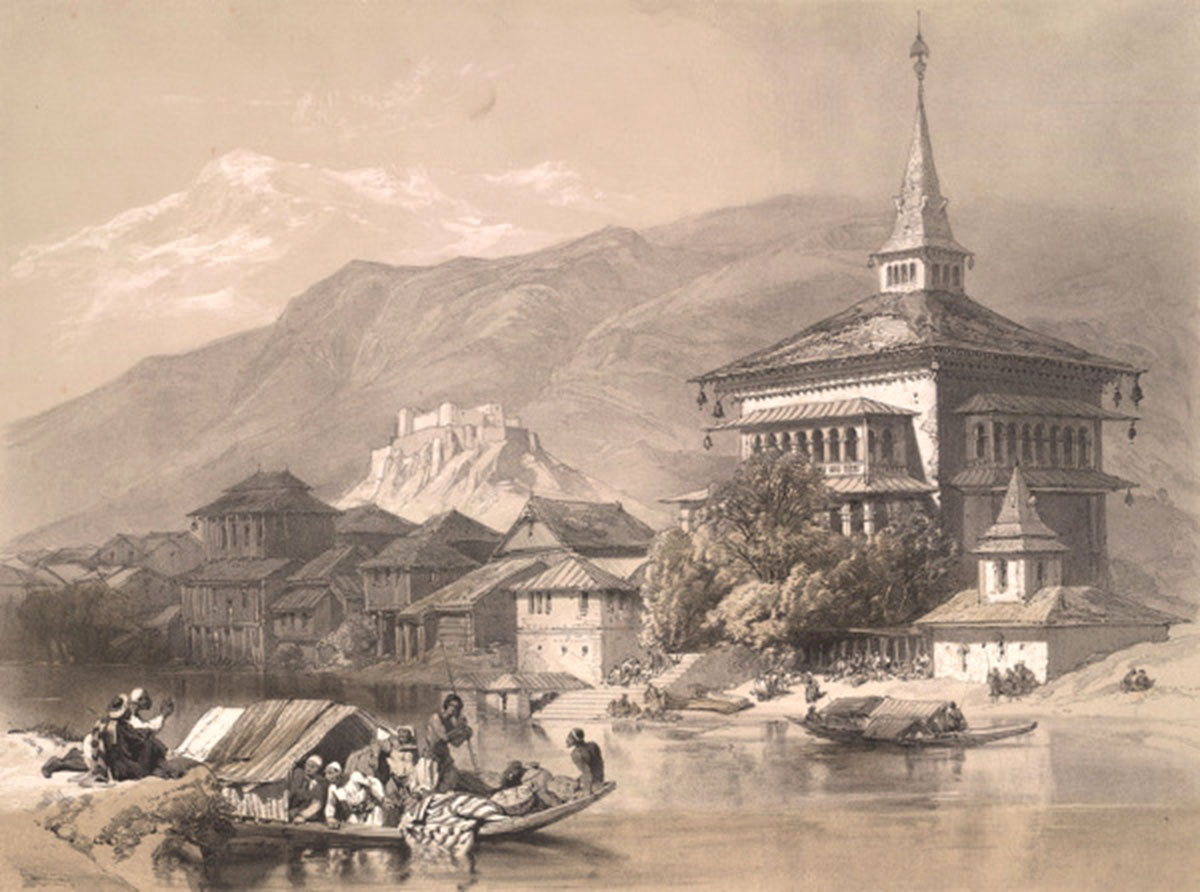
This lithograph drawn by James Duffield Harding (1798-1863) was an English landscape painter somewhere in 1847, shortly after Kashmir was sold under Treaty of Amritsar.
Then, kings were Muslims but the majority of the subjects were Hindus. Beliefs had changed but the customs and the traditions of the neo-converts were rooted in Hindu culture. Qutubuddin would wear the typical Hindu elite dress; perform a yagna to avert a famine, go to the Alaudin Pora temple every morning along with Muslims and had two sisters in his harem. Amir intervened. The Sultan divorced the older of the two sisters he had married, remarried the younger one in Islamic tradition, and started using the Muslim nobles dress.
Limited Intervention
A great scholar, Amir-e-Kabir would write in Persian and Arabic on a variety of subjects. He has authored nearly 170 books in his life. The manuscripts of around 20 of his Rasails are preserved in Oriental Research Department, Srinagar, according to Mohammad Hayat, who has extensively worked on Hamadani’s religious thought as part of his doctorate.
Historians have specially mentioned his Zakhirat-ul-Malook, a collection of his thoughts about routine life, politics, governance and the statecraft. Amir’s idea of Muslim rulers was that they should not be pleasing-all, dishonest, haughty rulers who would appoint cruel tax collectors or draw peoples’ attention by force and ignore ulema. He wanted them to be just and benevolent rulers who would address the needs of the Muslims before offering prayers, follow the Caliphs in dress and food, are polite with subjects, have a strong sense of good and bad, keep promises, and respect elders.
The Amir put the subjects into Muslims and Kafirs and gave the Muslim subjects 20 rights. Listed by Darakhshan Abdullah in Religious Policy of the Sultans of Kashmir (1320-1586), the Amir disliked the Muslim ruler listening trivial things against Muslim subjects or unnecessarily peeping into their faults. He wanted the ruler to pardon smaller offenders, avoid entering into Muslim homes without permission, not treat a wicked and civilised at par, encourage the rich to send poor on Haj on their behalf, take care of the poor, set up robber-free roads, lay bridges, build mosques, appoint Imam’s and pay them for their services, and implement lawful and prevent unlawful.
The book included a set of 20 rules about how the Sultan should handle zimins. Invoking an agreement of the Caliph Omar bin Khatab, the Amir wanted the Muslim ruler must disallow non-Muslims construction and repairing of temples, living near Muslims, burying their dead in Muslim graveyards, mourning loudly over a death, imitating Muslim dress, taking Muslim names, riding any house with saddles and bridles, putting swords, arrows and bows, exhibiting their rituals to Muslims, or using signet rings. Hindus, according to this doctrine, required a distinct dress, could not take a Muslim slave, or disrespect Muslims.
Not Delinked From Politics
“One of the significant contributions of Hamadani was, despite being a Sufi, he did not set himself aloof from politics or the government,” Mohammad Iqbal Rather writes in his doctoral thesis A Study of Islamic Political Thought of Mir Syed Ali Hamadani (1314-84). “He, apart from writing on political affairs of state, personally established contacts and wrote letters to the rulers of Kashmir for enlightening them with Islamic teachings and Shariah rulings, particularly regarding state affairs.”
Sultan Qutubuddin would routinely attend his sermons in Srinagar. Still, he received a letter from the Amir, possibly from Pakhli. “If the tempters lead the unbelievers towards evil, it is not surprising. What is surprising is that Muslims are running away from the true path in spite of God’s warning,” the Persian letter translated by A Q Rafiqui in his Letters of Mir Syed Ali Hamadani, reads. “Out of sheer love, I advice you that the worldly glamour is like a fast wind and the worldly favour is like an unfulfilled dream; He alone is wise who neither gets fascinated by dreams, not feels proud of any notion but learns a lesson from the experiences of bygone people, believing firmly in the axiom that ‘one who does not learn the examples of others, himself becomes an example for others’”.
“Hamadani, uniquely opines that a just ruler must be accompanied by a ‘Sufi reformer’ who would keep a check on the rulers,” writes Rather. “He suggests that the Sufi reformer should assist the ruler to keep the society free from injustice and rebellion and should always guide him in implementing the laws of Shariah. At the same time, Hamadani lays stress on the economic autonomy of the Ulama so that they may not work under the influence of the ruler and dictate the laws according to the wishes and whims of the rulers.”
“Anxious not to antagonise his non-Muslim subjects, Qutubuddin did not follow every advice of the Sayyid, but he held him in great reverence, and visited him every day,” Muhibul Hassan writes. “Sayyid Ali gave him a cap, which, out of respect, the Sultan always wore under his crown.” The Amir has not accepted any monetary help or royal gifts and is recorded to have earned his livelihood by making Kullah caps, one of which he had gifted to the king. He had stayed in a Saraie and not the palace. In his Sufism in Kashmir (14th to 16th Century), historian Dr Abdul Qayoom Rifiqui concludes: “Sayyid Ali’s political thought was altogether theoretical and had no bearing upon actual practice.”
Facilitating Faith
Sultans had the power at the core of their priorities. So they disagreed with the preachers on many counts. But they never stopped facilitating the preachers in spreading Islam. Many think that the thousand-odd Sayyids came as a sort of state-supported intervention in the spread of Islam in Kashmir that, till then, was organic. Every single migrant-preacher deployed on ground by the Amir was extended some sort of support by the Sultanate in Srinagar. Various Khanqahs were set-up and revenues from specific villages were assigned to their upkeep.
Some of the most prominent of the Amir’s followers were Sayyid Kamaluddin, the preacher whom Sultanate retained for guidance when the Amir decided to leave Kashmir. There was Sayyid Muhammad Kazim, aka Sayyid Qazi, Amir’s librarian (Lethpora), Sayyid Kabir Baihaqi (Srinagar), Sayyid Muhammad Balkhi aka Pir Haji Mohammad Qari, the scholar who would teach the royal family, lived and is buried in the Khanqah that history knows as Langherhat (Srinagar), Sayyid Mohammad Qureshi and Syed Abdullah, who were stationed in Vijayesvara (now Bejbehara), Sayyid Fakhruddin and Sayyid Rukunuddin (Avantipore).
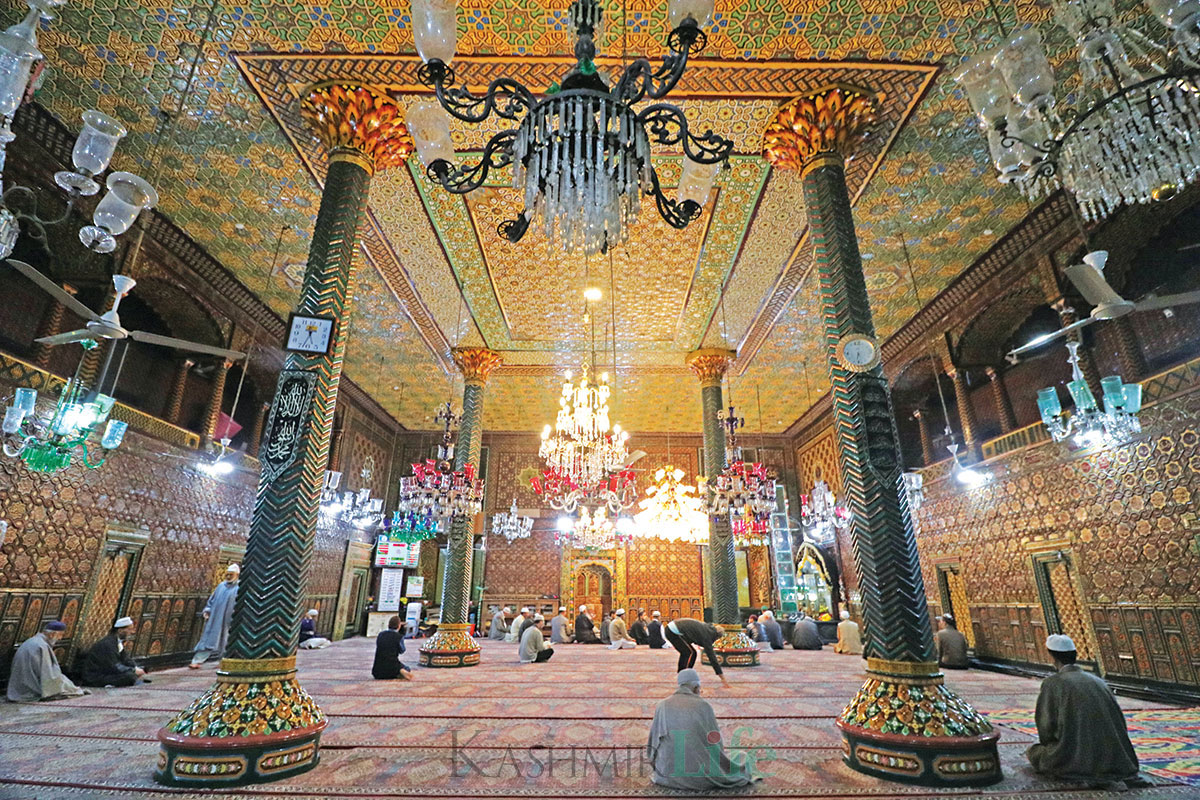
An inside view of Khanqah Moula. KL Image: Bilal Bahadur
The Sayyids’ entry came at a time when the ground had slipped away from Hinduism, and the situation was ripe for a change. Lal Ded, Kashmir’s most known acetic was Amir’s contemporary. She is recorded to have met his cousin in Kulgam.
“Men were intolerant, depraved and vicious, and women were no better than they could make of them,” Dr R K Parmu writes in A History of Muslim Rule in Kashmir (1320-1819) explaining how Lal Ded’s poetry ripped the society apart. “The people were generally made to believe in occultism, in magic, in stocks and stones, in springs, in rivers, in fact, in all the primitive forms of worship.” Parmu has written that the ascetic openly preached against this kind of worship. “The stone in the temple, she says, is no better than a millstone or the stone in a pavement,” Parmu wrote. “The idol is but a lump of stone and the temple the house of this lump.”
The rebellion within the caste-ridden society opened the doors for Islam.
“She preached harmony between Hindu Vedantism and Sufism,” Fehmida Wani writes in her excellent study The Search for Shared History of Mankind: A Case Study of the Technological and Cultural Transmission from Persia and Central Asia to Kashmir. “It benefited in the process of conversion.”
Sayyid Impact
With the state apparatus supportive and the society willing to change, how the immigrant Sayyids used the situation for Islam’s spread is something that historian may have to find answers for. So far, the narratives that have emerged in the last more than 600 years revolve more around ‘miracles’ and legends of the privileged preachers.
Islam, it needs to be mentioned, existed in Kashmir more than 200 years before the Ladakhi prince converted at the hand of Hazrat Sayyid Sharfuddin Abdur Rahman, the Bulbul Shah, in 1320. However, what was visible was that converts were rooted in the culture they had come from. That is perhaps why Tarikhi Kashmir insists that the Amir “cleaned the mirrors of the hearts of the converts of Kashmir from the rust of darkness by showing them the right path.”
Written by Sayyid Ali in 1579, historians see Tarikh-i Kashmir as the first Persian chronicle that details the migrations of the father and son along with 1000-odd murids who contributed in Islamising Kashmir culture.
Amir’s followers and disciples had come from the cradle of Muslim civilisation. Men of letters, they came with improved crafts and a sense of politics and history. Amir himself was a master Sozan Kar, a poet, an impressive prose writer and thinker. With access to the ruling structure, having some sort of economic tools in hand and logical explanations to the issues of faith, Sayyids obviously had an impact on the ground. They changed the culture forever.
The Aurad
Prof Mohammad Ishaq Khan, however, sees the situation differently. “It seems that Sayyid Ali’s stay in Kashmir was brief, not extending beyond one year. During this period, he remained the royal guest and, as such, his activities remained mainly confined to royal circles. He imparted lessons to the Sultan on God’s commands about the good works and evil,” Khan assesses in his magnum opus Kashmir’s Transition to Islam. “Besides engaging in some missionary activities in Alauddinpura and around the capital, he does not seem to have established any mass contacts. One wonders how, in view of the language barrier, a Sufi scholar like Sayyid Ali, would have made the esoteric as well as the exoteric version of Islam, as given by him in a plethora of works, intelligible to the Kashmiri masses.”
Khan, however, sees Hamadani’s major contribution in the Aurad-i-Fatḥiyyah. A grand mix of prayers, the praises for God, excerpts from the Quran, this Aurad has been an essential morning recitation in mosques for nearly 700 years now. It was Amir’s response to the pleas of neo-converts that the temple rings disrupt their morning prayers and they need something for loud joint recitation, something they had been doing for ages as Hindus. Khan sees it as “local influence” and “assimilation of the local mode of worship in the Islam of Kashmiris”.
“Islam, in no small measure, owes its success to his remarkable role which was distinguished by his tolerance towards the Kashmiris’ penchant for singing hymns aloud in temples,” Khan wrote. “The sight of a small number of people professing faith in Islam and simultaneously going to temples must have caused a great deal of concern to Sayyid Ali. But it goes to his credit that instead of taking a narrow view of the religious situation in Kashmir, he showed an acute discernment and a keen practical sense in grasping the essential elements of popular Kashmiri religious culture and ethos, and gave creative expression to these in enjoining his followers in the Valley to recite Aurad-i Fathiyya aloud in a chorus in mosques”
As the neo-converts chanted the Aurad, even the Hindu court historian Srivara was impressed: “It was here that the yavanas (Muslims) chanted mantras and looked graceful like the thousand lotuses with humming bees.”
But Ashraf insists that Amir’s contribution was in laying the foundations for the institutions of Islam in Kashmir. “Islam was spreading gradually before him and took a long time after him as well,” Ashraf said. “But the institutions of faith in Sufi systems were set up by him and his disciples.”
Departure
“After Sayyid had been for about a year in the Valley, he decided to leave,” Hassan writes about Amir’s eventual departure in 1383. “The sultan tried to persuade him to postpone his departure, but Sayyid refused, and departed with some of his followers, leaving behind Moulana Mohammad Bulkhi commonly called Mir Haji Mohammad, at the request of the sultan, to give him guidance in matters relating to the Sharia.”
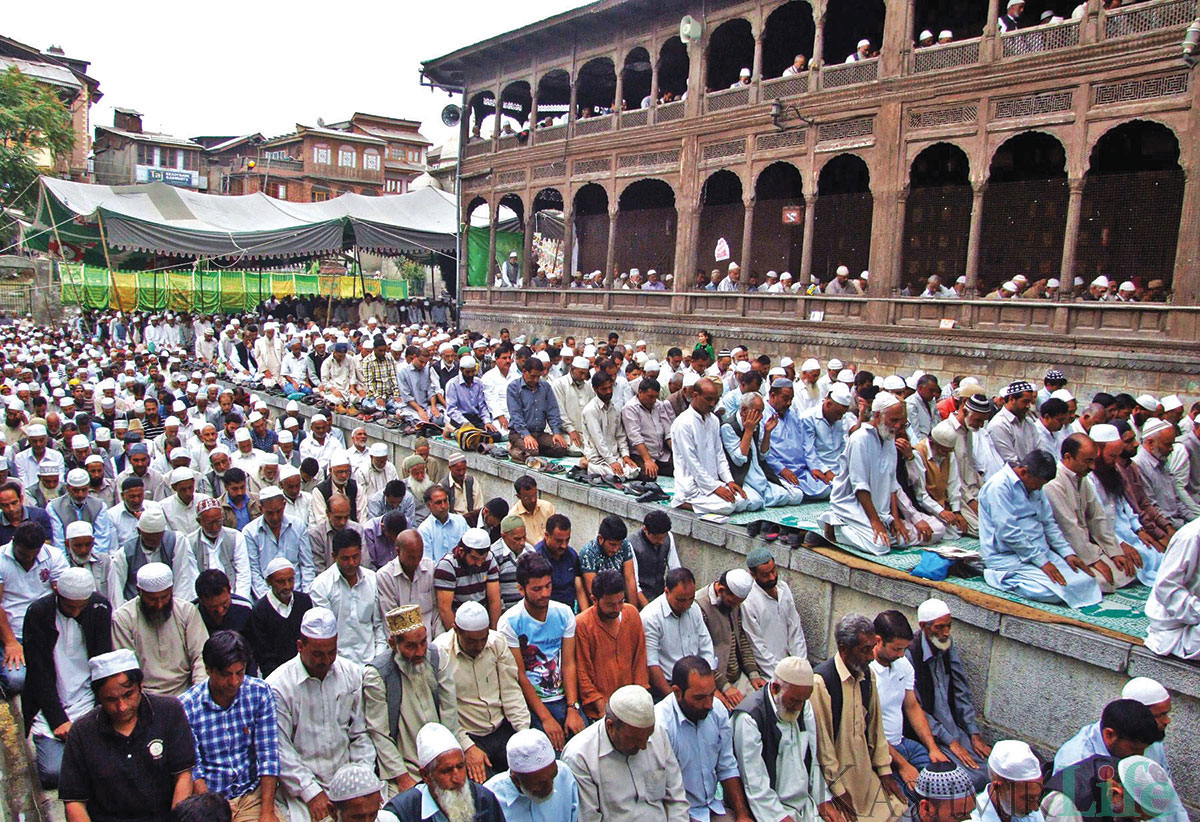
People offering prayers outside Khanqah Moula. KL Image by Bilal Bahadur
Did the Amir leave because he was unhappy with the Sultan, who would still go to the temple and meet the Brahmins. “As chronicler Sayyid Ali (Tarikhi Kashmir) points out “a large majority of his subjects were kafir and most of his officials were polytheists” so for maintaining a cordial relation, he considered it necessary to follow such a policy,” writes Darakhshan. “It was on this ground that Qutubuddin did not follow every advice of Sayyid Ali regarding state matters. Dissatisfied with Sultan’s response to his directives, Sayyid Ali decided to leave Kashmir. He left via Baramulla with the intention of performing the pilgrimage.” Another contemporary history, Baharistan-e-Shahi also points out that Sultan could not oblige the Amir by implementing the Shariah.
Ishaq Khan, however, says that his departure was not the outcome of the alleged conflict with the Sultan. Amir had written favourably to the king, even after his departure. “Notwithstanding Sayyid Ali’s emphasis on following the Sharia, he seems to have allowed practical wisdom and expediency to guide him in his attitude towards the Sultan’s non-Muslim subjects in Kashmir rather than the model he had chosen in his general work for a Muslim Sultan to follow,” writes Khan. He continued writing letters to the Sultan. In one, he praised a devote Brahmin. “In another letter sent to the Sultan from Pakhli, Sayyid Ali urged him to leave no stone unturned in popularizing the Sharia, but only within the possible limits.”
But, at the same time, it was also a fact that Amir’s letter indicated the spread of Islam in Kashmir was still a work in progress. “Our souls can never live in peace and tranquillity even if all (our) ambitions get fulfilled,” the Amir wrote to Muhammad Khawarazim, who he had left in Kashmir. “But it is really surprising that how can one ever live peacefully in the land of infidels or feel contended where the wicked flourish and are provided support!”
(This is first of the three-part series on the socio-economic impact of the immigration of more than 1000 preachers and professionals that Amir-e-Kabir Mir Syed Ali Hamadani led to Kashmir during the initial years of the Kashmir Sultanate.)
source: http://www.kashmirlife.net / Kashmir Life / Home> Cover Story> Faith / by Masood Hussain / May 22nd, 2019
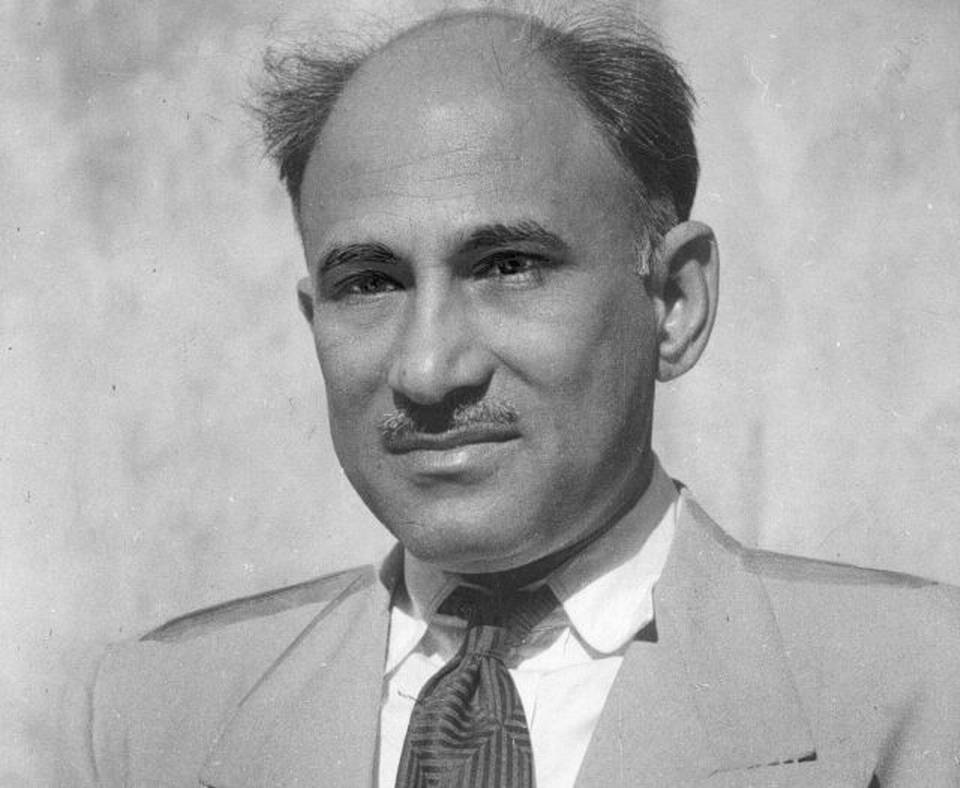
Mr. Khwaja Ahmad Abbas, well-known film critic, script writer and producer. | Photo Credit: THE HINDU ARCHIVES
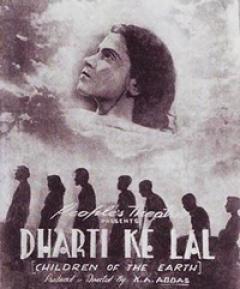
On the occasion of writer-filmmaker Khwaja Ahmad Abbas’s 102nd birth anniversary that fell earlier this week, some reflections on his first movie Dharti Ke Lal, a film that was not available for public viewing until about a year back…
The name Khwaja Ahmad Abbas, whose 102nd birth anniversary passed by this week with nary a mention of him in mainstream media, rings a bell in the mind of an average cinephile primarily for two reasons. The first is as the story/screenplay writer for Raj Kapoor’s cinema; and the second is as the filmmaker who introduced the star of the millennium, Amitabh Bachchan, to Hindi films. His directorial output, comprising 14 feature films and numerous short films and documentaries, is either ignored or overlooked.
This year is special for someone who wants to get introduced to Abbas’s cinema — heavily influenced by the art of Soviet filmmakers like Sergei Eisenstein and Vsevolod Pudovkin — as it marks seven decades since his first film, Dharti Ke Lal (Sons of the Soil) was released. It was a unique experiment by the Indian People’s Theatre Association (IPTA), co-founded by Abbas, at film-making and an early example of Indian film industry’s tryst with social realism. This was the realism of the kind that would be seen later in the films of Satyajit Ray, Bimal Roy and Mrinal Sen.
The tale of a peasant family’s struggles during the British-authored Bengal famine of 1943 during World War-II, the film was a combined adaptation of three literary works — Bijon Bhattacharya’s Bengali play Nabanna; a Hindustani play Antim Abhilasha; and Krishan Chander’s short story Annadata.
Dharti Ke Lal can also be considered a part of an Abbas trilogy (emphasis mine) of 1946. The three films — the other two being Dr. Kotnis Ki Amar Kahani and Neecha Nagar, both written by him — presented three different ways in which he expressed the idealism of a common man in pre-Independence India. Dr. Kotnis Ki Amar Kahani, a biopic on Dr. Dwarkanath Kotnis, was based on Abbas’s story, And One Did Not Come Back. It showed a young doctor, inspired by Pandit Jawaharlal Nehru’s call to serve the wounded Chinese during the Sino-Japanese War, staking his career to serve the dispossessed masses in a distant country. This was a primer into Abbas’s early-day internationalism.
Neecha Nagar by Chetan Anand, about a nonviolent rebellion by residents from a decrepit shantytown, shows an educated youngster Balraj (Rafiq Tanwar) motivating and organising the masses to speak up against Sarkar (Rafi Peer), the municipality head. Abbas’s desire to lift the urban subaltern to a state of peaceful revolution found expression through the screenplay of the movie.
Neecha Nagar – Part 1 of 10 – Cannes Awarded Indian Classical Movie
source: http://www.youtube.com
Dharti Ke Lal, with a young peasant Niranjan (played by Balraj Sahni) in the lead role, was much more explicit than Neecha Nagar in advocating for independence and self-rule. It is set in Ameenpur, a village in pre-Partition Bengal, is slowly coming to grips with India’s struggle for independence. Through references to Saare Jahan Se Achcha, with Ravi Shankar’s music playing in the background, Abbas introduces a nationalist tenor into the film.
The first half, where the family of Samaddar, the village pradhan (head) and his son, Niranjan, tries to live a happy, agrarian life within their means, is an early-day attempt at realistically portraying the village life. This is celluloid portrayal of the kind of society people got introduced to through Munshi Premchand’s novels like Godan and short stories like Panch Parameshwar. Tropes like the affinity of the villagers toward their land and the affection they show toward their cattle and cow are straight out of a Premchand short story.
The second half, where Samaddar’s family is forced to migrate to Calcutta is Abbas’s attempt to see the city through the prism of a humble peasant. The scarcity created by the famine; the apathy of the rich in the city; and the simmering Hindu-Muslim animosity combine to create absolute misery in the lives of the economic migrants. They further encounter indifference as they are forced to beg. Finally, following the end of famine, they are forced to return to their village where they mobilise themselves into a group and practise saajhe ki kheti (collective farming).
Coming back to the Abbas trilogy part, while Dr. Kotnis Ki Amar Kahaani and Neecha Nagar were inspired by Nehru’s vision of an enlightened urban India, Dharti Ke Lal seeks to emphasise Gandhian ethos of seeking comfort in the village life.
In terms of aesthetic merits, Dharti Ke Lal ranks equal to the likes of Do Bigha Zameen made in the next decade. The affection with which the camera views the villagers as it takes their close-ups makes the characters and their situations relatable. Just notice the sense of wonder on the faces of the family members in the 10th minute as they welcome the clouds, emphasising the love-hate relationship a farmer enjoys with the monsoons. The poignancy of the moment is accentuated by an alaap, with a flute playing in the background. This surely reminded me of joy in the face of villagers of Champaren in Lagaan as they anticipate the rains on seeing the clouds, expressed through the ghanan-ghanan song.
source: http://www.youtube.com
In a radio interview quoted in an audio tribute, Abbas expressed a sense of pride when he says that Dharti Ke Lal is the only film that was ‘socialist’ when it comes to the production process. He says none of the members was paid less than Rs.200 or more than Rs.400. His socialist ideals and life-long belief in upliftment of the downtrodden — his commitment to idealism made journalist Vinod Mehta compare him to historian Eric Hobsbawm — kept informing his writing and his film-making.
source: http://www.youtube.com
His production company, named ‘Naya Sansaar’ (A New World) was his way of voicing his message of empowerment as he made films like Shahar Aur Sapna, Do Boond Paani and Saat Hindustani. Most of them were commercial disasters and some of them look didactic from a 2016 viewpoint. However, if there is one film that has remained relevant, both in terms of its art and its content, it is Dharti Ke Lal.
source: http://www.thehindu.com / The Hindu / Home> Cinema / by Hari Narayan / June 11th, 2016