Category Archives: Community Involvement / Social Issues

Reflections on a time and space

KARNATAKA :

BookRahamathTarikereMPOs13sept2019

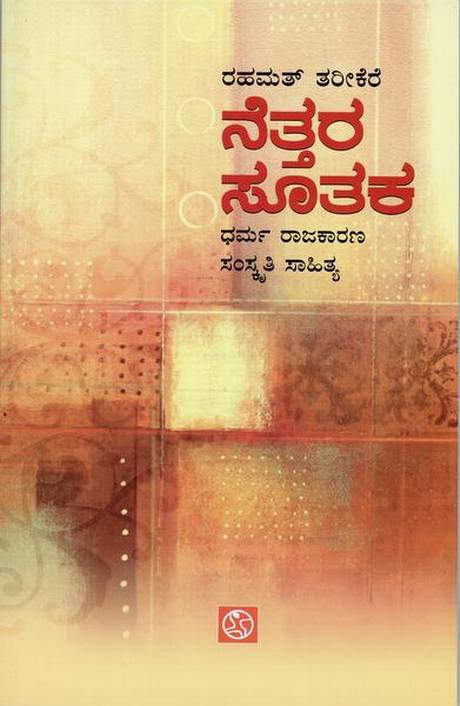
Nettara Sootaka by Rahmath Tarikere is a collection of articles written for different occasions in the last five to six years on contemporary writers and issues

What it means to write in Kannada at present as an intellectual or, to be more specific, as a literary and cultural critic? Keeping this question in mind, I would like to introduce Rahamath Tarikere’s Nettara Soothaka: Dharma, Rajakarana, Samskriti, Sahitya (Spectre of Bloodshed: Religion, Politics, Culture, Literature), a collection of articles written for different occasions in the last five to six years on contemporary writers and issues.

Rahamath Tarikere, one of the makers of cultural criticism in Kannada, has been a prolific writer. His research into the culture of Sufis, Nathapantha, Shakthapantha and Moharum of Karnataka is an exemplary field-work investigation in Kannada scholarship. Apart from travelogues, his scholarly engagements encompass writings on literary texts and cultural issues, literary criticism, research methods, edited volumes on Kannada literature, and interviews of intellectuals among others. He works largely in the field where literary and cultural studies intersect.

Tarikere has kept his writerly life alive by contributing pieces to journals and periodicals, and the present book, the sixth of his collected writings, consists twenty-two articles. Six articles in the early part of the book are reminisces of writers after their death.

Among these, Tarikere’s observations on the life and works of U. R. Ananthamurthy, Gauri Lankesh, Vasu Malali and M.M. Kalburgi are worth reading.

“Ananthamurthy: Kashtakalada Naitika Dani” (Moral Voice of Hard Times) — one of the best tributes to Murthy I have ever read in Kannada — delves deep into his intellectual and political complexities. Tarikere is at his best in identifying the archaeology of Ananthamurthy’s thought as ‘resistance’ (to structures of power and fascism), ‘dialectical mode of analysis’ (Right-Left, Kannada-English, Brahmin-Shudra, etc.), ‘dialogic’ and ‘transgressive’ (going beyond). Similarly, “M.M. Kalburgi: Kalakelagini Agnikunda (Fire-Pot beneath Feet)”, written in academic style, explores the philosophical underpinnings of Kalburgi’s research work against the larger backdrop of violence and intellectual life today.

This is a major point of departure for those interested not just in Kalburgi’s work but in Kannada research in general. Further, the portraits of writers and other eminent personalities including Dr. Rajkumar, celebrated Kannada film actor, Jawaharlal Nehru, N. K. Hanumanthaiah, B. M. Rasheed, Ramadas, H. S. Raghavendra Rao and A. K. Ramanujan have been sketched informatively in plain and clear prose.

The articles on Muslim and Sufi culture give a detailed account of the Muslim way of life in India. “Muslimarigobba Ambedkar Agatya” (Muslims Need an Ambedkar) and “Muslim Samudayada Sankathanada Tathvika Nelegalu” (Philosophical Foundations of Discourse on Muslim Community) and “Muslim Samskrutikalokada Swarup”(The Nature of Muslim Cultural World) unfold the dynamics of Muslim identity politics, socio-historical problems of Islamic culture and the formation of different discourses on Muslims. Those interested in understanding the nuances of Sufism and Islam will find these articles enormously useful.

One more article which deserves our attention in the collection is “Hyderabad Karnataka Sahitya: Chaharegalu” (Literature of Hyderabad Karnataka: Traces). It raises an important question about literary culture: what is the relationship between literary expression and its geo-political conditions? While sketching the uniqueness of literary culture in the region of Hyderabad Karnataka, Tarikere shows how it is unique and different from literary cultures in Dharwad and Mysuru regions. His insights in this article open up further scope for in-depth investigations into Kannada Literary Studies.

Overall, the articles in the book try to diagnose what ails our times, particularly how writing and intellectual life have become vulnerable. As the title of the book suggests Tarikere grasps it with the metaphor of bloodshed, modelled on how Sharanas problematized the interconnectedness of experience, acts and speech in ‘Nudi Soothaka’ (Spectre of Speech). The practice of Fearless Speech, according to Tarikere, has become the target of violence in the 21st century. In tune with this perspective, the book is dedicated to Dabholkar, Pansare, M.M. Kalburgi and Gauri. Throughout the book the reader can experience the author’s anxieties, concerns and aspirations about our socio-intellectual life in India. The book certainly contains some insightful articles which Kannada readers should not miss. However, some articles could have been left out from the selection. What is the rationale behind bringing out a collection of articles written for different occasions? A careful selection of articles, rewriting some of them when they go as part of a book and a long introduction that connects these articles on different themes would make the anthology more useful than merely compiling hitherto published articles.

Rahmath Tarikere’s prose, though wanting in liveliness, does not fail to convey what it intends to. However, his mode of analysis still remains largely ‘ideology criticism’, the modernist reasoning scrutinizing all types of issues. We need to go beyond the Marxist- ideology-critique and explore different forms of analytics as the nature of evil we are confronting today does not reveal itself easily to worn-out tools of analysis. It might be useful to examine cognitive structures of contemporary society, instead of resorting to ideology criticism. In this respect, a scholar like Tarikere can bank upon his own studies on Indian intellectual traditions such as Sufism, Nathapantha, Shakthapantha, etc. to develop new tools of analysis and grasp the reality differently, if not from the informed understanding of the western scholarship available in English.

If this project, further, calls for thinking how to shape the Kannada critical thought, I could not help but invoke the writings of, just to mention two critically important forerunners among several others, D. R. Nagaraj and Keerthinath Kurthkoti. The present Kannada literary and cultural criticism can fruitfully learn from their art of thinking, making powerful narratives and analysis.

Rahamath Tarikere also belongs to this tribe, and his individual talent certainly promises new modes of thinking and renewing this tradition.

source:  http://www.thehindu.com / The Hindu / Home> Books> Reviews / by N. S. Gundur / September 05th, 2019
Kerala State Haj Committee gets its first woman member L Sulaikha

KERALA :

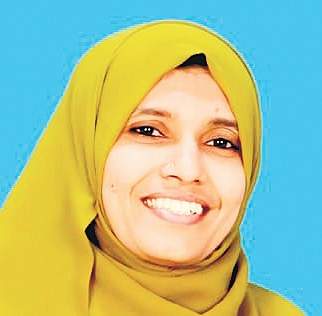
In a revolutionary move, Kerala State Haj Committee has got its first woman member. INL leader and Kanhangad municipality vice-chairperson L Sulaikha will serve the Haj Committee for the next two year

Malappuram :

In a revolutionary move, Kerala State Haj Committee has got its first woman member. INL leader and Kanhangad municipality vice-chairperson L Sulaikha will serve the Haj Committee for the next two years.

(Photo | EPS)
(Photo | EPS)

“It is a happy occasion and I am glad to serve the committee,” Sulaikha told Express.
The INL Kanhangad constituency committee secretary received official confirmation from officers concerned on Saturday, and she is all set to leave for Thiruvananthapuram to attend the new committee’s first meeting. Sualikha said that she will give emphasis on reducing the inconveniences faced by women pilgrims to Mecca. “In fact, females outnumber male pilgrims when it comes to Haj, and it’s the need of the hour to ensure women representation in Haj Committee,” she said.

This year, around 1,120 women applicants have left for Mecca without Mahram (male escort) after reforms were brought in the revised Haj policy by the Haj Committee of India. This relaxation for women was brought in lines with changes in Saudi Arabia’s Haj rule. In 2014, Saudi changed its rule that prevented women from performing Haj without related male or husband.

A graduate in English Language and Literature, Sulaikha was elected to Kanhangad municipality for the first time in 2010; she was the health standing committee chairperson in the civic body.
Sulaikha is thankful to INL leadership: “The support extended by my leaders helped me get the new position.”

Sulaikha’s husband Abdul Ameer is a Qatar-based businessman. Their daughter, Fathimath Naj Beegum, is third class student.

Apart from Sulaikha, the new committee has P V Abdul Wahab MP, MLAs Karat Razak and Muhammed Muhsin, Bahauddeen Muhammed  Nadwi, Kadakkal Abdul Azeez Moulavi, C Mohammed Faizy, Abdu Rahman, Musliyar Sajeer,  Anas MS, VT Abdullakoya Thangal, Mohammed Qasim Koya, H Muzammil Haji and PK Ahammed as elected members.

Besides, Kerala State Wakf Board chairman Syed Rasheed Ali Shihab Thangal and Malappuram district collector Amit Meena are ex officio members.

The first meeting, which is to be held in Thiruvananthapuram on Monday, will elect the new chairman.

source: http://www.newindianexpress.com / The New Indian Express / Home> States> Kerala / by Shafeeq Alingal / Express News Service / August 13th, 2018

A literary salon by the wayside: Shukoor Pedayangode’s teashop in Kerala is a literary hub

Pedayangode Village , KERALA :

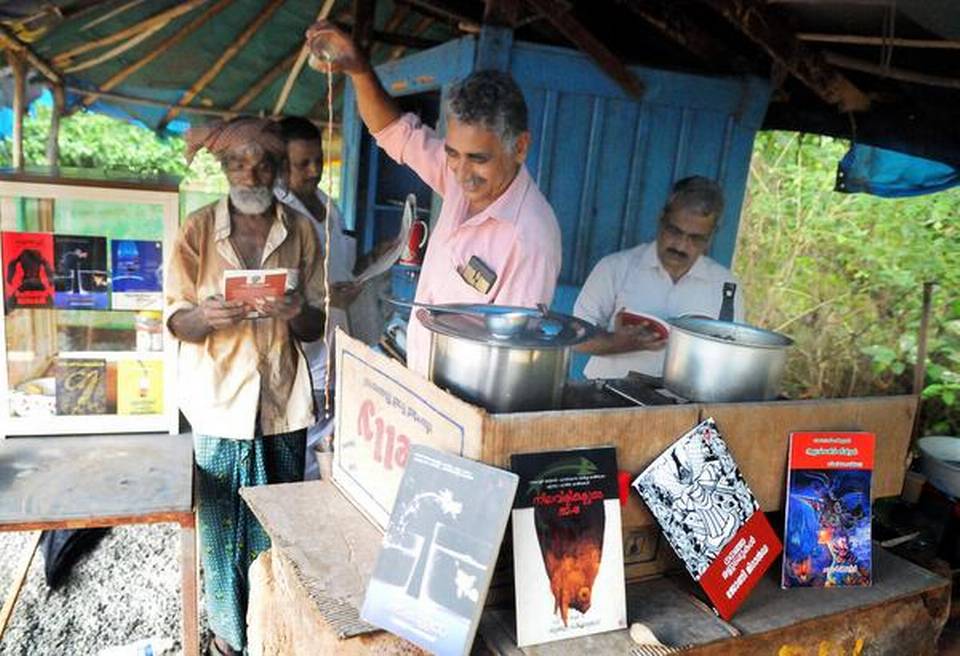
Symposium: Shukoor Pedayangode (centre) has been holding literary gatherings at his tea shop for four years. | Photo Credit: S.K. MOHAN

Welcome to Veranda, a teashop in a Kerala village, where ideas flow as liberally as the tea, run by school dropout-turned-littérateur Shukoor Pedayangode

At first glance, the roadside tea shack with a blue poly tarp stretched on wooden poles seems nondescript. Shukoor Pedayangode, its 50-something owner, looks equally unassuming as he tosses the sweet milk tea back and forth from saucepan to glass before serving it to his customers. But don’t be fooled: both this chayappeedika (teashop) in Pedayangode village, about 35 km from Kannur, and the tea-seller are as special as it gets. Over the years, this teashop called Veranda has become a literary hub, with celebrity authors not just from Kerala but also from neighbouring Karnataka and Tamil Nadu gracing it with their presence.

When I meet Pedayangode, it is late August and he has just reopened Veranda after a longish break when his shop was submerged under the waters of River Bavali when it breached its banks earlier in the month. But Pedayangode’s spirit hasn’t been dampened: he is all cheer as he talks about the next literary gathering at his teashop, scheduled for September 29. The special guest at the event? Tamil author Perumal Murugan — copies of the Malayalam translation of Murugan’s Poonachi are displayed at the teashop.

Free for all

The school dropout Pedayangode began to organise informal monthly literary gatherings at his teashop some four years ago. And he has so far hosted 34 discussions. Among the Malayalam writers and poets who have visited are Paul Zacharia, M. Mukundan, Khadeeja Mumtaz, P.F. Mathews, Kalpetta Narayanan, Rafeeq Ahmed and N. Prabhakaran, a veritable who’s who. Kannada writer Vivek Shanbhag and Tamil writer B. Jeyamohan have also been there.

“I announce every event in advance on my Facebook page,” says Pedayangode. The events generally last three hours and the audience is free to express views on the book under discussion and interact with the author. For non-Malayalam writers, Pedayangode gets friends who speak the language to act as moderators.

A bookworm from childhood, Pedayangode used to devour anything he found in print. “I read Vaikom Muhammad Basheer’s Mucheettukalikkarante Makal (Card Sharper’s Daughter) when I was in Class V,” he says. He hated Maths, and after Class V, he started skipping classes since he dreaded his teacher’s wrath. Eventually, he stopped school altogether.

One of 12 siblings, Pedayangode started odd jobs to help the family along. He worked in quarries, sold fish. “I earned some money selling fish; that’s when I started buying books both to read and to sell,” says Pedayangode.

In fact, even as a teenager he used to write poems for richer friends who would buy him books in exchange. His published poetry collections are quite a few: Onpathu Pennungal (Nine Women), Nilavilikalude Bhasha (Language of Screams), Mazhappollal (Rain Burn) Azhangalile Jeevitham (Life in the Depths).

Novel idea

He even wrote a novel called Veranda, which would later become the name of his teashop. It’s apt, given the idea of open space it connotes. Pedayangode envisaged his shop as a free space for discussions. “I wanted to encourage the reading habit and create an ambience for healthy discussions devoid of restrictions or posturing,” he says.

The monthly gatherings are open to all. “Around 30 to 50 people usually attend,” says Ashraf Macheri, Pedayangode’s neighbour and close friend. Macheri, who used to run a printing press before moving to the Gulf, recalls how Pedayangode would visit his press to collect waste paper to write poems on.

Publishing houses give copies of their books for sale at the teashop; books of the author under discussion are sold on the day. Pedayangode funds the literary meets from the commissions he gets from book sales.

He also organises book fests in Kannur schools to promote reading among students. Pedayangode misses no literary event in the area. These days, he is regularly invited to local colleges to inaugurate literary events. And he does all this while reworking a novel he had finished and left unpublished four years ago.

mohamed.nazeer@thehindu.co.in

source: http://www.thehindu.com / The Hindu / Home> Books> Tea Time / by Mohamed Nazeer / September 07th, 2019

Mariyumma is new head of Arakkal royal family

Kannur , KERALA :

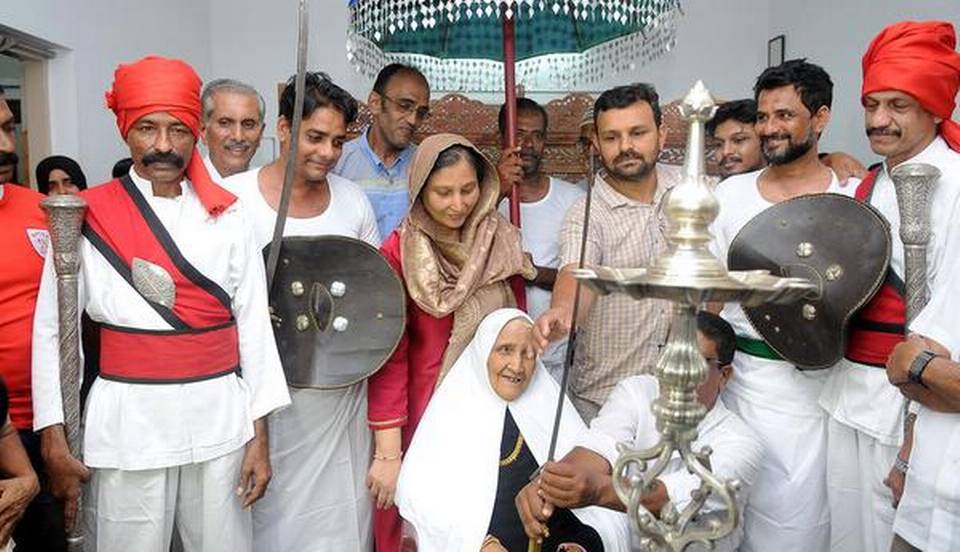
Adiraja Mariyumma, alias Cheriya Bikkunhu Beevi, taking over as head of the royal Arakkal family in Kannur on Wednesday. | Photo Credit: S_K_MOHAN

Octogenarian assumes charge after death of her cousin Fathima Muthu Beevi on May 4

Octogenarian Adiraja Mariyumma, alias Cheriya Bikkunhu Beevi, is the new head of the Arakkal family, the royal house that once ruled old parts of Kannur and controlled some islands which form part of Lakshadweep.

Ms. Beevi, who resides at her residence at Arakkal Kettu, the compound comprising houses of members of the royal family, took over as new head of the family in a simple and brief function attended by family members on Wednesday evening. Wife of the late A.P. Aluppi Elaya, retired administrative officer, Chennai Ports Trust (CPT), 85-year-old Ms. Beevi has been residing at Almar Mahal here ever since she returned from Chennai 19 years ago.

She assumed charge as new head of the family following the death of her predecessor and cousin, 86-year-old Sulthan Arakkal Adiraja Fathima Muthu Beevi, on May 4.

Matrilineal system

As the family follows the matrilineal system of succession common among Mappila Muslims in the region, the eldest member of the family becomes the head of the royal family which once ruled the lone Muslim principality in the State.

“The senior-most member of the Arakkal family, regardless of gender, becomes the titular head of the family,” said Abdul Shukkoor, son of the new head of the family. When the Arkkal properties were partitioned in 1960 there were 59 members and 39 of them had died after serving as head of the family as per the seniority norm in succession, said Mr. Shukkoor, 58, who is working as Superintendent in the Finance Department of the CPT.

Titles

Traditionally, female heads of the Arakkal house are known as Arakkal Beevis, while male heads are called Ali Rajas.

The royal family had good relationship with Hyder Ali and Tipu Sultan of Mysore. When the British had defeated Tipu Sultan in the last decade of the 18th century, the family was forced to cede their land to the British.

Mr. Shukkoor said the Arakkal family once had revenues from landed properties and rented buildings and trade activities including pepper and coir.

Much of the land of the family had been surrendered following the enforcement of the Land Ceiling Act during the rule of former Prime Minister Indira Gandhi.

source: http://www.thehindu.com / The Hindu / Home> News> States> Kerala / by Mohamed Nazeer / Kannur – May 09th, 2019

How the British Empire abandoned its most vocal Muslim supporter

Surat , GUJARAT / Bombay (now Mumbai) MAHARASHTRA / London, ENGLAND :

AbdullahYusufAli01MPOs05sept2019

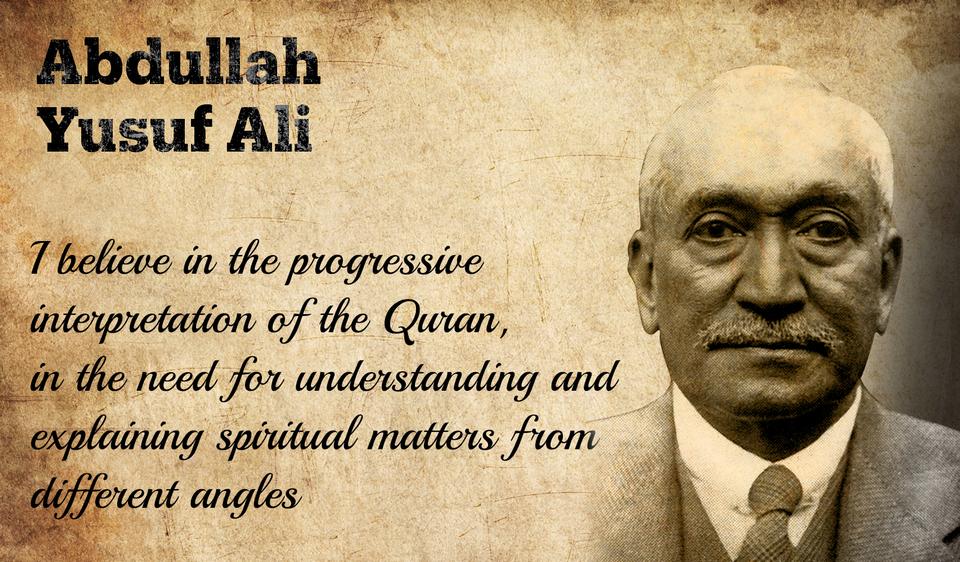
Abdullah Yusuf Ali wrote perhaps the most famous translation of the Quran but he also supported the British against the Ottomans and died a lonely man.

On a frigid December morning in 1953, a policeman found a half-conscious old man slumped on a street bench in the Westminster area of London. He was in a delirious state and died a day later on December 10. Ali

That man was Abdullah Yusuf Ali, the famous 20th-century translator of the Quran. He died alone, homeless, and with no one by his side. When the news reached Pakistan’s embassy in London, it dispatched someone to pay for his last rites.

“It pains me to think that so able and eminent a gentleman should have met with so pathetic an end,” Mirza Abul Hassan Ispahani, Pakistan’s High Commissioner in London, wrote in a letter to his prime minister two days later.

Generations of Muslims in English-speaking countries have grown up reading Yusuf Ali’s interpretation of the Quran. More than 200 editions of it have been published so far, making it perhaps the most read commentary in any non-Arabic language.

“Ask any English-speaking Muslim what translation and commentary of the Quran they originally studied, and the chances are that it was the one by Abdullah Yusuf Ali,” writes a commentator.

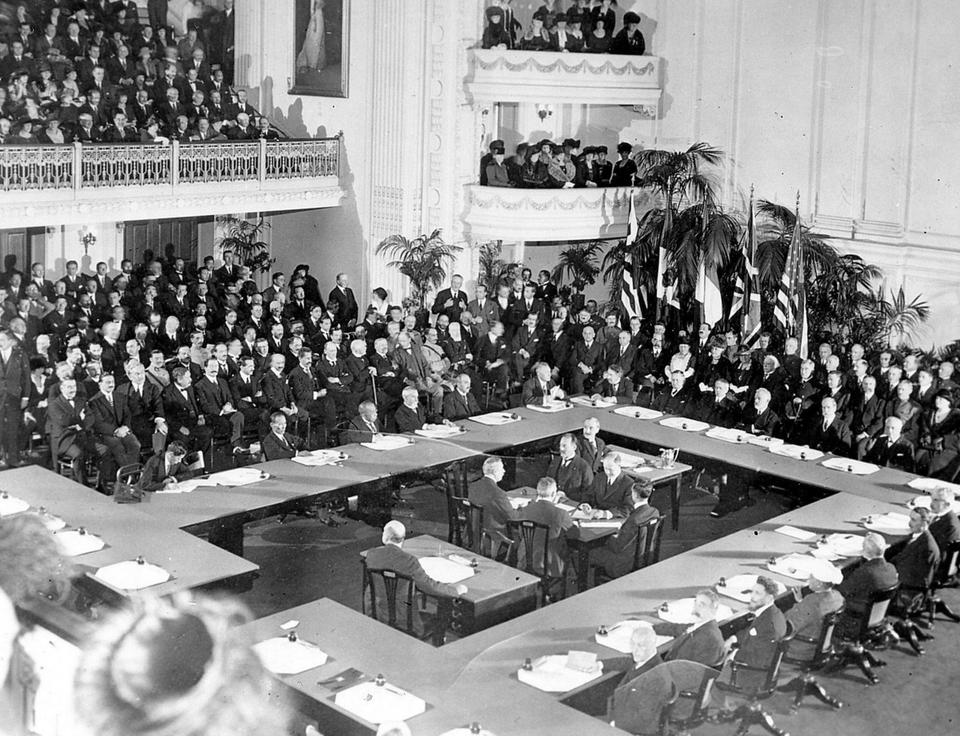
Yusuf Ali’s work and affiliations solidify his place as a giant of his time. He was one of the most senior Muslim civil servants during the British Raj, rubbed shoulders with the likes of Mohammad Ali Jinnah and the Aga Khan, inaugurated the first mosque in Canada, represented India at the Paris Peace Talks in 1919, was a trustee of London’s oldest mosque, and a known educationist. He was also a prolific writer on Islam.

But how did a prominent Muslim like him meet such a terrible end? Why was he forgotten so quickly?

A child of his time 

In 1915, during World War I, the British faced a dilemma. Nearly half a million soldiers were Muslims from the Indian Subcontinent — modern-day India, Pakistan and Bangladesh — which was then under colonial rule. Some refused to fight the Turkish Ottoman soldiers who had joined the war against the allied army.

A mutiny broke out in November of that year in Singapore where Indian Muslim soldiers turned their guns on officers and took control of the island. The uprising was quickly crushed and 70 Muslim men were lined up against a wall and executed.

The events shook British officials. Many Muslims considered the Ottoman Sultan Mehmed Reshad as their Caliph. Their personal affinity and strong connection led to the Khilafat Movement in India that called for boycotting the British.

Abdullah Yusuf Ali thought otherwise.

“Fight ye glorious soldiers, Gurkha, Sikh or Muslim, Rajput or Brahman!” he said in a November 1914 speech at a London event in front of top British military officials. “You have comrades in the British army whose fellowship and lead are a priceless possession to you.”

In his talks and articles throughout the war, he urged fellow Muslims to side with the British, at times doing it so effusively that his rhetoric appeared jingoistic.

“The Ottoman Caliph announces Jihad against the British and what does Yusuf Ali do? He goes around European countries asking Muslims to fight for the British,” Humayun Ansari, a professor of Islam at the University of London, told TRT World.

“He was consistently loyal to the British and considered the British Empire to be a blessing. In his understanding of Islam he was very liberal. He wanted a reconciliation between the Muslim and Western philosophy.”

Abdullah Yusuf Ali attended the all-important Paris Peace Conference in 1919. (Getty Images)

Yusuf Ali was born in 1871 in Surat, western India, during a period of great introspection for the Muslims of India as their rule over the region for centuries came to an end and they were at the mercy of the English and a more politically organised Hindu majority.

Among the Muslims there was a realisation that they would have to study English, attain a modern education and learn British ways to get government jobs and regain their lost social status.

Yusuf Ali, who came from a middle-class family, proved to be an exceptional student throughout his school years and after matriculating from a missionary school, he won a scholarship to study at Cambridge University in London. The scholarship was given to only nine Indian students each year.

“We have to look at him in the context of his times. That was a generation when the British claimed superiority over the natives. And then you have somebody who can emerge and beat them at their own game,” says Jamil Sherif, who wrote Yusuf Ali’s biography titled Searching for Solace.

“Yusuf Ali’s approach was to show through his writing that Islam had made major contributions through the ages. But I think his compromise was that he saw religion mainly in spiritual terms and he saw socio-political dimensions of Islam as not really relevant in the days of empire,” he told TRT World.

At Cambridge, Yusuf Ali excelled in English composition, Arabic and other subjects. He also cleared the intensely competitive exam for the elite Indian Civil Service (ICS). In subsequent years, he rose to become perhaps the highest-ranking Muslim civil servant in India when he worked under Cabinet’s member of finance.

He was a devout Muslim, making sure he offered daily prayers, attended religious congregations and led prayers at the Shah Jahan Mosque in Woking, a town near London.

At the same time, he was against political Islam and insisted that Muslims could do better under British rule and that they should focus on educating themselves as opposed to agitating for independence.

Over the years, he remained affiliated with different institutions and also served as the principal of Lahore’s Islamia College – he was invited to take the position by the venerated poet Allama Muhammad Iqbal.

But behind the veneer of his intellect, busy schedule and scholarly importance, he was a man suffering from internal conflicts.

When the east meets west 

Yusuf Ali was a troubled man. He married twice and both relationships ended bitterly.

In 1900, just a few years into his role as a civil servant, he married Teresa Mary Shalders, in a ceremony at the St. Peter’s Church in England.

“It was a bold and uninhibited act by the young couple, who may have looked at the dawn of the new century and thought everything possible – including the harmony of races, religions, and continents,” Sherif, who uses M.A. Sherif as his pen name, writes in his book.

But any hope of making a statement with this marriage of two different cultures faded in a few short years. They had four kids over the years but Yusuf Ali spent most of this time in India as a government officer while Shalders, who was in England, fell in love with another man.

Their divorce in 1911 was particularly painful for Yusuf Ali and he might have hinted at that period in the preface of his Quranic commentary when he wrote: “A man’s life is subject to inner storms…which nearly unseated my reason and made life meaningless.”

He won custody of their children but became estranged from them over time.

“These children by their continued ill-will towards me have alienated my affection for them, so much that I confer no benefit on them by this will,” Yusuf Ali later wrote in his will.

As an ICS officer, he rose swiftly from an assistant magistrate to more important positions, and the British government increasingly relied on him as its key propagandist.

Yusuf Ali was not entirely oblivious to the systematic discrimination that Muslims faced under British rule.

“He wrote about how Britain was using Indian revenue in the Great War. That’s a very subtle way of criticism. He also made references to discrimination suffered [by locals] on the basis of colour,” says Sherif.

In the early 1920s, Yusuf Ali married Gertrude Anne Mawbey, who he liked to call Masuma (innocent). That marriage didn’t work out either.

(TRTWorld)
(TRTWorld)

It was during this personal crisis that Ali began the monumental work of writing an English translation of the Quran, often working on solitary ocean liner journeys which he took at the behest of the British government.

“Yusuf Ali’s bond with the Quran was forged in these times of anguish when searching for solace,” writes Sherif.

Prominent scholars such as Marmaduke Picktall and others had already done a lot to introduce the West to Islam’s holiest book but Yusuf Ali did it with humility and open-mindedness which set his work apart.

“His interpretation is very balanced. It doesn’t force you to any particular corner, it can be read by all the schools of thought. It’s a very broadminded, compassionate approach to studying religion,” Sherif tells TRT World.

Yusuf Ali was a Dawoodi Bohra, a strain of Shia Islam, but he garnered enough respect across the spectrum to lead congregations at Sunni mosques.

“In his translation of the Quran, published between 1934 and 1937, Yusuf Ali expounded the spiritual side of Islam more than its worldly view,” writes A R Kidwai, a prominent researcher.

His excellent command over the English language lends a poetic touch to the thousands of footnotes and he didn’t shy away from using English poets such as Longfellow and Milton to explain the word of God.

Besides dealing with his matrimonial failures, he had a hard time coming to terms with what happened to Arab Muslims after World War I.

“Unlike many of his contemporaries, he did not criticise the League of Nations when it dismembered the Ottoman empire,” says Sherif. “But what really shook him was the proposal to partition Palestine.”

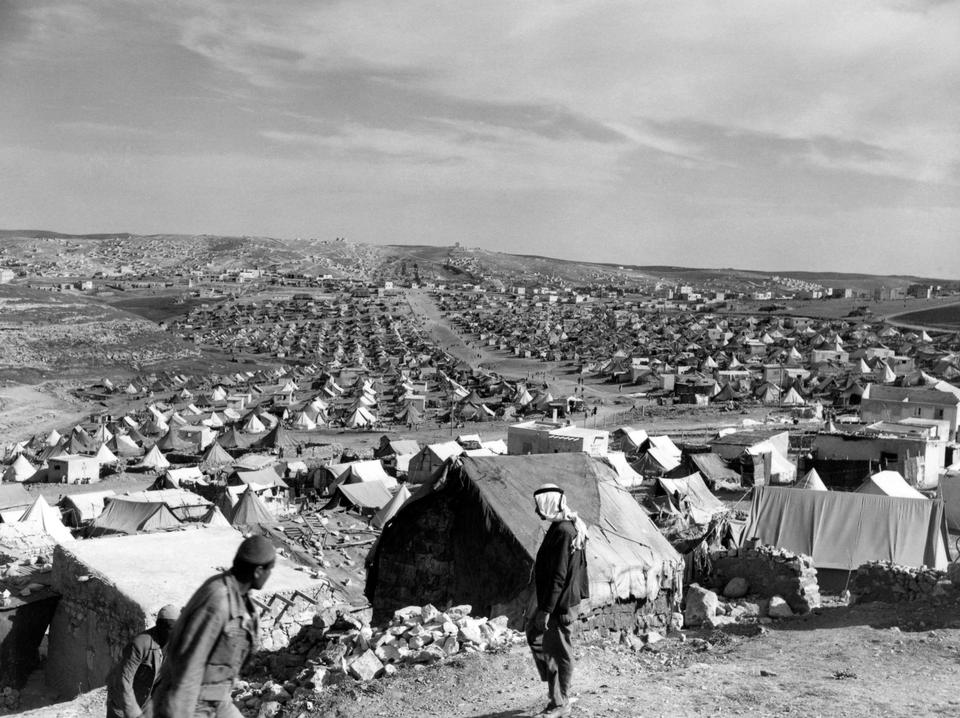
Hundreds of thousands of Palestinians were forced to live in camps in neighboring countries after Israel pushed them out of their homes. (TRTWorld)

For someone groomed to believe that the English people were true to their word, the haphazard division of the Ottoman Empire and the creation of Israel was unsettling for Yusuf Ali.

In 1937 he attended many meetings and conferences fighting the case of Palestinians and warned Western powers about creation of a Jewish state on Muslim land.

“One way alone can bring thee peace: 

That ancient rights be not suppressed, 

That aliens from encroachments cease, 

And Quds be given its rightful rest,” he wrote in the poem Palestine published in January 1938.

However, Palestine’s tragedy wasn’t enough to deter his loyalty to the British as he travelled to India at the urging of England’s Ministry of Information to rally Muslim support after it declared war on Germany in 1939.

In Delhi, he met Sir Sikandar Hayat Khan and spoke to students about the need for India’s support for the British. That was a time of turmoil in India as both Muslims and Hindus had begun rallying for independence.

Upon his return, he wrote articles and gave speeches, asking Indians to unite in defence of the empire and drop their demand for political reforms. But his appearance as an important player in international events quickly faded after the war ended in 1944.

We might never know what broke him in the end. But as the British pulled out of the subcontinent in the days of its waning global status, so did Yusuf Ali slowly recede from the newspapers, his powerful friends no longer found a use for him.

Yusuf Ali spent his last years living in the National Liberal Club on a monthly pension that he received against his government job.

“How did the British treat him? There’s certainly a question mark there. They didn’t recognise his contribution as much as he probably expected,” says Humayun Ansari.

His powerful friends in the Muslim community including Pakistan’s then ambassador Ispahani had also lost track of Ali’s whereabouts, not bothering to check on him.

“That is an indictment of the Muslim society that we were not able to honour and care for someone of his stature,” says Jamil Sherif.

Source: TRT World
source: http://www.trtworld.com / TRT World / Home> News> Magazine / by Saad Hasan / September 04th, 2019

100 to get Kempegowda award

KARNATAKA :

Despite a self-imposed limit on the Nadaprabhu Kempegowda Award 2019 to only 70 people, the BBMP announced 100 recipients of the same on Tuesday.

Senior Kannada writers Chandrashekhar Patil, Keshavareddy Handrala, Abdul Rasheed, Pratibha Nandakumar, actor-politician Mukhyamantri Chandru, singer Manjula Gururaj, educationist Gururaj Karjagi, Dalit activist Mavalli Shankar and senior advocate Ravi Verma Kumar are among the awardees.

IPS officer M.N. Anucheth, the chief investigation officer in the Gauri Lankesh murder case, and six members of his team, have also been given the award for the successful probe that eventually led to breakthroughs in three other murder cases.

Another IPS officer D. Roopa is also on the list of awardees.

While 10 women, including social activist and JD(S) leader Leeladevi R. Prasad, have been awarded the Nadaprabhu Kempegowda Sose Mahatyagi Lakshmidevi award, five organisations including Bosco Mane, that helps children, have been awarded the Paramapoojya Dr. Shivakumara Swamiji award.

Chief Minister B.S. Yediyurappa will present the awards on Wednesday, observed as the 508th Nadaprabhu Kempegowda Jayanti.

source: http://www.thehindu.com / The Hindu / Home> News> States> Karnataka / by Staff Reporter / Bengaluru – September 04th, 2019

The Blinding of a Mughal emperor

DELHI :

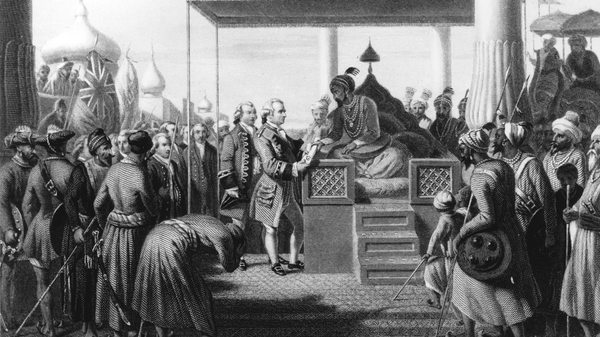
A sketch showing Robert Clive receiving, from Shah Alam II, the decree conferring on the East India Company the right to receive Bengal’s revenues.
  • The reign of Shah Alam, one the last Mughal emperors, was upturned by the Rohilla chief Ghulam Qadir
  • The vengeful treatment of the emperor caused such outrage that even the Afghan king offered to send aid

In August 1788, the Red Fort in Delhi witnessed what one observer would recall as the most “unspeakable and indescribable” crimes. As in the previous year, the Rohilla chief, Ghulam Qadir, had descended on the Mughal capital, threatening to unleash chaos. While his last attempt had been aborted, thanks to Begum Samru, a dancing girl turned princess, nobody rode to Shah Alam II’s rescue on this occasion. In fact, the officer in charge of the fort, despite orders to the contrary, threw open its gates, and 2,000 of Ghulam Qadir’s troops quickly took charge of the premises. Secure, the warlord made his way to the audience hall. And there, as William Dalrymple recounts in his splendid new book, The Anarchy, he “sat down on the cushions of the imperial throne”, blowing smoke from a pipe into the face of the badshah of Hindustan.

Shah Alam had not had a particularly glorious career, but even with its general turbulence, this was unprecedented. It was decades since the empire of the Mughals had begun to unravel, but while the emperors had been reduced to ciphers, their dignity had never been so insolently offended. Shah Alam had tried in vain to reclaim power for the crown: For over a decade, he was not even in control of his capital, and, during his peregrinations, was forced (after military defeat) to grant governorship of the empire’s richest province to the East India Company (EIC). In 1772, he finally returned to Delhi, his general Najaf Khan bringing order to the surrounding regions. When the latter died, the Marathas stepped in to supply protection. For all his outward marks of authority, though, this came at the cost of giving free rein to Shivaji’s political heirs. As the contemporary chronicler Prem Kishor wrote, “The king (had) abandoned his sovereignty and taken up the ways of beggary.”

As a man, Shah Alam was not, to be clear, all incompetence, but, as scion of the Mughals, he inspired little support. He was a poet of talent, writing verses in languages as diverse as Braj Bhasha and Persian. EIC officer Col Polier described him as “a good and benevolent man” so far as his private characteristics went, but acknowledged that he was not by any stretch a “great king”. The English governor Warren Hastings, who refused to remit even the share of Bengal revenues that were due to the emperor, was more blunt: Shah Alam was merely a “wretched King of shreds and patches”.

And, as Dalrymple reminds us, while others in theory paid homage to the crown, Tipu Sultan discarded even this pretence. Those who bowed before Shah Alam, announced Mysore’s sultan, “act through ignorance, since the real condition of the so-called Emperor is…(that he is) the servant of (the Marathas) at the monthly wages of 15,000″.

And yet for all this contempt, Ghulam Qadir’s actions in 1788 sent shockwaves down the entire subcontinent: As the colonial-era historian W. Francklin wrote, to this man “it was reserved to…add the last outrage to the miseries of a long and most unfortunate reign”. The sequence of events that confirmed the Rohilla as one of the worst villains of the 18th century is chilling. Soon after taking charge of the Red Fort, Ghulam Qadir had Shah Alam locked up, planting in his place another prince on the throne. But what the trespasser really wanted was gold, not empty titles and grants of land, and none of the coin heaped before him satisfied the demand. Old begums were dispossessed of their jewels, and even the officer who opened the fort gates paid up—threatened that he would be drowned in excrement, the latter surrendered his own money to escape this revolting fate.

Furious, Ghulam Qadir turned on the imperial family, which for all its bloody intrigues had never quite experienced what he now decided to unleash. Princes of royal blood, including sons and grandsons of Shah Alam, were dressed in drag and made to dance for the Rohilla troops. The emperor’s daughters were stripped, raped and humiliated. Even Malika-i-Zamani, the formidable widow of a previous emperor, Dalrymple writes, was left naked in the hot sun after failing to deliver to Ghulam Qadir the riches he believed she possessed. And finally, bringing to his presence Shah Alam himself, the “ferocious ruffian” had the emperor blinded. In some accounts, in fact, he sits himself on Shah Alam’s chest, scooping out the old man’s eyes with a dagger.

Theories abound on Ghulam Qadir’s diabolical ferocity. His father had rebelled several times against Delhi, and, after defeating him, Shah Alam had taken Ghulam Qadir, then eight or 10 years old, hostage. One apocryphal tale says that after seeing the uncommonly handsome boy, the emperor had him castrated, often making him dance in women’s clothes. In an account left behind by a disgruntled Mughal prince, there is a suggestion of something beyond a regular relationship between Shah Alam and the Rohilla boy. Even as the emperor described Ghulam Qadir as his “special son”, wishing him great happiness in his poems, this contemporary noted that the boy suffered from ubnah, or “an itching in his behind”, hinting that he was made to serve as the emperor’s catamite. This, more than mere ambition or greed, it is believed, explains the horrors Ghulam Qadir let loose in 1788 on Shah Alam and his children.

But the act was for the Rohilla a death sentence. The treatment of the emperor caused such outrage that aid was offered even from Kabul. The Maratha general, Mahadji Scindia, led a large force to Delhi, and while Ghulam Qadir escaped, he was cornered and captured in Mathura very soon. Placed in a cage, his ears, nose, lips and feet were cut off, one by one, each of these circulated in the Red Fort by the emperor. And finally, the story goes, Shah Alam, in whose reign the Mughals lost their final vestiges of power, received one last box, holding within it Ghulam Qadir’s eyes.

Medium Rare is a column on society, politics and history. Manu S. Pillai is the author of The Ivory Throne (2015) and Rebel Sultans (2018)

source: http://www.livemint.com / Live Mint / Home / by Manu S. Pillai / August 30th, 2019

An association of Indian Muslims

AUSTRALIA :

A new organisation seeks to represent Indian Muslims, as well as help dispel the negative stereotyping about their community

On 16 July, the Indian Crescent Society of Australia (ICSOA) held its inaugural Eid function at the Himalaya Restaurant in South Granville. The hugely successful event provided an opportunity for Indian Muslims to connect with Indians from other religions.

The evening was attended by Dr A.S. Nakadar (founder of the American Federation of Muslims of Indian Origin), Rajeev Kumar (Vice Consul CGI), Peter Doukas (Chair, Ethnic Community Council NSW) and Julia Finn (Member for Granville) amongst other dignitaries.

The soon-to-be launched ICSOA aims to promote a positive image of Indian Muslims and help them integrate into mainstream society. Indian Link scratched the surface to find out more from the President of the society Mr Abbas Raza Alvi.

A well-known community leader, poet and businessman, Mr Alvi began by summing up the need for such an organisation:

“For the last 30 years, we’ve felt that the participation of Indian Muslims in the mainstream society has been limited. Most Indian Muslims are highly educated professionals, but due to a lack of networking and proper representation, they are not being recognised and celebrated as they should be. After lengthy discussions with the Indian High Commission and the Consul General, we finally came to the conclusion that Indian Muslims needed a special representation in Australian society. There was a need for a platform to allow them to participate and integrate like other Indians.”

In the wake of the hysteria against Muslims being kicked up by public figures like Pauline Hanson and Sonia Kruger, Mr Alvi feels that ICSOA has suddenly become the need of the hour. He realises the urgency to dispel the negative stereotype by integrating and showing the world that Muslims are a peace-loving people.

Touching briefly on the issue, he said, “Pauline Hanson must understand the effect of her provocative comments on the Australian economy. She has a history of inciting racial hatred; initially she targeted Indigenous Australians, then Chinese and Indian origin Australians, and now Muslims. Her comments can have a negative impact on Australian jobs, businesses and families. Australia currently exports $15 billion worth of goods to parts of the Muslim world. Include in that the exports to India and China and this figure may exceed $120 billion.”

On a lighter note he added, “I do suggest that PH (Pauline Hanson) should neutralise herself to the value of seven. (pH for pure water, H2O) is 7). Continuously spreading hatred through racist comments towards ethnic communities will not benefit any Australian and this includes those who have voted for her.”

There are around 5000 Indian Muslim families in Australia, but Mr Alvi feels, “Even though there are several small Indian Muslim organisations, their overall participation is rather small. When Muslims are not seen playing a role in society it creates disharmony and unbalance. India can never be properly represented in Australia until Indian Muslims are included in its representation.”

HIGHLIGHTING SOME OF THE MAIN GOALS OF ICSOA, MR ALVI EXPLAINED, “OUR AIMS WOULD BE TO HELP INDIAN MUSLIMS IN ISSUES AFFECTING THEIR DAILY LIVES LIKE EDUCATION, COMMUNITY WELFARE, MENTORING AND SUPPORT FOR NEW MIGRANTS.”

In addition, the organisation would work towards the integration of Indian Muslims within their own community, with other Indians and with the wider Australian society. “We will send our representatives to attend functions arranged by other organisations and invite them to ours in order to share and learn and work together for the welfare of all Indians.”

Programs will include working towards better recognition of the Urdu language, promoting creative talents within the community, supporting high achieving students, encouraging women in their goals and working with Aboriginal people to create artworks that depicts both cultures.

Another issue that concerns Mr Alvi is the demise of Indian cultural values in Australia. “I grew up with Hindus, Sikhs and Christians all living side by side in India. I don’t remember calling them by name, they were either mama, chacha, taya or dada. When we misbehaved, our parents weren’t the only ones to discipline us. If the neighbours got to know they would chastise us before them. That’s the Indian culture I love, but sadly when we come here, we get so busy trying to make a living, educating the kids, building a house, that the only spare time is either spent in home maintenance or religion. This is creating an isolation and disconnect with our Indian culture and is the cause of major problems and stress not just for Indian Muslims but for all Indians. Being religious is good, but the community connection is important for people to thrive and be happy. So, we want to bring back the integration, community feel and brotherhood we were used to in India and we want to promote peace.”

Mr Alvi took great pains to stress that ICSOA is not a religious organisation but an organisation to promote the Indian Muslim culture, language, food and traditions in order to help them integrate in the mainstream society.

To get the ball rolling, ICSOA has contacted individual organisations to form an ad hoc board which will represent Indian Muslims from all corners. The board is ironing out the finer details, compiling a database, advertising, initiating coordination in other cities and getting the website and logo in place before the formal launch. Mr Alvi informed that there will be a membership but the fee will be nominal. “We want every single Indian Muslim to join ICSOA.”

On the question of funding, he advised, “ICSOA will be self-funded by the large Indian Muslim business and professional community.”

The immense support for ICSOA was apparent at the Eid function where the expected turnout of 150 guests ballooned to over 250 attendees. Mr Alvi is optimistic about the future of the organisation, remarking, “Since ICSOA is a need based organisation with an experienced leadership I foresee it growing rapidly in future.”

ICSOA can be contacted via email on contact@icsoa.org.au

source: http://www.indianlink.com.au / Indian Link / Home> News / by Farzana Ahmed / August 11th, 2016

Ultra, SPO killed in Baramulla gunfight

Baramulla, JAMMU & KASHMIR :

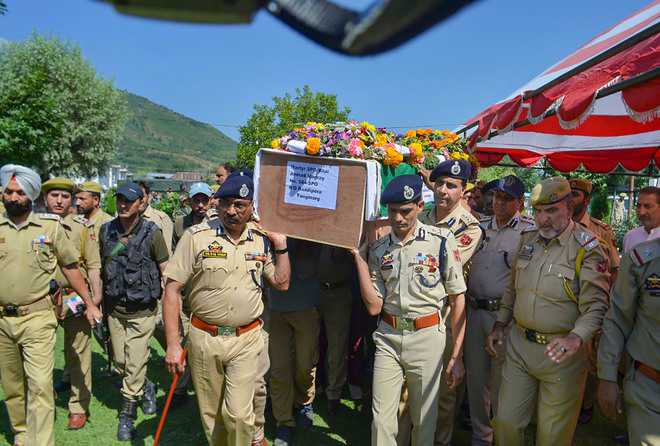
Police officers carry the coffin of SPO Bilal Ahmad in Baramulla. PTI

Srinagar :

In the first encounter between militants and security forces in Kashmir since the restrictions were imposed on August 5, a militant and a policeman were killed and a police officer injured while no major law and order situation was reported on Wednesday.

The encounter took place in Ganai Mohalla of Baramulla town in north Kashmir which concluded early this morning, DIG Police, Central Kashmir, VK Virdi said at media briefing here this evening. The militant has been identified as Momin Gojri of the Lashkar-e-Toiba. An SPO, Bilal Ahmad, was also killed in the encounter while SI Amardep Parihar was injured, who is undergoing treatment.

The police had declared Baramulla as a militant-free town in January this year.

“No major law and order situation was reported from any part of the Valley today while relaxations were further eased in many areas,” the DIG said. There were some minor incidents of stone pelting in some areas, he said, and added that the situation was being monitored closely by the authorities at the ground level.

A law and order situation was reported from the Telbal area on the outskirts of Srinagar late last night and dealt, he said.

On the functioning of other facilities, Director of Information, J&K Government, Syed Sehrish Asghar said all hospitals, banks, ATMs and healthcare services were functioning normally in the Jammu region as there were adequate stocks of medicines and other supplies.

In view of the upcoming harvest season, the preparations for transportation of horticulture produce were reviewed at the Kashmir Divisional level, she said.

She urged people not to believe in rumours about unavailability of transport facilities.

source: http://www.tribuneindia.com / Tribune India / Home> J &K / by Ehsan Fazili / Tribune News Service / Srinagar, August 21st, 2019

Humanity First : In Kodagu, a Hindu and Muslim donate 1.5 acres land to flood victims

Kondangeri ( Kodagu ), KARNATAKA :

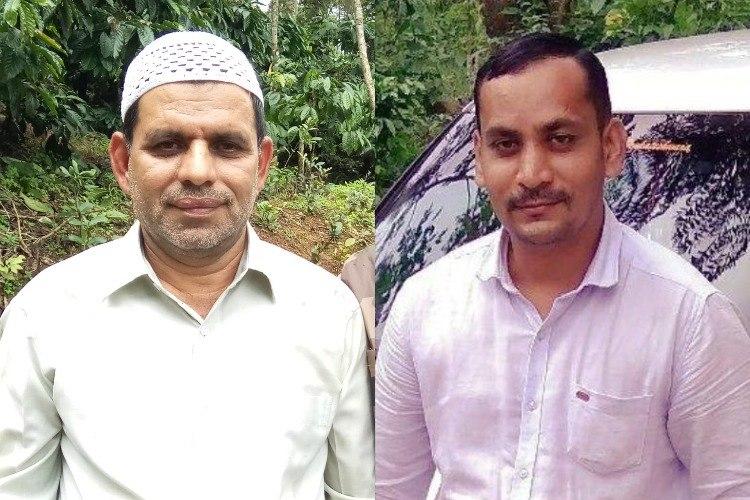
While Haji gave the land for the new houses, Lokesh pledged his for an accessible road that can be built towards the plot.

HajiMPOs29aug2019

In the face of terrible tragedy, the only glimmer of hope is often people coming together in solidarity and healing each other with love. Placing humanity ahead of religious differences, a Muslim man and his Hindu counterpart from Kodagu district have united to donate over 1.5 acres of agricultural land for the rehabilitation of flood victims.

According to Kodagu Deputy Commissioner Annies Kanmani Joy, the recent rains accompanied by flood in the Kodagu region have washed away over 5000 homes in several villages close to the Kaveri river, including Kondangeri.

It was then that 55-year-old Abdulla Haji came forward with an offer to part with 1.5 acres of his 6-acre agricultural land and donate it to the Kondangeri Masjid Committee, so that the government can put it to use.

“When a person sees the people around him suffering so much, it is only natural that he would go and help others. Although I’m a not a rich farmer, I’m in a position to help them. I hope that the bereaved people get some strength from God to overcome their losses and grief,” Haji said.

As per Haji’s proposal, the land is suitable for building permanent houses for the flood victims. But while the Masjid committee was considering the housing proposal, they soon realised that the construction site will face the problem of an inaccessible road.

“But without any hesitation, another Kondangeri resident, Lokesh, approached the Masjid committee and pledged that the Masjid may attach his part of land to the charitable cause and lay down a road towards the residential project,” said Yusuf Haji, President of Kondangeri Muslim Jamath.

According to the Masjid authorities, most of the flood victims are labourers who’ve lost whatever little they had.

“Almost all the flood victims whose houses have been destroyed are labourers from coffee plantations. They had to forcibly leave their homes as the water level rose and in the process, they also lost their possession and valuables along with their home,” said Yusuf.

While government authorities are engaged in the rehabilitation process, there is a lack of temporary relief centres built by the government at Kondangeri village. Hundreds of victims, including women and children, irrespective of their religious beliefs, have taken shelter in relief centres at the Kondangeri Masjid while mourning their losses.

“Haji was thoroughly involved in serving the needy at the Masjid when they had started coming to this shelter. We think he was overwhelmed by their losses and felt that it was necessary to look into providing the people with long-term solutions,” Yusuf said.

This duo’s decision was hailed by the local authorities who confided that the district was facing a shortage of land to rehabilitate the victims of floods and landslides.

“There is already an ongoing process undertaken by the district administration to identify government land that has been encroached by a few agriculturists. The process of its recovery will commence. In the meanwhile, the generosity of people like Lokesh and Haji is really commendable,” Assistant Commissioner T Javare Gowda said.

This is not the first time that ordinary people in the flood and landslide prone coffee belt have rushed to help others. Last year, Abdul Latif of Suntikoppa had come forward and donated 2 acres of his estate land for the rehabilitation of victims.

Story by Story Infinity  (Subs and Scribes Media Ventures LLP.)

source: http://www.thenewsminute.com / The News Minute / Home> Karnataka Rains 2019 / by Mubarak / August 20th, 2019