Category Archives: Community Involvement / Social Issues

Madhya Pradesh Assembly Elections 2018: For BJP’s lone Muslim candidate, it’s much more than an electoral battle

Bhopal, MADHYA PRADESH :

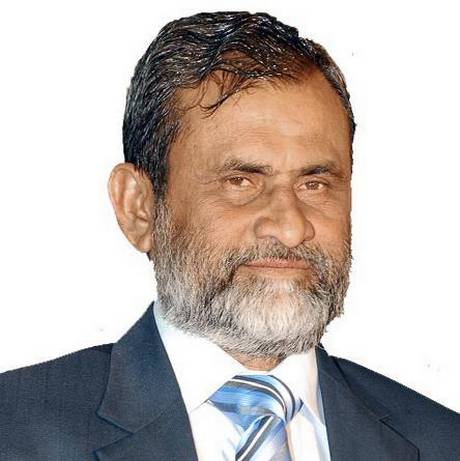
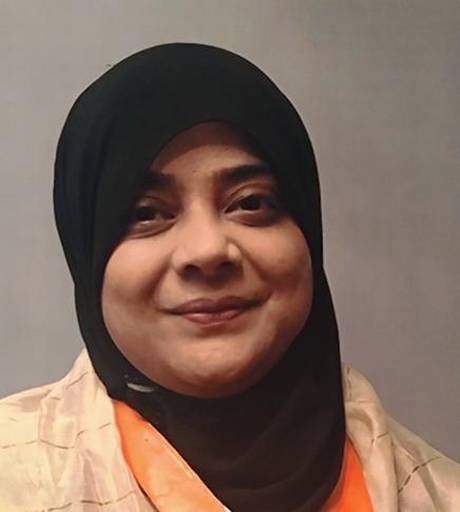
Fatima Rasool Siddique

Fatima Rasool Siddique is the daughter of Congress leader Rasool Siddique.

Fatima Rasool Siddique is the BJP candidate for the Bhopal (North) Assembly seat, earlier held by her father, Rasool Siddique, who as two-time Minister in the 1980s and 1990s was a true-blue Congress leader and a friend of the late Madhavrao Scindia. She is pitted against Arif Aqueel of the Congress, the man who defeated, and then replaced, her father in that seat, a fact that lends a piquancy to the contest.

As a daughter and politician, she has many scores to settle in this election, and has been attracting attention not just for these reasons but also the fact that she is the only Muslim candidate put up by the BJP in Madhya Pradesh .  For Ms. Siddique, who lost her father when just a child, the Congress became a distant comfort, as the years and her own youth ensured that there could be no passing on of her father’s mantle to her. “The Congress of the past no longer exists in any case. Where are the leaders like Shyama Charan Shukla,” she says.

Even so, her decision to join the BJP and contest on its ticket must be a surprise to those around her? Not really, she replies. “I was approached in the 2013 polls too, but I had some reservations and couldn’t make up my mind on time,” she says. “This time around, there was no hesitation, as I have seen the warm-hearted kindness of Chief Minister Shivraj Singh Chouhan especially towards the girl child.”

Raising her political stock, Mr. Chouhan accompanied her to the Collectorate as she filed her nomination papers.

The BJP is hardly a natural home for the daughter of a Congress man, that too a Muslim, but Ms. Siddique says no one puts any questions on her choice of party. “Most people walk up to me and say how my father had helped them as Minister with jobs, water pumps, hospital admissions, etc.,” she says. On triple talaq, Ms. Siddique maintains a diplomatic line. “Islam is clear on divorce. It should be the last option and preservation of the family should be the first priority,” she says. With a Congress pedigree in the largely majoritarian BJP, Ms. Siddique will need those diplomatic skills.

source: http://www.thehindu.com / The Hindu / Home> Elections> Madhya Pradesh 2018 / by Nistula Hebbar / Bhopal – November 16th, 2018

Waheed: Award will bring recognition to Unani medicine

Hyderabad, TELANGANA :

Mohammed Abdul Waheed

Medicine for vitiligo awaiting US FDA clearance, says doctor who was selected for Padma Shri

Hyderabad :

Dr.Mohammed Abdul Waheed, a Unani doctor well known for his research work and 35 years of experience in clinical management of vitiligo, is an elated man after being selected for the Padma Shri award.

“This will bring recognition to Unani medicine. I am really thankful to Government of India. God is great,” he said. Sharing his happiness, the Padma Shri awardee in the field of medicine told The Hindu that importantly it would help in bringing global recognition to Unani medicine.

Dr. Waheed, who graduated in Unani medicine and Surgery from Osmania University in 1978, was the former head of Central Research Institute of Unani Medicine under the Department of Ayush, Government of India. With expertise in phase II and phase III clinical trials, he had treated over two lakh vitiligo patients. “We are working for globalisation of Unani medicine. A drug dossier for vitiligo has been submitted to USFDA by the Central Council for Research in Unani Medicine. If approved the medicine could be globally utilised to treat and manage vitiligo,” he said. Recipient of several prestigious awards for his research including the AIIMS’s Best Scientist Award, he Dr.Waheed developed 17 Unani formulations for the effective management of vitiligo. and also coordinated multi-centric clinical trials of Unani medicines on Diabetes, Hypertension and Hepatitis.

Finding treatment for vitiligo mainly caused by autoimmune disorder — that affects one % of world and three to four % of Indian population — was close to his heart as the condition caused social discomfort and depression to patients, he said.

source: http://www.thehindu.com / The Hindu / Home> News> Cities> Hyderabad / by M.L. Melly Maitreyi / January 26th, 2017

Cong. gets Mayor post, JD(S) Dy. Mayor in Mysuru

Mysuru, KARNATAKA :

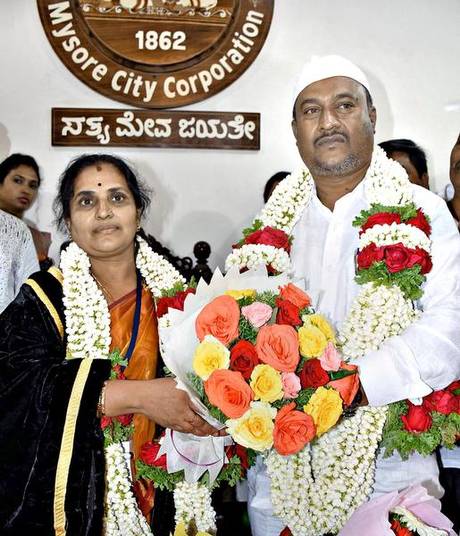
Mayor Pushpalatha Jagannath and Deputy Mayor Shafi Ahmed in Mysuru on Saturday.

With the coalition partners reaching an understanding to share power in the hung Mysuru City Corporation (MCC) after hard bargaining, the Congress’s Pushpalatha Jagannath was elected Mayor while Shafi Ahmed of JD(S) was chosen Deputy Mayor.

The understanding came after much behind-the-scene confabulations between leaders of the coalition partners, both of whom were vying for the coveted post of Mayor.

The mayoral polls had assumed importance as yet another test for the two parties — who share power in the State and plan to fight Lok Sabha polls together — to iron out differences.

The post of Mayor will be occupied by the Congress during the first and third term, while the JD(S) candidate will adorn this post during the second, fourth and fifth term, according to a power-sharing formula between the two parties.

In the 65-member MCC, BJP had won 22 seats, while the Congress bagged 19 and JD(S) 18. The BSP had won one seat while Independents triumphed in five other seats. The Congress bagged the post of Mayor after a gap of five years.

During the elections conducted by Regional Commissioner V. Yesvant on Saturday, Ms. Jagannath secured 48 votes against the 24 votes polled by BJP’s mayoral nominee Sunanda Palanetra. Mr. Ahmed beat BJP’s Satish to the post of Deputy Mayor by polling 48 votes against his rival’s 24.

Though former Chief Minister Siddaramaiah, who sought the Mayor’s post for Congress earlier, claimed he was not interfering in the talks, he is believed to have played a key role in securing the Mayor’s post for Congress. The election of a Congress candidate as Mayor of Mysuru is perceived to have bolstered his position in the coalition arrangement.

District in-charge Minister G.T. Deve Gowda, who was keen on securing the top post for JD(S), said: “It was not as per my wish. The decision to give the post to Congress was taken by the party leadership.”

source: http://www.thehindu.com / The Hindu / Home> News> States> Karnataka / by Special Correspondent / Mysuru – November 17th, 2018

Why we can’t talk about sexual violence without asking why men rape

Mumbai, MAHARASHTRA / Manhattan, U.S.A :

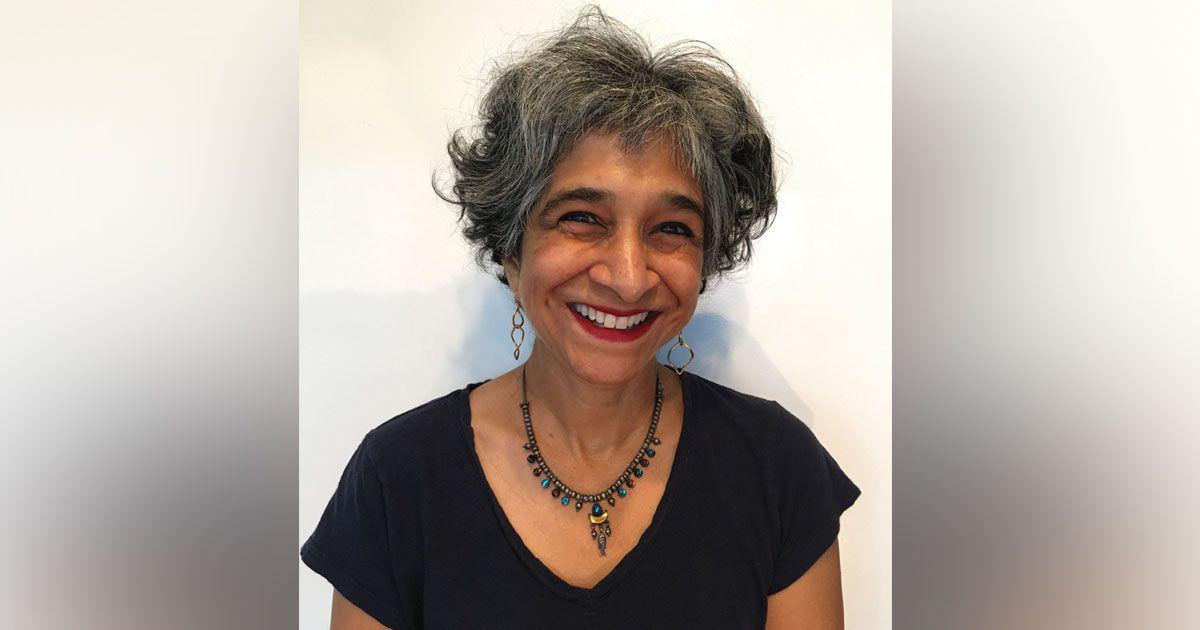
Sohaila Abdulali was the first Indian woman to write about being raped, in 1983. In a new book, she raises tough questions about how we view sexual violence.

SohailaMPOs15nov2018

Who rapes? Just as we can have fixed ideas about victims, we have them about perpetrators as well.

Are all men capable of rape? In my own life, I cannot accept this. Here is what one man said when I asked him if he thought he could imagine raping someone. “For myself, I would say no,” he said. “There’s a level of empathy that would make it impossible for me.” I believed him.

I can imagine murdering, but not raping. Murder is worse than rape, I know, but there are lots of reasons to do it. If I were in a state of out-of-control rage, if someone were threatening to harm me or someone else, if killing someone were the only way to avoid some terrible catastrophe…I know, this is a weird, weird paragraph. But think about it – there is no reasonable reason to rape. You’re either doing it explicitly to cause damage, or because you want sex and don’t understand or care that the other person does not want it.

Justifiable homicide exists (for instance, if you’re killing someone to stop a rape), but justifiable rape? Do you ever need to rape someone to stop any other crime? The only people who openly justify rape are those who run blatantly woman-hating societies, where women are objects.

Speaking of which, let’s talk about objectification. In my days of clarity and righteousness as a college student, I wholeheartedly believed the conventional feminist wisdom that men objectify women in order to rape them. The logic goes like this: if you deny someone’s humanity, you can abuse them.

But perhaps it’s your own humanity you have to deny. Or at least your own positive humanity. Cruelty and sadism are also very human.

Social scientists Alan Fiske and Tage Rai have studied the moral motivations of violence. Rape often has a (twisted) value component. You value your own needs more than your victim. You want to teach someone a lesson. You want to feel powerful. You feel you deserve to humiliate someone. All these values and emotions only apply to other people. We don’t usually feel the urge to humiliate objects. It’s precisely because someone is a human being that it matters how you treat him or her.

Paul Bloom wrote in the New Yorker about Fiske and Tage’s analysis:

In many instances, violence is neither a cold-blooded solution to a problem nor a failure of inhibition; most of all, it doesn’t entail a blindness to moral considerations. On the contrary, morality is often a motivating force…Moral violence, whether reflected in legal sanctions, the killing of enemy soldiers in war, or punishing someone for an ethical transgression, is motivated by the recognition that its victim is a moral agent, someone fully human.

The men who raped me were very clear that they were angry at me. Don’t ask me to explain why, and they’re not available for comment. I just know that they were enraged. I had no right to be out with a boy, they said. They would teach me a lesson. This is what happens to bad girls. At no time was I just an object. At worst, I was a whore who had to be put in her place. At best, I was a fool who had to be taught a lesson. But I was definitely a person.

I babbled like a parakeet on speed through the whole ordeal, trying to get them to show some mercy. Talking about myself and my life and trying to get them to see me as worthy of compassion – all that went nowhere. I was a wicked, clueless girl and had to be taught. But one thing did have an effect – when I started talking about them. “We are all brothers and sisters,” I ranted. “You are my brothers.” That infuriated them. They didn’t want to be reminded of their humanity.

This is just one story. But I think it’s worth considering the idea that other rapists have equally distorted views of themselves and their victims.

Audrey, the young British woman who was gang-raped in Italy, told me that one of her rapists said in his police statement that he didn’t need to rape to get women; he was so naturally attractive that women just flocked to him. In his mind, it wasn’t even rape. She was just lying there, clearly fine with it, so what was the problem?

We’ve got a long way to go when we can’t even agree on what is rape.

Audrey went on to say that the judge in her case sided with the rapists. “The judge and prosecutor seemed to share this perspective to an extent – that rape was something only real psychos jumping out of bushes did, or losers who couldn’t get sex any other way; it was not something that good-looking, well-dressed young men needed to resort to. I guess I would respond today that rape is really not about sexual attraction or having sex in the first place. Especially when you’re talking about a group, there’s a different dynamic at play, one that is more about humiliating someone and treating her as inferior…at least, this is the conclusion I have reached.”

Consider the Stanford rape case. Undergraduate Brock Turner sexually assaulted an intoxicated woman and left her unconscious. A woman friend of his wrote a letter to the judge, which said, “Where do we draw the line and stop worrying about being politically correct every second of the day and see that rape on campuses isn’t always because people are rapists?”

Rape on campus is always because people are rapists. We just don’t want to think about the uncomfortable truth that a rapist is just a guy, any guy, who rapes.

“Does anyone enjoy raping?” Kalki Koechlin wanted to know when we were trying to figure it all out. “What’s going on?”

Patriarchy is to blame, says writer bell hooks.

Provocative women are to blame, say the Iranian morality police.

Alcohol is to blame, says the Campus Sexual Assault Study, prepared for the US National Institute of Justice. The woman who was raped by Brock Turner, the Stanford student who infamously got a ridiculously light sentence for his crime (from Santa Clara County Superior Court Judge Aaron Persky, who lost his position two years later), wrote a powerful letter to be read out in court. She talked about alcohol:

Alcohol is not an excuse. Is it a factor? Yes. But alcohol was not the one who stripped me, fingered me, had my head dragging against the ground, with me almost fully naked. Having too much to drink was an amateur mistake that I admit to, but it is not criminal. Everyone in this room has had a night where they have regretted drinking too much, or knows someone close to them who has had a night where they have regretted drinking too much. Regretting drinking is not the same as regretting sexual assault. We were both drunk; the difference is, I did not take off your pants and underwear, touch you inappropriately, and run away. That’s the difference.

Brock Turner’s father also wrote a letter about his son, to the judge. It is a devastating testament to rape culture:

Now he barely consumes any food and eats only to exist. These verdicts have broken and shattered him and our family in so many ways. His life will never be the one that he dreamed about and worked so hard to achieve. That is a steep price to pay for twenty minutes of action out of his twenty-plus years of life.

Some rapists have permission to take what they want. Some rapists have had terrible lives full of abuse and despair. As a friend who was raped by a troubled man said, “You get a lot of shit on your plate – it starts to affect you.” It’s not an excuse, but a reality, like witnesses of domestic abuse who grow up to beat their partners. But then, there are the men who’ve had perfectly healthy, wholesome lives and commit rape anyway. What about them? Or the men who abuse their power, like those I’ve talked about in Washington, and Hollywood, whose penises have spent an inordinate amount of time outside their owners’ pants.

It’s time to throw one idiotic notion overboard – the notion that men can’t stop, that there’s a point of no return once you’re sexually aroused.

We keep talking about women’s agency, but men have agency too. Guys, tell me this: if you were in the middle of hot sex and really, really into it, and your grandmother walked into the room and peered at you over her glasses, would you stop, or would you keep going?

Rape is like a go-to hobby for men of all types. Godmen in Goa. Daddies in Denmark. Teachers in Tanzania. Boyfriends in Britain. Ski instructors in Switzerland. Priests in Prague.

This doesn’t necessarily contradict my earlier point about rapists dehumanising themselves. Violence has so many motivations. There’s damage rape (you want to cause pain) and there’s casual rape (you want sex).

When you look around at the whole panorama, it’s difficult to muster up wholesale abhorrence of all abusers.

They’re so aggravatingly human. So few have bulging red eyes, uncontrollable drooling, and fifteen heads. A therapist told me about how he took on the case of a fourteen-year-old boy who had raped a twelve-year-old autistic girl. “Everyone at the clinic thought he was a monster, and nobody wanted to take the case.” The therapist wondered how he would deal with this twisted teenager. “And then, this sweet young kid walked in.” He had been terribly sexually abused and brutalised himself, all his life, and he was “doing the only thing he knew.”

Why they do it is interesting, but after a point I’m more interested in moving along from this unevolved state of human interaction. I don’t want to care about rapists’ motivations. They should just stop. Whether it’s wired in or because their daddy didn’t play with them or they’re just jerks or they’re sexually frustrated or they do it because they can or they do it because they can’t not do it or they’re normal or they’re abnormal, who cares? They should just stop what one superior babysitter once called this “third-class behaviour.”

Unfortunately we do have to spend time trying to understand, if we’re going to stop it. So yeah, we can’t talk about rape without talking about why men rape.

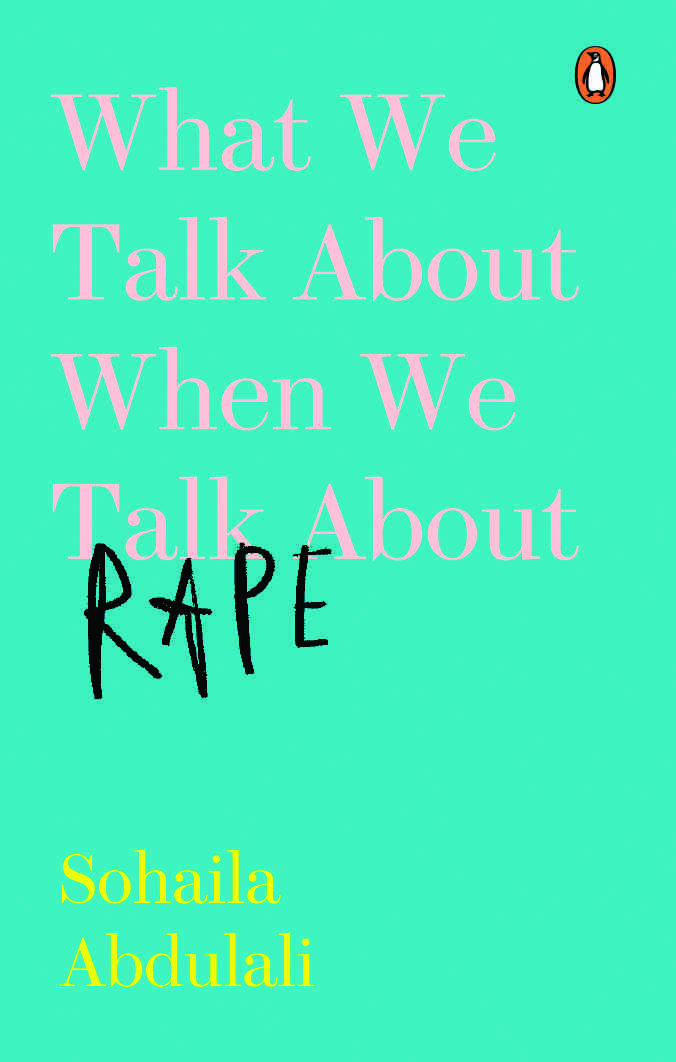
SohailaBookMPOs15nov2018

Excerpted with permission from What We Talk About When We Talk About Rape, Sohaila Abdulali, Penguin Random House India.

source: http://www.scroll.in / Scroll.in / Home> Book Excerpt / by Sohaila Abdulali / November 14th, 2018

Iqbal’s works to the fore

Hyderabad, TELANGANA :

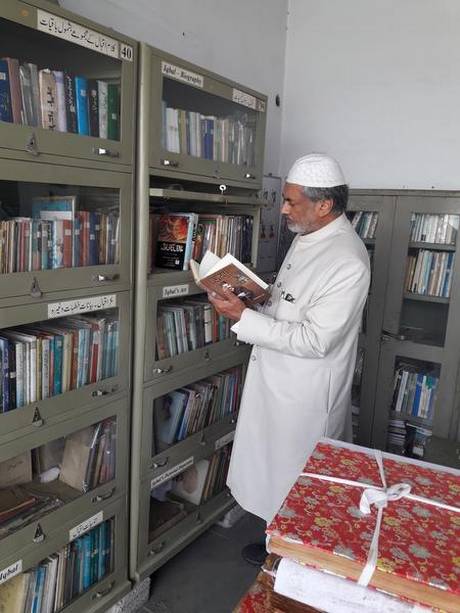
Iqbal Academy has 6000 books on Iqbal | Photo Credit: By arrangement

Hyderabad-based Iqbal Academy brings to light unpublished works of Allama Iqbal

Die-hard fans of Allama Iqbal, one of the greatest of Urdu poets, can now look forward to reading his little known and yet unpublished verses. The Iqbal Academy, Hyderabad, has planned to bring out this 200-page book titled Baqiyat-e-Iqbal in India. After much deliberations, the Academy took this decision on the occasion of the poet’s 141st birth anniversary on November 9.

The poet-philosopher has a huge fan following in the Urdu world, particularly in the sub-continent. Many theories abound as to why these verses were not published during the lifetime of the poet. Some say these were early poems of Iqbal and naturally lacked the philosophical profundity of his later works. Therefore, they were not included in the published works. Some believe that Iqbal had dropped these early verses as his thinking and philosophy had changed a lot by the time his celebrated book Bang-e-Dara was published. Whatever be the reson, these early poems have the distinct stamp of Iqbal — thestyle, diction and the unique choice of words.

Though the Baqiat-e-Iqbal was published in Pakistan way back in the 1950s, it remains unavailable in India. “We will have the credit of publishing it for the first time in India,” says Ziauddin Nayyar, vice president, Iqbal Academy.

Interestingly it was in Hyderabad that the first works of Iqbal was published by Abdul Razzak in 1916. The first Youm-e-Iqbal (Iqbal day) was also celebrated in the city on January 7, 1938 and the Bazm-e-Iqbal, the first Iqbal society was set up here. Also, Hyderabad’s connection with the poet who penned the famous nazm Sare jahan se accha goes deeper. He had visited Hyderabad thrice, first in 1910. He was the guest of the then Prime Minister, Maharaja Kishan Prasad. During his brief visit Iqbal was taken to the Qutb Shahi tombs where he penned the poem Gorastan-e-Shahi mirroring the rise and fall of kingdoms.

The Iqbal Academy, which has a collection of 6000 books on the poet, proposesto set up a research centre and extend all facilities to scholars who intend to do doctoral theses on Iqbal. Last weekend a programme was organised at the Academy’s premises in Gulshan-e-Khaleel complex, Masab Tank to commemorate Iqbal’s birth anniversary.

source: http://www.thehindu.com / The Hindu / Home> News> Cities> Hyderabad / by J S Ifthekhar / November 13th, 2018

The emperor of oleander blossoms

INDIA :

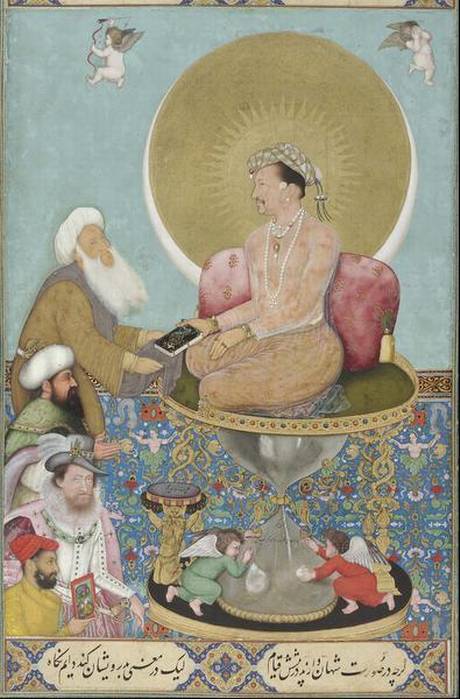
Colourful life: Jahangir preferring a Sufi sheikh to kings, a miniature painting by Mughal artist Bichitr, ca. 1620 | Photo Credit: Wiki Commons

Were the Mughals the most literary dynasty that ever ruled India?

The Mughals have garnered many adjectives over the centuries. Once, when the world looked in awe at the power and wealth of Hindustan, they were simply ‘Great’. More recently, as Hindustan locks itself in a manic tussle with its past, they are ‘foreign’ or ‘invaders’, often both. Perhaps it’s time for a calming epithet: the Mughals were, without question, literary.

The first of them, Babur, is known for defeating Ibrahim Lodi in Panipat, but almost equally renowned for his autobiography. It’s not that kings hadn’t written before. Julius Caesar was composing accounts of his Gallic campaigns in 1 BC. The earliest autobiography — an account of a person’s life, not a record of events — was St. Augustine’s Confessions, written circa 400 AD. Babur, living a millennium later and a world away, invented the form for himself with Baburnama, the first personal memoir in Islamic literature. And he did it with flair — “both a Caesar and a Cervantes”, as Amitav Ghosh has described him — writing with lucid ease, whether of the pangs of his first love or his battle strategies. (The first autobiography in an Indian language, incidentally, may be Ardhakathanak (‘Half Life’) by Banarasidas, a Jain merchant who wrote in Braj Bhasha, and in verse, in the 17th century.)

The urge to write

In the centuries after Panipat, the Mughal empire grew into a global superpower, then shrunk to a wretched speck. The last Mughal ruled little besides the Red Fort, but he did preside over an efflorescence of Urdu poetry: Ghalib, Momin and Zauq shone bright in his court, and Bahadur Shah ‘Zafar’ was no mean poet himself. Imprisoned and exiled after the Uprising of 1857, the frail emperor would write Na wo taj hai na wo takht hai, na wo shah hai na dayar hai (‘No crown remains no throne remains, neither ruler nor realm remains’). The urge to write, however, that remained: Bahadur Shah is said to have etched his verses on the walls of his prison, with charcoal, when he was denied paper and pen.

Babur may not have been entirely displeased. In a letter to his son, Humayun, Babur offers equally urgent advice on how to rule and how to write. The unfortunate Humayun is ticked off on both counts: his desire for solitude is “a fatal flaw in kingship”, and his prose is convoluted. “Who has ever heard of prose designed to be an enigma?” writes Babur, exasperated. Humayun must write, instead, “with uncomplicated, clear, and plain words”.

Father and son

Humayun was unable to meet his father’s exacting standards, both as ruler (he lost the fledgling empire) and as writer (even if he did die in a library), but the literary gene stayed with the dynasty. It blossomed in Gulbadan, one of Babur’s daughters, who wrote the Humayun-nama; it gestated in Akbar, who was as famously illiterate as he was fond of commissioning histories and translations; and, most notably, it flowered in Jahangir, whose literary talents equalled, if not exceeded, his great-grandfather’s.

William M. Thackston, who has translated the Baburnama, admits that despite its many surprises and charms, the memoirs can sometimes lag a bit: the “reader may skip or skim at will”. The Jahangirnama, on the other hand, flows like a breeze — so much as to attract the criticism to which ‘popular’ writing is prone. Thackston, who has also translated the Jahangirnama, writes that while much of this work is “fascinating…for the general reader” much is also “of little or no historical significance”. Fun to read, that is, but inadequately serious. As Jahangir himself is often accused of being: lightweight.

Playful tone

It’s true enough that the Jahangirnama is marked by a sometimes startling whimsy. Once, marching with his nobility along a rivulet, its banks overgrown with oleanders, Jahangir had them all arrange the blossoms on their turbans so that “an amazing field of flowers was… made!” Another time, having caught a dozen-odd fish, Jahangir released them all with pearls pinned to their noses. Even when he is writing of seemingly sober matters, Jahangir can’t help a certain playfulness.

Near the beginning of the book, for example, Jahangir lists a set of decrees that he issued when he became emperor. Among these worthy orders — abolishing certain taxes and punishments, building wells and hospitals — was one that banned the manufacture and sale of alcohol.

Here, however, Jahangir adds a caveat: he has been drinking — and has often been drunk — since he was 18. Later, he offers a detailed account of his alcoholism and de-addiction (his hands shook so much, others poured the liquor down his throat; a doctor told him he wouldn’t last six months; he diluted his arrack with wine and raised his spirits with opium) — a remarkable confession made even more so by the fact that Jahangir makes it immediately after describing the “great persistence” it took for him to get his son, Shahjahan, to down a birthday drink.

A drinking problem is not all the emperor disclosed. The Jahangirnama also contains a frank account of murder; or, at least, an order to murder, which led to the ambush and assassination of Akbar’s friend and biographer, Abu’l Fazl.

Murder most murky

The plot is murky and tangled, but in brief it was thus: as prince, Jahangir felt threatened by Abu’l Fazl’s influence over the emperor, Akbar, and so had him killed. It was a ruthless decision, and reveals a man of steely ambition under the drunken haze and oleander blossoms.

It’s an ambition that’s often overshadowed by Jahangir’s acute sense of beauty and delight in nature. He could describe the weather such that you can feel it, “the air was so fine, a patch of cloud was screening the light and heat of the sun, and a gentle rain was falling”. Spring flowers in Kashmir would make his heart “burst into blossom”.

Among the best-known passages in the Jahangirnama are those about the mating, nesting and eventual parenthood of Jahangir’s pet saras cranes, Laila and Majnu. So intense is his joy in their rituals — “I immediately ran out to watch” he writes of the dawn on which they mated; then of how Majnu would guard his mate all night, and scratch her back with his beak at dawn to relieve her of nesting duties — that one gets the sense Jahangir would have sat on those eggs himself, if he could.

Writers’ prerogative

It’s passages like this that prompted Henry Beveridge, editor of a 19th-century translation of the Jahangirnama, to declare that Jahangir would have been a “better and happier man” as the “head of a Natural History Museum”. And yet, would the head of a museum have commissioned the painting of Inayat Khan? This, too, is a story in the Jahangirnama. A hard-drinking nobleman appeared before Jahangir, asking for sick leave.

Inayat Khan was emaciated beyond belief. “How can a human being remain alive in this shape?” the emperor exclaimed. Jahangir let Inayat Khan go home, gave him a generous grant, but also, he summoned his painters. Like the extinct dodo, of which Jahangir’s atelier has produced the most authentic record, so the painters now created a terribly vivid portrait of a dying man.

Such single-mindedness is, of course, the prerogative of emperors — and also, perhaps, of writers. Both to rule and to narrate requires a certain distance, even coldness. In fact, of late, Jahangir’s writings, and therefore his rule, are being re-evaluated.

The historian Corinne Lefèvre, for example, does not read the Jahangirnama as a record of imperial fancies, but finds it “a masterpiece of… imperial propaganda”. Jahangir himself suggested as much when he ordered copies of his book sent to other kings as a “manual for ruling”.

Unlike his father, Jahangir did not create the intricate foundations of a nation-state. Unlike his son, Jahangir did not build the Taj Mahal. No lasting administrative reforms, no carved blocks of marble, it’s a book that Jahangir left us to read. Just words.

No wonder he’s so open to interpretation.

The writer’s most recent book is Jahangir: An Intimate Portrait of a Great Mughal.

source: http://www.thehindu.com / The Hindu / Home> Books – The Lead / by Parvati Sharma / November 09th, 2018
FORTUNE COOKIE: The secret recipes of Avadh’s Taluqdars

UTTAR PRADESH / Gurgaon, HARYANA   :

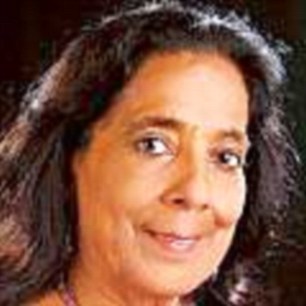
Salma Husain has quietly been digging up culinary gems

When Salma Husain arrived in Delhi in 1964 to take up a translator’s job in the Persian section of the National Archives of India, she was the first young woman from her community to move out of her parental home and pursue a career when she was still unmarried.

Salma apa, as she’s known among her younger colleagues, has never worn this fact as a badge of honour — I have known her well for 20 years, but I just learnt about it.

She doesn’t need to, for Salma apa, encouraged by the former boss of ITC Hotels, Habib Rehman, has quietly been digging up culinary gems lost in old Indo-Persian manuscripts, stumbling upon such beauties at the British Library as the Nuskha-e-Shahjahani, a cookbook dating back to Emperor Shahjahan (that was when red chillies were still not common, nor were tomatoes, and brinjals were popular because of their ubiquity).

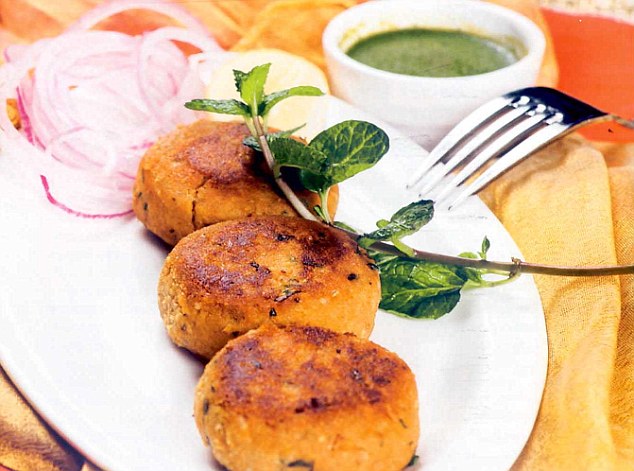
The repertoire of Persian scholar and food historian Salma Husain extends from the humble Dabi Arvi Ka Salan to Avadh’s 'national dish', Shaami Kababs (above), without which no royal dastarkhwan is considered complete
The repertoire of Persian scholar and food historian Salma Husain extends from the humble Dabi Arvi Ka Salan to Avadh’s ‘national dish’, Shaami Kababs (above), without which no royal dastarkhwan is considered complete

You’ll find the accumulated fruits (or orchard, I would say) of the long hours she has invested in locating old cookbooks and recreating recipes from royal memoirs and the accounts of foreign travellers in her anecdote-studded cookbook, The Emperor’s Table.

With Flavours of Avadh, though, Salma apa has produced for the first time a cookbook that goes beyond the much-travelled by-lanes of Aminabad, Lucknow, and travels across the kitchens of the taluqdars who defined (and refined) the culture of region after 1857.

Salma apa’s journey starts at the dastarkhwan of Rajkumar Muhammad Amir Naqi Khan of the Mahmudabad family, whose stunningly attractive wife, Kulsum Begum from Hyderabad, has had Delhi and Mumbai eating out of her hands during her stints with the ITC.

It moves on to Kotwara, a principality 160km from Lucknow bordering Nepal in the Lakhimpur Kheri district. Kotwara is famously associated with the filmmaker and fashion designer Muzaffar Ali, whose kitchen in his Gurgaon home is presided over by Rehana, the family’s retainer for six decades.

The Flavours of Avadh story hits the Grand Trunk Road and meanders into the principality of Tirwa in Kannauj district, whose most illustrious ruler, Durga Narain Singh, travelled extensively across Europe in the years before World War II and came home with a French chef to preside over his kitchen.

The story returns to Lucknow, where we meet the colourful Nawab Jafar Mir Abdullah in his lair, Sheesh Mahal; moves to Sitapur, which was awarded by a grateful British Raj to the Kapurthala family for leading the operation against the sepoys behind the historic siege of the Lucknow Residency; and has a Kharbooze Ki Kheer at the Lucknow home of the Zaheer family of old Congress leaders, whose most illustrious member was Syed Nurul Hasan, the erudite historian and Indira Gandhi’s education minister who introduced the 10+2 system.

Itt ends at Shakarganj, the ancestral home of the descendants of Baba Farid, the most famous of whom was the late Dr Abdul Jalil Faridi, a sought-after medical practitioner and popular MLA with a famous sense of humour.

From these blue-blooded families, Salma apa has collected old recipes to put together a fascinating collection. Of course, you can’t have an Avadhi cookbook minus recipes of such celebrity dishes as the Galawat ke Kabab, Kundan Qaliya, Murgh Mussallam, Dumpukht Gosht and Ande Ka Halwa. Salma apa has them all.

What makes her cookbook special, though, is its ability to cater to our appetite for the exotic. We have, for instance, the Mahmudabad house favourite, Dhungare Baigan (smoked brinjals with yoghurt, onions and Serrano chillies), or the Tirwa family’s Subz Mewa Malai Pulao, where ghee, cream and hung yoghurt are used as generously as seasonal vegetables, or the Ananas ke Paranthe (layered pineapple paranthas) served by the Sheesh Mahal family for breakfast during winter, or the Gajar ka Bharta perfected by Sitapur’s cooks, or Baba Farid ki Meethi Khichri, which has been cooked at Shakarganj on every death anniversary of the mystic saint.

Salma apa has made sure that we’ll see Avadhi cuisine in an entirely different light.

source: http://www.dailymail.co.uk / Mail Online India / Home> India / by Sourish Bhattacharyya / February 26th, 2015

The truth about the Nizam and his gold

HYDERABAD :

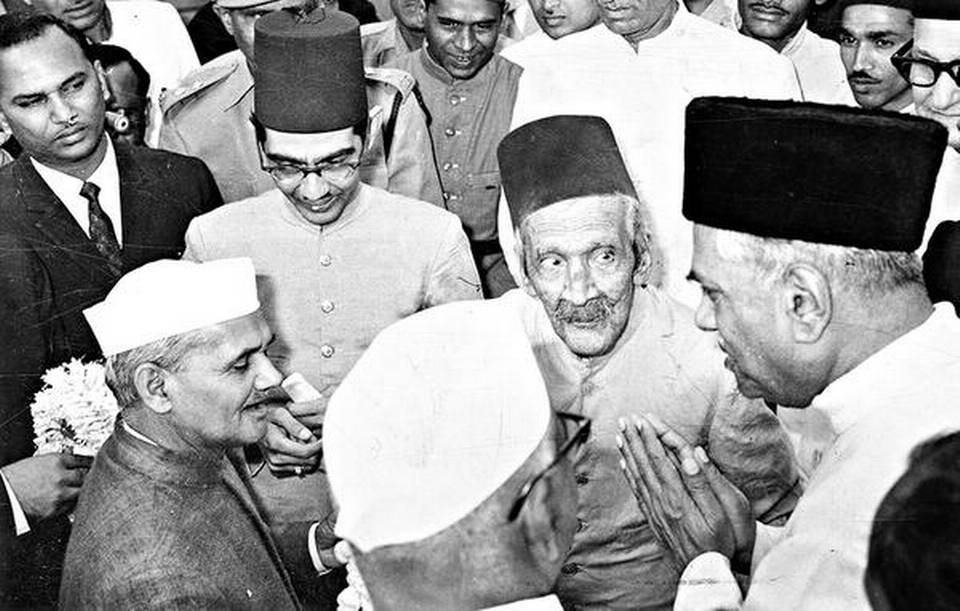
Key deposit: Nizam Mir Osman Ali Khan, centre, with Lal Bahadur Shastri and others in Hyderabad. | Photo Credit: The Hindu Archives

RTI queries bust myth of 5,000 kg gift for national defence

A series of Right To Information applications have busted an urban legend that Nizam Mir Osman Ali Khan of Hyderabad  donated 5,000 kg of gold to the National Defence Fund in the aftermath of the 1965 war with Pakistan.

The Prime Minister’s Office, under which the National Defence Fund functions, responded to this reporter’s RTI query that it has no information of any such donation.

According to popular lore, Nizam Mir Osman Ali Khan is said to have given 5,000 kg of gold to Prime Minister Lal Bahadur Shastri during his visit to Hyderabad in 1965. The Prime Minister was touring the country to raise funds to steady the post-war economy. The story goes that after donating the gold, the Nizam asked only that the boxes containing the precious metal be returned.

In fact, the Nizam invested 4.25 lakh grams (425 kg) of gold in the National Defence Gold Scheme, floated in October 1965 with a generous 6.5% interest, to tide over the economic crisis.

The Hindu report

A report in The Hindu of December 11, 1965, from Hyderabad, corroborates the less glamorous version of the Nizam and his gold. As The Hindu reports:

The Prime Minister, Mr. Lal Bahadur Shastri and the Nizam of Hyderabad exchanged a few words to-day at the airport when the ageing ex-ruler came to greet India’s Prime Minister…

Addressing a public meeting later in the evening, Mr. Shastri congratulated the Nizam on his investing 4.25 lakhs grams of gold in gold bonds which was valued at about Rs. 50 lakhs. The investment contained old gold mohors (coins) whose value was more depending on their antiquity. “We do not want to melt these gold mohors but send them to foreign countries to obtain a higher value. We may get a crore of rupees,” he said.

The report also mentions a donation of 1.25 lakh grams of gold from the Tirumala Tirupati Devasthanams and a purse of ₹8 lakh in cash from Telegu film stars to the government.

The October 1965 National Defence Gold Bonds had the additional benefit of being an amnesty scheme. “The provisions of the gold control or customs regulations will not apply with respect to gold in any form tendered as a subscription to the gold bonds and no proceedings will be instituted… Further, where such gold has been acquired out of income which has not been disclosed under the Income-Tax Act … such income, or the wealth represented by the corresponding assets, will not be liable to tax under these enactments in assessments,” said the press note from the government.

Secret beneficiary?

While the Nizam’s investment was a smart move, mystery shrouds the beneficiary of the investment. The RBI rejected an RTI query on the investment as well as the final beneficiary, citing Section 8(1)(j) of the RTI Act: “unwarranted invasion of the privacy.”

Najaf Ali Khan, one of the grandsons of Nizam Osman Ali Khan, said he was unaware of the payout. “This is news to me. I don’t know who has claimed it. The Nizam had created 52 trusts but I am not aware of any trust receiving this money,” he said.

source: http://www.thehindu.com / The Hindu / Home> News> Cities> Hyderabad > Sunday Special / by Serish Nanisetti / Hyderabad – November 11th, 2018

Farooq, Sravan sworn in as Ministers

NDHRA PRADESH :

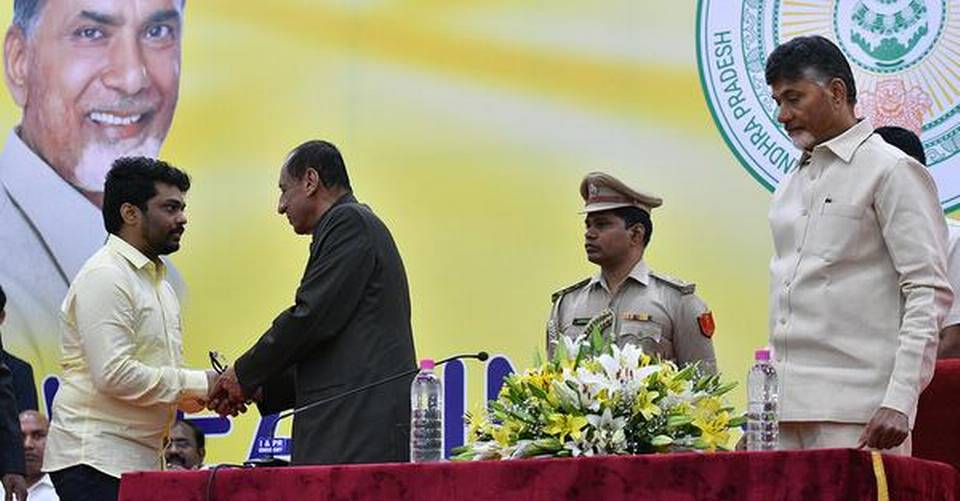
Governor E.S.L. Narasimhan conveying his wishes to Kidari Sravan Kumar after swearing in as Minister, at Praja Vedika near Vijayawada on Sunday. (Right) N. Md. Farooq swearing in as Minister. | Photo Credit: CH_VIJAYA BHASKAR

Chief Minister promises to strive for the welfare of the minorities and tribals

N. Md. Farooq and Kidari Sravan Kumar were sworn in as Ministers by Governor E.S.L. Narasimhan at Chief Minister N. Chandrababu Naidu’s residence in Amaravati on Sunday.

This takes the strength of the Cabinet to 26.

The decision to give representation to the minorities and tribals in the Cabinet seems to have been taken with an eye on the 2019 elections. Mr. Sravan is the son of Araku MLA, Sarveswara Rao, who had been killed by the Maoists recently.

Portfolios

Sources in the CMO said that Mr. Farooq was allocated the subjects of Minority Welfare, Health, APMSIDC, Food Safety and NTR Health University and Mr. Sravan Kumar given the responsibility of Tribal Welfare, Primary Health, Family Welfare, Vaidya Vidhana Parishad, Drug Control and Ayush ministries. Sources also said that Minister for Social Welfare Nakka Ananda Babu was given then additional responsibility of Cinematography.

However, an official announcement is yet to come on the allocation of the portfolios. Addressing the media after the swearing-in ceremony, Mr. Naidu said all the Ministers should cooperate with the new members of the Cabinet. “Mr. Sravan is an IIT graduate. He is preparing for the civil services. Instead of becoming a civil servant, he has become a Minister. We will groom him into a good leader. We will also offer Group-I post to Mr. Sravan’s brother and help his sister become a doctor,” Mr. Naidu said. Abraham, son of former MLA Siveri Soma who was also killed along with Sarveswara Rao, was appointed member of the SC, ST Commission.

Mr. Naidu said he would strive for the welfare of the minorities and tribals.

He said Mr. Farooq had vast political experience and was an efficient leader. Mr. Farooq had earlier served as a Minister and Chairman of the Legislative

source: http://www.thehindu.com / The Hindu / Home> News> States> Andhra Pradesh / by Appaji Reddem / Vijayawada – November 12th, 2018