Category Archives: Community Involvement / Social Issues

A masjid for all, with a noble purpose

Hyderabad, TELANGANA :

For the needy: Patients consulting a doctor at Masjid Ishaq at Achireddy Nagar in Old City on Saturday

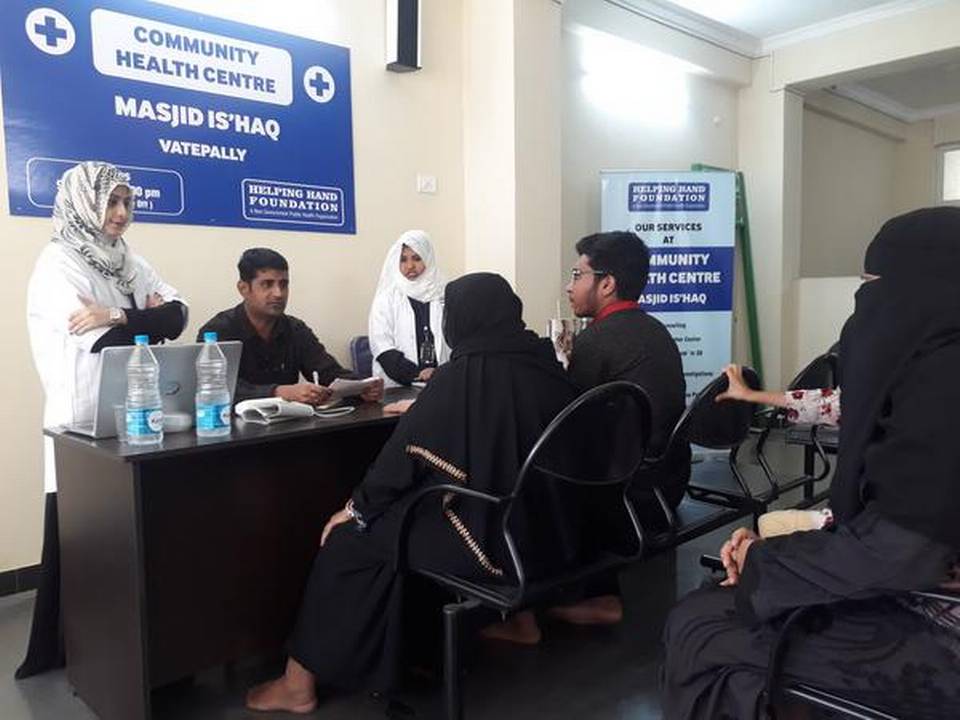
Masjid Ishaq throws open a clinic for urban slum-dwellers

From the outside, the Masjid Ishaq at Achireddy Nagar in Old City looks like any other mosque. It has a mihrab, or a niche in a wall form where the Imam leads the prayer, and musallis or congregants are seen performing their ablutions and praying on the rows of prayer mats. But a closer look reveals that there is something more to this place of worship than meets the eye. In perhaps a first for the area, the masjid has thrown open a clinic for urban slum-dwellers, irrespective of caste, gender or religion.

The clinic is a collaborative effort of the Masjid Managing Committee, headed by brothers Fayaq Khan and G.M. Khan, and Helping Hand Foundation (HHF), an NGO.

“We wanted to dedicate a space inside the masjid for the clinic where people from weaker sections of all religions can come for free treatment and guidance on healthcare. While the masjid was constructed two years ago and sees around 400 people on Fridays, the clinic is new and is spread over approximately 1,000 square feet. Since HHF has been working in the field of healthcare, we agreed to work with them,” says Fayaq Khan. According to HHF founding trustee Mujtaba Hasan Askari, the clinic has been informally functioning for about 10 days now. It was launched on Saturday. The clinic runs from 9 a.m. to 4 p.m., except on Fridays and Sundays.

Mr. Askari says, “A counsellor-doctor and nurse will be available at the clinic. It will also serve those who need home care. Several people are unable to go to hospitals, say for changing bandages and other minor treatments. The clinic will look after such cases as well.”

Apart from home care, Mr. Askari says the clinic also offers free physiotherapy, wound management and maternal care.

While free healthcare services are provided here, the larger aim, he says, is to ‘link’ patients to government hospitals and the government healthcare system. Thus, the clinic would also serve as a ‘referral centre’. Patients would be transported to the area hospitals or larger ones, depending on the nature of the case.

“Many urban slum-dwellers cannot afford to pay for the trip to hospitals, leave alone pay for medication. Apart from our two vehicles, we have engaged local auto-rickshaw drivers to transport patients,” Mr. Askari says.

source: http://www.thehindu.com / The Hindu / Home> News> Cities> Hyderabad / by Syed Mohammed / Hyderabad – November 10th, 2018

Revolutionary heroes

MYSORE :

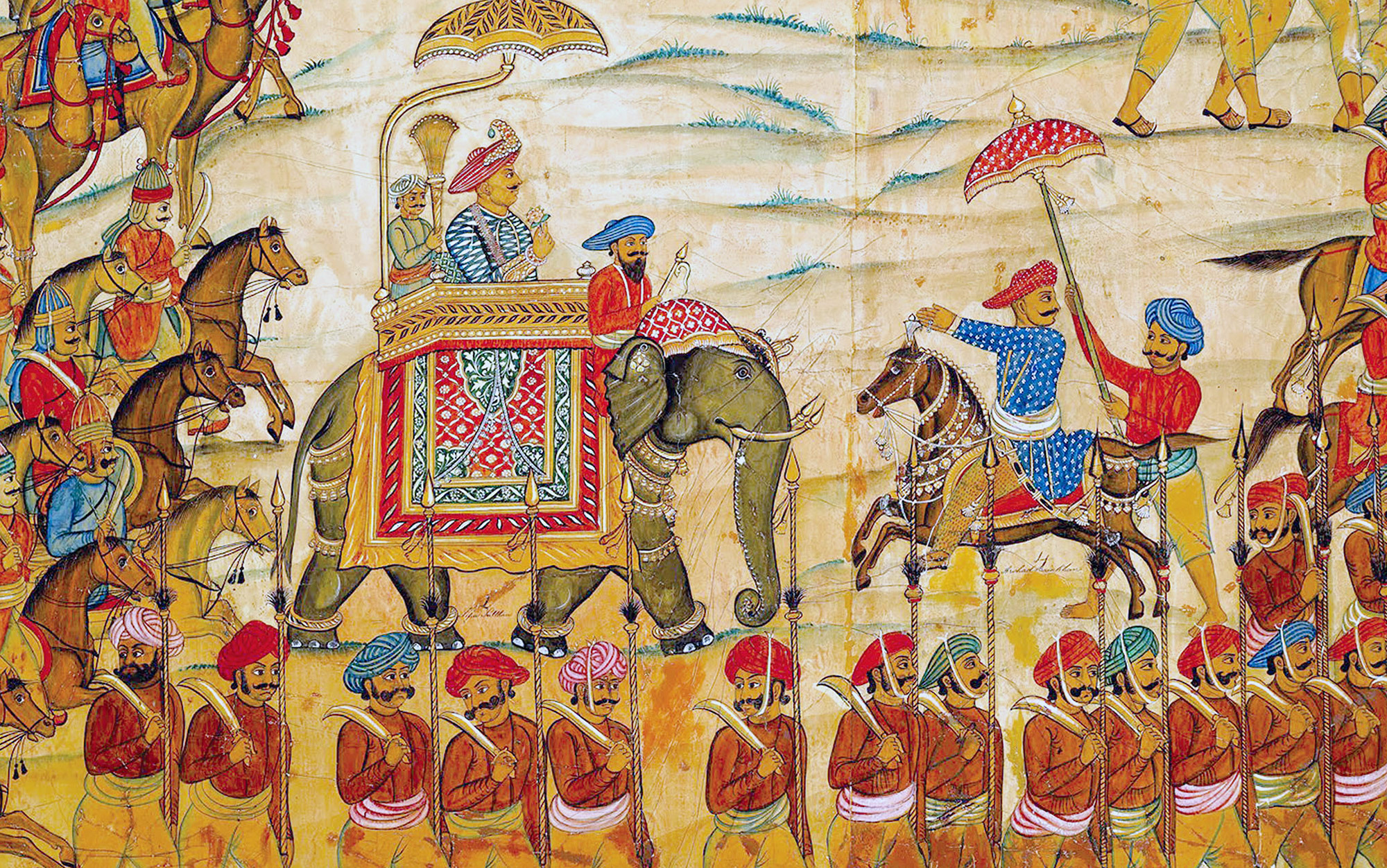
Tipu Sultan, son of Haider Ali, on an elephant in a detail from 'The Battle of Pollilur', 1780, a mural at Daria Daulat Palace, Seringapatam. Photo by Bridgeman Iages
Tipu Sultan, son of Haider Ali, on an elephant in a detail from ‘The Battle of Pollilur’, 1780, a mural at Daria Daulat Palace, Seringapatam. Photo by Bridgeman Iages

If the sultan of Mysore had had a bit more luck, George Washington might be known as the Haider Ali of North America

If the sultan of Mysore had had a bit more luck, George Washington might be known as the Haider Ali of North America. As the ruler of Mysore, a kingdom in what is now southwestern India, Haider fought a series of wars with Great Britain in the latter half of the 18th century, at the onset of the Age of Revolution. While Haider was fighting his last battles against the British, Washington was leading the forces of the nascent United States from the harsh winter at Valley Forge to the final victory at Yorktown.

The circumstances of Haider’s childhood did not seem to mark the young man out for greatness. Born around 1720, Haider soon lost his father, a mercenary officer who died on campaign. Haider followed his father’s path, becoming an officer for the Wodeyar dynasty that ruled Mysore. After many years of service, he grew indispensable to the ruling family, sidelining it entirely by the 1760s. It was a dangerous time to come to power in South Asia. The British East India Company was expanding its power throughout the Subcontinent, at the expense of rulers from Bengal in the east to Haider’s neighbours in the south. Allied with France, however, Haider held off the British advance for another two decades, dying in 1782, just a year before the US triumphed in its own rebellion against Britain.

Haider and Washington never communicated directly with one another, but they fought against a common enemy, and shared a common ally. Like the Mysoreans, the American rebels were members of a global coalition funded by the French government, which saw both uprisings as a chance to humble Britain. In the Seven Years’ War (1756-1763), Britain had ended nearly a century of conflict with its imperial rival in North America by seizing France’s vast territories in Canada and the Mississippi River Valley. Some French observers tried to minimise the extent of the defeat. Voltaire dismissed loss of North America as ‘a few acres of snow’. Yet French policymakers were well aware that Britain had greatly increased its power. Too weak to confront it again on its own, the French government wove a network of alliances, playing on resentments against Britain’s growing control of global trade and rapidly expanding empire. Beginning in the mid-1770s, it sent money and military advisors to both Mysore and the US, aiming to avenge its defeat by stoking colonial rebellions against Britain.

The alliance with France proved critical to the survival of the fledgling US. The memory of French aid, and particularly of the dashing Marquis de Lafayette’s assistance to Washington, has for more than two centuries served as a symbolic origins story of close Franco-American relations. During the Revolutionary War, however, Americans saw themselves not just as allies of France, but as part of a coalition that included Mysore.

Even after the US made peace with Britain in 1783, the American fascination with Haider and his son and successor, Tipu Sultan (1750-1799) lived on. Mysore’s rulers became familiar references in American newspapers, poems and everyday conversation. Yet, within a generation, Americans lost their sense of solidarity with the Indian Subcontinent. Mysore remained under British control, written out of the story of the American Revolution. The US turned its attention to the interior of North America, and to becoming an imperial power in its own right.

Even before the Revolutionary War, American interest in South Asia was lively. In fact, Americans’ rebellion against Britain in part grew out of the connections between America and the Subcontinent. Before the 1770s, Americans were cheerleaders, rather than critics, of British imperialism. The Philadelphia-born poet Nathaniel Evans (1742-1767) commemorated the victory of the East India Company at the Battle of Plassey in 1757, in which Robert Clive had seized control of Bengal:

The world to British valour yields
How has bold Clive, with martial toil
O’er India born his conqu’ring lance?

Sharing in Britain’s glory in this way seemed natural to Americans, who were proud to be part of the British Empire. The East India Company’s growing influence in Bengal enabled it to export large quantities of South Asian goods, particularly textiles, to American ports such as Boston and Charleston. Colonial elites displayed them in their homes with pride, signs that they were part of a global British empire growing rich from the spoils of the Subcontinent.

While Americans were free to purchase these imperial commodities, they were not free to join British merchants in South Asia. Britain’s colonies served to provide the motherland with raw materials. They were not supposed to have direct economic relations with each other, but rather to send their exports to the great trading centre of London. New England merchants in particular resented being pushed to the side of the mercantile system. Following military victories by the East India Company in South Asia, the company’s economic power within the British Empire, including North America, grew even greater, and so too did New England merchants’ resentment.

In 1773, the British government issued the Tea Act, a bill in effect subsidising the East India Company so it could sell tea to North America more cheaply than any other company. The Tea Act was meant to save the Company’s struggling finances, which were sinking under the cost of its expensive wars. By allowing the Company to sell its tea without paying the heavy taxes normally due on tea exports to the colonies, British officials thought they could help the Company while also keeping Americans happy. Because of the taxes levied on it, tea was expensive in the colonies, and tea-loving New Englanders often resorted to buying theirs on the black market. If the Company no longer had to pay these taxes, it could pass the savings on to thirsty American consumers.

Seeing themselves as victims of Britain’s imperial oppression, Americans sympathised with the empire’s other victims: South Asians

The colonists, however, did not respond as the British expected. By granting the East India Company an exemption from the tax, Parliament had confirmed that the tax on tea, passed without Americans’ consent, was there to stay for all other merchants. And the smugglers that the British government hoped to cut out of the tea business were influential members of New England society. On 16 December 1773, economic self-interest combined with principled opposition to taxation inspired a group of protestors to attack a Company shipment of tea, dumping its contents into the ocean.

The Boston Tea Party marked Americans’ growing opposition to British rule, and the beginning of a new perspective on South Asia. The British government retaliated by stripping Massachusetts of its right to self-government. Outraged colonists met in 1774 to form the First Continental Congress. The following year, armed conflict between colonial militias and British soldiers broke out at Lexington and Concord, and the American Revolution was underway. Americans started to see themselves as victims of Britain’s imperial oppression. They were soon sympathising with the empire’s other victims, particularly South Asians.

The American revolt against Britain quickly took on international dimensions. In 1776, the Continental Congress declared independence, transforming the former British colonies into the United States of America. American agents were soon busy seeking international recognition and goodwill from countries including Morocco, the Netherlands and, most importantly, France, Britain’s imperial rival. Within a year, the French government began sending aid to the fledgling US. A year later, in 1778, France and the US officially became allies.

The Continental Congress recognised that it was not France’s only partner against Britain, and looked for ways to cooperate with Mysore, France’s South Asian ally. In 1777, on the advice of Thomas Conway, an Irish-born French military advisor, the American patriots contemplated sending troops to join the French military expedition to the Subcontinent. The provisional American government lacked the resources for such a scheme, so instead it encouraged American privateers to attack the East India Company’s shipping to weaken Britain’s economic grasp on South Asia.

Different state governments also made friendly gestures toward Mysore. In 1781, the Pennsylvania legislature commissioned a warship named theHyder-Ally, an eccentrically spelled tribute to the Sultan of Mysore. This ship sailed the North Atlantic only, far from the Indian Ocean. Its existence, however, demonstrated the affinity American elites felt for Mysore’s cause. Philip Freneau, an ally of Thomas Jefferson and one of the country’s leading poets, wrote a poem in honour of the Hyder-Ally and its namesake, the sultan of Mysore:

From an Eastern prince she takes her name,
Who, smit with freedom’s sacred flame
Usurping Britons brought to shame,
His country’s wrongs avenging.

Clearly, nothing prevented these 18th-century Americans from seeing faraway Asian peoples as exemplars of liberty.

Despite Freneau’s optimistic vision, freedom’s sacred flame did not save South Asia. By the early 1780s, it was becoming clear that Britain would lose the war. Many Americans happily imagined a post-war world in which the East India Company would no longer be a significant force. Britain, however, managed to hold on to its territory in the Subcontinent, resisting the combined forces of Mysore and France.

France’s military support for Mysore and the US helped drive it into crippling debt and push French society toward its own, more radical revolution. Meanwhile, Britain’s finances survived the conflict intact, allowing it to continue an aggressive policy in the Subcontinent after 1783. The cash-strapped French, however, could maintain only a token military presence in the region. The situation left Mysore’s new ruler, Tipu Sultan, to his own devices. He resisted mounting pressure from the British for nearly two decades, succumbing only in 1799. He died beneath the walls of his citadel as he fought a last-ditch battle against the East India Company.

The American government adjusted to the new realities of South Asian politics. New England merchants eagerly sought to trade directly with the Subcontinent. In the first years after the end of the Revolutionary War, they relied on the French colony of Pondicherry on the southeastern coast of the Subcontinent as a port. They soon realised however that they could not enter the region’s most lucrative markets without the permission of the British East India Company. They lobbied for the establishment of American consulates to foster goodwill for American interests. Responding to their pressure, the US government created its first consulate in South Asia in 1792, in Calcutta. Two years later, in Madras, they added another. American consuls in the region were responsible only for relations with the Company. They had no contacts with independent South Asian states such as Mysore, which the American government, like the French, left to fend for itself.

Only recently an enemy of the British empire, America had won independence and become Britain’s junior partner in empire

On a state level, American interest in Mysore disappeared. But many Americans remained fascinated by Haider Ali and Tipu Sultan. When Tipu sent a team of ambassadors to Paris in 1788, in an unsuccessful attempt to restore the Franco-Mysorean alliance, Jefferson, then the American minister to France, reported on the event with keen interest. Like Jefferson, a wide range of Americans were eager to learn more about Mysore. American newspapers of the 1780s and ’90s reported on the country’s desperate struggle with Britain. American textbooks, including Jedidiah Morse’s influential The American Universal Geography (1793), included sections on Mysore. Haider and Tipu seem to have approached the status of household names. In Williams vs Cabarrus (1793), a lawsuit brought before a circuit court in North Carolina, the two parties disputed a wager made on a horse race. One of the horses was named ‘Hyder Ali’ in tribute to Mysore’s former ruler.

Even in the wake of Tipu’s final defeat, in 1799, his struggle for an independent Mysore continued to echo in the imagination of Americans. In his sermon on 4 July 1800, John Russell, a Baptist minister in Providence, warned his audience about the dangers of British imperialism. While many Americans, such as Alexander Hamilton, advocated for closer ties to Britain, Russell insisted that Britain could not be trusted. The ultimate example of British injustice, he argued, was its conquest of Mysore. Deeply moved by what he saw as Tipu’s heroic resistance, Russell told his congregation of Tipu’s death at the hands of British soldiers: ‘here the full heart must have vent… [Tipu Sultan] defended his power with a spirit which showed he deserved it. His death was worthy of a king.’

For Russell, Tipu’s end ought to warn America about the mortal dangers of empire. By the early 19th century, however, America had embarked on its own imperial project. American missionaries fanned out across North America, travelled to the Levant, and poured into South Asia, writing glowing reports back home on the work that the British were doing to ‘civilise’ the world, including the Subcontinent. Only recently an enemy of the British empire, America had won independence and become Britain’s junior partner in empire.

American diplomats, merchants and missionaries in South Asia accepted Britain’s empire in South Asia, working alongside it to profit from local trade or proselytise to potential converts. Over the following decades, foreign policy officials, commercial interests and religious groups pushed for the US to acquire a colonial empire of its own. Just like the British empire Americans had once rebelled against, the US became an imperial power, with colonies stretching from Puerto Rico and Guantánamo in the Caribbean to the Philippines in the Pacific.

Today, with military bases in more than 70 countries across the globe, the US remains an empire. Yet, the generation of Americans who fought for independence from Britain and laid the foundations of America’s identity saw the US as an anti-imperial cause and nation. The founding generation and the children of the founders were fascinated with Mysore and its leaders because they thought Haider Ali and Tipu Sultan embodied American values of resistance to empire and aspiration to freedom. If later generations of Americans had continued to see Haider and Tipu as heroes, had continued to identify with underdogs and anti-imperial causes, then the US, and indeed the world, might look quite different today.

source: http://www.aeon.com / Aeon / Home> Essays / by Blake Smith / Edited by Sam Haselby / December 07th, 2016

___________

Blake Smith is a postdoctoral fellow at the European University Institute in Florence, Italy. His research, focusing on the French East India Company, has appeared in scholarly journals such as French Cultural Studies and the Journal of the Economic and Social History of the Orient, as well as popular media such as The Wire and The Appendix.

The graves unseen by History: The Malabar Struggle and the stories we chose to forget

KERALA :

GravesMPOs10nov2018

This is the first in the two-part series on the much-forgotten Malabar Struggle and stories of ghastly violence committed by the British in the region around 1921. I Sameel, the author of this article, also looks at why and how such incidents were ‘left out’ or/and ignored by our mainstream historians. This article was originally published by Madhyamam Weekly on October 8, 2018. The article has been translated from Malayalam by Najiya O of TwoCircles.net.  

The Malabar Struggle is a critical time space in the Indian freedom struggle. The different angles of viewing the struggle are evident in the terms of Mappila Rebellion and Malabar Revolt etc. The Malabar Struggle has been significant in influencing the creation of the ‘common’ conscience of ‘modern Kerala’, determining the path of the Indian nationality and the formation of the social identity of Malabar, according to EV Ramakrishnan in Malabarine Kandethal: Padanam, Malabar Desheeyathayude Idapadukal (DC Books, 2008).  However, the Malabar Struggle still remains a critical timespace in the history by the different ‘looks’ mentioned above.

The official statements regarding the Indian freedom struggle either kept silent on the popular protests related to Malabar or mentioned them only casually. There are no evidences for even the Wagon Tragedy, which received a bit more public visibility compared to other incidents related to the Malabar Struggle, to have deeply touched the conscience of Malayalis (EV Ramakrishnan – Page 13). Questions are arising as to why the incidents that led Malabar to a battlefield for nearly a century did not receive the deserving relevance in the historical conscience of Malayali. Even the Wagon Massacre (named as Tragedy in history) gained visibility only through the popular cultural media, including the cinema. As MT Ansari points out in ‘Malabar: Desheeyathayude Idapadukal’ (DC Books, 2008) “Only the Wagon Tragedy of November 20, 1921, can be seen in the nationalist history lessons. As if all the other incidents, whether of Muslims or Hindus, insult us.  However, we do not conceal the Jallianwala Bagh massacre of April 19, 1919 (379 people were killed on the orders of General Dyer, according to official records) and the Chauri Chaura incident in which angry peasants burnt alive 23 policemen on February 5, 1922. Compared to the Malabar Revolt (2,337 people killed, 1,652 injured and 45,404 imprisoned in the Malabar Revolt as per official records – and according to unofficial records, 10,000 were killed, 50,000 imprisoned, 20,000 exiled and 10,000 found missing), other incidents are limited in extensiveness.”

Just like the Malabar Revolution was ignored by the national historical studies, it can also be seen that some significant incidents in it were ignored or only casually mentioned even in the special studies related to it. Important among them is the massacre by the British at Melmuri-Adhikarithodi in Malappuram. This incident comes second only to the bloody Pookkottur battle in the number of people killed among the various incidents in the Malabar Rebellion. While more than 350 people lost their lives at the Battle of Pookkottur, the massacre at Melmuri-Adhikarithodi took the lives of 246 people on October 25, 1921. People including women, children, aged and sick people were forced out of their houses, lined up and shot dead by the Dorset Regiment, an infantry regiment of the British army. However, it has not found a place in the public history. Some incidents including the Melmuri-Adhikarithodi massacre have been totally neglected from the general readings about the violence of the colonial government and massacres that took place in Kerala. And hence, more detailed studies should be carried out about the massacres that took place in Kerala, especially Malabar, during the colonial rule.

Massacres: the seen and unseen

It can be seen clearly that the Punnapra-Vayalar struggle (a communist uprising in the princely state of Travancore, British India, against Prime Minister, C. P. Ramaswami Iyer and the state in which around 1,000 people were allegedly killed) has got much importance in the public readings and history in the studies related to the massacres in Kerala. Though the massacres in the Malabar Revolution including the Pookkottur Battle have been exceptional considering the nature of the struggle and power of the enemy etc when compared to the Punnapra-Vayalar struggle, they are given only lesser attention in the public readings.

The Punnapra-Vayalar incident as such is considered a central theme in the history of struggles in Kerala. But such a position is not given to the Mappila struggles in Malabar in which thousands of people have died. The Melmuri-Adhikarithodi massacre has not become a central theme for even the studies about the Malabar Struggle.

There have been studies on whether the massacres related to the Malabar Revolution were part of the national history or not; but even those studies have not probed into the government terror involved.  Such a probe would be possible only through the historiography centred on these massacres. This article is an effort to discover the material causes and archives from the memory of people and historical remnants of this region for such a historiography. And this effort is relevant as the historical narration of the Malabar Struggle should go beyond the colonial records of RH Hitchcock, GRF Tottenham, CT Atkinson and Divan Bahadur C Gopalan Nair as well as the studies carried out by Dr M Gangadharan and Dr KN Panicker.

The second biggest massacre

“Large gang reported last night 4 miles north-west Malappuram.  Operations undertaken against them by Dorsets, Artillery and armoured cars.  Enemy met in jungle west of Melmuri opposing our troops there and in the houses, refusing to come out when ordered to surrender and offering continued and determined opposition resulting in 246 rebel casualties.”  This was the content of a Telegram [No.S 250/453/G] sent by the General Commanding Officer of Malabar to the Madras Government on October 25, 1921. (GRF Tottenham – ‘The Mappila Rebellion 1921-1922’, Madras Government Press, 1922)

Innocent women and children along with old and sick people were forced out of their houses and shot dead, houses looted and set on fire by the British army’s Dorset Regiment. This took place in the places named Konompara, Adhikarithodi, Melmuri Muttippadi and Valiyattappadi, in a 1.5 kilometre circumference on the Kozhikode-Palakkad national highway, which is 3 kilometres from Malappuram town. This is the Melmuri-Adhikarithodi massacre that took place on October 25, 1921. The soldiers in the companies A and D in the second battalion, Dorset Regiment, reached Konompara in armoured vehicles with cannons under the leadership of Lieutenants Hevic and Goff in the morning and massacred 246 people.

Cannon balls were fired in the beginning with a big sound, said Nambankunnan Moideen of Melmuri Valiyattappadi who was born 10 years after the incident. The frightened people hid in their homes. Then the army entered each and every house and forced everybody out. Those who refused to get out of their houses were forced out by hitting and torturing with the stock and bayonet of guns. Wooden storage boxes named ‘mancha’ and ‘pathayam’ were broken and the contents looted.  Books including the Qur’an, Sabeenappattu (Arabic songs praising prophet Muhammed), baiths (Arabic songs), padappaattu (war songs) etc were piled up in the yard and set ablaze, and then the houses roofed by palm leaves and grass were set on fire.  Then all the men were lined up and shot dead one by one. Those who tried to prevent, including women and children, were also shot dead. The operation which began in the morning came to an end by the long siren of the Army Commandant around noon.  The army was aiming the gun at Chalattil Kalladithodi Moideenkutty Haji on a sideway at Konompara when the long whistle blew and they let him free, said PT Muhammed Master who was four years old at the time and died recently. (Nisar Kaderi – ‘Pookkottur Yuddhavum Melmuri Operationum’, ‘1921 Churul Nivaranam’ – Pookkottur Yuddha Smaraka Samithi Souvenir, 2007)

Hundreds of people were killed in the orchards and courtyards, and about 100 houses were set ablaze in the operation of a few hours.  Some remained in a critical situation as good as dead after having been shot. There were some others who lay abandoned for about four days and then died as there was nobody to take care of them.  The martyrs were buried in the places they lay dead.

The graves in the courtyards

Though most of the studies on the freedom struggle and the Malabar struggle kept silent on this massacre, the graves played an important role in keeping the incident alive in the memories of the region and the generations that followed.  Those who were shot dead in the courtyards in front of the houses were buried there itself. The burial was completed by the people who came from nearby places on the request of Kunjithangal of Malappuram Valiyangadi, the president of the Malappuram Khilafat Committee.

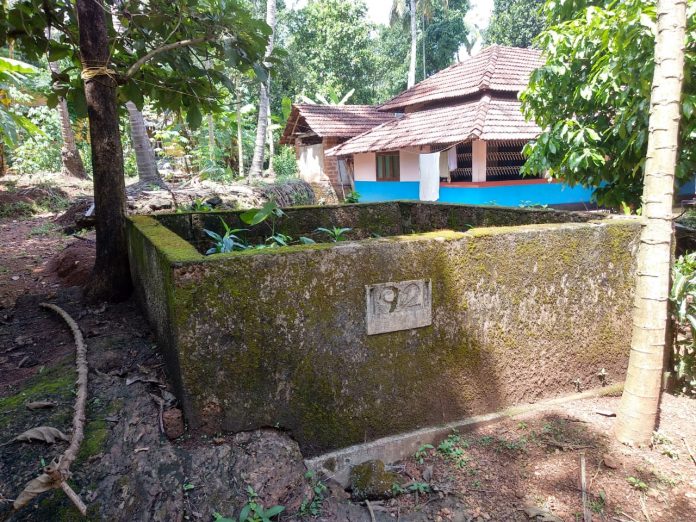
Many people have been buried in a single grave.  Many were buried in the dead of the night out of fear of the army.  While some were buried in the laterite stone quarries (Kalluvettukuzhi) near the houses, in some places women alone dug graves and buried the dead.  Women had to do the burials, which is the duty of the men according to the Islamic belief, as all the men in the locality had fled fearing the army.  One of the graves dug by women, which is only 2 feet in depth, is still there.  Now we have information about only 40 people buried in nine graves out of the 246 martyred.
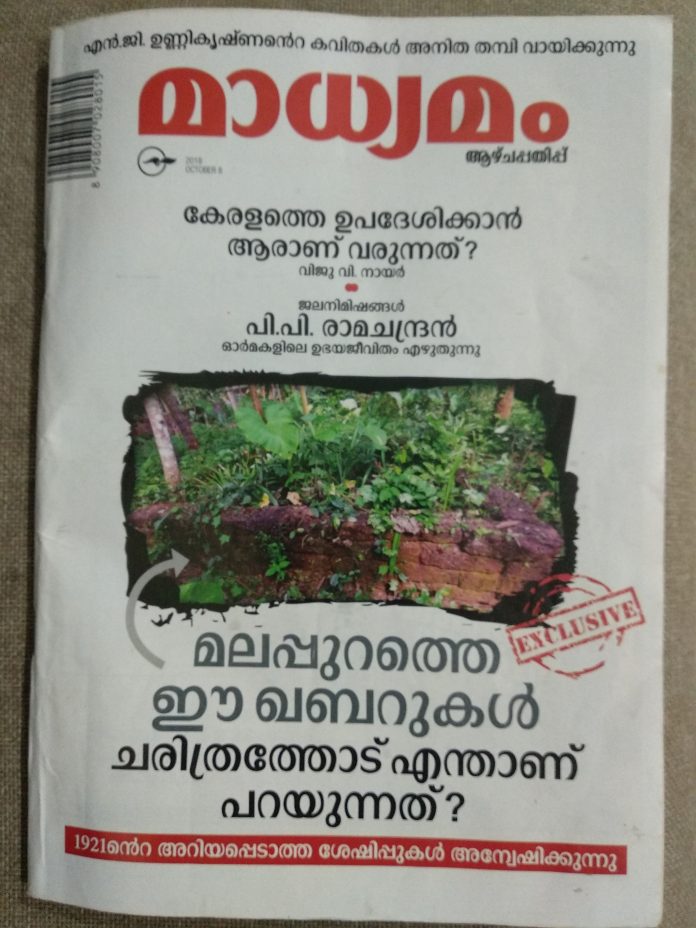
GravesBookMPOs10nov2018

Daughters shot dead for their fathers

Most of the cruelties done to women, children and the aged by the British army during the Malabar Revolution haven’t been included in the public historical narratives.  What the women, children and the aged experienced at the Melmuri-Adhikarithodi incident were cruelties violating the common norms to be followed even during war time.  Among the graves are those of two daughters who were killed while trying to prevent the army taking away their fathers.

One of them is an 11-year old from the Keedakkadan family at Adhikarithodi.  She was beaten by gunstock when she tried to prevent the British from taking away her father from their house, holding him tight.  When they couldn’t take her apart from the father even after several attempts, the army killed both of them together. It is said that they were visiting the girl’s mother’s house.

The other one is Kadiyamu, daughter of Areeppuram Parakkal Kunjeen Haji of Konompara Cheeranganthodi.  Kadiyamu had come from her husband’s house to take care of her sick and aged father. The army tried to push her off too with gunstock when she tried to prevent them dragging off her aged father who was lying on the big wooden storage container (pathayam). At last, Kunjeen Haji was forcefully taken off to the eastern yard of the house and laid on his front on the ground. Kadiyamu lay on her father to prevent him from getting shot. Finally, both were shot dead. Our pages of history couldn’t document these two brave daughters. And this can be read as evidence for the selected silence of the public mind towards Mappila history and Mappila woman.

While the common historical narrations kept silent about the Melmuri-Adhikarithodi massacre, this history was documented at least to some extent by the Qissappattu, a type of songs popular among the Malabar Muslims earlier. One of them is the work of Yogyan Hamsa Master, a Qissappattu expert. This is found in the ‘Abdurahman Qissappattu’ which he wrote about freedom fighter Muhammed Abdurahman Sahib:

“Lahalakkaar Melmuri parisaramil undarivaal

Lahika padayalar vanna aayudhamaale – avaril

Shatham mail aavaasethum balliya thokkum

Shakthamerum peerankiyum bayanettum bombum

Shabdamilla thuppaakkiyal vedivech chirichum

Lakkum lagaanumilla nattare vadhichum.”  (Yogyan Hamsa Master – Page 51)

(*The army came to Melmuri with weapons including cannons, guns and bombs, learning of the presence of mutineers, and laughed and killed people with silenced guns without any heed)

__________________________________________________

PART : TWO (2)

The graves unseen by History: The Malabar Struggle and the history of the silent

This is the second in the two-part series on the much-forgotten Malabar Struggle and stories of ghastly violence committed by the British in the region around 1921. I Sameel, the author of this article, also looks at why and how such incidents were ‘left out’ or/and ignored by our mainstream historians. This article was originally published by Madhyamam Weekly on October 8, 2018.

The nine graves

  1. Eleven people have been buried in the grave dug in the yard of Areeppuram Parakkal Koyakkutty Haji’s house at Adhikarithodi Vattapparamb.  His grandfather Areeppuram Parakkal Ahmedkutty Haji, his brother Moideenkutty Haji, Kuttirayeen, Marakkar and Konkayan Alavi, along with a man and his daughter from the Keedakkadan family are buried her  daughter is the 11-year old girl mentioned above.

Ahmed Kutty Haji’s daughter Ayisha was only four years old at the time, and she had detailed the incident to her son Yogyan Hamsa Master, who is a well-known Qissappattu writer and singer.  Ayisha died last year at the age of 102. When all the members of the house had been forced out and the house set on fire, the women and children moved to the banana plantation nearby.  It was then that the men were killed using rifles with less sound.

Ahmed Kutty Haji’s neighbor and friend Konkayan Alavi was also caught along with them and shot dead, said the latter’s son Alavi’s son Alavi.  One each in four generations of this family is named Alavi out of respect for Mampuram Syed Alavi Thangal, an Islamic scholar from Yemen who settled in Mampuram, now in Malappuram district.  People used to frequent him for spiritual, religious and social advice. He was known for his anti-British stand in the 19th century. His tomb at Mampuram is considered an important pilgrimage site in Kerala.

Mats were laid out in the laterite stone quarry in the yard of the house and all the dead bodies were kept on them and buried.

2. The dead bodies of five members in the Kappoor family have been buried in the grave dug in the plot behind the GMUP (Government Mappila Upper Primary) School at Adhikarithodi.  Kappoor Mundasseri Yusuf, his son Pokker, Kappoor Moosam, Ayamutti and Mammudu were buried here. None of the direct descendants of the dead live in the place now.

3. Six people were buried in the grave dug near the house of Nanath Kuruvayil Hamsa.  Those buried include Hamsa’s paternal grandfather Nanath Kuruvayil Moidu, his brother Kunjimarakkar and Madambi Kunhimuhammed.

Nanath Kuruvayil Moidu was caught when sitting in his house reading the Qur’an with the belief that ‘they needn’t worry as they hadn’t been involved in anything’.  When Moidu was caught by the army, his 14-year-old son Muhammed protested holding on to his father’s hand but was pushed away, said the latter’s eldest son Moidu (82).  Before leaving, the army also set fire to the roof of the old house, which had been there in the place of Hamsa’s house.

The Thiyya (a lower caste, now in the Other Backward Class category) family of Karattuparamban, who were their neighbours, was the first to help in the shocking time, said Moidu.  The Thiyya family, that had to witness everything helplessly, hurried to put down the fire on the roof as soon as the army left. This can be seen as a small example of which side the lower classes including the Ezhavas (a lower caste, now in the OBC category) and Muslims supported in the Malabar Struggle.

4. Five people have been buried in the grave dug behind the house of Mullappalli Ummer at Kannanthodu in Adhikarithodi Aakkaparamb.  Those buried here include Athimannil Mammootty and one from the Vallikkadan family. Mammootty’s son Kunhimuhammed was dressed up as a girl to save him from the army, said his son Moideen (72).  Everybody was forced out and houses were set fire. All the dead bodies were buried in laterite stone quarries.

5. Four people have been buried in the grave dug near the ancestral house of Areeppuram Parakkal Zakariya at Konompara Cheeranganthodi.  They are Areeppuram Parakkal Kunjeen Haji, his son Ayamu, daughter Kadiyamu and son-in-law Nanath Innyali. A sick Kunjeen Haji had asked his family to take him to a sideway which the British may not notice.  But the family expected the army to let him free as he was sick, said Fathima, granddaughter of Ayamu. Ayamu’s son Vappu Haji (who was 14 years old then) and friend Nanath Kunjalavi Haji were dressed up as girls and kept along with the women to save from the army’s cruelty.

A person from the Vallikkadan family lay seriously injured for four days some distance away.  Bappu Haji, who was a boy then, gave him water to drink. But all the water he drank came out through his large intestine.  Having nobody to treat, he died there on the fourth day and was buried at the same place. As time passed, his grave is no more there.

6. Two persons from the Narippatta Kappoor family have been buried in the grave behind the marketplace at Konompara.  Narippatta Kappoor Ahmed and his son Pokker were shot dead. Seeing the army set fire to their house, they both ran off and hid behind a heap of dried leaves from where they were shot. They were buried there itself.  Another son of Ahmed named Kunjalavi was caught by the army and exiled to the Andaman Islands. Ahmed’s grandson Alavi (son of Moideenkutty) lives here with his family now.

7. One person has been buried in the grave in the courtyard of Nambankunnan Muhammedali at Melmuri Valiyattappadi – his great grandfather Alavi. The army caught him when he was peeping out through the tiny window saying nobody would take him away as he was very old.  When he was sure to be shot, he took ablution and stood facing the qibla (direction of the Holy Ka’aba in Makkah), said his nephew Moideen (87). He recalled that in his childhood there were many coconut palms without head as the top portions had been blown off due to the cannon firing of the army. Alavi’s deadbody was buried by the women of the house at night, and the grave is only two feet in depth.

8. Two persons from the Kappoor family were buried in the grave in the courtyard of Kappoor Usman’s house; they were Kappoor Itheerumma’s father’s brother and grandfather. Itheerumma who had no children died recently.  They are also the brother and son of Ismail aka Ithelu, grandfather of Kappoor Usman. Ithelu was caught by the army and jailed at Rajamundhri in Andhra Pradesh where he died. The army had set fire to their ancestral house nearby. Usman’s father Muhammed Haji recalled getting bullets from the wall when the house, which had been partially burnt, was brought down recently.

9. Four people have been buried in the grave dug near the house of Madambi Ubaid, behind the Central Lower Primary School at Melmuri Muttippadi – Madambi Kunjaramu, Madambi Mammunni, Kaderi Moosa Haji and Cherkkadan Moideen. They were shot dead at the verandah of the ancestral house of the Madambis nearby. This house too carried the traces of bullets penetrating the wall till recently when it was repaired. Kaderi Moosa Haji’s son Mammudu Haji bought this piece of land and donated as Waqf to the masjid at Alathoorpadi nearby in the name of his mother Iyyathukutty Hajjumma, so as not to lose the land, informed writer Umar Melmuri, a descendant of the family.

Some people from the Perumkollan caste had accepted Islam and lived at Vaishyarthodi near Thattanthodi. Three among their later generations were shot dead by the army, and their house set on fire. They were then buried near the well of their house, and the grave was not well protected, said PT Muhammed Master of Alathoorpadi.

Goals of the British homicide

The reason for the British to target Melmuri and Adhikarithodi specifically is the influence that Ali Musliyar, leader of the Malabar Struggle, had in the region. Ali Musliyar had run his Dars (religious education centre) in the mosque at Melmuri Podiyad Parammal and later in the mosque at Melmuri Alathoorpadi. He was there for three years, and so quite naturally, had a considerable number of disciples in the area. Palakkamthodi Aboobaker Musliyar, Congress Khilafat leader in the Kozhikode taluka who was an important personality in the Malabar Struggle, was his disciple at the Dars at Podiyad. (AK Kodoor – Page No 98). Many leaders of the Malabar Struggle were young scholars who were the disciples of Ali Musliyar.

Besides Ali Musliyar, another leader of the Malabar Struggle Variyankunnath Kunhahammed Haji had secretly visited Melmuri several times when he was absconding. Madambi Muhammed of Thathiyil house recalled his father as saying Kunhahammed Haji had come to their house one midnight and asked for rice porridge, but could give him only rice-water with grated coconut as there was no rice porridge. (Nisar Kaderi – Page No 23)

The Battle of Pookkottur was another reason that prompted the British to attack this region. The Battle was fought by the Mappilas against the armed forces of the Leinster Regiment (an infantry wing of the British Army) and the Special Police Force on August 26, 1921, which fell on a Friday.  It had a significant role in setting ablaze the Malabar Struggle.  Though the Mappilas tasted huge manpower loss in the battle, the British government saw it very seriously as the Mappilas got ready to fight the best army in the world without the support of any other army or government.  The planning and organization of the ‘Pookkottur gang’, which had earlier served in the British Indian army and then took part in the Malabar Struggle, had made things grave at a point, according to the note given to the Madras Government by the District Magistrate FB Evans. (Tottenham – Page No 48)  The Melmuri-Adhikarithodi massacre was a part of the military action carried out at Kondotty, Manjeri, Areekod and Malappuram between October 20 and November 10, 1921, in order to catch hold of the Pookkottur gang and its supporters. (Tottenham – Page No 40)

Though carried out in the name of eliminating the Pookkottur gang, the real aim of the massacre was terrifying the common Mappilas who were not directly part of the Struggle.  Those including Nanath Kuruvayil Moidu who was massacred had believed that the army wouldn’t attack them as they had not taken part in the struggle. By killing them, the army sent a clear message to the Mappilas to either be a British-supporter or face death.

Even the British records admit that those massacred were innocent.  A concise explanation of the Malabar Struggle by the Under Secretary of the Madras Government says: “… and on October 25th the Dorsets had killed 246 Mappilas in the Melmuri area. Not all of these probably were active rebels, and the encounter seems to have had a considerable moral effect, for shortly afterwards petitions began to be received from amsams (administrative partition of village in Kerala) in the neighbourhood of Malappuram offering submission.” (Tottenham – Page No 39)  Hitchcock also records that the Dorsets entered each and every house to catch hold of the Mappilas.  The Malappuram Qazi had informed that around a thousand people including women and children from different amsams would be ready to surrender if they got the protection of the British Government, says the letter sent by Evans to Madras on November 2. (Tottenham – Page No 257)

The history of the silent and the silence of history

The silence of the thousands of slaves drowned deep in the Atlantic Ocean on their voyage is louder than the voice of the slaves who were taken from Africa to America crossing the Atlantic, observes Afro-American writer Saidiya Hartman in her first book ‘Scenes of Subjection’.  She says that the unheard voices of the thousands of slaves drowned in the sea should have been the archives instead of the available and oral historical remnants. In a way this points towards the crisis of archives.

Using the hypothesis of ‘the silence of archives’ put forward by Ms Hartman to learn the Melmuri-Adhikarithodi massacre, the question remains as to what tools our history owns to record the 200 people without any remnants, beyond the graves of the available 40 people.  Is a historiography still possible to acknowledge their silence?  Those who have drowned in history thus without any address remind us that the crisis of history is not its voices but its silence. If the Malabar Struggle is the silence in our national history, these graves are the silence inside that silence. This important part in the Malabar Struggle reminds us the importance of probing into the history of those not present too, beyond the written, oral and data/artifact histories.

source: http://www.twocircles.net / TwoCircles.net / Home> Historical Facts> Indian Muslim> Lead Story / Originally printed in Madhyamam Weekly on October 08th 2018 (translated by Najiya. O of TwoCirlcles.net) November 05th, 2018 / The 2nd Part on November 06th, 2018
World from a writer’s plane

KERALA :

Writer B.M. Suhara
Writer B.M. Suhara

“I do not mix writing with my life,” novelist B.M. Suhara said at the fourth ‘My Writing, My Life’ programme organised by the Calicut Public Library to facilitate interaction of the public with Malayalam writers here on Wednesday.

“Life is enclosed by physical spaces, family and human relationships but writing is my door to an outside world,” she said.

Born in a conservative Muslim household at Thikkodi in Kozhikode district, Suhara’s family was a bit too restrictive but she read a lot and grew up adoring writers.

“It was my dream to do something with my life, but when the dream took the form of words, my mother was scared,” said Suhara.

Marriage to literary critic M.M. Basheer while pursuing her graduation took her to Thiruvananthapuram and out of her rural confines but the trepidation of stepping into the public sphere, ensured she would not take up a job. Motherhood followed, and the next years of her life was occupied in raising her children.

“My husband had a good collection of books and I read world classics and novels translated from other Indian languages,” Suhara said. “When my children grew up and went pursuing their dreams, a vacuum crept in and I could no more ignore the urge to write.”

Suhara began work on her first novel, Kinavu, but the process took five years. “I constantly wrote, rewrote and reworded to give final shape to the novel.” But a crisis of confidence emerged until her husband convinced her that the work could not be left unpublished.

Like several writers, the transition from the first to second novel was difficult for Suhara too and she decided her store of writing ideas had run dry. Dr. Basheer stepped in again and to provoke or inspire her said, “anybody can write one novel,” Vanitha had then approached her to write a serialized novel and thus Mozhi was born.

Suhara’s most noted work, Aaakashabhoomikalude Thakkol was her critique of polygamy in the Muslim community. The novel dealt with the lives of three Muslim women from different economic classes in society, married to the same man.

Nizhal, her fourth novel was an attempt to step outside the realm of familiar surroundings. The story was set in Thiruvananthapuram, with the characters speaking in the colloquial Trivandrum dialect.

Delving into the writing effort Suhara said, “I write in the daytime after my household chores are done. I get sick if I shun sleep and write at night.”

“Nowadays I feel that without writing, I cannot have a life ahead. The belief that I have more works to offer, fuels my journey ahead.”

source: http://www.thehindu.com / The Hindu / Home> National> Kerala / by Jiby Kattakayam / October 02nd, 2009

Africa will witness massive growth in education in the next 15 years: Sajitha Bashir

Thiruvananthapuram, KERALA :

Bashir said in the next 15 years, Sub-Saharan Africa is poised for major education growth with the governments’ policy to form two million classrooms with two million teachers.

Thiruvananthapuram :

Africa is going to witness a major boom in primary and secondary education in the years to come, Sajitha Bashir, practice manager for education at the World Bank, told Express.

Bashir said in the next 15 years, Sub-Saharan Africa is poised for major education growth with the governments’ policy to form two million classrooms with two million teachers. Sajitha, vice-chairperson of the Vakkom Moulavi Foundation and closely related to the visionary, said she has been travelling across Africa and studying the progress achieved by countries in the Sub-Saharan regions in education as a senior World Bank official.

The World Bank team is into the design of the projects, monitoring, accountability, impact and financial implications. Bashir, an alumnus of the London School Of Economics, said there is a lot of improvement in the 48 African countries she is looking after, including Ethiopia, Sudan, Kenya, Rwanda and Tanzania. She said after the intervention of the World Bank, children have entered the system in Africa and this is a major development.

However, she said while children in South Africa, Zimbabwe, Kenya, Mauritius, Ghana and Botswana perform extremely well, children of countries like Nigeria, Ethiopia, Republic of Congo and Democratic Republic of Congo (DRC) are very poor in learning.

She also said the performance of children in international-level tests is bad and most children in several African countries are not even able to read a paragraph properly. The World Bank official also said the bank is even financing the production and distribution of school textbooks in African countries. Interestingly Dr Bashir said, “The high population rate is another factor creating a hindrance to the educational progress in these African countries and the fertility rate is 4 to 5 per cent which means a woman bears 4 or 5 children and this is a big challenge.”

source: http://www.newindianexpress.com / The New Indian Express / Home> Cities> Thiruvananthapuram / by Arun Lakshman / Express News Service / November 05th, 2018

Begum Hamida Habibullah

Hyderabad, TELANGANA / Lucknow, UTTAR PRADESH :

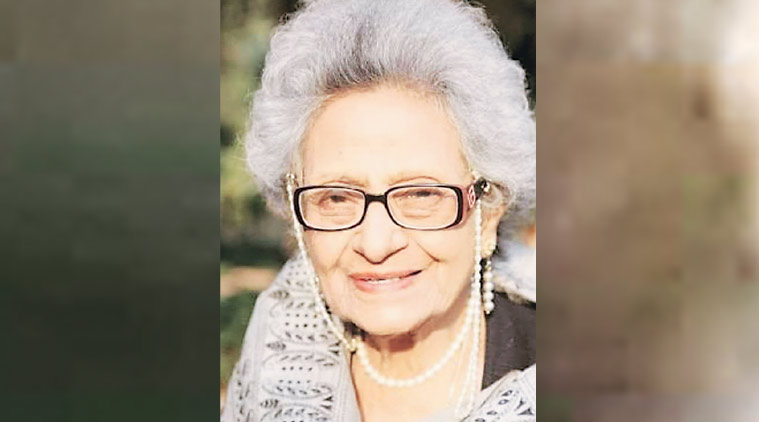
Begum Hamida Habibullah (1916-2018): Leader and enabler of women’s education in an eventful age

Born in 1916, she led a life and played a role that were not only unusual but also a testament to the times that made it possible.

Begum Hamida Habibullah

Begum Hamida Habibullah, who would have been 102 years old next November, died in Lucknow Tuesday. A woman with an unusual profile in an eventful period, she was a leading political figure and an enabler of education for women. Born in 1916, she led a life and played a role that were not only unusual but also a testament to the times that made it possible.

The daughter of Nawab Nazir Yar Jung Bahadur, once acting Chief Justice of Hyderabad High Court, Begum Hamida spent her childhood and early years in Hyderabad. A gold medallist from Osmania University, she also did a two-year teachers’ training course from Whitelands College (Putney), London.

Her marriage and work took her to Uttar Pradesh where she was among the founders of the Self Employed Women’s Association (SEWA); she worked hard to get it through the early years, long before it became a well-established brand.

She was married to Major General Enaith Habibullah, who fought in World War II, including in the battle of El Alamein in North Africa, and was also the founder commandant of the National Defence Academy, Khadakwasla.

Begum Hamida’s active political career began after her husband retired in 1965, when she was elected as an MLA from Haidergarh (Barabanki). She was minister for social and Harijan welfare, national integration and civil defence during 1971-73, and tourism minister during 1971-74.

These were times when the Uttar Pradesh Congress was among the most powerful committees in the country, and Begum Hamida served as a member, executive committee, of the UPCC until 1980. She was also elected to the All India Congress Committee from 1969. She headed the Mahila Congress in UP during 1972-76. Later, she went on to become a Rajya Sabha member from 1976 until 1982.

Furthering women’s education in the region is what is recognised as her true calling. She was the president of the Avadh Girls’ Degree College (AGDC), Lucknow’s first English degree college for girls, from 1975. She was also president, from 1975, of Talimgah-E-Niswan College, an institution of 3,500 catering to the education of Muslim girls and founded by her mother- in- law, the late Begum Inam Habibullah.

Her grand-nephew, writer Omair Ahmed, recalls how she represented an era when the Indian subcontinent was in the throes of the anti-colonial struggle but one could drive from “the military base in Rawalpindi to Srinagar”, where her husband was posted.

Omair Ahmed remembers how Begum Hamida casually mentioned the “beautiful drives” from Rawalpindi to Srinagar that she and “Bubbles” went on. “The ‘Bubbles’ she was referring to was her husband, Major General Enaith Habibullah. He was given the nickname because Habibullah sounds a bit like ‘hubble bubble’, the British slang for a hookah.”

Begum Hamida’s son, Wajahat Habibullah, is a former bureaucrat who served in Rajiv Gandhi’s PMO and retired as India’s Chief Information Commissioner.

source: http://www.indianexpress.com / The Indian Express / Home> India / by Seema Chisti, New Delhi / March 14th, 2018

How one woman’s story changed the lives of Turtuk’s women forever

Turtuk (Leh District ), JAMMU & KASHMIR  :

Rahima Begum | Photo Credit: Kartiki Selena Gonsalves

She was the first girl of this border village to finish school when other girls did not even get schooling; and she became the first woman to get a government job here

Rahima Begum was a young bride and new mother when she awoke one morning in December 1971 to find her dreams shattered and her new family divided. India had captured her village of Turtuk and three neighbouring villages of Chalunka, Thang and Tyakshi on the India-Pakistan border. Overnight, the LoC had shifted. For India it meant a tactical victory, and new vantage points for the forces. For the villagers, it meant separation, heartbreak and hardship.

Turtuk, with its lush fields and blue skies, is an oasis amid the stark, stony peaks of the Pamir and Hindukush mountains. The sprawling flowering buckwheat fields are dotted with the orange-canopied and entangled trunks of apricot trees. Water from the glacier gurgles along Turtuk’s cobbled paths, and in summer, laughter echoes across the fields as children splash about in a natural pool in the village centre.

This is where Rahima grew up in the 1960s. She was a bright, free-spirited child, full of dreams. Her parents had ambitions for their young daughter. Her great-grandfather was a famous Balti poet. Rahima attended the local school and, at 14, became the first girl to graduate from it.

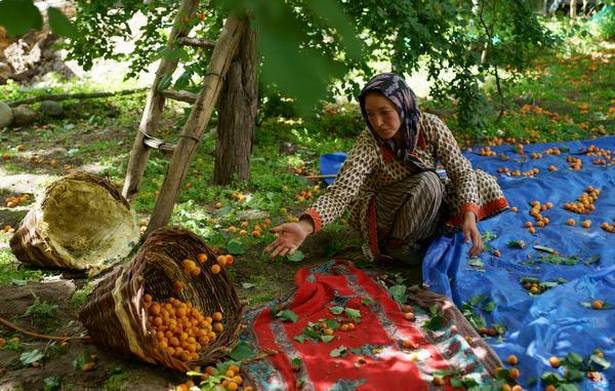
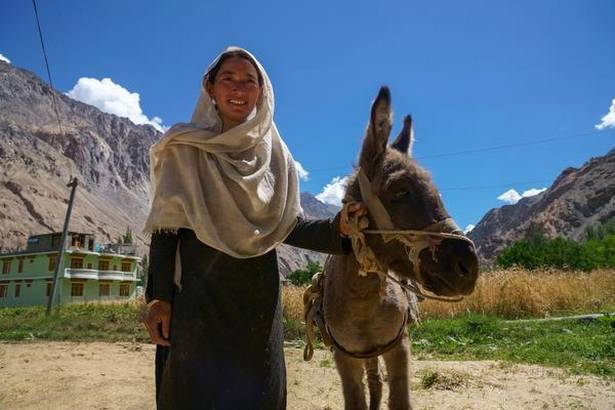
A Balti woman harvesting apricots | Photo Credit: Kartiki Selena Gonsalves

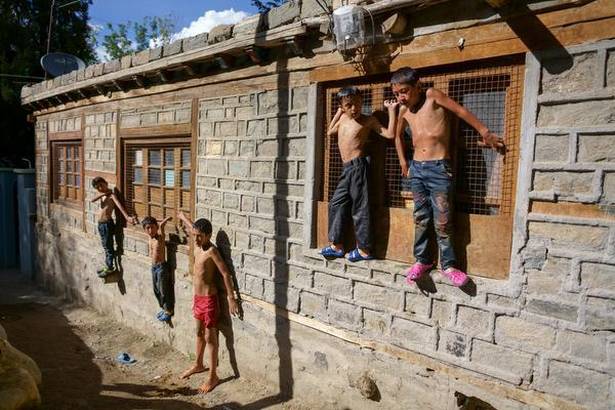
She recalls how in summer the children jumped into the pond to bathe. They did so with their school uniforms on, so they got washed too. They would then stand under the sun, arms outstretched, and dry out.

As was the custom, as soon as Rahima finished Class VI, her family found her a husband. He happened to be her cousin, Sher Ali and was known as the most handsome man in the area, and in fact in all of Pakistan. Rahima considered herself fortunate. Ali worked in the Pakistan army and marriage promised travel and a steady income.

Daily chores

As a married woman, Rahima took on household and farm work. She woke early, prayed, and made breakfast of kisir (buckwheat pancake) and grangthur (curd with local herbs). She would then set out to work in the fields or orchards. On some days she returned by afternoon, on others she toiled till sunset. At home, there were donkeys and chickens to feed and other domestic chores. Then, in November 1971, Rahima’s daughter Aisha Sudiqa was born.

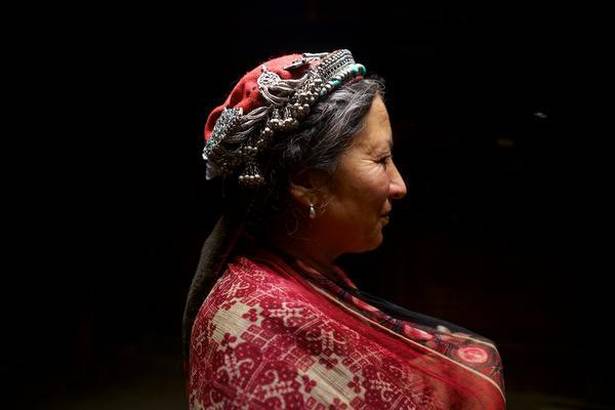
Traditional Balti attire and jewellery | Photo Credit: Kartiki Selena Gonsalves

In December, when India captured the area, Chalunka’s residents gathered all the possessions they could and fled across the new border into Pakistan-occupied Kashmir. The three other villages decided to stay in India.

For some time, Rahima’s life remained unchanged; she was immersed in her baby daughter. But Sher Ali was not permitted to cross the border and come to India and Turtuk. Aisha was growing up; she began to accompany her mother to the apricot orchards and splash in the pond. But Rahima missed Sher Ali very much. She had not foreseen that she would be raising her daughter on her own. She waited hopefully for news of his return. Three years passed.

Then, in 1974, Rahima finally received a letter. It was from Sher Ali. Her hands trembled as she opened it. He wrote to say that he missed her very much, he asked about Aisha. He said he hoped to be reunited with them soon, and asked her to take care of herself and their daughter.

After reading the letter, Rahima became even more determined to live with him, even if it meant crossing the border into Pakistan. The very same day she packed some clothes and documents and set out with Aisha on the long journey to the Wagah border. Miles of barren, unforgiving terrain later, she gazed out of the tempo window to find men in khaki and green, and army trucks trundling by every few minutes. The vehicle slammed brakes, and she was ordered to get down with everyone else. She walked to the border control. She was afraid, but knew she had to be strong.

The officials inspected her documents, and checked records from a big book to make sure she had no history of attempted border-crossing. An officer then walked towards her, and said she could not cross. She pleaded with him, but it was of no use. Heartbroken, Rahima and Aisha returned to Turtuk. She wondered if she would ever see Sher Ali again.

Boys drying themselves after a swim. | Photo Credit: Kartiki Selena Gonsalves

Bolt from beyond

Two more years passed. Then, when Aisha was six, in 1976, Rahima received a letter. It said “As-salaam-alaikum. I hope you and Aisha are well. I am upset to bring to you the news that I don’t think we have hope of ever meeting again. I tried many times to cross the border and was rejected. I think it is time to say goodbye. I need to marry another woman. Khuda Hāfiz.” For Rahima, life went on.

Six years later, Sher Ali wrote again. It had now been 12 years since their village had been brought into India. This time, the letter asked for a divorce. Rahima’s eyes welled up with tears, her hands shook as she read the letter. “Take care of Aisha,” the letter said. “I wish you luck in life. Khuda Hāfiz.”

The divorce came through. In October 1983, Rahima’s and Sher Ali’s parents persuaded her to marry Sher Ali’s younger brother, Abdul Kareem. Aisha was delighted to have a father, and the next year, the couple had a baby girl they named Farida Khanum. Ten years went by. Rahima, now a mother of six, was determined to make something of her life. She decided she wanted to improve the lives of Turtuk’s residents. With her education, she was able to take up a government post in Turtuk as an Urdu teacher.

BaltiWomenMPOs04nov2018

Rahima sent all her children, boys and girls, to school, and encouraged others to educate their children too. She led by example: she was after all the first girl of her village to finish school when other girls did not even get schooling, and she also became the first village woman to get a government job.

School topper

Rahima’s daughter Aisha also excelled in school, and became the first girl to leave Turtuk village and enrol in high school in Hunder. She then went to Srinagar’s Maulana Azad National Urdu University for a B.Sc. degree, and then an MBBS as well.

Nobody from Turtuk had ever gone outside Ladakh to study before. Aisha was excited and proud. After her training, she returned to Turtuk, the first woman doctor in the village.

Aisha, like her mother before her, became a role model for Turtuk’s girls. She visited her neighbours, friends and relatives, and even the schools in Turtuk and neighbouring villages. She spoke to the young girls there, ignited in them dreams and hopes, spoke about careers, income, knowledge and education of women. Today, everyone in Turtuk wants their girls to be like Aisha, to go to school, to work, discover the world outside. It has been a major leap.

One evening during Ramzan, in 1995, Aisha returned home to break her fast, but feeling fatigued and disoriented, she went to bed, and passed away in the early hours of the morning. She had been suffering from anaemia and the strain of travel and fasting had proved too much.

Rahima mourned her first-born, and the village the loss of their strong, independent and educated daughter.

But Turtuk vowed to keep her memory alive by educating girls and improving their lives. Thanks to the mother and daughter, life in Turtuk has changed a lot. Now, all girls attend school. Many continue their education in Kashmir or Delhi in big universities.

To the average tourist, Turtuk may look like it’s stuck in a time-warp. But its residents know that their lives have changed dramatically. And that a big part of this revolution owes to two of Turtuk’s daughters, Rahima and Aisha.

The Mumbai-based writer is a Sony Artisan, photojournalist and cinematographer.

source:  http://www.thehindu.com / The Hindu / Home> Society / by Kartiki Gonsalves / November 03rd, 2018

The Pathan who saved Pathra’s temples

Pathra, Midnapore District, WEST BENGAL :

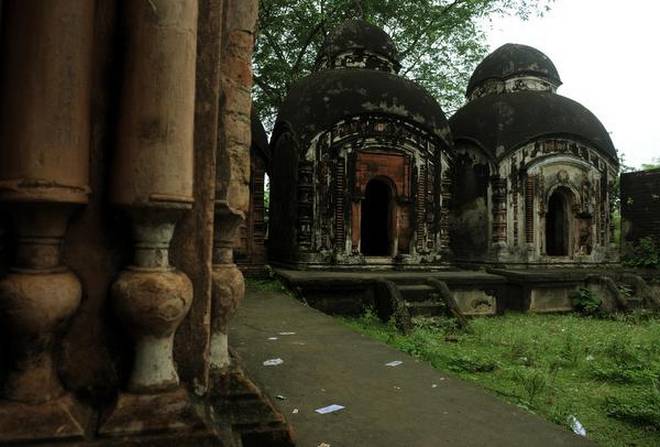
Pathra’s ancient temples | Photo Credit: Ashok Nath Dey

Today, 19 of the 34 temples in Pathra in West Bengal have been restored to their former glory

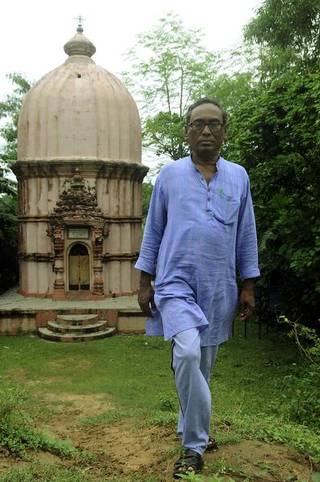
“Bash on.” That’s probably what Yeasin Pathan says to himself when he wakes up every morning. You just can’t miss his never-say-die attitude when you meet the frail 66-year-old. How else do you explain the grit of a Class IX dropout, and a devout Muslim, who has been crusading for the conservation of 34 temples for the last 42 years?

Pathan has been in love with Hindu temples ever since he was a child. Looked upon with suspicion by both Hindus and Muslims for this long love affair, Pathan is today inured to the jibes, threats and hurdles.

The story begins when Pathan was a child. Captivated by the terracotta temples he chanced upon in Pathra, a village close to his own, in Midnapore district of West Bengal,  their dilapidated condition set him thinking. And by the time he was 17, he had kick-started his ‘save the temples’ mission. This was in 1971. He had no archaeology or history degree to show on his CV, but Pathan realised the temples were “part of our heritage, and people should be prevented from walking away with bits of it.”

Garnering support

To start with, Pathan got the villagers together, Hindus, Muslims and Adivasis. He told the people of Pathra it was in their hands to preserve their heritage for posterity. As expected, Pathan found himself up against opposition. People from his community were enraged he was advocating the preservation of structures where idols are worshipped. “The Hindus of the area were miffed too, because I prevented them from stealing the bricks off the temples and selling them,” he says, smiling.

Statues for sale

Even the descendants of the zamindars who had built the structures were trying to make money by selling carvings and statues. Pathan was, clearly, surrounded by a ring of fire. That’s when innate wisdom told him he must give the locals a vision to aspire for: that if Pathra became a tourist destination, “the village and its adjoining areas would get roads, electricity, water, and business.” The semblance of a truce followed.

Under his leadership the local community set about first clearing the wild growth of weeds around the monuments. Then, Pathan mobilised rallies at the district headquarters in Midnapore to demand funds. There were scuffles, and he would rush to Midnapore to bring the police to Pathra.

Yeasin Pathan | Photo Credit: Ashok Nath Dey

But his efforts began to bear fruit.

Money started trickling in; IIT Kharagpur stepped in to help with the conservation. Pathan set up an NGO, Pathra Archaeological Preservation Committee, which, apart from its core agenda, also became a forum for communal harmony. The then Planning Commission Deputy Chairperson, Pranab Mukherjee, sanctioned ₹20 lakh for Pathra. The biggest victory for Pathan was when the Archaeological Survey of India (ASI) took over restoration work in 2003.

Guide for tourists

Meanwhile, Pathan realised he needed a steady source of income. He now had a wife and four children. To make ends meet, in 1974 he became an attendant in a school in Hatiholka, his village. He also worked as a stringer for newspapers, and when curious tourists visited Pathra, Pathan became their guide. But he never wavered in his mission to conserve the temples.

Although Pathra’s residents acknowledged his pioneering work over the years, he has faced testing times. Gasping for breath ( he has two blockages in his heart), he recounts how he had to go into hiding after the Babri Masjid demolition in 1992. “Muslims wanted to lynch me for protecting temples while Hindus were breaking mosques.”

Only one guard

Today, 19 of the 34 temples in Pathra have been restored to their former glory. All under the eagle eye of Pathan, who says ruefully: “Such a big area, and only one guard to protect it.” Some 9.5 acres around the temples are being beautified by ASI. Pathan’s new fight is to get 70 farmers their compensation for the land they had to give up around the temple.

“You know how it is… unless we make a noise, the state will take its own sweet time,” he says.

Dressed in a cotton shirt, trousers and chappals, the bespectacled Pathan retired from his school job in 2012, and gets a pension of ₹9,600 per month. His family wants him to take it easy now. The years of travel, the erratic sleep and irregular meals, have all taken a toll on his health. He can’t afford treatment for his heart and kidneys.

“Stay at home; rest, they say. But if I stop now, all those years of fighting will go down the drain. Now is when everything should fall into place,” says a tired but eternally optimistic Pathan.

Professional procrastinator and looker out of window, the writer works at O.P. Jindal University.

source: http://www.thehindu.com / The Hindu / Home> Society> Rubric / by Priya Kannungo / October 27th, 2018

A monument of generosity

Lucknow, UTTAR PRADESH / NEW  DELHI  :

BadaImambaraMPOs28oct2018

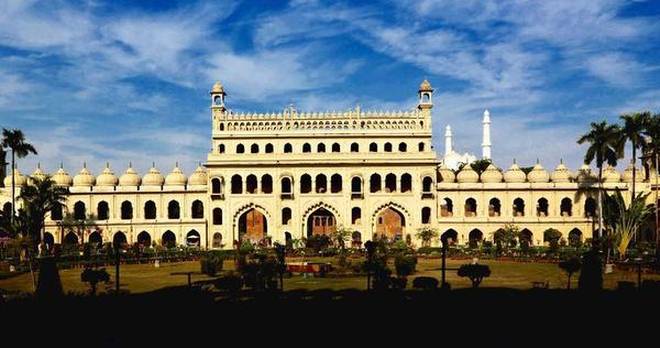
In the Bara Imambara which was built to employ people struck by a famine in 1784

I grew up in Lucknow amidst magnificent Nawabi architecture, in the syncretic and gentle culture of Awadh. It was a way of life where others were given more importance over the self. “Pehle aap (you first)” was a commonly used phrase while speaking. It is always a pleasure to return to the city that is said have once been ruled by Lakshman; where excavations show a continuous settlement dating from the first millennium BCE through the early Gupta, medieval and modern periods.

In 1732, Mughal emperor Muhammad Shah appointed Saadat Khan Burhan-ul-Mulk as the governor of Awadh. With Faizabad as his capital, Burhan-ul-Mulk was first in the line of rulers, known as the Nawabs of Awadh, whose contribution to Indian culture and history is invaluable. Asaf-ud-Daula, the fourth Nawab of Awadh, shifted the capital from Faizabad to Lucknow, and from 1775 to 1856, Lucknow was built by the Nawabs as a unique architectural city with a syncretic culture.

Features of Nawabi architecture

The geography of Lucknow meant that stone and marble, the main features of Mughal architecture, had to give way to lakhauri brick-and-lime plaster buildings. The main features of Nawabi architecture were bulbous domes, vaulted halls, chhatris and double arches, with the inner one pointed and the outer one foliated, but the main improvisation given the resources and the unavailability of stone was the beautiful stucco ornamentation on buildings along with plaster decoration in the interior. The stucco work gave a deep relief even on flat walls, but unfortunately, much of it has been lost in repairs and whitewashing. The variety of motifs ranging from floral designs, false arches and false domes that produce an exceptional surface articulation of walls, columns and ceilings remain for us to marvel at.

Many stunning religious and secular buildings were constructed, but as the Nawabs were Shia, magnificent imambaras were their special contribution to architecture. An imambara is the place where congregational assemblies are held to commemorate the sacrifices of Imam Hussain, the grandson of Prophet Muhammad who was martyred along with friends and male members of his family in the Battle of Karbala by Yezid, the ruler of Syria.

Of these buildings, nothing is grander than the Bara Imambara, built as a relief measure for a populace stricken by famine in 1784. Construction continued till the famine ended. It was a hard time for all, including the elite. To ensure that they were not embarrassed to be seen working for daily wages, it is said that payment was made at night. This gave rise to the saying, “Jisse na de Maula, use de Asaf-ud-Daula (he who doesn’t receive from Allah is provided for by Asaf-ud-Daula)”.

Nawab Asaf-ud-daula (1775-1797 CE) chose Kifayatullah as the main architect. The place chosen had the hut of an old woman, Laso Saquum, in which she kept a small tazia, a replica of the shrine of Imam Hussain. She was reluctant to give her land but when Asaf-ud-daula promised to keep her tazia in the imambara, she gave the land for free. The tazia is kept there even today. The architect only asked for land for his burial as fees. He is buried, along with Asaf-ud-Daula, in the central hall of the imambara.

Inside the Imambara

One can enter it through one of the two three-arched gateways separated by a grassy forecourt. Once you enter the second gateway, the sheer size and magnificence of the Bara Imambara affects you. On the left is the exquisite seven-level Shahi Baoli (stepwell), initially dug as a well during construction. As it was a perennial source of water, it was built as a guesthouse later. On the right is the Asafi mosque on a raised plinth flanked by minarets with an impressive flight of steps. It faces Mecca.

The main hall with its vaulted roof is one of the largest of its kind in the world. It is unsupported: no column, pillars, wood or iron was used here. Its unique architectural design gave birth to the famous bhool bhulaiyya, which is above the hall and came about unintentionally to support the weight of the building. This is a labyrinth of more than 1,000 passageways and 489 identical doorways. It is among the few existing mazes in the world. Its acoustics are such that a match being struck on the other side of the hall can be heard. I like exploring it but always with a guide. After all, one must live to explore another day!

source: http://www.thehindu.com / The Hindu / Home> Opinion> Columns> Where Stones Speak / by Rana Safvi / October 28th, 2018

Ateeqa Bano And Her Collected Pieces Of History | #IndianWomenInHistory

Sophore, Srinagar , JAMMU &KASHMIR :

AteeqaFPMPOs27oct2018

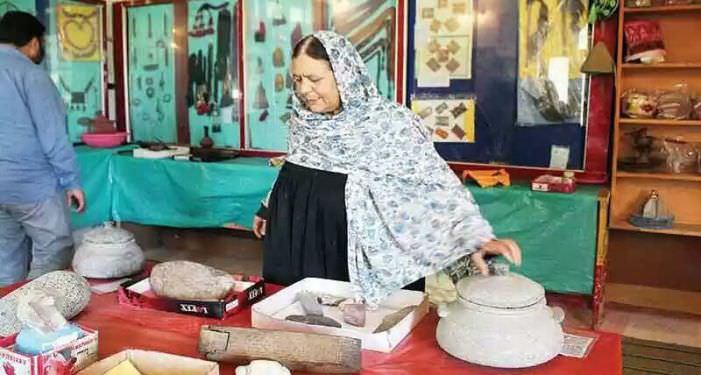
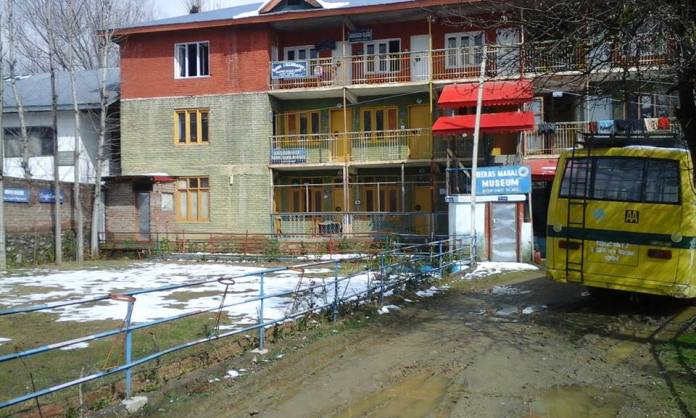
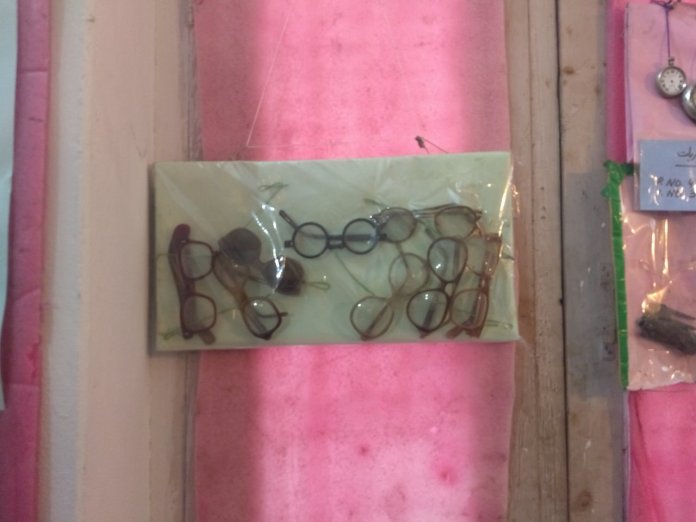
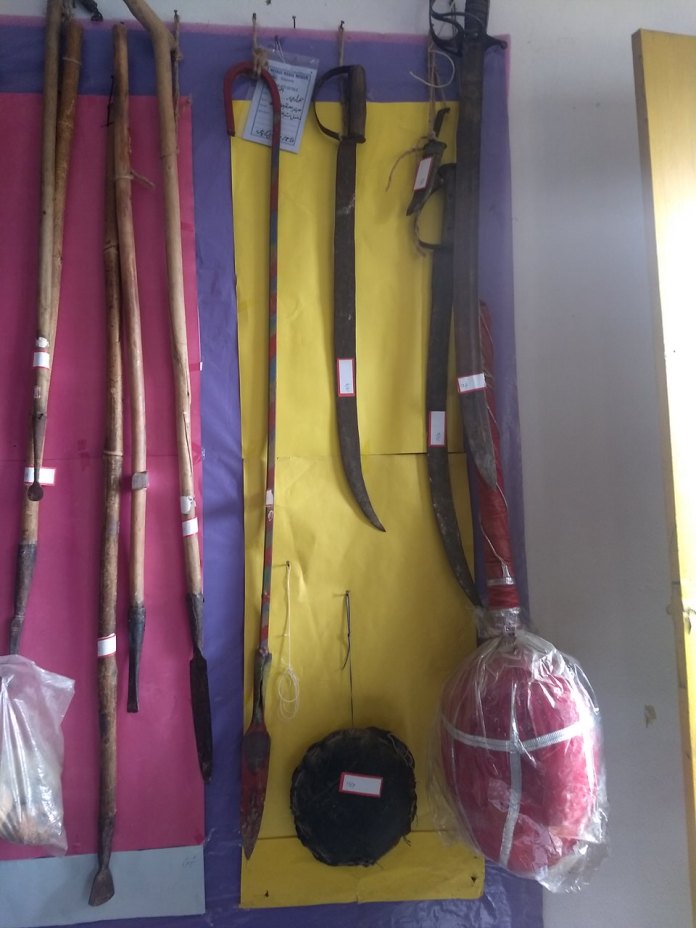
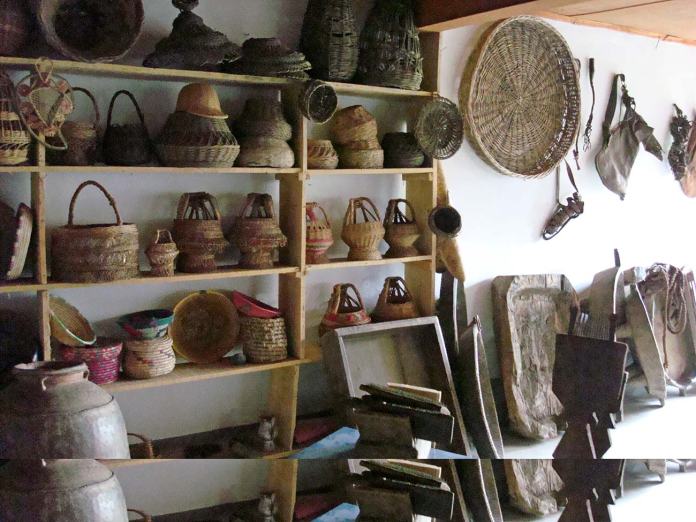
In the summer of 2014, as I walked past colourful stalls at Srinagar’s exhibition ground, the quiet and less colourful one in a corner caught my attention. Its tables were decorated with vintage Kashmiri crafts, coins, and manuscripts. The stall belonged to Meeras Mahal, a privately run museum.

Image Credit: Meeras Mahal Blog

As I and a fellow acquaintance went closer, we were warmly welcomed by an elderly woman. She made us sit and introduced herself humbly. “Ateeqa Bano, founder of Meeras Mahal,” she said. She walked us through the collection and told us stories about her journeys to get each of these artefacts.

Ateeqa’s narration clearly revealed her love for her collection. She also learnt that my friend had preserved a handwritten Quran at his place. She took his contact and invited us to her museum at Sopore, nearly 52 km from Srinagar.

Weeks later, she appeared at his doorstep with a hope to acquire the handwritten Quran. She was unable to strike a deal here but she never gave up on her other pursuits. Her failure here demonstrates how difficult the curation of items was.

The journey of forming a museum took a shape after Ateeqa’s retirement from government services in 1998. 2001 onwards when the museum was set up, it meant everything. It was initially set up in a small room in BEd college at Noorbagh in Sopore and later shifted in 2008 it to present building, all run and maintained by her expenses.

AteeqaMPOs27oct2018

She would convince people to donate things to them and when the days weren’t all sunny, she would offer something in return. The goods would then be indexed and preserved.

Ateeqa’s looks resembled that of an ordinary Kashmiri woman but her hard-work and foresight went way beyond. I was never lucky enough to hear her story from her but even months after her death, the museum and the collection are reminiscent of her.

A corner in photo gallery contains collage pictures of famous women from Kashmir or who are in some ways associated with Kashmir. The wall, very diligently, compels one to think about the women from Kashmir who always remain unrecognized and unacknowledged and teaches us something that most other museums or schools don’t.

Her compassion for women’s rights was also revealed to me through the caretaker of the museum who said that Ateeqa had given her space to live close to the museum along with her children after she had been ousted by her in-laws. She recalls her days with Ateeqa Bano as a golden phase that she would never forget.

Ateeqa02MPOs27oct2018

Ateeqa Bano chose an unorthodox way of life. After her father’s death, she decided to live forever with her mother and never marry. The decision to not marry is still a rebellious one in Kashmiri society and for her to make this choice decades back must have invited criticism from all. Apparently, she never budged and continued doing what she loved doing the most – her work.

From Sopore in the North to Shopian in the South to every district in Kashmir, Ateeqa travelled to collect things that represented Kashmir in many ways. She would travel for days and nights to obtain seemingly mundane goods and preserve them as a way to preserve the past for forthcoming generations.

The travels were not always easy. “At times, she would walk for miles altogether and ride a horse too when roads were not motorable,” says Maryam Masoodi, wife of her nephew. At times, she would be dissuaded by family, considering the effort it required. Maryam remembers how she would tiptoe inside the house in evenings when she got back home late from her work, fearing reproval from the family members.

On one occasion when Maryam accompanied her to her house in Kupwara, she went to rooftops to look for collectables. Maryam and others at the museum were fascinated and realized that no one else could have done it.

Image Credit: Kashmir Life

Today, at the museum, the caretakers refer to visitors as guests and regale them with stories of Ateeqa Bano. Before her death, she would spend days here. She had also built a blueprint to develop the museum on modern lines. However, because of her illness, she couldn’t accomplish this task. Her nephews are very keen to make her dream come true while she rests in her grave in the lawns of the museum.

source: http://www.feminisminindia.com / Feminism In India – FII / Home> History / by Arshie Qureshi / December 27th, 2018