Malik Muhammad Jayasi’s Padmaavat in Hyderabad. | Photo Credit: The Hindu
Digitised manuscript of epic tale draws scholars from all over
Away from the violence and din surrounding the release of Padmaavat, a nearly 200-year-old copy of Malik Muhammad Jayasi’s 16th-century epic poem, on which the film is based, sits in the library of the Jamia Nizamia Islamic seminary here.
Records at the Jamia, which is itself a 140-year-old institution, show that the book was copied in 1239 Hijiri (Islamic calendar), which corresponds to 1823 CE.
The title finds a place in the library alongside over 2,500 books and rare manuscripts, one of which — on Islamic jurisprudence — is 700 years old.
In the poem, the Sufi Jayasi speaks of Padmavati, princess of Sinhaldweep in Sri Lanka, and Ratansen, the King of Chittor. After hearing of the princess’ beauty from Hiraman, a parrot, the king, who is already married to Nagmati, embarks on an arduous journey to Sinhaldweep, and later marries the princess.
But there is a twist: Devpal, another king, too, has heard of Padmavati’s unmatched beauty and covets her. A battle ensues between the two kings. Meanwhile, a banished courtier seeking vengeance tells Alauddin Khilji of Padmavati and he marches to Chittor. But upon his arrival, he sees that the princess has committed jauhar.
The Jamia’s library is on the first storey in one of several buildings on its sprawling campus in the Old City. There are several cupboards and shelves which contain books, most of them handwritten, on different disciplines. One has books on tasawwuf, or Sufi mysticism, written in Farsi, others house books on Arabic grammar, and a third has books on liturgy in Urdu.
But perched on a shelf marked adab, or literature, is Padmaavat. The poem, handwritten in delicate nastaliq calligraphy on ageing paper, is contained within fine boundaries in red ink. Its 216 pages, which narrate the tale, are largely well-preserved. It has also been digitised.
The Jamia’s chief librarian of 20 years, Mohammed Fasihuddin Nizami, alumnus of the Islamic varsity, points out that the book belonged to its founder Maulana Anwarullah Farooqui.
Reverentially referring to Maulana Farooqui as Baani-e-Jamia, he says, “He was the vazeer (Minister) for the Umoor-e-Mazhabi (ecclesiastical affairs) in the Hyderabad State. He tutored the sixth Nizam Mir Mahbub Ali Khan and seventh Nizam Mir Osman Ali Khan. Once he was appointed Minister, it was realised that the Hyderabad State did not have a Jamia. The Jamia Nizamia is a result of this realisation. This copy of Padmaavat is a part of his vast collection.”
Mr. Nizami explains how the book reached Maulana Farooqui’s library. “While we do not know for how much [this copy of] Padmaavat was procured, Baani-e-Jamia was a Minister and he had the required resources at his disposal. He had men and money to procure books,” he says.
The seasoned librarian then turns to the last page of the book and reads the name of the calligrapher who painstakingly made of the copy of the original so that it could be preserved for posterity, “Az qalam Tilokchand.” From the pen of Tilokchand. Apart from using scientific methods to preserve the book, the Jamia has digitised it for scholars. Researchers have arrived here from West Asian countries and even Japan. “We cannot say that there is an increase in footfalls as the general public is unaware of its [the copy of Padmaavat] existence here. Primarily, the kutub khana is for scholars and researchers.
The book is old and needs to be preserved. We do not want to damage the manuscript by wear and tear. This is why we let scholars use the digitised version,” Mr. Nizami says.
But there is more to the poem than meets the eye. Jayasi’s work is deeply allegorical as is the nature of Sufi mysticism. Each character in Padmaavat has an implied meaning.
Speaking to The Hindu, noted historian Rana Safvi said, “The parrot is the spiritual teacher. Ratansen is the Sufi seeker. Padmavati is the wisdom which he is seeking. Nagmati, the first wife, is the material world. Ratansen brings Padmavati to his palace. There is a fight between the two wives. He tells them that they have to live together. This is the existence of the temporal and spiritual world.”
source: http://www.thehindu.com / The Hindu / Home> News> Cities> Hyderabad – Sunday Special / by Syed Mohammed / Hyderabad – January 27th, 2018
Entrepreneurs help train others & create more job opportunities
Abdul Khair, Uttam Kumar Hui & Saif Ali Khan
Calcutta:
Abul Khair, 59, of Tiljala had no fixed income till 2011. Life changed at 50 when he joined a garment factory as a tailor, earning Rs 250 a day. Two years later, he started his own manufacturing unit.
Khair’s unit today has an annual turnover of around 3.5 crore and he dreams of opening his own store.
“I failed to get a permanent job despite clearing my Madhyamik exam,” said the man who would sustain his family of six with what he earned from odd jobs.
Things took a turn for the better when he got the tailor’s job in 2011. Soon, he became a superviser with a monthly salary of Rs 10,000.
But the biggest leap came when, encouraged by his employers, Khair started his own business in 2013. “I got a place in Tiljala and started off with five machines. We would stitch garments for women,” said Khair, who now has 150 machines and 200 people working for him.
But Khair continues to live simply in a rented flat. “I have saved for my children’s education,” he said.
A network of 30 city-based industrialists and professionals from various fields have come together to help people like Khair give shape to their start-up dreams. ALFA Network’s Calcutta chapter hopes to produce 100 entrepreneurs every year in a city often considered poor in opportunities. Till now, they have given wings to 10 start-up dreams in the city.
“We encourage self-sufficient business units in various industries. Those we help would continue empowering others and thus the chain will grow,” said Vivek Goyal, the co-founder and director of clothing brand Zink London and a mentor at Alfa Network. Khair is his protege.
Starting his own training units across nine districts has helped Uttam Kumar Hui, 48, buy his dream home and car. From being a school teacher and living in a rented house to providing employment to others, Hui has come a long way.
“I was in the telecom industry and government sector when I realised that administration was my forte. What fired my ambition was a job as the manager of 75 skill centres at Globsyn Skill Training Institute,” Hui said.
His employer Rahul Dasgupta, the director of Globsyn Business School and a member of ALFA Network, gave him the initial push and helped him set up five units. Within a year, Hui managed to train 1,159 students and helped them get jobs.
“My centres provide administrative skill training for retail, hospitality, banking and mining industries. We have centres across East and West Midnapore, Hooghly, North and South 24-Parganas, Murshidabad and Asansol,” said the man whose annual income has gone up from Rs 4 lakh to Rs 10 lakh.
Like Khair, Hui is trying to create many more entrepreneurs through his training centres.
“We want to create empowering stories every month. All start-ups need an initial push that ALFA Network will provide. Then the entrepreneurs are free to follow their own business module. Sometimes people are in a wrong job. I met a graphic designer recently who is a better landscape artist. I am now helping him open an art studio,” Dasgupta said.
Trust is the only motto at ALFA. “We trust our resources and expect them to live up to our expectations,” said Aditya Vikram Mehta, director of Jaypee India and an ALFA member who changed the life of Saif Ali Khan, 24, a bouncer who now has his own security agency.
“It gives me a high to think that I am training and deploying people at various nightclubs. I train them for 20 days. It is important for bouncers to assess the guests,” said the Beck Bagan resident who earns around Rs 80,000 a month.
source: http://www.telegraphindia.com / The Telegraph,Calcutta,India / Home> Calcutta / by Chandreyee Ghosh / April 12th, 2018
Drypetes kalamii: The plant is found in the wet, shaded areas of subtropical, moist semi-evergreen forests, at heights of 50-100 metres.
The plant is named after former President Abdul Kalam
Scientists from the Botanical Survey of India have identified a new plant species from two protected National Parks in West Bengal. Named Drypetes kalamii, it is a small shrub found to be shorter version of its close relative Drypetes ellisii. This adds to the rich floral wealth of India.
Standing just 1 metre tall, the newly described plant is unisexual in nature, which means they have separate male and female plants.
“During the survey and documentation of the flora of Buxa National Park, West Bengal (core area of Buxa Tiger Reserve), in 2011, I came across these plants, but could not identify them. Another author of the paper had collected a new female plant with fruits from Jaldapara National Park, West Bengal. The fruiting specimen can be easily identified in Drypetes. We later found that both the plants belonged to the same species. Further consultations with plant biologists from India and abroad helped us confirm its new identity,” says Dr Gopal Krishna from BSI who is the first author of the paper published in Phytotaxa. The researchers compared the new plant with other Drypetes species and found differences in the leaf, flower and fruit structures. There are about 220 species of Drypetes identified across the globe of which 20 have been reported from India.
Medicinal cousin
“The new species is a close relative of a medicinal plant known in Sanskrit as Putrajivah”, says Dr K. Karthigeyan, scientist at BSI and corresponding author of the work. “NASA had recently named a new bacterium after Dr Kalam, and we also chose his name as he is a big inspiration for students and young researchers,” adds Dr Karthigeyan.
The new species is found in wet, shaded areas of subtropical moist semi-evergreen forests, at a height ranging 50-100 metres. With pale yellow flowers in clusters and bright orange to red fruits, the plant is exclusive to the two national parks.
By following the IUCN (International Union for Conservation of Nature) rules, the scientists have provisionally assessed the plant to be “Critically Endangered”. The report states forest fires and grazing as two plausible threats to the new species.
source: http://www.thehindu.com / The Hindu / Home> Science / by Aswathi Pacha / February 24th, 2018
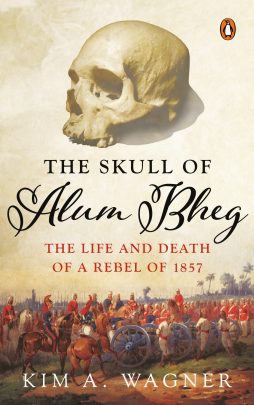
In 1963, a human skull was discovered in a pub in Kent in south-east England. A brief handwritten note stuck inside the cavity revealed it to be that of Alum Bheg, an Indian soldier in British service who was executed during the aftermath of the 1857 Uprising. Alum Bheg was blown from a cannon for having allegedly murdered British civilians, and his head was brought back as a grisly war-trophy by an Irish officer present at his execution. The skull is a troublesome relic of both anti-colonial violence and the brutality and spectacle of British retribution.
Kim Wagner presents an intimate and vivid account of life and death in British India in the throes of the largest rebellion of the nineteenth century. Fugitive rebels spent months, even years, hiding in the vastness of the Himalayas before they were eventually hunted down and punished by a vengeful colonial state. Examining the colonial practice of collecting and exhibiting human remains, this book offers a critical assessment of British imperialism that speaks to contemporary debates about the legacies of Empire and the myth of the ‘Mutiny’.
source: http://www.penguin.co.in / Penguin House / Books> Non-Fiction
The skull belonged to a 32-year-old Indian soldier who revolted against the British
In 2014, while sitting in an office in London’s Mile End, historian Kim Wagner received an email from a couple who said they owned a skull.
Dr Wagner, who teaches imperial history at Queen Mary University of London, says the couple told him they did not feel comfortable with the “thing” in their house, and did not know what to do with it.
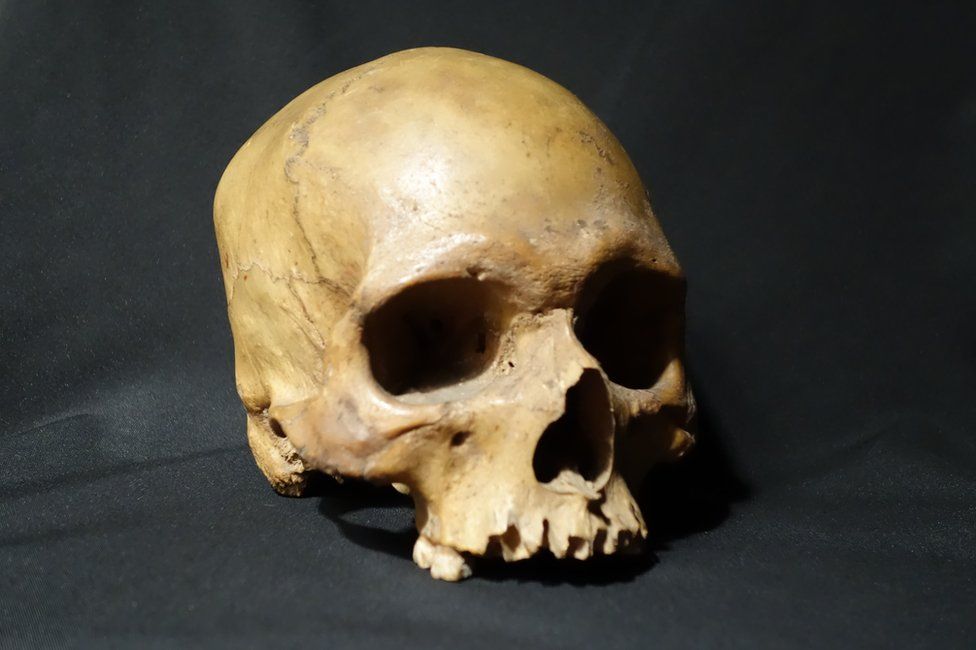
The lower jaw of the skull was missing, the few remaining teeth were loose, and it had the “sepia hue of old age”.
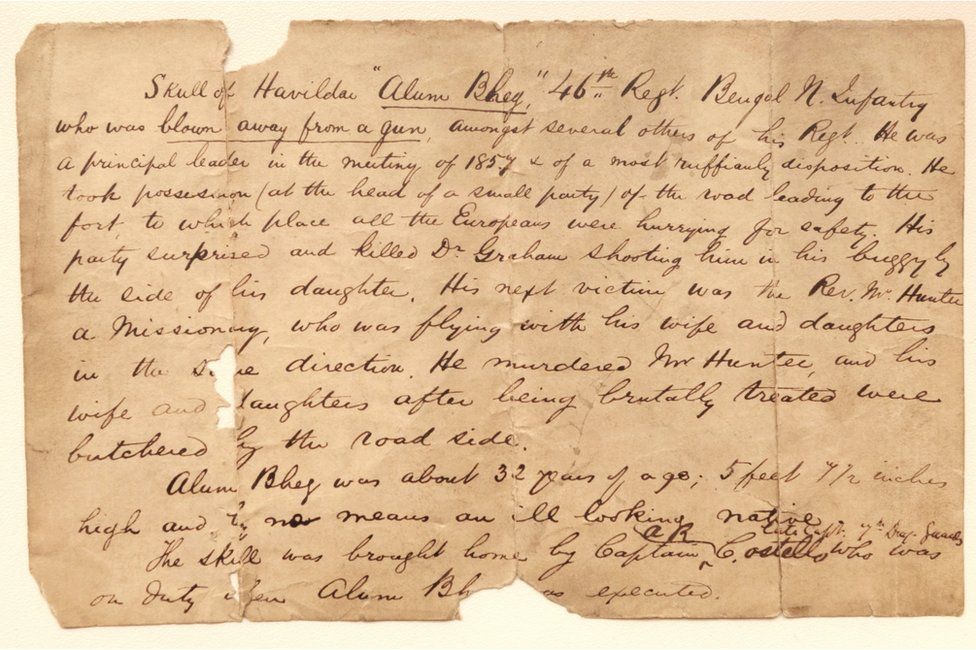
But what was remarkable was a detailed handwritten note in a neatly folded slip of paper inserted in an eye socket. The note told the brief story of the skull:
Skull of Havildar “Alum Bheg,” 46th Regt. Bengal N. Infantry who was blown away from a gun, amongst several others of his Regt. He was a principal leader in the mutiny of 1857 & of a most ruffianly disposition. He took possession (at the head of a small party) of the road leading to the fort, to which place all the Europeans were hurrying for safety. His party surprised and killed Dr. Graham shooting him in his buggy by the side of his daughter. His next victim was the Rev. Mr. Hunter, a missionary, who was flying with his wife and daughters in the same direction. He murdered Mr Hunter, and his wife and daughters after being brutally treated were butchered by the road side.
Alum Bheg was about 32 years of age; 5 feet 7 ½ inches high and by no means an ill looking native.
The skull was brought home by Captain (AR) Costello (late Capt. 7th Drag. Guards), who was on duty when Alum Bheg was executed.
A handwritten note inserted in an eye socket told the brief story of the skull
What was clear from the note was that the skull was of a rebel Indian soldier called Alum Bheg, who belonged to the Bengal Regiment and who was executed in 1858 by being blown from the mouth of a cannon in Sialkot (a town in Punjab province located in present-day Pakistan); and that a man who witnessed the execution brought the skull to England. The note is silent on why Bheg committed the alleged murders.
Native Hindu and Muslim soldiers, also known as sepoys, rebelled against the British East India Company in 1857 over fears that gun cartridges were greased with animal fat forbidden by their religions. The British ruled India for 200 years until the country’s independence in 1947.
The couple in Essex had trawled the internet and failed to find anything about Bheg. They contacted Dr Wagner after they found his name as a historian who had authored a book on the Indian uprising, often referred to as the first war of independence.
‘Grisly trophy’
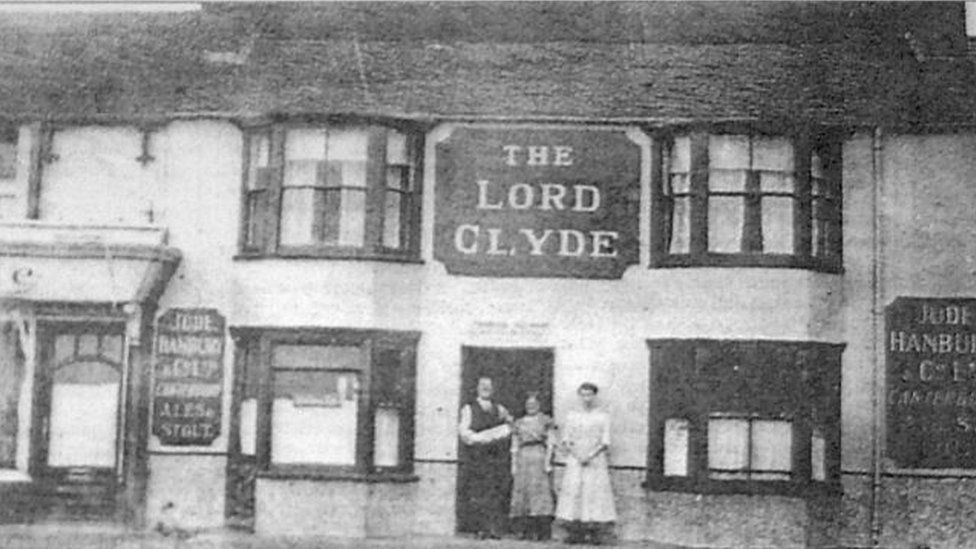
On a wet November day, which was also his birthday, Dr Wagner met the couple. They told him that they had inherited the skull after one of their relatives took over a pub in Kent called The Lord Clyde in 1963, and found the skull stored under some old crates and boxes in a small room in the back of the building.
Nobody quite knows how the skull ended up in the pub. The local media had excitedly reported on the “nerve-shattering discovery” in 1963 and carried pictures of the new pub owners “proudly posing with the grisly trophy” before it was put up on display at the pub. When the owners died, it was finally passed on to their relatives who simply hid it away.
“And so it was I found myself standing in a small train station in Essex with a human skull in my bag. Not just any other skull but one directly related to a part of history that I write about and that I teach my students every year,” says Dr Wagner.
What was very clear, he says, is that it was a “trophy skull, irrevocably linked to a narrative of violence”.
But first Dr Wagner had to confirm that the skull matched the history outlined in the note, written by an unknown person. At London’s Natural History Museum, an expert examined it and suggested that it dated back to the mid-19th Century; and that it definitely belonged to a male of Asian ancestry, who was possibly in his mid-30s.
The skull was discovered in a pub in Kent called The Lord Clyde in 1963
There was no sign of violence, said the expert, which is not unusual in the case of execution by cannon, where the torso takes the full impact of the blast. The skull also bore cut marks from a tool, suggesting that the head was defleshed by being boiled or being left exposed to insects.
Dr Wagner says he did not believe immediately that it would be possible to find out very much more about Bheg.
Individual soldiers rarely left any traces in the colonial archives, with the possible exception of someone like Mangal Pandey, who fired the first shot at a British officer on 29 March 1857 on the outskirts of Kolkata and stirred up a wave of rebellion in India against the colonial power.
Bheg’s name was not mentioned in any of the documents, reports, letters, memoirs and trial records from the period in the archives and libraries in India and UK. There were also no descendants demanding the return of the skull.
But there were a few helpful discoveries.
Dr Wagner found the letters of Bheg’s alleged victims to their families. What proved crucial, he says, in piecing the story together were the letters and memoirs of an American missionary, Andrew Gordon, who lived in Sialkot during and after the uprising. He knew both Dr Graham and the Hunters – Bheg’s victims – personally and he had attended the soldier’s execution.
There was also a revealing report in the illustrated newspaper, The Sphere, in 1911 on a grisly exhibit in a museum in Whitehall:
The ghastly memento of the Indian Mutiny has, we are informed, just been placed in the museum of the Royal United Service Institution at Whitehall. It is a skull of a sepoy of the 49th Regiment of Bengal Infantry who was blown from the guns in 1858 with eighteen others. The skull has been converted into a cigar box as we see.
The newspaper said that “while we may be able to understand all the savagery of the terrible time – the cruelty of the natives and the cruel retribution that followed – is it not an outrage that a memento of our retribution, which in these days would not be tolerated for a moment, should be placed on exhibition in a great public institution?”
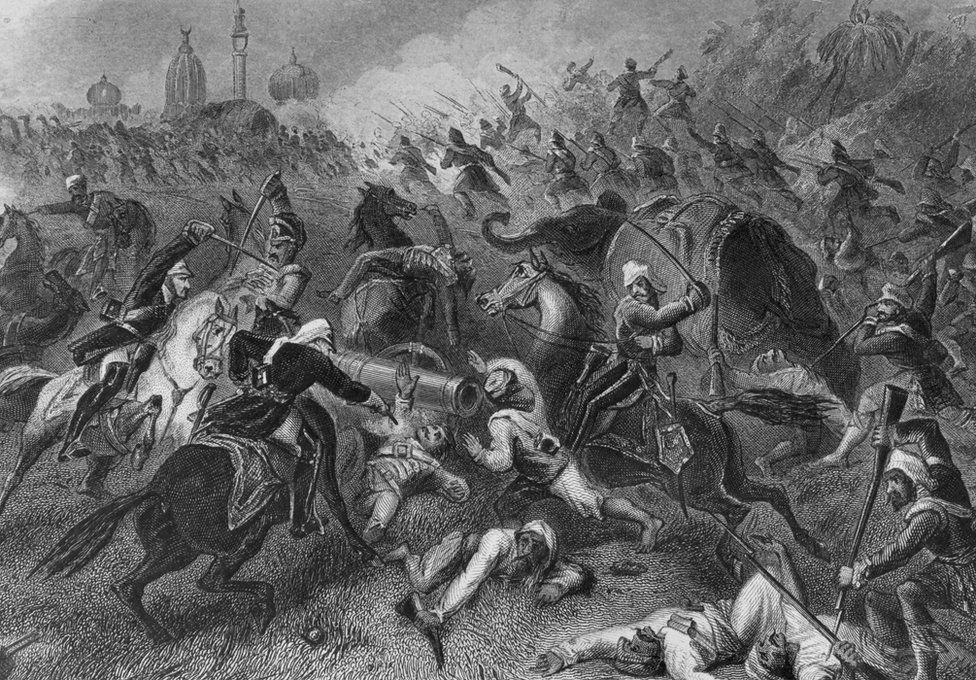
Indian soldiers rose up against the British in 1857
Battling a famine of evidence, Dr Wagner began researching Bheg. He worked in the archives in London and Delhi, and travelled to Sialkot to locate the forgotten battlefield of the four-day Trimmu Ghat clash in July 1857 – during which the Sialkot rebels, including Bheg, were intercepted and defeated by General John Nicholson. The general was mortlly wounded two months later leading the assault to recapture Delhi from the mutineers.
He relied on letters, petitions, proclamations and statements by rebels after the outbreak of the uprising, went through 19th Century newspaper databases and scanned books.
“It was only after I spent some time researching the story, in the UK and in India, that I managed to piece a historical narrative together and realised that there was a bigger story to tell,” he told me.
‘Detective novel’
The result is Wagner’s new book, The Skull of Alum Bheg, a vivid page-turner on life and death in British India during the largest anti-colonial revolt of the 19th Century. Yasmin Khan, associate professor of history at the University of Oxford, says the book “reads like a detective novel and yet is also an important contribution to understanding British rule and the extent of colonial violence”.
Dr Wagner writes that his book sets out to “restore some of the humanity and dignity that has been denied to Alum Bheg by telling the story of his life and death during one of the most dramatic episodes in the history of British India”.
“I hope I have prepared the ground for Alum Bheg to finally find some peace, some 160 years late.”
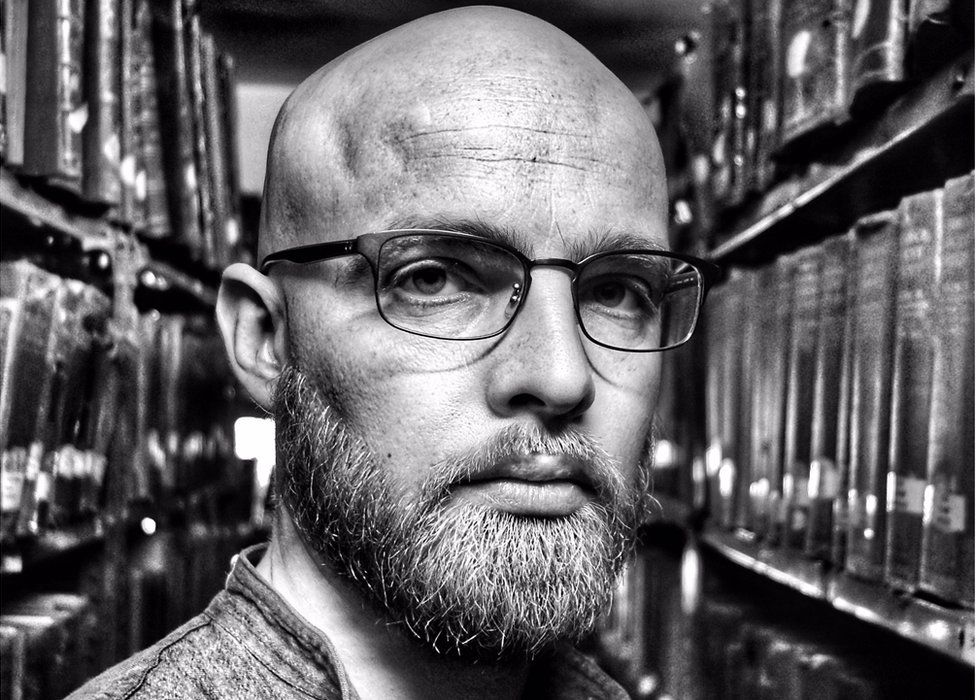
Kim Wagner says the ‘final chapter of Alum Bheg’s story has yet to be written’
In Dr Wagner’s telling, Alum Bheg – properly transliterated as Alim Beg – was a Sunni Muslim from northern India. The Bengal Regiment was raised in Cawnpore (now Kanpur) in today’s Uttar Pradesh state, and it is likely that Bheg hailed from the region. Muslims made up around 20% of the largely Hindu regiments.
Bheg was responsible for a small detachment of soldiers, and had a gruelling routine, guarding the camp, carrying letters and working as a peon for higher officials of the regiment. After the revolt in July 1857, he appeared to have evaded the British troops until his capture and execution nearly a year later.
Resting place
Captain Costello, who was described as being present at the execution in the note, was established as Robert George Costello. Dr Wagner believes he is the man who brought the skull back to Britain. He was born in Ireland and sent to India in 1857, and retired from his commission 10 months later, boarded a steamer from India in October 1858, and reached Southampton a little more than a month later.
“The final aim of my research is to prepare for Bheg to be repatriated to India, if at all possible,” Dr Wagner says.
He says there have been no claims to the skull, but he’s in touch with Indian institutions and the British High Commission in India is also involved in the initial discussions.
“I am very keen for Alum Bheg’s repatriation not to be politicised, and for the skull not to end up in a glass-case in a museum or simply be forgotten in a box somewhere,” says Dr Wagner.
Dr. Wagner says Bhegh should be buried in an island on the current India- Pakistan border
“My hope is for Alum Bheg to be repatriated and buried in a respectful manner in the near future.”
A fitting place to bury Bheg, he believes, would be on the island on the Ravi river, where the sepoy and his fellow soldiers had taken refuge after surviving the first day of the battle and which today marks the border between India and Pakistan.
“Ultimately, that is not for me to decide, but whatever happens, the final chapter of Alum Bheg’s story has yet to be written.”
Photographs courtesy Kim Wagner
source: http://www.bbc.com / BBC News / Home> India / by Soutik Biswas / India Correspondent / April 05th, 2018
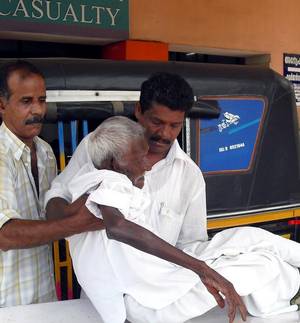
Madathil Abdul Azeez helping a patient. S. RAMESHKURUP | Photo Credit: S_RAMESHKURUP
This member of Olavanna grama panchayat has been a rescue volunteer for 35 years
“I have taken 2,628 dead bodies to hospitals across Keralafor autopsy till date,” Madhathil Abdul Azeez said, not happy with the mention of ‘more than 2,500 bodies.’ This member of the Olavanna grama panchayat has been a rescue volunteer for most of his life and has been instrumental in saving umpteen number of lives.
Azeez’s phone number is on speed dial for all those who deal with emergencies in Kozhikode and nearby districts. Whenever and wherever there is a major accident or a life-threatening situation, he will be one of the first volunteers on the spot.
“This is the mission of my life. No job or no family function is more important than helping people in life-threatening situations,” Azeez told The Hindu on the sidelines of yet another function where he was honoured for his selfless acts.
Mr. Azeez, whose life story Daivam Paranjittanu (Because God asked me to) written by Razaq Kalleri, was released on Wednesday, has been doing his duty to fellow human beings, without expecting any remuneration, for 35 years. He was one of the volunteers at Pookkipparamba when a bus caught fire there almost a decade and a half ago. He was also there at Kadalundi when a train fell into the river in 2001. Azeez was one of the first to come to the aid of those in need on the coasts of Kozhikode during Cyclone Ockhi. Though he has retrieved many bodies from massive accident sites, many of whom may have been alive, there are nine people whom he rescued personally from a hanging rope or blazing fire.
He was only 17 when he first dove into a river to rescue a child in his neighbourhood. Though he could not save the child, the dive changed his life forever. Now at 53, Azeez gets involved in situations no one else would dare to, including retrieval of dead bodies that are days old.
Having been honoured with many awards, Azeez considers the honour accorded by his friends and well-wishers on April 4 as a special one. A docu-fiction based on him — Avasanathe Kai (The Last Hand) — by Santhosh P. Velliman was also released on the occasion.
source: http://www.thehindu.com / The Hindu / Home> News> States> Kerala / by Aabha Raveendran / Kozhikode – April 07th, 2018
A file photo of the iconic Moazzam Jahi Market, photos of which were part of the exhibition organised by the Deccan Heritage Trust in partnership with Heritage Buffs at the Ibrahim Mahal during Nizam VII’s 132nd Birth Anniversary celebrations.
Hyderabad:
Ninety rare still photographs depicting the public buildings constructed by Mir Osman Ali Khan, the Nizam VII were put on display as part of his 132nd Birth Anniversary celebrations.
The images, drawn from private collections, date back to the Nizam’s rule and include a picture of the Osmania Hospital in the 1920s, and an aerial view of Hussainsagar, showing a functioning thermal power station dating back to the 1940s.
On display was also a picture of the inauguration of a church in Secunderabad, and even rarer images of restoration and conservation work commissioned by the Nizam, of the Ajanta and Ellora caves, undertaken between 1914 and 1932.
“These photographs provide a glimpse of the grandeur of the Asaf Jah and bring to life the many influential and multi-faceted contributions of Osman. The photographs also highlight the treasures that Hyderabad is gifted with,” said Sajjad Shahid, convener, Centre for Deccan Studies.
The intention of organising the event was to raise awareness and kindle hope and optimism for the sustainable conservation of Hyderabad’s iconic heritage for the benefit of all.
The event was held at a heritage building, Ibrahim Mahal, La Palais Royal, and was hosted by the Deccan Heritage Trust in partnership with Heritage Buffs, a WhatsApp group of heritage lovers.
“We were delighted to host this first-in-a-series of events to catalyze a beneficial change and make meaningful contributions to the sustainable conservation of Hyderabad’s heritage and highlight its culture,” said Mohammad Safiullah, Head of the Deccan Heritage Trust.
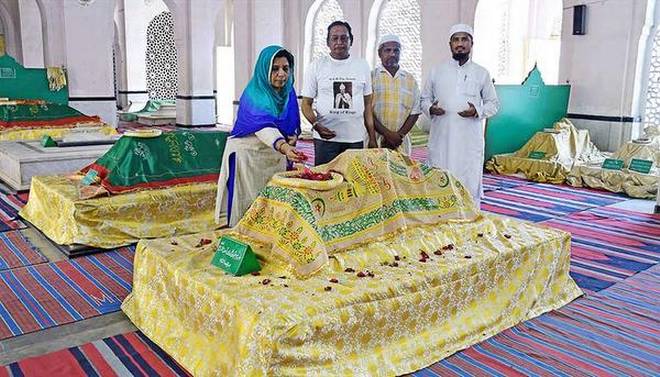
Meanwhile, the members of the Nizam Family Welfare Association and other historians paid floral tributes at the grave of Mir Osman Ali Khan, at Masjid-e-Judi, King Kothi.
source: http://www.deccanchronicle.com / Deccan Chronicle / Home> Nation> Current Affairs / Deccan Chronicle / April 07th, 2018
Series of public events held to mark his birth anniversary
Hyderabad marked the 132nd birth anniversary of the seventh Nizam Mir Osman Ali Khan with rich tributes at his grave near Judi Masjid and a series of public events in different parts of the city. Early in the morning, family members of Nizam offered floral tributes, although they said that they had marked the event as per the Hijri calendar a few days ago.
“We are proud of our heritage. The City Improvement Board was a brilliant idea of Nizam to plan and create the modern city of Hyderabad,” said Sajjad Shahid, convener, Centre for Deccan Studies, speaking at a function organised to showcase achievements of Mir Osman Ali Khan at Ibrahim Mahal in Secunderabad. Rare photographs from the collection of Raja Deen Dayal family were put on display along with a number of firmans and hukums of the seventh Nizam.
Among the rare images were two of Hussainsagar lake with one showing smoke billowing out of the thermal power plant. Another was a document showing the establishment of archaeology department at a cost of ₹ 9,795 on September 30, 1913, with a caveat that the government bear the cost of restoration of murals in the caves of Ajanta. The accompanying photographs showed the before and after effects of Nizam’s intervention in Ajanta caves.
One of the photographs from 1940s showed a paved street near Charkaman. “Visweswariah wanted a dust-free city and the choice was cement. A cement plant was built near Shabad and most of it was used to build road and even the roofing of buildings in Patthergatti are RCC,” informed Mr. Shahid as he narrated the various aspects of Nizam’s rule.
The event was hosted by the Deccan Heritage Trust in partnership with Heritage Buffs, a group of heritage lovers. “We want to make meaningful contributions to sustainable conservation of Hyderabad’s heritage,” said Mohammad Safiullah of Deccan Heritage Trust.
Plea for statue
The Nizam Family Welfare Association made a plea for installation of statues of Mir Osman Ali Khan at Osmania Hospital, Osmania University and NIMS. “The monuments and buildings built by Nizam VII should be protected, preserved and repaired and not demolished,” said Najaf Ali Khan a descendant of Nizam.
source: http://www.thehindu.com / The Hindu / Home> News> Hyderabad / by Special Correspondent / Hyderabad – April 07th, 2018
5,000 people with the name Hamza to meet in Malappuram
The District Tourism Promotion Council (DTPC) auditorium at Kottakkunnu here will witness a rare eponymous get-together on Saturday. The gathering is expected to make it to the Limca Book of Records when hundreds of people with the name Hamza rally under a unique banner.
The get-together of Hamzas from across the district will be the first of its kind. Anyone bearing the name Hamza either born or settled in the district can be part of the get-together.
5,000 ‘Hamzas’ to attend
About 5,000 people with the name Hamza are expected to attend the gathering. A WhatsApp group formed for the purpose has already included more than 500 Hamzas.
Hamza is one of the most popular Muslim names among middle-aged people in the district. However, this name is rarely given to newgen boys as most people consider it old-fashioned. “It was this cavalier attitude to a beautiful male name that made us go for a get-together,” said Hamza Haji, better known as Lovely Hamza, one of the organisers.
Apart from salvaging the lost glory of the name, the Hamza gathering will chalk out plans to motivate its members for the betterment of society. Motivational programmes, educational classes, business improvement programmes and charity work will be organised by the Hamza collective.
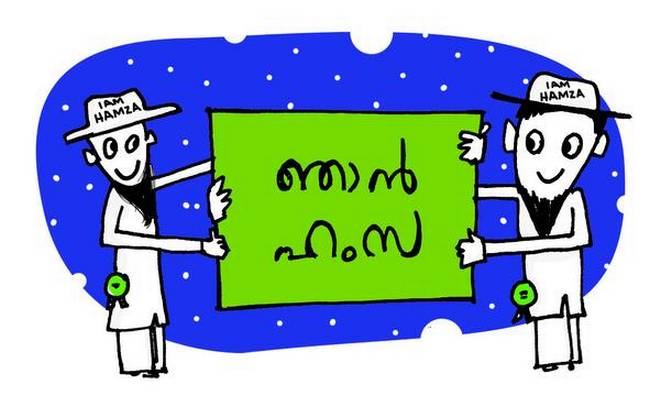
The organisers said that those attending Saturday’s gathering should bring any photo identity card to support the credentials of their name. Everyone will be given a badge and a cap, which will flaunt their name as ‘I’m Hamza’.
The oldest three Hamzas and the youngest three Hamzas will be honoured at the function.
source: http://www.thehindu.com / The Hindu / Home> News> State> Kerala / by Abdul Latheef Naha / Malappuram – April 05th, 2018
The party also registered a good showing in Amravati, Solapur and Pune.
The Asaduddin Owaisi-led All India Majlis-e-Ittehadul Muslimeen (AIMIM) has entered the Brihanmumbai Corporation for the first time with two members, with Gulnaaz SalimQureshi winning from Ward number 92 and Shahnawaz Sheikh from Ward 145. Apart from the Mumbai civic polls, AIMIM also registered a strong showing in the Amravati and Solapur, winning ten seats each in the civic bodies.
The party also had winning candidates in Pune, Akola and Thane.
Hyderabad-based Owaisi conducted 32 rallies in 20 days. “Five candidates of MIM won 22,000 votes in Byculla, so the assembly constituency votes are matched. But the Muslim vote bifurcation happened between Samajwadi Party and Congress, and that helped the Shiv Sena and BJP to win,” said Waris Pathan, the party’s MLA from Byculla.
But Prakash Akolkar, Political Editor, Sakaal said that, “The voting in Mumbai has proved that Muslim voters doesn’t vote in a set pattern as per the orders of religious leaders. They have voted strategically.”
source: http://www.mumbaimirror.indiatimes.com / Mumbai Mirror / Home> Mumbai> Other / by Alka Dhupkar, Mumbai Mirror / August 04th, 2017