Celebrating works of female photographers, an exhibition was mounted in New Delhi’s Indira Gandhi National Centre for the Arts
You would be familiar with the ‘male gaze’, a term coined by feminist critic Laura Mulvey, which states that the point of view of almost all cinema or photograph is masculine. But if one pays attention to the recent trend in photography, women are actually taking back the gaze. Female gaze can be ascribed to anything photographed by a woman and in that process frees females from the “male-constructed” photographs that have developed an image of femininity in our minds throughout the history of image making.
Similar themes were central to Prof. Farhat Basir Khan’s recently concluded exhibition Feminography at the Indira Gandhi National Centre for the Arts, which was the result of his observations and curated work of female photographers which includes media practitioners, teachers, scholars, writers, mothers and daughters.
On the rationale of holding an exhibition based on women’s perspective of the world, Prof. Khan, who also teaches photography at MCRC, Jamia Millia Islamia, said: “Feminography celebrates the work of women in India and their journey of both being and becoming a woman. It is a narrative of the people, places and spaces, and the relation women shares within it, which is shot through the lens.”
Prof. Khan is happy that more and more women are now asserting their position through social media platforms like Instagram and the broader perspective on the way we look at the woman is changing through it. It is also reflected in the shifting of many institutional magazine’s portrayals of women, which are now showing them as a character in a visual narrative, not as an object of desire.
Transcending barriers
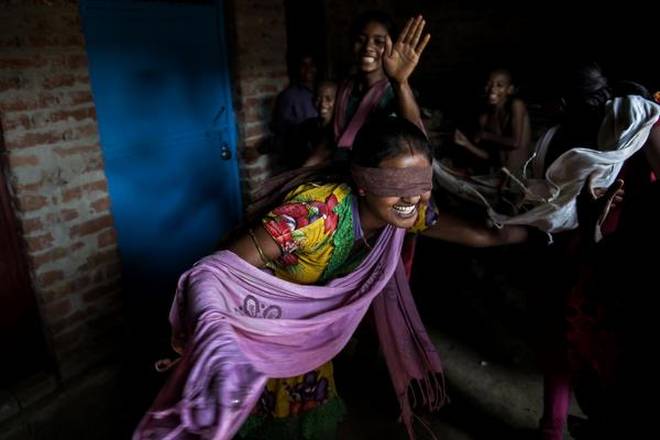
Nitisha Malick takes inspiration from urban eccentricities and captures the connection with the wilderness in her picture Maids Of Gurgaon. “I wanted to show the emotions of those women who live in the shadows of modern cities but their life is still very far from development,” said Mallick, while explaining her work. In an another picture, she explored the contentment of a girl despite all hardships and challenges in her life. All images shown were powerful stories of cities andspaces that women photographers inhabit and the barriers that they transcend.
FROM HER PRISM Saumya Khandelwal’s “Child Bride in Shravasti”
Some were independent memories shot with a half smile; others with grit and determination, still others with a gentle non-abrasive press of a shutter. Saumya Khandelwal’s “Child Bride in Shravasti”, questions the life of young married girls yet reflects the happiness that they have built for themselves. “The subjects in the works includes forms and textures – the mundane and the ordinary which is transcending them into works of art to frame, admire and cherish,” concluded Prof. Khan.
source: http://www.thehindu.com / The Hindu / Home> Entertainment> Art / by Atif Khan / January 04th, 2017
The sherwani that Mahbub Ali Khan wore evolved from the achkan with elements from Edwardian and Victorian frock coat
It is a known fact that the Sixth Nizam Mahbub Ali Khan had a taste for the good things in life. Visitors to the Nizam’s Museum in Purani Haveli area of Hyderabad are stunned to see the walk-in wardrobe that appears endless. “He never repeated a dress,” is the whispered word. But new research has spotlighted his role in the evolution of the sherwani which is now the dress of choice during weddings and is preferred by the political class during ceremonial occasions. Former prime minister Jawaharlal Nehru even used the sherwani as a style statement during his visits to various foreign countries and events in India. Soldiers of the Pakistani Army are allowed to wear it for various events.
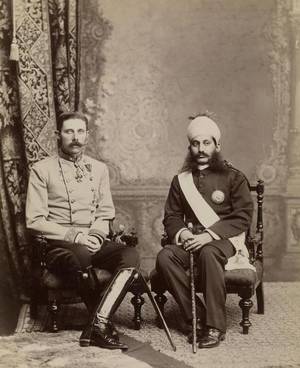
But it was on January 24, 1893, perhaps at 4 pm, that the world got its first memorable glimpse of the sherwani when Mahbub Ali Khan wore it and sat down with Archduke Franz Ferdinand of Austria, then travelling in India, for a post-lunch photograph by the team of Raja Deen Dayal at the Chowmahalla Palace. History was made. According to a Ph D thesis by Toolika Gupta, the photograph is the first evidence of sherwani being used as it evolved from achkan. The achkan itself evolved from a garment called angarakha with the addition of buttons which were a European novelty.
The Lucknow historian Abdul Halim Sharar who spent a few years in Hyderabad tutoring the sons of a Paigah nobleman wrote about the evolution: “The achkanwas extremely popular and the style started to find its way from the towns to the villages. In a very short time it was worn throughout India. In Hyderabad, it developed, with a few alterations, into the sherwani. Its sleeves were made like those of an English coat, the adornments over the chest were discarded and for the lower part the shape of an English overcoat was adopted. It became so popular everywhere, including Lucknow, that it is now the national dress of all Hindus and Muslims in India.”
While the achkan is the gift of the nobility from Lucknow, Hyderabad can lay claim on the ownership of the sherwani. The sherwani was a gradual evolution of angarakha which had laces on either the right or left shoulder to tie up the flaps. A similar garment would be a women’s kurti with the cut not in the middle but across the right or left shoulder. But the sherwani revolution happened when the buttons moved to the centre and the oriental dress appeared like a version of frock coat which was popular during Edwardian and Victorian eras in England. One only has to think of Darcy and Bingley in Jane Austen’s Pride and Prejudice for the frock coat (some of the more popular illustrations were done by Hugh Thomson in 1894).
The 28-year-old Nizam who was a fashionista naturally adapted the trend, though Archduke Ferdinand remarks: “He always wears European dress; most of the times he is in a black frock coat and the only native piece preserved in his costume is a turban-like cap made out of yellow cloth with a golden tassel. He never takes off this headdress.” But for casual events, the Nizam knew the comfort factor in Indian clothes.
It was just perfect that it was in a kingdom where the British mingled with Indians with absolute freedom that the sherwani evolved.
source: http://www.thehindu.com / The Hindu / Home> Society> History & Culture> Living Hyderabad / by Serish Nanisetti / March 10th, 2018
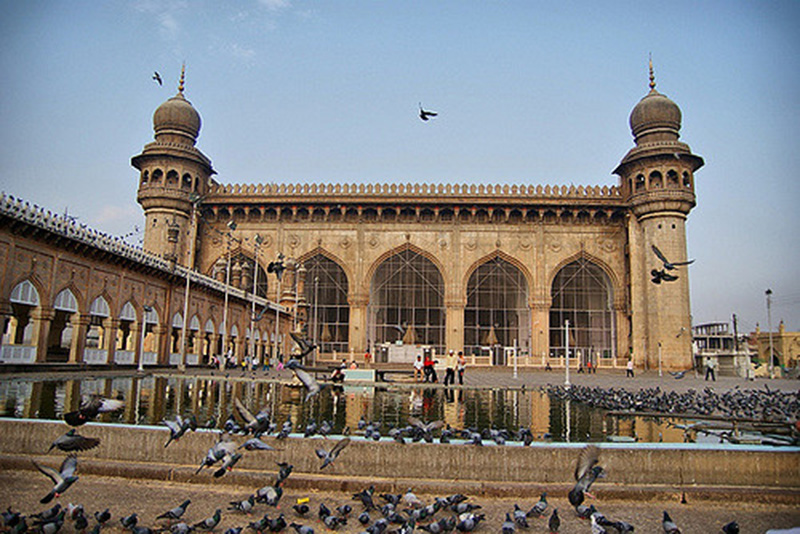
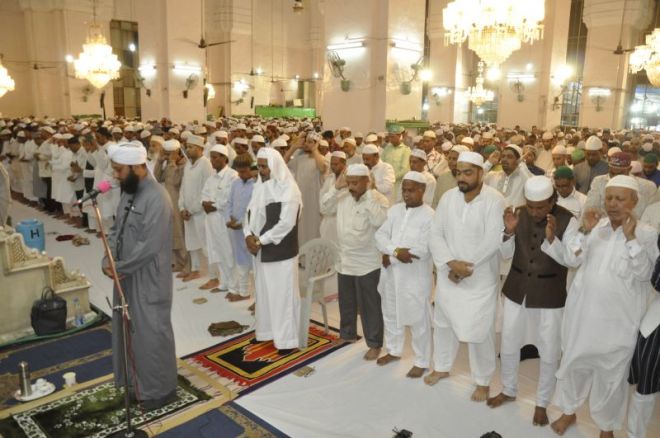
Makkah Masjid in Hyderabad is one of the biggest mosques in India and the foundation stone for its construction was laid during 1616-17 CE and the foundation was laid by the Qutub Shahi ruler, Sultan Mohammad Qutub Shah VI.
The construction was completed by Mughal Emperor Aurangzeb in 1694 after 77 years.
The mosque is also listed as a heritage building. The Masjid is built in granite and the bricks for its construction were brought from Mecca, the holy city of Saudi Arabia.
source: http://www.siasat.com
The chief mason was Rangaiah Chowdhury while the engineer was Faizullah Baig.
The prayer hall can accommodate 10,000 people owing to its large size with dimensions of 75 feet high, 180 feet long and has a width of 220 feet.
According to the information available on the Hyderabad.org.uk, it is believed that a strand of Prophet Mohammed’s hair is preserved in a room in the mosque’s courtyard.
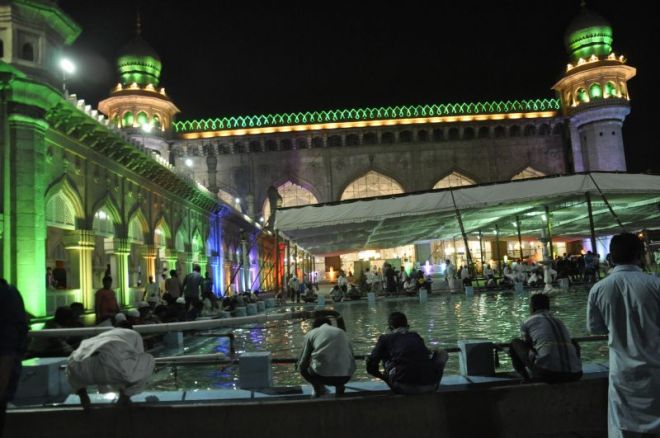
There are 15 intricately designed arches that support the roof of the main hall, in which 5 arches were constructed on 3 walls. The mosque is decked with Belgian crystal chandeliers, which adds to the beauty of the exquisitely designed interiors of the mosque. Inside the mosque, there are 5 passageways and tombs of the rulers belonging to the ‘Asaf Jahi’ dynasty.
According to the news reported in Times of India, during the Qutub Shahi rule, Iran was specifically mentioned in Friday sermons in all mosques in Hyderabad and elsewhere in the Qutub Shahi kingdom.
According to the historian Abdul Majeed Siddique in his ‘History of Golcunda (1956)’ one of the reasons for the Mughal rulers to attack the Qutub Shahi kingdom was the recital of the name of the Shah of Iran (Safavid dynasty) in Friday sermons. Emperor Shahjahan was so angry that he sent a letter to Abdullah Qutub Shah VII to stop mentioning the name of the Shah.
Historian Abdul Majeed Siddique quotes Emperor Shahjahan’s words that order “the abandonment of the name of the Safavid King and replacement thereof by the emperor’s own name in both, the Friday sermons and coins”.
Currently, the restoration works are being done to welcome the Iranian President Dr. Hassan Rouhani who will be the first Iranian President to address the congregation, though he is the second leader to visit the mosque. After the Islamic Revolution in 1979, Mohammad Khatami became the first Iranian President to visit Hyderabad (January 28, 2004), but he did not participate in the Friday congregation.
source: http://www.siasat.com / The Siasat Daily / Home> Hyderabad> News> Top Stories / February 15th, 2018
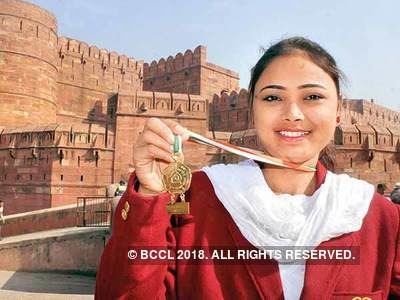
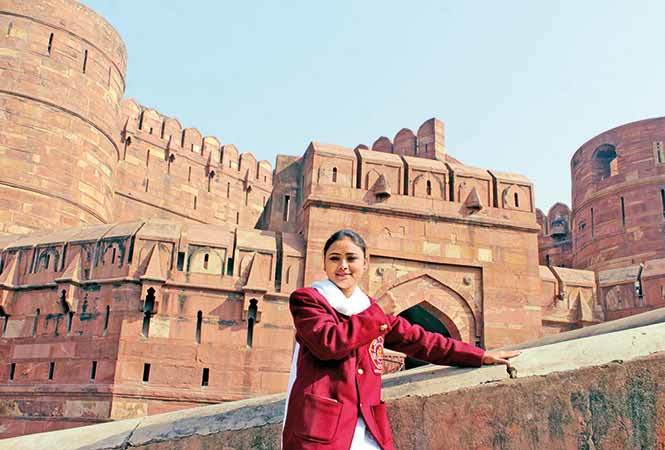
Nazia Khan, 18, who has received a number of national and state awards for her bravery and social work, was recently honoured with the prestigious Bharat Award at the National Bravery Award ceremony held in Delhi. A resident of Agra, Nazia is the only recipient from UP to have won the award – there were a total of 18 children from various parts of the country who were honoured for their acts of bravery by Prime Minister Narendra Modi
. It started with saving an eight-year-old girl
The first act of bravery for Nazia, a BA first-year student, was when she saved an eight-year-old girl from getting kidnapped. She was also instrumental in stopping a bunch of people in her locality from gambling.
The first act of bravery for Nazia, a BA first-year student, was when she saved an eight-year-old girl from getting kidnapped. She was also instrumental in stopping a bunch of people in her locality from gambling.
‘I talked for at least half an hour with the PM’
Nazia received her Bravery Award in Delhi where she met the PM. She says, “I was seated right in front of him and noticed him smiling at me. While receiving the award, I talked to him when he jokingly called me ‘ladaku’. He also met my mother and asked her if I quarrelled with her as well.”
After receiving the award, Nazia also participated in the Republic Day Parade with 17 other awardees. She says, “It was an experience of a lifetime to participate in the Republic Day Parade. Every year, I used to watch the parade on television and always dreamt of participating in it. So being there was a dream come true.”
source: http://www.timesofindia.indiatimes.com / The Times of India / Home> News> City News> Noida News / TNN / February 03rd, 2018
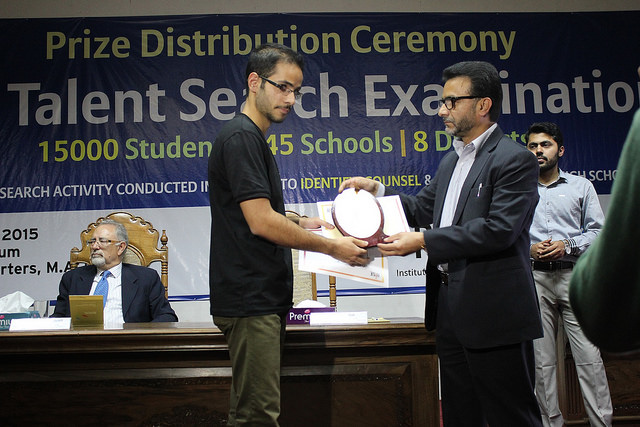
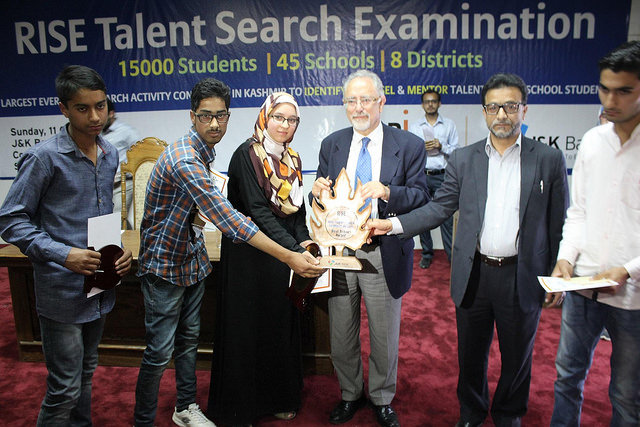
RISE, an institute for coaching students for Joint Entrance Examination (JEE) and other career oriented programmes in Kashmir Valley co-founded by three IITians on Sunday organized a prize distribution ceremony in which the toppers of Rise Talent Search Examination (RTSE) were facilitated.
The event was hosted by Jammu & Kashmir Bank which is also a co-sponsor of the initiative at their corporate headquarters in Srinagar
The first three positions of Humanities, Commerce and Science streams from Class 11th, 12th and 10th were awarded cash prizes for their achievements at the prize distribution ceremony.
Besides free coaching was announced to 40 talented aspirants of JEE, which will be a regular feature starting this year. The toppers included students from various government and private schools of Bandipora, Shopian, Sopore, Baramulla, Ganderbal and Budgam.
“Starting this year, RISE will offer free coaching to 40 talented aspirants of JEE. The course will be conducted by the team of IITians at RISE. We want to ensure that the lack of resources is not a hindrance to any talented student towards achieving his/her dreams,” said Salman Shahid, Co-founder of the RISE.
Importantly, RISE had started an ambitious talent search examination across the valley to identify talented students who do not possess the resources to pursue quality education. The examination primarily targeted the economically weaker sections of the society. Almost 15,000 students had taken the test in over 8 districts which included 40 schools across Kashmir Division of J&K, this year.
The Chief Guest for the event was Abdul Rauf Bhat, Executive President of the J&K Bank. While speaking about the RTSE and the support J&K Bank bestowed to the initiative, Rauf said, “J&K Bank is always forthcoming in supporting such initiatives as they identify and encourage talent, inspire local youth to think big, train and guide them to realize their potential. Further, the fact that the initiative is being taken by local IIT graduates adds weight and worth, sense and seriousness to the idea.”
Further, he advised the RISE team to develop quality coaching facilities for other competitive examinations, at graduate and post-graduate levels as well, as that is “the need of the hour for our region”.
Another Speaker, Mohammad Shafi Pandit, Chairman at Ascent Group handed over the trophies and the cash prize to the toppers of RTSE. Speaking about the state of educational awareness in Kashmir, Pandit said, “Back in time, when I was preparing for civil services, I faced similar, but bigger, challenges that students face these days. There was lack of information and awareness with respect to civil services or any other competitive examinations. The situation is still grim, as most of the students of the valley are unaware of the educational opportunities that they can avail, and lack the necessary guidance to pursue the same.”
“Through RTSE, RISE is doing a commendable job in addressing these bottle-necks. Identifying talented students and apprising them about the educational opportunities, and encouraging them to chase excellence is the need of the hour,” he added.
Meanwhile, Shah-i-Hamdan Memorial Institute from Shopian district received the award of Best School in the valley as it produced the top 3 positions of Class 10th in RTSE.
Adeeba Tak, Topper of RTSE Class 10th was exhilarated on receiving the first prize trophy and the cash prize. While sharing her overall experience, she said, “Thanks to RTSE, I am motivated to prepare for IIT right after I am done with my class 10th examinations. This award and recognition has given me a sense of belief that if I work hard, I am capable enough to achieve my dream of studying at IIT. I don’t have any doubt in my dream now.”
RISE, started in 2012 in the valley, has brought hopes among the students community that they can make it to the prestigious institutions and look beyond traditional mode of education. The institute was co founded by three IITians from three different parts of India Mubeen Masudi (Kashmir), Salman Shahid (Delhi) , Imbesat Ahmad (Bihar).The coaching centre has become a hub of very affordable IIT coaching for students in Kashmir.
source: http://www.twocircles.net / TwoCircles.net / Home> Indian Muslims / by Raqib Hameed Naik, TwoCirlces.net / October 11th, 2015
DGP UP Om Prakash Singh on Thursday announced commendation disc for constable Umeed Ali, helped to extract accident victims from a car which fell in a deep drain.
Announcing the award on his official twitter handle, Singh wrote, “I salute the extraordinary spirit of service showed by constable Ummed Ali of Agra police and his efforts to save precious human lives. I am glad to announce the DG’s commendation disc for him.”
On Wednesday evening, a speeding car with four passengers including two college girls plunged into drain in industrial area of Sikandra. Ali, a 2011 batch constable, who reached the spot on getting the news immediately jumped into the 14-foot-deep drain without any safety gear to extract the victims.
Speaking to TOI, Umeed said, “It was utter chaos when I reached the accident spot. The victims were unconscious and trapped inside the car which was flooded with sewer water. It took almost half an hour to extract the victims. I’m happy for the recognition and award, but I regret that none of the victims could survive.”
Ali was discharged from hospital on Thursday after he fell ill from swallowing sewer water during the rescue operation. Amit Pathak, SSP, Agra also announced Rs 10,000 cash award for Ali to reward his bravery.
source: http://www.timesofindia.indiatimes.com / The Times of India / News> City News> Agra News / TNN / March 30th, 2018
This year, Sahitya Akademi’s ‘Annual Festival of Letters’ will feature a seminar on Oral and Tribal literature and Tribal poet meet. The Annual Festival of Letters is going to take place in New Delhi at Rabindra Bhavan from Monday, February 12 to 17, 2018.
This year the theme of the six-day long festival is ’70 Years of Indian Independence’. The festival will begin with the inauguration of the Akademi exhibition by Hindi writer Chitra Mudgal followed by the Sahitya Akademi Awards presentation ceremony.
The seminar on Oral and Tribal literature and Tribal poet meet will be held on February 13 and 14 and feature eminent writers and scholars from all over the country, including over 30 tribal poets.
The following tribal poets will take part in the seminar and reading session at the Akademi’s annual Festival of Letters: Arjun Singh Dhurve (Baiga), Rajkishore Nayak (Bathudi), Kuldeep Singh Bampal (Bhotia, Sudarshan Bhumij (Bhumij), Zohming Thanga (Bongchar), Kulin Patel (Dhodia), Colnat B. Marak (Garo), Rafiq Anjum (Gojri), Roop Singh Khusram (Gondi), Veera Rathod (Gormati), Rudra Narayan Panigrahi (Halbi), Kairasing Bandia (Ho), Riquoma Rq. Lalloo (Jayantia), On Teran (Karbi), Saroj Kerketta (Kharia), Minimon Laloo (Khasi), M. P. Rekha (Kodava), Bikas Ray Debbarma (Kokborok), Mahabir Oraon (Kurux), Deenabandhu Kanhar (Kui), Konchok Rigzen (Ladakhi), Kachyo Lepcha (Lepcha), Kalachand Mahali (Mahali), Th. Thumbu Maram (Maram, Dipok Kumar Doley (Missing), Puni Losii (Mao), Ashrita Tuti (Mundari), Jamuna Bini Tadar (Nyishi), N Vumsuan (Paite),Charu Mohan Rabha (Rabha), Rajesh Rathava (Rathavi), Aasim Sardar Tadavi (Tadavi), and Satyajit Toto (Toto).
The keynote address will be delivered by T.V. Kattimani, Vice-Chancellor, Indira Gandhi National Tribal University.
The six-day-long festival will witness participation of more than 250 writers and scholars from different parts of the country representing various languages.
“National seminar on ’70 Years of Indian Independence: Literary Portrayals’ and a seminar on Tribal and Oral Literature will feature eminent scholars and writers from all over the country. Apart from other regular features, we will have Indo-Israeli Writers’ Meet on the occasion of the 25th anniversary of the establishment of diplomatic relations between India and Israel,” said the Akademi’s Secretary K. Sreenivasarao while talking to media persons .
Importantly, three Muslim writers were selected among others representing 24 Indian languages for 2017 Sahitya Akademi award. Afsar Ahmed for his Bengali novel, “Sei NikhonjManusta”, Baig Ehsas for his Urdu short stories “Dakhma” and poet LateInqulab for his Tamil poetry “Kandhaal Naatkal” are among those honored with Sahitya Akademi award 2017.
Two more Muslims, Iqbal Nazki and Mahmood Ahmed Sahar were selected for Sahitya Akademi prize for translating Tamil novel “Chaivu Narkli” to Kashmiri “Araam Kursi” and Sanskrit poetry “Meghdootam” to “Kalidas ki Azeem Shairi” respectively.
On December 21, 2017, Sahitya Akademi had announced its annual awards in 24 languages.
source: http://www.twocircles.net / TwoCircles.net / Home> Adivasis / by Raqib Hameed Naik, TwoCircles.net / February 09th, 2018
General Bussy enjoyed an unassailable position in the Nizam’s court
If Pondicherry was a colonial trading pocket for the French, Hyderabad by the middle of the 18th century became their nerve centre of great political activity much before the British could establish their power in this part of the country.
The French were the first European power in Hyderabad state to have huge territorial gains when they were granted the Circars (present coastal Andhra) for their military support to the Nizam, thus becoming the forerunner for the Subsidiary Alliance the British replicated decades later.
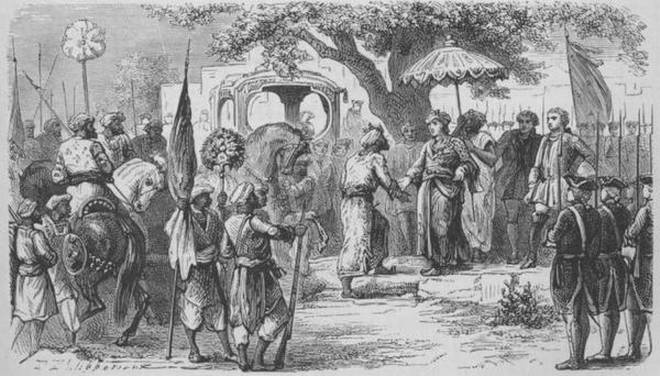
The architect of this French policy of Indirect Rule in Hyderabad was the indomitable General Bussy, the French commander, who at the express orders of Dupleix, the Governor of Pondicherry, arrived in Hyderabad in February, 1751 at the head of a strong French contingent. It was Bussy who declared Salabath Jung as the new Nizam, after the murder of Muzafar Jung. Bussy enjoyed an unassailable position in the Nizam’s court at Hyderabad.
War of succession
After the death of Nizam-ul-Mulk the first Asaf Jah, in May 1748, there was political turmoil in Hyderabad due to war of succession among his immediate descendants.
The Nizam had six sons and an equal number of daughters. Ghazi ud din, the first son was a representative of his father at the Imperial Mughal court in Delhi and was not inclined to be his father’s successor. The second son, Nasir Jung therefore proclaimed himself as the Nizam of Hyderabad. But an ambitious, Muzafar Jung, grandson of the dead Nizam, (son of his favorite daughter, Khairunnisa begum) claimed the throne for himself.
The French governor at Pondicherry, General Dupleix, saw an opportunity to fish in troubled waters at Hyderabad.
There was also a war of succession brewing at Arcot, where Chanda Sahib laid claims to the Nawabi as successor to his father-in-law, Anwar ud din, against the claims of Mohammad Ali, Anwar ud din’s son. Dupleix decided to side Chanda Sahib at Arcot and Muzafar at Hyderabad.
He asked Muzafar Jung to come to Arcot to first settle the dispute there, promising to make him the Nizam at Hyderabad later.
Muzafar and French armies under Dupleix defeated Anwar ud din in a battle at Ambur and Chanda Saheb was declared as Nawab of Arcot.
The British at Madras who wanted to arrest the growing French power, advised Nasir Jung, the Nizam to come to south to check Muzafar- Dupleix nexus. Nasir Jung accordingly went with his forces but when engaged in a fight, was killed in one of the minor skirmishes near Arcot on 25 December, 1750. Muzafar Jung immediately was declared the Nizam of Hyderabad by Dupleix.
Victorious Muzafar was taken in great pomp by Dupleix to Pondicherry where a grand Durbar for the new Nizam was held. Muzafar was toasted, feasted and entertained by the French General.
In return, Muzafar was so pleased that he made Dupleix as a jagirdar of Villianallur with a personal grant of 80 villages. He also conferred the title, “Subedar”, and the French governor was happy to be addressed as Dupleix Sahib. After a month of festivities, and French hospitality, Muzafar set out to Hyderabad accompanied by a strong French contingent sent for protection by Dupleix headed by his close confident and an able commander, General Bussy.
However, on way back to Hyderabad, Muzafar Jung, 38 days after becoming the Nizam, was treacherously murdered in a spine chilling melodrama. As the contingent came close to Cuddapah and entered Lakkireddypalle pass, Muzafar was assassinated on February 3, 1751, by the Nawab of Kurnool, who earlier supported him but was disillusioned when the new Nizam, he thought, was not keen to keep the promises made.
An astute diplomat that he was, Bussy continued his journey with his French armies to Hyderabad and made Salabath Jung, an younger brother of Nasir Jung as the new Nizam. The death of Muzafar and the march of French armies to Hyderabad through the territories carrying fire and thunder under Bussy, made him such an object of terror that even now in the Telugu States the mothers try to silence their crying babies with the arrival of “Booochi”, a corrupted version for Bussy!
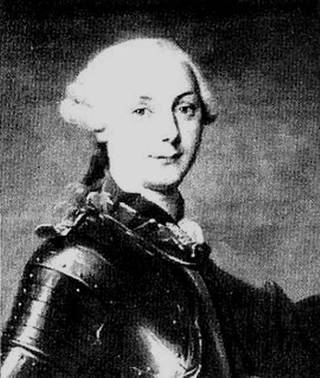
Marquis de Bussy worked under Dupleix at Pondicherry for a long time. He married Marie, a step daughter of Dupleix. His arrival in Hyderabad marks a new era of French connections with Hyderabad and the northern Circars.
Bussy wanted to make use of the opportunity to the best of the French advantage as the new Nizam, Salabath Jung was at his mercy. He decided to stay back with his army to give protection to the Nizam. His army consisted of 900 European and 4000 of sepoys and was a strong instrument of war fare.
In order to meet the expenses for the maintenance of army, estimated at ₹21 lakhs a year, Bussy got the entire coastal Andhra, from Guntur to Srikakulam, which yielded an annual income of ₹31 lakhs. Masulipatam and Yanam were granted as personal jagirs to Bussy.
Charminar as home
When Bussy arrived in Hyderabad, as there was no immediate accommodation worthy of his position and importance, he decided to put up in the very Charminar, the majestic, sturdy and the “tallest structure in the entire city”, then. Huge curtains were tied on all sided making Charminar as his home.
Muhammad Quli Qutub Shah who built Charminar in 1591 must not have ever dreamt that it would one day serve as home to a French General, Bussy. When the beautiful Charmahal on the banks of Musi got readied, Bussy shifted there and Salabath Jung built Khilwath Mahal (part of Chowmahal palace complex) for his own stay. Charmahal, where Bussy finally shifted to, was a multi floored beautiful palace with cloth of gold used as door curtains, (Charmahal stood on the grounds where now the High court buildings are located.)
When the Seven Years War ( 1756- 73) broke out in Europe, the French and English armies in India also started to fight. Robert Clive buoyed by his stunning victory at Plassey in 1757, sent Col. Forde who with his armies occupied Northern Circars, held by the French.
Count de Lally, the French General who arrived from France to fight the English, on reaching Pondicherry, recalled Bussy from Hyderabad to make a combined attack on the British at Madras. However, in the battle at Wandiwash, the French armies were defeated and both Lally and Bussy were taken prisoners. They were let off later and Pondicherry was returned to the French.
The French influence in Hyderabad steeply declined on the departure of Bussy. His name is immortalised in the Hyderabad dominions for his participation in the famous Bobbili battle that took place in January, 1757.
Bussy supported Vijayarama Raju of Vizianagaram in vanquishing Bobbili. There is a street in Yanam today named after Bussy. He became the French governor at Pondicherry two years before he died in 1785. Thus, while Bussy’s rise in Hyderabad heralded the high watermark of French power in India, his withdrawal from here marked the collapse of its political power.
After the departure of Bussy from Hyderabad, the British with the tacit agreement with Shah Alam, the Mughal emperor, deposed Salabath in September and made his younger brother, Nizam Ali Khan as the new Nizam in 1762. Salabath Jung was imprisoned by the new Nizam in the fort at Bidar, and was killed a year later.
By recognizing Nizam Ali as Asaf Jah II, the Mughal emperor has derecognized the three predecessors, Nasir Jung, Muzafar Jung and Salabath Jung who all had violent deaths as the rulers, though between them they had a rule of 14 long years from the death of Nizam ul Mulk in 1748 up to the accession of Nizam Ali II in 1762. If those three Nizams were also counted, there were ten Nizams who ruled Hyderabad ; and the last Nizam, Osman Ali Khan must have been the X th Nizam and not the VII, as he is generally considered.
source: http://www.thehindu.com / The Hindu / Home> Society> History & Culture / by K S Seshan / March 24th, 2018
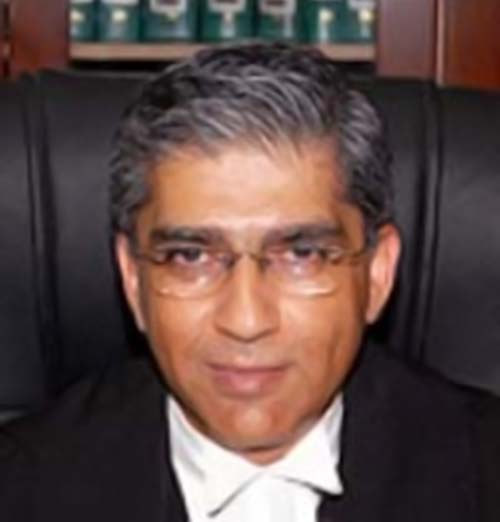
On March 14, Badar Durrez Ahmed completed his stint as the Chief Justice of Jammu and Kashmir. He has served since April 2017. Son of Dr Fakhruddin Ali Ahmed, former President of India (24 August 1974 – 11 February 1977), and Abida Begum, a lady from Haldoi, Ahmed was born in 1956.
His family is related to the royal family of Loharu and to the famous Urdu poet Mirza Ghalib. An economics lecturer in St Stephen’s College, Justice Ahmed was enrolled as an Advocate in 1980 with the Bar Council of Delhi and started practice in the Supreme Court of India and Delhi High Court. He was appointed a Judge of the Delhi High Court in December 2002. Prior to that, Ahmad was Secretary of Ghalib Institute, Delhi. He has been acting Chief Justice of Delhi High Court twice. To bid adieu to Justice Ahmed, a full Court farewell reference was held in the Chief Justice’s Court at High Court of Jammu and Kashmir, Jammu on March 15, 2018, were people were all praises for his intellect, etiquette and humble nature.
“In my experience here, I have found that the members of the bar at both places, Srinagar and Jammu, are extremely competent,” he said while thanking everyone present in the Full Court Reference.
He said advocates have an important role to play in Justice Delivery System (JDS). The role of advocates is not limited to mark your attendance in the court but the ultimate goal must be to make justice available to the common people and help judicial system to deliver it to the doorsteps of people.
Earlier, Ahmed in his tenure as Chief Justice, said the law enforcing agencies need to be extra cautious and sensitive in Jammu and Kashmir while dealing with the juveniles as the children in the state have been brought up in a very violent atmosphere that has affected their mental as well as the physical growth. He said the juveniles have to be treated differently and the one dealing with juveniles should have a great understanding and extra sensitive towards the children.
Stating that the children are the backbone of human civilization and shall shape its destiny in future, Ahmed said regardless of the political, economic or social philosophy of a government, welfare of the children is of the utmost importance and must be given top priority.
While identifying that in the disturbed socio-political climate of J&K, the problem is magnified; Ahmed stressed on the state government to adopt effective and proactive measures to, not only rehabilitate the juveniles who do come into conflict with law, but also prevent juveniles from coming into conflict with the law.
During his farewell speech, Ahmed expressed his gratitude and affection for the entire judicial system of the magnificently diverse state of J&K.
In his response to the reference stated in his address, Ahmed said that he is very proud of the fact that the introduction of paperless e-Courts in the High Court was facilitated in large measure by his colleagues on the Bench and welcomed by members of the bar. The fact that this Court is now a front-runner in the adoption and use of technology in the courtrooms is the result of a huge collaborative effort.
Justice Ramalingam Sudhakar has been appointed as acting Chief Justice of the Jammu & Kashmir High Court after the retirement of Justice Ahmed.
source: http://www.kashmirlife.net / Kashmir Life / Home> Personality / by Kashmir Life / March 22nd, 2018
L-R) Neelima Gupta, Andrea Gomes Megrath, Jyoti Mishra and Purvi Singh ( BCCL/ Farhan Ahmad Siddiqui)
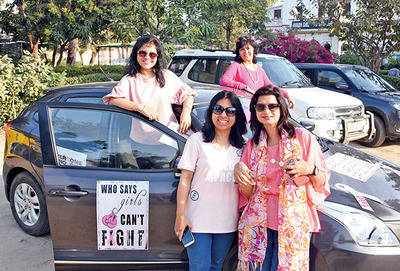
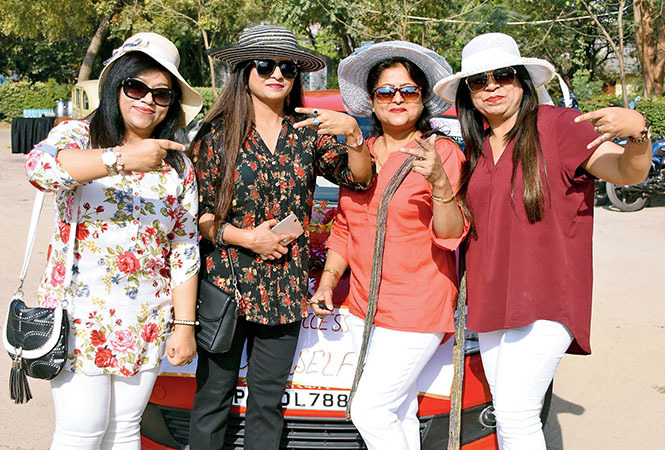
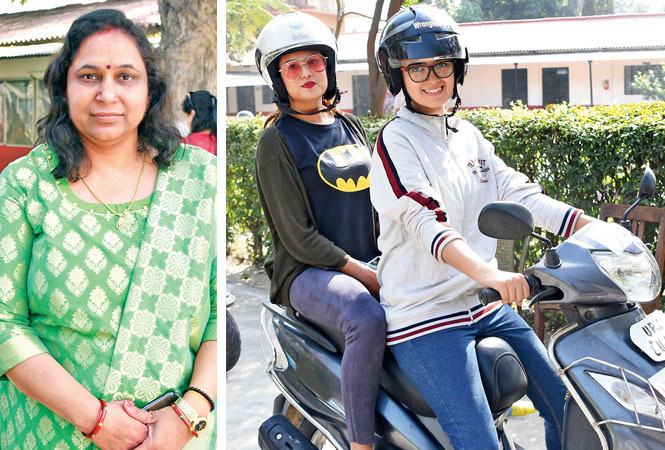
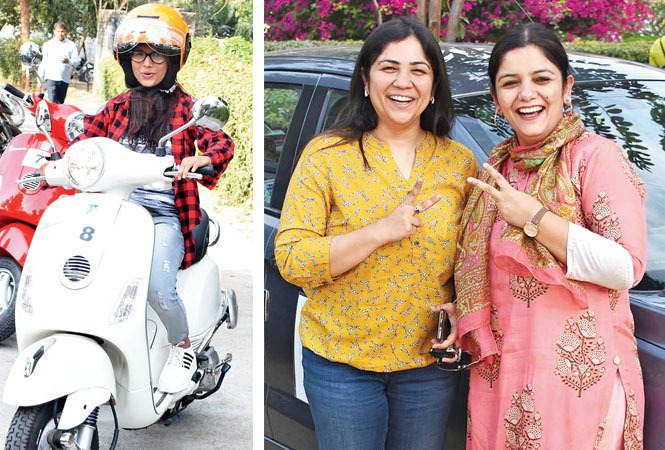
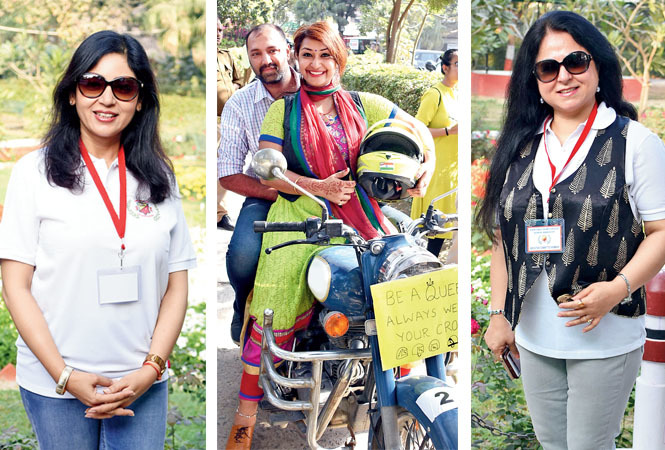
To promote the spirit of womanhood, a car and two-wheeler rally was organized at Awadh Girls’ Degree College, recently.
Organized by the alumnae association of the college, the rally was flagged off by Brijesh Pathak, cabinet minister, Law, Justice and Alternate Energy Resources, Namrata Pathak, former chairperson, UP Women’s Commission and a social activist, and Upma Chaturvedi, principal of the college. “It gives me a great pleasure to be a part of this event. I think talking about women empowerment will not help unless and until we incorporate it with events like these,” said Brijesh.
The rally started from the college campus and covered five major checkpoints in the city which were provided to the participants in the form of riddles.
(L-R) Neena, Meeti, Baby and Biba (BCCL/ Farhan Ahmad Siddiqui(L-R) Saher Bano, Rana Khan, Sheeba Mushahid and Sabina Ahmad (BCCL/ Farhan Ahmad Siddiqui)Shakun Prakash (BCCL/ Farhan Ahmad Siddiqui)Dia Ahuja (L) and Vidhi Agarwal (BCCL/ Farhan Ahmad Siddiqui)Namrata Pathak (R) Ria and Caroline (BCCL/ Farhan Ahmad Siddiqui)
The best part about the treasure hunt was that each participant had to click a selfie on the spots that they cover.
Several cars and bikes were decorated with various themes. While a few had pictures of Sridevi, giving her a tribute, others had several messages of women empowerment.
Farhana Khan (R) Shachi Singh and Simran (BCCL/ Farhan Ahmad Siddiqui)Nidhi Praksh, Surya & Suparna Sarkar, Upma Chaturvedi (BCCL/ Farhan Ahmad
Finally, Priyanka Malik and Abeeha Rizvi bagged the first position in the car category while Suparna Sarkar bagged the first position in the two-wheeler category, and were felicitated by Major General Vinod Sharma and Namrata Pathak.
source: http://www.timesofindia.indiatimes.com / The Times of India / Home> News> Entertainment> Hindi> Events> Lucknow / by Prachi Arya / TNN / March 22nd, 2018