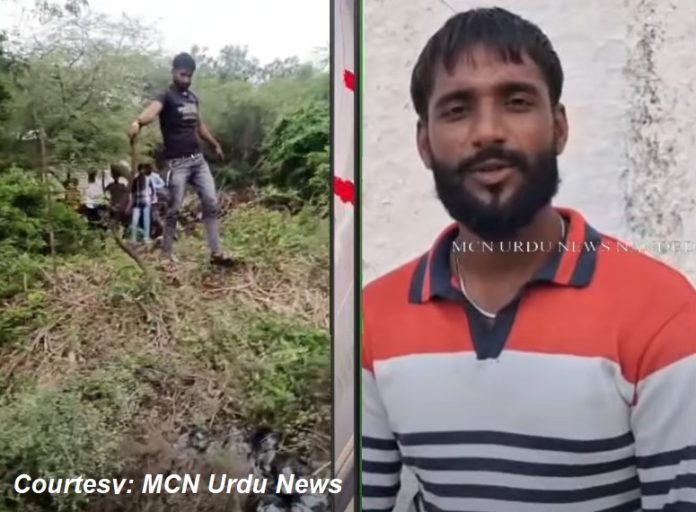
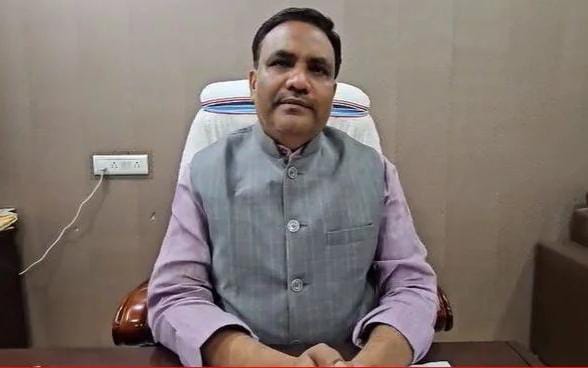
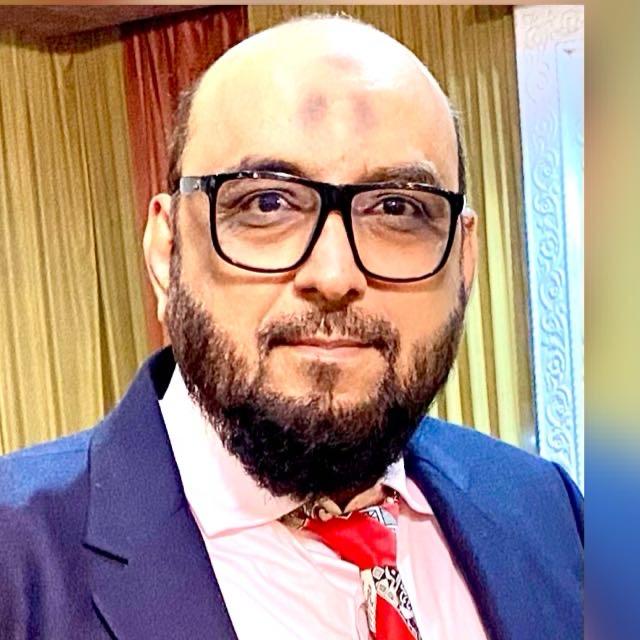
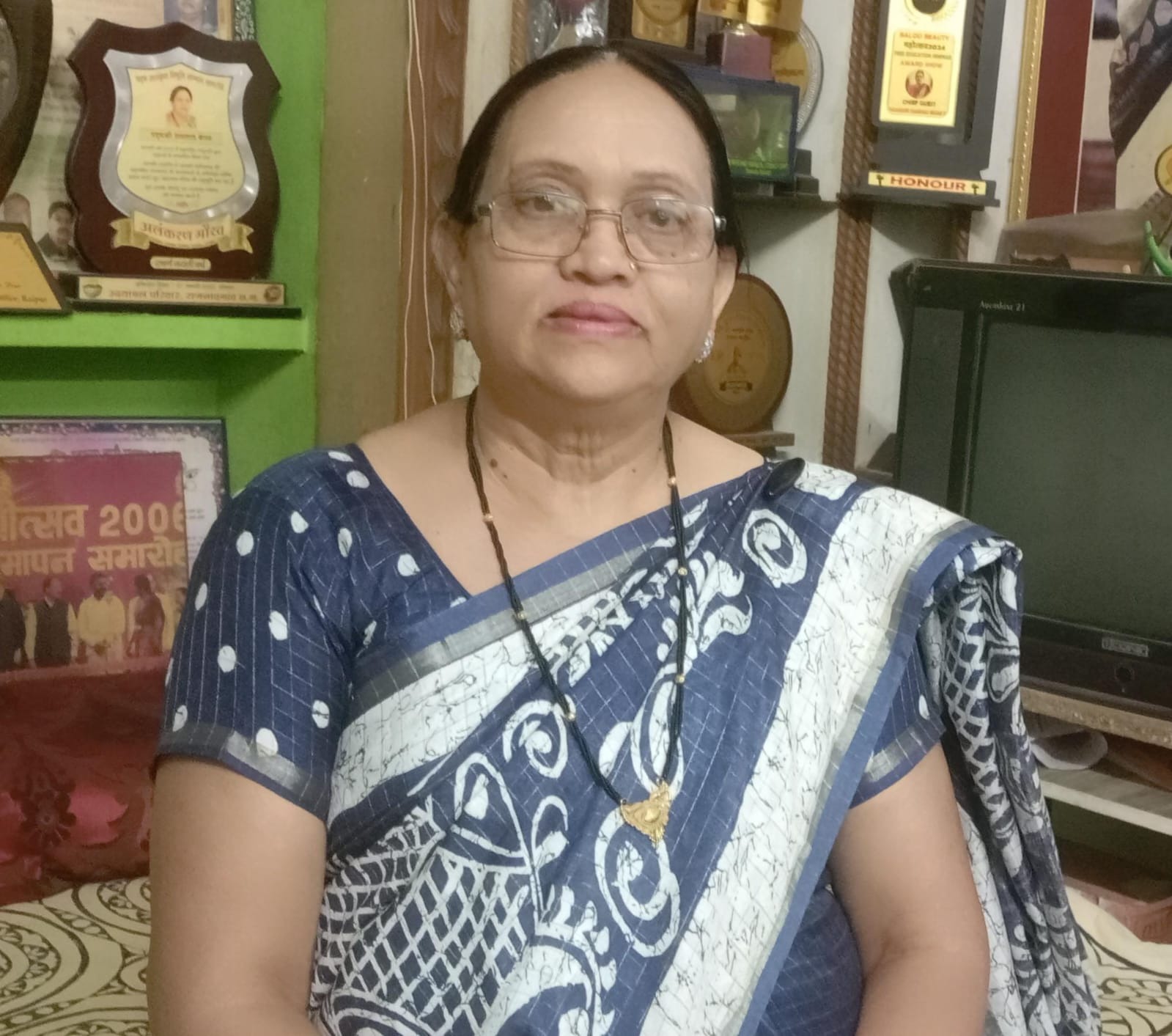
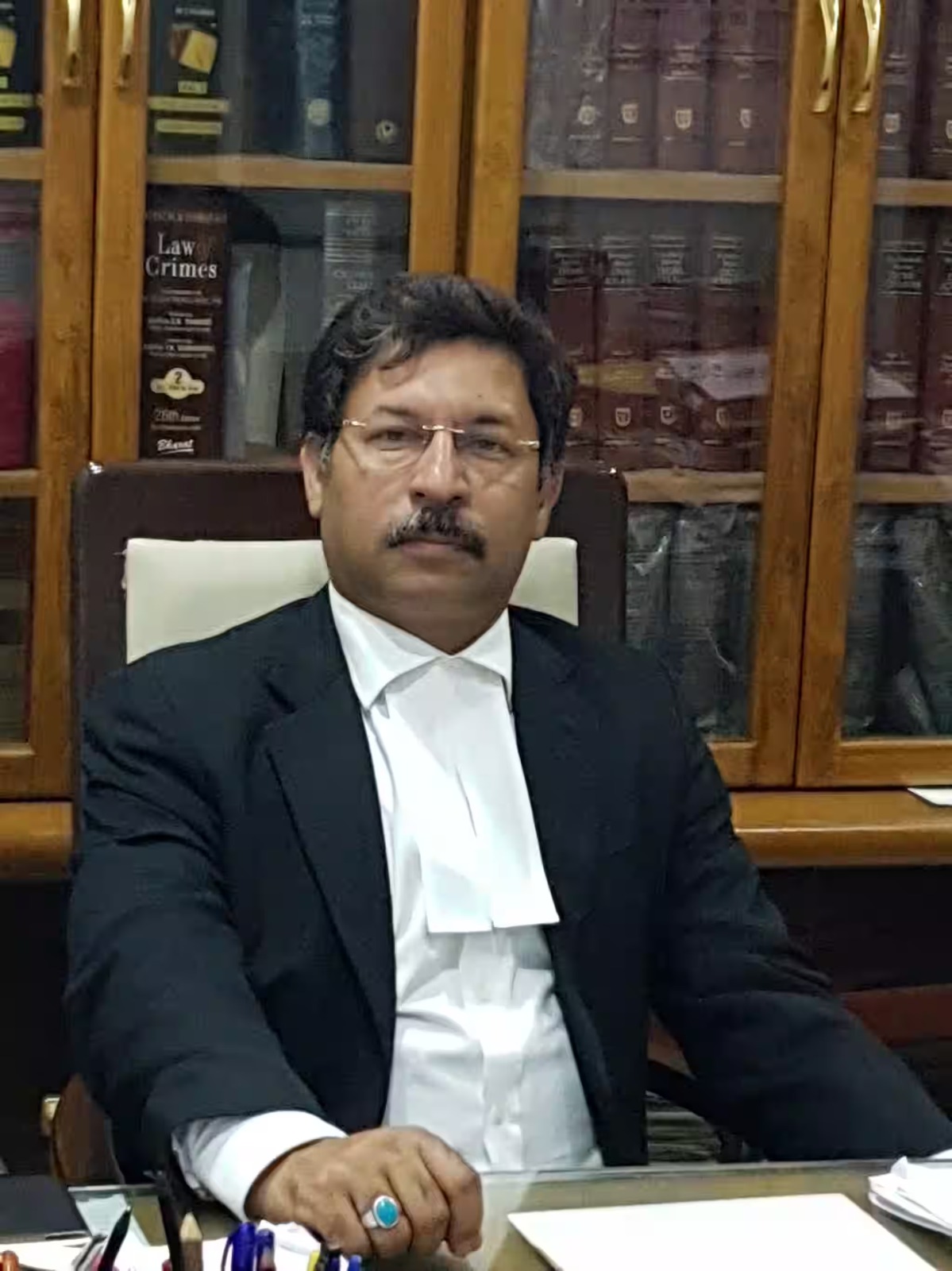
In the small town of Kandhar, Nanded courage takes an unusual form. Muhammad Talib, a young man known as the “Snake Friend,” has earned respect for his rare mission—saving both snakes and people from harm. While most run from the sight of a snake, Talib runs toward it.
Trained in snake handling, Talib learned how to catch venomous snakes safely without injuring them. He relocates the reptiles to the forest instead of killing them. Despite dealing with dangerous species, he has never been bitten. His belief is simple: every creature has a right to live.
People in Kandhar admire his bravery and call him whenever a snake appears in homes, offices, or schools. Instead of fear, his name brings comfort. Smiling, Talib says that his work reflects the true spirit of Islam, which teaches kindness and protection for all living beings.
“I see this as an act of goodwill,” he explains. “When I save snakes from humans and humans from snakes, I am doing khair, the good that Islam calls for.”
For the people of Kandhar, Muhammad Talib is more than a snake catcher. He is a reminder that courage is not about destroying what we fear, but about understanding it.
source: http://www.radiancenews.com / Radiance News / Home> Amazing Facts> Features> Latest News> Report / by Radiance News Bureau / October 12th, 2025
Discover the transformative story of women in maroon berets rewriting their community’s narrative.
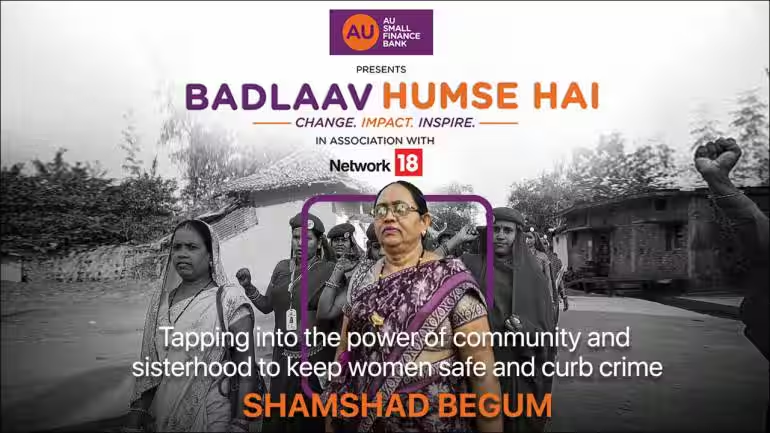
In the heart of Chhattisgarh, where challenges of illiteracy, alcoholism, and crimes against women cast long shadows over communities, a remarkable force has emerged to rewrite the narrative. In the villages of Gunderdehi region, groups of women wearing maroon berets stand as a testament to resilience, empowerment, and the unwavering spirit of change. This is the brigade of Mahila Commandos, a force initiated in 2006 by the indomitable Shamshad Begum, an activist and Padma Shri recipient.
The journey began with a stark reality: women voicing the anguish of living in households marred by alcohol abuse, domestic violence, and the perils of substance abuse engulfing their children. The Mahila Commandos emerged as a response to this cry for change. Shamshad Begum, the founder and guiding force behind this brigade, transformed the pain of these women into a movement that has since become synonymous with hope, empowerment, and courage.
Shamshad Begum’s vision reached beyond the constraints of societal norms, and the Mahila Commandos became the embodiment of strength and resilience. From homemakers to labourers, these women found a new identity in the title of “Mahila Commando.” Voluntarily patrolling their villages at night, they became the frontline warriors against fights, gambling, and substance abuse, tirelessly combating domestic violence, dowry, female foeticide, and gender discrimination.
What sets the Mahila Commandos apart is their commitment to creating a safer and more just society. Recognizing the importance of their mission, the Chhattisgarh Police conferred the title of Special Police Officer to 200 Mahila Commandos as a testament to their dedication and to the impact they’ve had.
Beyond their role as guardians of societal norms, the Mahila Commandos have also extended their impact to education and economic empowerment. They have reached out to help over 9,000 underprivileged girls with their education. The Mahila Commandos also engage in economic activities, producing and selling items like cow dung diyas, leaf plates and vermicompost, in addition to cultivating flowers and engaging in agricultural work.
Shamshad Begum’s transformative work goes beyond the immediate impact on families. Under her guidance the Mahila Commandos have helped form 5,000 self-help groups, empowering 75,000 women with an outstanding 98% loan recovery rate from banks. A movement that began with a hundred women has now blossomed into a movement involving 65,000 women across 14 districts of Chhattisgarh. The Mahila Commandos are not just protectors; they are catalysts for change. Shamshad Begum’s vision, courage, and determination have created a network of empowered women who refuse to be silent spectators to the challenges that plague their communities.
To honour stories like Mahila Commandos and Shamshad Begum, AU Small Finance Bank presents Badlaav Humse Hai Season 2, in association with Network18. Just like the first season, Season 2 celebrates 25 stories that showcase changemakers whose unsung work has helped carve out cultural identities for communities, lifted them out of poverty; created access where only barriers existed; shown communities how to work with nature to create true sustainability; changed hearts and minds about othered communities; changed the lives of many through economic, social or educational empowerment, and much, much more.
Shamshad Begum’s Mahila Commandos Transforming Balod’s Safety Landscape | Badlaav Humse Hai Season 2 / youtube.com / moneycontrol.com
source: http://www.moneycontrol.com / MoneyControl.com / Home> Badlaav Humse Hai
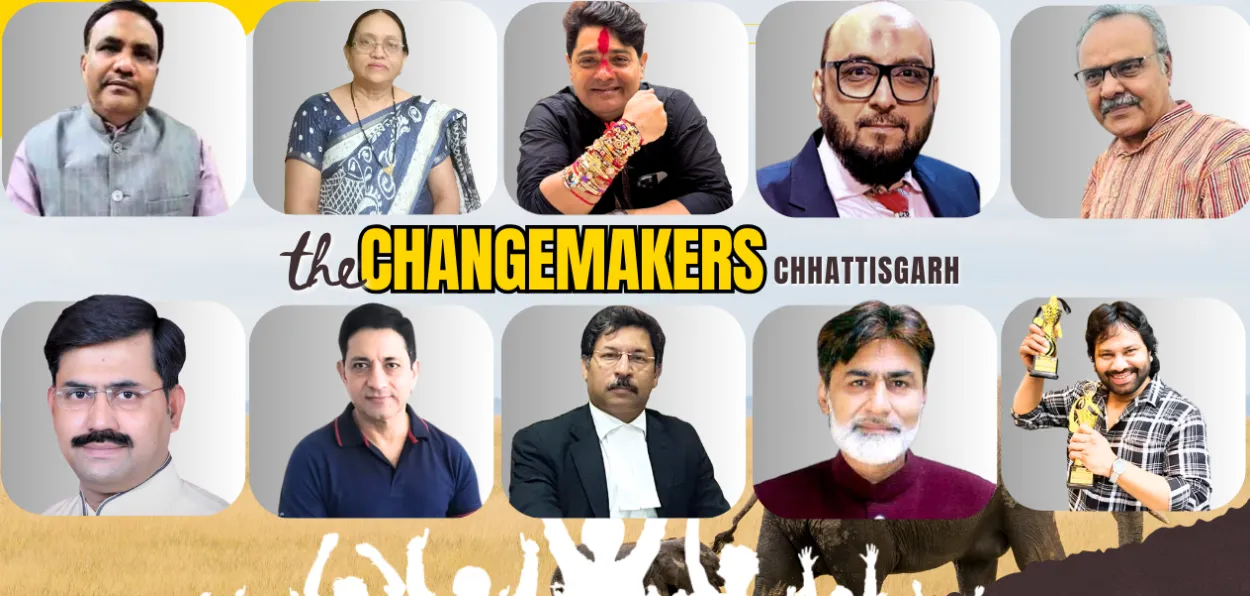
Chhattisgarh, the youngest of Indian states, is a repository of culture and antiquity and also home to spirited people. Some of them have set the trends and become changemakers. Here, we present 10 Changemakers from Chhattisgarh, whose work, grit and initiatives not only set examples for their state but also changed the lives of millions.
These 10 personalities are establishing benchmarks across art, politics, education, science, health and social servicein the state.
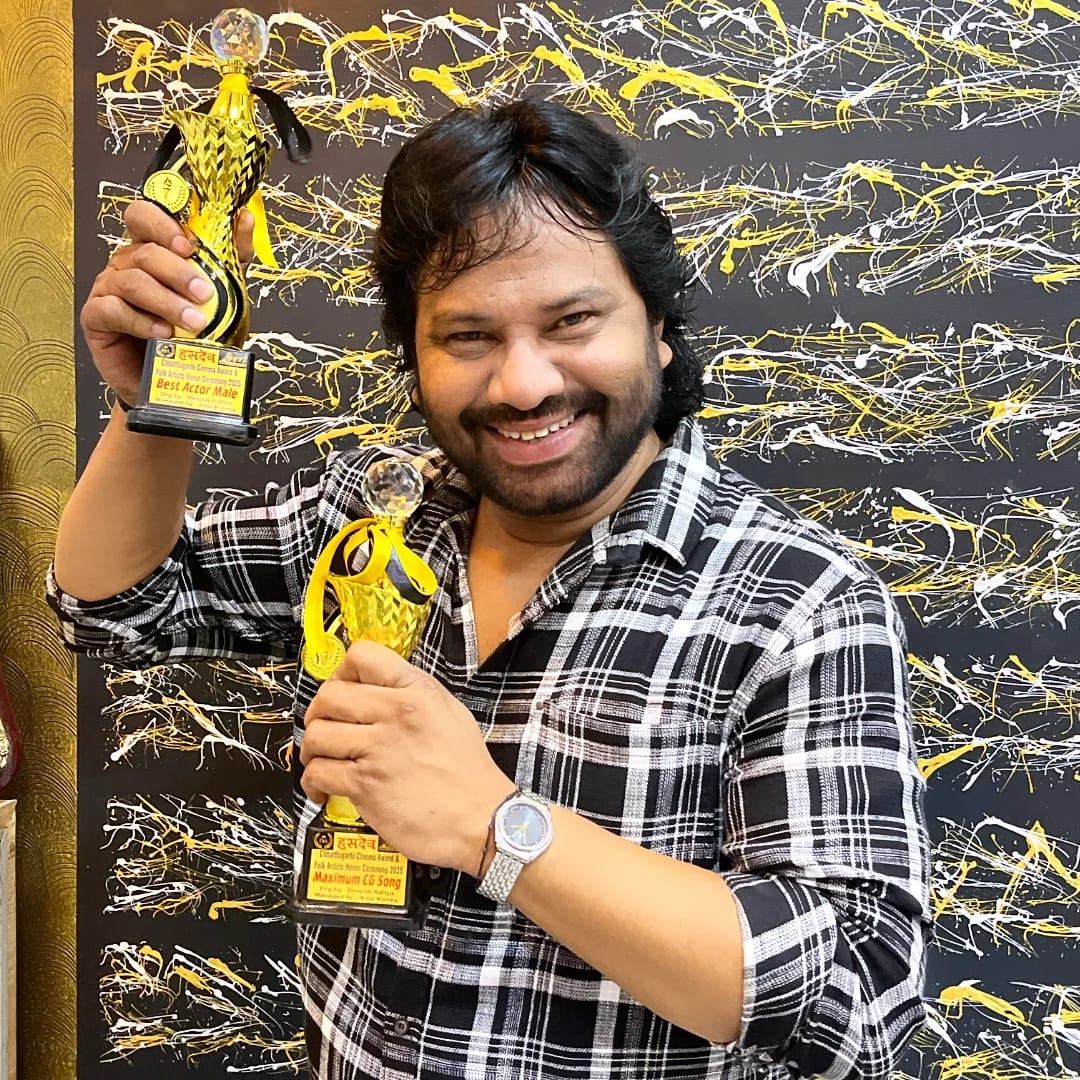
Karan Khan: Superstar of Chhattisgarhi Cinema
Karan Khan is a superstar of the Chhattisgarhi cinema, popularly known as “Chhollywood.” His work extends beyond feature films into music albums, video songs and live cultural events. In recent years, he has appeared in hundreds of Chhattisgarhi songs and albums, many of which have gone viral on YouTube and other platforms, such as the “Ditto Karan Khan Mona Sen” album.
Born Syed Tahir Ali, Karan Khan worked from cinema and music to broaden his reach and fan base. He has been a strong advocate of raising production quality in the regional films. His upcoming filmis being shot on an Arri Alexa—a professional-grade camera rarely seen in Chhattisgarhi productions, which usually face limited budgets and access to high-end technology. Khan strikes a balance between tradition and contemporary presentation to meet the expectations of changing audiences.
Mir Ali Mir: Poetic genius
When you hear the lines “Nanda jahi ka re… kamra au khumari, araitutari…” one name instantly comes to mind: Mir Ali Mir. His real name is Syed Ayyub Ali Mir, but in the world of literature, he is popularlyknown as Mir Ali Mir. Famous for expressing deep thoughts about life in simple words, his ghazals portray love, longing and life’s contradictions, while his Chhattisgarhi compositions are steeped in the fragrance of folk life.
Chhattisgarh has always been fertile ground for literature, art and culture, and Meer Ali Meer carries this legacy forward. His writings strengthen the pride of the Chhattisgarhi language and give voice to the pain, struggles and sensitivities of common people. Born on 15March 1953 in Kawardha, Meer Ali Meer enriched the Chhattisgarhi language and gave it a new identity.He is not only a poet but also an indefatigable promoter of Chhattisgarhi literature, actively working to connect younger generations with the region’s poetry and verse.
Aijaz Dhebar: transforming Raipur
The story of Chhattisgarh’s transformation is incomplete without the mention of Aijaz Dhebar’s name. He is more than just the mayor of Raipur, the capital of Chhattisgarh; he is a symbol of struggle, commitment and secular politics.
Born in a modest Muslim family in Maulana Abdul Rauf Ward of the Old Raipur, Dhebar helped run his household while pursuing his education. “My circumstances didn’t hold me back; they propelled me forward,” he often says. In January 2020, he was elected Mayor of Raipur Municipal Corporation, defeating his opponent, Mrityunjay Dubey. “I never considered myself a representative of just one religion,” he says. Recognising his leadership, he was appointed National Vice-President of the All India Mayors Council—the first mayor from Chhattisgarh to hold this post. His message to youth: “Don’t waste your energy on hatred and negativity. Politics and society today need constructive, innovative young people.”
Dr.Saleem Raj: Restructuring Waqf Board
Dr.Saleem Raj stands tall among a few who have played a crucial role in Chhattisgarh’s minority politics and social reform movement. A long-time member of the Bharatiya Janata Party, Raj serves as Chairman of the Chhattisgarh Waqf Board, a position with cabinet rank.
His rise is not just a story of political success but of a man determined to transform religious institutions from centres of controversy into engines of social and national development. “Religious institutions should be partners in the nation’s progress, not centres of disputes,” he often says. Raj joined the BJP in 1992 and steadily rose through the ranks, serving at district, state and national levels in the party’s Minority Morcha. From 2016 to 2020, he chaired the state Minority Morcha, earning a reputation for Muslim outreach and consensus-building.
Tauqeer Raja: Accessible Politician
Tauqeer Raja embodies a rare blend of political activism, entrepreneurship, sportsmanship and cultural pursuit—serving as a model of dedication in Chhattisgarh’s public life. He is widely recognised as the BJP’s state spokesperson, a sharp debater, a successful entrepreneur, a sports and music enthusiast, and a committed social worker.
What sets him apart is his ability to pursue society, politics and business with equal commitment. He focuses on issues likeeducation, healthcare and employment, with special attention to integrating youth into the mainstream. Born on 15 September 1973 into a modest family, Raza displayed leadership qualities from an early age, excelling in studies as well as sports and cultural activities. Today, he is actively involved in all three fields and is known for his approachable nature—equally accessible to the public and party workers.
Dr Shams Parvez: Keeping air clean
Professor Dr Shams Parvez guides students and the public with an approach that blends scientific rigour with social responsibility. An expert in air pollution, environmental health and chemistry, Dr Parvez is one of the few scientists in Chhattisgarh to link academic research with societal needs.
His extensive studies on changing air quality in Raipur and surrounding areas have given policymakers a solid scientific basis for interventions. Defined by simplicity, rigour and dedication to students, he is a key figure in Chhattisgarh’s academic landscape for environmental protection. His research has been published in numerous national and international journals, informing state environmental policies and public health programmes. Collaborations with prestigious institutions such as NASA and the Chinese Academy of Sciences reflect the high quality of his work, through which he has led multimillion-dollar projects.
Dr Abbas Naqvi: Building a Medical Centre with a Human Touch
Dr Abbas Naqvi is a prominent name in Raipur’s healthcare sector. He is not just any other doctor but is known for his unmatched dedication, honesty and an unshakeable spirit of service. Dr Naqvi is among a select few who take their profession not just as a career but as a means to serve society.
In 2004, Dr Naqvi founded Ramkrishna Hospital, which has become one of Chhattisgarh’s leading multi-speciality healthcare centres. He currently serves as Director and Consultant in the Department of Medicine. Patients know him as a sensitive human being. Born and raised in Raipur, he chose to return to his hometown after completing his medical education rather than seek opportunities in larger cities. He treats thousands of patients daily using a blend of modern technology and empathy and compassion.
Mohsin Ali Suhail: Positive Reporting
Amid a changing media landscape, Hajji Dr Mohsin Ali Suhail has preserved the dignity, integrity and responsibility of the profession of journalism. He is one of Chhattisgarh’s most respected journalists, known for fearless, people-centred reporting and an unwavering commitment to truth.
Suhail hopes the next generation of reporters will retain honesty and care for depth in their stories. His advice: “Don’t just chase breaking news. Dig deep into society’s roots. Journalism means bringing change, and change comes only when we show the truth.”
Born on 7 May 1953, Suhail displayed curiosity and social awareness from an early age. He recalls deciding as a child that he would speak up whenever his village faced problems.
Shamsad Begum: Chhattisgarh’s Women Commando
Padma Shri awardee Shamsad Begum is living proof of how a woman’s determination can transform an entire community. With unwavering honesty and a focus on inclusion, she has built one of India’s most inspiring grassroots networks, empowering thousands of women in Chhattisgarh to live safer, more self-reliant lives. She is the driving force behind the women’s commando movement.
Her journey began in the small town of Balod, where she witnessed firsthand the obstacles women faced. “If I ever get the chance, I will work for women’s education and empowerment,” she resolved. Coming from a modest family, she drew inspiration from her mother, Aamna Bee, who balanced work and education to ensure all six of her children studied. Her impact was nationally recognised when she was included in the list of 100 Muslim women honoured for their role in India’s development.
Faisal Rizvi: A Lawyer with an Unyielding Sense of Justice
Faisal Rizvi has made his nameas a leading criminal lawyer in Raipur. His arguments, cross-examination skills and strong command of legal intricacies have made him one of Chhattisgarh’s most respected legal figures.
From a young age, Rizvi displayed keen observation and a natural inclination towards law, with a deep interest in social issues and legal awareness. Understanding the importance of nurturing the next generation of lawyers, he has distributed more than10,000 books on the Indian Penal Code and Constitution to law students in memory of his father. Born into a cultured, educated family, Rizvi completed his LL.B. from CLC College, Raipur in 1995 and later earned an LL.M. During his studies, he immersed himself in judicial perspectives, constitutional principles and the workings of society and administration.
source: http://www.awazthevoice.in / Awaz, The Voice / Home> The Changemakers / posted by Aasha Khosa / October 05th, 2025
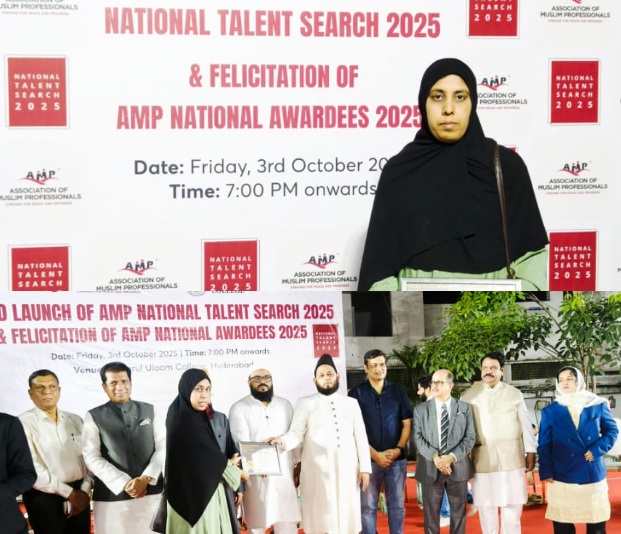
The Association of Muslim Professionals (AMP) hosted its 5th National Awards for Social Excellence (NASE) 2025 at Anwar-ul-Uloom College, Hyderabad, celebrating changemakers and institutions shaping social progress across India. The event, attended by more than 300 participants, honoured outstanding contributions in education, social welfare, and humanitarian service.
Ayat Education and Welfare Foundation from Kothagudem, Telangana, led by Dr Ayesha Sultana, won the Best NGO Award of the Year (State). In a short span, the foundation has impacted over 7,500 lives through education, women empowerment, and welfare programs. It offers academic and Qur’anic education, youth training in soft skills, and guidance for careers and personal growth. The foundation also provides medical aid, food relief, and disaster assistance. Its women’s online education program, which reached 1,500 learners in one year, was highlighted as a model of empowerment.
Maulana Khalid Saifullah Rahmani, Chairman of the All India Muslim Personal Law Board (AIMPLB), graced the ceremony as Chief Guest and felicitated awardees for their service to society. Prominent figures from academia, government, and civil society, including officials from the Telangana Waqf Board and retired IPS officers, attended the event.
AMP also recognized 10 national awardees such as Human Welfare Foundation, Jamiat Ulama-i-Hind Public Trust, and Sahayata Trust.
Lifetime Achievement Awards were presented to philanthropist Ghiasuddin Babukhan, educationist Dr P. A. Inamdar, and retired IPS officer Mohammad Wazir Ansari.
The event also marked the launch of AMP’s National Talent Search (NTS) 2025, expected to engage over two lakh students nationwide.
Ayesha Sultana is a regular contributor to radiancenews.com and former editor of AURA emagazine.
source: http://www.radiancenews.com / Radiance News / Home> Latest News> Markers of Excellence> Report / by Radiance News Bureau / October 04th, 2025
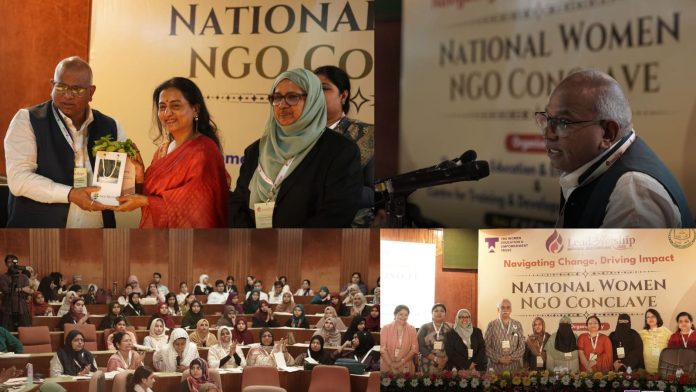
A two-day Women’s Conclave titled “Lead Her Ship” was inaugurated at Jamia Hamdard University on Wednesday with the participation of over 200 women representatives and 40 NGOs from across India. The event aims to build the capacity of women-led NGOs, enhance their leadership skills, and provide them with practical guidance on registration, funding, and community engagement.
The conclave, organised in collaboration with Tweet Foundation and the Centre for Training and Development is focused on helping women navigate challenges in running NGOs — from compliance and fundraising to partnership building and social outreach.
The event was inaugurated by Dr. M. Afshar Alam Vice-Chancellor of Jamia Hamdard, who emphasised the importance of empowering women to become effective leaders in social work. Ms. Prachi Kaur, the Chief Guest, and several experts from the development and academic sectors were also present.
Speaking at the inaugural session, Dr. Alam said, “We are organising this conclave for women-led NGOs from all over India to help them understand how to work efficiently — how to apply for funds, register their organisations, and collaborate effectively. The title ‘Lead Her Ship’ beautifully captures the spirit of women leadership — to ensure that their ship sails smoothly and contributes meaningfully to the nation and the world.”
He added that NGOs from all regions — North, South, East, West, and even the Andaman Islands are attending, making the conclave a truly national platform for women leaders.
The sessions across the two days will cover vital topics such as legal compliance, resource mobilisation, data collection, and result-oriented community engagement, Experts will also share success stories of established NGOs to inspire new entrants in the field.
Ms Rahmathunnissa, Chairperson of Tweet Foundation, outlined the core objectives of the conclave, saying, “Our goal is to collaborate, share ideas, and empower women through dialogue, sharing, and caring. The sessions will help participants understand how to legalise their work, comply with regulations, and develop leadership qualities. We also want to train them to identify and mobilise resources effectively.”
He further highlighted the need for NGOs to be financially committed and transparent, ensuring that their assistance helps beneficiaries — particularly women and girls — live with dignity and long-term self-reliance.
The conclave is designed as a forum for mutual learning and networking, where participants can exchange their experiences, discuss challenges, and explore partnerships with both government and non-government agencies. The second day will feature a directory release and special sessions chaired by Dr. Alam, along with presentations from leading NGOs and policymakers.
With its focus on leadership development, capacity building, and sustainable social change, the Women’s Conclave at Jamia Hamdard reflects a growing movement towards recognising women as central drivers of community transformation.
As Dr. Alam aptly summed up, “When women lead her ship, they not only navigate their own path but steer the entire community towards progress.
source: http://www.radiancenews.com / Radiance News / Home> Latest News> Report / by Radiance News Bureau / October 08th, 2025
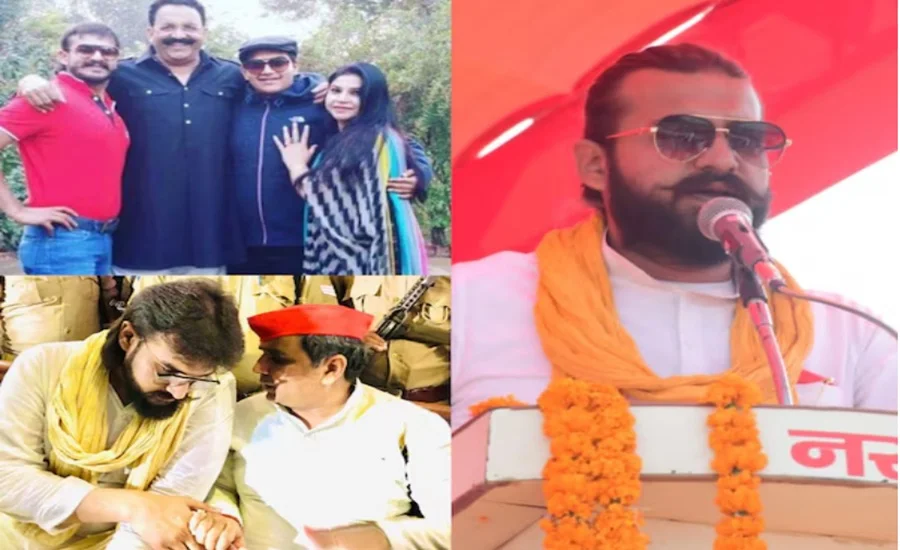
In a significant development in Uttar Pradesh politics, MLA Abbas Ansari has regained his legislative seat following the Allahabad High Court’s stay on his conviction in a hate speech case. The ruling has brought temporary stability to the Mau constituency, ending months of uncertainty surrounding the young leader, whose political journey has both been eventful and turbulent.
The High Court stayed the sentence handed down by the MP-MLA special court which had convicted Ansari for making hate speech. Following the court’s decision, the Uttar Pradesh Assembly secretariat reinstated his membership, averting a potential by-election in the constituency. Political analysts observed that this development sent a clear message about judicial fairness and the resilience of regional political dynasties.
Speaking on his reinstatement, Abbas Ansari expressed relief and gratitude, stating, “I am grateful to the judiciary for its fair judgment. My focus remains on serving the people of Mau and continuing my family’s legacy of public service.” The decision not only reinforced his political position but also stabilised the local political landscape, which had been in flux since his initial disqualification.
Abbas Ansari’s entry into politics is deeply rooted in his family’s longstanding political and social influence in eastern Uttar Pradesh. Born on 12 February 1992, he is the eldest son of the late Mukhtar Ansari, a five-time MLA from Mau whose influence extended across both the Muslim community and the broader electorate. Mukhtar Ansari’s death on 28 March 2024 in Banda due to a heart attack attack left a political vacuum, which Abbas Ansari has stepped in to fill.
Abbas’s grandfather, Dr Mukhtar Ahmad Ansari, was a prominent figure in India’s freedom struggle and held leadership positions in both the Indian National Congress and the All India Muslim League. Dr Ansari also made significant contributions to Muslim education and was among the founding members of Delhi’s Jamia Millia Islamia University.
The political engagement of Abbas Ansari’s extended family further underscores the depth of his inherited influence. His uncles, Afzal Ansari and Sibgatullah Ansari, remain active in regional politics, with the former representing Ghazipur as a Member of Parliament for the Samajwadi Party and Sibgatullah having served twice as an MLA after a career as a teacher. Even Abbas’s great-grandfather, Subhanullah Ansari, held leadership roles in municipal governance. This multigenerational involvement has cemented the family’s influence in the political and social fabric of eastern Uttar Pradesh.
Before entering the political arena, Abbas Ansari distinguished himself as a national-level shooting champion. He specialised in skeet and shotgun shooting and won his first gold medal at a national championship in 2011. Over the years, he became a three-time national champion and represented India at international competitions, including the Shooting World Cups held in Germany and Finland. His dedication to sport, discipline, and achievement in competitive shooting reflect qualities that he later channelled into his political career.
Abbas completed his schooling at GD Goenka World School in Gurugram in 2011 and subsequently earned a degree in Business Management. In 2016, he decided to leave his sports career behind to enter politics, joining the Bahujan Samaj Party (BSP). His sports background helped him build an image of a young, energetic, and disciplined leader, appealing especially to the youth in eastern Uttar Pradesh.
Abbas Ansari’s first political challenge came in the 2017 Uttar Pradesh Assembly elections when he contested from Ghosi on a BSP ticket at the age of 25. Despite losing to BJP’s Fagu Chauhan, the experience provided him with insights into electoral strategy and grassroots politics. In 2022, Abbas shifted to the Suheldev Bharatiya Samaj Party (SBSP), an ally of the Samajwadi Party, and contested from Mau, a constituency traditionally held by his father. He campaigned vigorously, emphasising continuity, public service, and development. “The legacy of my father is a responsibility I carry with pride,” he remarked during the campaign.
The electorate responded positively. Abbas Ansari won the Mau Sadar seat by a margin of 38,116 votes over BJP’s Ashok Singh, officially stepping into the political shoes of his father. At the time of filing his election affidavit, he declared assets worth approximately ₹9.2 crore and stated he had no loans. Although he faced 13 criminal cases, including some linked to family controversies, his sports-oriented image and engagement with youth voters helped him establish credibility across communities.
Abbas Ansari’s political career has been marked by legal turbulence, similar to the experiences of his father. In November 2022, soon after his electoral victory, the Enforcement Directorate (ED) arrested him on charges of money laundering linked to family businesses. He was denied bail and remained incarcerated until 2024, serving time in Chitrakoot and later Kasganj jails. Reports emerged that even while imprisoned, he managed certain business dealings using his wife Nikhat Ansari’s phone and remained in communication with associates.
In May 2025, a special MP-MLA court sentenced him to two years for a hate speech made in March 2022, which led to his immediate disqualification under the Representation of the People Act. This development created uncertainty in Mau, with speculation about by-elections. However, in March 2025, the Supreme Court granted him interim bail in a separate case under the Uttar Pradesh Gangsters and Anti-Social Activities (Prevention) Act, 1986, allowing him temporary relief.
Compounding these challenges, Abbas’s mother, Afshan Ansari, faced multiple criminal cases, prompting authorities to freeze millions in family bank accounts. Afshan remains at large, with a police reward of ₹50,000 announced for her arrest. Despite these challenges, Abbas Ansari maintained a focus on his legislative responsibilities and public image.
The most recent and pivotal development came on 20 August 2025 when the Allahabad High Court dismissed the hate speech conviction and stayed the sentence. This allowed Abbas Ansari to resume his duties as MLA from Mau Sadar. On Monday (8 September), the Uttar Pradesh Assembly secretariat officially restored his membership, effectively halting discussions of a by-election and stabilising the political situation.
Political analyst Shamsher Ali commented, “Abbas Ansari’s reinstatement reflects both judicial fairness and the significant support he continues to enjoy in his constituency. It also demonstrates the resilience of political dynasties in eastern Uttar Pradesh.”
Abbas Ansari’s declared net worth has attracted public and media attention, especially after his reinstatement. According to his 2022 election affidavit, Abbas and his wife Nikhat possess substantial movable and immovable assets. His movable assets included cash, vehicles, jewellery, and firearms valued at over ₹1.12 crore combined. Specifically, Abbas held ₹1,75,000 in cash, a vehicle worth ₹28.89 lakh, gold and diamond jewellery worth ₹12.5 lakh, and firearms valued at ₹43 lakh. His wife Nikhat had ₹75,000 in cash and jewellery valued at ₹19.7 lakh.
In addition, Abbas owns five plots and houses across Mau, Ghazipur, and Lucknow, with a total declared value of ₹8.05 crore. Notably, he had no bank loans at the time of declaration, making the total worth of his declared assets free of debt. Abbas has consistently emphasised transparency in public life, stating, “I have always declared my assets honestly. The people of Mau have the right to know about their representative’s background.”
Beyond politics, Abbas Ansari and his family have been active in social welfare initiatives, especially focusing on education, health, and community development in eastern Uttar Pradesh. Local resident Ayesha Siddiqui said, “The Ansari family has always supported our community. Even amid controversies, Abbas has worked quietly to help families in need, particularly with education and healthcare.” The Ansari family’s social contributions, particularly for Muslim communities, have strengthened their connection with constituents beyond electoral politics.
Despite a career marked by legal and political challenges, Abbas Ansari’s future in Mau politics appears promising. With his legislative membership restored, he can now focus on constituency development, youth engagement, and addressing social welfare issues. Abbas stated, “My priority is the development of Mau. I want to focus on education, infrastructure, and opportunities for youth. Politics is challenging, but I am committed to serving my people with honesty and dedication.”
From national shooting champion to young legislator navigating complex legal, social, and political challenges, Abbas Ansari’s journey illustrates both the opportunities and obstacles faced by political heirs in India. His reinstatement also provides reassurance to Mau voters and the wider Muslim community, who continue to see him as a committed and capable leader.
Abbas Ansari’s story is one of resilience, inherited responsibility, and personal achievement. With a declared net worth of over ₹9 crore, a storied political lineage, and ongoing engagement in public service, he remains a significant figure in eastern Uttar Pradesh politics. The Allahabad High Court’s decision has stabilised his career, allowing him to pursue both legislative work and social initiatives without immediate legal uncertainty. Local observers remarked, “Abbas Ansari’s reinstatement is not just a personal victory; it is a moment of reassurance for Mau’s voters and the larger Muslim community in the region, who see in him a leader committed to their welfare.” Moving forward, his ability to balance political, legal, and social responsibilities will determine the consolidation of his father’s legacy and his long-term impact on the region.
source: http://www.clarionindia.net / Clarion India / Home> Editor’s Pick> Politics / by Mohammad Bin Ismail / September 10th, 2025
The rope skipping medal winner from Mumbai chooses clinical psychology over foreign degrees, returning home with determination to serve India through education and awareness
Mumbai :
Ten years after making headlines as a rope skipping champion in Dubai, Mumbai’s Zia Maulvi has returned to India, carrying not just medals but also a mission. At 24, she has chosen to dedicate her life to mental health awareness and service in her own country.
Zia first rose to fame in 2015 when, as a 14-year-old studying in the eighth grade, she represented Maharashtra at the World Inter-School Rope Skipping Championship in Dubai. There, she secured second place and brought home a silver medal. For two years after that, she competed at the national level and collected dozens of gold and silver medals before shifting her focus towards academics.
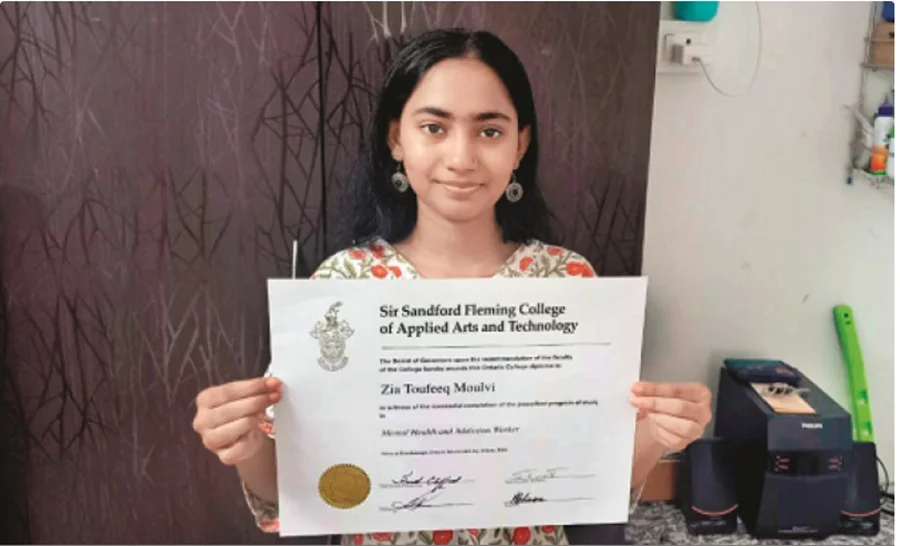
After scoring 78% in her SSC examinations, Zia pursued her education at Mumbai’s Sophia College, where she chose psychology as her special subject. Her interest in the field deepened over time, eventually guiding her towards international study. In 2023, she left for Canada to join Sir Sandford Fleming College of Applied Arts and Technology, where she successfully completed a two-year diploma in Mental Health and Addiction.
Despite opportunities abroad, Zia decided to return to India in April 2025. Explaining her decision, she told Clarion India: “There is not much awareness about psychology and mental health in India. There are also few psychologists, while I wish to serve the people of my country. My mission will be to try to overcome the growing trend of psychological stress and suicide.”
Currently, Zia is pursuing her Masters in Clinical Psychology at Indira Gandhi National Open University, Delhi. For her, studying in India means staying closer to the real issues faced by Indian society. “The studies in Canada matched the conditions of people there. But my people face different challenges. That is why I chose to study here, where I can directly connect with the needs of my country,” she said.
Alongside her academic journey, Zia has also excelled in martial arts. She has earned a black belt in karate, completed an instructor’s course, and qualified as a judge under the Karate India Organisation.
Zia’s journey from being a sports star to becoming a mental health advocate reflects not only her determination but also her deep sense of responsibility towards society. Those who once applauded her rope skipping feats now watch with pride as she dedicates her life to addressing psychological stress, depression, and the rising cases of suicide among young people in India.
source: http://www.clarionindia.net / Clarion India / Home> Editor’s Pick> India> Indian Muslims / by Team Clarion / September 11th, 2025
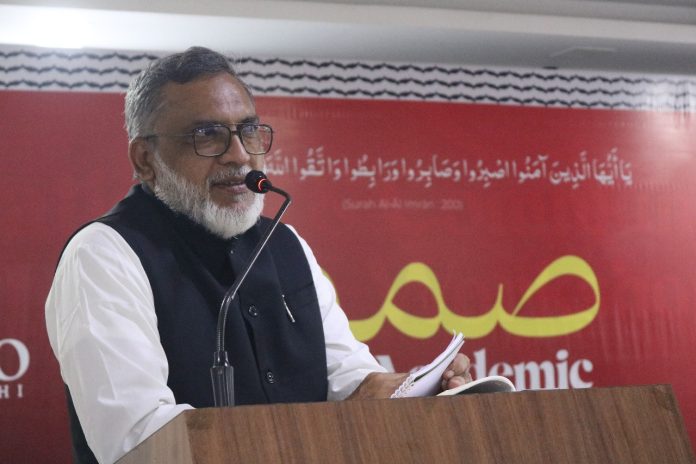
Malik Moatasim Khan, Vice President, JIH, addressing the Sumud Academic Conference organised by SIO Delhi Zone
New Delhi:
The Students Islamic Organisation of India (SIO), Delhi Zone, organised the Sumud Academic Conference at Jamaat-e-Islami Hind headquarters, bringing together over 100 students and scholars from Delhi University, Jamia Millia Islamia, Jamia Hamdard, and other institutions across the region.
The daylong event, themed “Reminding Muslim Students to Re-evaluate, Reimagine and Reconstruct Campuses,” featured paper presentations, panel discussions, and keynote addresses. Speakers focused on contemporary challenges faced by Muslim students, particularly issues of identity, saffronisation, and the growing privatisation of higher education.
Prominent speakers included Malik Moatasim Khan, Vice President, JIH; Dr. Roshan Mohiuddin, National Secretary, SIO India; Dr. Khan Yasir, Faculty, IISR; Hammad Yasir, independent researcher; Mohd. Alfauz, Doctoral Fellow, JMI; and Fawaz Shaheen, Lawyer & Researcher, among others.
In his address, Malik Moatasim Khan spoke on “The Idea of a University Under Siege: Privatisation and Saffronisation in Indian Education,” stressing that while privatisation has some positive aspects, its negative impacts are far more serious, whereas saffronisation poses an unmitigated threat to education.
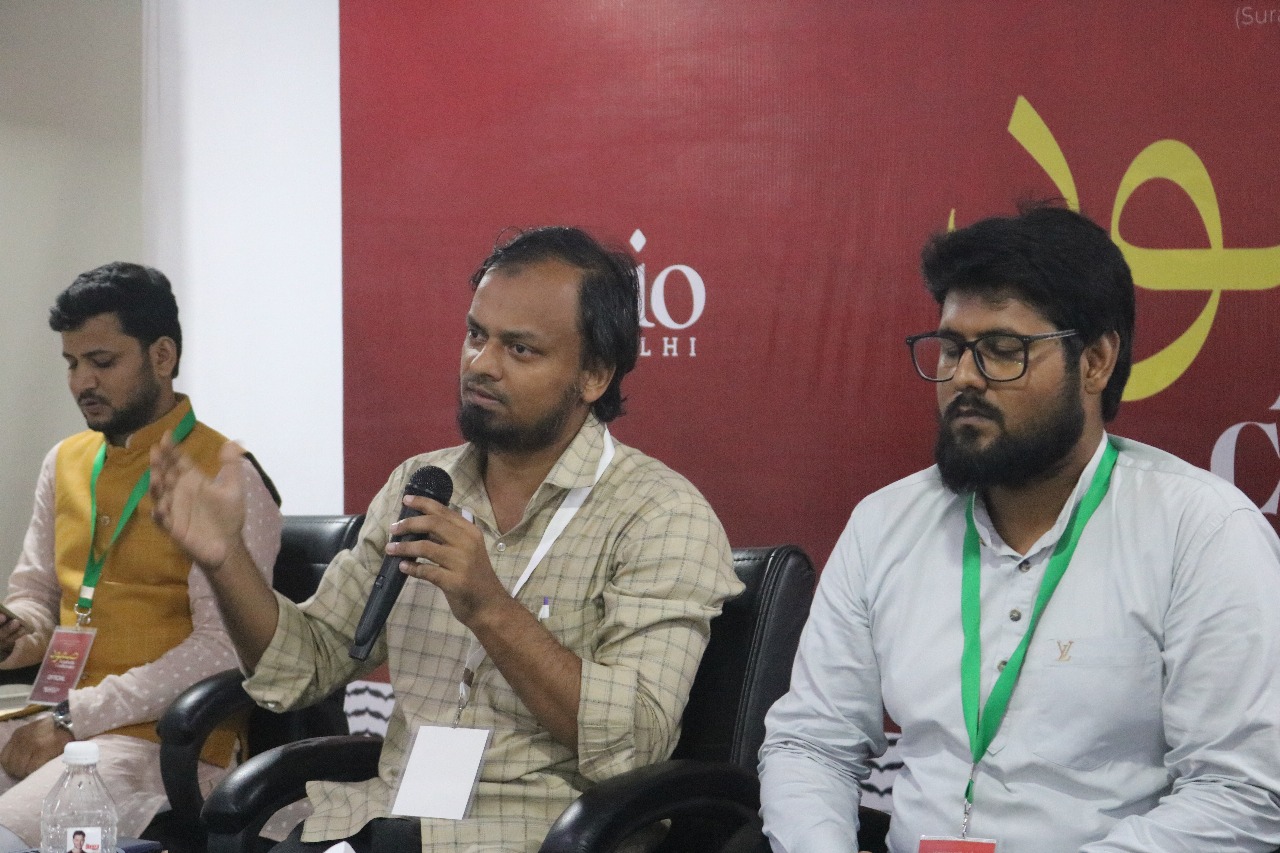
Dr. Khan Yasir, Faculty, IISR (C) addressing the Sumud Academic Conference organised by SIO Delhi Zone
Dr. Khan Yasir, in his session “From Campus to Ummah,” argued that students should rethink education as more than a pursuit of employment, urging them to explore knowledge and alternative models of livelihood beyond the narrow frame of job-seeking.
A panel discussion titled “Faith in Flux: Navigating Identity in the Modern Campus” featured Dr. Roshan Mohiuddin, Fawaz Shaheen, and Mohd. Alfauz, with an interactive Q&A and open-floor session encouraging student participation.
A view of the audience
Paper presentations formed another highlight, with young researchers presenting their work under the review of Hammad Yasir. Topics ranged from navigating identity and the role of students in shaping intellectual futures, to the broader challenges of “universities under siege.”
The conference underscored sumud – steadfastness and perseverance – as a guiding principle for Muslim students to confront academic and political pressures while upholding democratic and secular values. Organisers emphasised that the event was not only about imparting knowledge but also about integrating student perspectives into the broader discourse.
Concluding the event, SIO Delhi Zone described the conference as a vital platform to prepare students for the realities of campus life, urging them to remain resilient in the face of rising challenges.
source: http://www.radiancenews.com / Radiance News / Home> Education> Latest News> Report / by Radiance News Bureau / September 25th, 2025
Alam died after a cardiac arrest at a private hospital in Mohali; last rites at Sirhind on Wednesday.
Mohd Izhar Alam, a former DGP, prisons, of Punjab Police, was inducted into the Shiromani Akali Dal after his retirement. His wife, Farzana Nissara Khatoon, is a former SAD MLA from Malerkotla. (HT file photo)
Mohammad Izhar Alam, 73, a former director general of police, prisons, died after a cardiac arrest at a private hospital in Mohali on Tuesday.
He is survived by wife Farzana Nissara Khatoon, a former Shiromani Akali Dal MLA from Malerkotla, three sons and two daughters.
The 1972-batch Indian Police Service officer was a Padma Shri awardee.
He had a controversial stint during the decade of militancy in Punjab.
Despite opposition, former chief minister Parkash Singh Badal inducted Alam into the SAD on November 18, 2009, and appointed him chairman of the Punjab Wakf Board.
In the 2012 assembly elections, Farzana won the Malerkotla seat on the SAD ticket, defeating Razia Sultana of the Congress.
Chief minister Captain Amarinder Singh also mourned the former DGP’s death.
The last rites will be performed in Sirhind on Wednesday.
source: http://www.hindustantimes.com / Hindustan Times / Home / by HT Correspondent / July 06th, 2021
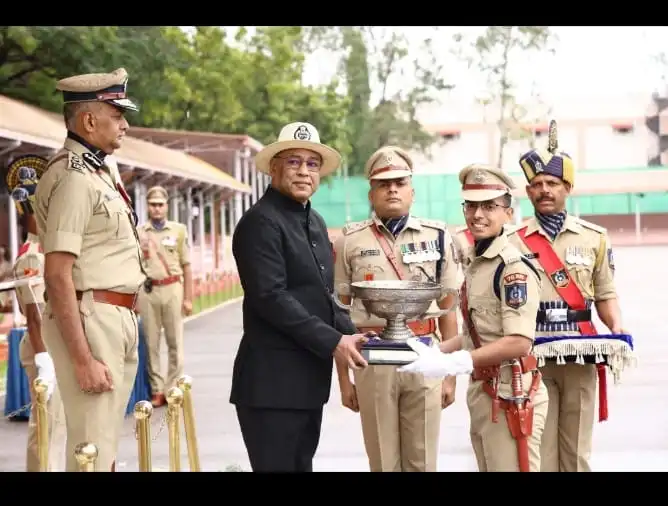
In a prestigious recognition of intellectual depth and commitment to the ideals of unity and peace, Dr. Syed Mustafa Hashmi, IPS (P), a probationer from the 76th Regular Recruit (RR) batch borne on the Jharkhand cadre, has been awarded the Ministry of Home Affairs Trophy for the Best Essay on the theme “Communal Harmony and National Integration”.
His essay stood out among numerous entries submitted by IPS probationers across the country for its clarity, depth of analysis, and strong articulation of inclusive governance.
Securing the second prize in the same category was Anna Sinha, IPS (P), also from the 76 RR batch, who is borne on the AGMUT cadre. Her essay was lauded for its innovative approach and empathetic insights into India’s diverse societal fabric.
The awards were presented during the Valedictory Parade of Phase II training of the 76 RR IPS Probationers at the Sardar Vallabhbhai Patel National Police Academy (SVPNPA) in Hyderabad.
The ceremony marks the culmination of their intensive training that spanned law enforcement tactics, ethical policing, public service delivery, and nation-building.
The Director of SVPNPA, senior IPS officers, and faculty members were present during the function, which also included a ceremonial parade by the probationers — a symbol of their readiness to join the ranks of the Indian Police Service and serve the nation with integrity and valor.
This year’s training cohort included a diverse group of young officers from across India, representing various states and social backgrounds.
Their training included exposure to modern policing challenges such as cybercrime, terrorism, social media monitoring, community policing, and strategies to foster communal harmony and inclusive development.
Home Ministry’s Essay Competition: A Platform for Thought Leadership
The Ministry of Home Affairs Essay Competition is an annual initiative that encourages future IPS officers to reflect on themes central to India’s national unity. By promoting intellectual discourse on critical social issues, it aims to create a cadre of officers who are not only efficient administrators but also thought leaders in promoting harmony, justice, and inclusive governance.
Dr. Hashmi, who has a background in medicine prior to joining the IPS, emphasized in his essay the role of empathetic policing, grassroots engagement, and inclusive policymaking as tools to bridge communal divides.
He has been praised for blending scholarly analysis with practical insights drawn from his field experiences during training.-
Anna Sinha, in her essay, highlighted the role of women in peace building and the need for greater representation and sensitivity in community policing. Her perspectives reflected a balanced understanding of law enforcement challenges and the human dimension of national integration.
A Pledge to Serve
The valedictory function ended with the probationers taking a solemn oath to uphold the Constitution, maintain law and order, and serve with dedication, impartiality, and compassion. The entire 76 RR batch is now set to report to their respective cadres and districts, where they will begin their real-world policing assignments as Assistant Superintendents of Police (ASPs).
As they embark on their careers, recognitions like the Home Ministry Essay Trophy serve as a reminder of the intellectual and moral leadership expected from the IPS — to not only enforce law, but also to be torchbearers of national unity and harmony.
source: http://www.uditvani.in / Udit Vani, English News / Home / July 25th, 2025