Category Archives: Community Involvement / Social Issues

Gujarat floods: Muslims’ kar seva cleans flood-hit temples

Dhanera (Banaskantha District) , GUJARAT :

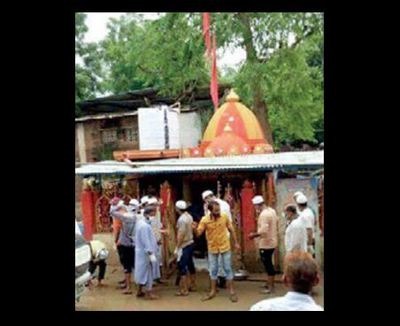
Volunteers help clean up temple premises

Ahmedabad :

In times of death and destruction, the lotus of communal harmony has bloomed in the muck of flood-ravaged Dhanera in Banaskantha, a district which has lost 64 lives and is still counting its dead.

In this Hindu-dominated town, some 3,500 Muslims from Dhanera, Deesa, Palanpur and nearby villages trooped in to the aid of the town, cleaning places of worship and residence alike, after waters started receding slowly. The town was submerged under 10ft of flood waters that coursed its way through thousands of homes, leaving behind a trail of destruction, tonnes of earth, sand and scare of an epidemic.

Their first mission was to remove muck from 22 temples and three major mosques in Dhanera town. “In this difficult hour, we felt that people needed hope and spiritual support to help them pull back their lives. This is why we began cleaning the temples first with the help of locals. Floods have brought each one of us together,” says Mohammed Rafiq Memon of Jamiat Ulema-e-Hind.

The volunteers under the aegis of JUH cleaned some major temples in Dhanera like the Ganapati, Hanuman, Satimata, Lilashah and Ashapura Mata temples in the first two days itself with the help of a few locals.

Dhanera Nagapalika vice-president Jagdish Thakkar told TOI, “It took our Muslim brothers close to six to eight hours to help us clean temples including the 115-year-old Lord Ganapati temple and three others. The locals joined hands and helped cleaning three mosques, including Khureshi Masjid, not far from the Ganapati temple in Khatkiwad. Besides religious places, volunteers also cleaned the Nagarpalika office, post office and homes,” says Thakker.

Abdul Hassan Sewani, a volunteer from Sidhpur, told TOI, “Calamity sees no religion and neither did we. In the end, we are humans, brothers in distress who helped each other. We cleaned temples and mosques so the troubled could find some solace,” says Sewani, who continues to camp in Dhanera and is helping authorities with the massive clean-up operations to prevent disease outbreak.

“Floods had swept away everything, including one’s home and confidence to put it all together. Together, we realized we could help each other tide over these difficult times,” says Memon.

source: http://www.timesofindia.indiatimes.com / The Times of India / News> City News> Ahmedabad News / TNN / August 02nd, 2017

Mithibai Alumni Association to felicitate achievers

Mumbai, MAHARASHTRA :

MithibhaiAlumniMPOs13dec2017

Mumbai :

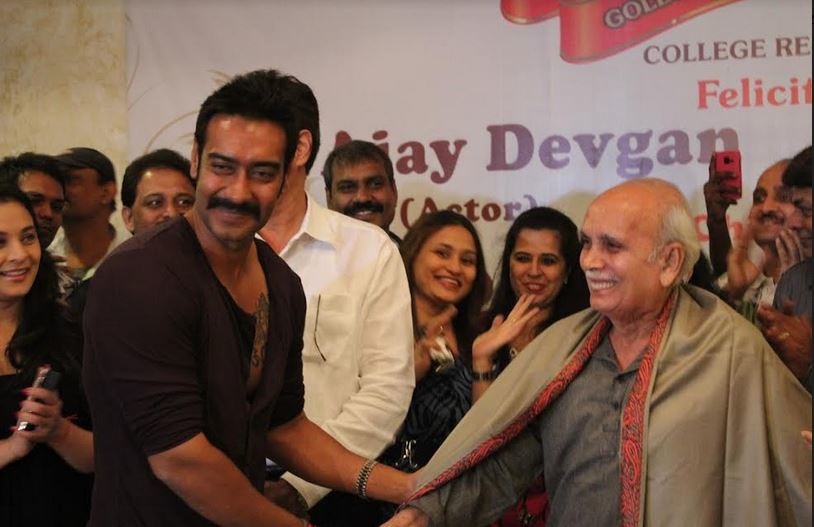
The ex-students of  Vile Parle’s Mithibai College will hold their seventh reunion Saturday December 9 at Club Millennium,  Juhu.

“We will felicitate composers Sajid-Wajid, film director Vikram Bhat, stage artiste  Paritosh Painter and Afroz Shah who initiated the Versova beach clean-up,” said Krishna Hegde, convenor,Mithibai Ex-Students Association (MESA).

The glamour quotient coupled with social messages makes the Mithibai alumni meet an awaited event. This year, performances by Purani Jeans, Cutting Chai and An Evening Down Memory Lane are on schedule.

Mithibai College has among the largest number of students worldwide and approximately one million alumni in different countries.

Hegde said, “It has been a tradition to felicitate outstanding ex-students for their achievements at our reunions. We are very excited with the names selected for this year’s  MESA Hall of Fame 2017.”

The previous edition of the reunion saw a turnout of over 500 alumni. Senior media professional Balakrishna Pillai’s batch is celebrating its silver jubilee since passing out. He said, “Our reunions are one of the largest and grandest in India. For us, reunions are not just about get-togethers but also celebrating the success of our college mates and being socially responsible. Since MESA was founded about 19 years back, besides getting the students together at regular intervals, it has arranged various blood donation drives, health camps, fund raising for Kargil jawans, supporting the education of underprivileged and other activities.”

“It is not uncommon to spot a film star, industrialist or sportsperson at other college reunions but at ours, celebrities seem to outnumber the average alumni! Ex-students like Ajay Devgan, Raveena Tandon, Vivek Oberoi, Praveen Amre attend the reunions frequently,” said Khalid Khan, MESA president.

source: http://www.timesofindia.indiatimes.com / The Times of India / News> City News> Mumbai News / by Bella Jaisinghani / TNN / December 07th, 2017

Silk lotuses by Varanasi Muslim weaver shining in Gujarat

Varanasi, UTTAR PRADESH :

Mohd Azharuddin has got an order to send 7,000 silk lotuses to Gujarat

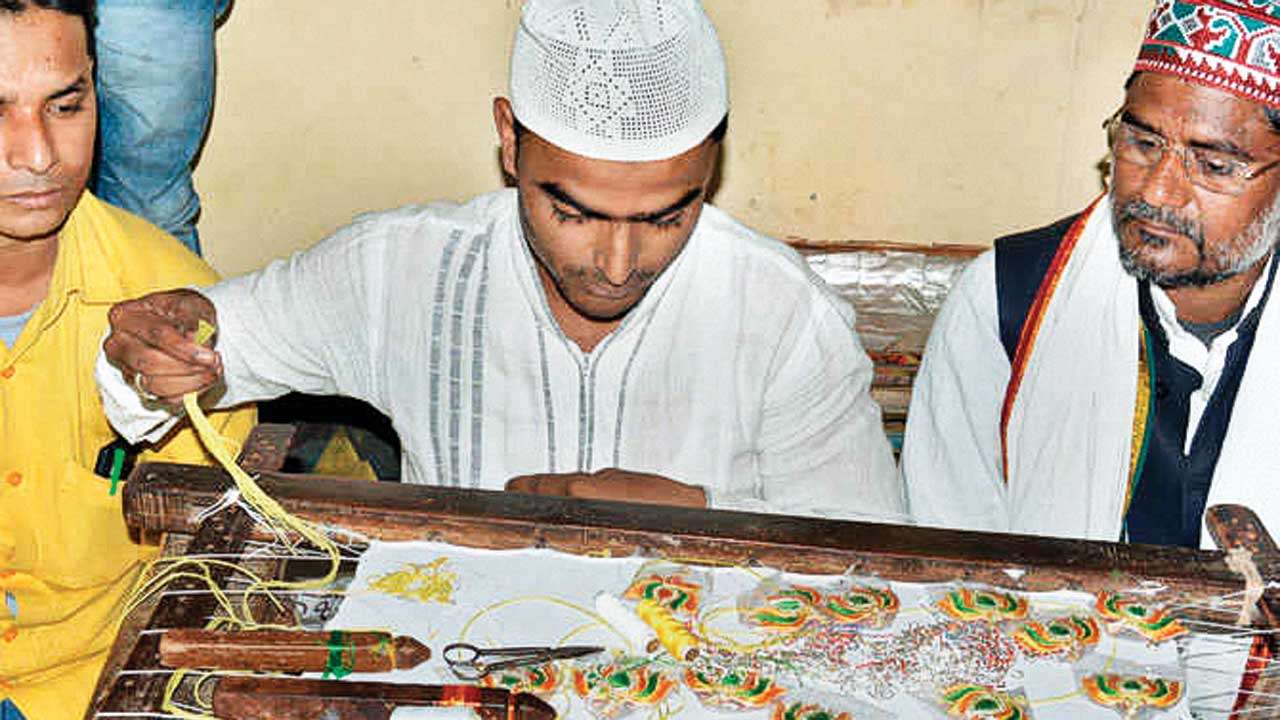
A Muslim weaver from Varanasi, the Parliamentary constituency of Prime Minister Narendra Modi, is sending about 2,000 specially designed silk ‘Kamal ke Phool’ (Lotus, which is the symbol of BJP) to Gujarat for the second phase of the Assembly elections.

Mohd Azharuddin said that he has already sent 5,000 silk lotuses to the BJP’s state headquarters in Gujarat before the first phase of polling. “I had got an order of 7,000 lotuses. We are sending the second lot tomorrow to Gujarat for the second phase of polling,” he told DNA.

The Varanasi weaver got the order by chance. He wanted to present his creation (a silk lotus) to Prime Minister Narendra Modi during his last Varanasi visit on October 22. While he was not allowed to reach the dais for security reasons, a Muslim Manch leader, Pushpendru Updhyaya, was impressed by his creation and gave him the big order.

Azharuddin claimed that he got the idea of weaving Lotus on silk thread when he saw Prime Minister and other senior BJP leaders wearing badges of party symbol Lotus tugged on their kurtas.

“Our weavers worked for several days and came out with a better design. It is weaved with different coloured silk threads and the carving is done with genuine stones which never turns black. It takes about two to two-and-half hours to weave one lotus,” said the Muslim weaver.

Azharuddin, who runs a powerloom, said his efforts were aimed at supplementing their income through the new creation following a slump in demand for world famous Varanasi sarees. Besides the lotus, they have also weaved a Tricolour which they are trying to sell to all political parties and for occasions like Republic Day and Independence Day.

He said it costs him about Rs 150 each to make a lotus or a Tricolour. He said sold the lotuses to the BJP for Rs 200 making a profit of Rs 50 per piece. “This additional income helps us support our children’s education when the loom business is down.”

A resident of Shankar Talaab in Varanasi, Azharuddin said that about 20 weavers worked overnight to complete the order of the Muslim Manch, an outfit of the Rashtriya Swayamsevak Sangh. “We are now expecting a bigger order from the BJP for 2019 Lok Sabha polls.”

A staunch supporter of BJP and Modi, Azharuddin is confident of BJP’s victory in Gujarat. “We are patriot Muslims. The prime minister is doing a great job for the nation. I am sure BJP will win Gujarat again and we all will vote for Modji in 2019. I will present a silk lotus to Modji when he visits Varanasi after winning the Gujarat polls.”

source: http://www.dnaindia.com / DNA / Home> India> Ahmedabad / by DNA Correspondent / December 11th, 2017

Popular AMU leader Saleem Peerzada passes away

NEW DELHI :

AMN / New Delhi
AMN / New Delhi

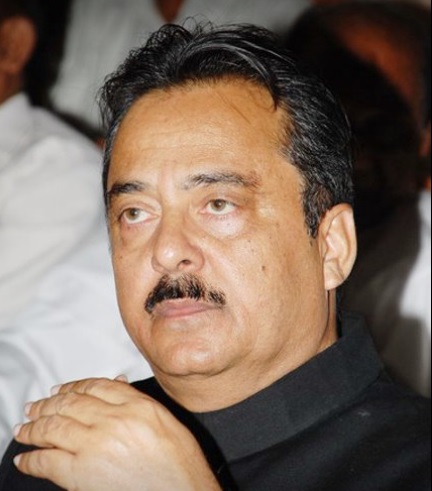
Mr Saleem Peerzada popularly knows as Lovy peerzada passed away due to cardiac attack in New Delhi today. He was great thinker,statesman and chairman of Parcham party.

According to family sources he breathed his last at Apollo Hospital Delhi. He suffered a stroke on December 11th and was admitted at JNMC, later he was transferred to Ganga Ram Hospital Delhi and later sent to Apollo.

He could not be operated as his condition had deteriorated,understandably due to time lapse during transfers between hospitals. He had a successful open heart surgery 2 years ago.

A frank and bold he was,as a young AMU student and a Politican until he wrote his last words yesterday on face book.He was a prolific writer and an excellent orator.

It is a legacy that spans 40 years, including the stand-off with administration,corruption and the resistance against the nepotism,religious fanaticism and communalism. He was a Politician with ideals with unparalleled knowledge of history and mesmerizing vocabulary oratory skills.

His demise has created a vacuum in the “ ideological politics”,which may not be
replaced.

May his soul rest in peace

source: http://www.theindianawaaz.com / The Indian Awaaz /  Home /December 12th, 2017

Mashqoor Ahmad elected AMU students union president

Aligarh, UTTAR PRADESH :

Aligarh :

Mashqoor Ahmad Usmani from Bihar has been elected as the next students union president of the Aligarh Muslim University (AMU), varsity officials said on Tuesday.

Usmani, who hails from Darbhanga, polled 9,071 votes and defeated his nearest rival Ajay Singh by 6,719 votes.

Singh is the grandson of former Uttar Pradesh minister and BJP legislator from Barauli Thakur Dalveer Singh. He got 2,353 votes. Abu Baqar stood third with 2,192 votes.

The results were announced after midnight. An official announcement will be made later in the day.

Sajjad Rathar was elected the Vice President and Mohammad Fahad bagged the secretary’s post.

A total of 18,200 students voted on Monday  to elect the new leaders.

IANS

source: http://www.tribuneindia.com / The Tribune / Home> Nation / Aligarh – December 12th, 2017

How greatness sometimes runs in a family’s genes

Mumbai (formerly Bombay), MAHARASHTRATA / and all over India  :

Some months ago I was in Kolkata when news came of the death of Laeeq Futehally, a writer and critic I greatly admired.

Badruddin-Tyabji-the-first-great-of-his-family

Some months ago I was in Kolkata when news came of the death of Laeeq Futehally, a writer and critic I greatly admired. The friend I was with hadn’t heard of her, so I spoke at some length of Laeeq’s own work (as literary editor of the pioneering journal Quest, and as the author of many books on varied subjects), and of the larger family to which she belonged. ‘Laeeq was a Tyabji,’ I told my friend, ‘and you can think of the Tyabjis as being the Tagores of Western India — a family of men and women of real distinction in the arts and public life’.

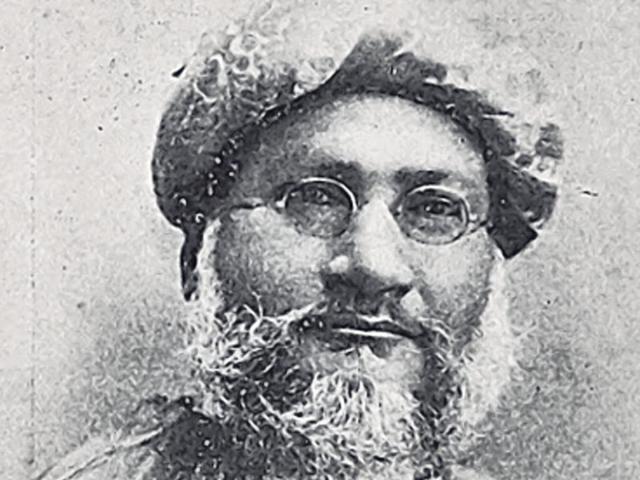
A look of disbelief now came over my friend’s face. For which Bengali can countenance a comparison to the Tagores? I pressed on, offering some names in illustration. The first great Tyabji was Badruddin, a judge of the Bombay High Court and an early president of the Indian National Congress. Direct descendants of Badruddin included the tennis player and legal scholar AA Fyzee (author of landmark studies on Islamic law), the politician and social reformer Saifuddin Tyabji, the conservationist Zafar Futehally, and Badruddin Tyabji Jr., a distinguished Indian diplomat and author.

My friend Laeeq Futehally was herself a descendant of Badruddin’s elder brother Shumsuddin Tyabji. Shumsuddin’s only son was Abbas Tyabji; once Chief Justice of Baroda State, he later joined the freedom struggle, being appointed leader of the Salt Satyagraha after Gandhi’s arrest. A nephew of Abbas (and grandson of Shumsuddin) was the great ornithologist Salim Ali, the author of landmark studies of Indian birds and an inspirational figure for conservationists all over the world.

The women of the Tyabji family were likewise quite remarkable. A fine study by the late Salima Tyabji (see http://cinnamonteal.in/authors/salima-tyabji/) narrates how they were the first Muslim women in Western India to emerge out of purdah, to travel overseas, to go to school and college, and to write at length of their experiences. Later generations kept the family name flying. Among Abbas Tyabji’s daughters was the formidable women’s rights activist Sharifa Hamid Ali and the mystic and Meera bhajan singer Raihana Tyabji.

Such was the background to the comment I made about the Tyabjis in Kolkata, a comment that evoked dismay bordering on disgust. But I have since found confirmation of the validity of my comparison. Reading through Gandhi’s Collected Works, I came across a letter written by him to Abbas Tyabji on the 17th April 1920. Here Gandhi says: ‘Indeed the Tagores and the Tyabjis are the rarities for India and they are her friends’.

The contributions of the Tagores are of course colossal, as well as colossally well known. The most famous of the Tagores was Rabindranath: poet, novelist, playwright, composer, artist, institution builder, the first Asian to win a Nobel Prize, and one who profoundly influenced both Gandhi and Nehru.

Rabindranath was a giant who looked farther in part because he stood on the shoulders of those who preceded him. His grandfather, Dwarkanath, was a successful entrepreneur whose wealth laid the basis for the artistic pursuits of his descendants. His father, Debendranath, was a progressive reformer and editor.

Rabindranath’s gifted siblings included the scholar and composer Dwijendranath, the actor and translator Jyotindranath, the singer, editor and social worker Swarnakumari, and Satyendranath, the first non-white member of the Indian Civil Service.

The generation that followed was also not lacking in talent. Rabindranath’s nephews included the modernist painters Abanindranath and Gaganendranath. His nieces included Sarala Devi, a singer, writer and patriot who so entranced Gandhi that he at one stage intended to make her his ‘spiritual wife’.

Which was the greater of the two families, the Tagores or the Tyabjis? Rather than answer the question, let me introduce a third and scarcely less gifted family.

These were the Sarabhais of Ahmedabad. The patriarch, Ambalal, was a textile millowner and philanthropist who was an early supporter of Mahatma Gandhi. When, in 1915, Gandhi’s funders withdrew support because he had admitted an ‘Untouchable’ family into his ashram, Ambalal Sarabhai stepped in to save the project.

Ambalal’s sister Anasuya was herself very close to Gandhi. A pioneering feminist and trade unionist, she ran schools for millworkers and their children. In 1918 she led the workers of Ahmedabad in a strike for fair pay that pitted her directly against her brother, who was representing the millowners.

Anasuya never married, although, in a daring defiance of custom and convention, she had a live-in partner, a fellow Gandhian and trade unionist, Shankerlal Banker.

As for Ambalal Sarabhai, he had seven children — all were talented, and at least four were remarkable. These were Vikram, the polymath physicist who founded both the Indian Institute of Management in Ahmedabad and the Indian Space Research Organisation; Mridula, who worked heroically to settle post-Partition refugees and, later, to bring justice to the Kashmiris and their leader Sheikh Abdullah (who had been incarcerated by the Nehru government); Gautam, a public-spirited entrepreneur who founded the National Institute of Design (NID); and Gira, a brilliant designer who assisted her brother in shaping the NID while also setting up the Calico Textile Museum.

Had Gandhi had the opportunity, he might well have added the Sarabhais to the Tagores and the Tyabjis as among the ‘rarities of India’. These three families had several things in common: the ability to defy social boundaries as well as transcend disciplinary boundaries, an apparently unending stream of creativity, and the striking independence of their women. A single column can scarcely do justice to their talents and achievements. While the Tagores have had their chroniclers, the Tyabjis and Sarabhais still await theirs.

Ramachandra Guha’s most recent book is Gandhi Before India
You can follow him on Twitter at @Ram_Guha
The views expressed by the author are personal

source: http://www.hindustantimes.com / Hindustan Times / Home> Opinion / by Ramchandra Guha / April 11th, 2015

Bird named after Salim Ali

Mumbai, MAHARASHTRA :

The bird has been described from northeastern India

Twenty-nine years after the demise Dr. Salim Ali, the birdman of India, an international group of ornithologists named a newly discovered species after him, thus paying homage to the man who shaped generations of ornithologists and also contributed to the better understanding of birds.

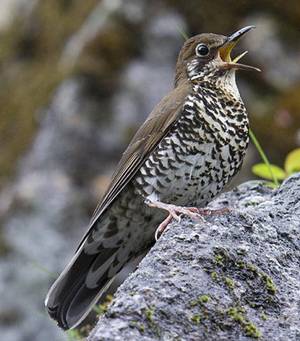
Himalayan Forest Thrush, Zoothera salimalii, thus goes the name of the species, which has been described from northeastern India and adjacent parts. The research team that identified the species included scientists from Sweden, India, China, the U.S., and Russia.

Earlier, a bat species — Salim Ali’s fruit bat — that was first collected from Western Ghats region of Theni district, Tamil Nadu, was named after the legendary ornithologist.

The present study was initiated in June 2009 by Per Alström of Uppsala University, Sweden and Shashank Dalvi of the Alumnus of the Post Graduate Program, Wildlife Conservation Society- National Centre for Biological Sciences, Bangalore, while studying birds at high elevations of Western Arunachal Pradesh. The researchers had discovered that there were two species of Plain-backed Thrush breeding in sympathy in Arunachal Pradesh, India. These were completely “segregated by elevation and habitat, one occurring in mostly coniferous forest up to the upper tree limit and the other in alpine habitats above the tree limit. Their songs were strikingly different, although no definite morphological differences were detected in the field.”

The research findings were published in Avian Research.

According to the researchers, “it was realised that what was considered as a single species, the Plain-backed Thrush Zoothera mollissima, was in fact two different species in northeastern India. While the Plain-backed Thrush in the coniferous and mixed forest had a rather musical song, those individuals found in the same region, but on bare rocky habitats above the tree-line had a much harsher, scratchier, unmusical song.”

The studies of “specimens from 15 museums in seven countries revealed consistent differences in plumage and structure between birds from these two populations. It was confirmed that the species breeding in the forests of the eastern Himalayas had no scientific name. Later, the new species was named as Himalayan Forest Thrush Zoothera salimalii. The high-elevation Plain-backed Thrush is now renamed as Alpine Thrush while it retains the scientific name of Zoothera mollissima,” said a communication.

The analysis of plumage, structure, song, DNA and ecology from throughout the range of the Plain-backed Thrush revealed that a third species was present in central China, which was already known. This was treated as a subspecies of Plain-backed Thrush and was called as Sichuan Forest Thrush. The song of the Sichuan Forest Thrush was found to be even more musical than the song of the Himalayan Forest Thrush, the communication said.

source: http://www.thehindu.com / The Hindu / Home>  Sci-Tech / by K. S. Sudhi / January 24th, 2016

Uttar Pradesh civic polls: BJP fields 25 Muslims in first phase

UTTAR PRADESH :

HIGHLIGHTS :

  • The party says ticket distribution is in accordance with its ‘Sabka Saath, Sabka Vikas’ policy
  • It is believed that more Muslim candidates would be given tickets if the party has to fare well

Lucknow :

BJP has given tickets to nearly 25 Muslims for the first phase of local body polls in UP.

The number is all set to go up significantly for the second and third phase of polls which will cover most of west UP districts.

The party has given tickets to five Muslim candidates for Lucknow’s Malihabad nagar panchayat.

In Amethi, BJP has fielded Muslims candidates in Mishrauli, Babaganj South and Ghosiyana wards in Musafirkhana nagar panchayat. The party has also given tickets to a few Muslim candidates in the Pratapgarh district.

BJP spokesman Chandramohan Singh told TOI that the ticket distribution is in accordance with the party’s ‘Sabka Saath, Sabka Vikas’ policy.
BJP has given tickets to five Muslim candidates from Lucknow’s Malihabad nagar panchayat elections. It has fielded Atiya from Joshin Tola, Ali Mohammad from Mohammadan Tola, Imran Ansari from Chaudhrana, Naziya from Kewalhar ward and Azra Bano from Samda ward. Similarly, Abdul Gafoor Khan has been made BJP candidate from Kurshat nagar panchayat of Unnao. In Sonebhadra district, BJP has given ticket to Sarafat Ali from Hameednagar Mahal ward. In Amethi, the saffron party has fielded Tarzan Khan from Mishrauli ward, Shahadat from Babaganj South and Sikander Ahmed from Ghosiyana in Musafirkhana nagar panchayat. In Ghazipur, Mushtaq has got BJP ticket from Jamaniya, Akhtar Jamal from Ansari Mohalla and Feroz from Muhammadabad.

The BJP has also given tickets to a few Muslim candidates in Pratapgarh district. Even in Meerut Municipal Corporation, the BJP has chosen Shaukat Ali and Tanseen Ansari as corporator candidates.

However, with list of candidates for Muzaffarnagar, Amroha, Hapur in West UP still to be declared, it is believed that more Muslim candidates would be given tickets if the party has to fare well.

source: http://www.timesofindia.indiatimes.com / The Times of India / News> City News> Lucknow News / by Rajiv Srivastava / TNN / November 05th, 2017

Barkat’s School

JAMMU & KASHMIR :

Started by a mother of seven to impart free education to underprivileged, Buchwara’s Lowood School is now a splendid piece of history. To rediscover its history, Bilal Handoo visits the school where once elite and influential British used to teach
Barkat’s-School

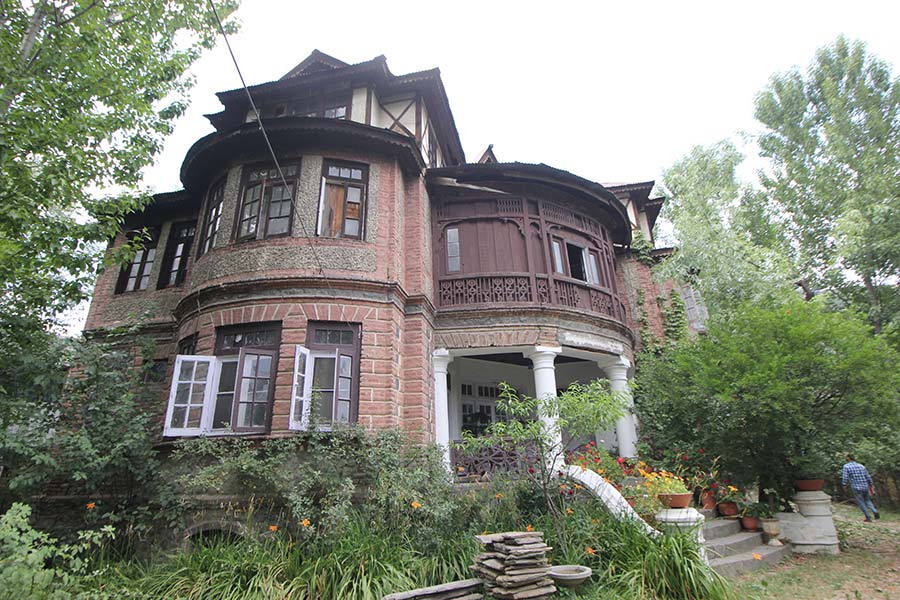
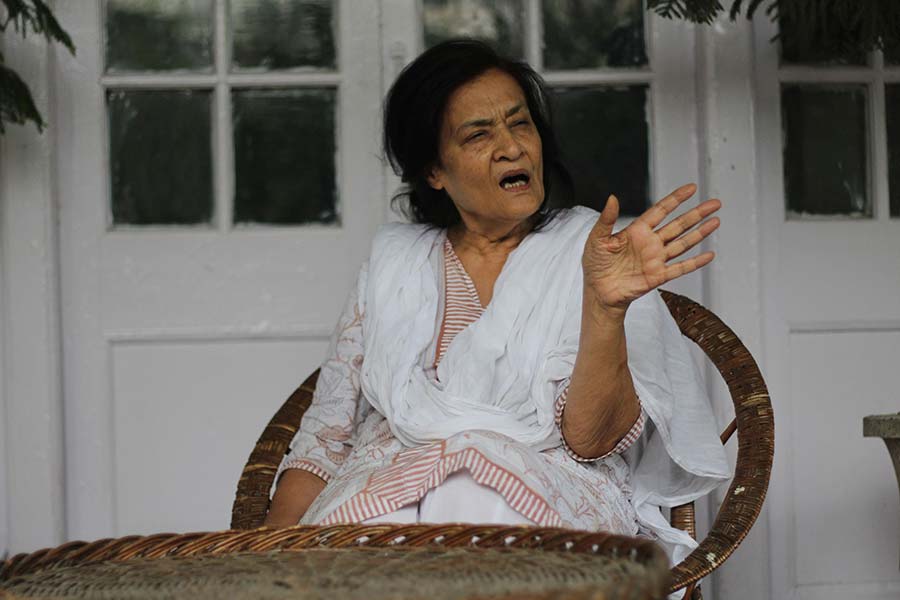
Address of the yesteryear’s educational signpost in Buchwara is a flood-torn fence and moss-filled courtyard of a rundown Dogra era building. For the moment, the structure appeared haunting: hauntingly quiet amid absence of mortals. The first sign of life came when a senile yet warm lady showed up only to recount how the school created a difference in its immediate locality.

Arjumand Zafar basked under the afternoon sun before narrating some unknown facts about the school. “Do you know,” says Arjumand, a retired deputy health director, “who used to teach here?” She rushed to solve the riddle, “the only daughter of former Prime Minister of England, Carol Thatcher.” She reclined on her seat to recall those two successive summers in later seventies when Carol Jane Thatcher (63) – an English journalist, author, and media personality arrived in Lowood School Buchwara and taught the students.

Then, the young Arjumand saw the daughter of the “Iron Lady”—Margaret Hilda Thatcher—a British stateswoman and the longest-serving British Prime Minister of the twentieth century, Prime Ministyer of the United Kingdom from 1979 to 1990,  to teach the kids with zeal. “She used to stay with us during that time,” the lady, now living in the house with her domestic help, said. “It was a different era, when foreigners used to frequent the school to prepare students over here at par with global standards.” Carol was then working for Australian Sydney Morning Herald whose relationship with Jonathan Aitken had ended in 1979. Now living with ski instructor Marco Grass in Klosters-Serneus, Switzerland, Carol travelled to the Falkland Islands and Argentina for the documentary Mummy’s War, where she got the hear: “Your mother is a war criminal!”.

But who was running this school and inviting all those high-profile foreigners back there? That person was Arjumand’s mother-in-law, the famous and respected Barkat Begum.

Also known as Begum Rehana Jalal-ud-din (Feb 13, 1913-April 13, 2002), Barkat Begum originally hailed from the remote Karen belt. Her family members distinguished themselves in various fields in valley. Her eldest brother, Nazir Ahmed Shah, was a judge. Her other brothers and sisters include, Begum Me’raj Qureshi (educator), Syed Ahmed Shah (nicknamed Shamji, a decorated member of the Kashmir Armed Forces, and founding member of the JAKLI Regiment, and later the JK Police), noted physician Dr Sayed Naseer Ahmed,, Syed Zameer Ahmed (former member of the armed forces, and an entrepreneur) and Dr Mahmuda Ali Shah, an educator.

Married to Aga Jalal-ud-din, an officer in the Maharaja Hari Singh’s Forestry Department at a young age, she continued her schooling with support from her “loving” husband. She was one of the few Muslim women from Kashmir to pursue further studies abroad, when she was awarded a scholarship to study at the University of Chicago in the 1950s. She was a mother of seven when she travelled to America for  studies.

On her return, she dedicated her life to develop school education in J&K, first as an officer in the government, and on her retirement, by founding one of the few English Medium schools in the valley, the Lowood Garden School. Her legacy of education is instilled deeply in her children, who have also excelled in their respective fields of expertise: son Syed Aga Nasser, retired as a senior member of the state judiciary; daughter Amina Gran, linguist, and broadcaster who worked with the UN; daughter Begum Khurshid Bakshi – wife of former Prime Minister Bakshi Ghulam Mohammad, educator and social worker, who retired as Director, Social Welfare son Zafar Ahmed, engineer and poet, retired as Chief Engineer Works; daughter Begum Sughra Hafeez, who retired as Principal, Government College for Women, Srinagar; son Shams Ahmed Khan, IPS, who retired as Inspector General of Police, JKP; daughter Begum Qudsiah Shah, educator who retired as Principal, Kothibagh Girls Higher Secondary School, Srinagar.

While her maiden name was Rehana, she was known and respected as Barkat Begum, a reference to her untiring efforts for the social and educational upliftment of the under-privileged. To her extended family she was known simply as Begum.

Barkat Begum worked tirelessly to promote social and educational upliftment, to the extent of refusing to accompany her husband back to Lahore after Partition as she felt that her services to promote education among women in Kashmir were more important.

Passion for education led this lady from a conservative background to travel alone to Chicago on a steamer in the 1950’s to pursue a scholarship leaving behind seven young children in the care of relatives. Uncommon even today, such an endeavour would have been unthinkable for a lesser mortal in those days.
Barkat’s-School02

After retirement Barkat Begum set up one of the finest schools in the valley – the Lowood Garden School. A dedicated core of teachers was supplemented by anyone who had something to teach. Visiting tourists and school-going grandchildren were co-opted into impromptu teaching roles. Barkat Begum was not one to be easily refused.

Many foreigners would return to take up temporary teaching assignments and school activities included stuff like performing Shakespearean plays and nature interpretation. Her family lived in a colonial bungalow on the Boulevard Road, which also housed the Lowood Garden School. The property included a huge estate with marshes, reed-beds and walnut, apple and quince-apple orchards. When Sheikh Mohammed Abdullah, then Chief Minister of Kashmir, offered Barkat Begum a permanent house in exchange for releasing the estate to build a commercial complex, she offered to release the land without any compensation if the state needed it. ‘Aap ki Jooti ki khairat’ was the term she used, translated roughly that the land meant less to her than the worth of his sandals.

The high worth of education and service for the common good as opposed to chasing wealth are values that were deeply instilled in her children and grandchildren. “I often joke that if Bill Gates were to meet my mother’s family,” says Jehangr, Barkat’s grandson, “they probably would treat him like a common shopkeeper. They don’t make them like her anymore!”

The school had a concept of mid-day meals when it was the remotest concept. They would give students a peanut butter. “The grandma was topper in Chicago examination,” says Javed Bakshi, son of Bakshi Ghulam Mohammad, who heads J&K’s State National Rural Livelihood Mission (SNRLM).  “She was part of Chicago based firm that used to supply stationery to the school.”

Eighty percent of pass-outs from Lowood School are either doctors, engineers and lawyers, Javed says. “One Khurshid Mir, pass-out of the school, now runs 20 spice shops in Germany,” he says. “His father is still selling cigarettes on Dal Lake gates. He flew all the way from Germany to be the part of my grandma’s funeral and broke down saying that today’s whatever little he achieved in life is all because of Barkat Begum.”

Begum Jallal-ud-Din not only had Master’s degree from Chicago University (USA) in 1940, but was also the first Asian to get cent percent marks in the course and later retired as Director Social Welfare here.  Her father was a forest lessee, a big business during Maharajas time in Kashmir. “Despite holding high positions, none of the siblings had a house of their own and used to stay in the custodian house,” recalls her elder son, Javid Bakshi. “The (siblings) have been brought up in lot of poverty. Her father’s family went back to Pakistan after the partition in 1947. Her mother had gone out to study in Chicago (1946-47), and due to transition period she (grand mom) couldn’t even send money to the family here as something happened with the currency those days. So the siblings living in Kashmir used to for themselves. So many times, they would not have bedding to sleep and majority of the times siblings would skip dinner.”

In 1970, in Buchwara, Mummy used to go house to house walking to motivate parents to send their daughters to Low Wood School” a middle private school, sponsored by government. This was the same school that my grandma opened up after her retirement. Now my mother was teaching after her retirement. She ensured a good number of girls in the school. Those days, the school had American style of mid-day meals. Early morning, raspberry jam, a big glass of milk, oats, eggs, were served to kids.  Students used to get free education, and the kids who couldn’t afford uniform, would get it from school. “Kids in the school were mostly from the boatmen community.”

Bashir Sidiq, a member of Kashmir Bar Association is one proud student of Barkat’s School. “We were like her sons,” Sidiq says. “Barkat Begum used to teach us in garden and prepared us for the overall development of life. She was focussing on underprivileged kids and was very health conscious.”

source: http://www.kashmirlife.com / Kashmir Life / Home / by Kashmir Life / September 28th, 2017
Mangaluru: Deve Gowda launches Fiza Group’s welfare schemes, lauds B M Farooq

Mangaluru, KARNATAKA :

Mangaluru :

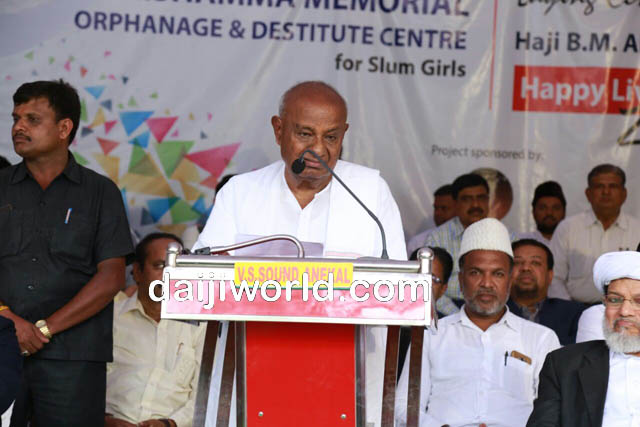
“Having worldly wealth is not everything. Only a person is rich in heart besides being rich, can think of projects like Happy Living Zone and make it happen. Social welfare measures being undertaken by Farooq in the name of his parents are close to the heart of the Almighty. The soul of his mother may experience fulfillment at the knowledge that her son has drawn up a plan of Rs 15 crore for educating poor people, in the name of his father and mother,” said JD(S) supremo and former Prime Minister H D Deve Gowda.

DevegowdaMPOs09dec2017

He was speaking after inaugurating welfare schemes being run by Fiza Group, and laying foundation stone for B M Ahmed Bava Memorial Happy Living Zone at a programme held under the aegis of Saadiya Education Foundation on Tuesday November 6.

“This is something which gives me immense satisfaction. I feel like some power is gripping me. I have come to like Faooq because of the fact that he is a man of rich heart. His schemes and projects tell us that he has a rich heart,” Gowda said, praising his party leader.

Gowda revealed that some recent developments in the country are paining him. “Effort to trample a particular community is going on a continuous basis through a conspiracy. Towards tackling this issue, all secular powers should come together. Religious leaders should teach lessons in humanity to the people of their respective religions. We have to retain humane qualities at any cost. Saadiya organization and its stalwarts are in the forefront in imparting this lesson,” Gowda said.

He said that his ardent desire is to lay foundation for a strong and united forum for secular outfits in the coming election and pledged to fight for this cause till his last breath. “I am prepared to undergo any kind of problem and crisis to make this happen,” he revealed.

The Late Ayishamma Memorial Slum Girls Education and Welfare Centre set up in the name of his mother by Farooq was inaugurated on this occasion by former chief minister, H D Kumaraswamy. He announced that if JDS rises to power in the state, it will implement Sachar Committee report for development works.

Farooq said that he used to keep close relationship with religious leaders and was serving the cause of educational and social initiatives in his own way for educational and social needs of the society. ” I have earned love and friendship of people from nooks and corners of my state. But it is not for the purpose of politics. I got unexpected entry into politics by way of filing candidature as a Rajya Sabha candidate,” said Fiza group owner, B M Farooq. Farooq said that he strongly believes that Allah will shower his mercy on those who behave sympathetically with people, and this notion drives his activities. “I am very happy with the aim of Saadiya to identify children facing maximum problems, and bringing them up academically,” he stated. He felt that children get very good parents because of good deeds they had done in the past. He recollected the assurance of the Prophet that those who serve the poor and destitute live in heaven with Him.

Farooq expressed his desire to contribute something for the society by working along side H D Deve Gowda, a purely secular leader and harbinger of development. He recalled services rendered by Deve Gowda in the capacity of Prime Minister of the cuntry and Karnataka chief minister. He expressed gratefulness for Gowda for providing four percent reservation for minority candidates in government employment, thus paving way for many Muslim officers to join government service. He also gave credit to Gowda for permanently addressing dispute on Idgah, and said he is proud to be associated with such a great personality at the very beginning of his political innings.

Maulana Shaffi Sahadi said that party affiliation is not necessary to speak about human nature and concern for others Farooq has in his heart. He hailed Farooq for offering schemes worth crores of rupees to the society towards providing education and social equality to thousands of Muslim children.He explained that Sahadiya Foundation has been providing religious and worldly education to poor and destitute students from the community since the last 14 years. “The organization has been imparting education and knowledge of religion to children of slum dwellers and to bring them to the mainstream of the society. Hundreds of students are being shaped into ideal personalities of the country by educating 5,000 students in Sahadiya Happy Living Zone from LKG to degree and also through providing training for civil services,journalism, and law eduction.

President of the organization, K S Atakoya Kumbol Tangal, speaking after presiding over the programme, felt that the organization rose in stature after it was started in small accommodation on rent, and expressed happiness at its meteoric growth which was made possible because of selfless and honest services of people like Farooq. He said that Allah’s blessings will always be where there is clean heart and pure purpose.

Mandya MP, Puttaraju, inaugurated the exhibition of Sahadiya slum children. Fauzia Farooq inaugurated computer lab for slum girls and tailoring centre.

President of All India Sunni Education Board Bengaluru, Dr S S A Khader, Jumma Masjid Trust president, Dr Anar Shariff, Kerala SYS vice president, Abdul Khader Madani Pallangod, Basheer Abdul Karim Sakhafi, SSF Bengaluru district president, Tajuddin Paliri, Dubai Bearys Cultural Forum president, Dr Yousuf Dubai, Talent Foundation founder, Abdul Rauf Puthige, Muhammed Ghayazuddin Bahrain, S Muhammedaji Sagar, Sahadiya Womens College chairman, Yousuf Sait, Mumtaz Ali Krishnapura, political leaders, Muhammed Kunji Vittal, Iqbal Ahmed of Little Flower education institute, Abhiman constructions owner,Ummer Haji and others participated.

Sub editor of Prajavani daily, B M Muhammed Hanif, presented the programme, Ismail Sahadi Kinya proposed vote of thanks.

source: http://www.daijiworld.com / DaijiWorld.com / Home> News> Top Stories / by Daijiworld Media Network – Mangaluru (SB/SP) / pics: by Stany Bela / Thursday – November 07th, 2017