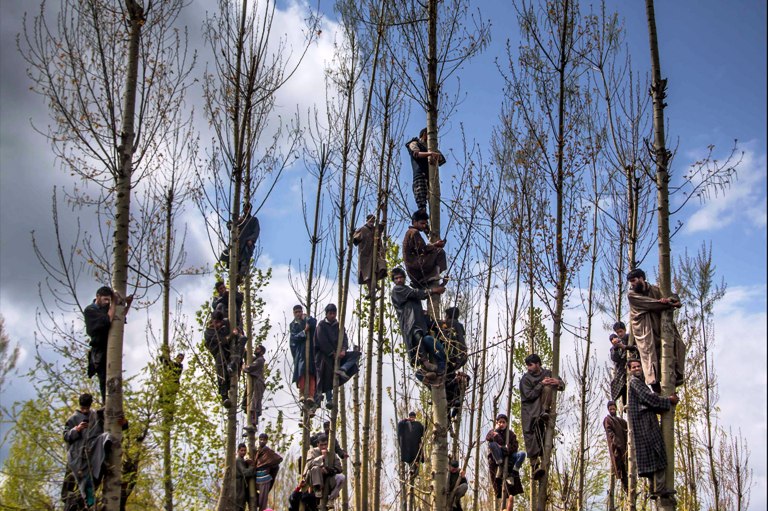
Dar Yasin’s April 7, 2016 photograph of a militan’s funeral bagged it second position in Atlanta Photojournalism Seminar
KL NEWS NETWORK
Srinagar :
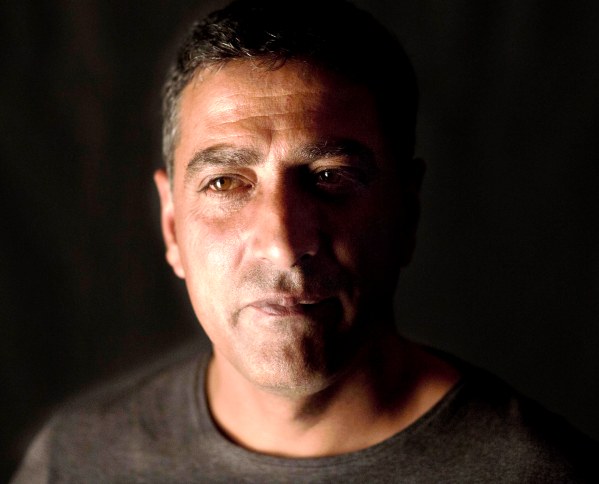
Photojournalist Dar Yasin, working for American news agency, Associated Press (AP), has bagged the prestigious Atlanta Photojournalism Seminar award.
Dar Yasin (AP)
His photograph was adjudged as the second best in the general news category.
The click that bagged the award is a photograph showing Kashmiri Muslims climbed on trees to watch the funeral procession of Waseem Malla, a suspected militant of Hizb ul Mujahideen, in Pehlipora. Clicked on Thursday, April 7, 2016 photo, the village where the funeral took place is more than 65 kms south of Srinagar.
Dar is a decorated photo-journalist whose clicks earlier have also brought him many laurels. He has been covering Kashmir for the AP for more than a decade now.
The Atlanta Photojournalism Seminar, America’s longest continuously operating photojournalism conference, started in 1973. Its 2016 edition took place on November 11-12, 2016 at the Hilton Atlanta Northeast.
source: http://www.kashmirlife.net / Kashmir Life / Home> Latest News / KL News Network / Sunday – November 13th, 2016
(Muslim Womens participation in the upraising against English Colonialization efforts in India before 1947)
DR. DARAKHSHAN ANJUM opens a window to the invaluable contribution the Muslim ladies made to the freedom struggle.We always talk about the role of men in the war of independence, but have we ever thought about the great role played and responsibility shouldered by women? Were Muslim women, who used to stay within the four walls and behind the veils and observe strict purdah, so powerful and energetic to help liberate the country?
When Shah Abdul Aziz Dehlvi proclaimed jihad against the British and in response to this call ulema and other people from all over the country joined him and obstructed the smooth sailing of the British, ladies were also not far behind. The teaching of Jihad took a concrete shape in 1857 and continued till India achieved freedom in 1947. Not only Muslim men but Muslim women also stood up against the British. The list of Muslim women who participated in the freedom struggle is impressive and not restricted to one type of activity. They encouraged their husbands, fathers and sons at home and themselves took all the household responsibilities on their shoulders in the absence of their men folk. They came out of their four walls and travelled from place to place to encourage people to strive for independence. They joined non-violent as well as violent movement against the foreign rule. These women were not only from educated and enlightened families but also from illiterate and rural areas.
Begum Hazrat Mahal, the wife of Nawab Wajid Ali Shah, took charge of the affairs of the state, after her husband was exiled to Calcutta. She worked in close association with other leaders of India’s first war of independence. She besieged Sir Henry Lawrence and other officials in the residency. She shot dead Sir Henry Lawrence. Although General Havelock came to help the English troops, yet he failed in the mission. After some time Sir Campbell became successful in recapturing Lucknow. The Begum was forced to retreat. She turned down all offers of amnesty and was prepared to escape rather than being caught by the British troops.
Bi Amma (Abadi Begum), the mother of Shoukat Ali and Mohammad Ali also played a vital role in the independence struggle. When, in December 1921, Mohammad Ali and Shaukat Ali were arrested by British troops, she received this news very patiently. And when the rumour spread that Mohammad Ali would be released from jail after amnesty, she said with utmost confidence in her tone, “Mohammad Ali is a son of Islam and he can’t even think about begging forgiveness from the British. If he does so then my old hands have enough strength to strangle him.”
Ghandhiji said that she was an old lady but had the energy of a youth. She was restless to see the country free from the foreign yoke. She herself used to spin cloth for her own use and convinced people to use Khadi. She tried hard for Hindu-Muslim unity and that to her was almost a part of Iman.
Mrs. Zubaida Daoodi, wife of Maulana Shafi Daoodi fought gallantly against the British and joined non-cooperation movement. She collected the clothes of her husband, relatives and others and burnt them at the Congress office. She became the leader of the people who collected foreign clothes from door to door. She participated in all public gatherings and organised meetings to inspire women to participate in freedom struggle. When the students left government schools and colleges to support non-cooperation movement, Maulana Shafi Daoodi started a school for such students and Begum Shafi Daoodi looked after food and other facilities provided for these students.
Azizan, another freedom fighter, was born in Lucknow in 1832. It is said that she lived with Umrav Jan in Sarangi Mahal. On June 4, 1857 when Nana Sahib called Hindus and Muslims to get united for the cause of freedom and join him, she left home and joined the freedom movement. She organised a battalion of women. She was skilled in the art of war and taught other women how to use arms. She collected information about the British and passed it on to the freedom fighters. She was caught and brought in front of General Havelock who offered to forgive her if she confessed all her faults but she rejected the proposal and preferred martyrdom.
Amjadi Begum (wife of Maulana Mohammad Ali Johar) belonged to a renowned family of Rampur. She followed Maulana Johar’s philosophical and political principles. She accompanied the Maulana in every journey, meeting and other activities. She collected money for Satyagarah and Khilafat fund and bore all expenses of Mahatma Gandhi’s travel to introduce him to public.
Sadat Bano Kichlew was the wife of Dr. Saifuddin Kichlew. She was well versed in Urdu and Persian and compiled many patriotic poems and articles to encourage people. That was the period when it was rather difficult for the Muslim woman to express her thoughts and views in writing. When Dr. Kichlew was arrested in 1920, she said, “I feel proud that he got prison for his service to nation. To give one’s life for this cause is as if one has gained thousand lives.” She also participated in civil disobedience movement and served ‘Swaraj Ashram’ founded by Dr. Kichlew as its chairperson.
Zulekha Begum (wife of Maulana Abul Kalam Azad) was a very courageous woman. She faced financial problems many times because of the Maulana’s participation in the freedom struggle but did not disturb him at all.
When, in 1942, the Maulana got one year’s imprisonment, she wrote to Gandhiji, “My husband has got one year imprisonment. That is less than our expectation because if it is the result of his devotion to the nation then he did not get justice; it is less for his eligibility. From today, I will look after the whole work of Bengal Khilafat Committee.” What a courageous person! Although she was not quite healthy at that time yet she not only bore the news of her husband’s imprisonment with utmost patience but decided to join the freedom movement actively.
Nishat un Nisa Begum (Begum Hasrat Mohani) was also an active participant of this movement. She came into the political and public arena after April 13, 1916, when Maulana Hasrat Mohani was taken into custody for the second time. She was public relations officer of her husband and looked after all the cases of the Maulana in the British courts. She was not only a devoted wife but also a patriotic woman. She took part in all meetings with Maulana Mohani. Although she was financially weak but not ready to accept monetary help from others. She managed all expenses of household and travelling with the income incurred from the sale of books and magazines. She represented Congress Subject Committee in 1921 with Begum Khursheed Khwaja (wife of Abdul Hamid Khwaja). They joined Swadeshi movement and helped Maulana Mohani to establish Khilafat Store in Aligarh. Begum Khursheed started editing a monthly magazine Hind when Khwaja Hamid was sent to jail. She also took charge of Jamia Millia Islamia in the absence of Khwaja. She established Hamidiya Girls Secondary School in Allahabad in 1930 (presently this institution is a degree college).
Razia Khatoon (daughter of Nasiruddin) was the first Muslim lady of Bengal who stood up against the British. She was arrested and sent to Kalapani where she took her last breath. Akbari Begum was the mother of Barrister Asif Ali. She inspired Muslim women through her speeches to join the non-cooperation movement. In May 1920 she delivered a historic speech in which she said, “We should hold our religion firm and socially boycott the people who oppose it.”
The history of Freedom Movement would be incomplete without mentioning the contribution of Asghari Begum (mother of Qazi Abdur-Rahim), of Thana Bhawan, Muzaffarnagar, who fought the British valiantly and was burnt alive when defeated. Similarly, Habiba and Rahimi (who also belonged to district Muzaffarnagar) obstructed the advance of English forces, were caught and hanged. Zehida Khatoon Sherwani (daughter of Muzzamil Khan Sherwani) wrote patriotic poems to encourage freedom fighters. Khadija Begum joined the non-cooperation movement and went from home to home to inspire women to wear Khadi, Muneera Begum (wife of Maulana Mazharul Haq), Amina Qureshi, Fatima Qureshi, Amina Tyabji (wife of Abbas Tyabji), Rehana Tyabji (daughter of Abbas Tyabji), Hamida Tyabji (granddaughter of Shamsuddin Taybji), Begum Sakina Luqmani (daughter of Badruddin Taybji), Fatima Taib Ali, Shafaat un-Nisa Bibi (wife of Maulana Habibur Rehman of Ludhiana), Safia Saad, Begum Kulsoom Siyani, Asmat Ara Khatoon, Sughra Khatoon, Bibi Amatul Islam, Fatima Ismail, Sultana Hayat Ansari, Hazra Begum, Zuhra Ansari also participated in the freedom struggle and made rich contribution in various ways. Some of them were imprisoned, fined and suffered for freedom movement and their contribution cannot be denied. It is estimated that about 225 Muslim women committed their lives to the Revolt but their role in the freedom movement has not been properly acknowledged by the historians. The great contribution of these ladies should be brought to the knowledge of the present generation and this would be the best way to pay homage to them.
The name Bi Amma is given to new hostel on the name of Abadi Bano Begum who was born in 1850 in Rampur, (U.P.) in 1857.
Abadi Bano Begum , popularly known as Bi Amma was an ardent nationalist whose family members had suffered the trauma of 1857 revolt and she had a strong desire to see the country free from British rule.
Despite having no formal education, Bi Amma was an exceptionally devout, courageous and intelligent lady.
Widowed at young age, she shouldered her responsibility of raising her sons with utmost sincerity and dignity. She sold off her property and jewelry to educate her sons at Aligarh and Oxford.
Her sons Shaukat Ali and Muhammad Ali popularly known as Ali brothers joined Khilafat and Non-Cooperation Movement. After the arrest of nationalist leaders, including Ali brothers, Bi Amma threw off her veil to play frontal part during the freedom struggle.
She collected funds, organized meetings and asked the Indian women to use khadi and boycott foreign goods. She addressed huge gathering and inspired women to play to greater participatory role in the freedom movement. She was a protagonist of Hindu-Muslim unity and campaigned hard for communal harmony and unity, which were imperative to win freedom.
She passed away on 13th November 1924.
The Foundation stone of the Bi Amma Girls hostel was laid on 18th February 2010 by late Mrs. Uma Khanna wife of Shri Tejender Khanna Honourable’ Lieutenant General of India. It took almost two years to complete.
It was inaugurated on 28 September 2012 by a woman of great eminence and protagonist of women’s education lok sabha speaker Mira Kumar on 28th September 2012. In her inaugural addresse and interaction with the hostel residents she has emphasized on women education.
The fourth International Kerala History Congress will begin at Calicut University on Friday. Calicut University Vice Chancellor K. Mohammed Basheer will inaugurate the meet. Jean-Baptiste Prashant More, a Tamil-born French historian, will deliver the keynote address.
M.G.S. Narayanan, chairman of the Kerala History Conference, will preside over the inaugural function. Prof. Narayanan, M.R. Raghava Varier, and Kesavan Veluthat will make presentations under the ‘doyens of Kerala historiography lecture’ series.
Exhibition of archives
An exhibition of archives and historical documents began on Wednesday as part of the History Congress. Syndicate member K. Fatimat Zuhra inaugurated the exhibition. Syndicate member and head of the Department of History P. Sivadasan presided. The exhibition will be free for the public until Sunday.
The exhibition is arranged jointly by the State Archives Department, the Calicut University Department of History, and Zamorin’s Guruvayurappan College, Kozhikode. The exhibition has a large number of historical documents from different periods, including stone age and middle ages.
source: http://www.thehindu.com / The Hindu / Home> National> Kerala / by Staff Reporter / Malappuram – November 10th, 2016
Dr. Mohammed Haziq Nadvi, Director of Darul Umoor and Research Centre, Srirangapatna, offers to donate blood to needy
Sitting from left: Abdul Khader Sait, President, MESCO & Managing Director, AANCO Industries; Khaleel Ur Rahman Waseem, Jamath-e-Islami Hind; Dr. B. Sheik Ali, former Vice- Chancellor, Mangalore and Goa Universities; Dr. Mohammed Haziq Nadvi, Director of Darul Umoor and Research Centre, Srirangapatna and Prof. Noor Ahmed Khan of Universal Guidance Centre for Education, seen during the Lecture Series at MESCO Education Complex in N.R.Mohalla on Friday last.
Mysuru :
(Afsar Pasha)- Dr. Mohammed Haziq Nadvi, Director of Darul Umoor and Research Centre, Srirangapatna, has called upon managements of Mosques to throw open their doors for social and educational causes including starting of blood banks and study centres.
Speaking at the inaugural function of the Lecture Series on “Islamic history, thoughts and its impact on the world” organised by Universal Guidance Centre for Education and MESCO, Mysuru, on Friday last at MESCO Education Complex in Subashnagar, N.R.Mohalla, Dr. Nadvi said Mosques, which are generally restricted to Muslims offering prayers, can endear themselves to the general public in a pluralistic society by taking up social and educational causes.
He even declared his blood group and offered to be available for donating blood to the needy.
Similarly, he said Mosques should promote education by offering free coaching classes to the needy students without religious discrimination. These efforts will go a long way in promoting amity among different communities in a climate of hostility.
Dr. Nadvi regretted that Islamic history had been distorted and Islamic culture had been misinterpreted, leading to a wrong impression of Islam in the eyes of the world.
With passage of time, Muslims have moved away from the basic Islamic doctrines that had won the world’s adulation centuries ago. There is a dire need for Muslims to correct their course by pursuing the way of life as shown by Islam and undo the harm that time has inflicted upon it.
He emphasised the need for fresh efforts in the direction like the Lecture Series so that the coming generations abandon the false legacy and pursue Islam in the true sense.
Noted historian and former Vice-Chancellor of Goa and Mangalore Universities Prof. B. Sheikh Ali focussed on the Almighty’s creations and the path upon which the humanity should follow.
Secretary of the Universal Guidance Centre for Education Prof. Noor Ahmed Khan said the Centre took the initiative to hold such Lecture Series as it felt necessary to guide the youth and connect them to their roots so that they can take the right course.
Former Vice-Chancellor of Yenepoya University Prof. Syed Akheel Ahmed, who was also present on the occasion, welcomed the initiative to hold the lectures.
The Universal Guidance Centre for Education will hold lectures on “Islamic history, thoughts and its impact” by Dr. Nadvi on the first and third Friday of every month at the Lecture Hall at MESCO Mosque.
source: http://www.starofmysore.com / Star of Mysore / Home> General News / November 04th, 2016
Viral guys:Syed Viquaruddin, Mohd Abdul Samad, Mizbahuddin and Syed Atif teamed up as Kantriguyz and started making videos in 2013.-Photo: By arrangement
They are now recognised in public places
A few random concepts and some funny videos later, these content creators from twin cities are now the brand ambassadors of YouTube. Life has changed all of a sudden for these Hyderabadis who are now recognised in public places and pressured to come up with better videos. Jahnavi Dasetty, who runs her own channel ‘Mahathalli’ and Syed Viquar Mohiuddin of ‘Kantriguyz’ were speakers at the YouTube ‘Happy Hour’ event organised in the city recently.
Less than a year after she uploaded her first video, Jahnavi has now more than one lakh subscribers to her credit. Till date, she has made close to 30 videos in which she essays different characters. “I play simple characters which everyone relates to. I think that clicked well with the viewers,” says Jahnavi who played a middle-class youngster troubled by her mother to get married. Jahnavi, who is interested direction as well, also landed up a role in a Telugu movie after her videos went viral. She also went on to collaborate with other popular creators like Chicago Subbarao.
With their signature Hyderabadi lingo and style, four youngsters, Syed Viquaruddin, Mohd Abdul Samad, Mizbahuddin and Syed Atif teamed up as Kantriguyz and started making videos in 2013.
“There was only one content provider making funny videos in the language that Hyderabadis speak but they were not our inspiration. We followed The Viral Fever channel closely and made Hyderabadi version of a spoof which went viral,” said Mr. Mohiuddin, who is pursuing BBA degree. “We are recognised wherever we go. We are asked by people to make more videos because of which we plan to upload at least three videos a month.”
Their channel has more than 20,000 subscribers.
The youngster has set himself a target too. “If my channel gets more than one lakh subscribers within two years, I will pursue a career in this field.” David Powell, Online Partner Operations efforts across Asia-Pacific, YouTube said that the traditional media content uploaded in India is increasing by 75% every year. He said that a number of events are being conducted by them across the country to encourage regional content providers and provide a platform for them to network and collaborate.
source: http://www.thehindu.com / The Hindu / Home> News> Cities> Hyderabad / by Rahul Devulapalli / Hyderabad – November 02nd, 2016
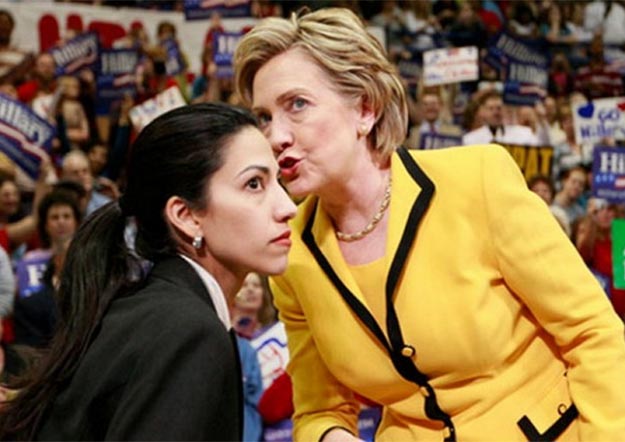
Since Hillary Clinton began her Presidential campaign last year, the name of Huma Abedin, her top personal assistant has been heard in US media. As part of Hillary’s campaign organization and its vice-chair, she interviewed and recommended senior staffers including campaign manager, Robin Mauk for hiring.
Last week as FBI leaked news that they want to investigate some emails that Huma sent to Hillary from her husband’s (Anthony Weiner) laptop , the news created a firestorm in US as the general election was just 10 days away. Since last Friday, Huma’s name, photograph and personal information have been broadcast continously by many TV networks, and US newspapers have written about it. Hillary’s Republican opponent in the Presidential race, Donald Trump, has asked Hillary to fire Huma. But Hillay and her campaign have not spoken a word about her and are instead attacking FBI Director for sensationalizing an unfounded news that was already settled by FBI in last July.
Everyone in US wants to know, who is Huma Abedin? Huma is an Indian-American Muslim, the daughter of a distinguished Indian Muslim professor, Dr Abedin, a graduate of Aligarh Muslim University., who migrated to US in mid 1960s. He has since passed away. Her mother is a professor in a university in Jeddah, Saudi Arabia. Huma graduated from the George Washington University, Washington DC, at a time when Bill Clinton was US President and Hillary was the US First Lady. Huma joined the White House as an intern on the staff of the First Lady..
Huma soon became Hillary’s prominent staffer and as Hillary moved to New York in 2000 and became a senator from New York, Huma worked on her senate campaign and then became a key staffer in Senator Hillary’s office in Washington DC. When Hillary became US Secretary of State, Huma was her deputy chief of staff. The US media calls Huma Hillary Clinton’s Body – Woman. If anyone wants to meet Hillary Clinton he has to go through Huma. Indeed, Huma has had a most enviable climb as a key political staffer in the cut-throat high politics world of Washington.
When some extreme right winger Republican politicians like Congresswoman Michel Bachman of Minnesota attacked her four years ago, calling her a radical Muslim with connections with radical Arab Muslims, many Republican leaders including senior senator John McCain too defended Huma against those charges. Through her 20 year long association with Hillary, Huma who is not yet 40, has moved skillfully and quickly through the minefield of Washington politics and has earned praise from senior level Democratic party politicians. The current attack on Huma and tying her emails to Hillary is a destructive and vile move of Donald Trump, who is targeting her because she is a woman, she is an immigrant and she is a Muslim.
Yet, in her extraordinarily fortunate career Huma has run into bad luck on an important issue. And that is her marriage to former Congressman Anthony Weiner of New York in 2010. He committed some sexual improperieties and was forced to resign his seat in US House of Representatives in the Congress. Also his name has been sullied much in the US media. This year Huma who has a child from Weiner, separated from him.
The smoke about the current email confusion created by FBI Director Como, an erstwhile Republican party member, will clear in a few days before the November 9 US election. Hopefully we will see Trump’s unfounded attack on the emails of Huma and Hillary blunted. And God willing next week Hillary will win the election to become US President. That will be the day many all over the world are waiting for. Thereafter, Huma is expected to get a good position in the Hillary Whitehouse and do well in safeguarding Hillary’s programs. .
Now all this has prepared Huma very well to run and win an elected office in the US Congress in her own right. The right thing will be for Huma to run for a Congresswoman position from New York in a couple of years, carrying Hillary Clinton’s torch of justice and equal rights for women and immigrants in America..While several women have become the political heads in countries like UK, Germany, Italy, Norway and other countries in Europe, in US the opposition to a woman becoming a top political leader is very strong and visible. Not only Hillary Clinton, despite her life long record of political actions at the national level and having held prominent positions of responsibility in the government, has faced opposition, other women too have faced similar opposition when they have tried to run for high political office. .
For instance Speaker of the House of Representatives about 5 years ago , Nancy Pelosi has faced so many bitter attacks and insults from right winger Republican politicians. In 1984 when the late Congresswoman Geraldine Ferraro ran as Vice President candidate with Walter Mondale as the Presidential candidate on the ticket, she was lampooned, condemned and insulted. This is a hard glass ceiling for women in US that they must break through. Huma Abedin must follow through in the footsteps of her illustrious mentor Hillary to carry this movement forward to empower women in US.
[The writer is the Executive Director of the Association of Indian Muslims of America, Washington DC.]
source: http://www.ummid.com / Ummid.com / Home> Views & Analysis / by Kaleem Kawaja, ummid.com / Tuesday – November 01st, 2016
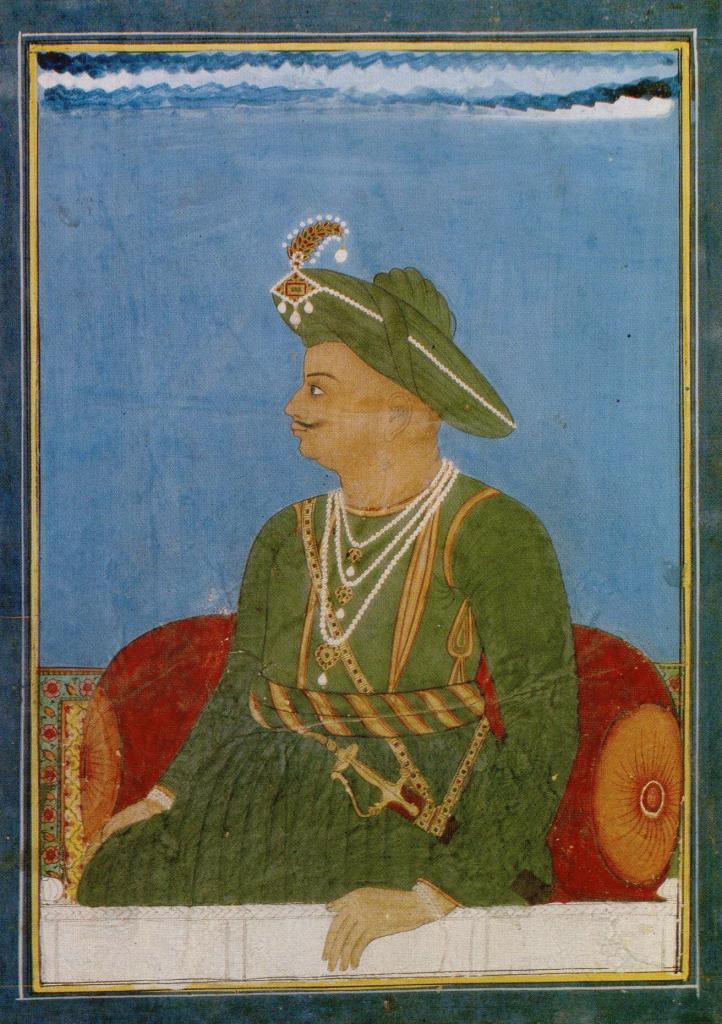
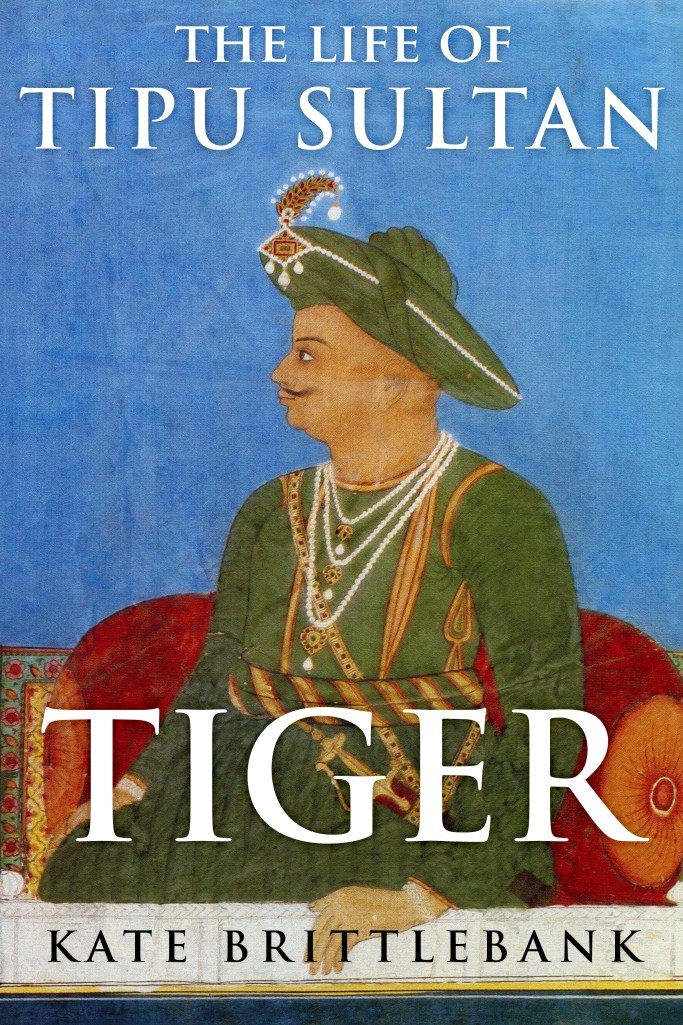
An extract from Kate Brittlebank’s Tiger: The Life of Tipu Sultan.
Tipu Sultan. Credit: Wikimedia Commons
The Karnataka government’s decision to celebrate the birth anniversary of Tipu Sultan has once against created a controversy, with the BJP and the RSS as well as local groups in Kodagu district opposing the move. A rally against the proposed celebration is planned in Bangalore on Tuesday. Last year, the government’s decision led to large-scale violence; this year, a case was filed against the move, but the court’s declined to interfere, calling it a policy decision. At the same time, the judges asked what the rationale was to hold such a celebration.
Was Tipu Sultan (1750-1799) a hero or a villain and was he, as is claimed, against Hindus? Some scholars have contested these views. In this excerpt from her book Tiger: The Life of Tipu Sultan, historian Kate Brittlebank gives a more nuanced and holistic view of the man and the monarch, who, she says, was a product of his times.
Kate Brittlebank Tiger: The Life of Tipu Sultan Juggernaut, 2016
It was also important, if Tipu were to retain power, that he tap into the south’s shared sacred landscape, and it is in this light that we should read his patronage of religious institutions, which was widespread. For centuries, kings had associated themselves with the sacred sites of the region, the most significant being the river Kaveri, the Ganges of the south. Rising in the hills of Kodagu, the river wends its way across the Mysore plateau and down onto the plains of Tamil Nadu. Its entire length is dotted with religious landmarks, small and large. For south Indian kings the Kaveri was not only the source of life-giving water but also of divine power. Along the river are three islands, formed where the water divides: from east to west, they are Srirangam, Sivasamudram and Srirangapattana. These are the places where Vishnu sleeps upon the great serpent Sesha, when he is known as Sri Ranganatha, and on the islands are temples dedicated to the deity. The most magnificent is at Srirangam but all were recipients of past royal patronage; in 1610, Raja Wodeyar transferred his capital to Srirangapattana from Mysore after seizing the island from the Vijayanagara viceroy, Tirumala.
Given that the island of Srirangapattana was such a significant repository of divine power, Tipu would have been foolhardy to transfer his capital elsewhere. He continued the Wodeyars’ patronage of the Sri Ranganatha temple, alongside which stood his main palace, and erected a Friday mosque. Haidar’s tomb stood at the other end of the island, near the sangam, next to which Tipu built another, smaller mosque. Put simply, lordly benefaction, one of the defining characteristics of Indian kingship, was pragmatic in purpose. Along with their magnificent displays of power and wealth, kings were expected to be conspicuously pious. They made land grants, donated precious artefacts and mediated in religious disputes. In return, they could expect support for the legitimacy of their rule and prayers for the security and prosperity of the realm. Tipu behaved no differently: his generosity to temples, Sufi dargahs and mosques, as well as the great Math at Sringeri, are well documented, primarily through inscriptions and institutional records.
An idea of the number of Tipu’s religious endowments across his realm can be gained by looking at in‘am registers held in the Kozhikode Archives in Kerala. The records show that Tipu authorised sixty-seven grants of rent-free land, primarily to temples and mosques, solely for the taluks of Calicut, Ernad, Bettathnad and Chowghat. If we extrapolate that figure across the entire realm, it is clear that his patronage of such institutions was extensive. We know of several temples that hold objects donated by Tipu – the Sri Ranganatha temple at the capital received silver vessels, the Nanjundeshwara temple at Nanjangud has a jadeite linga said to have been installed on Tipu’s orders, and inscriptions record that he gave elephants and silver vessels to the Narayanaswami temple in Melukote.
The Sringeri Math, with which Tipu maintained a close relationship, received gifts of valuable cloths and shawls, a silver palanquin and a pair of silver fly whisks. The importance of the Math to south Indian and Deccani rulers – both Hindu and Muslim – since its foundation in the eighth century, is demonstrated by the fact that it holds more than 200 copperplate grants and sanads, the earliest dating from the Ganga dynasty (c. 250–1000 ce). Tipu referred to the Math’s Swami as the Jagadguru and, after the Marathas had raided the Math in 1792, he wrote in a letter that the culprits would ‘suffer the consequences of their misdeeds at no distant date in the Kali age’, concluding that ‘treachery to gurus will undoubtedly result in the destruction of the line of descent’.
The political nature of religious patronage was also the rationale behind acts of destruction. All across India, whenever a king conquered another, he signalled his victory by either seizing or destroying the religious sites with close ties to his victim – and it made no difference if conqueror and conquered were co-religionists. Just as Shaivite and Vaishnava dynasties in south India patronised mosques, dargahs and churches, they did not hesitate to capture the temples of their enemies and seize or destroy the images. The Cholas seized temple images from the Calukyas; and Vijayanagara’s Krishnadevaraya, to celebrate his defeat of the Gajapati king, removed an image of Balakrishna from Udayagiri to the capital. We can see this process in operation with Tipu’s demolition of the Varahaswami temple at Srirangapattana; after his death, the Wodeyars, in a statement of their own ‘victory’, relocated the ruined temple’s image to Mysore town, which once again was serving as their capital. If Tipu’s actions had been driven by religious rather than political motivation, he would not have allowed the Sri Ranganatha temple to continue to flourish within sight of his palace. It was the Wodeyars’ direct association with Vishnu’s boar incarnation that led to Tipu’s demolition of the Varaha temple. Nor were Christians exempt from such treatment – the Venkataramana temple in Nagar (formerly Haidarnagar/Bednur) possesses a bell cast in Amsterdam in 1713. The presence of this oddity in a Hindu place of worship is due to Tipu’s removal of it from a church in Malabar.
Similarly, Tipu did not discriminate against particular religious groups on the basis of their faith – indeed, his diwan or chief minister, Purnaiya, was a Hindu. As we have already seen, Tipu suspected the Kanara Christians of treachery and being in league with the British; the Nairs and the Kodavas, too, were punished for intriguing against him. And if there should be any doubt about what lay behind the treatment of such groups, the expulsion of the Mahdevis from Mysore in 1794 confirms the political character of such acts. This tight-knit Muslim community of several thousand mainly served in Tipu’s army as horse soldiers, under the command of their own officers. That Tipu was in no way prejudiced against this sect is demonstrated by the fact that one of his four vakils to Istanbul, Ja‘far Khan, was a Mahdevi; even so, he too was expelled in 1794. The stated reason for the community’s expulsion was their refusal to obey Tipu’s command to keep certain celebrations low-key – they were prone to noisy bouts of praying – as the festivities that year coincided with the return of the hostage princes from Madras. The more likely reason, however, was that Tipu suspected the Mahdevis of treason, with their festival disobedience merely the trigger for the order that they leave the kingdom. Interestingly, during the Fourth Anglo-Mysore War, many of them served under Arthur Wellesley as irregular horse, although it is not clear if this was a consequence of Tipu’s treatment of them, or if Tipu had been correct in his original assumption of their disloyalty.
Excerpted with the permission of Juggernaut Books from Tiger: The Life of Tipu Sultan by Kate Brittlebank, available in bookstores and on the Juggernaut app
In Mangaluru, a family conserves Indian breeds of cattle with a missionary zeal
At a time when communally charged feelings are nurturing suspicions linking the Muslim community with beef consumption and a threat to cows, here’s a heartening case that may help cast away such generalised conceptions.
A Muslim family in Uppinakote in Brahmavar taluk of Udupi district has for decades nurtured a passion about, and striving to conserve, the desi cattle breeds.
The star attraction at the recently organised Krishi Mela in Udupi were two well-built Raja Sahiwal Breeder bulls – a 36-month-old, weighing 650 Kg; and a 32-month-old, weighing 570 kg. Both the bulls are from Manama Farm House, owned by 66-year-old Sheikh Zainul Abideen and his four sons – Nowshad Ahammad (29), Mumshad Aalam (36), Mohammed Irshad (31) and Sheikh Mudassir (22).
Nowshad, who works as a deputy technical manager for a Norway-based ship repair company in Saudi Arabia, informed Bangalore Mirror that the passion for conserving desi cattle breed came down from his father Sheikh Zainul, who, after working as a chef for 14 years in Bahrain, returned to India 30 years ago and set up an agricultural-cum-dairy farm with a few desi and Jersey cows.
“Our home was a paradise. We supported our father in maintaining the farm along with our studies. But we never went out to play cricket or any other sports; instead we would play with the cattle,” says Nowshad.
The family owned a total of 23 milk cows. Five years ago, Sheikh Zainul Abideen completed a hat-trick of awards (three consecutive years) for being the largest milk producer in the area.
“As kids, getting back from school meant watching Dad help an animal or bird in distress…even snakes,” says Nowshad, describing his father’s passion.
“However, we were shocked when a few our cattle suddenly died. Veterinarians, including those from KMF (Karnataka Milk Federation) visited the farm, but they failed to find out the reason for the deaths,” Nowshad said.
The tragedy forced the family to sell the rest of the cattle. But they did not give up their passion. They studied a variety of Indian cattle breeds and came upon the Sahiwal breed, a breed of Zebu cattle primarily used in dairy production. The Sahiwal breed originated from the Sahiwal district of Punjab province in Pakistan.
Having learnt about the family’s keenness to get the Sahiwal breed to Udupi, a person known to the family assured them that he would get the breed to Manama Farm House and took an advance of Rs 10,000.
“However, once he came with the cattle, he refused to give them to us because we were Muslims. We begged him but he failed to be convinced. Within one year, we noticed that the cattle were very weak and looked as if they would die anytime. We paid another Rs 10,000 and brought the cattle home. They started recovering; and were the star attraction at the Krishi Mela,” Nowshad said. Currently, the Manama Farm House has six Sahiwal breed bulls. By February next year, they hope to buy another three directly from Punjab.
“Our dream is to popularise the desi breeds and promote cattle-rearing. Having participated in conferences abroad, we see the Indian breeds have a huge potential,” he said.
Of the brothers, the eldest Mumshad (who worked in Saudi Arabia for nearly seven years to start an aquarium-cultured fish farm) and the second eldest Irshad help their father with the agricultural, dairy as well as a catering business. Their mother Mehrunnisa is a home-maker and helps in the daily routine running of the place. The youngest brother Mudassir has completed a diploma in diesel mechanics and is staying in Udupi.
The Manama Farm House is also famous for Kadaknath breed of chicken from Madhya Pradesh, which ensures steady supply for the catering business.
source: http://www.bangaloremirror.indiatimes.com / Bangalore Mirror / Home> News> States / by Deepthi Sanjiv, Bangalore Mirror Bureau / November 08th, 2016
Reaching out:Collector Sarfaraz Ahmed teaching at Government Social Welfare Residential School at Jammikunta in Karimnagar district on Friday.- Photo: By Arrangement
Collector Sarfaraz Ahmed donned the role of a teacher and taught lessons to the students of Government Social Welfare Residential School at Jammikunta in Karimnagar district.
He made a surprise visit to the school, SC boys hostel and BC boys hostel at Jammikunta on Friday. He inspected the records, kitchen, toilets and other rooms on the occasion.
At the Social Welfare Residential School, he made the students read out some lessons. But when they couldn’t read well, he expressed ire against the staff and asked them to conduct the classes properly.
When students informed that they were not given egg in the last one week, the Collector directed the Jammikunta revenue officials for seizure of all stocks and conduct a thorough inquiry and submit a report to him at the earliest.
The Collector expressed displeasure over 12 inmates of the SC hostel not attending classes even after completion of Dasara holidays.
Meanwhile, Mr. Ahmed made a surprise visit to the Jammikunta agricultural market yard and inquired about the procurement of cotton.
source: http://www.thehindu.com / The Hindu / Home> National> Telangana / by Special Correspondent / Karimnagar – October 29th, 2016