Category Archives: Community Involvement / Social Issues

Mumtaz Begum elected Mayor

Bangalore,  KARNATAKA :

Lakshminarayana elected Deputy Mayor; BJP candidates lose by huge margins

______________________________________________________________
  • Mumtaz Begum is the first Muslim Mayor
  • JD(S) and JD(U) abstain from voting
  • Ms. Begum defeated Nagaratna Nagaraj by 37 votes
  • Lakshminarayana polled 58 votes as against 22 by L. Srinivas
  • ________________________________________________________


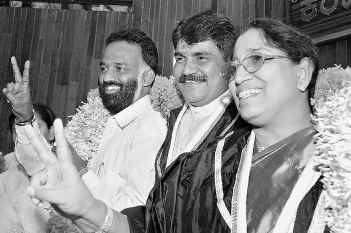
VICTORIOUS: Out-going Mayor Narayanaswamy (centre) with newly-elected Mayor Mumtaz Begum (right) and Deputy Mayor M. Lakshminarayana in Bangalore on Tuesday. — Photo: V. Sreenivasa Murthy

Bangalore :

With the Congress deciding on the candidate for the post of Mayor two days in advance, Mumtaz Begum was elected 43rd Mayor of Bangalore on Tuesday. She is the first Muslim Mayor and the fourth woman Mayor.

M. Lakshminarayana, who represents Gali Anjaneyaswamy Temple ward in Binnypet Assembly constituency, was elected 44th Deputy Mayor. His candidature was finalised on Tuesday, as there was a keen contest between Mr. Lakshminarayana and Audugodi corporator K.B. Mohan for the post.

Chaos prevailed in the Bangalore Mahanagara Palike (BMP) Council even before the elections were held. The Congress nominees, who were certain of donning the coveted mantles, were busy posing for photographs even before the official announcement.

Though the elections were held in the presence of the entire Opposition — the Janata Dal (Secular) and the Bharatiya Janata Party — the Janata Dal (Secular) members abstained from voting like in the past. As soon as the meeting began, the Opposition members objected to the elections being conducted despite some organisations approaching the court seeking a change in the reservation category.

“How can you hold the elections when the matter is in the court? What if the court orders a change in the category?” the members led by Kachakaranahalli corporator Padmanabha Reddy asked.

This apart, the election proceedings were delayed by over 40 minutes as the Opposition members alleged that the ruling Congress had violated the Karnataka Municipal Corporations (KMC) Act by not notifying the election of members to the Bangalore Development Authority (BDA), Library Authority and other organisations along with the Mayoral elections. The members calmed down after the Mayor justified that the court had not stayed the elections.

The BJP fielded the Sampangiramnagar corporator Nagaratna Nagaraj and the Padmanabhanagar corporator L. Srinivas, against the Congress nominees for both the posts. But they were defeated by huge margins. Ms. Begum defeated her rival by a margin of 37 votes. She bagged 58 votes while Ms. Nagaratna secured 21. Mr. Lakshminarayana polled 58 votes as against 22 by Mr. Srinivas.

Ms. Begum (46) a graduate, representing Shivajinagar in north Bangalore is a third-time corporator. She was elected 25th Deputy Mayor in 1984 when she was in the erstwhile Janata Party. She joined the Congress in 1988 and was elected corporator in 1990 for the second time. In the present BMP Council, she has headed the Standing Committee on Appeals in 2001 and was also member of the Standing Committee on Education and Social Justice in 2003. She represented the BMP in the Bangalore Development Authority (BDA) from 1992 to 1995. She has worked as the general secretary of the Karnataka Pradesh Congress Committee, Mahila Wing (1991-1995), president of Shivajinagar Block Congress Committee (1993-1997), general secretary of Bangalore City District Congress Committee (1995-1997), general secretary of KPCC (1997-2002) and executive committee member, KPCC (2002-2005).

Mr. Lakshminarayana (46) belongs to the Vokkaliga community. He represents the Gali Anjenayaswamy Temple ward for the second consecutive time. He is the 44th Deputy Mayor as there were two Deputy Mayors in 1965. After D.Thamayya’s death, C. Bhaskaran was elected Deputy Mayor then.

Both the candidates filed their nomination papers earlier in the day and the elections were conducted from 11.40 a.m. onwards. Unlike in the past, the Mayoral elections went on without the usual “drama” (convincing members to withdraw in the last minute, as there were no rebels) in the BMP Council hall.

source: http://www.thehindu.com / The Hindu / Online edition / Home> Karnataka / Wednesday – November 30th, 2015
Young UP bureaucrats scripting change, garnering goodwill

Lucknow, UTTAR PRADESH  :

Lucknow  (IANS)  :

A young ‘collector saheb’ sipping piping hot coffee and munching ‘laiyya-chana’ at a chaupal with wide-eyed villagers, a young woman IAS official cradling infants at an Aanganwadi centre, a district magistrate riding pillion on a motorbike to check open defecation at a Varanasi village.

Dispelling the myth that bureaucrats are only meant for office comforts, a band of young officials in Uttar Pradesh is scripting a new chapter wherein not only are the people being benefited but the state’s tainted bureaucracy is also getting a long due makeover.

Perahaps taking a leaf out of the ‘chai-pe-charcha’ campaign that Prime Minister Narendra Modi used to the hilt for political success in the 2014 Lok Sabha polls, Gonda district magistrate Ashutosh Niranjan has kicked off a ‘coffee with collector’ wherein he randomly selects a village panchayat, drives in with his officials for a cup of coffee and problems of the village are discussed and settled then and there!

The first edition of the event was held recently in the Paraspur development block at the panchayat of Mijhaura where, over steaming cups of coffee, village head Vipin Kumar Singh, the lekhpal (revenue official) and the panchayat secretary deliberated upon a host of issues ranging from roads to potable water to power supply.

It was also decided that the gram pradhans would very soon host a similar meeting over lunch with the lekhpal, panchayat secretary, beat constable and other grassroot-level workers. “The idea is to strengthen the panchayat system and setttle many issues like land disputes at the grassroot level,” Niranjan told IANS.

Varanasi district magistrate Vijay Karan Anand is setting a similar example wherein many-a-time he hitches a motorbike ride to reach far-flung locations to “catch up with reality”. Only recently, he rode pillion at 5 in the morning to physically check issues like cleanliness, the power situation and sewerage.

He found the situation in neighbourhoods like Dayanagar Malin Basti and Sigra “pathetic” and was quick to order immediate course correction. He has also been visiting villages very early in the morning to dissuade people from open defecation.

“It is amazing to see such officials; it is a reassuring feeling,” said Vivek Singh, who works with a telecom company in Varanasi.

Moradabad district magistrate Zuhair Bin Sageer has done some exemplary developmental work in the villages. Not only did he step out of the confines of his air-conditioned office but was also instrumental in creating a mobile application for monitoring work in what are designated Lohia villages, where affordable housing is being developed for the poor.

Kinjal Singh, the district magistrate of Faizabad, is still remembered for her good work during her previous stint in Lakhimpur Kheri, wherein she not only got special sheds made as dining areas for school children for their mid-day meals but also initiated a process to assimilate the marginalized Tharu tribe into the mainstream.

Pilibhit district magistrate Masoom Ali Asgar has almost cleared the high-profile political constituency of encroachments. He is also credited with beautifying the tiger reserve here.

Suhaas LY, the district magistrate of Azamgarh, the parliamentary constituency of Samajwadi Party (SP) chief Mulayam Singh Yadav, has scriped a unique method of beautifying the city, its roundabouts and major roads. Through the PPP model, the young bureaucrat has ensured beautification and lighting up of all the city’s major intersections.

Lucknow district magistrate Raj Shekhar is also creating waves. From ensuring restaurants are freed of child labour to clearing a whopping 1,000 acres of encroached government land, Shekhar is also known for his modest style and easy accessibility.

“We all have been assigned a job by the government and we are just doing it to the best of our abilities,” Shekhar told IANS.

(Mohit Dubey can be contacted at mohit.d@ians.in)–   IANS /   md/vm/tb

source: http://www.timesofindia.indiatimes.com / The Times of India

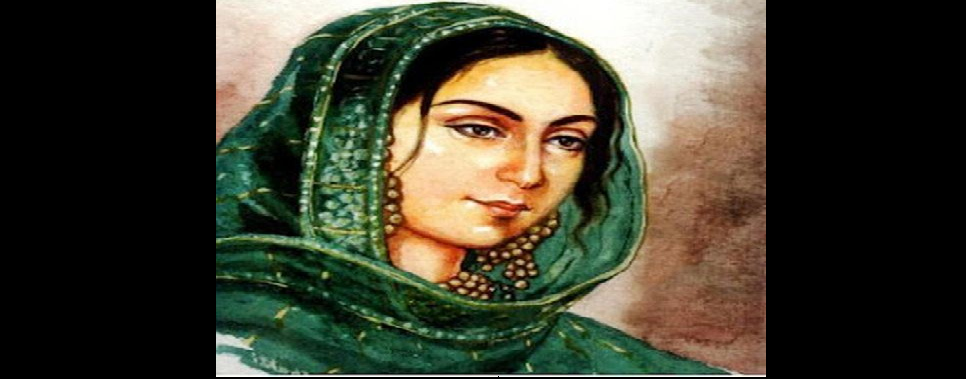
Begum Hazrat Mahal: The Pari Who Became a Revolutionary


BegumHazratMPOs01jun2016

Awadh(Lucknow), UTTAR PRADESH :

June, in particular is a good month to remember Begum Hazrat Mahal who led the first war of independence against the British in Lucknow. This Begum of Avadh had defied British forces of the East India Company in the great uprising of 1857.

She was one of the nine divorced women of Wajid Ali Shah, Lucknow’s last ruler.

“When the king left Lucknow on 13 March 1856 he took with him as well as his mother, three of his wives including Khas Mahal and Akhtar Mahal. An unknown number of wives were left behind in Lucknow as well as nine divorced women including Hazrat Mahal and her young son,” writes Rosie Llewellyn-Jones in The Last King in India.

Begum Hazrat Mahal took charge of the city despite her divorce from the king and her supporters included Raja Jailal Singh, a former Nizam of Azamgarh. It was Raja Jailal who fed support to the rebellion from the suburbs around Lucknow.

The other supporter defending Lucknow was Nana Sahib, a Maratha soldier and childhood friend of Rani Lakshmibai. Nana Sahib led the revolt against the British in Kanpur. Like Begum Hazrat Mahal he too retreated to Nepal after the British regained Lucknow in 1858.

Wajid Ali Shah was forced to leave Lucknow for exile in Calcutta, by the British. Lucknow was one of the most bitterly contested cities during this first war of independence against the British.

Between the exile of Wajid Ali Shah in March 1856 and the first war of independence in June 1857, Lucknow was defended by Begum Hazrat Mahal and she ruled as regent for 10 months. Her 12 year old son Birjis Qadr was crowned in the Baradari at Qaiserbagh, the palace built by his father.

After the British overpowered the freedom fighters, Begum Hazrat Mahal refused a pension and continued gorilla attacks on British military centers till November 1859. She spent the rest of her life in Kathmandu, Nepal and was buried there in 1879.

It may be recalled that fighting broke out at the end of June in 1857 against the British after soldiers mostly from the Avadh region heard that their mild mannered ruler was unceremoniously stripped of his throne and his kingdom by the British on grounds of mismanagement. Their first reaction was one of disbelief. Their second reaction was of anger. soldiers in different parts of north India took up arms and in Lucknow laid siege to the city’s British Residency where English and Anglo Indian inhabitants were hiding for four and a half months between July and November 1857.

But before Begum Hazrat Mahal transformed into a revolutionary she was a fairy. It may be recalled that apart from official wives and temporary wives there was yet another category of women, the pari or fairy who was often taken on as a temporary wife if the king found her pleasing and talented. The fairies were certainly an innovation of Wajid Ali Shah, poet prince and were recruited from the lower classes, including courtesans who lived mainly in Chowk, in the old city.

These women were not educated but after tuitions some of them acquired sophistication. Some fairies went on to become expert singers or dancers while others proved to be good for nothing.

Begum Hazrat Mahal’s maiden name was Muhammadi Khanum, and she was born in Faizabad. Her father was a slave called Umber owned by a Ghulam Hossein Ali Khan. Her mother was a Muslim mistress of Umber. A courtesan by profession, Muhammadi was taken into the royal harem after being sold by her parents.

She was later promoted to a fairy and was called Mahak Pari by the king. She became a begum after being accepted as a royal concubine of Wajid Ali Shah and the title Hazrat Mahal was given to her after the birth of their son, Birjis Qadr.

For some time Wajid Ali Shah was completely smitten by Hazrat Mahal. writing many poems for the dusky beauty.

Soon the king moved on to other women but in 1845 when he learned that Mahak Pari was pregnant, he immediately put her into purdah and gave her the title of Iftikhar-un-nisa or pride of all women.

Now this beautiful fairy, brave freedom fighter and pride of all women is immortalised in a documentary film directed by Mohiuddin Mirza and produced by the Films Division that was screened in the city by Lucknow Expressions Society in the presence of Kaukab Qadr Meerza, great grandson of Begum Hazrat Mahal and Manzilat Fatima, the warrior queen’s great great grand daughter.

“The aim is to never forget how the entire city had united under the leadership of Begum Hazrat Mahal to stand up against the British irrespective of religious and gender differences,” said an organiser of the event.

source: http://www.thecitizen.in / The Citizen / Home / by Mehru Jaffer / Monday – May 30th, 2016

Film on Begum brings Avadh’s queen to life

Lucknow:

It will be a royal evening for Lucknow coming Monday when in the company of the last Queen of Awadh, Begum Hazrat Mahal, the city will come face to face with its past. In the 137th death anniversary year of the Queen, an unsung hero of the first war of Independence of 1857, a documentary on her will be screened on May 30.

Claimed to be the first ever film on the Queen, the 26-minute documentary has been directed by national award-winning director Mohi-ud-Din Mirza. Commissioned by the Films Division, the film will be screened by the Lucknow Expressions Society along with the UP Tourism department. Prince Kaukab Qader Meerza, great grandson of the Queen, will also be coming to Lucknow from Kolkata for the day.

The screening comes with an aim to enlighten people about the sacrifices of the freedom fighter for the motherland. Documenting the history of Begum Hazrat Mahal as also including her direct descendants, it shows the Queen in her role as one of the first women revolutionaries in India’s independence struggle.

“It is for the first time that a film has been made on my great great grandmother who is someone that we have grown looking up to,” said Manzilat Khan, a direct descendant of King Wajid Ali Shah and Begum Hazrat Mahal. Khan will also be in the city on the day. It was after King Wajid Ali Shah was exiled to Matiaburj in Kolkata that the Queen fought valiantly against the British troops annexing Awadh, defeating them in Alambagh. She later took refuge in Nepal where she died on April 7, 1879.

“At the time when the independence of women was just a notion, she had a vision for the country’s freedom from the British. She chose to fight and take it on herself. Not many know about her struggle and the film will rightfully do that,” added Khan.

source: http://www.timesofindia.indiatimes.com / The Times of India / News Home> City> Lucknow / TNN / May 26th, 2016

SNACK TRACK – Meaty bites of goodness

Bengaluru, KARNATAKA :

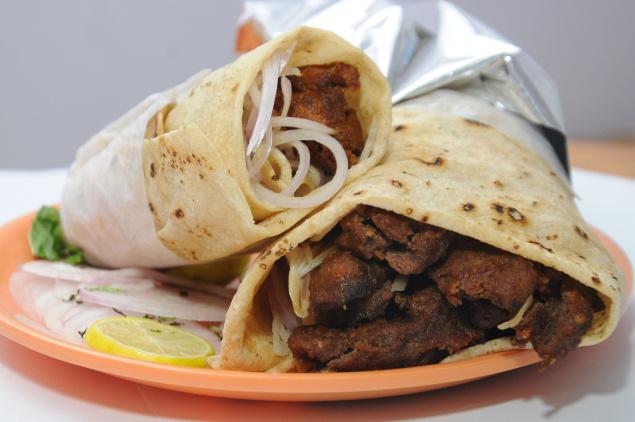
Fanoos' beef roll PHOTO: SUDHAKARA JAIN
Fanoos’ beef roll PHOTO: SUDHAKARA JAIN

The legendary beef sheekh kabab rolls of Fanoos is one of Bengaluru’s most sought-after rolls

The air sizzles with the smell of grilled meat, the heat from the tandoors is warm, yet not suffocating, and the crowd that has gathered remained calm, yet excited and hungry as they wait patiently to bite into goodness.

The roomali rotis are spread on clean, slick steel counters, the steaming hot meat piled onto them, the chopped onions and lime juice thrown in and the rolls are deftly wrapped in tissue paper and handed over to eager customers. Welcome to Fanoos – the destination for the one of Bengaluru’s tastiest rolls.

The bustling Johnson Market area in Richmond Town is the abode of one the city’s most spectacular roll joints.

The heavy traffic on the Hosur Road, the melee of people in the market area and the jostling crowds pouring in to buy their choicest rolls from the counters does not deter Bengaluru’s foodies from making sure they get what they come for – the legendary beef kabab rolls of Fanoos.

While the joint also serves chicken and mutton variants, it’s the beef rolls that are to die for. Coming in a range of sizes from the humble single roll to the enormous mogambo roll, Fanoos is the place meat lovers swear by.

What started in 1975 as a small footpath kabab joint by the late Ajaz Hussain is now a booming empire in Bengaluru. Taken over by his three sons after his death, Ajaz’s motto of serving only the finest for his extended family of customers is still kept strongly alive. Shakir Hussain and his two elder brothers firmly believe in keeping their father’s legacy alive and left their studies to keep the establishment running. “It was our dad who introduced the concept of sheek kababs from a recipe he modified from his mother. Even the terms like jumbo, mumbo, Rambo and sambo for the size of the rolls were coined by him. As the next generation, we brothers came up with the next size of rolls called mogambo,” says Shakir.

He adds: “It’s not just about food in Fanoos. We have many stories here. We have friends who come here to meet up after several years. It is also a place for lovers to meet. This is the perfect combination of food, friendship and fun with our extended family of customers.”

Musician James Prabhakar says he and his band spend their Sundays every week after practice at Fanoos. “It’s almost a tradition for us and our default buys here are the sheek kabab rolls. The green apple sodas from the Madeena Stores opposite to Fanoos are an added bonus that makes it a complete meal. Fanoos also serves as a place for us to catch up with friends and chill out amid the smell of sizzling, mouth-watering meat.”

The Iranian cuisine joint customised for Bengaluru also serves shawarmas, veg rolls and a variety of other flavours and even the popular Haleem during Ramzan, but nothing comes close to their beef sheek kabab rolls priced between Rs. 45 to Rs. 185 depending on size.

So what are you waiting for? Head over and dig in.

source: http://www.thehindu.com / The Hindu / Home> News> Cities> Bengaluru / by Allan Moses Rodricks / Bengaluru – May 30th, 2016

Only 5 Muslim MLAs in Assembly

TAMIL NADU :

But only one MLA belongs to a ‘Muslim’party

Despite accounting for six to seven per cent of Tamil Nadu’s population, only five Muslims have been elected to the Legislative Assembly in 2016.

While an identical number of Muslim members were elected to the House in 2011, what has changed is that only one MLA belongs to a ‘Muslim’ party. The other four belong to either one of the two Dravidian majors or have fought the elections on their symbol.

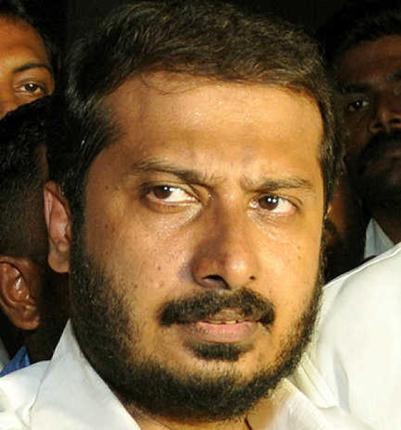
Thamimum Ansari
Thamimum Ansari

“If you take the population alone into consideration, there has to be at least 14 MLAs in the House. But, even electing 10 members to the House is becoming difficult without the support of bigger parties,” says Thamimum Ansari, who won from Nagapattinam, contesting on the AIADMK’s ‘Two Leaves’ symbol.

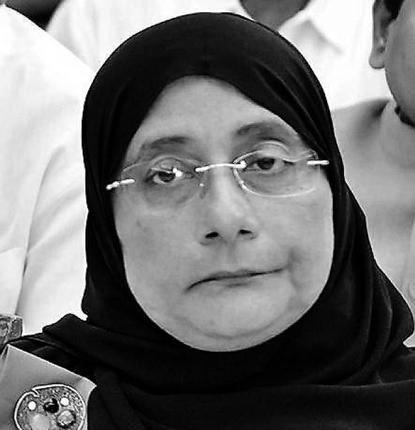
Nilofer Kabil
Nilofer Kabil
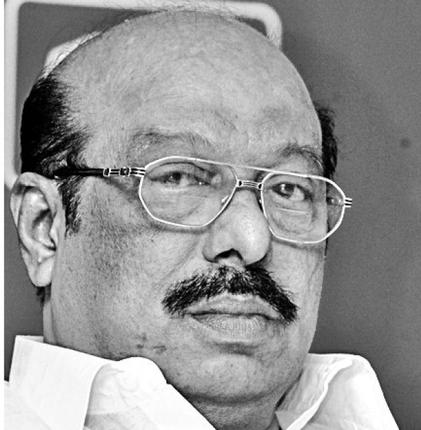
T.P.M. Mohideen Khan
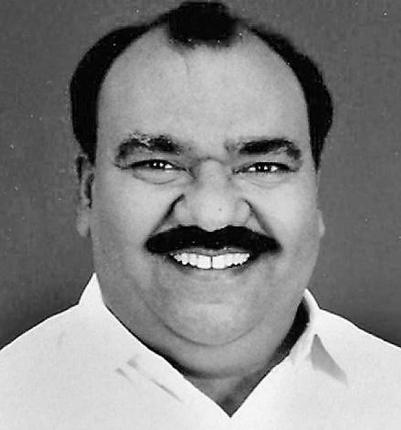
K.S. Masthan
K.S. Masthan

The other members of the House are Labour Minister Nilofer Kabil, T.P.M. Mohideen Khan (DMK), K.A.M. Muhammad Abubacker (IUML) and K.S. Masthan (DMK).

Mr. Ansari urged the bigger parties such as the DMK, the AIADMK and the Congress to ensure adequate representation of the Muslim community in their list of candidates. “Though Muslims can be an influencing factor in up to 40 constituencies in Tamil Nadu, we cannot win those seats without the support of established political parties. Therefore, we need bigger parties to support us,” he says.

The lack of members from ‘Muslim parties’ in the State Assembly, save for the lone IUML MLA, Muhammad Abubacker from Kadaiyanallur, Muslim leaders think, might make it difficult for the community to let their grievances be heard in the Assembly.

“Manithaneya Makkal Katchi, which had two MLAs in 2011, was able to address the problems of the community. If you belong to the Dravidian parties, you might have to toe the line of the party leader and compromise on certain issues,” says M.H. Jawahirullah, leader, Manithaneya Makkal Katchi, who was defeated in Ramanathapuram.

He says that Dravidian parties, which sometimes insist that smaller parties contest on their symbol, restrict the growth of the parties representing the minorities or depressed classes.

“In a genuinely good gesture this time, the DMK allotted 10 seats to the Muslim parties. They gave us a good representation. But unfortunately, we were not able to capitalise on it. I hope the DMK will speak for the community in the Assembly,” he says.

source: http://www.thehindu.com / The Hindu /  Home> News> Cities> Chennai / Udhav Naig / Chennai – May 27th, 2016

A different ball game for Rahman

Thiruvananthapuram , KERALA  :


RahmanMPOs30may2016

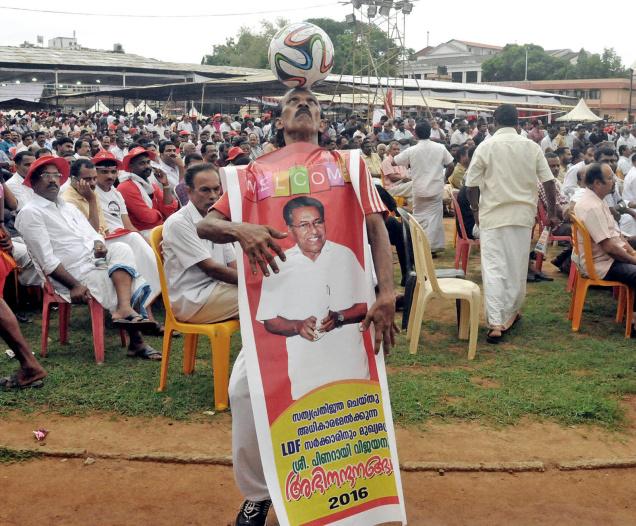
The crowd of party supporters swelled all around him, but Abdul Rahman stood in the middle of it all, exuding calmness, with a football balanced on his head, in a posture reminiscent of the Greek God Atlas.

A long-time Leftist and a ball boy for many of Kerala’s legendary football teams, Rahman regaled the crowd at the Central Stadium with his football balancing skills, ahead of the swearing-in ceremony of the LDF government on Wednesday.

He had literally worn a flex sheet, wishing best of luck to new Chief Minister Pinarayi Vijayan and his Cabinet colleagues.

“I come from what they call a ‘party family’. I have been participating in the Communist party’s programmes ever since I was a kid. I took some part in the election campaign too,” he says. In his younger days, Rahman used to play with a local football team in Changanasssery, where his team mates included future stars like K.T. Chacko.

“Later, I became a ball boy. That way, I have been a part of F.C. Cochin, Viva Kerala, Eagles, and several other teams. But, that is not enough to make ends meet. So, I work as a rag picker,” he says. His next big plan is to cycle all the way from Sachin Tendulkar’s house in Mumbai to the Indian Super League football tournament venue in Kochi in September-October.

“I will start two weeks before the tournament and hope to reach here on the day it starts,” says Rahman.

His brother Mohammed Khader, an area secretary of the CPI(M) says: “We rarely get to see him. He’s almost a vagabond.”

An ardent Leftist, he regales the crowd at Central Stadium with his football balancing  skills

source: http://www.thehindu.com / The Hindu / Home> News> Cities> Thiruvananthapuram / by S. R. Praveen / Thiruvananthapuram – May 26th, 2016

MLA Tanveer Sait launches final asphalting of Jodi Thenginamara road

Mysuru, KARNATAKA :

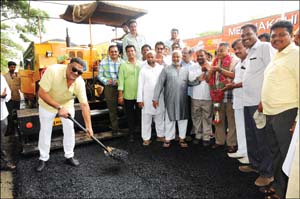
N.R. Constituency Congress MLA Tanveer Sait — the man behind re-building of Jodi Thenginamara Road (Star of Mysore road) which was in a highly-dilapidated condition for over 10 years from Moulana Abdul Kalam Azad Circle (Highway Circle) upto Srinivasa theatre — is seen launching the final asphalting of the widened 80-feet road with two lanes here this morning in the presence of hundreds of local residents and businessmen among whom were The National Marbles Proprietor Zubair, Star of Mysore Editor-in-Chief K.B. Ganapathy, City Congress President T.S. Ravishankar and Congress leader Kaiser Ahmed.

Mysuru :

N.R. Constituency MLA Tanveer Sait, this morning, launched the final phase of asphalting works on Jodi Thenginamara Road (Star of Mysore road) starting from Maulanana Abul Kalam Azad Circle (Highway Circle) upto Srinivasa Theatre.

This important road, linking Highway Circle to Srinivasa Theatre, was in poor shape for over two decades and innumerable number of press reports on the bad condition of the road and recurring accidents, some fatal, had fallen on deaf ears of the authorities, including the MCC and District authorities till MLA Tanveer Sait took special interest to rebuild the road around six months back at a cost of Rs. 5.5 crore provided under Chief Minister’s Special Grant.

It may be mentioned here that when District Minister V. Sreenivasa Prasad came on this road to attend a function, his car got stuck more than once forcing him to call on Deputy Commissioner and order for immediate action. However, nothing happened for almost one-and-a-half years till MLA Tanveer Sait took the initiative. By the way, this road was last asphalted in the year 2001 when B.K. Prakash was the Mayor.

Soon after the works began, Tanveer Sait made regular inspections to check the quality of works in order to ensure that the road works are executed with top quality and as a result, the busy road, having heavy vehicular traffic movement, is being rebuilt with high quality.

Star of Mysore Editor-in-Chief K.B. Ganapathy who was the chief guest on the occasion, thanked Tanveer Sait for taking special interest in rebuilding the road with 80ft width thus fulfilling the long-felt need of the road users.

Noting that Tanveer Sait like his father late Azeez Sait is committed to work culture, Ganapathy said that Tanveer Sait was very much sensitive to the people’s problems and as such he was elected four consecutive times as MLA of NR constituency.

He called upon the people to extend their support to such committed legislators and co-operate with them in all developmental works.

City Congress President T.S. Ravishankar, Railway Goods Shed Lorry Owners Association President Shahid, MUDA member Annubhai, National Marbles Proprietor Zubair and others were present.

source: http://www.starofmysore.com / Star of Mysore / Home> General News / May 20th, 2016

Three policemen killed in militant strikes in Srinagar

JAMMU & KASHMIR :

Srinagar :

PoliceMenMPOs23may2016

Militants today carried out two strikes within as many hours in the summer capital of Jammu and Kashmir, killing three policemen, including an officer, and decamping with service rifle of one of the slain cops.

In the first strike, militants shot dead two policemen in Zadibal area of Srinagar at around 10: 45 AM.

The ultras shot at the two cops from close range at Mill Stop in Zadibal area which connects the city to Hazratbal Shrine and super speciality SKIMS Hospital at Soura, a police official said.

The two cops died on the spot, he said, adding the deceased have been identified as Assistant Sub Inspector Ghulam Mohammad and Head Constable Nazir Ahmad.
The slain cops were posted at Zadibal Police Station.

Police and other security forces have been put on an alert to look out for the assailants, who managed to flee the spot.

In the second strike, militants shot at constable Mohammad Sadiq, who was posted as personal security guard to chairman of J&K Pasmanda Tabqajaat (downtrodden classes) Mohammad Abdullah Chatwal, at Tengpora on Parimpora-Hyderpora Bypass road.

The militants also snatched the service rifle of the injured cop before fleeing from the spot, the official said adding the attack took place at around 12 noon.

The cop later succumbed to injuries at Police hospital at Batamaloo.

These major attacks in the city come after nearly three years.

The last such attack took place on June 22, 2013 when two policemen were shot dead at Hari Singh High Street.

source: http://www.deccanherald.com / Deccan Herald / Home> National / PTI / Srinagar – DHNS,  May 23rd, 2016

The Quint: Vadodara Mosque Claims to House World’s Largest Quran


Published on May 23, 2016

The Juma Masjid in Vadodara houses a unique 250-year-old Quran. At six and a half feet long, and four and a half feet wide, members of the mosque trust claim it to be world’s largest Quran.

Handwritten by Mohammad Ghous nearly 250 years ago, two volumes of the Holy Quran were restored at the Jama Masjid in Vadodara in May

source: http://www.youtube.com