Category Archives: Community Involvement / Social Issues

Older than Bengaluru, Stands a Grizzled Guard

Bengaluru, KARNATAKA :
Pics: Pushkar V
Pics: Pushkar V

Bengaluru :

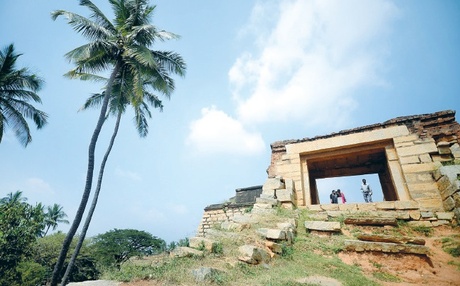
The Devannahalli fort, which stands 35 kms away from Bengaluru, is older than the city itself by 37 years.

The fort has been occupied by different dynasties over time. It was built in 1501 by Kempegowda’s ancestor, Malla Baire Gowda. But in 1747, in a battle led by Nanjarajaiah, the dalwai of Mysore, the clan lost it to the Wadiyar dynasty. Marathas later claimed it and lost it back to the Mysore state, in a siege led by Hyder Ali in 1746.

Arun Prasad, from Discover Bangalore Project, says that though Hyder captured the fort, it was his son Tipu Sultan who was responsible for modelling and building the Pulkad fort.

The town surrounding the fort was meant to be a a centre of learning and arts. “The Devannahalli town was supposed to be a place for learned artisans and intellectuals to inhabit,” says Prasad.

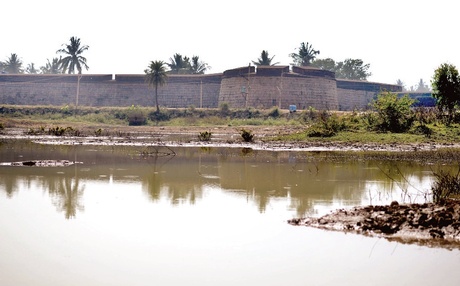
Devannahalli was a town typical of the time, with protected farmlands and fields. A lake, behind the fort and seen from the bastions, was meant to serve the needs of the inhabitants.

Today, the lake is dried up and is a sad sight to notice. Prasad blames it on poor urban planning. Earlier, a highway used to pass through the western part of the town. Now, a road has been built, which passes over the lake. A  good portion of the lake was used up for it.

“The lake has always been rain-fed. But the new road cut the lake away from the adjoining canals and channels,” says Prasad. “The rain water could not flow in and the lake dried up. The vast area of 400-500 kms metres has only weeds and little water due to rains. You can also spot some tattered measurement devices, which was a failed attempt to study the level of water in the lake.”
Pics: Pushkar V
Pics: Pushkar V

Bastions

Built on a higher ground, the bastions were used to keep a watch out for the enemy. The fort is 30 to 35 feet high and bastions, along the fort, are placed at equal distance from each other. “The bastions have well protected chambers, used by soldiers. The gun points are holes in the wall which can still be seen today. They are built from lime and brick. The holes were used to keep guns during the war,” adds Prasad.

Tipu’s Birthplace

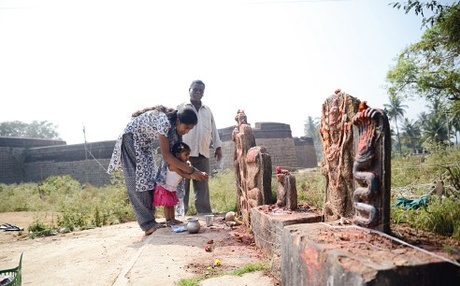
South-west of the fort, there is memorial with a board, which proclaims that Tipu was born here. A six-foot-tall enclosure marks the spot.

When Tipu was born in 1750, his father Hyder Ali was engrossed in a battle. His mother, Fatima Fakhr-Un-Nisa, was secretly ushered into a carriage to give birth at the fort, as it was considered a safe place. However, she ended up giving birth inside the vehicle, right outside the fort. The monument is built over this birth spot.

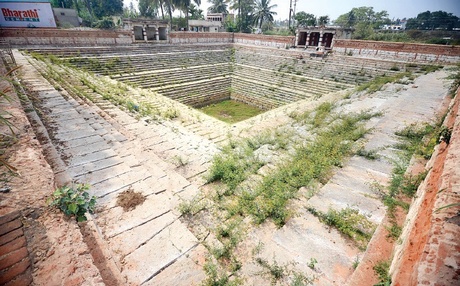
A pond was built under the administration of Purnaiah, the then Dewan of Mysore. It is a beautiful pond with the stones and excavations intact. “The water is used for rituals and festivals,” says Prasad. “People take baths here as well.”
Pics: Pushkar V
Pics: Pushkar V

Temples

Inside the Devannahalli fort, there is the Venugopalswamy temple. The temple, which was built in the Vijaynagara style, has several depictions from the Ramayana on the walls. “At the entrance, the two horsemen are believed to belong to the Western Ganga dynasty (which ruled 350 and 1000 AD),” said Prasad.

There are sculptures of seamstresses, as you enter, from the same era. The north and south walls have sculptures showing Rishyasringa being brought from a forest to Ayodhya accompanied by dancing girls. There is also a scene of Vishwamitra caught in a  an archery battle with Rama. The south wall has ten incarnations of Lord Krishna and Rama’s father performing a sacrifice.
Pics: Pushkar V
Pics: Pushkar V

The fort gate and the fort walls are crumbling and there are scribblings on the walls. There is no security at the entrance and anyone can walk in. The commercial establishments all around have failed to preserve the authenticity of the past. “An ASI (Archeological Survey of India) office is located at the entrance, which is always closed and does not provide much information,” says Prasad. “The fort area needs to be protected by ASI and does not come under the corporation. The northern gate is crumbling as well.”

How it Began

Refugees on the run from Kancheepuram settled down near the Nandi Hills. Legend has it that Rana Baire Gowda, their leader, was told in a dream that he had to build a settlement in this region. This family goes by the name of Morasu Wokkalu. His son Malla Baire Gowda founded Devanahalli. Kempegowda also belongs to this family.

source: http://www.newindianexpress.com / The New Indian Express / Home> Cities> Bengaluru / by Seema Prasad / January 28th, 2016
Chennai floods’ hero to launch mobile app for youngsters

Chennai, TAMIL NADU :

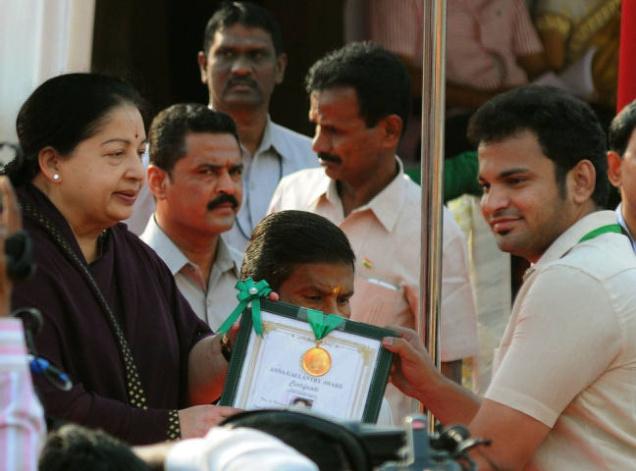
Tamil Nadu Chief Minister J. Jayalalithaa presenting Bravery award to Mohammed Yunus during the 67th Republic Day Celebrations at Marina on Tuesday. Photo: R. Ragu / The Hindu

Mohammad Yunus, who today bagged theTamil Nadu government’s Anna Medal for Gallantry award 2016 for rescuing people during the December 2015 floods, plans to develop a mobile application to tap the talents of youngsters to serve people.

He was instrumental in the rescue of nearly 2,100 people in the December 2015 floods.

On the first day of heavy rain on December 1 last year, Yunus and his team in a boat had rescued a pregnant lady and her husband from the flooded Urapakkam area on the outskirts of the city.

Later, she delivered a baby girl in a private hospital and the grateful couple named her after him.

Yunus was given the award by Chief Minister J Jayalalithaa at the 67th Republic Day celebrations today.

An elated Yunus told the award was a motivation for him and that he would develop a mobile application for youngsters.

“I feel great after receiving this award. I never expected that I would receive an award when I saved those people in flooded areas,” he said.

“This award motivates me more and as a first step, I plan to launch a mobile application for youngsters. The app will be to tap the talent in youngsters and would be aimed at serving people”, Yunus said.

source: http://www.thehindu.com / The Hindu / Home> National> Tamil Nadu / PTI / Chennai – January 26th, 2016

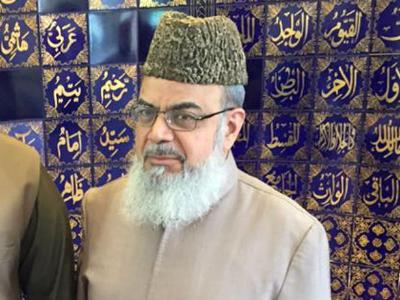
Indian-origin imam conferred honorary doctorate by UK university

London, UNITED KINGDOM /  BIHAR :

MohammedShahidMPOs26jan2016

A senior Indian-origin imam has been conferred an honorary doctorate by the University of Leicester in recognition of his work for his local community.

Muhammad Shahid Raza, who serves as Head Imam at Leicester Central Mosque and is a leading Muslim cleric and teacher in the UK, was born in Bihar and studied in Moradabad, Agra and Meerut before moving to the UK.

“The city of Leicester has always been a place of significance in my life since I emigrated here from India in the late ’70s. One of my first responsibilities as Imam of Leicester Mosque and then Leicester Central Mosque was to oversee the moral and spiritual education of children,” he said in reference to the honour.

“I have always strived to instill in my students a desire to achieve academically and integrate themselves as valuable members and contributors to society. I am delighted to note that many of my former students have gone on to graduate from this university and of those many are now working in this city as civil servants, teachers and doctors or owners of small businesses.

“For this reason I reflect on this award fondly and I hope it will further inspire the young Muslims of Leicester,” Raza said.

He was awarded his honorary Doctorate of Laws by University Chancellor Lord Grocott at the university’s degree ceremony at De Montfort Hall today before an international audience of graduating students and their families.

Raza leads the Friday prayers at Leicester Central Mosque and is credited with designing and conducting the first in-service training course for imams in the UK.

As executive secretary and registrar of the Muslim Law (Sharia) Council UK, he is engaged in a number of initiatives directed towards the wider community in Britain, Europe and North America through his association with organisations such as the InterFaith Network UK and the InterFaith Youth Trust in London, the university said in a statement.

In the 2008 New Year’s Honours list, he was awarded an OBE for services to the Muslim community in Leicester.
Reverend Canon Dr Stephen Foster, Coordinating and Anglican Chaplain to the University of Leicester, said, “Muhammad Shahid Raza has been a hugely influential figure in our city and County as a leading Muslim cleric and teacher over a period approaching 40 years.”

“In terms of Interfaith dialogue over that period, again his influence has been profound. As we presently travel sensitive times and roads in interfaith issues, his wisdom and insight into same will continue to be so important both locally and far beyond. The University of Leicester I know honours him…rightly and gratefully so,” Foster said.

source:  http://www.timesofindia.indiatimes.com / The Times of India / News Home> NRI> Other News / PTI / January 25th, 2016

State-Level Milking Contest concludes : Cows from Mysuru and Kolar yield 40.800 Kg of Milk each , Share Prize Money

Mysuru, KARNATAKA :

Grandchildren of former Mayor win prizes

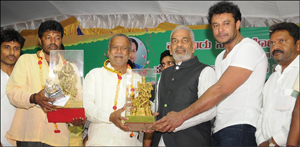
 Former Mayor D. Dhruvakumar (third from left) is seen receiving the prize on behalf of his grandson Dhruvesh, who shared first place along with Venkatesh of Kolar (2nd from left) at the State-level Milking Contest, from Actor Darshan Thoogudeep and Animal Husbandry Minister A. Manju at J.K. Grounds in city yesterday. MLA H.P. Manjunath, Film Director Sandesh and others were present
Former Mayor D. Dhruvakumar (third from left) is seen receiving the prize on behalf of his grandson Dhruvesh, who shared first place along with Venkatesh of Kolar (2nd from left) at the State-level Milking Contest, from Actor Darshan Thoogudeep and Animal Husbandry Minister A. Manju at J.K. Grounds in city yesterday. MLA H.P. Manjunath, Film Director Sandesh and others were present

 Mysuru :

The three-day State-level milking competition, organised by Mysuru Nagara Gopalakara Sangha in association with the Department of Animal Husbandry at J.K. Grounds in the city, concluded yesterday.

The cow, owned by Dhruvesh, grandson of former Mayor D. Dhruvakumar and the cow owned by one Venkatesh of Kolar bagged the top prize, with both of them milking 40.800 kg of milk.

As both the cows shared equal honours, the owners were given Rs. 87,500 each (Rupees 1 lakh first prize and rupees seventy five thousand – second prize, divided by two). The third prize was bagged by the cow owned by Anwar Shariff, a resident of Akbar Road, Lashkar Mohalla, which milched 36.350 kg.

Anwar Shariff was given a cash prize of Rs. 50,000.

The fourth prize was bagged by the cow owned by Aishwarya, the grand daughter of former Mayor D. Dhruvakumar, which milched 35.450kg.

Aishwarya was given a cash of Rs. 25,000 as fourth prize.

Speaking after distributing the prizes, Animal Husbandry Minister A. Manju said that dairy farming can be a main source of income for farmers. Pointing out that taking dairy farming will bring happiness in the lives of farmers, he called upon the youth to engage themselves in dairy farming.

Stating that the State was one amongst the top producers of milk in the country with 66 lakh litres of milk production per day, he complimented the role of the Sangha in boosting milk production.

Actor Darshan Thoogudeep was the star attraction during the prize distribution ceremony. Thousands of people, most of them youths, gathered at the venue to have a glimpse of the actor, who has been attending the event for several years.

Minister Manju also presented a cheque of Rs. 1.5 lakh (Rs. 1 lakh donated by the Sangha and Rs.50,000 donated by actor Darshan) to Adarsh, son of the Sangha Founder late B. Paramesh on the occasion.

Former Mayor D. Dhruvakumar presided. Hunsur MLA H.P. Manjunath, KEA Chairman R. Murthy, Cine Producer Sandesh, JD(S) leader G.D. Harish Gowda, Sangha Hon. President Desigowda, President and Corporator D. Nagabhushan and others were present on the occasion.

source: http://www.starofmysore.com / Star of Mysore / Home> General News / Monday – January 25th, 2016

Kundapur mosque hopes to become a peace beacon

ECO-FRIENDLY ABODE : The Rs 2-crore mosque built by the Beary Group aims to promote harmony among all communities.

Udupi, KARNATAKA : 

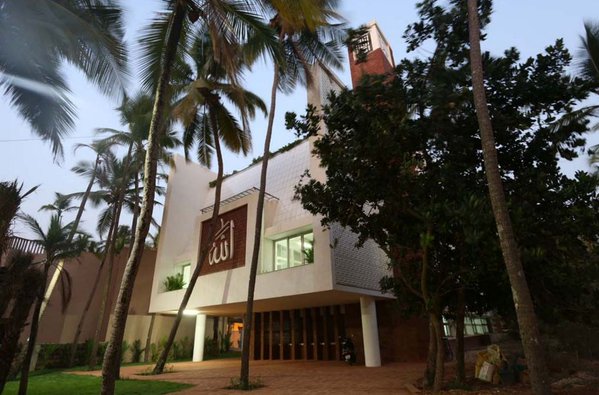
The Badriya Jum’a Masjid, a landmark on Kodi beach in Kundapur, holds out a new hope. Termed an ecofriendly mosque, it exemplifies sustainable technologies and also presents a modern face of Islam.

The green mosque, a typical Islamic architectural structure, aims to promote harmony among all communities in the world. There is a hope that the mosque will become a place of worship where people from all over the world will come and pray. It has already begun attracting non-Muslims.

Syed Mohamed Beary of the Indian Green Building Association’s state president told TOI that Badriya Jum’a Masjid is the world’s first `zero-energy’ green mosque. The Beary Group, with the help of locals, constructed the mosque at a cost of Rs 2 crore. Situated on two acres, the 1,500 sqft building can accommodate 2,000 people. It also has a library.

The Beary family built the mosque in memory of their grandfather. “Years ago, he wanted to go on the Hajj pilgrimage, but fell ill and couldn’t go. He used the same money to build a small mosque.It was renovated 40 years ago, but it wasn’t satisfactory . Now, using improved technology , we’ve come up with an eco friendly mosque,” he added.

Architects Sandeep and Manoj from Bengaluru have designed the mosque in such a way that the entire energy requirement is met through hybrid renewable energy , both wind and solar.

Their grandfather had planted a huge mango tree and a coconut palm on the premises. While the orientation minimizes solar heat gain, natural elements keep the inside of the building cool. The Lshaped building plan and elevated prayer hall, vegetation and water tanks around cool the environment naturally.

Natural cooling is accentu ated by a wind scoop on the 70-ft multifunctional minaret, from where the azan, or prayer call, is given. It forces down a draught of cool breeze into the prayer hall and also supports the tower structure of a wind turbine mounted atop it. The solar heat-reflecting terrace floor laid with white china mosaic and fitted with turbo vents not only keeps the prayer space cool but also reduces warming of the local micro climate.Non-conducting glass reinforced concrete jaalis with over 50% openings, maximize natural ventilation and supplement the design effort to reduce heat gain.

source: http://www.timesofindia.indiatimes.com / The Times of India / News Home> City> Bangalore / TNN / January 15th, 2016

Jain University to host running gala on Jan 31

Bengaluru, KARNATKA :

Bengaluru :

Fitness enthusiasts in the city can add one more event to their workout calendar with JGI-Jain University announcing the launch of ‘My Country Run 2016’, which will see thousands of runners stream through the picturesque Cubbon Park as they compete in the 5k and 10k events on January 31.

The Sree Kanteerava stadium will be the hub of the activity as the races, which begin from 4pm, start and finish at the venue. “We have had an enthusiastic response so far as more than 3,000 people have already registered for the race. Though there are many road races in Bengaluru, we still need to do a lot more to get more and more people running,” race director Gul Mohammed Akbar  told TOI.

Akbar said the first prize of Rs 1 lakh has attracted many elite runners, including athletes from Ethiopia and Kenya.

“Some of them are staying back after competing in the Mumbai marathon,” he said. Athletes who have finished the 10k in less than 60 minutes will fall in the elite category.

JGI Group chairman Chenraj Roychand said the proceeds generated from the race will go towards supporting the 30-35 athletes from below-poverty-line families, which are being looked after by the Jain Group. The money will be used to give them foreign exposure. “After looking at the savings, the trust will put in an equal amount to create a corpus that will be used to help these kids,” he said.

Uthappa lauds Jain College Returning to his alma mater along with ace cueist Pankaj Advani as the brand ambassador of the race, star cricketer Robin Uthappa recalled how the institution helped him through his college days. “I was frantically looking to get an admission for a degree course when I got a call from Jain College, expressing their willingness to start even a new course. Shankar sir was very helpful throughout my college days and the college even conducted special classes for all the sportspersons.

Now they want me to complete my MBA and I’ve promised to do that. I can confidently tell that Jain College is the best any sportsperson can aspire for,” recalled Uthappa, in the presence of his fiancee and former tennis player Sheetal Goutam.

The marriage is scheduled on March 3.

Roychand, meanwhile, recalled how he helped Uthappa to get back his focus after he was on the verge of quitting cricket.

“Robin once called up and said he wanted to quit the game but I told him that he was born to play cricket and put him through a few meditation sessions. Eight days later, he was back with a bang, cracking 165 runs,” the JGI chairman said.

He said the college has supported not only cricket but other sports as well, involving more than 300 international sportspersons, which included seven Olympians. “I’ve told Gul to reach out to rural schools and identify talent who can be nurtured to become top-class athletes. If we put in the hard work for the next 10-15 years, we can get more gold medals at the Olympics,” Roychand added.

UV Shankar, Director of Sports, Jain University, said the race will be an annual event. “The idea is to get everyone (men, women and kids) on one platform.”

The total prize money is Rs 5.35 lakh with Rs 1 lakh for the winner of the elite race. The registration fee is Rs 1,000 (Rs 800 for students) for Open 10K and Rs 700 (Rs 600) for the 5k race.

For online registrations, log on to www.mycountry.run.

source: http://www.timesofindia.indiatimes.com / The Times of India / News Home> Cities> Bangalore / by Biju Babu Cyriac, TNN / January 19th, 2016

MIT professor covers 1,500 km on bicycle from Bengaluru to Koraput

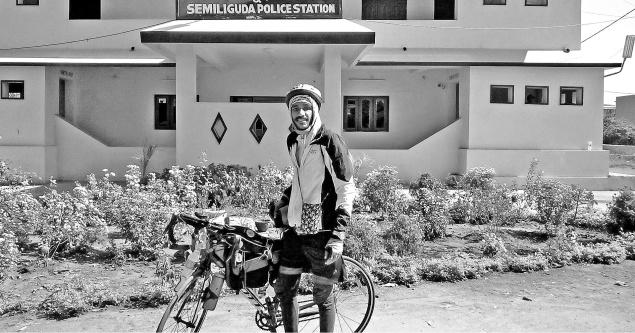
S.S.S. Shameem, Assistant Professor in Computer Application, Manipal Institute of Technology, with his cycle at Semiliguda in Koraput district of Odisha on December 26, 2015.

Manipal (Udipi) , KARNATAKA :

He began his journey on December 18 and concluded it in nine days

S.S.S. Shameem, Assistant Professor, Department of Computer Application, Manipal Institute of Technology (MIT), has just completed the first leg of solo cycle expedition, a passion he has been pursuing since two years, and calls it as “Bharat Bhraman: Ride-4-Pride.”

According to a press release issued by the Manipal University here on Thursday, Prof. Shameem had covered a distance of 1,500 km on a high-end bicycle from Bengaluru to Koraput in Odisha. Mr. Shameem, who is very lanky, proudly says, “I completed it in nine days.”

“Eastern Ghats was a bit tough, otherwise I enjoyed the first leg and plan many more such solo rides. My aim is to see and know the diversity of our country and do whatever I could. Going around the country on a bicycle gives me a great pleasure and satisfaction. Moreover, I will be, when I finish the journey, sit and look back with pride my achievements,” Prof. Shameem said.

“I began my journey from Bengaluru on December 18, 2015, and reached Koraput on December 26, 2015, via Hyderabad, Vijayawada, Vishakapatnam and Salur,” he said.

“I have been preparing for this trip for the last two years. The next cycling trip would be again taken up in December this year,” he said.

Prof. Shameem had to spend a few nights, sleeping at railway stations, police stations and religious places etc. Prof. Shameem, who is also a marathon runner, plans to alternate his cycling expeditions with running.

Therefore, he is planning to do running during summer and cycling in December. Being ambitious, Prof. Shameem is keen to get into Limca Book of Records with half marathon (21.1 km) runs.

Accordingly, he plans to do 111 half marathons in 70 days and is working on that. He calls it, “Bhaag-run Project.” He has sought details from Limca and is in touch with the athletic associations of Udupi and Mangaluru for assistance.

source: http://www.thehindu.com / The Hindu / Home> National> Karnataka / by Ganesh Prabhu / Manipal – January 22nd, 2016

St. Joseph’s Convent School to celebrate 125 years on Friday

Belagavi, KARNATAKA :

St Joseph’s Convent High School for Girls will observe its quasquicentennial (125 years) jubilee in a grand manner here on Friday. Superior General of the Canossian Daughters of Charity from Italy M. Annamaria Babbini will be present to witness the celebrations.

Addressing a press conference, school principal Thankam Michael said here on Tuesday that the school had been functioning under the management of the Canossian Sisters Congregation since 1891.

It was founded 125 years ago when the British civilian and military officers petitioned the then Archbishop of Goa to establish an English-medium school here.

In response to the request from the Archbishop, Mother Stella of the Canossians in Hong Kong sent five nuns who reached Cochin by ship and then Belgaum (now Belagavi) covering the distance by bullock cart and on foot. Since then the school has shaped the lives of a large number of girl students of Belagavi, Goa and north Karnataka region.

To commemorate the occasion, the school has given a facelift to basic infrastructure and also launched a project, Light a Lamp, to help the poor and deserving girl students. Donors and philanthropists could sponsor a girl child for education.

About 15 former students, including social activist Olive D’silva, Anita Rodrigues, Ruhi Sait, Padmashree award winner Sucheta Dalal, psychiatrist Belinda Viegas Muller, Sadhan Pote, renowned artist and sculptor Veena Chandavarkar and the former Deputy Mayor of Belagavi Asma Tahsildar, who have excelled in various fields, would be honoured.

source: http://www.thehindu.com / The Hindu / Home> National> Karnataka / by Special Correspondent / Belagavi – January 21st, 2016

Lessons in the lunch box

KARNATAKA :

However, Mansoor Ali Khan, member, board of management of Delhi Public School group, said while their canteens serve healthy food, ensuring that food in lunch boxes is not junk is going to be a challenge. “Children love to eat chips, biscuits, chocolate and other fried food during short breaks. It is also convenient for working parents. All we can do is advise parents. We plan to conduct workshops for them,” he said.

While most parents have welcomed the move, many are struggling to find alternatives.

CircularMPOs21jan2016

Sindhu H.D., whose daughter studies in BGS National Public School, said she is trying to replace snacks with vegetable salads, fruits and fresh fruit juices.

Another parent, Latha Rao, wants schools to be lenient on some days. “While we all realise the need for our children to consume healthy food, schools should allow students to eat junk food once a week so that they do not crave for it. It may be difficult for working parents to pack full meals on all days of the week,” she said.

source:  http://www.thehindu.com / The Hindu / Home> National> Karnataka / January 19th, 2016

How this Fijian ‘girmitiya’ found his India home

Lucknow, UTTAR PRADESH :


Lucknow :

His life’s story is the stuff films are made of.

And though Satish Rai’s own story remains untold – until right now – the Sydney-based documentary filmmaker makes do with telling the tales of others like him, who set out in search of their roots, and stumbled upon cousins and family they never knew existed.

For the uninitiated, Rai is the descendant of girmitiyas – indentured Indian labourers who travelled to Fiji and Caribbean Islands to work on sugar plantations in the early 19th century, upon signing an “agreement” – distorted eventually to be known as ‘girmit’ – with the British Government that promised them to return to India after they completed the term of their contractual agreement for work in Fiji and the Caribbean Islands.

Many contracts were reneged upon, and only a few could return home. And for those like Satish Rai, the real homecoming could only happen nearly a century after his family first left the Indian shores.

Rai’s first visit to India was in 1994 – to Basti district – where his cousins were settled.

A brush with a local rickshaw puller gave him his first brush with his caste – and his roots. “He told me I am a Bhumihar Brahmin. And I didn’t know what that meant,” Rai said.

The first trip yielded little ground.

After two more visits, one in 1995 when a Brahmin priest led him on a wild goose chase, and a second in 2001 when he accompanied a cousin on her quest to find her family, Rai’s own story saw mild progress.

He said, “During that time in Basti, there was a man who helped us and took us to Balrampur. He made me meet some people. Then, three months later, I got an email from him telling me my family had been traced.

In 2004, I went back to Balrampur.” And here’s the twist in Rai’s tale. Satish Rai met his cousin, thrice removed, a man they knew by the name of Naeem Rai. “This was a Muslim name. And I already knew my grandmother was a Hindu. So I knew it couldn’t be the right family,” Rai said.

Whether it was curiosity or sheer desperation that drove him 15km into Balrampur’s belly is unclear. But Rai was on his way the next morning, looking to dig for, and to find his roots. “The first time I saw them, I felt the connection. The resemblance was uncanny,” he said. But how did it happen? After the initial rush of emotion, the mystery unravelled.

Rai’s grandmother was married to a Rai Bahadur, a dominating, violent man, he said. And after suffering many years of domestic violence and abuse, she walked out on the Rai Bahadur. Staying away from the powerful landlord within the village would have been impossible, and Rai’s grandmother took the next best available option; she boarded the ship to Fiji with Rai’s grandfather, a man headed for greener pastures in the faraway lands. When the irate Rai Bahadur found out about her escape, though, he did the only thing that remained in his power to do: issue a diktat that disallowed all Hindu families in the area to wed.

“My grandmother’s cousin at that time had four children. And to escape the bizarre diktat, they all converted to Islam. The family name of Rai, however, stuck.”

For Satish Rai, the family name served as the final missing piece in his quest to find his family. A century after his grandmother boarded that ship to Fiji, Satish hugged his cousin Naeem and celebrated his homecoming.

source: http://www.timesofindia.indiatimes.com / The Times of India / News Home> City> Lucknow / by Swati Mathur / TNN / January 17th, 2016