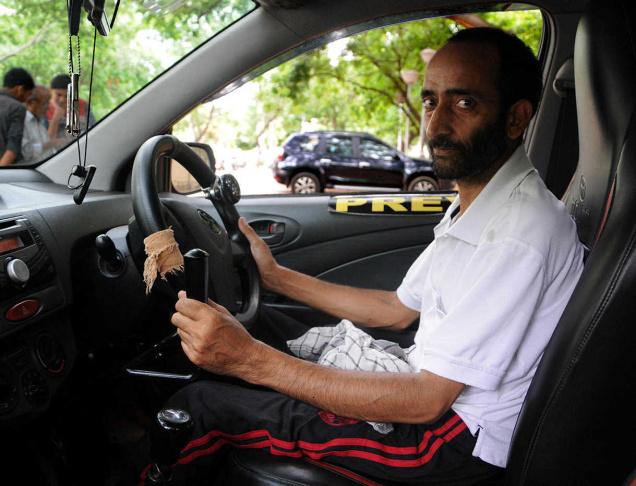
Crossing hurdles:Dildar Ahmed Shapo, who is on a mission from Kashmir to Kanyakumari to mobilise and inspire those on wheelchair, reached Chennai. —Photo: B. Jothi Ramalingam
From Kashmir to Kanyakumari, Dildar Ahmed Shapo’s journey is one of grit and mental strength
Every day, for the last 20 days or so, Dildar Ahmed Shapo has been waking up at midnight, getting dressed, having a cup of tea and a biscuit before getting into his modified car to drive 500 kilometres.
Since August 19, Mr. Shapo, a wheelchair user, has travelled to over 20 towns in 10 states to say: ‘being confined to a wheelchair does not mean it’s the end life of your life.’
“I was 18 when a freak accident put me on a wheelchair. For eight years, I waited to die,” says the 39-year-old from southern Kashmir, who was in Chennai on Sunday. He recalls: “Back then, there were no rehabilitation centres where I lived and it took me a long time to recover. It was even more painful as I was the breadwinner of the family at the time of the accident.”
Speaking to wheelchair users across the country in his travels, he says he has seen that even his own home was inaccessible, let alone public spaces. “Very few wheelchair users go to school as the space is not accessible and even fewer are financially independent. When it comes to marriage, I have seen women marrying men on wheelchairs but not the other way around,” he says.
During talks in schools and rehabilitation centres, he focuses on mental strength. “I encourage them to be tough and to focus on a destination, a goal. While looking out of a window, you do not see your wheelchair,” he elucidates.
Mr. Shapo’s aim is to bring wheelchair users and organisations that work with them together, across the country, and perhaps create a pan-India portal. He will be visiting Andhra Pradesh, Telangana, Odisha, West Bengal, the Northeast and other States before completing his trip.
While a majority of spinal injuries are caused by road accidents, there are also many caused by construction site accidents, sports injuries, surgeries gone wrong as well as congenital defects, points out S. Vaidyanathan, a volunteer at The Spinal Foundation, a self-help group for people with spinal cord injuries. On September 25, Mr. Shapo is hoping to reach Delhi, where ‘India Spinal Cord Injury Day’ is to be launched.
source: http://www.thehindu.com / The Hindu / Home> News> Cities> Chennai / by Zubeda Hamid / Chennai – September 14th, 2015
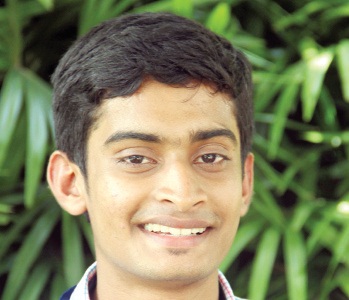
Manjeri native 17-year-old Aflah Madasseri adores Thomas Alva Edison and dreams to become like him one day. But to become an entrepreneur, his High School teacher Nasar was the inspiration. Seeing his English teacher takes his classes with his inner sight, Aflah always wanted to do something for him to help him as he was blind.
His thoughts have finally become the product, Blind Torch which got second prize in the contest held as part of the YES CAN 2015 event to find out innovative ideas.
Blind Torch is a device for guiding a blind person. The device has ultrasonic wave emitters which senses the obstacles in front of users and gives velocity information of obstacles to analyse the route and helps to walk safely.
Aflah has completed plus two from the Government School in Manjeri and wants to pursue mechanical engineering.
“Blind Torch is a device with only the size of a mobile phone. Blind people can carry it and can walk safely even without a white cane. The device can be made for Rs 500. I have applied for a patent for Blind Torch,” Aflah said.
He is also looking at funding options for the product. “I want to concentrate on entrepreneurship and studies together,” he adds.
Aflah, who came to receive the award with his father Ummer Madasseri and mother Sajida, wants to become an entrepreneur.
source: http://www.newindianexpress.com / The New Indian Express / Home> Cities> Kochi / by Express News Service / September 13th, 2015
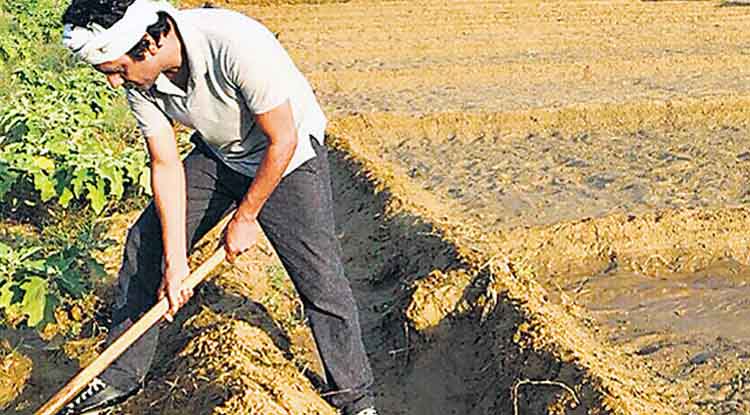
Bollywood actors who make it big like to reward themselves after widespread popularity to an exotic vacation in Europe or the Caribbean but that’s not for everyone. Nawazuddin Siddiqui has a very different approach to vacations as compared to his colleagues in the film industry. The Manjhi- The Mountain Man actor was seen farming while on vacation to his native village in Uttar Pradesh.
He has been working back to back films and he deserves a break before he can get back to filming or listening to scripts for future projects. The actor wanted to go back to his village for quite some time reports Hindustan Times. He is relaxing at his native town and also indulging in some farming to make it a productive vacation.
Apparently Nawazuddin always does a bit of farming when he goes back to his village. He said that farming is his ancestral occupation and he has done it for nearly two decades. It gives him pleasure to as well and we love a people’s actor.
source: http://www.india.com / India.com / Home>Showbiz / by Rishabh Chakravorty / September 13th, 2015
Shehla Rashid Shora, the first Kashmiri girl to contest and win the Central Panel elections at the the Jawaharlal Nehru University, says that she found the political space in her state “too restricted”.
Shora, a candidate of left-backed All India Students Union (AISA), was sworn in as the JNU Students Union (JNUSU) Vice President amid shouts of “lal salaam” here yesterday.
The engineer-turned-activist polled 1,387 votes, maximum by any candidate this year. She trumped BJP youth wing ABVP’s Valentina Brahma by 234 votes.
“After studying engineering and management, I entered the corporate world only to be disillusioned by it. Turning an activist, I raised issues of juvenile justice and acid attacks in Kashmir but I found the political space there too restricted,” she said.
“At JNU, I found there is enough space to articulate your political spirit. The challenge, however, was to convince voters in favour of a Kashmir woman from a non-political background,” she added.
Asked about the issues she plans to focus on during her tenure, she listed 24X7 health centre, translation cell, reduction in minimum eligibility criteria for OBC students, more hostels and upgradation of on-campus safety.
Shora said she wants “to confront the rise of the right-wing ideology” to prevent it from changing the “real history”.
“Left has a progressive ideology and hence, a progressive understanding is needed in the society. There is a forthcoming neo-liberal attack on education, another anti-people onslaught of the BJP government, which we must resist,” she said.
Shora graduated in computer engineering from NIT, Srinagar, and studied political leadership at IIM Bangalore. At JNU, she is pursuing her MPhil in Law and Governance.
She said she is yet to take a call on pursing a career in mainstream politics. “But, I back the Left ideology and will continue to work for human rights issues, internet democracy and against privatisation of education.”
The new JNUSU panel took oath yesterday. Out of the total 22 candidates who tested their electoral fortunes for the Central Panel, Kanahiya Kumar, the nominee of CPI’ student wing All India Students’ Federation (AISF) bagged the Presidential post, opening the party’s account in the student union polls.
While the ABVP made a comeback to JNUSU after a gap of 14 years wresting the Joint Secretary post, AISA which had swept the polls during last two years, managed two seats-Vice President and General Secretary.
In the JNUSU polls held on September 11, more than 53 per cent students had exercised their franchise. 31 councillors belonging to several schools in JNU were also declared elected yesterday.
JNUSU is the representative body of the students in the varsity. The polls have been keenly contested over decades.
source: http://www.deccanherald.com / Deccan Herald / Home> National / by PTI / New Delhi – September 14th, 2015
Mohammed Kursheed Hussain nose-typing in Hyderabad on Monday.- Photo: By Arrangement
How fast do you think you can type?’ Before most would have gone half-way with the sentence, 24-year-old Mohammed Kursheed Hussain of Hyderabad would have finished typing, with his nose.
Mr. Hussain attempted to break a Guinness world record for fastest nose-typing here on Monday. In 43.85 seconds, he typed the 103-character long ‘Guinness world records have challenged me to type this sentence using my nose in the fastest time’. He had to best 46.30 seconds, the standing record that was set in December 2014. An official word from Guinness is awaited to confirm his Monday’s feat.
Incidentally, Mr. Hussain had set a nose-typing Guinness record in February last year when he typed the challenge sentence in 47.44 seconds.
“I was told by Guinness in January this year that the record I had set was broken. Since then I trained to break the record,” said Mr. Hussain, who is a masters student at a university in Indiana, US.
Hussain’s tryst with typing began when he turned seven. It was however not until he turned 18, did he realise the uniqueness of his skill.
“I thought nothing of my typing ability until I had gone to college. That is when my friends made me realise that I had skill that others did not have. But I never thought that I would be a Guinness record holder,” he said. In 2012, Hussain hand typed the English alphabet with spaces in record 3.43 seconds, debuting in the annals of the Guinness World Records.
“I had to beat 3.52 seconds. It seemed impossible then,” he said. That record stands unbroken for three years now. Ask how he types with his nose when keys are blurred at nose’s width away from the keyboard,
Mr. Hussain offers a plausible explanation. “I think I just have a big nose,” he chuckles.
source: http://www.thehindu.com / The Hindu / Home> News> Cities> Hyderabad / by Rohit P.S./ Hyderabad – August 18th, 2015
Institute of Objective Studies, (IOS), will celebrate its 30th anniversary next year by organising national and international seminars and workshops on the new education policy.
These seminars and workshops will be organised in Delhi and other places of the country. Similarly, about six seminars on “Minority Rights and Identities and Constitutional Safeguards: The Role of State, Judiciary and Civil Society” will be organised.
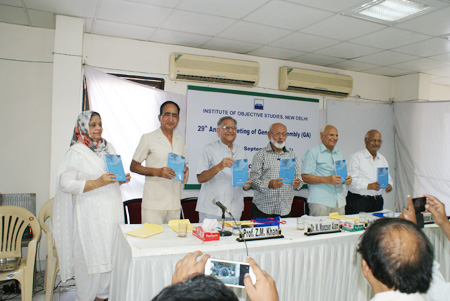
Chairman Dr. Mohammad Manzoor Alam (centre) presiding over the two-day 29th Annual meeting of General Assembly of the Institute of Objective Studies, (IOS), in New Delhi.
The above decisions were taken at the two-day 29th Annual meeting of General Assembly of the IOS which concluded here the other day. Besides this a number of other decisions were also taken on the occasion. The meeting was presided over by IOS Chairman Dr. Mohammad Manzoor Alam.
It was also decided to award scholarships to students with Madrasa background pursuing courses in social sciences and the law in universities besides students studying journalism. Five priority areas viz. law, history, education, Islamic Studies and the comparative study of other religions, have been selected for research. In addition, a committee will be constituted to study the nature of the schemes being implemented by the Central government and create awareness among Muslims.
The book entitled “Qalmi Khake” by late Prof. Zafar Nizami being released at the IOS meeting.
Another committee will be set up to review school and higher education as also research under the new education policy. Decision was also taken to undertake work on books on “Seerah” in regional languages.
On this occasion, two books, “Qalmi Khake” by late Prof. Zafar Nizami, and “Musalmano ka Siyasi Empowerment” by Prof. ZM Khan in Urdu and Hindi published by the IOS were released.
Those who attended the function included Vice-Chairman of the IOS, Refaqat Ali Khan, Secretary General of the IOS Prof. ZM Khan, Prof. Ishtiyaque Danish, Prof. Manzoor Ahmed, Maulana Atique Ahmad Bastavi, Dr. Major Zahid Husain, Prof. Shamim Ahmad Ansari, Prof. Mohsin Usmani Nadvi, Prof. Arshi Khan, Adv. Mushtaq Ahmad, Prof. Sanghasen Singh, Prof. M. Muqeem, Maulana Amin Usmani, Dr. Fakhruddin Mohammad, Dr. Priyasen Singh, Dr. Shakeel Ahmad Tamanna, S. Pervez Bari, senior journalist, Suhail Anjum, scientist, Mohammad Khalil, Prof. Obaidur Rahman Hashmi and Dr. Imtiyaz Husain.
source: http://www.twocircles.net / TwoCircles.net / Home / by TCN News / September 14th, 2015
How an adversity turned into an opportunity for Rajasthan’s Meo community farmers
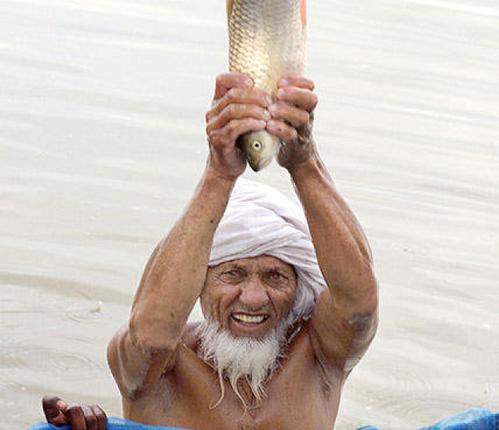
They were never fisherfolk and had no idea how a net was cast. Living for generations in the landlocked Kaman block of Rajasthan, the farmers of Jeeraheda village only knew how to sow and harvest their grain. So, when in the late 1980s, water from the Gurgaon canal, which runs through Haryana and Rajasthan, began to slowly seep into their agricultural land and cause serious water-logging, they threw up their hands in despair.
The 240 families of the Meo Muslim community, which has its homes and farms along the canal adjoining the Haryana border, knew that growing a crop on these tracts was no longer possible. “We tried in vain for many years to make use of this land, but nothing at all would sprout. It would get inundated with water,” recalls 53-year-old farmer Aas Mohammad.
The flooding also meant the farmers had less acreage to cultivate and were unable to meet their food needs, leave alone store grain for a rainy day or sell it. Already left outside the mainstream of development and traditionally backward, the community found the going tough.
Teach a village to fish Aas Mohammad and his family draw in their fish catch at their field-turned-pond. Some of the fish will be sold to markets and some transferred to another farmer’s pond as fish seed KAMAL NARANG
All of a sudden, however, their fortunes turned for the better. “In the last 15 years there has been a lot of change. Our luck began when we introduced fish seed into the gram panchayat talab (large pond) and found it yielding good results. It grew into good-sized adult fish,” says farmer Khurshid, who is now the President of the Gram Vikas Samiti. Lupin Human Welfare and Research Foundation, which has been working on development projects here, advised the farmers to dig up the water-logged fields, transform them into talabs and introduce fish species for sale in cities.
There was no looking back after that. Khurshid says his village today has 55 such talabs in the 40-50 acres that is unfit for cultivation. Dull-blue waters and bright-blue fishing nets have become a part of the landscape, interspersed with green fields. “Our fish harvest brings us returns every day,” he says, naming the popular sweet-water species Rohu and Katla as the mainstay of their business along with the smaller mirgal, and common and grass carb.
Every day, 2-3 vehicles arrive in Jeeraheda village to cart away 5-6 quintals of fish each for markets across the State border in Gurgaon and Delhi. “We don’t have to go anywhere, our market comes to us… we do brisk business from 6-9am. We weigh the catch, fix the price and sell to the best buyer. This happens across all the four villages along the canal that have taken up fisheries,” says a satisfied Mohammad.
Kaman block alone has around 200 ponds with fish rearing. “Bharatpur district, of which we are a part, is producing 1,500 tonnes of fish and provides livelihood to 2,000 fish-farmers,” says Tarachand, Lupin’s Kaman block co-ordinator. He provides a back-of-the-envelope calculation of the profits earned by the farmers. “They spend around ?50,000 annually on seed, feed, cleaning, nutrition and so on for atalab the size of an acre. The output is about 40 quintals of fish. Per hectare, they earn ?3.5 lakh a year.”
“A problem was turned into a potential,” explains Dr Swati Samvatsar, Lupin’s Chief Programme Manager. To keep fish-farming alive and encourage the farmers, the organisation started a fish-seed hatchery in the Nineties with a capacity of one crore fry seeds; it supplied various fish species to the farmers at a no-profit, no-loss basis.
The houses are now concrete and every family has accident insurance
“Today, some farmers make their own seeds and provide them to others,” says Samvatsar. The results are there for all to see. The houses are now concrete and every family has accident insurance.
Unfortunately, however, prosperity and food security have not erased overwhelming social and cultural problems. Only a few girls go to school. “Women have their own role to play. They do not help in the fishery business. Instead they tend to the buffaloes, the home, the children… and to themselves,” Khurshid argues vehemently.
The good fortune has also meant that young boys in the village have become more complacent. Only a few have attempted to secure college degrees or turn to other professions. “The younger generation is more adept at swimming, fishing and growing the fisheries business,” admits Samvatsar.
SHER MOHAMMAD Fish-farmer in Kaman block. Even the youngsters in the village know each and every detail about fish cultivation
Says 74-year-old Sher Mohammad, obviously proud of the training the young ones have been given, “They know each and every detail about fish cultivation.”
Fourteen-year-old Rahees sums it up as he plunges joyfully into the blue water to join the others in retrieving the submerged fishing net, “We study when we feel like it.”
(The writer travelled to Rajasthan at the invitation of Lupin Human Welfare and Research Foundation)
source: http://www.thehindubusinessline.com / Business Line / Home> Specials> India Interiors / by Preeti Mehra / September 11th, 2015
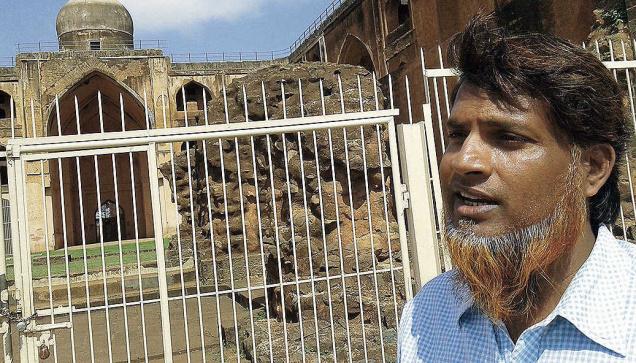
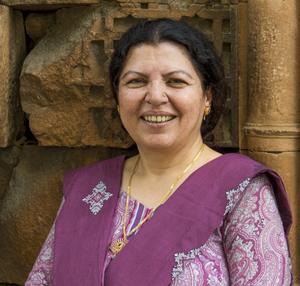
Religion is irrelevant to the study of these structures and heritage, says Abdul Aziz Rajput Bijapuri, a researcher from Vijayapura.— Photo: Gopichand T.
Abdul Aziz Rajput Bijapuri has travelled extensively in the Deccan and visited every Jain historical place ‘at least twice in the last 10 years’
It is not often that one comes across a book on Jain iconography written by a scholar of Islamic art. Abdul Aziz Rajput Bijapuri, a researcher from Vijayapura, has just completed the book on Jain icons and sculptures of the Deccan, with special reference to Vijayapura, Kalaburagi and Bidar.
He is planning another book on the monuments relating to the Jain period in Karnataka. In Bidar to study Sri Parshwanatha temple at Kamthana village, he spoke to The Hindu on how Jain iconography fascinated him.
“The Kamthana temple was built by the Rattarasa kings in the 10th century. It served as a gurukul or school for several hundred years. However, it fell into disuse till it was renovated in 1987,” Mr. Bijapuri explains.
He has travelled extensively in the Deccan and visited every Jain historical place “at least twice in the last 10 years”. He has compiled history, architecture and present condition of the monuments, along with the statues, art plates and stucco and other craft in the buildings.
He has also documented Hindu temples in the Deccan and written treatises about their art and architecture. He has written 12 books, on monuments and religious places of Hinduism, Islam and Jainism.
“Religion is irrelevant to the study of these structures and heritage,” he said. He recalled how scholar late M.M. Kalburgi praised him during a seminar in Dharwad for focusing on his area of research, without bothering about criticism from some quarters about his religious affiliation. “Kalburgi had told me we need more people who study the heritage of religions other than their own,” he recalled.
Mr. Bijapuri has translated books between Arabic, Persian, Urdu, English, Kannada, Marathi and Hindi. He has also set up an NGO, Deccan Studies and Historical Research, that organises seminars, heritage walks and publishes books and brochures in Vijayapura.
source: http://www.thehindu.com / The Hindu / Home> National> Karnataka / by Rishikesh Bahadur Desai / Bidar – September 13th, 2015
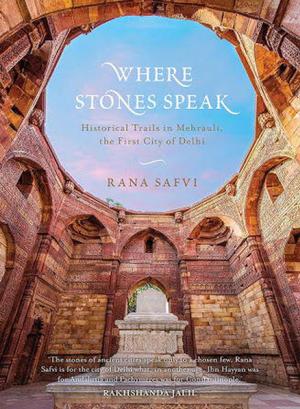
Historian and writer Rana Safvi’s blog, ‘Hazrat-e-Dilli’, is a little corner of the Internet dedicated entirely to the Capital — its new and old architecture, the dizzying variety of food, age-old traditions and much more. Her new book, “Where Stones Speak”, is another tribute to Delhi, and arguably its first city, Mehrauli. Safvi traces Mehrauli’s history through simple words and haunting couplets, takes us through its diverse monuments and weaves facts with storytelling in a way that paints a picture achingly beautiful in its richness and depth.
Excerpts from an interview:
What brought about the idea?
Delhi for us was just a transit point for changing trains to Lucknow or Nainital. Except for a visit to Red Fort and Qutub Minar with a university group I had never visited any of its beautiful monuments. It is only in the past few years when my daughter shifted here that I spent time in Delhi. I started going out for heritage walks with various groups. It was during these that I realised though there was a lot of material it was scattered and quite a lot of it was in Urdu so inaccessible to many. I wanted to write a book on the lines of Hearn’s “Seven Cities of Delhi” but when I reached Mehrauli the first city I realised that it had enough treasures to form a full book on its own. This book happened – I had set out to write something else. I feel it was blessed and willed by Mehrauli’s guardian saint Qutub Sahab.
It’s an ambitious book, one that would require you to go through reams of material. What kind of initial research did you do?
The first thing I did was to shift from Dubai to Delhi NCR as I accessed books for research. I did not want to rely on online resources only. I went through bibliographies of ASI (Archaeological Survey of India) and books written on Delhi. I went to the Urdu Bazaar. Then I bought the books. I feel I became Flipkart’s biggest customer, with books pouring in every week. I have built quite a library now and it’s ongoing. ASI itself has many books on Delhi especially on the Qutub Complex which I went through. Their library and photo section are treasure houses and I got a lot of help from them. There are many Urdu books available. A 1919 book by Bashiruddin Ahmed called ‘Waqi’at-Dar-ul-Hukumat Dehli’ is full of stories and anecdotes.
How difficult was it to find preserved records and materials for the book?
ASI publications are the best source for records and materials. Records of excavations and research done from the time of Sir Alexander Cunningham in Delhi in the latter part of 19th Century are all available with them. Carr Stephen’s 1876 book “Archaeology and Monumental Remains of Delhi” was also invaluable. Many British officers of ASI have written books on Delhi in late 19th and early 20th Century. Maulvi Zafar Hasan’s book, ‘Monuments of Delhi’, published in 1916 for the ASI details all the monuments of Delhi. Many of these are lost to us now. For contemporary history I relied on ‘The History of India, as told by Its Own Historians’ Henry Miers Elliot and John Dowson. Some of the books are now out of print or badly reprinted. I got these from the U.S. where there were second hand sellers.
Delhi’s history is a curious mix of facts and folklore. What kind of balance were you looking to provide in this book?
I have taught history in middle and senior school for many years. I know how bored people get if we just keep presenting fact after fact. I tried to use the same technique I used for my students: tell the story as accurately as I could and make it interesting. I have used anecdotes I found in my reference books as well as a few recounted to me. Wherever they are unsubstantiated by records I have mentioned that too. I have tried to enliven it by using Urdu verses which describe the stunning photographs taken by Syed Mohammad Qasim better than I ever could with my prose. It also embellishes the prose and breaks the monotony of facts. This is a style not used by any other English book on history (at least I haven’t come across it). It has been used in Urdu books though not to this extent.
What is the legacy of this past, and how you think it defines contemporary Delhi and its people?
In 1947, when India was partitioned, many of the old inhabitants of Mehrauli and Shahjahanabad left for Pakistan. The refugees who came here were shell-shocked by the trauma of being torn away from their native lands and having to start anew. For them it was survival that mattered the most. These old buildings held no meaning for them. There was a lot of encroachment those days. Those who didn’t migrate had different problems to cope with. Thankfully, the interest in heritage and our cultural legacy has once again been awakened. The younger generation is identifying with it and showing interest in preserving it. This can be seen in the wealth of books and programmes on our historical and cultural legacy.
Delhi is a juxtaposition of age old monuments and modern architecture. Do you think even by themselves these structures carry an impact?
For me every stone has a story to tell. It is up to us to tell those stories in such a way that these monuments speak to everyone. This can’t be done only through dry facts. It’s only when factual stories are associated with it that people will remember and talk of them fondly. For instance the feedback I get is that Sultan Razia’s story has made them look at Quwwatul ul Islam Mosque with new perspective. It is no longer a pile of stones but a place where a great historical event took place. Structures carry impact when we associate something which we found interesting with it. I don’t know how far I have succeeded but that has been my attempt.
source: http://www.m.thehindu.com / The Hindu / Home> MetroPlus / by Swati Daftuar / September 12th, 2015
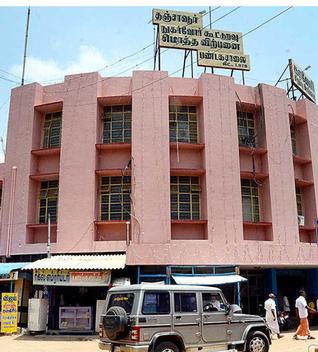
The Thanjavur Consumers Cooperative Wholesale Stores (TCCWS), a cooperative institution that has impacted the daily life of all sections of society here for the past 75 years, is celebrating its platinum jubilee anniversary by firming up a five-year plan to shore up its finances.
Registered on April 20, 1940, it commenced its commercial operations on May, 1940 with 16 members with a share capital of Rs. 390. Now, it has 2,634 members with a share capital of Rs. 41.14 lakh.
Under its control, there are 70 fair price shops in urban areas of the city through which the premier cooperative institution is channelising 1,137 tonnes of rice, 144 tonnes of sugar, 39 tonnes of wheat, 54 tonnes of toor dhal and 57,000 litres of palm oil every month to the attached 72,636 family cards.
Besides, there are six kerosene bunks in the city limits in its fold through which 29,444 family card holders were getting 75,870 litre of kerosene a month.
Serving as the lead society, the TCCWS has been facilitating supply of essential commodities to 2,00,315 family card holders attached to 467 fair price shops functioning under the aegis of 126 primary agricultural cooperative credit societies in Thanjavur, Orathanad, Pattukkottai, Peravurani and Tiruvaiyaru taluks, the TCCWS Managing Director M. Mohamed Rafi told The Hindu here.
The self-service section functioning in the main TCCWS complex has been doing a brisk sale of Rs. 15 lakh a month while the cooperative medical shop within the complex is extending 12 per cent discount for medicines and five per cent rebate for food items besides providing free door delivery facility to buyers on demand. Medicines and food items sale touches Rs. 5 lakh a month. The stationery section was recently refurbished to lure more customers and is doing a sales turnover of Rs. 2 lakh a month, Mr. Rafi said.
There are 119 employees against the sanctioned cadre strength of 133 and a democratically elected Board of Directors in administering the TCCWS.
One future plans, he says six new fair price shops were ready for opening in urban limits of the city while it was planning to carve out four new full-time fair price shops to serve specific area customers better.
Though the TCCWS has run up a cumulative loss of Rs. 6.24 crore up to the audited period of 2011-12, it has drafted an ambitious five-year plan to wipe off the deficit and turn the corner. Already, during 2012-13, the TCCWS earned a profit of 8.15 lakh due to efficient functioning and Mr. Rafi hoped to build on that performance in the years to come.
source: http://www.thehindu.com / The Hindu / Home> National> Tamil Nadu / by L. Renganathan / Thanjavur – May 02nd, 2015