Category Archives: Community Involvement / Social Issues

Inauguration of Mysore University Centenary celebrations: PREZ. Visit – Behind the scenes

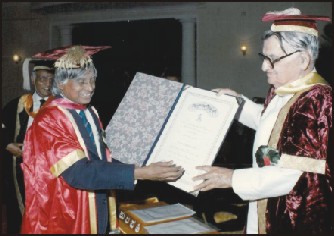
 A file photo of former President of India Dr. A.P.J. Abdul Kalam receiving the Honorary Doctorate from the then Governor-Chancellor Khurshed Alam Khan during the 75th Convocation of University of Mysore on Feb.25, 1995. The then Vice-Chancellor Prof. M. Madaiah is partly seen.
A file photo of former President of India Dr. A.P.J. Abdul Kalam receiving the Honorary Doctorate from the then Governor-Chancellor Khurshed Alam Khan during the 75th Convocation of University of Mysore on Feb.25, 1995. The then Vice-Chancellor Prof. M. Madaiah is partly seen.

by N. Niranjan Nikam, Senior Journalist & Consultant, Centenary Celebrations 

It was an oft repeated utterance for the past one year. “We are on the threshold of celebrating the Centenary of the University of Mysore.” July 27 is the Foundation Day. It was on the same day in 1916, 99 years ago that the University of Mysore was founded. The day to herald the year-long celebrations had finally arrived. The hard work, dedication, devotion, sincerity and above all, commitment to the cause of the celebration of centenary on the part of the Vice-Chancellor Prof. K.S. Rangappa has made it possible.

The day dawned with a slight drizzle in the morning and we were worried. The clouds cleared at the right time. Hectic activity was going on to prepare the stage. Last minute instructions were flying back and forth. The countdown had begun for the arrival of the President of our country.

As the clock struck one, people started arriving. There was palpable tension in the air for most of us involved in organising the event. “Will the 10,000 seating capacity Amphi Theatre that was all decked up to receive the President be filled?” was the question uppermost in all our minds. However, the VC was fully confident that there would not be an inch of space left.

By 2’O clock, his predictions had come true. It was a sight to behold. The hard work of the past one year was paying off. I was worried whether the side wings would be occupied. But it was a joy to see every inch of space filled and also to see the real commoners and students sitting patiently for the arrival of the President.

Meanwhile, early in the morning, the names of the dignitaries who were to be seated in the front two rows had been identified and all their names pasted on the sofas. The students of the University College of Fine Arts, who were singing the Centenary Theme Song, came to the venue three hours before and rehearsed with the compere Prof. C. Naganna. The audio-visual team had set up their equipment and were testing. Lot of content had been provided to them to play while the audience waited for the function to commence.

The Police Band arrived well in advance and as the place for them was already earmarked, they went straight there and took up the position. Instructions were given to them that the moment the President arrives and walks to the centre of the dais to his designated chair, the National Anthem should be played.

Even as the clock ticked, came the news from the State Protocol Deputy Secretary that there would be a delay of at least half-an-hour as the President was visiting the Chamundi temple. It was also disclosed that he would change his dress at the Mandakalli Airport to dhoti and jubba to offer pooja to Goddess Chamundeshwari and then would change to formal dress at the Guest House of Abdul Nazir Sab State Institute of Rural Development (ANSIRD) on Lalitha Mahal Road. Hence, the delay was inevitable. We had no choice and hence we took the available time to fine tune the programme.

Backstage

First to arrive was R.V. Deshpande, Higher Education Minister and Pro-Chancellor, University of Mysore. Then the other dignitaries started arriving. All the six former Vice-Chancellors and Eminent Lexicographer Centenarian Prof. G. Venkatasubbaiah had arrived and were seated in the newly-furnished green room in the Amphi Theatre at Manasagangotri.

The messages were coming from the State Protocol Officer every ten minutes about the President’s convoy. Finally, the President arrived. The tall figure of Governor and Chancellor Vajubhai Rudabhai Vala emerged from the car and I thought that the President would be coming next. But when the diminutive figure of the President, Pranab Mukherjee, neatly dressed in a close-collared coat stepped out from the same car, our joy knew no bounds, as at last our objective to have the function on the day the University was founded (July 27, 1916), had been achieved.

However, more drama was to unfold. The State Protocol Officer, the moment he arrived, announced that the Vote of Thanks had to be dropped, as the President was running late and he had to be in Bengaluru for the next function in the evening. The instructions to him had come in the form of a message from the President’s Secretariat. I had to run to tell the Police Band that they had to play the National Anthem the moment the President finished his address.

Just a few days before the function, the VC had to visit the Rashtrapati Bhavan to finalise the programme details with the President’s Secretariat. He told me, “I had spent a pleasant half-an-hour when I had gone to invite the President earlier. But sitting with Private Secretary, who was insisting on every minute details, made me sweat.” The VC had suggested two more names for the President to honour but it was turned down. Even though the VC had made a promise to the two prominent personalities, it had to be dropped.

Former Prime Minister H.D. Deve Gowda, who was also to participate in the function, opted out at the last minute as he had to go to Delhi. The VC then wrote to the President’s Secretariat to include the name of Registrar Prof. C. Basavaraju. Incidentally, his name had been proposed along with other dignitaries to be included in the first list itself. The President’s Secretariat had, however, instructed us to drop his name to be seated on the dais. The permission was given at the last minute to seat the Registrar on the dais.

The decision to publish the book “Era of Enlightenment” (One hundred years of History of University of Mysore), penned by historian and former Vice-Chancellor of Goa and Mangalore Universities, Prof. B. Sheik Ali, was a really good one. However, the decision to also honour him was dropped as the President’s Secretariat said that there would not be enough time to do it as the list was already long. Hence, the VC had to reluctantly leave out his name.

It was also a momentous sight when the President saw the two centenarians Dejagow and Venkatasubbaiah. He looked at them open-mouthed as I escorted them and Prof. Rangappa briefed about their achievements.

The VC had asked the President’s Secretariat that Chief Minister Siddharamaiah should felicitate the President. But they were clear that the VC himself should felicitate the President.

In spite of the delay, the minute-to-minute programme was adhered to the last minute. One of those in the President’s Secretariat in the Navy Uniform, who was also giving instructions to us, told me in Hindi, “Kya Sir, aap itne buzurg log ko laye hain (referring to the two centenarians). Maine aisa function kahan be dekha nahin hoon.”

Even as the inauguration ended on a grand note by evening as we were mulling on the success, came the news that the former President Dr A.P.J. Abdul Kalam was no more.

The memories went back to 1995 when the Missile Man, and the Teacher as he would like to be remembered, was conferred the Honorary Doctorate by the University of Mysore.

Incidentally, Dr. Kalam was to inaugurate the Children Science Congress, in January next, during the Indian Science Congress to be hosted by the University of Mysore. Now, it is not to be.

NOTE: All things considered, it would have been most appropriate to have seated Prof. B. Sheik Ali on the stage since he was a Professor and Head of the Department of History in Manasagangotri, was the VC of two Universities; more than that he had authored the centenary remembrance book “Era of Enlightenment,” apart from being a venerable old man of 90 years age.— Ed

source: http://www.starofmysore.com / Star of Mysore / Home> Feature Articles / Friday – July 31st, 2015
Over a cup of evening tea : A monumental miscalculation ?


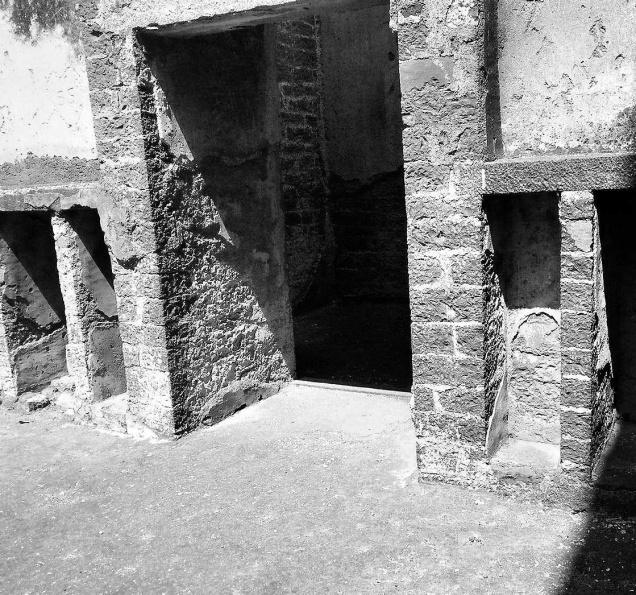
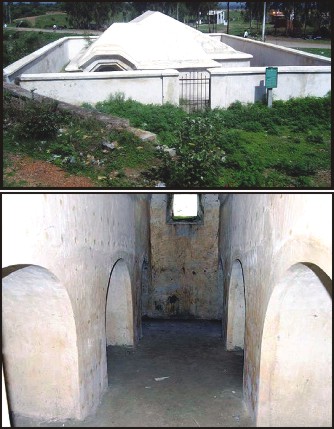
Top - 1) The centuries-old armoury of Tipu Sultan. Below -  2) An interior view of the armoury.
Top – 1) The centuries-old armoury of Tipu Sultan.
Below – 2) An interior view of the armoury.

by Dr. K. Javeed Nayeem, MD

No, I’m not talking about the hanging of Yakub Memon as you may be inclined to think from the title. It is pointless to dig up the graves of those who are very dead. But nevertheless, many will be doing it for some time to come. I’m talking of something much closer home although this is also about digging up something from the past. It has now been announced that the more than two-centuries old Armoury of Tipu Sultan, which has become an impediment to the Mysuru-Bengaluru Railway line doubling project, will finally be shifted to a different site about 500 meters away from where it stands now, although its new location is as yet unannounced.

This matter has been under consideration for quite some time now and different ways and means of circumventing the ancient obstruction to upgrade a much-needed modern means of transport have been aired from time to time by the Railway authorities and the Government. For a brief while it was even suggested that to avoid disturbing the monument we would even make do with a single track between the Naganahalli and Pandavapura stations. But this move, seemingly very kind to our heritage and hoary past, would have completely defeated the whole purpose of doubling the track thus making a mockery of the entire expensive project.

What I would like to highlight here is the very lackadaisical attitude of our government agencies to proper planning before jumping into the very profitable business of execution. It looks like a very apt case of utter disregard to the axiom of looking before leaping and doing just the opposite instead. Many engineers working for the Railways and many other very knowledgeable and qualified people tell me that with a little proper planning the track doubling work could have been accomplished without the need to re-locate the monument.

This point of view seemed right even to me when I visited the place just yesterday with my son, Adnan to have a first-hand look. It is common knowledge that to a common man with a little common sense, alternative options come easily while to experts with intelligence they often remain elusive. The new bridge across the south branch of the river Cauvery built to carry the second line is almost ready and until now the authorities were unsure of how they would align the track while taking it past the station and across the not-to-wide island with very limited space for the rakes of trains which are getting longer day by day. With no other viable alternative in sight, since the seemingly very wrongly positioned bridge is already in place, they now seem to be all set for another round of grossly unjustified expenditure.

Initially it was announced that the armoury would be dismantled brick-by-brick and rebuilt. Then someone rightly discovered that this was the wrong way of handling a very fragile brick and lime mortar structure and said that they would cut it up like a cake into meter wide cubes and cart them away to the new location. This too did not seem very practicable while being very obviously very unkind to the structure itself.

Now they have reportedly tendered the process to a US firm and its Indian partners who will shift it without dismantling it for a whopping sum of Rs. 11.6 crore. The process is bound to be interesting to watch. These armouries built by Tipu are semi-underground rooms with very thick walls and sloping masonry roofs supported by pillars where gun powder and small arms used to be stored. It is on record that he had built eleven almost identical armouries at Srirangapatna and seven of them are still standing in identical states of neglect.

I have been able to locate and count five of them ever since the time of my childhood. There are five others outside Srirangapatna located at the Manzarabad fort near Sakleshpur, Pavagada, Madhugiri, Sultan Battery in Kerala and Bengaluru. The last mentioned is deep inside Kalasipalyam behind the Bangalore Medical College and although located in the heart of the capital, it is completely dilapidated and has very conveniently become notorious for all kinds of illicit activities. No one either in the Government or the BBMP under whose jurisdiction it falls seems to have thought of preserving it, let alone restoring it to its former state as a keepsake from the past.

None of the seven existing armouries in Srirangapatna too including the one that is very accessibly located at the western corner of the fort near the British martyrs’ memorial obelisk, built in 1907 has been maintained in a state that can attract tourist attention. When that is the case I am left wondering whose sentiments the authorities are trying to avoid hurting by spending such a huge sum of money on relocating and restoring a small hitherto completely neglected piece of history in a very inaccessible location while having allowed the rest of the magnificent fort at Srirangapatna to gradually crumble brick-by-brick due to the abject lack of protection and basic maintenance?

Now, eleven crore rupees is a very large sum of money and if it is spent wisely and honestly it can do immense good to the entire fort that surrounds Srirangapatna thus preserving the beauty and grandeur of the historic town. Spending it just to relocate the armoury that now obstructs an albeit wrongly planned Railway track just as a face-saving measure is a sheer waste of public money most of which will undoubtedly go only to line the pockets of unscrupulous politicians, bureaucrats and contractors who thrive on such needless projects. People should therefore oppose this move. No one is going to mourn the loss of a structure the existence and significance of which they never knew.

There are many other monuments with much greater significance than the armoury under consideration of this present rather wasteful effort which can benefit from some much needed attention. For instance, the fading and flaking paintings at the Daria Daulat Bagh, the many historically important ‘Water Gates’ with narrow passages and steps leading to the river and the once very tranquil Sangam, the point where the two branches of the river meet once again after embracing the island.

Not very long ago before the advent of the now omnipresent and omnipotent parking fee mafia, which enjoys the patronage and participation of some vested interests, this place was a favourite picnic spot for families. It has now become the favourite haunt of thieves, extortionists, drunkards and drug addicts while the authorities conveniently look the other way.

e-mail: kjnmysore@rediffmail.com

source: http://www.starofmysore.com / Star of Mysore / Home> Feature Articles / Friday – July 31st, 2015
Training and Vaccination camp for Haj pilgrims held

HajPilgrimsMPOs05aug2015

Mysuru :

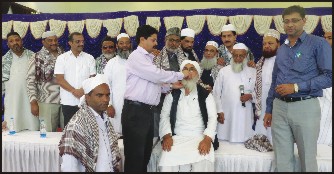
Mysore District Haj Committee had organised a day-long Haj Training and Vaccination Camp for the Haj 2015 pilgrims at Milan Annexe Function Hall, in city this morning.

Sir Khazi of Mysuru Hazrath Moulana Mohamed Usman Shariff presided over the camp.

The camp began with the recitation of verses from the Holy Quran by Hazrath Moulana Maqboo Ahmed Saheb Nizami and Naath was presented by Syed Fazil Ashrafi.

Abdul Azeez Chand welcomed the Haj 2015 pilgrims and the guests.

All India Milli Council Mysuru President Hazrath Moulana Mohamed Zakaulla Siddiqi, speaking on the occasion, said about the performance of Umra and provided information to the pilgrims. Prior to the commencement of the camp, homage was paid to former President of India Dr A.P.J. Abdul Kalam, who passed away on July 27.

Dr. Mohamed Shiraz Ahmed, Dr. Javeed Pasha, Dr. Aleem, Dr. Fahad, Dr. Anitha, Dr. Bushra, Dr. Parveez Ahmed and other Medical staff from the Health Department administered vaccination to the Haj pilgrims which is mandatory for the visa stamping.

Jamia Tippu Sultan, Secretary Alhaj Syed Yunuss, MCC Ward 43 Corporator Suhail Baig, Jameel Ahmed Ashrafi and Shahabuddin were present.

source:  http://www.starofmysore.com / Star of Mysore / Home> General News / Friday – July 30th, 2015

Mandapam tailor made the decorative cloth for cortege

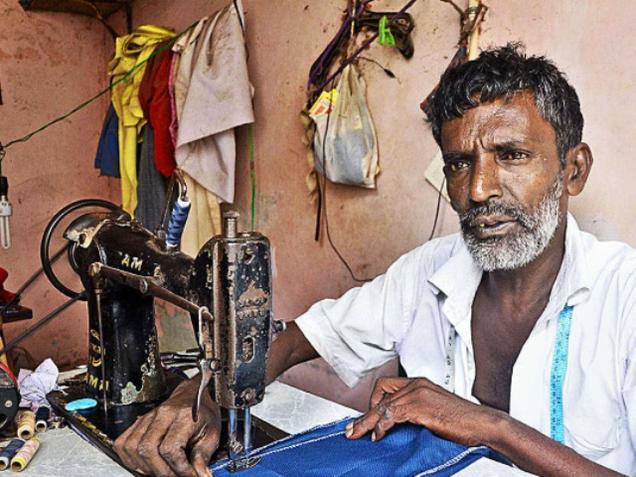
Rare chance: This humble tailor in Mandapam made the decorative cloth for the cortege of former President  A.P.J. Abdul Kalam.— Photo: L. BALACHANDAR / The Hindu
Rare chance: This humble tailor in Mandapam made the decorative cloth for the cortege of former President A.P.J. Abdul Kalam.— Photo: L. BALACHANDAR / The Hindu

“I was much privileged to do the work and I am painfully happy. I will cherish the moment all my life”

A differently abled tailor in this coastal town had the privilege of making the decorative cloth for the army vehicle which carried the mortal remains of former President A.P.J. Abdul Kalam on the final journey on July 30.

R. Rabi Khan (51) had just returned from the Mandapam helipad after witnessing the arrival of Kalam’s body on July 29 when an army man brought a 10.5-metre-long cloth for making frills. He was in no mood to work and refused to take up the job.

But the moment the army man said it was for Kalam’s cortege, he sprang up and completed the work in two hours.

“I am in the profession for close to three decades and this was the profound moment in my life. Making the decorative cloth for Kalam was the most satisfying job in my career,” Mr. Khan told The Hindu on Monday.

The frill cloth he made was tied around the base of four sides of the army vehicle, on which the coffin was placed for the final journey. The army man had offered some good money for the work, but Mr. Khan refused to take it. “I was much privileged to do the work and I am painfully happy. I will cherish the moment all my life,” said Mr. Khan who was moved to tears.

Though he had briefly worked in a tailoring shop run by Kalam’s nephew in Pamban, he never had the opportunity to meet the People’s President. He saw Kalam only once when he came to Mandapam railway station last year to board a special train to travel across the Pamban rail bridge on the occasion of its centenary celebrations, he said.

A school dropout, this gents’ tailor owns a single 1989-make Rama sewing machine and works independently. His wife works in a marine export company to supplement family income.

source: http://www.thehindu.com / The Hindu / Home> National> Tamil Nadu / by D.J. Walter Scott /Mandapam – August 04th,  2015

An AC with a 550-year warranty

The wind-catcher at the Takht Mahal in Bidar fort.— photo: gopichand t.

This natural cooling system is in existence in the old Bidar fort

What is the warranty period on your air-conditioning system — five, seven or at the most 12 years? How about a system that has a warranty of 550 years?

Bidar fort houses this system. The Gagan Mahal, or the grand palace that has the takht (throne), has just such a natural cooling structure.

Local guides call it the ‘Bahmani AC’. Built by the Bahmani kings in the 15th century, it still functions.

Cool air gushes out from the bottom of the twin tunnels that are connected to towers on the ceiling. However, the roof of the building has collapsed, depriving visitors of a real air-conditioned experience.

The technique involved is simple. Hot air, sucked in from the surroundings, moves up a quadrangular pillar. It gets cooled, gains weight and comes down. Air is thus cooled by convection and evaporation.

The walls of the tower, exposed to the sun, attract cool humid air towards them. This happens through multiple vents, providing ample supply of cool air. Two such pillars are fixed in each room, on opposite sides of the hall.

These structures, called Badgeer, Malqaf or Hawa Khamba (wind-catcher), are also found in other buildings, including the Rangeen Mahal, Turkash Mahal or Queen’s Palace, and the Diwan-e-Khas or VIP enclosure.

There are some such structures inside the city too. Havelis of zamindars and the rich had these structures. “I had saw them while growing up in the old city,” says historian Abdul Samad Bharati.

V. Govindan Kutty, groundwater expert who has worked on the Surang Bavi system of medieval era aqua ducts in Bidar, said the method of cooling buildings involved both wind tunnels and underground water canals.

“There were several wind-catchers along the Jamuna Mori or the Shukla Teertha channels originating in the old city and ending in the Bidar fort. Some houses had basements where people would collect water. The combination of wind-catchers and underground channels led to general cooling of these houses,” Mr. Kutty said. He points out that this system is used extensively in Iran, where multiple wind-catchers are built over cisterns to chill water.

“The government should take steps to conserve these structures” says Digambar Thakur, heritage enthusiast.

This natural cooling system is in existence in the old Bidar fort

source: http://www.thehindu.com / The Hindu / Home> National> Karnataka / by Rishikesh Bahadur Desai / Bidar – July 31st, 2015

Tribal people in B.R. Hills fondly remember Abdul Kalam

The passing away of the ‘People’s President’ and the ‘Missiles Man’ A.P.J. Abdul Kalam has shocked the Soliga tribal people in the B.R. Hills, who fondly remember him as he used to frequently visit the Vivekananda Girijana Kalyana Kendra (VGKK) there, when he was working as scientist at the Defence Research and Development Organisation (DRDO).

In fact, Dr. Kalam’s first visit to Chamarajanagar district was in 1998 and the last one was on October 16, 2006, when he participated in the silver jubilee celebrations of the VGKK. Incidentally, the day had a special significance as it coincided with the 76th birthday of Dr. Kalam.

Dr. Kalam was attracted by the beautiful environment of B.R. Hills. The tribal reminisce the way Dr. Kalam interacted with their children, including the youths. He was pleased to see the establishment of the New Tribal Hospital and development of roads, besides creation of facilities for their education. It was Dr. Kalam’s ideology to have “One Village One Product” for a comprehensive development of 128 tribal podus. He had advocated this ideology to ensure that the products produced by the tribal people by using modern technology could become viable and competitive commercial products at national and international levels.

Dr. Kalam had suggested the tribals in the B.R. Hills to embark on a bamboo mission. According to him, the mission should envisage an integrated programme of expansion bamboo plantations, their scientific management and promotion of value-added products of bamboo at community levels, besides development of entrepreneurial skills of tribal people. He had also suggested cultivation of Jatropha in about 1,000 acres of land, particularly on wastelands in hilly regions, to bring about rural prosperity through production of bio-diesel.

Another novel programme suggested by Dr. Kalam to VGKK was to consider creation of B.R. Hills PURA, encompassing all the 128 tribal hamlets and the 20,000-population. According to him, PURA was “providing urban amenities to rural areas”, envisaging provision of physical, electronic and knowledge connectivity for achieving economic connectivity. This would, according to Dr. Kalam, bring into focus the development of skills in cottage industry, dry-land agriculture, production of honey, handicrafts and processed food for which core competence was existing among tribal communities. The most important aspect of PURA concept was to create market avenues for the products.

His visit on October 16, 2006 to participate in silver jubilee celebrations of the VGKK coincided with the 76th birthday of the ‘People’s President’

source: http://www.thehindu.com / The Hindu / Home> National> Karnataka / Correspondent / Chamarajanagar – July 30th, 2015

TRIBUTE – Dr. Kalam: An idea, a vision and a dream

Former President A.P.J. Abdul Kalam

I write this obituary from the C-130 Air force plane with Dr. Kalam’s mortal remains a few feet behind me to be taken to Rameshwaram. He is draped in the national flag, the tricolor he served and deserves. He was the hero of my generation – I remember how I used to be glued to his Presidential address just as I was finishing school. He was an ocean of experience, ideas and motivation and to capture his personality and contributions in a few hundred words is a near impossible task. But as Dr. Kalam always said, “don’t stop trying” so here goes my attempt.

Srijan Pal Singh
Srijan Pal Singh

 “Funny guy! Are you smashing?” This is what I would hear from Dr. Kalam at every single dinner or lunch we had together. “Smashing” was the typical “Kalam call-sign” for asking whether the food was good. “Funny guy” was of course a more complicated expression, which could mean a whole variety of things. Depending on the tone in which it was said, it could mean good, not good, embarrassing or simply a casual reference. If you were working with Dr. Kalam, being able to decipher his usage of the word “funny” was almost a mandatory art to know which could be learnt only through experience. It took me a good one year to figure it out! Funny!

Dr. Kalam was a teacher, mentor, guide, co-author, friend, boss from whom I received care like a mother and concern like a father. I had the great fortune of working with him closely, travelling with him so frequently for over six years, till the point he left us all. He was infectiously optimistic, to him there was never an end. He never really watched TV, but still was a cricket fan – asking me scores on matches when we travelled between functions. His favorite cricketers were Dhoni and Sachin. I remember if I told him India was not doing well in a particular match, he would reply, “Watch! Our captain will come and do something unique.”

Uniqueness was so common to him. He had a voracious appetite for knowledge. The library and reading room occupying half of his 10 Rajaji Road House would be spilling books into bedroom and sometimes right upto the garden. He never departed on a journey without carrying a couple of books in his hand baggage. On the very last day of life, I remember lifting his hand baggage – it was heavy. I said, “Sir! Your bag is getting heavier!” He replied, “That is because I am reading more!”

To me the line which separated Dr. Kalam from the rest was not just his knowledge. It was his sensitivity and humility. He always introduced everybody as friend — whether it be his secretaries, his driver, his gardener, his cook or the people who maintained his house or even a stranger he just met. To him the world was truly flat, and there was no place for hierarchies and ranks in his life. I have had lunch and dinner with him at least 2000 times – often being the second to come to the table. Not once did he start eating on his own, not once did he miss asking whether I was liking the food.

He had the gift of empathy – and his memory of other people’s difficulties was impeccable. That was his art of winning over people. If he saw anyone with even with a small cold on a day he would offer you medicine or hot soup. The next day his first words would be – “Are you repaired?” No matter what you replied, his reaction would be, “Funny fellow you are!”

Dr. Kalam’s greatest faith was the nation and its youth. Even in the final two hours of his life, we discussed on terrorism as a threat to sustainability and the issue of Parliament becoming dysfunctional – two recent pieces of news which had pained him the most. He trusted the youth, particularly his students, to come up with a solution for these issues. He was an eternal believer in the power of the ignited mind of the youth – which he termed as most powerful, on the earth, above the earth and under the earth.

What next? We are bereft of Dr. Kalam as a physical form but we are still blessed with Dr. Kalam as an idea, a vision and a dream. His thoughts and missions about empowering rural areas, about clean energy, about value based education, about creativity, innovation and integrity are still flying high.

When I was his student in 2008 at IIMA, he told me in an after-class conversation, “If you are blessed with intelligence, and empowered with education – it is your responsibility to change the world”. That statement changed my life. He often said, “my dream is to see a billion smiles on billion faces”. Let us give our eternally optimistic, grand old friend, inspiration, mentor and beloved People’s President of the nation a reason to smile, wherever he is now. Salute you Kalam sir!

Srijan Pal Singh was an advisor to Dr. A.P.J. Abdul Kalam.

source: http://www.thehindu.com / The Hindu / Home> National / by Srijan Pal Singh / July 29th, 2015

People’s President APJ Abdul Kalam Laid to Rest at Rameswaram

ANI Photo
ANI Photo

Rameswaram :

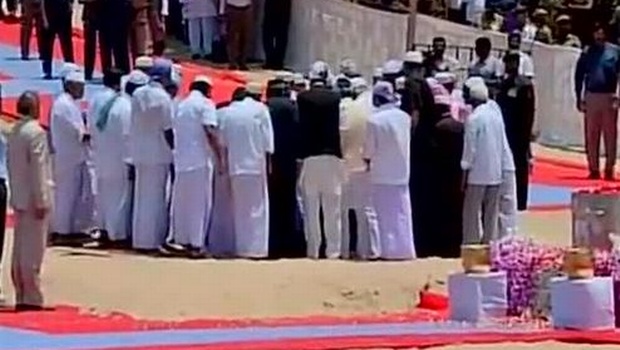
Former president A.P.J. Abdul Kalam was laid to rest on Thursday here with full military honours in the presence of Prime Minister Narendra Modi and several other leaders.

The People’s President’s body, draped in the Indian tricolour was brought to the burial site at Pei Karumbu in a flower-bedecked gun carriage, escorted by columns of the three armed services.

A gun salute was accorded to the former supreme commander of the armed forces and a military band played the haunting Last Post.

Modi, who arrived here on Thursday morning, paid his last respects to the country’s youth icon and most popular president by laying a wreath.

Tamil Nadu Governor K. Rosaiah, union Ministers M. Venkaiah Naidu, Manohar Parrikar and Pon Radhakrishnan, Tamil Nadu ministers like O.Panneerselvam, Natham R. Viswanathan and others also paid their last respects to Kalam.

Kerala Governor P. Sathasivam, Kerala Chief Minister Oommen Chandy were also present, as was Andhra Pradesh Chief Minister N. Chandrababu Naidu.

Congress vice president Rahul Gandhi and other party leaders also paid their last respects to Kalam – also known as India’s Missile Man.

Earlier the mortal remains of Kalam were taken to the family mosque for prayers.

His family members also reached here.

“All our relatives have also arrived to attend the last rites,” A.P.J.M.K. Sheik Saleem, the former president’s brother’s grandson, told IANS.

The Tamil Nadu government declared a public holiday on Thursday under the Negotiable Instruments Act. Banks, insurance companies, schools and colleges are closed throughout the state.

The government has also ordered closure of liquor shops and bars throughout the state.

Around 30,000 jewellery shops would also remain closed, while petrol bunks stopped sales for an hour between 10-11 a.m. as a mark of respect for Kalam.

Movie-theatre owners too have decided to shut down for the day while fishermen have decided not to venture into the sea.

Political parties like the DMK and the AIADMK have cancelled their functions.

Interestingly, the decision of private sector organisations to voluntarily shut shows that Kalam was truly a People’s President.

Born in Rameswaram on October 15, 1931, Kalam, as a boy, hawked newspapers to supplement his family’s income. His father owned a boat and his mother constantly struggled to keep the family sufficiently fed and clothed.

His sister pawned jewellery with a moneylender so that the studious Kalam could carry Rs.600 when he left Rameswaram to join the Madras Institute of Technology.

source: http://www.newindianexpress.com / The New Indian Express / Home> States> Tamil Nadu / by  IANS / July 30th, 2015

Rabia will not serve tea any more

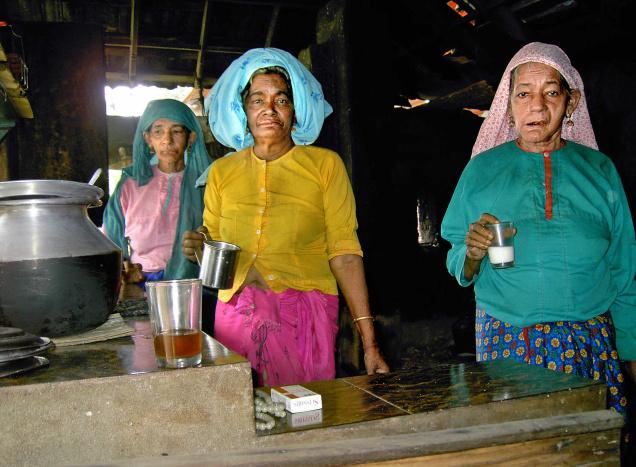
Rabia (middle) at her Makani at Panangangara along with her sisters.

The rustic hands which served thousands of people with tasty ethnic tea at a village makani at Panangangara near Perinthalmanna have stopped moving. Rabia, 70, will not serve any moretea either for the local people or the passersby.

Rabia passed away on Saturday, leaving behind a legacy of serving people with tea for over half a century. In fact, she served tea for generations.

The tea shop she managed on the veranda of her house on the Palakkad-Kozhikode highway at Panangangara had long become a talk of the village largely because of the unique taste of the tea she mixedand her simple behaviour. She was helped by her sisters Fatimakutty and Sulaikha.

Many a traveller, including foreigners, has had the taste of Rabia’s tea. Started 60 years ago by her late father T.K. Saithali, Rabia and her sisters insisted on carrying forward the Makani tradition that existed in Malabar. Although Makani does not mean anything more than a shop, the very mention of it in the villages of Malappuram brings memories of ethnic culture, language and food.

source: http://www.thehindu.com / The Hindu / Home> National> Kerala / by Abdul Latheef Naha / Malappuram – July 26th, 2015

To see notes from Mughal era, head to Rampur Raza Library

Rampur :

The Rampur Raza Library is renowned globally for its collection of ancient manuscripts from South Asia. The library has now organised an exhibition of Qurans, inviting scholars to view ancient manuscripts of the holy Quran in the month of Ramzan.

Some of the manuscripts on display are among the oldest pieces of Arabic calligraphy. A 7th century Quran written on parchment in the early Kufic script, attributed to Hazrat Ali (d. AD 661) is on display. Viewers are lining up to see this rare manuscript.

An 8th century manuscript of the Quran is attributed to Imam Jafar Sadiq, whose unique penmanship is widely appreciated.

A 9th century script is attributed to Imam Abul Hasan Musa, who served as prime minister to three caliphs of Baghdad. He died on July 20, 941 AD. His Quran is in the early Naskh style, popular in the 10th century. This form of calligraphy continues to be in vogue, with some changes.

Maulana Mohammad Irshad Nadvi, who is coordinating the exhibition, said, “The library also has a copy of a Quran written by master calligrapher of the 13th century Baghdad, Yaqut-al Musta Simi. It is decorated in gold and precious lapis lazuli.”

Nadvi said another masterpiece of Arabic manuscript by this calligrapher, titled Diwan-al-Hadira and dating to 1221 AD is part of the royal library of Sultan Ibrahim Adil Shah of Bijapur.

The exhibition also displays calligraphy in Arabic that created its own pseudo-geography, with exquisite and richly illustrated figures of human beings, animals and birds. Some of this came from the pen of 13th century calligrapher Zakaria bin Mahmud al-Qazvini.

Among the assets of the library on display is the Arabic manuscript Sharhal-Kafia of Razi. It bears marginal notes by Nawab Sadullah Khan, prime minister of Mughal emperor Shah Jahan. Among the many seals on this manuscript is one of emperor Aurangzeb.

Jacob Thorek Jensen, who is visiting the exhibition from Denmark and serves as advisor to a Danish culture agency, said, “This is a brilliant show of the elaborate calligraphy of writers of the Quran.”

Library spokesman Himanshu Singh said visitors to the library and the exhibition come from different faiths.

source: http://www.timesofindia.indiatimes.com / The Times of India / Home> City> Bareilly / by Nazar Abbas, TNN / July 16th, 2015