Category Archives: Community Involvement / Social Issues

‘I was with him for 26 years’

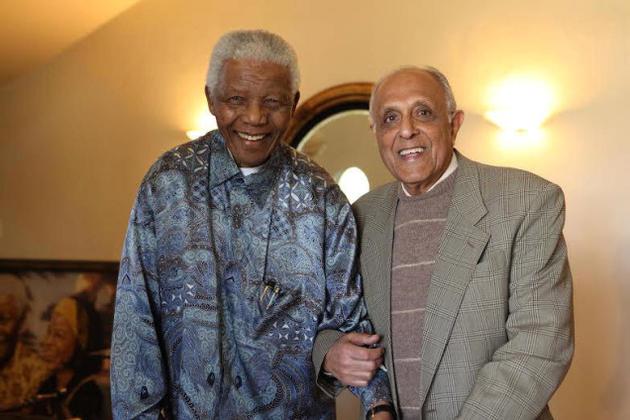
Special Camaraderie: “Throughout, Mandela retained hope, confident that sooner or later, the battle for equality would will be won.” Picture shows Nelson Mandela and Ahmed Kathrada. / by Special Arrangement / The Hindu

Ahmed Kathrada, who was on Robben Island with Nelson Mandela, recalls his famous co-prisoner’s eternal optimism.

As the world celebrated Nelson Mandela International Day on July 18 — Mandela’s birth anniversary — the air of mystery surrounding his long years of imprisonment is slowly being lifted. Mandela once called his time in prison “a long holiday”, a picture belying a life of denial and discrimination. For 10 years, Mandela was denied bread, his food was rationed, and he had to wear a humiliating uniform. Yet, according to new accounts of his time at Robben Island, where he spent 18 years in detention, Mandela was a picture of positivity.

Ahmed Kathrada was his fellow prisoner for 26 years. Prisoners with brown skin, many of whom were of Indian descent, were given preferential treatment over black prisoners. For instance, they wore trousers, while Mandela was only permitted to wear shorts. Yet, there was a sense of common cause and camaraderie. Mr. Kathrada and other prisoners would happily share their bread with Mandela and rejoiced when, three years into detention, Mandela was allowed to wear trousers. Throughout, Mandela retained hope, confident that sooner or later the battle for equality would be won.

These and other moments of joy and companionship were shared by Mr. Kathrada in a telephonic conversation with The Hindu. Mr. Kathrada also spoke of his latest book Triumph of the Human Spirit, in which he has written about his 300 visits to Robben Island as a tour guide since his release in 1990.

He is also updating his book No Bread for Nelson Mandela. “I am writing about our prison days. I was there for 26 years, Mandela for 27. I know him from 1962,” he says.

Mr. Kathrada, whose ancestors hailed from Surat, says Mandela’s personality came to the fore when hostilities were at their peak. “Mandela remained optimistic all along. When the Defiance Campaign and other movements of boycott were launched, it was with the sense that they would be successful. One does not expect immediate results. Success takes time. As an Indian you would know freedom cannot be attained in a matter of a year or two. We took heart and inspiration from the Indian struggle,” he says. “We understood that the protest had to be continuous. In South Africa, the Defiance Campaign helped in rousing public opinion. For instance, before the campaign, African National Congress had 5,000 members but following the campaign the numbers rose to over 1,00,000 members.”

___________________________________________________________________

“Prisoners with brown skin, many of whom were of Indian descent, were given preferential treatment over black prisoners.” 

___________________________________________________________________

Mr. Kathrada and others were arrested in July 1963 in Rivonia, Johannesburg, after which the famous Rivonia Trial began in October that year. The accused were charged with sabotage and attempts to overthrow the government by violent means. The trial ended a year later, after which Mr. Kathrada was sentenced to life imprisonment along with Mandela, Walter Sisulu, Govan Mbeki, Andrew Mlangeni, Billy Nair and others.

“For 26 years, eight of us of were together. We were sentenced to life imprisonment. When we reached the prison, Mandela was already there. As we interacted, I realised that he was a natural leader of leaders. He had already emerged as a force to reckon with in the early 60s,” he says. In the Defiance Campaign, whose aim was to get rid of six unjust laws, Mandela was the chief leader, Mr. Kathrada explains. “Thousands of volunteers were taken prisoners. It made no difference to the Apartheid government. In a prison trial, most were found not guilty. The case went to the Supreme Court. Mandela went underground and continued his political work. He was arrested in 1962 on a tour of African countries and England for mobilising support for our struggle. He continued his work underground for a year, got solidarity and financial support in England.”

Mr. Kathrada reveals that when all the important leaders were in jail in South Africa, the African National Congress policy was to continue the struggle with the support of the world, especially India and other countries. “The aim was to force the government to come to the negotiating table. Mandela started talking to the government from prison. One of his demands was to release all political prisoners, legalise the urban spots, and allow exiles to come back. The government acceded to all the requests. The ANC was allowed to function. It was in the 60s and was a big moment for us back then.”

Looking to India

Mandela and other leaders drew inspiration from India’s non-violent path to freedom, he says. “The enemy does not concede anything in a hurry. Our struggle took a long time. Contrary to what many people believed, we had a peaceful transition from apartheid to democracy.”

Mr. Kathrada left school when he was 17 to join the Transvaal Passive Resistance Council to work against the Asiatic Land Tenure and Indian Representation Act, which was popularly called the Ghetto Act. The Act, like many piecemeal concessions given by the British to Indians during the freedom movement, sought to give Indians limited political representation and defined the areas where Indians could live, trade, and own land. It was during the phase of increasing association between the African Congress and the Indian Congress that Mandela became close to Indian leaders.

Mr. Kathrada is hopeful that the path shown by Mandela is the one that South Africa will follow in the years to come. “We are only 20 years old as a democracy, but we have made considerable progress. Most of the children are now in schools; clinics and hospitals have been established. Electricity and sanitation have reached a majority of the population. Yes, challenges remain: we have hunger and poverty. But at the level of ideology, yes, it has percolated down to everybody.”

ziya.salam@thehindu.co.in

source: http://www.thehindu.com / The Hindu / Home> Opinion> Comment / by Zia Us Salam / July 21st, 2015
All India Milli Council President call for peaceful celebration of Ramzan

Moon Committee to meet today evening

MilliCouncilMPOs23jul2015

Mysuru :

The President of All India Milli Council Mysuru, Hazarath Moulana Mohammed Zakaulla Siddiqi has urged the Muslim brethren to celebrate Ramzan peacefully.

Hazarath Moulana Mohammed Zakaulla Siddiqi speaking to SOM said that during the holy month, Muslim brethren fast and offer prayers for peace and well being of everyone and added that donation of 2.5 percent of the total earnings in a year is given to the poor and urged the Muslim brethren to donate 2 kg wheat or its cost to the poor before offering prayers at the Eidgha Maidan on the day of Ramzan.

In his message, Hazarath Moulana Mohammed Zakaulla Siddiqi urged the Muslim brethren to live as per the Shariath of the Prophet, live peacefully, spread the message of peace and harmony and walk in the way which the Holy Quran has showed.

Moon Committee to meet today : Meanwhile, a meeting of the Mysore District Hilal (Moon) Committee, has been convened at the office of the District Waqf Advisory Committee, Muslim Boys’ Orphanage Campus, New Sayyaji Rao Road, Mysuru, today, after Namaz-E-Maghrib at 7pm to sight the Eidul Fitar (Ramzan Festival) Moon and to declare the celebration of Eid. The Public is requested to contact the Hilal Committee personally or the telephone numbers mentioned below to inform the sighting of moon to the Committee with sufficient witnesses or to get the information regarding sighting of Moon according to the press release from Ariff A. Mehkri, Chairman, Mysore District Wakf Advisory Committee who is also the Convenor of the Mysore District Hilal (Moon) Committee.

For details contact Ph: 0821-2423520, Mob: 94498-18786, 98869-69882.

source: http://www.starofmysore.com / Star of Mysore / Home> General News /  Friday – July 17th, 2015

Gulbarga’s KBN Engineering College Alumni hosts Iftar program

GulbargaMPOs16jul2015

Jeddah :

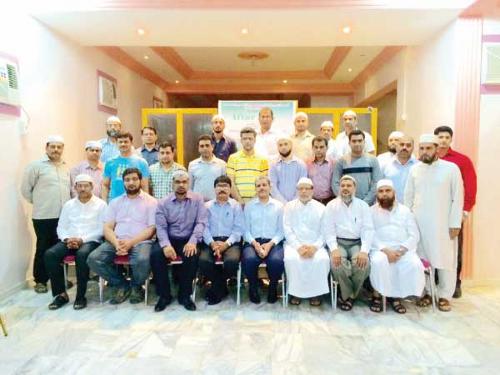
KBN Engineering College Gulbarga Alumni hosted an iftar program at a local restaurant here.

Syed Mohiuddin, general secretary of the alumni, welcomed all the members and guests and also highlighted the aims and objectives of the alumni.

President of Alumni Syed Nasir Khursheed while addressing the audience explained the system of functioning of the alumni and the achievements of the group. He mentioned the course conducted by alumni, Primavera P6 and lecture on QA/ QC which was very useful for members.

Treasurer of the forum, Saleh Bin Ali appealed to the members to come forward and strengthen the alumni as this is a platform of technocrats who have the opportunity to help other fellow engineers for upgradation and getting jobs.

Ahmed Ali Soofi, senior member of the alumni, appreciated the tasks carried out by the executive committee and advised other members to help the executive committee in working more effectively.

PR coordinator of the alumni Ismail Zubair said it is the responsibility of all the members to be connected with the alumni and play a vital role by providing services in line with their capabilities.

Joint coordinator Imdad Ali introduced the new members, while the vote of thanks wa delivered by chief coordinator Mohammed Yahiya. — SG

source: http://www.saudigazette.com.sa / Saudi Gazette / Home> Kingdom / Jeddah – Wednesday – July 15th, 2015

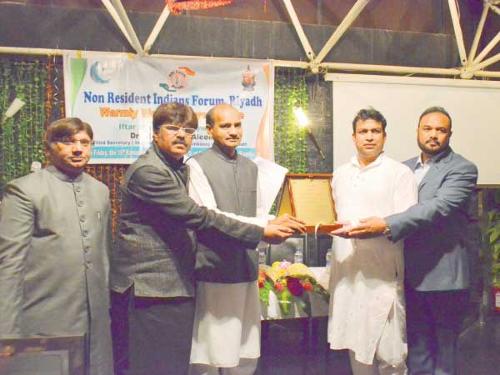
NRIF Riyadh bids farewell to Dr. Aleem

DrAleemMPos16jul2015

Riyadh :

Dr. Mohammed Aleem, third Secretary, Information and Labor, Embassy of India here said that many Indian expatriates still needs to correct their legal status in the Kingdom and many of them are seeking the help of embassy to correct their status.

Officials are trying to solve these new cases visiting the embassy almost every day for rectification. He appealed the Indian expatriates to help the fellow countrymen by properly guiding them.

Dr. Aleem who completed his tenure in Riyadh has been transferred to Qatar and will be leaving soon. Non-resident Indians Forum, Riyadh (NRIF) organized an Iftar in his honor at a local restaurant here.

Aleem thanked the NRIF members for organizing the impressive farewell function. Dr. Hifzur Rahman, second secretary at the Embassy here, was the chief guest.

The NRIF, formed recently, organized its first function inviting more than 150 Indians for Iftar. NRIF President Syed Akram Mohiuddin said in his welcome address that there are many issues which are not being dealt by other associations and we will try our best to sort out these issues pertaining fellow Indians.

Akram appreciated Dr. Aleem for is relentless efforts and services for the Indian community in Saudi Arabia.

Dr. Sayeed Mohiuddin, vice president education,  highlighted the aims and objectives of the organization and said this organization will work in a true democratic way and the office bearers will be elected every year. Sayeed outlined the coming events of NRIF, which includes a cricket match between Riyadh and Jeddah, The Third Youm Al Watani Cup Cricket Tournament, and many other events.

The event started by the recitation from the verses of Holy Qur’an by Hafiz Zakir Hussain.

The following team has been elected: Syed Akram Mohiuddin – president; Syed Aftab Ali Nizami – vice president (cultural affairs); Dr. Sayeed Mohiuddin – vice president (education); Dr. Abdul Sattar Gayas – vice president (health and sports) and Abdus Subhan – vice president (administration), Javed Ali – general secretary; Abdul Majeed – joint secretary and Mohammed Kaleem – treasurer.

Its core committee members include Dr. Anwar Khursheed, Ghulam Mohammed Jaweed, Mohammed Salahuddin, Shakeel Mah, Nooruddin Jahangeer, Mir Hussain Ali Khan and Taquiuddin Mir. Javed Ali, general secretary, conducted the proceedings and Taqiuddin Mir proposed vote of thanks.

source: http://www.saudigazette.com.sa / Saudi Gazette / Home> Kingdom / by Mir Mohsin Ali / Tuesday – July 14th, 2015

Fake or real? A royal riddle

A mighty fracas is raging between the descendants of Nawab Wajid Ali Shah in Calcutta and an Iranian woman who claims to be married to a scion of the Awadhi family. Hemchhaya De investigates the rumpus

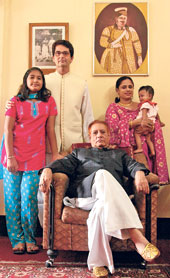
REGAL ROOTS: Shahebzade Wasif Mirza and his family pose before the portrait of Nawab Wajid Ali Shah;

A king-size portrait of Nawab Wajid Ali Shah will catch your eye the moment you step into the grand, old living room of Wasif Manzil on Talbagan Lane in Calcutta. “That’s my ancestor,” says Shahebzade Wasif Mirza, a dignified septuagenarian, pointing at the portrait — the pièce de resistance in a room bristling with Awadhi heirlooms.

“Satyajit Ray once asked me, ‘Why did the Nawab choose to move to Bengal after his kingdom was annexed?’ At that time, he had just made a film calledShatranj Ke Khiladi,” recalls the patriarch, a registered descendant of Wajid Ali Shah (1822-1887). “I told Ray that perhaps the Nawab felt he would get the respect he deserved only in Bengal.”

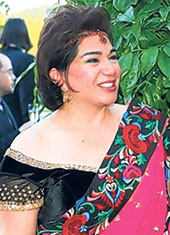
For Shahebzade Mirza, it’s a matter of family honour that he takes on what he calls “pretenders” to the Awadh legacy. In recent months, he has been fighting a fierce battle against Fay Ary, an Iranian woman who divides her time between Monaco, Paris and Dubai, and claims to have married a direct descendant of Nawab Wajid Ali Shah and his second wife Ronakara Begum.

Fay Ary
Fay Ary

But she refuses to disclose her late husband’s name for “fear of being drawn into family feuds.” Ary also wishes to do something for the underprivileged in India through her charity organisation, Royal Awadh Cultural and Heritage Foundation (RACH).

“All this sounds very nice. But she calls herself Her Royal Highness Princess Jehan Ara Fay Ary. I have the complete family tree and she figures nowhere. I’d like to know where her imaginary kingdom is located,” says Mirza. In a recent letter to the French ambassador to India, Jerome Bonnafont, he complained against Ary and RACH. “Our objection is to the use of our family’s name …for large monetary gains,” wrote Mirza.

Fay held a charity auction in Paris this May where her “personal collection of jewellery” went under the hammer. “We don’t know what she auctioned as her Awadhi legacy. And we don’t know where the proceeds are going,” says Ibrahim Ali Khan, a descendant of a 19th century Awadhi vizier, who heads the Royal Family of Awadh Foundation in Lucknow.

It all began a couple of years ago when Nawab Jafar Mir Abdullah — who reportedly claimed to be the Awadh rulers’ “direct descendant” — came under media glare. Abdullah, who’s on the RACH advisory committee, was accused of faking his nawabiheritage and arranging Awadhi banquets for foreign tourists in collusion with “unscrupulous” travel operators in Lucknow. It was also alleged that he charged tourists hundreds of dollars for banquets and mujras (dances) at his Lucknow home. His partner in this enterprise is said to be Prateek Hira, who heads a tour operating agency called Tornos India and is also associated with RACH.

Hira maintains that Khan and others have launched a malicious campaign to defame Ary, Abdullah and his agency. “Abdullah is well respected in Lucknow,” says Hira.

_________________________________________________________________

Dramatis personae
■ Shahebzade Wasif Mirza, descendant of Nawab Wajid Ali Shah (1822-1887) of Awadh (Oudh).

■ Fay Ary, an Iranian who claims to have married a direct descendant of Wajid Ali Shah and his second wife Ronakara Begum. Ary runs a charity, Royal Awadh Cultural and Heritage Foundation (RACH).

■ Ibrahim Ali Khan, a descendant of a 19th century Awadhi vizier, who heads the Awadh Royal Family Foundation in Lucknow. Does not support Ary.

■ Jafar Mir Abdullah, who is described as Wajid Ali Shah’s direct descendant and is on the RACH advisory committee.

■ Prateek Hira, who heads a tour operating agency called Tornos India and is associated with RACH.

____________________________________________________________

Fay Ary gained some publicity in Lucknow around this time after announcing her charity projects. “She wants to do something for the poor — like arranging cleanliness drives in various Indian cities and providing slum dwellers with clean drinking water. She sought my help to implement the projects,” says Hira.

Ibrahim Ali Khan and others tried to blow the lid off what they called a “nexus” between Abdullah, Hira and Ary last year. “The issue was almost dying down when a freelance journalist from Delhi wrote to Hira and threatened action against his activities. He wrote to me as well,” says Khan.

Fay didn’t take it lying down. In an email dated June 29 this year, she wrote to her friends in Lucknow, Dubai and Paris, “A very nasty activity is being undertaken …(by a journalist)… for want of some money to sustain himself …ignore this man who keeps changing his name to fool people.”

Speaking from Paris, Ary expresses her “anguish and disappointment” over the “concerted efforts to pull down RACH.” “I claim nothing from the Indian government or from the Awadh families. I auctioned my own jewellery in Paris. I am hankering after no title. All I wanted to say to these people was that I had the resources to do some good work in India,” says Ary.

She wants to start her “slum cleanliness drive projects” in early October. She will also host a gala event in Dubai this November to seek support for her charity work. “People who claim to be true nawabs in India should stop bickering and do something for their country.

There seems to be another point of clash between Ary and Shahebzade Mirza. Ary told the media last year that she would renovate Nawab Wajid Ali Shah’s mother’s grave in the Père Lachaise cemetery in Paris. The Nawab’s mother, Aliya Begum, went to England to plead with Queen Victoria for returning Awadh to her son. On her way back, she fell ill and died in Paris in 1856 and was buried in Père Lachaise. Ary wants to project her grave as a site of historical significance.

The Shahebzade Mirza family, on the other hand, wants to rectify an inscription near the grave which says that her son Wajid Ali Shah was killed by British forces in 1856. “The Nawab died of natural causes in 1887. We have written to the French consulate in Calcutta to do something about it,” says Mirza. A spokesperson from the French consulate, who prefers not to be identified, confirmed receiving the letter.

“I accompanied Fay to the Paris cemetery this year. She is planning a renovation,” says Abdullah, the controversial ‘nawab’ who refutes all allegations against himself. “She doesn’t lay any claim to the Awadh royalty. She is herself related to Farah Diba Pahalvi, the queen of the last Shah of Iran who ruled till 1979.”

Abdullah also goes on to say that he will go on hosting banquets for tourists in order to interact with people and entertain them. “I tour the world and get invited by top officials. I will also continue to be part of RACH and the commendable work it does,” says Abdullah. “I never claimed to be a descendant of Wajid Ali.”

Agrees Rosie Llewellyn-Jones, a British scholar who’s writing a biography of Wajid Ali Shah. “Abdullah does not really claim descent from Wajid Ali Shah, but from Nawab Mohammed Ali Shah, who ruled Awadh from 1837 to 1842,” she says. She adds that it’s important to remember that “Wajid Ali Shah’s descendants are not the only descendants of the royal family of Awadh.”

“Each Nawab, from the time of Asaf-ud-daula (1775 to 1797), had a number of wives, and inevitably, a large number of children and grandchildren. These people are also descendants of the Awadh royal family. On Wajid Ali Shah’s death he left about 45 sons, and a larger number of daughters, and the descendants of these sons and daughters can obviously claim direct descent from him.” On Ary, she says that unless she is prepared to reveal her husband’s name “we can’t really check out her claim.”

Indian historian Ravi Bhatt, who penned a book called The Life and Times of the Nawabs of Lucknow, begs to differ. “Just as Nagpur is famous for oranges and Benaras for silk, Lucknow is known for its nawabs,” says Bhatt. “Every Tom, Dick or Harry calls himself a nawab these days. But let me tell you there is no descendant of the Awadh royal family in Lucknow now,” says Bhatt.

Meanwhile, Shahebzade Mirza is gearing up for the next round of battle. “We hope the French government will act on our complaint against Ary. The war is far from over.”

source: http://www.telegraphindia.com / The Telegraph, Calcutta,India / Front Page> 7 Days> Story / Sunday – August 23rd, 2009

HISTORY OF FOOD – Arab flavours from 7th century still sparkle in the Muslim cuisine in Malabar

In the northern districts of Kerala, the menu still carries legacies of the merchant traders who visited the region centuries ago.

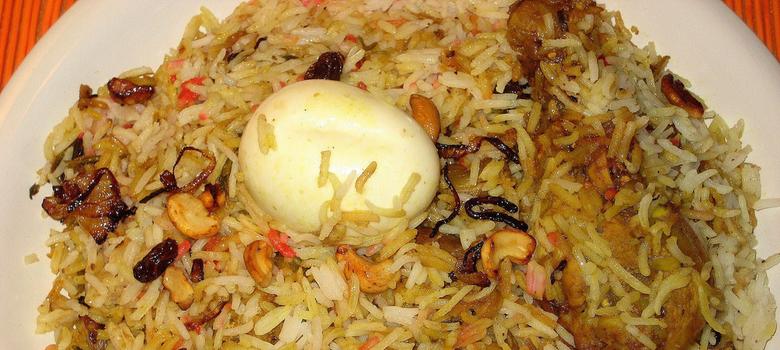
BiriyaniMPOs11jul2015

As lakhs of Muslims break their Ramzan fast with iftaar meals across India, there’s one region where the menu is strikingly distinct from that in the rest of the country. The Muslim community in Malabar, in the northern districts of Kerala, boasts of a unique cuisine that even today shows telltale signs of Arab influence carried across time.

Ask for a Sulaymani in any tea shop in Malabar, stretching from Kozhikode to Kasargod, and you’ll get sweet black tea with lemon. The name is believed to have been lent to this simple drink by the Sulaymani Bohras (Sulaymanis), a Musta’lī Ismaili community from Saudi Arabia and Yemen.

Step into the dining room of any traditional Mappilla (Muslim) home in Malabar at meal times and chances are that you’ll be enticed by the rich and inviting aroma of mandi, a distant cousin of the biryani. Said to be the traditional dish of Hadhramaut and Sana’a areas in Yemen, the mandi among the relatively unknown delicacies found on Malabar dining tables.

A mixture of rice, spices and chicken or lamb, the mandi is made in an oven in the ground tiled with clay bricks. The rice, spices and water are cooked in this oven, while wood coals are placed on top to make sure that steam doesn’t escape. The coal is also used to add the extra smokey flavour to the meat which too is cooked in this oven. Care is taken to use the meat of a young goat, which is tenderer than regular mutton.

“This dish is little known outside Kerala but it is an extraordinarily popular item in Malabar,” said Muhammed Seedi, managing director of the Whitehouse group of restaurants, which has the dish on its menu. “It has to be cooked for at least two and a half hours for the flavours to seep in.”

Mandi is said to be a corruption of the Arabic word “nada”, which means “dew”. The name is an allusion to the tenderness of the meat.

Adapted with local ingredients

“The influence is not just limited to Yemen,” said Ammini Ramachandran, Texas-based author and food writer. “Alissa, a wheat, meat and cinnamon porridge, is similar to harisa, a recipe preserved over centuries by the people of the Middle East. Recipes for this dish are found in 10th century Baghdadi cookbooks Annals of the Caliph’s KitchenSufi Cuisine as well as in the Iraqi cookbookDelights from the Garden of Eden. In medieval Baghdad, it was called ‘hareesi’. Even today, the dish is served in Turkey, [where] it goes by the name ‘herise’, while in Lebanon it’s called ‘ hreessey’.”

She added: “The cuisine was adapted with local ingredients. Take for example ‘ari pathiri’, a thin chapati made out of rice flour. Rice being the staple grain in the region, breads and rotis were alien to the local food habits. The women innovated what they had in hand and made bread with rice powder for their Arabian paramours, who were used to a bread-based diet.”

Even the Malabar biryani, one of the key stars of any iftaar table, has a distinct Arabian touch. The rice and the meat are cooked separately and then layered and cooked. “Biriyani ustads”, who specialise in making this dish, are hired to cook it for weddings, special occasions and iftaars. Other dishes, meanwhile, are rustled up by the “pandaaris”, who hold the position of executive chefs.

“The Mappilas were extremely hospitable people, and would share their food with everyone in the neighbourhood,” said Sumesh Govind, managing director of Kozhikode-based Paragon Group of Hotels. “Subsequently, Malabar biryani became a staple in Hindu Thiyya homes as well, especially in the Thalasserry area. So much so that it’s also called Thalasserry biriyani.”

Malabar or Thalasserry biriyani is served with date pickle, raita and coconut chammanthi (chutney), again a fusion of West Asia and Kerala.

Influenced over the ages

Local produce such as mussels have also found their way onto iftaar tables. Ari kadukka, or rice-coated mussels, are among the favourites.

Another iftaar speciality said to have roots in West Asia is the dessert – muttamala or necklace of eggs. Thin filaments of egg yolk are cooked in sweet sugar syrup served over Pinnanathappam, steam-cooked cardamom-scented egg white pudding.

The influence of the Arabs lingers on in this and many other Malabar Mappila dishes.

Muslims or Mappilas tended to congregate more in the Malabar region because of the patronage from the local leaders. Subsequently, Malabar Mappila culture and cuisine came to have an identity of its own.

“The area we know as Kerala today was trading with merchants from West Asia from pre- Mohammedian times,” noted Dr K Gopalankutty, retired head of the history department at the University of Calicut. “After the Roman Empire collapsed, traders from Assyria, Babylon and Egypt as well as the Phoenicians and Arabs dominated this market, some even eventually mingling and marrying into the local population.”

By the 7th century, Muslim traders visited the southern coast of Malabar and shared their culture as they sold their wares.

Well before Abu Fazl wrote about how dozens of master cooks whipped up delicacies for the imperial Mughal kitchens of Akbar in his Ain-i-Akbari, the south western coast of India was already breaking fasts with culinary delights based on recipes brought across the seas from West Asia.

Over 2,000 years after they sailed to southern India, the legacy of these peaceful traders of West Asia continues to live on in the cuisine of Malabar.

We welcome your comments at letters@scroll.in
source: http://www.scroll.in / Scroll.in / Home> History of Food / by Supriya Unni Nair / Friday – July 10th, 2015

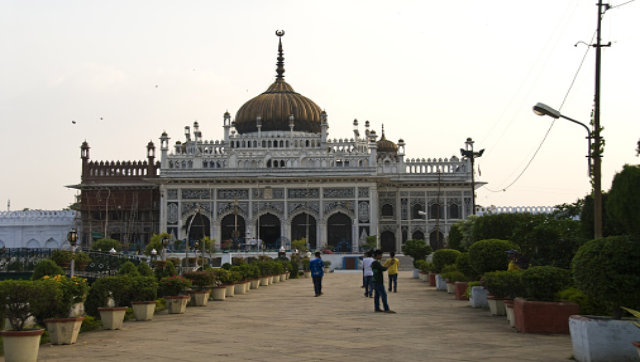
Chhota Imambada conservation work not as per norms: ASI

The Archaeological Survey of India (ASI) on Thursday raised a question mark on the authenticity of the ongoing preservation work being carried out by Hussainabad Allied Trust (HAT) at Chhota Imambada and demanded an immediate halt. (Getty image)

The Archaeological Survey of India (ASI) on Thursday raised a question mark on the authenticity of the ongoing preservation work being carried out by Hussainabad Allied Trust (HAT) at Chhota Imambada and demanded an immediate halt.

The ASI has also objected to the ongoing construction work at the Picture Gallery and has approached its headquarters to intervene. It said construction at the Picture Gallery was sheer violation of the Ancient Monument and Archaeological Sites and Remains (Amendment and Validation) Act 2010 that prohibited any construction within and near the protected monument.

The ASI’s move came after a short survey that it carried out a couple of weeks back to check the authenticity of the ongoing construction work at Chhota Imambada, and architectural marvel built by Nawab Mohammad Ali Shah in 1838.

“The officers were aghast at the way preservation work was being carried out at Chhota Imambada, as it was totally against the norms,” an ASI officer said.

Instead of using mortar, lime and surkhi, the ideal material for preservation work, the officer said the labourers were found using cement. “In those days mortar, lime and surkhi were generally used as binding material for the monuments. But using cement in place amounts to a crime and it will ruin the monument,” the officer who inspected the Imambada said.

He said technically, the same material (as used earlier in the monument) should be used for preservation work. Use of cement would ruin the entire edifice.

The style of preservation was another thing that the officers found highly objectionable and said it was totally against the preservation norms. “Old monuments like Imambada only need to be conserved. But in this case, the labourers were found breaking the plaster and applying a fresh one, using cement,” the officer said.

One had no right to spoil the originality of the structure, the officer said. Be it on the left side of Chhota Imambada or the right side of the main entrance gate, at all the places, the labourers were breaking the original plaster that bore the Quranic verses, calligraphy and aesthetic artwork, he said.  They were re-plastering with the same kind of designs. “This way there will be nothing original left. Besides, they are also minimising the scope for any future restoration work that is not at all possible after using cement,” he added.

The ASI also raised an objection over the illegal construction of toilets at the ASI-protected Picture Gallery. “It was found that the toilets were being constructed at the Picture Gallery. It is a protected monument and any construction is illegal,” said NK Pathak, superintending archaeologist, ASI.

Pathak said in this context, a letter had been written to the district magistrate and also to the ASI headquarters.

source: http://www.hindustantimes.com / Hindustan Times / Home> Cities / by Oliver Fredrick, Hindustan Times, Lucknow / June 13th, 2015

Girl group on mission to revive forgotten art forms

Lucknow :

When engineer Ashrya Srivastava sat talking art with her childhood friend Meenakshi Srivastava, an MA student at Lucknow University’s Arts College, both the 23-year-olds were shocked to find that 63 Indian art forms were on the verge of death. Determined to revive and propagate them, the two roped in friends from different fields. Dr Anitya Srivastava (24), who had just finished her MBBS and commerce graduate Naghma Parveen (21), joined the cause.

The four young girls have now formed a group called ‘San Rachna’ and are organising an Indus Valley inspired ‘galiyara’ (art aisle) on July 8, at Dr Ram Manohar Lohia Park to bring art forms other than just the popular Madhubani to the city’s notice.

“Starting with awareness, we will move on to conservation and lastly the revival of these indigenous art forms, since there are only a handful of people practicing them,” shares Anitya.

“Art forms like Kohvar and Sohrai were practiced by tribes from Chhattisgarh and focused on women issues. They are now almost defunct, since the tribe itself is slipping into extinction. The Basholi and Guler paintings, primarily from the mountains with a hint of Mughal and Rajasthani influence, are also dying. There are scores of such arts that will fade into oblivion, if people are not made aware of their existence and urged to follow them,” she says.

Ashrya recalls, “Two years ago, I was pursuing engineering in Allahabad when a foreigner at the Kumbh Mela asked me where ‘my’ indigenous Indian art form was amid all the western abstract art that had taken centre stage at the mela. He had a point, we had lost track of our cultural heritage.”

The girls have been managing all the funds themselves for the upcoming live demonstration of art and culture under ‘Ek Shaam’.

“We have done it all on our own, from designing the logo to preparing everything. We have put in all our internship stipends for this traditional galiyara setup, which will have painting, pottery, music and dance, all orchestrated by students. It has all been possible under the guidance of senior artist Asha Srivastava,” said Ashrya.

After three months of six hours of intense research daily on the history of art, the girls are now all set to revive indigenous art forms of India.

“As we sat studying our cultural heritage, we came to know why particular colours are used, what season and area they depict, and the various arts forms practiced and styles used, both in art and dress codes. It was all new and interesting information and we wish to bring out from within the yellowing pages of old books,” say the two girls.

source: http://www.timesofindia.indiatimes.com / The Times of India /Home> City> Lucknow / by Yusra Husain, TNN / July 07th, 2015

Encouraging women to become entrepreneurs

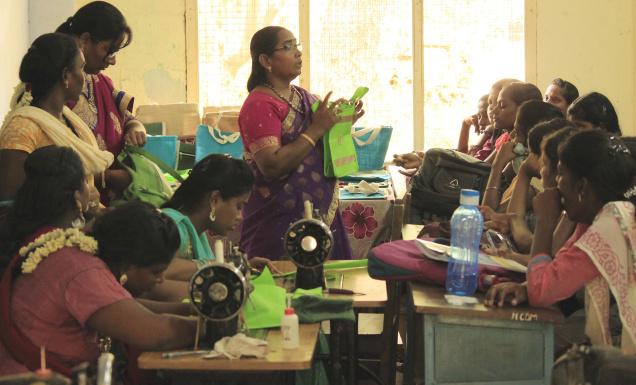
Jute making workshop at Queens Mary's College in the city. Photo: Paul Joshua
Jute making workshop at Queens Mary’s College in the city. Photo: Paul Joshua

Dhanalaxmi teaches jute-bag making and helps student start their own businesses

Over 100 students of Queen Mary’s College learnt the nuances of jute bag-making from Dhanalaxmi, who has been encouraging woman to become entrepreneurs. The owner of IVERS Bags, Dhanalaxmi has been in this business for the past 11years. Five years ago, she started helping others start their own businesses. She has been training self-help groups and NGOs in making and marketing jute bags and jewellery.

“A few years ago, when the IT scene was bad, one couple from the IT industry approached me, asking me to train them in the art. Today, they run a successful jute business,” she said.

In the session conducted at the college, students from corporate secretaryship, sociology, zoology and B.Com departments walked away with certificates presented by Akathar Begum, principal, on successful completion of the workshop.

“These are the bags we have made. Dhanalaxmi ma’am also gave us a kit box with materials to try more designs at home,” said a student showing off a table full of sling bags, pencil pouches and tambulam bags made by her.

Dhanalaxmi is ready to conduct training for groups and individuals . “This is an eco-friendly product and helps reduce the use of plastic. People should make a switch to jute product.”

Dhanalaxmi can be contacted at 92831 35238/98405 33611.

source: http://www.thehindu.com / The Hindu / Home> Features> Downtown / by Flavia Plaidus / Chennai – July 04th, 2015

1st woman to undergo bypass in India enters 40th yr after surgery

Chennai :

On April 23, 1976, when Daisy D’Costa was wheeled into the operation theatre she didn’t know she would be the first woman in the country to undergo a bypass surgery. “No one told me. I just vaguely recall someone in surgical scrubs telling my husband, ‘She will live’,” said the octogenarian, 39 years later.

While Daisy was being prepared for the surgery, the mood in the operation theatre was equally tense as the team was about to wield the scalpel for a procedure they had done just once before. “The facilities back then were nothing like what we have now. We had no cath lab (examination room with diagnostic imaging equipment), no cardiologist or cardio-anesthetist. No one in the team had done a bypass surgery before,” said Dr K M Cherian, the doctor in the surgical scrubs who assured Daisy’s husband.

Daisy had been brought to the Railway Hospital in Perambur the previous evening with total blockage in an artery. “I had skipped going to the cinema with my husband as I was really tired. All of a sudden, I couldn’t breathe normally and I felt a tightness in my chest. My son, who was at home, rushed me to the nearest hospital,” recalled Daisy. “The doctors managed to resuscitate me. In my haze, I heard someone say, ‘We need to cut her open’, and I blacked out again.”

Daisy needed a coronary artery bypass surgery. The procedure entailed restoring the blood flow to the heart muscle by diverting the blood around the blocked section by using a harvested vein from the leg. Although the first such surgery was performed in the US in the 60′s, the concept was new in India. In June 1975, Kajah Mohideen, a 42-year-old engineer from Integral Coach Factory, became the first in the country to undergo the surgery.

“The procedure on Daisy was no different from Kajah’s, but Daisy’s veins in her legs were thinner and harder to reach because of the fat. Besides that, we followed the same process. I still remember every conversation and the mood in the theatre,” says Dr Cherian, who had also operated on Kajah. “We didn’t even have a process of magnifying the blood vessels, which is mandatory now. I used my eyes to find the vessels that are 1.5 to 2mm. I was young back then,” said Dr Cherian, chuckling. The procedure took a little more than three hours.

Daisy woke up to find shutterbugs queuing to interview her. “That’s when I realised I was the first woman,” she said, smiling and showing a sepia-tinted newspaper showing a younger version of her. Although through the years she has had minor chest problems, she didn’t have to go under the scalpel again.

source: http://www.timesofindia.indiatimes.com / The Times of India / Home> City> Chennai / by Ekatha Ann John, TNN / July 09th, 2015