Considered the seat of azadari (practices related to mourning the death of Imam Hussain and his family), Lucknow this year completes 145 years of carrying out the taboot (coffin) of Hazrat Ali on the 21st Ramzan, falling this year on Thursday.
As per Shia belief, Ibne Muljim struck Hazrat Ali with a poisoned sword as the latter was offering morning prayers at a masjid in Iraq on 19th Ramzan. After battling for his life, Hazrat Ali succumbed to injuries on 21st Ramzan.
On this day, Shia Muslims observe martyrdom anniversary of Hazrat Ali (son-in-law of Prophet Mohammad) by holding grand majlis and mourning processions, a tradition started by Syed Hasan Mirza from his house in Moulviganj in 1870 and within a decade, it became so popular organizers had to shift to a spacious place.
The procession now starts from Najaf Rauza (Rustamnagar) and culminates at Karbala Talkatora. By the time the procession reaches Haiderganj it is broad daylight and the coffin is covered with a century-old piece of black cloth brought by Hasan Mirza when he visited Najaf (Iraq). Due to this, it is popularly known as Hasan Mirza taboot. A majlis is also organised where Maulana Meesam Qasim Jerveli recites the Hadees.
General Secretary of the anjuman (committee) that prepares the coffin and fourth generation of Hasan Mirza, Syed Mukhtar Hussain Zaidi, said, “Except for the period from 1978 to 1998, when azadari was stopped in Lucknow, the procession has been taken out every single year.”
source: http://www.timesofindia.indiatimes.com / The Times of India / Home> City> Lucknow / by Uzma Talha, TNN / July 09th, 2015
In Wipro’s annual report for the year ended March 2015, Premji said he has now allocated the equivalent of 39% of the company’s shares to a trust focussed on philanthropic initiatives, mainly primary education.
Bengaluru :
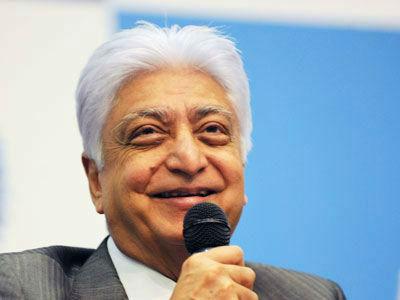
Wipro’s billionaire chairman Azim Premji, the first Indian to sign the Giving Pledge, has set aside more than half of his wealth for charity by allocating an additional 18% stake in the company to fund philanthropy.
Premji, who will turn 70 this month, controls a 73.39% stake in India’s third-largest software company, which is worth about Rs 99,500 crore ($15.7 billion). In Wipro’s annual report for the year ended March 2015, Premji said he has now allocated the equivalent of 39% of the company’s shares to a trust focussed on philanthropic initiatives, mainly primary education. The additional 18% stake forms the latest tranche of shares Premji has allocated for charity.
The Giving Pledge is an effort to invite the world’s wealthiest individuals and families to commit half of their wealth to philanthropic causes and charitable organisations. In his pledge in 2013, Premji said he believes that those who are privileged to have wealth should contribute significantly to try and create a better world for the millions who are far less privileged. “Over the past 15 years, I have tried to put this belief into action through my personal philanthropic work. Over these years, I have irrevocably transferred a significant part of the shareholding in WiproBSE -0.03 %, amounting to 39% of the shares of Wipro, to a trust (of which ownership of 21.14% was transferred and for the balance, the trust is entitled to the beneficial interest of dividends and sale proceeds),” Premji wrote in a letter to shareholders.
People close to Premji said he has been quietly and steadily been transferring wealth to fund philanthropy.
“Apart from the Tata Trust, nothing comes close to the commitment made by him on this front,” said a person who knows him well. “And now, he has two engines to carry on philanthropy—theAzim Premji Foundation, and the newly formed Philanthropic Initiatives formed to making grants to NGOs.”
Last year, Premji hired Amnesty India head G Anantha Padmanabhan to build an organization that will offer grants to external agencies.
“The new initiative of making grants to NGOs has just started under what we call Philanthropic Initiatives. We are continuing to look at various areas, e.g., nutrition, water — the only area that we have decided on is support to NGOs working with the most vulnerable people — eg, street children, urban homeless, teenage girls from disadvantaged communities, women at risk of violence,” said Anurag Behar, CEO of Azim Premji Foundation and vice-chancellor of Azim Premji University.
“The Foundation’s work continues to expand and deepen in helping improve public (government) school education across seven states, which have about 350,000 schools. The university that we run also continues to expand. This year, we have launched a Master’s in public policy and governance and also our undergraduate programme,” Behar added.
Philanthropy has been on the rise among the rich in India as Microsoft cofounder Bill Gates, the world’s richest person, and business magnate Warren Buffet urged the wealthy to give their fortunes to charitable causes.
According to the Hurun Research Institute, at least 50 individuals donated over Rs 10 crore to philanthropic causes in 2014.
Premji, Anil Agarwal, Shiv Nadar and Ratan Tata were the most generous givers in India, according to the Hurun India Philanthropy List 2014.
source: http://www.timesofindia.indiatimes.com / The Times of India / Home> Business> India Business / by Pankaj Mishra, ET Bureau / July 08th, 2015
Pokku Moosa Maraykkar was a prosperous merchant of Poovar who had close links with the royals of erstwhile Travancore.
Pokku Moosa Maraykkar, a Muslim merchant who was instrumental in introducing young Kesava Pillai to Karthika Tirunal Rama Varma, is a name that is seldom remembered in popular history. Kesava Pillai began as an accountant in Pokku Moosa Maraykkar’s warehouse. Later, he became a trusted officer to the royals and rose to the position of Dewan. It is said that Raja Kesavadas, as he was later known, had a special place in his heart for his early mentor’s family.
Although Pokku Moosa Maraykkar’s name is often associated with Raja Kesavadas, it seems that Maraykkar was an important person who had sided with Marthanda Varma during one of the most turbulent phase in the history of erstwhile Travancore.
According to local lore, Pokku Moosa was a member of Valiya Kallaraikkal Veedu, a prominent family of traders who operated from Thengapattanam and Poovar. In 1918 A.D., Amshi K. Raman Pillai wrote about Raja Kesavadas and his association with Kallaraikkal Veedu.
Pillai is of the opinion that Maraykkar was the one who supplied goods to Valiya Kottaram in Thiruvananthapuram, and through this connection the merchant entered into the good books of the royals.
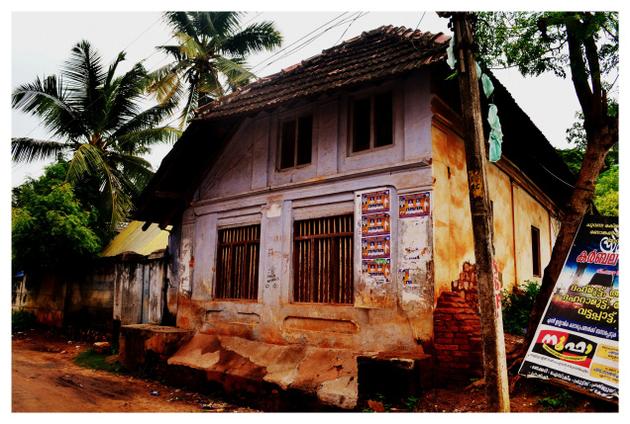
he existing wing of the old Kallaraikkal Veedu in Poovar. / Photo: Sharat Sunder Rajeev / The Hindu
Kallaraikkal Veedu, the ancient house of Pokku Moosa, was a landmark structure in Poovar. This structure has now been replaced by a concrete structure. However, local residents still associate the house with Marthanda Varma. It is said that when Marthanda Varma was hounded by the Ettuvettil Pillamar, he had once sought refuge at the Kallaraikkal Veedu in Poovar. Later, after he vanquished his enemies, Marthanda Varma bestowed the family with honours. The patriarchs of the family were granted the title of ‘Maraykkar’, and thereafter they were considered as nobles in their community.
Kallaraikkal family had a branch in Thengapattanam, where an old well, supposedly dug following the order of Raja Kesavadas, was spotted by Amshi K. Raman Pillai.
The ancient buildings associated with the family, unfortunately, fell prey to modernisation.
In Poovar, a stone’s throw away from the site of the Valiya Kallaraikkal Veedu is located a house of a family member who is struggling to keep up with the changing times.
“This house is more than 150 years old,” says Hassan Kannu who occupies the house. According to Hassan Kannu, in olden days the Kallaraikkal family owned many edifices in the locality and his house is perhaps one of the last to survive.
“This house had seen better days when my ancestors had enjoyed royal patronage,” says Hassan, “I still remember my elder brother’s nikâh, when a horse adorned with silver ornaments was sent from the royal stable to take the groom for the procession,” he adds. This tradition has been recorded by Raman Pillai in an article.
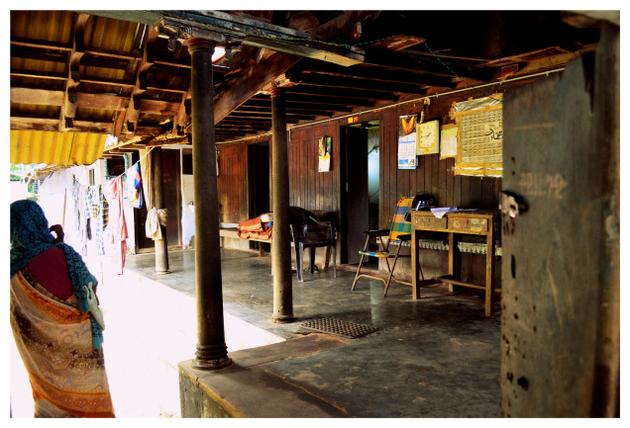
Pillared verandah opening to the inner yard of the existing wing of the old Kallaraikkal Veedu in Poovar./ Photo: Sharat Sunder Rajeev / The Hindu
The old house, Hassan explains, still retains some traces of its glorious past. The main entrance, a thick wooden door, opens to a spacious yard, with wide verandahs on either side. “Only a small fraction of the house still exists, the padippura, the nalakam, the courtyard wing, and other associated structures have been demolished to make way for new constructions,” says Hassan.
“I don’t know for how long I will be able to maintain the house, but I will do my best,” he adds with a smile.
[The author is a conservation architect and history buff]
source: http://www.thehindu.com / The Hindu / Home> Features> MetroPlus> Hidden Histories / by Sharat Sunder Rajeev / Thiruvananthapuram – July 03rd, 2015
It has been 17 years since Vaikom Muhammed Basheer left us. But that wouldn’t serve as a reason not to remember him on his 103rd birth anniversary. The ‘Beypore Sultan’ is indeed always in the minds of Malayalis. And that is precisely why literary figures and critics and even children in schools organize programmes to commemorate him every year, some even visiting his family and home at Beypore.
Basheer was born on January 21, 1908 at Thalayolaparambu in Vaikom. He studied initially in a Malayalam medium school and then went to an English medium school in Vaikom. Attracted to the teachings of Mahatma Gandhi and the Swadesi movement, he left school and joined the freedom struggle when in fifth form. As the princely states of Kochi and Travancore were not much in the freedom movement, Basheer went northwards to Malabar.
In 1930 he went to Kozhikode to take part in the Salt Satyagraha and got arrested along with several others. Basheer was sentenced to three months’ imprisonment at the Kannur jail. He, along with hundreds of other political prisoners, was later released as per the Gandhi-Irwin Pact in 1931.
Soon after his release Basheer again got involved in anti-British struggles and edited a revolutionary journal named ‘Ujjivanam’ (meaning Uprising) for which he was issued an arrest warrant. He soon left Kerala and began his long journey of seven years across the country and abroad.
Basheer wandered doing all sorts of works that helped him keep away from starvation. He worked as a cook, newspaper seller, fruit seller, watchman etc. He even spent a few years at the Himalayas and the Ganges basin with Hindu saints and Sufi mystics.
When he came back to Kerala, he again got involved in political works and got arrested. He was jailed in different places and the stories he heard from the police and fellow prisoners there later appeared in his novels and short stories.
He wrote ‘Premalekhanam’ (Love Letter) from jail in 1943 and published it on release. He wrote ‘Baalyakaalasakhi’ (Childhood Friend) also from jail, but published it only in 1944 after making revisions after his release. The novel is said to be ‘a piece torn from his life’. ‘Mathilukal’ (meaning Walls) is a famous work which tells the story of the love of a male prisoner and a female prisoner who never saw each other as they were on either sides of a wall.
Basheer left active politics after India won freedom. He married Fabi who was much younger to him in his forties. Afterwards, he settled down for a quiet life with his wife and two children Anees and Shahina at Beypore in Kozhikode, though continuing his writings. And the man, born and educated in Vaikom and settled in Beypore, became the ‘Beypore Sultan’. As common with great writers, Basheer too suffered from mental illness and had to undergo treatment in mental hospital twice. He died in Beypore on July 5, 1994.
The writer in Basheer was a strong critic of social customs and practices, as well as superstitions especially in the Muslim community of the time. And he said it all in the down-to-earth style unique to him only, which attracted him to the literary critics as well as the common people alike. Basheer wrote about the social conditions and situations in his own thought-provoking yet humorous style. Highly appreciated is his novel ‘Ntuppooppakkoranaendaarnnu’ (1951) which RE Asher (who translated most of Basheer’s work into English) translated with the title ‘Me Grandad ‘ad an Elephant!’. It deals with the mid 20th century Muslim community in Kerala, such as boasting about the past glory without doing much in the present, through the story of uneducated Kunjippaathumma and poet Nisaar Ahmed. Other notable works are Shabdangal (Voices), Paaththummaayude Aadu (Paathumma’s Goat), Bhaargavi Nilayam, Sthalathe Pradhaana Divyan, Muchcheettukalikkaarante Makal, Aanavaariyum Ponkurishum, Ettukaali Mammoonju etc.
Basheer never differentiated between the written language and the spoken one. He wrote in the language of his characters, who were mostly traditional rural Muslims, and a majority of them were uneducated. Their local dialects and natural style of talking were brought as such into his writings. Basheer gave importance to emotions and telling the story, without considering the grammar and structure of sentence.
Basheer was awarded the Padma Sri in 1982. He got the Kendra Sahitya Academy Fellowship and the Kerala Sahitya Academy Fellowship, besides the Vallathol Award and the Muttathu Varkki Award in 1993, and the Lalithambika Antharjanam Award in 1992.
source: http://www.twocircles.net / TwoCircles.net / Home / by Najiya O, TwoCircles.net / January 21st, 2011
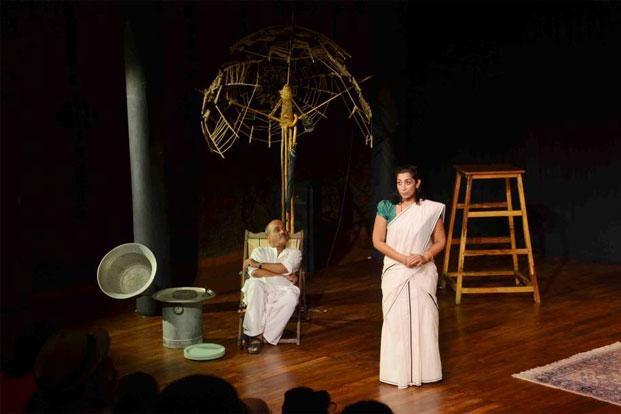
Perch Collective’s ‘Under The Mangosteen Tree’ will now play Vaikom Muhammad Basheer’s favourite music.
An earlier staging of the play, ‘Under The Mangosteen Tree’
Malayalam writer Vaikom Muhammad Basheer was known to be an incredible storyteller. When he settled down to a quiet life at Beypore in Kozhikode, visitors would call on him every day. No one was turned away. They would just move to his favourite spot—the author in his easy chair, under the mangosteen tree in his house, and the expectant audience seated around him, waiting to hear his next story.
This is the 10th year of Chennai-based theatre group Perch Collective’s journey with the late Basheer. They opened with a play in 2004, Moonshine And Skytoffee, which was based on two of Basheer’s love stories. Perch’s play Under The Mangosteen Tree (UTMT), a tribute to the iconic writer, opened in 2008, Basheer’s birth centenary year. It weaves together six of Basheer’s short stories, and includes the character of Basheer as narrator, participant and witness.
Perch’s revised UTMT, which will be staged this weekend, has two-three changes. When it premiered, it had a cast of 11; there are seven now. Plus, the play will feature some of Basheer’s favourite musical compositions in the background—Basheer loved his records, stacked in multicoloured buckets in his house; his gramophone; and his easy chair.
“He created a new idiom in Malayalam writing by breaking away from the Sanskritized version of the language and coming up with a vocabulary that was colloquial and accessible. He invented words like badukoos which could mean anything—an idiot, a fool, or anything that you wish to make of it,” says Rajiv Krishnan, the director of the play.
While most of the play is in English, it contains a smattering of Malayalam to keep the flavour of Basheer’s language. The play, which touches upon different aspects of Basheer’s writing, is largely humorous in tone, tinged with sadness and satire.
Poovan Banana, one of the six stories, tells the story of a man who fancies himself as the local gangster but becomes a pawn in the hands of his wife after marriage. He tries to reassert his independence, in the process creating room for a considerable amount of repartee. Voices, the story of a soldier back from war, launches a philosophical enquiry into how human beings can be capable of such brutality. The World Renowned Nose is a rather contemporary story of the media and political attention showered on a man whose nose starts growing, drooping to his navel. Walls, which was made into a film by Adoor Gopalakrishnan, is said to be based on Basheer’s imprisonment by the British for seditious writing. In the story, the character of Basheer hears the voice of a woman named Narayani across the wall of his prison cell, and builds a relationship with her.
“We did a lot of research when we conducted a festival in Chennai to celebrate Basheer’s centenary in 2008. We spoke to several members of his family and friends. One of them told us that Basheer actually looked for Narayani after he was released but he couldn’t find her. Of course, that could be part myth,” says Krishnan.
Under The Mangosteen Tree will be staged on 25-26 April, 3.30pm and 7.30pm, at Edouard Michelin Auditorium, Alliance Française of Madras, 24, College Road, Nungambakkam. Tickets, Rs.200, available onin.bookmyshow.comand www.eventjini.com. For details, call 9445961425.
source: http://www.livemint.com / LiveMint> Hindustan Times / Home> Leisure / by Karthika Gopalakrishnan / Thursday – April 23rd, 2015
Of 37 Muslims who cleared UPSC, 15 were sponsored by Zakat Foundation of India
Zainab Saeed of West Benga ranked 107 and Afaq Ahmed Giri of Jammu and Kashmir who ranked 457 in UPSC were students of Zakat Foundation
Zainab Saeed of West Bengal has qualified for UPSC on her third attempt, having opted for low-key coaching in the first two years. Those prepared her only for the prelims and the mains, not the crucial interviews. “It was too costly in prominent coaching institutes,” said Zainab, who has cleared the interviews now with a rank of 107 in the final list.
She eventually trained for the interviews free, with the mock interviews sponsored by Zakat Foundation of India. “The facilities of ZFI are a boon for the minority community,” said Zainab, daughter of a businessman. “They have a diverse panel for interviews. It helped me a lot.”
The UPSC results traditionally show a low representation of Muslims, with 37 out of 1,200-odd in this year’s selection list, but among those 37 is a high representation of aspirants sponsored by ZFI. Using zakat, the compulsory alms given by Muslims every year, ZFI has been funding and providing coaching for needy Muslim candidates for eight years. Of the 40-odd it sponsored this year, 26 cleared the UPSC prelims and 15 of them eventually made it to the selection list.
“We always talk about poor representation of the community in the civil services, but hardly 2,000 Muslims appeared in the exam among 11 lakh. When you don’t appear, how will you succeed?” Zafar Mahmood, who founded ZFI in 1997, told The Indian Express. “We talk of poor representation but one needs to prepare students who can crack the examination. It is the toughest examination in the country.”
Mahmood is a former civil servant. He had worked with the Sachar Committee and retired as chief commissioner, income tax, in New Delhi in 2009.
ZFI initially engaged in activities such as running an orphanage and helping the destitute. The coaching programme began in 2007. In eight years, 63 of its students have cleared UPSC including the 15 in the current year. The 63 include seven Christians.
The model ZFI follows is unlike that of organisations that hire teachers for coaching. ZFI allows each student to choose what they feel is the best coaching institute in Delhi. “Most students prefer civil services coaching in Mukherjee Nagar locality. We arrange for hostel accommodation in the same locality and pay the fees. For each student the expenses come to around Rs 1.75 lakh.”
The number of students depends on the zakat received from Muslims. It ranges between around 30 and 55 students and ZFI has to select them through a test for a bunch of applicants. This year 1,150 students took the test before 40-odd were selected. “We are soft towards girls and encourage them,” Mahmood conceded. “However, no seats are reserved for them.”
Afaq Ahmed Giri of Jammu and Kashmir is among those who availed the ZFI facilities. “I had my own arrangements for staying in Delhi and did not take the hostel offered by the organisation. But I took part in a mock interview session and that helped me,” Afaq told The Indian Express.
He had qualified for IRTS last year and was working. That would mean he was not “needy” in the sense of zakat, but the interview sessions were free for him too. This year, he ranked 457 in UPSC.
source: http://www.indianexpress.com / The Indian Express / Home> India> India-Others /by Mohd. Faisal Fareed, Lucknow / July 07th, 2015
Poet-activist Sugatha Kumari planting a sapling during the release of book ‘Basheer Enna Anugraham’ written by K A Beena in Thiruvananthapuram on Sunday | Mithun Vinod
Thiruvananthapuram :
The air of an informal get-together marked the meeting held at Manaveeyam Veedhi on Sunday to commemorate the 21st death anniversary of Vaikkom Muhammaded Basheer. A cloth-bound easy chair and an earthen water jug took centre stage while a ripe bunch of ‘poovanpazham’ and a goat perked up the backdrop. The setting was simple and yet richly evocative of the Basheerian cosmos. Poet Sugatha Kumari summed up the spirit of the event saying that the sapling of Mangosteen planted on the wayside was the most befitting tribute to the author who celebrated the equality of all beings in nature.
The meeting was organised by Thiruvananthapuram Women Writers’ Forum. Sugatha Kumari released the second edition of ‘Basheer Enna Anugraham’, a memoir penned by K A Beena, by handing over a copy to author Susmesh Chandroth. The book describes the author’s association with the iconic literary figure during her student days.
The simple nature of the event was thoughtfully orchestrated as it was in accordance with Basheer’s philosophy, said Geetha Nazeer, convener of the Writers’ Forum. Sugatha Kumari remembered that when she sent out letters to writers in the State asking for their support against the Silent Valley Project in the late 1970s, Basheer was the first to reply. “I had written to every writer in Malayalam asking for them to join in this battle to be lost. Basheer wrote back, saying – ‘I enlist my support for this battle to be lost’. He also pinned a 100 rupee note to the letter which had the value of some thousands back then,” she said.
She referred to the recent exhortation of Pope Francis to ‘feed the hungry’ and said that Basheer’s writings echo the same sentiments. “His heart went out to the hungry and the homeless. Nature was God to him. His boundless optimism and humour derived from the superior awareness of a mystic,” she said.
Susmesh Chandroth, who has coveted attention as an emerging voice among the younger generation of authors, spoke about the influence of Basheer on Malayalam literature. “Basheer’s novel ‘Shabdangal’ is a case study in technique and style. I would prescribe it as a must-do text for every student of literature and aspiring writer,” he said. He added that Basheer is a timeless author and is in the same league as the finest writers in world literature. “Whatever age you are, you will find a Basheer story that you will enjoy. Basheerian texts compliment the insights gained at every stage of life,” he said.
B Lakshmi, daughter of Guptan Nair, shared her thoughts about the book authored by K A Beena. In her valedictory speech, Beena recounted her prolonged correspondence with Basheer and the freedom she enjoyed in his home as a young girl. Shailaja P Ambu presented an impressive stage adaptation of Basheer’s famed short story, ‘Ente uppupak oru ana undarnnu’ under the direction of Sam George.
source: http://www.newindianexpress.com / The New Indian Express / Home> States> Kerala / by Express News Service / July 06th, 2015
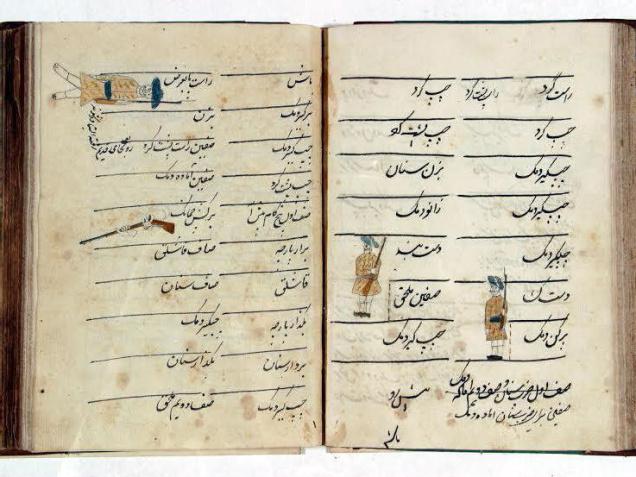
Tipu Sultan’s notebook. / Photo: Shiv Sahay Singh / The Hindu
The lovers of history and connoisseurs of artefacts are up for a treat as the Victoria Memorial Hall is going to display for the first time a notebook belonging to Tipu Sultan, the legendary ruler of Mysore.
The notebook written in Persian (Shikasta) touches on a variety of subjects but is mainly a treatise on the art of artillery. It is divided into eight chapters with introduction dealing with certain tenets of Islam and chapters dedicated to rules for horsemen and piyada (foot soldiers) of his army.
Each page of the notebook consists of nine lines of script. Some pages bear the stamp of the three royal seals while ten sketches explain the use of muskets with details on how to load and hold them.
Sahebzada Ghulam Mohammad, one of Tipu Sultan descendants, had donated the notebook to the trustees of Victoria Memorial in 1904.
“The notebook reflects his keen interest and the first hand information on the use of arms and artillery along with the fact that he was introducing modern equipment in his armoury. In fact Tipu Sultan was one of the few great kings who died fighting,” Gholam Nabi, head of VMH documentation and photography unit told The Hindu.
Mr. Nabi said the King of Mysore who wrote in Kannada, had dictated the contents of the note book to his calligrapher who wrote it in Persian. Historians believe that Tipu Sultan was one of the first kings to have made use of rockets in war as early as 1790s.
“The artefact is going to be part of an exhibition on ‘Life and Times of Tipu Sultan’ which we have been planning for quite some time. The exhibition is likely to be held at the end of this year,” Jayanta Sengupta, the secretary and curator of VMH told The Hindu.
source: http://www.thehindu.com / The Hindu / Home> National> Other States / by Shiv Sahay Singh / Kolkata – July 05th, 2015
The Union Public Service Commission (UPSC) on Saturday declared the results of the Civil Services 2014 examinations. IRA SINGHAL has secured the top position in UPSC civil services examination 2014. RENU RAJ and NIDHI GUPTA came second and third respectively in the examination.
A total of 1236 candidates have been recommended for appointment including 590 General (including 15 Physically challenged candidates), 354 Other Backward Classes (including 05 Physically challenged candidates), 194 Scheduled Castes (including 01 Physically challenged candidate) and 98 Scheduled Tribes candidates.
BeyondHeadlines also tried to collect all Muslim names from the UPSC result 2012 which has come today (4th May 2015).
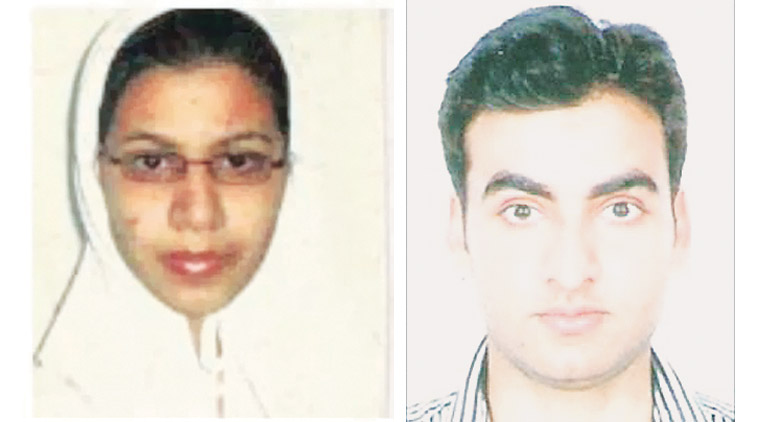
It is pleasing that nearly 37 successful candidates are Muslims and of them in top hundreds are 4 candidates. According to this list of 1236 candidates, 37 are Muslims which means that stands 2.9%. Last year, 31 Muslim candidates were successful in the UPSC examination out of 998 who qualified.
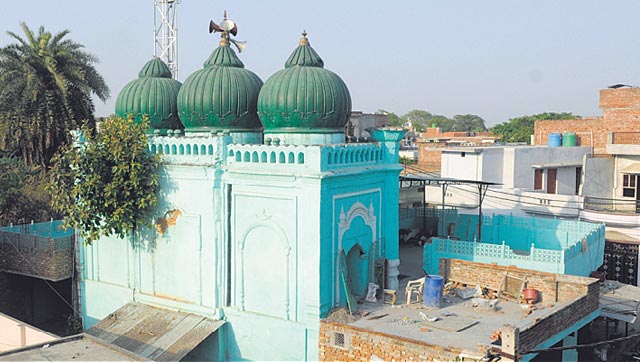
Caretaker of the mosque says there are hardly any believers whose wishes are left unfulfilled (HT Photo)
It’s a warm, musty afternoon on Saturday when an anonymous letter arrives at the Jinnon Wali Masjid. It’s a plea from a dejected farmer, seeking help from ‘jinns’ in finding his lost buffalo and also fulfilling his needs, which include no less than a car, a grand kothi in a plush area and a buffalo herd bigger than any other dairy owner in town.
As the day wears on, more pleas arrive. One is from an Old City resident wanting his lost son back, another in pink paper lists desire for a good bride. The tone and tenor of the letters may leave a first-timer bemused, but for the caretaker of the mosque, situated in Sarfarazganj near Musa Bagh on Hardoi road, it is hardly a matter of surprise.
“It’s the mosque of jinn, another creature by Allah, who lives here and also fulfils wishes of the faithful,” says mutwalli of the mosque, Prince Ali Hussain Mirza alias Nawab Gauhar Agha Saheb Peer Baba.
Peer Baba, caretaker of the mosque for 45 years, says there is hardly any faithful whose wishes are left unfulfilled.
Among the ‘applicants’, Peer Baba mentions the case of a Sitapur-based businessman who made a visit to the mosque last month seeking the jinn’s help in bringing him prosperity and saving him from frequent losses. “The man had suffered losses of Rs 18 lakh and was on the verge of bankruptcy. He pleaded with the jinns and got immediate relief,” Baba shares with HT.
source: http://www.hindustantimes.com / Hindustan Times / Home> Cities / by Oliver Fredrick, Hindustan Times, Lucknow / June 09th, 2015