Category Archives: Community Involvement / Social Issues

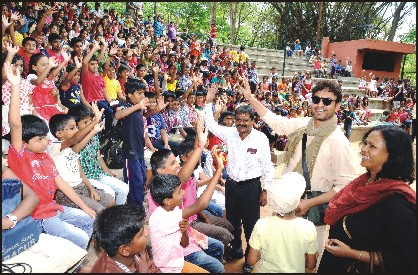
Actor Irrfan Khan kicks of Chinnara Mela

ChinnaraMPOs16apr2015

Mysuru :

The much-awaited Chinnara Mela summer camp organised by Rangayana got off to a colourful start at Vanaranga in Rangayana premises here this morning.

The camp was inaugurated by Bollywood actor Irrfan Khan, who was in city to extend his support to the ongoing Badanavalu Movement.

There was joyous moment at the venue on the arrival of the actor by around 400 children who cheered and shouted with joy on seeing the versatile actor.

Irrfan obliged his young fans by signing autographs and posing for pictures with them. He wished the children best of luck before leaving the premises.

Today being the first day of Chinnara Mela, children were seen arriving at the venue with their parents. They were in total excitement as they had no idea what was in store for them.

Around 400 children will be participating in the camp which concludes on May 4. Children will be treated with fun games and personality development activities. They will be divided into 40 groups headed by a mentor during the camp period.

On the occasion, Rangayana felicitated Irrfan Khan and his wife Sutapa Sikdar. Rangayana Director H. Janardhan, Chinnara Mela Co-ordinator Krishna Prasad and others were present.

source: http://www.starofmysore.com / Star of Mysore / Home> General News / Friday – April 10th, 2015

In the company of writers

NisarAhmedMPOs13apr2015

This photograph was taken in 1984 when the renowned Kannada poet, Prof KS Nisar Ahmed, was the president of  Karnataka Sahitya Academy. A felicitation function had been arranged for Masthi Venkatesha Iyengar, the  Kannada writer who had bagged the prestigious ‘Jnanapeetha Award’ for that year. 

It was a memorable  function in which many prominent writers  had participated. After the function, some of the close friends of Nisar Ahmed, including myself, gathered to congratulate him on arranging the function in a fitting manner. It was then that this photograph was taken.

Nisar Ahmed had started writing poetry in Kannada when he was studying MSc in Geology at the Central College  in the fifties. His poetry had caught the attention of his teacher and Kannada scholar GP Rajarathnam. He happened to read and correct his poetry and got it printed in the magazine of the Kannada Sangha of Central College. Later, poetry became his forte and he brought out one poetry collection after another.

He wrote prose too and translated two of Shakespeare’s plays. But he is recognised as a poet mainly as he has been writing poetry through all the literary movements of Kannada.Though his mother tongue is not Kannada, he has been writing in Kannada only.

Nisar Ahmed had also told the literary critics that he does not need any concession just because his mother tongue is not Kannada. He is also known as ‘Nithyostava Poet because his lyrics appeared in the first cassette of modern Kannada poetry under the same title. Since then, Nisar Ahmed has been a household name as one of the most popular among contemporary Kannada poets.

He was the president of the Karnataka Sahitya Academy between 1984 and 1987 and launched several programmes to take literature to the common people. In order to encourage young writers, many workshops were organised and lectures by eminent writers were arranged. He also organised a literary programme in every district and taluk head quarters and involved the local writers and the people  in creating awareness about the current literary trends. He started the English edition of the Academy’s quarterly journal ‘Aniketana’.

It was devoted to the English translation of Kannada literary pieces. Thus, it enabled the non-Kannada readers also to get an understanding of Kannada literature through translations. I remember that he had organised a seminar as the president of the Academy in Kanakapura of Bangalore Rural District in 1986 on the last quarter century of modern Kannada poetry in which stalwarts of Kannada literary world including Prof M Gopala Krishna Adiga, Prof  LS Seshagiri Rao, Dr Ramachandra Sharma, Dr Kamala Hampana had participated.

In the evening, there was a poets’ meet under the chairmanship of poet Dr Pu Thi Narasimhachar. It is worth mentioning that the seminar was attended by the people of Kanakapura in large numbers and actively participated in the interaction with the speakers of the seminar.

This photograph assumes importance for another reason. Two writers of yesteryears, namely the late Prof VM Inamdar and Prof Venugopala Soraba, are present in it.

source: http://www.deccanherald.com / Deccan Herald / Home> Supplements> MetroLife / by Prof. M S Raghunath / DHNS – April 06th, 2015

Congress leader Ghulam Rasool Kar takes his last breath

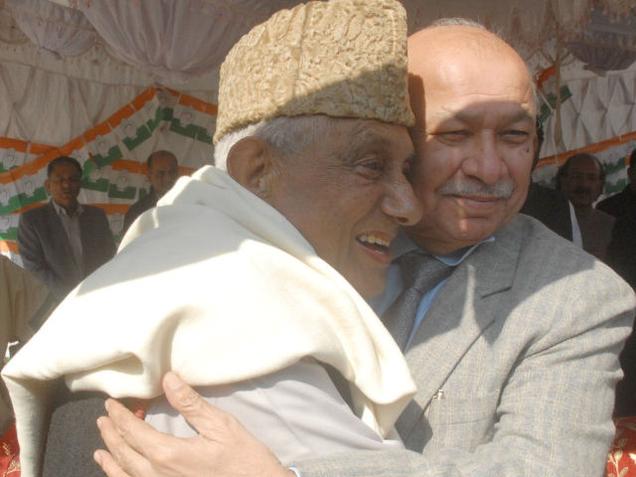
Former union minister Sushil Kumar Shinde (right) with veteran Congress leader Ghulam Rasool Kar at a rally. File photo / The Hindu

Kar became a member of the Jammu and Kashmir Constituent Assembly in 1951.

Veteran Congress leader and former minister Ghulam Rasool Kar, who was a member of the Constituent Assembly in 1951, died here on Friday after brief illness. He was 96.

A noted Parliamentarian, Kar, who hails from Sopore town in North Kashmir, breathed his last at SKIMS Hospital, his family said. He is survived by his second wife, two sons and two daughters.

Kar became a member of the Jammu and Kashmir Constituent Assembly in 1951 and the Jammu and Kashmir Legislative Assembly in 1957.

He served as a minister in the state government from 1965 to 1971 and 1972 to 1975. He was nominated as a member of Rajya Sabha in 1984 and elected to the Lok Sabha from North Kashmir Baramulla constituency in 1996.

He has also served as Jammu and Kashmir Pradesh Congress Committee President.

Senior National Conference leaders Farooq Abdullah and Omar Abdullah expressed grief over the death of the veteran leader.

source: http://www.thehindu.com / The Hindu / Home> News> National> Other States / PTI / Srinagar – April 10th, 2015

Feisty Hashimpura women script their own destiny

HashimpuraMPOs07apr2015

The Hashimpura massacre left a whole group of aggrieved women “victims” of state injustice

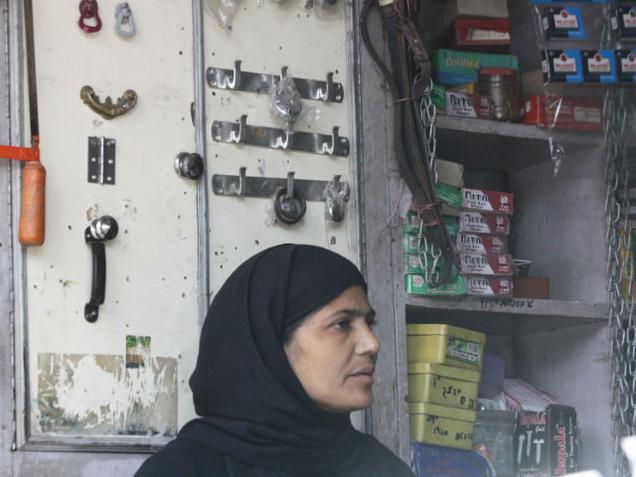
For several years, residents of Meerut found it rather odd to see a Muslim woman in a black scarf running a hardware shop on the Hashimpura main road. Little did they know that it was only the massacre of 1987 that led Anjum, a shy housewife then in her early twenties, to be transformed into a sharp businesswoman who is known in the vicinity as “hardware wali Anjum.”

The 42 who were killed in cold blood by the Provincial Armed Constabulary on May 22, 1987, included Mohammad Jameel, her father-in-law, an employee with the Meerut Municipal Corporation, who was the main breadwinner of the house and his youngest Naseem. Unable to bear the death of his father and younger brother, Mohammad Saleem, her husband committed suicide the same year, leaving her alone to take care of three children.

For Anjum, who was just four years into her marriage then, it was not an easy decision to make. Like any other Muslim woman in Hashimpura she had never stepped out of her in-laws’ house.

“Seeing my husband commit suicide left me broke from within. Finding me without any male in my family, my in-laws attempted to encroach on my husband’s shop and the rest of the property,” says Anjum while dealing with customers in between the conversation.

“But I had to take a decision. And it was not an easy decision to make,” says the woman in her early forties. Her education till graduation from Ismail Girls College in Meerut, came in handy when she had to don the role of a business woman.

Anjum, the owner of “Janta hardware store,” is not alone in this. The Hashimpura massacre left a whole group of aggrieved women “victims” of state injustice but many of them decided to instead become the controllers of their destiny.Women of as many as 42 families who lost their men to the bullets of the PAC decided to defy the stereotypes about Muslim women as docile homemakers and started working to survive. The society where the idea of working woman used to be a social taboo soon witnessed a large number of houses having women in the role of breadwinners and financial guardians. In the process, Hashimpura also became the only area in Meerut with the largest number of working women.

In the immediate aftermath of the massacre the task of running 42 homes was an overpowering challenge before the Committee for Justice for Victims of the Hashimpura Massacre, a group of the survivors and family members of those killed in the massacre.

“It was a big tragedy we were faced with — the fact that 42 families lost their breadwinners. The biggest priority for us was to ensure survival of these families,” says Zulfiqar Nasir who had deceived the bullets of the PAC while remembering how the Army had herded all the “young and productive” men of Hashimpura into the truck on the fateful Friday, May 22, 1987, only to kill 42 of them in cold blood.

Zaibun Nisa, who was one of those women who started working after she lost her husband Iqbal in the massacre, in order to run the family of three, recalls, “So, the Hashimpura Justice Committee decided that women can go out and work. There was resistance from the rest of the Muslim society in Meerut but we didn’t care because we had seen the biggest tragedies of our lives and our priority was to survive.”

Naseem Bano recounts to this correspondent how she was into her early twenties when the deaths of Siraj, then 23 year old, her only brother in the massacre, left her father a “dead man.”

“My father, who used to sell bangles, couldn’t bear the tragedy of seeing his young son getting killed. After his death, I had three young sisters to take care of. I started teaching Urdu in the local senior secondary school,” says Ms. Bano whose husband left her when she started working.

“All of us, the man-cum-women of our respective houses, became in a sense sisters. Seeing so many of our sisters in difficult circumstances also became a source of inspiration and determination that all of us have to work and survive,” she narrates while supervising the construction of her house.

Inspired by the stories of courage and strength of women in Hashimpura, Mohammad Naeem one of the survivors of PAC’s bullets, is hell bent that all of his daughters are not only educated but receive higher education. His eldest daughter Nuris Parveen is doing M. Phil. in Social Work from Mahatma Gandhi Hindi University in Wardha. Seeing his commitment, V.N. Rai, a retired IPS officer and former Vice-Chancellor of the university, had a few years ago, decided to facilitate her education.

source: http://www.thehindu.com / The Hindu / Home> News> National> Other States / by Mohammad Ali / Meerut – April 07th, 2015
Visionaries narrate success stories

Kanpur :

The Entrepreneurship Cell of IIT-Kanpur organised TEDx on Saturday. In this event, seven visionaries and performers from different fields narrated their stories before the audience both from IIT-Kanpur and the city.

The event started with a formal inauguration by IIT-K director Indranil Manna and Prof B V Phani. The first talk was given by Ad-man Abhijit Avasthi, followed by Amit Deshpal, a graduate from IIT-Madras in 2008 and joined the private equity arm of World Bank. Inspired by Tagore’s and Tolstoy’s thoughts on education, he quit his job a year later to start a learning space for children.

He spent nearly three years travelling around the country learning from different places and tried to understand meaning of education beyond formal schooling.

Talks were also delivered by renowned pantomime artist Padma Shri Niranjan Goswami and Anand Patwardhan, a critically acclaimed and socio-political documentary film-maker and activist. Other speakers were Irfan Alam, a social entrepreneur based in Patna working towards organising and empowering rickshaw-pullers through his organisation Sammaan, Aabid Surti, National Award winning author, artist and playwright-turned-environmentalist, Dipendra Manocha, founder of Saksham Trust that works towards developing communication devices for the visually impaired. The organisers of TEDx said that these talks may seed the notion of entrepreneurial zeal in individuals to think differently and act smartly. Many entrepreneurs and well-known people of the city attended the programme.

source: http://www.timesofindia.indiatimes.com / The Times of India / Home> City> Kanpur / TNN / March 29th, 2015

Katheria pushes for Agra’s less known monuments

Agra :

Agra is a home to around 100 centrally protected monuments. Most tourists, however, visit only the Taj Mahal, Agra Fort and the nearby Fathehpur Sikri. Union minister of state in the Human Resources Ministry and Agra MP Ramshankar Katheria has now sought that the Centre take steps to promote Agra’s less popular tourist destinations, so that those arriving in the city are also encouraged to stay longer.

Among the lesser known monuments are the tomb of Mariam-uz-Jamani, Rajput princess who married Mughal emperor Akbar and mother of Jahangir. The structure in which the tomb was laid was built originally by Sikandar Lodi in the late 15th century; the tomb was laid in it by 1623, and a crypt was made below the central compartment by the Mughals, who substantially remodelled the structure.

The Roman Catholic cemetery in the Civil Lines area, considered among the oldest Christian cemeteries in north India, is also a little-visited spot of tourist interest. Many early European adventurers and travellers have been laid to rest here. Many of the gravestones date back to the 17th century.

Chini ka Rauza (chini refers to the colourful tiles; rauza is a funerary monument) is the tomb of Allama Afzal Khan Mullah, who served as prime minister in the court of Shah Jahan. It dates back to the year 1635. The building represents a milestone in Indo-Persian architecture, and is the first building in India to have the glazed tiles that give it its name.

Kanch Mahal at Sikandra, near Akbar’s tomb, was used, some historians say, as a hunting lodge by Jahangir. This monument too is not very well known to visitors to the city.

Just five km from the Taj is Ram Bagh, the oldest of Mughal gardens in India – laid by the founder of the dynasty, Babur. This garden too does not see as many visitors as it might, if it were better promoted.

Mehtab Bagh, an integral part of the gardens around the Taj, also sees few visitors. The Chhatri of Raja Jaswant Singh – which some claim is the only monument built by a Hindu in Agra in the time of Mughal rule – is also a neglected monument.

Katheria pointed out that the website of the Archaeological Survey of India (ASI) does not offer descriptions of the lesser known monuments. Information and photographs of these too should be uploaded, the minister said, in a letter to Union tourism minister Mahesh Sharma.

Sources said Katheria was raising this issue as Mahesh Sharma is set to visit Agra on April 8.

Rajiv Tiwari, president of the Federation of Travel Agencies, said, “Many less known monuments are dilapidated, many have become a den for anti-social activities. Travel agents cannot risk allowing guests to include them in their itinerary.”

source: http://www.timesofindia.indiatimes.com / The Times of India / Home> City> Agra / by Aditya Dev, TNN / April 04th, 2015

Vamanapuram to Harvest Rainwater

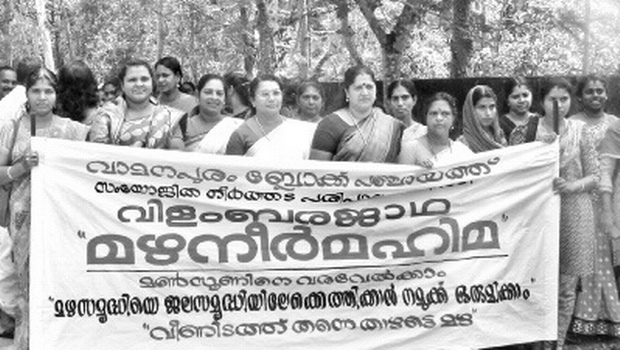
Vamanapuram block panchayat president Baby Sulekha leading members of the Vamanapuram block in a procession kicking off ‘Mazhaneermahima’, a project which aims to carry out rainwater harvesting of pre-monsoon showers

Thiruvananthapuram : 

Can rainwater harvesting of mango showers solve drinking water crisis this summer? The panchayats in Vamanapuram Block are attempting to do it, with ‘Mazhaneermahima’. The slogan of the rainwater harvesting project is ‘Let’s welcome the monsoon by harvesting rainwater.’

On Sunday, the project was kicked off with a ‘Mazhaneermahima Vilambara Yatra’, a procession from Vamanapuram block. ‘Mazhaneermahima’ is implemented as part of the Integrated Watershed Management Programme. The project lasts till May 21. In the first phase of the project, notices spreading awareness on water conservation and rainwater management were distributed in the houses in Nellanadu, Manikkal, Vamanapuram, Pullambara, Pangode and Kallara panchayats.

A group of people will visit 300-odd households in each panchayat to spread awareness.

Sunday’s event was inaugurated by Vamanapuram Block Panchayat president Baby Sulekha. Block secretary Sarina A Rahman, vice-president G Purushottaman Nair and various panchayat presidents in Vamanapuram block were present at ‘Mazhaneermahima Vilambara Yatra’.

source: http://www.newindianexpress.com / The New Indian Express / Home> Cities> Thiruvananthapuram / by Express News Service / April 06th, 2015

On a poet’s land, a skill centre for differently-abled

Pallavaram Municipality to use defunct school building for it

The dilapidated building that once housed the Parali Su. Nellaiyappar Municipal Primary School in Chromepet will soon be developed as an integrated skill development centre for differently-abled and aged persons.

Pallavaram Municipality has allocated Rs. 1 crore from its education fund for the purpose. Announcing this at a recent meeting, municipal chairman, K.M.R. Nissar Ahmed said the centre would impart skills to differently-abled and senior citizens.

The land was donated by freedom fighter-writer-poet, Parali Su. Nellaiyapper, who lived in Chromepet from 1950s till his death in 1971. The philanthropist was awarded 3.16 acres of land by the State Government in 1954 from which he donated about 5000 square feet for starting a primary school in 1968.

After several years of its existence the school lost its sheen and was closed more than a decade ago.

“After several representations, the municipality felt the importance of such a donation and allocated Rs. 1 crore for the development of a training centre. The purpose of donation by the late poet should be preserved and if expedited it will be a boon to the downtrodden,” said PMK councillor J.M. Sekar.

Residents recalled that the school was functioning well, but patronage dwindled after the proliferation of private schools. The municipality decided to close down the school after enrolment dipped, they said. Some years ago when the civic body wanted to use the premises for performing birth control surgeries on community dogs, residents protested, stating that a building in the memory of a freedom fighter should be put to use for better purposes.

source: http://www.thehindu.com / The Hindu / Home> News> Cities> Chennai / by T. Madhavan / Chennai – April 06th, 2015

Azim Premji attends RSS function, creates ripples

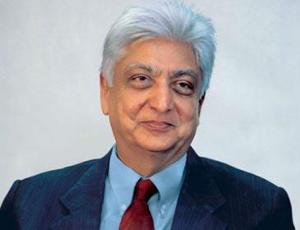
Premji said he was "not a political person" but "deeply interested in and concerned about my country".
Premji said he was “not a political person” but “deeply interested in and concerned about my country”.

New Delhi :

Wipro chairperson Azim Premji on Sunday caused ripples of surprise when he attended Rashtriya Sewa Sangam, a meeting of NGOs organized by the Rashtriya Swayamsevak Sangh (RSS).

Premji was invited by RSS chief Mohan Bhagwat who was present on the dais when the entrepreneur-philanthropist addressed the gathering.

Admitting that “some people expressed apprehension” over his participation at an RSS meet on the ground that it would be “seen as endorsing the ideology of the Sangh”, Premji said that “merely speaking at a particular forum does not in any way mean that one endorses all, or any, of the views that might be expressed at the forum, or which may be held by the organizers”.

Premji said he was “not a political person” but “deeply interested in and concerned about my country”.

Focusing primarily on education as the ultimate game changer, Premji also told the gathering of nearly 500 NGOs – mostly Sangh affiliates – that as a “great pluralistic nation, we must accept our differences”.

“It is vital that we accept them and find a common ground to work together. Negative people only focus on differences. How empowering it would be for us as a nation if we focus on common causes,” Premji said. “If there are differences of views or divergence of ideas, they can only be resolved through discussion and dialogue,” he added.

Detailing the work done by his foundation and university – both named after him – Premji stressed on the need to improve governance, weed out corruption and ensure safety for children, women and disadvantaged sections. Terming government investment in education – 2.8% of GDP – to be “woefully inadequate”, he said it had reached 3.5% in most developing countries and 5%-6% in the developed world. Higher expenditure, he said, needed political will and prioritization.

Premji said based on the experience of his foundation and university, there was a need for government to strongly and visibly reaffirm the importance of quality public education as it was “foundational to democracy and helps beak down social and economic inequalities” so that an equitable society can be built. He also said many excellent policies and intentions of the government were poorly executed on the ground.

The Wipro founder said change in education system was possible only if all stakeholders worked together, especially teachers. He highlighted the critical role of teachers and how they needed to be empowered and given “adequate voice”. Premji suggested reforms in Cluster and Block Resource Centres as well as 600-plus District Institutes of Educational Training.

source: http://www.timesofindia.indiatimes.com / The Times of India / Home> India / by Akshaya Mukul, TNN / April 06th, 2015

Elected to Teachers’ Co-Op. Society

The following persons have been elected as the office-bearers of Mysuru City Primary School Teachers House Building Co-operative Society, Old Kesara, Radhakrishna Nagar, during the election held recently:

Anwar Pasha (President); Lokesh (Vice-President) and Shankarnarayan, Sundar Murthy, Mohan Kumar Chandrashekar, Madegowda, B. Premavathi, Rajmunnisa Begum, Mahadevu & Ramesh (all Directors), according to press release from the Society Secretary N. Diwakar.

source: http://www.starofmysore.com / Star of Mysore / Home> In Brief / Tuesday, March 31st, 2015