Category Archives: Community Involvement / Social Issues

Tale of Fading Glory

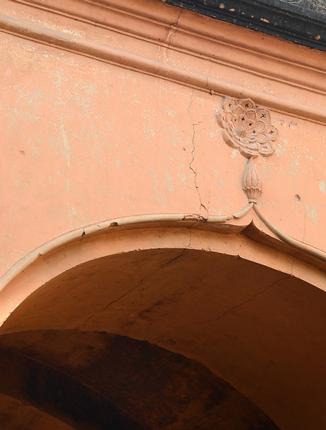
FakhrUlMulkMPOs25nov2014

Hyderabad  :

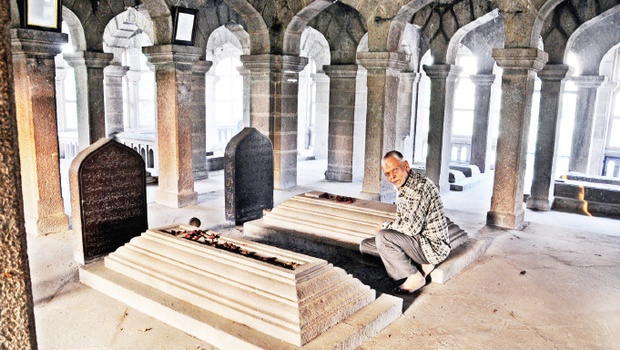
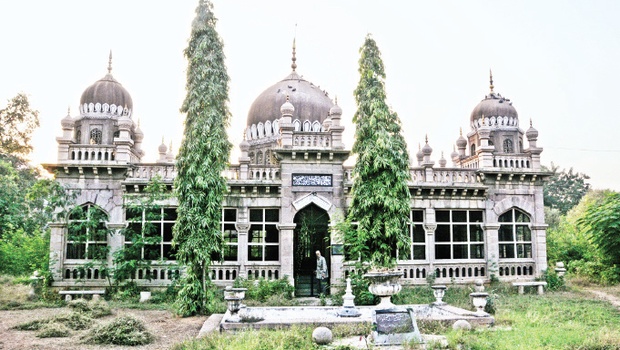
Once a minister in Nizam’s court and a ‘shaukeen-mijaaz’, legend goes that he wore clothes European that were laundered in Paris, ate only European food, threw lavish parties, ‘Umrah-e-Uzaam’ nawab Fakhr-ul-mulk hadn’t wished to live longer to see his small kingdom being swept away by the winds of development, corruption and encroachment. The remnants of the more-than-century-old monument, peeping out from a corner at SR Nagar, tells the story of grandeur and splendour the Nawab was once known for.

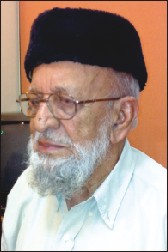
Now a private property, as claimed by the great grandson of the aristocrat, the monument has tombs of Fakhr-ul-mulk, his wife, their five sons and other numerous descendants. “Until 1970, we received jaagir from the government to maintain the tomb. But when it stopped, shops and houses started cropping up on the property,” said Mir Sarfaraz Hussain, the great grand son of the nawab and a retired commissioner of commercial tax.

ZananaMPOs25nov2014

Recently the ‘zannana’ or female entrance of the tomb was obstructed when a mulgi was set up along boundary wall of the structure. “We even approached the GHMC commissoner but nothing has come of it,” rues the Sarfaraz Hussain.

Not just encroachment, but in last 100 years, the industrial development and urbanisation tanned down its shine. The structure has endured traffic pollution for decades. With the metro rail passing through the area, the existential troubles have only increased for the the nawab’s tomb. “When the area fell under HMR plan, they negotiated with the encroachers and paid them. If taken away, we fear the beauty of the tomb be lost as it will be further sandwiched in the dust of developing the transport system,” points out the Mir Amanath Hussain, the great great grand of Fakhr-ul-Mulk and adds that the matter is pending in the court at the moment.

Erected on two acres out of the total four acres and 27 guntas estate, the tomb is a pagan symbol of tomb architecture in Hyderabad. It is also marked as the last major monument to be constructed in the Qutub Shahi revival style of architecture. Constructed with stone, lime stone and sand, it is quite modest but imposing at the same time.

The tomb that was awarded the Intach Heritage award in 2011 for being instrumental in the evolution of tomb architecture in Hyderabad, with its creaking iron gate, wild overgrowth, broken fountain, rumbling pool, unkept pathway — are all the tell-tale signs of sheer negligence. It’s ironic that the sixth generation of the family hardly has any knowledge of their glorious past or of the majestic stone structure in which they are associated with.

“Yearly we spend a lot of money on the upkeeping of the tomb but as you can see its not enough. What’s more is that no one takes interest in the upkeep of the place,” rues Sarfaraz Hussain and adds “when family is apathetic towards our ancestors, there is no surprise if the administration takes no heed of our pleas.” While fighting many legal battles, the retired government employee is also battling his relatives to set up a private committee to look after the upkeep of the structure.

M Vedakumar, a former core committee member of Indian National Trust for Art and Cultural Heritage (INTACH) and the President of Forum for Better Hyderabad opines that retaining the rights of the heritage structure and its precinct by the private parties is justified. “The Government should, however, take into account the condition of the structure and provide assistance for its maintenance,” he said.

He feels that there is a need for a heritage cell to look into all the matter pertaining to the upkeeping of heritage structures. And rightly so, for one doesn’t know how many of the 156 heritage sites will exist for our grandchildren to see.

source: http://www.newindianexpress.com / The New Indian Express / Home> Cities> Hyderabad / by Sadaf Aman / November 25th, 2014

The big fat biryani battle

AlooBiriyaniMPOs23nov2014

The A in the B

Shahanshah Mirza cannot imagine his biryani without the aloo. Fatima Mirza could not imagine her biryani with the aloo. Till the girl from Lucknow was married into the Mirza family of Park Circus. “I remember finding the aloo in the biryani quite funny at first,” says Fatima, who friends insist serves up some of the best biryani in town. And yes, with the aloo.

Why are we so bothered about the biryani being cooked in the Mirza kitchen? Simple, that’s where the great “to aloo or not to aloo” debate was born for the Calcutta biryani.

Yes, Shahanshah Mirza is the great-great-grandson of Wajid Ali Shah, the last nawab of Awadh. Foodlore has it that the nawab came to Calcutta after losing his throne and to cut costs, his cooks replaced the meat with the potato. And, foodlore number two: Wajid Ali Shah’s cooks added the aloo but only after falling on hard times following the death of the nawab. Either way, thus was born the Calcutta biryani the city now gorges on.

The nawab’s family line dismisses all this as, well, lore. “The nawab was a connoisseur of food and had given a free hand to his chefs to experiment with dishes. Once his chefs played around with the biryani and put potatoes in it. The nawab liked it so much that he ordered that the aloo be a constant in the biryani henceforth,” says Shahanshah.

And that is how it is cooked to this day in the Mirza kitchen — and in the kitchens of almost every biryani-serving restaurant around town.

With the royal exception of… Royal Indian Hotel.

What started as a humble rented shop in Chitpur to sell culinary creations by Ahmed Hussain, a migrant from Lucknow, is now a two-storeyed restaurant that seats 65 in its AC hall, 75 in the non-AC hall and 40 in the ground-floor dining hall and “remains full at meal times”.

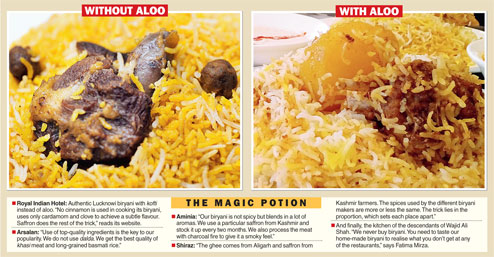
But don’t dare mention the A (aloo) word here. “We only make authentic Lucknowi biryani and our patrons love that. Our biryani does not have aloo, it has kofti (meat balls),” declares Md Irfan, one of the directors of Royal Indian Hotel, stirring up biryani since 1905, the year Lord Curzon divided Bengal.

More than a century on, Calcutta still stands divided. Along the thick potato line when it comes to the biryani.

How tough it is to serve biryani without the potato in a city weaned on that is evident from what Luknow, an Awadhi food restaurant that opened in Park Circus and Ballygunge this year, had to face. With diners insisting that “aloo chhara biryani hoy na (there can be no biryani without aloo)”, Shalini and Vinay Arora, the couple behind Luknow, were in a pickle. The cooks from Lucknow at the helm said: “Awadhi biryani cannot be cooked with potatoes.” But on popular demand aloo was introduced in one of the 11 biryanis on the menu.

No wonder the most popular biryani places in Calcutta just pile on the potato. Arsalan, Shiraz, Aminia, New Aliah — you name it and all of them have it. Aminia of New Market that has been running since August 15, 1947, has three more outlets in Calcutta — at Gol Park, Jessore Road (Nagerbazar) and Rajarhat (Chinar Park). They have been serving aloo with their biryani since inception.

Arsalan, a relatively recent dot on the biryani map of Calcutta (2002), has zoomed to the top of the bestseller chart and now runs five outlets — two in Park Circus, including the landmark one at 191 Park Street, and one each in Ripon Street, Taratala and Hatibagan. For them, there truly is no B (biryani) without A (aloo). “Some customers even look for a second piece of aloo on the plate!” says Arsalan director Akhtar Parwez.

The aloo is also an essential part of the biryani at Shiraz Golden Restaurant, which dates back to 1956. It has 10 outlets in the city stretching from Garia to Dum Dum.

A new kid on the biryani block, Oudh 1590, has tried to create a destination for Awadhi cuisine with the decor and menu at its Deshapriya Park address. But with one concession for the Calcutta palate: the option of the biryani with aloo. “Yes, the Awadhi Handi Biryani without aloo is less popular. People come and specifically ask for the aloo-wala biryani,” admits Debaditya Chaudhury, a partner of Oudh 1590.

Among foodies batting for the aloo in the biryani is musician-food writer Nondon Bagchi. “It is a part of our tradition. The aloo should not be taken out of the Calcutta biryani,” he says.

And slightly further away from home, we asked economist Abhijit Vinayak Banerjee, the celebrated co-author of Poor Economics and a fabled cook in his friends’ circle, where he stood on potatoes in biryani. “Potatoes can be very nice, especially if the biryani is sharp, like a Sindhi biryani,” said the man from MIT in the US. [Sindhi biryani is known to have mint, coriander and prunes in addition to the meat and rice. Originating from Sindh province in Pakistan, some of its variations have potatoes in it.]

BiriyaniFamilyMPOs23nov2014

The biryani boom

Enough of the potato, let’s get to the meat of the matter now.

To what lengths Calcutta can go for its fill of biryani is evident from the thousands who throng The TelegraphBiryani and Kebab festivals every year at City Centre (Salt Lake and New Town).

And it’s this passion for the rice-and-meat platter that has finally nudged Royal Indian Hotel to join the branching-out biryani brigade. Yes, Royal will have its first branch — “to be opened opposite Quest mall very soon”.

It took four generations and more than a century for this traditional biryani bastion to get a move on. So what prompted them to go south? “Our loyal customers from across Calcutta travel all the way to 147 Rabindra Sarani and often rue that we don’t have an outlet in their part of the city. We believe we are now ready to reach out and take our brand to all corners of Calcutta — north, south, east and west. We begin with south because it is a strategic location, where we can attract a wide clientele from the Ballygunge and Park Circus areas,” says Royal’s Irfan.

The restaurant that enjoys iconic status among loyalists says the popularity of the biryani here picked up after Independence. “Satyajit Ray to Uttam Kumar, Gunter Grass to Khushwant Singh, they all loved our biryani. Yesteryear actress Tabassum would get it packed and take it for Dilip Kumar. And now, Sourav Ganguly loves our Chicken Biryani,” smiles Irfan.

Royal may finally be stepping out of its crease, like Dada used to in his prime, but no one understands the biryani boom better than bestseller Arsalan. “If everything goes right, we intend to open three branches by June 2015,” says Arsalan director Akhtar Parwez. The locations on the radar are Barrackpore, Rajarhat and Jessore Road.

Simmering in the Arsalan handi is a target for “at least 50 outlets across Bengal” in the next 10 years. “If a Bengali loves and craves for Arsalan biryani, he should be able to get it near his home. That’s where we want to take our brand to,” says Parwez, reluctant to divulge the number of plates served per day in their blockbuster outlet at the Park Circus roundabout.

Multiplicity is the name of the game for Shiraz and Aminia as well. Aminia aims to open a branch in Behala, next to Ajanta cinema, and another near the Shyambazar tram depot. Shiraz has launched a chain of quick-service restaurants named Lazeez Express, which “does good business in Kasba”. For Zeeshan, which already has two outlets in the south (Deshapriya Park and Garia), another one near Lake Market is being planned. And then one in Kidderpore maybe.

Two new biryani players — Oudh 1590 and Luknow — are attracting a steady clientele in south Calcutta, enough for Oudh 1590 to eye a second serve near City Centre Salt Lake in January.

Multiplicity is married to makeover in the new-age biryani game, with words like decor and ambience coming into the dictionary. Take Oudh 1590. This Awadhi cuisine restaurant has created a “period dining experience” at its Deshapriya Park address.

The older players, too, are paying attention to the look and feel of their dining rooms. Aminia Rajarhat that opened earlier this year has been built on a Sufi theme.

“Today’s customers are hygiene-conscious and look for places that have a feel-good ambience. So we had to put in a lot of effort to make our Hatibagan address look chic and vibrant,” says Arsalan man Akhtar Parwez.

With the “need to reach out” becoming the mantra — from Royal to Lazeez — the biryani is taking the pizza route. Takeaways and home delivery are playing an important part. “You need to take special care as food items like biryani are best enjoyed fresh from the handi,”says Parwez.

“We depend largely on home-delivery orders, from domestic as well as corporate clients,” says Ishtiaque Ahmed of Shiraz’s Lazeez chain.

And then there’s Facebook, Zomato and Foodpanda for the smart(phone) set to book biryani on the go.

A foodnote: The great biryani debate doesn’t begin or end with the aloo. There’s a greater debate cooking, which questions the very standing of the biryani. But as with most things Calcutta, there is no place for the finer nuances or larger debates of life.

We turn the culinary pages to Abdul Halim Sharar (1860-1926), a courtier in nawab Wajid Ali Shah’s Lucknow durbar, who wrote in Lucknow: The Last Phase of an Oriental Culturethat the real raeez of Lucknow preferred mutton pulao to biryani, which was bit of an aam aadmi food.

The last word is left, once again, to economist Abhijit Vinayak Banerjee from MIT. When asked to define the difference between pulao and biryani, he said: “Pulao is rice cooked in broth. Biryani is made with pre-cooked rice. Kachchi biryani is with marinated but not cooked meat. Normal biryani is with cooked meat. In both cases the meat cooks more and the vapours from that are used to flavour the rice.”

That, sadly, is too fine a flavour for the Calcuttan busy with a mouthful of biryani, aloo and all.

Do you like your biryani with or without the aloo? Tell ttmetro@abpmail.com

ource: http://www.telegraphindia.com / The Telegraph, Calcutta / Front Page> Calcutta> Story / by Sibendu Das / Sunday – November 23rd, 2014

This centre of medicine has unique ‘Urdu tehzeeb’ museum

Aligarh  :

The Ibn Sina Academy of Medieval Medicine and Sciences was founded by Padma Shri Hakim Syed Zillur Rehman in the year 2000. It is well known for its vast library and the museum of medieval science and medicine. Few people know, however, that it also houses a museum that showcases “Muslim culture, steeped in Urdu tehzeeb”.

Rehman says this museum “chronicles Muslim culture through objects”. He says the attempt is to preserve, before these cultural artefacts are lost entirely.

Why would a centre dedicated to medicine and science preserve a “chogha” (an earlier form of the sherwani)? Where else, in a centre like this one, would you expect to see a three-metre dupatta studded with diamonds and laced with gold and silver? Step into this museum to see crockery that sat on the dining tables of Muslim households in times gone by.

“Times are changing. Sixty-seven years after independence, many families now have a second generation that is acquiring a modern education. They will then go out in search of work and money, and a time will come when they will feel nostalgia and return in search of their roots and their traditions. People want to know of their virasat,” he said, adding, “That is when some of my efforts to conserve our heritage through these things will matter”.

Some of the objects on display were part of his own inheritance. Some were gifted by people who saw that he had the wherewithal to preserve priceless items for posterity.

An NGO “Heritage Restore” has now started work on documenting the objects in Rehman’s collection. So far, over 4,500 objects are recorded as stored in this repository.

Heritage Restore president Azfar Ahmad said, “People think Muslim culture is about maqbara and madarsa. But look here – you find gramophones, harmoniums, costumes for weddings and trays for biryanis, all uniquely designed.”

Some of these objects, in some years, will be so alien that few will understand without explanation what a paandaan (a box for preserving items used to make paan), ugaldaan (spittoon for the pan user), haath ka pankha (a hand fan), batua (wallet), chogha (a form of the sherwani), gharara (a dress item) look like.”

Rehman’s collection also has a fruit tray from the dining table of Begum Sultan Jahan of Bhopal, her brooch made of precious stones, with her name inscribed in gold, a chogha that belonged to the Qazi Shamsuddin of Rewari, dating back to 1830, a paandaan weighing over 5 kg and a betel stand.

There are original royal orders of Mughal emperors that have come to Rehman from his father, and a paper weight made of shells that was used by Sir Syed Ahmad Khan.

There are also silver-lined razais (quilts), dinner sets with plates having a vacuum so that hot water poured in them keeps the curry warm till the last bite.

Rahman has earlier served as professor and chairman, department of Ilmul Advia at the Ajmal Khan Tibbiya College, Aligarh Muslim University. After a 40-year stint, he retired as dean, faculty of Unani medicine.

He is the author of 45 books and several papers on different aspects of Unani. He boasts of being the possessor of the largest collection of books on Unani medicine. He was conferred the Padma Shri in 2006 for his contribution to the field of Unani medicine.

The museum grew out of his penchant for all things unique, some of which were also priceless — coins from ancient times, stamps, pens and other artefacts.

source:  http://www.timesofindia.indiatimes.com / The  Times of India / Home > City> Agra / by Eram Agha, TNN / November 12th, 2014

Recollections …: of some Urdu Poets – 1, 2 & 3

 ProfDurraniMPOs17nov2014

by Prof. M.I.K. Durrani

Pyar Kiya toh darna kya: The above line which I had quoted in the concluding paragraph of my article ‘Of Conjugal Conundrum’ published in Star of Mysore on 31.8.2014, is from one of the most memorable Bollywood songs of all times. A line like that comes quite handy to all those who are young at heart and more so when they are in love and where there seems to be no way out but to elope. In the eighteenth century England there was only one option for the run-away couples. They had to go to Gretna Green, a Scottish village on the English border where marriage laws were easier to comply with and there the lovers would be united, without let or hindrance, in holy matrimony. However, certain restrictions were introduced in the year 1856 on account of which the ever resourceful and indefatigable lovers would perforce find other ways and places to serve their purpose.

In our own country, however, lovers can find Gretna Greens in every nook and corner where they can tie the knot. Then, after having surmounted all the obstacles, they can boldly trumpet to the whole world:

Pyar kiya koyee chori nahi ki

Chhup chhup aahain bharna kya

Jab pyar kiya to darna kya.

[We have only loved

And not indulged in any theft.

Why should we keep-on

sighing in private;

Why should we fear

having fallen in love.]

And singing of this song is not the monopoly of any particular group. It is the greatest leveller since it belongs to all, irrespective of caste, community or even nationality but, the only sine qua non is that it should be a triumph of love over the antagonistic elements.

Thanks to Bollywood movies which have played a major role in popularising Urdu poetry among the younger generations who have not only a smattering of Urdu language but also desire to know more about it. My readers will surely be surprised to know how even some foreigners have been able to speak in Hindi and Urdu on account of the magic of Bollywood films.

In the year 2007, one day while I was having my post prandial nap, I was woken up by the singing of my land-line phone. The caller was a lady wanting to know the directions to my house as she wished to meet me. I gave her my address in detail along with the unmissable landmarks. Soon after I found an Iranian maid at my threshold with a sweet smile written all over her face. She told me in fractured English that an acquaintance of hers in Iran, one Shaheryar (who had once attended my English classes during his sojourn in Mysore) had advised her to seek my assistance in improving her English. And having joined a pharmacy college in Mysore, Aasma, the young Iranian lady desired to have regular tuitions in the language.

Initially she spoke to me in broken English and then followed, to my surprise, a pidgin of Hindusthani and Englishtani which finally blossomed into a filmistani Hindi and Urdu. She spoke in such a wonderfully mellifluous voice that I asked the chirpy Iranian whence she had picked up the language of the Nawabs of Lucknow and she coyly replied that she had been an addict to Bollywood movies which she would watch at home over and over again, would repeat the dialogues of the film and hum the songs too. And since there used to be a lot of Persian words in those movies, it made her learning much easier. And that narration spoke volumes for the popularity of Indian films in foreign lands like Russia where Raj Kapoor’s ‘Awara’ had become such a super hit that every movie-goer there started singing ‘Awara hoon,’ of course without understanding its connotation.

Some old Indian films do possess that incredible charm of transporting us into a world that rivals the Arabian Nights in its charm. Just try to remember Meena Kumari in Pakeeza (of 1971) or Rekha singing the ghazals in the eponymous Umraojan (of 1981). And how can anyone forget Vyjayanthimala or Madhuri giving sterling performances as Chandramukhi, the courtesan in the two versions of Devdas. And how can Chandramukhi be Chandramukhi without her mujrahs.

In this connection another scene comes back to my mind from Muqaddar Ka Sikandar in which the incomparable Amitabh Bachchan visits the Kotha of the tawaif played by Rekha and as she sings the song Salam-e-Ishq (salutation of love), he takes it over from her with the voice of Kishore Kumar and steals the show from under the very nose of the temptress. What a unique situation it is where a young man wins hands down competing with a professional Kothewali. Long live the power of music ! If you, my dear reader, belong to the internet savvy generation, you may as well watch those mujrahs on YouTube, which are just a click or swipe away and thereby derive maximum pleasure from Lata Mangeshkar and Asha Bhosle rendered playback songs. And by watching those videos, it is guaranteed that for the time being you will be in seventh heaven. And if it were to be a live performance, your reaction at the end would be just amazement and then you would ask yourself, “was it a vision or a waking dream; fled is that music — do

I wake or sleep?”

And finally when you do wake up completely from the trance and feel your feet on the terra firma you would like to know what it was that had so much enthralled you and then you may perhaps try to revisit the sorceress for an encore.

Such alluring performances are actually a form of dance, usually classical Kathak, performed by tawaifs (courtesans) to entertain their patrons. It used to be the most popular form of dance-cum-song presentation during the Moghal era and has continued to be so, even to this day particularly among the Urdu buffs, of some of the North Indian cities, who have a craze for Urdu poetry. Almost every other city in the northern plains of India has its own Kothas where the tawaifs entertain their customers in which they sing songs written by famous poets. And sometimes they are invited by the aristocracy to perform in their palatial residences whenever there is any special celebration. And usually the favourites of the singers and their patrons are Urdu Gazals written by poets like Bahadur Shah Zafar, the last Moghal and his contemporary poets and this particular form of poetry has always been the favourite of the Urdu enthusiasts. And since then we have had innumerable poets whose songs of love, particularly ghazals, have been exploited to the maximum.

Urdu, as we know happens to be one of the major languages of the sub-continent. The word Urdu itself is derived from the Turkish word Ordu, meaning army (or camp) and the same Turkish word has given us the English horde. According to the Indian history, the Moghal army used to have soldiers from Turkey, Iran, Afghanistan and India. While living together in camps and interacting with one another, the soldiers borrowed words from different languages which were being spoken by their brethren and thus there evolved a language which was initially referred to as Zaban-e-Urdu or language of the camp, which in the long run came to be known as Urdu. Quite a large number of words are from Persian language since it happened to be the language of the rulers. Even with regard to Urdu poetry, the model was mostly the Persian ghazal. There are other forms of poetry too but the most popular one is ghazal.

Syed Masood Hasan Rizvi Adeeb in his monumental work Hamari Sha-airy (our poetry) says that the literal meaning of ghazal is talking about women (and not conversing with women), expressing one’s love for them and to die for them. It is, however, a lyric in which themes of love predominate, either of earthly love or of the mystic love of the worshipper for the Divine Beloved. But many ghazals include lines on the themes which have no conceivable connection with love. However, the only thing which gives unity to the poem is its form and that form is governed by strict rules. It should contain at least five shairs (couplets) but the poet is at liberty to write as many as he needs. As a rule, each couplet must express a complete or independent thought though it is permissible within the ghazal to connect several of the couplets but the rhyme should be strictly observed. The rhyme is always the double one (though this isn’t obligatory).

[To be continued]

source: http://www.starofmysore.com / Star of Mysore / Home> Feature Articles  / Tuesday , November 11th, 2014

RECOLLECTIONS…: OF SOME URDU POETS — 2 

By Prof. M.I.K Durrani

[Continued from yesterday]

The two rhymes are known as Qafia and Raddeef which are usually translated into English as Rhyme and End Rhyme. For a better understanding of the technique, let us examine the following couplet from Sir Mohammed Iqbal’s following poem:

1. Sare Jahan se acha Hindustan hamara

Ham bulbulain hain uski woh gulsitan hamara

[In this wide wide world, our India is the best,

We are its nightingales and it’s our garden].

The words Hindustan and gulistan are qafias (rhymes) and hamara is the raddeef (end rhyme). The raddeef should remain unchanged at the end of every second line of each couplet but since the above couplet is the mathla (the first couplet of the poem) both the lines (misrahs) have the end rhyme. The couplets which follow the mathla will be having the rhyme and the end rhyme only in the second line (or second misrah) of the succeeding couplets.

The next couplet of the poem reads as hereunder:

2. Parbath woh sab se ooncha,

Hamsaya aasman ka,

Woh santaree hamara

Woh pasban hamara

[The mountain, that is the tallest, is the neighbour of the sky,

It’s our sentry and it’s our guardian.]

The third couplet goes like this:

3. Mazhab nahi sikhata aapas may bair rakhna,

Hindi hain hum watan hai,

Hindustan hamara.

[Religion doesn’t teach us to be hostile towards one another

Indians are we all and India is our motherland].

Emulating this technique, Shaers (poets) write the shairs (couplets) and recite them in mushaeras (poets’ meet) for the delectation of the knowledgeable audience. Before starting the recitation of the poem, the poet says, “Mathla (the first couplet) hazir hai” (meaning: I present) and the audience say “Irshaad” (please recite). After the recitation of each couplet, the audience applauds that poet by exclaiming, ‘Wah, Wah!’ (meaning: bravo, bravo) and sometimes they say “mukarar” (asking for an encore). Usually, these ghazals might have been written in the past (or specially for the present occasion) but each ghazal will be according to the poet’s own choice of the metre and his own selected rhymes and end rhymes and it is likely that they might have been recited previously in other mushaeras also.

In the case of special mushaeras, the organisers invite poets to write ghazals on the basis of a sample misra (line) which is given along with the raddeef (end rhyme) and three or four suggested qafias (rhyming words). So the sample misra or line which is given is called ‘misra-e-tarah’ and the mushaera is called ‘Tarhi mushaera’. The poets who participate in such poetic expositions know that there will be keen competition among the shaers (the poets) therefore they try to outdo one another not only in the composition but also in the recitation of their lines. Mushaeras in the present times are held in metropolitan areas throughout the world because of cultural influence of South Asian diaspora and they are well attended as we watch them on the internet.

Such mushairas were very popular during the 19th century in India. Even the last Moghul emperor Bahadur Shah whose pen name (Takhallus) was Zafar used to have such conclaves in his Palace at regular intervals.

Once when the emperor was in a soiree along with the participating poets, there came to meet him a person who was a total stranger to the rest of the assembly. After saluting the King, the stranger went very close to him and said something in an undertone and the others could not hear the same. When finally he departed, some of the inquisitive courtiers wanted to know what for that man had sought the audience. Bahadur Shah said, “Apni khushi na aaye, na apni kushi chale.” (He neither came here nor left of his own accord). At the completion of the reply, Bahadur Shah himself was so thrilled with that spontaneous overflow of the misra that he desired his preceptor Zauq (full name, Shaik Mohammed Ibrahim) to form a couplet with it and the royal tutor extemporised in very energetic fashion the following lines:

“Layi hayath aaye qaza lay chali chali”

[We came here because Life brought us here; We left here because Death bore us back]

Apni khushi na aaye, na apni khushi chale

And thus Zauq got a mathla for his ghazal which he completed later by adding the following couplets. (Note the rhymes and the end rhymes):

(2a) Behthar toh hai yahi kay na duniya say dil lage;

[Better it is that the heart is not bound to the world]

(2b) Par kya karen jo kaam na bay dil lagi chale

[But what if we cannot do without some interest in it]

(3a) Duniya nay kiska rah-e-fana may dia hai saath

[On the path of mortality to whom hath the world ever offered comradeship]

(3b) Tum bhi chale chalo yunhi

Jab thak chali chale

[Avail thyself therefore, of its company, as long as it chooses to offer thee its company].

(4a) Jathay hava-e-shouq may hain is chaman say zauq

[Zauq, we are leaving the garden of this world full of passionate longings]

(4b) Apni bala say baad-e-saba ab kabi chale

[It does not bother us whether the morning breeze blows or not].

In the last couplet of the above ghazal, which is called the maqtha, the poet has used his pen name (Taqallus), Zauq as per the traditional practice of gazal writers.

Bahadur Shah, the last Moghul himself was a poet of great repute. The couplet noted below speaks volumes about his piety:

a) Zafar aadmi usko na janiye

Ho woh kaisa hi saheb fahem o zaka

[O Zafar, consider not that man as a human being, however much intelligence and acumen he may possess]

b) Jeesay aish may yaad khuda na rahi,

Jeesay thaish may khauf-e-khuda na ho.

[Who in his joyous celebration may forget to remember God and who in his rage has no fear of God].

And this was the man who was made a prisoner by the Britishers after the revolt of 1857 and on the Navroz (the new year’s day) they sent him gifts consisting of two covered hollow dishes which contained the severed heads of his two sons. Later, he was sent to Yangon (Rangoon) where he was kept as a prisoner till his death and was buried there. In one of his couplets he says :

a) Kithna hai badnaseeb Zafar dafan kay liye

[How unfortunate is Zafar that for his burial]

b) Doh gaz zameen bhi na mily koo-e-yaar may

[Not even two yards of land were to be had in the land of his beloved].

And those were the times in which lived the greatest of them all, Mirza Asadulla Khan whom we know and remember by his pen name Ghalib (the dominant one). He is considered to be the most influential poet of the Urdu language. We are constantly reminded by the knowledgeable that poets are born and orators are made. And Ghalib was one who started writing poetry from his boyhood days. Alexander Pope (1688-1744), the great satirist of the 18th century England, in one of his poems talking about his own childhood ability to write poetry says, “I lisped in numbers for the numbers came.” Perhaps Ghalib too had that divine spark which enabled him to write poetry at the tender age of twelve. He was essentially a self-educated man though he was introduced to Persian literature, mythology and history by Hormuz (Abdus Samad), a Zorastrian convert who stayed with him for two years.

Initially, Ghalib’s poetry was in the style of Bedil, an Iranian poet and it was considered to be quite obscure but it was caviare to the multitude. His critics derided him by saying, “If you alone understand your verses and no one else does, you have not achieved much. What is praiseworthy is that others should understand what you say but your writing can be understood only by you and God.”

In this context, it will be relevant to mention almost a similar situation in the life of Robert Browning (1812-1889), a contemporary of Alfred Tennyson. Browning is considered to be a poet of robust optimism but occasionally his verses would be too ambiguous and sometimes bordering on obscurity. Once a lady accosted him in a party with these words: “Mr. Browning, would you kindly explain to me the meaning of these lines penned by you?” She repeated the lines. Browning ruminated for a while and then said, “Madam, when I wrote those lines their meaning was known only to two, me and my God but now, I am sorry, I don’t know it, perhaps the other party alone knows what it means.”

But Ghalib would say, “I don’t write expecting praise or reward and if there is no meaning in my verses it doesn’t matter much.” On another occasion he said:

a) Ya rab woh na samjeh hain

Na samjehnge meri baat

b) Dey aur dil unko jo na dey mujh ko zaban aur

[Oh God, they don’t understand nor will they understand what I say. Give them a feeling heart if you can’t give me a different tongue].

However, very soon on the advice of his friends and well-wishers he started writing in simpler language. He allowed his friends to delete the obscure ones from his collection which was published when he was just twenty one. Before Ghalib, the ghazal used to be primarily an expression of anguished love but Ghalib expressed philosophy, the travails and mystery of life and wrote ghazals on many other subjects vastly expanding the scope of ghazals. And as time passed on, he became the most popular poet of his times and his admirers keep on increasing with each passing day.

[To be continued]

source: http://www.starofmysore.com / Star of Mysore / Home> Feature Articles  / Wednesday , November 12th, 2014

RECOLLECTIONS…: OF SOME URDU POETS-3

By Prof. M.I.K Durrani

[Continued from yesterday]

In Ghalib’s memory, his residence at Gali Khasim Jan in Ballimaran, Old Delhi, has been officially declared a heritage site and under the aegis of Ghalib Academy, New Delhi, Ghalib Museum near the tomb of Saint Nizamuddin in New Delhi was established in 1969.

Though it happened twenty-two years after India got her independence, we should be thankful for such little mercies. After all, as they say, something is better than nothing and, of course, it is better late than never. However, those who wish to know more about Ghalib the Poet and Ghalib the Man should view Gulzar’s biopic Mirza Ghalib which is available on YouTube.

Before concluding this essay, I feel that though our own city has contributed to the history of Urdu literature by producing some of the best literati, let me not commit the unpardonable sin of forgetting two of the great men of letters whom I had the good fortune of knowing. One of them was Shah Abul Hasan Adeeb (Adeeb, being his pen name) originally from Silgutta, a village in Kolar district. This literary giant lived in my boyhood days in my neighbourhood. His second son late Bashirul Hasan was my school-mate at Maharaja’s High School. I used to go to my friend’s house on Sundays. Occasionally, I would chance upon the Adeeb and would be completely unnerved by his formidable persona and would immediately scoot.

Adeeb had great mastery over all the three oriental languages, namely, Arabic, Persian and Urdu. He knew by heart hundreds of couplets from all the three languages. It seemed as though his whole life was dedicated to learning, teaching and writing. During 1922-26, he was a student of Moulvi class in Oriental College, Lahore. He also used to attend the mushairas there. Once he attended a mushaera when Dr. Mohammed Iqbal was presiding over the poets’ meet. When Adeeb’s name was called out to recite his ghazal, the audience started booing him since he looked more like a South Indian with his dark complexion. Perhaps, at that very moment, Dr. Iqbal was reminded of S.T. Coleridge’s poem Kubla Khan in which a poet has been described thus:

Beware! Beware!

His flashing eyes, his floating hair!

Weave a circle round him thrice,

And close your eyes with holy dread

For he on honeydew hath fed

And drank the milk of Paradise.

And Dr. Iqbal as the President of the evening’s function ruled that the poet from South India should be heard. And as Adeeb started reciting his couplets, spontaneous Wah Wah greeted every couplet of his and finally he got an award in the form of a medal for the presentation of the best ghazal. This is a point at which one writes Lo and behold! One is made to wonder how a young man supposed to be from a non-speaking Urdu area could carry the day even at his nascent stage from among a group of stalwarts. Certainly, he was destined to conquer many more Mt. Everests of Urdu literature.

Much later for his literary achievements recognition came from no less a person than the then ruler of Mysore Nalwadi Krishnaraj Wadiyar and the Urdu knowing Maharaja conferred upon him the coveted title Adeebul Mulk (the litterateur of the nation). Adeeb passed away in the year 1962 but during his life time he wrote more than a hundred books. His oeuvre included poetry, prose and text-books for various classes. Above all, a very large number of his pupils had learnt a lot from him about grammar and prosody. Furthermore, the love for literature seems to be a quality which all his sons have inherited from him. Adeeb himself had worked as a lecturer in Urdu at Maharaja’s College, Mysore and also at Teachers Training College for the Moulvi classes. After him, his eldest son Sirajul Hasan also served as a lecturer and then as a Reader in Urdu at Maharaja’s College, Mysore. And now Prof. Masood Siraj, son of Sirajul Hasan and grandson of Shah Abul Hasan, in keeping with his family tradition, is the Head of the Urdu Department at Manasagangotri. Perhaps in the annals of University of Mysore, it is a rare phenomenon where three generations have served the Department of Urdu in succession with a short interregnum. The credit should go to the paterfamilias who inculcated that love for literature among his progeney. May his soul rest in peace and let others also emulate his example. Amen.

But what would one say about the achievements of an individual who from his birth onwards had “to suffer the slings and arrows of outrageous fortune” one after another but knew just one thing and that was to surrender to the will of God and showing thereby a patience which may remind us of the Biblical character of Job in whose case suffering without a murmer was his badge. The person referred to here is one Syed Abdul Razak, who initially shortened his name by writing S.A. Razak and later adopted the pen name Razak Afsar which today is well-known among the lovers of Urdu poetry as a reputed Urdu poet whose poems have been published in most of the Urdu literary magazines and Journals of our country as well as those of other countries wherever the Urdu knowing diaspora of the sub-continent are settled.

Born in the city of Mysore in 1928 to one Syed Abdul Rehman, a cloth merchant, the toddler lost his mother when he was just two-years-old and before he could complete his fourth year, his father also passed away. Then his mother’s uncle-in-law Abdul Rahim Khan, a coffee-planter, took him under his care. His maternal grand-mother, wife of Abdul Rahim Khan, having no children of her own, was happy to adopt Razak and his younger brother, but unfortunately his younger brother died quite early. When Abdul Rahim Khan’s first wife died, he married again and by his second wife he had two sons and three daughters but his love for his foster son remained constant.

As Razak grew up, he had to give up his studies on account of his business activities. Though he was a high school drop-out, he was very fond of books and that’s how he was self-educated and that’s how his innate abilities and capacities brought out his talent for writing poetry. As his foster father died quite soon, the young poet in-the- making had to shoulder the responsibility of the entire family. But one tragedy followed another and in the year 1988, he lost his wife and then due to some eye problem, his eye sight was affected and rendered him totally blind. Circumstances forced him to lead the life of a recluse. Like John Milton, he wondered what he should do with that talent, God given gift, which was death to hide, lying dormant in him almost useless. It was then that with some of the birds of the same feather he founded a Literary Club which used to have its monthly meeting where his talent was further honed. So he started writing poems including ghazals initially but later other forms of Urdu poetry also flowed from his indefatigable pen. So he thought that:

Death closes all but something ere the end,

Some work of noble note may yet be done.

Thus started a literary career that has stood him in good stead. Perhaps the happiness of all lives is a busy solitude and that solitude helped him to face the ordeals of life with greatest fortitude and has helped him to produce one book after another.

From 1982 up to 2011, Razak published seven volumes of Urdu poems which had formerly appeared in weekly editions of newspapers and in some of the special numbers of various magazines and journals of this vast country. In addition to ghazals, he has also written several poems under different headings like Eid, Moharram, Prophet’s Birthday, Dussehra, Deepavali, Holi, Republic Day etc.

Among the seven books Razak has published up to now, there is one book which stands out for its uniqueness. It is entitled Harf-e-Abdeeda (tearful tributes) which is a collection of elegies in which tributes are paid to well-known poets, litterateurs, scholars, statesmen and other famous men and his own relatives along with each one’s photograph.

It is quite a voluminous one, spread over three hundred pages, in memory of about two hundred revered and loved ones who passed away during the span of fifty years (from 1951 to 2004). Furthermore, with every elegy, the readers will come across a chronogram — a phrase in the sad poem of which each letter has a number and when those numbers are added, the precise year of the death of the lamented person is revealed. It is really a hard job to reach the desired figure but some poets have mastered the art so very well that it is almost a child’s play for them and Razak Afsar is one such master. But of late, such chronogrammatical verses have become so out-dated that the word chronogram itself has become archaic and most of the present day English dictionaries have deleted it. However, Razak Afsar seems to be very fond of using it.

Among the lamented persons, we find names like those of Pope John Paul — Cardinal Albino Luciani, Indira Gandhi, Imam Khomeini of Iran, Rajiv Gandhi, Princess Diana, Mother Teresa and several famous Urdu poets. But one noteworthy quality is that in almost every case, it is heartfelt genuine sorrow which the poet has experienced while remembering the virtues of those who are no more with us now but have left an indelible impression on the mind of one and all. A book like this will serve as a book of reference to all those who are interested in knowing the essential facts concerning each of the celebrated figures. Razak deserves all the encomia for giving us in a nutshell sufficient information to whet our curiosity to know more about the listed figures of great reputation.

At this point, it will certainly be unfair on my part if I don’t give due credit to his cousin Rafeeq Arif’s personal dedication and service on account of which all the output of Razak Afsar saw the light of the day. He has been responsible for compiling all his works, copying them, proof-reading and getting them published. Razak Afsar has been the adopted son of Rafeeq’s father and only his cousin but the service he has rendered shows that even one’s own brother wouldn’t have so volunteered to be the right-hand man of the sight-denied poet. Arif, by helping his cousin in all possible ways, hasn’t only received his cousin’s blessings but has also succeeded in becoming a poet in his own right and has published one volume of poetry which is hoped will be the harbinger of many more to follow. So be it.

[Concluded]

source: http://www.starofmysore.com / Star of Mysore / Home> Feature Articles  / Thursday , November 13th, 2014
Prez’s doc recalls days at GSVM

An alumnus of Ganesh Shankar Vidyarthi Memorial Medical College, Padma Shri Dr Mohsin Wali needs no introduction.

He has the distinction of serving three presidents, including Pranab Mukherjee, as physician.

At the age of 33, he became the youngest ever physician to the then president R Venkataraman and later Shankar Dayal Sharma.

Besides, he was also appointed to serve the family of former president Zakir Hussain. He was in the city to deliver a talk in the national conference — Wellness Con-2014 – organized by CSJM University’s Institute of Health Sciences on Saturday. Later, he spoke at length with TOI about his days spent in the city, his selection as President’s physician in 1990 and his experiences in the Rashtrapati Bhawan. “In 1990, I was working with Ram Manohar Lohia Hospital in Delhi. One day hospital CMS called me to inform that he has recommended my name as physician to the then President Venkataraman.

I was shocked. But the biggest surprise was my appointment for the same.

Even my wife Naaz did not believe me and said that I cannot be appointed to such a high post and I merely said that it is an exception,” said Dr M Wali with a broad smile on his face.

During interview, the then president Venkatraman asked him as to how would he treat him and Dr Wali replied, “Sir, I will treat you like any other patient while maintaining dignity for you in my heart.”

This clinched his selection, added Dr Wali, who also had to appear before another president Shankar Dayal Sharma for an interview before been appointed as his physician.

Dr Wali also claimed that he took care of medical problems of former prime minister VP Singh for 15 years.

Recalling his days at GSVM Medical College, Dr Wali said, “I used to stay in room number 108 on the third floor. I was interested in surgery so I used to lurk around operation theatres even at 2am. My sincerity attracted the attention of my seniors and I got a chance to get involved in operations despite being a third year MBBS student.” His hard work earned him seniors’ respect and he was allotted a hostel room with PG students despite pursuing MBBS (graduation course).

Dr Wali is the first doctor in his family. “My maternal uncle motivated me into becoming a doctor,” he said.

A meritorious student since school days, he cleared medical entrance exams of Agra and AMU medical colleges too but opted for GSVM for his MBBS and MD courses.

Dr Wali has been discharging his service since June 1980 and is known for working beyond the call of duty. He also treats staff of the Rashtrapati Bhawan which he is not entitled to. “I treat them because they come to me. That’s my duty and I cannot run away from it,” said Dr Wali.

source: http://www.timesofindia.indiatimes.com / The Times of India / Home> City> Kanpur / by Abhinav Malhotra / November 17th, 2014

Cracks in Tipu’s fort

Karnataka : Bengaluru : 15/11/2014 . Crack on the wall of Tipu's fort near K R Market in Bangalore on 15th November 2014 . Photo : Bhagya Prakash K
Karnataka : Bengaluru : 15/11/2014 . Crack on the wall of Tipu’s fort near K R Market in Bangalore on 15th November 2014 . Photo : Bhagya Prakash K

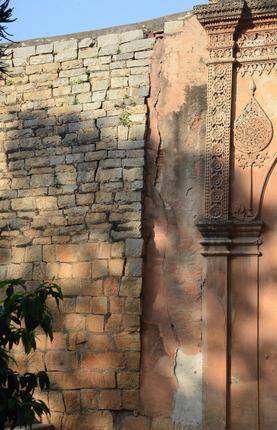
Once the nucleus of an ambitious plan to build a new city – Bengaluru – by the city’s founder Kempe Gowda, Tipu Sultan Fort or Bangalore Fort today is a far cry from its former state of glory. Visitors are now greeted by cracks that have developed in the fort walls above the temple that one sees after entering the protected monument nestled in the busy K.R. Market area.

The cracks, it is learnt, appeared recently although the fort was restored only two years back. The Archaeological Survey of India (ASI) officials blame it on the age of the monument. “Essential steps for its conservation were taken two years ago, but there are no major plans as of now,” an official said.

Karnataka : Bengaluru : 15/11/2014 . Crack on the wall of Tipu's fort near K R Market in Bangalore on 15th November 2014 . Photo : Bhagya Prakash K / The Hindu
Karnataka : Bengaluru : 15/11/2014 . Crack on the wall of Tipu’s fort near K R Market in Bangalore on 15th November 2014 . Photo : Bhagya Prakash K / The Hindu

The ASI will now to analyse the cracks to ascertain their width and depth before taking up conservation work.

Incidentally, the Namma Metro’s underground section, where blasting work had been taken up, passes beneath the fort. However, the ASI official said that the cracks in the fort walls had nothing to do with Namma Metro work.

Meera Iyer, co-convenor, Indian National Trust for Art and Cultural Heritage (INTACH), said there is a need for better maintenance. “There is not much supervision though there are security guards,” she added.

In fact, the ASI has barred access to public to the top portion of the fort, which leads to the dungeon where British prisoners were kept as the space was used for “inappropriate activities” such as gambling.

Ms. Iyer suggested that the fort should be used as public space for cultural activities, like it had been done a couple of times when a music concert and a play about Tipu Sultan were organised. To this proposal, an ASI official said with prior permission from the New Delhi head office of ASI, non-private cultural events can be held.

Historian S.K. Aruni mentioned that restoration of a wall that had collapsed due to heavy rain three years ago may have caused the cracks. “It is natural to see another part develop cracks if restoration work is undertaken,” he explained.

source: http://www.thehindu.com / The Hindu / Home> News> Cities> Bengaluru / by K.C. Deepika / Bengaluru – November 16th, 2014

N.R. constituency gets Rs.3.71 crore for development of 5 schools

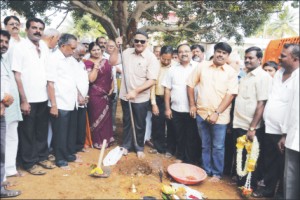
NR MLA Tanveer Sait performed ‘Guddali pooja’ for road development works yesterday in teachers layout on Dr. Rajkumar road , taken up under the CM’s Rs. 100 crore special grant for the city. Corporator Rajani Annaiah, leaders Manjunath, Annaiah and others are also seen in the picture.

Mysuru :

Under the Rashtriya Madhyamik Shikshan Abhiyaan, the Union Minister of Human Resource Development has released Rs.3.71 crore for constructing additional classrooms in 5 government high schools in N.R. Constituency.

N.R. MLA Tanveer Sait on Sunday visited the Government High School at HUDCO layout, Bannimantap and exchanged ideas with officials on the construction of 10 classrooms in the school.

Speaking on the occasion, Tanveer Sait said the school was built 23 years ago and some of the classrooms have become dilapidated over the years. As such, it has been decided to demolish such classrooms and construct 10 new ones at a cost of Rs.76 lakh, and added that the MUDA will rebuild the school’s toilet.

The MLA also said that under the Rashtriya Madhyamik Shikshan Abhiyaan, Rs.43 lakh has been released for construction of 5 classrooms at Nizamia Government High School on Ashoka road, Rs. 76 lakh for construction of 10 classrooms at Government high school, Giriabovepalya and Rs.28 lakh for construction of 3 classrooms at Government High School, Rajendranagar.

Pointing out that MUDA too has come forward for developing the infrastructure in these schools, Tanveer Sait said Nagarjuna construction company has been awarded the contract for the construction of classrooms and toilets in the 5 schools and added that the works are expected to be complete in 4 years. The Abhiyaan’s planning officer Betta Nayaka, MUDA Engineer Veerabhadrappa, Sudhakar of Nagarjuna construction, BEO Susheelamma,  MCC officer Nagaraj,  BJP leader Dhanaraj,  NR Constituency Educational Committee President  Prof. Nabi Jaan,  Secretary  Fayaz Ahmed Shariff and others were present.

source: http://www.starofmysore.com / Star of Mysore / Home> General News / Monday , November 10th, 2014

He repaid debt of 1984 to Muslims

New Delhi :

Harbans Singh was about 30 years old when anti-Sikh riots broke out in Trilokpuri in 1984. Unfortunately, he was just the person the mob was looking out for, and he would have been lynched had not his Muslim neighbours come to rescue by hiding him in a burqa and giving him shelter. Singh said last Thursday it was time for him to acknowledge this debt by opening the doors to his Muslim neighbours who were under threat.

Amid reports of communal clashes in the area, Singh’s was a touching example of solidarity and warmth along with a few others of different faiths.

Block 20, where Singh lives, was where the first instance of violence was reported on Diwali evening. After hearing about large-scale mobilization against Muslims, Singh got in touch with his Muslim neighbours just before stone pelting started.

“It was like 1984 once again when we left our houses and lived with Muslim neighbours. We dared not step outside, and if in desperation we had to, we did so in burqas. My family and I managed to stay alive because of them. So this time I returned the favour,” said Singh.

Mohammed Qurban, who lives in the opposite house, had to lock his door, send his children away and stay at Singh’s. “His presence alone was reassuring. There was chaos all around. We saw people baying for our blood, but to see others not getting in the frenzy and welcoming us to their houses gave us a lot of strength,” said Qurban.

Medina mosque in Block 29 is a 100 feet away from the lane where Qurban and Singh live. It was in the confines of this mosque where some Muslims took shelter during riots. A cleric here, who has barely stepped out since, says Hindu neighbours have often dropped by to check up on him and his community members.

“An unmistakable sense of safety has been instilled in people living here because of our Hindu neighbours. We didn’t interact much earlier but now they come here often to ask about out well being,” said the cleric.

source: http://www.timesofindia.indiatimes.com / The Times of India / Home> City> Delhi / by  Suhas Munshi, TNN / October 31st, 2014

First campus radio is into sixth year

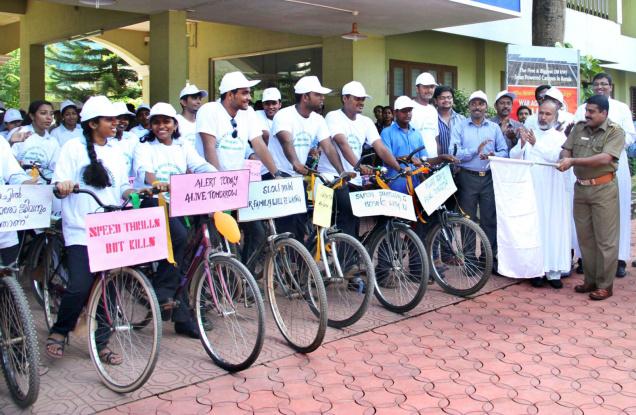
Schoolchildren taking out a road safety awareness cycle rally in connection with the fifth anniversary of Kerala’s first campus-based community radio service, ‘Radio Macfast,’ at Thiruvalla. / by Special Arrangement / The Hindu

Radio Macfast Awards to be presented tomorrow

Home Minister Ramesh Chennithala will inaugurate the fifth anniversary celebrations of the first campus-based community radio in the State, “Radio Macfast-90.4”, to be held at the St. John’s Cathedral Hall in Thiruvalla on Saturday.

According to Fr. Pradeep Vazhatharamalayil, Radio Macfast chairman, Revenue Minister Adoor Prakash will present this year’s Radio Macfast Awards to Kaviyur Sivaprasad, award-winning film maker; Roy Abraham Kallivayalil, global general secretary of the World Psychiatry Association; and Jacob Joseph, social worker who runs a charity home at Othera in Thiruvalla, on the occasion.

Metropolitan Archbishop of Thiruvalla Thomas Mar Coorilos will preside over the meeting.

To be feted

Fr. Vazhatharamalayil said 15 eminent personalities from different walks of life would also be honoured as part of the anniversary celebrations. Those to be honoured are: Kurien Oommen, renowned Chest Physician who has won World Health Organisation award for his contributions to the anti-Tuberculosis drive in the State; A.C. Rajeevkumar, Ayurvedic physician; B.G. Gokulan, Ayurvedic physician popularising traditional ophthalmology across the country; P.N. Suresh, Vice Chancellor of Kerala Kalamandalam Deemed University; Kailash, film actor; K.V. Alexander, sports personality; M.S. Sunil, social worker; C.P. Monai, writer; N. Rajeev, president of Eraviperoor grama panchayat which won the State Award; T.K. Sajeev, president of Kaviyur grama panchayat that bagged the government’s Best Panchayat Award; C.P. Robert, district coordinator of CARD Krishi Vigyan Kendra; Thomas Koshy (Lalan), social worker; Fr Thomas Payyampallil, Bodhana Social Service Society director; and Shaji Paulose, Homoeopath.

Anto Antony, MP, will inaugurate the Radio Village project and Mathew T. Thomas, MLA, will launch the new Radio Macfast Android Mobile Application on the occasion.

Delsy Sam, municipal chairperson; Blessy, filmmaker; and M. Salim, president of of Thiruvalla Merchants Association, will address the function.

source: http://www.thehindu.com / The Hindu / Home> News> National> Kerala / by Special Correspondent / Pathanamthitha – November 14th, 2014

Birding session marks birth anniversary of Salim Ali

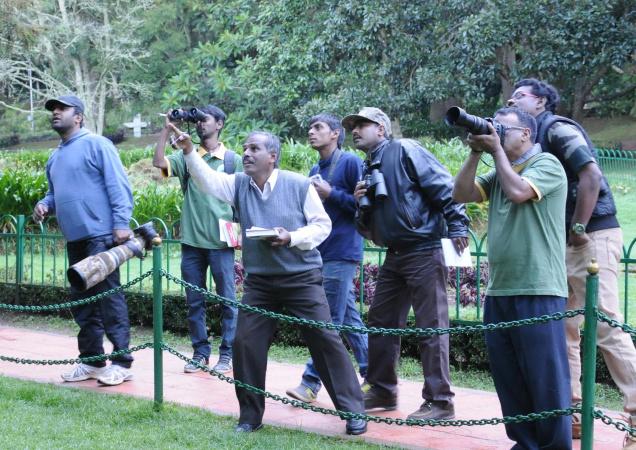
Bird watchers at the Government Botanical Garden in Udhagamandalam on Wednesday. - PHOTO: M. SATHYAMOORTHY / The Hindu
Bird watchers at the Government Botanical Garden in Udhagamandalam on Wednesday. – PHOTO: M. SATHYAMOORTHY / The Hindu

As many as 25 species spotted at Government Botanical Garden

Spread over 55 acres and dotted with hundreds of trees and flower beds apart from many ponds, the Government Botanical Garden here played host to a birding session organised by the Nilgiri Wildlife and Environment Association on Wednesday to commemorate the 118th birth anniversary of Salim Ali, the father of ornithology.

With the undulating venue and the occasion complementing each other, members of the association and students of Wildlife Biology in the Government Arts College returned with the satisfaction of having spotted birds belonging to about 25 species.

Pointing out that the most prized sighting of the day was a Kashmir Fly Catcher, the association’s executive committee member K.Vijay told The Hindu that the migratory bird from the Himalayas, which has been classified as endangered by the International Union for Conservation of Nature, could not be seen here last year.

Pointing out that its presence now signifies the commencement of the migratory season, he said that among the other birds spotted were the Grey Wag Tail, the Black and Grey Fly Catcher, the Common Hawk-Cuckoo, Pond Heron, Great Pit and the Nilgiri Blue Robbin.

Responding to a query, Mr.Vijay said that the botanical garden with its wild fruits and flowers is an ideal bird habitat.

Birding destination

Expressing the view that it can be promoted as a responsible birding destination, he said that the authorities concerned should regulate the activity and restrict it to one or two days a week. Stating that birding is a very effective stress buster, he said that it also encourages people to walk. Volunteers including students of Wildlife Biology should be engaged to create awareness among tourists about the role of birds in protecting the ecology.

source: http://www.thehindu.com / The Hindu / Home> News> Cities> Coimbatore / by D. RadhaKrishnan / Udhagamandalam – November 13th, 2014