Category Archives: Community Involvement / Social Issues

After eight years, Indiranagar road renamed after a legend

KareemKhanMPO08sept2014

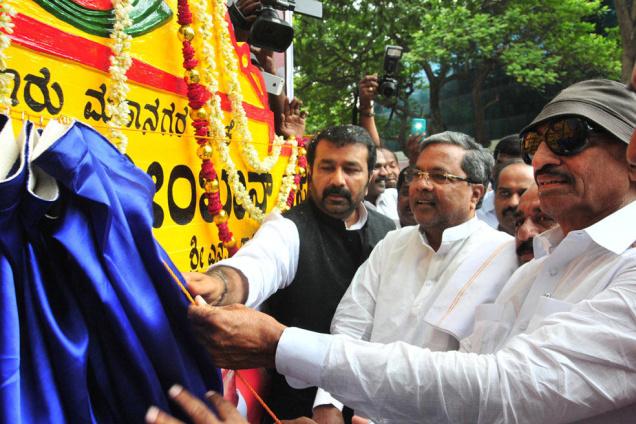
After a delay of eight years, the 100-foot Road in Indiranagar was renamed after folklore expert and freedom fighter S.K. Kareem Khan on Sunday.

Chief Minister Siddaramaiah, while recollecting the contribution of Kareem Khan, said he was a multifaceted personality who refused to take the government pension given to freedom fighters. “He was a towering personality who rose above caste, creed and religion.”

Posters

A large section of the road was dotted with huge banners and posters featuring the dignitaries invited for the renaming ceremony. At the 12th Main junction, posters and banners had covered every little space.

Bruhat Bangalore Mahanagara Palike (BBMP) officials conceded that permission was not granted to any person, organisation or political party to put up the hoardings.

The BBMP has been claiming for the past few weeks to have launched a drive to remove illegal publicity materials after the Upalokayukta lambasted the civic body over this. Till August 21 — the deadline fixed for the removal of flexes, banners, buntings and posters — the BBMP had removed 14,720 illegal publicity materials across the city.

However, with the BBMP citing pressure from politicians and shortage of personnel, the Upalokayukta has given the civic body three months to rid the city of all illegal publicity materials. Officials have been directed to submit an action-taken report every month.

‘Institute award’

Kannada Chaluvali Vatal Paksha leader Vatal Nagaraj urged the government to institute an award after Kareem Khan with a purse of Rs. 5 lakh. He also drew the attention of Mr. Siddaramaiah to the plight of Kannadigas in Talavadi, a border village, and urged him to speak to Tamil Nadu Chief Minister Jayalalithaa on the matter.

source: http://www.thehindu.com / The Hindu / Home> News> Cities> Banglaore / by Special Correspondent / Bangalore – September 01st, 2014

This one’s for Telangana: Sania

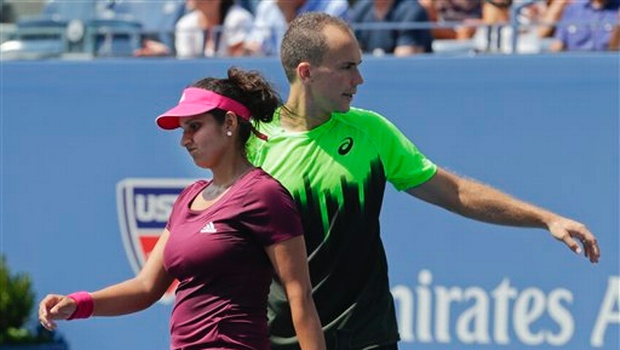
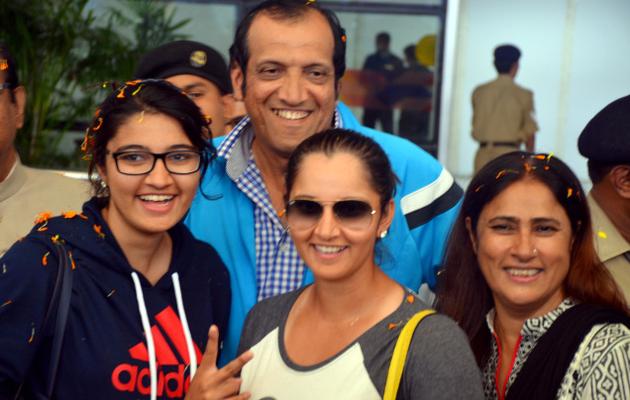
Indian tennis star Sania Mirza with her family members on arrival at the Hyderabad airport after winning the US Open mixed doubles title on Sunday. Photo: V.V. Subrahmanyam /  The Hindu
Indian tennis star Sania Mirza with her family members on arrival at the Hyderabad airport after winning the US Open mixed doubles title on Sunday. Photo: V.V. Subrahmanyam / The Hindu

Chief Minister K. Chandrase-khar Rao has complimented tennis ace and State brand ambassador Sania Mirza on winning the US Open mixed doubles title. In a statement, the Chief Minister said he was happy for Ms. Mirza upon her winning the grand slam after being appointed brand ambassador.

On Mr. Rao’s directive, State Government officials welcomed Ms. Mirza at the airport here on Sunday, on her return from the US. They presented her a bouquet on behalf of the Chief Minister.

A beaming Sania Miza, who won the US Open mixed doubles title, being greeted by her jubilant mother Nasima Mirza on reaching her home in Hyderabad on Sunday. Photo: V.V. Subrahmanyam / The Hindu

Speaking on the occasion, Ms. Mirza said she felt proud to win the title as the brand ambassador of Telangana. She thanked the State government for cooperating in her preparation for the grand slam and said she dedicated her title to the people of Telangana.

source: http://www.thehindu.com / The Hindu / Home> News> National> Andhra Pradesh / by Special Correspondent / Hyderabad – September 07th, 2014

‘Cylinders’ from scrap dealer reveal treasure trove of sound recordings

Mumbai :

The Customs office in Dadar has in its safekeeping a box containing a rare treasure, and it did not come from a seizure of illegal goods. Commissioner of Customs and Central Excise Amar NathSharma claims to have unearthed the oldest and rarest sound recordings in Indian history dating back to 1899. His cache of 200-odd ‘brown wax cylinders’ introduces the voice of Ustad Alladiya Khan, the founder of the Jaipur-Atrauli gharana, and Pandit V D Paluskar who founded the Gandharva Mahavidyalay, “artistes whom no living Indian has heard”.

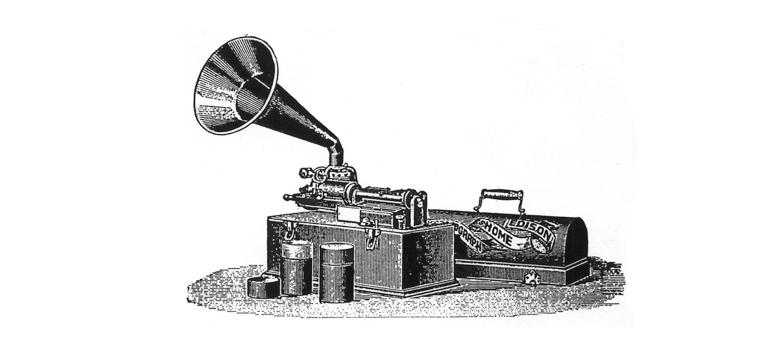
Cylinders are hollow wax rolls about six inches in length that are played on a phonogram. The phono was invented by Thomas Edison but fell into disuse with the entry of the circular disc in 1902.

The collection includes ‘Vande Mataram’ in the voice of Rabindranath Tagore, which was recorded by Tagore’s friend Hemendra Bose in the wake of the Partition of Bengal in 1905. Vignettes of the fabled courtesan from Calcutta, Gauhar Jaan, a Parsi theatre artiste from Jaipur named Miss Allah Bandi, as well as doyens like Peara Sahab figure prominently on the list. Particularly relevant to Maharashtra are the founding fathers of the Marathi ‘sangeet natak’ like Pt Bhaurao Kolhatkar, Pt Bhaskarbuwa Bakhle and Bal Gandharva. Dadasaheb Phalke has spoken about the making of ‘Raja Harishchandra’ as well.

Sharma says, “India has no archive that documents the history of sound recording, be it classical or film music, but it is commonly understood that recording began in 1902 after the advent of the disc that is played on the gramophone. However, we have found wax cylinders dating back to 1899, and these are played on a phonogram.” He bought the phono from a shop in Chor Bazaar.

The officer’s quest for old discs began two decades at roadside stalls. He sourced a few cylinders from private collectors over the years, and began documenting the ones he had for a book. Then, as if by divine hand, last December he chanced upon a cache of 200 cylinders at a kabadiwallah (scrap dealer’s) stall. “I will not say where the shop is located or how much I paid. But it wasn’t much because few people know the actual worth of these cylinders. In fact, the kabadiwallah thought they were textile rolls. This turned out to be the biggest treasure of the earliest and rarest Indian recordings. We were fortunate that the name of the singer and the year of recording was inscribed upon a few,” he says. Some cylinders were wrapped in cotton. Sharma, his wife Abha and daughter Anukriti sat down to clean each one with a brush, taking care to not use any chemical since that could damage the soft wax.

Reacting to the find, vocalist Kishori Amonkar, a doyen of the Jaipur-Atrauli gharana told TOI, “I am interested to hear the recording to identify if it is indeed Ustad Alladiya Khan. My mother (Moghubai Kurdikar) was his disciple, so I can tell his style right away. I do know that the Maharaja of Kolhapur Shahu Maharaj had recorded Ustadji on a ‘bangle’, and if this is indeed the original it is extraordinary. But I have been disappointed before. I was in Rotterdam once, and someone offered to play me a recording of Ustadji. I heard it and knew at once it wasn’t him.”

Sharma has transferred the recordings to a CD and is willing to put them to the test.

source: http://www.timesofindia.indiatimes.com / The Times of India / Home> City> Mumbai / by Bella Jaisinghani, TNN / September 05th, 2014

Sania Dedicates US Open Title to Telangana and India

SaniaMPOs06sept2014

New Delhi :

Left teary-eyed after her Indianness was put into question just weeks back, tennis star Sania Mirza dedicated her US Open title to the country and the new state of Telangana, where her appointment as brand ambassador triggered a political furore.

Last night, the first-time combination of Sania and Brazil’s Bruno Soares clicked brilliantly as they secured a close win in the final to win the mixed doubles trophy.

“I am very happy, it’s great to win it with Bruno. For the first time we played together, it’s been great two weeks.

I dedicate this victory to everybody in India, my country, and to the state of Telangana and all people of Telangana,” Sania said from New York after winning the final.

“I am extremely ecstatic, it’s a dream come true, hopefully many more will come,” said the 27-year-old.

Sania’s third career Grand Slam came barely a month after she was branded ‘daughter-in-law’ of Pakistan by a BJP leader due to her marriage with cricketer Shoaib Malik. The comment was triggered by the Telangana government’s decision to appoint her brand ambassador of the newly-created state.

The Hyderabadi was forced to issue a statement to assert her roots and was seen breaking down on news channels while trying to do so.

Asked if the controversy played on her mind during the US Open campaign, Sania said she believes in moving forward and remains focussed on her game after stepping into the court.

“I don’t think we should focus on the negatives,” said Sania, who is first Indian female player and only the third from the country after Mahesh Bhupathi and Leander Paes to have won Grand Slam titles.

Sania and Bruno were cruising in the Match Tie break and had five championship points after securing a comfortable 9-4 lead but a flurry of errors threatened to devastate their hopes.

Local hope Abigail Spears and Santiago Gonzalez made it 9-9 and looked like snatching it away from the Indo-Brazilian top seeds.

“We all had our hearts in our mouths at that point but we just tried to be positive and do whatever we could, help each other out and come out on top,” Sania said recalling the crunch moment.

source: http://www.newindianexpress.com / The New Indian Express / Home> Sport / by PTI / September 06th, 2014

Courage personified

Recently seen on Kaun Banega Maha Crorepati, Fatima Khatoon provides a shining example of an individual’s strength to herald a change

BLAZING SPIRITFatima Khatoon

“Arrest the customers who visit brothels; the men who sell the girls and those who procure them and force them into the trade, as they are the real culprits,” says Fatima Khatoon, an activist who took a stand against these social maladies at a tender age. She adds: “The hapless girls should not be punished. They require help and compassion to start life afresh.”

The comment is profound and more so as it comes from a person who is illiterate and was married into a household indulging in the sex trade. Born in a nomadic family in Nepal, Fatima entered matrimony at the age of nine.

“Being constantly on the move, childhood marriages of girls were prevalent in my community to ensure security and safety for them,” she explains, though she faults her parents “who should have checked the antecedents of my in-laws before marrying me off.”

Settling with her husband in Araria in Bihar, it took her more than one-and-a-half-years to realise that the womenfolk in the house, including her four sisters-in-law, were part of the trade. Her mother-in-law ran the business with the help of her four sons. This kept the kitchen pot boiling.

“Being young and lonely I used to speak to the girl inmates though my sisters-in-law never conversed with me. It is only through them I became aware of the facts,” says Fatima. The other three girls in the house were purchased. “They were duped by persons on the pretext of marriage, love or jobs and sold at the brothel,” she explains.

“My heart went out to them as I perceived they were experiencing a slow death every day,” says Fatima. Despite being young, she talked to them and decided to help them escape.

“I gave them clothes and helped them find the way. I also told them to raise an alarm in case anybody tried to stop them.” Severe reprisal followed, with Fatima locked up for three days without food and water till a family member warned that she may die. “After this, I was not allowed to step outside and was never left alone.”

Her kindled spirit received a jolt when she learned that her playmate, Afsana, daughter of an aged sex worker, was compelled to join, when she was visiting her mother. “I was close to Afsana and therefore, deeply hurt. I vowed that I will fight this trade and put an end to it,” she comments. Initially it was difficult but she managed to convince her sisters-in-law who have since left this trade.

Associated since 2004 with Apne Aap Women Worldwide (AAWW), a grassroots organisation working in India to end sex trafficking, Fatima is pleased to talk about the work of the AAWW team in her village. She claims, “A vast majority of the families there indulged in this trade and so far almost all have given it up, barring seven.”

Fatima intends to use the Rs.25 lakh won by her last week in Kaun Banega Maha Crorepati to raise her six children and build a home for them. Apart from this is, she plans to build a shelter for distressed women.

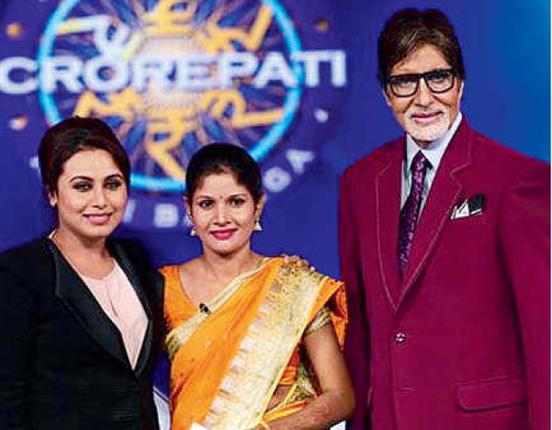
BLAZING SPIRITFatima Khatoon;  seen with Amitabh Bachchan and Rani Mukerji on “Kaun Banega Maha Crorepati”
BLAZING SPIRITFatima Khatoon; seen with Amitabh Bachchan and Rani Mukerji on “Kaun Banega Maha Crorepati”

Applauded by Amitabh Bachchan and Rani Mukerji, the crusader hopes her participation in the quiz show will inspire girls to keep up their spirit and courage to achieve their dreams and ambitions.

Arrest the customers who visit brothels; the men who sell the girls and those who procure them and force them into the trade, as they are the real culprits

source: http://www.thehindu.com / The Hindu / Home> Features> MetroPlus / by S. Ravi / August 26th, 2014

INDIA ON WAX – Record discs that helped defeat the British empire: Tagore sings ‘Bande Mataram’

During the freedom struggle, recordings of patriotic speeches and songs helped rally support.

PhonographKOLKATA01sept2014

Between 1877 and 1878, Thomas Alva Edison submitted patent applications for the phonograph in many countries, including British India. It is not known when these patents were granted, but it is known that in December 1878, the first phonograph recording was demonstrated in Kolkata.

For the next 30 years, recordings on the phonograph cylinder became quite popular, remaining so even in the early years of disc records.

Many members of royal families and wealthy people bought cylinder phonograph machines and recorded musicians and religious personalities. The Maharajah of Khetri recorded Swami Vivekananad’s speeches and discourses much before he went to America and gave his famous talks on religion. The internet is full of versions of his celebrated speeches.

TagoreAdsKOLKATA01sept2014

During agitations against the partition of Bengal in 1905, H Bose recorded many political speeches and songs, such as Bande Mataram, both on phonographs and disc records, and they became very popular. But his factory and shops were sealed, machines and discs destroyed ruthlessly by police. As a result, nothing has survived today except a very short piece from Bande Mataram, sung by Tagore.

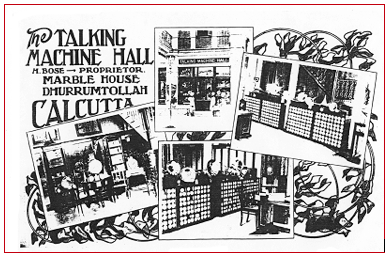
Hemendra Mohan Bose (1864-1916) opened the Talking Machine Hall in Kolkata, a shop where one could get one’s voice recorded. Bose was a sound recording expert and also had an agency to sell Edison and Pathe brand phonograph machines. Many great writers, poets and political leaders would visit him and he would record their recitations and speeches.

A 1906 catalogue lists several cylinder recordings of Rabindranath Tagore. Unlike disc records, cylinders could not be reproduced for sale. Most of these cylinders have been lost. Some museums have broken or damaged copies of cylinders as artefacts but no audible sound can be extracted from them.

Recording experts from Beka, a German company, were in Kolkata in November 1907. The British government went about destroying all nationalistic material, whereas the German company was the first to record a political speech right under the nose of the British.

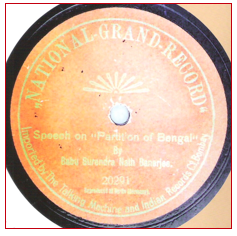
The National Grand Record label had a saffron disc with a rising sun as the logo. On it was recorded a speech by Babu Surendranath Banerjee, on the partition of Bengal. The flipside of this unusual 78-rpm disc has a speech on Bande Mataram.

DiskKOLKATA01sept2014

The man responsible for producing this disc was Sir Abdul Halim Guznavi, a political leader and agent for the Beka record company in Kolkata. Only few copies have survived. We have the image of the label only but no access to the audio file of this historically important recording.

We welcome your comments at letters@scroll.in.
source: http://www.scroll.in / Scroll.in / Home> All News / by Suresh Chandvankar / August 15th, 2014


Shah Rukh Khan roped in as Interpol Turn Back Crime ambassador

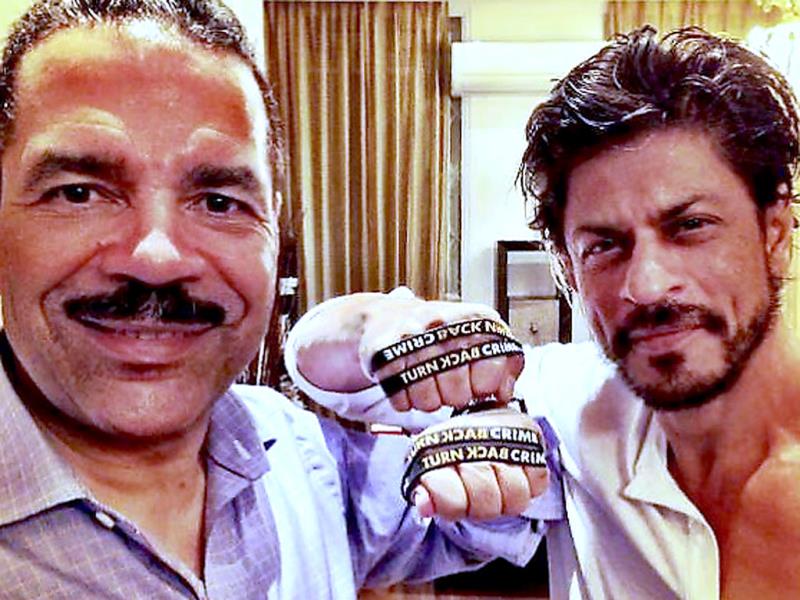
Bollywood actor Shah Rukh Khan has been roped in as an ambassador for Interpol’s Turn Back Crime campaign to promote awareness on how everyone can play a role in preventing crime.

ShahRukhMPOs01sept2014

SRK, said to be the first Indian to be made an ambassador for the global campaign, is lending his voice to help spread the message that all of society benefits when citizens respect law and fight crime. “It’s a very special honour to be a part of Interpol’s Turn Back Crime campaign as an ambassador,” said Shah Rukh.

“As Mahatma Gandhi once said, ‘I shall not fear anyone on Earth. I shall fear only god. I shall not bear ill will toward anyone. I shall not submit to injustice from anyone. I shall conquer untruth by truth. And in resisting untruth, I shall put up with all suffering, if I have to. We all should believe in this maxim and in whatever way possible resolve not to let unjust people who might threaten us with criminal activity make us fear them. Because I believe we can, we should, and we must stand together against the few who commit crimes against any human being, in whatever form or guise these crimes might take,” Shah Rukh said in a statement.

Shah Rukh Khan joins actor Jackie Chan as an ambassador for the campaign, which has already garnered support from public figures including footballer Lionel Messi, Formula 1 racing drivers Fernando Alonso and Kimi Raikkonen in addition to law enforcement agencies around the world.

Interpol’s Turn Back Crime campaign is aimed at raising public awareness that organised crime is often involved in seemingly unrelated crimes. Drug trafficking, human trafficking, counterfeiting, cyber crime, kidnapping, crimes against children and corruption in sport are in fact often interconnected, with profits from one crime area used to fund another.

The Turn Back Crime campaign is aimed at helping the public better understand these issues and empowering them not to be duped by criminals when buying products or using the internet.

“Shah Rukh Khan has dedicated his life to making films which reflect the highest level of professionalism and commitment to bringing joy into the lives of hundreds of millions of filmgoers in India and around the world,” said Interpol secretary general Ronald K. Noble. “We are honoured to have him as an ambassador for Interpol’s global Turn Back Crime campaign and we look forward to seeing how he puts his artistic talents behind this campaign,” the Interpol chief said.

The Turn Back Crime campaign is also reaching out to companies and policy-makers in a bid to form a united front against contemporary crime challenges, and to support the ongoing activities of the global law enforcement community.

source: http://www.hindustantimes.com / Hindustan Times / Home> Entertainment / IANS, Lyons (France) / August 28th, 2014

FORSAKEN BY HISTORY – Fazlul Huq’s actions directed history at many levels

First Person Singular – A.M.
FazlulHuqMPOs29aug2014

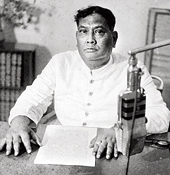
The significance of the year 1937 as a major milestone in the colonial history of India is often either brushed aside or missed altogether. The British parliament had, a couple of years ago, passed the new Government of India Act promising Indians limited self-governance and suggesting a federal structure of administration for the Indian empire. Provincial elections were ordered in 1937 all over ‘British India’ so that people’s representatives, though elected on the basis of restricted franchise, could still wield some power. The Indian National Congress, despite its reservations over the provision of the act, participated in the polls and, as was only to be expected, had a cakewalk victory in most of the ‘general’ constituencies everywhere; it also succeeded in electing its candidates from an impressive number of constituencies reserved for the scheduled castes and tribes. The All India Muslim League, presided over by Mohammed Ali Jinnah, did much below its expectations. Even in the provinces where Muslims constituted a clear majority of the electorate, its performance was none too impressive. In Punjab, it was defeated by the Unionist Party put together by Sikander Hyat Khan, representing the landowning interests, who became the prime minister (this was the nomenclature used in the 1935 Act) of the province. In Bengal, A.K. Fazlul Huq’s Krishak Praja Party prevailed over the League in a majority of the constituencies reserved for the Muslim community. His party lacked an overall majority in the provincial assembly; it nonetheless emerged as the largest single party. The Indian National Congress claimed the second place, the Muslim League was a not too impressive third. In Sind, it was a rag-bag coalition of regional parties which formed the provincial government, the Muslim League was isolated. In the North-West Frontier Province, given the popularity of Khan Abdul Gaffar Khan and his brother, Khan Sahib, the Congress did tremendously well; it won seats which fell short of a majority by just one; the Muslim League failed in its mission to capture the province. It was only the Indian National Congress in the rest of the country, including the United Provinces, the Central Provinces, Bihar, Assam, Orissa, as well as the Madras and Bombay Presidencies.

Jawaharlal Nehru was the Congress’s president that year. At his direction, the Congress set down two conditions for joining a coalition with others for forming a government in a province where it would be unable to form a ministry on its own: (a) the Congress would not enter into alliance with any ‘communal party’ and (b) even where it chose to form a coalition with another party to form the government in any province, the prime minister must be only from the Congress; it would supposedly be demeaning for the great national party to take orders from a prime minister who belonged to a nondescript political formation.

What was ironical was that in its anxiety to keep the Muslim League out of power in the NWFP, the Congress did not hesitate to breach immediately the first of these conditions and agreed to accommodate the sole Hindu Mahasabha legislator in the state assembly, Mehr Chand Khanna, in the ministry it formed. When it came to Bengal, the party’s high command, so-called, was adamant in sticking to principles. Fazlul Huq, having successfully snubbed the Muslim League in the just-held polls, was most reluctant to have any truck with the League and was keen to have the Congress as his partner. He sent a formal proposal to the Congress authorities inviting the party to form a coalition with the KPP and join the ministry he would form as the province’s prime minister. Sarat Chandra Bose, elected leader of the Congress in the Bengal assembly, was eager to respond affirmatively to Fazlul Huq’s invitation. His request to do so was contemptuously turned down by the high command. Poor Fazlul Huq had no alternative but to approach his erstwhile sworn enemy, the League, to join his ministry. The League responded with great alacrity; the KPP-Muslim League coalition regime took charge of the provincial administration in Bengal. The course of history changed in Bengal from that point onwards.

Fazlul Huq’s KPP had a clear-cut programme to protect the interests of the rural masses. Once installed in office, Fazlul Huq wasted no time in implementing the pledged promises to relieve the peasantry of the burden of unbridled exploitation by big landlords and loan sharks. A legislation imposed ceilings on land cess charged by intermediaries. Of far greater relevance was the introduction of a separate legislation concerning rural indebtedness. It either considerably reduced or even squashed altogether the burden of land cess charged by intermediaries in the recovery of past loans. Fazlul Huq did not quite stop here. He decided to set up a commission — the Floud Commission — to introduce major land reform all over the province. A further measure, perhaps of equal, if not greater, significance, was an order which, taking into account the denominational distribution of the province’s population, reserved 54 per cent of job opportunities in the provincial government henceforth for members of the Muslim community.

This series of measures had a tremendous impact on all sections of the Muslims in Bengal whose support for Fazlul Huq soared. The reaction of Hindus and the Indian National Congress was, perhaps not totally surprisingly, to the contrary. The prospect of losing the opportunity of making easy money by increasing exploitation of the rural poor disturbed the thinking process of the Hindu gentry and middle-class Hindus; the additional, very real, possibility of shrinkage in opportunities to enter government service further alienated them from Fazlul Huq and his administration.

Ignoring advice for restraint, the Congress launched a virulent campaign depicting Huq as an arch communalist. It was conveniently forgotten that, barely a couple of years ago, the same Fazlul Huq had made the Congress happy by taming the League in the polls. The news media in Calcutta, both English and Bengali, owned by Hindu fat cats, were full of reports, often concocted, of how much sections of the Hindu community were suffering in different parts of the province under the tyranny unleashed by the coalition government. Fazlul Huq withstood the calamity for a while. He was a man of emotions though. At one point he decided that enough was enough, if he was dubbed communal for being a friend of the poor, he would rather turn into a full-fledged communalist. He liquidated his own party and joined the Muslim League, along with the bulk of the KPP legislators. He, so to say, handed on a platter the crucial province of Bengal, with its huge density of Muslim population, to Mohammed Ali Jinnah.

The rest of the story is well known. Huq was persuaded to move at the League’s annual session in 1940 the resolution demanding the creation of Pakistan. The League reaped what Huq’s KPP had sown in Bengal. Muslim masses all over the country were bowled over by reports of what the League had supposedly done for poverty-stricken Muslims in the eastern province. Their loyalties got swiftly transferred to the League. Jinnah begun to roar like a real lion. Pressure was unbearable on Muslim politicians who till then had kept their distance from the League. Sikander Hyat Khan could read the signs, and capitulated in Punjab and joined the League too. It was the same story in the rest of the country. Only Abdul Gaffar Khan’s NWFP refused to bend all the way.

Since at heart Fazlul Huq, besides abhorring Jinnah’s overwhelming ways, could not reconcile himself to the League’s exceedingly aggressive communal stances, he soon fell out with the League leadership. He tried to form an alternative government in Bengal by parting with the League. Most of his former supporters were, however, no longer with him. Even so, Huq succeeded in scraping together a majority in the provincial assembly with the help of Sarat Chandra Bose, who too had now broken with the Congress following Subhas Chandra Bose’s expulsion. What raised a furore was Huq’s seeking and receiving support from the Hindu Mahasabha leader, Shyama Prasad Mookherjee. This latest move by Fazlul Huq unnerved the British rulers. They had been happy when he merged his party with the Muslim League, which kept the Congress out of power in Bengal. The Congress was turning increasingly hostile. Mahatma Gandhi was threatening to launch the Quit India Movement, and the spreading influence of the League was considered a good antidote by the foreign masters. That apart, the Second World War was reaching a critical stage. Subhas Chandra Bose had disappeared from the country and had surfaced in Berlin. And now his elder brother, Sarat Bose, was Fazlul Huq’s choice for the post of home minister in the new ministry he was proposing to form. This could not be allowed to happen, for the home department handled many sensitive and confidential matters. Sarat Bose was arrested under the Defence of India Act before he could be sworn in. A shaky new ministry anyway took office with Huq as prime minister. It did not last long because of more desertions by his past followers who did not like his associating with Mookherjee. Huq’s self-styled Progressive Coalition government soon collapsed and the Muslim League got back to power. Huq was by now a totally isolated figure; his soliciting the support of the Hindu Mahasabha leader added grist to the anti-Huq propaganda by the League, which succeeded in establishing absolute control over the Muslims in Bengal. It was equally true elsewhere in the country. In the provincial elections held in 1946 after the war was over, barring the NWFP, it was the Muslim League, and only the Muslim League, triumphing in nearly all the constituencies reserved for Muslims. The country got partitioned barely a year later. The League was almost a non-entity in 1937; it could divide the country exactly a decade later.

The Congress could infringe its principles in the NWFP in 1937, but would not do so in Bengal; it instead, made a gift of Fazlul Huq to the Muslim League. This individual, Huq, in that sense played the most important role in settling the destiny of the sub-continent. He is nevertheless a forgotten person as much in India as in Pakistan. What is even more astonishing, his name is barely mentioned these days in Bangladesh too. What remains under layers of oblivion is the fact that the Bangladeshi national ethos was created by the emergence of a self-assured Muslim middle class in Bengal, which in turn was the direct consequence of the measures introduced by Fazlul Huq on assumption of office in 1937. The reforms initiated by Huq emancipated an impressive percentage of the rural as well as urban Muslim masses, offering them opportunities to get educated, provided them with jobs, and thereby created a substantive middle class full of pride and self-confidence. It is this class which, in spite of its mistrust of the Bengali Hindu exploiters, had a deep attachment for their mother tongue, Bengali, in spite of its Hindu roots. The constituents of this class had been shapers of mass opinion in East Pakistan, and have continued in that role in Bangladesh. The national consciousness built around pride for their own language would not accept their mother tongue to be treated with contempt in Pakistan, where they — Bangladeshis — made up the nation’s majority. Resistance grew and grew and was compounded by rising resentment against the oppressive domination of their land and people by West Pakistanis both in civil as well as military administration. The parentage of this Bangladeshi national ethos belongs to Fazlul Huq. History however is habituated to bypass those who create history.

source: http://www.telegraphindia.com / The Telegraph, Calcutta / Front Page> Opinion> Story / Tuesday – August 26th, 2014
Admin steps in to restore Moti Jheel

Agra :

The district administration has initiated steps to restore the Moti Jheel that is located behind Fatehpur Sikri fort complex, following the directions from the central government.

The project is aimed at rediscovering the beauty of this Mughal lake by preventing encroachments and settlements around it. The union tourism ministry wants the water body to be restored near the Unesco heritage site (Sikri fort complex) so as to promote tourism in the area.

Speaking on this aspect, district magistrate Pankaj Kumar said, “The Moti Jheel is a massive project. So, in the meantime we plan to build a pond nearby the fort. The biggest obstacles that would make the task of reviving the Jheel quite difficult, are the settlements and farm lands, surrounding it.”

“The work for constructing the pond will start in the next 15 to 20 days. As far as the Jheel is concerned, we have two options – either we compensate the villagers and ask them to vacate the land or convince them for the same. We are looking in to the matter,” Kumar added.

Sources said kumar recently conducted an inspection of the area along with a team of revenue and irrigation department officials to identify the area, where once this lake existed. The officials were asked to demarcate the lake area with the help of old maps. They were also directed to file a report on the size and appropriate depth of the lake.

The project has been gathering dust for the last two years, but revived once again during the visit of union tourism minister Shripad Naik, who instructed the ASI and the local administration to look into the feasibility of restoring the Moti Jheel.

An ASI official said, “It is the responsibility of the administration to restore the lake. There are historical evidences about the Jheel and about its tributaries. No doubt, it will take time to acquire land before restoration work can starts.”

source: http://www.timesofindia.indiatimes.com / The Times of India / Home> City> Agra / Aditya Dev, TNN / August 25th, 2014

Honouring the icons of Telangana

The recent decision of the Telangana government to rename the Acharya N G Ranga Agricultural University after Telangana ideologue Prof. Jayashankar, led to a great hue and cry from the Andhra coterie. Surprisingly, the most vociferous protests came from TDP leaders as the party was responsible for putting an end to the great leader’s record run of six terms in parliament. The party had hailed its candidate Lal Jan Basha  as a ‘giant killer’ in the 1991 elections when the late Guntur MP had trounced Ranga, inflicting on him the worst ever defeat. Public memory is short and even the party’s own leaders seem to have forgotten the tirade unleashed by their brethren against the feeble senior parliamentarian, then in his nineties.

Egyptian Pharaohs, it is said, made a habit of striking off references from stelae (commemorative markers) in order to establish their legitimacy and superiority over their predecessors. Despite such measures, neither the identity nor the legacy of those targeted could be erased absolutely. The legacy of N G Ranga too, cannot be obliterated by a mere change in the appellation of an institution commemorating the great man, especially when the divided assets of the university which remain with the Andhra state will continue to bear his name. Telangana needs to recognize and perpetrate the memory of its own icons and hence the tendency to claim a right to naming institutions based in the region. Those still upset about the change need to reconsider their stand in view of recent developments on the national front. It is reported that the Centre is seriously mulling over the proposal of renaming over 650 public schemes which bear the names of Nehru-Gandhi family members. Given its agenda of making the nation ‘Congress mukt’, the BJP government in all likelihood will go far beyond rechristening welfare schemes and target public institutions and infrastructure projects too. Already questions have been raised regarding the naming of the Shamshabad airport after Rajiv Gandhi and hundreds of other similar objections are bound to be raked up in the future. While one cannot deny the sycophancy of succeeding generations of Congress workers, who have honed the art of groveling at the feet of the Gandhi clan to perfection, a total whitewash of the family legacy would be a great injustice as both Nehru and Indira have indisputably contributed immensely to the nation.

Changing names of streets, institutions and buildings is nothing new either for Hyderabad or the country. The process began immediately after independence when replacing British era names with Indian ones was considered essential in asserting the hard earned freedom from the colonial rule. But even then, there was generally a distinction based on individual contributions which ensured that dedications to benefactors of India were left unchanged. That should have been the defining criteria for determining change, but unfortunately bigotry very often tainted decisions and resulted in unjustified sidelining of some very eminent personalities whose contributions to society are indisputable. As a result, while the Nizam was acceptable as the titular head after merger of Hyderabad with the Indian Union, the only street in the city named after him was not. The Shahrah-e Osmani thus became Jawaharlal Nehru Road, leaving one wondering as to why it could not renamed Raj Parmukh Marg if assertion of swaraj was the sole reason prompting change.

The Kutub Khana-e Asafia, which was designated the State Central Library, had evolved out of the personal collection of rare books and manuscripts donated by renowned litterateur Syed Hussain Bilgirami – Imadul Mulk. Years later, the manuscript collection was separated to form the Oriental Manuscripts Library which should have rightfully been named after the late Nawab. The Telangana government can as yet set right the lapse if it is serious about honouring icons from the city’s past.

With the legacy of N G Ranga having been handed over to rightful heirs, it is hoped that a similar action follows with regards to Potti Sriramulu. The move will be perfectly justified as the exemplary services of renowned Telugu poet and scholar Devulapalli Raemanuja Rao, the moving force behind the Sahitya Akademi and the Saraswat Parishad of erstwhile AP, remain unacknowledged. Among just a few others who need to be honored without further delay are world renowned archaeologist Ghulam Yazdani (by renaming the Archaeology Museum after him instead of YSR who made no contributions to the field whatsoever), Mahabalwant Raja Umapati Rao of Domakonda for contributions to Persian language, Maharaja Sir Kishen Pershad for promotion of syncretic culture, Ravi Narain Reddy and Raj Bahadur Goud for spearheading the Telangana Armed Struggle, P M Reddy and Babar Mirza for pioneering aviation (strong contenders if the airport is to be renamed), and Abdur Razzak Lari for his resolute defense of Golconda against the Mughals.

(The writer is a well-known conservation activist)

source: http://www.timesofindia.indiatimes.com / The Times of India / Home> City> Hyderabad / Sajjad Shahid / August 24th, 2014