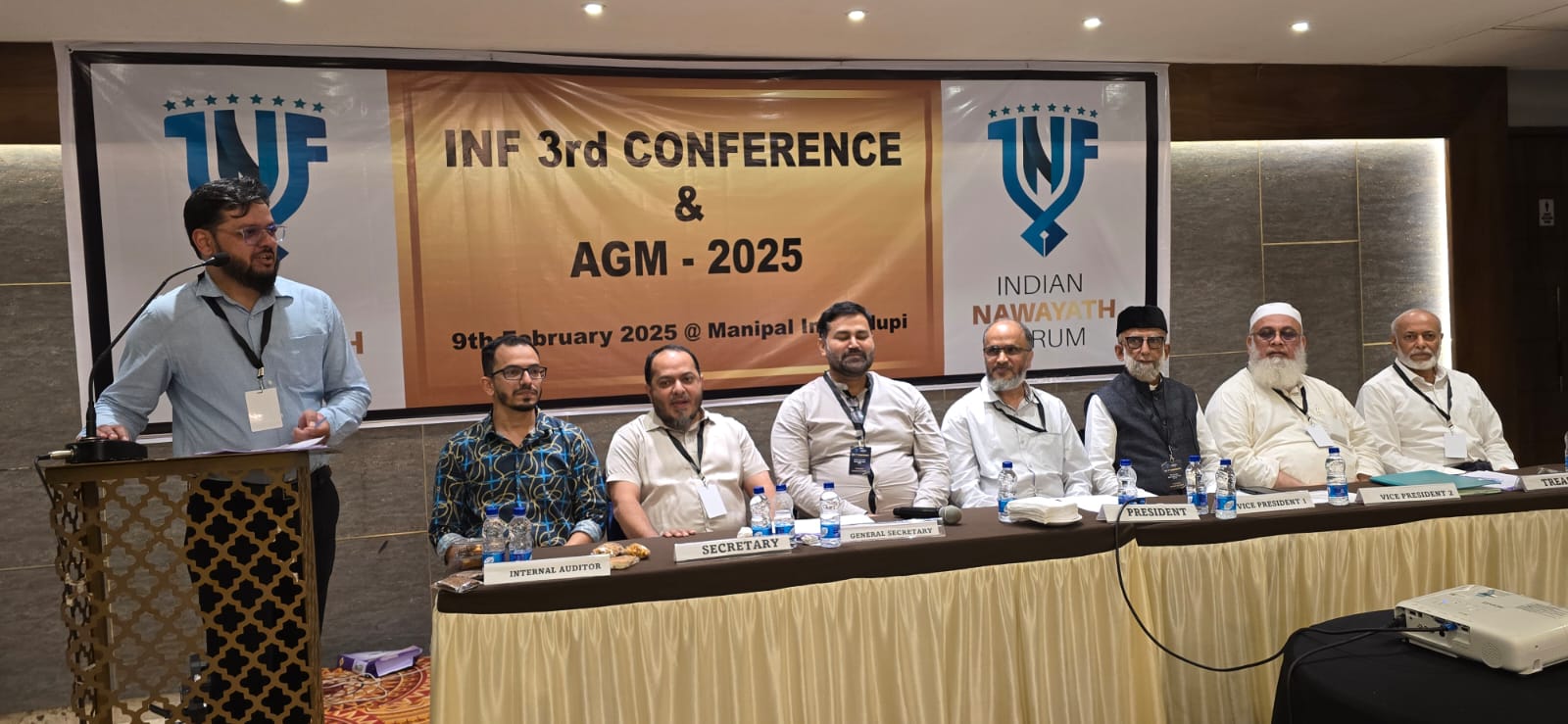
The Indian Nawayath Forum (INF) has appointed its new office bearers for the term 2025-2028, with Aftab Kola assuming the role of President. Hashim Mohtesham (Barni) and Fayyaz Mohtesham have been named as the first and second Vice Presidents, respectively.
Adil Nagarmat has been entrusted with the responsibilities of General Secretary, while Gufran Lanka will serve as Secretary. The forum’s financial management will be overseen by Treasurer Ummer Khalifa, and Faizan Lanka has been designated as the Internal Auditor.
The Indian Nawayath Forum, a prominent organization working for the upliftment and welfare of the society, plays a crucial role in social, educational, and cultural initiatives. With a strong commitment to community development, the newly appointed team aims to carry forward the organization’s objectives and address various issues concerning the Nawayath people.
source: http://www.english.varthabharati.in / Vartha Bharati / Home> Karavali / by Vartha Bharati / February 10th, 2025
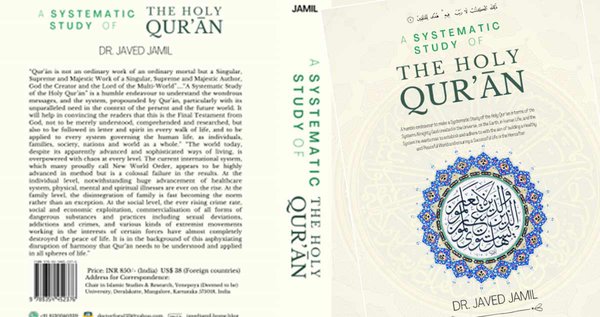
Review of Dr. Javed Jamil’s book “A Systematic Study of the Holy Qur’ān”
Dr. Javed Jamil has already earned wide acclaim for his innovative and holistic approach on the world affairs and for his concept of Applied Islamics, which implies examining the scientific theories, international ideologies and developments in the light of Islamic principles and presenting Islamic Paradigms/Models/Definitions/Concepts/Programmes in different areas of knowledge in Natural Sciences, Social Sciences as well as Health Sciences. His books like “Muslims Most Civilised, Yet Not Enough?”, “Muslim Vision of Secular India: Destination and Roadmap”, “Justice Imprisoned”, “Economics First or Health First?” have brought a new approach based on the facts and figures, which have not only highlighted the failure of the modern systems in creating a healthy and peaceful world but have also successfully countered the propaganda by Western and other forces against Islam. His latest book, “A Systematic Study of the Holy Qur’ān” may well become his most applauded work in coming times because of, (using the title of the Foreword by Former Vice Chancellor of University of Hyderabad, Padamshri Prof. E Hasnain,) its “Unique Insight into the Wondrous Verses of the Holy Qur’ān”. It will be worthwhile here to quote a passage from the Foreword:
“What attracted my attention at the very outset was the caption on the cover of the book. The book describes Qur’ān as “a humble endeavour to make a Systematic Study of the Holy Qur’an in terms of the Systems Almighty God created in the Universe, on the Earth, in Human Life, and the System He wants man to establish and adhere to with the aim of building a Healthy and Peaceful World and ensuring a Successful Life in the Hereafter”. This is a categorical confirmation of the fact that, in Qur’ān there are a very large number of verses, which describe the Creation and Functioning of the Universe as a whole and the Functioning of the Earth, including its flora and fauna. There is absolutely no doubt that, if human beings have to establish on earth the kind of harmonious functioning existing in the universe, they have no option but to follow God’s injunctions in full. The particles of the universe, the stars, the planets and all other celestial bodies follow the Laws of Nature created by God with unimaginable precision. If God gave us human beings certain flexibility, we should endeavour to work only within the boundaries prescribed by Qur’ān. Moreover. the system that God has directed through His Final Book and Final Prophet (SAW) needs to be established not only in the lives of the people, but in the world as a whole, including the legal, social, political and administrative levels.
By just viewing the list of contents of the book, one can have an idea of the holistic nature of the work. It has five major parts: Iman (Realization with Commitment), Philosophy, Constitution, Systems and History of Confrontation between the Right and Wrong. The chapter on Iman covers Qur’ānic view of God/Allah with His Creation and Governing of the universe , the role of Prophets, especially the Last Prophet Muhammad (PBUH), the Books of God, Hereafter, Executive Angels and Predestination. Part 2 on Philosophy covers Philosophical issues related to Qur’ānic position of Monotheism, life, different religions, human nature, etc. Chapter 3 on Constitution covers Fundamental Rights, Fundamental Duties and Fundamental Prohibitions, Civil and Criminal Laws. Part 4 on Systems of Governance include Social, Political, Economic, Moral, Spiritual and Health Protective Systems and the Part 5 on History of Confrontation between the Right and Wrong compiles the stories of Prophets from Adam (AS) to Muhammad (SAW).
The book presents Islam as a Holistic System for Health, Security and Peace for mankind in this world as well as Hereafter, and effectively counters modern ideologies based on the supremacy of Economics. His arguments are highly convincing, as they are accompanied with facts and figures. He argues that while the modern constitutional systems are two-dimensional based on Fundamental Rights and Duties, while ignoring prohibitions altogether, Qur’ānic system of governance is Three-Dimensional with equal emphasis on Rights, Duties and Prohibitions. He lambastes the concept of Freedom of Choice, which is being used by the market forces to exploit the human susceptibilities at the huge cost of life and peace, resulting in tens of millions of deaths due to Alcohol, Sexual corruptions (including Homosexuality, Promiscuity and Prostitution), Gambling, Suicides, Pork, etc.
In each chapter, first a well thought and crafted article is presented followed by the compilation of the Qur’ānic verses related to that subject. The verses are followed by notes wherever necessary, providing huge information. In the first chapter on “The Supreme Being”, the components of the universe and their functioning in accordance with God’s designs are presented, and a full-blown picture of the physical State (Mulk) of universe created and governed by Head of State, Almighty God/Allah, through a unique system of the Laws of Nature (Umoor) has been developed. The arguments in Theoretical Physics about the universe being created without God have also been countered in a unique manner. The author has translated “Samaawaat” as “Cosmic Tiers” and has shown their positioning in terms of the structure of the universe. For example, Sky of the earth (atmosphere, clouds, protective roof) is the First Cosmic Tier, Solar System (Samaa-al dunyaa) the Second, Galaxy (Milky Way being ours) the Third, Cluster and Supercluster being the next in order and so on. Terms like Najam, Kawaakib, Shihab-at-Thaqib, Najm-ath-thaqib, Tariq, Samaa- dhaatil burooj, dhaatil-raj’a etc have been explained. The author notes that further researches will more specifically point out the exact positioning of these Samaawaat. When the terms Sajda, Tasbeeh, Hamd etc, are used in relation to the physical components of the universe, their existence being only physical, these terms also indicate their different physical movements like rotation on their own axis or around other objects in compliance of the Laws of Nature created and implemented by God, the Lord of the Universe. Human Sajdahs, Tasbehs and Hamd of course have physical, biological, mental, spiritual and social dimensions as well.
But the author clarifies that instead of studying Qur’ān in the light of Sciences, modern sciences and ideologies have to be studied in the light of Qur’ānic positions. Sciences can be in an evolving phase but Qur’ān is the Word of God, with absolute facts. It is another matter, due to our immense paucity of knowledge about the facts of the vast universe; more often than not we cannot fully understand their meaning.
In the chapter on different systems, he has presented alternative Islamic paradigms/models of Economic, Political, Social, Moral, Spiritual and Health protective systems of Islam, with critical review of the modern systems prevalent at the international level. He argues that the primary aim of Islamic Prohibitions and Permissions is to ensure highest standards of physical, mental, social, spiritual health and family peace and crimeless society, free of all forms of exploitation. Following these injunctions with total commitment to God, Last Prophet and Last Testament Quran will also ensure a Blissful life in Paradise after death.
The chapter on History becomes doubly interesting, as it also uses the excerpts from Torah, Evangel (Injil) and Psalms (Zabur) to explain in detail the lives and achievements of the Prophets/Ambassadors of God.
The book has used many terms, which are different from the traditional ones, but they add to the advanced understanding of the Holy Qur’an in exploring the functioning of the universe, life on earth and human existence. The basic argument according to the author which comes out from the study of Qur’an is that if the unimaginably vast universe is functioning with impeccable harmony for billions of years, it is because each and every particle and area of the universe is following with utmost precision the Laws of Nature, Biological and other laws created by God, and if the mankind has to have a peaceful and harmonious existence, they have no option but to follow the Laws sent through His Ambassadors by God, Qur’an being the Final Constitution for all times to come till the Doomsday.
The cover is attractive and the printing of the book is of good quality. Over-all, it is a must-read book for all Muslims, especially the students, scholars and analysts, and has the potential to revolutionise the future studies of Qur’an and Islam, with their application in every field of the human existence – individual and collective, internal and external. It will be worthwhile to conclude this review by quoting a few paragraphs from the book:
“The world today, despite its apparently advanced and sophisticated ways of living, is overpowered with chaos at every level. The current international system, which many proudly call New World Order, appears to be highly advanced in method but is a colossal failure in the results. At the individual level, notwithstanding huge advancement of healthcare system, physical, mental and spiritual illnesses are ever on the rise. At the family level, the disintegration of family is fast becoming the norm rather than an exception. At the social level, the ever rising crime rate, social and economic exploitation, commercialisation of all forms of dangerous substances and practices including sexual deviations, addictions and crimes, and various kinds of extremist movements working in the interests of certain forces have almost completely destroyed the peace of life. It is in the background of this asphyxiating disruption of harmony that Qur’ān needs to be understood and applied in all spheres of life.”
“True Version of Anthropic Principle says that (1) It is God Who created the universe ultimately leading to the creation of man; (2) God controlled the whole process of creation; (3) the creation of man was not an unintended coincidence but an intended act of God; (4) the purpose of man is not simply describing the beauty of the universe, but to attain the Realization that this harmonious universe has been created, and is being governed by God; and (5) man has to submit to the System of existence perfected through His Ambassadors and Testaments, and govern the Earth in accordance with the Divine commands.”
“In short, the message of Qur’ān, the Final Document of Peace, is unequivocal. Anything good, healthy and desirable in terms of health, peace and tranquillity, has to be promoted, and anything unhealthy and undesirable has to be discouraged. Both, short term and long terms benefits are allowed; but if short term benefits seriously endanger the long term benefits, long term benefits have to be preferred. All possible means within the ambit of Islam are to be availed for achieving the goal. The goal, however, cannot be achieved with perfection, unless there is unity of mankind; and mankind cannot unite unless it submits to One God, imitates One Prophet, follows One Book and faces One Direction. This is the real meaning of Wahdat (Unity), which is central to all the Islamic systems of affairs. Wahdat of God means, in effect, the Wahdat of mankind.” “Islam’s agenda, as shown by the Quran and Prophet (SAW), is to establish Natural and Just Word Order. The agenda of the present world is to establish and sustain New World Order. It has led to the development of a strange kind of world, which appears to be paradise from outside, but as one enters it, one finds nothing but hell. We are living in a world where, thanks to the designs of merchants, immorality reigns. The globe of New World Order is therefore rapidly developing into nothing but a fireball of chaos.It is in the backdrop of this universal disharmony that Islam, in its final form established by the Last Prophet (SAW), has to play its role. We have to challenge New World Order and establish Natural Just World Order, in accordance with the principles laid down by the Book of God and the life of the Prophet (SAW).”
Price: INR 850/- Outside India: US$ 38, for copies WhatsApp on: +918130340339, Email: doctorforu123#yahoo.com
source: http://www.milligazette.com / The Milli Gazette / Home> News> Books / by J Ali / March 24th, 2021
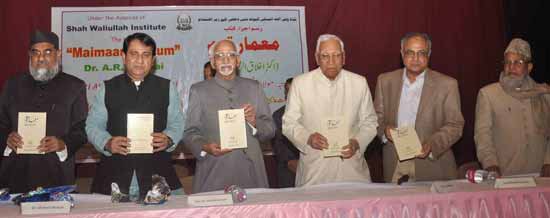
Vice President Hamid Ansari released here on 21 November a book on the life and services of Akhlaqur Rahman Kidwai, the veteran Congress leader who honorably served the country in various capacities like Rajya Sabha MP, chairman of Union Public Service Commission and governor of the states of Bihar, Orissa, Haryana and Punjab.
The book “Me’mar-e Qaum” [Builder of a nation], is authored by Mufti Ataur Rahman Qasmi and published by Shah Waliullah Institute.
The book release was held at the India Islamic Cultural Centre. Vice President Hamid Ansari said that services of Kidwai cannot be forgotten by the people of the country. He said Kidwai enjoys serving people, an spirit rarely found in people these days. He helped many. One of his historic initiatives was to start Mewat Development Board.
While speaking during the function, AR Kidwai said his character has been shaped by Jamia Millia Islamia which he joined in 1924 as a student of class 2. He was fortunate to get the attention of an educationist like Dr Zakir Husain.
The function was chaired by the former Union minister and the present general secretary of Congress Party, Shakil Ahmad who said that the services of AR Kidwai are such that one yearns to emulate him. He said that a characteristic of Kidwai is that he never exhibits his work.
Ataur Rahman Qasmi, the author of the book, said that Kidwai added to the stature of any post he held. He never compromised on his principles. These days it is rare to find such servants of the people.
The function was attended by a sizeable number of Delhi elite which bore witness to the popularity of Kidwai who is now leading a private life after offering an example of how Muslims can selflessly serve the country with honesty and dignity.
source: http://www.milligazettec.com / The Milli Gazette / Home> News> Special Report / by The Milli Gazette / November 26th, 2013
Inauguration of the New Batch at Noori Academy, Malegaon
Malegaon:
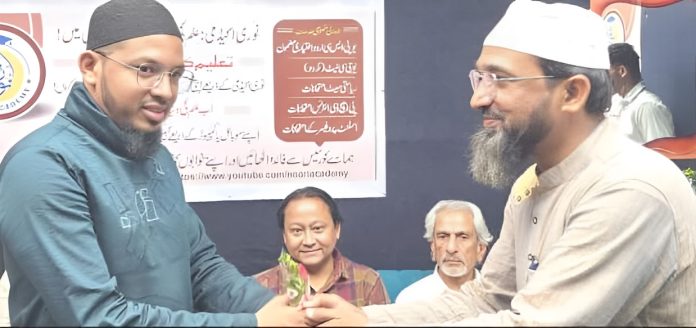
Noori Academy, a beacon of knowledge, continues its academic journey under the leadership of Dr. Ataur Rahman Noori. On January 28, 2025, after Maghrib prayers, the inaugural session of the UGC NET June 2025 batch was held at the academy’s headquarters with great enthusiasm. The event witnessed the participation of distinguished educationists, researchers, and scholars, while thousands of students from across India watched it live.
Noori Academy is not just an educational institution but a stronghold for the promotion of Urdu language and literature. Over the years, it has helped more than 500 students clear UGC NET, State SET, PhD entrance, and assistant professor exams, significantly contributing to Urdu research and teaching.
The session began with Quranic recitation, followed by speeches from eminent scholars. Mufti Mujeeb Sir highlighted the academy’s exceptional results, urging students to seize this opportunity. Linguist Saleem Shehzad spoke on modern and postmodern literary discourse, while Dr. Muhammad Husain Mushahid Rizvi called Noori Academy a guiding light for Urdu education.
Dr. Ataur Rahman Noori emphasized the academy’s mission, showcasing its success in both traditional and digital platforms. With 8 million+ YouTube views and a thriving mobile app, Noori Academy continues to shape the future of Urdu education.
source: http://www.radiancenews.com / Radiance News / Home> Education> Focus / by Radiance News Bureau / February 05th, 2025
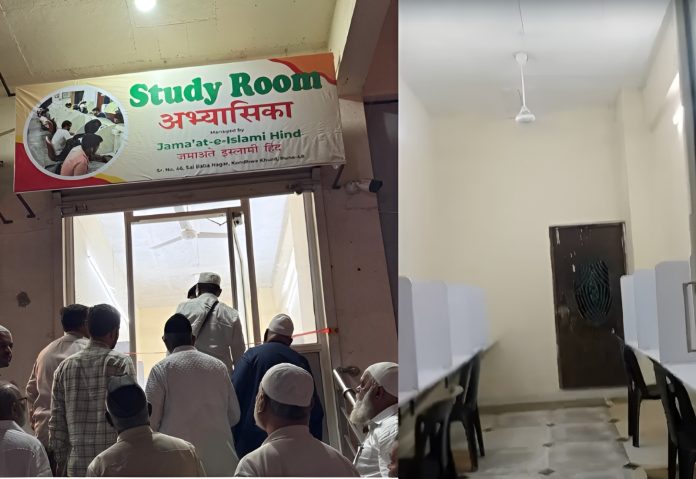
As part of its educational initiatives, Jamaat-e-Islami Hind (JIH), Pune City has started a study center for students and youth in Sai Baba Nagar, Kondhwa. Given the large number of students in need in this area, the center will serve as a valuable facility for those seeking a peaceful environment for studying.
Speaking at the inauguration, the President of Jamaat-e-Islami Hind, Pune City, Tajammul Khan, stated “Jamaat has been actively supporting the educational progress of students and youth since its inception. He highlighted that various initiatives such as career guidance, exam preparation, motivational programs, and scholarships are already being conducted under the organization’s banner, and this new study center is an extension of those efforts. The area houses several schools, tuition centers, and students who lack a conducive environment for academic pursuits. Through this study center, an additional effort will be made to have educational mentors available periodically to guide and assist students in their studies. Furthermore, Jamaat-e-Islami Hind is committed to providing educational facilities to other students in need across the city, whether through scholarships, distribution of educational kits, or the establishment of study centers and mentorship programs. JIH has already been providing computer and teaching facilities in several schools to promote quality education.”
The inauguration ceremony was attended by local dignitaries, school administrators, and education professionals, who appreciated the efforts of Jamaat-e-Islami Hind in supporting the academic development of students.
source: http://www.radiancenews.com / Radiance News / Home> Education> Latest News / by Radiance News Bureau / February 10th, 2025
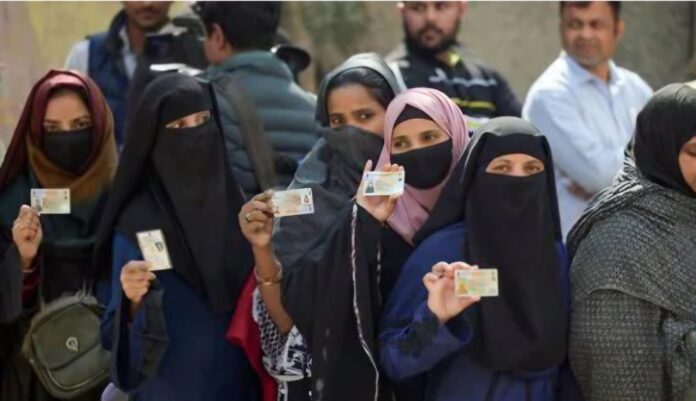
Despite Kejriwal not addressing any public meetings in Muslim pockets or visiting Muslim-dominated areas like Jama Masjid and Okhla during his election campaign, the Aam Aadmi Party (AAP) performed well in Muslim-majority constituencies. AAP secured victory in 8 out of 11 Muslim-concentrated seats. Notably, four Muslim candidates from AAP—Amanatullah Khan, Aaly Mohammad Iqbal, Imran Hussain, and Chaudhri Zubair—won comfortably. Meanwhile, Asaduddin Owaisi’s AIMIM, which contested with high hopes, failed to open its account and faced disappointment.
Muslims constitute around 13% of Delhi’s voter base. Their votes influence the results of nearly 11 assembly seats. There are 11 seats where the Muslim voter population is significantly high. Let’s examine the situation in these Muslim-majority areas:
A Look at the Results of Delhi’s Muslim-Majority Seats
Let’s take a closer look at the statistics of 11 Muslim-majority constituencies. Notably, Muslims constitute 13% of Delhi’s electorate, and 11 seats are considered Muslim-majority constituencies. These include Okhla, Mustafabad, Ballimaran, Seelampur, Matia Mahal, Chandni Chowk, Seemapuri, Babarpur, Karawal Nagar, Jangpura, and Sadar Bazar. This time, there was a high voter turnout in these constituencies. The results of these seats are as follows:
AAP’s Victories in Muslim-Majority Constituencies
Amanatullah Khan Wins from Okhla
In Okhla, AIMIM’s Shafa Ur Rahman, AAP’s Amanatullah Khan, Congress’ Ariba Khan, and BJP’s Manish Chaudhary contested the elections. According to the Election Commission’s data, AAP’s Amanatullah Khan secured victory with a margin of 23,639 votes, receiving a total of 88,943 votes. BJP’s Manish Chaudhary came second with 65,304 votes, while AIMIM’s Shafa Ur Rahman ranked third with 39,558 votes.
Aal Mohammad Iqbal Secures Matia Mahal
From Matia Mahal, AAP’s Aal Mohammad Iqbal won by a significant margin of 42,724 votes, securing a total of 58,120 votes. BJP’s Deepthi Andora finished second with 15,396 votes, while former Congress MLA Asim Mohammad Khan came third with 10,295 votes.
Zubair Ahmad Clinches Victory in Seelampur
As per the Election Commission’s data, AAP’s Zubair Ahmad won Seelampur by a huge margin of 42,477 votes, receiving a total of 79,009 votes. BJP’s Anil Kumar Sharma came second with 36,532 votes, while Congress’ Abdul Rahman secured third place with 16,551 votes.
Imran Hussain Emerges Victorious in Ballimaran
Ballimaran witnessed a tough contest, but AAP’s Imran Hussain secured victory with a margin of 29,823 votes, receiving a total of 57,004 votes. BJP’s Kamal Bangdi came second with 27,181 votes, while Congress’ Haroon Yusuf stood third with 13,059 votes.
Prernadeep Singh Sahni Wins from Chandni Chowk
AAP’s Prernadeep Singh Sahni won Chandni Chowk with a margin of 16,572 votes, securing a total of 38,993 votes. BJP’s Satish Jain finished second with 22,421 votes, while Congress’ Modit Aggarwal came third with 9,065 votes.
Gopal Rai Triumphs in Babarpur
From Babarpur, AAP’s senior leader Gopal Rai secured a decisive victory with a margin of 18,994 votes, receiving a total of 76,192 votes. BJP’s Anil Kumar followed in second place with 57,198 votes, while Congress’ Mohammad Ishraq Khan came third with 8,797 votes.
Sadar Bazar Goes to AAP’s Som Dutt
From Sadar Bazar, AAP’s Som Dutt won with a margin of 6,307 votes, securing a total of 56,177 votes. BJP’s Manoj Kumar Jindal stood second with 49,870 votes, while Congress’ Anil Bhardwaj secured third place with 10,057 votes.
Vir Singh Dhangan Secures Seemapuri for AAP
In Seemapuri, AAP’s Vir Singh Dhangan won by a margin of 10,368 votes. BJP’s Kumari Rinku, who was leading at certain points in the counting, finished second with 55,985 votes. Congress’ Rajesh came third with 11,823 votes.
Three Muslim-Majority Seats Won by BJP
There are three Muslim-majority constituencies in Delhi where BJP candidates secured victory. These seats are Mustafabad, Jangpura, and Karawal Nagar. Details of these seats are as follows:
BJP’s Big Win in Mustafabad
In Mustafabad, BJP’s Mohan Singh Bisht won by a large margin of 17,578 votes, receiving a total of 85,215 votes. AIMIM’s Tahir Hussain, AAP’s Adil Khan, and Congress’ Ali Mehdi also contested from this seat. AAP’s Adil Khan finished second with 67,637 votes, while AIMIM’s Tahir Hussain stood third with 33,474 votes.
Close Contest in Jangpura, BJP Secures Victory
Jangpura was a high-profile seat where BJP’s Trivendra Singh won by a narrow margin of just 675 votes. AAP’s senior leader and former Deputy Chief Minister Manish Sisodia secured 38,184 votes but lost by 675 votes. Congress’ Farhad Suri finished third with 7,350 votes.
Kapil Mishra Wins Karawal Nagar for BJP
From Karawal Nagar, BJP’s firebrand leader Kapil Mishra won by a decisive margin of 23,355 votes, receiving a total of 107,367 votes. AAP’s Manoj Kumar finished second with 84,012 votes, while Congress’ P.K. Mishra came third with 3,921 votes.
source: http://www.muslimmirror.com / Muslim Mirror / Home> Indian Muslim> Politics / by Muslim Mirror Desk / February 09th, 2025
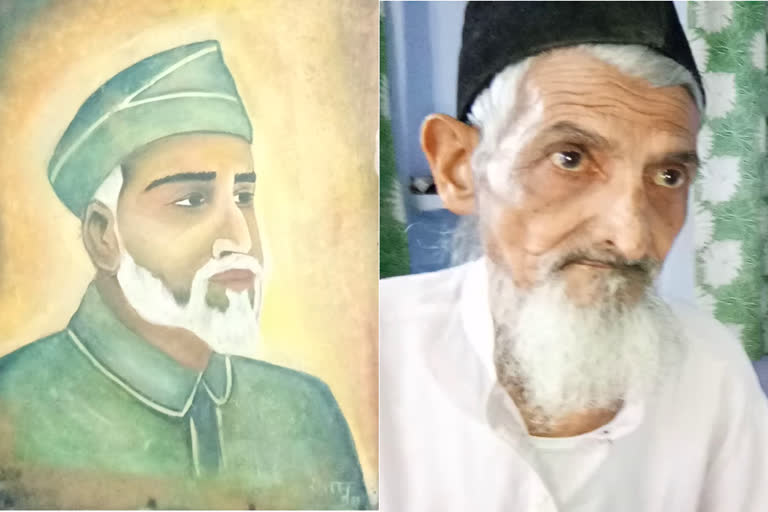
Nawab Shafan Khan, the heir of Nawab Khan Bahadur Khan, who kept the Rohilkhand region free from British rule for eleven months during the 1857 freedom movement, has passed away.
Nawab Shafan Khan breathed his last at the age of 80. The sacrifices of his ancestors are recorded in golden words in the pages of history.
Death of Nawab Shaffan Khan, heir of Nawab Khan Bahadur Khan
Nawab Shafan Khan, a resident of Shahabad area of Bareilly city, has passed away. He was laid to rest in Bhor graveyard near his home after Zuhr prayers. He was the heir to a great family whose ancestors ruled not only Bareilly but also in about 9 surrounding districts. His great-grandfather Nawab Khan Bahadur Khan had set a great example of bravery and sacrifice in the style of his namesake.
He was a hero of the 1857 revolution. He was born in 1791 into a Nawab family. He was the grandson of Rohilla Sardar Hafiz Rehmat Khan.
The slogan of revolution was raised in Meerut on 10 May 1857 and when the news of it reached Bareilly on 14 May, preparations were intensified here too. On 31 May, Khan Bahadur Khan and his generals and soldiers, led by Subedar Bakht Khan, declared a rebellion against the British government.
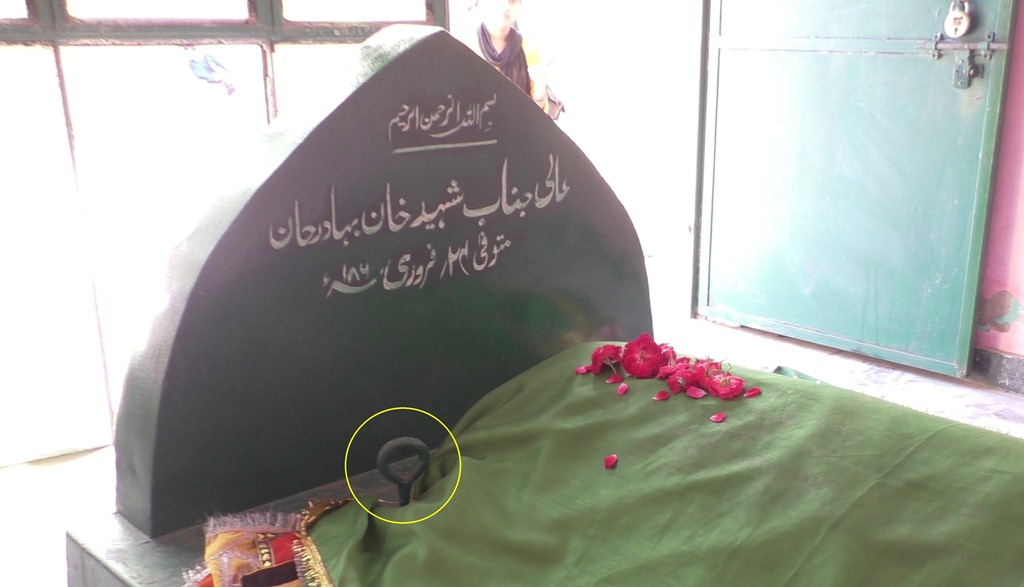
Tomb of Nawab Khan Bahadur Khan
The then magistrate, civil sergeant, jail superintendent and principal of Bareilly College, “C.Buk”, were killed by the revolutionaries. By five in the evening, the revolutionaries had taken control of the Bareilly division.
On June 1, these revolutionaries took out a triumphant procession. When the procession reached Kotwali, a large number of Bareilly citizens crowned Nawab Khan Bahadur Khan and elected him the Nawab of the Bareilly division.
Heir of Nawab Khan Bahadur Khan
An example of the bravery of Nawab Khan Bahadur Khan is that despite the numerous atrocities and abuses of the British government and being a powerful ruler, he kept the Bareilly division free from the rule of the British government for eleven months.
However, later, the British government arrested Nawab Khan Bahadur Khan while fighting a war at one place. He was brought to the same Kotwali where he was awarded the title of Nawab. He was imprisoned and kept in an unknown place.
Then on February 24, 1860, the hero of the urban people was brought on foot to the Kotwali and hanged on the same day at 7:10 am. A strange silence fell in the city and darkness prevailed.
Heir of Nawab Khan Bahadur Khan
To prevent any unrest in the city after the hanging of Nawab Khan Bahadur Khan, his body was taken to the district jail in an armored police vehicle and buried in the premises of the district jail.
Heir of Nawab Khan Bahadur Khan
The special thing is that he was buried with irons. Even today, the irons are clearly visible on the head of his grave. The British government had also buried Khan Bahadur Khan in the prison premises so that people could not gather at his grave and there would be no further excitement in the revolution.
Now let us mention Nawab Shafan Khan, the heir of Khan Bahadur Khan. He struggled for life and livelihood till his last breath. Despite belonging to the Nawab family, his family had to face difficulties for years or even their entire lives. Despite this, the struggle did not end in his life till his last breath.
According to his younger brother Nawab Liaquat Khan, Nawab Shaffan Khan’s health had deteriorated for the past five days. He was unable to go to the mosque to offer prayers during those days. Due to the weak financial condition of the family, he was undergoing treatment at home. But in the morning, his health deteriorated further and he died after a few moments.
source: http://www.etvbharat.com / ETV Bharat – Urdu / Home> Urdu> State / by Urdu translation into English / July 02nd, 2021
“When you help someone, you don’t think of his religion or sect; saving a life is human and a duty. Religion also teaches that human life is the most precious thing in the world.”
This is what Farhan Alam, a young lawyer and social worker from Prayagraj, who saved Ramshankar by giving him timely CPR when the former suffered a heart attack during the Mahakumbh at Prayagraj, Uttar Pradesh, said. Cardiopulmonary resuscitation (CPR) is an emergency treatment done on someone who se breathing or heartbeat has stopped.
Last week’s incident came to light when a video of Farhan Alam administering the life-saving procedure on Ramshankar went viral on social media. In the clip, Farhar is seen applying pressure with both hands on the chest of an unconscious Ramshankar as his wife and child are seen crying.
Later it was revealed that Farhan Alam had saved the life of Ramshankar, a devotee who had come to Maha Kumbh.
Speaking with Awaz-the Voice, Farhan Alam said this was not unusual for him. “It was a part of my responsibility that I performed well. The important thing is that I tried reviving him through CPR and Allah helped me.”
pix02
Remembering the incident, he said, “I was posted at the railway station, but one of my colleagues Muhammad Arshad told me about the passing out of a devotee on the walkie-talkie. I rushed there within a few minutes. He was unconscious and his breathing had stopped. I quickly started the CPR procedure. After a few moments of hard work, he started breathing; his heart was beating. As the wave of life ran through Ramshankar, it also rejuvenated the people around – onlookers and most importantly his child and wife.”
Farhan Alam is working with UNICEF on behalf of the Prayagraj-based NGO HAQ that works on child rights. Along with HAQ, he is also the founder of Prim Rose Siksha Sansthan.
Farhan’s interest in volunteering as a social worker comes from his late father Dr. Noor Alam. In 1994, he trained the Railway Protection Force personnel in emergency medical assistance procedures.
However, Farhan Alam says saving life is always a challenge; so it was in the case of Ramshankar. “I can do my best with all the courage I have. The rest is Allah’s will”.
Farhan Alam told Awaz-The Voice that before the Maha Kumbh, he trained Railway Protection Force jawans led by Inspector Shiv Kumar Singh in the run-up to the Mahakumbh. He imparted them training on administering CPR. This was part of the preparations for the Mahakumhb which is expected to be visited by a record 45 crore people.
Farhan Alam says that the Maha Kumbh Mela is the center of the faith of Hindus, but we all respect it and the residents of Prayagraj are ready to take up every kind of responsibility for its smooth conduct as “All devotees are our guests.”
He says being from Prayagraj it’s “our responsibility and duty to protect them till they return from the Kumbh Mela. I believe that this is the Maha Kumbh of brotherhood and communal harmony. There are also Muslims here who volunteer to serve crores of devotees. Muslim volunteers work day and night with great pride to help the devotees.”
pix03
Farhan Alam told Awaz-The Voice that at the Maha Kumbh Mela, there is no difference between Hindus and Muslims. “No one stopped us from serving because of our religion nor did anyone object. We, the people of the city, consider it our social and human responsibility to serve the visitors. We all work with the spirit that we should tackle problems that devotees might face. Volunteers have no religion; they are in the service of humanity.”
Later, Farhan Alam met Ram Shankar in the hospital in Prayagraj. All those in the hospital came to meet and thanked him for his act. However, Farhan Alam was happy to see Ramshankar’s smiling countenance.
Interestingly, Farhan Alam also shared a video clip in which he is seen administering CPR on a devotee at a religious festival on social media.
Speaking as a volunteer, Farhan Alam told Awaz that this incident demonstrated to common devotees how much preparations have been done by the administration for the Mahakumbh.
People are praising Farhan Alam for this deed and calling him the real hero of Mahakumbh.
source: http://www.awazthevoice.in / Awaz, The Voice / Home> Stories / posted by Aasha Khosa, ATV / January 30th, 2025
From technology to hospitality, Muslim businessmen are raising India’s stature on the global stage
New Delhi :
In the ever-evolving world of business, several prominent figures are not just shaping the Indian economy but also placing the country on the global map. Among them, six Muslim businessmen stand out, with their remarkable ventures spanning across various sectors, such as technology, healthcare, retail, and hospitality. These influential entrepreneurs are enhancing India’s image worldwide, further solidifying its position in the global business arena.
Azim Premji – The Tech Magnate Azim Premji, often regarded as the richest Muslim businessman in India, has played a pivotal role in the growth of India’s technology sector. As the chairman of Wipro, one of the country’s largest IT companies, Premji’s leadership has helped the company expand its reach across various international markets. His contributions extend beyond the business world as well. “India’s rise in the global tech landscape is closely tied to Wipro’s innovation and excellence,” said Premji. Through Wipro, Premji has established himself as a philanthropist, with substantial donations to charitable causes.
Meraj Manal – The Herbal Business Visionary Meraj Manal, the driving force behind the success of ‘Himalaya,’ India’s prominent herbal company, is known for his dedication to promoting natural wellness. His business expertise has helped Himalaya expand into a globally recognised brand, selling products in over 90 countries. Manal attributes his success to innovation and a commitment to quality. “We’re not just selling products; we’re selling a way of life,” he shared. His continued success has played an essential role in reinforcing the global appeal of Indian herbal and natural products.
Rafiq Malik – Footwear Industry Leader Rafiq Malik, founder and owner of ‘Metro,’ one of India’s leading footwear brands, has seen significant international growth. His entrepreneurial vision has positioned Metro as a key player in the retail space, both in India and abroad. Under his leadership, Metro has expanded its footprint, contributing to the growing demand for Indian brands in global markets. “Metro is about more than just shoes; it’s about delivering quality and style to every customer,” said Malik.
Yusuf Ali – Hospitality and Retail Mogul Yusuf Ali, owner of ‘Lulu,’ one of the largest retail chains and shopping malls in many world countries and in India, has firmly placed his mark in the retail and hospitality sectors. With Lulu Mall’s presence in multiple countries, his business is recognised globally. From large-scale shopping centres to luxury hotels, Yusuf Ali’s diverse portfolio is a testament to his entrepreneurial prowess. “Our mission is to provide an unparalleled shopping experience for our customers, no matter where they are,” Yusuf Ali explained.
Other Notable Names While Premji, Manal, Malik, and Yusuf Ali are among the most prominent, several other Muslim businessmen are also contributing significantly to India’s economic growth. Their ventures span multiple industries, from healthcare to infrastructure, highlighting the diversity and dynamism of Muslim entrepreneurs in India.
These businessmen not only continue to lead successful ventures but also serve as role models for the younger generation, proving that entrepreneurship knows no bounds. Through their business acumen, these individuals are ensuring that India continues to grow as an economic powerhouse on the global stage.
source: http://www.clarionindia.net / Clarion India / Home> Editors Pick> India / by Team Clarion / December 07th, 2025
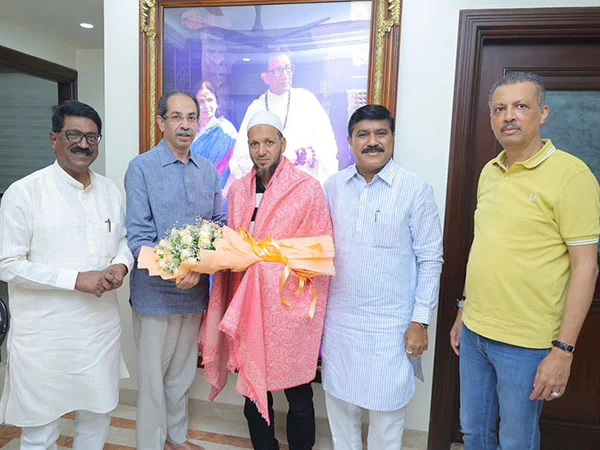
Shiv Sena (UBT) chief Uddhav Thackeray on Tuesday felicitated Arif Bamane who rescued around 35 passengers following the collision of a Navy speedboat with a passenger ferry off the Mumbai coast that resulted in the death of 15 people.
In a post on X, the party informed about the felicitations. The post also contains photographs of Thackeray with Arif.
“Arif Bamane, who showed bravery in saving the lives of 35 passengers in the Nilkamal boat accident, was honoured by party chief Hon. Uddhavsaheb Thackeray. Shiv Sena leader MP Arvind Sawant, Secretary MLA Milind Narvekar and Deputy Leader MLA Manoj Jamsutkar were present on this occasion,” said the party.
The tragic maritime accident occurred on December 18 near Mumbai when an Indian Navy boat collided with the passenger ferry Neelkamal causing it to capsize. The ferry was headed to the Elephanta Caves from Gateway of India. A total of 101 people were rescued.
According to reports, on receiving a distress call, Arif and his team rushed to the accident site, traversing a distance typically covered in 18–20 minutes in just eight minutes. Describing the horrific scene to reporters, Arif said, “It was devastating. People were crying for help, some floating on the waves, while others struggled to stay afloat without life jackets. I saw a little girl lying motionless, with her lungs filled with water. I also rescued a newborn who wasn’t breathing and revived him by hanging him upside down.”
Arif, aboard his boat Porwa, a pilot vessel used to assist larger ships in anchoring, led his team in pulling people out of the treacherous waves. While many at the Gateway of India stood as helpless spectators, praying for the victims, Arif jumped into action. His priority was the vulnerable — children and women — whom he dragged to safety, calmed with reassuring words, and provided them with life jackets.
source: http://www.clarionindia.net / Clarion India / Home> Editors Pick> India / by Team Clarion / December 24th, 2024