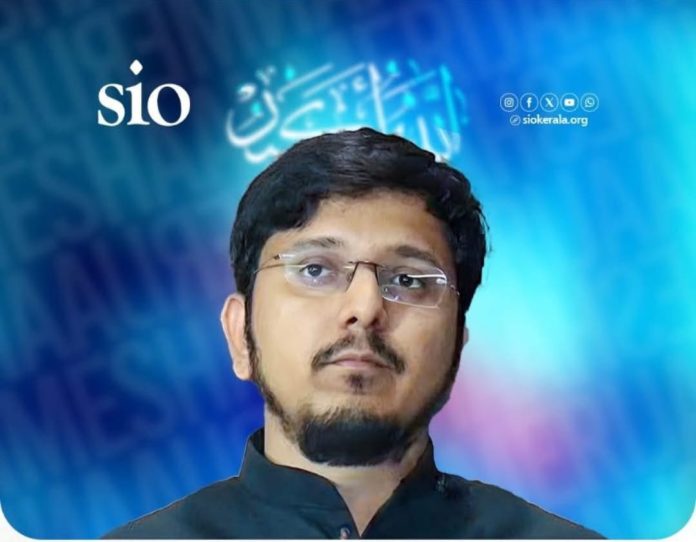
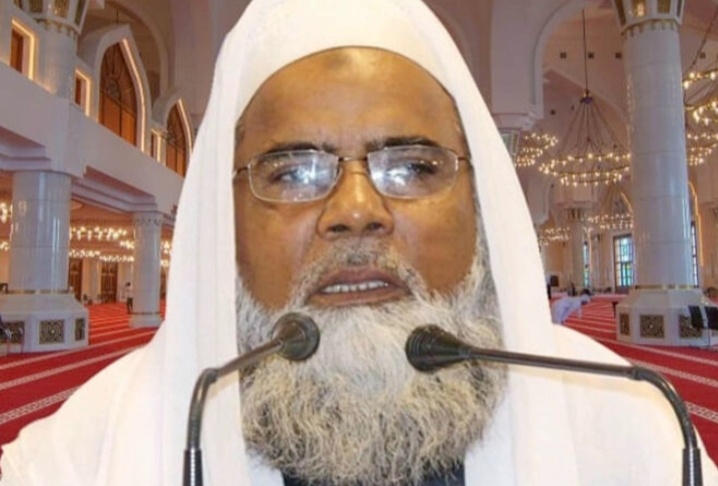
Amidst these chants, almost at 1 AM today, the Ameer-e-Jamaat and Patron of SIO Syed Sadatullah Husaini announced that the National President of Students Islamic Organisation of India (SIO) for the upcoming term 2025-26 would be Abdul Hafeez.
The announcement was made during the ongoing two-day All India ZAC (Zonal Advisory Council) Meet of the organisation held in Udupi, Karnataka on Friday and Saturday.
Many people were overjoyed, while one person burst into tears. That person was none other than the newly elected National President, Abdul Hafeez himself.
For the past 42 years, the Students Islamic Organisation of India (SIO) has been preparing students and youth to reconstruct society according to divine guidance. To ensure focused work in a specific direction, it is essential for any organisation to have a president.
This is why whenever the Prophet Muhammad ﷺ sent a group of people on a journey, he would appoint one among them as their leader (responsible person).
According to the constitution of the Students Islamic Organisation of India (SIO), it is essential for organisational office-bearers to possess the following qualities:
They should be a member of the organisation but must not aspire for any position.
They should excel in terms of religious knowledge, piety, understanding of matters, wisdom, sound judgment, adherence to the constitution, steadfastness and dedication in the path of Allah, and organisational abilities, making them overall the most suitable candidate within their electoral or appointed circle.
The SIO elections take place without any exit polls or opinion polls, and here, it is the winner who feels the greatest burden. In this system, it is not the opponents who cry, but the one who wins.
Abdul Hafeez has been engaged with SIO since his school days and was awarded with the Membership of SIO in 2012. Previously served as Regional president, City president of SIO Hyderabad, National Secretary of SIO of India, State President of SIO Telangana, and now Abdul Hafeez is newly elected President, SIO of India for the term 2025-26.
Abdul Hafeez is basically from Adilabad, later shifted to Hyderabad for education. He is a mechanical engineer by profession, graduated M.E. from Osmania University, and M.A. in Sociology from Nizam College.
May Allah give him more steadfastness, knowledge, wisdom, courage and patience to lead the students community of the beloved nation.
source: http://www.radiancenews.com / Radiance News / Home> Focus> Report / Radiance News Bureau / November 30th, 2024
Kakrauli Village (Jansath Tehsil, Muzaffarnagar District),UTTAR PRADESH :
Zia Chaudhary, SP district president visited Tauheeda’s home to express their support towards her.
Photo:X
A Muslim woman named Tauheeda has emerged as a symbol of bravery after confronting a police officer who pointed a pistol at her while she was on her way to vote during the by-elections at the Meerapur assembly seat in Uttar Pradesh on November 20, 2024.
The incident occurred when Tauheeda, a resident of Kakrauli, faced SHO Rajiv Sharma, who allegedly tried to intimidate her into abandoning her right to vote.
A photograph capturing this tense moment quickly went viral, igniting public outrage and drawing attention to the broader issues of voter intimidation during the elections.
In a statement to reporters, Tauheeda declared, “I am not afraid of bullets… I was not allowed to vote.”
Following her courageous stand, the Samajwadi Party (SP) announced plans to honour her for her fearless act amidst reports of violence and police misconduct during the polling process, which included allegations that officers were preventing voters, particularly from Muslim communities, from exercising their franchise.
SP announce plans
The SP announced plans to honour Tauheeda for her courageous stand against an armed police officer during the recent by-elections in Uttar Pradesh.
Zia Chaudhary, the district SP president, along with other party leaders, visited Tauheeda’s home to express their support and assure her that party president Akhilesh Yadav would personally felicitate her.
Tauheeda booked
However, despite her courageous stand, Tauheeda was reportedly among those booked by police for alleged violence during polling. The SP leaders have accused the police officials of harassing Muslim voters, pulling veils off some burqa-clad women to take their photographs.
Police officials suspended
In response to the complaints by the Samajwadi Party, the Election Commission suspended at least five police officers involved in the incident. Others were removed from poll duty for flouting Election Commission (EC) guidelines and stopping electors from casting votes.
source: http://www.siasat.com / The Siasat Daily / Home> News> India / posted by Sayima Ahmed / November 23rd, 2024
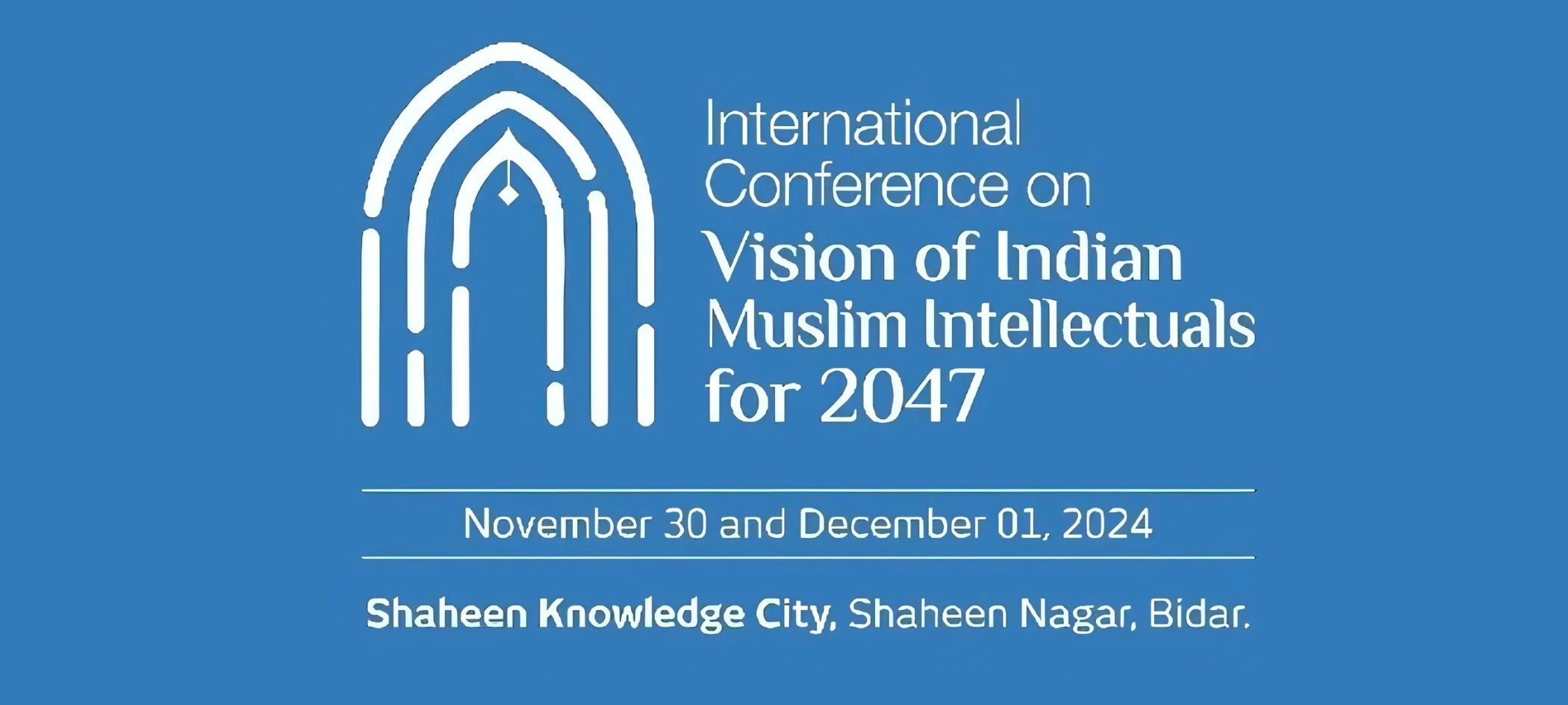
The Shaheen Group of Institutions is set to host a groundbreaking international conference on November 30 and December 1, 2024, in Bidar, Karnataka.
Touted as India’s first event of its kind, the conference aims to spotlight the contributions of Indian Muslims in critical sectors such as education, politics, media, economics, IT, social services, and madrassa education, envisioning their role in shaping a developed India by 2047, the centenary of the nation’s independence.
The conference will serve as a platform for thought leaders, intellectuals, and influencers from India and abroad to network and exchange ideas. Attendees will deliberate on the community’s potential to drive transformative change in various fields, aligning with India’s vision for growth and development.
This pioneering event highlights the Shaheen Group’s commitment to fostering dialogue and collaboration within the Indian Muslim community to contribute effectively to the nation’s progress.
source: http://www.thehindustangazette.com / The Hindustan Gazette / Home> News> Education / by Shifa (image source: shaheengroup.org) / November 27th, 2024
New battle-lines are being drawn in Parliament, and out of it, with waqf and its management at the centre of a major political slugfest.
New battle-lines are being drawn in Parliament, and out of it, with waqf and its management at the centre of a major political slugfest.
At this juncture, it is appropriate to recall the achievements of Hakeem Abdul Hameed, the founder of Jamia Hamdard, whose birth centenary was celebrated in December 2008, and the waqf he founded ~ the Hamdard (Waqf) Laboratories ~ is well into its ninth decade. Speaking during Hakeem saheb’s centenary celebrations at Jamia Hamdard, then Vice-President of India Hamid Ansari observed, “in our recent history Hakeem Abdul Hameed is probably the first, and the most successful, to resurrect the waqf concept in innovative ways so that a modern company was registered as a wakf institution whose income was to be used for public good in the areas of education, medical relief and the advancement of knowledge.
It was an important signal in the immediate aftermath of the painful Partition of India to thread together the religious element with socio-economic progress and alleviation of poverty.” The Vice-President added, “Since the 1930s and 1940s, over 25 educational research institutions were established, culminating in the Jamia Hamdard. The range is astounding ~ ranging from primary education to post-doctoral research, from Unani Medicine to Information Technology, from Islamic Studies to Business Management. Besides the university, the colleges and hospitals established for service to society, there are a set of institutions that bear testimony to his scholarly interests.
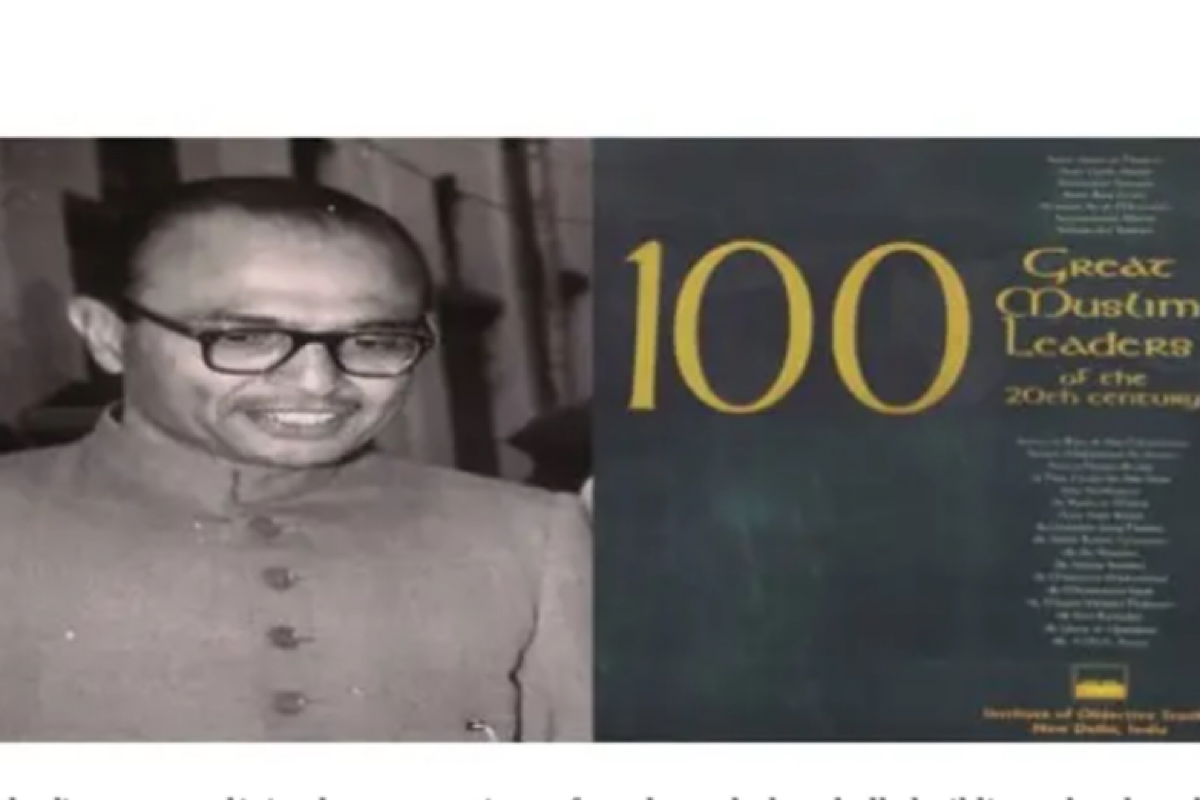
I refer to the Institute of History of Medicine, the Institute of Islamic Studies, the Ghalib Academy and the Institute of Federal Studies. Each of these has rendered significant service to scholarship.” Undoubtedly the list of achievements is long but as Hamid Ansari commented, “these achievements hold a mirror to the potential of what public-minded personalities can achieve through the institution of waqf for the socio-economic, educational and cultural betterment of the community. Future generations would behold Jamia Hamdard and Talimabad and wonder at the capacity, vision and dedication of an individual.” Truly so, for in ‘100 Great Muslim Leaders of the 20th century’, a publication of the New Delhi based Institute of Objective Studies (IOS), Dr Mohd Manzoor Alam provided a larger global context to understanding the achievements of Hakeem Abdul Hameed as an outstanding educationist and social reformer, along with his equally illustrious younger brother Hakeem Mohammad Said.
“In the face of formidable challenges which marked the lives of a selected 100 great Muslim men and women of the 20th century,” wrote Dr Alam in the preface, “their lives, struggles and contributions reflect the response of Muslims to the multiple challenges over the century…the ‘100 Great’ belonged to five continents and they came from different cultural and linguistic backgrounds, they were inspired by the eternal values and principles of Islam and the precepts of their illustrious forebears in the annals of Islamic history.” Through the tumultuous decades of the 20th century, Dr Alam observed that the ‘100 great Muslim leaders’ were unwavering in their “faith in the Holy Quran describing Muslims as ‘good people’, whose mission on earth is to help others live a meaningful life.
Even in the darkest hour the world of Islam was not plaued by a dearth of men and women who had the stature, mettle and competence to rise to the occasion. The two revered Hakim brothers ~ Hakeem Abdul Hameed and Hakeem Mohammad Said ~ who revived the Unani or Greco-Arab system of medicine and created two institutions, the Hamdard in India and its twin in Pakistan, are inspiring examples of leadership. They did not really belong to any one place. This is aggravated by Western colonial redrawing of the Muslim world map: Hakeem Abdul Hameed in India and Hakeem Mohammad Said in Pakistan were, in fact, two sides of a single sub-continental picture of Islamic excellence.”
The lifetime achievements of Hakeem Abdul Hameed were myth-busters: it had been an enduring myth of the 20th century that the Muslim world had been in deep slumber, their state of somnolence stretching back to centuries. Said Dr Manzoor Alam, “the 20th century instead turns out to be a period of extraordinary intellectual, moral and social awakening and struggle across the Muslim world with societies from Malaysia to Morocco trying hard to reform, promote and practice Islam as a living reality that could guide them through difficult times.” The Hamdard story began over a century ago when Abdul Hameed’s father, Hakeem Hafiz Abdul Majeed, established the Hamdard Dawakhana in 1906.
The vision was implicit in the name. Hamdard means ‘the sharing of pain’ and willingness to mitigate it was to be the motto of future generations as well. The vision was also to break the exclusivity of medicinal preparation of each Unani Hakim and make it available to the masses through modern laboratories along scientific lines. A traditional system of medicine was thus modernised with a nationalist inspiration and an indigenous base. “For this reason, Hakeem saheb can rightly be called a Mujaddid (or reformer) of Unani medicine,” said Ansari in the centenary speech.
Writing in ‘Muslim Mirror’, Abdul Rashid Agwan detailed the story. After Independence in 1947, Hamdard University or Jamia Hamdard has been the first institution that was established and managed on the basis of waqf income. In 1948, the manufacturing and selling unit of Hamdard Daw – akhana, Hamdard (Waqf) Laboratories, was converted into an endowment. Its deed dated 28 August 1948 provided for “Qaumi Income” (Public income) and “Khandani Income (Family income). However, the concept of family income was abolished by a declaration of the Settler/ Founder-Wakif Mutawalli in 1985, with retrospective effect from 1 January 1973. From the profits of the company, Hamdard Tibbi College was set up in 1963 in Old Delhi which later shifted to its present 90-acre campus in Tughlaqabad. In order to effectively manage and utilize the income accrued from Hamdard Waqf Laboratories for the promotion of its objective, Hamdard National Foundation was created on 12 May 1964 to disburse company profits to promote interests of society.
All profits of the company were obligated to go to the Foundation. Both Hamdard and the Foundation were registered under Section 12A of the Income Tax Act. Coinciding with the establishment of the Hamdard National Foundation in India, Hamdard Waqf Laboratories Pakistan also formed Hamdard Foundation Pakistan the same year. Its founder, Hakeem Muhammad Said, expressed the mission in these words, “Hamdard … has chosen to serve through activities for the promotion of good health and education ~ the twin pillars of progress.” Through the 1950s and 60s, when educational institutions namely, Indian Institutes of Technology, Indian Institutes of Management, AIIMS and Jawaharlal Nehru University ~ were being established with Government resources and with the focus of providing a new nation the benefit of modern science and education, Hakeem Abdul Hameed was single-handedly building schools, colleges and the university under the Jamia Hamdard banner, relying on internal resources of Hamdard Waqf Laboratories, and focused on rejuvenating the millennia-old Greco-Arab medicine which came to be simplistically known as Unani medicine. In this long process of reviving ancient knowledge, Hakeem saheb’s original contribution was the use of modern scientific methods and technology for the standardisation and manufacture of Unani medicine. “Quite early in life, when he was studying medicine at the Tibbia College, he was deeply impressed by the systematic and methodical approach of Hakeem Ajmal Khan towards the classification and standardisation of Unani medicines,” the IOS publication narrated. The Hakeem brothers travelled across Asia and Europe in the 1950s closely observing modern methods and techniques of drug making. They were convinced of the relevance and necessity of using modern technology for medical experimentation and manufacture of Unani medicines. At Hamdard Laboratories, Hamdard University, Hamdard Nursing Home and Majidia Hospital, these modern methods and technology were put into good use, ensuring the regimen of Unani system of medicine could co-exist with modern science and technology.
“This integrated, holistic approach to diagnosis and therapy is one of the most original and outstanding contributions of Hakeem Abdul Hameed,” the IOS publication stated. Eleven books on Unani medicine: Arab medicine and its relevance to modern medicine; Earth, elements and man: Search for a solid foundation of the theory and practice of medicine; and the magnum opus Qarabadin-e-Hamdard or Hamdard Pharmacopoeia are testimony to Hakeem Abdul Hameed’s medical observations, experiences and researches. In the 1980s, he initiated path breaking research on Ibn Sina’s Al-Qanun fit-Tibb or The Canon of Medicine. The 3-volume study was made available in multiple languages, including English.
Several national and global awards were bestowed on Hakeem Abdul Hameed who lived an austere life on campus till the age of 91, with a Gandhian determination to build the new nation through promotion of medicine, modern education and public charity. Like Sir Syed Ahmed Khan and Hakeem Ajmal Khan, Hakeem Abdul Hameed remains a towering personality whose contribution to modern education and medicine is second to none. It is in the domain of waqf management that Hakeem saheb gave modern India a new path for sustainable, equitable development.
(The writer is a researcher writer on history and heritage issues and a former deputy curator of Pradhanmantri Sangrahalaya)
source: http://www.thestatesman.com / The Statesman / Home> Opinion / by Raju Mansukhani, New Delhi / October 07th, 2024
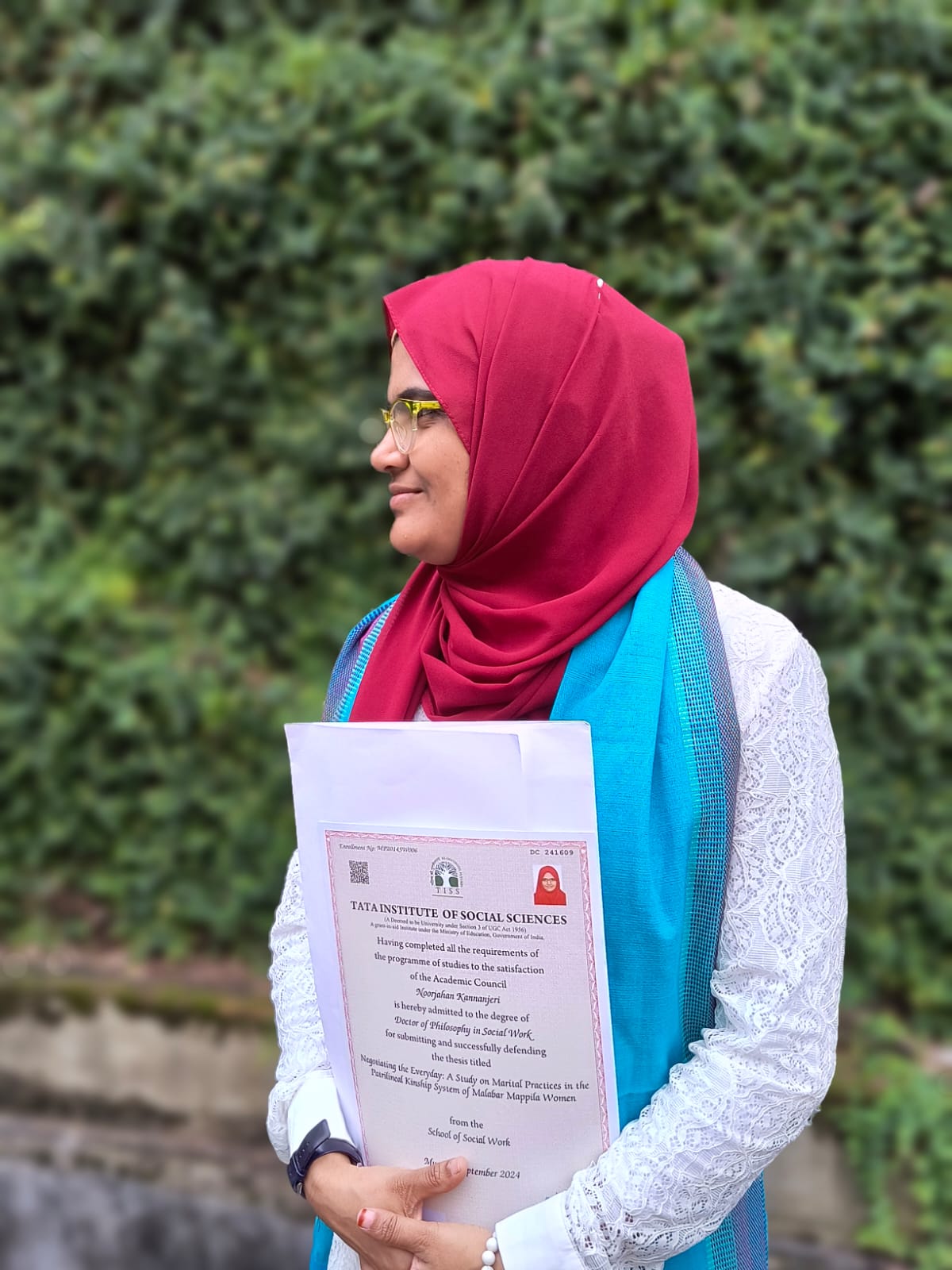
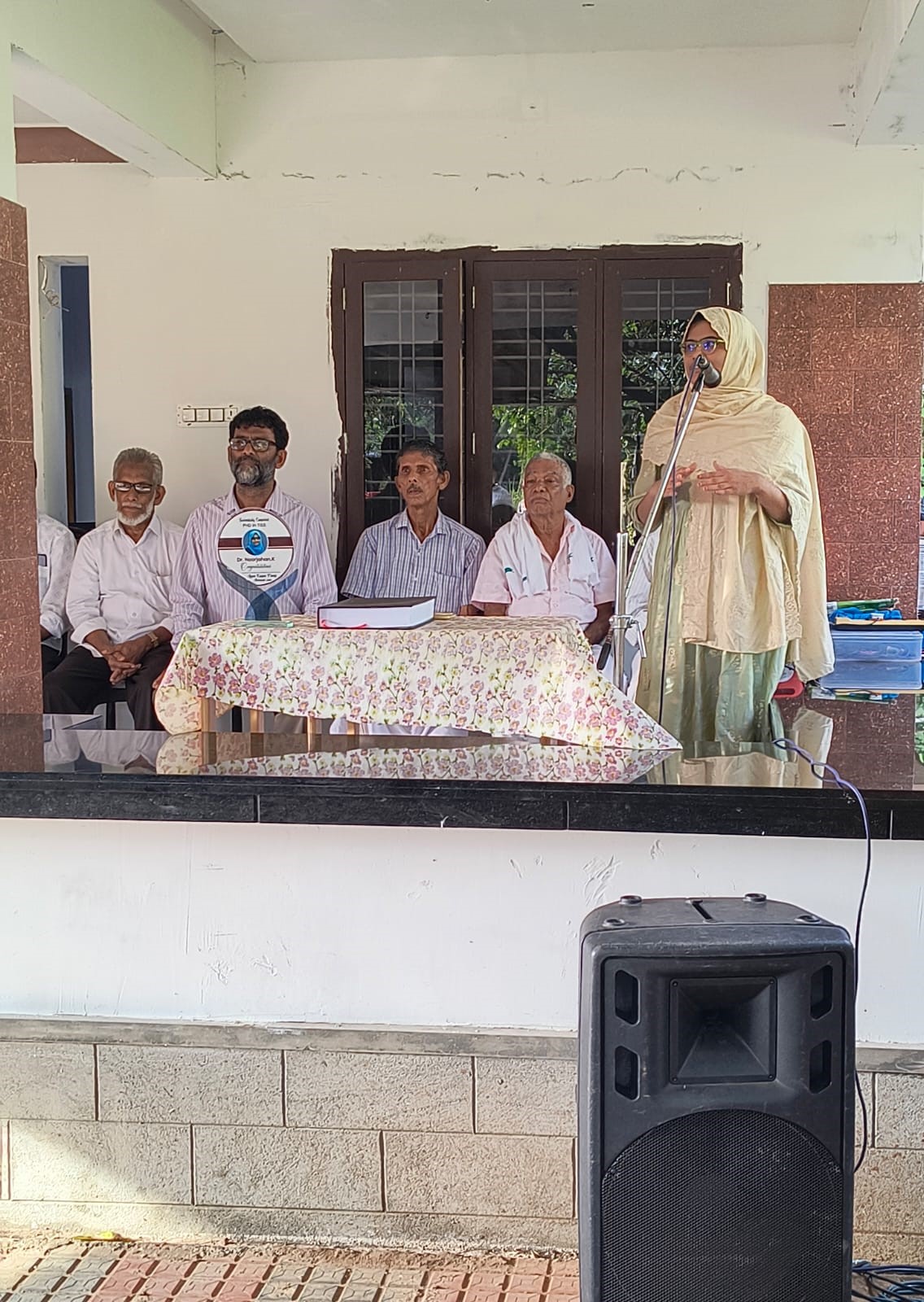
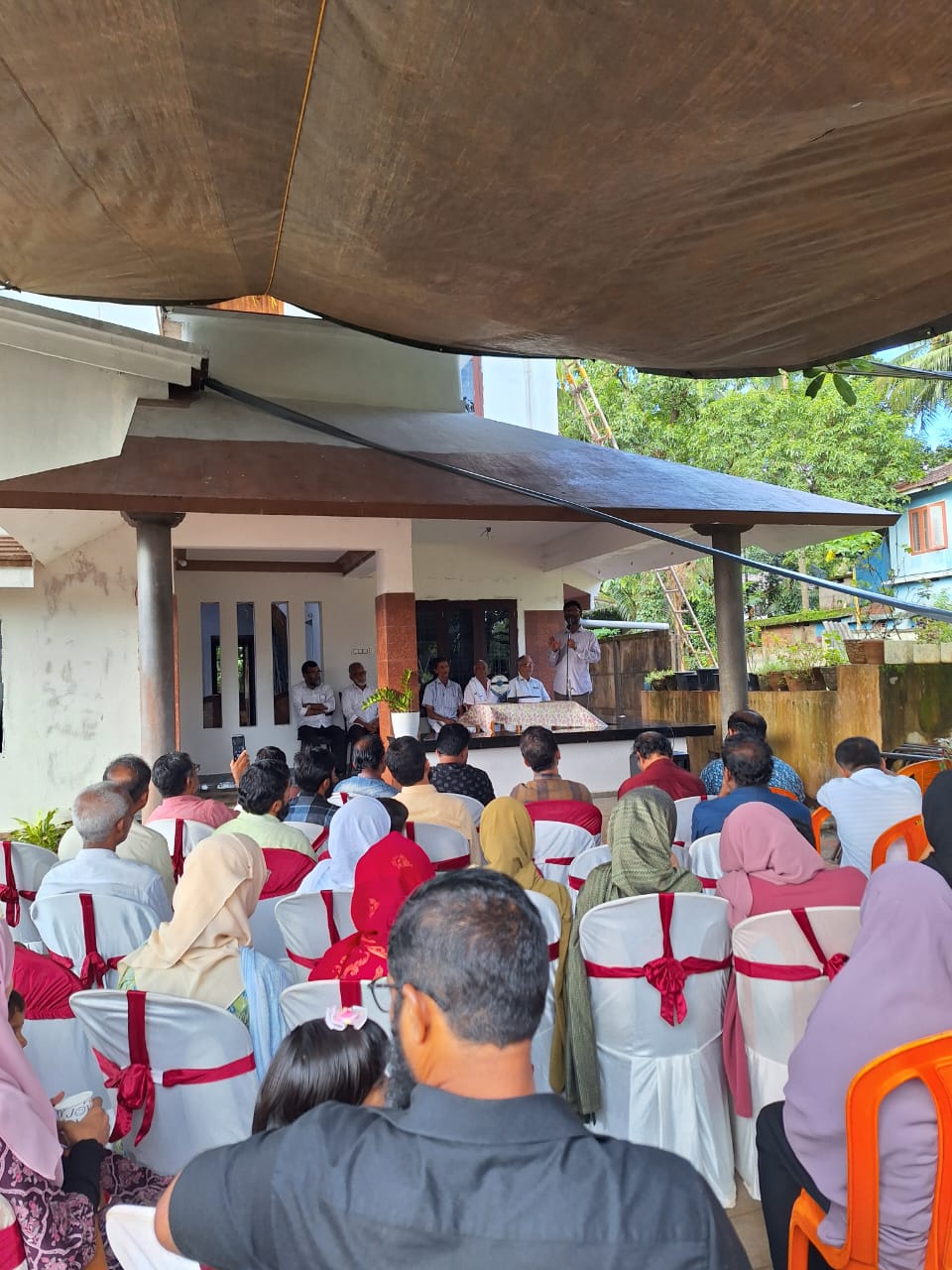
How do we celebrate our achievements, especially when it is an academic milestone? For many, it is posting a proud announcement on social media, celebrating with family and friends and sharing the moments with the world. But for Noorjahan, a 37-year-old woman from Malappuram, the celebration of her doctorate was a unique affair — one that blended tradition, personal triumph and community spirit in a way rarely seen. Instead of a quiet reflection or a typical party, she hosted what she called a ‘Ph.D. wedding’, erecting a grand pandal (a traditional tent used for large gatherings) outside her home and inviting close family, friends and those who had supported her journey.
She wanted to highlight the significance of the occasion in a way that went beyond the usual. “Why not celebrate an academic achievement like we celebrate a wedding, the arrival of a child or a baby’s first haircut?” she asked, reflecting on the importance of her journey.
Noorjahan invited not just her friends, but also those who had been part of her research or who had supported her along the way. “We always focus on the results, but we do not often talk about the process that leads to them,” she told TwoCircles.net. Her aim was to open a conversation about that very process —the often-overlooked work behind the doctorate.
Despite her active presence on social media, she chose not to post about the event herself. Instead, the world learned about her unconventional celebration through the posts of her friends and well-wishers. It was one of these posts that led to the term “Ph.D. wedding”, coined by writer and social critic Emmar Kinalur, who attended the event. In his Facebook post, Kinalur recalled the loud applause that followed when Noorjahan spoke about her journey, particularly from the women and girls in the audience.
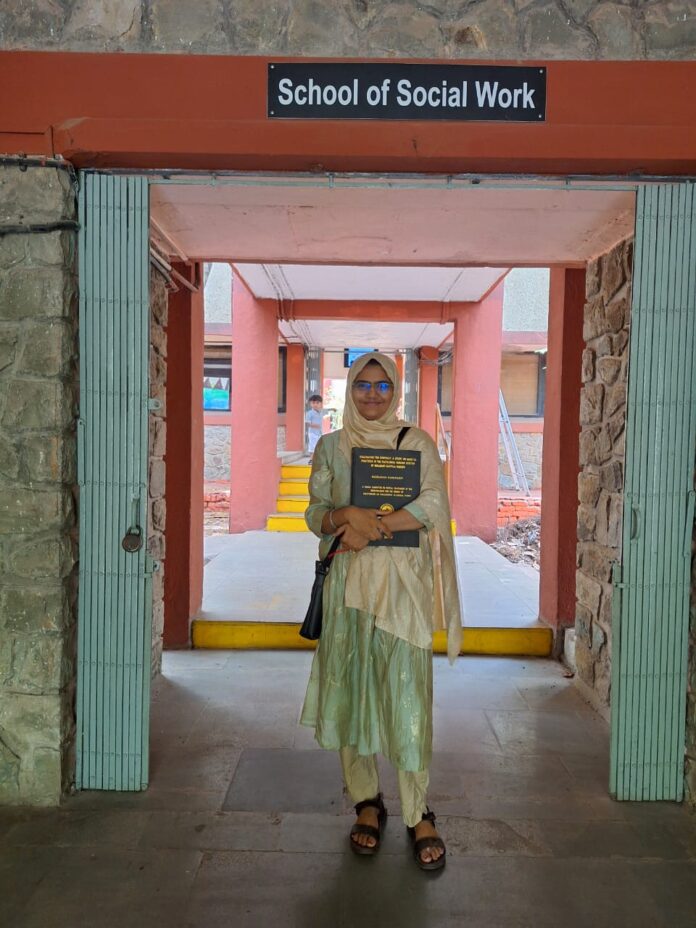
Dr Noorjahan with her PhD thesis
The Everyday Lives of Malabar’s Muslim Women
For Noorjahan, the uniqueness of her celebration mirrored the unconventional nature of her research. Her thesis, titled Negotiating the Everyday: A Study on Marital Practices in the Patrilineal Kinship System of Malabar Mappila Women, delves deep into the lives of Muslim women in the Malabar region of Kerala. What inspired her to choose this topic? For Noorjahan, the subject was deeply personal and autobiographical.
When she began her Ph.D. journey in 2014, the societal discourse was dominated by debates over reducing the marriageable age of Muslim girls to 16. This reminded her of the negotiations she herself had to make to pursue higher education. “I had to convince people at every stage of my life — why I was doing a Ph.D.; why I was going to Mumbai; and whether it would delay having children,” Noorjahan explained.
The decision to pursue her research at the Tata Institute of Social Sciences (TISS) in Mumbai was also a negotiation, as the institution offered an off-campus option for those with an M.Phil. She was one of many women balancing education, work and family, all while negotiating the pressures of everyday life.
Noorjahan’s research journey was not an easy one. It took her a decade to complete, during which she juggled the demands of raising two children, teaching in colleges, working as a psychiatric social worker, co-authoring a book on a prominent Kerala journalist and contributing to social media and magazines. “This process has elevated my perspectives beyond skill development and knowledge growth,” she wrote on her Facebook wall. “Looking through that lens, this was also an evolutionary process; and I am proud of it.”
Guardianship and Widowhood
When asked about the most significant findings from her research, Noorjahan pointed to two key aspects: guardianship and widowhood. These issues, though long present in society, took on new meanings in the context of her work. She explored the concept of wali (guardian) in Islamic law, a role typically filled by a father or brother, but in the absence of a male guardian, a qazi or judge assumes this position during the wedding ceremony. However, Noorjahan highlighted how, in practice, this system often lacks real responsibility, and the role of the guardian is reduced to a ceremonial one.
Dr Noorjahan speaking at the ‘PhD wedding’ function held at her home
Equally important in her research was the issue of widowhood. Noorjahan pointed out that the traditional practices surrounding widowhood in the Malabar region have been influenced by Brahminical patriarchal systems, despite Islamic principles that allow widows the freedom to decide their future once the iddah (waiting) period is over. Instead of offering this autonomy, society often seeks to rehabilitate widows within the same patrilineal framework, framing their inclusion as a virtuous act of charity. “While we call it charity or virtuous deeds, it is women who suffer under this framework,” she argued.
The Support of Women in Her Life
Throughout her academic journey, Noorjahan found steadfast support in the women around her, particularly her mother, Saleemath V – a retired teacher from their hometown in Areekode. Saleemath was a constant presence, travelling with her daughter to Mumbai, caring for the children when Noorjahan was busy and offering her moral and emotional support. “My mother was also learning and changing in her own way, just as I was evolving through my education,” Noorjahan said, underscoring the importance of familial support for women pursuing careers or higher education after marriage and children.
Saleemath herself reflected on her daughter’s resilience, saying it was Noorjahan’s determination and steadfastness that had enabled her to complete her Ph.D. despite the many challenges, including the demands of family life. “Many women give up halfway, but Noorjahan did not,” she proudly noted.
The ‘PhD wedding’ function at the home of Dr Noorjahan
Empowering Women
Now, Dr. Noorjahan works as the head of the Department for the Child and Women Resilience Project at Thanal – an NGO in Kozhikode run by the Daya Charitable Trust. The project aims to improve the lives of widowed, deserted, divorced or separated women and their children in the Wayanad and Kannur districts of Kerala.
Noorjahan’s work continues to reflect her dedication to empowering women and advocating for their rights, a theme that runs through both her academic research and her professional life.
Through her unique “Ph.D. wedding” and her groundbreaking research, Dr. Noorjahan has not only celebrated her own academic achievement but also sparked a wider conversation about the roles of women – especially in the context of the Malabar Muslim community. Her work, her resilience and her commitment to her community continue to inspire those around her — especially the women whose lives she seeks to improve.
source: http://www.twocircles.net / TwoCircles.net / Home> India News / by Najiya O, TwoCircles.net / November 17th, 2024
Amidst an unprecedented victory for Mahayuti in the Maharashtra Assembly elections, all eyes were on the Malegaon constituency, which has the highest number of Muslim voters. The counting of votes in this constituency was the most thrilling thing. The voting pendulum swung with every round of counting. In the initial rounds, former MLA Asif Shaikh of the ‘Islam’ party led and after the 15th round, MIM candidate and MLA Maulana Mufti Mohammad Ismail emerged in a dominating position.
In the end, Maulana Mufti emerged victorious in a recount of votes.
The battle for Malegaon Central, with over 80% Muslim population, kept everyone on edge until the last moment. Finally, it was announced that Maulana Mufti Mohammad Ismail (MIM) received 109,653 votes. Asif Shaikh, contesting from the new ‘Islam’ party, was just 162 votes behind with 109,491 votes.
By securing victory in Malegaon, Maulana Mufti opened AIMIM’s account in Maharashtra and retained his seat. This marks his second consecutive win. He has thus become a MLA for the third time.
Towards the end of the assembly election, Maulana Mufti’s health deteriorated and it led to a sympathy wave in his favour. His supreme religious position as a Mufti, Imam of Idgah, respect among voters, and his strong opposition to crimes contributed to his victory.
On the other hand, independent candidate and former MLA Asif Shaikh got entangled in answering criminal allegations against him during the campaign. His responses failed to satisfy the voters. Additionally, the consolidated votes of the Momin (Ansari) community went to Maulana Mufti.
Asif Shaikh’s assumption that the Momin (Muslim) votes would be divided due to the Samajwadi Party’s Shan-e-Hind proved wrong.
Shan-e-Hind, daughter of former minister Nihal Ahmed, who had a record of winning five consecutive terms from the constituency, received only 9,580 votes while Congress’s Ejaz Beg received 7,485 votes.
Conversely, Maulana Mufti received strong support from the Dakhni community and the influential Yunus Isa family.
Maulana Mufti successfully convinced voters that Asif Shaikh and his family, who established the ‘Islam’ party, had a hand in the city’s crime. This significantly impacted Shaikh. Due to these allegations, the power loom factory owners in the city supported Maulana. This time, the campaign focused more on personal attacks rather than development issues.
It is said that Maulana benefited from his cordial relations with Nashik district guardian minister Dada Bhuse. Record development works were carried out in the Malegaon Outer constituency.
The campaign that these works would continue in the central constituency with Bhuse’s support also helped Maulana. On the other hand, Asif Shaikh’s direct opposition to Bhuse did not sit well with some. Despite being an opponent, Bhuse’s development works are appreciated by Muslim voters in the central constituency.
The campaign for the opportunity to complete approved important works in the constituency and the inauguration of some development works in the final stages proved beneficial for Maulana Mufti Mohammad Ismail. Despite facing opposition from Shan-e-Hind and Ejaz Beg, who were with him in the previous election, Maulana Mufti emerged victorious.
The influence of these two was minimal. Both secured only ten thousand votes. However, the narrow defeat of Asif Shaikh left him and his supporters disheartened.
With Maulana Mufti Mohammad Ismail’s victory, AIMIM opened its account in Maharashtra. The party had fielded 16 candidates in the state but only managed to win the Malegaon Central seat. AIMIM chief Asaduddin Owaisi congratulated Maulana Mufti Mohammad Ismail on this victory.
In his tweet, he wrote, “Congratulations to Mufti Ismail Sahab on being elected as Malegaon MLA for a second time. I am thankful to the people of Maharashtra who voted for us in large numbers. To our candidates, party workers, and supporters, I urge you all to not lose heart and to work with renewed resolve. If anything, the election results show that the people are looking for a genuine political alternative and that Majlis has established itself in Maharashtra’s politics.
source: http://www.awazthevoice.in / Awaz, The Voice / Home>Story / by ANI / November 25th, 2024
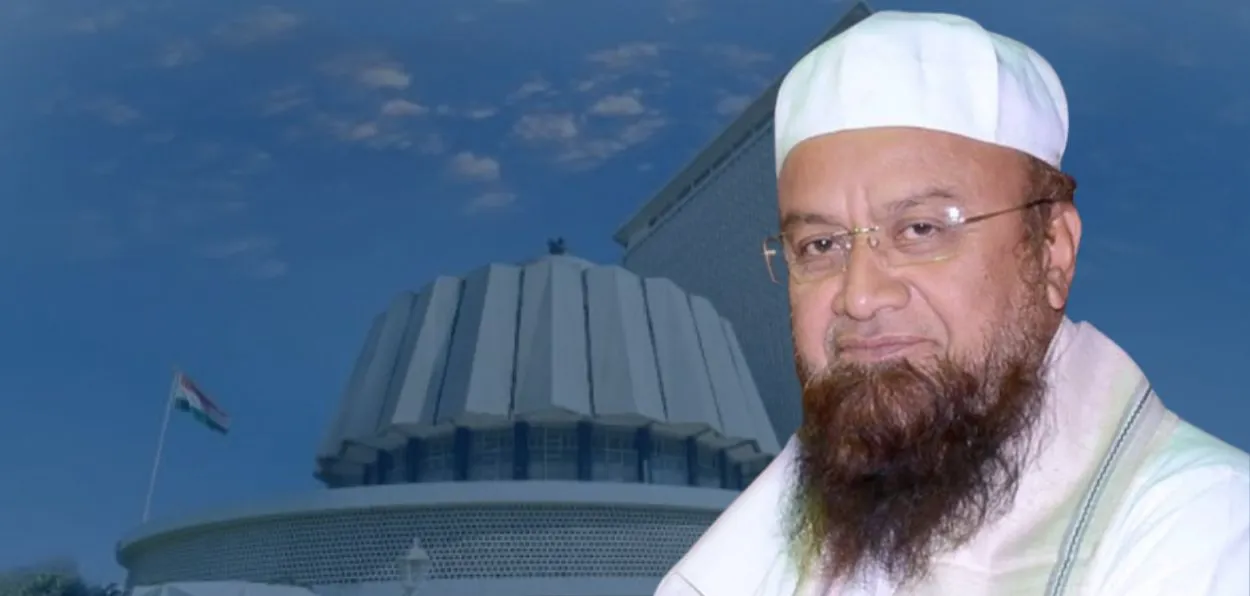
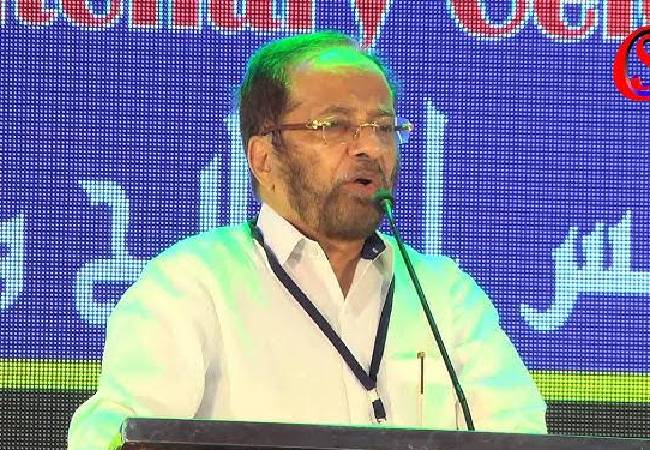
Maulana Khalid Saifullah Rahmani was re-elected president of the All India Muslim Personal Law Board (AIMPLB) today evening in the two-day 29th session of the Board which began today in the campus of Darul Uloom Sabeel-ur-Rashad Arabic College, the largest religious seminary of Karnataka.
Rahmani, a prominent Islamic scholar and leader, has held the presidency of the AIMPLB for several years and is known for his work in advocating for the protection of Muslim traditions and religious practices in the country. His re-election reflects the broad support he enjoys within the board and the larger Muslim community in India, which looks to the AIMPLB for guidance on issues related to marriage, inheritance, and religious freedom.
Along with Maulana Khalid Saifullah Rahmani’s re-election 40-member executive committee of AIMPLB were also elected. Now, the Maulana in consultation with the executive members will pick his team of office-bearers.
Maulana Rahmani is a close relative of Maulana Mujahid ul Islam Qasmi, the third president of the AIMPLB.
Born in November 1956, Maulana Rahmani received his primary education at home and studied at Madrasa Qasimul Uloom Hussainia for two years. He graduated from Jamia Rahmani in Munger and studied “Dawra-e-Hadith” again at Darul Uloom Deoband, and graduated from there. He later specialised in Islamic law and jurisprudence at Imarat Sharia, Patna.
Maulana Fazlur Rahim Mujaddidi was born on 22nd June 1957. He is the son and successor of the renowned scholar and educationist Maulana Shah Mohammad Abdur Rahim Mujaddidi and the successor of another Maulana Shah Hidayat Ali Mujaddidi.
He is an author and jurist He has authored books including The Islamic Jurisprudence: Introduction and Codification and Kitāb-ul-Fatāwa. While he is from the Deobandi School, he is respected by those from other schools as well, given his vast knowledge of various disciplines of Islamic education. He is also the general secretary of Islamic Fiqh Academy of India. (With Agencies Inputs)
source: http://www.muslimmirror.com / Muslim Mirror / Home> Indian Muslim> Religion / by Muslim Mirror Desk / November 24th, 2024
Sania Khan, originally from Shahjahanpur, Meerut, Uttar Pradesh, has been honoured with the prestigious SHE INSPIRES AWARD 2024 in the Rising Star category in the United Kingdom.
Sharing his pride, Sania’s father, Mehr Alam Khan, Editorial Consultant at Cineink, London, said, “This remarkable recognition reflects her inspiring journey marked by resilience, determination, and a commitment to creating meaningful change.”
Sania’s journey began in the small village of Shahjahanpur. Despite facing personal challenges, she founded the Silver Lining Fostering Agency in London, a leading organisation dedicated to transforming the lives of vulnerable children and empowering foster carers.
Under her leadership, Silver Lining Fostering was awarded an “Outstanding” rating by Ofsted in 2024, a testament to its excellence in providing safe, nurturing homes and comprehensive support for foster families. The agency supports over 60 foster families and 70 children across London and the Midlands.
Sania said, “The seeds of my dreams were sown in my village. Despite limited resources, I learned that with determination and vision, the seemingly impossible can be achieved. Those lessons inspire me daily to create opportunities for others, especially vulnerable children.”
Sania completed her early education at Dewan Public School in Meerut and pursued higher studies at Jamia Millia Islamia, New Delhi. In 2018, she founded Silver Lining Fostering, which focuses on tailored support for foster carers and achieving positive outcomes for children, particularly those who have faced immense adversity.
On receiving the award, Sania said, “This recognition isn’t just about me; it’s about the incredible foster carers, staff, and children who inspire me every day. Together, we’ve shown how fostering can change lives. I hope this motivates more families to step forward and provide loving homes for children in need.”
Her agency stands out for its innovative Wrap Around Service and its commitment to recruiting foster carers from diverse and underrepresented communities. Sania’s leadership has not only empowered carers to achieve personal milestones like financial independence and home ownership but has also set new standards in foster care.
source: http://www.radiancenews.com / Radiance News / Home> Pride of Nation>Awards / by Radiance News Bureau / November 23rd, 2024
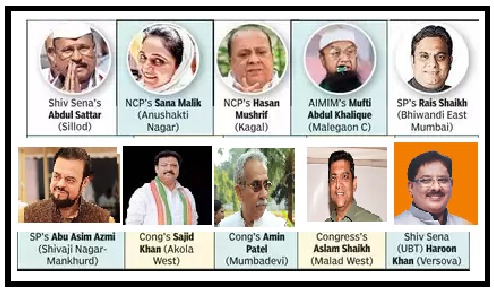
In the recently concluded assembly elections, only 10 Muslim candidates managed to secure victories in the 288-seat Maharashtra Vidhan Sabha, marking a huge representation gap for the state’s 11.56 % Muslim population. The last assembly too had the same number of Muslim MLAs (around 3.5%). A total of 420 Muslim candidates contested the elections, with 218 running independently and 150 fielded by smaller parties. However, major political outfits largely overlooked Muslim representation, fielding limited candidates.
The Mahayuti (BJP+NCP+Shiv Sena) alliance, which swept the elections with a clear majority, included three Muslim winners: Shiv Sena’s Abdul Sattar and NCP (Ajit) candidates Sana Malik and Hasan Mushrif. The Samajwadi Party’s Rais Shaikh secured the largest victory margin, winning the Bhiwandi seat by 52,015 votes, while Congress’s Amin Patel followed with a 34,844-vote margin in Mumbadevi.
AIMIM’s Mufti Abdul Khalique narrowly won the Malegaon Central seat by just 75 votes, highlighting the intense competition in certain constituencies. SP’s Abu Asim Azmi secured the Mankhurd Shivaji Nagar seat with a margin of 12,753 votes, while Congress’s Sajid Khan Pathan won Akola West by a mere 1,283 votes. Shiv Sena (UBT)’s Haroon Khan claimed the Versova seat with a margin of 1,600 votes.
Congress faced criticism for fielding only nine Muslim candidates despite earlier promises of 18, leading to a potential vote split. AIMIM fielded 12 candidates, the highest among all parties. The BJP-led Mahayuti benefited from schemes like the Ladki Bahin Yojana, which reportedly swayed Muslim women voters. Observers also noted Ajit Pawar’s influence in consolidating minority support for the alliance. Results showed slim margins in several constituencies, raising questions about vote division and electoral strategies. The data underscores the challenge of translating numerical presence into political influence for Maharashtra’s Muslim community.
source: http://www.radiancenews.com / Radiance News / Home> Latest News> Report / by Radiance News Bureau / November 24th, 2024
Prominent Kannadiga businessman SM Syed Khalil passed away after brief illness in Dubai in the wee hours of Thursday.
Syed Khalil SM was also the Chairman of Madhyama Communications Ltd., Mangalore and was known across Coastal Karnataka for his social services and contributions in the fields of Kannada, Konkani languages and their culture.
Syed Khalil, affectionately known as ‘C A Khalil’ among the general public, hailed from the Nawayat community of Bhatkal. His journey to prominence and distinction had not only brought pride to the Nawayat community but also to Kannadigas and Indians at large. He was renowned for his remarkable achievements and dedication to international trade, social service, and the education of underprivileged children.
Having ventured to the Gulf in 1978, Khalil’s faith and dedication to the Galadari family propelled the Galadari Company to unparalleled success over three decades. He was serving as the Founder Chairman of K&K Enterprises General Trading Company in Sharjah. Khalil also held positions in numerous educational and social service organizations in Karnataka and beyond.
Syed Khalil stood as one of the town’s first chartered accountants, renowned for his financial expertise. He was also a respected leader in social service, religious, and educational circles. His leadership roles have included the presidency of prominent organizations such as Anjuman Hami-e-Muslimeen and Rabita Society. Khalil was an advocate for girls’ education and has played a pivotal role in establishing extensive educational institutions.