Tag Archives: Hamdard Tibbi College

Hakim Abdul Hameed: Visionary who turned medicine into a mission

DELHI :

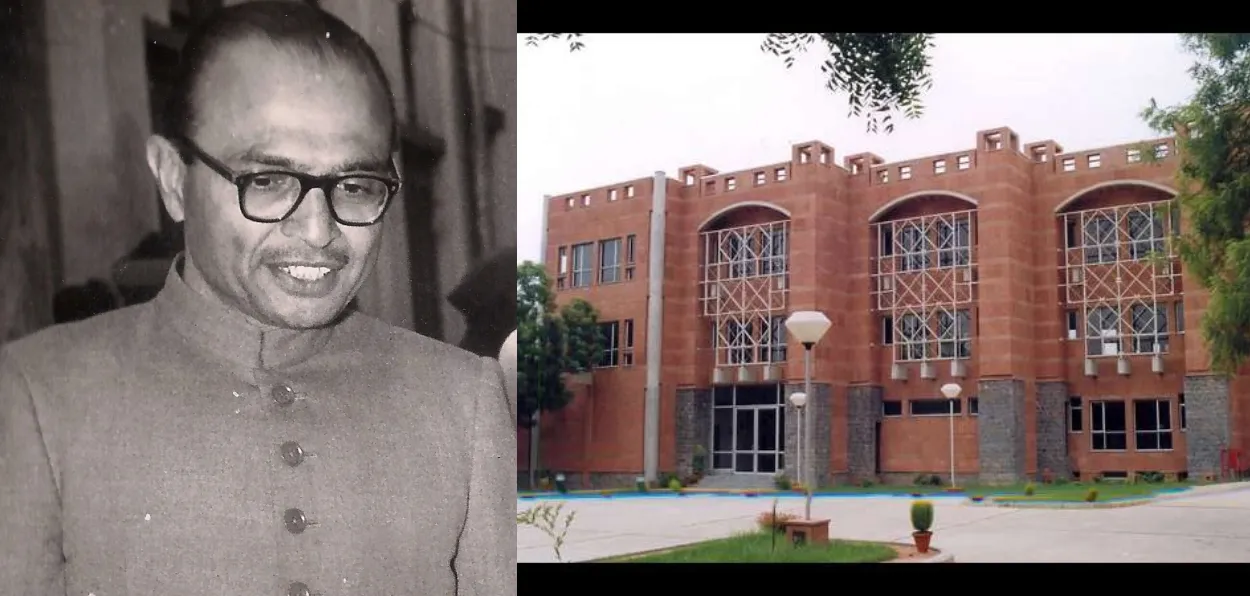
Hakim Abdul Hameed and campus of Jamia Hamdard

Life should be significant, not merely long. While some people make their lives significant by amassing wealth, others contribute to society and future generations. Hakim Abdul Hameed was one such rare individual. He is the founder of Jamia Hamdard, a deemed-to-be University located in South Delhi, which is celebrating its Foundation Day on September 14.

Abdul Hameed was born in Delhi on September 14, 1908. His life story is not merely that of a physician but of a man who transformed a family legacy of medicine into a vast movement encompassing education, research, healthcare, and public service.

His family was deeply involved in medicine and social service; his father, Hakim Hafiz Abdul Majeed, had established ‘Hamdard Dawakhana’ in 1906. ‘Hamdard’ in Urdu means one who empathises with others’ pain. This very sentiment became the guiding principle of Hakim Abdul Hameed’s entire life. He inherited not just a business from his father, but a responsibility. He strived to build Hamdard into an institution that would benefit every stratum of society.

Hakim Abdul Hameed was a practitioner of Unani medicine, yet his vision extended far beyond the treatment of the human body. He understood that for Unani medicine to be passed on to the coming generations, it required systematic teaching, rigorous research, and incorporating modern scientific methods.

He believed that tradition and modern science were not at odds; rather, by preserving the valuable aspects of ancient medical systems, they could be further fortified through scientific inquiry and research. This vision changed him into a pivotal pillar of Unani medicine.

The year 1947 was exceptionally difficult for the country. Partition had impacted millions and created an atmosphere rife with mistrust, violence, and uncertainty. Yet, even amidst such turmoil, Hakim Abdul Hameed was contemplating the establishment of institutions for the India of the future. It was during this period that he founded the Hamdard Charitable Trust and resolved to dedicate Hamdard’s earnings to the service of society. This decision speaks volumes about his character; he viewed wealth not as something to be hoarded for personal gain, but as a trust held for the benefit of society.

Subsequently, he established more institutions — the Hamdard Tibbi College and the Indian Institute of Islamic Studies in 1963; the Hamdard National Foundation in 1964, and the Hamdard College of Pharmacy in 1972.

Gradually, other institutions such as the Hamdard Education Society, Hamdard Public School, Ghalib Academy, and the Hamdard Institute of Historical Research were also added to this fold. He sought to create a comprehensive system where pharmacy, education, history, culture, and research could flourish alongside medical treatment.

The culmination of Hakim Abdul Hameed’s long-standing efforts came in 1989, when the institutions he had established were amalgamated into one to grant ‘Jamia Hamdard’ the status of a to-be Deemed University. This marked a significant achievement, realising a dream and the hard work of decades. He became its founding Chancellor. Hamdard’s own funds and his personal resources played a major role in establishing this university.

Today, it is important to remember that Jamia Hamdard was not backed by government machinery or a corporate conglomerate. Behind it lay the conviction of a single individual who believed that education could be the greatest service to society.

To remember Hakim Abdul Hameed merely as a builder of institutions would be to diminish his true stature. He was, first and foremost, a physician; understanding others’ pain was intrinsic to his nature. In his view, treating a sick person and providing a poor child with the opportunity to study were acts stemming from the same spirit of compassion, and he strove throughout his life to improve the human condition.

The body is healed through medicine, while the mind is nurtured through education. Hakim Sahib regarded both as integral parts of a singular mission of social service. Perhaps this is why the institutions he founded accorded equal importance to the humanities, history, and culture alongside hospitals and medical education.

Hakim Abdul Hameed’s contributions were recognised both within the country and across the globe. He was honoured with the Padma Shri in 1965 and the Padma Bhushan in 1992. In 1983, the then Soviet Union honoured him with the Avicenna Award. During the final years of his life, he also served as the Chancellor of Aligarh Muslim University.

However, considering his personality, it seems likely that he derived greater satisfaction from helping a needy person receive medical treatment or enabling a poor student’s education than from these accolades. For him, achievement was not merely about receiving awards but about making a difference in someone else’s life.

Hakim Abdul Hameed passed away in 1999, yet his work did not end with his departure. Even today, thousands of students study in the institutions he established, patients receive treatment in his hospitals, and the work of research and education continues to flourish.

The Jamia Hamdard campus is more than just a cluster of buildings; it stands as a testament to the idea that if an individual rises above personal interests to think about society, they can achieve a great deal for future generations. Hakim Sahib established these institutions much like a wise person plants a tree—knowing full well that while he might not live to sit in its shade, others certainly will. This was the most beautiful aspect of his life.

Today, the greatest challenge facing everyone associated with his institutions is ensuring that his legacy is not confined merely to names and monuments. The very meaning of ‘Hamdard’ is to understand the pain of others and strive to alleviate it. Hakim Abdul Hameed’s life teaches us that a person’s true legacy lies in the institutions and ideas that others carry forward long after they are gone. This is the legacy Hakim Abdul Hameed left behind. Carrying it forward is not just a matter of honour; it is our responsibility.

Author Prof. (Dr) M. Afshar Alam, is a Former Vice-Chancellor, Jamia Hamdard

source: http://www.awazthevoice.in / Awaz, The Voice / Home> Personality-News / by M Afshar Alam / September 13th, 2026
Waqf power at work

NEW DELHI / INDIA :

New battle-lines are being drawn in Parliament, and out of it, with waqf and its management at the centre of a major political slugfest.

New battle-lines are being drawn in Parliament, and out of it, with waqf and its management at the centre of a major political slugfest.

At this juncture, it is appropriate to recall the achievements of Hakeem Abdul Hameed, the founder of Jamia Hamdard, whose birth centenary was celebrated in December 2008, and the waqf he founded ~ the Hamdard (Waqf) Laboratories ~ is well into its ninth decade. Speaking during Hakeem saheb’s centenary celebrations at Jamia Hamdard, then Vice-President of India Hamid Ansari observed, “in our recent history Hakeem Abdul Hameed is probably the first, and the most successful, to resurrect the waqf concept in innovative ways so that a modern company was registered as a wakf institution whose income was to be used for public good in the areas of education, medical relief and the advancement of knowledge.

It was an important signal in the immediate aftermath of the painful Partition of India to thread together the religious element with socio-economic progress and alleviation of poverty.” The Vice-President added, “Since the 1930s and 1940s, over 25 educational research institutions were established, culminating in the Jamia Hamdard. The range is astounding ~ ranging from primary education to post-doctoral research, from Unani Medicine to Information Technology, from Islamic Studies to Business Management. Besides the university, the colleges and hospitals established for service to society, there are a set of institutions that bear testimony to his scholarly interests.

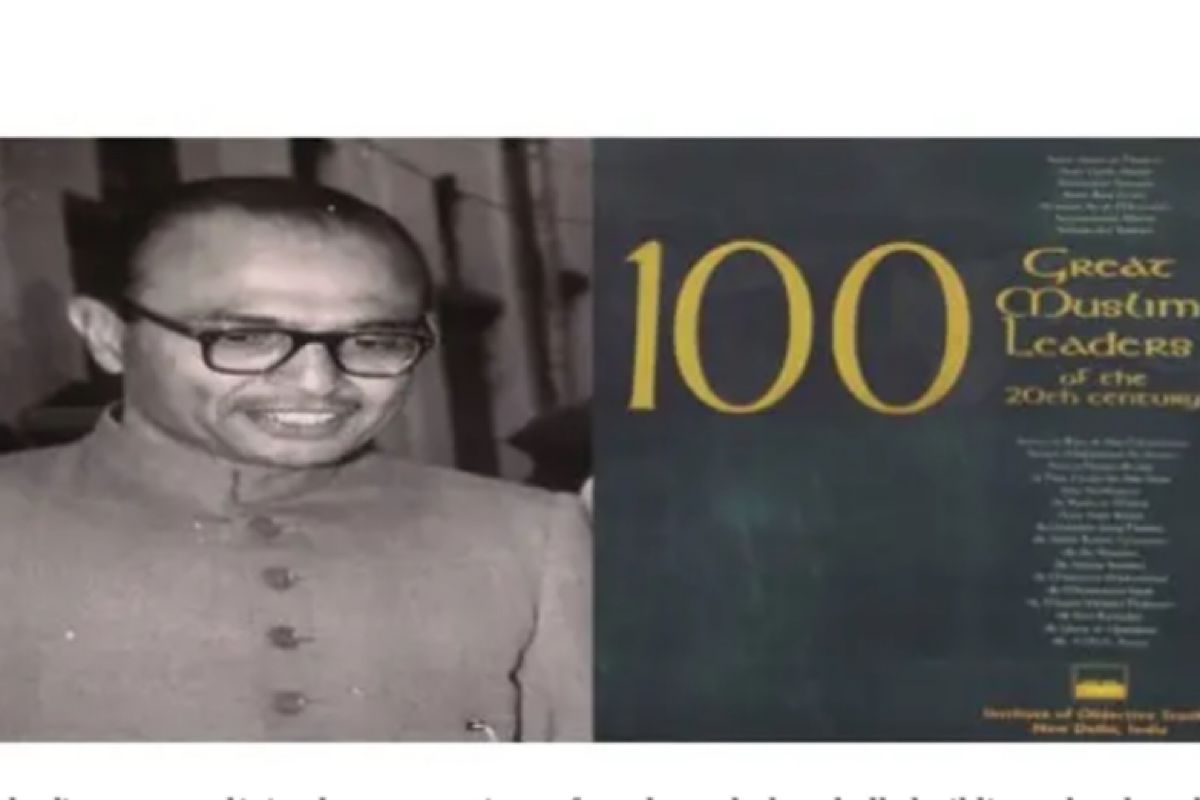
I refer to the Institute of History of Medicine, the Institute of Islamic Studies, the Ghalib Academy and the Institute of Federal Studies. Each of these has rendered significant service to scholarship.” Undoubtedly the list of achievements is long but as Hamid Ansari commented, “these achievements hold a mirror to the potential of what public-minded personalities can achieve through the institution of waqf for the socio-economic, educational and cultural betterment of the community. Future generations would behold Jamia Hamdard and Talimabad and wonder at the capacity, vision and dedication of an individual.” Truly so, for in ‘100 Great Muslim Leaders of the 20th century’, a publication of the New Delhi based Institute of Objective Studies (IOS), Dr Mohd Manzoor Alam provided a larger global context to understanding the achievements of Hakeem Abdul Hameed as an outstanding educationist and social reformer, along with his equally illustrious younger brother Hakeem Mohammad Said.

“In the face of formidable challenges which marked the lives of a selected 100 great Muslim men and women of the 20th century,” wrote Dr Alam in the preface, “their lives, struggles and contributions reflect the response of Muslims to the multiple challenges over the century…the ‘100 Great’ belonged to five continents and they came from different cultural and linguistic backgrounds, they were inspired by the eternal values and principles of Islam and the precepts of their illustrious forebears in the annals of Islamic history.” Through the tumultuous decades of the 20th century, Dr Alam observed that the ‘100 great Muslim leaders’ were unwavering in their “faith in the Holy Quran describing Muslims as ‘good people’, whose mission on earth is to help others live a meaningful life.

Even in the darkest hour the world of Islam was not plaued by a dearth of men and women who had the stature, mettle and competence to rise to the occasion. The two revered Hakim brothers ~ Hakeem Abdul Hameed and Hakeem Mohammad Said ~ who revived the Unani or Greco-Arab system of medicine and created two institutions, the Hamdard in India and its twin in Pakistan, are inspiring examples of leadership. They did not really belong to any one place. This is aggravated by Western colonial redrawing of the Muslim world map: Hakeem Abdul Hameed in India and Hakeem Mohammad Said in Pakistan were, in fact, two sides of a single sub-continental picture of Islamic excellence.”

The lifetime achievements of Hakeem Abdul Hameed were myth-busters: it had been an enduring myth of the 20th century that the Muslim world had been in deep slumber, their state of somnolence stretching back to centuries. Said Dr Manzoor Alam, “the 20th century instead turns out to be a period of extraordinary intellectual, moral and social awakening and struggle across the Muslim world with societies from Malaysia to Morocco trying hard to reform, promote and practice Islam as a living reality that could guide them through difficult times.” The Hamdard story began over a century ago when Abdul Hameed’s father, Hakeem Hafiz Abdul Majeed, established the Hamdard Dawakhana in 1906.

The vision was implicit in the name. Hamdard means ‘the sharing of pain’ and willingness to mitigate it was to be the motto of future generations as well. The vision was also to break the exclusivity of medicinal preparation of each Unani Hakim and make it available to the masses through modern laboratories along scientific lines. A traditional system of medicine was thus modernised with a nationalist inspiration and an indigenous base. “For this reason, Hakeem saheb can rightly be called a Mujaddid (or reformer) of Unani medicine,” said Ansari in the centenary speech.

Writing in ‘Muslim Mirror’, Abdul Rashid Agwan detailed the story. After Independence in 1947, Hamdard University or Jamia Hamdard has been the first institution that was established and managed on the basis of waqf income. In 1948, the manufacturing and selling unit of Hamdard Daw – akhana, Hamdard (Waqf) Laboratories, was converted into an endowment. Its deed dated 28 August 1948 provided for “Qaumi Income” (Public income) and “Khandani Income (Family income). However, the concept of family income was abolished by a declaration of the Settler/ Founder-Wakif Mutawalli in 1985, with retrospective effect from 1 January 1973. From the profits of the company, Hamdard Tibbi College was set up in 1963 in Old Delhi which later shifted to its present 90-acre campus in Tughlaqabad. In order to effectively manage and utilize the income accrued from Hamdard Waqf Laboratories for the promotion of its objective, Hamdard National Foundation was created on 12 May 1964 to disburse company profits to promote interests of society.

All profits of the company were obligated to go to the Foundation. Both Hamdard and the Foundation were registered under Section 12A of the Income Tax Act. Coinciding with the establishment of the Hamdard National Foundation in India, Hamdard Waqf Laboratories Pakistan also formed Hamdard Foundation Pakistan the same year. Its founder, Hakeem Muhammad Said, expressed the mission in these words, “Hamdard … has chosen to serve through activities for the promotion of good health and education ~ the twin pillars of progress.” Through the 1950s and 60s, when educational institutions namely, Indian Institutes of Technology, Indian Institutes of Management, AIIMS and Jawaharlal Nehru University ~ were being established with Government resources and with the focus of providing a new nation the benefit of modern science and education, Hakeem Abdul Hameed was single-handedly building schools, colleges and the university under the Jamia Hamdard banner, relying on internal resources of Hamdard Waqf Laboratories, and focused on rejuvenating the millennia-old Greco-Arab medicine which came to be simplistically known as Unani medicine. In this long process of reviving ancient knowledge, Hakeem saheb’s original contribution was the use of modern scientific methods and technology for the standardisation and manufacture of Unani medicine. “Quite early in life, when he was studying medicine at the Tibbia College, he was deeply impressed by the systematic and methodical approach of Hakeem Ajmal Khan towards the classification and standardisation of Unani medicines,” the IOS publication narrated. The Hakeem brothers travelled across Asia and Europe in the 1950s closely observing modern methods and techniques of drug making. They were convinced of the relevance and necessity of using modern technology for medical experimentation and manufacture of Unani medicines. At Hamdard Laboratories, Hamdard University, Hamdard Nursing Home and Majidia Hospital, these modern methods and technology were put into good use, ensuring the regimen of Unani system of medicine could co-exist with modern science and technology.

“This integrated, holistic approach to diagnosis and therapy is one of the most original and outstanding contributions of Hakeem Abdul Hameed,” the IOS publication stated. Eleven books on Unani medicine: Arab medicine and its relevance to modern medicine; Earth, elements and man: Search for a solid foundation of the theory and practice of medicine; and the magnum opus Qarabadin-e-Hamdard or Hamdard Pharmacopoeia are testimony to Hakeem Abdul Hameed’s medical observations, experiences and researches. In the 1980s, he initiated path breaking research on Ibn Sina’s Al-Qanun fit-Tibb or The Canon of Medicine. The 3-volume study was made available in multiple languages, including English.

Several national and global awards were bestowed on Hakeem Abdul Hameed who lived an austere life on campus till the age of 91, with a Gandhian determination to build the new nation through promotion of medicine, modern education and public charity. Like Sir Syed Ahmed Khan and Hakeem Ajmal Khan, Hakeem Abdul Hameed remains a towering personality whose contribution to modern education and medicine is second to none. It is in the domain of waqf management that Hakeem saheb gave modern India a new path for sustainable, equitable development.

(The writer is a researcher writer on history and heritage issues and a former deputy curator of Pradhanmantri Sangrahalaya)

source: http://www.thestatesman.com / The Statesman / Home> Opinion / by Raju Mansukhani, New Delhi / October 07th, 2024