Category Archives: Community Involvement / Social Issues

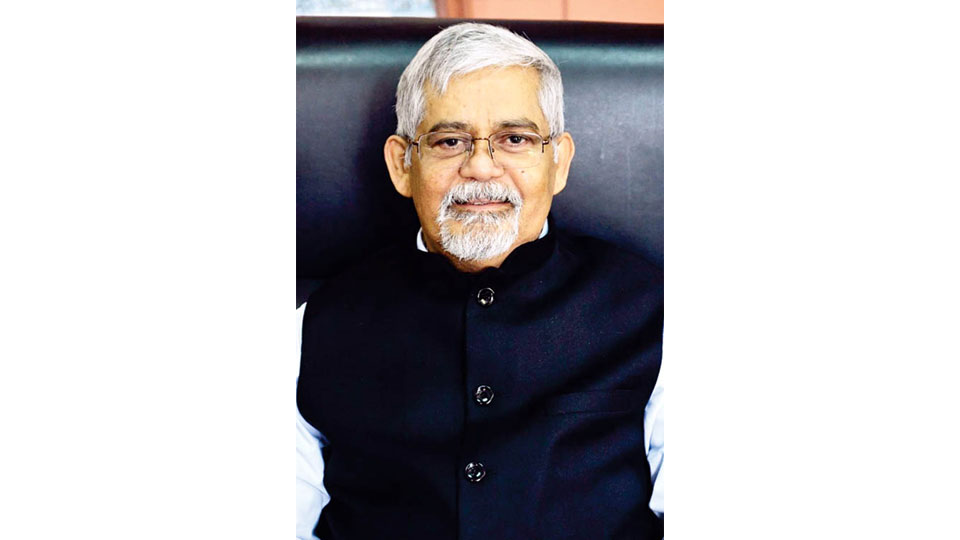
Okhla-based leading Arabic scholar, author and recently retired Jamia Prof no more

Okhla Village (South Delhi District), DELHI:

Okhla-based leading Arabic scholar, author and recently retired Jamia Prof no more

A well-known Arabic scholar, author of several books and editor of Urdu monthly magazine Allah Ki Pukar, Professor Syed Khalid Ali Hamidi, passed away a few hours ago in a local hospital in Okhla, according to family and friend sources.

The reason behind his sudden death couldn’t be ascertained till the filing of this report as three days ago he was live on his YouTube channel: Tazkeer e Quran By Khalid Hamidi. After the third Covid wave hit India, including Delhi and curbs being imposed to control the spread, Professor Hamidi was holding his weekly Quran porgramme online, interacting with his fans in the virtual world.

UPDATE: It was today (Wednesday morning) when while going out for some work, he fell in his parking and died within hours in a local hospital where he was rushed, said a resident who knows the family, adding that he could not be resuscitated in the hospital.

Born in 1956 in Rampur to Syed Hamid Ali, a writer and Jamaat-e-Islamia (Hind) stalwart, and Aisha Bee, Professor Hamidi was a known face in Okhla and Jamia. He retired from the Arabic Department of Jamia just a few years ago where he was Head of the Department.

Professor Hamidi initially studied in madarsa and did Almiat and Fazilat from Jamiatul Falah in Azamgarh. After which he came to Jamia and did his BA in 1979 and MA in 1981 from the university. He was a gold medalist at Jamia. His PhD was on India’s contribution to Hadeeth literature in Arabic in six volumes.

He did a doctorate in Arabic in 1993 and then joined Jamia as a lecturer in 1981. Besides a prolific writer, Professor Hamidi was a good orator.

Professor Hamidi’s father Syed Hamid Ali disassociated himself from JIH in later life.

Prof Hamidi was also a critic of JIH policies. He was a well-known Islamic scholar and wrote 20 books and used to give dars-e-Quran at his Abul Fazal residence every Saturday and Sunday, said sources.

Till his last days he continued to publish his magazine Allah Ki Pukar where he penned hart-hitting opinion pieces.

Friendly with junior, he was known to shares his view openly.

source: http://www.theokhlatimes.com / The Okhla Times / Home> Local / by theokhlatimes / January 19th, 2022

Why Jamia Millia’s recent Republic Day Mushaira is making headlines?

NEW DELHI:

VC Prof Najma Akhtar with poets on Republic Day

On India’s Republic Day, a Mushaira was organized in the Engineering and Polytechnic Auditorium of Jamia Milia Islamia University, Delhi. This event saw some of India’s most prominent Hindi and Urdu literary voices as Ashok Chakrdhar, Ahmad Mahfooz, Dinesh Raghuvanshi, Salma Shaheen, Ahmad Naseeb Khan, Aleena Itrat Rizvi, Majid Deobandi, Shehpar Rasool, Khalid Mubashir, Khalid Mehmood, Chandradev Yadav, Durga Prasad, Shahid Anjum, Moeen Shadab, and Khan M Rizwan.

Patriotic poems remembering heroes of India’s national freedom struggle, and India’s democratic values, diversity, and unity were recited. This event coincided with many universities across India experiencing student unrest over issues that can distract students from their studies.

Dinesh Raghuvanshi said, ‘apni mitti pe agar naaz nahi kar sakte, zindagi hum tera aaghaz nahi kar sakte’ or when Majid Debandi recited ‘Jis ke dil mein watan ki azmat hai, hum usey apni jaan kehte haen’, the hall resounded with applause. That was the true culmination of this event meant to send a message of solidarity and unity from this most important educational institution of the country.

It was a well-attended event Presided over by the Vice Chancellor Professor Najma Akhtar.

The message from the poetic symposium was clear – a vocal minority cannot be allowed to hijack the peaceful and progressive atmosphere of the University. The University has always played a significant role in nation-building through quality education and, giving good professionals to the country. It also conducts research and promotes cultural diversity, and encourages students to become informed and socially responsible citizens who can contribute to the development of the country.

Jamia Millia Islamia was founded in 1920 as a non-government, secular university in Delhi, India. It was established as a response to British colonial rule and the Indian independence movement. It played a significant role in the independence struggle by educating and empowering the youth to participate in the freedom movement. In the post-independence era, Jamia has continued to be a center of excellence in education, research, and cultural exchange, serving as a model for an inclusive and equitable society.

Jamia Millia Islamia has produced many noted alumni who have made significant contributions in various fields such as politics, arts, media, and academics. Some of the notable alumni include Salman Khurshid, former Union Minister of India, and Shah Rukh Khan, a Bollywood actor, and film producer. Mukul Kumar, aerospace engineer and former NASA scientist, Saeed Akhtar Mirza, film director and screenwriter, and Nafisa Ali, actor, and social activist.

Jamia Millia Islamia was recently ranked as one of the top universities in India by several national and international ranking agencies.

The University has a vibrant student political culture and is known for its strong student activism and political engagement. Various student groups play an important role in shaping the discourse on important national and local issues, and in advocating for student rights and interests.

source: http://www.awazthevoice.in / Awaz, The Voice / Home> Story / by ATV / posted by Aasha Khosa / January 31st, 2023

List of Muslim Candidates Qualified UPSC 2021

INDIA :

The Union Public Service Commission (UPSC) declared the Civil Services Final Result today 30 May 2022.


The UPSC/CSE preliminary exam was held on 10 October 2021, and the results of the examination were released on 29 October. The Main examination was conducted between 7 to 16, January 2022, and its results were declared on 17 March 2022.

The Interview was the last round of the examination which began on April 5 and was shortlisted on May 26. The interview was conducted at UPSC at Dholpur House, Shahjahan Rd, New Delhi.


The recruitment drive will fill up 712 posts in the organization out of which 22 vacancies are reserved for persons with disability.

Shruti Sharma


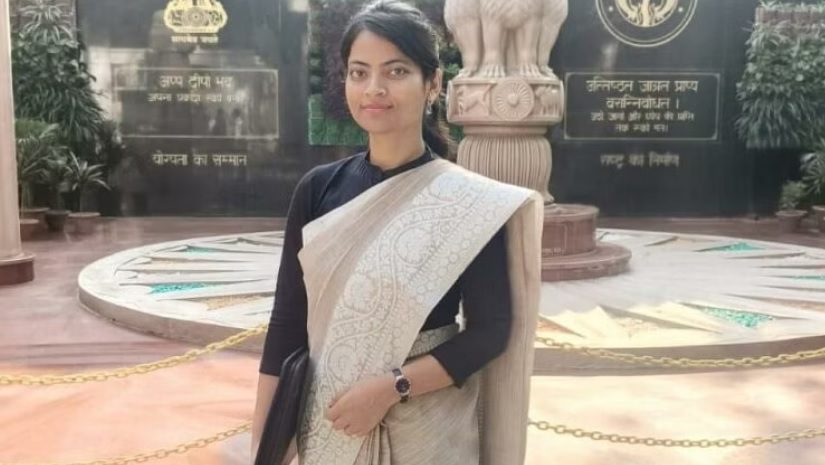
Shruti Sharma has secured all India Rank 1 in the final result. All the top three positions have been secured by girl candidates this year. Shruti is an alumnus of St Stephens College & Jawaharlal Nehru University & has been preparing for the UPSC Civil Services exam at Jamia Millia Islamia Residential Coaching Academy.


Following Muslim Candidates cracked the UPSC.

1) 109 AREEBA NOMAAN
2) 125 MOHD SUBOOR KHAN
3) 162 SYED MUSTAFA HASHMI
4) 274 AFNAN ABDU SAMED
5) 276 ARSHAD MUHAMMED
6) 279 MOHD SAQUIB ALAM
7) 287 ASRAR AHMAD KICHLOO
8) 305 ASHIK ALI
9) 309 MOHAMMED ABDUL RAWOOF SHAIK
10) 344 NAZISH UMAR ANSARI
11) 364 FAISAL KHAN
12) 368 SHUMAILA CHOUDHARY
13) 386 MAVIS TAK
14) 414 MD QAMARUDDIN KHAN
15) 419 MOHD SHABIR
16) 441 FAISAL RAZA
17) 457 MASOOM RAJA KHAN
18) 464 ASHIF A
19) 474 MUSKAN DAGAR
20) 482 TAHSEENBANU DAWADI
21) 496 SHAIKH MOHD ZAIB ZAKIR
22) 516 MOHAMMED SIDDIQ SHARIFF
23) 545 MOHAMMED SHAUKATH AZEEM
24) 575 MAKAKMAYUM HOSNI MUBARAK
25) 600 ANWAR HUSSAIN

Shaikh Akhlaque is an educationist and he can be contacted at sakhlaque@ymail.com

source: http://www.thehindustangazette.com / The Hindustan Gazette / Home> News> Education / by Shaikh Akhlaque / May 30th, 2022

Two-Day Exhibition On Muslim Women Achievers To Be Held At Hyderabad’s Salar Jung Museum

KARNATAKA / Hyderabad, TELANGANA:

A two-day exhibition celebrating the achievements of Muslim women will be held at the Salar Jung Museum in Hyderabad on October 1 and 2 by the Intellectual Learning Methodologies (ILM) Foundation in association with the Shaheen Group of Educational Institutions, Islah and Asli Talbina.

The exhibition is aimed at educating the common man about the astounding accomplishments of Muslim women.

Achievements of 40 women in different fields will be showcased and details of their accomplishments will be explained through posters, Siasat.com quoted Dr Lateef of ILM Foundation as saying.

The exhibition will be inaugurated by Maulana Khalid Saifullah Rahmani, general secretary of the All India Muslim Personal Law Board.

According to a study of early Islamic history, took an active part in all walks of life. These women excelled as rulers, warriors, nurses, scholars, jurists, teachers, traders and companions of the Prophet (peace be upon him).

When Dr Lateef started working on the subject some one-and-half years ago he stumbled upon the names of nearly 10,000 women who had made immense contributions in their field.

Ayesha, the wife of the Prophet Muhammed, who made a huge contribution to the cause of Islam through her intelligence and scholarship is among some of the well-known names whose achievements will be showcased at the exhibition.

“Lives of early Muslim women represent exemplary models, transcending time and boundaries. And they are a great source of inspiration,” Dr Lateef told the website.

Organisers also plan to take the exhibition to several parts across the country after Hyderabad. Juveria Sabir and Zoha Ansari, working at the Edventure Park, a start-up incubator have been working relentlessly to showcase the exhibition on inspiring women achievers.

The two-day exhibition with a free entry will be held in Salar Jung Museum’s eastern block from 11 am to 5 pm.

source: http://www.thecognate.com / The Cognate / Home> News / by Rabia Shireen / September 27th, 2022

Women In India Are Yet To Get Their Constitutional Rights: Jamaat-e-Islami Hind Women’s Wing

INDIA:

New Delhi :

Jamaat-e-Islami Hind (JIH) Women’s Wing Secretary Rahamathunnissa has asserted that the Constitution of India assures justice, equality, liberty and fraternity to its citizens irrespective of gender, but Indian women are yet to get their constitutional rights.

Mrs.Rahamathunnissa was delivering the inaugural address in a JIH Women’s Wing’s special programme on the ‘Constitution at 74 – Challenges and Possibilities for Indian Women’ on the occasion of the 74th Republic Day of India. Stressing on the need for a strict implementation of the constitutional provisions given to women in order to uplift them and ensure their equal status in society, she said, “we can feel proud that it is one of the best framed constitutions in the world with so much emphasis on equal rights for women.

A panel discussion featuring noted women activists and scholars, followed with Ms.Sameena Afshan, Editor Aura E Magazine as moderator. The expert panelists on board articulated their opinions on the wide gap between what the framers of the constitution envisaged and the practical reality in the country.

One of the panelists Dr. Selvi Ganesh, a legal academician and consultant said, “We have a constitution but we lack constitutionalism because the concept of gender equality is not in the general consciousness of the masses.” She voiced concern about the plight of women in conflict zones, migrant labourers and abandoned widows in the country who are still unaware of their constitutional rights.

Dr Jyotsnaben Yagnik, former Principal Judge at the Civil and Sessions courts of Ahmedabad mentioned that the average Indian women do not consider themselves as equal citizens because of their mindset and nothing would ever change without changing the societal mindset.

Ms. Sandhya Shaily, State Vice President, AIDWA of Madhya Pradesh commented that the Indian constitution safeguarded the rights of women more than the constitution of other countries that secured their independence at the same time, but they got fever opportunities.

Expressing her concerns regarding the huge gap between rights given in the constitution and their implementations, Adv. Sumaiya Roshan, President of National federation of GIO said that the Hijab issue in Karnataka curbed the right to education not only for Muslim girls but affected the other marginalized communities as well.

Dr. Sitara Khan, Educationist and Social Worker has stressed that education alone can empower women and saw it as a strong weapon against crimes faced by women in India.

Observing that several studies place India on the top position in crime against women, Dr. Khan Mubashsharah Firdous, Editor of the Haadiya E Magazine, in her concluding address, lamented that domestic violence, forced labour and forced marriages were rampant in the country. She reiterated the dire need for an organized fight against the violence.

Ms Nada Khazia, Ms Sajida Falahi and Ms Fakhira Tabassum also spoke on the occasion while Ms Hina Farhan controlled the proceedings.

source: http://www.indiatomorrow.net / India Tomorrow / Home> Law / January 29th, 2023

Nowsheen Yaqoob: Helping people discover the joy of life

NEW DELHI:

A couple of years after her father had expired, Geeta (name changed) had no one but her mother to look up to in moments of her weakness. She was her strongest pillar of support, rescuing her from situations she fell into without knowing how to wriggle out of.

All looked good till 2017. That is when her mother too passed away after a prolonged illness. Geeta fell into depression, suffered anxiety pangs and went into a shell. She had no emotional support. Her close relatives too started deserting her, leaving her to her own fate. Unfortunately, Geeta was not strong enough to cope with the anxieties of life she had fallen into and found it difficult to overcome the grief.

She often contemplated suicide – till, on the insistence of a common friend she picked up the phone and called up Nowsheen Yaqoob. That one phone call on a sultry summer afternoon changed Geeta and made her fall in love with life again.

“I allowed her to cry. She cried for more than an hour. It helped her pour out all her pain and anxiety,” says Nowsheen a life coach who has made changing people’s lives for the good her mission.

“My first priority was to teach her the ‘Yes I can’ attitude. She suffered from self-image issues, thought her life was good for nothing, the trauma was too much for her to take,” she says about Geeta.

A few telephonic conversations and Geeta knew she had someone who could replace her mother as her emotional pillar. Today, Geeta is happily married, socialises and wants to make up for all the lost time.

Geeta is just one of the many, Nowsheen has helped overcome trauma, stress and anxiety. Born in Srinagar, this former aviation professional gave up her glamorous job to work with people who needed hand-holding to live life again.

“People hesitate to talk about mental health issues” – Nowsheen Yaqoob

A product of Iqbal Memorial Institute and a qualified architect, Nowsheen is based in Dubai but travels regularly to India to counsel individuals and corporates in an effort to help them upgrade themselves, love life and become better individuals.

Growing up watching planes fly, she always dreamt of working in a profession that allowed her to fly and travel the world. But after spending more than a decade in the aviation industry she realised that was not her calling. “I loved connecting with people. During my course of my interactions, I realised there were many people specially children who were failing to realise their potential because of some trauma they were carrying”.

“I wanted to help people with personal challenges, specially women. Those who came to me to seek help, I patiently listened to their stories. Everyone has a story to share,” she says.

Moreover, her demanding job made her very lonely, negative and bitter. She had a choice either to continue her life the same way or take corrective measures.  She was stressed and she sought help from within herself. She let her inner voice speak. “There came a time, I was devastated, felt not enough empowered”.

Realising there are many in the world like her waiting for some guidance to come out of the turmoil, Nowsheen gave up her job to help people understand the beauty of life.

“Everyone has a story to share” – Nowsheen Yaqoob

It was during the Covid-induced lockdown that Nowsheen further saw people’s anxiety levels pierce even higher. “It was disturbing to see how some people were not able to manage their emotional well-being”, she says. 

Even though she was occasionally working on helping people improve their lives, she wanted to structure it better. Having already given up her job and settling down to spend quality time with her family, she now allowed even more and more people to connect with her to seek her help.

She floated Auracious Global, a human development company to work on human behaviour and impart mindset training.

She now has people from across the globe calling her up to seek counselling, multi-national companies inviting her to conduct workshops for their employees and top-notch CEOs seeking her out to help them lead a more balanced life.

“Mental Health is a taboo in our society. People don’t want to talk about it. Even if you have an emotional issue, you want to create an artificial shield for the society, pretending everything is fine with you,” she says talking about why it is important to talk and open up emotionally.

To further elaborate she says, “The problem lies in lack of awareness about the subject. Its like having a misconception about a particular religion because of a lack of understanding of that religion. Apply the same logic here, and you will know why people hesitate to talk about mental health issues. We must open up and increase awareness.”

Nowsheen has students, housewives and CEOs seek her help

Most of her clients are in the age-group of 17-50 years. “I find people today are unable to regulate emotions,” she says. “A lot of people carry a childhood trauma that manifests in their personalities when they grow up. A lot of the problem also lies in the way we parent our kids. Parents need to have better emotional connect with children, teach them the right values.”

Nowsheen believes that if the right environment is given at home during childhood, a lot of mental health issues will not arise. “The main problem is that people are incapable of handling stress. That training must come in childhood itself.”

Herself raised by a single mother, and having faced a not very smooth childhood, Nowsheen empathised with the stress levels people were going through. “I could relate to people’s problems. I understood their pain. At a level, we all humans are emotionally weak. Some people can do without counselling, some need deep hand-holding.”

“At a level we all humans are emotionally weak” – Nowsheen Yaqoob

To de-stress while some people take refuge in alcohol or drugs, others fall for excessive use of social media. This leads to people gradually wrapping themselves into a shell. “I try to drag them out of that cocoon, even better if I can help people to realise how deep an abyss they can fall into if they don’t admit there is a problem”, she says talking about her mission, her goal in life.

Having worked with people from across a cross-section of society, and seen their lives change following deep conversations, Nowsheen believes, it’s the joy of life that people need to discover. “Joy is the basic emotion. We must be joyful in all situations, no matter what the adversity,” she says before attending a call from a Kashmiri boy who wants to find the way out of his drug addiction.

source: http://www.awazthevoice.in / Awaz, The Voice / Home / by Nakul Shivani, New Delhi / January 25th, 2023

Why Khwaja Garib Nawaz outlived the fame and glory of emperors

Ajmer, RAJASTHAN:

The Ajmer Sharif Dargah at night during the Urs (Courtesy Rajasthan Tourism)

We are celebrating the 811 annual Urs (death anniversary) according to the lunar calendar of Khwaja Gharib Nawaz of Ajmer who was born on February 1 1143 AD  in Sijz, Sistan, Iran. He left the world on March 15, 1236 AD in Ajmer, Rajasthan. Since that time his disciples and followers have been celebrating his death anniversary as per the Sufi traditions.

The Sufi mystics celebrate the death and not birth as for them death means a reunion with Almighty Allah.

He was brought up in Khurasan, Iran, while his father Ghayasuddinn died when he was 15. He studied in Isfahan, Samarqand, and Bukhara, and went to Baghdad in search of a spiritual mentor. There, he met Hazrat Khawaja Usman Harooni. Thereafter, he went to visit the two holy cities of Mecca and Medina. Eventually, he came to Ajmer in India via Lahore where he lived for the rest of his life and became his resting place after death.

It’s a surprising truth that Muslim kings ruled for around 800 years over India and built many historical monuments such as the Taj Mahal, Red Fort, Humayun Tomb, and Qutub Minar, and yet none of them is alive in the hearts of people except in the history books. Unlike kings and rulers, Khwaja Gharib Nawaz won the hearts of millions of helpless, poor, weaker, and underprivileged people and seekers of truth. With divine mercy, he became Gharib Nawaz (supporter of the poor), though his original name is Moinuddin (helper of the religion).

He fulfilled Huqooq ullah (God’s rights) and Huqooqul ibad (human rights) equally and served the weak and poor, loved the unloved, and fed the hungry irrespective of caste, creed, gender, and religion. It was his outstanding service and love towards humanity that attracted people from across the society, unlike any rulers. They loved and followed this Sufi mystic and therefore he was called “Sultanul Hind”, the king of the Indian subcontinent. He then developed the Chishti Sufi order in this subcontinent and became the Sufi mystic with the highest following in the world.

The scene outside the Ajmer Sharif dargah

The uniqueness of his Sufi order and his character was that he greatly impacted others with his pious character and selfless service and he accepted and accommodated the local traditions and made them part of his Sufi order.The message of universal fraternity, harmony, and brotherhood spread by the Sufis saints was so loud and inclusive that even after their union with God (Wisal-e-ilahi), their hospices remain abuzz with the people of all walks of life.

On top of all Indian shrines, the Dargah of Khwaja Moinuddin Chishti known as Daghah Khwaja Gharib Nawaz in the heart of Ajmer city surrounded by Tara Gadh hills is the shining example of love, harmony, unity, and fraternity.

Maulana Rumi beautifully talks about the human heart:

Ek dil behtar hazaran Ka’be ast

(One heart is far better than a thousand Ka’baas).

He further says (Translated version):

Bring your heart in your hand; your soothing is more important than a pilgrimage. A single heart is better than a thousand Ka’abas. The K’aba was built by Allah’s Khalil (friend) Prophet Hazrat Ibrahim (Abraham), while the heart, in contrast, was created and tested by the Almighty God Himself.

The great Sufi saint of India Khwaja Moinuddin Chishty who is also known as Gharib Nawaz of Ajmer often taught the people: love towards all and malice towards none. His disciples and successors held this message of their mentor by tooth and their hospices became the center for spreading universal love and affinity. His disciple Khwaja Nizamuddin Auliya of Delhi often recited the following couplets of Persian poet Abu Said Abul Khair:

“If people spread thorns in your path, you just put flowers in their way; otherwise the entire path would become thorny”.

Sufi saints in a prayers at the Dargah during the Urs

Today, we Muslims in India must not forget what Khwaja Gharib Nawaz of Ajmer Sharif and Hazrat Nizamuddin Auliya of Delhi taught us.

The love, fraternity, and affection shown by the Sufi saints to the common people won their hearts, and their hospices (khanqahs were the center of love where people from all walks of life began to flock to seek succor for their miseries. These Sufi saints respected the local customs and culture to the extent that even many of them became vegetarian due to respect for their non-Muslim brothers. Khwaja Gharib Nawaz, Khawaja Nizamuddin Aulia, Sarmad Shaheed, Bu Ali Shah Qalandar, and many others had become pure vegetarians in respect of their non-Muslim brethren. Their philosophy was simple: live and let live; love and compassion to all, no hate or discrimination on the ground of caste, creed, culture, religion, and gender.

Chishty Sufis continued to adopting of local traditions. For instance in Delhi, Hazrat Amir Khusrau was the one who started celebrating Basant Panchami to make his mentor Nizamuddin Auliya happy. Since then, the Basant celebration is continuing on the premises of Dargah Hazrat Nizamuddin Auliya.

Being a Persian scholar and follower of a Sufi order, I came across the anthology of Sufi poets like, Rumi, Jami, Khusro, Shah Niaz be Niaz, Baba Bulle Shah, Shah Zaheen Taji, Bedam Shah Warsi in both Urdu and Persian languages. Their metaphysical and mystic poems were very impressive, moving, and touching. This has increased my curiosity to know more about it, I got a chance to attend a 3-day-long Sufi music concert in Delhi, organized by famous music composer and film director Muzaffar Ali with the title of Jahan-e-Khusrau in Humayun tomb. This concert is organized by him every year and attended by world-famous Sufi musicians and vocals from India, Pakistan, Afghanistan, Iran, Turkey, and many other countries. However, every year the well-known vocalist Abida Parveen of Pakistan steals the show.

As soon as she starts her melody in the most fascinating and moving voice, the people begin crying in their hearts. It seems as if she is on the direct hotline with the Almighty God. Though more than 2 decades have passed, I still remember the rhythm of her voice and her selection of poems from the anthologies of Amir Khausrau, Baba Bulle Shah, Shah Zaheen Taji, and Shah Niaz Bareilvi.

The following metaphysical mystic poems of Shah Niaz Barelvi recited by Abida Perveen attracted my special attention:

Yaar ko hum ne ja baja dekha, kahin zahir kahin chupa dekha…

I saw my beloved everywhere, somewhere apparent and somewhere hidden.

Kahin mumkin hua kahin wajib, Kahin fani kahin baqi dekha.

Somewhere He was merely a possibility and somewhere He was imperative. Somewhere I saw Him ephemeral, and somewhere I found him eternal.

Kahin wo badshah takht nashin, Kahin kasa liye gada dekha.

Somewhere, I saw Him a king sitting on His throne, and sometimes I saw Him mendicant with a begging bowl.

Kahin wo dar libas e mashooqan, Bar sare naz aur ada dekha.

Somewhere He was in the most beautiful attire, displaying His unique charm and attraction.

Kahin ashiq Niaz ki surat, Seena giryan to dil jala dekha.

Prime Minister Narendra Modi handing over a Chadar for offering at the tomb of Moinuddin Chisty for the Urs

Somewhere He was like a lover Niaz, beating his chest and his heart was in flame.

This unique hymn of God almost mesmerized the entire audience. There was a pin-drop silence as the people felt that divine light is pervading from all sides. After hearing this fabulous hymn, I decided to pay my obeisance at his shrine built about 300 years ago in Bareilly.

Though he associated himself with both the Chishti and Qadri orders of the Sufis, he favoured the Chishty order in which the saints were encouraged to reach the maximum number of people whoever they may be. In the footsteps of his predecessors, he also followed the local customs and traditions to win the hearts of people from all creeds and castes. His main emphasis was to clean the heart instead of cleaning the apparent body and clothes.

The Chishty Sufi order was established in Indian Sub-Continent by Khwaja Gharib. It’s organised by Baba Fariduddin Ganj Shakar Pak Patan and it flourished to the highest level by Hazrat Nizamuddin Auliya of Delhi. The basic philosophy of Chishty Sufis is to love the unloved, welcome the ignorant, and serve the unserved. They united the human heart and lived in harmony by their nature of acceptance of others’ good things from local tradition and influenced others by their pious and selfless character. They said that whoever comes to us give them food and don’t ask about their religion. that’s the beauty behind flourishing their Sufi order even though it’s increasing day by day after 800 years. Khwaja Gharib Nawaz shrine is 5th largest gathering spiritual place in the world after the holy cities of Mecca and Medina in Saudia Arabia and Najaf and Karbala in Iraq..

Right from Khwaja Gharib Nawaz of Ajmer to Baba Farid Pak Patan, Nizamuddin Auliya Delhi,   Sabir e pak in Peeran Kaliyar, Amir khusrau Dehlavi,

Sarmad Shaheed, Bande Nawaz Gesu Daraz in Gulbaga, Baba Tajuddin in Nagpur, Makhdoom Ashraf Jahangir Simnani in kichowcha and Alaul Haq Pandvi in Bengal, Shah Niaz in Bareilly and Haji Waris Ali shah in Dewa have their respective chains of Sufi shrines spread all over the Indian Sub-Continent. They continue to rule over millions of hearts through their unique philosophies of unconditional love and compassion.  Anyone observes the impact of local traditions in their shrines’ rituals and amongst their followers.

Dr. Hafeezur Rahman is an author, Islamic scholar, TV host and the founder of Sufi Peace Foundation.

source:http://www.awazthevoice.in / Awaz, The Voice / Home / by Dr Hafeezur Rahman / posted by Aasha Khosa / January 29th, 2013

Still standing

NEW DELHI :

Sikander Mirza Changezi, Founding Member of Shah Waliullah Public Library, showing the Diwan [book] of the last Mughal Emperor, Bahadur Shah Zafar, Diwan-e-Zafar. Photo: Video Screengrab.

Located in a narrow lane in front of Jama Masjid, Old Delhi, Hazrat Shah Waliullah Public Library is home to around 25,000 books including rare works in Urdu, Hindi, Persian, Arabic and English.

When the area witnessed communal riots in 1987, a group of young individuals formed the Delhi Youth Welfare Association (DYWA) in Shahjahanabad – today’s Old Delhi, to help people with food and medicines.

With time, the group started expanding its activities to education and opened a library in 1994. This library was named after the revered Islamic scholar, Hazrat Shah Waliullah, who was a Muslim reformist in 18th century India.

Reporter, Camera & Edit: Oohini Mukherjee, Zeeshan Kaskar.

Special thanks: Taqi Mohammed, Mohammad Naeem, Sikander Mirza Changezi.

source: http://www.himalmag.com / Himal, South Asian / Home> Culture> India> Video / by Oohini Mukherjee and Zeeshan Kaskar / October 04th, 2022

Bhatkal: Majlis-e-Islah wa Tanzeem organises panel discussion on “Understanding Indian Constitution”

Bhatkal, KARNATAKA:

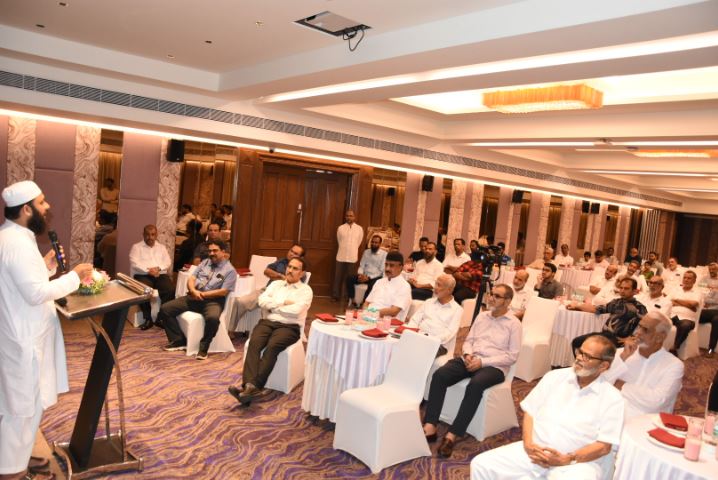
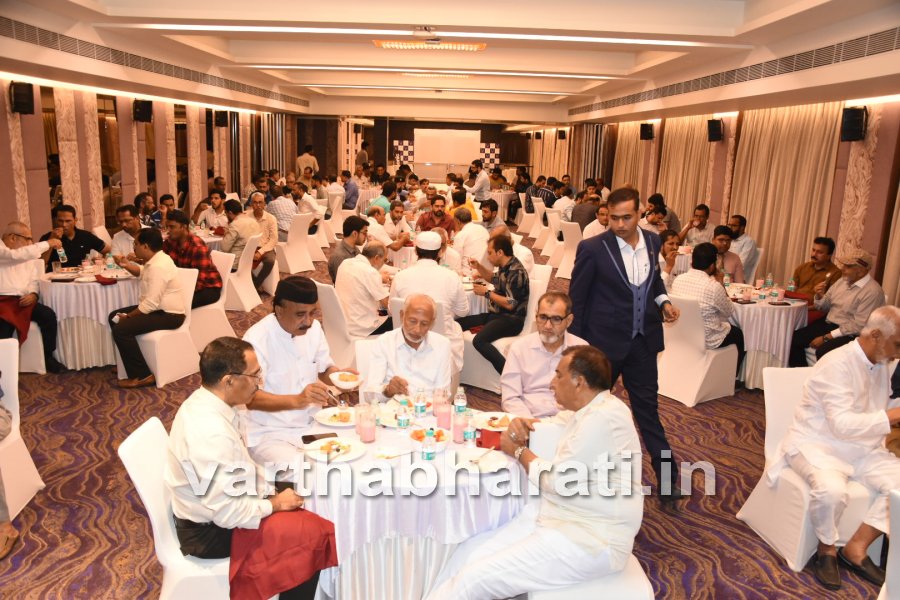
Majlis e Islah wa Tanzeem on Thursday held a panel discussion to mark the 74th Republic Day on the topic understanding Constitution of India and our fundamental rights.

The event was held at the Rabita Hall here in Bhatkal.

Academician and lawyer Yaseen Mohtesham, Advocate Imran Lanka, senior journalist Syed Salik Barmavar, and Prof Sahil Mujavar participated as the panelists while former Majlis e Islah wa Tanzeem General Secretary Dr. Haneef Shabab moderated the event.

Several aspects of Indian Constitution and the current scenario of the country were discussed during the panel discussion.

Prior to the event, Jamat-e-Islami Hind Karnataka Secretary, Akbar Ali addressed the event and shed lights on the values and principles of Constitution of India.

Majlis-e-Islah wa Tanzeem President Inayathullah Shabandri, General Secretary Abdul Raqeeb MJ, prominent NRI businessman Yunus Kazia, senior journalist Aftab Kola, and others were also present during the event.

The event concluded with a quiz program compiled by Aftab Kola on Constitution of India.

source: http://www.english.varhabharati.in / Vartha Bharati / Home / January 27th, 2023

The Muslim-left legacy of an Urdu library in Mumbai

Mumbai, MAHARASHTRA :

The Awami Idara continues to be a welcoming, convivial space for local readers. Photo courtesy: Gautam Sharma

The Awami Idara, rooted in a working-class Muslim neighbourhood, connects the long history of Southasian Muslim labour activism to political movements and events across Mumbai, Southasia and beyond.

Upon entering the Awami Idara (People’s Institution) library in the summer of 2022, I first met the older members of the library peering over their newspapers. Having visited many other Urdu libraries dotted across India, I did not find the welcoming elderly newspaper readers surprising. More unusual, however, was a small but imposing bust of Vladimir Lenin perched above them all, and a hammer and sickle. The iconography reflected the library’s Marxist leanings, and its historical connections with the Soviet Union and transregional leftist movements. This history sharply distinguishes what is by reputation Mumbai’s largest Urdu library from many other Urdu collections in India.

Indeed, the distinctive mission and history of the Awami Idara are apparent from the moment one enters the library. Open from 6 to 10 pm, the library’s hours reflect its historically intended audience – labourers who worked at mills and factories during the day and read and gathered in the evenings. The library is located near the centre of a residential, working-class Muslim neighbourhood in Mominpura, Mumbai. Founded in 1952, it is surrounded by both homes and small-scale mills and factories, and seems designed not to impress visitors but to provide a welcoming, convivial space for local readers. While many readers visit the library to read newspapers or socialise, the walls are lined with thousands of Urdu books which, according to the library’s internal catalogue, are shelved in a strict numerical fashion and bound in uniform yellow covers.

The library for Muslim mill workers continues to survive in an era of right-wing Hindu nationalism. Photo courtesy: Amanda Lanzillo

In recent years, several newspaper and media reports have celebrated the unique and unusual nature of the Awami Idara, particularly the fact that a leftist library aimed at Muslim mill workers continues to survive and adapt in an era where right-wing Hindu nationalism flourishes. Others focus on the shifting religious ideologies evident in the surrounding neighbourhood, expressing surprise at the lack of conflict between Muslim movements claiming religious orthodoxy – most notably local proponents of the Ahl-i Hadith movement – and the left-leaning library. The fact that the largest and oldest Urdu library in Mumbai is a leftist organisation that once boasted strong ties with the USSR does sometimes seem incongruous in today’s political environment.

The Awami Idara is part of a long history of Southasian Muslim labour activism and an often-overlooked Indian Muslim left, rooted in the mills and factories of cities like Mumbai. The yellow-bound volumes lining the walls of the library hold wider histories, connecting the mill worker-readers of the Awami Idara to both local and transregional histories of the left.

Working-class readers

The Awami Idara and its collections force us to question our assumptions about how Muslim workers conceptualised their communities, neighborhoods and social and political connections. As the historian Arun Kumar argues, labourers’ efforts to avail themselves of night libraries – like the Awami Idara – and night schools in urban India from the early twentieth century more broadly belie our assumptions about labourers’ presumed illiteracy and lack of interest in education.

Many of the materials held by the Awami Idara – particularly those collected by the library in its early years, in the 1950s and 1960s – address readers as labourers, emphasising a reader’s identity as a mazdoor (worker). During my visits in May and June 2022, among the first texts to catch my eye was a volume titled Mashīn aur mazdoor (The machine and the worker). First published in 1941, and updated in 1946, it reflects regional debates about the role of the working class in the years immediately preceding independence and Partition, and its presence in the Awami Idara suggests the continued relevance of these debates in the post-Partition India of the 1950s.

Founded in 1952, it is surrounded by both homes and small-scale mills and factories, and seems designed not to impress visitors but to provide a welcoming, convivial space for local readers.

Published in Lahore, Mashīn aur mazdoor was authored by Abdul Bari Alig, often remembered today as an early mentor and teacher of Saadat Hasan Manto, and about whom Manto authored a notable biographical sketch. Bari was also the proprietor of several leftist newspapers in Punjab, and his writing ranged from a biography of Karl Marx and translation of his works to a history of Islamic civilisation and a treatise on the French Revolution, as well as a 450-page account of the rise of the British East India Company.

In Mashīn aur mazdoor, Bari suggests that workers might engage with “changing means of production” wrought by the industrial revolution and the rise of machines to shift the “distribution of power and ownership.” The text also highlights the contribution of Indian labour movements to the freedom struggle, and imagines new roles for Indian workers in the wake of British control. Bari maintaines that “socialism and communism are gaining ground in the political debates of India today. The working class of India is realising its political and economic importance.” For readers at the Awami Idara, the text suggests that labourers shaped the Indian past, and calls on them to exert political influence in a post-colonial, industrial and independent state.

The Awami Idara in historical context

Like many texts held in the Awami Idara, Bari’s Mashīn aur mazdoor suggested that Indian labourers sought to understand their own positionality in regional economic and political events and movements. Far from being illiterate or uneducated about their economic and social experiences, readers at the Awami Idara likely found, within the walls of the library, written polemics and debates that they used to make sense of their own experiences as both workers and political actors.

Across the subcontinent, readers and writers from a wide range of religious communities continued to engage with Urdu.

As a library and physical centre of workers’ intellectual culture, the Awami Idara was unique in Mumbai, and reflected the consolidating social influence of leftist organisations in the city’s working-class neighbourhoods in the 1950s. However, at the time of its founding, it was also part of a long tradition of working-class organisation in Mominpura and neighbouring areas around Byculla – such as Madanpura, Agripada and Nagapada – that stretched back to the late nineteenth century. The construction of textile mills in these neighbourhoods in the late nineteenth century drew in migrants both from elsewhere in Mumbai and across India, with Muslim workers developing extensive settlements around Byculla.

By the 1890s, textile mill workers in Byculla and surrounding neighbourhoods succeeded in organising and regularly shutting down mills to demand better wages and working conditions. Later, in the 1920s and 1930s, communist and socialist organisations in the city sought to provide formal sites for the education of workers in the neighbourhood. For instance, in 1934, the leftist Young Workers’ League of Mumbai rented a room in Byculla to serve as a labour centre in the area.

A book with the seal of the library. Photo courtesy: Amanda Lanzillo

These many years of experience with labour agitation, organisation and strikes meant that readers in the neighbourhood already possessed forms of social and political connection to movements that connected them with other workers across Southasia. Key speeches, texts and arguments likely circulated within the new labour centres, the mills themselves and the workers’ neighbourhoods, long before the establishment of the Awami Idara library. In the primarily Muslim neighbourhoods that the library now serves, these leftist speeches, texts and arguments may have even circulated through some of the same networks and communities that served to sustain Islamic religious knowledge and practice.

Language and religion in the collections

Some texts held by the Awami Idara suggest readers’ interests in Islam and comparative religion. But most mid-twentieth-century Urdu texts held in the Awami Idara are more directly concerned with readers’ class and labour identities. For instance, in Mashīn aur mazdoor, Bari does not address his readers explicitly or exclusively as Muslims, although in other works he is interested in the forms of social organisation reflected in the Islamic past.

The plurality and religious diversity of Urdu writing held at the Awami Idara is not surprising. Over the course of the early twentieth century, some religious nationalist articulations had sought to distinguish the scripts of Hindustani by religious identity – associating Hindi, written in the devanagari script, with Hindus and Urdu, written in nastaliq, with Muslims. But this simplistic imagination contradicted the realities of Southasian readerships. Across the subcontinent, readers and writers from a wide range of religious communities continued to engage with Urdu. The authors of leftist Urdu texts framed their readers primarily as members of a shared class community, responsible for contributing to their fellow workers’ economic and political uplift.

That said, most of the readers at the Awami Idara were from Muslim backgrounds, though they likely differed in their degrees of religiosity (or lack thereof). The Muslim membership of the Awami Idara reflected the surrounding neighbourhood but was also indicative of an often-overlooked demographic reality of both pre and post-Partition urban India. In many of British India’s largest cities, Muslims made up a significant percentage of the industrial working class, and in several cases they formed the majority of regional migrants recruited to industrial mills in the early twentieth century.

Social solidarities in Muslim working-class neighbourhoods

This fact has often formed the basis of academic studies of “communalism” and conflict among mill labourers and other working-class communities. Scholars have sought to understand whether religious differences spurred labour solidarity and cohesion failures in industrialised Indian cities. But these debates have often overlooked how community institutions in working-class Muslim neighbourhoods contributed to labour movements, class-based identities and localised solidarities.

Popular imaginations of neighbourhoods and communities such as Mominpura have changed significantly over time. The academic Robert Rahman Raman has argued that, in Mumbai, there has been a significant shift over the course of the twentieth century in whether neighbourhoods are popularly seen as “working class” with primarily Muslim residents or “Muslim” with primarily working-class residents. Moreover, the anthropologist Thomas Blom Hansen has noted that, beginning from the 1960s, mill work and other forms of industrial labour in these neighbourhoods were reorganised, contributing to the marginalisation of Muslim labourers from the organised industrial economy. In the wake of the 1992-93 riots in Mumbai, many Muslims who lived elsewhere fled to Muslim-majority neighbourhoods such as Mominpura to escape violence.

As a result, areas that were historically considered labouring neighbourhoods have come to be known as “Muslim ghettos,” even in cases where their economic and religious demographics have not changed significantly. Despite these shifting external understandings and processes of ghettoisation, across the twentieth and twenty-first centuries, neighbourhoods like Mominpura have continuously provided a space for Muslim labourers to build local communities and debate their engagement with the broader political world.

Bringing the world to Mominpura

The Awami Idara also provided a space for members of these communities to debate and build an understanding of how their own experiences as labourers fit into global workers’ movements beyond the borders of Mumbai and the newly created nation-state of India. Another text that immediately caught my eye as I paged through the library’s extensive catalogue was a collection of the journal Naya Parcham (New Flag). Nayā Parcham was an Urdu periodical published in Mumbai in the late 1940s and early 1950s, around the same time as the foundation of the library. The journal was associated with the Progressive Writers’ Movement, and compiled by the prominent Urdu writers Rajinder Singh Bedi, Vishwamitter Adil, Muhammad Haider Asad and Zamir Niazi. While it served partially as a space for publishing the works of the Progressive Writers’ Movement, Nayā Parcham also focused on explaining the principles of socialism and Marxism to Urdu readers and keeping them apprised of global leftist movements.

Popular imaginations of neighbourhoods and communities such as Mominpura have changed significantly over time.

Issues of Nayā Parcham were donated to the Awami Idara in the 1950s by the city’s Nawjavan Party, which maintained offices nearby in neighbouring Mandapura. Like the editors of Nayā Parcham, the local leaders of the Nawjawan Party sought to reach Mumbai’s working-class communities, and to provide them with information about global leftist and working-class struggles.

One 1949 issue of Nayā Parcham held by the Awami Idara, for instance, was devoted entirely to the 1949 Chinese Revolution, with articles as well as lessons that Indians might take from the Chinese educational system. Opening with a “salaam” to “the New China,” the issue celebrated that “today the People’s Liberation Army of China covers one-third of China’s territory and leads more than half of its population.” The issue featured three Urdu translations of Chinese poems in praise of the revolution. This emphasis on global revolutionary poetry reflected efforts to reach Urdu readers – and potentially listeners – through literary language highlighting shared social and emotional experiences and desires.

A poem titled Chīn kī bahār (China’s Spring), pronounced:

“China’s spring is being rejuvenated on the battlefield

And this battlefield is uniting the entire world.”

The Awami Idara. Photo courtesy: Gautam Sharma

Poems and articles celebrating the global success of leftist movements encouraged readers at the Awami Idara to understand their struggles as not bound by their neighbourhood, city or nation, but as part of a ‘battlefield uniting the entire world.’ The special issue on the Chinese Revolution reflected the global and transregional outlook of the publication and its intended readers. The experiences of the left across Southasia were of particular interest for Nayā Parcham. Published in the wake of Partition, the magazine especially focused on uniting the left across the newly created border.

It featured, for instance, regular dispatches and notes from Pakistan, addressing Indian readers as Southasian comrades, as shared participants in a class struggle that continued to unite readers across the newly established border. In June 1949, it included a letter from Ahmad Nadeem Qasmi, the secretary-general of the Progressive Writers’ Movement for Pakistan, who gained renown for his literary contributions over the subsequent decades. He addressed his article to “Friends! Comrades! And companions!” across the border.

The Awami Idara also provided a space for members of these communities to debate and build an understanding of how their own experiences as labourers fit into global workers’ movements beyond the borders of Mumbai and the newly created nation-state of India.

The letter was aimed in part at members of the Progressive Writers’ Movement in India, seeking to ensure continued exchange between the two wings of the movement, now divided by a border. But it also reflected Qasmi’s hopes for “lovers of progress” and leftist movements across the subcontinent, including workers’ movements. He admonished his readers not to forget the shared “yoke of colonialism” that had oppressed the subcontinent. Indeed, he argued that imperial influence, in the form of European capitalism, continued to contribute to the “suffering of all of our pride, our honour, our freedom.” Even across the border, he suggested, the struggle for progress could continue to unite the residents of the two new nations.

Texts like the Nayā Parcham provided working-class Muslim readers in Mumbai – who engaged with these writings throughout the 1950s and even later – connection to larger communities and struggles. They suggested that fights for progress and the rights of workers were not divided by borders within Southasia or beyond it or limited to specific urban localities. By collecting and making these texts accessible, the Awami Idara encouraged readers in Mominpura to participate in workers’ movements that would contribute not only to their own uplift, but also to shared Southasian and global progress.

Plural interests

Not all the materials held in the Awami Idara offer an explicitly leftist point of view or focus primarily on the experiences and political aims of the working class. On the contrary, the library’s early collections suggest that mid-twentieth century Muslim mill workers possessed many interests. In addition to finding magazines, books and newspapers that situated them within global working-class struggles, mill workers also used the library to read everything from novels to travelogues, religious treatises to poetry collections. While the founders and supporters of the library aimed to educate mill workers through leftist publications, they also recognised the demand for a wide range of literature among Mumbai’s working-class Muslim readers.

Published in the wake of Partition, Nayā Parcham especially focused on uniting the left across the newly created border.

Other materials also focused on the needs and interests of labourers, but from a technological perspective rather than an economic-political perspective. Indeed, I was first drawn to the library through my efforts to trace the development of Urdu-language technical manuals and treatises, in trades ranging from papermaking to metal plating. The library boasts several such manuals, reflecting the efforts of workers to expand their knowledge of their trades and perhaps move up in factory or workshop hierarchies. Whether or not texts were aimed primarily at workers, throughout the second half of the twentieth century the library collected printed Urdu materials from across India and Pakistan. In doing so, it built an eclectic collection that also tied its Mumbai neighbourhood to trans-Southasian worlds of Urdu literature and writing.

The Awami Idara and its collections offer an important reminder that people – including working-class people – hold multiple political, social and religious identities simultaneously. The books and journals held at the library demonstrate that Muslim labourers in Mumbai were aware of Southasian and broader global political currents, and sought to understand their place within them. While rooted in a highly local space – a unique library and its walls of bound volumes in Mominpura – the Awami Idara provided a space for Mumbai’s Muslim labourers to consider their connections and commitments to political movements and events across Mumbai, Southasia and beyond.

source: http://www.himalmag.com / Himal, South Asian / Home> Culture> Essay> India / by Amanda Lanzillo / January 09th, 2023