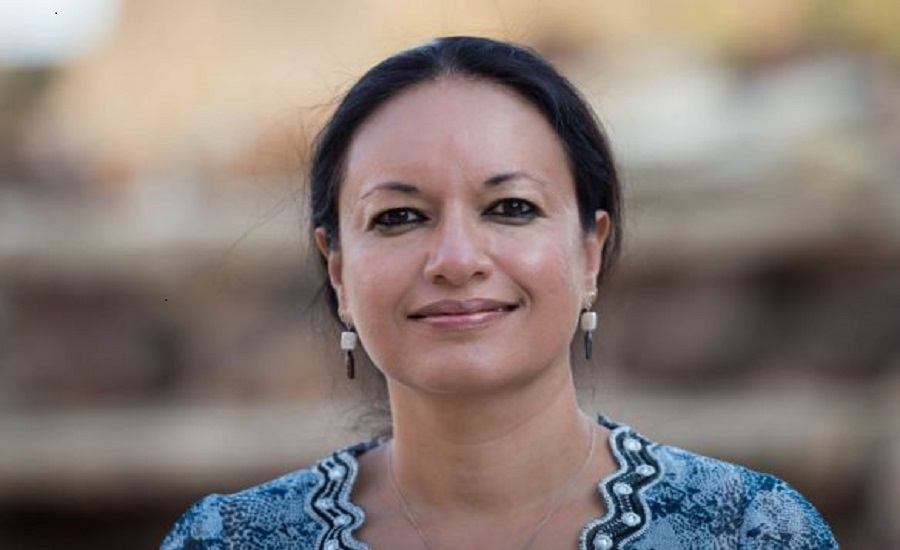
Dr. Nyla Ali Khan has been appointed as a Commissioner on the Oklahoma Commission on the Status of Women. She has been appointed for a five-year term by Senator Greg Treat, who is President Pro Tempora of the Oklahoma Senate.
“The Oklahoma Legislature created the Oklahoma Commission on the Status of Women in 1994 to act as an advisory entity on equity issues relating to gender bias; monitor legislation to determine whether it is discriminatory toward one gender or the other; act as a resource and a clearinghouse for research on issues related to women and gender bias; report annually to the governor, president pro tempore of the Senate, and speaker of the House of Representatives regarding its activities and make recommendations concerning needed legislation or regulatory changes relating to equity and gender bias.”
Dr. Nyla Ali Khan is the first South Asian Muslim member of the Oklahoma Commission on the Status of Women. She said that as a member of the Oklahoma Commission on the Status of Women, she acts as a resource and provides expertise to the Commission. She provides research and information on societal violence and structural inequities that result from deep-rooted prejudices against women. Dr. Nyla Khan said, “The questions to which I seek to provide well-substantiated answers are as follows: How can we, as women, develop the ability to organize and mobilize for social change, which requires the creation of awareness not just at the individual level but at the collective level as well? How can we develop self-esteem for which some form of financial autonomy is a basis? How can we make strategic life choices that are critical for people to lead the sort of lives they want to lead? We require a quality education for these mammoth tasks.”
c.reddirtreport.com
source: http://www.caravandaily.com / Caravan Daily / Home> Indian Muslim / March 12th, 2019
Conservation architect Vikas Dilawari’s work on Worli shrine is a significant chapter in the city’s built heritage
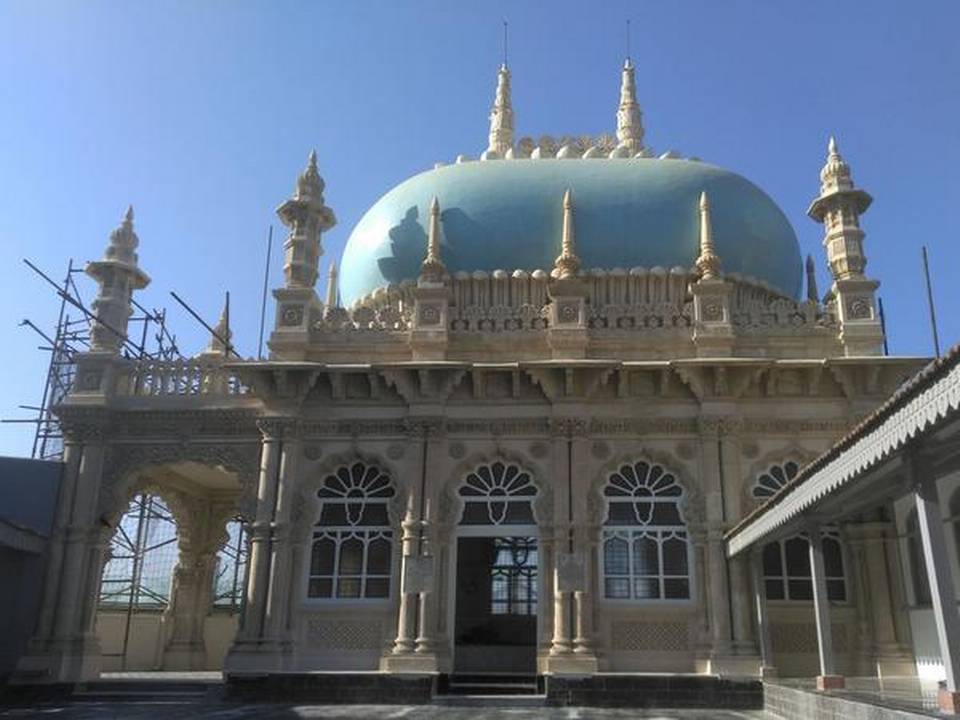
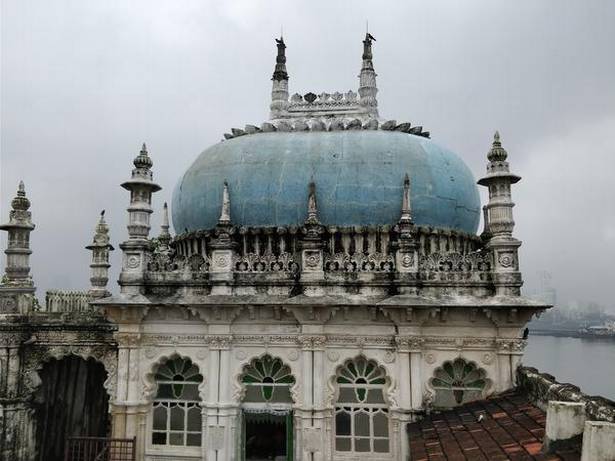
Cocooned in the shielding hold of the bay, just off the arterial, traffic-clogged road that hugs the coastline, is the 111-year-old Ma Hajiani Dargah, restored to its former glory. The restoration of the building began in November 2017 and was completed by conservation architect Vikas Dilawari on April 19, which also marked the eve of Shab-e-Baraat.
The dargah is one of the lesser-known spots of quiet in the city, often interchanged with the more popular Haji Ali Dargah, a stone’s throw away. Built in 1908 when Sir George Sydenham was the Governor of Bombay — primarily in Porbandar stone and basalt ashlar plinth — it is an ideal example of Indo-Saracenic architecture. Subtle influences of the colonial style of construction are evident, particularly in the ornamental work. “This is a very unique building. It is a magical place, of tranquillity, at the tip of the land on a natural rocky outcrop, elevated so gracefully,” Mr. Dilawari said.
Over the years, the dargah’s neighbouring plots of land were sold to private developers. The towering Samudra Mahal — a piece of prime real estate — was where the residence of the Scindias of Gwalior once stood, before being demolished in 1960. “Until a few decades ago, the Mahalakshmi temple, the Haji Ali Dargah, and the Ma Hajiani Dargah would have been the beacons along the coast of Bombay. The proliferation of high-rises without appropriate urban design is certainly impacting the pristine setting, and this might change further with the introduction of the impending coastal road,” Mr. Dilawari said.
A nautical past
The dargah is the site of three graves: Ma Hajiani, Haji Ismail Hasham Yusuf, and his son, Sir Mohamed Yusuf, draped in red and green brocaded chaddars and rose petals. The Yusuf family has been eminent in shipping trade and philanthropy in the city. Haji Ismail Hasham Yusuf founded the Bombay Steam Navigation Company in the late 19th century, and established the erstwhile Marine College at Rashid Mansion in Worli as a charitable institute, later moved to the island of Nhava and still functional as Training Ship Rahaman.
The mausoleum is built in honour of Ma Hajiani, a saint believed to be the sister of Saint Pir Haji Ali Shah Bukhari. The Haji Ali Dargah, houses the tomb of the latter. According to legend, they died at sea and their bodies were washed ashore, a few metres from each other. They were then buried at the respective spots they were found. Subsequently, two tombs were built — Haji Ali for the brother and Ma Hajiani for the sister. At the Ma Hajiani Dargah, women have always been allowed to access the maqbara. Women frequent in large numbers, making offerings of red or green glass bangles: red indicating one’s wish for marriage, and green for offspring.
source: http://www.thehindu.com / The Hindu / Home> Society> History & Culture / by Khorshed Deboo / Mumbai – April 23rd, 2019
Muzammil Sayyed, a trainee at the centre from Latur, said, “We got a boost after three of our seniors cracked the UPSC examination.”
“The cell is good for freshers as it helps in clearing the UPSC preliminary examination,” said Mohammed Mustafa Aejaz.(Pratik Chorge/HT Photo)
The civil services coaching centre at the city’s Haj House, which until now has had limited success in pushing Muslim youth towards civil services, got a boost, after three of its alumni were recently selected by the Union Public Service Commission (UPSC).
Junaid Ahmad, who hails from Bijnaur in Uttar Pradesh and was trained at the IAS and Allied Coaching and Guidance Cell, run by the Centre’s Haj Committee of India (HCI), for two years between 2013 and 2015, ranked third nationally in the UPSC examination. The other two successful aspirants – Zaib Shaikh, from Ahmednagar, and Mohammed Mustafa Aejaz, from Mehboob Nagar in Telangana – were placed at the 225th and 613th positions, respectively.
An HCI official said the news of these achievements has generated a renewed interest and awareness about the coaching facility among the community. “Ever since the UPSC results were declared [on April 5], we have been receiving enquiry calls from all across the country. I still get around 50 calls every day,” he said.
Muzammil Sayyed, a trainee at the centre from Latur, said, “We got a boost after three of our seniors cracked the UPSC examination.”
Last year, as many as 6,732 graduates from across the country had applied for the centre’s entrance test, up from around 1,500 registrations in 2017. This year, the HCI officials expect the number of applications to increase even further – the last day to apply is May 7.
The Cell was established in August 2009, in the backdrop of the Sachar Committee report, which found that Muslims lagged behind most of the other communities in the country in educationally, economically and politically. The report, released in November 2006, pointed out that while Muslims constitute 14% of the Indian population, they only comprise 3% of the civil services and 4% of the police service. Since then, the Muslim representation in civil services has improved to some extent. Of 1,099 candidates who cleared the civil services examination last year 50 (4.5%) were Muslims, the highest since Independence. So far, the coaching centre has produced seven UPSC achievers, including the three who were selected this year. Several other alumni have joined other government agencies, including Reserve Bank of India, Central Excise Department and various state services.
“The cell is good for freshers as it helps in clearing the UPSC preliminary examination,” said Mohammed Mustafa Aejaz.
According to SAM Hashmi, the founder director, who headed the cell between 2010 and 2013, lack of proper leadership at HCI and the cell is to be blamed for its slow progress. “The leaders lacked either academic experience or administrative experience or both,” said Hashmi, who was principal at Akbar Peerbhoy College, Grant Road, and now heads a coaching academy at Mumbra.
In the last ten years, the cell has had four directors. Anwar Khatau, the current director, has previously served at the accounts section of HCI as well as the state’s Maulana Azad Minorities Financial Development Corporation Limited. He was appointed in 2017.
The cell has been experimenting with various coaching techniques, including video lectures and in-person lectures. Last year, the HCI switched back to in-person lectures by faculty from a Pune-based academy, after video lectures by a Delhi-based academy failed to deliver desired results. MA Khan, who was appointed the chief executive officer (CEO) of HCI last year, said the cell is trying to extend every possible support to its students and alumni. “We are providing books, residence and monetary help to our former students for service-specific training at their own place. We have even roped-in non-government organisations for this purpose. We fulfil all the demands of the students of the current batch of the students. In fact, we sought their approval before appointing the faculty,” he said.
Among other changes, the HCI has also done away with the deeniyat (religious knowledge) section of the entrance test and admitted aspirants solely on the basis of their knowledge relevant to civil services. It has also introduced weekly tests and facilitates weekly interactive sessions with faculty. The cell has also encouraged interaction among students, including inter-gender interaction, which was discouraged until now. The students said that the environment at Haj House is conducive for preparing for civil services examinations. “After a year of coaching at Haj House, I stayed here for another year to prepare for the UPSC exam. I will now leave so other students get the opportunity,” said Rais Shaikh, a trainee from Thane.
Sajid Husain, a trainee from Jalpaiguri in West Bengal said that the Haj House facility needs wider publicity. “Many are still unaware of the scheme,” he said.
“There’s a proposal to start such coaching centres at the state-level Haj committee facilities,” said Sayyed.
source: http://www.hindustantimes.com / Hindustan Times / Home> Mumbai / by Hindustan Times, Mumbai / April 22nd, 2019
Khan, a computer science student was shortlisted in November last year based on his profile on a programming site.
A 21-year-old, non-IIT engineer from Mumbai, bagged a hefty Rs 1.2 core package at Google’s London office. Abdullah Khan, a student of Shree LR Tiwari Engineering College was called for an interview by Google. Following a couple of rounds of interviews, he was asked to appear for final screening at Google’s London office.
Khan, a computer science student was shortlisted in November last year based on his profile on a programming site. His salary is divided into the base salary of Rs 54.5 lakh per annum, 15 per cent bonus and stock options worth Rs 58.9 lakhs.
“I used to participate as it was fun. I did not even know that firms check programmers’ profile on such sites. I showed the email to my friend who knew someone who had received such an email in the past. I’m looking forward to joining their team. It will be an amazing learning experience for me, ” Khan told TOI.
The average salary offered to a non-IIT engineering graduate is 4 lakh per annum.
source: http://www.newindianexpress.com / The New Indian Express / Home> Cities> Mumbai / by Online Desk / March 29th, 2019
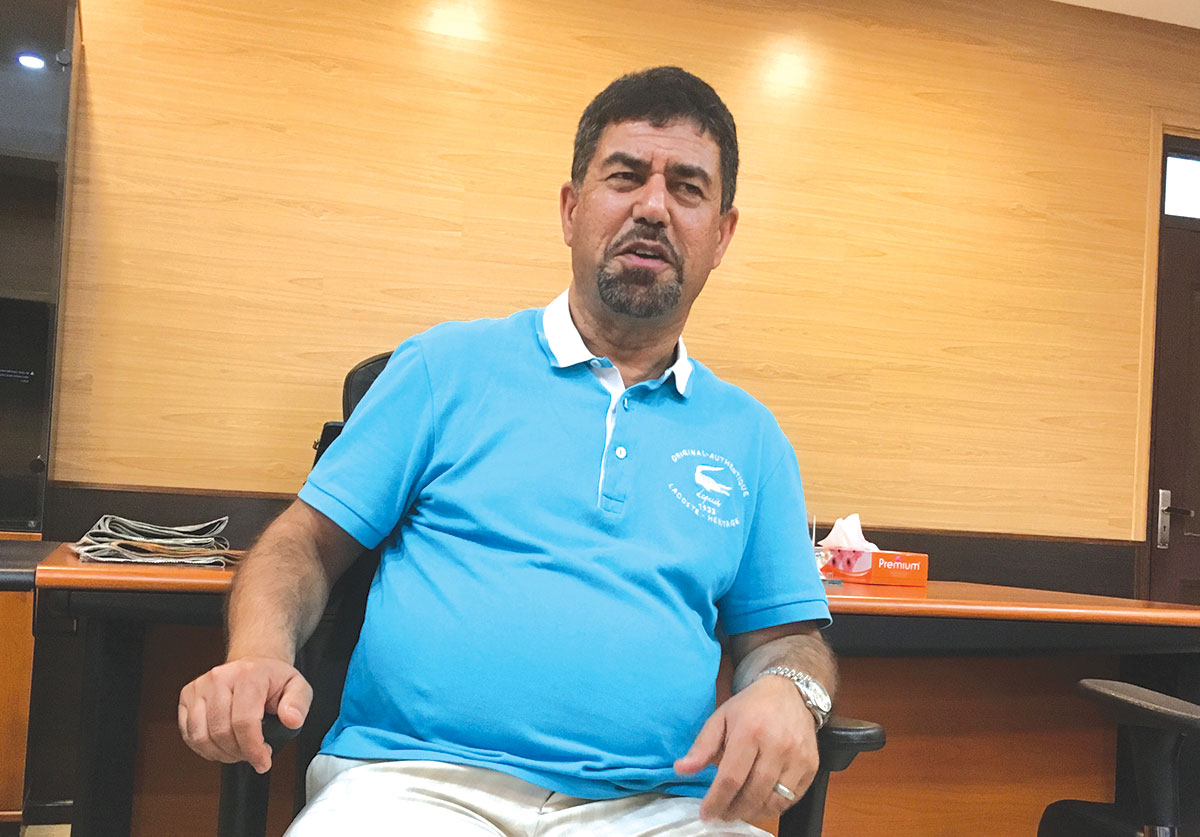
It was a scholarship that helped Feroz A Padder to get the best education and become an interventional cardiologist. Now the proud owner of a hospital in the USA with a yearly turnover of $10 million, he tells Masood Hussain his story and how he has started paying back by creating a world-class school, in the memory of two slain kids, an idea, if successful, he wishes to clone a piece each for every Kashmir district
Ayesha Ali Academy
I was born in a Kulgam village called Kanipora. My father had died when I was three years old. I was raised by my mother.
But I stayed in the village until I was in the fifth primary. In sixth grade, I was selected by Jammu and Kashmir government for a scholarship to attend a premier school in India. It was a fully funded scholarship.
My mother didn’t want me to go. She was crying. A Pandit lady was our neighbour whose son was my friend. Probably, she also did not want me to go. She took my mother to a faith healer to stop me from going but the Soun Saeb told my mother that’s she should allow me to go. Later, my brothers convinced her but it was very hard for my mother.
It was a major scheme of Sheikh Mohammad Abdullah and Afzal Beg. In order to give an opportunity for poor students from government schools, they devised the visionary scheme. Almost 1000 students who would pass their fifth primary in the first class would sit in a written examination and those who passed faced an interview by a panel comprising Director School Education and the principals of various colleges. Finally, three students were selected from each district. I was one among them in the very first batch in 1976.
That is how I studied in Punjab Public School and later in DPS, Punjab. It was the destiny that I became a medical doctor.
But I am not the only doctor in the family. The fifth sibling in my family, I have two older brothers, two older sisters and another brother, three years younger to me. Except for my oldest sister, my older brother was in tenth class when our father died. He took a job in the forest department to run the family. During Sheikh Sahab’s time, the medical college started admitting students after matriculation, so one of my older brothers made it to the medical school in 1976.
Feroz A Padder
As my brother came to Srinagar, one of my older sisters also migrated. She was an art student but soon she changed her subjects, studied well and also joined the medical school. Later, my younger brother also took medical. Now we are four doctors in the family of which three pursued their studies from Srinagar. My younger brother studied psychiatry in South America; my older brother is a cardiologist and my sister is a family practitioner. We all work in the US.
After my brother went to London and later to the US, I followed him. Later, my sister and her husband came after me. Four of our families are in the US and our mother was with us all along till she died and we flew her body for burial in our ancestral graveyard.
My migration was dramatic. I finished my medical school in 1989 and was in the six months of house job when the situation deteriorated and my family wanted me to join them in the US. I did not get the US visa, so I went to the UK where I sat in an examination and started working. In 1992, I qualified for the US examination and went straight to America.
I was lucky again. I got jobs in higher level hospitals. I was in Boston where I did my residency. There I got a fellowship from the National Institute of Health, the biggest institute of health in the US. Later, I did my cardiology fellowship and combined with clinical fellowship. Then I went into more interventional cardiology in which I did further specialization from the University of Alabama, Birmingham. Once I came out after seven years of training, it turned out that I was the best fellow trained as a doctor in the whole country. I had almost nine interviews and eight job offers. But I came back to Maryland and took a job with John Hobbes University in 2000.
Soon, I realised that I didn’t want to work for anybody. I put in my papers and started my own practice, right before 9/11. As I grew gradually, I started hiring more people. Now, I have about seven cardiologists in my group and 19 physicians. I run my own group Padder Health Services with around 60 employees.
I have probably done thousands of invasive procedures. In our area, it is more competitive. We cover two to three geographical locations, and on average, I do around 400 interventions a year.
I am good at business ventures. I own a separate company Padder Reality which owns all the real estate that is under use of Padder Health Services. Right now, we have about the US $ 10 million yearly revenue and we are growing by 5-10 per cent every year. We are in talks with some people and if the process succeeds we will be taking over management of a chain of hospitals in the region, in which we already have strong footprints. That will help us reach the next level.
Dr Farooq Padder, my older brother, a cardiologist is an academic and works in New Jersey. Gulshan Nazir, my sister, is with me. A psychiatrist, my younger brother Tanveer does part-time with me. My wife, Edisa Tokovic, is a paediatrician and is originally from Bosnia but was raised in Michigan, US.
I got scholarships right from the start and whatever I am I owe this to Kashmir and its people. I want to produce thousands of myself. We can give education to the poor students the way I got. I want to pay back and contribute in any way. I run a charitable organisation which is basically our family foundation. We give scholarships to students, in memory of my mother. It has a marriage fund for the orphaned girls also.
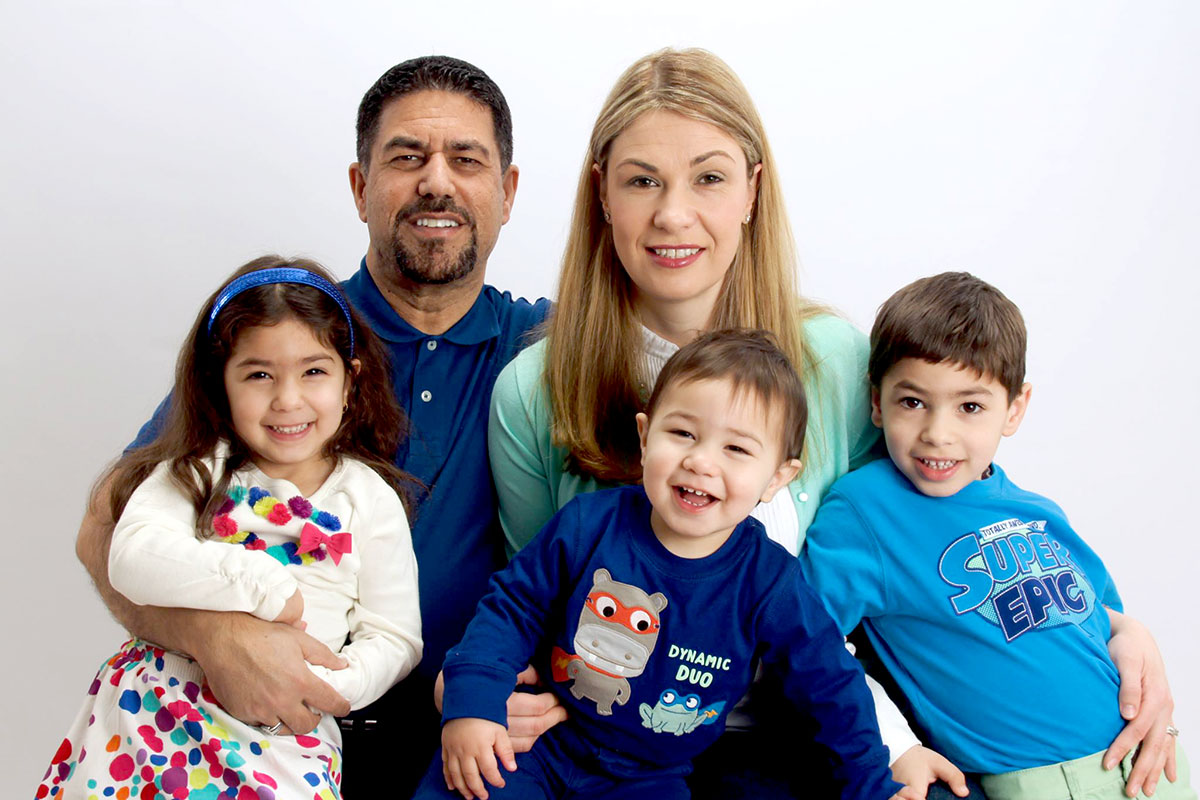
Padder with his second wife and children.
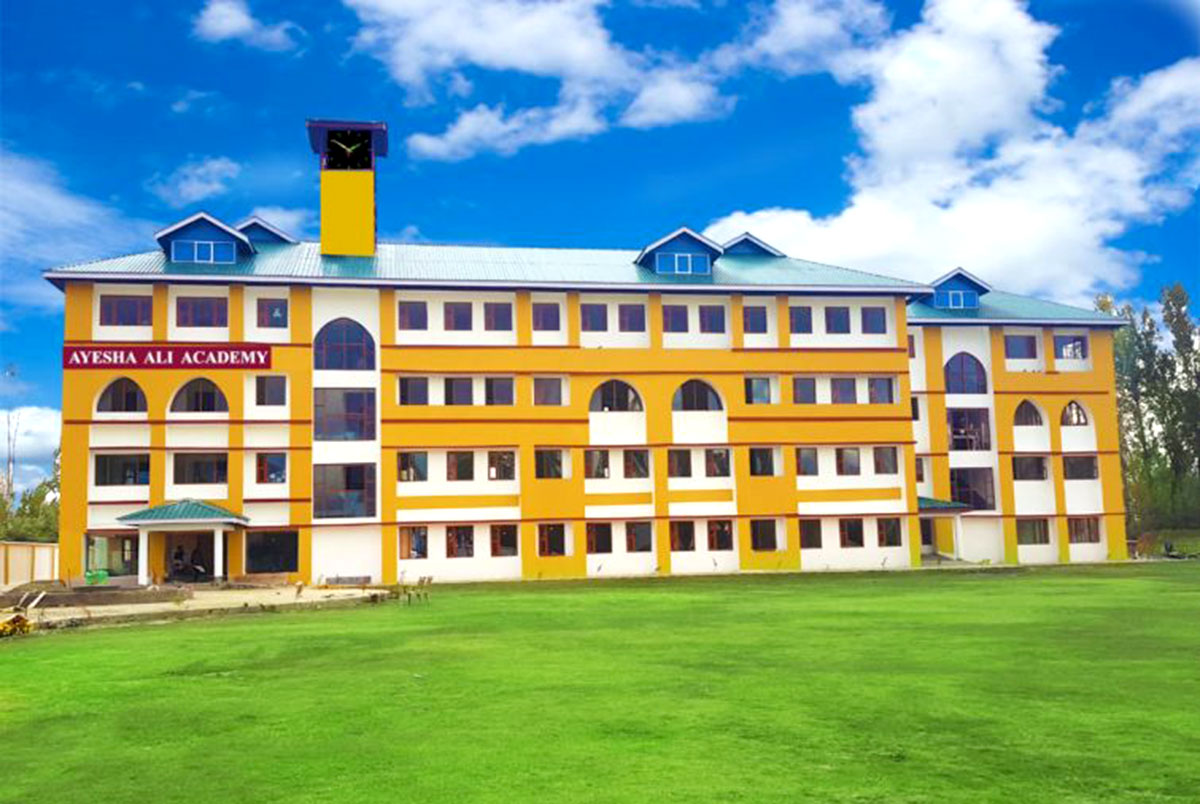
It was a fully funded education that changed me. So I want to use education to replicate the same kind of stories. Finally, I decided to build a school – from nursery to twelfth grade – in Kulgam. It is already into operation.
We will give a scholarship to one-fourth of the enrolled students who are smart but are either orphaned or their parents are less privileged. If this brand and the business model works, I will replicate the same models in the other districts, hopefully in Baramulla and Srinagar, soon after.
The building has around 50,000 sq ft built-up the area and I have probably spent around Rs 8 – 10 crores on it. It’s my personal investment.
Once the school starts, our Foundation will fund it till it becomes self-sufficient. It eventually will be a private entity that will reinvest its excess earnings to fund the education of one-fourth students enrolled in it.
I have tied up with one of America’s oldest school systems to create a curriculum and teaching system which is global and the best. We have people in the USA who are willing to help us in imparting education and training the teachers. I pray the initiative is a success.
Behind the school is a story, a tragedy. It was in 2006 when my (first) wife met a road accident and died along with our two kids. She was from Pakistan; her name was Amira Abbas. She was a cardiologist too. Ayesha, my daughter, was nine years old, and Ali, my son, was five.
Ayesha was born on September 5, 1997, the same time when Lady Diana died. The very next day, Mother Teresa died. I used to tell her that God created you for a reason, not knowing that she would not live long. She was brilliant, religious and a loving daughter. She completed the Quran at age seven and there was a party for her scheduled for November 5. But she died on October 31. She had been selected for a kid leadership three-week course and I got the selection letter a week after her death.
When someone was driving me back from the accident spot, that time, I decided that whatever money I had saved for my children’s future, I will create an institution in their name. So I have named this school Ayesha Ali Academy. That’s why we initially created the Ayesha Ali Foundation.
I met my second wife in Washington DC where she was doing a residency. She is very much younger than me. We married in 2008. We have three kids – two sons and one daughter. Ibrahim, my older son, tells me: “God gave you two children back and one more in bonus.”
I tell my children that the two countries had to go to war for us to get married. It is unfortunate both these conflicts occurred. Had there been no crisis in Kashmir I might not have migrated. Same is true with my wife. She has been to Kashmir a few times. I come here often and I go to Bosnia too. But the only difference is that it is much militarized here unlike Bosnia.
I even thought of constructing a special hospital in Kashmir, but later, I thought I have to be physically here for that because it was such a big project. Since I have little kids, I didn’t want to take that chance. But I still have some ideas and I have been thinking about it. But if the school goes as per the script, we could get into health care too.
Ayesha and Ali, padder’s kids from his first wife had died in an accident.
We don’t even need a hospital to start with. I had a major polyclinic where we have a big infrastructure and where we have different doctors working under the same roof. But rather than being a government institution, it’s a private institute and most of the doctors have some stakes in it. Hopefully, we may try to develop that here in Kashmir.
In Kashmir, hospitals are understaffed and doctors overworked. There is less awareness among people about the preventive medicines. The absence of medical insurance is a crisis that would prevent quality investment in the health sector.
source: http://www.kashmirlife.net / Kashmir Life / Home> Cover Story> Diaspora / by Masood Hussain / March 27th, 2019
The holistic makeover included an infrastructural transformation with new classrooms, toilets, multipurpose hall and astro-turf covered sports field, among other improvements.
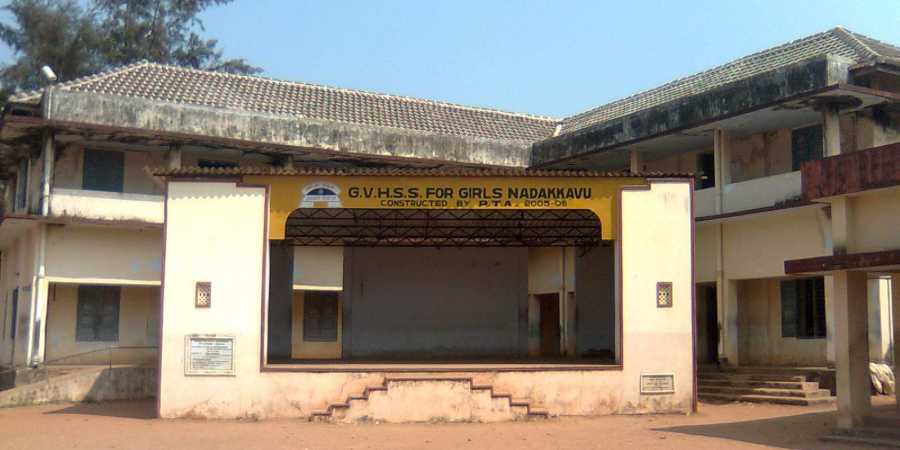
Government Vocational Higher Secondary School for Girls, Nadakkavu (Photo| GVHSS website)
Kozhikode :
Government Vocational Higher Secondary School for Girls (GVHSS), Nadakkavu, that witnessed a massive transformation under the PRISM (Promoting Regional Schools to International Standards through Multiple Interventions) project of the state government and Faizal and Shabana Foundation, will soon gain recognition on global platforms.
The redevelopment of 120-year-old school has now been taken as a case study on ‘Venture Philanthropy in Education’ by Dr Sreevas Sahasranamam, a Chancellor’s Fellow at the Hunter Centre for Entrepreneurship at University of Strathclyde, Glasgow, UK. Venture Philanthropy refers to an adventurous approach to fund unpopular social causes. The case study titled ‘Faizal & Shabana Foundation: A Venture Philanthropic Approach to Education’ will also be taught in some of the classes on corporate entrepreneurship at the university.
The study covers the refurbishment of school through philanthropic investments made by the Faizal and Shabana Foundation and the execution of the project amidst challenges. The Faizal and Shabana Foundation in collaboration with the state government had developed the PRISM project to improve the standards of government schools. GVHSS Nadakkavu was the flagship school renovated as part of this programme.
The holistic makeover included an infrastructural transformation with new classrooms, toilets, multipurpose hall and astro-turf covered sports field, among other improvements.
source: http://www.newindianexpress.com / The New Indian Express / Home> States> Kerala / by Express News Service / March 25th, 2019
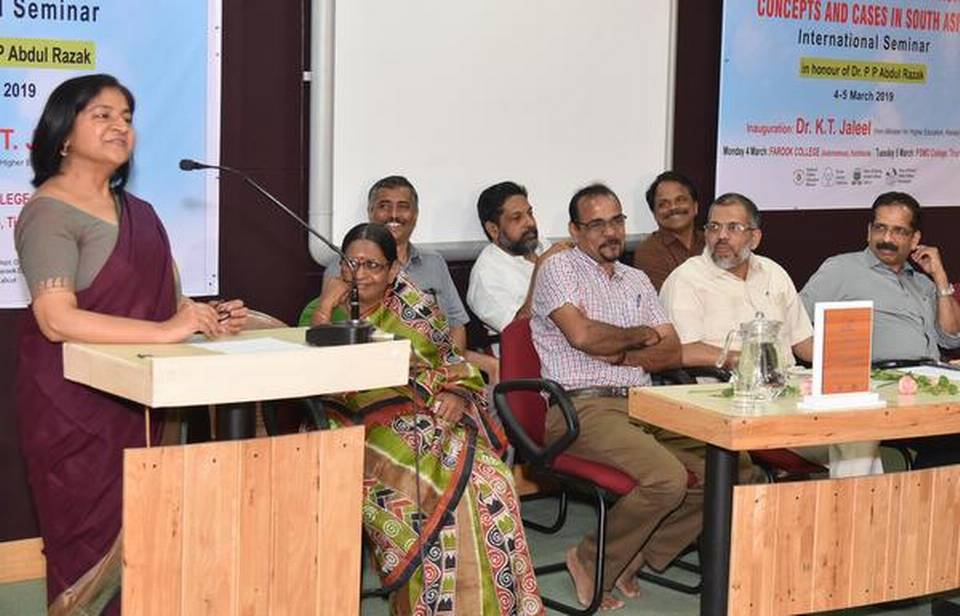
History professor Seema Alavi from Delhi University addressing an international history seminar at Farook College on Monday
Two major colleges of Malabar are jointly hosting an international history seminar in honour of well-known academic P.P. Abdul Razak, who is retiring soon from P.S.M.O. College, Tirurangadi, as its History Department head.
Calicut University Vice Chancellor K. Mohammed Basheer inaugurated the seminar on ‘Early modern and colonial in history: concepts and cases in South Asia’ at Farook College on Monday.
Dr. Basheer called upon historians and researchers to take a diversion from the traditional methods of historiography. He exhorted them to widen the study of history by including the colloquial languages and local history.
“History should be linked to the lives of ordinary people,” he said. Several reputed historians, including Seema Alavi from Delhi University, Mahmood Kooria from Leiden University, Nirmal Renjit Devasiri from Colombo University, K.N. Ganesh and K.S. Madhavan from Calicut University, are attending the two-day meet.
Farook College principal K.M. Naseer presided. T. Mohammedali, head of History Department at Farook College, welcomed the gathering. Kerala History Congress general secretary N. Gopakumaran Nair, Farook College History Old Students Association president P. Ramdas, Vijaya Lakshmi from Malayalam University spoke. K. Lukmanul Hakeem from Government Arts and Science College, Kozhikode, proposed a vote of thanks. While Farook College hosted it on the first day, PSMO College, Tirurangadi, will host the proceedings on Tuesday.
The National Higher Education Mission is supporting the seminar jointly organised by Farook College and PSMO College in association with the Social History Collective, Kozhikode.
source: http://www.thehindu.com / The Hindu / Home> News> States> Kerala / by Staff Reporter / Malappuram – March 05th, 2019
A three-day grooming session for children by D’La Valentina at Hotel Aira in city concluded here on Sunday.
Vijayawada :
A three-day grooming session for children by D’La Valentina at Hotel Aira in city concluded here on Sunday.
On the occasion, various competitions were conducted in which kids, trained by Valentina Mishra ( who is the national director of International Kids Pageants) took part. Along with training on personality development and communication skills, the children were introduced to concepts of oral care and hygiene by Dr Kavya and Dr Madhu.
In an audition conducted in February, eight students–Parineeta Sinha (8), Darsh Joshi (7), Taufiq Mansoor Ansari (9), Sanvi Kongra, (11), Gagana K (6), N Yashasvi Sai (8), Safin (10), Aditya Vasudev (12)–were selected for this three-day grooming session.
Among them, Yashasvi Sai from Vijayawada was selected to represent India in the ‘little category’ at the ‘Little Miss Galaxy Contest’ to be held from March 16 to 23 in Bulgaria. Aditya Vasudev from Visakhapatnam was selected to represent the country in the ‘pre-teen’ category at the ‘Best Prince of the World’ contest in Georgia from April 23 to 28.
A photo shoot was organised for them to showcase their style quotient, and mementoes and participation certificates were distributed.
Speaking on the occasion, Mishra said: “Learning to groom oneself at such a tender age will help a child improve his/her self-confidence. It also boosts public speaking and leadership skills.”
Recently, Yamini Patibandla (6), who was groomed by the organisation, won the World Rising Stars contest in Georgia.
source: http://www.newindianexpress.com / The New Indian Express / Home> Cities> Vijayawada / by Express News Service / March 04th, 2019
An anthology of Urdu verses and proverbs, all on eyes, was launched recently
Eyes are a mirror of the soul, it is said. Some eyes are sly and roguish, some serene and shining, a few, seductive and mysterious. Prod Dr Abdul Moiz Shams and he reels out details about a variety of eyes and their intrinsic worth. He should know considering he is an ophthalmologist by profession, but then Dr Shams also has a keen eye for Urdu poetry.
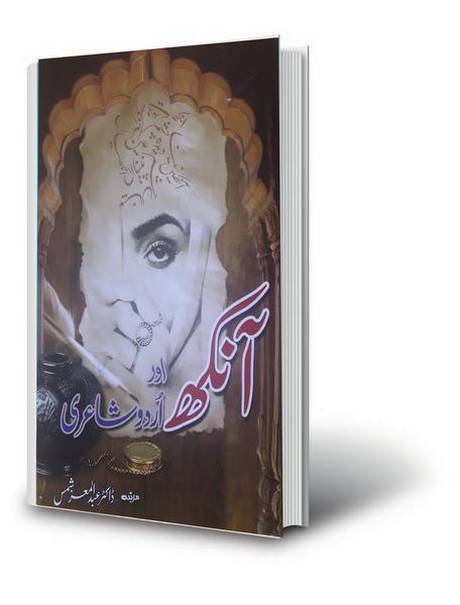
During his long service as an ophthalmologist, he has looked into innumerable defective eyes holding a little flashlight. While restoring vision, he has also looked beyond, into the soul. And what he has come up with is a book titled Aankh Aur Urdu Shayeri.
Inki aankhen ye keh rahi hain Faraz
Ham pe tasneef ek kitab karo
(Her eyes tell Faraz
Write a book on us)
Dr Shams has compiled a 389-page book containing couplets of different shades and emotions on eyes. It’s a treasure trove for connoisseurs of poetry. From Mirza Ghalib, Allama Iqbal to Meer, Sauda, Shaad, Faiz, Majaz, Jigar Muradabadi, Ali Sardar Jafery, Parveen Shakir — a whole lot of Urdu poets and their verses on aankh have been listed.
The book is divided into three parts — the first one contains couplets beginning with aankh, the second one has verses which are allegorical in nature and the third part has proverbs containing the word aankh, listed topic-wise. The book is a ready reckoner of sorts, on eyes. This is perhaps the only book of its kind where all the pages are full of verses on one body part.
Right from his student days Dr Shams had a love for poetry and when he became an eye specialist, his passion took a different turn. He started focussing on poetry of eyes. It’s no wonder that he has four other books to his credit: Hamari Aankhen, Jism-o-Jan, Jism-Be-Jan and Aab-e-Hayat.
“The eye is the jewel of the body. Its function is not just to see but to look beyond and sense colour, form, light and movement. That’s why I started collecting couplets on eyes,” says Aligarh-based Dr Shams who released his book in Hyderabad.
The insightful couplets are real eye-openers. Sample this couplet of Parveen Shakir.
Aankh ko yaad hai wo pal ab bhi
Neend jab pehle pehal tuti thi
Full-length ghazals of Ali Sardar Jafery, Khaisar Siddiqi, Hasrat Mohani and Basheer Badr, all on eyes, make for delightful reading.
Gulab aankhen, sharaab aankhen
Yehi to hain lajawab aankhen
Aankhen uthen to dard ke chashme ubal pade
Palken juhken to payar ka badal baras gaya
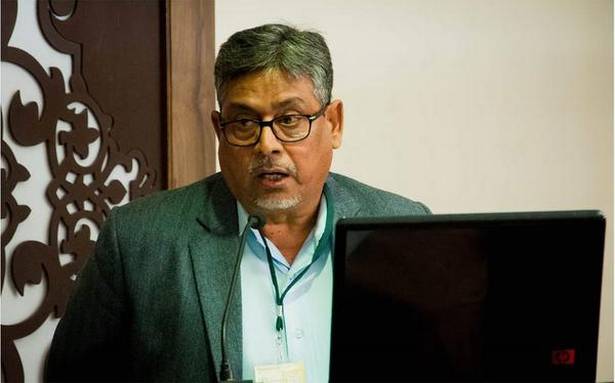
One can get an eyeful of couplets in this book which was released at the recent two-day National Urdu Science Congress at the Maulana Azad National Urdu University. “There is no dichotomy between science and literature. In fact they complement each other,” says Dr Abid Moiz, who is also a good humour writer.
source: http://www.thehindu.com / The Hindu / Home> Life & Style> Book / by J S Ifthekhar / March 06th, 2019
To ensure that all his focus is on his racing career, his parents have even taken him out of school — he is currently being home-schooled.
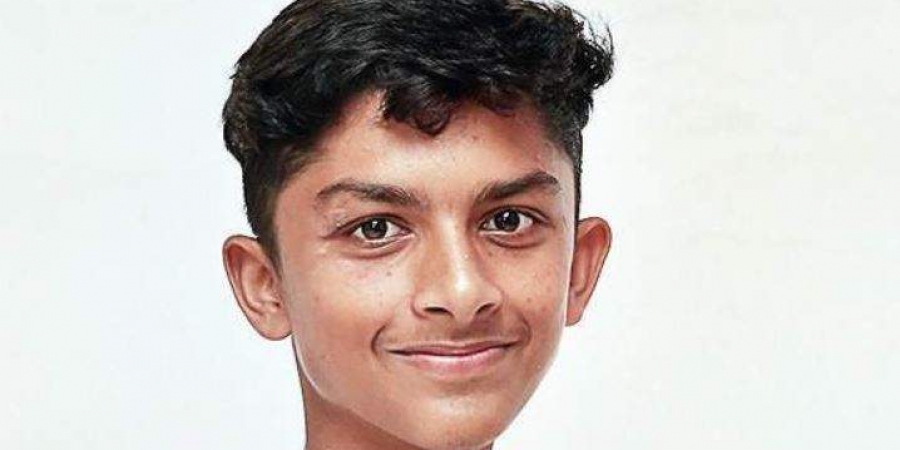
Mohamed Mikail
Chennai :
Mohamed Mikail will have to wait four more years before he can take his bike on to the road — he’s just 14, after all! But in a couple of months, the Chennai lad will be doing something that most Indian racers, especially those in the two-wheeler scene, can only dream of. He will be racing in an international series abroad. Mikail was the find of the Honda Talent Cup, which was held last year to identify promising young racers. And he proved he had that in oodles! Mikail was the youngest racer in the competition but managed to finish on top of the standings.
His efforts have netted him a drive in the Thai Talent Cup, where he will be joined by 18-year-old Kritik Habib. It was evident that Mikail was meant for the fast lane early on. He took to racing pocket bikes when he was just 10 and even competed in a couple of races in Malaysia. It also helped that his family had a link to the racing fraternity — his uncle Mohammed Haneef used to race cars. “It was a little bit easy for me to get guidance because he knew the basics,” Mikail says.
“I have competed in a couple of pocket bike races in Malaysia before. But the Honda Cup was the first time I was racing proper bikes.” He has his uncle to thank again for that. “It was him who first heard about the Honda initiative and enrolled me in it,” Mikail says.
“My uncle is my biggest support.” His racing career will take him where few 14-year-olds get to go, but it also means that Mikail will be missing out on a lot of experiences that his peers take for granted. While kids his age will be celebrating the summer holidays in a month, Mikail will be going over track data, setting up his bike and undergoing a rigorous fitness regime.
To ensure that all his focus is on his racing career, his parents have even taken him out of school — he is currently being home-schooled. But Mikail is happy with the way things are going for him. He is itching to get his hands on the Honda NSF250 (a machine that Honda has fielded in the Moto3 series) that he will be racing in the Thai Talent Cup. He reckons he will finally be able to start testing the event in April. “I feel excited,” he says. “I haven’t set any targets (for his debut season in the Thai Talent Cup). My first aim is to go learn.”
source: http://www.newindianexpress.com / The New Indian Express / Home> Sports> Others / by Vishnu Prasad / Express News Service / March 02nd, 2019