Goalpokhar (North Dinajpur District) , WEST BENGAL :
The Urdu teacher at Dharmapur High School at Goalpokhar in Bengal’s North Dinajpur district won from Belon in Goalpokhar 2 block.
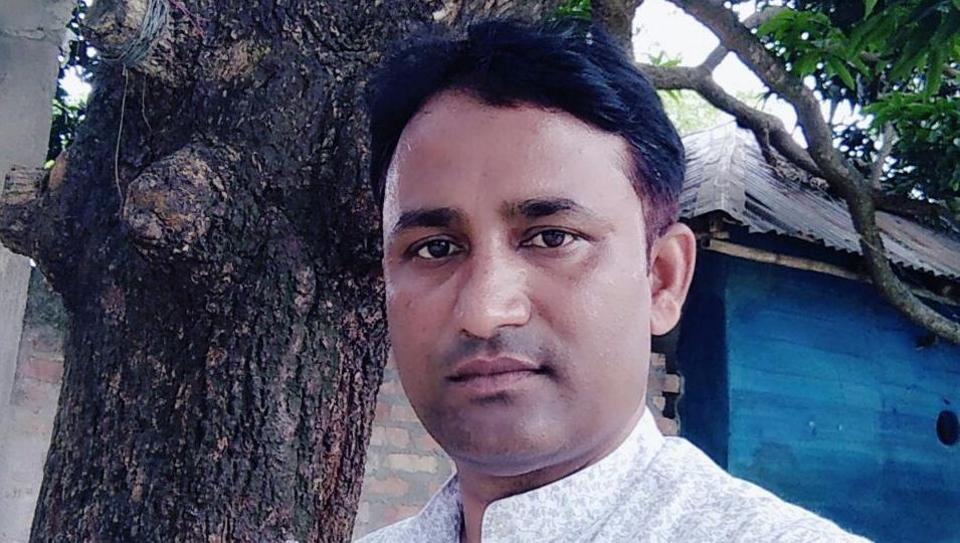
Md Shahid Siddiquee joined politics eight months ago after he was inspired by Forward Bloc MLA from Chakulia in North Dinajpur district, Ali Imran Ramz.(HT Photo)
Eight months ago, Md Shahid Siddiquee,32, a former student of Aligarh Muslim University, was a newcomer in All India Forward Bloc, a partner in Bengal’s Left coalition.
When results to the polls in the state’s three-tier panchayats were released, Siddiquee emerged as winner of the sole zilla parishad (district council) seat for the Marxists who were facing rout.
The Urdu teacher at Dharmapur High School at Goalpokhar in Bengal’s North Dinajpur district won from Belon in Goalpokhar 2 block. This is the Left’s only zilla parishad seat out of 825 (only 622 saw contest) in Bengal. Siddiquee defeated veteran Trinamool Congress leader Abdul Ghani by 1,156 votes.
Communist Party of India (Marxist), Communist Party of India and Revolutionary Socialist Party, the three other big constituents of the 10-party Left Front, could not win any seat in the highest tier of the panchayats.
Interestingly, Siddiquee is not even known to many of the top Left leaders in these parties. He will be introduced to them at a meeting of the Left Front leaders on May 26.
Siddiquee joined politics eight months ago after he was inspired by Ali Imran Ramz, Forward Bloc MLA from Chakulia in North Dinajpur district. Ramz is the second youngest MLA in the Bengal assembly.
“I was always a Forward Bloc supporter but it was Ramz who inspired me to join active politics. He also inspired me to contest. The credit for my victory goes to him,” said Siddiquee.
“Had Trinamool supporters not resorted to violence at eight booths our margin would have been higher. But I am sure many Trinamool supporters also voted for me,” he added.
Ramz claimed that Siddiquee’s victory has proved that Left Front can put up a fight against Trinamool if it keeps in touch with people at the grassroots. “From the very beginning I was against seat adjustment with any party outside the Left Front. In North Dinajpur, Forward Bloc contested on its own. I am grateful to our voters,” said Ramz.
CPI(M) Politburo member and MP from Raigunj in North Dinajpur, MP Salim, said the Left would have done much better in the north Bengal region had Trinamool not resorted to violence.
source: http://www.hindustantimes.com / Hindustan Times / Home> Cities> Kolkata / by HT Correspondent / May 22nd, 2018
Students of Bethune Collegiate School all smiles after the Higher Secondary results were announced on Friday. Picture by Bishwarup Dutta
Calcutta:
One fought marriage, another gave up on buddy time and a third doesn’t want to burden his father. All three shone in the Higher Secondary results.
Metro tells their spirited stories
Rehana Khatoon, 83 per cent
Namkhana Union High School
Rehana Khatoon would have been married off after her Madhyamik had it not been for her headmaster’s intervention.
She has scored 83 per cent in her Higher Secondary aggregate.
Her father, a tailor and a part-time wood-cutter, has had to spend all his savings on getting his two elder daughters married and could ill afford the education of the youngest.
“We convinced the family that Rehana could get Rs 25,000 as assistance if she completed her Higher Secondary and took admission in a college under the state government’s Kanyashree-2 scheme. They relented,” said Alok Maity, the headmaster of Rehana’s school.
Rehana’s father, Taiyab Ali, spends the week working as a tailor in Howrah and goes to Namkhana on weekends to cut wood. “I earn just about Rs 4,000 a month,” he said.
Rehana herself teaches kids to raise money. “I earn Rs 1,000 a month which I use to pay my fees and buy books,” she said.
Rehana is unsure if she can go to college. “I don’t know if my father can bear the expenses. I want to take up nursing and midwifery,” she said.
Swarupa Dhar, 91.6 per cent
Ghoshpara Nischinda Balika Vidyapith
She did not go out with friends for movies and did not own a smart phone till two days ago. But none of it bothered Swarupa Dhar as she did not want to financially burden her father, who works at a sari shop in Burrabazar and earns about Rs 6,000 a month.
Swarupa’s score of 91.6 per cent in the Higher Secondary exams is a reward for her father Subhas Dhar, who had to drop out of college but wants his daughter to study.
“I do not want or expect things to change drastically from here because if I start getting what I am not used to, my focus might shift. All I want is to complete my studies,” said Swarupa who topped her school and wants to pursue accountancy.
The 17-year-old has always had few demands. “It was only recently that she had wanted a smartphone because she will now go to college,” mother Rita said.
Souvik Ghorai, 69.6 per cent
Krishnachandrapur High School
Souvik Ghorai was busy working on the field with his parents when his friends went to collect their Higher Secondary mark sheets from school.
The boy who scored 69.6 per cent from Krishnachandrapur High School in South 24-Parganas is certain he cannot go to college.
“We barely make enough to eat and live,” said Souvik, who was dropping out of school after Madhyamik before headmaster Chandan Maiti intervened.
“If we can find someone to sponsor or collect some money to fund his education, Souvik will be able to go to college,” Maiti said, headmaster.
Even when in hostel, Souvik would make it a point to travel to his village Samsara in West Midnapore on weekends because he had to go to Kolaghat to sell flowers at dawn.
“It took me about six hours to travel home by train and bus. Around 3am on Sundays, I would collect flowers and got to Kolaghat to sell them. I would make Rs 300 to 400 in a day,” Souvik said.
source: http://www.telegraphindia.com / The Telegraph,Calcutta,India / Home> Calcutta / by Subhankar Chowdhury and Jhinuk Mazumdar / June 09th, 2018
Muslim women who were at the forefront of the nationalist and feminist discourse in the country, during and after the independence movement, were eventually overlooked or excluded from the mainstream narrative.
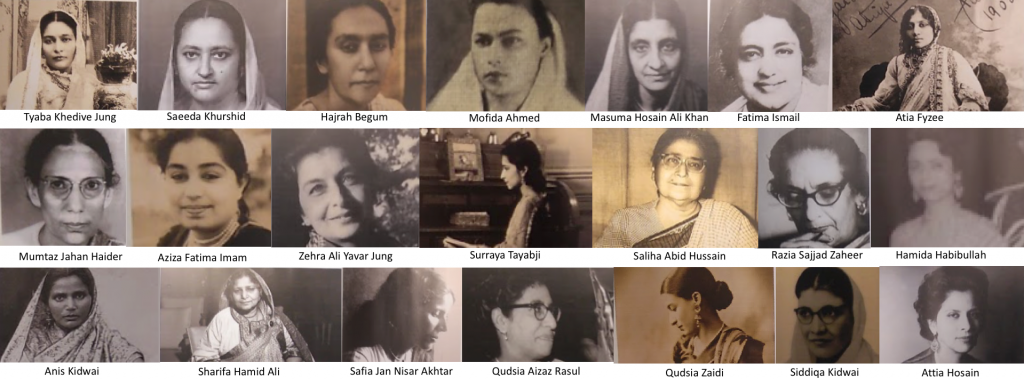
MWF exhibition featured 21 Muslim women who contributed to nation-building during and after the independence struggle. Credit: Khushboo Kumar
New Delhi:
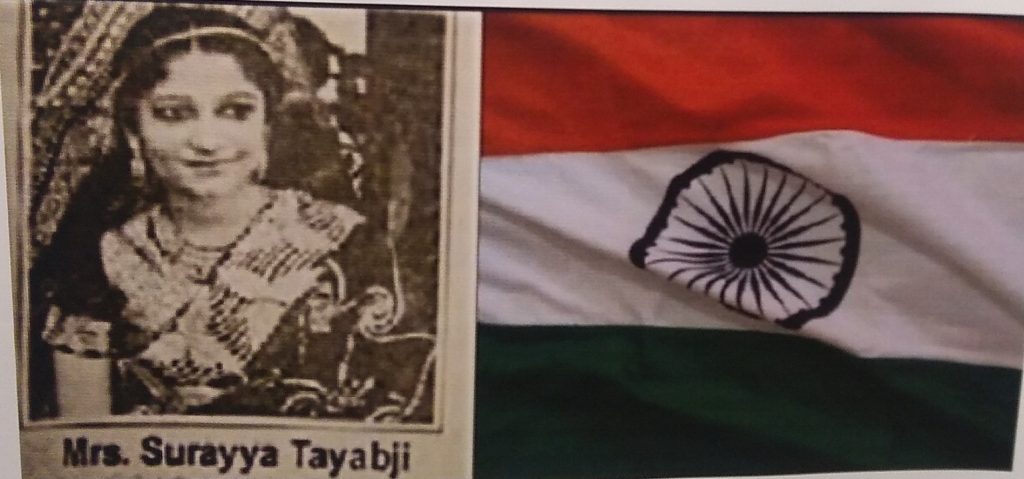
Most Indians today may not be aware that the national flag was designed by a Muslim woman, Surayya Tayabji, an active member of the Indian National Congress. Jawaharlal Nehru assigned this task to Tayabji, and it was her idea to replace the symbol of the charkha used and popularised by Mahatma Gandhi with that of Ashoka Chakra at the centre of the flag. Tayabji felt that the charkha, a symbol of the Congress party, might appear partisan.
Narratives like this – often forgotten or lost in public memory – were the central theme of a colloquium that was organised by the Muslim Women’s Forum (MWF), an organisation engaged in the advocacy of Muslim women’s rights. Titled ‘Pathbreakers: The Twentieth Century Muslim Women of India’, the colloquium held in partnership with UN Women showcased the achievements of 21 Muslim women in various spheres of public life during and after the independence struggle.
Other women who featured in the exhibition included Saeeda Khurshid, Hamida Habibullah, Aziza Fatima Imam, Qudsia Zaidi, Mofida Ahmed, Zehra Ali Yavar Jung, Razia Sajjad Zaheer, Tyaba Khedive Jung, Atiya Fyzee, Sharifa Hamid Ali, Fathema Ismail, Masuma Hosain Ali Khan, Anis Kidwai, Hajrah Begum, Qudsia Aizaz Rasul, Mumtaz Jahan Haider, Siddiqa Kidwai, Attia Hosain, Saliha Abid Hussain and Safia Jan Nisar Akhtar.
The speakers participating in the discussion talked about the need to reclaim the lost narratives of Muslim women and take control of their representation.
Speaking on the occasion, Seema Mustafa, an Indian print and television journalist, pointed out that these women would not fit even the current stereotypical representation of hijab-clad, oppressed and orthodox Muslim women, who need a messiah to rescue them. Mustafa, in her keynote address, said that these women had broken barriers and challenged patriarchal order in their time; they followed Islam in its liberal spirit, refusing to be shackled by societal norms. Most of them abandoned the purdah system, she said.
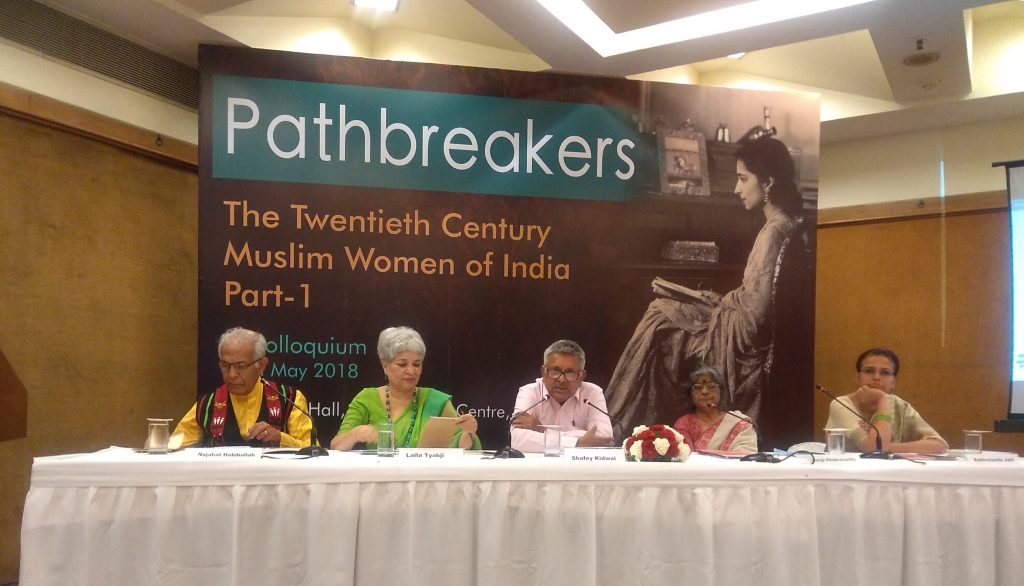
Speakers panel for the session ‘Recognising and Nurturing Pathbreakers’ at Muslim Women’s Forum colloquium. Credit: Khushboo Kumari
Stereotypes in modern India
The speakers insisted that the reality was and still is that Muslim women, just like women belonging to any other socio-cultural group in India, do not constitute a monolithic, homogenous entity. They come from diverse backgrounds and subscribe to varying ideologies. Muslim women have been and still are writers, teachers, artists, scientists, lawyers, educators, political workers, legislators in parliament and in assemblies. The speakers said clubbing them under the generic rubric of backwardness was a misrepresentation.
As the regular use of terms like triple talaq, halala and purdah has come to demonstrate subjugation of Muslim women, Islam has acquired the status of the most oppressive religion for women, the speakers said. Muslim women have become an object of pity.
Commenting on Islam and feminism, Farida Khan, former dean of education at Jamia Millia Islamia and former member of the National Commission for Minorities, pointed out that gender oppression is common to all religions. “Why should Islam have the burden of taking on feminism?” asked Khan. She further explained that Islam should be perceived and understood in the social and historical context of the day. Every religion has to and does evolve with time.
Referring to the exhibition, Khan said, “It makes me sad to think that you need to have an exhibition and you need to project these women in a country where they should be well known, where they should be part of the mainstream, where everybody should know their names and know the work they have done.”
Gargi Chakravartty, former associate professor of history in Maitreyi College and author, said, “Muslim women’s political and social contributions in the pre-independence period during the major Gandhian movements or in the field of spreading education, or in the sphere of literary activities, cannot be erased from history.” She shared many anecdotes that came up in her own research about largely unknown Muslim women who have extensively worked among the poor throughout the 20th century and still continue to do so.
An eminent speaker at the colloquium, Rakshanda Jalil, recently wrote a book A Rebel and Her Cause on the life of Rashid Jahan. Jalil spoke of the inspiring life of Jahan, who was a doctor, writer, political activist and member of the Communist Party of India.
Farah Naqvi, member of the Post-Sachar Evaluation Committee (Kundu Committee) 2013-2014, summed up the purpose of the colloquium and the exhibition. “This colloquium is a response. There is a nostalgia about it. But it is not just about the nostalgic nawabi Muslim. It has a political purpose, the colloquium, which is that you cannot allow any one strand of history to be obliterated from this country. Any strand. It could be Muslim women today. It could be someone else tomorrow,” Naqvi said.
Questioning if Muslim women needed to be forced into a separate constituency, Naqvi said it was indeed a tragedy that these women’s contributions were not a part of mainstream knowledge – and that reflected failure on the part of Indian historiography.
Naqvi also pointed out that the undercurrent of the entire exhibition was nation-building because they were “also responding to a moment when Muslims are repeatedly being told that they are ‘anti-national’”. She further explained that against such a background, the Muslim community in general should not take the bait of proving that they are ‘good’ nationalists. Instead they should take pride in the achievements they have made in their respective spheres of work – especially for those who stayed on in India after the Partition.
Wajahat Habibullah, India’s first chief information commissioner and the son of Hamida Habibullah, one of the 21 women featured in the exhibition, talked about Partition and how it divided his family. He said, “It is necessary to remember and nurture the memories of all those Muslim women who then very consciously, despite family pressure and contradictions within the family, opted clearly to be a part of India”.
Contribution to literature, politics and education
The exhibition showed how extensively Muslim women have contributed in the spheres of politics, literature, education and social work.
Many like Saeeda Khurshid, founder of the Muslim Women’s Forum, actively campaigned for the Congress party. Hamida Habibullah was the the president of the Mahila Congress. Few like Aziza Fatima Imam, Fathom Ismail, Anis Kidwai, Siddiqa Kidwai and Qudsia Aizaz Rasul were members of the parliament and legislative assemblies for years.
Rasul was also the only Muslim woman member of the constituent assembly.
Sharifa Hamid Ali founded the All India Women’s Conference (AIWC), with the likes of Sarojini Naidu, Rani Rajwade and Kamaladevi Chattopadhyay, and was involved in its work alongside others like Masuma Hosain Ali Khan and Hajrah Begum – who also founded the National Federation of Indian Women.
These women actively worked with the poor and marginalised sections of society, trying to improve their access to health and education.
Zehra Ali Yavar Jung, who was awarded the Padma Bhushan in 1973, worked to improve the condition of women detainees in Hyderabad’s prisons and presided over a women’s workshop that trained and provided employment to destitute women. Fathom Ismail helped in opening rehabilitation clinics for children suffering from polio. Anis Kidwai worked tirelessly in refugee camps after Partition.
Surayya Tayabji and the Indian national flag displayed at the MWF exhibition. Credit: Khushboo Kumari/The Wire
Mumtaz Jahan Haider, who was appointed the principal of the Aligarh Women’s College in 1937, worked for women’s education her entire life.
Sharifa propagated legal reforms for Muslim women, including raising the age of marriage and drafting a model marriage contract ‘nikahnama‘.
In the field of literature and arts, these women won multiple awards. Razia Sajjad Zaheer, the recipient of the Nehru Award and Uttar Pradesh State Sahitya Academy Award, wrote novels like Sar-e-Sham, Kante and Suman. Anis Kidwai recieved the Sahitya Kala Parishad Award.
Attia Hossain used to write for Pioneer, Statesman and Atlantic monthly and wrote several novels, most notably Sunlight on a Broken Column and a short story collection Phoenix Fled. Aliya Fyzee wrote Indian Music (1914), The Music of India (1925) and Sangeet of India (1942) with her husband.
Qudsia Zaidi wrote and translated books for children, with Chacha Chakkan ke Draamae among the most loved ones. She also founded Hindustani Theatre in 1954, the first urban professional theatre company in independent India.
Khushboo Kumari has a BTech in information technology and is pursuing an MBA in marketing from MICA, Ahmedabad. She is an intern at The Wire.
source: http://www.thewire.in / The Wire / Home> History> Religion> Women / by Khushboo Kumari / May 30th, 2018
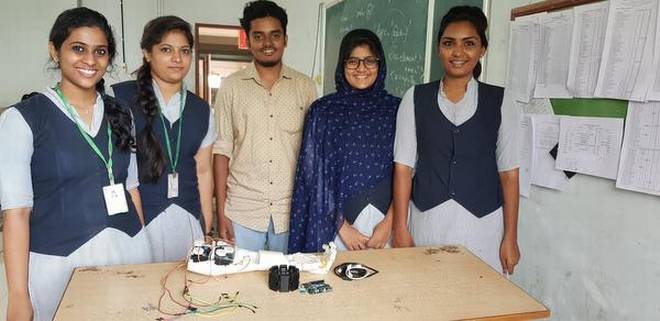
Students of Toc H Institute of Science and Technology, Arakunnam, with the Electromyography-controlled prosthetic arm that they developed.
It will meet the basic daily requirements of an amputee
Five engineering students of Toc H Institute of Science and Technologyat Arakunnam near here have come up with an Electromyography (EMG) controlled prosthetic arm.
The students – Mereena Baby, Aysha Zenab Kenza, Nikitha Sajan, Lakshmi Mohan, and Sharon Alex – are in the final year of their B.Tech Computer Science programme.
A release issued by the college claimed that the robotic arm would meet the basic daily requirements of an amputee, even though it lacked advanced features.
The prosthetic arm is priced at ₹2 lakh while those with advanced features cost anywhere between ₹15 lakh to ₹25 lakh, which is out of the reach of the common man, it said.
The students said that the Myo-armband interprets the electric signals produced as a result of the muscle movements and converts them into accurate hand gestures. They are then read by a micro-controller through a Bluetooth dongle.
Server motors
Based on those signals read, an appropriate number of server motors are rotated to move the prosthetic limb, they said.
The release said that the product could be made faster and easier by using advanced technologies such as artificial intelligence.
The students expressed the hope that they would get support from investors to take the product to users.
source: http://www.thehindu.com / The Hindu / Home> News> Cities> Kochi / by Special Correspondent / June 03rd, 2018
Bhatkal has got another young man as a lawyer as Mr. Nehzan Ekkery s/o Abdul Azeez Ekkery successfully completed his studies and is poised to step into legal practise soon. Nehzan completed his studies at the School of Law in the prestigious Christ University, Bengaluru and was awarded the BA LLB degree in an official ceremony at his college on Sunday.
At 22, Nehzan Ekkery strikes people as a typical Bhatkali boy with an outgoing demeanour and a disarming smile. It’s when he starts speaking that you get a glimpse into the depth of his mind, the clarity of his purpose and the seriousness with which he grasps the subtle realities of life.
As a young Muslim man, especially as a Bhatkali youth, Nehzan is no stranger to the ongoing violations of human rights by law enforcement agencies in India, who have rounded up hundreds of young Muslims, accusing them of being involved in terrorism. According to a DNA report, hundreds of Muslim youth have been named in terror cases without proof. While this has struck fear in the minds of many young men of the town, for Nehzan, it was the catalyst that put him on his current path. “The fundamental idea that every person is innocent until proven guilty is quite often put to shame by law enforcement agencies, and that was my propelling factor to pursue law as a profession.” He explains. “I was moved when youngsters were being falsely implicated in criminal and anti-terrorism laws consequently being deprived of the right to life and personal liberty for too long.” he adds.
The profile of Mr. Nehzan Ekkery appeals more to the locals and people of Bhatkal because he is one of them. He completed his primary education in Naunihaal Centra School and Anjuman Hami-e-Muslimeen’s Islamia Anglo Urdu High School, both prominent educational establishments in Bhatkal. He later enrolled at Ryan International School in Surat and in 2013, was selected to study at the prestigious School of Law at the Christ University. He completed the five-year integrated program of BBA + LLB (Honors) with flying colors.
Nehzan is up for a flying start as he is beginning his practise as junior of Advocate K. Diwakara (legal advisor for Karnataka’s State Government). He willl be working in the High Court and other lower courts of Karnataka and will be handling Civil, Criminal and Arbitration matters.
With an inspiring confidence, he states that “he wants to be the thorn in sight of injustice, be the necessary disruption, a distraction with the passion that transcends the confines of my own consciousness and play my part, howsoever little in reinstating the faith in justice system.” He has been an active proponent against the government endorsed absurdity, policy paralysis and excesses of law and aims to play an imperative role in socio-political system with the instrument of law.
The Bhatkali community has seen an encouraging rise in the number of lawyers among locals in the last few years. The number saw a significant rise after a famous lawyer of the region, Naushad Kashimji was gunned down in Mangalore in 2009. Naushad’s shocking death had united the community at that time and many young men ha d vowed that they will avenge his death by becoming lawyers themselves. The trend caught on and currently, the town has several young lawyers who have established themselves not only in their practise but also in the public sphere as socio-political leaders.
source: http://www.sahilonline.net / Sahil Online / Home / source: S.O. News Service / Coastal News – National News – Special Report / June 02nd, 2018
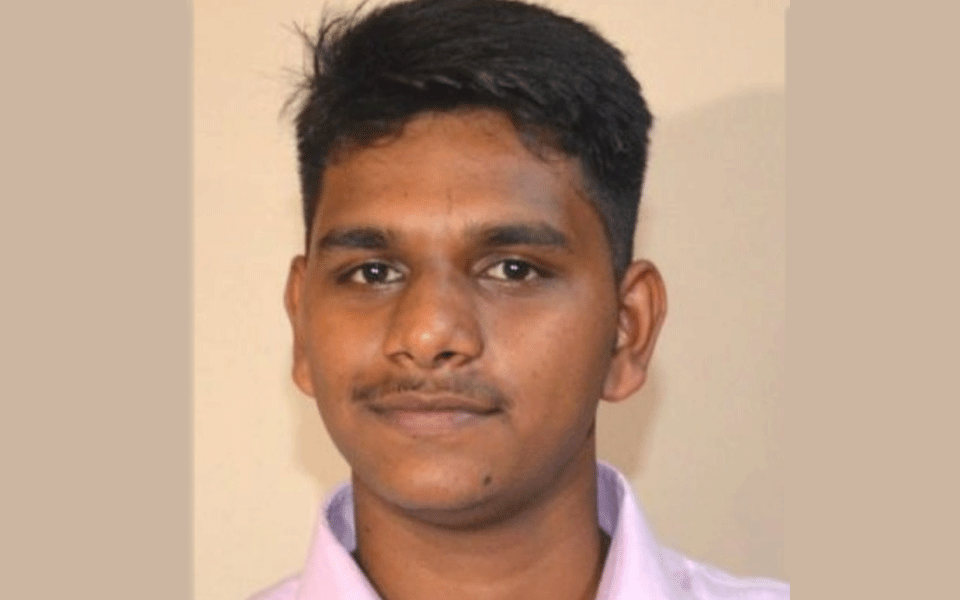
Mohammad Kaif Mulla, student of St. Xavier’s High School has topped the state in the SSLC examination with 625 marks out of 625.
Kaif Mulla had secured 624 marks when the SSLC results were announced. While he had scored cent percent in all the subjects, he got 99 in Science. But Kaif was confident that he did not make any mistake in the subject and should get full marks, and applied for revaluation.
His confidence was proved true when he scored a perfect 100 out of 100 in Science after revaluation. With 625 out of 625 marks Kaif Mulla is the topper in the state. He is also the first from Belagavi District to top the state in SSLC examination.
Kaif’s father Harun Rashid Mulla teaches Kannada in a government high school, while his mother teaches Urdu in a government primary school. This topper wants to be a doctor and then pursue his dream to become an IAS officer.
Prof. Mohammed Ismail Khan Durrani, popularly known as Prof. M.I.K. Durrani (91), passed away in the wee hours of today at his residence ‘Durrani Manzil’ on B.N. Road, Mandi Mohalla.
He leaves behind his wife, two daughters, grand-children and a host of relatives and friends.
Namaz-e-Janaza was offered at Masjid-e-Umar Khan, B.N. Road, at 11.30 am followed by burial at Old Khabarasthan, behind Central Jail, Mysuru.
Profile: Prof. Durrani used to occasionally write a column titled Recollections…which was very popular among Star of Mysore readers during 2012-2016.
Prof. Durrani joined University of Mysore as a Lecturer in English in 1950, immediately after getting his BA (Hons) degree. Except for about three years during which he worked as a Lecturer at Intermediate College, Mandya, Prof. Durrani taught English at the constituent colleges of University of Mysore for 35 years.
He was associated with Yuvaraja’s College as a Lecturer and later on as a Reader for a major part of his career (about 25 years). In the year 1983, he was transferred to University Evening College as Professor of English from where he retired in 1988.
During his career as a Lecturer at Yuvaraja’s College, Prof. Durrani also served as an NCC Officer apart from producing and directing several English dramas.
After retirement, he joined the Muslim Educational Society, Mysuru, as an Executive Committee member and became the Founder-Principal of MES First Grade College in 1995. He also served as the President of Muslim Educational Society which is catering to the educational needs of the community from nursery to college level.
source: http://www.starofmysore.com / Star of Mysore / Home> News / June 01st, 2018
Karnataka Assembly election witnessed a heart-warming incident amid a communally polarised environment. A Muslim girl from Mandya met Prime Minister Narendra Modi to thank him for providing financial assistance to pursue her education. She came all the way from Mandya to say “thank you” to the Prime Minister whose personal intervention enabled her to fulfil her higher education dream.
B.B. Sarah and her family members met Narendra Modi on stage at an election rally in Bengaluru on May 8 and presented him the book, ‘The Buddha and His Dhamma.’ The Prime Minister was humbled by her gesture and turned emotional on stage. He blessed her and wished her good luck for her future.
Sarah had written to the Prime Minister about her poor financial condition and requested him to provide financial assistance to her so that she could pursue MBA. She dreamt to do a masters course after scoring 83% in B.Com.
Her father Abdul Iliyaz, who works in Mysore Sugar Mill, had not received his salary for months, which left Sarah unable to find Rs.1.5 lakh that she needed to pay her tuition fees. She tried applying for loans, but was rejected by several banks as the financial condition of her family was bad.
That is when she wrote to the Prime Minister. To her surprise, the PMO responded to her letter in about 10 days and had asked the then State Chief Secretary Subhash Chandra Khuntia to take necessary steps to help the girl. She was subsequently sanctioned a loan of Rs.1.5 lakh by Vijaya Bank.
Before she wrote to the Prime Minister, the Central Bank of India had turned down her loan application owing to her poor financial background. Even after the communication was received by the Bank, the Central Bank Manager allegedly told her “we have done our duty and you have also done your duty. But it is not possible to sanction the loan.” Later, moved by Sarah’s case, Vijaya Bank sanctioned the loan.
It may be recalled here that Star of Mysore, on Mar.21, 2017, had published Sarah’s story in a report titled “PM Modi opens door for Muslim girl’s education in Mandya; Directs Bank to provide educational loan”
“I would like to personally meet Modi and thank him for helping me with education loan at a time when I was in urgent need. I was watching ‘Beti Bachao, Beti Padhao’ programme on TV and this inspired me to write to the PM. I wish that Modi will bring out a scheme to help talented students like me who want to get involved with higher studies but face financial constraints to do so,” she said.
After meeting the Prime Minister, Sarah said, “Despite being a national leader, he is attached with the population. Whatever schemes he has initiated, he has implemented them. He has not launched them just for name sake purpose,” Sarah said. The girl’s father echoing similar sentiments lauded the Prime Minister for his apt response. “It’s quite unbelievable that out of 125 crore population, he took notice of Sarah’s letter and helped her,” he said.
Sarah has now completed MBA flying colours has now been employed in a multinational company in Bengaluru.
source: http://www.starofmysore.com / Star of Mysore / Home> News / May 10th, 2018
A simple game of hide and seek landed IIT-Powai’s Kendriya Vidyalaya student Aiman Aslam in hospital, in middle of board exams.
Aslam fell in a 15ft ditch and suffered multiple fractures on her right hip. The incident took place after her social studies paper, five days before the next exam. She score 92.5%.
“Two more papers were left and I had to study in the hospital. However, I was determined not to miss my exams and score a good grade,” Aslam told TOI.
She was taken to the nearest school from her hospital in an ambulance, where she wrote her exams in a reclining wheelchair. Aslam and her family did not view skipping the exam as an option, and were not going to let a freak accident come in the way of her academic success.
Aiman hopes to pursue ethology at a city college.
source: http://www.timesofindia.indiatimes.com / The Times of India / Home> News> City News> Mumbai News> Schools & Colleges News / TNN / May 30th, 2018
The CBSE class 10 results brought cheer to several students in the city, but for a section, the results were a testimony to not just their hard work but also how they managed to overcome many odds.
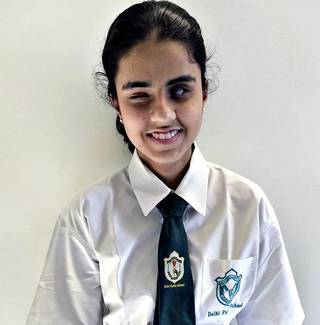
Firdose Fathima, a visually challenged student from Delhi Public School (DPS), Bangalore South, scored 79.8%. “I worked hard and I am happy with my results. I used to study only as much as I could grasp for that day. Owing to my visual impairment, I used a laptop that had a software which would read notes aloud to me, and my mother helped me with diagrams,” she said. She plans to take up psychology in college, and then specialise in child psychology.
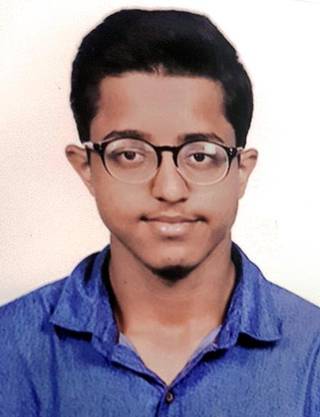
Another student of the same school, Mohammed Junaid, bagged 76.9%. He was diagnosed with a neuromuscular problem which reduced his writing speed. “But the issue did not matter. I studied and said the answers out loud while someone (a scribe) wrote for me. I can write, but just that three hours would fall short for my speed. I feel good about my results, but I actually expected more. I worked hard for a month. Hindi and English were easy and these are my favourite subjects as well. On the other hand, I found maths a little tough,” Junaid said
Aditya S. Gaikwad of DPS, Bangalore North, scored 84%. He was diagnosed with a learning and attention disability and was exempted from writing mathematics and Hindi papers. Alternatively, he wrote papers in computer science and fine arts and did well in them. “My teachers helped me with one-on-one sessions and my parents supported me to work better. I wish to study Commerce. I found a balance between studies and physical activity. I gave importance to exercise as well, as it kept me going,” he said.
source: http://www.thehindu.com / The Hindu / Home> News> Cities> Bengaluru / by Staff Reporter / Bengaluru – May 30th, 2018