Category Archives: Education

Only Hebrew teacher in Indian university is a Muslim

Gopalganj, BIHAR / NEW DELHI :

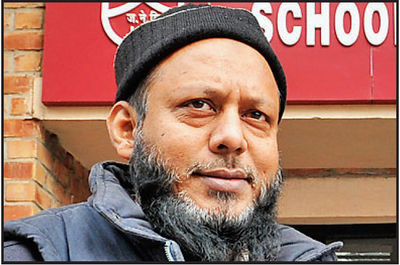
JNU professor Khurshid Imam.

New Delhi :

He has prayed in synagogues and observed the Sabbath, Judaism’s day of rest, and enjoyed crispy falafel on the streets of Jerusalem. A map of Israel hangs in his study where Yasser Arafat shares space with David Ben-Gurion. And he doesn’t mind if his 10-year-old daughter greets him with ‘Shalom’ instead of ‘Assalam Alaikum’. Meet Dr Khurshid Imam, a devout Muslim and the only teacher of Hebrew at a university in India, Jawaharlal Nehru University.

The bearded, skull cap-donning Imam hopes for a new dawn in India-Israel ties, which received a boost with foreign minister Sushma Swaraj’s West Asia visit last week. Unlike most Muslims who look upon Jews with suspicion – just as most Jews don’t trust Muslims – this assistant professor of Hebrew at the Centre of Arabic and African Studies doesn’t harbour any animosity. And he wants to use Hebrew, the ancient language in which the sacred Torah was revealed, to bring Jews and Muslims closer.

The cause of animosities between Muslims and Jews is political. Religion is a pawn in the hands of politicians who don’t want adherents of the two Abrahamic religions cementing ties,” said Khurshid Imam, 46, whose unique distinction “baffles” many of his co-religionists brought up on a heavy dose of hatred for Jews.

“Many call me ‘Mossad agent’ among Indian Muslims, a Zionist promoter and some even jokingly call me ‘nek Yahudi’ (benevolent Jew) because of my passion for Hebrew,” laughs Imam, third among six siblings who grew up in Gopalganj, Bihar, and went to Hebrew University of Jerusalem in 1998. He stayed there till 2000 post-M Phil at JNU.

“Government of Israel scholarship and Golda Meir scholarship funded my courses in Hebrew and study of the Modern Middle East,” he said. “I wanted to learn Hebrew to understand Judaism and find commonalities between Islam and Judaism.”

He also wanted to conform to a hadith (tradition) of Prophet Muhammad, who is believed to have asked some of his companions to learn Hebrew. “If the Prophet encouraged Muslims to learn Hebrew, who are clerics and community leaders to issue fatwa against those who visit Israel?” he asked.

Despite apprehensions of friends and family, Imam chose to stay amid Jewish students who he discovered were not as “rabidly anti-Muslim” as many paint them to be.

“Many Jews first thought I was a non-Arab Muslim jihadist plotting to bomb their establishments. Similarly, Arab Muslims in Israel and Palestine mistook me for a Zionist disguised as a practising Muslim. Once, some kids even threw stones at me, shouting, “Yahud, Yahud” (Jew, Jew). I was moved when several Jewish friends wept when I left Jerusalem,” recalled Imam.

He is, however, disappointed by the “cold” response from several Indian universities to his proposal for teaching Hebrew. “Khurshid’s efforts are laudable and I believe Indian universities should open their doors to Hebrew because languages help build bridges between people,” said S A Rahman, retired professor of Arabic who mentored Imam at JNU.

source: http://www.timesofindia.indiatimes.com / The Times of India / News Home> India / by Mohammed Wajihuddin / TNN / January 24th, 2016

Tackle Militancy, Not Militants, Says 1st Kashmiri Muslim Army Gen

Dadsura (Pulwana Dist.) , JAMMU & KASHMIR :

Major General Mohd Amin Naik is the first Kashmiri Muslim General of the Indian Army. Maj Gen Naik’s journey to the Indian Army began with his inclination for athletics.

The Maj Gen, who is interested in rowing, and has a fondness for trekking, remembers spending his first salary – that he drew as a school teacher – on what he called ‘hunter shoes’.

https://www.youtube.com/watch?v=ZCN4GKw-H0E

Undefeated Episode 6 Courage for Excellence Maj Gen Md Amin Naik Full Episode Director’s Cut

The sixth episode of Undefeated, titled ‘Courage For Excellence’, explores the life of the Maj Gen, winner of the Sena Medal and the highest medal awarded to an Indian sportsman, the Arjuna Award. He also won India a bronze medal at the Asian Games (1982).

Additionally, he led a successful Nanda Devi Ecological Mountaineering Expedition. Elaborating on what he learnt from his expeditions as part of the Army, the Maj Gen says there were times when he had to choose between saving his life or risking it to ensure the safety of his team of mountaineers. He says he always chose the latter because those were the values he had imbibed during his time in the Army.

A behind the scenes still of Maj Gen Mohd Amin Naik with Alka Sibbal, Principal of Salwan Girls School. (Photo Courtesy: Paper Weight Entertainment)

He is currently the chairman of Salwan Girls School, a school that funds the education of girls from humble backgrounds.

Family Life

His family had trouble coming to terms with his life in the Army, Maj Gen Naik says. His son had to change 12 schools, he says, adding that his wife has been an invaluable support to him along the years.

“Need to Tackle Militancy”

A behind the scenes still of Maj Gen Mohd Amin Naik. (Photo Courtesy: Paper Weight Entertainment)

The Maj Gen, who hails from the same village as the slain militant leader Burhan Wani, also shared his thoughts on the menace of militancy. One way to ensure the end of militancy in the Valley is to train people, allow them to develop and hone skills and give them employment, he says.

source: http://www.thequint.com / The Quint / Home> India / by Rosheena Zehra / April 25th, 2017

Meet City Girl Zainab Sayeed IRS from Kolkata

Chitpur (Kolkata), WEST BENGAL :

ZainabMPOs11apr2017

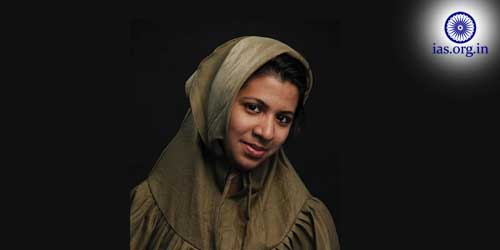
Zainab Sayeed, the first Muslim woman from West Bengal cracked the Civil Services Examination by achieving All India Rank 107 and has also topped the UPSC interview by scoring highest marks.

Marks Obtained

 Total Marks  Marks Obtained
Total (Written)  1750 731
 Interview 275  220
 Total  2025  951 (46.96%)

Topper of UPSC Interview

Interview is the last stage of the Civil Services Examination. Zainab Sayeed scored more than even the score of the first rank holder Ira Singhal. Ira scored 167 marks in the interview whereas Out of 275 marks, Zainab scored 220 in the interview that is 58 marks more than the top ranked Ira scored. She has made a record as the highest scorer in the interview round and ranked 107 in the examination.

Zainab Sayeed said that she hoped if she was allotted the Indian Administrative Service (IAS), it would be good for her if not then she would like to join the Indian Revenue and Customs Service.

Family Background

Zainab Sayeed comes from Chitpur in North Kolkata and belongs to an elite Bohra Muslim family. Her father Taiyab Sayyed is a hardware businessman based in Kolkata; her mother Farida Sayyed is a homemaker and assists her husband’s business. Zainab is second daughter of her parents. Eldest sister Tasneem Sayyed is running her own consulting firm. Youngest daughter Fatima Sayeed is pursuing BDS from Jamia Millia Islamia University, Delhi. Zainab Sayeed got married to Hussain Izzy, a hardware businessman.

Zainab Sayeed parents were very supportive and encouraged her to go for UPSC. During preparation of the Civil Services Exam her husband played an important role in motivating her and he used to set the time table for her to study which was of great help for Zainab. She says she is lucky to have parents and husband who always encourage her to go ahead.

Educational Background

Zainab Sayeed got graduated in English from St Xavier’s College. Again she went to Delhi and enrolled at the AJK Mass Communication and Research Centre at the Jamia Millia Islamia and completed her Masters in Convergent Journalism in 2011. While pursuing Masters in Jamia, she simultaneously signed up at the Jamia’s coaching centre for the UPSC exam preparation.

When she returned back to Kolkata she got a job in the English daily ‘The Telegraph’. She worked in the editorial department of The Telegraph, Kolkata till her final UPSC results were out.

Attempts by Zainab Sayeed

Zainab Sayeed of West Bengal has qualified UPSC Exam in her third attempt. She took the Civil Services Exam in 2012 and 2013, but could not clear the Prelims.

Preparation Strategy

Zainab Sayeed set a target, studied hard and displaying strong determination achieved her goal. She devoted six to seven hours a day seriously for preparations and her punctuality paid off in the end.

Dress Preference

Zainab Sayeed belongs to the Bohra community and wears the traditional ‘Rida’ since she was 13 years old. She wears “Rida, a headscarf, or Hijab every Bohra girl and woman wear”, and appeared for the UPSC personal interview in the same traditional attire.

The interviewers asked why she wore the attire which is a religious marker. She was neither ashamed nor apologetic. She said “Rida or Hijab is part and parcel of her persona. Besides there is a saying that one should wear clothes one feels comfortable in, she cited the instance of a Prime Minister who wore a turban which is also a religious symbolism”.

source: http://www.syskool.com / Syskool / Home> People / by Praful / March 31st, 2016

Collegians whip up a storm

Bengaluru, KARNATAKA :

CakeMPOs06apr2017

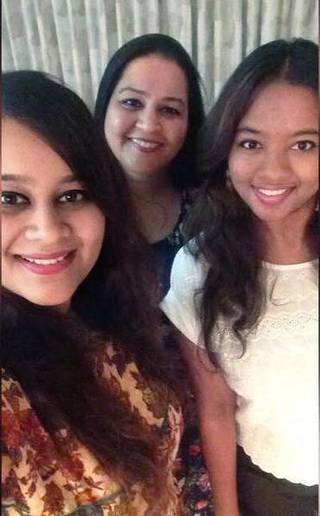
Nineteen-year-olds, Sana Azam and Rhea Agarwal balance studies and their baking business

Running a baking business when you are a full-time student is not a piece of cake. However, Sana Azam and Rhea Agarwal, both 19, prove all you need is passion to batter-up and bake away.

SanaMPOs06apr2017

The decision to start a baking venture happened organically for Sana, founder and baker at Pink Whisk. Having grown up in an environment where the oven was always in use — whether it was her grandmother making the more traditional Muslim recipes and bakes such as roat or her mother making a cake. It was from there that Sana developed a love for cooking. “I’d always been a sous chef,” she says laughing. “My earliest memories go back to holding the mixer while my mother handled everything else.” That gradually changed, as she began doing things independently and grew as a baker herself. Although she had received requests in the past from close friends and family, the decision to start Pink Whisk only happened towards the end of her 12th standard in school.

Sana, a first-year B.Com student at Mount Carmel College, has a Pink Whisk stall at MCC’s many fests. She is working on a launching a Facebook page soon but currently takes orders by phone or WhatsApp. Pink Whisk also has a WhatsApp group which keeps people updated about what is cooking.

Although she specialises in all things sweet, Sana also dabbles with savouries like chicken quiches, tarts, samosas, pastas and bakes. Apart from cakes and cupcakes, she also makes éclairs, cheesecakes, bars (something between a cookie and a cake), chiffon pies, and trifles. Pink Whisk’s white chocolate and raspberry and strawberry jam bars are extremely popular, mini cheesecakes accompanied by a berry compote and the signature Banoffee are favourites as well. Sana said her most challenging order was “baking a five-kilo cake for a software company. Any order placed less than two days before it is needed is always challenging.”


RheaMPOs06apr2017

Chance encounter

Rhea Agarwal, on the other hand, found her love for baking by chance. The 19 year old, first year BBA student at Christ University started It’s Whipped, with her sister Sakshi Agarwal. Rhea says: “I was maybe 12 or 13 when my mother enrolled me in a summer baking class.” And there was no looking back. Within a week, she had practiced everything she had learned. Whether it was a family function or a friend’s birthday, “Nobody asked me but I took it upon myself to make something for every occasion, I just got good with practice,” she says. Friends and family always suggested she start taking it more seriously and turn it into a business but it was only when a close relative placed an order for a chocolate cake and offered to pay her for it, that the idea to turn the hobby into a business venture arose.

Rhea runs It’s Whipped with the help of her mother and sister. They have a Facebook page and an Instagram account where they communicate with potential customers by posting pictures of desserts they make as well as inform their customers of new items they add to their ever-growing menu.

“We make everything from chocolates, cakes, cupcakes and pies to granola bars, cookies and herb crackers. We also have a list of egg-less recipes. Our teacakes are popular and we offer them in many flavours including lemon, walnut, chocolate chip, honey and date.”

Talking of her most challenging order yet, Rhea says, “It was an order for 600 chocolate-covered brownie bites that a corporate had requested for Diwali.”

Both It’s Whipped and Pink Whisk operate out of homes and they prefer when customers come to pick up their orders.

source: http://www.thehindu.com / The Hindu / Home> Life & Style> Food / by Harshala Reddy / April 05th, 2017

How I wrote a novel at 19 and was published at 20

Mumbai, MAHARASHTRA :

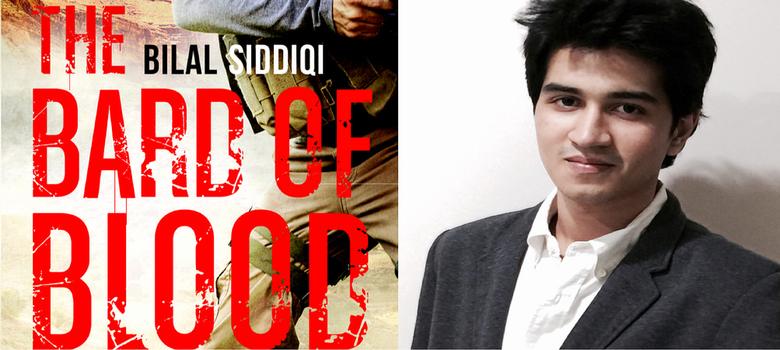
A first-person account from a student of St Xavier’s College, Mumbai, whose first thriller, ‘The Bard of Blood’, has just hit the shelves.

BilalMPOs31mar2017

Being a published writer at 20, to be honest, is not something I thought I would have to speak about too much. I could speak about being a writer (writer’s block, etc.). Or I could speak about being 20 (how I never quite liked college, etc.). But, a writer at 20? Well, let’s give that a shot.

How I got around to writing my first novel, The Bard of Blood , is an interesting journey itself. Around the time I had turned 17, I had a sudden growing interest in the covert world of espionage. And it wasn’t a James Bond film that drew me to this newfound interest of mine. It was, in fact, the entire talk of jihad and Islamic extremism that plagued every newspaper. There was always an article of some extremist outfit wreaking havoc.

Being a Muslim, I wanted to understand why I was so different from them, when ideally, we both were supposed to believe in the same set of principles? One thing led to another, and I had suddenly read a lot more than anyone else my age probably had about the subject, finding myself disagreeing with the ideology that had tweaked itself conveniently to something it was never meant to be.

Simultaneously, being an avid reader of fiction, I always kept myself abreast with the latest Lee Child or Jack Higgins novel. And then, I soon realised that India itself was bereft of a fictional character who was as powerful as a James Bond or a Jack Reacher. I wanted to fill that void. I wanted to create a character worth his salt, that wouldn’t seem like a ‘me too’ of a Bond or a Bourne, but could stand his own and be equally magnetic. And what’s more, he was going to be set in the real world dealing with what could well be real situations.

Writing to write, not to be published

I was going to write the novel regardless of whether it would get published or not. It was going to be for my satisfaction, perhaps for a 40-year-old me to look back and find traces of himself in a character he had created two decades ago.

So, at the age of 19 I had begun writing the novel, burning the midnight oil and still making it to college on time the next morning. Soon afterwards, I met Chiki Sarkar, then the Chief Editor of Penguin Books, through Hussain Zaidi (a renowned crime writer whom I have been assisting for thethe past three years). Zaidi had discovered my writing skills and had dropped in a word to Sarkar, who agreed to read the synopsis.

She responded saying that she would like to read half the manuscript, after which she would take the final call. I was suddenly motivated to complete the book, which I might have drifted with otherwise. To meet Penguin’s high standards, I had to up my game. I had to get my facts in place and research the topics well. Zaidi helped me at every step, and there was a reversal of roles, from me assisting him, he started assisting me! It took me roughly a year to get done with the project.

The benefits of writing a book at 20

You get applauded for doing something at an early age, something that people spend a lifetime hoping to do. You begin to be taken a lot more seriously too.This stood true in my case especially, because I picked a topic like the Taliban instead of writing a soppy teen romance.

There are drawbacks too. When you set out to write, there is bound to be apprehension – perhaps you’re too young to write about this subject? But you must learn to brush that away. Believe in yourself even if others don’t. In my case, especially, I backed myself as a story-teller. I had a good story and I was going to tell it.

And being 20, I was in college, which came with a set of problems that I could dedicate another article to! Writing was that much-needed escape, a catharsis of sorts.

But once that’s done, you can’t let the fact that you’ve been published get to your head. Because then you would be remembered as the guy who wrote a novel at 20 and then never wrote another. Or, worse still, you wouldn’t be remembered at all!

Like any other book-lover, I absolutely love the smell of books; new and fresh, or old and musty. But you know what’s better than the smell of a book? The smell of your own book! And I intend to smell many more of them!

We welcome your comments at letters@scroll.in.

source: http://www.scroll.in / Scroll.in / Home> Write to Win / by Bilal Siddiqui / April 04th, 2015

Tall Islam and Short Muslims – Book by Mumtaz Ali Khan Released

Bengaluru , KARNATAKA :

ProfMumtazMPOs30mar2017

Bangalore:

A book titled, Tall Islam and Short Muslims by former minister Prof. Mumtaz Ali Khan was released by Karnataka Governor, Mr. H. R. Bharadwaj at a brief ceremony at Raj Bhavan here on September 5. Published by Concept Publishing Company, New Delhi, the book deals with misperceptions about Islam among people consequent to deviations in practices by Muslims. It runs into 240 page and is priced at Rs. 700.
Speaking at the occasion, Prof. Khan who is a BJP MLC currently and was a minister for three and half years under the Yeddyurappa Ministry, said he had dealt with issues such as status and rights of women in Islam, marriage and divorce, rights of children, language, loan and interest, wealth generation, gambling and drinks, fatwas, violence and religious harmony where he has seen dichotomy between what Islam preaches and what Muslims practice. He said teachings of Islam in their pristine form were still alluring for the people, but the character of Muslims breeds repugnance.
Governor Bharadwaj said there must be an all-round effort to promote harmony in the society and people should not engage in hurtful talk about others’ religions. He said Islam promoted love and he had extremely cordial relations with Muslims while living in Old Delhi for decades together. He attributed the divisive tendencies to modern communal and competitive politics.
Shri Shivarudra Swami of Beli Mutt highlighted the concept of equality and equity in Islam and the Prophet’s life and said no religion preached hatred. Maulana Maqsood Imran of Jamia Masjid, Bangalore city also spoke at the occasion. Prof. Ziauddin Ahmed welcomed the gathering.
Prof. Mumtaz Ali Khan has taught rural sociology in the University of Agricultural Sciences, Bangalore for over two decades. He has authored 18 books on various aspects of Dalit and Muslims society and has been engaged in welfare activities through his Khawaja Gharib Nawaz Centre for Harmony and Development. He also runs the Salamat Kannada School in Chamundinagar area of Bangalore.

source: http://www.islamicvoice.com / Islamic Voice / Home> Community RoundUp / by Admin / October 17th, 2017

Muslim leaders exhort youth to join civil services

Mumbai, MAHARASHTRA :

Mumbai :

Muslim community leaders are trying to inspire the youth to aim for the civil services. Three days after the Haj Committee of India launched its coaching centre for civil services exams at Haj House near CST, another initiative kicked off on Wednesday. The community leaders presented some IPS officers as role models.

The officers, who lauded the efforts of civil society in motivating youth, asked students to shed their defeatist mentality and try to crack the civil services exams.

Organised by NGO Milli Council, in association with the vocational and career guidance cell of the Central Mumbai-based Maharashtra College, the meet saw Ahmed Javed, additional DGP, Qaiser Khalid, DCP (railways), and K Moeen Jeelani, superintendent of customs, enthuse the students, a majority of whom comprised burqa-clad girls from middle and lower middle class families.

Besides reiterating the need for hard work, Javed dwelt on the importance of Marathi for those students who want to succeed in the exams conducted by the Maharashtra Public Service Commission (MPSC). “I have put in 30 years of service in the police and I know how knowledge of Marathi can make the task of policing easier,” said Javed who hails from Lucknow but learnt Marathi after he joined the Maharashtra cadre.

Khalid, a 1998 batch IPS officer, quoting poets, philosophers and paragons of peace like Mahatma Gandhi, underlined the importance of civil servants and said that planned studies was the key to crack the civil services exams. “Despite the importance of liberalisation, privatisation and globalisation, civil services command importance and respect because it is these officers who help plan and execute the the government’s policies,” said Khalid.

Referring to a popular instance in Hindu mythology, he said: “Like Arjuna, who aimed his arrow at the eyes of the moving fish, you should focus on your goal. Cracking civil services is tough, but not impossible,” he said.

Jeelani, a former national champion in yachting before he joined the customs department, recalled the background in which he grew up: “My locality was a breeding ground for criminals. But sheer determination helped me excel in my chosen field, which also helped me land me a job in the customs department.”

M A Khalid, general secretary of Milli Council, exhorted Muslim youth to give up their negative attitude and appear in the civil services exams in large numbers.

source: http://www.timesofindia.indiatimes.com / The Times of India / News Home> City>Mumbai / by Mohammed Wajihuddin / TNN / December 08th, 2009

Martinian clinches all India 6th rank in CLAT

NEW DELHI :

Lucknow :

When Anant Khanna, a student of La Martiniere College was informed he had secured All India Rank 6 in the result of the Common Law Admission Test (Clat) 2015 for BA-LLB, he was “blown away”. The result announced late Tuesday night by Ram Manohar Lohiya National Law University (RMLNLU), Lucknow, reminded Anant of his father’s advice “Look for what you want and go deep into it.”

Not a fan of the Sciences and with a flair for debating, Anant had been fixated on pursuing law from National Law School of India University (NLSIU), ever since he passed class X. “My mother (Rashmi Khanna) suggested to me this career, looking at my interest in debating. When one of her friends’ son went to NLSIU Bangalore, I got interested. I have been obsessed with NLSIU ever since,” said Anant, his voice crackling with joy on the phone talking to TOI.

Visiting NLSIU later in that year, Anant said, it felt like the right place. Earlier, on Monday, he had secured 94% in his ISC examination result. “My initial interest was in history, which interested me like a story. Then my interest shifted to political science, when I delved into the political backdrop of historical events. Ever since I started aspiring for law, there was no other thing on my mind,” he said.

While Anant Khanna made Lucknow proud with an All India 6th rank in the UG course and a score of 131 out of 200, Akash Jain from Madhya Pradesh was declared topper of the Common Law Admission Test (Clat) 2015 for BA-LLB, scoring 141.25 out of the total 200. Ankit Raj Singh from Uttar Pradesh, on the other hand, bagged the top position in the PG programme (LLM), with a score of 123.25 out of 150 for PG (LLM).

Neha Ludha from Rajasthan with an overall rank 9, was adjudged topper among women candidates. Gulshan Jahan from Delhi with 111.25 marks out of 150 and all India rank 14, bagged the top position in women’s PG category, informed RMNLU vice chancellor Gurdip Singh, who was convener for organising CLAT 2015. 

NUMBER OF ASPIRANTS DOUBLES

More than double the number of candidates had appeared for the competitive exam compared to last year. 42,222 candidates appeared for the entrance exam, which is a gateway to 16 National Law Universities (NLUs). Last year 29,628 students had appeared for the exam. For the UG course (BA-LLB), 37,358 students appeared, out of whom 20,392 were boys and 16,965 girl students. For PG (LLM) 4,863 candidates appeared, out of whom 2,292 were boys and 2,571 were girl students. Last year 2,024 candaites had appeared. Out of the top 2,000 who qualified, 1,181 were boys and 819 girl students.

source: http://www.timesofindia.indiatimes.com / The Times of India / News Home> City> Lucknow / TNN / May 20th, 2015

A Muslim from Manipur clears Civil Services Exam

Oinam Dam Makhong, (Imphal East District )Imphal,  MANIPUR :

Imphal:

Yumkhaibam Sabir from Manipur cleared the Civil Services Examination, 2011 conducted by Union Public Service Commission. He has got 244th rank. Sabir becomes the third Muslim from Manipur to ever clear the coveted competitive exam of this country.

23-year-old Sabir is the son of Mohd. Tayeb Ali and Mrs. Sahida of Oinam Dam Makhong, Oinam in Imphal East district. He is the youngest among the seven siblings. His father is a retired Lower Primary teacher.

Sabir addressing a felicitation program organized by Delhi Association of Manipuri Muslim Students (DAMMS) at Jamia Nagar, New Delhi on 5th May 2012

Decorated journey of education
Sabir received his higher education in New Delhi. He graduated from Khalsa College under Delhi University as overall topper in 2009. He completed his Masters in Political Science from Jawaharlal Nehru University, New Delhi in 2011. He was ranked second topper in M.A.

Sabir passed his matriculation exam from The Little Master English Higher Secondary School in Samuou in Imphal West district. He cleared the High School Leaving Certificate exam conducted by Board of Secondary Examination, Manipur in 2003 securing 24th position in the state. He then cleared the Higher Secondary Examination conducted by Council of Higher Secondary Education, Manipur in 2005 securing 4th position, obtaining highest marks in Physics and Chemistry from The Brajalal Institute of Science, Moirangkhom in Imphal.

In all, 12 candidates from Manipur cleared the Civil Services exam 2011. The others are: Aribam Radhabinod Sharma (rank 128), Oinam Sarankumar Singh (147), Nongmaithem Bandana Devi (301), Soibam Victor Devi (724), Robert Moirangthem (779), G Panmei (841), H. Sauntak (885), Yengkhom Nagakiswar Singh (894), P. Ngaihte (903) and Bantee Singh Konthoujam (908).

Five candidates from Assam cleared the exam. This time no Muslim from the state cleared the exam. Last year seven candidates cleared the exam including a Muslim, Mannan Akhtar (rank 55).

Manipur Muslims to clear Civil Services exam
Yumkhaibam Sabir is the third Muslim from Manipur to ever clear the coveted competitive exam for Civil Services.

Mohd. Noor Rahman Sheikh from Top Khongnangmakong, Khetri, in Imphal East district is the first Muslim from Manipur who cleared the Civil Services exam in 2002 (217th rank) and again in 2003 (187th rank). He was placed in the Indian Foreign Service. Rahman served as Under-Secretary in West Africa Division in the External Affairs Ministry at New Delhi and also worked in Indian Embassy in Jordan. He was, a few months back, given charge as Consul for Hajj in Indian Consulate in Jeddah, Saudi Arabia, who is responsible for handling Hajj-related works from the Indian side. He is just 32 years old.

 Yumkhaibam Sabir (right) being felicitated by DAMMS in New Delhi on 5th May 2012

Yumkhaibam Sabir (right) being felicitated by DAMMS in New Delhi on 5th May 2012

The second Muslim to clear the Civil Services exam was Mohd. Altaf Hussain (Mayangmayum) from Khetri Bengoon in Imphal East district. He cleared the exam in 2007. He is serving as Indian Revenue Service.

At the all-India level, 30 Muslims cleared the Civil Services exam 2011. They are: Syed Abid Rasheed Shah (rank 23), Nooh P B (rank 43), Mohd. Shariq Badr (rank 48) and Amna Tasneem (rank 73), Syed Sehrish Asgar (118), Inayat Khan (176), Adeela Abdulla (230), Shanavas C (235), Yumkhaibam Sabir (244), Mohd. Aijaz (268), Inamulhaq Mengnoo (280), B Fouzia Taranum (307), Mirza Azhar Beig (313), Toufel Tahir (345), Mohammad Imran (408), Mohammad Arshi (419), Bashir Ahmad Bhat (434), Manazir Jeelani Samoon (451), Qazi Mohd Salman Ibrahim (459), Patil Salmantaj Jafertaj (466), Naieem Mustafa Mansury (520), Waseem Akram (568), Irina Masoom (604), Mohd. Imteyaz Alam (649), Afsar Ali (667), Shama Parveen (685), Zeeshan Qamer (706), Mohd. Rehan Raza (760), Ilyas K P A (764) and Zahid Parvez (776).

The results are based on the written test of the Civil Services (Main) Examination, 2011, conducted by UPSC in October – November 2011 and the interviews for Personality Test held in March – April 2012.

A total number of 910 candidates have been recommended for appointment to (i) Indian Administrative Service, (ii) Indian Foreign Service, (iii) Indian Police Service and (iv) Central Services, Group ‘A’ and Group ‘B,’ including 420 General (including 21 Physically Challenged candidates), 255 Other Backward Classes (including 8 Physically Challenged candidates), 157 Scheduled Castes (including 4 Physically Challenged candidate) and 78 Scheduled Tribes candidates.

31 Muslims (out of 920) had cleared the Civil Services exam 2010.

source: http://www.twocircles.net / TwoCircles.net / Home> Indian Muslim / by Dr.Syed Ahmed for TwoCircles.net / May 06th, 2012

‘I used to scratch the letters ‘IAS’ on the desk’

Kuttiyadi (Kozhikode) , KERALA :

“It was quite unusual in our community (for girls to be educated and independent) but my father was different.

“For him, education was of utmost importance.

“I wanted to be a part of the nation building process and I felt I would be able to contribute positively if I became an IAS officer.”

Atheela Abdullah, 29, talks to Shobha Warrier/Rediff.com about how she achieved her dream.
Atheela01MPOs22mar2017

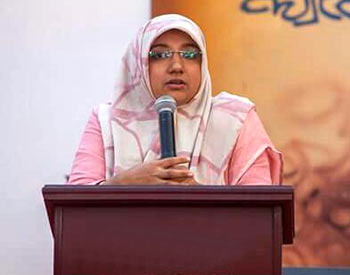
Atheela Abdullah (pictured left) grew up in a small village in the Malabar region of Kerala where Muslim girls were not generally encouraged to study or work. Her father, however, encouraged his wife to work and his daughters to study and pursue their dreams.

He worked in the Middle East and her mother, a school teacher in the village, took care of their children.

Although Atheela studied medicine, she wanted to become an Indian Administrative Service officer. Her husband, who was her classmate at medical college, encouraged her to follow her dream.

Thus began the inspiring story of a young mother — Atheela has two small children — and her single-minded pursuit of her dreams, discovers Shobha Warrier/Rediff.com.

Growing up in a village

I grew up in Kuttyadi, a small village near Kozhikode in Kerala.

My mother was a school teacher and, till Class IV, I studied at a primary school there. After that, my father sent me to a boarding school in Kozhikode because he wanted his children to study in a good English medium school. My elder brother and sister were already in boarding school.

My father wanted both his daughters to grow up into independent women. This is quite unusual in our community (for girls to be educated and independent) but my father was different. For him, education was of utmost importance. He used to tell us how he met a German lady in the seventies who advised him to give his children the gift of education.

My father never differentiated between his son and his daughters.

The atmosphere at the boarding school helped develop my interests like reading, elocution, essay writing, participating in quizzes and debating.

A passion for nation building

In school, I used to scratch the letters ‘IAS’ on the desk; it was the only way I revealed my hidden desire.

I wanted to be a part of the nation building process and felt I would be able to contribute positively if I became an IAS officer.

Sometimes, I thought of becoming a scientist instead and contributing to the nation like Abdul Kalam but I knew I didn’t have the scientific temperament that is needed. So, I decided to be an administrator.

It was unusual for a girl from a middle class Muslim family in a small village, who had never seen an IAS officer, to dream of becoming one.

The options available to me as a student were to either become an engineer or a doctor. I chose the latter as I felt I would be able to do something for the community as a doctor.

Joining medical college

I joined the MES Medical College in Perunthalmanna. Believe me, I would scribble ‘IAS’ on the desk here too, perhaps to remind myself that it was my ultimate dream.

Though I was studying medicine, my reading involved a wide range of topics. I spent a lot of time in the library reading magazines and newspapers.

Meeting her husband

I became friends with Rabeeh, (the man she would marry, Dr Rabeeh V) who was studying medicine in another college, because of the interests we shared. He used to write, while I was a public speaker.

I was 23 and doing my house surgency (internship). My parents were looking for a match for me. Rabeeh and I thought, why not get married? After all, we were from the same community and shared the same interests. Our relationship started off as a literary bond, we became good friends and, after four years of knowing each other, we got married.

By then, I realised that my interest did not lie in giving injections and prescribing medicines. My passion lay in working for the community; at the same time, I knew I did not want to study community medicine.

Even as a medical student, what interested me was talking to patients, understanding their background and needs, and their socio-economic condition. I felt there was a gap somewhere that needed to be filled.

In January 2011, I completed my studies.

From medicine to IAS

My husband was extremely supportive of my desire to become an IAS officer. He told me that though we had not seen anyone from our community achieve such a dream, if I were to achieve this, I would motivate more women to become IAS officers. Both of us want women from our community to come to the mainstream and be independent.

It was at that time that one of Rabeeh’s friends got selected as an IPS officer. We went to meet him to take his advice on how to prepare for the examination. He asked me a couple of questions and I could answer them so he asked me to go ahead and write the exam.

I went to Delhi to attend a three-month coaching class. Rabeeh came along to help me find a place to stay. He was with me for 10 days. He was preparing for his postgraduate entrance exam then.

When I returned, I took up a job as a pathology tutor in a medical college. This time, I decided to support the family as Rabeeh was preparing for his examination.

I didn’t have much time to prepare for the preliminary exam but I didn’t find it difficult; in fact, it was easier than my medical examinations. Here, I was studying subjects I really liked — English, social science, etc.

I knew I was risking my career in medicine but I was prepared.

Luckily, I got through in the preliminary examination in the first attempt itself. For the next two months, I prepared for the main exam. I was in Delhi for a month to prepare for the public administration paper; the other optional paper was medical science which I had studied in medical college.

This time, I stayed at the Hamdard Study Circle, which the government had started for the minorities in India; it is a free study circle.

While I wrote the mains, my husband wrote his PG exam.

The Attapadi community centre

As we did not have children then, we decided to work at the Attapadi community centre, which is a rural tribal area. The experience was an eye opener; we were exposed to a government system that didn’t work. We also understood some of the deficiencies in the system when we saw a tele-medicine unit worth Rs 4 crores lying unused.

We felt really helpless when we were unable to treat emergency cases. Nobody wanted to work there. At times, when you needed a workforce of 60 people, you had only six people to work with.

The mains hurdle, cleared!

While I was at Attapadi, the mains results were announced; I had cleared it. It was time for another trip to Delhi for another round of coaching. This time too, I stayed at the Hamdard Study Circle. The coaching, which lasted for a month, was quite helpful.

Though I was pregnant and had all the uneasiness connected with it, I tried to forget the difficulties and concentrated on the preparation. I didn’t want to waste an opportunity. I wanted to prove to the family that I could achieve whatever I want to and also do what was expected of me as a daughter, wife and daughter-in-law.

I knew was charting a new course for someone like me in our community. As the first one, I had to work hard to prove myself so that, tomorrow, perhaps my daughter will have it easy. There was no question of my complaining about anything as I liked taking up challenges and coming out victorious.

Facing the interview board

My interview was scheduled in April 2012. I was four months pregnant then.

They asked me a lot of questions on the kind of work I was doing at Attapadi and also about the tribes there, their lifestyle, their traditional occupation, the common health problems they face, etc. They also asked me about the role of technology in medicine, my opinion on euthanasia, etc.

They wanted to know why I wanted to be a civil servant when I was comfortable with the profession I was in. I told them that I always wanted to be a civil servant; it was a dream that I had carried with me from the time I was in school.

I was quite hopeful after the 30-minute interview.

When the results were out, I had secured a rank of 230.

I think I am the first Muslim woman from the Malabar area to become an IAS officer.

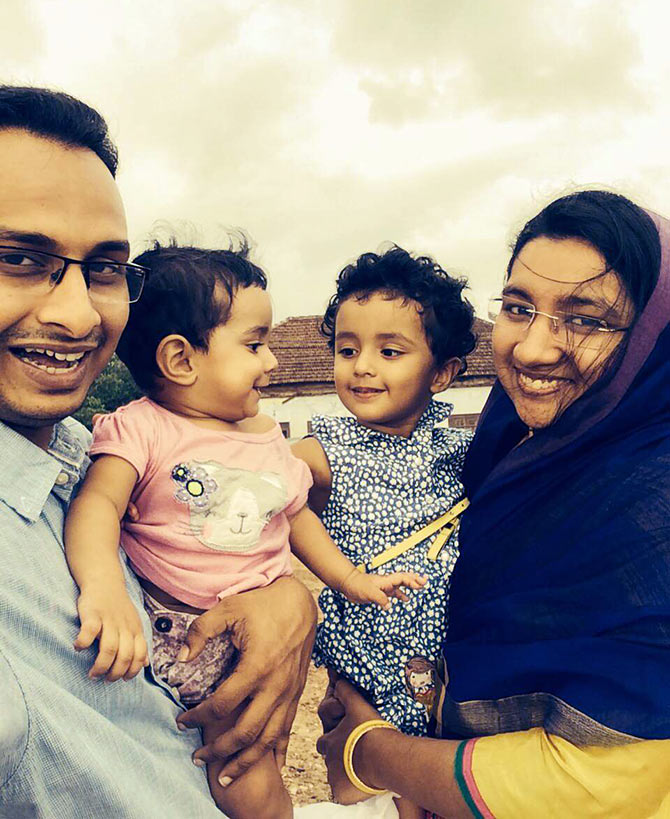
Becoming a mother
Atheela02MPOs22mar2017

I couldn’t complete my training as I had to take leave for my first delivery. I went back after my child was born and completed the training.

I was posted as assistant collector at Kannur for a year. By then, I was pregnant with my second child. After my second maternity leave in 2014, I was posted in the Tirur sub-division as an assistant collector. I could not complete my training at Mussorie — I have eight months left and will be leaving soon to complete it — as I had to go on maternity leave.

Childbirth and bringing up children come with a lot of sacrifices and responsibilities for women, but I feel they still have the ability to have a successful career.

I am glad this happened at the beginning of my career so I need not take breaks later. I hope to focus on my career in the years to come. I am able to manage both the kids reasonably well with support of my husband and our family.

It is extremely important to have the support of your husband if you want to chase your dreams. My husband is extremely proud of me and encourages me to be independent. If he sees someone really smart, he urges me to be as smart as him/her.

Wearing a hijab

People ask me why an independent woman like me wears a hijab. You won’t believe it, but I didn’t know till now that what I wear is called a hijab.

I grew up in northern Malabar, which is a very conservative area. All Muslim women wear a thattam (the cloth with which you cover your head) here. I have seen my grandmother and mother wear a thattam. I’ve worn a thattam since I was a school kid. When I wear a sari, I just cover my head with the sari.

I never wore the headgear which the Arabs use.

Just because I am an IAS officer now, should I change the way I dress? I believe that as long as the Constitution gives you the freedom to follow your traditions and beliefs, I can dress the way I always have.

I can say that these things have never come in the way of my job as a doctor or as an IAS officer.

For the first time in my life now, I am asked questions about the way I dress. I feel I need not answer such questions. According to me, we shouldn’t waste time talking about such symbols.

India is a great country that allows you to be what you are. That is the beauty of our country. I don’t think any other country gives this kind of personal freedom to an individual.

Even when we were growing up, my father had told me I should have the willpower and strength of character to move forward even if something pulled me backwards. So people commenting on the way I dress do not bother me. What matters to me is my integrity.

Those who influenced her

What guided me forward are the teachings of Mahatma Gandhi who, according to me, was a yogi and a bhakt.

It is because of the influence he had on me that I want to serve my country.

Our country is fortunate to have three great people to guide us; Mahatma Gandhi, Bhagat Singh and Abdul Kalam.

Kalam, according to me, was a yogi like Mahatma Gandhi.

But the three people who have helped me realise my dream are my father, mother and my husband.

Working as an IAS officer

The experience I had at Attapadi made me all the more determined to be in the system and make a difference, even if it is a small one.

Although we are a very developed civilisation, we have not been able to bring the entire population to a desired level socially in the last six decades. Many more people have to be part of the nation building process; only then we can make our country a developed country for all.

A good politician can also bring about positive changes in the society but I was not sure if I could be a politician.

Nobody has told me anything negative about being in the civil services, I have only positive views about it.

I have just started my career and have only idealistic thoughts in my mind, which I know is unrealistic. I would say, let me have my idealistic thoughts till I face reality!

Advice to the young

~ Have faith in yourself and work hard.

~ You should have the will power and strength to face adverse situations. You should always be focused.

~ The positive energy you get from your family only adds to your contribution. Your efficiency improves if you have very good support from the family.

~ Don’t ever think about what society or others think about you; believe only in your ability.

Photographs: Courtesy Ateela Abdullah

Shobha Warrier / Rediff.com

source: http://www.rediff.com / rediff.com / Home> Getahead / by Shoba Warrier / September 30th, 2015