Category Archives: Education

The Subaltern Speak

Mumbai, MAHARASHTRA :

A Mumbai-based voluntary group launches a diary about the contribution of Indian Muslim women.
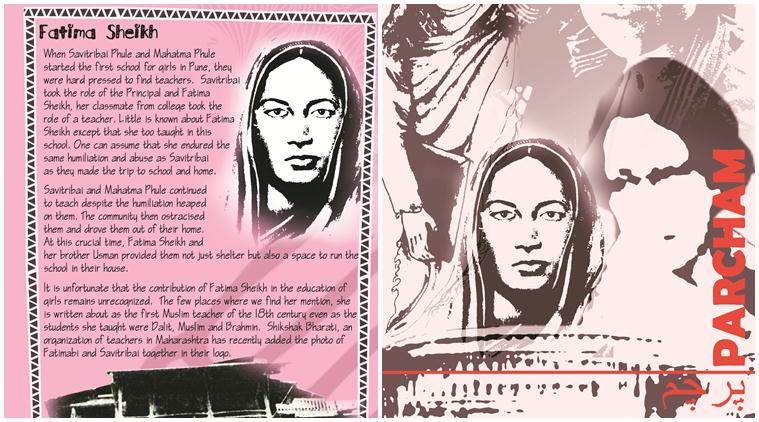
(From right) Book jacket of the diary; one of the inside pages that acts as a separator

Earlier this week, several Indian intellectuals and feminists paid homage to Savitribai Phule on her 185th birth anniversary. The contribution of the social reformist towards women’s rights, especially in the field of education, is now being recognised. However, Fatima Sheikh continues to be an elusive figure in Indian history. A diary introduced by Parcham Collective — a voluntary group in Mumbra in Thane district — celebrates Sheikh and several other pioneering Muslim women, who have contributed to society but have remained largely unacknowledged.

“In a political environment when the minorities in India, especially the Muslims, are having to prove their allegiance to the country, we hope this diary will reiterate that we aren’t the ‘other’,” says Sabah Khan, one of the co-founders of Parcham Collective, which attempts to break stereotypes based on religion, class, caste and gender. Active since 2012, they have been working with girls and have been successful in using football among adolescents to reclaim public space for the feminine gender and also bridge the gap between Hindus and the dominant Muslim population of Mumbra.

In the diary, Sheikh, a 2016 organiser, is the first Muslim woman, among six. Savitribai’s classmate from college, she not only taught at her school but also gave the Phule couple shelter when they were ostracised by the society for their work. The other women include Rokeya Sakhawat Hossain (1880-1932), Nazar Sajjad Hyder (1894-1967) and Rashid Jahan (1905-1952), among others. Their stories appear with illustrations and act as separators between the diary pages.

The idea of a diary, says Khan, came up earlier in 2015 during a discussion on Muslim women and their contribution to society. “At a time when education of the Muslim girl child is an issue and girls often drop out of school in Mumbra, we wanted to highlight women as role models who would inspire people,” says Khan.

The Parcham Collective team had been trying to unearth names and information of such women for a long time; the information had been tough to come by. It took them three months of research, tapping feminists such as Uma Chakravarti, and the names started to come up.

So there is Rashid Khan, a gynaecologist and writer, who was an inspiration to writers such as Premchand, Ismat Chughtai and Faiz Ahmed Faiz. A member of the Progressive Writers’ Movement, Rashid spoke about the oppression Muslim women faced everyday. As for Begum Qudsia Aizaz Rasul (1908-2001), few are aware that the Indian Women’s Hockey Cup is named after her. A politician from a privileged family, her key contributions include fighting for the abolition of the zamindari system and encouraging sports among women.

This is their first diary, but Parcham Collective wants to make it an annual project, using it to talk about subaltern women. They hope to dedicate the 2017 diary to Muslim women across the world in the arena of sports. “While the diary has been welcomed by feminists, we believe the real success of the project will be if common people purchase it and gain from it,” says Khan. Buyers can visit Parcham Collective’s Facebook page page and place an order for the diary.

source: http://www.indianexpress.com / The Indian Express / Home> Lifestyle> Book / by Dipti Nagpaul D’Souza / January 07th, 2017
Telugu writer brings out calendar of Indian Muslim freedom fighters

ANDHRA PRADESH :

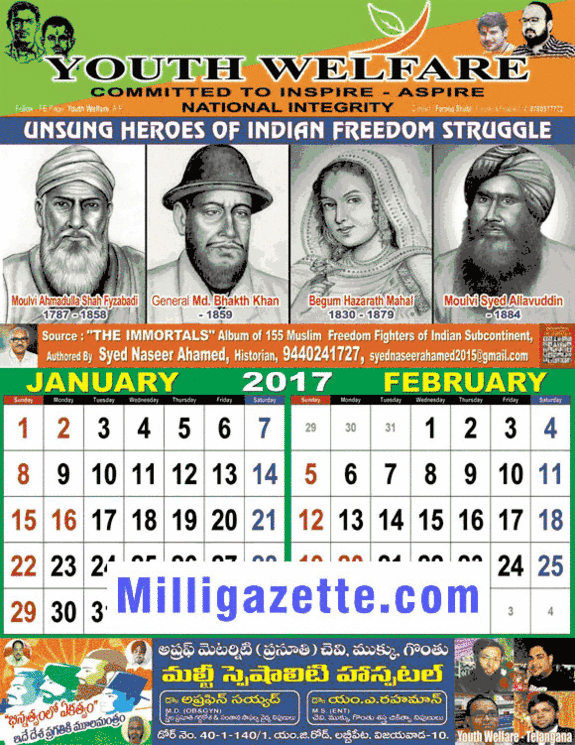
Telugu writer Syed Naseer Ahamed, with the help of Mohammed Farookh Shubli, Founder President of Youth Welfare, Vijayawada, has brought out a calendar for 2017 bearing photos of India’s Muslim freedom fighters.

Syed Naseer Ahamed has been consistently writing about Muslim freedom fighters including his pictorial album The Immortals. The calendar consists of 6 pages. Each page of two months has four photos of Muslim freedom fighters who are less known to general public. A total of 24 freedom fighters have been accommodated in six pages. Role of Muslim freedom fighters in India’s Independence has been printed often in the print edition of The Milli Gazette.

calendarfreedomfightersmpos28dec2016


This calendar is in English. Syed Naseer Ahamed is trying to release the calendar in various centres across the country in order to inform people about the part played by Muslims in the freedom struggle of India.

For more information, please contact Syed Naseer Ahamed at syednaseerahamed2015$gmail.com.

source: http://www.milligazette.com / The Milli Gazette / Home> Online News> Community News / The Milli Gazette Online / December 23rd, 2016


`Pilot girl’ gives wings to dreams of many

Hyderabad, TELANGANA :

pilotgirlmpos28dec2016
Charminar  :

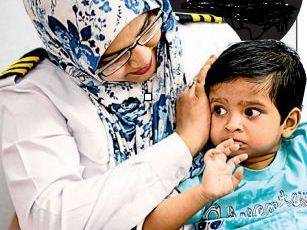
A narrow, unpaved lane in Moghulpura leads us to a first floor two-room rented apartment. Awards, shields and certificates lining the tiny drawing room wall show the dizzy heights Salwa Fatima has scaled. Daughter of a sales manager at a bakery, Fatima is the first Muslim woman pilot from the city and would soon be flying commercial planes once she finishes her advanced training.

The story of the ‘pilot girl’, as she is popularly known in the area, has in fact given wings to the dreams of many more girls from the area. They are charting new career paths and English is now a priority. “Currently two Muslim girls from the area are studying in IIT. The girls are doing much better than boys academically in some cases,” says Urdu daily Siasat chief editor Zahid Ali Khan who was instrumental in fulfilling Fatima’s dream.

Living with her parents and three siblings — two sisters and a brother — Fatima broke the chains of conservatism to dream big. So, while other girls from the community joined teaching or the few ambitious ones became doctors, Fatima had her sights set on flying higher as a pilot.

Trained first at Andhra Pradesh Aviation Academy, she completed a course in Multi-Engine Rating (MER), necessary to become a commercial pilot, this September from New Zealand. A few more months of training and she will join an airline to fly passenger planes.

But her journey began many summers ago when she read that there were just three women pilots in India. “I found that there was no Muslim woman pilot in the city and secretly dreamed to become one,” says Fatima, 28, as her father Syed Ashfaque Ahmed and mother Syed Siraj Fatima look on.

And lady luck smiled on her. Siasat chief editor Khan, who was a guest at a programme conducted by Fatima, was impressed with the girl’s fluency in English. Khan asked what she wanted to become. “When uncle (Zahid Ali Khan) heard that I dreamed to become a pilot, he told me to meet him,” she says.

Next, Khan decided to contribute to funds required for her education. He even approached some friends. “It was a revelation for me. A Muslim girl from the Old City, which is often described as backward, wanted to be a pilot. I had to support her,” says Khan.

But when she needed a massive 36.02 lakh for advanced training, Khan approached Telangana CM K Chandrasekhar Rao and the state agreed to give her a scholarship.

Fatima, who is married to a management graduate, says: “I am fortunate to have the backing of my parents, husband and in-laws.” Her mother-in-law, a retired school principal, supports her dream completely.

Fatima already has big plans for her 18-month-old daughter. “I want her to become an IAS officer,” she says.

source:  http://www.timesofindia.indiatimes.com / The Times of India / News> City News> Hyderabad News / TNN / December 20th, 2016

Four women achievers selected for Press Club award

Mangaluru ,  KARNATAKA :

Renita Lobo, Shamitha Rao, Sameera K and Fouzia B S have been selected for the second Mangaluru Press Club Award 2016.

Renita and Shamitha, both residents of Mangaluru, began an ambitious journey two decades ago to provide quality education to the underprivileged. Sameera and Fouzia, who are residents of Kadaba, on the other hand, started a school for dropouts.

A committee led by Hampi Kannada University former vice chancellor Prof B A Viveka Rai, renowned theatre director Sadananda Suvarna and School of Social Work Roshni Nilaya retired professor Rita Noronha selected the four awardees.

The award will be presented at Mangaluru Press Club Day celebrations at Scouts Bhavan in Lalbagh on December 18. District In-charge Minister B Ramanath Rai will present the award. The award carries a cash prize of Rs 10,001, a citation and a memento.

Renita and Shamitha

The journey of Renita and Shamitha began in 1995, after they completed their graduation in a college in Mangaluru and took up a teaching job in a school in Ramanagar. When the school closed down, they shifted to Siddapur to teach the students of LKG and 1st Standard at one of the schools there.

As they were paid a meagre Rs 500 a month as salary, they decided to quit their job, when local residents requested them to open a school in a remote area. Subsequently, a makeshift school was opened in 1998, with 12 students.

From then onwards, there was no looking back. In 2002, they purchased their own land and constructed a building with four rooms. Each room had two classrooms with partitions. Now, they could handle eight classes simultaneously.

By the time they started Class 7, the school’s overall strength had increased to 200 students, with 14 students enrolling in Class 7.

“Although we added a class every year, we stopped at Class 7 as we felt that high school was not our cup of tea. However, when we informed the Bishop about our inability to start a high school, he referred us to Sr Maria Goretti of SRA congregation, who donated Rs 4.9 lakh and motivated us to start high school,” recalls Renita.

Although they could manage the infrastructure, they had the Herculean task of getting the required number of 40 students to start Class 8.

“As there were only 14 students in 7th Standard, touching the 40 mark looked impossible. We decided to go from door-to-door in all the surrounding villages and
we managed to cross the magical mark of 40 with 41 students getting the admission
to 8th standard,” reveals Shamitha.

As most of the parents were not formally educated and the students were poor in English, Renita and Shamitha conducted special classes in English during the summer holidays. They also took various other steps like special classes to improve their academic performance.

“When Karthik Ranjan from the first batch of SSLC students scored 606 and became the 2nd topper in Kundapur taluk, we were on cloud nine,” they recall fondly.

The achievement of the first batch of students carved a niche for the school, which was unheard of till then. Quite interestingly, the school has registered 100% results every year, since its inception. Apart from academics, the school also offers training in karate, Bharatanatyam, music, activities like Ayurdhama (growing medicinal plants), eco club and science club.

Fearing that the students may discontinue their studies after SSLC, they began the Pre-university College programme when the first batch was out in 2009. Initially, Chemistry, Electronics and Computer Science were offered; Biology was added in 2010 and Statistics in 2014. The duo’s hardwork has paid dividends in the form of students taking up higher education.

Now, with 1,050 students and 60 teaching and non-teaching staff, the school stands tall, reflecting the dedicated efforts of two young girls to make education accessible to the children of uneducated parents in a remote village, which lacks basic facility even to this day.

Sameera and Fouzia

Sameera K and Fouzia B S, became ray of hope in the life of underprivileged after they set up a college in Kadaba about 70 kilometres from Mangaluru in 2013, named AIM’s first grade college.

Sameera from Kadaba completed her post-graduation in Political Science in 2012, while Fouzia, from Athoor, and a year senior, completed her post-graduation in Kannada.

The duo became friends when they stayed at the hostel for minority students at Deralakkate near the University. It was here that they would have long discussions about the need to set up an educational institution.

Initially, it was Sundar Gowda Mandekar who gave the girls a building on rent to start a school. As a first step, they set up AMS school named after the initials of their parents in 2012. This was a school mainly for SSLC and PUC dropouts. The same year, they applied for affiliation to the Mangalore University and went on to start AIM’s College for BA and BCom, but continued with their school for dropouts. There are a total of 180 students, both boys and girls, including SSLC and PU dropouts.

“Our target is poor students and we see to it that they get the best education. There are tie-ups with various organisations and associations for scholarships and other benefits. Regular counselling is given to the parents too,” Fouzia said and added that they impart vocational training courses for homemakers.

Stating that there are many auto drivers keen on completing SSLC, she said that while there is a regular batch for dropouts, for those who cannot attend regular classes, they conduct weekend classes.

source: http://www.deccanherald.com / Deccan Herald / Home> District / DHNS – Mangaluru, December 14th, 2016

A Look At the ‘Life and Times of a Nationalist Muslim’

Aligarh, UTTAR PRADESH :

M. Hashim Kidwai’s memoir recollects the student movements at Lucknow University, the role of Muslims in resisting Partition, and their participation in politics and academics after Independence.

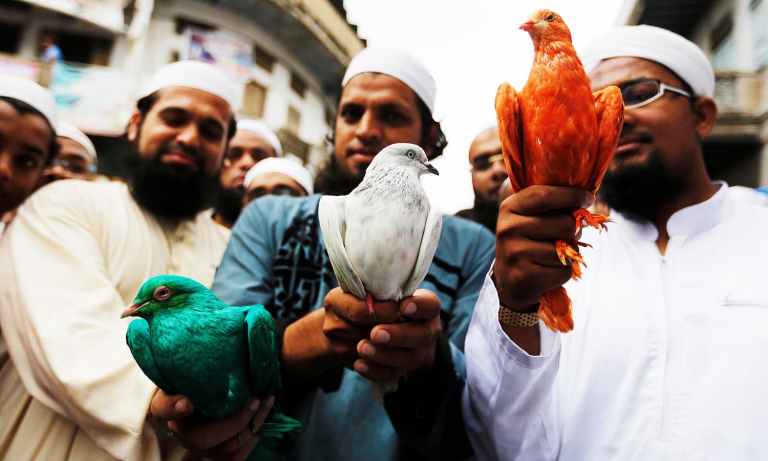
Muslims hold pigeons during a march to celebrate India’s Independence Day in Ahmedabad, India, August 15, 2016. REUTERS/Amit Dave

There is a remarkable similarity in the rise and ascension of religious reactionaries between the majority and minority communities in the decade before Independence. During the period of 1938-47, the Muslim League’s communal separatism was in fierce contest with the majoritarian assertion of the Hindu Mahasabha and the RSS, while at the same time it also benefitted from the extremism of the other party. The colonial state abetted such reactionary forces.

Other than the presence of the colonial state during that era, the Congress was the most powerful political force in the country, and was led by the likes of Mahatma Gandhi, Jawaharlal Nehru and Maulana Azad, even though the ideologies of many members of the provincial and district Congress leadership overlapped considerably with the Hindu Mahasabha.

Another reassuring difference is that today we do not have a Muslim political force comparable with Jinnah’s Muslim League, even though we do have the likes of Asaduddin Owaisi, Azam Khan and the sympathisers of the illiberal, non-plural, exclusionary traditions among Muslims and Hindus. If one may add, at the global scale as well, such forces seem to be on the rise today.

Born in 1921, Muhammad Hashim Kidwai saw all of this from close proximity. In his diary, he recollects the days of the late colonial India while living in today’s era. The title of the book itself is interesting. He describes himself as a ‘nationalist Muslim’.

In the late colonial period, the likes of Maulana Azad and Rafi Kidwai were banking upon the nationalist Muslims against the onslaught of the Muslim nationalists (or the votaries of the separate nationhood), just as the likes of Gandhi and Nehru were fighting with the Hindu nationalists, the rabid majoritarian reactionaries.

One should read the first volume of Kidwai’s reminiscence in the backdrop of these events. His account is rich in details pertaining to politics up to the Nehru era. His presence in Lucknow as a student till his late 20s and then his role as a teacher of political science at the Aligarh Muslim University (AMU) immediately after Independence and Partition enabled him to articulate significant narratives.

The fact that he was also an activist – both as a student and as a teacher – adds to the sharpness of his observations and insights. His long chapter on the student movement in Lucknow University provides vivid details of various little and big political organisations and fronts, literary associations and journalistic initiatives. The details captured in that chapter provide a valuable account of the political evolution of the Lucknow youth in the popular phase of the national movement.

In terms of academic explorations in India, we have an inadequate understanding of student movements as well the role of Muslims in resisting partition. This chapter invites us to make attempts towards filling the gap. The subsequent brief chapter on the consequences of Partition reflects on how Muslims adjusted thereafter.

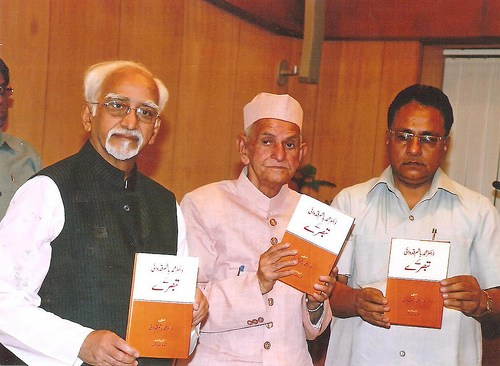
Vice President Muhammad Hamid Ansari with Hashim Kidwai (C) at the launch of his book Life and Times of a Nationalist Muslim. Credit: Aligarh Movement

It also hints at the relatively greater communalisation of the regional politics of Uttar Pradesh, which pushed Rafi Kidwai out of UP politics and then led to Nehru accommodating him in national politics.

There are a number of Urdu memoirs about the socio-political life on the huge AMU campus, but rather than offering informed criticism and reflections, most are essentially exaggerated eulogies. Kidwai’s memoir is not very critical either, but it does stand out for being able to relate campus life to the world outside. To him, the AMU campus was neither politically insulated nor did it suffer from an ‘isolation syndrome.’

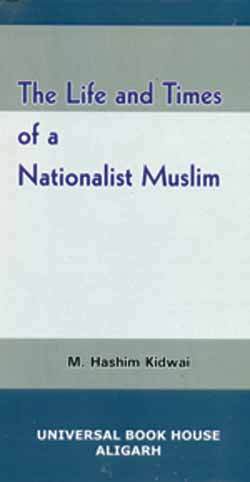
Life and Times of a Nationalist Muslim M. Hashim Kidwai Universal Book House Aligarh, 2015
Life and Times of a Nationalist Muslim
M. Hashim Kidwai
Universal Book House Aligarh, 2015

Being a quintessential Congressman, his narrative about the stealth placing of an idol in the Babri Masjid in December 1949 is focussed more against socialists like Ram Manohar Lohia and Acharya Narendra Dev, who according to him, remained silent to this injustice. Kidwai, however, does show his reservations against G.B. Pant, the then chief minister of UP. He complains, “Both Pandit Nehru and Sardar Patel urged Pandit Pant, the UP premier, to take strong action… But for reasons best known to him, Pantji did not take any action… Pantji’s policy of leaving everything to the district authorities was very much condemned and resented by a large number of Congressmen.”

Progressing strictly in chronological sequence and living up to its name as a diary, almost half of the memoir is devoted to AMU. Kidwai served there not only as a teacher but also as a writer of textbooks, a teacher activist and also contributed in academic governance.

In a huge residential university like AMU, which houses more than 30,000 students, “policing” students is a challenging task. Kidwai describes his roles as that of a provost of a residential hall as well as a proctor. While describing the role of the various vice chancellors, he, unfortunately, neglects their impact on establishing or encouraging academic rigour.

Kidwai is almost solely concerned with the socio-political life on the campus and the narrative gives the impression that the Youth Congress dominated the campus. Other accounts of post-Independence AMU inform us that Left activism had gained a significant presence at the university in the 1960s. Kidwai’s account ignores this and also does not dwell on the composition of the student body, that is, the regions the students came from or their socio-economic status.

The volume concludes with the death of Nehru in 1964.

A close reading of India’s comparative history that draws few parallels between the elections of 1946 and of 2014, and the consequences thereof, is still awaited. One hopes that the sequel volume of Kidwai’s memoir will delve deeper into such issues.

By his own admission in the preface, Kidwai, as a parliamentarian, stood behind the clergy, jarringly conservative on gender issues. He was also one of those that ill-advisedly encouraged Rajiv Gandhi to legislate against the Supreme Court verdict on the Shah Bano issue. Therefore, this first volume really sets up expectations for the next and about how he will recollect the days of 1985-86, especially at a time when the same gender issues have once again acquired significant political saliency. Equally important will be to read his views on the decline of the Congress post-1980s.

This is an important book, one which will become a resource for scholars interested in the participation of Muslims in both politics and in academics after Independence.


source:  http://www.thewire.in / The Wire / Home> Books / by Mohammad Sajjad / November 04th, 2016

‘Teaching profession, an intrinsically rewarding one’

Hyderabad, TELANGANA :

Director of Glendale Academy, Anjum Babukhan, said there was a severe shortage of good teachers and pointed out that while in the real world, life could get difficult and stressful for aspiring teachers, it would, in the end, be a most intrinsically rewarding profession.

Teachers, who are in a profession that creates a lasting impact in shaping future citizens and one that empowers them to make a difference at home and school, should maintain work-life balance. Teachers need to imbibe intelligence, emotional and social quotients, she said.

She was addressing the gathering at the third convocation of the Integrated Pre-School Teachers’ Training Academy (IPTTA) here on Saturday, when 36 teachers passed out.

Others who were present and also spoke included former principal of Meridian School, Pratima Sinha and academic coordinator of Eurokids, Sultana Shahin Moidu, an expert in the field of early childhood education.

Toppers Afsha and Padmaja were felicitated and a digital video disc of the training workshop was released by Ms. Sultana. IPPTA President V. Ravi said their mission was to develop teachers who were passionate, had active and creative minds, and with the courage to act on their beliefs.

“We wish to create a generation of pre-school teachers, who would guide the nation’s future,” he said.

source: http://www.thehindu.com / The Hindu / Home> News> Cities> Hyderabad / by Special Correspondent / Hyderabad – November 20th, 2016

Eight-year-old Kashmiri girl wins gold in kickboxing

Bandipura District, JAMMU & KASHMIR :

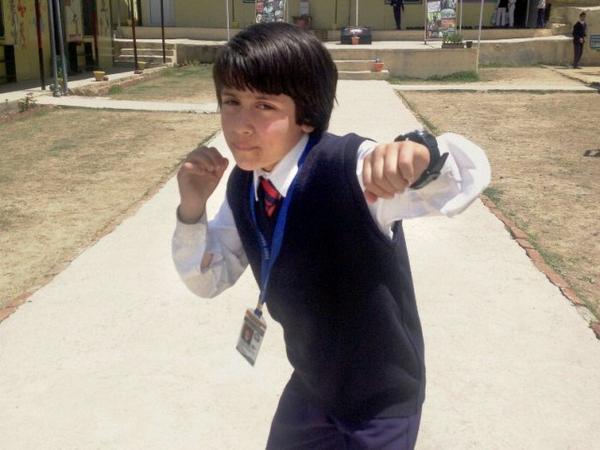
Tajamul Islam. / PTI


A resident of Tarkpora village in Bandipora district, Islam is a student of the Army Goodwill School.

Eight-year-old Kashmiri girl on Friday created history by winning the gold medal for India in the world Kick Boxing Championship of under-eight players in Italy’s Andria.

“In five days, Tajamul Islam won six games,” said her coach Master Fasil Ali.

She defeated her rival from the U.S. to become the world champion in the kick boxing championship. She is first such player to achieve the feat from the volatile Kashmir Valley.

A Class 2 student, Islam represented India in Italy where the World Kick Boxing Championship, in which 90 countries participated, was underway.

“She (Islam) has created history by winning a gold medal in the game at the age of eight,” said PDP leader Waheed Parra, who is also J&K State Sports Council secretary.

In 2015, Islam won the national recognition after bagging the gold medal in sub-junior category National Kickboxing Championship in New Delhi.

A resident of Tarkpora village in Bandipora district, 65 km from Srinagar, Islam is a student of the Army Goodwill School.

Ms. Islam’s brother and two sisters also practice kickboxing.

Appreciating the talent, State Education Minister Nayeem Akhtar said, “It’s a proud moment”.

source: http://www.thehindu.com / The Hindu / Home> Sport> Other Sports / by Peerzada Ashiq / Srinagar – November 11th, 2016

Kerala History Congress set to begin tomorrow

Mallapuram, KERALA :

VC to open meet on Calicut University campus

The fourth International Kerala History Congress will begin at Calicut University on Friday. Calicut University Vice Chancellor K. Mohammed Basheer will inaugurate the meet. Jean-Baptiste Prashant More, a Tamil-born French historian, will deliver the keynote address.

M.G.S. Narayanan, chairman of the Kerala History Conference, will preside over the inaugural function. Prof. Narayanan, M.R. Raghava Varier, and Kesavan Veluthat will make presentations under the ‘doyens of Kerala historiography lecture’ series.

Exhibition of archives

An exhibition of archives and historical documents began on Wednesday as part of the History Congress. Syndicate member K. Fatimat Zuhra inaugurated the exhibition. Syndicate member and head of the Department of History P. Sivadasan presided. The exhibition will be free for the public until Sunday.

The exhibition is arranged jointly by the State Archives Department, the Calicut University Department of History, and Zamorin’s Guruvayurappan College, Kozhikode. The exhibition has a large number of historical documents from different periods, including stone age and middle ages.

source: http://www.thehindu.com / The Hindu / Home> National> Kerala / by Staff Reporter / Malappuram – November 10th, 2016

Collector turns teacher

Karimnagar , TELANGANA :

Reaching out:Collector Sarfaraz Ahmed teaching at Government Social Welfare Residential School at Jammikunta in Karimnagar district on Friday.- Photo: By Arrangement

Collector Sarfaraz Ahmed donned the role of a teacher and taught lessons to the students of Government Social Welfare Residential School at Jammikunta in Karimnagar district.

He made a surprise visit to the school, SC boys hostel and BC boys hostel at Jammikunta on Friday. He inspected the records, kitchen, toilets and other rooms on the occasion.

At the Social Welfare Residential School, he made the students read out some lessons. But when they couldn’t read well, he expressed ire against the staff and asked them to conduct the classes properly.

When students informed that they were not given egg in the last one week, the Collector directed the Jammikunta revenue officials for seizure of all stocks and conduct a thorough inquiry and submit a report to him at the earliest.

The Collector expressed displeasure over 12 inmates of the SC hostel not attending classes even after completion of Dasara holidays.

Meanwhile, Mr. Ahmed made a surprise visit to the Jammikunta agricultural market yard and inquired about the procurement of cotton.

source: http://www.thehindu.com / The Hindu / Home> National> Telangana /  by Special Correspondent / Karimnagar – October 29th, 2016

First place in Pratibha Karanji

Mysuru, KARNATAKA :

Mohammed Salman, 9th std student of Nazarbad Government Bifurcated Maharaja PU College and High School has won first place in the State-level Pratibha Karanji, Ghazal singing competition held at Siddaganga Mutt in Tumakuru district.

source: http://www.starofmysore.com / Star of Mysore / Home> In Brief / October 13th, 2016