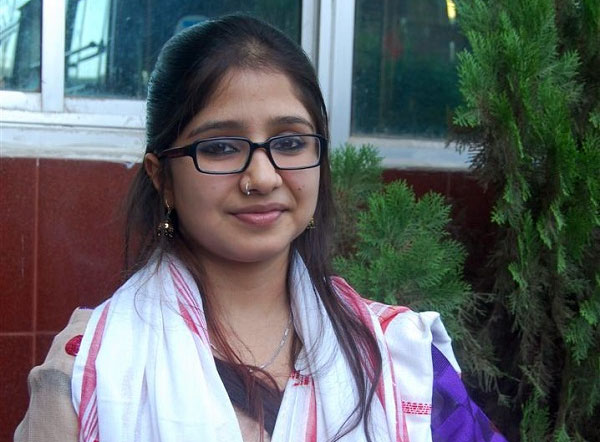
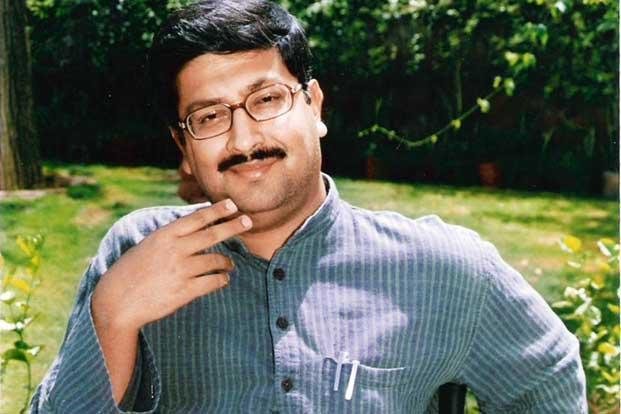
On this past 3rd May, a history was created very silently in Assam by a young Muslim girl. Umme Fardina Adil did what female members of her Muslim community in the Northeast state could not do in the last 66 years of Independence. By cracking India’s most coveted Civil Services examination, Fardina became first Muslim woman to become IAS in Assam. Her historic achievement could not be hidden long.
Umme Fardina Adil, a resident of Hatigaon in Guwahati, was felicitated by ERD Foundation and other organisations for her success in the Civil Services exam 2012 whose results were announced on 3rd May. In the list of 998 successful candidates this year, Fardina got 319 rank.
Speaking at the function organised at Regional College of Higher Education (RCHE) in the city on Sunday, Mahbubul Hoque, Chairman ERD Foundation said, “Assam gave the only President of India from the North East – Fakhruddin Ali Ahmed. Assam also gave the first and only Muslim woman Chief Minister of the country – Anwara Timur. But it took Assam 66 years to produce the first Muslim woman IAS officer – Umme Fardina Adil.”
Hoque also informed the audience that the entrance test and interview of minority candidates opting for coaching for the IAS exam of 2014 was conducted at the same venue in the morning. It was organised by Zakat Foundation of India (ZFI) and coordinated by ERDF. The felicitation for Fardina was arranged in the afternoon to facilitate her interaction with all the aspiring minority community IAS candidates of 2014 from Assam who were also present at the venue.
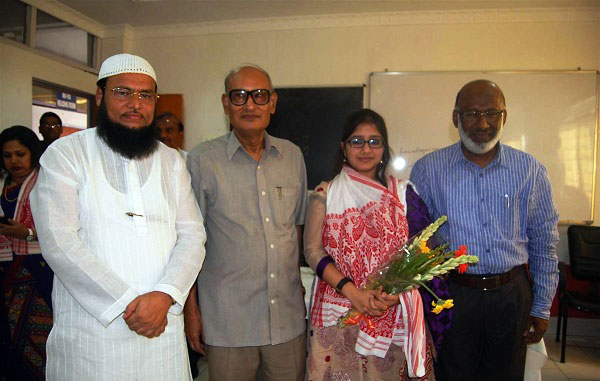
L-R: Mahbubul Hoque, Chairman ERDF; HN Das, former Chief Secretary of Assam; Umme Fardina Adil; and Prof PK Abdul Azis, VC, University of Science & Technology Meghalaya at a function in Guwahati on 12th May 2013.
Dr Ikramul Haque, Atiqur rahman Siddiqui and Mohammed Aleem from the Zakat Foundation of India, New Delhi were also present on the occasion.
Speaking during the felicitation programme, HN Das, former Chief Secretary of Assam & Director, Fakhruddin Ali Ahmed Coaching Centre for Civil Services Examinations Guwahati said, “Financial hardship should not be a reason for not being able to sit for IAS examination. Now there are many organisations to support meritorious students to prepare for competitive examinations.”
Prof PK Abdul Azis, Vice Chancellor, University of Science & Technology Meghalaya, who was also a member of the IAS interview board for several years congratulated Fardina and offered her flowers and gifts on behalf of the University. Sabur Tapader and Ahmad Hussain offered gifts to Fardina on behalf of Unity Education Foundation and Pragjyotish Group of Institutions respectively.
Fardina, a former student of Disneyland School and Cotton College of Guwahati, informed the audience that she cleared the IAS in her first attempt and with about 8 months of preparation putting in about six hours every day. She said, she depended on newspapers and Wikipedia for gathering knowledge about new topics and never referred to any guide books.
Fardina encouraged the aspiring candidates for developing a politically neutral view and showing an aptitude for analytical dissection of the subject in question. She also asked the young generation to be socially committed, stressing that this attitude would see them through in any interview.
source: http://www.muslimmirror.com / Muslim Mirror / Home> Education / by Muslim Mirror News / May 13th, 2013
Umme Fardina Adil achieved what other women of her community could not do for more than six decades.
She became the first Muslim woman from India’s northeastern region to clear the Union Public Service Commission exam since the country became independent.
“Allah’s blessings and my parents’ prayers,” Fardina summed up her success in an interview to Two Circles.net.
To become an officer of the Indian Administrative Service was her childhood dream.
“I was obviously very glad to clear the civil services exam at the very first attempt itself. It means a lot to me,” she added.
Now, she has another dream: make India free of open defecation.
“I have already started my work by research in low cost sanitation technologies,” said the cheerful woman who now works as a senior programmer with Accenture Services Private Limited. And her pet project is “Low Cost Sanitation Technologies.”
“I want to be an IAS so that I can work for society” by efficiently utilizing government resources, she added.
Several organizations in Guwahati have come forward to celebrate Fardina’s achievement.
“Assam gave the only President of India from the North East — Fakhruddin Ali Ahmed. Assam also gave the first and only Muslim woman Chief Minister of the country – Anwara Timur. But it took Assam 66 years to produce the first Muslim woman IAS officer,” Mahbubul Hoque, chairperson of the Education Research and Development Foudnation, the largest educational network in northeastern region, told a felicitation program.
Fardina was born and brought up in Guwahati, Assam’s commercial capital. She did her tenth grade from Disney Land High School, Khanapara, and the twelfth from Cotton College.
The she studied engineering from Mody Institute of Technology and Science, Rajasthan in Computer Science before taking up the job with the Accenture firm.
She said she would attempt the civil service exam again to improve her rank. “Since my ranking is 319 this time, I will not get IAS but will definitely try for this in future,” she explained.
Asked about the exam, she said it was definitely tough, “but with determination and hard work, it became a bit easier.”
Fardina says she gets excited over social causes.
She finds women in Assam in “a much better position” than their counterparts in northern India socially and economically.
At the same time, she realizes participation of Muslim women in public services is much lower than tribal and dalit women.
“It took 66 years of independence to produce a Muslim woman civil servant from Assam which is a very unfortunate scenario,” she said and added that the lacuna is not because of facilities are absent. I think it is due to lack of awareness,” she added.
She wants every Muslim woman to “believe strongly in their abilities and capabilities” and join every field to chase their dream. “And if they do so, I’m sure the entire scene will change,” Fardina predicted.
The aspiring civil servant says the increasing atrocities on women upset her.
When a girl was publicly outraged in Guwahati last year, she wrote a letter to the editor of The Hindu newspaper, “I have always been proud of my Assamese origin; for the first time, I am ashamed of it. It is time civil society in Assam woke up and ensured that such shameful incidents, so contrary to our culture, did not occur again.”
She termed the incident as “a shame on humanity” and said it made her realize her mother who used to tell her not to harbor any fear when in public. “If there is one bad person in the crowd, there will be 20 good people who will come forward to help you,” her mother told her.
“But when I read about a young girl’s molestation by a group of about 20 men on the busy streets of Guwahati with many people shooting the incident, but none coming forward to help, I realized my mother was wrong,” she wrote in the letter.
Fardina is convinced Indian women’s status would improve if they get equal opportunities from childhood. “There is no difference between a man and woman in their mental ability. Along with fulfilling duties as a daughter, sister, wife and mother, a woman should also think about herself as an individual,” she added.
A daughter should “have the complete right to take her decision independently like a son. Parents should convey that they believe in her ability and will support her always,” Fardina elaborated on ways to improve women’s lot in India.
The young Muslim woman says at times religions are misused to hinder women’s advancement, especially when social evils such as female infanticide and child marriage take place.
Seven-year-old Vidhya S carries a pile of books to her principal’s chamber. Her notes are neat, with all the right answers. Vidhya is one of eight children admitted under the Right to Education (RTE) Act quota at M M Nursery and Primary School, a Muslim minority institution in Tasker Town.
Although minority unaided schools are exempt from the RTE Act, this school took a decision two years ago to implement the quota in keeping with Section 12 (1)(c).
M M School’s move is in sharp contrast to the practice of some schools which claim “minority” status to avoid RTE Act obligations.
This school, however, admitted eight children (four boys and four girls) belonging to the Hindu community under RTE, of whom five are in Class 2 and three in Class 1.
“Our management knew that they didn’t have to comply with RTE, but I started looking and found there were so many parents in the neighbourhood who wanted to send their kids to school. They had to be provided with the opportunity to give their children education,” said principal Veena Nesam.
The school, which is managed by the Modi Masjid Education Trust, allotted five seats in 2012-13 and three seats in 2013-14 under the RTE quota. “In the interest of children’s education, the management agreed to go ahead with RTE. We are aware that we cannot expect any fee from these children,” she said.
“I have already spoken with my management on how we can sustain ourselves financially. We already have children whose parents are unable to pay fees,” Nesam said.
The school, located in a three-storey building opposite the Modi Masjid, has 350 children spread over Classes 1-8 and is permitted to use Urdu as its medium of instruction. Still, the school also teaches in Kannada and English. “My knowledge of Tamil helped me reach out to parents in the neighbourhood. Awareness among parents on RTE is low. All they know is that there is free education,” Nesam said.
When asked why other private schools were using the minority tag as means to keep RTE at bay, she said: “Many schools do not want RTE because of the financial burden it comes with. It is the 25 per cent clause that schools are wary of.”
In fact, the Bangalore North-3 BEO has sanctioned Rs 10,000 for admitting children under the RTE quota.
Nagasimha G Rao, convenor, RTE Task Force, lauded the school for having gone against the odds to implement the RTE quota.
As of July last year, the Department of Public Instruction has identified 288 certified religious and linguistic minority schools in the state.
However, it cannot issue any more minority certificates because of a pending case in the High Court, allowing schools to falsely claim minority status without certification.
“We cannot issue certificates as the previous government’s new minority definition was stayed by the High Court,” said Mohammad Mohsin, Commissioner for Public Instruction.
The new minority definition of the previous government required 2/3rd of the members of a school’s management to belong to a minority section with more than 75 per cent children belonging to that minority community.
“Now, because we cannot issue certificates, many schools have approached the National Commission for Minority Educational Institutions for certification,” Mohsin said.
source: http://www.newindianexpress.com / The New Indian Express / Home> States> Karnataka / by Express News Service – Bangalore / February 14th, 2014
Home / Infosys Prize / Laureates 2013 / Prof. Ayesha Kidwai … / Prof. Ayesha Kidwai Humanities – Linguistics, 2013
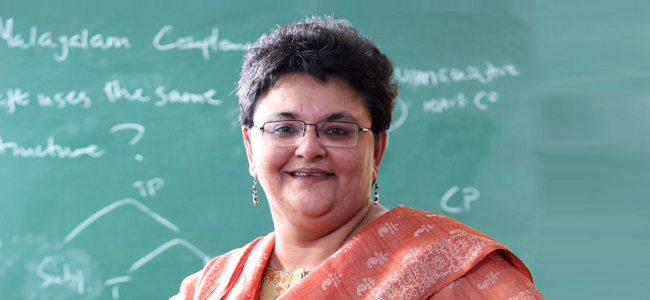
Ayesha Kidwai Professor, Centre for Linguistics, School of Language, Literature and Culture Studies, Jawaharlal Nehru University, New Delhi
The Infosys Prize 2013 in Humanities – Linguistics is awarded to Prof. Ayesha Kidwai for her exceptional contribution to the field of theoretical linguistics. Her research on syntactic relations in Hindi-Urdu has related wider debates in linguistics to the study of Indian languages and has extended our understanding of India’s linguistic diversity.
Congratulatory Message From The Jury Chair – Amartya Sen
“It’s wonderful for me to have the opportunity of congratulating Prof. Ayesha Kidwai for the extraordinary work she does on theoretical linguistics. India is a country of many languages and she has been able to use her general skills to find ways and means of studying the languages with the kind of international global understanding. That is one of the delights of contemporary linguistics. Totally delighted to be able to count on her being part of the community of scholars that we are honoring through this annual giving of prizes”
Bio
Prof. Ayesha Kidwai completed her M.A. and Ph.D. in Linguistics from Jawaharlal Nehru University. Her research interests include linguistic theory, with particular reference to the (generative) syntax and morphology of Indian languages, philosophy of language, gender and language, the politics of English, and the evolution of language. Her current research interests include the syntax of finite complementation and the properties of adjunction in natural language.
She has authored several papers and a few notable books such as XP-adjunction in Universal Grammar: Scrambling and Binding in Hindi-Urdu, and In Freedom’s Shade, an English translation of Anis Kidwai’s Urdu memoir Azaadi Ki Chaon Mein.
Scope And Impact Of Work
Prof. Kidwai’s research ranges around a wide variety of syntactic topics, united by a preoccupation with the properties and effects of optional displacement operations in Universal Grammar.
Universal Grammar is the radical hypothesis, put forth five decades ago by Noam Chomsky, that the innate human linguistic ability is a domain-specific intelligence that must be modeled as a distinct Faculty of Language. This innate endowment, a system of principles and parametric options, forms the basis for the human knowledge and acquisition of any natural language, and is the source for both the relatedness of and differences between human languages. Prof. Kidwai’s contributions to the field have been the study of the principles and parameters that must be hypothesized to explain the syntactic properties of a number of South Asian languages, including Hindi-Urdu, Bengali, Malayalam, Meiteilon and Santali.
The phenomenon of free word order found in many languages of the world – ‘scrambling’– raises many intriguing questions for Universal Grammar, as such word order variation is apparently optional, and therefore difficult to characterize by grammatical rules. Prof. Kidwai’s work in this intensively studied and debated domain proposes a novel theory of how the referential properties of scrambled noun phrases in Hindi-Urdu may be characterized once the discourse effects of these optional variations are taken into account. These proposals have had important implications for the hypothesized design of Universal Grammar as well as the displacement operations conjectured to be central to it.
Recently, Prof. Kidwai also distinguished herself as an ace translator, having rendered Anis Kidwai’s moving Urdu memoir of the aftermath of partition, Azaadi Ki Chaon Mein, into English, In Freedom’s Shade.
Long Citation
Prof. Ayesha Kidwai is an outstanding theoretical linguist. Her work has earned recognition from leading international experts, as it relates the general theoretical framework of the principles of Universal Grammar to some of the particular syntactic features of Indian languages like Hindi-Urdu, Santali, Meiteilon, Bangla and Malayalam, analyzing these within the structures of human cognitive systems and their general properties.
Central to these achievements is Prof. Kidwai’s work on a wide range of adjunction phenomena. On the intensively studied and debated syntactic phenomenon of ‘scrambling’, her work proposes a novel theory of binding in extensive analytical investigation of Hindi and Urdu.
Prof. Kidwai has helped raise the respectability and significance of the field of theoretical linguistics by providing leadership and mentorship to young linguists in India. She has consistently stressed on the political and cultural importance of the study of India’s linguistic diversity.
source: http://www.infosys-science-foundation.com / Infosys Science Foundation / Home> Infosys Prize / Laureates 2013 / Feb 2014
Hasan Mansur, a veteran human rights activist, passed away in Bangalore on Wednesday morning.
Prof. Mansur (1930-2014), who retired as the Head of the Department of English in Bangalore University, was closely associated with People’s Union for Civil Liberties (PUCL) and a host of other human rights initiatives, and fact-finding efforts in Karnataka and elsewhere.
Prof. Mansur was one of the founding members of the Karnataka Civil Liberties Committee (KCLC) in 1984. He went on to work for the PUCL, with which he was associated till the end.
His role at PUCL
In a press release, the PUCL State committee has said that Prof. Mansur played a significant role in broad-basing the concerns of PUCL and taking it beyond the traditional human rights issues to focus attention on violations of socio-economic rights, including the right to housing and the right to water.
Prof. Mansur was also one of the founding members of the Karnataka chapter of the Indo-Pak People’s Friendship Forum and was associated with trade union movements since the 1950s.
Speaking to The Hindu , Ramdas Rao, his colleague at the university and a co-activist in PUCL, said: “I admired Prof. Mansur for the way he brought together literature, politics and human rights.” Recalling his love for literary greats like James Joyce, Pablo Neruda and T.S. Eliot, he said: “He could quote large chunks of Joyce’s Ulysses and Eliot’s Four Quartets and continued to teach to the larger community of his friends even after he retired.”
Prof. Mansur leaves behind his wife, Hasnath Mansur, and a son. Funeral prayers were held at Arab Lane Mosque on Richmond Road on Wednesday evening.
I admired Mansur for the way he brought together literature, politics and human rights: Ramdas Rao
source: http://www.thehindu.com / The Hindu / Home> National> Karnataka / by Special Correspondent / Bangalore – February 13th, 2014
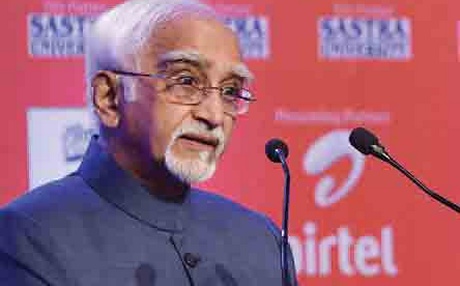
Echoing the concerns of various stakeholders at the valedictory function was Vice-President Mohd. Hamid Ansari. He pointed to the fact that India would have one of the youngest populations in the world in six years. “It is estimated that by 2020, the average Indian will be only 29 years of age, compared with 37 in China and US, 45 in Western Europe and 48,” he said at the concluding session of the ThinkEdu Conclave.
Hence, at the centre of all efforts to create a knowledge-based society should be provision of high quality relevant education for all at the primary, secondary and higher levels, including professional, technical and vocational education. Any shortcomings or failure in the effort could transform the potential ‘demographic dividend’ into a possible nightmare, of a ticking demographic time-bomb, with all its economic, social and economic consequences, he warned.
Posing three queries on the status of education in India, the vice-president quoted official reports highlighting the declining quality at all levels due to poor infrastructure, poor curricula and poor teacher and teaching quality. He saw far-reaching correctives in the sector, including introduction of holistic education, carried out in a time-bound manner as the only solution to the malady.
In the Vice-President’s view, holistic education drew its relevance from the need to address to challenges such globalisation, materialism, consumerism, commercialisation of education and other threats due to climate change, environmental degradation and terrorism. “It is essentially an education concerned with both individual freedom and social responsibility,” he said.
Ansari called for the cooperation and support of parents, guardians and community members to make the endeavour a success.
source: http://www.newindianexpress.com / The Sunday Standard / Home / by The Express News Service / February 02nd, 2014
Indian business leader, scientist and philanthropist Dr Yusuf Hamied on Monday announced a major financial donation to the Royal Society of Chemistry, the world’s leading chemistry community, to support an innovative chemistry education programme for school students in India.
Dr Hamied, who is the chairperson of the generic pharmaceuticals company Cipla and has pioneered the model of producing affordable medicines for patients in developing countries, is donating Rs eight crore to the Royal Society of Chemistry’s Hamied Inspirational Chemistry Programme.
The programme will be managed by the Royal Society of Chemistry in partnership with the UK’s Salters Institute and leading Indian academic institutes to enhance the skills and knowledge of Indian chemistry teachers and inspire students to study chemistry at university.
Over the next five years, the programme aims to equip 8,000 teachers across India with the specialist knowledge and skills to deliver exciting and engaging chemistry lessons, and to pass this knowledge on to their colleagues. It will also provide 1,600 of the brightest chemistry students from all backgrounds with places at chemistry camps to motivate them to reach the necessary standards to study chemistry at university.
Dr Hamied said: “I am very pleased to be working in partnership with the Royal Society of Chemistry to support the Hamied Inspirational Chemistry Programme. I believe the programme will make a real difference to the education and experience of students studying chemistry in schools across India.”
Chief Executive of the Royal Society of Chemistry, Dr Robert Parker, said: “We are delighted to be working with Dr Hamied and grateful for his generous donation to enable us bring together leading organisations from the UK and India to deliver this education programme and make a real impact.” Dr Hamied added: “To inspire the next generation of great Indian scientists we must equip our teachers with the specialist knowledge and practical skills they need to show their students that chemistry is a fascinating.”
Just as teachers pass on their knowledge to their pupils, the programme will support the most talented chemistry teachers in India to train their colleagues to deliver informative and exciting chemistry lessons – a “train the trainer” approach. I am very pleased to support this sustainable model for teacher training which will allow the programme to reach thousands of teachers across the country.” Dr Hamied said: “An inspiring chemistry education isn’t just about excellent teachers.
We need to encourage and motivate the best students to achieve the knowledge and skills they need to go on to study chemistry at university and eventually, to make a strong contribution to India’s success. This isn’t just about getting the best grades – we also need students to develop problem-solving and interdisciplinary skills. That is why I am also very pleased that this joint initiative will support the best students – particularly those from disadvantaged backgrounds – to take part in chemistry camps at leading academic institutions and experience a true taste of chemistry at university.”
Dr Simon Campbell, former president of the Royal Society of Chemistry and personal friend of Dr Hamied, said: “This unique programme is a significant educational investment with great potential to train the skilled chemists that will be vital for India’s growth and social wellbeing.”
source: http://www.deccanherald.com / Deccan Herald / Home> State / Bangalore – DHNS / February 10th, 2014
J A K Tareen, former professor of the University of Mysore, has been conferred the prestigious Padma Shri Award, in recognition of his contribution to the field of education and literature.
Professor Tareen is the fourth professor from the Mysore University to have received the national award. He has now joined the elite club of eminent personalities of Mysore such as C D Narasimhaiah, U R Ananthamurthy and Javare Gowda.
He is also the first professor from the science faculty of UoM to receive such an award. Tareen, who has served as the vice-chancellor of the Kashmir University, hails from Mysore where he did his schooling and received master’s and PhD degrees.
source: http://www.articles.timesofindia.indiatimes.com / The Times of India / Home> City> Mysore> Padma Shri / TNN / February 03rd, 2014
In a unique project in Kerala, a government school becomes a world-class institution
When Oscar laureate A.R. Rahman flew down to Kozhikode recently, it was not for a music programme but to see the amazing transformation brought about in a government school.
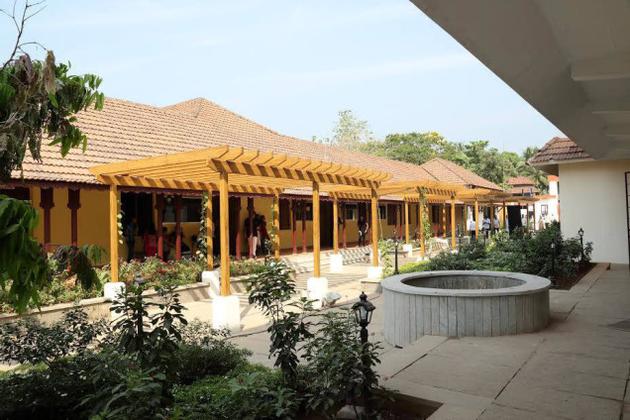
In a programme masterminded by school authorities under the guidance of the local MLA, the 120-year-old Government Vocational Higher Secondary School for Girls in Nadakav, which mostly teaches children from society’s weaker sections, has been upgraded to international standards.
In the spacious new auditorium, Rahman recalled how he met old friends K.E. Faizal and wife Shabana in New York where they told him about how the Faizal-Shabana Foundation had spent Rs. 15 crore on a school project in Kerala. That’s when Rahman decided he wanted to visit the school and see for himself the transformation.
Kerala’s achievements in the education sector, particularly in democratising it, have been remarkable. Its success in bringing education within the reach of the poorest children has made its literacy rate among the highest in the country. And now, this unique collaboration between MLA Pradeep Kumar and a private foundation has emerged as another development model for education in the country.
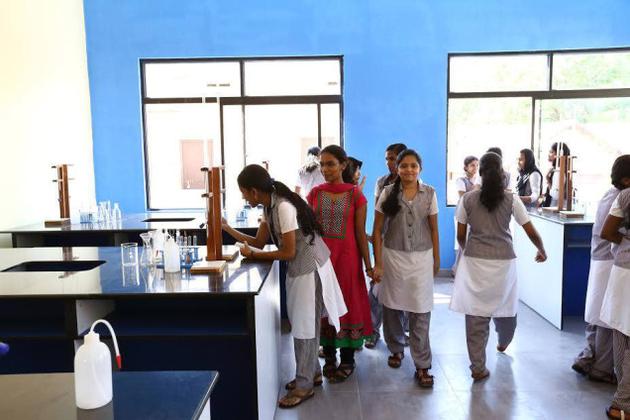
What was once just another government school now boasts of facilities unheard of in similar schools — an astro-turf playground, super-smart classrooms, computers, and a state-of the-art science lab, among other facilities. Pradeep Kumar, the CPI (M) MLA for Kozhikode, says his mission was to have a world-class school that would still be affordable to ordinary people. The state’s Planning Board came up with a project titled Promoting Regional Schools to International Standards through Multiple Interventions or PRISM.
World-class it certainly is. Infosys provided 150 computers, and ISRO gave a high-tech science lab. From the government and the MLA’s local area development fund came Rs. 7 crore. For the rest, NRI tycoon Faizal and Shabana stepped in with Rs.15 crore from the Faizal-Shabana Foundation. The plan was provided by Indian Institute of Management, Kozhikode (IIMK). Rahman, obviously impressed by what he saw, has announced the support of Rahman Foundation in Chennai for a music school that he immediately inaugurated. Interestingly, the school’s facilities are open to the people of the neighbourhood.
The school is a superb example of government-private participation in the education sector, and a rare instance where bitter political foes — the Congress-led United Democratic Front and the CPI(M)-led Left Democratic Front — played equally productive roles. The project was initiated by Pradeep Kumar when the LDF government was in power and it was completed under the UDF government.
The Nadakav school is a promising chapter in the attempt to resist the commercialisation of education that threatens to make high-class education unaffordable to everybody but the very rich. It is also a heartening attempt to lift the sagging image of government schools and make them more attractive to students who are migrating in large numbers to private schools that boast of attractive infrastructure and ambience. It has often been noted that better infrastructure and facilities could improve both morale and quality of education in government schools.
Meanwhile, Pradeep Kumar has turned his attention to two other government schools in his constituency, but finding benevolent sponsors is not easy. Work has begun in the Government Higher Secondary School of Karaparamba with a small allocation from the MLA’s local area development fund, and the search is on for other funds to complete the work.
At a time when education standards are falling appallingly across the country, this unique public-private model might be just the shot in the arm that government schools need.
source: http://www.thehindu.com / The Hindu / Home> Features> Sunday Magazine / by R. Madhavan Nair / February 08th, 2014
Most of the world’s disabled live in the global south. This is why India and other Brics nations must ensure their policies are both inclusive and accessible
Abidi says companies should not equate disability with corporate social responsibility.
Born with congenital spina bifida, a developmental disorder, Javed Abidi has traversed the world on a wheelchair, advocating the rights of the disabled.
Considered a pioneer of the cross-disability movement in India, he was instrumental in the drafting and passage of The Persons with Disabilities (Equal Opportunities, Protection of Rights and Full Participation) Act, 1995, and in the setting up of the National Centre for Promotion of Employment for Disabled People in 1996. He has been its director since 1997. In October 2011, he was appointed world chair of Disabled People’s International (DPI), a global organization working for the rights of people living with disabilities.
In July, Abidi also took over as the vice-chair of the International Disability Alliance, a global alliance working for disability causes. In his new role, he stresses that disability movements must focus on the global south (which includes India), for this is where nearly 800 million of the world’s one billion people with disabilities live. Edited excerpts from an email interview:
As the world chair of Disabled People’s International, what are your priorities?
The dynamics of the disability rights movement are going through tremendous churning at this point. In 2011, the World Health Organization (WHO) said one billion, or 15% of the world’s population, live with a disability. Of this, as many as 80%, or 800 million, live in countries of the global south. People with disabilities also comprise 20% of the world’s poorest. Yet the leadership and the mechanisms that shape policies that affect the lives of this 80% are controlled by people from the developed world, who have absolutely no idea what it means to be a person with disability—to not even have a wheelchair, to not even have a hearing aid, to live in abject poverty, etc. My biggest priority as of now is to remind the world, again and again, of this fact.
What is the DPI’s agenda for the UN general assembly’s high-level meeting on disability and development in September in New York?
In the past decade or so, it has by and large been established that disability is a cross-cutting human rights issue. But what the DPI and other global bodies are now trying to underline is that disability is also a developmental issue. Our first endeavour is to ensure that the respective governments send the highest level of delegations to this meeting. The DPI has also raised the demand for a global forum on disability and development—a platform for all stakeholders on the sidelines of the high-level meeting, along with a strong outcome document.
Most importantly, the DPI will try for a sizeable representation from the global south—from Asia, Africa, Latin America, Caribbean—to ensure that their disability and development agenda is not hijacked by people who have very different realities from ours.
How can workplaces in India be made disabled-friendly? What are the challenges, and how can they be met?
Companies that are serious and committed to being disabled-friendly will have to look at it as a policy issue at the highest level. Inclusivity is not just employing people with disabilities. It encompasses making all your facilities and systems accessible. Most companies approach this wrong and equate disability with corporate social responsibility. They first employ people with disabilities and then make their workplaces disabled-friendly. Very soon, India will have a strong anti-discrimination law on disability. Everyone will have no choice but to fall in line. It is up to the employers to decide if they want to be a role model or be forced to comply.
Post-2015, when the world prepares for a new development framework after the UN’s Millennium Development Goals (MDGs), where do you see the disability movement going?
I think that in the past couple of years, development practitioners have become more aware of disability. The challenge is to translate this awareness into action and tangibles. Apprehensions are that disability will again be overlooked. Policymakers and decision makers do not seem to grasp the obvious connection between disability and human rights and development issues. For instance, if you talk about conflict and wars, disability has a direct and significant correlation to it. The same holds true for disability and natural disasters; disability and situations of humanitarian risks; disability and the effects of climate change, and so on.
The task at hand, especially for grass-roots organizations such as the DPI, is to ensure that we keep reminding the people who matter about us.
In what ways can India shape the global disability agenda?
If we go by the 15% theory of WHO, India would be home to more than 150 million people with disabilities, and some of these are the poorest and most vulnerable people on this planet. India’s policy on disability, hence, will have a significant impact on not only the region but also the world. With the new economic dynamics and the power balance shifting towards developing economies such as India and the other Brics nations—Brazil, Russia, China and South Africa, it is imperative that their development policies are inclusive and accessible to disabled people. India should lead here by looking at reforms to advance disability rights, raising the issue at the UN and other bilateral and multilateral platforms. The nations of the global south, especially the Brics countries, are somewhat disillusioned by the MDGs and will therefore be critical to the post-2015 process.
What are the key hurdles in India’s disability movement and how can they be met?
The biggest challenge is to get the attention of policymakers and decision makers to put disability on the agenda and to convert the attention into political will. India made a grave mistake during the formative years, because of which our schools, colleges, universities and public infrastructure continue to be inaccessible to people with disabilities. Rather than rectifying those errors, we are continuing to build more barriers. In a budget analysis done by us, we found that in the Union budgets since 2008, India spends only 0.009% of its GDP on disability! A strong anti-discrimination law with punitive measures is also needed to ensure equal participation of people with disabilities.
What difference are you going to make for the movement in South Asia, especially since you are an Indian?
The MDG Report of 2012 says that by 2015, four out every five people living on less than $1.25 (aroundRs.70) a day will be in South Asia. It is anybody’s guess as to how many of them will be people with disabilities, given the vicious cycle of poverty and disability. My immediate aim is to build a strong cross-disability network in South Asia to highlight these issues. We have already started this process and some progress has been made.
As a major development aid donor, India also needs to rethink its “no-strings attached” south-south cooperation policy. A democracy cannot possibly fund projects that violate the human rights of people with disabilities by creating barriers for them.
source: http://www.livemint.com / Live Mint & The Wall Street Journal / Home> Lounge> Business of Life> Indulge / by Pallavi Singh / Sunday – April 28th, 2013