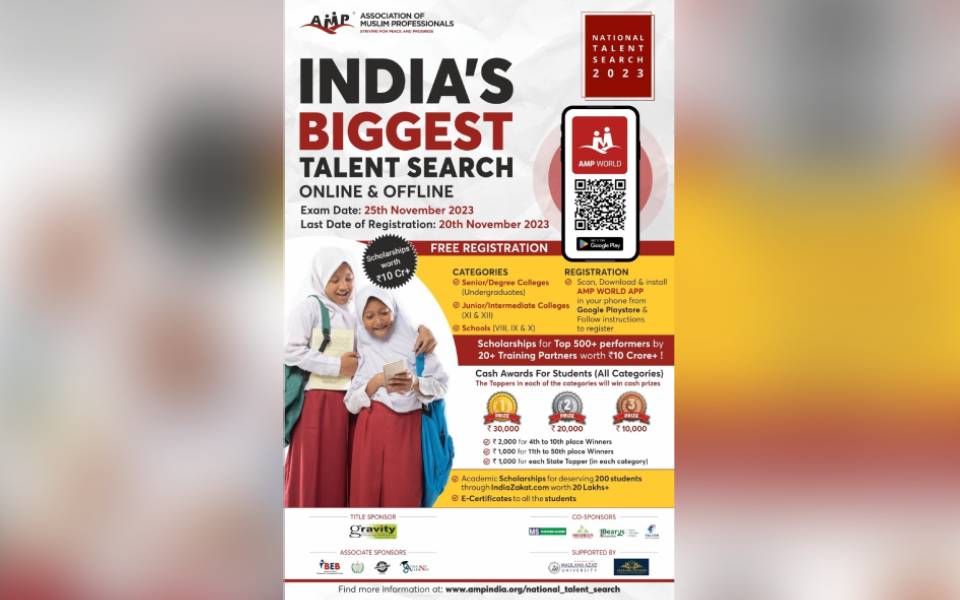
The Association of Muslim Professionals organization is all set to host its annual competitive National Talent Search examination. The exam which started in November 2020, was being held online for the past three years and will this year be hosted in dual mode (i.e both online and offline). While, in the last 3 years, over 1.5 lakh+ students from 600+ districts across India participated, this year, the organization expects 1 lakh+ Students from 650+ Districts across India to participate, making it the biggest competition in the Country.
Different modes of participation:
This year, the AMP NTS will be conducted both online and offline, providing flexibility to participants.The offline mode offers candidates the chance to compete at 300+ centers across different cities and districts in India. The online participants, while not eligible for rewards, will receive a participation certificate and have the option to avail benefits by appearing for a written physical test in the future.
Examination details:
Date: Saturday, 25th November 2023 (Rajasthan State: 2nd December 2023 – Offline) Registration Deadline: Monday, 20th November 2023 Time & Duration: 11 am, 90 minutes Format: 100 multiple-choice questions (MCQs) Scholarships and Rewards:
Scholarships worth Rupees 10 Crore+ await the top 500+ performers, ranging from 50% to 100% for IIT-JEE/NEET coaching from esteemed training partners. The selection process for scholarships involves a physical test, counseling, and other parameters. Financial support, academic scholarships, and mentorship initiatives are available for deserving and needy students.
Cash Prizes:
Coming to the cash awards section for top performers in various categories, with the first-place winners receiving ₹30,000. State toppers in each category also receive recognition and cash prizes.
In the meantime, E-certificates will be awarded to all participants, with special recognition for top national and state-level performers.
Additionally, the organization emphasizes understanding students’ strengths and weaknesses, providing valuable insights for career and study planning. Initiatives like Employability Training Programs, Job Fairs, Campus Placement Programs, Skill Training, and Mentorship by Industry Experts are prioritized for participants.
How to register?
Download the AMP World App from Google Play store. Sign up with personal details. Register for NTS by filling the form at the Student’s Registration tab. Visit AMP NTS Scholarships List for detailed scholarship information. Explore Training Partners for coaching opportunities.
About Association of Muslim Professionals
The Association of Muslim Professionals (AMP),for over 15 years, has dedicated itself to fostering Education Support, providing Employment Assistance, and driving Economic Empowerment within the community and the nation. In November 2020, AMP introduced the AMP National Talent Search (NTS), a transformative National Level Competition aimed at enhancing students’ General Awareness and nurturing a competitive spirit
source: http://www.english.varthabharati.in / Vartha Bharati / Home> Karavali / by Vartha Bharati / November 11th, 2023
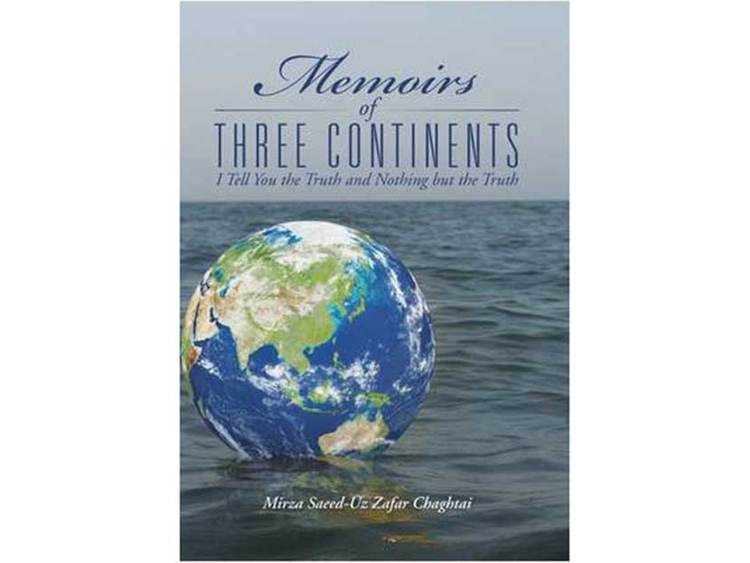
The book will take ‘you on a gripping roller-coaster ride of various cultures’
Image Credit: Goodreads
From a roiling India of the 40s and rollicking France of the 60s to a fear-stricken US post 9/11 terror attacks, ‘Memoirs of Three Continents: I Tell You Nothing But The Truth’, takes you on a gripping roller-coaster ride of various cultures and author Mirza Saeed-Uz Zafar Chagthai’s own journey of self-discovery.
Born in a middle class Indian Muslim family in the small town of Daryabad, Uttar Pradesh, India, Chagthai, earned a string of scholarships and went to Europe for higher studies after topping at his university.
Over the past few years, he has authored many books, but the latest one is easily at the top of the heaps. Laced with anecdotal vignettes from his professional experiences as a scientist and globe-trotting scholar, the memoirs give fascinating insights into scientific and literary life in India, Europe and the US that inform and amuse in equal measure.
But, what makes the book such an absorbing read is Chaghtai’s self deprecating humour and guileless candour.
One chapter deals with the evolution of the French Fifth Republic and a detailed eyewitness account of the 1968 Revolutionary while another dwells on the idiosyncrasies and insecurities of scientists, including some Nobel Laureates.
Then there is this whole section that gives a hitherto unknown perspective on Aligarh where Chaghtai spent 40 years of his life.
Whether you are a history buff or just someone keen to learn about people and places, especially India and Europe through the turn of the century, you will be thoroughly enjoy Memoirs of Three Continents.
source: http://www.gulfnews.com / Gulf News / Home> Entertainment / by Mazhar Farooqui, Xpress Editor / June 12th, 2016
Suhra fought with her family and patriarchal society at large to pursue higher education, overcoming many hurdles.
Suhra with her daughter / Picture by Abdul Shafeeque KP
Jamia Millia Islamia, one of the heritage universities of our country, last year celebrated its 102nd foundation day. Gerda Philipsborn was a founding member of Jamia who fled from Germany when the Nazis came to power. Her biggest contribution to the university was to take care of young children. To commemorate her, Jamia named its daycare centre after her.
Comparing Suhra Hasan to Gerda Philipsborn may be a stretch, but Suhra somewhere touches the motive of Gerda’s foundational ideas. She hails from a village in Kerala, from a family that was expected to marry her off before the age of 20. She fought with her family and a patriarchal society at large to pursue higher education, overcoming many hurdles.
She does not call them hurdles, though, but serendipity. However, for a Muslim girl reaching college and university was a dream, mainly because of compromised economic conditions and societal and religious pressure.
What is tougher? Being a woman in our society, being married, being a mother, being a PhD scholar? Suhra is everything: a married woman, a mother, a scholar who recently finished her PhD at my university, Jamia Millia Islamia, New Delhi.
Mother scholar
Suhra joined Jamia for her PhD in 2015. She met her future husband on campus and got married in 2017, giving birth to a daughter in 2019. Usually, couples practise family planning according to comfort, affordability, etc, but Suhra planned everything around her PhD schedule.
She planned to be pregnant after fieldwork in Kerala because that needed a lot of travelling. Transcribing the fieldwork can be done sitting at home, and Suhra mentally prepared herself to go through her pregnancy during this phase because there would be less need to go out.
But nothing went to plan, and she had to take her daughter to fieldwork in unknown places in Kerala, meeting new people and exploring other dimensions of research work. “Nothing went according to plan; everything happened simultaneously,” Suhra says.
She had become pregnant in her third year of PhD, and had to visit the university to make use of the library. It was a bit awkward for her initially because this was something new on the campus. The BA students, in particular, would stare at her.
But it all turned out beautifully — people started giving her extra support, which encouraged her to be on campus during her pregnancy. Even the security guards gave her tips on how to take care of herself and what to eat during this time. She returned to her home in Kerala in the ninth month of pregnancy and took six months of maternity leave.
She returned to campus when her daughter was five months old. She did not have anyone to help her raise the child. She and her husband raised her while doing their PhD work.
The recent trailer of Anjali Menon’s film Wonder Woman has the line that “it takes a village to raise a child”, but in Suhra’s case it took a university to raise a child. “My pregnancy, my baby, my husband never become a hurdle to my PhD,” Suhra says.
Supervisor
For a PhD scholar, choosing a good supervisor is most important. Suhra got a very good supervisor who helped her with everything.
“Pregnancy is not a disease; it is something very beautiful. You are giving birth to a human, so rather than feel awkward, make good use of this time because once you give birth, you won’t have much time to study,” she advised Suhra.
Suhra lived up to the advice and made good use of her time on campus, where friends helped her with food and reminded her to take her walks and drink juice, etc.
Her husband, also being a scholar, had a busy schedule and his meetings collided with Suhra’s. So her supervisor made a comfortable space for the baby in her cabin where she brought toys and stationery. So, along with supervising her students on research, she also babysat.
Gender roles
Suhra’s husband managed to be a part of the baby’s care. But Suhra believed that in the initial stages, a baby needs its mother more than anything else, and considered herself the primary parent to some degree. But in the past one year, during her PhD submission, her husband became the primary parent. He played with the baby outside the library while Suhra studied late. She would step out of the library in time to feed her.
Talking about her husband’s support, she says: “I know we should not glorify the parenting responsibilities he has taken but considering the patriarchal set-up we are raised in, and the conditioning we have received, his role as a primary parent is immense while my presence was limited to nights.”
Umm-e-Alaa
Umm-e-Alaa is Suhra’s Instagram handle. Alaa is her daughter’s name, and Umme-Alaa means “daughter of Alaa”. Her daughter has given her a new identity: on campus, people know her daughter more than Suhra.
Suhra’s friends keep saying stuff like “Alaa’s first walk was in Jamia”. Suhra says: “For us, Jamia is a university but for her, it is home.”
The child is familiar with all the places on campus because she has friends everywhere. Suhra writes messages on social media about her work on campus and asks people to babysit. Many come and spend time with Alaa, and that is how she (Alaa) became friends with so many people from different regions of the country.
Alaa loves the place. She has her own accreditation to departments and libraries. Jamia has a statue of Mirza Ghalib with a book in hand. Alaa calls him “Uppappa (grandfather) with the book”, her mother’s department “Ummichi’s Mam’s House”, and her father’s department “Vaappachi’s Mam’s House”.
Suhra has given her a childhood without compartmentalised relationships. For Alaa, the whole university is family, and when she goes back home she is unable to understand the concepts of “our family” and “their family”.
“Often people ask me whether it is having a child that took me longer to do my PhD. But I would say pregnancy and childbirth have been instrumental to facilitating my research,” Suhra says.
“I was in the field for data collection during my pregnancy and resumed fieldwork when Alaa was three months old. My daughter’s presence acted as a research tool that made rapport-building with families of prisoners easier. The motherhood identity acted as a cushion, and I was met with empathy by those families.”
At last, when I ask about her PhD journey, Suhra says: “My thesis is also her thesis.”
source: http://www.telegraphindia.com / The Telegraph Online / Home> India / by Nehal Ahmed / February 07th, 2023
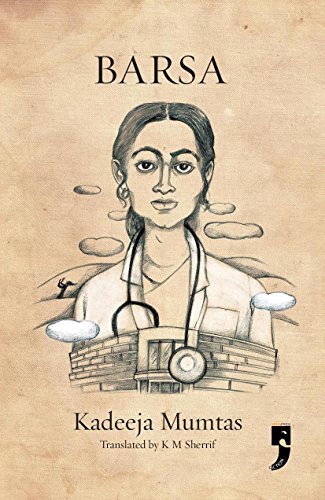
Barsa, written by Kadeeja Mumtas, is the first Malayalam novel to be set in Saudi Arabia and as its introduction states, is a record of “a woman’s scrutiny of Islamic scriptures and Muslim life”.
Barsa, as its introduction states, is the first Malayalam novel to be set in Saudi Arabia. Written by Kadeeja Mumtas and translated into English by K M Sherrif, the book acts as a record of “a woman’s scrutiny of Islamic scriptures and Muslim life”.
Sabitha, the protagonist of the novel, after moving to Saudi Arabia, starts questioning every aspect of her every day life – including religion.
The novel traces her personal journey as she is caught amidst culture, religion, and personal agency, and struggles to assert her own identity.
One hot afternoon, Rasheed and Sabitha first stepped out like refugees on the large expanse of land surrounding the grand mosque which housed the holy Ka’aba. Other travellers who knew their way hurriedly moved on while the two of them stood hesitantly at the crossroads, unsure of their next step. The coppery glare of the sun sat on their heads like the legs of a giant spider.
Rasheed glanced at Sabitha. He could sense her discomfort in the headscarf and the abaya, looking like a lawyer’s coat, which the Malayali workers at the airport had helped her buy. But he thought that even in those uncomfortable clothes, Doctor Prabhakaran’s niece, with her wheatish complexion, had a particular charm. He wanted to tell her this with a little smile, but with his tongue stuck to the roof of his dry mouth. He just couldn’t do it, which was a pity. If he had, maybe the wrinkles on her forehead would have lost at least one crease.
A yellow taxi backed up and stopped near them. Th e face of a man with a shabby headdress clamped down by a black ring came into view, and an arm jerked out of the window at the driver’s seat. “Fain aabga ruh?” Rasheed guessed he was asking where they wanted to go and replied, “Mudeeriya Musthashfa”—the Health Directorate. He had gleaned the Arabic expression from the conversation he had had in halting English with the Palestinian doctor they had met at the airport emergency service. He had seen Sabitha too write it down in her diary.
“Ta’al ”—come. Th e driver opened the car doors and invited them in. As he could not understand the driver’s sarcastic remark, directed obviously at his fairly large suitcase, Rasheed, with some embarrassment, chose to put it on his lap as he sat down and leaned back comfortably.
As the car sped at breakneck speed, Sabitha felt a tremor run through her, but she suppressed it immediately. She felt helpless at having to depend on a complete stranger, an Arab driver whose language she did not know. But she was also reassured by Rasheed’s presence. They had reached this far, trusting strangers, many of whose languages they did not know.
As they boarded the Saudi Airlines flight to Riyadh from Mumbai, Thambi, the man from their ticketing agents Ajanta Travels, had said reassuringly, “The flight will take about four and a half hours. Someone from the Ministry will be waiting to receive you. There is nothing to worry about, Riyadh is a nice city. Okay then, happy journey!”
From the moment Thambi, with that characteristic city dweller’s way of waving goodbye had raised his hands and walked away, Rasheed and Sabitha had taken comfort in each other’s presence. They could make this journey together only because of their decision to stick to each other, come what may. At the interview in Mumbai, it was Sabitha who was selected first, as a lady gynaecologist. The interview for ophthalmologists had not yet been conducted and, as there were a large number of applicants, Rasheed was not too hopeful of getting in. When she was asked to sign the contract, Sabitha hesitated, “I will sign only if my husband too is selected.” She had by then realised that lady gynaecologists were much in demand. “You sign; even if he is not selected, he can come with you on a family visa and then try for a job there.”
The man at Ajanta Travels, a go-getter, tried to hustle her. “No, I am not that keen to go to the Gulf to work. I will go only if he also gets a job there.” Her stubbornness paid off . An interview was fixed for Rasheed as a special case.
Excerpted with permission from Barsa, by Kadeeja Mumtas, Yoda Press. You can buy this book at 20% off at the FII-Yoda Press Winter Book Sale on 21st and 22nd December 2018 in New Delhi. For more details, check out the sale page.
source: http://www.feminisminindia.com / Feminism In India – FII / Home> Culture> Books / by FII Team / December 21st, 2018
Prof Seyed Ehtesham Hasnain’s scientific research has changed the complicated regimen for the diagnosis of Drug-Resistant Tuberculosis and the Indian Basmati getting its patent and trademark in the UK in the fight against the Pakistani variant. This Bihar-born scientists’ findings have saved patients suffering from Drug-Resistant TB money and time and helped the Indian government and farmers earn through exports of the Basmati.
He told Awaz-the Voice in an interview that the government of India has taken at least two major policy decisions based on his research. “One decision was that previously the testing of tuberculosis (TB) was based upon antibody-antigen reaction. So, the antibody formed was based on the antigen of a bacterial protein, and the sequence (genetic) used was mostly European or American isolates.
“When I did sequencing in India, I found out that the Indian variant is completely different. Therefore, the test could give false positives or negatives…. I published this finding and had a meeting with the DG of ICMR (Indian Council for Medical Research) and recommended that the tests based on foreign kits be banned and that made a big impact.”
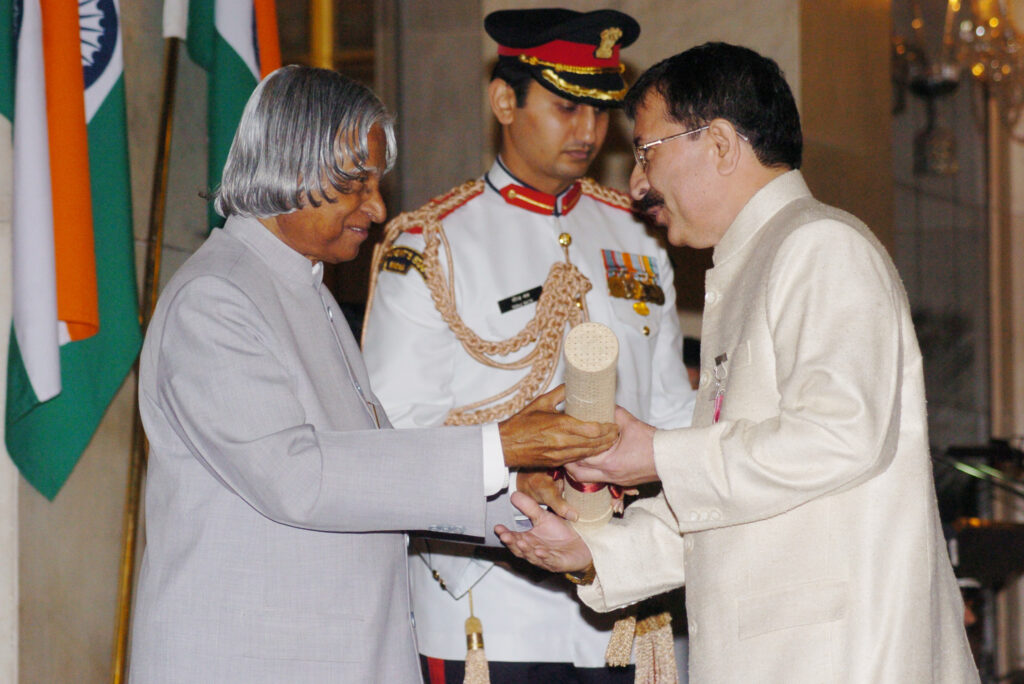
The President, Dr. A.P.J. Abdul Kalam presenting Padma Shri to Prof. Seyed E. Hasnain, renowned biologist, at an Investiture Ceremony at Rashtrapati Bhavan in New Delhi on March 29, 2006.
Padma Shri recipient Seyed Ehtesham Hasnain said. E. Hasnain was awarded the Order of Merit of the Federal Republic of Germany, the highest Civilian decoration of Germany in 2014. Nature, a famous scientific journal, reported on his receiving the award, “With the Order of Merit, he joins the league of outstanding personalities from various fields including Nobel laureate biologist Paul Herman Muller, former German Chancellor Helmut Kohl, former Japanese Prime Minister Yasuhiro Nakasone and music conductor John Crosby.”
In 2006, he received Padma Shri in recognition of his scientific work. Shanti Swarup Bhatnagar Prize (1995) and J. C. Bose Fellowship (2006), two of the most prestigious Indian Awards in the field of science have also come his way apart from numerous other decorations.
Hasnain was born in Gaya, Bihar in 1954. He was born seven years after India had attained independence. At that time Bihar was not the most developed of the Indian states. Hasnain’s father was a college lecturer and he nursed a dream of studying abroad. He studied at the Nazareth Academy, an expensive school in the town. It’s said that almost 20% of his father’s salary would go into children’s school fees.
He did his M.Sc. from the Jawaharlal Nehru University in New Delhi. However, though he was selected for his post-graduation studies by Harvard University, for some reason he could not join.
In 1981, Hasnain moved to Canada as a Post-doctoral Fellow (PDF). He worked in Canada and the USA for the next six years. At this stage, his father asked him to return home to serve his country and people. He was advised by many people that he must try to get his green card before moving back to India.
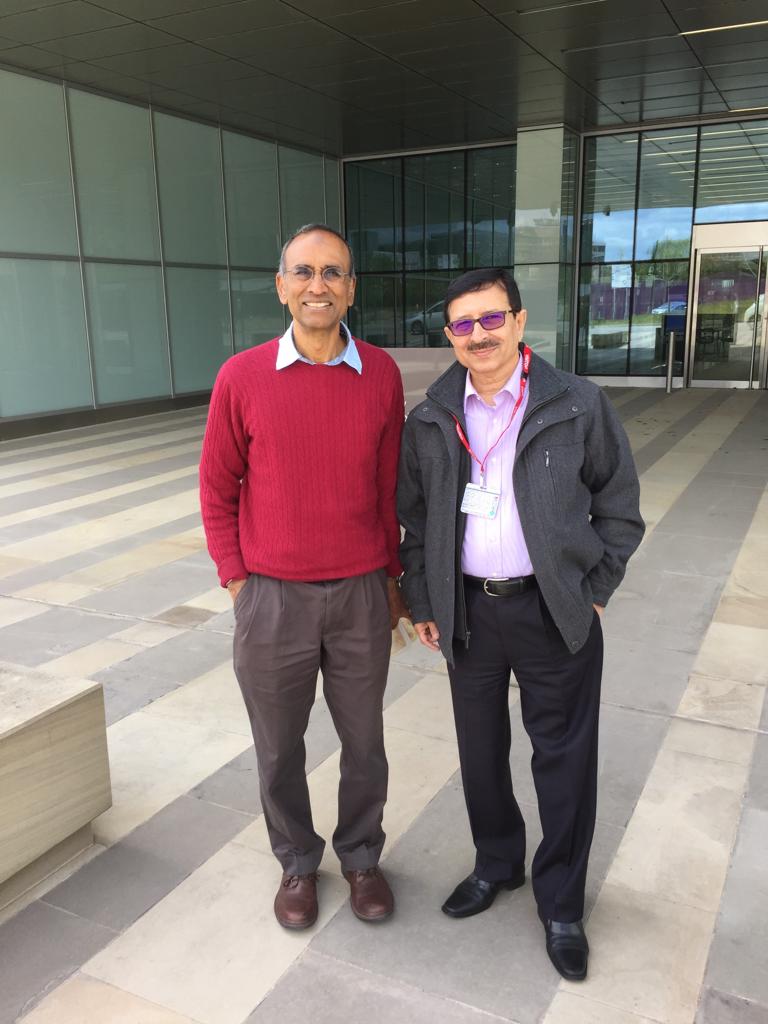
Seyed Ehtesham Hasnain with Dr Venky Ramakrishna, Nobel Prize Winner and President of Royal Society, UK, in Cambridge
In 1987, he joined the National Institute of Immunology (NII) as a scientist. Hasnain says, “I thought that after getting a green card, I would have a fall-back and a plan B. I did not want a plan B. My plan was the only plan A. I will work in India and do something good in India.”
Hasnain broke the convention by not continuing the research he was doing abroad. He started afresh and soon made a name for himself in research of baculoviruses. He established a baculovirus insect cell expression system (BEVS) for the first time in India and used this to express foreign genes and also to ask fundamental questions concerning gene expression in BEVS. The idea was to make India a scientific power.
Hasnain says that when his career was at the peak with research on baculovirus one day, Dr. Sandeep Basu, the then director of NII, asked him, “Seyed, you are publishing in good journals, it is fine, but how does humanity benefit? What is India gaining out of it? How are the common men benefiting from your papers? Doing research is good but do something which will benefit the common man.”
This was the turning point in Hasnain’s life and career. He says “I decided to do something where I can do direct application.” He started his research on tuberculosis.
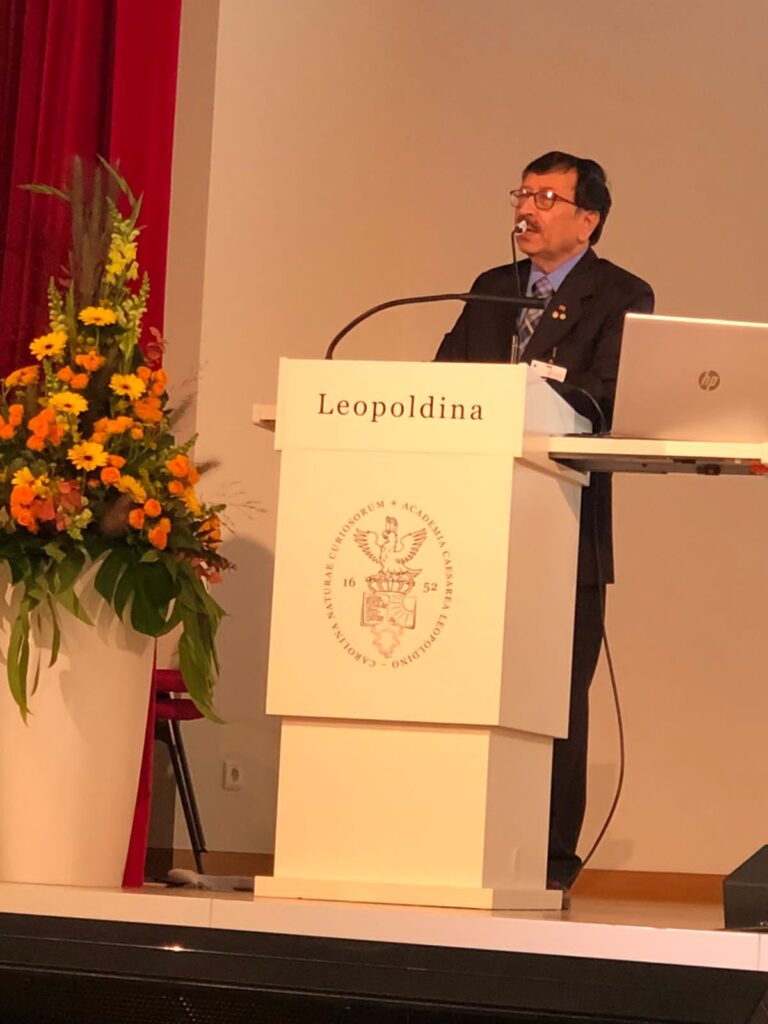
Seyed Ehtesham Hasnain at the Global Health Conference organized by the German National Academy of Sciences, Leopoldina, Halle, Germany
Hasnain initiated studies on molecular epidemiology and genetics of multi-drug resistant (MDR) M. tuberculosis (M.tb). He says, “second important observation that was published, again the first time in the world. We used to test TB for drug resistance. The bacteria was tested against each drug. I showed with my study that if the bacteria are resistant to one drug then it will be resistant to almost all other drugs. I established the correlation and proposed that you don’t need to do multi-drug resistance testing for all the drugs. Just test one drug rifampicin and if it is confirmed then 95%-99% of drugs will be resisted by the bacteria. That has become a standard treatment all over the world. He is still working on developing cheaper methods of diagnosing TB.
In 1999 Hasnain was invited as the first director of the Centre for DNA Fingerprinting and Diagnostics (CDFD), Hyderabad. It was based on his work on Indian Basmati Rice DNA fingerprinting that India won the Patent case against Pakistan enabling the export of the Indian Basmati to the UK. This prevented a major economic loss to India. Subsequently, the Ministry of Commerce established the CDFD-APEDA Basmati DNA Analysis Centre, where all Basmati exports are certified.
Hasnain also served as Vice Chancellor of the University of Hyderabad (2005-11), and Vice Chancellor of Hamdard University and is currently A National Science Chair of SERB, at the Department of Biochemical Engineering and Biotechnology at IIT-Delhi.
Hasnain Mantra is: “Nothing is a substitute for hard work.”
source: http://www.awazthevoice.in / Awaz, The Voice / Home> Story / by Saquib Salim / November 03rd, 2023
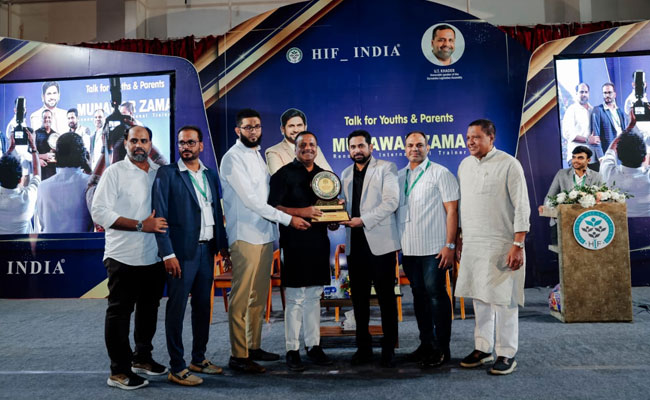
Highland Islamic Forum (HIF India) on Saturday honored motivational speaker Munawar Zama with the HIF Global Youth Icon Award here at the TMA Pai Hall in the city. Munawar Zama was in the city to hold a talk for youth and parents organised by HIF India.
The recognition was presented by UT Khader, Speaker of the Karnataka Legislative Assembly, after Zama’s address to youth and parents.
In his address, UT Khader commended Zama’s unwavering commitment to nurturing the potential of the youth, emphasizing the transformative impact of such efforts in shaping a brighter future for the world.
During the event, Munawar Zama emphasized the importance of mentorship and support systems for the younger population.
HIF members and other dignitaries including Shaz Ahmed AK as the program anchor, and Ashraf Ali – Trustee of Sana Shaheen Charitable Trust, Niyaz AK – Managing Director of AK Apple Ply Group, Naushad AK – Director of AK Apple Ply Group, and SM Farook – Director of SM Fisheries and Export, were present during the event.
HIF India President Adil Parvez presided over the event.
source: http://www.english.varthabharati.in / Vartha Bharati / Home> Karnataka / by Vartha Bharati / October 30th, 2023
The Muslim Educational Institutions Federation (MEIF), a prominent educational organisation operating in Dakshina Kannada and Udupi districts, has been honored with the prestigious Kannada Rajyotsava Award this year.
The Karnataka state government recognized MEIF’s significant role in revolutionizing education within the Muslim community across both districts. Founded by former Higher Education Minister of Karnataka, BA Mohidin, MEIF’s commendable efforts in education for the past 22 years have earned them this esteemed accolade.
In response to the educational gaps prevalent among Muslims in Dakshina Kannada and Udupi districts, Mohidin initiated free English classes within mosques’ madrasas during daytime. The positive reception from the community led to Jamaats in undivided Dakshina Kannada establishing English medium schools within Madrasa premises.
Encouraged by the overwhelming response, Mohidin conceptualized the Muslim Educational Institutions Federation (MEIF) in 2001. Today, MEIF comprises 180 English medium schools and pre-university colleges across Udupi and Dakshina Kannada, catering to 60,000 students and employing 6,250 teachers. Notably, students of all communities and religions study in these institutions.
MEIF’s mission centers on the belief that education is pivotal for development and strives to empower Muslim community, through education. The Federation extends guidance to member-school boards on administrative matters and conducts regular training sessions for teachers, students, and parents across its five zones. MEIF’s concerted efforts have yielded remarkable results in annual examinations, with an impressive 83 percent of students achieving distinction and first-class grades in recent years. Furthermore, pre-university students have displayed consistent improvements in their academic performances.
Operating with government approval, MEIF’s private unaided schools, primarily located in rural areas, maintain affordable tuition fees. Financially disadvantaged students receive free education, while others are charged nominal fees. Additionally, MEIF facilitates 174 SSLC students’ admission to prominent PU colleges in the districts, supporting over 300 eligible rural students in securing free seats in technology institutes in Mangaluru and Bengaluru.
MEIF has also been instrumental in adding interest among high school students in civil service careers, organizing training sessions to enhance their skills. Over the past three decades, MEIF has played a pivotal role in enhancing literacy rates and women’s education in Dakshina Kannada and Udupi districts.
Founder-chairman of MEIF and esteemed educationist PA Khader Kukkady significantly contributed to the Federation’s development. Following his tenure, Mohammed Beary Yedapadavu assumed the role of chairman, steering MEIF to greater heights. Retired officer Moosabba P Beary is currently running the Federation successfully as its President. Umar Teekay serves as the honorary chairman of MEIF, while Syed Mohamed Beary is the chief advisor. Riyaz Ahmed Kannur is the current general secretary of the federation.
source: http://www.english.varthabharati.in / Vartha Bharati / Home> Karnataka / by Vartha Bharati / October 31st, 2023
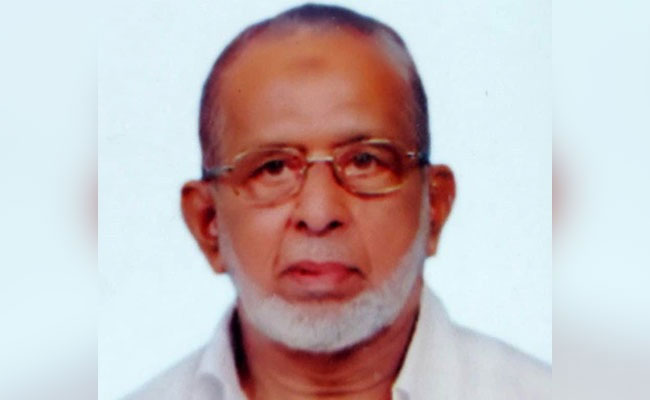
Parkala Haji Abdullah Saheb, a reputed social worker, senior socio-religious leader, successful businessman, and Honorary President of Udupi District Muslim Okkuta, has been conferred with the prestigious Karnataka Rajyotsava Award this year.
Born on the 16th of August, 1943, in Nileshwar, Kerala, to K. Ahmed and Aisha, he relocated to Udupi in 1967 at the age of 24 and commenced his career under the guidance of Dr. T. A. Pai of Manipal. With dedication and honest business practices, Abdullah Saheb transformed a small-scale venture into a thriving business, earning recognition as a prosperous businessman in Udupi.
Haji Abdullah Saheb has been a fervent supporter of students and underprivileged individuals arriving in Manipal from abroad for educational and healthcare services. He has consistently extended a helping hand to address students’ challenges and provided care for the less fortunate.
His contribution is evident in the construction of Masjid-e-Manipal in Manipal, accommodating pilgrims, the families of patients, and students seeking education and medical treatment. Additionally, he is acknowledged as a bridge fostering interfaith harmony in Manipal and Udupi.
Throughout his active involvement in renowned coastal associations such as Jamiatul Falah, Muslim Welfare Association, Millat Education Trust, and Zia Education Trust, Haji Abdullah Saheb has demonstrated his commitment to community welfare. His significant role in the establishment of Udupi District Muslim Okkuta highlights his dedication to community service. Serving as the organization’s first president, he successfully led the union for six consecutive years. Presently, he holds the honorary position of its president. In recognition of his selfless spirit and generosity, Udupi District Muslim Okkuta honored him with the Sevaratna Award for the year 2021-22.
Known for his humility, simplicity, and charitable nature, Parkala Abdullah Haji is revered as a philanthropist and community advocate.
source: http://www.english.varthabharati.in / Vartha Bharati / Home> Karnataka / by Vartha Bharati / October 31st, 2023
Karnataka government has awarded the Rajyotsava award to 68 people including ISRO Chairman S Somanath and golfer Aditi Ashok.
S Somanath, Chairman, ISRO
Here’s the complete list:
The Karnataka government’s Rajyotsava Award will be given to 68 people this year, including ISRO Chairman S Somanath and golfer Aditi Ashok, for their excellent service in their fields.
The Rajyotsava Award is the state’s second-highest civilian award given by the Karnataka government annually. The 68th Karnataka Rajyotsava Awards will be conferred on the occasion of the state’s formation day on November 1. This year is the golden jubilee of renaming Mysore state as Karnataka.
Chief Minister Siddaramaiah is the head of the Award committee, who has selected the winners.
The government also decided to give 10 awards to organisations along with 68 Rajyotsava awards on the occasion of ‘Karnataka Sambhrama’.
Minister for Kannada and Culture Shivaraj Tangadagi said that it is ensured that every district has been given representation while selecting the awardees. The awardees also include 54 men, 13 women and one transgender. The list also has two centenarians.
The Rajyotsava Awardee will get cash rewards of Rs 5 lakh, a 25-gram gold medal and a plaque.
Here’s the complete list of Rajyotsava Awardees
Music/Dance
Nayana S. More (Bengaluru)
Neela M. Kodli (Dharwad)
Shabbir Ahmed (Bengaluru)
Balesh Bhajantri (Belagavi)
Sculptures/Art/Handicraft
T. Shivashankar (Davangere)
Kalappa Vishwakarma (Raichur)
Martha Jakimovich (Bengaluru)
P. Gowraiah (Mysuru)
Yakshagana
Agrodu Mohandas Pai (Udupi)
K. Leelavathi Baipadithaya (Dakshina Kannada)
Keshappa Shillikyathara (Koppal)
Dalawai Siddappa (Vijayanagara)
Folk Art
Husenabi Buden Sab Siddi (Uttara Kannada)
Shivangi Shanmari (Davangere)
Mahadev (Mysuru)
Narasappa (Bidar)
Shankuntala Devala Naik (Kalaburagi)
H.K. Karamanchappa (Ballari)
Shambu Baligara (Gadag)
Vibhuti Gundappa (Koppal)
Chowdamma (Chikkamagaluru)
Social Service
Huchchamma Chowdri (Koppal)
Charmadi Hasanabba (Dakshina Kannada)
Roopa Naik (Davangere)
Nijagunanda Mahaswami (Belagavi)
Nagaraju G. (Bengaluru)
Administration
G.V. Balaram (Tumakuru)
Film/Cinema
‘Dingri’ Nagaraj and B. Janardhana (both Bengaluru)
Theatre
A.G. Chidambara Rao Jambe (Shivamogga)
P. Gangadhara Swami (Mysuru)
H.B. Sarojamma (Dharwad)
Thaiyabkhan M. Inamdar (Bagalkot)
Vishwanath Vamshakrutha Mata (Bagalkot),
P. Thippeswamy (Chitradurga)
Medical
C. Ramachandra (Bengaluru)
Prashanta Shetty (Dakshina Kannada)
Literature
C. Naganna (Chamarajanagar)
Subbu Holeyar (Hassan)
Satish Kulkarni (Haveri)
Lakshmipathi Kolara (Kolar)
Parappa Gurupadappa Siddapura (Vijayapura)
K. Sharifa (Bengaluru)
Education
Ramanna Havele (Raichur)
K. Chandrashekar (Kolar)
K.T. Chandru (Mandya)
Sports
Divya T.S. (Kolar)
Aditi Ashok (Bengaluru)
Ashok Gagigeppa Yenagi (Dharwad)
Judiciary
V. Gopala Gowda
Agriculture/Environment
Somanatha Reddy Poorva (Kalaburagi)
Dhyavanagouda T. Patil (Dharwad)
Shivareddy Hanuma Reddy Vasana (Bagalkot)
Miscellaneous
A.M. Madari (Vijayapura)
Haji Abdulla, Parkala (Udupi)
‘Mimikri’ Dayananda (Mysuru)
Kabbinale Vasanth Bharadwaj (Mysuru)
Lieutenant General Codanda Poovaiah Cariappa (Kodagu)
Media
Dinesh Amin Mattu (Dakshina Kannada)
Javarappa (newspaper distributor from Mysuru)
Maya Sharma (Bengaluru), and Rafi Bhandari (Vijayapura)
Science/Technology
S. Somanath (Bengaluru)
Gopalan Jagadish (Chamarajangar)
NRI Kannadigas
Seetharam Iyengar
Deepak Shetty
Shashikiran Shetty
Freedom fighter
Puttaswamy Gowda (Ramangara)
Organisations receiving the Rajyotsav Award
Here’s the list of organisations which received the award.
Karnataka Sangha (Shivamogga)
B.N. Shivarama Pustaka Prakashana (Mysuru)
Mythic Society (Bengaluru)
Karnataka Sahitya Sangha (Yadgiri)
Moulana Azad Shikshana and Samaja Kalyana Sanskrithika Sangha (Davangere)
Muslim Education Institutions Federation (Dakshina Kannada)
Sneharanga Havyasi Kala Samsthe (Bagalkot)
Chinnara Bimba (Mumbai)
Maruthi Janaseva Sangha (Dakshina Kannada)
Vidyadana Samithi (Gadag)
source: http://www.business-standard.com / Business Standard / Home> India> News / by Sudeep Singh Rawat, New Delhi / November 01st, 2023
The “SS AMU SAT” is a Nanosatellite Project which began in November 2021 under the AMU Robo Club.
Aligarh Muslim University:
The Indian National Space Promotion and Authorization Centre (IN-SPACe), working under the Department of Space, Government of India, has approved the proposal for development of “SS AMU SAT” – Aligarh Muslim University’s first satellite programme.
The leading university’s first satellite programme is to be named after its founder Sir Syed Ahmad Khan.
About SS AMU Sat
The “SS AMU SAT” is a Nanosatellite Project which began in November 2021 under the AMU Robo Club. The satellite is a 3U CubeSat with multiple objectives which include the study of economic growth in India’s poorest districts using satellite imagery and implementation of an in-house developed image compression technology for a faster multimedia transmission.
In addition to this, the satellite will also test various satellite sub-systems that have been built in-house.
SS AMU Sat Team
The project was submitted to IN-SPACe in January 2023, for approval, registration, frequency allocation and launch of SS AMU SAT.
In September 2023, the Student Satellite Committee, chaired by Dr. P K Jain, Director (PMAD), IN-SPACe, reviewed the design and approved the proposal with a condition that AMU will sign a Memorandum of Understanding (MOU) with IN-SPACe for all activities from the development of the SS AMU SAT to its launch into the Lower Earth Orbit.
The project is headed by Prof. Ekram Khan, Chairman, Department of Electronics Engineering, under the leadership of Prof. M.M. Sufiyan Beg, Principal, Zakir Husain College of Engineering and Technology.
The students’ team which is involved in the development of the project, is led by Ms Poorti Varshney and mentored by Dr. C. A. Prabhakar (Former Project Director, ISRO) and Er. Faraz Ahmad (A 2013 batch alumnus). The project has received technical support from AMU alumni working with ISRO and several industrial experts across the globe.
The team of students comprises Kulsum Ilyas, Anant Agarwal, Tarun Singh, Rabiya, Mohammad Ali, Ilma Shah, Ahsan Waseem, Azhan Kamil, Tanu Attri, Mohd. Arquam, Kanuj Chitranshu, Munira Sultan, Atifa Saeed, Kanika, Asif Ali, Syed Muhammad Suhaib, Azam, Gulam Fareed, Samad, Varun Yadav, Mudassir Ali, Tehreem Fatima, Tarannum Zafar, Yashra, Mansha and Binish Kashif
The project is tentatively scheduled to be launched in 6 months.
source: http://www.ummid.com / Ummid.com / Home> Education & Career / by ummid.com news network / October 28th, 2023


)
