Category Archives: Education

IOS organises two-day conference on “Indian Muslims and Plural Society”, Feb 15-16, 2023 New Delhi

INDIA:

New Delhi:

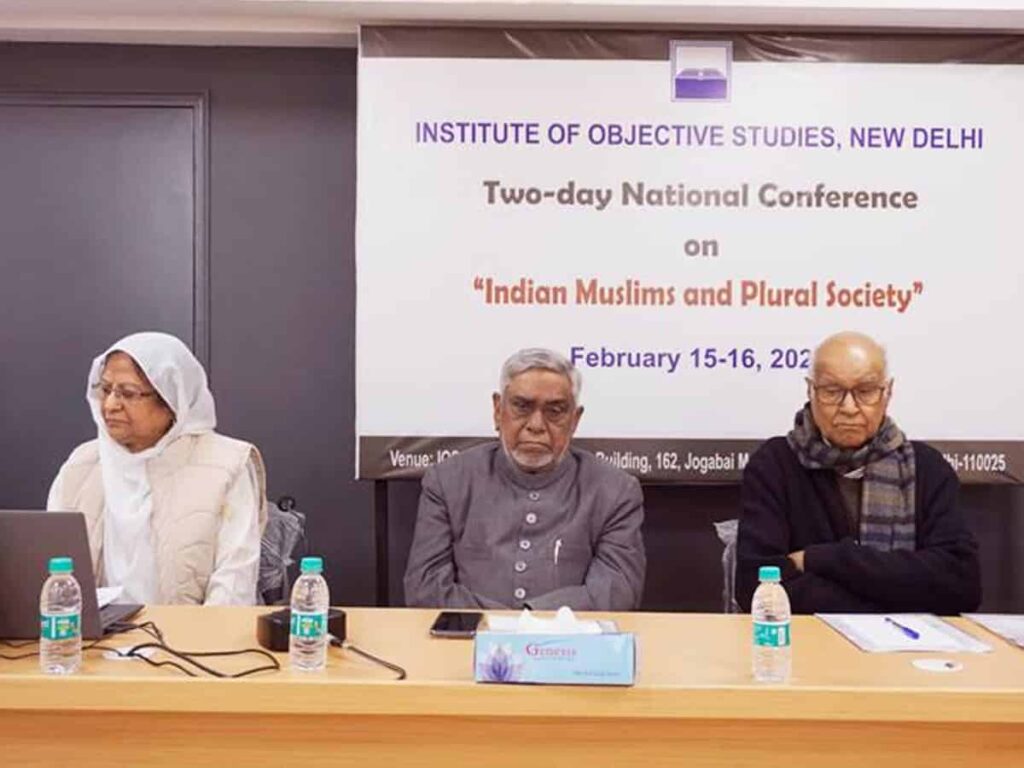
Institute of Objective Studies, New Delhi, organised a two-day National Conference on “Indian Muslims and Plural Society” in hybrid mode from February 15 – 16.

Inaugural session
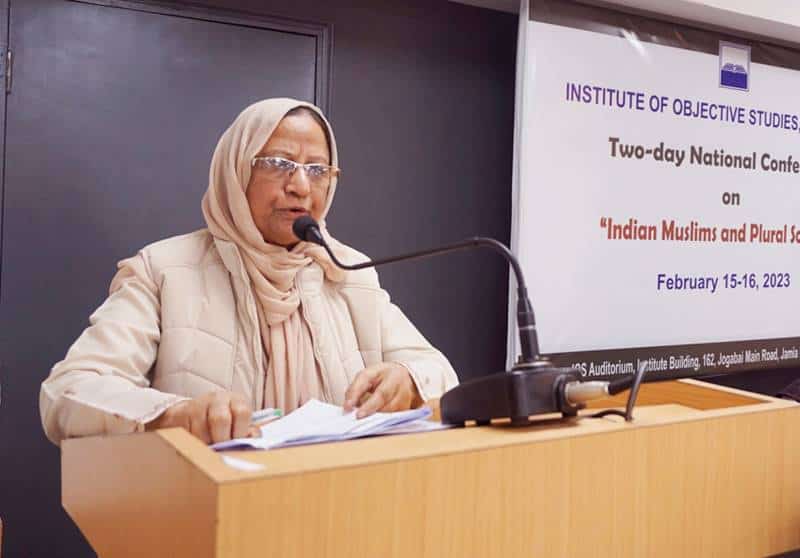
The inaugural session commenced with Prof  Haseena Hashia, Assistant Secretary General, IOS, welcoming the guests and participants.
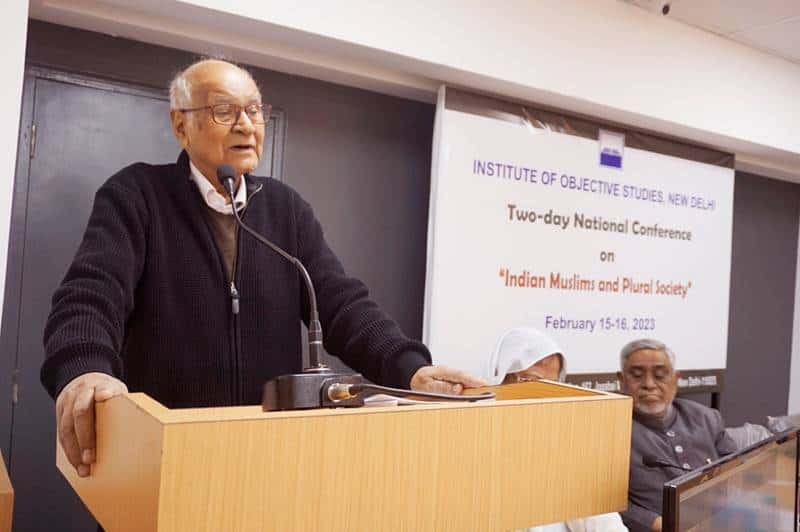
Prof M.H Qureshi, an eminent Geographer, talked about India witnessing numerous migrations over the last several centuries. “We have Nordics, Mediterranean, and Mongols—people from Central Asia, Persia and even Arabs who arrived in India through its southern-western coastal region. Therefore, India has immense diversity, he said.

He said that the Arabs came to the Kerala coast and brought many traditions that became part and parcel of India.
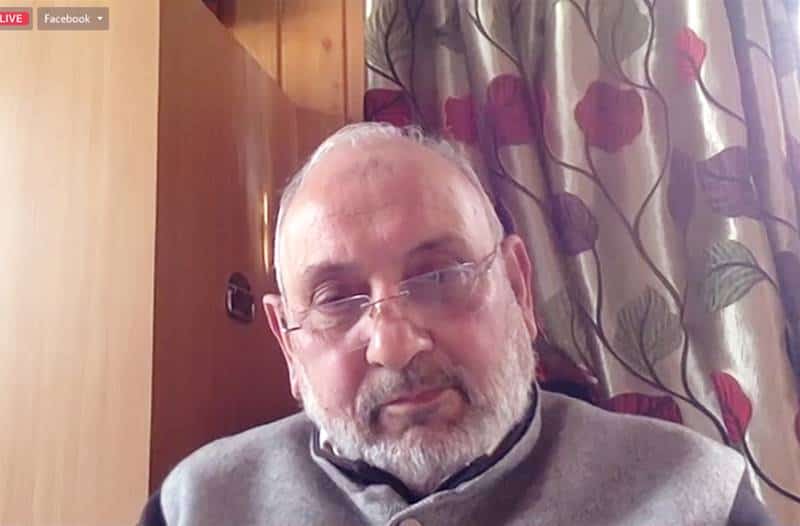
Professor Mehrajuddin Mir, former Vice-Chancellor of the Central University of Kashmir, said that the concept of pluralism was how to live together, tolerate others’ thoughts and ideas, and even understand opponents’ miseries for solutions to live in diversity. All religions have various sects, and thus, their practices differ. The conflicts are, therefore, intra-religious, interreligious and social, he noted.

Professor Mir quoted Indian Defence Minister, Rajnath Singh, who recently spoke about how one Imam and one Pundit shaped his career to understand brotherhood and oneness.
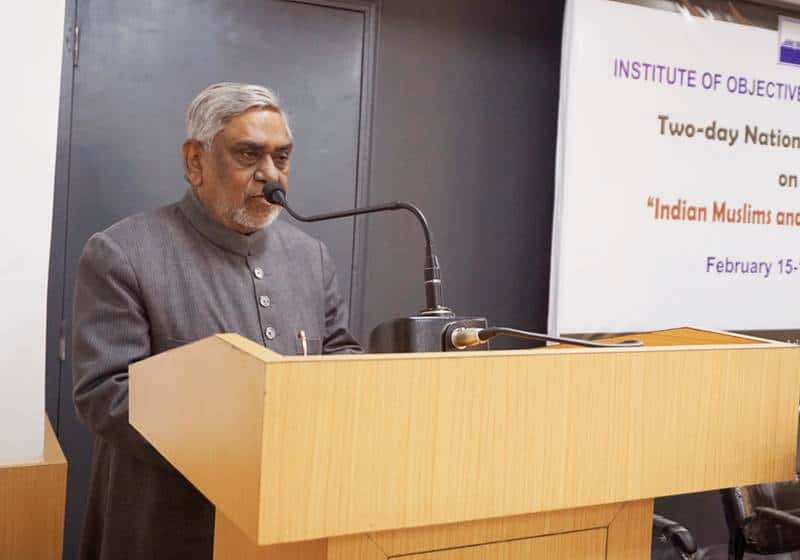
Professor Akhtarul Wasey, former President, Maulana Azad University, Jodhpur, Rajasthan, in his presidential address, said that Muslims came to India as traders and invaders. But once they came here, they delved into the culture and traditions of India and became one who enriched the nation to encourage pluralism. Muslims have contributed to India’s prosperity.

He said that how Dr. APJ Abdul Kalam became a global personality of Indian origin—a Muslim. The country couldn’t think of its missile programme without his theoretical contributions, he said.

Technical Session I

The 1st Technical Session began with the theme, “Genesis of Pluralism in India.” Professor Arshi Khan, Department of Political Science, AMU, Aligarh, as Moderator & Chairperson.
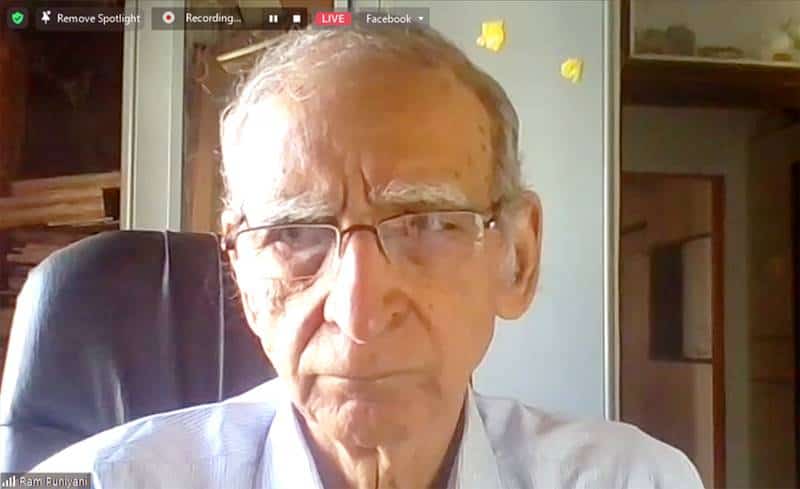
Dr. Ram Puniyani, Human Rights Activist and Writer, said, “There is a misconception in the country, especially against Muslims.” The alliance of civilizations defines plurality. Religions don’t have any nationality. They are universal. The Kings in India, whether Muslim or Hindu, ruled the nation for centuries with people of different faiths as their core governance teams. There was nothing like Muslim Kings or Hindu kings then, he explained.

He observed that calling Indian cultures as Hindu is a bigoted idea. Leaders like Jawaharlal Nehru, Mahatma Gandhi and Maulana Abul Kalam Azad brought secular spirits into the country. We have Sufi and Bhakti traditions that describe the morality of religions and humanity in India.
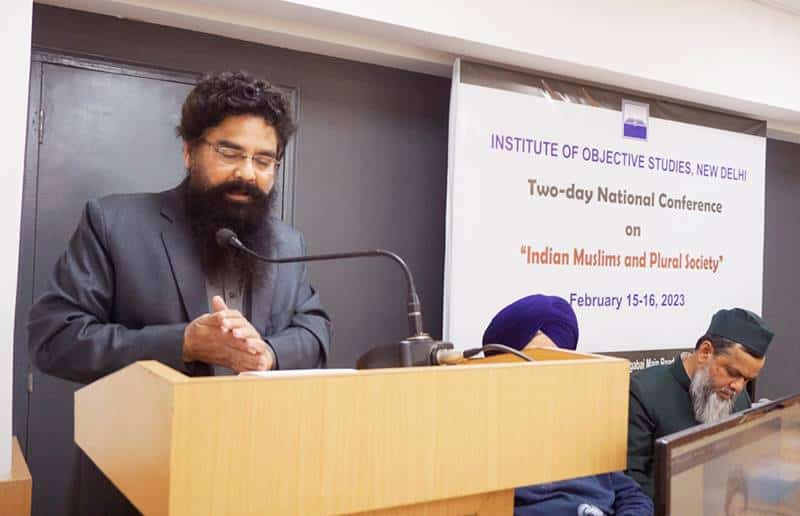
Professor Mohammad Sohrab, MMA Jauhar Academy of International Studies, Jamia Millia Islamia, New Delhi, described pluralism as a definition both from a conceptual and theoretical perspective. Primarily a religious and moral philosophy, pluralism was the acceptance of diversity. It is more than tolerance of differences. The conception of ‘We’ was essential to assess pluralism through organic social bonding. Pluralism in the Islamic context of acceptance and the country’s scenario today should be understood in the context of how the nation’s spirit developed in Madinah during the time of the Prophet, he elaborated.

He said that pluralism demands that your neighbour be considered an asset, not a liability. Diversity with pluralism creates resilience, but diversity without pluralism brings disaster, he concluded.
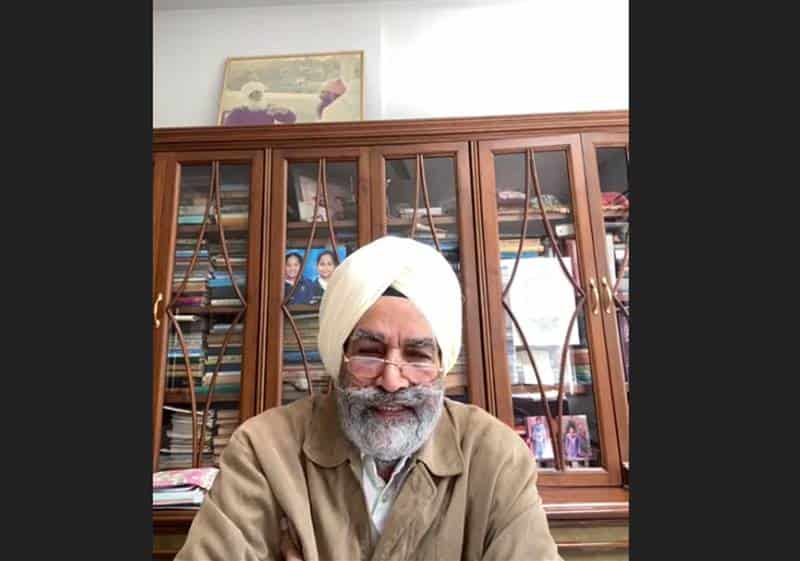
Gurtej Singh, IAS, Chandigarh, spoke about how India’s constitutional and political federalism paved the way for the constitution. The atrocities against Sikhs and their resistance were part of history, he said. The examples of pluralism can be understood from the Guru Granth of Sikh religion.

His book Sikh and Indian Civilization sheds light on how Sikhs were projected during partition.
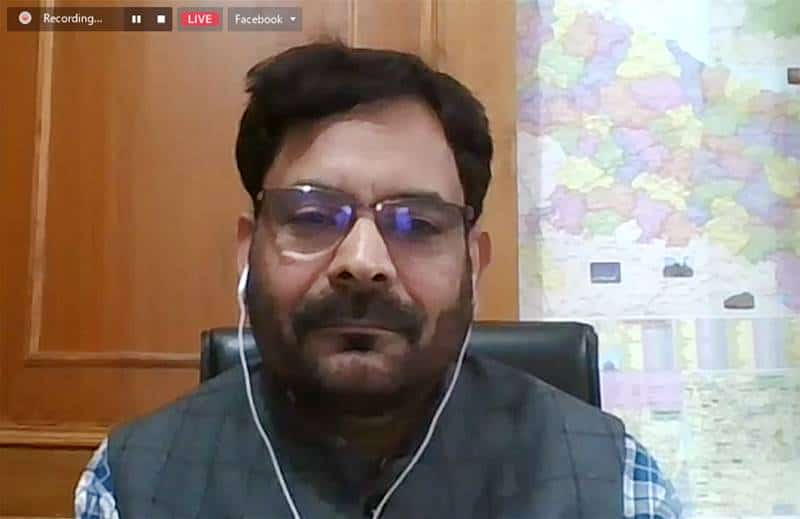
Sanjay K. Rai, a social activist from Lucknow, mentioned that “diversity doesn’t accept dictators.” He highlighted the importance of multicultural societies. Linguistic Pluralism was the need of the hour in today’s context. Societies with pluralism also impact by technological growth. Communities can’t be defined through one particular race or culture. He felt that there can’t be nation-building and growth without taking Muslims along who constitute 15-20% population in India. The One Nation, One Culture concept can only work in some countries. One can’t find books on Hitler in Germany today. Mussolini’s home has been destroyed in his country as people don’t want him to be remembered. It symbolizes how those going against pluralism perish from the leaflets of history, he concluded.
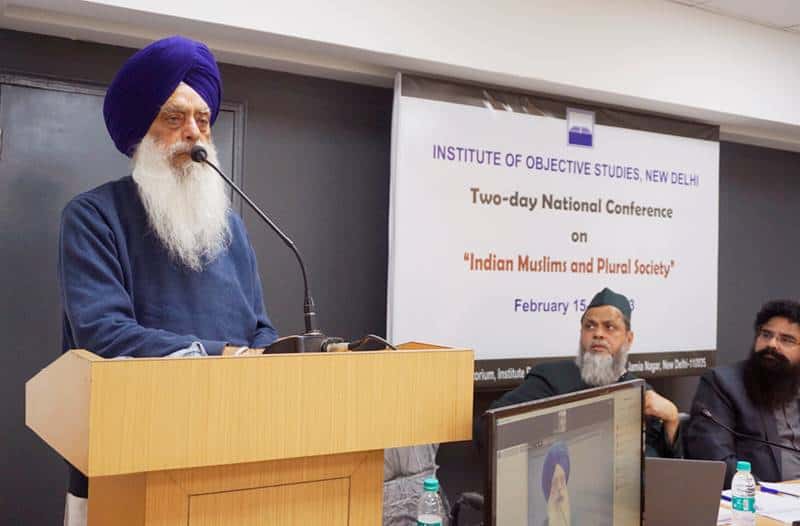
Mr. Gurdeep Singh, a Sikh leader from Bhatinda, Punjab, stressed that it was high time to focus on the future, in view of the experiences of the past and present to grow in a plural society. Mistakes could be there in the past, but remembering those only won’t solve the purpose. It will hinder progress. He warned that today’s rulers in India were breaking the very ascent of Indian culture and unity.

He said that when Kashmiri Muslims are tortured, others in the country feel their pain.
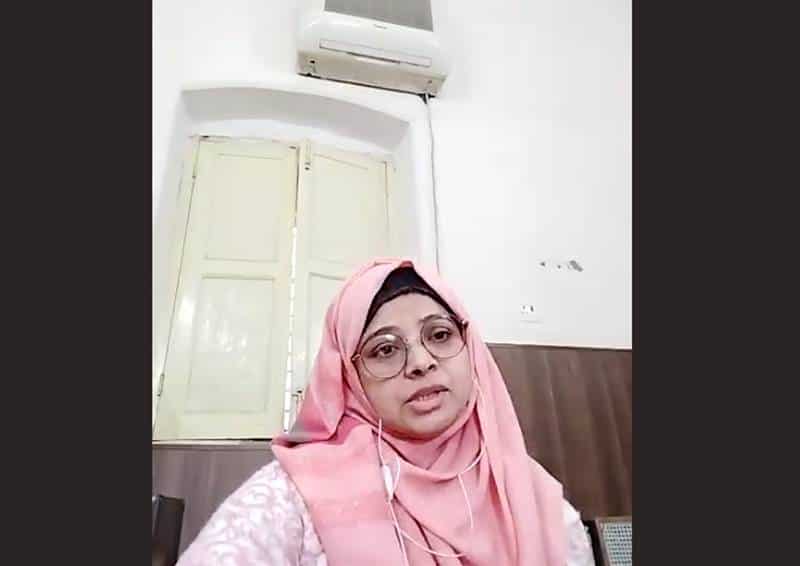
Dr. Lubna Naaz from the Department of Islamic Studies, Women’s College, AMU, spoke on “An Islamic Perspective on Peaceful Coexistence.”

Technical Session-II

Focused on the theme, Role of Islam to Strengthen Pluralism in India, the Technical Session II started under the Chairperson, Professor M. Ishaque from the Department of Islamic Studies, Jamia Millia Islamia.
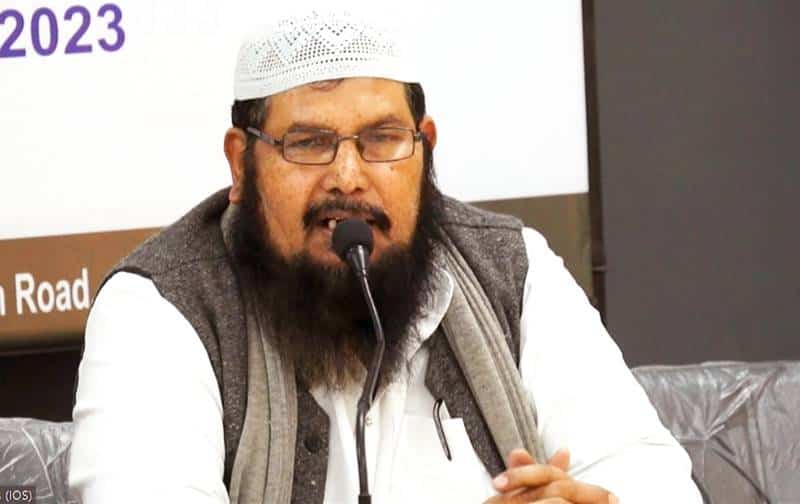
Maulana Abdul Hameed Nomani, Former General Secretary, All India Muslim Majlis-e-Mushawarat, Delhi, highlighted that two things are required to be properly understood: the Creator, and the Creator’s motive. He said that Sufis always made one feel the independence to think and lead life. Islam always propagates the rights of neighbours, relatives and much more. Sufi Khwaja Moinuddin Chisti wore similar dresses like Indian Sadhus to ascertain people of his time, irrespective of their religious faiths, connected with him.

He said that Swami Dayanand and Raja Ram Mohan Roy kept Hindu philosophy out of their movements but promoted social reforms in the societies applicable to all faiths for social betterment. “Faith is vital, like Allah’s mercy, unlike social practices that change with time,” he said. India’s beauty was in its diversity of religious thoughts. In pre-Islam Arab tribes kept fighting for generations on a single issue of their forefathers, but the scenario has changed. Islam accepts variety in pluralism, from religious to traditional to social practices. Islam as a religion must not change its basic principles. It is a Sanatan religion with firm principles, he concluded.
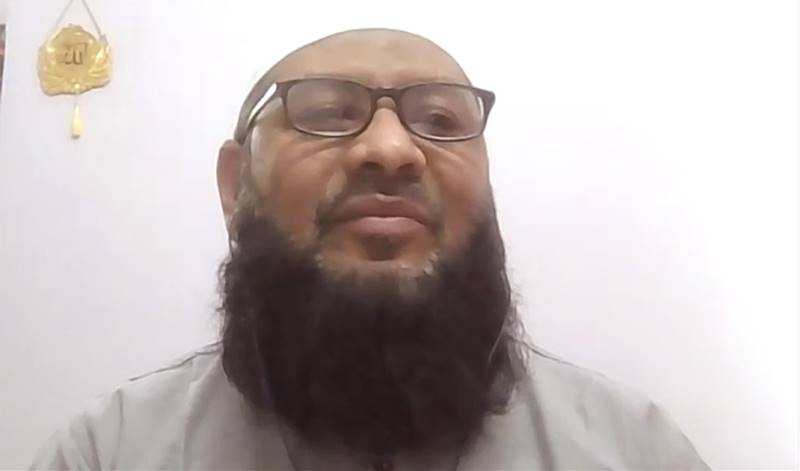
Prof Faheem Akhtar Nadvi, Head of the Department of Islamic Studies, MANUU, Hyderabad, emphasized that the role of Islam in strengthening pluralism in India is vital. Pluralism is a society where people of all religions reside and respect each other. India is one of the best examples where pluralism has stayed for centuries. He emphasized that India will grow only when pluralism is projected in practice.

To be Continued..

source: http://www.siasat.com / The Siasat Daily / Home> Featured News / by News Desk (headline edited) / February 25th, 2023
Hyderabad: Muslim Girls Association to hold audio lectures every Thursday

Hyderabad, TELANGANA:

Those unable to access the zoom link may listen to the talk live on YouTube via link.

(Representative image)

Hyderabad: 

The Muslim Girls Association has invited teachers to listen to audio lectures on topics that will help them get acquainted with best practices at school and in classrooms.

The audio sessions named ‘Teachers Talk’ will be held virtually on Zoom appliction every thursday from morning.6:30 am to 7 am.

The association located at Shanti Nagar, Hyderabad, has requested citizens intersted to click on the link for joining the session.

Meeting ID: 867 1636 8436 and Passcode talk can be used to log in to the session.

Those unable to access the zoom link may listen to the talk live on YouTube via link.

The association has further invited teachers or other people to be a speaker in the sessions by asking them to forward their details on mobile numbers- 9948909657 and 955012397.

source: http://www.siasat.com / The Siasat Daily / Home> News> Hyderabad / by News Desk, posted by Masarath Fatima / February 16th, 2023

Mangaluru: Bearys Public School’s Umar Hamdan selected for National-level ‘Spell Bee’ competition

Mangaluru, KARNATAKA:

Mangaluru: 

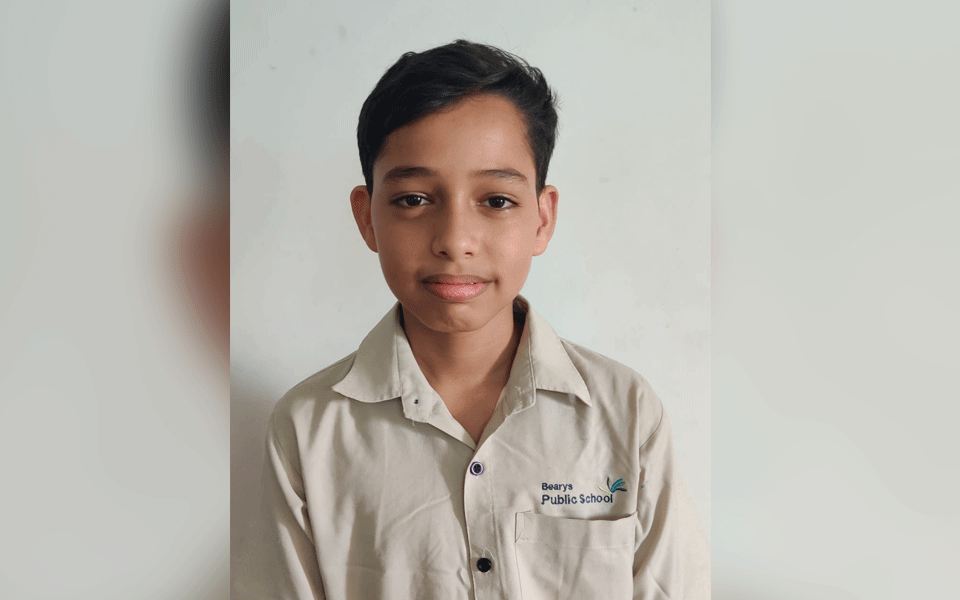
Umar Hamdan, a VII standard student of Bearys Public School, has been selected for the National Level Spell Bee Competition after clearing the State-level round of the competition.

Hamdan, who is the son of Late Abdul Basheer and Shameela, was selected for the state-level round after clearing school and inter-school rounds that were held online due to the COVID-19 pandemic.

The National-level round is scheduled to be held in the third week of January 2021.

Inter-school toppers from each class will be selected for State Level, in which Umar Hamdan of class VI (Present studying in VII) was selected for State Level.

“Out of 20 Toppers of class VI from State Level Umar Hamdan of our School is selected for National Level” an official press statement from the school stated.

Chairman of Bearys Academy of Learning, Syed Mohamed Beary congratulated Hamdan on his achievement and wished him bestfor the national-level event.

source: http://www.varthabharati.in / Vartha Bharati / Home> Karavali / by Vartha Bharati / December 26th, 2020

Madina Education felicitates UPSC ranker Dr. Mustafa Hashmi

Hyderabad, TELANGANA:

Hashmi gave a motivational speech to youngsters and shared his experience in achieving his goal.

Hyderabad:

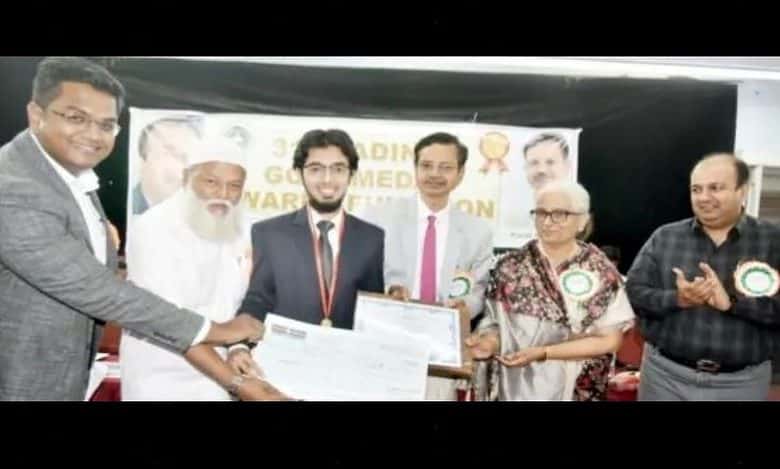
 Dr. Mustafa Hashmi who excelled in Civil Services 2021 and secured a 162nd National Rank was felicitated by Madina Education and Welfare Society on the occasion of the 31st Madina Gold Medal Awards Function on 11th November 2022, at Madina Public School, Himayatnagar, Hyderabad.

Prof. Dr. S. Jeelani, Director, CD & VL, the Central University of Hyderabad who was the Chief Guest praises Mustafa Hashmi and said he should be a role model for all Telangana to excel in studies, competitive exams and bag prestigious positions in the bureaucracy. “Every student should set a target and have a vision and commitment to achieve it,” he said.

Amer Ali Khan, News Editor of Siasat Urdu Daily who was the Guest of honour on the occasion has presented the cheque of Rs. 1 lakh to Dr. Mustafa Hashmi, on behalf of Madina Education and Welfare Society, as part of its support programme to candidates who make it to the Civil Services by the society each year.

Dr. Hashmi gave a motivational speech to youngsters and shared his experience in achieving his goal, with a clear vision, dedication, and hard work.

K.M. Arifuddin Memorial Award (Social Service Award in Education field) was presented to Dr. Abdul Qadeer, Founder and Chairman of Shaheen Group of Institutions, Bidar. Nearly 80 gold medal awards were presented to meritorious students including Ph.D.

Mrs. Sabiha Farzana, secretary of the society, Mr. K.M. Fasihuddin, Director, Mrs. Maria Tabassum, Director, also addressed the gathering.

source:http://www.siasat.com / The Siasat Daily / Home> News> Hyderabad / by Sameer Khan / November 15th, 2022

Madiha Pathan secures 10th rank in Gujarat Civil services exam

Juhapura (Ahmedabad), GUJARAT:

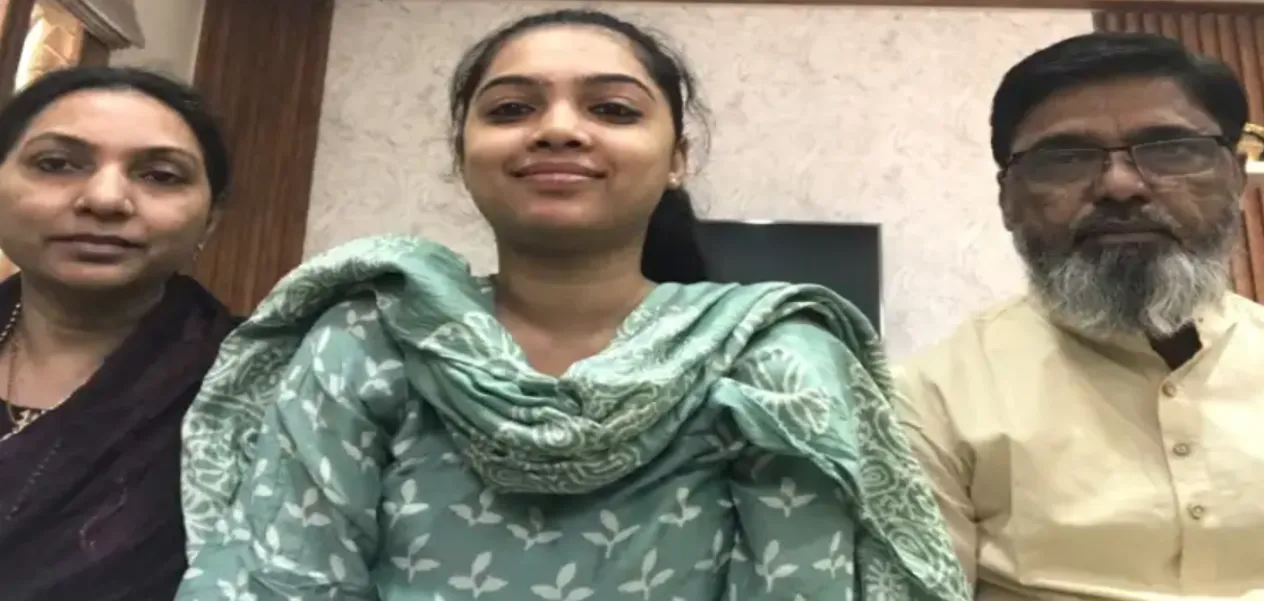
Madiha Khan Pathan with her parents

Madiha Habibullah Khan Pathan of Juhapura, Ahmedabad, has secured 10th rank in the Gujarat Public Service Commission in her first attempt.

Madiha Pathan, 24, was home-taught by her father Habibullah Khan Pathan, who is a class one officer in the Gujarat High Court. Her mother is an advocate.

On her success, Madiha Pathan said, “I had been prepared for the examination from 2019. Due to the lockdown in between, I couldn’t write my examination.”

Madiha Pathan has done her schooling in Ahmedabad and graduated in law.

She said “I started preparing for GPSC in 2019 and passed the preliminary exam the same year. However, due to Covid, the final examination was postponed for two years and I could appear only in 2022.” 

Habibullah Khan Pathan said since Madiha’s childhood, he had been pushing her to reach the highest position through education. “Today we are very happy that our girl has made her mark by securing 10th rank in the Gujarat Public Service Commission examination.”

“Parents should provide an environment for studies to their children,” Pathan said and added, “through education, one can achieve a lot in the world, the respect and status that you get from it comes in the fate of very few people.”

Habibullah Khan Pathan said he used to teach Madiha every day for two hours in the morning and in the evening after returning from work. 

“I am proud that I have successfully played the roles of a teacher and a father.

source: http://www.awazthevoice.in / Awaz, The Voice / Home> Story / by Mohammad Akram, New Delhi / February 24th, 2023

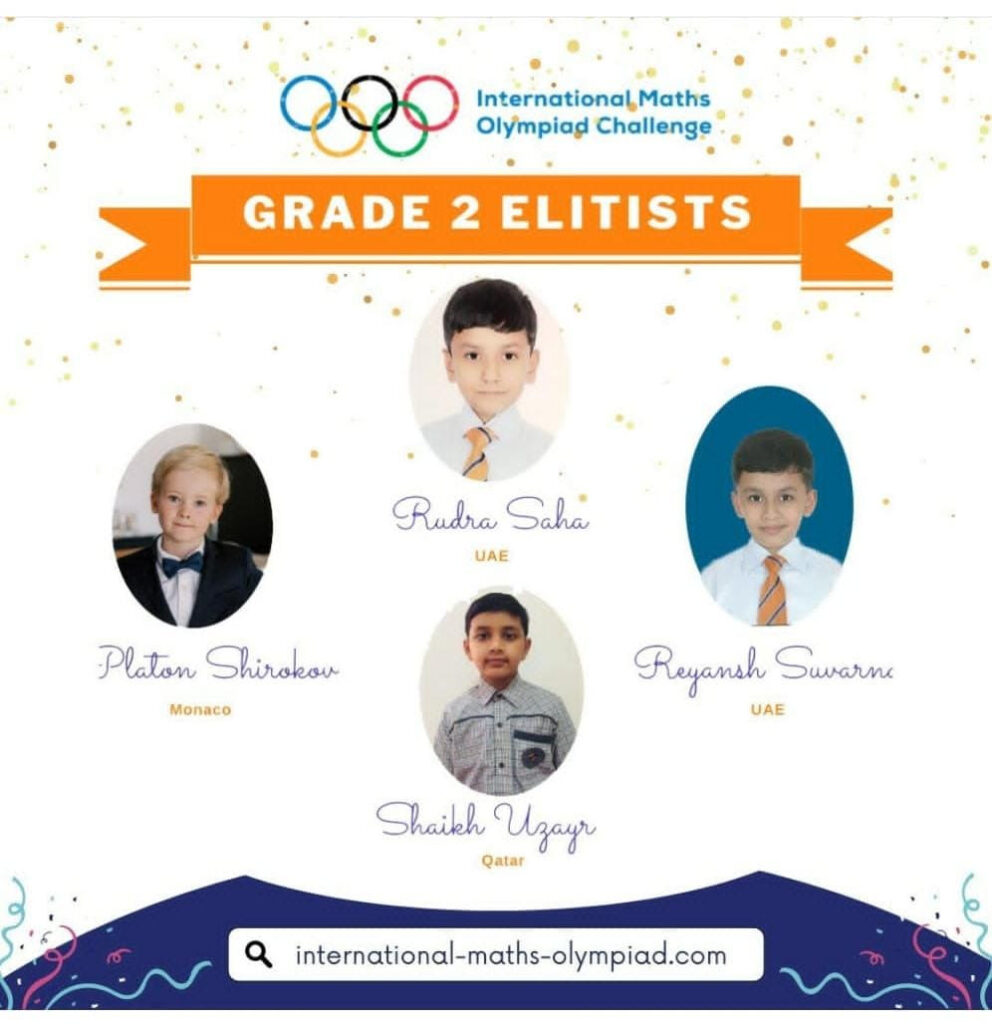
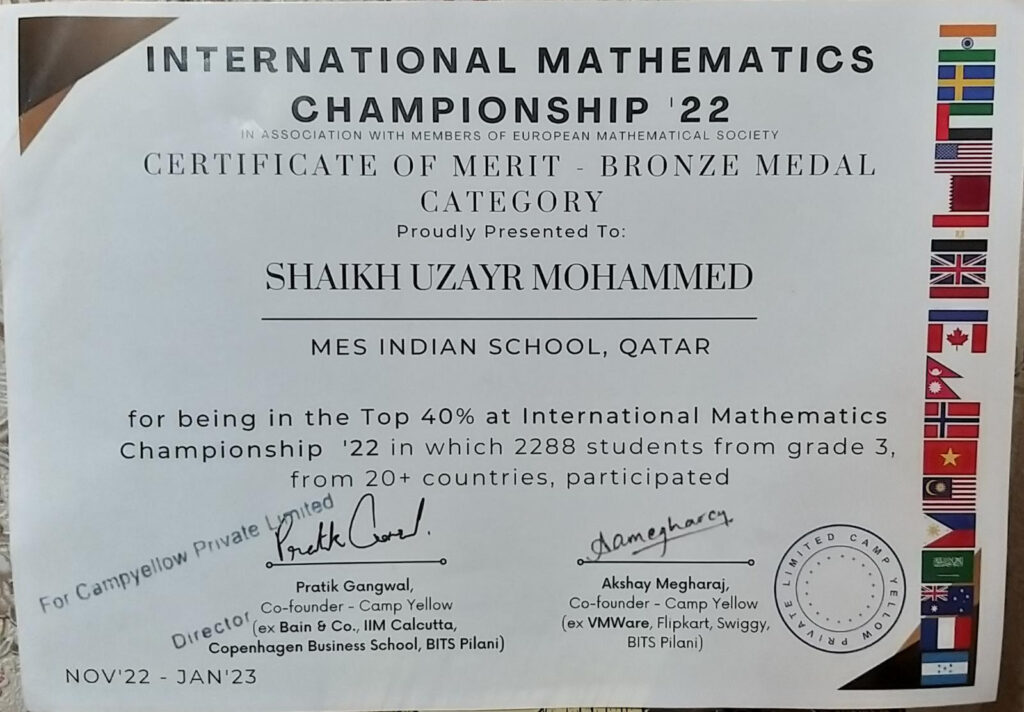
Mangaluru boy Shaikh Uzayr Mohammed bags Bronze Medal at International Mathematics Championship

Kankanady (Mangaluru), KARNATAKA / Doha, QATAR :

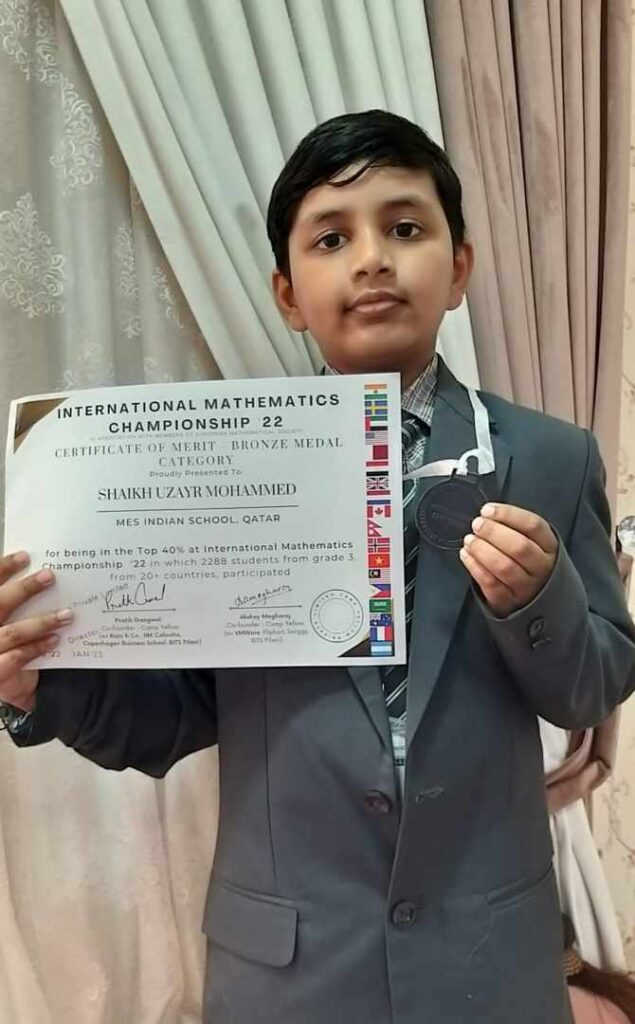
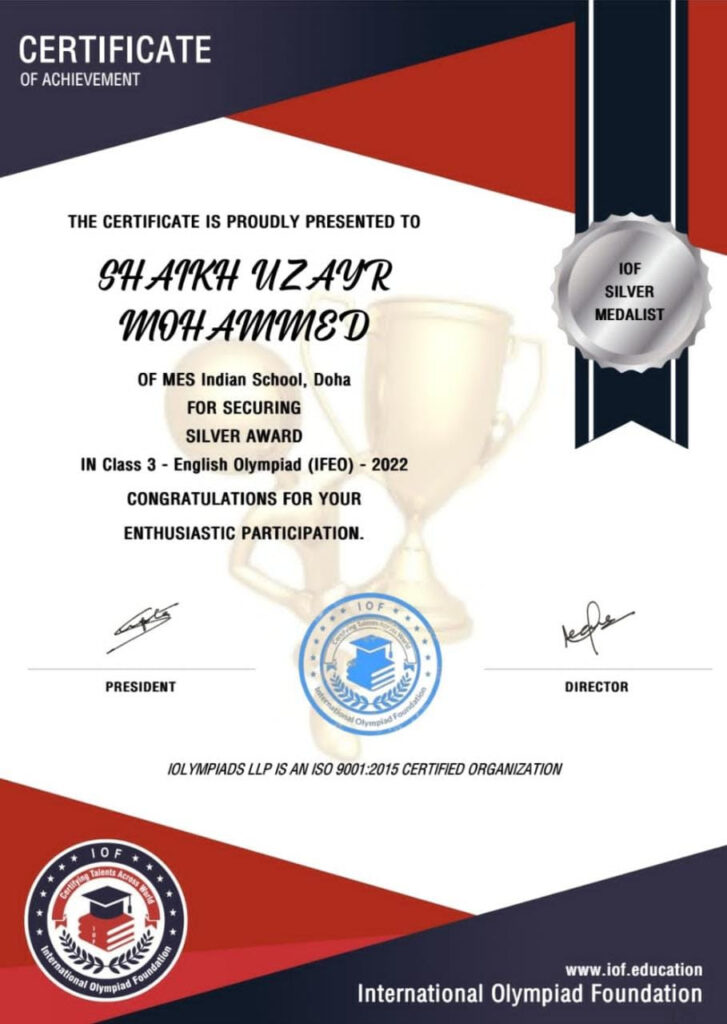
A Mangaluru student, Shaikh Uzayr Mohammed, studying in Qatar has won Bronze Medal at the International Mathematics Championship 2022.

Uzayr is a grade 3 student of MES School, studying in Qatar. He hails from Kankanady in Mangaluru.

The championship was held in December 2022 and the results were announced on Monday, February 20, 2023.

A total of 2288 students from over 20 countries had participated in the championship organised by Champ Yellow, wherein Uzayr secured a place in top 40%, thereby securing a rank in Bronze Medal category.

source: http://www.english.varthabharati.in / Vartha Bharati / Home> Karavali / by Vartha Bharati / February 20th, 2023

Dr Sarfaraz and family quietly changing lives of poor in Noida

Noida, UTTAR PRADESH:

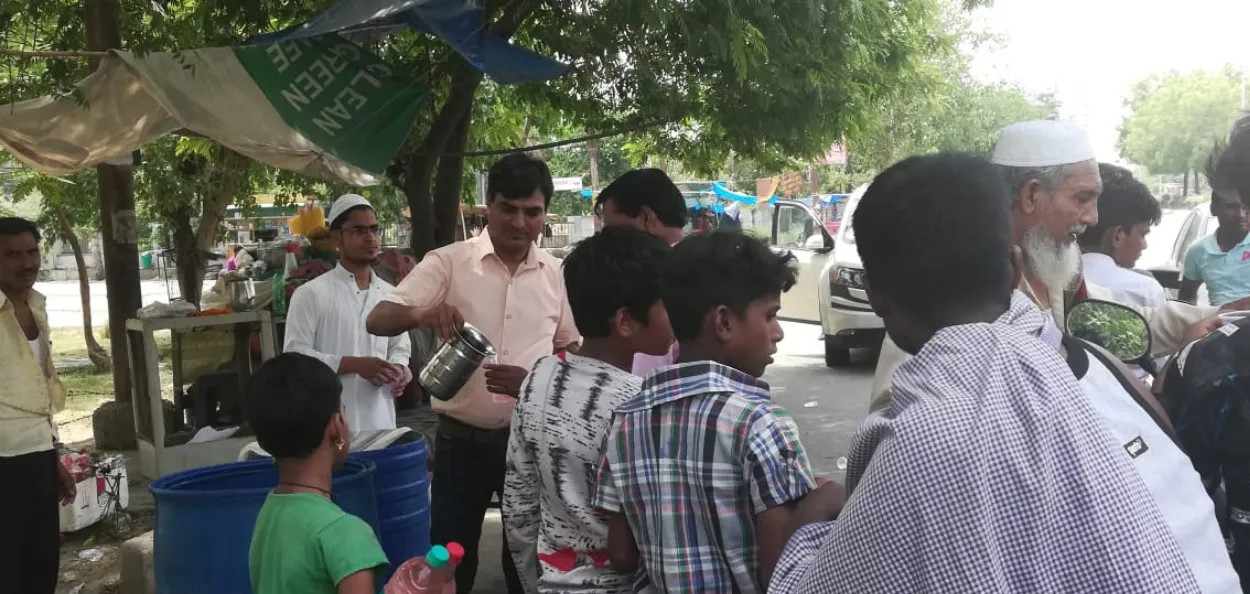
Dr. Sarfaraz serving the people

It is not rare to find Muslims doing social work silently, unwilling to promote themselves. One such person is Dr. Sarfarazuddin, a homeopath who lives in sector 105, Noida, Uttar Pradesh.

He has been feeding 100 deprived people every day for the past five years and teaches students free. He brings ill and unknown covid-dead patients home bathes and buries them, all by himself, and even marries off daughters of destitute families.

Dr. Sarfaraz, as he is popularly known, does good work at various levels. He has been feeding one meal (lunch) to 100 deprived daily for the last five years. He made that arrangement in a school he had opened in 2009 for the underprivileged children in a village nearby called Gejha, with his own money.

The school has 20 rooms on two floors. The students, who have lost either of their parents or are orphans, bright and have more siblings, children of domestic helpers, daily wagers, guards, gardeners, sweepers, etc., study free of charge here.

Others pay a nominal fee. Out of a total of 400 students, most are non-Muslims while some 40 of them are from nearby madrasas. He has recently gathered these students of madrasas of Gejha who had no modern education, to his school, taught them the basics of modern education, computer trained them, and brought them to par with students of 8th standard in his MM School (UP Board) so that they can take board exams and choose competitive subjects later; engineering, medicine to administrative.

dr.sarfaraz
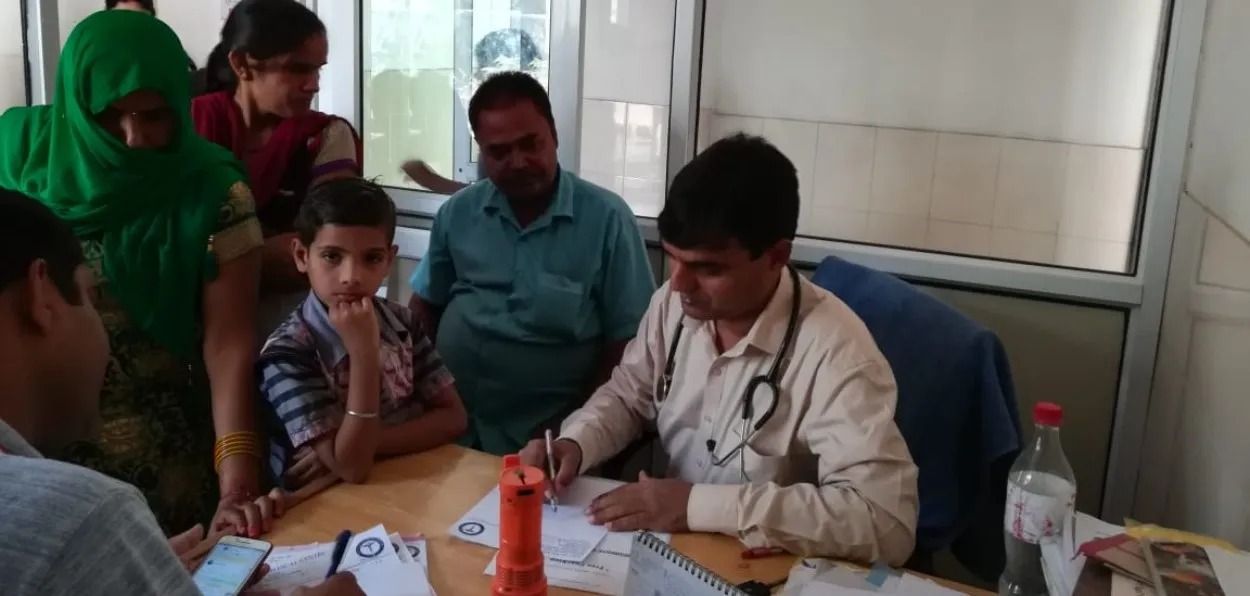
Dr.Sarfaraz with his patients 

Additionally, he has also started coaching students who want to play volleyball. It keeps them fit and if some of them play well, he says, they would be sent to state and national level competitions.

These children are both from the madrasas and nearby government schools which have no space or free coaches. 100 such students take coaching in different sessions, most of them, non-Muslim. Dr Sarfaraz distributes food to the underprivileged A beneficiary and volleyball coach,20-year-old Vishal swears by the good work Sarfaraz does.

He says, “My father is a daily wager and mother, a domestic help. I needed money to keep my studies and training going. So I offered to coach the students at his school and he readily agreed. Now I coach 100 students who don’t pay any fee, but I get a good payment from Sarfaraz Sir. I have played at the state and national levels. I would be sponsored by him separately if I could play more.”

He also says that Sarfaraz never charges him for medicines he takes for his mother, siblings, and extended family quite often. Sarfaraz also treats the disadvantaged of the area free of cost at his clinic in Gejha on alternate Saturdays and Sundays. He also gives them free medicines. Additionally, he has been regularly holding medical camps for underprivileged patients. During the Covid and lockdown period, he used to get some 200 to 250. The camp had to be stopped “for lack of funds for a few months”. It is difficult to make this man of few words speak about himself. But with an assurance that it might inspire more people, he got ready to share why and how he wishes to give his “entire life for khidmat-e-khalq” (serving people).

“I was always interested in social service as I used to observe my father, principal of a government school in UP, doing social work passionately. So it is integrated into my system. I started serving alongside my father by shifting my clinic from Bhangel to Gejha.”

On how he manages funds, he says, “I do it despite being in deficit. We get things on credit and clear the older dues and take new ones on credit again. Apart from spending from my pocket, I have a small circle of friends who support me on a regular or irregular basis. Some help comes from unknown sources at times.” Of late, apart from his homoeopathy clinic, he has also been running a small medical centre which takes care of some of the expenses for the good work.

Sarfaraz shares why he multiplied his charity work after he saw migrant labourers walking home barefoot, hungry and sick from Noida Expressway during the lockdown. “It was painful to see them. I bought whatever I saw on the road – the entire the of bananas, other fruits, biscuits, called some maulanas from nearby madrasas, and other people and we all stood on the road to feed these labourers day and night for several days. This made me think that I was still not doing enough for the underprivileged.”

Rajesh Yadav, a beneficiary, vouches for the help he has had from Sarfaraz. He says, “I live in sector 45 which is far from here. During the entire covenant lockdown period, my whole family could survive because he used to distribute food twice daily. I have seen him running behind buses and trucks full of labourers etc., to distribute food. He also offered me to make food for his beneficiaries because I am a halwai (sweet maker) by profession. During covid period and lockdown for two years, all the shutters were down, and only my work was sustained all thanks to him. He also never stopped my payment and helped me financially whenever I asked. He never treats me differently because I am a non-Muslim. Now I understand how political leaders divide us,” he gets emotionally charged.

After having felt that he was doing too little during covid, he alternatively kept on helping deprived families marry off their daughters. He even brought home several patients who died in covid when their families had either refused to take their bodies, were far off or they had no one left in the family. He gave them ghusl (bathed) and buried them in a nearby graveyard with his own hands without ever asking for their names, or contact details or expecting anything in return.

Mohammad Shahid, a transporter by profession, vouches for the work he does. He shares, “I shifted to Noida in 2008. Since then I am witnessing Sarfarazbhai working relentlessly for the poor. In my view, the two biggest things he has done are, bringing the dead from several societies nearby to his home (in case they have no one to perform the last rituals), getting them ghusl, and having them buried with respect. He did it during covid and is still doing it. Also, this deserted area had no graveyard for the Muslims. This was a great problem as other graveyards wouldn’t let us bury our dead due to overcrowding.

sarfaraz
Coach Vishal with his students

Coach Vishal Yadav with students he coaches in Volleyball Dr sahib fought tooth and nail with a known builder who tried capturing the graveyard land for erecting a skyscraper in consonance with some greedy Muslims of the area and finally was able to retain around 2 acres of the graveyard. Dr Sarfaraz has helped the Muslims in and around Noida Expressway a great deal by building the only graveyard. I am also aware of his other charity work and can vouch for the fact that not even established NGOs with tonnes of money, don’t do the kind of work I have seen him doing.”

Sarfaraz’s family, consisting of a spouse and three children, he says, “often get anxious for it keeps him overtly busy, but they keep on supporting. Knowing this will never change, it is becoming a part of their system too,” he smiles. Agrees his wife Shaheen, however, adding that khidmat e khalq has been a part of her upbringing too.

“My father a school teacher who also has a family business of transport would always make sure that at least 20 deprived people ate at our home every day, at AaliGaon near Badapur Delhi, where we lived. I remember all the humble families used to have tea and breakfast at our home daily. After marriage, I found that Dr.Sarfaraz seemed to have gone a step further. Even while we were all suffering from covid, he used to leave home to help those in need in the wee hours of the morning.

She adds laughing, “the excuse he would give us was, I don’t see you guys offering fajr (morning) prayer. It depresses me so I go to the mosque nearby to offer mine.” Shaheen also adds that their children have imbibed this habit naturally.

Her young daughters, Sana and Saba, textile and product designers respectively, have started keeping 2.5 percent separate as zakat from their little earnings or pocket money. She also recalls a recent incident about her son, 14-year-old Asad, who wanted to eat delicious biryani sold every Friday near Gejha mosque.

“He asked for money but he came back empty-handed and hungry. I asked him why he didn’t eat biryani. He replied, as he started from home, two old women asked for some money. He gave them all and came back. He remained hungry to feed them. So, it runs in the family,” she says with a contented smile. Did anyone say, charity begins at home?

source: http://www.awazthevoice.in / Awaz, The Voice / Home> Story / by Rana Siddiqui Zaman / posted by Shaista Fatima / February 17th, 2023

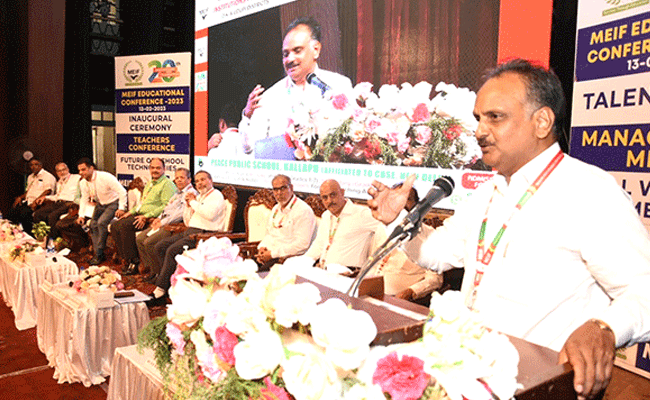
Muslim Educational Institutions Federation striving for social harmony: Umar Teekay

Mangaluru, KARNATAKA:

Mangaluru: 

Muslim Educational Institutions Federation (MEIF) is not just providing excellent education, it is also spreading social harmony, Umar Teekay, Honorary President of MEIF and Chairman of Teekays Group, said.

He was addressing the educational conference organized by the Dakshina Kannada and Udupi Districts Muslim Educational Institutions Federation at the Town Hall in the city on Monday.

“Former minister BA Moideen had dreamt of integrating all Muslim educational institutions. MEIF is a step towards bringing that dream to life,” he said.

“Solving a problem is important, but it should not become the priority. The priority should always be of preventing problems,” Teekay advised.

Citing the instance of the recent hijab controversy, he said, “We handled the situation carefully while facing opposition from all ends and ensured that Muslim girls were not deprived of a chance to take the examinations. This was possible through the joint efforts of the members of MEIF.”

Dr. N Vinay Hegde, Chancellor of NITTE Deemed to be University inaugurated the educational conference.

Umar Teekay presided over the conference while Syed Mohamed Beary, Honorary Advisor of MEIF and Chairman of Bearys Group of Institutions, delivered the introductory address.

Yenepoya Deemed to be University Chancellor Dr. Y Abdulla Kunhi, national-level trainer Rajendra Bhat, resource persons Mahesh Masal from Dharwad and Syed Sulthan Ahmed from Bengaluru, MEIF vice-presidents B M Mumtaz Ali, K M Mustafa Sullia, Shabi Ahmed Qazi and B A Nazeer were among those present on the dais.

source: http://www.english.varthabharati.in / Vartha Bharati / Home> Karavali / by Vartha Bharati / February 13th, 2023

Contribution of Muslims in the Development of Malayalam Language and Literature

KERALA:

Gone are the days when the Muslims of Kerala were thought to have believed Malayalam as the language of Nairs. The Muslims of modern Kerala are greatly indebted to a number of devoted reformers whose dedicated endeavours liberated them from the yoke of illiteracy and cultural backwardness. Late C.N Ahmad Moulavi, in his book on Muslim literary heritage in Malayalam entitled Mahathya Mappila Sahithya Parambaryam, describes the contribution of such reformers.


In fact, Malayalam has been the mother tongue of the Muslims of this region but their dialect was considered relatively inferior. This was because they had neglected learning and teaching the Malayalam language and literature. They were more concerned with Quranic education. Moreover, for the purpose of imparting Islamic knowledge they used Arabic script when they wrote Malayalam. It slowly developed as a literary branch of Malayalam known as the Arabic Malayalam literature.
 

Arabic-Malayalam Literature
The Arabic-Malayalam literature is exclusively the literature of the Kerala Muslims. It includes more than five hundred books in prose and about the same number of books in verse, on various subjects. Books in prose include translation and explanation of the Holy Quran, Hadith, Jurisprudence, history, stories and fables, narratives, criticism, lexicon, science and etiquette. Many journals and magazines were also published in Arabic-Malayalam.


Critics have wholeheartedly extolled the literary merit of the poems in Arabic Malayalam. They are highly impressed by its originality, rhythmic beauty, lucidity in imagination and expression. The majority of these poems are on religious topics. In fact, this stream of poems had been running parallel to Malayalam poetry for centuries. The earliest work so far traced in Arabic Malayalam poetry is Mohiyauddeen Mala, an ode in praise of Sheikh Mohiyuddheen. Its author, late Khazi Mohammed of Calicut was a contemporary of Ezuthcchan’s (16C) who is considered the father of Malayalam language. A comparative study of Ezuthcchan’s Adhyatma Romayana Khazi’s Mala reveals the latter’s simplicity in expression.


Moin Kutty Vaidyar elevated the Arabic Malayalam poetry to the pinnacle of its golry with his Badr pada pattu (war song on Badr) and Badrul Muneer Husunul Jamal (a love song). War and love have been celebrated topics for poetry of all ages. But what made Vaidyar’s poems real masterpieces of literature is his skilful way of blending form and content into an artistic unity. Through his poems Vaidyar created a language within language, a rare achievement in Malayalam poetry praised equally by famous critics and linguists. Chains of tunes (called Ishals) innovated by Vaidyar still remain to be emulated by latter poets. In fact he is the most popular among Arabic Malayalam poets. His poems provided the Muslims of Kerala with a unique culture identity, uniformity and redouble their pride and prestige. P.K. Haleema, Naduthopil Ayesha Kutty, Kundil Kunhamina are the poetesses whose poems left indelible imprints on Arabic Malayalam poetry.


Though Arabic Malayalam poetry boosted the morale of Muslims in their resistance to colonial invasion. The subjugation of Muslims by the invaders led to a state of stagnation in literary life. Later Muslim reformers used Arabic Malayalam poetry to rekindle the spirit of education and religious awareness. Prominent among these poets cum reformers are T. Ubaid, O. Abu and Punnayarkalam Bapu. The poems fostered by Muslims are generally known as Mappila Pattukal (Mappila songs). The salient feature of these songs is the instantly recognizable peculiarity of its tunes that have by and large influenced the cultural and literary life of Kerala as it is evident in modern Malayalam poetry and film songs.


Muslims today no more use the old script of Arabic Malayalam in their literary contribution. Modern works are all in Malayalam now. However, to a limited extent, efforts are made to preserve the identity of this language through Madrasa education.


Impact of Sanskrit Literary Tradition
Though Muslim themes were introduced into Malayalam poetry by non-Muslim poets since the beginning of the 20th century, the entry of Muslims into the Malayalam literature is of late occurrence because of the attachment of the Muslim poets to Arabic Malayalam. In imitation of the Sanskrit literary tradition Maha Kavyam were composed by Malayalam poets. Rama Chandra Vilasam was written by Azakath Padmanabha. Kurp and Kattakkayam cheriyan Mappila wrote Sree Yeshu Vijayam. But Mahammadam was written only after a long period. Ponkunnam saidu Mohammad, a Muslim scholar in Sanskrit and Malayalam, wrote this Maha Kavyam in the same Sanskrit metre and here the poet attempts to narrate the story of mankind in an Islamic perspective. It also contains a description of the Quran in detail.

Yousef Ali Kecheri is a Muslim poet famous for composing poems with Hindu as well as Islamic cultural background. He has written poems on Quranic themes, the prophet and Muslim festivals. He is a famous composer of film songs.

P.T. Abdul Rahiman is another noteworthy poet who wrote a long poem on Bilal entitled, The Black Pearl.

Both Kecheri and P.T. have won literary awards.


Malayalam Fiction
Anyhow, the Muslim genius made greater achievement in fiction and short stories. Viakkom Mohammed Basheer, a veteran novelist in Malayalam brought a continent of experience in life into the Malayalam literature. His compassionate attitude towards life accompanied by an ironic vision acquainted the Malayalam readers with a new aesthetic sense. His novels and short stories are translated into other Indian and world languages. Umashankar Joshi, the famous Indian writer, counted Tagore and Basheer as the only two Indian writers of originality. M. Mukandan, the pioneer of modernism in Malayalam fiction, once wrote, the Noble Prize is too small a thing to honour Basheer. Basheer’s novels are poetic expression of Muslim myth and Islamic mysticism. My Grand Dad had an Elephant and pathumma’s goats are his masterpieces. He mercilessly satirises the pervasive degeneration that infects Muslim social life. In his writings he had been attempting to create harmony in life through God consciousness.

N.P. Mohammed, another famous novelist, short story writer and essayist, traces the influence of Aryan, Dravidian and Hindu culture elements in the life of Kerala Muslims. His two famous novels named The Oil field and The Eye of God reveal the peculiar socio cultural life of a particular region. They can be called regional novels. He wrote short stories by perusing the Quranic style of expression. Punathil Kunhabdulla, another novelist and story writer, satirises the outdated view and customs prevailing in Muslim social life. Smaraka Shila Kal (Tomb stones) and Marunnu (Medicine) are his famous novels. Both N.P. and Punathil won awards of Kerala and Kendra Sahitya Academy. P.A Mohammed Koya, the father of sports literature in Malayalam, brought to light the social and religious life of the Koya Muslims of Calicut. His Island Stories have endowed the Malayalam short story with a rare aesthetic dimension. U.A. Khader beat a new path when he wrote his short stories anthologized in his famous Trikkotoor Peruma, which is highly appreciated. His style is inimitable.


The most developed literary genre in Malayalam literature is the short story and there are a number of Muslim short story writers such as T.V. Kuchu Bava, Shibabuddeen poithumkadavu, Akbar Kakratil, M.A. Rahima, N.P. Hafiz Mohammad and P.K. Parakhadavu. They are noted for their highest excellence in handling the Malayalam language in its colourfulness and rhythmic beauty.


The history of Malayalam drama will remain incomplete without mentioning the contribution of K.T. Mohammed. He criticizes the social life of the Kerala Muslims in an aggressive language. Ibrahim Vengara, Mohammed Yousef, K.A. Kondungallor and Azeez were renowned Malayalam dramatist.


Religious Writings
In addition to making valuable contribution to the Malayalam literature, Kerala Muslims have been advancing in the field of religious writing. They have published many books aimed at reforming the religious life and introducing Islam to other people as well. Many publishing houses are established. The Holy Quran has been translated into Malayalam by various scholars. Tafheemul Quran of sayyid Maududi has been translated and published in Malayalam through Islamic Publishing House, Calicut, which shines like a pillar of light in the literary life of the Muslims of Kerala. Sheikh Muhammad Karakunnu, the Director of I.P.H., himself wrote about 50 books on various Islamic knowledge. Other publisher like Yuvatha, Hindustan and Al Huda published valuable works on Islam.
The Muslims of Kerala constitute more than 20 per cent of the population and their literacy rate is satisfactory. Consequently they have started publishing dailies, weeklies, monthlies and bimonthlies including children’s and ladies magazines.


A close analysis of the literary history of Kerala Muslims will reveal the healthy trend of new awareness and reformation in the field of learning and thinking. And a cream of writers, thinkers, reformers, readers has emerged from various cultural groups among Muslims vying with each other for achieving excellence in developing Malayalam literature. There intense efforts and healthy rivalry enable us to envision a new sky of hope for the community and for the nation. The sea changes that have taken place in the realm of the Muslims of Kerala are promising signs of a new dawn-God willing.


(The writer teaches Malayalam at Government College, Kasaragod, Kerala.)

source: http://www.ummid.com / Ummid.com / Home> News & Analysis / by Ibrahim Bevinje, Ummid.com / March 16th, 2011

Urdu Library in Malegaon: An Information Outlet

Malegaon, MAHARASHTRA:

Urdu Library in Malegaon turned 100 this year and the library, which has helped many Ph. Ds in their research work, is all set to get University affiliation for research work.

Exceptions are always there, but contrary to general perception, Malegaon, since its instigation, comprised literate and intellectual people by and large. And with two libraries sustaining 100-year, it only confirms this notion.

When it comes to any good library it is the book-collection, not the infrastructure, which is counted but a visit to Urdu Library in Malegaon depicts how beautiful combination of book-collection and infrastructure increases one’s thrust for library.

Founded in October 1903, this 100-year old Library-cum-Research Center, the first kutub khana, Urdu Library, in Nashik district, is a magnificent two-storey building with separate sections for women and children. Started with just 325 books, it has more than 30,000 systematically arranged books today. Rarely available Kalmi–Nuskhe, hand-written books, and 1901-1950 magazines, are the gleaming-trinkets on the shelf, which any library can envy and aspire for.

How the management has maintained this library with a very small budget is surprising. Khalid Umar Siddiquee, the chairman, said, “Along with the existing splendid structure, the 100-year old visit-book portraying the details of the visiting-dignitaries and the expressions written by them, are enough to show what we have achieved in hundred years.” Although the library always lacked the funds, they persisted with the policy of extending full support for Research Work and free membership to the students up to SSC level, he added.

Reading under an ideal milieu always gives a clutching effect and Urdu Library is again on top to provide this. The ideal reading room, combined with the collection of systematically arranged rare books, transformed this library into wannabe-Ph. D’s paradise. Doctors after doctors have acknowledged the support they had received from the library in completing their thesis.

_______

“Despite small budget, Urdu Library extends full support for Research works and offers free membership to students up to SSC level. 

______

Dr. Ilyas Waseem Siddiquee, renowned laureate of the city observes, “Although I had visited several libraries in various cities, nowhere I found the kind of rare books that is available here in Urdu Library. To research and for doctorate on Literature, this is perhaps the only library in Maharashtra.”

When they received five-lakh grant from the state, it was, as if they have found some khazana for the library. With this money whole library was renovated in such a way that it is giving totally different look. The amount also helped in computerizing the library and implementing the bar-code system.

Mohd. Saeed, the librarian since past twenty-three years said, “The library is the first fully computerised library in Malegaon and the implementation of bar-code system has helped in easing the daily library routine.”

With the computersation, the library has started its course towards becoming first fully functional DIGITAL LIBRARY, the dream venture of the management, with many more projects to follow very soon.

source: http://www.ummid.com / Ummid.com / Home / by Aleem Faizee