Category Archives: Education

Tracing the roots of Aligarh and its famous university, often hailed as a mini-India

Aligarh, UTTAR PRADESH:

Aligarh Muslim University has given the town itself a facelift. Many luminaries have graced the halls of AMU, and it remains an oasis of learning amid uncertainties and controversies that surround the old town
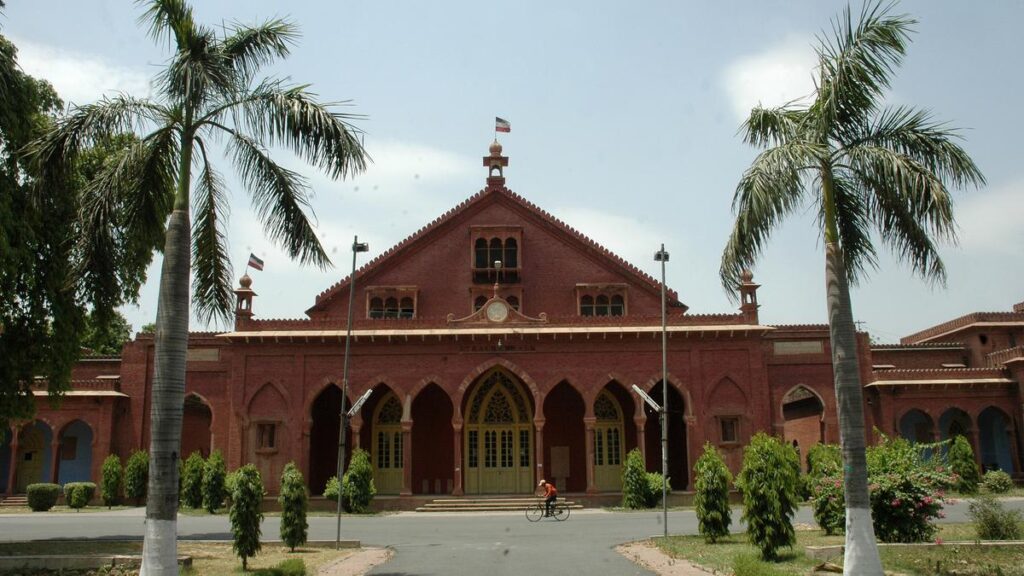
A view of the Aligarh Muslim University Campus | Photo Credit: Sandeep Saxena

There is something about Aligarh that tells us that the past never dies. It merely reinvents itself to suit contemporary demands. Back in 1937, Mohammed Ali Jinnah, soon to transform into Quaid-e-Azam, took the route with a rare flourish. Recalling the Muslim League session in Lucknow in 1937, author-journalist Mohammed Wajihuddin writes in his persuasively argued, lucidly expressed book, Aligarh Muslim University, “The October 1937 Lucknow session was so important to Jinnah that he discarded his well-cut suits and donned flowing trousers and a long coat. From Mr. Jinnah, he transformed into Janab Jinnah and Quaid-e-Azam. While he had kept himself aloof from ordinary Muslims, now he began mingling with them….He travelled extensively, and Aligarh became a regular place to visit during these travels.” Around the same time, he raised the rhetorical slogan of ‘Islam in danger’ too.

Passing storm(s)

The following year when Jinnah visited AMU, which had begun as the Mohammedan Anglo-Oriental College in 1875, he was given a rousing welcome. The students’ union made him an honorary life member. “It was a tradition the union had followed since 1920, when Mahatma Gandhi was given this membership. In those days they would also put up a portrait of the guests they honoured on the Union Club’s wall. It was such a portrait of Jinnah’s at the AMU Students’ Union Club that created a storm on the campus on May 2, 2018,” writes Wajihuddin.

The storm, essentially a passing one, was caused by local MP Satish Gautam writing to the Vice Chancellor Tariq Mansoor demanding the removal of Jinnah’s portrait from the campus. The demand was not conceded but it made sure the university was in the spotlight, and as a consequence, Aligarh remained in the headlines for days on end. Like it did when the anti-Citizenship (Amendment) Act protests hit the campus in December 2019. Controversies and Aligarh seem to go together. Yet, AMU, despite frequent protests, occasional violence and various stirs, seems to be an island by itself wherein students seek knowledge, chart out great careers and soak in its culture just as the university’s founder Sir Syed Ahmed Khan, would have advised them. As academic-literary critic Shafey Kidwai, author of Sir Syed Ahmad Khan: Reason, Religion and Nation, said, “The question of his (Jinnah’s) glorification does not arise, but the university’s job is to protect the truth of history. His photo was there as the hall carried the names and photographs of all who visited it. The list incudes Mahatma Gandhi, Dr. B.R. Ambedkar, Maulana Azad and Sarojini Naidu.” Unsurprisingly, Prime Minister Narendra Modi called it ‘mini-India’ in an online address.

The story of a name

AMU has the unique distinction of taking along with it the name of the township where it is based, and giving the town itself a facelift. Otherwise, known for its brassware and lock industries, Aligarh has a chequered past, one that has seen many a nawab, maharaja or local leader make an attempt to leave an indelible impression on the town; the most recent one being an attempt by zila panchayat members to rename the place Harigarh. Vijay Singh, zila panchayat chairman, stated, “It was a long-pending demand to rename Aligarh as Harigarh.” He was probably referring to a similar call given in the late 1970s by members of the Jan Sangh, the precursor of the Bharatiya Janata Party (BJP). At that time, a new temple was also called Harigarh Mandir. Nevertheless, the demand to rename the place died down soon enough.

There is an interesting tale behind the name of Aligarh. It was initially called Kol or Koil. Though obscurity surrounds the origin of Kol, according to Edwin Atkinson, who compiled the first gazetteer of the district, the name Kol was given by Balram who slew the great Asura called Kol over here. Noted medieval India historian, Syed Ali Nadeem Rezavi, explained the genealogy of the place, at the height of the Harigarh controversy, stating, “Sometime before the Muslim invasion, Kol is said to have been held by the Dor Rajputs. Sultanate period sources, both Persian and non-Persian, mention Kol as a centre for the production of distilled wine. The sources of the period of Alauddin Khalji mention this town as Iqta Kol; Iqta was an administrative unit.” It continued to be called Kol during the Mughal age too with Emperor Jahangir calling it Kol in his memoirs.

However, things changed in the 18th century. The Jats captured the fort briefly and called it Ramgarh, quite removed from the earlier nomenclature of Sabitgarh and Muhammadgarh. Then came the Marathas who dubbed the fort as Aligarh after their governor Najaf Ali Khan. By the 19th century, the town itself came to be called Aligarh. Some locals dispute this fact-based assertion, claiming Aligarh is named after Hazrat Ali, the last caliph and son-in-law of Prophet Muhammad.

City of joy

In reality, Aligarh, not Kolkata, was the original City of Joy; it was only in 1985 that Dominique Lapierre called Kolkata the City of Joy. Some 50 years before that, popular Urdu poet Asrar-ul-Haq Majaz had called Aligarh as ‘Shahr-e-Tarab’ or the City of Joy! Moreover, Aligarh, and AMU, whose tarana (anthem) was penned by Majaz, transmits joy.

Here studied Begum Para, the heroine of the first talkie Alam Ara. In her painstakingly researched and elegantly produced book, The Allure of Aligarh, Huma Khalil writes, “The musical leanings of Padma Bhushan winner Talat Mahmood…can be traced back to when he used to sing the works of Ghalib and Mir, at the age of 16 in the school functions of Minto Circle. Award-winning film and theatre actor Naseeruddin Shah is still remembered as the finest badminton player of the university.” Not to forget Anubhav Sinha, Surekha Sikri and Zarina Hashmi. Incidentally, Hashmi brought Aligarh to her canvas. A mathematics graduate from AMU, Hashmi had seen villages burning around Aligarh in 1947 and could never forget her home and relatives who were dispersed in the violence.

If violence was here, could prayers have been far behind? Not quite. Hence, besides its historic mosque where countless students stand in neat rows for prayers, Aligarh has the age-old Khereshwar temple which, Khalil tells us, “is the oldest Shiva temple”. Tansen’s guru, Swami Haridas, lived here and Mughal emperors are said to have come down to the temple “to witness the magic of raga Malhaar”.

The persistence of knowledge

Of course, Aligarh has been a happy host to the annual numaish (exhibition) and for years its students frequented Tasveer Mahal, one of a dozen cinema halls in the city. Tasveer Mahal was more than a cinema. It was like a gateway to the University, a rendezvous point for students in the evening. It’s all gone now. What remains untouched is the determination of the students to learn. As Khalil recounts in her book, “Ilm (knowledge) is the second most used word in the Quran after Allah; Aligarh’s motto captures this ethos, ‘(Allah) taught man what he knew not’.” As youngsters seek to know more and more, Aligarh is like the body and AMU its soul.

source: http://www.thehindu.com / The Hindu / Home> Books / by Zia Us Salam / February 09th, 2023
Dr. Abdul Salem of Ideal Indian School lauds contributions of HIF Qatar at annual meeting

Mangalore, KARNATAKA / Doha, QATAR :

Doha:

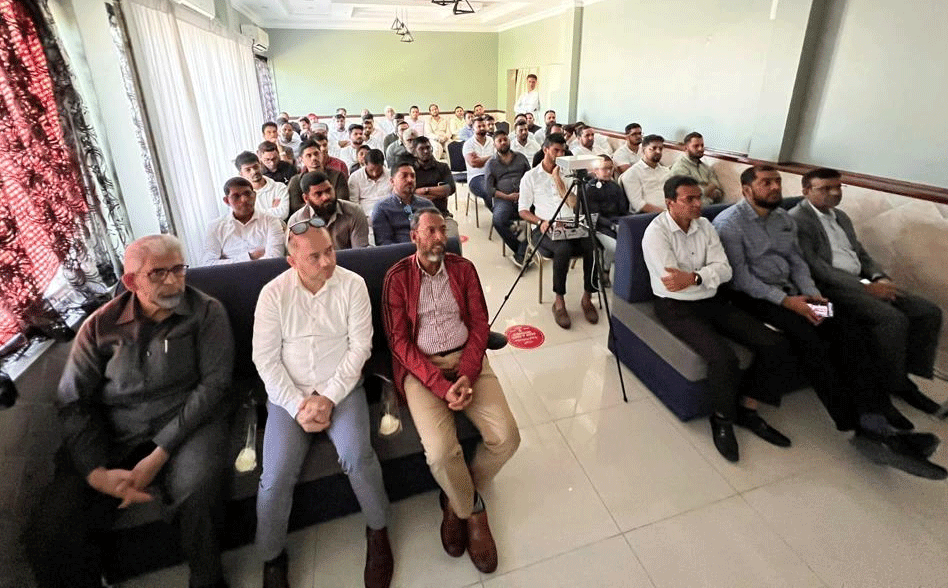
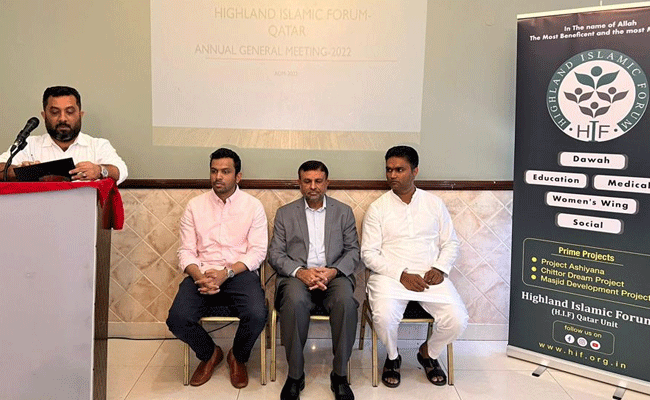
The HIF Qatar held its 8th Annual General Meeting at Maaza Restaurant on Friday, 3rd February 2023. The program began with the recitation of verses from the Holy Quran by Master Moiz and Master Shafee. HIF Qatar Unit President Shafakath Hussain welcomed the gathering.

The meeting featured a presentation by Rizwan Ahmed on the overall activities of HIF and future objectives.

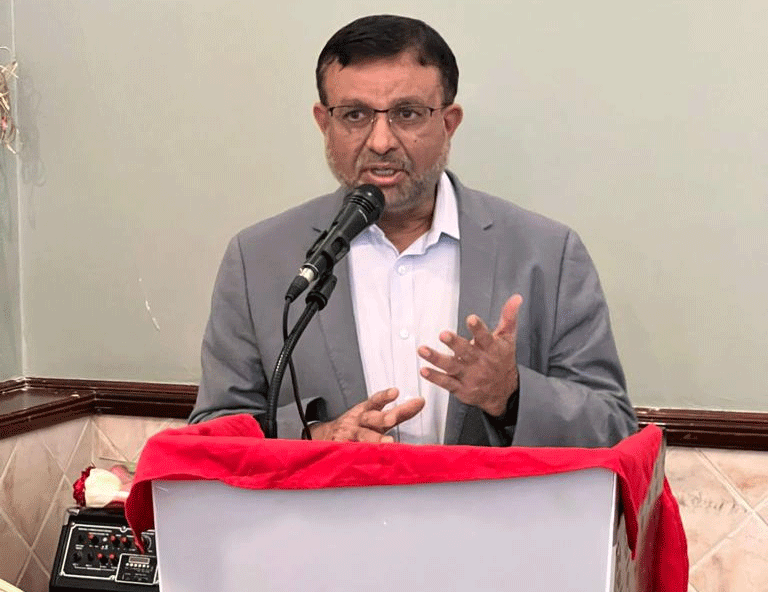
The chief guest of the event, Dr. Abdul Salem, founder of Ideal Indian School, addressed the gathering and appreciated the works of HIF. He emphasized the importance of implementing the five values – namely respect, responsibility, excellence, integrity and collaboration – in day-to-day life.

Prominent guests, including Abdul Razak, President of South Kanara Welfare Association; Fayaz Ahmed, President of Karnataka Muslim Cultural Association; Saqib Raza, President of Hidaya Foundation; Ayub Ullal, President of Qatar Indian Social forum; Mohammed Javed, President of Family Friend Circle; and Sheikh Usman, In-charge of Karnataka Unit-Indian Friend Circle, were in attendance at the meeting. They spoke about the importance of collaboration between organizations for the greater good of the community.

In the meeting, the members remembered the contributions of S.M. Basheer to the society who passed away recently.

Shahim, secretary of the HIF Qatar unit, gave the vote of thanks. Imran Mohammed was the master of ceremony.

The meeting was a successful demonstration of HIF’s commitment to community development and collaboration.

source: http://www.english.varthabharati.in / VarthaBharati.in / Home> Gulf / by Vartha Bharati / February 05th, 2023

FAMOUS MUSLIMS: Abdul Ghafoor Parekh

Nagpur, MAHARASHTRA:

Abdul Ghafoor Parekh was a well-renowned Islamic scholar, educator, humanitarian and expert in the Quran and its translation. He was known for his vast knowledge of Islamic theology and his ability to convey complex concepts in a clear and accessible manner. 

Early lLfe and Education

Abdul Ghafoor Parekh was born in 1948 in Nagpur, India.  He completed his Post Graduation in Commerce from Nagpur University. He was fluent in several languages including English, Urdu, Hindi, Marathi, Gujarati (Kutchi-Memoni), and Arabic. He was raised in a devout Muslim family. His father, Padma Bhushan Maulana Abdul Karim Parekh, was a social worker, recipient of various national and international awards, and scholar, known for his translation of the Quran into the Urdu language.  From a young age, he showed a deep interest in the Quran and its teachings. He was very well equipped with the book his father compiled, Lughatul Qur’an (Quranic Dictionary) which has been read widely throughout the globe and has been translated into several Indian Languages along with English, Turkish and Portuguese. Abdul Gafoor Parekh being the eldest son played a key role in continuing the mission and legacy of his father. 

Personal Life

Parekh was a devout Muslim and was known for his deep commitment to his faith. He was a father to two sons and two daughters and was someone known to be deeply devoted to his wife and children. After his father’s demise in 2007, he continued with his work and legacy. He avoided publicity and mass lectures. He believed in shaping individuals personally within his reach and capacity. 

Career

After completing his education, Parekh began his career as an educator, teaching at a number of universities and madrasas in India. He quickly gained a reputation as an expert in the Quran and its translation, and his classes were highly sought after by students.

He developed a unique and efficient method for teaching Arabic with 200 hours only. Many academic institutions and universities in India and abroad have adopted his system. Parekh’s expertise in the Quran and its translation led to many invitations to speak at conferences and seminars around the world. He was a much sought-after speaker and has traveled extensively, sharing his knowledge and insights with audiences in many countries.

In addition to his teaching and speaking engagements, Parekh has also designed several curriculums to teach Arabic. His lectures have been widely heard and highly praised for their scholarly rigor and excellence.

Parekh’s knowledge and understanding of the Quran and its teachings have made him a respected figure in the Muslim community. His work as an educator and author has helped to deepen people’s understanding and appreciation of the Quran, and his teachings continue to inspire and guide people of all ages and backgrounds.

“If people all over India understand Quranic Arabic in large numbers or even more, if people believe, it is possible to learn and understand the language, it is because of Ghafoor sir. He opened our minds and hearts to the word of God and made us believe that it reigns supreme. He leaves behind a literary legacy for teachers to emulate in India and abroad. He was a friend, philosopher and guide, a beacon for teachers and a proud mentor. He could cut you down to size with his words and yet praise you in the next sentence,” said Dr Kamran Khan, Surgical Oncologist, Saifee Hospital, Mumbai, with deep sorrow.

“It’s indeed a great loss. Like his father Janab Abdul Kareem Parekh, he worked very hard to spread the knowledge of Quran with understanding and left a legacy which is truly an inspiration for the generations to come,” said Haseeb Ahmad Khan, Manager, IT, MSEDCL. “His teaching style was so influencing that one cannot afford to miss a single class,” said Farheen Khan, a homemaker.

“One cannot forget his zeal, enthusiasm, and unique style of teaching the Qur’an. I attended some of the various teachers’ training classes a couple of times that he would conduct for teachers from Mumbai in the field of Islamic Sciences and Education. He pulled out references from Qur’an to explain how Qur’an was an excellent source of understanding the Seerah questioning the teachers on the chronology of the ayahs and nuances that usually goes unnoticed due to not understanding the beauty of Arabic grammar. I particularly remember his class in May 2013 when he announced that he wouldn’t be able to travel to Mumbai due to his deteriorating health marking that class as his last, which made all the teachers sigh in unison. He did come to Mumbai a couple of times after it. His unique advice to his students would leave a huge impact on them, his words still touch and shape me as a person, towards serving humanity and recognizing one’s true potential. He will by far be one of my most favourite teachers of all times, may Allah elevate his status and that of his father” said Zulekha Shakoor Rajani, an Islamic Educator and Counsellor.

Throughout his career, Parekh dedicated his life to spreading knowledge and understanding of the Quran, making it accessible to people from all walks of life. He would draw his living from the Timber business and travel to teach as much as he could. His work has had a profound impact on countless individuals, and his legacy as a leading expert in the field of Quran and its translation will continue to be remembered for many years to come.

Positions Held

Managing Director: Humanity Charitable Trust, Nagpur.

Chairman: Institute for Promoting International Languages, Nagpur.

Managing Director: Abdul Karim Parekh Charitable Trust, Nagpur.

Chief of Scriptural Arabic Classes, Nagpur.

Member: Majlise Talimul Qur’an, Nagpur.

Member: Dr Dalvi Memorial Hospital, Nagpur.

Member: The Nagpur Timber Merchants Association, Nagpur.

Member: The Vidarbha Plywood Merchants Association, Nagpur.

Member: Advisory Board, Communal Harmony & Peace, RTM NAGPUR University, Nagpur.

Rotarian:  Rotary Club of Nagpur.

source: http://www.thecognate.com / The Cognate / Home> Famous Muslims / by Zulekha Shakoor Rajani / February 01st, 2023

Malegaon NGO adopts 20 students under its “Main Banunga IAS Officer’ campaign

Malegaon, MAHARASHTRA:

Malegaon: 

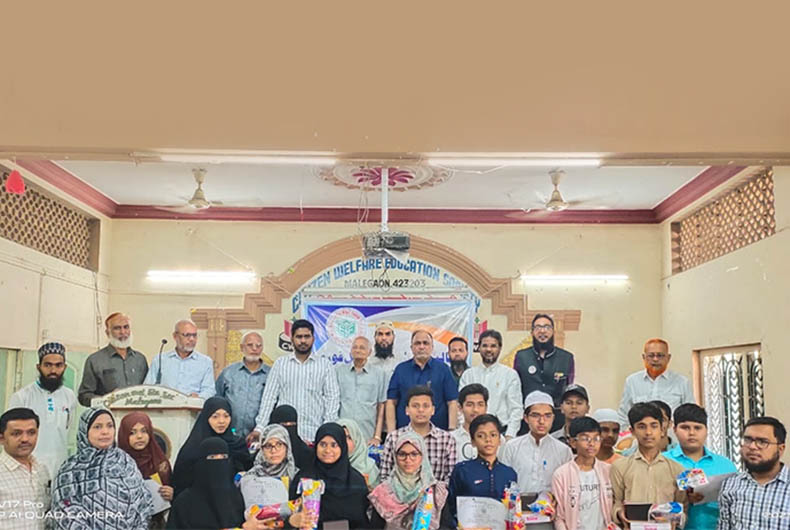
Malegaon Educational Forum has adopted under its “Main Banunga IAS Officer” campaign 20 students of Class 9 currently studying in various schools of the city.

Malegaon registered the city’s first entry into the coveted cadre of the highest ranking officials of India back in 2006 when Muhammed Qaiser Abdul Haque cracked the 2005 UPSC Civil Services exams becoming Malegaon’s first IAS officer.

Ten years later, Bhagyashree Dilip Vispute followed Muhammed Qaiser after she cracked the UPSC Civil Services Mains and then the Personal Interviews in 2016, becoming 2nd and the only female IAS officer from Malegaon.

Malegaon Educational Forum unleashed a determined and well planned program to increase this number. For this purpose, the forum conducted an Entrance Test in which more than 11,00 students appeared. Of them, some 680 were from Malegaon and the rest were from Bhiwandi.

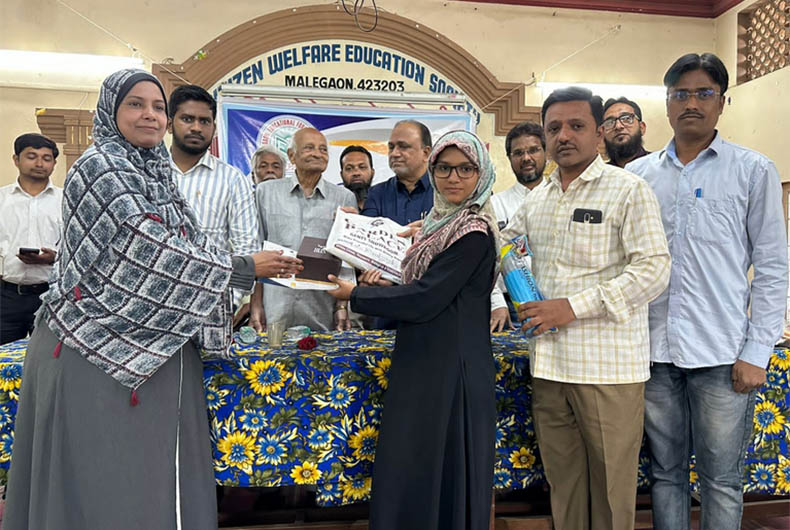
From among those who appeared in the Entrance Test from Malegaon, the names of top 20 students were announced in an award ceremony held at Dr Manzoor Hasan Ayyubi Hall of Sardar Campus Sunday January 29, 2023.

“We have committed to ourselves to send at least 5 IAS officers from amongst these 20 toppers”, Dr Manzoor Hasan Ayyubi, President of Malegaon Educational Forum, said while addressing the award ceremony Sunday.

Dr Ayyubi also shared the details of the campaign and explained how the forum will train the selected students for the next 7-8 years so that they not only successfully crack the UPSC Civil Services exams but also become a good graduate and professional even before appearing for the important exam.

While addressing the students, Aniket Bharti, Additional Superintendent of Police (ASP) Malegaon, said if coordinated effort is taken and these students are properly trained and given the necessary guidance then they will be unstoppable.

“I will always be available at the service of these students and the forum for the success of its campaign”, he said.

‘Mere adding numbers not enough’

In his speech, Aleem Faizee, Founder Editor of ummid.com, stressed on the need to increase the number of Muslims who are appearing in the UPSC and other government recruitment exams.

“The primary requirement to increase the representation of Muslim in ghe government sector is to make more and more students appear in the UPSC and other competitive exams conducted by the centre and various state governments.

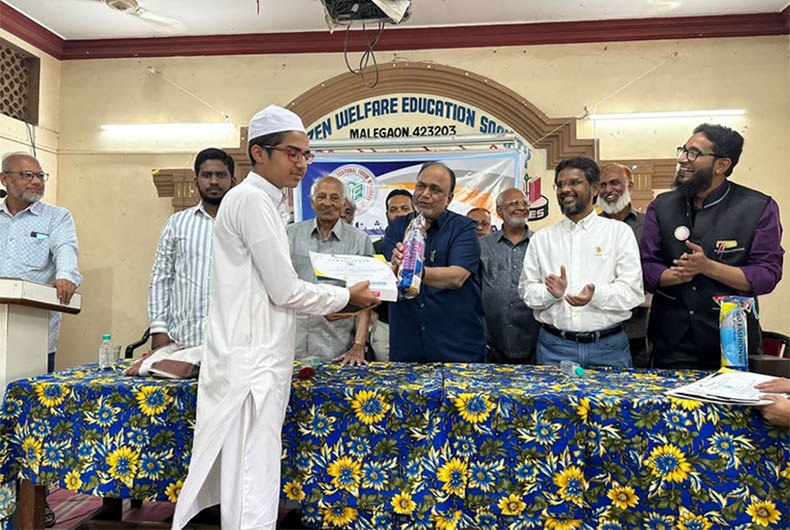
[Mariya Sadaf of Malegaon High School who stood first in the Entrance Test being honoured at the function.]

But at the same time, Aleem Faizee, said mere increasing the number of Muslims in the government sector will not serve the desired purpose unless those who will be joining the civil services in future are committed, dedicated and courageous enough to take tough decisions at crucial time.

“Otherwise, we have seen during the Gujarat riots in 2002 when more than 100 Muslims were killed in Naroda Patiya just outside the SRPF Camp. This happened despite the fact that the incharge of the camp and the second in command both were Muslims”, Aleem Faizee said quoting from the book of R.B. Sreekumar, who was the Additional Director General of the Gujarat Police (ADGP), at that time.

Mukhtar Yusuf, one of the founders of Malegaon Educational Forum, explained the aims and objectives, Rizwan Rabbani, Feroz Husain Badshah, Maaz Dr Manzoor Ayyubi, Mohammed Arif, Principal of Mohammadia School Mansoora, Ejaz Siddiqui and Bushra Mam also encouraged the selected students.

Mohammed Arif Dular sir moderated the program and Ruqayya Ansari, retired Principal of Malegaon Girls’ High School and a member of Malegaon Educational Forum, delivered the vote of thanks.

Next target Bhiwandi

Malegaon Educational Forum has planned similar ceremony in Bhiwandi on February 05, 2023 where 20 students of the city’s various schools will be “adopted” under the campaign.

It can be recalled that Malegaon had ran a similar campaign ‘Har Ghar se aik civil servant’ in 2013.

Hammad Zafar of Maunath Bhanjan (Uttar Pradesh), Umme Fardina Adeel of Guwahati (Asam) and Shakeel Ansari of Nandurbar (Maharashtra) were invited for the launch function. The three had shared in depth their personal experience and challenges they had faced while preparing for the important exam.

source: http://www.ummid.com / Ummid.com / Home> Education & Career / by ummid.com staff reporter / January 31st, 2023

Okhla-based leading Arabic scholar, author and recently retired Jamia Prof no more

Okhla Village (South Delhi District), DELHI:

Okhla-based leading Arabic scholar, author and recently retired Jamia Prof no more

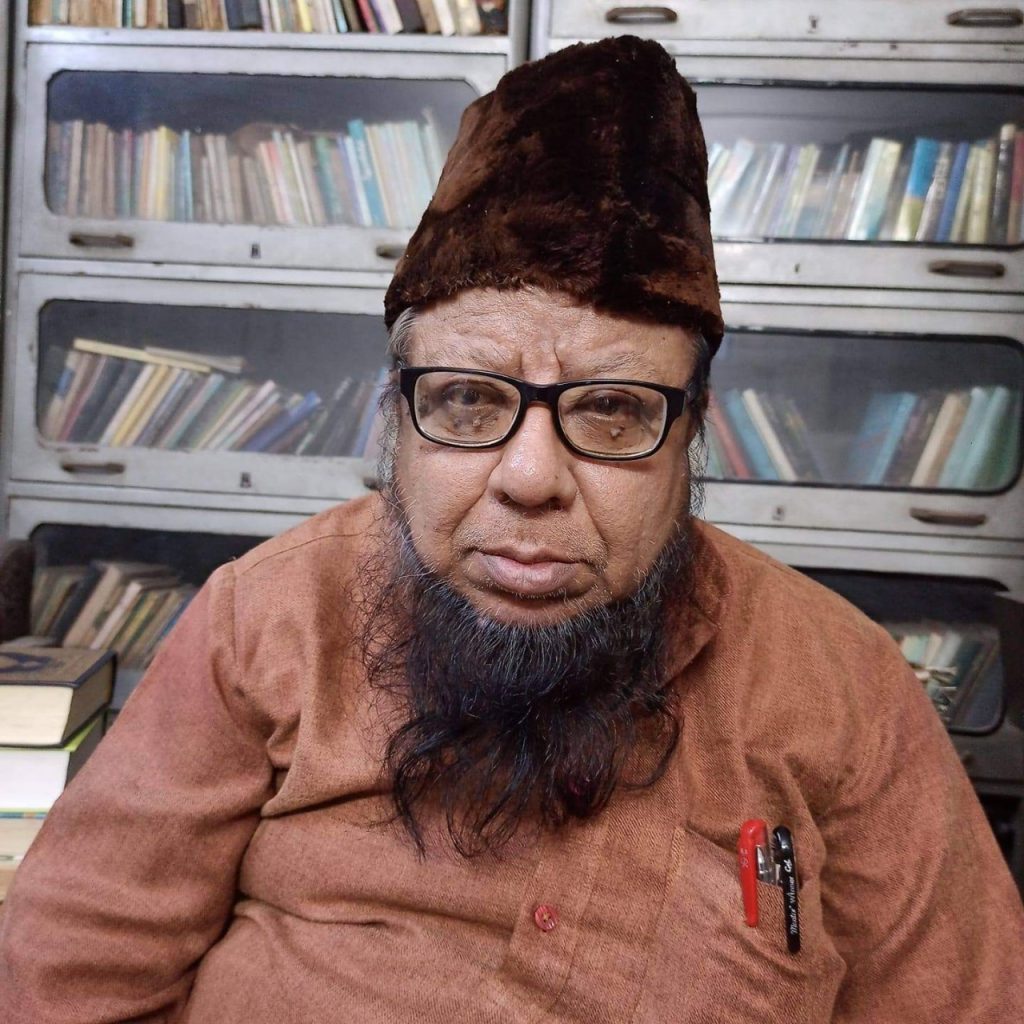
A well-known Arabic scholar, author of several books and editor of Urdu monthly magazine Allah Ki Pukar, Professor Syed Khalid Ali Hamidi, passed away a few hours ago in a local hospital in Okhla, according to family and friend sources.

The reason behind his sudden death couldn’t be ascertained till the filing of this report as three days ago he was live on his YouTube channel: Tazkeer e Quran By Khalid Hamidi. After the third Covid wave hit India, including Delhi and curbs being imposed to control the spread, Professor Hamidi was holding his weekly Quran porgramme online, interacting with his fans in the virtual world.

UPDATE: It was today (Wednesday morning) when while going out for some work, he fell in his parking and died within hours in a local hospital where he was rushed, said a resident who knows the family, adding that he could not be resuscitated in the hospital.

Born in 1956 in Rampur to Syed Hamid Ali, a writer and Jamaat-e-Islamia (Hind) stalwart, and Aisha Bee, Professor Hamidi was a known face in Okhla and Jamia. He retired from the Arabic Department of Jamia just a few years ago where he was Head of the Department.

Professor Hamidi initially studied in madarsa and did Almiat and Fazilat from Jamiatul Falah in Azamgarh. After which he came to Jamia and did his BA in 1979 and MA in 1981 from the university. He was a gold medalist at Jamia. His PhD was on India’s contribution to Hadeeth literature in Arabic in six volumes.

He did a doctorate in Arabic in 1993 and then joined Jamia as a lecturer in 1981. Besides a prolific writer, Professor Hamidi was a good orator.

Professor Hamidi’s father Syed Hamid Ali disassociated himself from JIH in later life.

Prof Hamidi was also a critic of JIH policies. He was a well-known Islamic scholar and wrote 20 books and used to give dars-e-Quran at his Abul Fazal residence every Saturday and Sunday, said sources.

Till his last days he continued to publish his magazine Allah Ki Pukar where he penned hart-hitting opinion pieces.

Friendly with junior, he was known to shares his view openly.

source: http://www.theokhlatimes.com / The Okhla Times / Home> Local / by theokhlatimes / January 19th, 2022

Three Valley professors publish research work in world’s top journal

JAMMU & KASHMIR:

These researchers include Prof. (Dr.) Zafar Ahmad Reshi and Associate Prof. (Dr). Irfan Rashid Kakroo, both working in the Department of Botany of University of Kashmir, and Dr. Pervaiz Ahmad Dar who is working as Assistant Professor at Department of Botany, Amar Singh College Srinagar.
These researchers include Prof. (Dr.) Zafar Ahmad Reshi and Associate Prof. (Dr). Irfan Rashid Kakroo, both working in the Department of Botany of University of Kashmir, and Dr. Pervaiz Ahmad Dar who is working as Assistant Professor at Department of Botany, Amar Singh College Srinagar.Special arrangement

In a significant development, three Kashmir based academicians have published their research work in one of the leading journals “Nature Ecology and Evolution”.

These include two Professors from University of Kashmir Srinagar and one from Amar Singh College, Cluster University Srinagar.

The researchers from Kashmir have been able to publish their research work in the leading Journal at global level which marks one of the rarest occasions.

These researchers include Prof. (Dr.) Zafar Ahmad Reshi and Associate Prof. (Dr). Irfan Rashid Kakroo, both working in the Department of Botany of University of Kashmir, and Dr. Pervaiz Ahmad Dar who is working as Assistant Professor at Department of Botany, Amar Singh College Srinagar.

Notably, this study is a finding of the global network MIREN (Mountain Invasions Research Network; https://www.mountaininvasions.org/) and the Valley based three academicians and researchers are part of the work. This study has revealed that climate change is reshuffling plant species in general and alien plant species in particular.

The study has revealed that climate change is also contributing to a rapid upward shift of alien plant species which is posing a serious threat to our fragile high altitude ecosystems including endemic plant species.

The results of this study are extremely important for mountainous regions like Kashmir as alien plant species are increasingly threatening ecosystems of the region. This publication is recognition of the quality of research being carried out by this group and will encourage and motivate local youth towards quality research.

The article can be accessed through the link  https://www.nature.com/articles/s41559-022-01979-6.

source: http://www.greaterkashmir.com / Greater Kashmir / Home> Education / by GK Education Desk / January 30th, 2023

JMI Dr Ibadur Rahman’s invention ‘environment-friendly cement’ secured Australian Patent

INDIA:

Jamia Millia Islamia (JMI) faculty have invented an environment-friendly cement. The cement was invented by Dr Ibadur Rahman, Assistant Professor, Department of Civil Engineering, Jamia Milia Islami, including other researchers from AMU. The Patent Office, Government of Australia has granted a patent to this cement as an intellectual property.

The invention is entitled ‘A Method for Preparing Modified Cement and Evaluating Mechanical and Chemical Properties,’ it’s main objective is to reduce carbon emissions.

Professor Mohammad Arif, Professor Abdul Baqi, Er Mohammad Gamal Al-Hagri, Er Amer Saleh Ali Hasan and Dr M Shariq are the co-inventors from Aligarh Muslim University (AMU).

Dr. Rahman said “There is a pressing need for the construction and other industries to go through green revolution-in other words, industries need to adopt and introduce environment-friendly materials.”

An official statement said this invention emphasis on the cement replacement effects with micro-silica fume, nano-silica fume and fly ash in a combination of two supplements on the mechanical properties of the concrete mixes.

The inventors said that the mixture of micro and nano-silica fumes, improves the mechanical properties of concrete and ultimately the microstructure and chemical analysis of the modified concrete show amplification in the morphological properties of concrete yielding to pore filling with further dense and compact formation.

Dr. Rahman has been working for the last eight years in the field of nano-based modified cement and concrete composite during his PhD research. A JMI statement said Dr. Rahman now has two patents to his merit.

Last year September, the intellectual property at the Patent Office, Government of India bestowed Dr. Rahman, the patent titled “High Strength Cementitious Nanocomposite Compositions and the methods of making the same.”

source: http://www.thehindustangazette.com / The Hindustan Gazette / Home> News> Lifestyle / by Rabia Shireen / June 11th, 2021

Kerala: 17-year-old boy builds a robot for his mother to help with household chores

KERALA:

Muhammed Shiyad Chathoth, a 17-year-old Kerala resident studying computer science in class 12, has created a functional robot to assist his struggling mother with some household chores.

When Chathoth and his family were being served by a simple humanoid robot in a Kannur eatery, that is when Chathoth first thought of the concept, when he overheard his mother saying, If only she had a robot that could assist her with chores around the house.

Chathoth enquired about the robot at the same restaurant and was told that it cost Rs 3-4 lakh, and they did not have any technical details about the robot system.

Buying the expensive robot was out of the question he researched and came up with cost-effective ways to build such a system.

He said, “There is no direct information available on the Internet about putting together a robot. But I noticed that the machine in the restaurant was following a fixed path. My research led me to find many videos that explained this tech.”

He build it in about 10,000 rupees and named his robot named Android Pathooty, after a Malayalam film named Android Kunjappan.

Within a year, Shiyad created a simple design by mounting a plastic stool on top of an aluminium base supported by four tyres. A female mannequin that can turn 180 degrees makes up the robot’s top half. But the system is entirely automated.

All that is required is to put a tray of food onto Android Pathooty, and it will proceed to the table along a predetermined course that has been indicated with black tape. The movement is powered by a gear and motor that ran on 12 volts and is controlled by an ultrasonic sensor. The distance between the kitchen and dining area is long, now Pathooty carries the food from the kitchen to the table.

Additionally, a mobile application has been developed through the MIT app and Admega MicroController. It can work both manually and automatically as well as carry a load of up to 6 kg.

Chathoth has big dreams, as he hopes to launch a robot startup in the future.

Source: First Post

source: http://www.thehindustangazette.com / The Hindustan Gazette / Home> National> Kerala / by The Hindustan Gazette / October 26th, 2022

Why Jamia Millia’s recent Republic Day Mushaira is making headlines?

NEW DELHI:

VC Prof Najma Akhtar with poets on Republic Day

On India’s Republic Day, a Mushaira was organized in the Engineering and Polytechnic Auditorium of Jamia Milia Islamia University, Delhi. This event saw some of India’s most prominent Hindi and Urdu literary voices as Ashok Chakrdhar, Ahmad Mahfooz, Dinesh Raghuvanshi, Salma Shaheen, Ahmad Naseeb Khan, Aleena Itrat Rizvi, Majid Deobandi, Shehpar Rasool, Khalid Mubashir, Khalid Mehmood, Chandradev Yadav, Durga Prasad, Shahid Anjum, Moeen Shadab, and Khan M Rizwan.

Patriotic poems remembering heroes of India’s national freedom struggle, and India’s democratic values, diversity, and unity were recited. This event coincided with many universities across India experiencing student unrest over issues that can distract students from their studies.

Dinesh Raghuvanshi said, ‘apni mitti pe agar naaz nahi kar sakte, zindagi hum tera aaghaz nahi kar sakte’ or when Majid Debandi recited ‘Jis ke dil mein watan ki azmat hai, hum usey apni jaan kehte haen’, the hall resounded with applause. That was the true culmination of this event meant to send a message of solidarity and unity from this most important educational institution of the country.

It was a well-attended event Presided over by the Vice Chancellor Professor Najma Akhtar.

The message from the poetic symposium was clear – a vocal minority cannot be allowed to hijack the peaceful and progressive atmosphere of the University. The University has always played a significant role in nation-building through quality education and, giving good professionals to the country. It also conducts research and promotes cultural diversity, and encourages students to become informed and socially responsible citizens who can contribute to the development of the country.

Jamia Millia Islamia was founded in 1920 as a non-government, secular university in Delhi, India. It was established as a response to British colonial rule and the Indian independence movement. It played a significant role in the independence struggle by educating and empowering the youth to participate in the freedom movement. In the post-independence era, Jamia has continued to be a center of excellence in education, research, and cultural exchange, serving as a model for an inclusive and equitable society.

Jamia Millia Islamia has produced many noted alumni who have made significant contributions in various fields such as politics, arts, media, and academics. Some of the notable alumni include Salman Khurshid, former Union Minister of India, and Shah Rukh Khan, a Bollywood actor, and film producer. Mukul Kumar, aerospace engineer and former NASA scientist, Saeed Akhtar Mirza, film director and screenwriter, and Nafisa Ali, actor, and social activist.

Jamia Millia Islamia was recently ranked as one of the top universities in India by several national and international ranking agencies.

The University has a vibrant student political culture and is known for its strong student activism and political engagement. Various student groups play an important role in shaping the discourse on important national and local issues, and in advocating for student rights and interests.

source: http://www.awazthevoice.in / Awaz, The Voice / Home> Story / by ATV / posted by Aasha Khosa / January 31st, 2023

After switching schools owing to the hijab ban, a Karnataka girl wins a prize in the Kerala State Festival

Shivamogga, KARNATAKA / Karavarakund (Malappuram District) KERALA:

Afeefa K wins first place with an “A grade” in Kannada speaking this year in the Kerala State Festival

At the Arts Festival, which concluded on 7 January, the topic for Kannada speech was “role of voters in democracy”. Afeefa said she explained the misuse of voters and how it damages society.

Afeefa, a student at Shimogga’s KPCL High School in the tenth grade, was forced to leave school as soon as the Karnataka government banned the hijab in February of last year.

She is currently enrolled in Darunnajath HSS, a school located in Karuvarakund, her grandfather’s hometown and a town in Kerala’s Malappuram district.

Source: Maktoob Media

source: http://www.thehindustangazette.com / The Hindustan Gazette / Home> National> Karnataka / by Ayesha Mastoor / January 11th, 2023