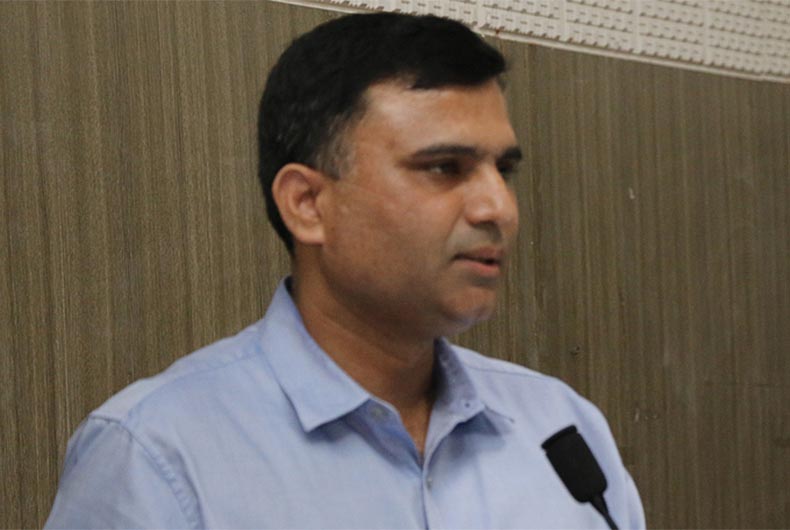
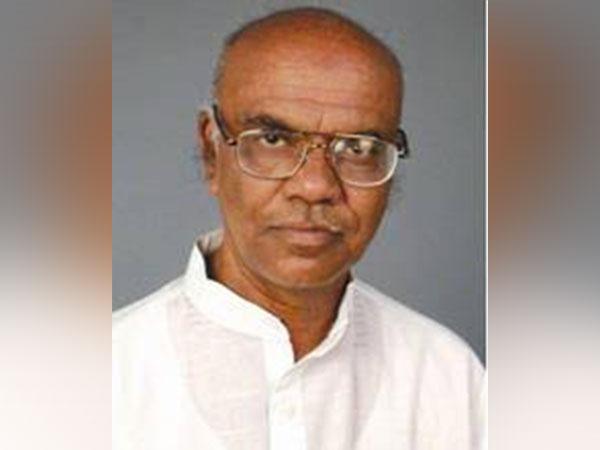
Dr Salman also featured in Stanford’s list in the years 2020, 2021 and continues to be in the prestigious top international scientists list’ of 2022.
Hyderabad:
Dr. Salman Ahmad Khan, Professor in chemistry and Dean, School of Science, Maulana Azad National Urdu University (MANUU) featured in the prestigious Stanford University’s list of top 2% International Scientists third year in a row.
The list is also known as ‘Updated Science wide Author database of Stanford Citation Indicators’.
The database was released by Stanford University, USA and published by Elsevier BV on 10 October 2022.
Dr Salman also featured in Stanford’s list in the years 2020, 2021 and continues to be in the prestigious “top international scientists list’ of 2022 in recognition of his exceptional research work.
The selection was among top 100,000 scientists by c-score (with and without self-citations) or a percentile rank of 2% or above in their field from all over the world and was classified into 22 different fields and 176 subfields.
Prof. Syed Ainul Hasan, Vice-Chancellor, MANUU congratulated Prof. Salman. He said that Dr Salman’s achievement highlights our research competencies and university is on a path to find innovative solutions to complex problems of society through quality research work.
Prof. Salman A Khan has published 185 research Articles in reputed journals like Elsevier, Springer, Wiley and has also published 4 books and 2 book chapters.
He completed his PhD from Jamia Millia Islamia University New Delhi.
Back in 2020, Jamia Islamia’s Prof Imran Ali was selected as leading scientist in India in the field of Analytical Chemistry by the Standford University in the US.
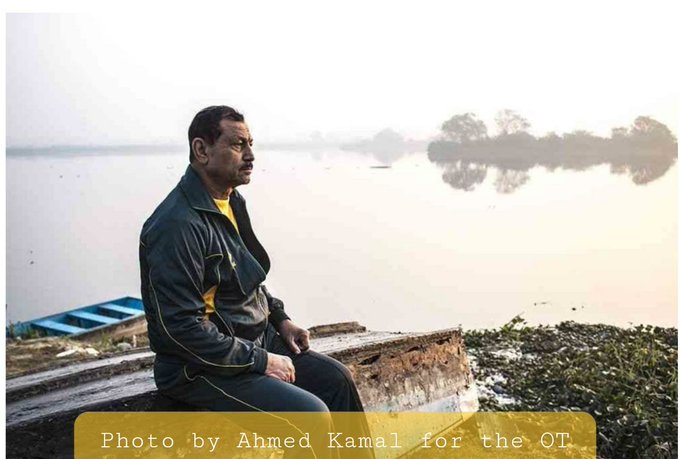
In the same year, Professor Ahmed Kamal, Jamia Hamdard Pro-Vice Chancellor was also named among top 2 per cent cientists in the world by Stanford University.
source: http://www.ummid.com / Ummid.com / Home> Science & Technology / by ummid.com news network (headline edited) / October 20th, 2022
Okhla-based lifeguard Mumtaz who fished out dead bodies from Yamuna, saved many passes away
An award-winning lifeguard, and a resident of Jamia Nagar, who had a reputation of diving into the water of Yamuna to fish out dead bodies and rescue many for the last four decades, passed away on Wednesday due to heart attack.
A retired teacher of Jamia school, 63-year-old Mumtaz Ahmed, was hospitalised for the last 15 days for getting treatment of heart ailment, but he couldn’t be save and was laid to rest in Batla House graveyard on Wednesday.
He saved many lives from Yamuna and was known to be the best swimmer in the whole area.
Though his act to save anyone from Yamuna was known but his daredevil act in 1995 of fishing out 7 bodies alone and saving one life when a boat of Uttar Pradesh Provincial Armed Constabulary had capsized in Okhla made him a hero.
Following the act, he was honoured with a Jeevan Rakshak Padak and a reward of Rs 10,000 from the President. Over the years he won several awards.
Mumtaz, born in Okhla, retired two years ago after working in Jamia Middle School Self Finance as a PT teacher since 1987, said his family member.
Old timers at Jamia, who knew him personally, said whenever there was any incident of drowning in Yamuna people used to rush to Mumtaz house in Ghaffoor Nagar seeking help and he never let them down.
Jamia school teacher Haris-ul-Haq said he heard from his friends that Mumtaz fished out the first body when he was 12 years old and since then he fished out some 100 dead bodies and saved many from different water bodies of Delhi.
He has left behind three sons and a wife.
source: http://www.theokhlatimes.com / The Okhla Times / Home> Local / by the okhla times / September 15th, 2022
Written almost a hundred years ago in a far-off land, this diary of a young Muslim woman anticipates our present situation of religious intolerance.
Book:A Long Way From Hyderabad: Diary Of A Young Muslim Woman In 1930s Britain
Author: Muhammadi Begum
Publisher: Primus
Price: Rs. 1,150
Diaries are like portmanteaus that have a habit of gathering diverse and often disparate genres within the folds of personal jottings.
Muhammadi Begum’s diary is a veritable mixed bag as her daily observations of the social life of the English university town, Oxford, are imbued with her Hyderabadi ruminations — the practical, poetic and philosophical musings of a young Muslim woman of Hindustan.
Located in Britain of the 1930s, the diary is both a historical journal with an ‘interwar’ and ‘pre-Independence’ air and a domestic memoir full of ‘homely’ quotidian details.
Daniel Majchrowicz’s helpful introduction delineating Muhammadi Begum’s contribution to the genre of female travel literature, and Kulsoom Husein’s familial account recalling the posthumous discovery and subsequent translation, provide rich intellectual and social contexts for understanding this thoughtfully edited and well-produced work.
But diaries are eccentric and whimsical texts, which refuse to tell well-ordered tales. While the reader impatiently waits for the classroom experiences of this outstanding student who had won a scholarship from the government of the Nizam of Hyderabad to study at Oxford from 1934 to 1937, the diary refuses to move beyond the author’s travails over her private tuitions which she took for qualifying the Responsions, the erstwhile Oxford entrance examination!
What could be the reasons for Muhammadi Begum not keeping a diary after she joined St. Hugh’s can only be guessed at as the reader has to be satisfied with the detailed entries for one year which begin with a visit to London and end with a trip from Europe. And although the ending shows that she was an independent and a self-sufficient mother, she repeatedly asserts that her self-confidence was firmly anchored in happy conjugality.
Since diaries often masquerade as unposted letters, Muhammadi Begum’s cross-cultural reflections serve an unstated epistolatory purpose within the testimonial turn of the form. Paralleling her actual letter-writing activity, an enterprise which she and her husband were forever engaged in, the enthusiastic entries regarding conversations, expeditions and explorations add novelty to an otherwise quotidian account of the uncertain and strapped situation of an overseas student’s life in England.
There are important takeaways from this unfinished work. As part of the burgeoning female form, there are noticeable introspective beginnings in the areas of freedom and tolerance. Critically speaking, beginnings don’t necessarily mark a break from the past but indicate an intention towards the meaning-making process.
Likewise, in this diary, beginnings are often ruptured by their collision and collusion with tradition and continuity. Yet, they produce meaningful differences.
For instance, the author’s analysis of English piety and Hindustani prejudice is startlingly relevant for our present times. Despite being a practicing Muslim and a devout believer, she notes the sincerity of English religiosity as against the practice of paying “lip service to ritual” observable in Hindustani compatriots. This difference prompts her to remark that people “at home” know “how to make an uproar and create a public scene over some minor issue”. She then rhetorically asks, “Don’t we realize that the need for sanctity near places of worship has to go with a willingness to educate the public?”
Written almost a hundred years ago in a far-off land, this diary of a young Muslim woman anticipates our present situation of religious intolerance. Or is it that our intolerance has been around for a much longer time?
source: http://www.telegraphindia.com / The Telegraph Online / Home> Culture> Books / by Sharmila Purkayashtha / September 09th, 2022
Urdu writers and literary critics at the university have contributed in their own meaningful ways to keep the Persio-Urdu literary culture alive.
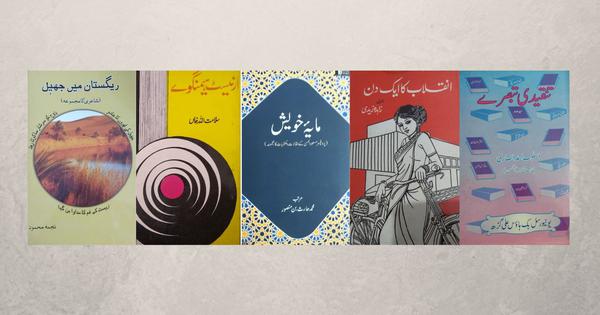
Some of the Urdu books written by the professors of the Department of English, Aligarh Muslim University.
Bilingualism, in many cases even multilingualism, being a special quality of most Indians, it comes as no surprise that many scholars working in various English Departments of Indian universities and colleges have produced work of considerable merit in several Indian languages. Often this work, both creative and critical, has not been sufficiently acknowledged because the English Departments in India were mostly concerned with the canonical study of English literature. The work done on the English canon and on Indian languages belonged to two different domains, with a separate group of readers.
With a drastic change in the nature of English studies in India in the last two decades or so, the broadening of the English canon following a decolonising process, the introduction of literatures in Indian languages through English translations and their inclusion in university curricula, and a renewed confidence with which to view local and indigenous traditions of literature and criticism, these two domains are beginning to converge.
Urdu literature in an English department
While taking stock of the work produced in English Department at Aligarh Muslim University on the occasion of the Azaadi ka Amrit Mahotsav celebrations, it was heartening to note that many scholars, otherwise well-known as hard-working teachers of English and sound scholars of English literature, contributed in a big way to Urdu literature and criticism. Their grounding in the Persio-Urdu literary culture and knowledge of English literary and critical traditions gave them a distinct identity, which also offered a position of advantage in many ways for approaching English literary texts.
These academics were often straddling two worlds without getting sufficient acknowledgement from either. For the western critics and academics they pretended to know what they were not fully entitled to and were hence treated with a degree of condescension, and for their counterparts in Indian languages English professors were trespassers into a territory to which they had forfeited the rights when they opted for a foreign language and literature.
Three important categories of the AMU English Department’s contribution to Urdu can be identified. First, those who joined the Department as faculty members, spending a great deal of their time in Aligarh writing in both Urdu and English. Second, members of the English Department who read in Urdu but wrote in English, either translating from Urdu to English or writing academic articles and books using Urdu sources. Third, those who studied in the Department of English but moved out to different places, doing substantial work belonging to either of the two categories: creative work, literary criticism, and translation into Urdu from English.
The association of the first two categories of people with Urdu also tells the story of the gradually changing status of the language in India. Most of the people, or rather all, belonging to the first category were born in undivided India, when Urdu had a vibrant presence in the country. The generation born before Independence also had the advantage of being familiar with Persian, which made their Urdu impeccable. The second category, born after Independence, was generally more proficient in reading Urdu than in writing in the script, and have mostly written in English.
Mapping out the work of the faculty members of English Department since independence, it emerges that a good number of them, beginning with Professor Khwaja Manzoor Hussain (1904-1986), had a substantial output of Urdu literature and literary criticism. Well-versed in English, Urdu and Persian, Khwaja Manzoor Hussain, chairman of the Department from 1946 to 1948, was a man of immense learning, much sought after for his insights into literature.
Asloob Ahmad Ansari, an eminent Urdu critic mentions in his profile of Hussain in his book Aina Khane Mein that leading Urdu writers and poets like Rasheed Ahmad Siddiqui, Firaq Gorakhpuri, Faiz Ahmad Faiz, Pitras Bukhari, Ahmad Nadeem Qasmi, Wiqar Azeem, Intizar Husain, and Shan ul Haq Haqqi have acknowledged Manzoor Hussain’s range of scholarship and critical insights into literature.
Ansari also writes that Faiz sent his famous nazm “Ye daagh daagh ujala ye shab guzida sahar” to Khwaja Manzoor Husain before its publication, and he read it in many gatherings in Aligarh. Another incident relates to English novelist EM Forster – he was a close friend of Sir Ross Masood, Sir Syed’s grandson and AMU’s vice chancellor from 1929 to 1934, and an inspiration for the character of Dr Aziz in Forster’s modern classic A Passage to India – when he was in Aligarh’s historic Union Hall Building to deliver a lecture on Charles Dickens, organised by the Raleigh Literary Society of the Department of English. Introducing the speaker, Khwaja mentioned some of the forgotten writings of Forster, which even the novelist probably did not remember. Forster remarked in wonderment, “You are slandering me”.
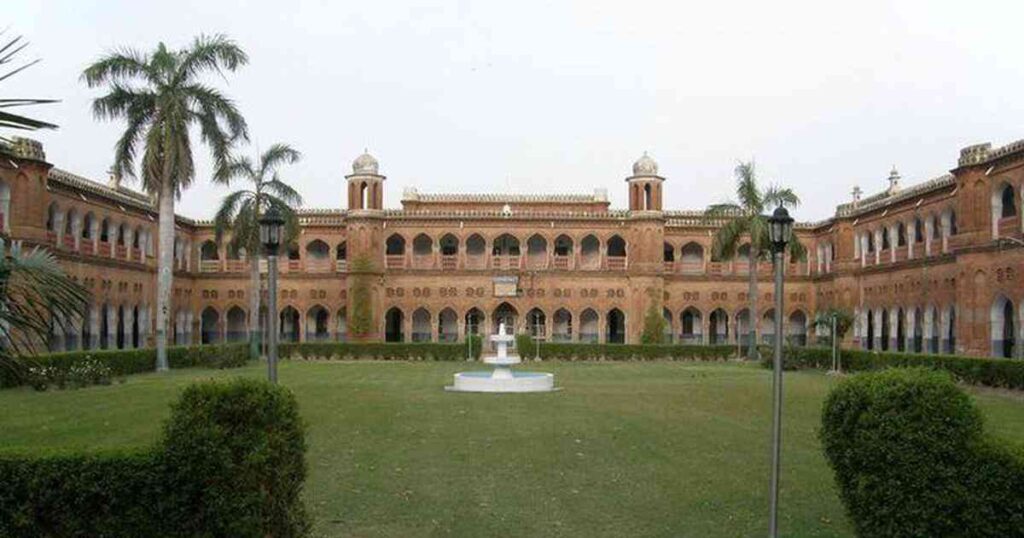
Aligarh Muslim University | Credit: PTI
How world literature inspired modern writings in Urdu
A cultured, soft-spoken and self-effacing person, Khwaja did not publish much while in Aligarh, though he was known to be translating some Russian short story writers into Urdu and working on different aspects of Urdu ghazals. It was only in the late 1970s that he published his book of Urdu translations of Russian stories with a preface written by Faiz Ahmad Faiz. Ansari is of the opinion that Hussain’s translation of the stories of writers like Chekhov influenced the course of the Urdu short story significantly.
In other words, Ansari suggests that Urdu writers of short stories were made familiar with Russian greats through Hussain’s translation. Treating some difficult and controversial literary and critical issues with frankness, his book titled Iqbal aur Baaz Dusre Shayar tries to assess Iqbal’s status vis-à-vis other important Urdu and Persian poets. His longstanding interest in the genre of the ghazal, especially its relationship to contemporary social and political movements, yielded two very important books in 1970s: Tahreek Jado Jihad Bataur Mauzu-o- Sukhan and Urdu Ghazal ka Khariji Roop Bahroop. Presenting a new proposition, and receiving bouquets and brickbats in equal measure, he argued that ghazal poetry has a political and social dimension which may not be directly visible on the surface, but is very much a part of this genre.
Salamatullah Khan, another important name in this context who joined the English Department in 1945 and retired as a reader (promotions were difficult at that time), was one of the pioneers of American literature in the northern part of India at a time when American literature hardly had any presence in universities and colleges. He can be spotted in a group photograph of the delegates who met in Mussoorie in 1962, a meeting which led to the establishment of the American Studies Research Center in Hyderabad (ASRC), at one time the best resource for books and journals on American studies.
Though Khan worked on Emily Dickinson for his doctoral thesis, a lesser-known aspect of his work is the publication of his three books in Urdu titled Majaz ka Almiya aur Doosre Mazameen (1969), Amriki Adab ka Mukhtasar Jayeza (1978), and Ernest Hemingway: Hayat-o-Fan ka Tanqidi Mutaala (1980). Majaz ka Almiya includes his essays on Mir Taqi Mir, Ghalib, Sauda, Faiz Ahmad Faiz, some rebel poets of Urdu, and the genres of ‘azad nazm’ and ‘inshaiya’. His history of American literature follows the method of literary history popular at that time, introducing first the pioneers like Jonathan Edwards, Benjamin Franklin, and Thomas Jefferson, and then discussing different trends and movement in American literature. His crisp and analytical style, not a very common feature of Urdu prose, makes his book on Hemingway, which covers all his important works, a good read even today.
How Aligarh Muslim University nurtured contemporary Urdu literature
The most prolific of all academics associated with the department was undoubtedly Asloob Ahmad Ansari (1925-2016), who wrote extensively in both English and Urdu. A bilingual critic, Ansari joined the department in 1947, headed it for almost two decades, and influenced a whole generation of his students and colleagues to read closely and write carefully.
An established Shakespeare and Blake scholar, he has a huge corpus of work in Urdu, mostly literary criticism, but also sketches and memoirs, and many edited volumes. Ghalib and Iqbal were his favourite poets, but he has written on almost all important Urdu poets. His books on Ghalib include Naqsh-e-Ghalib (1970), Naqsh Hai Rang Rang (1998) and on Iqbal Iqbal ki Terah Nazmein (1977), Iqbal ki Muntakhib Nazmein and Ghazlein (1994), Iqbal Harf-o-Mani (1998). Among the many books he edited, his two-volume GhazalTanqeed: Vali Deccani se Iqbal aur Maabad Iqbal Tak (2002) is especially remarkable for its comprehensiveness and variety.
Though he has written more on Urdu poetry, a dominant genre in Urdu literature, Ansari’s work does cover his analysis and evaluation of all canonic Urdu novels and other genres of prose. His books Urdu ke Pandrah Novel (2003) discusses, among others, important novels like Umraojan Ada, Maidan-e-Amal, Udas Naslein, and Aag ka Dariya. His book Aitraf-e-Rasheed Ahmed Siddiqui (1977) unravels the personality and art of Rasheed Ahmad Siddiqui, a master humorist and satirist. His articles on different literary issues are included in Adab aur Tanqeed (1968) and Andazey (2008).
An excellent prose writer, Ansari has also written a delightful book of sketches, Aina Khane Mein, which includes his sketches and assessments of some of his contemporaries, such as Dr Zakir Husain, Rasheed Ahmad Siddiqui, Khwaja Manzoor Husain, Maulvi Zia Ahmad Badauni, Dr Abdul Aleem, Syed Hamid, Malik Ram, Khaleeq Ahmad Nizami, Ale Ahmad Suroor, and Mukhtaruddin Arzoo.
Ansari brought out a literary journal in Urdu, Naqdo Nazar, which provided a platform to many of his colleagues to write on a regular basis. Among his colleagues in the Department of English, Professor ZA Usmani, Zahida Zaidi, Amin Ashraf, Mohd Yasin, Maqbool Hasan Khan, S Wiqar Husain, Abdul Raheem Kidwai, and Syed Asim Ali wrote for the journal regularly, often at his persuasion. He also motivated many young scholars from other disciplines, including people like Shafey Kidwai, now a Sahitya Akademi award winner in Urdu, to write for Naqdo Nazar.
Ansari himself contributed articles, analyses of poems and book reviews to the journal on a regular basis. In fact, often the major portion of the journal comprised his own contributions. He also brought out a collection of his editorials and obituaries published in Naqdo Nazar in his book Harf-e-Chand (2005). Many of Ansari’s articles, written over a long period of time, were published in book form in his last phase, largely due to the practical help he received from his former student Abdul Raheem Kidwai.
The work of Zahida Zaidi (1930-2011), a poet, dramatist, novelist, translator and above all a liberal face of Aligarh all through her career, will surely enjoy an afterlife as more and more English translations of her Urdu plays appear on the scene. Known for nurturing the talent of Naseeruddin Shah and introducing him to many Continental playwrights, Zaidi was one of the pioneers of Urdu drama. She translated the plays of Chekhov, Pirandello, Sartre, Beckett and the poems of Eugenio Montale, Garcia Lorca, and Pablo Neruda into Urdu. Full of elaborate stage directions, her Urdu plays are heavily inspired by absurdist theatre, where often there is minimalist use of stagecraft. Departing from the technique of realism, they have, however, been inspired by many real events and topical issues.
Woh Subah Kabhi Toh Ayegi (1990) a feminist play in many ways, responds to the issue of domestic abuse. In Doosra Kamra (1990) a play in which the line between dream and reality appears blurred, all characters meet in one room while another room becomes a frightening place, with dead bodies appearing in it one by one. Jungal Jalta Raha (1990) probes the complexities of human character and Kyun Kar Us But se Rakhoon Jan Azeez (1998) laments the loss of culture and values in academic spaces.
Responding to the tragedy of the Gulf War, she wrote Sahra-e-Azam (1991), an anti-imperialist play where she is critical of American bombing in Iraq. She also responded to the tragedy of Gujarat in her play Bahut Door Tak Raat Hogi (2006) and dedicated it to “the martyrs and persecuted people of Gujarat; those persecuted women who were victims of the lust of cruel beasts; those innocent people languishing in jails for their innocence; those innocent children who are in search of their lost paradise.” Like George Bernard Shaw, Zaidi wrote long prefaces to her plays which provide a rich commentary on the context, making it easier for her readers to appreciate the technique and thematic concerns.
Zahida Zaidi’s lone novel Inquilab ka Ek Din (1996) is a campus novel, talking about one day in the life of its young female protagonist, but its canvas is wider because her use of stream of consciousness narration in certain parts of the novel. Zaidi also has seven collections of poems, two in English titled Broken Mirror (1979) and Beyond Words (1984), and five in Urdu titled Zahr-e-Hayat, Dharti Ka Lams, Sang-e-Jan, Shola-e-Jan, and Sham-e-Tanhai.
A poet of ghazals and nazms, her poetry has different shades, topical, symbolic, experimental, and philosophical and spiritual; especially in her final collection Sham-e-Tanhai (2008). Defining the nature of her poetry in the preface of her book Shola-e-Jan (2000) she writes, “For me poetry is a practice of transforming deep and intense experiences into insights through the vehicle of creative rhythm and potential of language.” Her important write-ups on Urdu literature written in English are included in the book Glimpses of Urdu Literature: Select Writings (2011).
Syed Amin Ashraf (1930-2013), who joined the Department in 1963 and retired in 1991, was better known for his light-hearted conversation, bursting with anecdotes, and his Urdu couplets than for his scholarship. His three collections of poems, Jadah Shab (2000), Bahar Ejaad (2007) Qafs-e-Rang (2011), and a single collection of prose writings and translations Burg-o-Vabaar, were published many years after his retirement. Hailed as a poet of love, especially the sufic concept of love, his poetry, using very few words, holds an appeal for both heart and mind.
Amin Ashraf’s khanqahi background also colours his poetry. Jadah Shab, containing both nazms and ghazals, was written over almost half a century. In his introduction to Bahar Ejaad, a collection of his ghazals, eminent Urdu critic Shamsur Rahman Faruqi expresses the view that reading just a few ghazals of Amin Ashraf’s makes the reader not only a confidant of the poet’s, but also in posses himself composed those couplets.
Jadia Asjad, a research scholar at Aligarh Muslim University working on Amin Ashraf’s poetry, is of the view that there appears a conflict sometimes in Amin Ashraf’s mind between classical and modernist (jadeed) models of poetry but he was too devoted to classical tradition of poetry to try modernist poetry. Burg-o-Vabaar includes his explication of many nazms and scholarly essays on various poets and writers like Iqbal, Fani, Shamsur Rahman Faruqi, Majrooh Sultanpuri, Muzaffar Hanafi and a comparative view of the conception of Satan in Milton and Iqbal. His Urdu translations of Wordsworth’s Preface to Lyrical Ballads (1800) titled Shayri aur Shayri Zabaan-o-Bayaan, American critic Mark Schorer’s famous essay “Technique as Discovery” titled “Takneek Daryaaft ki Hasiyat Se” and an essay of French critic Paul Valery greatly benefited his Urdu readers.
Mohd Yasin (1932-2010), a hard working teacher, authored two very important books in Urdu titled Angrezi Adab ki Mukhtasar Tareeq and Naqoosh-o-Afkaar aur Nazaryat: Muntakhib Mazaamin (2010) in addition to his articles and book reviews published in Naqdo Nazar. First published in 1971, Anjuman Taraqqi Urdu Hind, at the insistence of famous Urdu critic Ale Ahmad Suroor, had its revised and expanded second edition in 1990 (Uttar Pradesh Urdu Academy) and a third revised edition in 2009 (Educational Book House, Aligarh). This book, indebted to Legouis and Cazamian’s famous A History of English Literature, was written with an awareness that Urdu readers not only need to know English literature in order to assess the limitations or the special features of their literature, but they can also approach world literature through a window provided by the ideas, forms and philosophy contained in English literature.
His essays in Naqoosh-o-Afkar, written over a long period of time, include his sketches of Rasheed Ahmad Siddiqui, Majnoo Gorakhpuri, Amelendu Bose, Maulana Saeed Ahmad Akbarabadi, Ale Ahmad Suroor, Ateeq Ahmad Siddiqui, and Syed Amin Ashraf, including his observations on different literary issues and his point of view on many social and political problems faced by Aligarh Muslim University and Indian Muslims. He also familiarised Urdu readers by writing essays on French novelists Balzac and Flaubert in Naqdo Nazar.
Najma Mahmood’s collection of poems Registan mein Jheel (2014) reflects the modernist sensibility of an accomplished poet of nazms and songs. Drawing upon the images from nature like lake, river, water, rains, waves, sea, lightening, moon, sky and many others, her work touches on, among other subjects, themes of creativity, beauty, gender-relations and problems of existence. There is not only an element of restlessness in her poetry, noted by Syed Hamid, or shades of romanticism, noticed by Waheed Akhtar, there is also a deep psychological and spiritual probing in her nazms. Her feminist concerns are most visible in her famous poem Mother Goddess.
(From L to R): Asloob Ahmad Ansari, Zahida Zaidi, Syed Amin Ashraf, Najma Mahmood.
Many other members of the Department wrote and published in Urdu. Masoodul Hasan(1928-2019), a prolific writer in English till his last days, wrote interesting and critical reviews of all books sent to him as presents. His articles, reviews and creative pieces in Urdu are included in Maya-e-Khewesh (2019), ably compiled and edited by Mohammad Haris Bin Mansoor.
Maqbool Hasan Khan’s writings on Ghalib, Iqbal and Qurratulain Hyder were greatly appreciated. In fact, Khan disagreed with the largely held view of Urdu critics about Hyder’s stream of consciousness technique in her novels. ZU Usmani, widely praised for his insights into difficult literary texts, wrote on Ghalib, Fani, Premchand, and Rasheed Ahmad Siddiqui in Naqdo Nazar. S Wiqar Husain, a very well-read person, wrote insightful essays on Rasheed Ahmad Siddiqui’s symbolic characters, features of Moin Ahsan Jazbi’s poetry and analyses of ghazals of Iqbal, Bahadur Shah Zafar, Nasir Kazmi, Asghar Gondvi, and Fani.
Raza Imam’s collection of stories in Urdu titled Shor aur Sannata, which has a foreword written by noted Urdu critic Shamim Hanafi, was published after his death. AR Kidwai, a celebrated translator of difficult philosophical and religious texts, has written a number of books in Urdu. Syed Asim Ali, who has written substantially in Urdu and translated important works, is also a poet of ghazals. He has written essays on Iqbal’s criticism, Shelley’s intellectual evolution in his poetry, analyses of the ghazals of Mir Taqi Mir, Khwaja Mir Dard and other Urdu poets apart from incisive book reviews in Naqdo Nazar.
Urdu poets, creative writers and literary critics at the Department of English at Aligarh Muslim University have contributed in their own ways to make Azadi ka Amrit Mahotsav a meaningful affair.
Mohammad Asim Siddiqui is professor in the Department of English at Aligarh Muslim University, Aligarh.
source: http://www.scroll.in / Scroll.in / Home> Language of Literature / by Mohammad Asim Siddiqui / October 09th, 2022
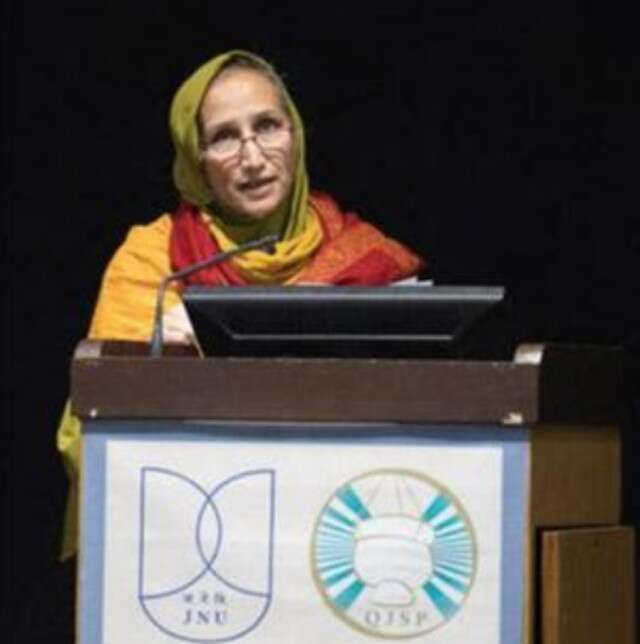
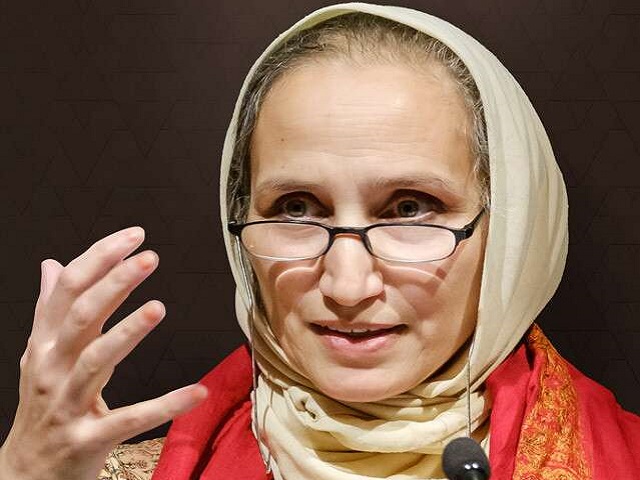
Dr Tahera Qutbuddin, a professor of Arabic Literature at the University of Chicago, recently became the first person of Indian-origin to win the 15th Sheikh Zyed Book Award. The award is considered to be the Nobel Prize of the Arab world.
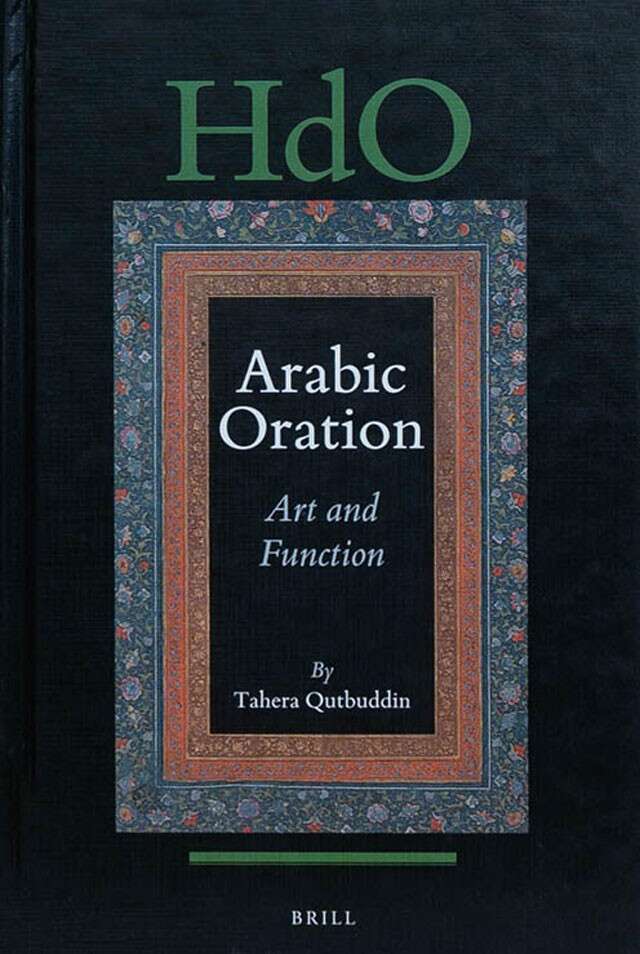
Dr Qutbuddin, who was born in Mumbai and was educated until class 12 in India, also serves on the editorial board of NYU Abu Dhabi’s Library of Arabic Literature. She won the award for her latest book, Arabic Oration – Art and Function, published by Brill Academic Publishers of Leiden in 2019.
In the book, she puts forth a comprehensive theory of Arabic literature in its foundational oral period dating the seventh and eighth centuries AD. She discusses it’s influence on modern-day sermons and lectures as well.
Having completed her higher secondary from Sophia College in Mumbai, Dr Qutbuddin pursued her BA from Ain Shams University, Cairo and got her PhD and MA from Harvard University, USA.
In a recent interview with a portal, she said that although she has lived away for many decades in Egypt and now the US, her roots are vital to who she is, and Indian culture is part of the fabric of her being.
“It (Mumbai) is the place of my childhood memories, of playing in the monsoon rains and eating mangoes in the summer. I come back to Mumbai often. I love my Mother India, and pray for her security and progress, and for harmony and love between the many beautiful communities that call her home,” she said.
According to her bio, her research “focuses on intersections of the literary, the religious, and the political in classical Arabic poetry and prose.”
She is the recipient of several prestigious fellowships, including support from the Franke Institute of Humanities, the American Council of Learned Societies, the Carnegie Corporation of New York, and the John Simon Guggenheim Foundation.
source: http://www.femina.in / Femina / Home> Trending> Achievers / by Shraddha Kamdar / April 30th, 2021
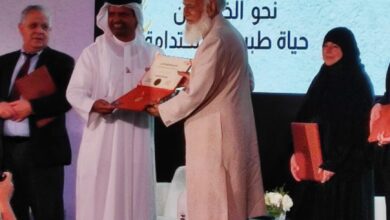
Prof. Wazahat Hussain, a leading professor from the Aligarh Muslim University (AMU) has won an international award for Traditional, Complementary, and Alternative Medicine.
Husain, a retired chairman of the Department of Botany at the AMU, won the Second Sheikh Zayed International Award on Monday in an event arranged by the Zayed Charitable and Humanitarian Foundation.
pix: thenortherngazette.com
The Foundation is a UAE-based non-governmental, non-profit organisation that invests in developing human capital to improve the quality of life, according to the Foundation’s website.
The award aims to give recognition to eminent academics and scientists of Traditional Complementary and Alternative Medicine (TCAM ) globally, and TCAM physicians from the UAE, for enhancing TCAM knowledge and practices, and contributing to the improvement of quality of life for humanity, the organisation said.
A plant taxonomy expert, Husain has been conferred Lifetime Achievement Awards twice, once jointly by the University Grants Commission (UGC) and the AYUSH ministry and then by the Wildlife Institute of India and Department of Wildlife Sciences, AMU.
Speaking to PTI, Prof. Husain stated that he was honoured to be representing AMU and India at the pinnacle of his academic career.
Academics do not work for recognition, but when they come, they must be accepted with humility. I dedicate this award to my university and my country, Prof Husain said.
According to WHO, traditional medicine is the sum total of the knowledge, skill, and practices specific to indigenous experiences and beliefs which are used in the maintenance of health, while alternative or complementary medicine refers to a broad set of healthcare practices that are not part of a country’s own tradition or conventional medicine and are not fully integrated into the dominant healthcare system.
source: http://www.freepressjournal.in / The Free Press Journal / Home / by PTI (headline edited) / October 11th, 2022
This school built in the middle of a graveyard offers education to the poor in Uttar Pradesh’s Agra. The unique school teaches all subjects to students from class 1 to class 8.
The high school conducts classes for around 75 students inside the graveyard. (Photo: Siraj Qureshi/India Today)
A school, built in the middle of a cemetery area, offers education to the poor in Uttar Pradesh’s Agra. Built almost 50 years ago, Islamia junior high school conducts classes for around 75 students inside the graveyard. This unique school teaches all subjects to students from class 1 to class 8.
Nilofar, a class 5 student, told India Today that the school is closer to her home and a fee of Rs 50 keeps her fears away while visiting the graveyard to seek education.
“When everyone has to come to the graveyard at one point, why be afraid of the graves,” Mohammed Kaif, a class 7 student who aspires to become a doctor, told India Today.
Similar sentiments were echoed by another student, Farida, who said her father works as a labourer and cannot afford to pay the high fees in other private schools.
School principal Syed Shaheen Hashmi told India Today that the school is registered with the education department but there is no grant provided to the school, which is why the school charges Rs 50 from the students as fees. The unique school also doesn’t charge fees for orphan children.
Apart from this, people also donate to the school, which is used to pay the salaries of the teachers and to meet other expenses. Some also donate books to the students.
The school principal is of the opinion that the school welcomes students from all religious, but most of the students enrolled currently belong to the Muslim community. He said that students from the Hindu community stopped coming to school probably because the school was built inside a Muslim cemetery.
“At present there are six female teachers in the school who come from nearby areas. If the government provides books for the kids, it will become easier to run the school,” he added.
source: http://www.indiatoday.in / India Today / Home> News> Cities> Agra / by Siraj Qureshi / October 08th, 2022
Purabgul Village (Karimgang District), ASSAM / Shillong, MEGHALAYA :
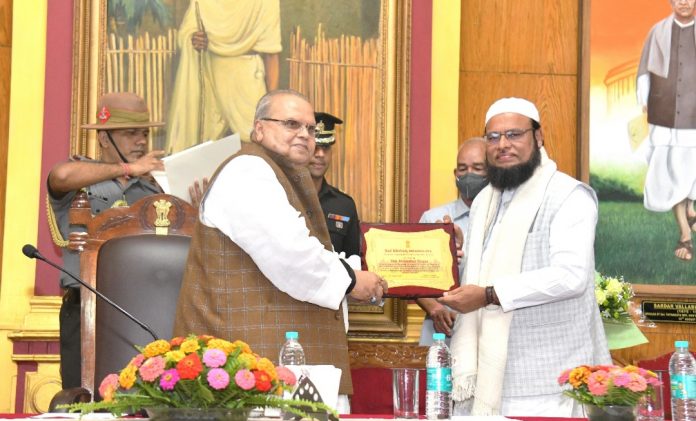
Governor of Meghalaya Shri Satya Pal Malik conferring “Governor’s Award for Excellence in Public Service-2022” upon Shri Mahbubul Hoque, Chancellor of the University of Science and Technology Meghalaya.
Raj Bhavan, Shillong :
Acknowledging and expressing appreciation for outstanding accomplishments, the Governor of Meghalaya Shri Satya Pal Malik has conferred the highest and prestigious award, “Governor’s Award for Excellence in Public Service-2022” upon Shri Mahbubul Hoque, Chancellor of the University of Science and Technology Meghalaya for his pioneering and outstanding contribution in the field of Higher and Technical Education, , one who established all his educational institutions mainly in rural areas of Meghalaya and Assam.
Padma Shri Ms Trinity Saioo, a school teacher who led a silent revolution mobilising more than 800 rural women to set up Self Help Groups for growing turmeric through organic farming methods, also received the Governor’s Excellence Award on the same occasion.
The conferment of the awards by the Hon’ble Governor was held yesterday evening at the Raj Bhavan Shillong in the presence of an august gathering.
Accepting the Award, Mahbubul Hoque thanked the Hon’ble Governor and the people of Meghalaya for giving him the opportunity to serve the society spreading higher and technical education as well as various outreach activities.
He recalled the cooperation extended by Late Dr Donkupar Roy, former LS Speaker and Chief Minister P. A. Sangma and the former Governor R.S. Mooshahary and overall support by the officers.
Conferring the excellence awards, the Hon’ble Governor Shri Satya Pal Malik said that Mahbubul Hoque is a visionary educationist and passionate in institution building targeting rural areas. His dedication, selfless contribution for the cause of education has created an impact in the education sector which has been observed by every person. “Shri Hoque is a passionate visionary who relentlessly works to build a self-reliant society through need-based education by establishing institutions”, he said.
Earlier, delivering the welcome address, Shri Pravin Bakshi, IAS, Commissioner & Secretary to the Governor said that this Award is the first step taken by the Meghalaya Governor’s office as a part of Azadi Ka Amrit Mahotsav in recognizing individuals for their remarkable public service.
Born to a rural family at the remote Purabgul village in Assam’s Karimganj district, Mahbubul Hoque had a turbulent early life as he lost his parents and supportive elder brother during childhood. He had to earn by doing private tuitions and selling home grown vegetables in the local market to continue his studies. A Masters in Computer Science from the prestigious AMU, he got lucrative job offers from MNCs and IT industries of the country as well as abroad but he decided to come back to his native place with a vision and embarked on a career of educational entrepreneurship.
His humble journey began with 1 computer and 4 students from a rented room in Guwahati, with only 85 rupees in his pocket. He assembled computers and sold them in the market to earn revenue to set up a computer lab. Initially, challenge was such that even landlords were unwilling to rent him in view of his financial condition. However, his study center Central IT College became the second-best study‐center of Manipal Group in the whole country. There was no looking back.
In order to strengthen the education infrastructure of the North East, Mahbubul Hoque set up the Education, Research and Development Foundation (ERDF) in 2005 under his chairmanship. A number of pioneer educational institutions were established under ERDF umbrella catering education from KG to PG to Ph.D. through two CBSE affiliated Senior Secondary Schools, one AICTE approved Engineering College, two PCI approved Pharmacy Colleges, one BCI approved Law School, one AICTE approved Business School, one NCTE approved B. Ed. College, one Women’s College and his largest dream venture—University of Science & Technology Meghalaya where more than 5000 students are now pursuing higher education. The University has been accredited “A” Grade by NAAC in its 1st Cycle of assessment in 2021, a rare achievement. USTM is now placed among the top 200 universities of India in NIRF-2022 Ranking.
The institutions set up by him are imparting quality education to more than 10,000 students, of which 35% are from indigenous tribes, 20% belong to underprivileged backward classes and receive Free Education, 80% from rural areas, 57% are girl students. More than 1200 teaching, administrative and non-teaching staffs are working for the growth of the institutions under his dynamic leadership. One of the most important features of the university is that more than 30 community and tribe students from the whole of north eastern states are studying in the university.
A recipient of ‘Shikshacharya Award-2019’ bestowed by Asam Sahitya Sabha and many such awards for his contribution in the field of higher education including the recent Community Excellence Award to USTM by UNESCO.
Mahbubul Hoque has initiated numerous welfare activities such as Endowment Funds, Emergency Medical Assistance, Interest-Free Loans, Relief drives, Health camps, etc.
He is extremely sensitive about environmental protection and efficient use of energy which reflects in adopting Green Campus Initiative for which USTM has already received many awards under the sustainable development goals of the UN.
Under the USTM Neighbourhood Mission, various departments of USTM have adopted neighbouring villages and children from these villages are availing free and concessional education in the University. A unique initiative of Mahbubul Hoque is the introduction and implementation of the Pay Back Policy under which students who clear competitive examinations are given back their entire course fee.
The future roadmap of USTM encompasses Research and Extension activities focussing on rural education and achieving its Milestones. He has set up Milestones to make USTM a World Class university by 2030 facilitating the state of Meghalaya as a global education destination by attracting students and scholars from across the world and nurturing local youths creating a global community. His current dream project is a Medical College and Hospital in Meghalaya with cutting edge research facilities. Establishing a women’s university in his native place Karimganj is another dream project submitted to Govt of Assam for enactment.
source: http://www.muslimmirror.com / Muslim Mirror / Home> Education> Positive Story / by Muslim Mirror Network / August 27th, 2022
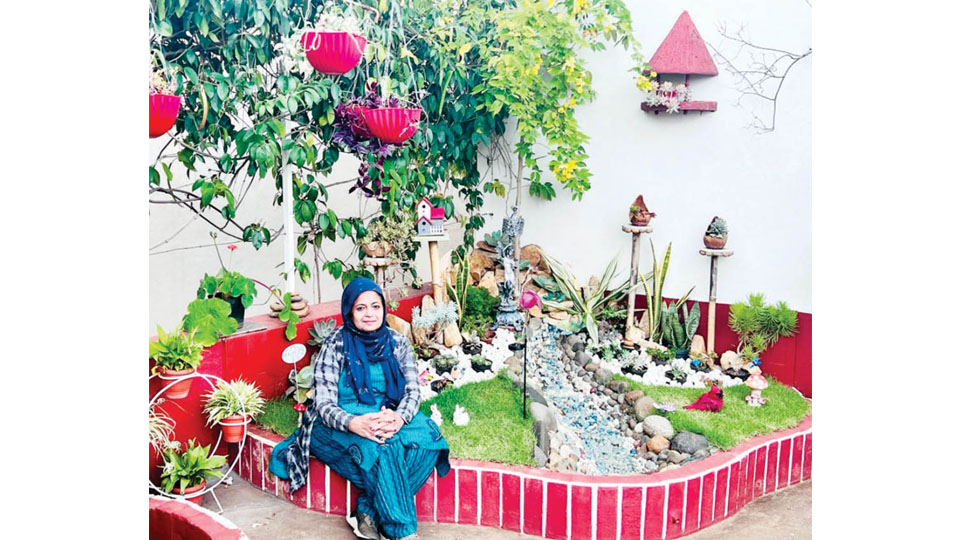
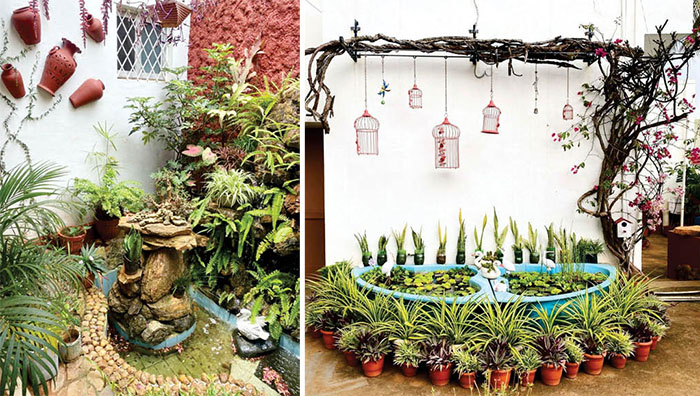
Nishhat Afza, Founder and Director of Curiocity — School of Creative Art and Design, N.R. Mohalla, Mysuru, has bagged first prize in the ornamental terrace garden and 1st prize in waterfalls for the 5th consecutive year in the Dasara Home Garden contest organised by the Horticulture Department.
An active member of Srushti Bonsai Club, she has also participated in women empowerment and other social activities. Besides, she helps people with landscaping and waterfall designing.
source: http://www.starofmysore.com / Star of Mysore / Home> Gallery> Photo News / October 07th, 2022
Jabbarkhan Honnalli, a former minister for the state of Karnataka, passed away on Friday morning at the age of 80. Honnalli had been experiencing health issues for some days as well as also was receiving treatment in a specialized hospital when he passed away this morning.
In 1989, Janata Dal put him forward for the Karnataka Legislative Council.
Later, he joined the Congress party and twice won election to the Hubli City constituency. He was the minister of youth development and sports in the coalition government of the Congress and JDS in 2004.
He also served as the president of Hubli Anjuman E Islam.
Following are his works.
1. From 1966 to 1980, I spent 18 years as a teacher at Model Urdu Girls School No. 1.
2. He was actively working on behalf of society’s poor and needy, particularly those from marginalised and minority communities.
3. Established in Hubli in 1984 the Alfarah Education as well as Cultural Association.
4. In 1962, the Youth Muslim Academic Association was founded in Hirekerur, Dharwar District.
5. This Association established a primary girls school in Hirekerur.
6. From 1975 to 1978, acted as joint secretary of the Karnataka Muslim Academy in Hubli.
7. Muslim Jamat, Keshwapur, Hubli, established and built an Arabic school at its own expense.
8. Spent two years in Dandeli serving as an executive member of the Muslim Educational Association of North Karnataka.
9. From 1964 to 1966, I worked as the Poor Boys General Hostel’s secretary in Hubli.
10. Initiated the Hubli Taj Nagar Co-operative Residential Society in 1972. Distributed fully completed plots to minority communities and the society’s poorer members. Serving as president ever since it began.
11. Since 1980, serving as the honorary secretary of the Sri Kadasiddeshwar Cooperative Housing Society. Has given worthy underprivileged people from all facets of society house sites.
12. Since 1985, has served as president of Diyanat Urban Co-operative Finance Society in Hubli.
13. Founded Kamadhenu Cooperative Housing Society in Hubli and served as its honorary secretary from 1978 to 1980.
14. From 1978 to 1981, he served as the director of the Hubli-based Forest Labour Cooperative Society.
source: http://www.en.bebaak.in / Bebaak.in / Home> Karnataka / by Hritik Mishra / October 07th, 2022