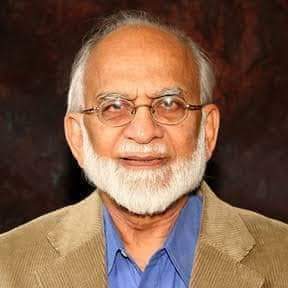
Jamaat-e-Islami Hind (JIH) President Syed Sadatullah Husaini has mourned the passing away of renowned economist Dr. Nejatullah Siddiqui
In a media statement, the JIH President said that Dr. Nejatullah Siddiqui’s contribution to the field of Islamic economics was unparalleled and he pioneered the concept of Islamic banking and laid the foundations of what is currently a thriving multi-billion-dollar industry.
Mr.Husaini held that Dr. Nejatullah was a very versatile personality dedicated to learning and development and, despite living abroad, he contributed intellectually to many forums and institutions in India. Calling his demise, a great loss to the Muslim world and the Islamic Movement, Mr.Husaini said, “his passing away leaves a great vacuum in the field of Islamic economics and finance.”
Offering his heartfelt condolences to the bereaved family members, the JIH leader said, “May Allah forgive him, grant him the highest position in Paradise and bestow patience upon his family members.”
Dr. Mohammad Nejatullah Siddiqui, an Indian economist, was awarded the King Faisal International Prize (Saudi Arabia) for Islamic Studies in 1982. Born in India in 1931, he was educated at Aligarh Muslim University as well as Rampur and Azamgarh.
He served as Associate Professor of economics and Professor of Islamic studies at the Aligarh Muslim University and as Professor of economics at the King Abdul Aziz University, Jeddah, Saudi Arabia, in its Center for Research in Islamic Economics.
He later became a Fellow at the Center for Near Eastern Studies at the University of California, Los Angeles (USA), and after that a visiting scholar at the Islamic Research and Training Institute, Islamic Development Bank, Jeddah.
He was a prolific writer in Urdu and English with 63 works in 177 publications and 1301 library holdings to his credit. Several of his works have been translated into Arabic, Persian, Turkish, Indonesian, Malaysian, and Thai languages. He was also the recipient of the Shah Waliullah Award in New Delhi for contributions to Islamic Economics.
Some of his notable books are Recent Theories of Profit: A Critical Examination, Economic Enterprise in Islam, Muslim Economic Thinking, Banking Without Interest, Partnership and profit-sharing in Islamic law, Insurance in an Islamic Economy, Teaching Economics from in Islamic Perspective, Role of the State in Islamic Economy, Dialogue in Islamic Economics, and Islam’s View on Property.
source: http://www.indiatomorrow.net / India Tomorrow / Home> National Interest / November 12th, 2022
Nellore, ANDHRA PRADESH / Kozhikode, KERALA / SAUDI ARABIA:
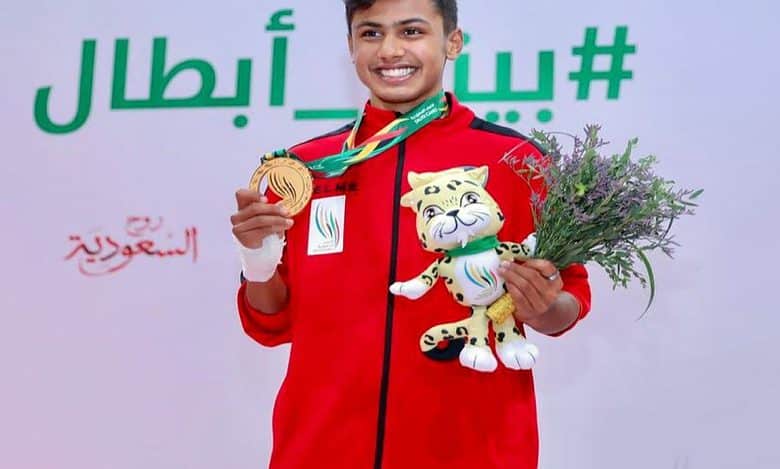
Mehad performed Umrah along with his parents immediately after winning the Gold Medal.
Mohammed Mehad Shah
Jeddah:
The juvenile Andhra badminton player made a strong impact at the ongoing Saudi Games, the prestigious national games of oil rich Saudi Arabia known for its passion for football.
Mohammed Mehad Shah, a native of Nellore in Andhra Pradesh has won a gold medal and one million Riyals in the men’s single category in badminton competition as part of the first edition of the Saudi Games, the largest national sports event of its kind, took place on Friday at King Fahd Stadium in Riyadh in the presence of Prince Faisal bin Bandar bin Abdulaziz, Governor of the Riyadh region, as well as the Saudi public in a grand ceremony filled with lights, fire, and music.
Mehad Sha along with other winners were honored by Prince Fahd bin Jalawi bin Abdulaziz bin Musaed, vice president of the Saudi Olympic Committee and director of the Saudi Games. He was also greeted by Muqrin Al-Muqrin, chairman of the Saudi Badminton Federation, and Mai Obaid Al-Rasheed, vice president of the Saudi Badminton Federation.
Participants competing for a grand total of more than SR200 million: Gold-medal winners to receive SR1 million, and silver-medal winners awarded SR300,000 and SR100,000 respectively. This is the highest prize money dedicated to the sports sector in the history of the region.
The 17-years old native of Nellore district in Andhra Pradesh, who was born and brought up in Riyadh and a student of 11th class at New Middle East International School, has told this correspondent that his aim is to win medals for Saudi Arabia in Olympics and other international tournaments.
Mehad Shah said that the coaching which he takes at Gopichand Badminton Academy in Hyderabad is helpful to achieve success. Gopichand is known as Dronacharya of Indian Badminton. He also expressed his gratitude towards his school principal and PT and Tah, Ralf –both Philippine nationals- coaches who trained him.
Excited Mehad who performed Umrah along with his parents immediately after winning the Gold Medal also thanked his school sports director and trainers.
“When I was receiving the gold medal from Prince Fahd, I remember the days when I was struggling to find a partner to play with me in the badminton court”, he said.
He has been playing the game from 5th standard and his elder brother Faisal Sha also used to play the sport in Riyadh. Faisal is now pursuing medicine in India. Mehad’s sister Khateeja is also studying medicine back home in India. Mehad Sha’s parents, Shahid and Shakera Begum both are engineers.
Muzzamil Shaikh, coordinator of APNRT, AP state government body to look after NRI affairs in Saudi Arabia and noted social worker, has congratulated Mehad.
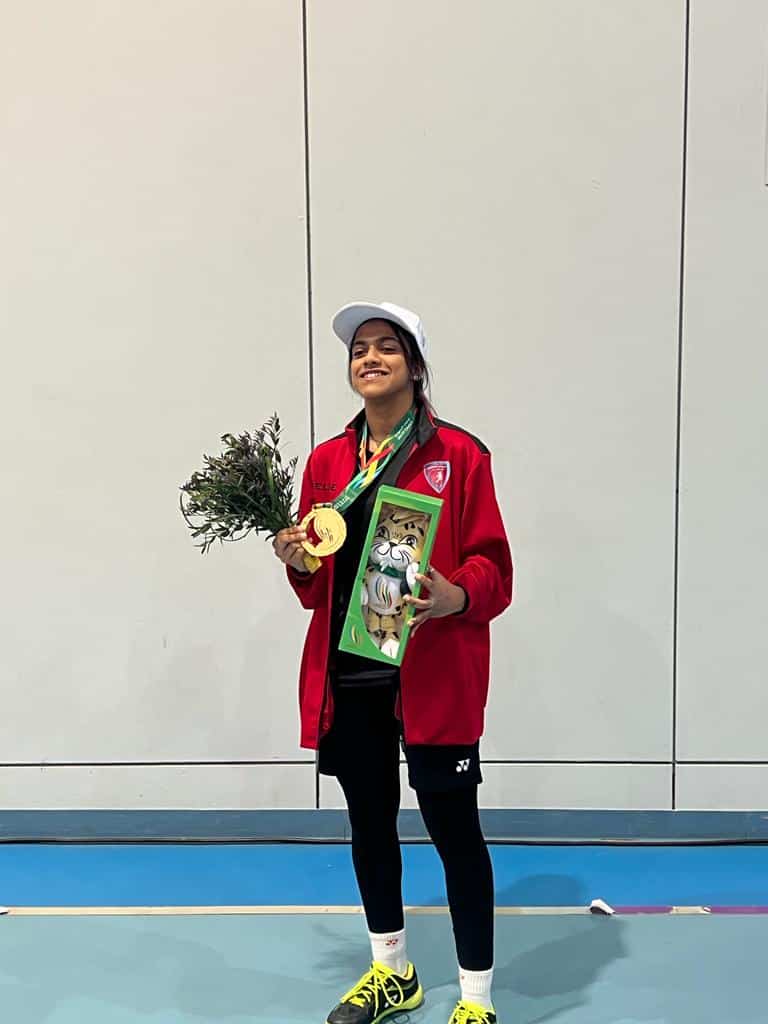
The only other Indian winner is Kadeeja Kothoor, who also won the gold medal and a million-riyal prize money in women’s single category of badminton. She is also 17 years old and studying in the same school as Mehad.
Kadeeja, native of Calicut in Kerala also born and brought up in Riyadh in a family of full badminton athletes. Sinmar Badminton Academy and Indian Academy- set up by a group of NRIs including her father Latheef – trained her. Coaches Sanjay, Shahin and Wahid shaped her gaming skills.
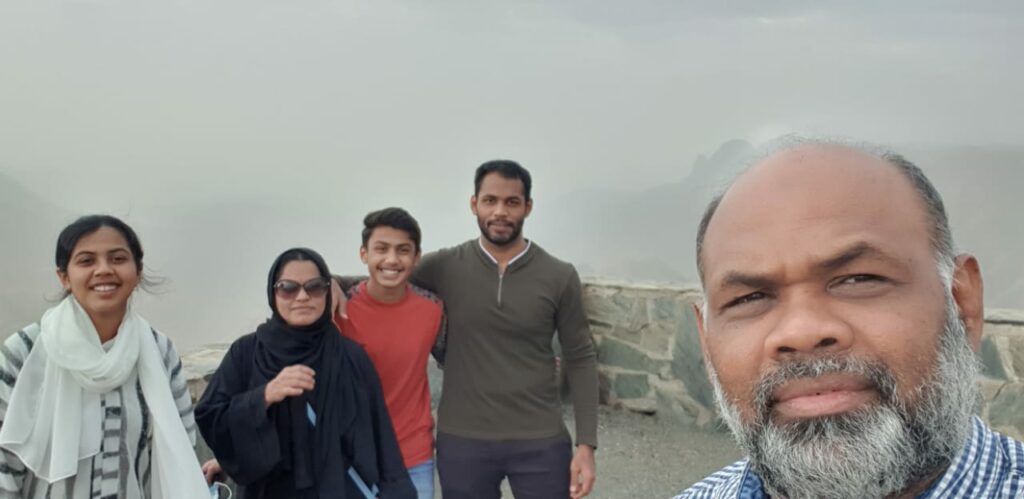
When she started playing at the age of eight years everyone was expecting that she would make a difference in the game one day which she did, said Latheef, father, who himself is a badminton player. Kadeeja’s other siblings are also badminton players. Her brother Mohammed Nzami is Kerala champion and 6th ranker in All India rating under 13 category; while sister Raya Fatima is Calicut’s St. Joseph Devagiri college team member of badminton team.
“My wife, Shanitha, has encouraged all children into sports” said Latheef.
source: http://www.siasat.com / The Siasat Daily / Home> News> Andhra Pradesh / by Irfan Mohammed / posted by Sameer Khan / November 07th, 2022
At a time when little is known about one of India’s greatest social reformers and educators, widely believed to be India’s first woman Muslim teacher, the Andhra Pradesh Government introduced a lesson on the contribution of Fatima Sheikh in the text-books of eighth class.
The reformer is known to have given shelter to Jyotirao Phule and Savitribai Phule, the well-known social reformer couple, when they were shunted out from their families.
It was in 1848 that Phule couple had taken initiative against caste system and male chauvinism. Fatima Sheikh is credited with allowing the Phule couple to start the first all-girls school at the former’s house in erstwhile Poona in Bombay Presidency.
Fatima Sheikh taught at all the five schools which were run by Phules.
At the same time she founded two schools on her own in 1851 in Mumbai.
Fatima Sheikh underwent teacher’s training along with Savitribai Phule at an institute run by Cynthia Farrar, an American missionary.
Born on January 9, 1831, she has not received the recognition she deserved. She remains a little known activist in various parts of the country. Prior to Andhra Pradesh, Maharashtra had introduced a brief lesson on her in school curriculum.
On the other hand, Google had honoured her with a Doodle on its homepage in connection with her 191st birth anniversary.
“We believe the children, who are the future of the country, should know about the reformers, freedom fighters and others who contributed significantly for building the nation. We are very happy that a lesson has been introduced in eighth class book. More awareness is required on the contribution of Fatima Sheikh,” Kaki Prakash Rao, State general secretary of AP Primary Teachers’ Association, told Siasat.com on Monday.
AP United Teachers’ Federation leader D. Ramu hailed the initiative of the AP Government and said that time, moving out of home by women was considered a big sin. Still, Fatima Sheikh along with Phules was instrumental in teaching Dalit and Muslim girls ignoring threats by many conservative, casteist and fanatic outfits and individuals.
source: http://www.siasat.com / The Siasat Daily / Home> News> Andhra Pradesh / by Santosh Patnaik / November 04th, 2022
Muhammadi Begum was a student of Osmania University, Hyderabad, where she topped the Bachelor’s examination in 1932.
Highlights
Having received a scholarship from the Nizam for higher education, Muhammedi Begum, a young woman from Hyderabad, travelled to Oxford University in 1934.
What makes her story even more remarkable is that she maintained an extensive record of her four years abroad.
Her diary has been translated from Urdu into English, and published, by her daughters
In 1934, a young woman from Hyderabad travelled to Oxford University in England to study, accompanied by her husband. She had received a scholarship from the Nizam of Hyderabad to pursue her higher education (for which she studied French, Arabic and English). During the nearly four years she spent in the UK, she had two children, travelled around Europe and established a pattern of living that would hold her in good stead her entire life.
The young woman was Muhammadi Begum, student of Osmania University, Hyderabad, where she topped the Bachelor’s examination in 1932. She was married to Delhi-born, Syed Jamil Husian, an alumnus of the Aligarh Muslim University.
Those days, women travelling abroad to pursue education was a rarity; although what made Muhammadi Begum’s story remarkable is a diary that she maintained at Oxford which recounted everything from her day-to-day concerns to reflections on the state of society.
Muhammadi Begum’s diary remained under a shroud till the year of her passing, in 1990. The little note-book, where she detailed her daily life as she lived across continents, was eventually a precious find. It went to her cousin first and meandered in the family, till it caught the attention of her eldest daughter towards the end of the decade.
“I was pleasantly surprised and was taken aback by it,” said Zehra Ahmad, Muhammadi Begum’s eldest daughter. “I came across the diary after she passed away. I would’ve asked her many questions if I knew about its existence.”
What followed over the years was translation (as Muhammadi wrote in Urdu), editing, followed by COVID-induced delays in publishing, before A Long Way from Hyderabad saw the light of the day in 2022. Zehra translated the book along with her sister Zainab Masud.
Translating the diary was no mean feat, as Muhammadi Begum made detailed records, even writing in the margins. The sisters read it multiple times, transcribed it, and then translated it – all of it laborious and time consuming.
Kulsoom Husein, her youngest, who came out of retirement to edit and rework her mother’s diary said, “The tone of the diary is true to her experience. It was a new experience for her to travel to England as few women did so in those days.”
Charting new paths
Muhammadi Begum belonged to a well-known family of writers. Her mother, Qaiseri Begum, was the granddaughter of famous writer Moulvi Nazeer Ahmed, who’s work Mirat-ul-aroos is often dubbed as Urdu’s first novel. Qaiseri Begum, herself was a prolific writer whose memoirs Kitab-i-Zindagi details changes in Indian social history from the 1880s to the 1960s.
The diary successfully encapsulates the journey of a young couple making their way in the London of 1930s. Her observations are detailed, precise and provide an invaluable peek into the world at the time – be it shopping at Harrod’s, visiting the Victoria and Albert Museum, eating ice-cream at a restaurant in Elliston & Cavell or taking walks in University Parks in Oxford, it paints vivid vignettes of pre-World war- II London.
The diary, according to Ahmad, who also spoke for her other sister and co-translator Zainab, brought her mother alive. “Everything she wrote was an accurate account of herself; her worries for her baby or exams, her management of the household and juggling her studies with a baby. She was on the move all the time and led a full and active life,” said she.
The writing is assured and confident. It stays true to what it is intended to be — a record of its keeper’s time in a foreign land. It comments on the English way of life (an interesting nugget is the usage of blackcurrant jam to treat colds), the trials of learning French and the easy camaraderie between students from India. Her letters to her mother Qaisari Begum were even published in a Hyderabad Urdu daily, Ismat.
It also showcases Muhammadi Begum as an independent woman with agency. Travelling in Europe along with a toddler can be a daunting task at any time, but she managed it with a remarkable spirit. It is in fact this spirit that would hold her in good stead later in life, when at 42 she lost her husband and had to look after many children.
A Long Way from Hyderabad can be nostalgic. It’s all about an era gone by, of Urdu publications in Hyderabad which have long ceased to exist (Rahbar and Tehzeeb) or local traditions like Kalzana, a medicine made from chalk and calcium, and given to pregnant women.
What she wrote holds relevance even today, as her struggles (with food, culture and money) are similar to ones faced by many students studying abroad. The diary also strikes a balance between everyday details of life, reflections of the time and personal observations.
A record of the time
Records of women travellers are rare. The few accounts which exist are those of Sikandar Begum, the ruler of Bhopal who wrote of her pilgrimage to Mecca in 1869, Maimuna Sultan who wrote an account of London in 1911 and Atiya Fyzee who published her travel writings in Zamana-I Tehsil in 1921. Typically, the women who published at the time were queens, politicians or activists; Muhammadi Begum was none of them and hence her account stands out because of its simplicity and honest rendition of her life.
Her writing is as much a record of her own life as it is of the times she lived in. The Independence movement was on in full throttle and she along with her husband eagerly took part in discussions with friends. She actively participated in cultural exchanges even though she was reluctant to lend her sarees to curious British women.
“My mother was very stirred by the experiences she had. Technology, in the form of planes and ship liners, was just coming up and when she visited the science museum she was struck by the difference in Indian and British kids. While rote learning was accepted in India, the children there were curious to explore scientific apparatus and experiments. She makes a mention of all these in her daily jottings,” observed Husein.
Indeed, the travel account shows that concerns have not changed much between 1935 and 2022. The author lamented the state of Indian museums on a visit to the V and A Museum and was entranced by a Buddha statue. She worried about land prices shooting up in Hyderabad and wondered if the family could afford to buy a house — valid concerns even after a century.
She throws light on the comfortable relationship between her and her husband. Muhammadi Begum’s husband, Jamil, took leave of absence from his work as a civil servant in Hyderabad to travel with his wife. According to Ahmad, her father was a hands-on parent. “He looked after the baby with her, which was unusual for the time. Also, they shared an equitable relationship,” she said. “He was an admirer of Gandhi and she looked up to Iqbal, which led to many discussions around each. They both liked exploring places and had a wide circle of friends.”
The years in Oxford had a lasting impact on her, as throughout her life she remained fond of open air, long strolls and staying independent. In fact, later in life, she took in paying guests in Lahore when she retired from her job and needed to supplement her income.
A nod to the past
In producing the book, Muhammadi Begum’s daughters became closer, as Husein noted, “We exchanged information about relatives mentioned and forgotten. My elder sisters have translated and I reworked the text — so it was a collaborative effort. My daughter, Amena, helped with research on key figures who were at Oxford at that time, such as educationist Sir Michael Sadler and GM Sufi, a retired University of Delhi registrar and historian, and Miss Bharti Sarabhai, who hailed from a prominent Indian civil rights activist family.”
With an account of food, state of women, culture, feelings and a life well lived, A Long Way from Hyderabad, is a perfect addition to the archives of writing from pre-Independent India. It provides a reliable record of the times gone by. It also shows the lasting impact of the written word and its ability to transcend time.
source: http://www.news9live.com / News Nine / Home> Arts & Culture / by Mallik Thatipalli / June 03rd, 2022
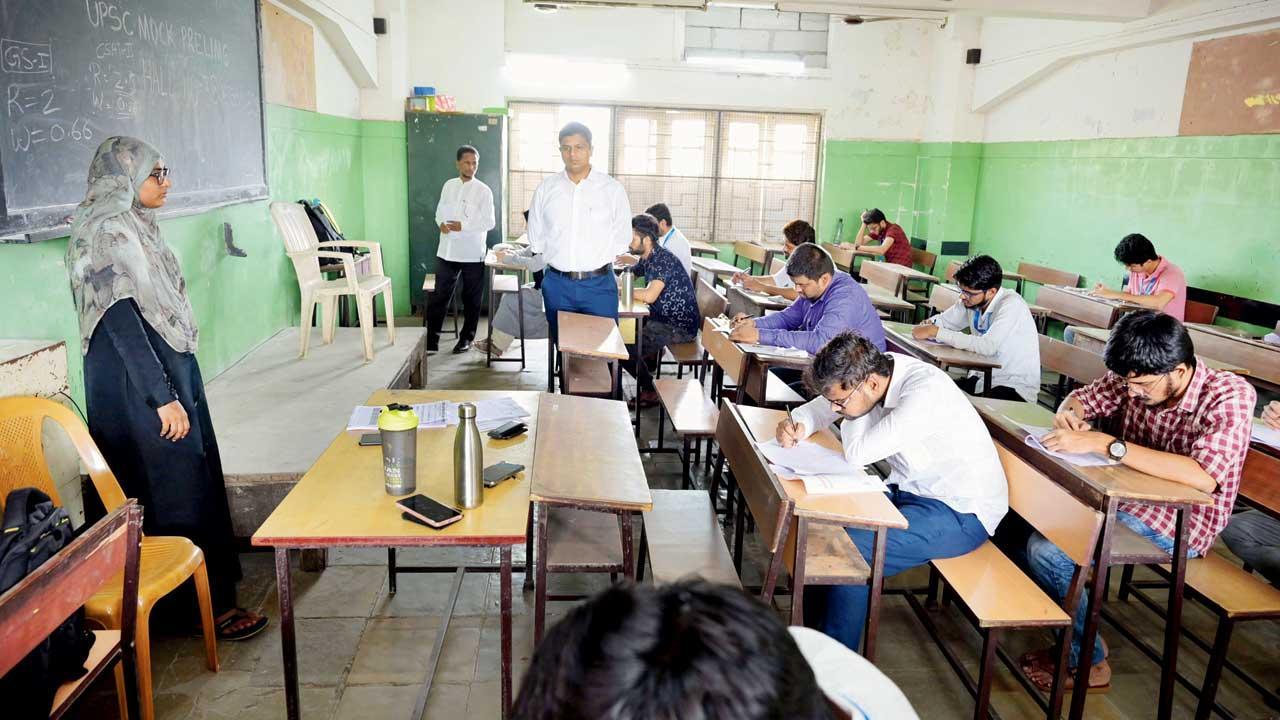
A one-of-its-kind campaign is providing deserving students personalised free training to appear for civil service exams
Students appear for a mock UPSC exam in May. Pic/Bipin Kokate
For 28-year-old Shabina Khan, joining the IAS always seemed like a distant dream. Born into a poor family, she had to struggle to complete her education. On Sunday, Khan, who will be sitting for the UPSC exam, will be a step closer to fulfilling her dream, thanks to the Dr APJ Abdul Kalam IAS-IPS Exam campaign, initiated in 2018.
Actively supported by Anjuman-I-Islam and All India Khilafat Committee, the campaign is providing deserving students personalised coaching, guidance and free training for the MPSC and UPSC exams. After a brief lull during the pandemic, which forced them to move all their classes online, the initiative formally launched in February this year. “Since February, 125 students have enrolled with us,” said Gulam Nabi Idrisi, founder chairman of the initiative.
According to Idrisi, several government officials are associated with the campaign, and are helping set mock test papers. The students already gave three mock tests in the month of May, and will be appearing for the UPSC preliminary exams scheduled today.
Speaking with mid-day, Shabnam Shamim Choudhary, 25, resident of Jari Mari, Kurla, said, “I wanted to become an IAS officer, but my family couldn’t afford the fees of the institute or even pay for the study material. This initiative has come as a blessing. I have managed to get at least basic training, so that I can take a shot at the UPSC exam.” Out of the 125 students enrolled with the campaign, 60 hail from Dongri. “We have been providing them with free food and accommodation. The students living in our facility belong to marginalised minority communities,” said Idrisi. The campaign is currently supporting Muslim, Buddhist, Jain, Christian, Parsi and Sikh students, who wish to appear for civil service exams.
Dr Zahir Kazi, President, Anjuman-I-Islam, said, “The administration must have representation of all sects and religions. Unfortunately, due to lack of facility and funds most of the students cannot pursue this dream.”
Sarfaraz Arzu, chairman, All India Khilafat Committee, shares his sentiments. “If we have to solve community issues, the presence of marginalised and minority officials [in administration] is a must.”
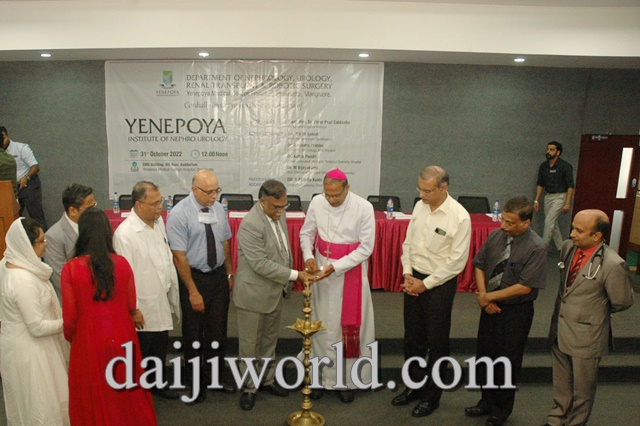
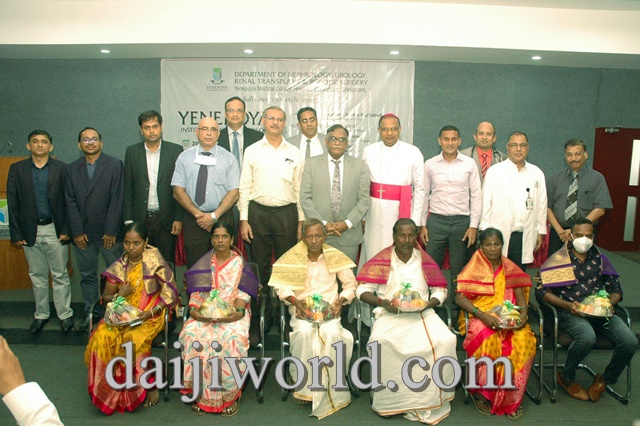
“The Yenepoya organization, which backs grief-stricken people and is in the forefront of humanitarian service, is model to all. Organ donation is very important is present times as many are dying due to organ failure. All have to think about organ donation,” opined Bishop of Mangalore Diocese Dr Peter Paul Saldanha.
The bishop was speaking after inaugurating the Yenepoya Nephro Urology organization under the aegis of Nephrology, Urology, Renal transplant and Robotic surgery departments of Deralakatte Yenepoya Medical College.
The bishop further said, “Yenepoya organization has recently given honorary doctorate to president of Gulbarga University recognising his humanitarian service. This is really appreciable. There is a possibility of giving life to five people from a person who is brain dead. Many make their death a fruitful one. We have to learn a lot from the people who are dying. Greek believed the whole world as one life. It is important to save lives.”
Prof Dr Ravindra Prabhu of Nephrology department, KMC Manipal said, “There was time when anyone with kidney ailment was going to die for sure. Very few were coming to hospital with kidney disease. Many have died due to heart attack because of psychological pressure of kidney ailment. Others were not even taking any medicine. Now many are getting cured due to innovative technology. Let the Nephro Urology department which has begun in Yenepoya, give good training to students.”
Vice chancellor of Yenepoya University Dr M Vijayakumar said, “The corporate zone is ruled by the renal department treatment method. The organ donation when one is alive shows the highest form of humanitarian values.”
Seven people who donated kidney to relatives were felicitated on the occasion. Farhad Yenepoya, Associate vice chancellor of Yenepoya deemed university, Dr Gangadhar Somayaji, registrar, Dr M S Moosabba, dean of Yenepoya Medical College, Dr Prakash R M Saldanha, medical superintendent of Yenepoya medical college were the chief guests.
Senior urologist of Yenepoya Speciality Hospital Dr Ashok Pandit, head of Nephrology department of Yenepoya Dr Santhosh Pai gave details of the felicitated people.
Dr Altaf Khan welcomed the gathering. Dr Mujib Ur Rehman did the introduction. Dr Nishchith D’Souza proposed a vote of thanks.
source: http://www.daijiworld.com / DaijiWorld.com / Home> Top Stories / by Mohan Kuthan / Daijiworld Media Network – Mangaluru (MS) / October 31st, 2022
Mohammed Rayan Baig, an engineering graduate qualified for this national event as he won a gold medal in the (A-01) Small Bore Free Rifle Prone (NR) Championship 50M Men Individual event.]
Mohammed Rayan Baig with his father/trainer MN Baig. (Photo | EPS)
Bengaluru:
Trained by his father in just three months, Mohammed Rayan Baig has made it big in a national-level shooting championship by bagging a gold medal.
Now, all eyes are set on the young engineering graduate, who will be representing the state in the All India shooting event, held by the National Rifle Association of India from the first week of November at Thiruvananthapuram.
Baig qualified for this national event as he won a gold medal in the (A-01) Small Bore Free Rifle Prone (NR) Championship 50M Men Individual event at the 31 All India GV Mavalankar Shooting Championship in Asansol at West Bengal in the second week of this month.
He secured 581 out of 600 points in the event.
What is interesting is that Baig who resides in Frazer Town was trained by his father, MN Baig for three months to qualify for the event held in West Bengal.
His father is into agriculture and business and his mother, Shehnaz Baig is a housewife.
“My dad has been shooting for the last 7-8 years. In the 300 metres big bore competition, he has got a renowned shot certificate five times. I have been watching him, waiting for my studies to get over.”
“After I completed engineering, I started to practice at Karnataka State Rifle Association Range and simulation at home,” said Baig, who completed his B-Tech in Mechanical Engineering with 8th Rank with a Cumulative Grade Point Average of 9.04 out of 10) at PES University in the city this year.
“I dedicated myself to studies. Once I finished my engineering with a good rank, my next goal was to excel in shooting. I set my goal and got a gold medal in the All India GV Mavalankar Shooting Championship. If I set a goal, I want to achieve it. I have natural talent and was trained by my father and no professional coaching,” Baig told The New Indian Express.
Sharing his views on shooting, he said “I can say that this sport requires a lot of dedication and concentration. But if one spends time practicing, honing their skills, refining their techniques, they can even reach the Olympics.”
“My next target is the event to be held from November 20 to December 6, 2022, at Tiruvananthapuram, where all big shooters will be participating,” he concludes.
source: http://www.newindianexpress.com / The New Indian Express / Home> Sports> Others / by Yathiraju, Express News Service / October 31st, 2022
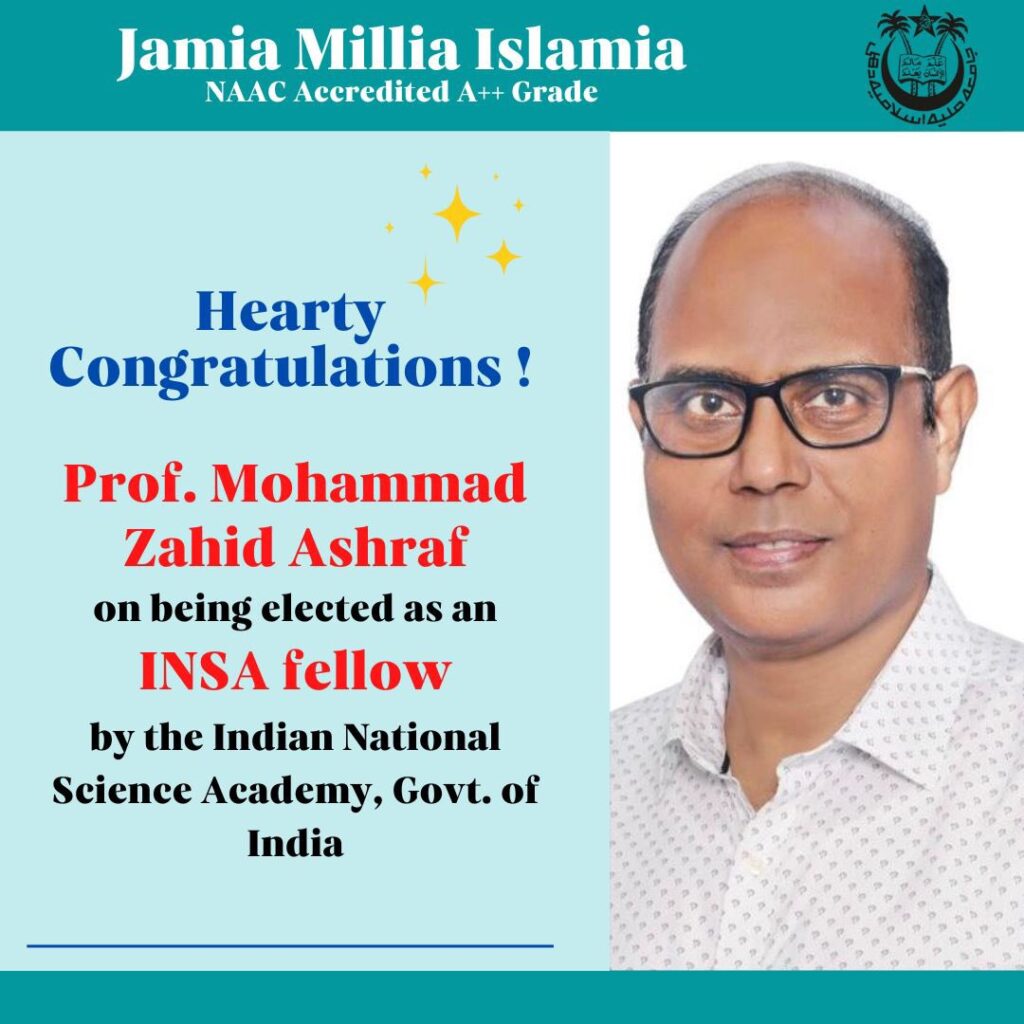
The Indian Nation Science Academy (INSA) has elected Prof. Mohammad Zahid Ashraf, Head, Department of Biotechnology, Jamia Millia Islamia (JMI), as a fellow of the academy. His fundamental work on the role of high-altitude hypoxia in the development of cardiovascular and blood clotting disorders has been recognised with the coveted fellowship.
The Indian National Science Academy, one of the most renowned academies in the nation, was founded to promote science in India and utilise scientific knowledge for the benefit of humanity and the nation. As a fellow of the Academy, Prof. Ashraf will work to further the scientific cause of the nation. To his credit, Prof. Ashraf is now elected fellow of all three national science academies – the Indian National Science Academy, the Indian Academy of Sciences, and the National Academy of Sciences.
JMI Vice-Chancellor Prof Najma Akhtar, who has recently been conferred with Padma Shri Award, congratulated Prof. Ashraf for his outstanding accomplishments. She further mentioned that Prof. Ashraf’s achievements will motivate other faculty members for excelling in research and contribute to the nation’s progress.
Prof. Ashraf is best known for his unique work on high altitude induced blood clotting disorders. His research has had a substantial impact on both fundamental and applied aspects of cardiovascular biology and human diseases. He is a pioneer in the field of highaltitude thrombosis and has done seminal work in unravelling the enigma of blood clotting in response to hypoxia. His remarkable efforts have enriched our understanding of the prevalence, mechanism, genetics, diagnostics, and development of therapeutics for hypoxia- induced thromboembolic disorders.
Prof. Ashraf’s contribution to the research community is well acknowledged. He is the recipient of the 2020 Visitor’s Award by Hon’ble President of India for biological sciences, The Ramachandran National Bioscience Award by DBT and the Basanti Devi Amir Chand Award of ICMR, among several other accolades.
Prof. Ashraf also holds membership of the prestigious Guha Research Conference and various scientific committees.
source: http://www.jmi.ac.in / Jamia Millia Islamia / Home / by Press Relations Officer, JMI (headline edited) / October 19th, 2022
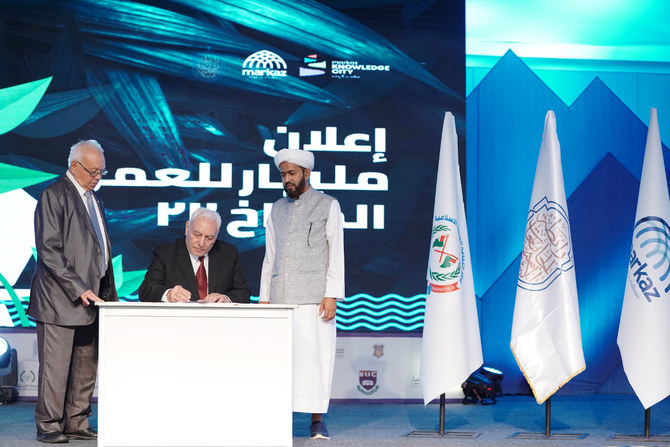
Dr. Osama Al-Abed, secretary-general of the League of Islamic Universities, signs the Malabar Declaration on climate action in Kozhikode, India, on Oct. 20. (Photo courtesy: LIU)
On October 27, the ‘Malaibar Declaration for Climate Action’ held by the League of Islamic Universities based in Cairo and Jamia Markaz Kozhikode in Markaz Knowledge City concluded.
Members including 200 universities from 60 countries, were present at Jamia Markaz, an Islamic university in Kozhikode, Kerala, for the International Climate Action Summit which was held between October 17-20.
Dr. Osama Al-Abed, secretary general of the league, opened the event by urging global stakeholders to use fresh approaches to combat climate change because the globe is currently “facing challenges that are structurally different from the past.”
As a consequence of talks on many facets of the main issue, Dr. Al Abdu and Muhammed Abdul Hakim Azhari, the rector of Jamia Markaz, jointly made the following declaration: The Partnership of University Leadership in Mitigating the Climate Change.
The declaration includes a request for environmental science to be taught in member universities’ curricula, for financial and human resources to be set aside for research into tackling climate challenges, as well as for new technology to be developed for the same.
“We thought that the real community who has to work on climate change is students. In every country, if the universities go for some course on climate then the future generation would be working on climate change,” Jamia Markaz rector Dr. Abdul Hakeem Al-Kandi told reporters.
“Students, who are the future leaders, when they are getting aware of climate change, (they) will impact the whole world.” he said.
Al-Kandi stated that the league would create an environmental studies centre in Calicut, India.
The goal of the university league’s activity, according to environmentalist and Markaz Law College principal Dr. C. Abdul Samad, who organised the summit, was to engage community members in various societies and make them stakeholders in saving the environment.
“Introducing environmental science courses in universities is important as the young leaders need to be educated to think about nature and climate change, and its impact,” he said.
“It is the new generation that can preserve the diversity of nature and respect the environment. The whole idea is to save the planet for the future,” he further stated.
At the summit, 63 research papers on diverse facets of the main issue were presented. A hundred trees were planted on the Knowledge City Campus by university leaders as part of Jamia Markaz’s afforestation programme and in support of the summit.
source: http://www.muslimmirror.com / Muslim Mirror / Home> Environment> Indian Muslim> Positive Story / by Muslim Mirror Staff / October 27th, 2022
Last year 6 researchers of the university were awarded the prestigious fellowship under the December 2020 drive but this year the number of recipients just doubled. The researchers will receive a fellowship of Rs 70,000 for the first two years, Rs 75,000 for 3rd, and Rs 80,000 for the fourth and fifth years
Twelve research scholars from Jamia Millia Islamia University have been selected for the Prime Minister Research Fellowship (PMRF) Award under the lateral entry scheme of the May 2022 drive, the university announced on Wednesday.
Last year 6 researchers of the university were awarded the prestigious fellowship under the December 2020 drive but this year the number of recipients just doubled. The winners of this year are:
Nadeem Ahmad (Department of Civil Engineering)
Mohammad Ariz (Department of Electrical Engineering)
Mohammad Masood (Department of Biotechnology)
Gulnaz Tabassum (Department of Biotechnology)
Ayesha Aiman (Department of Biosciences)
Sakeena Masrat (CNN)
Mudasir Younis Sofi (Department of Physics)
Shah Masheerul Alam (Department of Physics)
Shelly Bhardwaj (Department of Chemistry)
Sneha Shukla (Department of Chemistry)
Abdus Samad (CIRBSc)
Nuha Abeer Khan (MCARS)
Vice Chancellor, Prof. Najma Akhtar said, “JMI stands for excellence and strives hard to provide its students with every possible support to achieve great heights. This performance reflects the university’s focus on high-quality research and I am particularly happy that six out of the twelve students are girls. I hope that it would inspire other students, particularly girl students of the university to do well in science and engineering research.”
PMRF Coordinator, Prof. Abdul Quaiyum Ansari said that these researchers will receive a fellowship of Rs 70, 000 for the first two years, Rs 75,000 for 3rd, and Rs 80,000 for the fourth and fifth years. Along with this, each fellow will get a research grant of Rs 2 lakh per year (a total of Rs 10 lakh for five years) under the PMRF.
source: http://www.telegraphindia.com / The Telegraph Online / Home> Edugraph> News / by The Telegraph Correspondent / October 28th, 2022