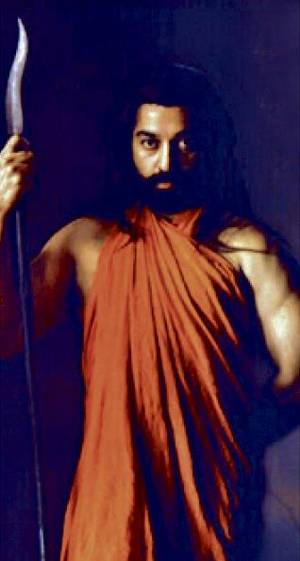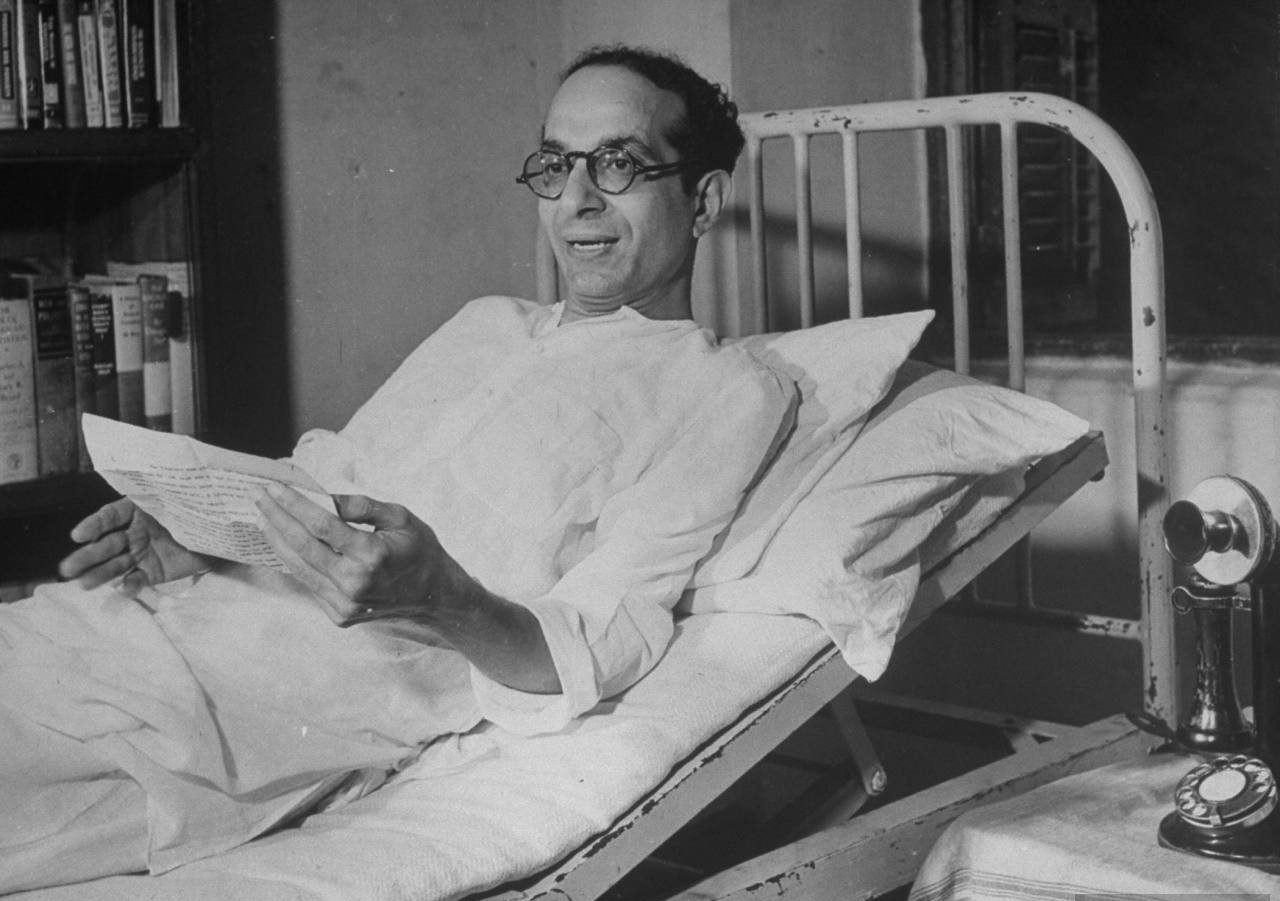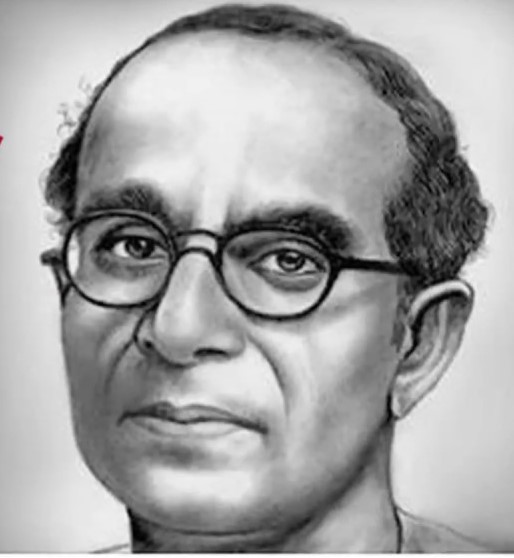
Centered on the life of freedom fighter Maulana Barkatullah Bhopali, a play ‘Baghi Banjara’ was staged at Shaheed Bhawan on Friday. Scripted and directed by Waseem Khan, the play was staged for the first time in the country.
Abdul Hafiz Mohamed Barakatullah, known with his honorific Maulana Barkatullah (7 July, 1854-20 September 1927), was an anti-British Indian revolutionary with sympathy for the Pan-Islamic movement.
The whole journey from birth to death of the great freedom fighter was beautifully shown in the one-hour-twenty-minute-long play. Barkatullah was born on 7 July 1854 at Itwara in Bhopal.
He fought from outside India, with fiery speeches and revolutionary writings in leading newspapers, for the independence of India. In 1988, Bhopal University was renamed Barkatullah University in his honour. He was educated from primary to college level at Bhopal.
Later he went to Bombay and London for his higher education. He was a meritorious scholar and mastered seven languages: Arabic, Persian, Urdu, Turkish, English, German, and Japanese. Despite a poor background he topped the list of successful candidates in most of the examinations for which he appeared, both in India and England. He became the Quondam Professor of Urdu at the Tokyo University Japan.
He was one of the founders of the “Ghadar” (Rebellion) Party in 1913 at San Francisco. Later he became the prime minister of the Provisional Government of India established on 1 December 1915 in Kabul with Raja Mahendra Pratap as its president. He died in 1927 at San Francisco.
The play was presented by mainly young cast of Swabhiman Shikshan Samiti. Suggestive sets, costumes and lights were used.
A patriotic song ‘rang de basanti chola…,’ of movie ‘Shaheed’ (1965) was used in the play. Gaurav Jaat as Maulana Barkatullah, Badra Wasti as Tarik Nigar, Shakeel Chand as Kadar and others were in lead role.
“For the first time, the play centered on the great freedom fighter is being staged for the first time in India. I don’t know why no play was staged on the tenacious fighter. I wrote the play at the instance of Shriram Tiwari, former director of culture. The writing took one year and the rehearsals lasted for one-and-a-half- months,” said Waseem Khan.
source: http://www.freepressjournal.in / The Free Press Journal / Home> Bhopal / by A Staff Reporter / January 28th, 2017
On August 4, 1914, the British Empire declared war on Germany, making WWI a truly global war. As Britain observes the centenary of the war on Monday, TOI takes a look at one episode of 1915 that rattled Britain and her empire.
On February 15, 1915, the 5th Light Infantry Regiment of the Indian Army was getting ready to embark on a voyage to Hong Kong from Singapore. A little after 3pm, one sepoy Ismail Khan of C company fired at an ammunition lorry from the quarter guard near Alexandra Barracks. Soon, sepoys and VCOs (viceroy’s commissioned officers) of four predominantly Muslim Rajput companies (there were some Jats and Lohias too from Haryana and Punjab) of the eight-company strong regiment mutinied, starting a week of chaos and bloodshed that has come to be known in history as the Singapore Mutiny.
A lot has been written about the mutiny ever since, but very few have been works of scholarship. Fewer still are the official histories of the event. But in India, there’s a great deal of mystique surrounding this episode, which nationalists, historians and others, have linked to the freedom movement. They see some commonality between the 1857 Uprising and this one, and glorify this mutiny, without, of course, considering what the main actors of the event, the rebel sepoys, said in their testimonies to the courts of inquiry.
Snapshot of a TOI article from 1915 on the Singapore Mutiny
They gave ambivalent statements, turned coats, played victims, and testified against men already dead in the mutiny or executed by firing squads. They did all this to exonerate themselves and men of their own caste/village from swift colonial justice. Even those sepoys who were identified as mutineers by others spun convincing tales to fool the court.
The Times of India had extensively reported the mutiny in 1915, calling it the Singapore Emeute. On March 2 that year, when the mutiny had already been put down and the inquiry was on, the first news of the mutiny had reached India. This paper had reported then: “A serious emeute has occurred among the 5th Light Infantry. One wing mutinied and killed Europeans on the road. The situation is now in hand. A large number of the other wing are coming and offering assistance.”
The mutineers belonged to the right wing of the regiment. The left was primarily composed of Pathans (the sepoys, though, called themselves Hindustani Pathans) who also came from the same regions as the Muslim Rajputs—Punjab and Haryana, including areas that form part of Delhi NCR today. These men didn’t join the mutineers, but ran helter-skelter in the melee and shut themselves in bathrooms/toilets and shops, with many escaping to the forest.
Mutineers being executed by firing squad. It shows some sepoys still standing and some down, as the European militia executioners missed their targets several times.
It was a deja vu moment for the regiment, which, in its previous avatar as the 42nd Bengal Native Infantry regiment, had seen exactly four companies rebel during the 1857 Uprising and the rest staying loyal. That was the reason why the regiment wasn’t disbanded after the Uprising was quelled. In 1915, too, the regiment would escape disbandment because of this reason, and would “honourably discharge its duty and salvage its lost reputation” in East Africa where they would fight the Germans.
But in the week that the mutiny lasted, the rebels killed 12 British officers and 14 European civilians, liberated German prisoners held in a jail (of whom 17 joined them and the rest stayed neutral), and got on board by persuasion or intimidation some men of the Malay States Guides.
On March 3, 1915, The Times of India had a clearer picture of the mutiny. “Further facts regarding the outbreak at Singapore have now come to hand which leave no doubt as to its serious character. The reasons for the disturbance are still somewhat obscure, but the trouble would seem to have originated in some discontent aroused in the 5th Light Infantry by certain promotions among the Indian ranks. This appears to have engendered the spirit of disaffection which was brought to a head by the impending departure of the regiment for Hong Kong. It is satisfactory to be able to record that even not more than half of the 5th Light Infantry, a regiment with a distinguished record of loyal service, were implicated,” TOI had reported.
Snapshot of a TOI article from 1915 on the Singapore Mutiny.
That obscurity, as stated in the TOI report, has remained till date. The mutiny was quelled by the British by February 22 with Franco-Russo-Japanese help. After that, it was the time for conspiracy theories. Though there was little evidence on ground, the mutiny was linked to the Ghadar Conspiracy—efforts by the Ghadar Party to foment rebellion among Indian troops stationed abroad. The Ghadarites themselves took credit for it, though they got news of the mutiny only on March 2—the same day TOI carried the report—after the mutiny was suppressed. And they thought until April that Singapore was under rebel control.
Then there was the German conspiracy theory. At least one German prisoner took credit for inciting the Indian soldiers to mutiny. Plus the sepoys are believed to have received letters from their comrades fighting in Europe that the German king had converted to Islam and that it was not right to fight the forces of a Muslim king.
Then there was the more convincing theory of the sepoys rebelling due to their unwillingness to fight the forces of the Ottoman Sultan, the caliph of Islam.
Snapshot of a TOI article from 1915 on the Singapore Mutiny
But the real factor may have been a combination of terrible lapse in communication and leadership on the part of the British (the CO of the regiment was particularly unpopular among the troops and officers, both Indian and British. After the mutiny, he was dismissed from his post and retired from the Army) and a greater desire among the Indian troops to escape the horrors of European war—the latter observation also made by Japanese historian Sho Kuwajima.
On July 5, 1915, TOI carried the government’s explanation: “In view of the misrepresentations that have been made regarding the mutiny, we are authorized by the governor to state that no report whatever had reached His Excellency or the general officer commanding prior to the mutiny regarding any seditious tendencies in the 5th Native Light Infantry … No charge of disloyalty had ever been made to the government against the 5th Light Infantry … on the other hand, Government had received most positive assurances as to the loyalty of the regiment.”
Yet the sepoys were only loyal to one another in their regiments, battalions and companies as in the case of the Singapore mutineers. They gave no call for freedom or anything of that nature.
Snapshot of a TOI article from 1915 on the Singapore Mutiny
Nevertheless, in the immediate aftermath, there was disturbing talk about the loyalty of Indian troops, and the wisdom of trusting the security of big colonial possessions like Singapore to Indians was questioned too. But in a strange coincidence, exactly 27 years after the Singapore Mutiny, on February 15, 1942, 80,000 British-led Allied troops surrendered at Singapore to the Japanese of whom 40,000 were men of the Indian Army. Nearly 30,000 of them would eventually join (either voluntarily or under duress) the Indian National Army.
Buried in history
· 47 sepoys, NCOs and VCOs were executed after a general court martial
· The ringleaders were identified as Subedar Dunde Khan, Jemadar Chisti Khan, Havildar Rahmat Ali, Sepoy Hakim Ali and Havildar Abdul Ghani; Dunde Khan and Chisti Khan were shot first on February 21
· 64 others were sentenced to transportation for life or ‘sazaa-e-kalapani’
· No memorial or plaque whatsoever to the mutineers exist anywhere
· Mutineers till today are unfairly vilified in Western accounts
· Since most sepoys on trial and during court of inquiry clammed up, the full truth about the causes of the mutiny are not known till today
(Write to the author at manimugdha.sharma@timesgroup.com)
source: http://www.timesofindia.inditimes.com / The Times of India / News Home> India / by Manimugdha S. Sharma / TNN / August 03rd, 2014
The mausoleum of Bihar’s architect Sir Ali Imam on NH-33 near Dipatoli in Ranchi. (Prashant Mitra)
Jharkhand’s “stepmotherly attitude” towards the mausoleum of Sir Ali Imam, one of Bihar’s prime architects, has prompted the knight’s grandson to resurrect his decade-old heritage status demand for the site that rightly deserves conservation.
In 2005, a memorandum had been signed between the Indian National Trust for Art and Cultural Heritage (Intach) and Birla Institute of Technology (BIT), Mesra, to develop the mausoleum on NH-33 near Dipatoli, Ranchi, into an art and culture centre. But, like most other projects in the state, it sank into oblivion.
In 2012-13, the Archaeological Survey of India (ASI) listed some monuments for protection, including the Jami Masjid and Baradwari Masjid in Rajmahal, Khekparta temple in Lohardaga and Buddhist ruins in Benisagar, West Singhbhum, but the mausoleum was again given the pass.
Such “monumental neglect” has now prompted Askari Imam, the grandson of Sir Ali Imam, and other members of the Sir Ali Imam Trust like grandnephew Bullu Imam to request the Raghubar Das government for a heritage tag.
Justin Imam, the great grandson of the knight, said they were pursuing the matter with the department of art and culture (archaeology) so that a pending report advocating conservation rights for the mausoleum was given active consideration. “A year ago, we had submitted the report to the department. It is obvious no one took interest. We will push the matter again tomorrow (Tuesday),” Justin said.
Former state convener of Intach Shree Deo Singh conceded that Askari Imam had approached him with a conservation request five years ago. “The Trust was then formed for its maintenance. However, after my term as convener ended, the tomb was subjected to utter neglect,” Singh said.
Bullu Imam pointed out that the monument existed in a capital city and yet most people of Jharkhand were unaware of it. “This is so unfortunate,” he said.
“Once the mausoleum is declared a protected site, it will attract tourists from the state and outside,” added voluntary caretaker Chetan who also runs a shop nearby.
State art and culture secretary Vandana Dadel said members of Sir Ali Imam Trust had met her last week and she had assured them that she would look into the matter. “I will send a team to the site so that we can initiate talks with the ASI,” she promised.
Ali Imam, a judge at Patna High Court in 1917, was a law member of the British Imperial Council and was conferred knighthood by the British government. Sir Ali Imam, who played an important part in the constitution of Bihar, died in 1932 after which the mausoleum was built.
_____________________________________________
Correction:
I would like you to make amendment in one of the paragraph. Where you mentioned that Justin Imam the great grandson to Sir Syed Ali Imam. In fact Justin Imam is the great grandson to Sir Hasan Imam who was the younger brother to Sir Syed Ali Imam Saheb.
Sir Ali Imam Saheb great grandchildren are from Late Justice Jafer Imam, Reza Imam and Naqi. Kindly amend the paragraph in your article.
Many thanks
Amina Imam Ahmad / 05th April 2018
__________________________________________
source: http://www.telegraphindia.com / The Telegraph, Calcutta,India / Front Page> Jharkhand> Story / by Arti S. Sahuliyar / March 10th, 2015
Known as one half of India’s legendary barrister brother duo, he has been hailed as the co-architect of modern Bihar.
However, on his 80th death anniversary on Friday, the legacy of Syed Hasan Imam, a nationalist leader, patriot and a freedom fighter, remains forgotten.
Born in 1871 in Neora village near Patna, Imam died on April 19, 1933 and lies interred on the banks of river Sone in Japla, a small village in the border of Bihar and Jharkhand.
After suffering years of neglect and facing encroachment around his tomb, his grandson, Bulu Imam, now living in Hazaribagh, is striving to restore the lost honour.
“Today, on the occasion of his 80th death anniversary, I feel heartbroken to remember the legacy of my grandfather who, instead of being remembered, let alone celebrated for his immense contribution to the cause of Bihar and India at large, has been consigned to oblivion,” said Bulu Imam.
‘Some honour restored’
“We went to his tomb in Japla and cleaned it up on the anniversary and also put a chhadar on it, trying to restore some honour to his forgotten legacy. There were encroachments around the tomb and Hasan Imam’s house,”“ he said.
“I have evicted all the encroachers and now I am trying to preserve the place as his lasting memorial,” said Bulu Imam over phone from Hazaribagh, Jharkhand.
Syed Hasan was educated in Patna and in the UK, and was called to the Bar in Middle Temple in 1892. When he returned to India, he practiced in Calcutta High Court, where he became a judge in 1912.
After the establishment of the separate province of Bihar with Patna as its capital in 1912, and with the Patna High Court opened in 1916, Imam resigned from the judgeship of Calcutta High Court to practice in Patna, according to The India Gazette’s Who’s Who in India, 1927 edition.
He was elected president, special session of the Indian National Congress, in September, 1918. He was also elected as a delegate to the London Conference on the Turkish Peace Treaty in 1921.
He and Sir Al Imam along with barrister Sachchidananda Sinha and Mahesh Narayan were instrumental in getting the British empire grant a separate province of Bihar out of Bengal in 1911, as announced by King George V at the historic Delhi Durbar that year.
Despite his exemplary contributions to Bihar and to India, Hasan Imam remains a forgotten hero, much like his elder brother Sir Ali Imam.
The two brothers or ‘Imam Brothers’ as they were popularly known, will possibly go down in history as ‘faded icons’, much like their fabulous house, all but gone now.
source: http://www.deccanherald.com / Deccan Herald / Home> Metro / New Delhi – April 20th, 2013
ducationist par excellence: Kulsum Sayani (Centre) with her sons, radio broadcaster Ameen Sayani (left) and Hamid Sayani. (Courtesy: Sayanis)
She was inspired by Mahatma Gandhi to unite Hindi and Urdu. Kulsum Sayani also worked tirelessly for adult literacy…
“Each one, teach one”, one of the most effective schemes to promote education today was popularised by a woman few remember, but who was a pioneer in the field of adult literacy in India.
Kulsum Sayani’s name might not ring a bell for many but her life and work are truly remarkable. Mother of the well-known radio personality Ameen Sayani, Kulsum was born in 1900. Her inspiration was none other than Mahatma Gandhi. Her father, Dr Rajabally Patel, was the personal physician to Gandhiji and Maulana Abul Kalam Azad.
During the several protest meets organised against the visit of the Prince of Wales to Bombay in 1921, the city had become volatile. The result was baton charges, arrests and martial laws. There were dozens of people wounded, and seriously injured.
Describing those trying times, Kulsum Sayani wrote, “A new Congress hospital was founded to care for the wounded. My late husband Jan Mohamed Sayani was the first physician to be put in charge of it. We had a small Saxon car with the Red Cross badge prominently showing on it. My husband would go to the hospital daily, practically on totally deserted roads lined up with policemen on both sides. I would be sitting by the phone until he called from the hospital telling me of his safe arrival.”
Sayani’s interactions with Gandhiji and the importance attached to education in her family made her realise the need to eradicate illiteracy. In 1938, with a capital of Rs. 100 she employed two teachers and made the rounds of Muslim localities to get students. Considering the conservative attitude towards female education even now, imagine the effort it must have taken on Sayani’s part to convince families about the importance of educating girls at that time. There were times people used to slam their doors on her face, exclaiming, “Why should women learn to read?”
Her tireless efforts proved that there was a tremendous need to work in the field of education, which needed a more organised set-up. Her experience made her a part of several committees, which were formed to increase literacy among adults in Bombay, now Mumbai. She was associated with the first National Planning Committee that was set up by the Congress government in Bombay in 1938. The Bombay City Social Education Committee, formed in 1939, asked Sayani to take over their 50 centres catering to Muslim women. Slowly and steadily the classes grew and reached 600 in number. Of course, her efforts were not limited to the Muslim community alone. She was also appointed the general secretary of the All India Women’s Conference in 1944 and worked for the empowerment of women.
But it was in spreading the word on education that she is best remembered. The New Delhi edition of ‘The Times of India’ (March 10, 1970) noted, “From 1939 when she (Kulsum Sayani) took charge of the Bombay City Social Education Committee five lakh adults have become literate through one of the five languages – Urdu, Hindi, Gujarati, Marathi and Telugu. Her days are a mad rush of dashing to schools to enthuse children into teaching adults and her nights are spent dreaming up new schemes of literacy.”
Dedicated
Sayani was very pragmatic and initiated several schemes to spread literacy, notably including “Each one, teach one”. She used to visit several schools and encourage young students to devote 15 minutes every day to teach one adult. Under the scheme, students were supposed to teach and read one new alphabet every day to any adult in their family, neighbourhood or domestic helpers. Highly conscious of the importance of moral values, she encouraged students to request adults to tell them a folk tale or a story from the epics.
“The lower middle-class women, who are forced to work, have no help but to abandon their children to the streets after school, while the fashionable ones have no time left for children after bridge and mah-jong parties,” she once said.
Another literacy initiative she initiated was reading out aloud. School students were encouraged to gather friends and adults and each one had to read out aloud. This, she believed, was necessary to improve the confidence and interest of neo-literates. To ensure the success of these schemes she used to visit three to four schools every week meeting and egg students on.
During the freedom struggle hundreds of political prisoners languishing in jails improved their Hindustani by reading out aloud ‘Rahber’, the newspaper she brought out. ‘Rahber’, started in 1940, was aimed at the new learners. It was published in three scripts – Nagari, Urdu and Gujarati. The language of ‘Rahber’ was Hindustani, a mixture of Hindi and Urdu. Those were the times when the Hindi supporters were using heavy Sanskrit words and the proponents of Urdu were lacing the language with Persian and Arabic in their efforts to distinguish the two languages and establish their superiority.
Support
Gandhiji was in favour of Hindustani written in the Nagari or the Urdu script. ‘Rahber’ sought to take forward Gandhiji’s idea of Hindustani. In a letter dated June 16, 1945, Gandhiji addressed Sayani as ‘Beti Kulsum’ and wrote: “I like the mission of ‘Rahber’ to unite Hindi and Urdu. May it succeed.” The newspaper was read by hundreds of political prisoners lodged in jails across the country; anyone interested in learning Gandhiji’s Hindustani picked up the paper.
When the Constituent Assembly deliberations began in the months leading to India’s Independence, the language controversy erupted again. A letter dated July 22, 1947, from Gandhiji to Sayani, shows his resolve to stick with Hindustani. He wrote: “Heaven knows what is in store for us. The old order changeth giving place to new. Nothing is settled. Whatever is decided by the C.A., Hindustani with the two scripts remains for you and me.”
Sayani also represented India at several international forums on education across the world. She attended the UNESCO conference in 1953 in Paris (France) and shared ideas and gained new perspectives after talking with representatives from several countries. Her other interest was to promote peace and increase understanding between India and Pakistan. Her well known status as an activist helped her get audiences with top leaders in both the countries. Among Pakistani politicians, she directly met Pakistani presidents, Ghulam Mohammad and Ayub Khan, among other senior leaders.
In India, her reputation as ‘Rahber’s’ editor helped her get appointments with Nehru, B.G. Kher, V.K. Krishna Menon, Rafi Ahmed Kidwai and Indira Gandhi. She received encouragement and support from politicians of all hues in India for her efforts to forge a friendship with Pakistan. However, after the passing away of Nehru and Rafi Kidwai, who shared her concerns on improving relations with Pakistan, she devoted her energies to propagating Hindustani.
Sayani’s life is an inspiration to many. Married when she was only 18, she managed her family and pursued her social interests with equal elan. Her sons, Hamid and Ameen, both radio broadcasters, created their own identity. Ameen Sayani attributes his “basic grounding in clear and credible communications in Hindustani” to his involvement in assisting his mother in bringing out ‘Rahber’.
Old age and bureaucratic red tape forced her to stop ‘Rahber’ in 1960 after she had single-handedly brought it out for 20 years. She continued to be associated with the Hindustani Prachar Sabha and organised several lectures and seminars
She never lost focus from her lifelong passion to eradicate illiteracy. She received the Padma Shri in 1960 and was also awarded the Nehru Literacy Award in 1969.
Sayani, who died in 1987, belonged to an era when people believed in giving their best to the nation without expecting anything in return.
Sardar Abhay Singh Sandhu nephew of the great freedom fighter and martyr, Bhagat Singh, said here while talking to media persons that the sacrifices of the families of founding Ulama of Majlis Ahrar-e Islam of Ludhiana are unparalleled in the history of India’s war of independence.
He said “this is the only family which has been continuously fighting against the British from 1857 to 1947.”
Maulana Habiburrahman with the son of Bhagat Singh’s brother
He said that there are no two views that the crusader of freedom, Raeesul Ahrar late Maulana Habibur Rahman Ludhianvi, while following in the footsteps of his great grand father Shah Abdul Qadir Ludhianvi was in the forefront of the fight against the British rule.
Sardar Sandhu said that he felt proud that ‘our relationship with this family is very old’. This family helped our family at a time when because of the British, people had been keeping a distance from the family members of Bhagat Singh.
He said that Raeesul Ahrar late Maulana Habibur Rahman Ludhianvi had secretly given shelter to his grand mother (Bhagat Singh’s mother) even at the risk of his own life.
He also said that Shaheed Bhagat Singh’s brother, (late) Sardar Kaltar Singhji greatly respected this family because of this reason. He said that what is needed today is that all the heirs of the crusaders of freedom should once again get united and try to set up a clean and honest political system in the country.
Abhay Singh said that Punjab’s Shahi Imam Maulana Habibur Rahman Sani Ludhianvi deserves congratulations for keeping the traditions of his forefathers alive and he salutes the Shahi Imam who enabled Muslims of Punjab to once again achieve a respectable and high place in the field of politics.
In reply to a question he smilingly said that this Shahi Imam is the pride and glory not only of ours but of the entire Punjab.
source: http://www.milligazette.com / The Milli Gazette / Home> Online News / January 02nd, 2013 (Print edition 16-31 December 2009 )
In 1929, Maulana Habib-ur-Rehman Ludhianvi forced the British government to end the system of different water pitchers for Hindus, Muslims at
(From left) Pandit Jawaharlal Nehru, Maulana Habib-ur-Rehman Ludhianvi with Master Tara Singh, Satguru Pratap Singh and Saifuddin Kitchlu at a convention at Bhaini Sahib near Ludhiana in 1931. A file photo
When the entire nation was suffering under the Divide and Rule policy of the British, there was one man, who stood up and raised his voice. Voices calling out Hindu paani lelo, Muslim paani lelo were common at the railway stations as there were separate pitchers of water for the Hindus and the Muslims.
But in 1929, Maulana Habib-ur-Rehman Ludhianvi raised his voice against this and protested at Ghaas Mandi Chowk and, with the help of his volunteers, broke earthen pots.As a result, the British government was forced to install one common pitcher at all railway stations across the country giving the message sabka paani ek hai. In this activity, nearly 50 volunteers were arrested and sent to jail.
“We have heard a lot about our great grandfather. He was instrumental in India’s freedom movement and the Hindu paani, Muslim paani issue was taken up by him,” said Usmaan Ludhianvi Rehmani, the great grandson of Maulana Habib-ur-Rehman Ludhianvi.
Ludhianvi hoisted the Tricolour on the banks of the Ravi to oppose the idea of partition of India and Pakistan. As many as 300 British policemen were sent to stop Ludhianvi from doing so, but he managed to hoist the flag and was arrested and sent to jail for a year.
Even Partition didn’t deter his spirit and he helped thousands of families stranded across the new border in uniting with each other.
Maulana Habib-ur-Rehman Sani Ludhianvi, Shahi Imam of Punjab
Maulana’s grandfather Maulana Shah Abdul Kadir Ludhianvi in 1857 had issued a fatwa against the British rulers and the present Shahi Imam of Punjab, Maulana Habib-ur-Rehman Sani Ludhianvi, is his grandson.
The Shahi Imam of Punjab, said: “Our ancestors laid down their lives for the country. My only request to the present generation is not to waste the effort of our ancestors and be grateful to them.”Maulana, though not a poet, was well-versed in poetry and used to host poetic evening once a month.
He had spent 14 years of his life in various jails at various places, including Dharamsala, Shimla, Mianwali, Multan and Ludhiana.
source: http://www.tribuneindia.com / The Tribune / Home / Ludhiana – August 12th, 2017
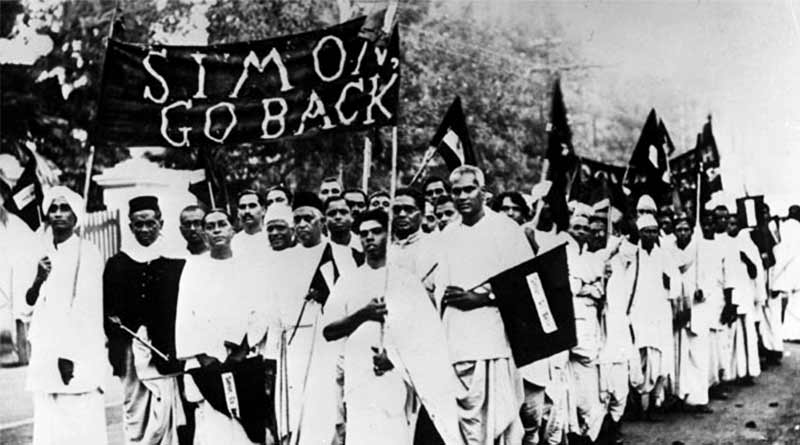
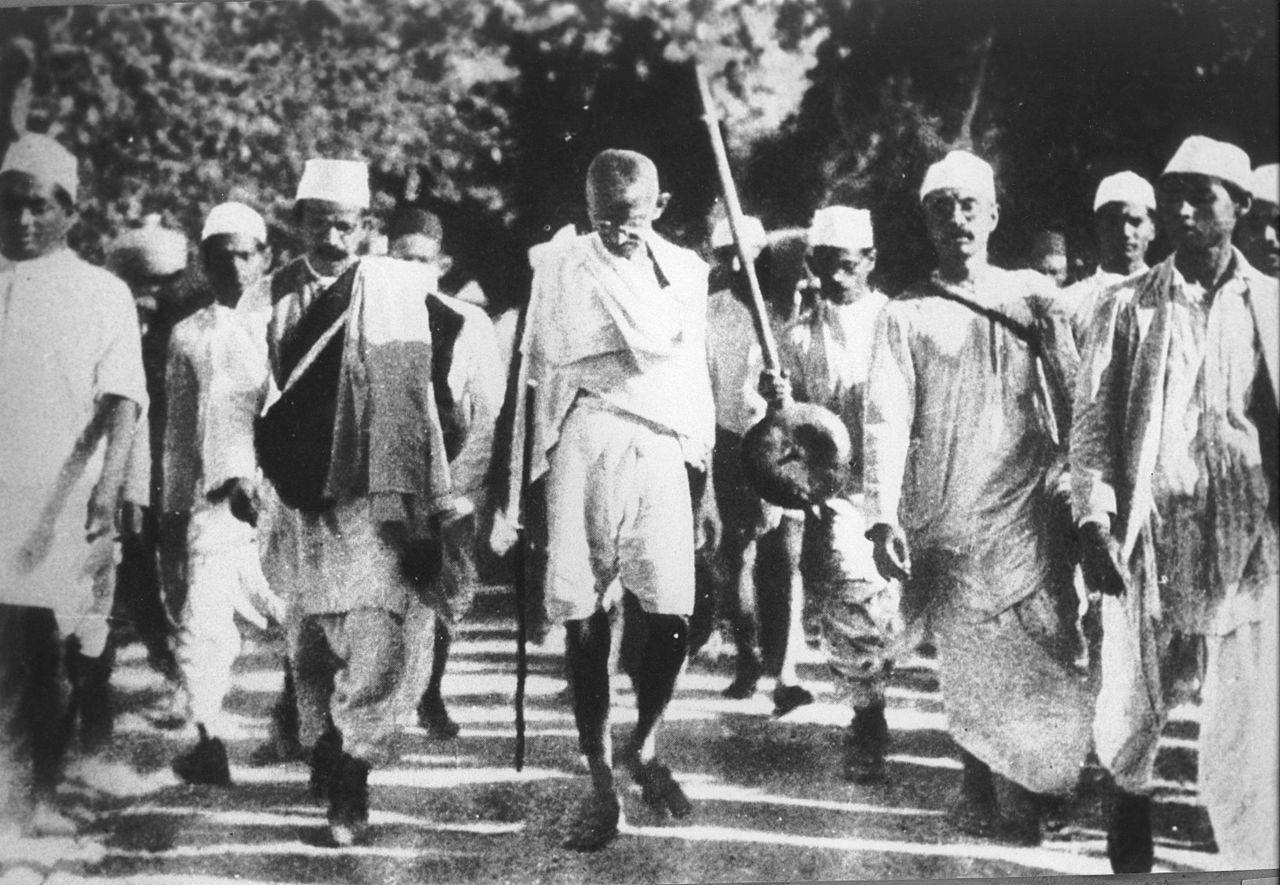
The significant role of Muslims in the freedom movement of India is a well-established fact which cannot be obliterated by delation of the names of Muslim freedom fighters from the present-day history books and the indifferent attitude of modern media towards them. A recent instance of this attitude was observed in the very few and scattered references to Muslims in articles, write-ups and reports which have been appearing in newspapers for the last one month in the memory of the Salt Satyagraha, especially the historic Dandi March undertaken by Gandhiji.
It is beyond any doubt that Muslims participated in the Salt Satyagraha with same esthusiasm and zeal which they exhibited in other stages of the freedom struggle. It was with the same sense of involvement in the movement that Muslims fully participated in the famous Dandi March of 25 days (12 March ¨ 5 April, 1930) from Sabarmati Ashram to Dandi village when Muslim villages on the route were neglected. But this did not dampen their spirit. Many of them joined Gandhiji in Dandi itself and also took part In the Satyagraha in other parts of the country.
It is a little-known fact that in Dandi village a Muslim had the privilege of being host to Gandhiji and it was from his house that he launched his Satyagraha. It is also notable that when in the course of setting out for Satyagraha at Dharasana (Gujarat) on 5 May, 1930, Gandhiji was arrested, the Satyagraha was led by Abbas Tayyabji, a prominent Muslim of Mumbai, and he too was arrested. Afterwards, Sarojini Naidu became the leader of the Satyagraha. The distinguished scholar and great freedom fighter Maulana Hifzur Rahman Seoharwi, who was teaching those days in Jamia Islamia, joined Gandhiji’s Satyagraha and was put into prison. It may be also recalled here that according to Maulana Asrarul Haq Qasimi, in those days Gandhiji enquired from Maulana Hifzur Rahman that he had heard that there is a Hadith of the Prophet (pbuh) which says that items of common use like water and salt are to be exempted from tax. Maulana confirmed it and presented the Urdu version of the Hadith to Gandhiji who was very pleased to see it.
The spark ignited by Dandi march spread to different parts of the country. In each city and town people took to streets for demonstration against the repressive Salt Act. They broke the anti-people salt law, defied the government order and were arrested in large number. Muslim participation in all these phases of the Salt Satyagraha is established by the historical records. Muslims too faced the brutalities of the British police along with their Hindu brothers. Apart from a large number of common Muslims, many Ulama were also put into prison during the Salt Satyagraha. They included Mufti Kifayatullah, Maulana Ahmad Sayeed Dehlawi, Maulana Habibur Rahman Ludhianwi, Mufti Muhammad Naim Ludhianwi, Maulana Ataullah Shah Bukhari, Maulana Fakhruddin Moradabadi; Maulana Hifzur Rahman Seoharwi, Mufti Atiqur Rahman Usmani, Maulana Muhammad Shahid Fakhiri, Maulana Sayyid Muhammad Mian Deobandi, Maulana Abdul Qadir Qasuri, Maulana Muhammad Sadiq Karachwi, Maulana Abdul Aziz Gujaranwala and Maulana Bashir Ahmad.
The role of fatwas of the Indian ulama in the freedom movement has been quite effective. It was the famous fatwa of Shah Abdul Aziz against the British government in India (which was later endorsed by hundreds of other ulama) which prompted Muslims to wage jihad against the British and set the freedom movement in motion. Moreover, the fatwas issued by eminent ulama at each crucial stage of the freedom struggle including non-cooperation, civil disobedience and Salt Satyagraha gave great impetus to the movement. Mufti Atiqur Rahman Usmani, the distinguished jurist and freedom fighter, is reported to have issued a fatwa that no government has right to impose taxes on items like water and salt. If any government dares to do this, it becomes necessary for the people to oppose this action and to struggle to get rid of it. These are only some examples that show the participation of different sections of Muslims in the Salt Satyagraha,. Full facts may be brought to light through going into the official records and historical works of that period.
It is a known fact that deliberate attempts are being made by a section of modern historians and writers of the text-books of history to negate the role of Muslims in the freedom movement of India. But inspite of this sinister design, the fact could not be suppressed that India would not have seen the light of the indepence without the joint efforts of Muslims and Hindus and the sacrifices of the different sections of Indian society. The plain truth is that after their arrival and settlement in India centuries ago, Muslims made it their home and considered it their duty to work for the interest of their homeland and to contribute to the overall development of the country.
As a matter of fact, Muslims started the freedom movement and worked whole-heartedly to make it successful with the same sense of duty. In the present scenario, it becomes an obligation on all of us to highlight the role of Muslims in the freedom movement and the progress of the country through different means. It is heartening to know that in the present situation of working of some divisive forces against Muslims, there are many justice and peace-loving non-Muslims like Professor I. K. Shukla who cooperate with Muslims to project the Muslim contribution to the development of India from medieval to modern times.
Dr Zafarul Islam Islahi teaches in the department of Islamic studies, AMU, and may be contacted at zafarul.islam@gmail.com«
source: http://www.milligazette.com / The Milli Gazette / Home> Special Report / by Zafarul Islam Islahi / The Milli Gazette Online / 1-15 May 2005
Not far from Gali Mir Qasim Jan, where Ghalib’s haveli is situated, is Sharif Manzil. Here the descendants of the famous hakim Sharif Khan live in comfort. Among the hakims of Sharif Manzil were such physicians as Mahmud Khan and his sons, of whom Hakim Ajmal Khan (in sketch) became almost a legend in his lifetime. It was he who established the Hindustani Dawakhana nearby and also the Tibbia College in Karol Bagh.
At Sharif Manzil, which had dropped the suffix haveli, came rajas and maharajas and even government officials, besides ordinary people to seek medical advice from Ajmal Khan and his two elder brothers. During the “Mutiny” of 1857, the Manzil was guarded by the troops of the Maharaja of Patiala, who patronised the hakims. Ghalib too escaped arrest and destruction of his haveli because the hakims sent some of the Patiala soldiers to guard it. When Ghalib’s younger brother died and a sort of curfew order was in force in the troubled city it was under the protection of these troopers that the dead body was taken for burial.
Lala Chunna Mal’s haveli in Chandni Chowk is a 120-room building with shops below it. The haveli is partly occupied by his descendants, while the others have locked their rooms and gone to stay in modern bungalows in the posh areas of New Delhi. Chunna Mal, who belonged to the Khatri community, was an influential banker of the Mughals and a friend of the Sharif Manzil hakims, but after the “Mutiny” he came into the good books of the British, who allowed him (on payment) to take control of some Mehrauli palaces and Fatehpuri Masjid, which was given back to the Muslims only in 1877, otherwise it was closed to the namazis.
Skinner’s haveli in Kashmere Gate area is now a ruin of its former self and occupied by transporters. It was at this haveli that Col Skinner used to hold his lavish parties in which the main attraction was his friend and British Resident at the Mughal court, William Frazer. The Christmas, New Year and Easter get-togethers here have passed into legend.
The havelis of Mirza Jahangir and fellow-royal Mirza Babar in Nizamuddin were magnificent buildings during the last days of the Mughals and still retain some of their old grandeur.
source: http://www.thestatesman.com / The Statesman / Home> Features / Statesman News Service / December 17th, 2017
Illustration by Vinay Kumar | Photo Credit: 01dmc rvsmith
Providing a healing touch to the sick and the destitute, there are several stories associated with Hakim Ajmal Khan
An Oriental wearing a Western suit and carrying a small box walked down a street in Paris when he saw a man rolling on the ground. Quickly he took out something from the box and, after a few minutes, the man got up, clutched his stomach for a while and then, with a nod of thanks, walked away. The Oriental was Hakim Ajmal Khan who had put away his sherwani and pyjamas to don a suit during his visit to France in 1925. It was widely believed by generations of Delhiites that Ajmal Khan had a magic chest from which he took out medicines to effect near-miraculous cures, like that of a woman in England with an abnormal issue of monthly blood and an epileptic at an Iraqi shrine. He spent nine years as the guest of the Nawab of Rampur, where he revived a dying begum.
Over the years, since his death in 1927, people seem to have forgotten the great hakim whose lasting legacy is the Unani Tibbia College in Karol Bagh. But last week Jamia Millia Islamia held a symposium on the works of Hakim Sahib, who was one of its founders and also the first Chancellor in 1920. It was decided to set up a Hakim Ajmal Khan Institute for Literary and Historical Research in Unani Medicine at Jamia Millia. The proposed institute would translate the classical works on Unani medicine which are hitherto available only in Urdu and Arabic.
Hakim Ajmal Khan was descended from Hakim Sharif Khan. His father Hakim Mahmud Khan was one of the three sons of Sharif Khan and, interestingly enough, also had three sons of whom Ajmal Khan was the youngest. His elder brother, Hakim Abdul Majid died in 1901 and the second brother three years later. Ajmal Khan founded the Tibbia Conference in 1906 to bring hakims together for joint initiatives. His popularity increased with each passing year and he began to be regarded as a man whose views on medicine, politics and religion were widely respected, not only by Hindus and Muslims but also by Europeans like C. F. Andrews and Sir Malcolm Hailey, Chief Commissioner of Delhi. Mahatma Gandhi, six years younger than Ajmal Khan, was the one who opened Tibbia College in 1920 though he regarded Unani and other medicines as “black magic” and believed in natural cures.
It is interesting to note that Ajmal Khan started off by wearing the Mughal angarkhas, then switched over to the Aligarh sherwani and pyjamas and then suits for foreign visits he made in 1911 and 1925, besides the one in between to Shia religious places in the Middle East. When Ahmed Ali wrote his “Twilight in Delhi”, he couldn’t help mentioning the great hakim in it as the one who had attended to the novel’s hero, Mir Nihal after a paralytic attack. The hakim gave him rare medicines and also prescribed the soup of wild pigeons, caught by the Mir’s Man Friday, Ghafoor, whose own wife had died of abdominal ulcers since she was wedded at a young age to a much older. Even the hakim could not cure her as Ghafoor did not exercise restraint. But Mir Nihal surely benefited from his medication, as also the goat being masqueraded as a sick purdah woman and prescribed green grass.
Barbara D. Metcalf, who wrote a learned paper on Ajmal Khan and his family, recalled the words of the poet Hali on the death in 1900 of Hakim Mahmud Khan: “…Mahmud Khan’s strength was an honour to our race/ But he too, left the World. Alas, the fortune of our race/Ajmal Khan filled up the gap with élan. Not only that, he was also a born poet with the pseudonym of Shahid Dihlawi (possessed lover from Delhi) and left behind a dewan of his poetry, which he sometimes recited at mushairas and during debates on who was greater: Daagh or Zauq. Surprisingly enough Ghalib was left hanging in between.”
Being a man of common sense, despite dabbling in romanticism, he refused to entertain fakirs who claimed to have secrets of alchemy. Ahmed Ali writes about Mir Sangi who had wasted his wealth in trying to make gold and of Molvi Dulhan, dressed as “the bride of God in red sari and with bangles and long hair like a woman”.
According to the Moulvi, there is a prescription written on the Southern Gate of the Jama Masjid which no one has been able to unravel. It says (for alchemy is needed) “half a piece of That”! However the vital word describing ‘That’ is missing though a fakir once claimed that it was ‘actually a small, golden flower with red circles and dots on the petals”. When the problem was referred to Ajmal Khan he wrinkled his forehead and remarked “There are other things worth seeking instead of the art of making gold which remains a fantasy”. The writing on the masjid gate is just a brain teaser.”
The hakim sahib is then said to have walked away with a shrug of his shoulders, still what followed him was the belief that the Sharifi family had a special verbal formula (amal-i-taskhir) which never failed to effect a cure. It is not known whether Ajmal Khan divulged it to his successors but those who came for treatment to the Hindustani Dawakhana in Ballimaran probably thought he had, for after all wasn’t he the “Masiha-e-Hind!”.
source: http://www.thehindu.com / The Hindu / Home> Society / by R.V. Smith / May 31st, 2015