Syed Kirmani, an ODI World Cup winner with India in 1983, speaks during the launch of his autobiography, in Bengaluru. | Photo Credit: PTI
The cricket universe was represented by Kapil Dev, Rahul Dravid, V.V.S. Laxman, Anil Kumble, Brijesh Patel, E.A.S. Prasanna, B.S. Chandrasekhar and many of Kirmani’s State teammates.
A galaxy of stars descended at the M. Chinnaswamy Stadium on Sunday for the launch of ‘Stumped: Life Behind And Beyond The Twenty-Two Yards’ by Syed Kirmani, the autobiography of one of India’s finest wicketkeepers.
The cricket universe was represented by Kapil Dev, Rahul Dravid, V.V.S. Laxman, Anil Kumble, Brijesh Patel, E.A.S. Prasanna, B.S. Chandrasekhar and many of Kirmani’s State teammates.
Infosys co-founder N.R. Narayana Murthy and Karnataka Deputy Chief Minister D. K. Shivakumar were also in attendance.
Deputy Chief Minister D. K. Shivakumar during the launch of ‘Stumped, Life Behind And Beyond The Twenty-Two Yards ‘ with Krimani (right). | Photo Credit: The Hindu
Former cricketer Sunil Gavaskar, badminton stalwart Prakash Padukone and actor Jackie Shroff sent their well wishes through video messages. The book is co-authored by Debashish Sengupta and Dakshesh Pathak.
Kirmani’s famous partnership with Kapil Dev against Zimbabwe in the 1983 World Cup, where the duo rescued India from a precarious 17 for five, was a favourite memory among speakers on the stage.
Kapil spoke about the first time he met Kirmani, who incidentally celebrated his 75th birthday on Sunday.
Kirmani’s famous partnership with Kapil Dev (right) against Zimbabwe in the 1983 World Cup, where the duo rescued India from a precarious 17 for five, was a favourite memory among speakers on the stage. | Photo Credit: PTI
“I was in an under-19 camp when Syed Kirmani, Bishan Singh Bedi and others returned to India after being bloodied and bruised on a tour to the West Indies. I worked up the courage to approach Kirmani. The first autograph I ever received in my life was from the great ‘Kiri bhai’ and G.R. Viswanath,” Kapil said.
“I remember what Kirmani wrote when signing the autograph. He wrote ‘Hope to see tons of runs and tons of wickets from you’. That was most kind of him. I also spent a few hours with him, where he taught me so much about the sport and beyond,” Kapil said.
source: http://www.sportstar.thehindu.com / The Hindu / Home> Cricket / by Ashwin Achal / December 29th, 2024
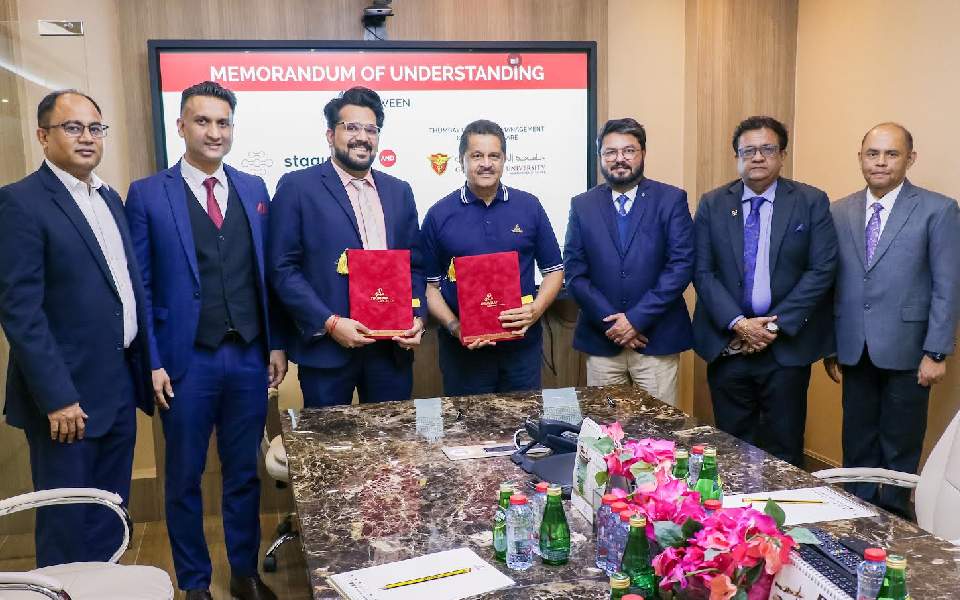
Staque, a global leader in artificial intelligence, quantum computing, and advanced technology solutions, have signed a landmark Memorandum of Understanding (MoU) with Thumbay Group’s Gulf Medical University (GMU) and its Thumbay College of Management and Artificial Intelligence in Healthcare (TCMAIH). This strategic partnership aims to revolutionize the integration of artificial intelligence and quantum computing into healthcare education, training, and research, with far-reaching implications for the region’s healthcare and technology sectors.
Founded by Dr. Thumbay Moideen in 1997, Thumbay Group is a diversified international business conglomerate with operations across different verticals including Education, Healthcare, Medical Research, Diagnostics, Retail Pharmacy, Health Communications, Retail Opticals, Wellness, Nutrition Stores, Hospitality, Real Estate, Publishing, Technology, Media, Events, Medical Tourism, Trading and Marketing & Distribution. Headquartered in Dubai, the group presently employs around 3000 people.
The MoU establishes a collaborative framework to harness the transformative potential of AI in healthcare, focusing on both academic innovation and practical applications. This collaboration aligns with the UAE’s vision for technological leadership and aims to position GMU and Staque at the forefront of global healthcare advancements.
Driving AI Innovation Through Strategic Partnership
The agreement outlines several groundbreaking initiatives, including:
● Thumbay-Staque Lab in Artificial Intelligence: This state-of-the-art lab, to be established at GMU’s campus, will serve as a hub for cutting-edge research and practical applications of AI in healthcare, focusing on areas such as diagnostics, personalized medicine, and healthcare operations.
● Internship and Employment Pathways: Staque will facilitate internships, short placements, and employment opportunities for TCMAIH students, fostering UAE Nationals’ empowerment and integrating local talent into the global healthcare technology landscape.
● Collaborative AI Programs: Together, Staque and GMU will develop fellowship, short-term, and long-term programs in healthcare AI, leveraging a revenue-sharing model to promote sustainability and scalability.
● Joint High-performance Computing Research Initiatives: The partnership will support joint research projects through the Thumbay International Research Grant, targeting high-impact areas in AI, quantum computing and healthcare.
● Global Collaboration and Expertise Sharing: Faculty and staff exchanges will enhance knowledge transfer, while industry partnerships will drive regional and international expansions of TCMAIH’s and Staque’s initiatives.
Dr. Thumbay Moideen, Founder President of Thumbay Group UAE, commenting on the partnership said, “Our partnership with Staque is a natural extension of our commitment to advancing healthcare education and practice. By integrating AI into our curriculum and research initiatives, we are empowering our students and faculty to become leaders in a rapidly evolving healthcare ecosystem.”
Dr. Muhammad Khan, CEO of Staque, expressed his enthusiasm for the partnership, stating, “This collaboration marks a pivotal moment in merging AI and healthcare education. By establishing the Thumbay-Staque Lab, we are taking significant steps toward a future where AI drives meaningful improvements in patient outcomes, operational efficiencies, and healthcare innovation.”
Transforming Healthcare Through AI
Staque’s extensive expertise in AI, quantum computing, and robotics complements GMU’s reputation for academic excellence. This partnership aims to tackle critical challenges and unlock opportunities across healthcare and education, including:
● AI-Powered Diagnostics: Tools for early disease detection and personalized treatment planning, using advanced algorithms and quantum computing to process vast datasets with unparalleled speed and accuracy.
● Adaptive Learning Systems: AI-driven systems to create personalized educational experiences for healthcare professionals, addressing skill gaps and enhancing training efficiency.
● Healthcare Operations Optimization: Autonomous intelligence solutions to streamline administrative workflows, reduce inefficiencies, and enhance the overall patient experience.
“Medical research and practices are ripe for innovation. Accuracy, accessibility and affordability issues have a critical impact on global health care. The adoption of AI and quantum computing are essential to address these issues” said Dr. Raees Tonse, Staque Board Member who catalyzed the partnership.
The Thumbay-Staque partnership also explores regional and international opportunities for expanding AI and quantum computing programs, enabling students and professionals to access world-class resources and tools. These initiatives will not only strengthen the UAE’s position as a global innovation hub but also set new benchmarks for integrating emerging technologies into healthcare systems.
About the Partners
Thumbay Group and Gulf Medical University
Thumbay Group, a leading private conglomerate in the UAE, operates Gulf Medical University (GMU), a premier institution recognized for its excellence in medical education, research, and healthcare delivery. The Thumbay College of Management and Artificial Intelligence in Healthcare (TCMAIH) is dedicated to marrying technology and medical education, ensuring students and health care professionals are equipped to thrive in a technology-driven healthcare landscape.
Staque Solutions
Staque Solutions bridges the gap between cutting-edge computer science and real-world business needs. With expertise spanning AI, blockchain, quantum computing, and software engineering, Staque empowers organizations to thrive in an era of rapid technological advancement through its autonomous intelligence and high-performance computing solutions. Founded in Calgary, Canada, Staque has grown into a global organization with presence in North America, the GCC, and Asia.
source: http://www.english.varthabharati.in / Vartha Bharati / Home> Gulf / by Vartha Bharati / December 26th, 2024
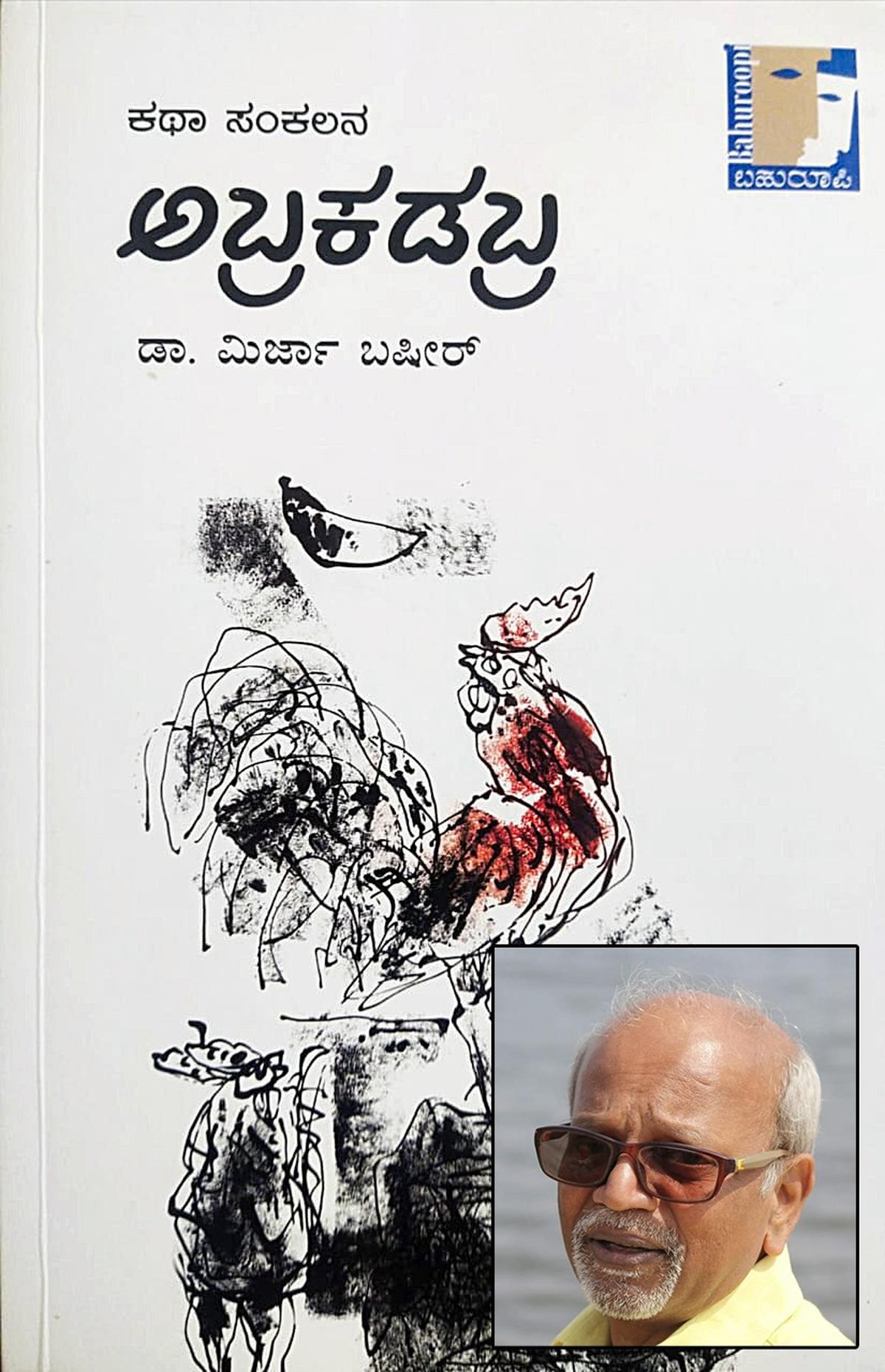
Abrakadabra, a collection of stories by writer Mirja Basheer. | Photo Credit: SPECIAL ARRANGEMENT
The Karnataka Muslim Lekhakara Sangha, Mangaluru, has chosen Abrakadabra, a collection of stories by writer Mirja Basheer, for the Muslim Sahitya Prashasthi for 2023.
The award presented in memory of the late U.T. Fareed, former MLA of the erstwhile Ullal Assembly constituency, comprises ₹10,000 purse and a citation. It will be presented to the author at a function in Tumakuru in December, according to president of the sangha U.H. Umar.
In all, 32 applications had been received for the award. A three-member committee chose ‘Abrakadabra’, he said in a release.
Dr. Basheer, retired veterinary doctor, hails from Challakere in Chitradurga district.
Presently, he lives in Tumakuru. He worked in the Veterinary Department for 34 years.
Some of the other literary works of Dr. Basheer are Batteyellada Oorinalli, Jinni and Haruva Hakki mattu Iruve and Gange Baare Gowri Baare. His stories were included as lessons in some college text books in Karnataka and in the class IX Kannada textbook in Kerala. Some of the stories have been translated into Telugu
source: http://www.thehindu.com / The Hindu / Home / by The Hindu Bureau, Mangaluru / November 29th, 2024
In my previous article, I featured an Ethiopian coffee export company who ran her business based on trust. This is factored in two ways; dealing with her farmers and clientele. In this day and age, we can learn a thing or two by understanding the wisdom behind why some people do the things they do, treading a harder path and not resort to shortcuts. They are in it for the long term, not focused on the short term gains. I have nothing but high regard for individuals like Medina.
Continuing a similar conversation, I have been focusing on what exactly is happening at the farm level by getting in touch with the producer directly. In this article, I talk to the owner of a coffee estate farm based in India. Sumaira gives us an insight about how her family’s coffee estate started in the late 18th century, processing techniques employed on her farm, the specialty coffee movement in India, and much more.
source: Rasulpur Coffee Estates
Can you tell me a bit about yourself and Rasulpur Coffee Estates?
I am Sumaira, the owner of Rasulpur Coffee Estates & Roasters . We are located in the Rasulpur village, Coorg district, in the hot spots of the Western Ghats, India. My entrepreneurship journey has had its shares of ups and downs. I took up a career as an interior designer and worked as a business head for a furniture empire in India. Later on, I moved to the UAE and explored the real estate industry and the coffee sector. I envisioned starting up something of my own, being from a family of coffee planters and having the self-confidence and determination to start my own business. Something clicked the moment I realized how the coffee industry is growing day-by-day.
To add, I am a fifth generation coffee planter who introduced specialty coffee at our estate. We introduced better equipments and techniques, and new processing and fermentation methods which I’ll get into a little later. A laboratory is set up for roasting and cupping to create different roast profiles and new blends at our estate. We believe in helping and encouraging our coffee community, especially the neighboring small and marginal coffee growers to analyze their coffees, and improve their harvesting and processing methods to fetch a better price for their coffee.
The journey of Rasulpur Coffee Estates started in the late 18th century when our ancestors migrated to the Western Ghats of India i.e. Coorg at the time of the British rule, as their main occupation was trading in coffee and spices. They travelled to different parts of Coorg, as they developed a liking towards coffee estates and the greenery, purchased plenty of estates, learnt the methods of coffee cultivation, and started exporting coffee to foreign countries. England was one of the major countries to which coffee was exported to from our estates in that period with the help of the Coffee Board.
We named the estate and brand ‘Rasulpur Coffee’ after the village, Rasulpur, which is on the banks of the Kaveri river in Kodagu district is named after Mr. Rasul Khan, our first generation planter. He cleared the land, started cultivation, built dams for irrigation, made the place livable and initiated agricultural works. Looking at his abilities and progress, the government named this village after him.
In time, our second, third and fourth generation planters purchased more coffee plantations and improved the methods of cultivation, processing, and introduced pulping and irrigation. An R&D team was also set up and a variety of experiments are conducted to this day. The goal here is to enhance the quality of the crops, and advance the processing and post harvesting methods. Our coffee is featured in auctions, supplied for projects, sold locally and exported to wholesalers, cafes, and restaurants. We also ferment micro lots as per requirements from our roasters and young entrepreneurs who are venturing into the coffee industry.
What kind of processing is done on the farm?
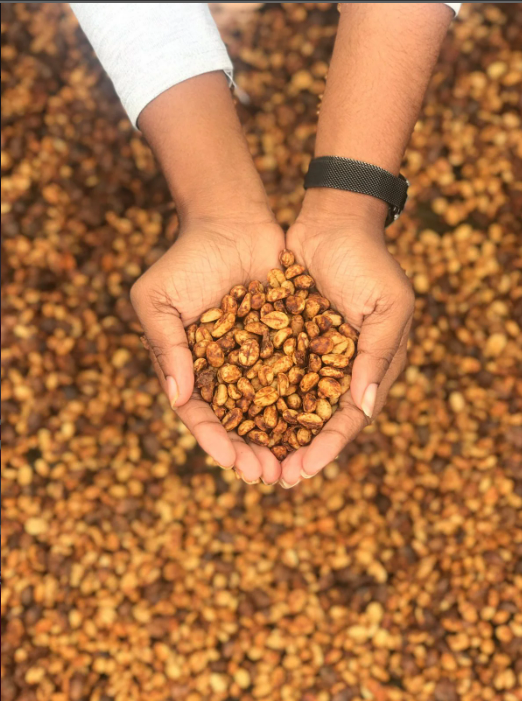
Processing on our farm is done in three different ways along with few specialty processing methods, all of which change the sweetness, body and acidity of brewed coffee. These are natural/sun dried, washed, and honey processed.
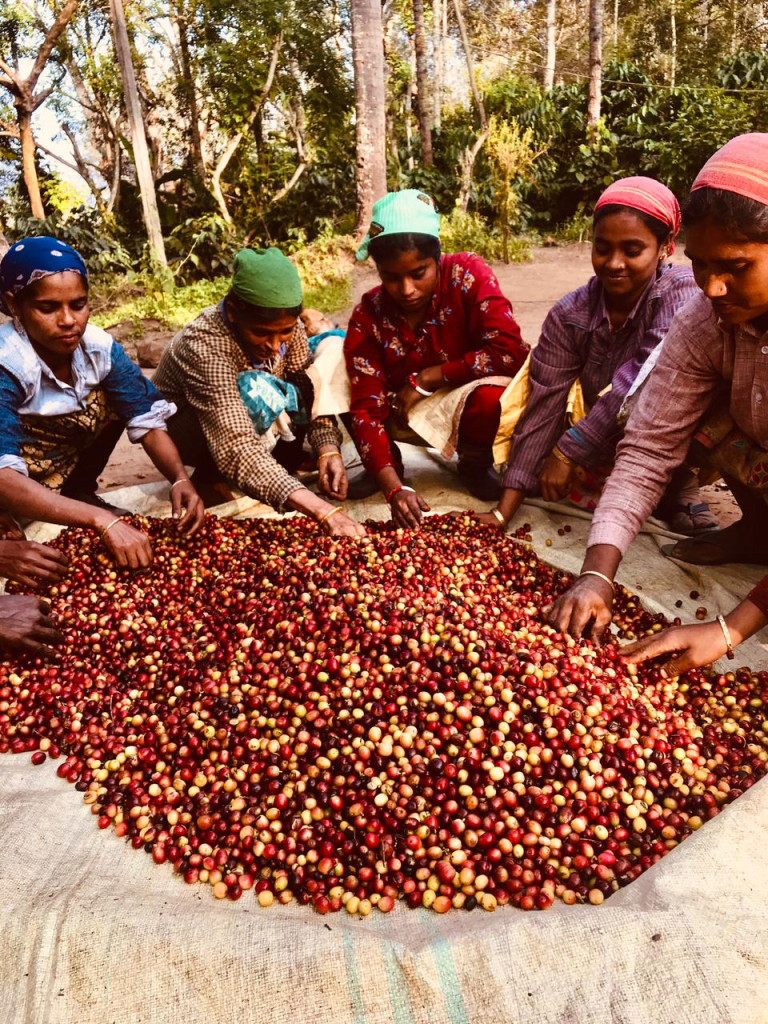
Natural/sun dried process. A natural processed coffee, also referred to as dry processed, is a traditional yet common way to process coffee today. Originating in Ethiopia, it involves drying out freshly picked coffee cherries with the seed still inside. To do this, we place the cherries on drying beds in the sun. These beds are either patios or raised drying tables. The cherries have to be rotated and turned to prevent mold, and takes about seven to eight days to ferment. During this time, the sugars and mucilage (the sticky substance that coats the seed) will latch onto the seeds, develop flavours and make them sweeter. Once the coffee is dry, a machine separates the pulp from the seed. Natural coffees are heavy bodied, and have deep, complex tasting notes. This development comes from the way the cherry ferments differently. Natural processed coffees can be difficult to replicate because of the inconsistencies in fermentation. However when done right, these coffees can also be some of the sweetest you’ll taste. It is juicy, syrupy and well worth the extra effort.
Washed process. Unlike natural, washed processed coffees are called the opposite, i.e. wet processed. In this scenario, machines called pulpers remove the seeds from the cherries before drying them. However, it is not just any cherry that gets the seed removal treatment. These cherries must have the perfect amount of ripeness to make sure they are sweet enough. To accomplish this, they go through a sorter and are segregated according to density. Once these pulpers remove the skin and pulp from the seeds, they are placed in tanks full of water. The water separates the rest of the mucilage and fruit caked onto the seed. Finally, the seeds are dried on the beds in the sun. Washed processed coffees have cleaner, and more crisp tasting notes when compared to natural processed coffees. The body of a brewed washed coffee is lighter. There is typically more brightness as well, because of a cleaner acidity that balances out the sweetness of the coffee. They are just as fruity as natural coffees, but the flavor notes are easier to differentiate.
Honey processed. This method is a combination of both natural and washed. It is a rare and demanding method, and not as commonly practiced as the previous two. However, it produces a unique cup of coffee, with flavours similar to both of the previously described processing methods. During honey processing, a pulper removes the seed from the cherry before it undergoes a drying process. However, it does not go into washing tank to remove the mucilage. That mucilage, which is what the ‘honey’ refers to stays on the seed and is now dried in the sun. The amount of mucilage left behind determines the sweetness, and there are even machines to control the amount on the seed. Like natural process, the seeds are dried on beds. The flavor components of honey coffees are varied and complex. Like washed coffees, they have lighter body and are very syrupy and sweet. Acidity is present but more mellow when compared to washed coffees.
Specialty processing. This is an emerging field and we use unique methods like anaerobic, aerobic, natural fermented, and fruit fermented to name a few. We ferment our coffee in a temperature controlled environment, with or without oxygen, followed by controlled drying to bring out unique and funky flavors out of the coffee.
source: Rasulpur Coffee Estates
What is the current state of the specialty coffee industry in India?
The coffee culture in India has evolved over the past decades. The nostalgia-inducing coffee houses were popular meeting grounds until the 1980’s. In the 90’s, cafe culture took over the country and coffee became the trendy drink to try.
Cafes are becoming the primary hangouts for youngsters and coffee found an emerging and appreciative audience. In the past two decades, we have seen a surge of cafes all over the country. They have materialized as a central hub for meeting, whether casual or business, and also doubling up as co-working spaces.
The 2020 pandemic impacted the industry In multiple ways and its effects were manifold. Logistics of coffee exports are pretty bad even today. Traditional coffee plantation owners who supply heavily within India and export to Europe are left with excess stock of coffee that could no longer be shipped to international markets.
Coming to the Indian coffee space, in recent years, the spotlight is on specialty coffee. This movement is picking up speed with many brands and roasters setting up shop. Analysis gives us a deeper understanding on how speciality coffee has emerged as the current buzzword in coffee circles. Current generation and millennials have emerged as the major chunk of consumers of specialty coffee within India.
Increased awareness and interest about coffee augmented by growing exposure to worldwide trends due to rising international travel and social media saw many of them exploring specialty coffee and manual brewing techniques. Lockdowns put a halt to the possibility of exploring cafes and thus many coffee consumers in the country turned to home brewing.
Many retail specialty coffee brands saw skyrocketing sales in 2020 as consumers invested in manual brewing equipment ranging from French Press, Moka Pots, Chemex and Aeropress. The new generation of coffee consumers respect the people behind the product, want to better understand the ‘farm to cup’ journey and are willing to invest in educating themselves on all nuances of coffee.
A few years back, this was largely unheard of. Farmers were just one aspect of the coffee supply chain, but hardly ever found the spotlight on them. Now plantation owners are keen on sharing their stories and experiences, information on their crops and the work they put in to make that perfect cup of coffee.
One can safely say that specialty coffee will not just be a passing trend, but en route to becoming one of the mainstays of the Indian coffee space in the coming decade.
I think there is a lack of communication between the consumers and farmers. I know some of the consumers, including me, have started to pay attention to where exactly the coffee is coming and from which farm. What do you think can be done to fill this gap?
The missing ingredient is awareness. People need to be educated about Indian coffee. The new-generation farmers need to collaborate with the Coffee Board of India and conduct events to promote coffees originating from India within the country and internationally.
Joint efforts need to be made by all coffee enthusiasts to encourage the consumption of coffee by making people understand the benefits of drinking coffee. The government has to support and help promote farmers to come forward and establish their own brands.
Being honest and transparent ensures the consumers and clients knows about the past, present and the way you are going to build a future. Bringing credibility to the table builds trust factor for the brand with the consumers.
I know some of the issues the farmers are facing currently are the increasing production costs, what steps are you employing to change that? Have you increased the price of your coffee to reflect that?
Whether we like it or not, coffee is getting more expensive. It’s important to look at some of the reasons why this is happening, before you potentially do one of the following:
Buy less sustainable and ethical coffee because it’s cheaper or
Lay blame on the wrong people for higher prices.
There are many factors influencing the cost of coffee from climate change, disruptions to global shipping, consumer demand, and packaging cost. While the need to use more environmentally-friendly packaging for coffee cups and bags is real, so too is the cost for shops switching to compostable or recyclable materials. We have also witnessed fluctuating shortages of packaging stock forcing some companies to find more costly short term solutions to packaging which comes at a higher cost.
Lastly, coming to the cost of quality, producing coffee of higher quality simply costs more. Coffee must be cared, harvesting and processing is hard work. It requires time and physical effort if you want to achieve the highest quality standards. You can’t have it both ways.
source: Rasulpur Coffee Estates
What are your thoughts on transparency? Has it benefitted you in any way?
Yes, by ten-fold. Transparency has improved our overall trust factor in this industry. It solves many problems and even stops disasters before they happen. It expands relationships, increases productivity, strengthens innovation, and improved our revenue.
What is the future of specialty coffee?
By far, the most interesting and exciting coffee segment of the moment is specialty coffee. It is rapidly expanding in India and across the globe as consumers continue to seek out the best cup of coffee to enjoy.
When it comes to coffee quality, specialty coffee is the ‘cream of the crop’ and is likened to fine wines due to its distinctive characteristics and delicious flavour that can only be achieved under certain growing conditions.
In today’s market, specialty coffee has become an intricate science and a global phenomenon that is seeing rapid growth across all sectors. More estates are coming into this specialty game, that will give ‘Indian specialty coffee a lot of mileage.’
What do you do in terms of R&D on Rasulpur Estate
We are currently doing research on developing a hybrid plant which is resistant to white stem borer and leaf rust. These are the two biggest pests and diseases faced by all Arabica growers throughout the world. International Coffee Organization (ICO) is working with different countries to find a solution for this.
This R&D program has been ongoing for the past four years on a 40 year old, 30 ft tall, Arabica plant labelled by us as Rasulpur Arabica. So far, the results look promising and it is resistant to these diseases. We have propagated progenies of this plant by clonal cutting, seed and tissue culture, and cross-bred this plant with other varieties of Arabica.
source: Rasulpur Coffee Estates
About Rasulpur Coffee Estate
Rasulpur Coffee Estates & Roasters is based out of Rasulpur village in Coorg district in the hot spots of the Western Ghats, India. The Estate is run by Syeda Sumaira, a fifth generation coffee planter and entrepreneur.
Fun fact: Coffee farms are the best place to get first hand knowledge about the beverage, how it is grown, harvested and processed.
Rasulpur Coffee Estates organizes coffee tours, get in touch with them to find out more.
source: http://www.fltrmagazine.com / FLTR / Home> Insight> People / by Naveed Syed / August 11th, 2022
Farooqia PU College marked the success of Chandrayaan-3 at a celebration during its 42nd Annual Day. The event featured Kamran Ahmed, a scientist and engineer from the Indian Space Research Organisation (ISRO), Bengaluru and a resident of Mysuru.
Kamran Ahmed played a key role in the Chandrayaan-3 mission. He presented glimpses of the mission and on space exploration, encouraging students to aspire to become accomplished scientists, drawing inspiration from role models like Dr. A.P.J. Abdul Kalam.
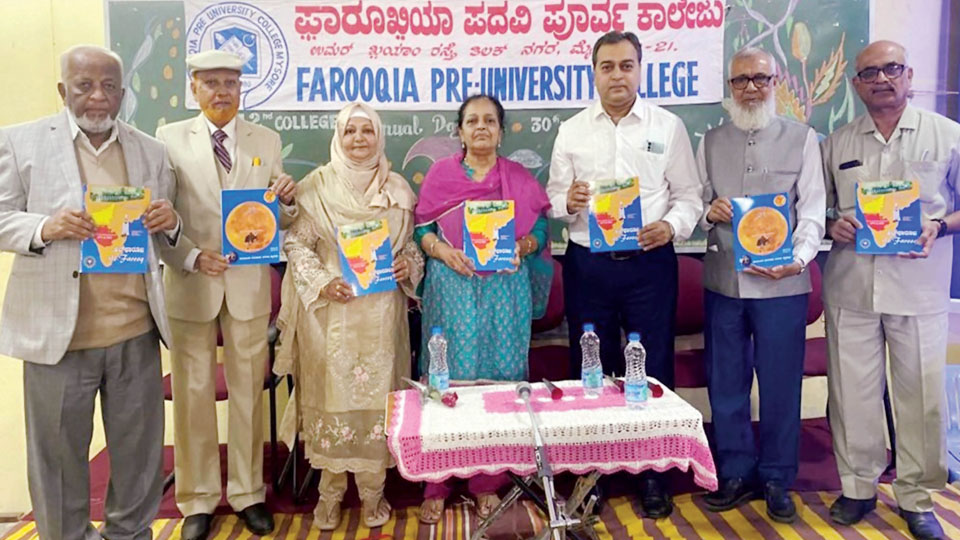
Prof. M. Sayeed Ahmed and Dr. Syed Abdul Khuddus presented a memento to Kamran Ahmed and Prof. Riyaz Ahmed unveiled the 35th volume of the college magazine, “Al-Farooq,” featuring the Chandrayaan-3 rocket launch and Vikram’s historic soft landing.
The issue also dedicated a section to late Mujeeb-Ur-Rehman Khan, a key figure in the establishment of Farooqia College in 1980, and paid tributes to freedom fighter Khazi Abdul Ghafoor Khan, known as “Coorg Gandhi.”
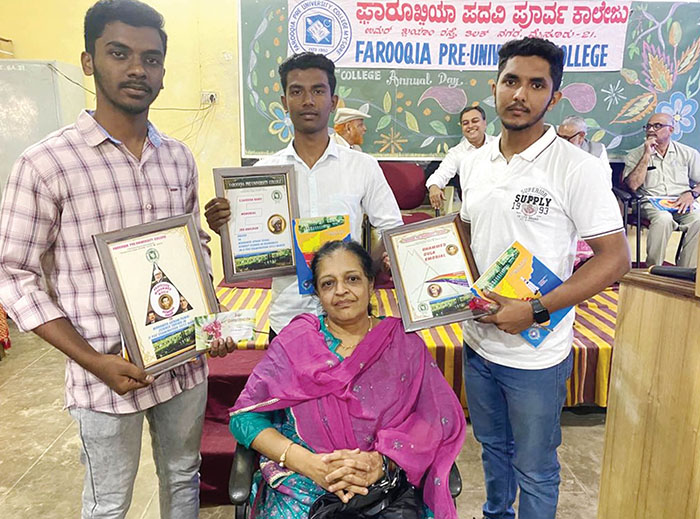
Dr. Anisa Ather, Retired Associate Professor of Microbiology, presented cash prizes in memory of her parents late Prof. Mohammed Moula and late Y. Sayeeda Banu to outstanding students — Mohammed Ikram (highest scorer in Science), Mohammed Afnan (Economics) and Zaid (Physics) — in II PU March 2023 exam.
Additionally, the magazine honoured the first method actor of world cinema, Dilip Kumar, with articles and rare photographs, and featured articles on Prof. B Shaikh Ali and Kannada Professor Kareemuddin of MDTDB College.
Special invitees were Dr. Thouqeer Ahmed and Dr. Shaista Ahmedi, an alumna of the college and successful doctors. Dr. Ahmedi announced cash prizes for the highest scorers.
Prof. M Sayeed Ahmed, Hon. Secretary of the College, emphasised the importance of serving parents and society, highlighting the obligation of Huqooq-ul-Ibaad for every Muslim.
Dr. Syed Abdul Khuddus presided over the function, which included Qirath by Mohammed Taufeeq and Naath by M.K. Zakir.
The event, compered by Zahara Jabeen Tabassum, featured a brief report on the college’s 2023 activities by R.H. Basha, Principal. BiBi Ameena proposed a vote of thanks, following cultural programmes, literary competitions and sports events.
source: http://www.starofmysore.com / Star of Mysore / Home> News / January 04th, 2024
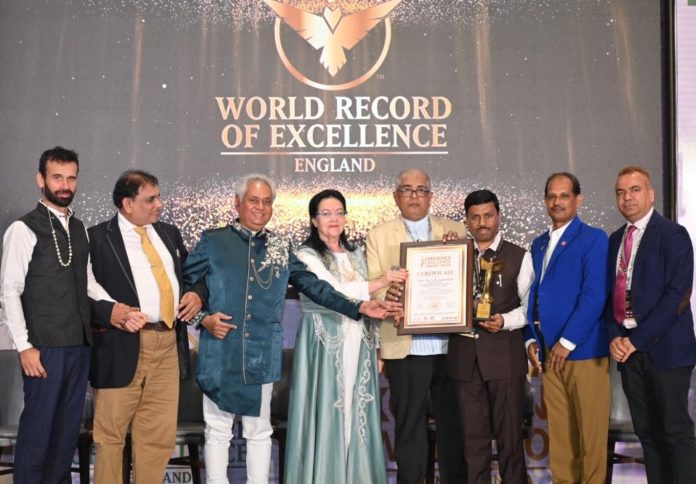
Prof. Dr. A.R. Samiullah (third from R) receives the Eminence Excellence Award
Bengaluru:
Prof. Dr. A.R. Samiullah, Director General, Holistic Medicine Research Foundation, Bengaluru has been honoured for his pioneering contributions in holistic medicine, advancing research and promoting integrative healthcare practices for the well-being of communities.
The World Record of Excellence, a globally recognised organisation from England, successfully hosted the Eminence Excellence Award at the Fairfield by Marriot in Mumbai.
The award ceremony saw a distinguished gathering of individuals from different fields who have made exceptional contributions to the society, innovators and changemakers from across the globe.
Representatives from seven countries attended the event. It was presided over by Prof. Dame Tatyana Maul, Chancellor and Director of Alternative Medicines at Al-Farabi Kazakh National University, Kazakhstan.
source: http://www.radiancenews.com / Radiance News / Home> Awards> Markers of Excellence> Focus / by Radiance News Bureau / December 09th, 2024
Advocate Shahul Hamid Rehman has been appointed as the Additional Advocate General of Karnataka.
The appointment was made on the orders of Karnataka Governor Thawar Chand Gehlot, as communicated by Adinarayana, Under Secretary of the Law, Justice, and Human Rights Department.
Advocate Shahul Hamid Rehman, a senior legal professional, is the son of the late K. Abdul Rahman and Nebisa.
He completed his law degree at SDM Law College Mangaluru, and gained experience practicing under former Advocate General B.V. Acharya.
source: http://www.english.varthabharati.in / Vartha Bharati / Home> Karavali / by Vartha Bharati / December 02nd, 2024
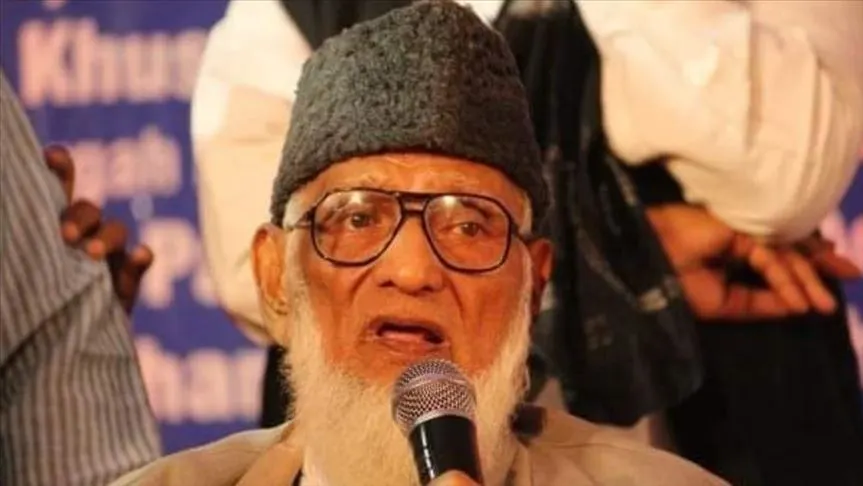
The former President of Jamaat-e-Islami Hind (JIH) and former Vice President of All India Muslim Personal Law Board (AIMPLB), Maulana Mohammed Sirajul Hasan passed away Thursday evening at his hometown in Raichur, Karnataka. He was 88 years of age.
Maulana Sirajul Hasan died of a cardiac arrest at his residence after being discharged recently from a hospital where he was admitted to.
Born in 1933, Sirajul Hasan was a lifelong Jamaat member. He served JIH as Zonal Chief of Karnataka for 28 years, before being deputed as Secretary of Jamaat in Delhi in 1984. He was the All India Ameer of JIH from 1984 until 2003. He also played an active role in the All India Mulsim Personal Law Board, All India Muslim Majlis-e-Mushawarat (AIMMM) and the Babri Masjid Coordination Committee.
Describing him as a towering personality of the Muslim Ummah and the Islamic Movement the current Ameer of Jamaat-e-Islami Hind, Syed Sadatullah Hussaini said, “We shall always cherish his contribution towards serving Islam and the Muslim community. His death is a tremendous loss to the ‘Millat’ and the Islamic Movement. He was both a visionary and a caring leader.”
Talking about his personal relationship with the former JIH chief, Syed Hussaini said, “Maulana Sirajul Hasan played an important role in grooming and training me. He prepared thousands of youth like me for the Islamic Movement. I pray that Allah accepts the yeoman service of Maulana Sirajul Hasan, pardons him, grants him Paradise and gives patience to his family members for bearing this loss.”
source: http://www.thecognate.com / The Cognate / Home> News / by The Cognate News Desk / April 20th, 2020
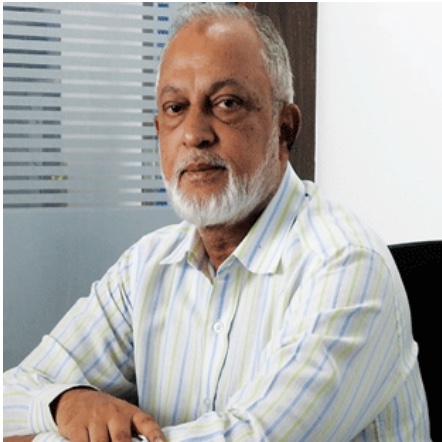
Sir Mohammad Ismail – Founder and Chairman Salihath Group of Institutions
In the picturesque hamlet of Thonse, nestled along the Arabian Sea in Karnataka, lies the Salihath Group of Educational Institutions – a beacon of hope and empowerment for the local Muslim community. Established by the visionary Mohammadia Educational Trust®, this institution has become a transformative force in the region. Under the astute leadership of its founder and chairman, Mohammad Ismail, Salihath has grown into a premier institution that not only fosters education but also cultivates values, harmony, and development.
A Visionary Leader with a Mission
Mohammad Ismail, the founder and chairman of Salihath, is a man of extraordinary humility, kindness, and vision. Hailing from the very village he sought to uplift, his dedication to empowering the community through education has left an indelible mark. His down-to-earth nature, simplicity, and relentless drive have inspired countless individuals. Interacting with him at his office was a privilege – his clarity of purpose and passion for community service are genuinely infectious.
A Challenge Turned into a Movement: The Story of Mohammad Ismail’s Vision
When I met Mohammad Ismail Sahab, the founder and chairman of the Salihath Group of Educational Institutions, I was immediately struck by his warmth and humility. Sitting in his modest yet welcoming office, he exuded a sense of calm determination. As our conversation unfolded, I asked him about the inspiration behind his monumental endeavour to establish a school. His response was both deeply personal and profoundly inspiring – a story of resilience, vision, and the transformative power of a single challenge.
He leaned back, his gaze momentarily distant, as if revisiting the past. “It all started,” he began, “when my young son was mistreated by a teacher at his school. Like any concerned parent, I went to the Principal to address the matter. What began as a simple complaint turned into a heated discussion. In the middle of our conversation, the Principal, perhaps out of frustration or arrogance, said something that changed my life: ‘If you think you can do better, why don’t you start your own school?’”
For a moment, Mohammad Ismail paused, as though replaying those words in his mind. “He said it almost mockingly,” he continued, his voice steady but tinged with emotion. “It wasn’t just a personal affront. It was a reflection of how our community was perceived – poor, powerless, and incapable of rising above its circumstances. His words weren’t just aimed at me; they seemed to ridicule the very idea that someone from our background could dream of something better.”
The Principal’s remark, though intended to dismiss, ignited a spark within Mohammad Ismail. “That day, I resolved not just to prove him wrong, but to create something far greater than he could imagine – not merely for my son, but for the entire community. I wanted to provide an education that was affordable, accessible, and dignified for every child in the region, regardless of their background or financial status.”
What followed was nothing short of remarkable. Mohammad Ismail Sahab poured his heart and soul into turning that challenge into an opportunity. “It wasn’t easy,” he admitted, “but I wasn’t alone. Others shared my vision. Together, we built what you see today – not as individuals, but as a collective force of determination and faith.”
Today, decades later, Salihath Group of Educational Institutions stands as a testament to his resolve. From its humble beginnings, it has grown into a thriving hub of education and empowerment, impacting the lives of thousands. “We did this together,” he concluded with a smile, his eyes bright with pride. “It’s not my achievement alone; it’s the result of a community that dared to dream and worked tirelessly to make that dream a reality.”
This story, deeply rooted in personal resilience and communal effort, is the cornerstone of Salihath’s legacy. Mohammad Ismail’s journey serves as a powerful reminder of how a single moment of adversity can ignite a movement that transforms not just lives, but entire communities.
The Genesis of Salihath
The story of Salihath began in 1972, with the establishment of Anjuman Taalimate Mohammadia Madarasa, an institution imparting Islamic education to local children. Recognising the pressing need for quality education for Muslim girls, especially in secondary and higher education, Mohammad Ismail and the Mohammadia Educational Trust® expanded their vision. Over the decades, Salihath evolved into a group of institutions offering diverse programmes, from primary education to college degrees, all while maintaining a firm grounding in Islamic and moral values.
A Timeline of Growth
1972: Anjuman Taalimate Mohammadia Madarasa founded for Islamic education.
1994: Salihath Arabic College for Girls established, offering Islamic studies and Dawah training.
1996-97: Salihath Kannada Medium High School for Girls commenced.
1997-98: Salihath English Medium Primary and High School launched.
2009-10: Salihath P.U. College for Girls inaugurated for higher education.
2014-15: Salihath Degree College for Girls started, affiliated with Mangalore University.
Transformative Impact on the Community
Empowering Girls’ Education: In a region where Muslim girls once had limited access to quality education, Salihath has been a game-changer. By establishing schools and colleges, the institution has enabled thousands of girls to achieve academic success and professional growth. Partial fee concessions and affordable education ensure that financial constraints do not hinder opportunities for deserving students.
Promoting Literacy and Development: The literacy rate in Thonse has seen a dramatic improvement, thanks to Salihath’s efforts. In 1971, literacy in the region was less than 50%. Today, it stands at an impressive 85%, surpassing the state and national averages. This growth reflects the institution’s role in shaping the educational landscape of not just Thonse but the entire Udupi district.
Fostering Cultural Harmony: Salihath is more than just an educational institution; it is a platform for cultural exchange and understanding. By welcoming students from diverse backgrounds, it fosters a sense of unity and mutual respect. The inclusive ethos of Salihath promotes cultural harmony, making it a vital pillar of community development in Thonse.
Contributing to Nation-Building: Salihath’s graduates are making significant contributions in various fields, including education, business, and social service. The institution instils a sense of responsibility, leadership, and patriotism in its students, ensuring they become valuable contributors to the nation’s progress.
Why Salihath Stands Out
Government Recognition: All programmes are affiliated with the Government of Karnataka.
Self-Sustainability: Operates without external funding, maintaining autonomy and integrity.
Value-Based Learning: Combines academic excellence with Islamic and moral education.
Modern Facilities: Offers state-of-the-art infrastructure, digital learning tools, and well-equipped labs.
The Legacy of a Visionary
Mohammad Ismail’s initiative has catalysed the establishment of over 25 Muslim educational institutions in the region, significantly impacting the socio-economic landscape of Thonse and beyond. His life’s work is a testament to the transformative power of education and a reminder that visionary leadership can bring about meaningful change.
Salihath Group of Educational Institutions has ambitious plans for its future. From expanding academic programmes to introducing new disciplines in science, commerce, law, journalism and technology, the institution aims to remain a leader in education. Efforts to engage alumni, document its inspiring history, and strengthen its presence through updated digital platforms are underway.
Salihath Group of Educational Institutions is not just an academic hub; it is a symbol of empowerment, cultural harmony, and progressive change. Its journey from a small Madarasa to a leading educational institution reflects the potential of dedicated community efforts. As it continues to inspire and uplift, Salihath stands as a shining example of how education can shape lives, communities, and nations.
A Heartfelt Thank You to the People of Thonse
Recently, I had the privilege of visiting the picturesque village of Thonse in Udupi and spending three unforgettable days amidst its serene beauty and warm-hearted people. From the moment I arrived, I was enveloped in an atmosphere of genuine humility and a profound eagerness to serve, which seemed to resonate throughout the entire village. It felt less like a visit to a new place and more like a return to my own hometown.
During my stay, I had the opportunity to meet a diverse group of people who form the lifeblood of this community. The trustees of the society welcomed me with open arms, sharing their stories and dreams for the institution. Parents spoke with pride about their children’s achievements, students eagerly shared their aspirations, and alumni reflected fondly on how their lives had been shaped by the education they received here. Each interaction was a testament to the close-knit and supportive nature of the Thonse community.
Beyond the enriching discussions, I was also captivated by the breath-taking surroundings of this coastal gem. I enjoyed a peaceful boat ride across the ocean, marvelling at the vastness of the Arabian Sea. I visited Malpe Beach, where the golden sands and azure waters seemed to stretch endlessly. The delta point of Kodibengre offered a mesmerising confluence of natural beauty, a place where the river gently embraces the sea. The entire environment was a harmonious blend of nature’s tranquillity and human warmth.
Staying in the home of Mohammad Ismail Sahab, a visionary leader and an embodiment of hospitality, was the highlight of my visit. His graciousness and kindness, along with the love and care shown by everyone in Thonse, left an indelible mark on me.
As I bid farewell to this enchanting village, I carry with me not just memories of its stunning landscapes but also the deep gratitude for the unmatched hospitality and genuine affection of its people. To the residents of Thonse, thank you for making me feel not like a guest, but like family.
source: http://www.radiancenews.com / Radiance News / Home> Focus> Pride of the Nation / by Syed Azharuddin / Radiance News Bureau / December 04th, 2024
Samaira cleared six examinations and gathered over 200 hours of flying experience in around one-and-a-half years..
An inspiration: Samaira Hullur from Vijayapura who has obtained commercial pilot licence at the age of 18. | Photo Credit: SPECIAL ARRANGEMENT
Samaira Hullur from Vijayapura has obtained a commercial pilot licence at the age of 18.
Her father Ameen Hullur, an interior designer, has said that she is the youngest in India to clear all tests and get the licence.
Ms. Hullur was trained at the Vinod Yadav Aviation Academy (VYAA) in New Delhi and later, she joined the Carver Aviation Academy in Baramati of Maharashtra.
She cleared six examinations and gathered over 200 hours of flying experience in around one-and-a-half years.
She credits Captain Tapesh Kumar and Vinod Yadav for training and mentoring support. Her initial training was with VYAA after which she faced several examinations and cleared them. She went to Baramati after obtaining her licence. She has about 200 hours flying experience.
Ms. Hullur said that she was inspired by Captain Kumar who got his licence when he was 25. “I always dreamt of being a pilot. My parents supported me in my pursuit,” she said.
Her father Ameen Hullur recalls that it was a joy ride in a helicopter that made her decide on a career in the skies.
A few years ago, the Vijayapura district administration arranged helicopter rides over the city during the Bijapur Utsav.
“We bought tickets and were seated next to the pilot. Samaira was attracted by the pilot’s attire and style and began asking him several questions. He patiently answered them. That was the day she decided she wanted to be a pilot. We supported her by saving money and looking for good quality aviation academies,” Mr. Hullur said.
A bright student all through, she completed her SSLC at 15 and 12th standard at 17. She has been a student of Sainik schools, Shishu Niketan and Shanti Niketan. She has joined the Kendriya Vidyalaya for her 12th standard science course.
“She cleared five of the six examinations conducted by the Directorate-General of Civil Aviation before she turned 18. She was not allowed to appear for the radio transmission technology paper as eligibility was 18 years. She cleared it later. The examinations are apparently tough but she passed all in her first attempt,” Mr. Hullur said.
She obtained over 200 hours of flying experience in night flying and various airplanes, including multi engine aircraft, in around eight months of flying in Baramati, he said.
Mr. Hullur and his wife, a fashion designer and teacher, were pleasantly surprised when her academy declared that she is the youngest in the country to get the licence.
“She is an inspiration for several other girls from backward North Karnataka, where the education levels of girl students is less than the State average,” Omkar Kakade, who is a professor and head of the Department of Journalism in Karnataka Akka Mahadevi Women’s University, said.
“Samaira Hullur’s success will definitely inspire more girls to make courageous and non-traditional career choices. We are proud of her and thankful to her parents for supporting her decision,” Dr. Kakade said.
source: http://www.thehindu.com / The Hindu / Home> News> India> Karnataka / by The Hindu Bureau / December 03rd, 2024