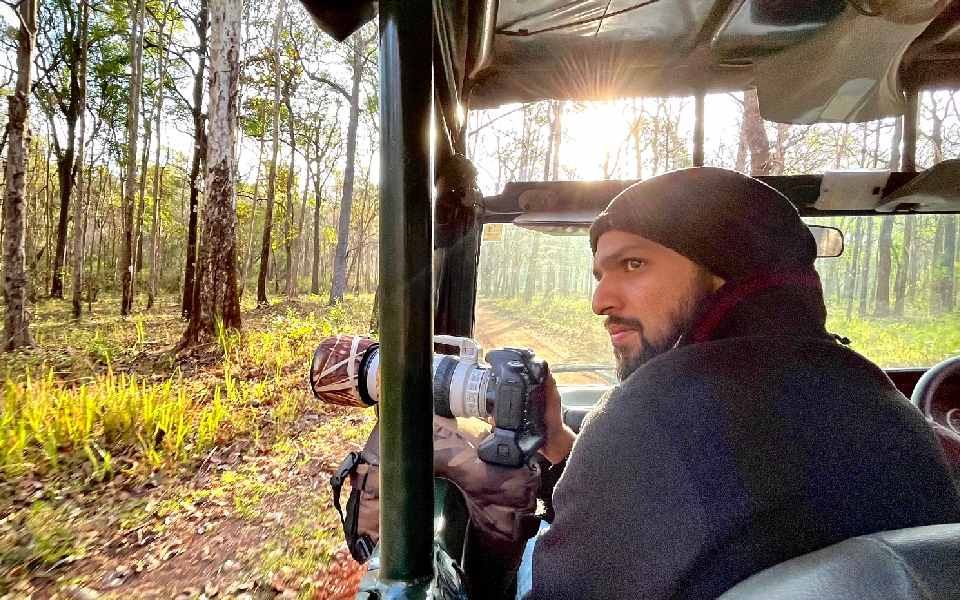
Haarish during one of his jungle visits with his camera
Udupi:
Haarish Mohammed, a wildlife photographer from Udupi, now residing in Saudi Arabia, has won the international photography competition organized by 35 Awards in the Black and White category. This contest saw a remarkable participation of 465,000 photographs submitted by 111,253 photographers from 174 countries.
Reflecting on his journey, Haarish shared, “I’ve been fascinated with nature and forests since childhood. During my college years, trekking through the Western Ghats became a regular activity. In 2011, I moved to Saudi Arabia for a job, realizing that my connection to the forest could only be maintained through a career in the Forest Department, becoming a naturalist, or pursuing wildlife photography. I dedicated 1.5 years to learning the theory of photography before purchasing my first camera in 2013.
“The period from 2013 to 2017 was all about learning, and in 2017, I met a group of talented photographers in Saudi Arabia called Photomates, which I joined. With their support, I honed my skills. However, my job in Saudi Arabia limited my opportunities to explore the forests of Karnataka. After the first wave of COVID-19 in 2020, I decided to resign and return to India to start my own business. Since then, I’ve had many of my works featured and published on various platforms. I visited national parks like Nagarhole, Kabini, and Bhadra, photographing beautiful animals such as tigers, leopards, elephants, and many colorful birds.”
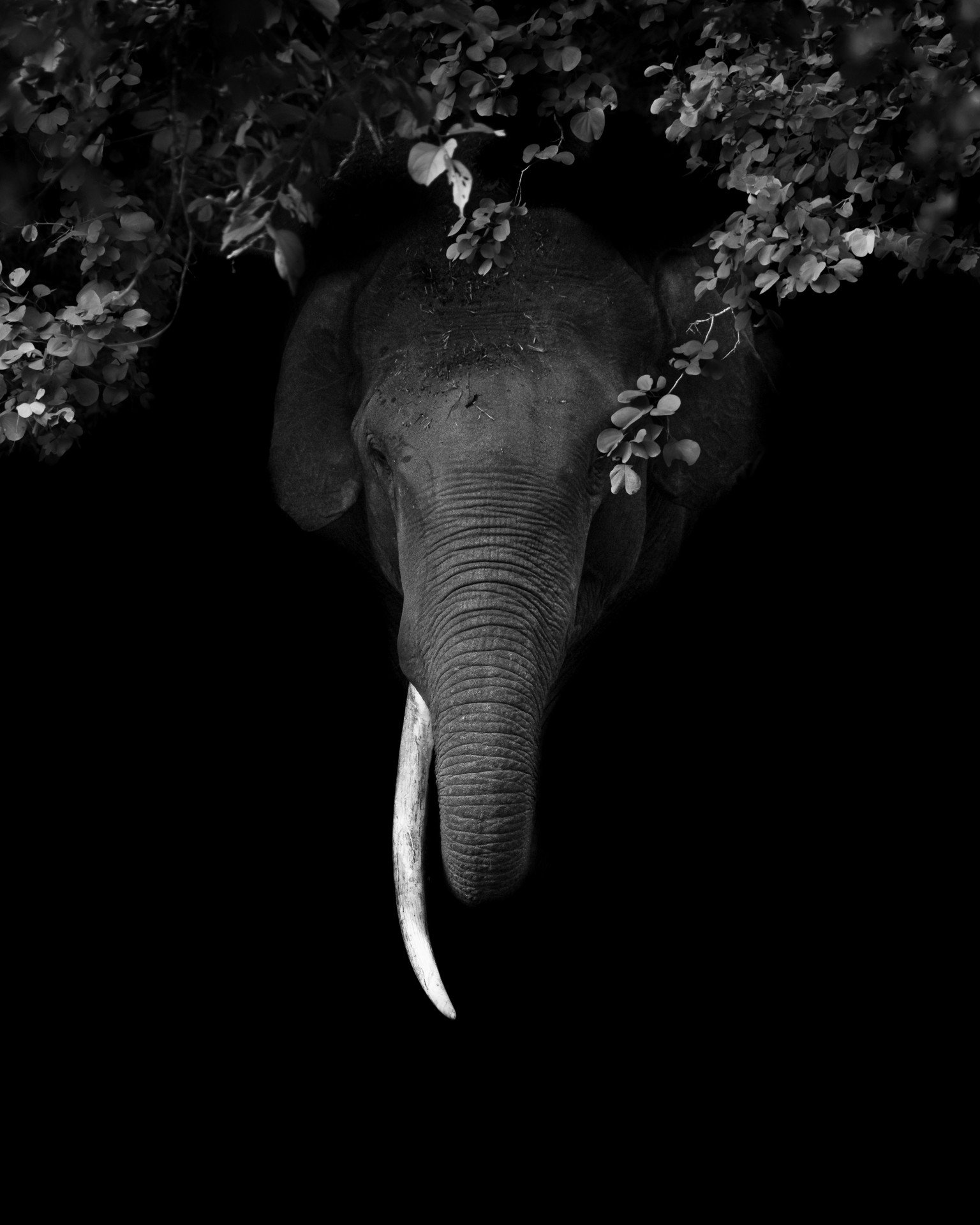
Haarish elaborated on the story behind his winning image: “It was taken during an evening safari in the lush forests of Kabini, Karnataka. We were waiting for a herd of elephants to cross our path to reach a water body. To our surprise, a single tusker emerged from the dark forest.”
Haarish’s photo that bagged first place in international photography competition organized by 35 Awards
Haarish’s achievements include being featured in BBC Earth, the international online magazine PawsTrails, and Nature In Focus.
He secured third place in the 2020, 2021, and 2023 photography competitions held by Pilikula Biological Park in Mangalore. His work was also accepted for the International Wildlife Photo Exhibition held by Alvas Virasat in 2023.
Additionally, he won a certificate of merit in the National Level Photography Contest conducted by the Karnataka Forest Department in 2023. His most recent accolade is the first place in the 2023 international photography competition conducted by 35 Awards in the Black and White category.
“Wildlife photography is like a window into the world of animals. It helps us understand and appreciate them better by capturing their beauty and diversity. Moreover, wildlife photography raises awareness about the importance of protecting wildlife and their habitats. By showcasing the wonders of nature, it encourages us to take care of it. When we see how amazing animals are, we’re more likely to want to save them,” Haarish added.
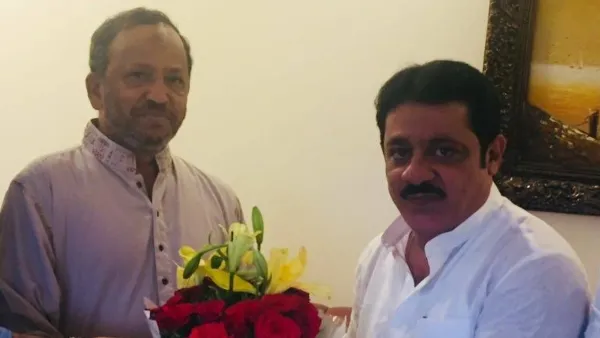
Indian Administrative Services (IAS) officer Nisar Ahmed has been appointed as the new chairman of the Karnataka Minority Commission, Hajj, and Waqf Departments. Ahmed, a native of Ballari, succeeds Abdul Aziz in this key role. Before his retirement in 2012, Ahmed served as the Inspector General of Police (IGP).
Speaking to mediapersons, Ahmed expressed his gratitude for the appointment, which was endorsed by the Chief Minister, several ministers, and MLAs. “The state government has entrusted me with the responsibility of the chairman of the minority commission. Our job is to unite the minorities within the accepted boundaries. It’s important to recognize that Muslims are not the only religious minority; there are about eight to ten minority communities. Our intention is to bring them all onto the same platform, unite them, and work for their welfare. Rather than just making claims, we’ll let our work do the talking,” Ahmed stated.
In related administrative changes, two more IAS officers have been assigned additional responsibilities. Manjunath Prasad N has been relieved of his duties as the Additional Chief Secretary (ACS) to the Cooperation Department. He will be replaced by Ajay Nagabhushan MN, who is currently serving as the Secretary to the Animal Husbandry, Veterinary Sciences, and Fisheries Department.
Manjunath Prasad N has now been appointed as the ACS to three departments: Forest, Ecology and Environment, Youth Empowerment and Sports, and Scheduled Tribes Welfare. This reshuffling is part of the state government’s ongoing efforts to streamline and enhance the effectiveness of its administrative functions.
source: http://www.radiancenews.com / Radiance News / Home> Latest News> Report / by Radiance News Bureau / June 10th, 2024
Abdul Khadar Nadakattin from Dharwad in Karnataka has 24 innovations under his belt.
The niche but problem-solving machines and innovations help farmers with everyday solutions and have also increased their yield up to 25 per cent.
Splashing water on a deep sleeper to wake them up is a clichéd scenario used in many comedy films and on social media. But Abdul Khadar Nadakattin earnestly practised this comedy routine on himself during his school days to wake up early.
A native of the Annigeri village of Dharwad district in Karnataka, Abdul struggled to push himself out of bed in the mornings. “A splash of water on my face was the only solution to wake me up. But I could not expect my parents to do this to me every day,” he tells The Better India.
A then 14-year-old Abdul devised an innovative Wa(h!)ter Alarm. Its functioning was simple — one end of a string was tied to the key of his alarm clock in a manner that when it rang, the thread would unwind itself and the other end was tied to a water bottle. Once the alarm key unwound, the bottle would tilt, and the water would fall on Abdul’s face.
“It helped me wake up and complete my school,” he recalls, laughing. Though he managed to pursue education until Class 10, he did not pursue higher studies.
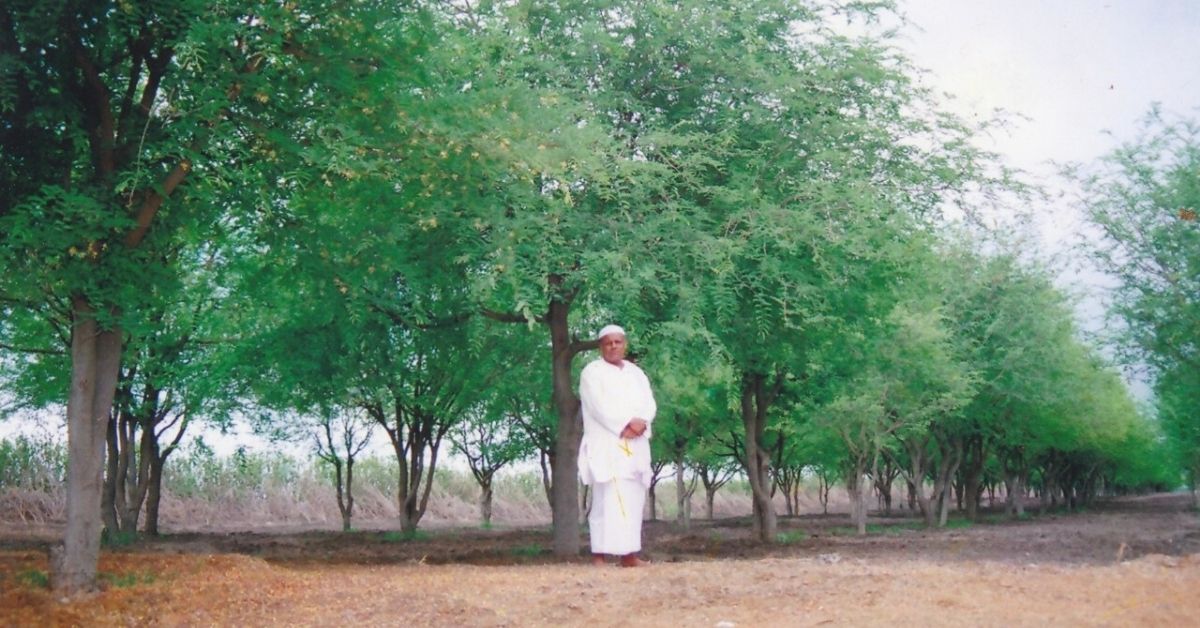
Abdul at his tamarind plantation
But his water alarm talks led to him speaking of the more serious water issues his village faced. “My father owned 60-acre ancestral land and the water scarcity deterred us from earning good profits from farming. My father admitted that our family’s financial condition was poor and asked me to contribute to the farm. So, I gave up my dream to pursue graduation in agriculture,” the 70-year-old says.
Being deprived of an education did not deter him from thinking out of the box. Little did he know then that the water alarm was the first of many of his innovations .
This farmer has come up with unique ideas to solve everyday farmer problems. To date, Abdul has had 24 innovations under his belt, which benefit thousands of farmers in India. It was for this reason that he won the Padma Shri award in 2022.
Helping Farmers, One Innovation At A Time
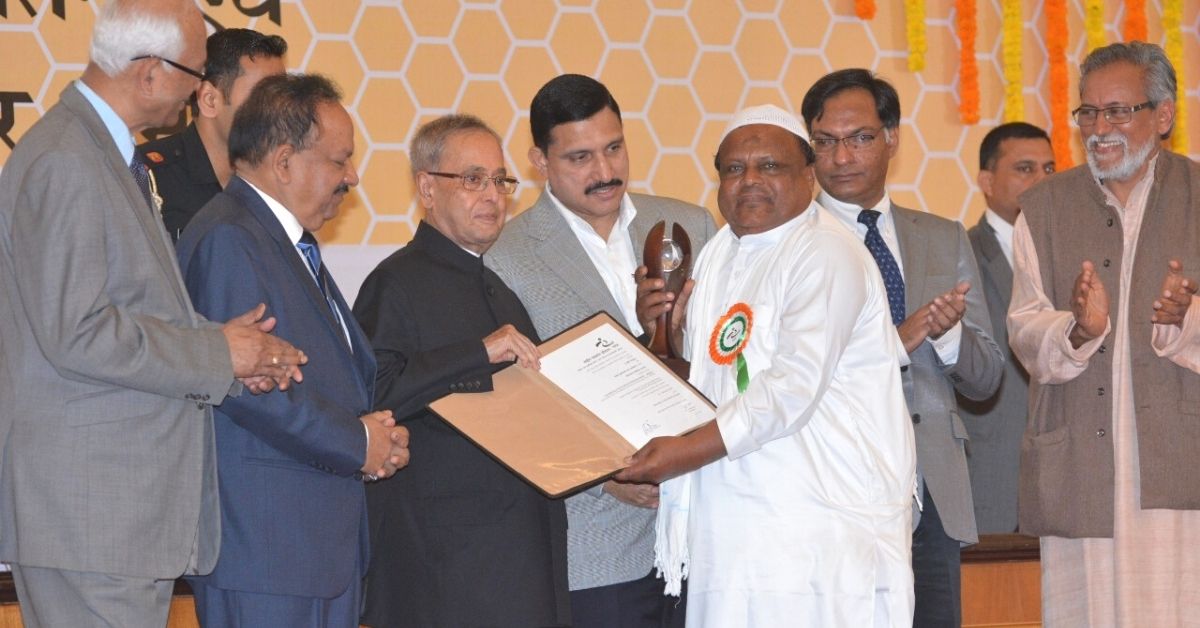
“Thomas Alva Edison is the source of my inspiration,” says the scientist who went barefoot to receive the President’s Lifetime Achievement Award in 2015 at the hands of the then President of India, Pranab Mukherjee. “I always thought of unique ways to solve a problem. That is how I conceived the water alarm. In 1974, I received the ancestral land from my father to continue farming. But interacting with fellow farmers and practising the occupation myself, I learned about the issues of finding labour and other difficulties faced in agriculture.”
Soon after taking over the reins, he built a tiller machine capable of deep ploughing which needed operating by a bullock. “In 1975, I established Vishwashanthi Agricultural Research and Industrial Research Centre to sell the product. But financial constraints did not allow me to market it well, and it failed to take off,” he says.
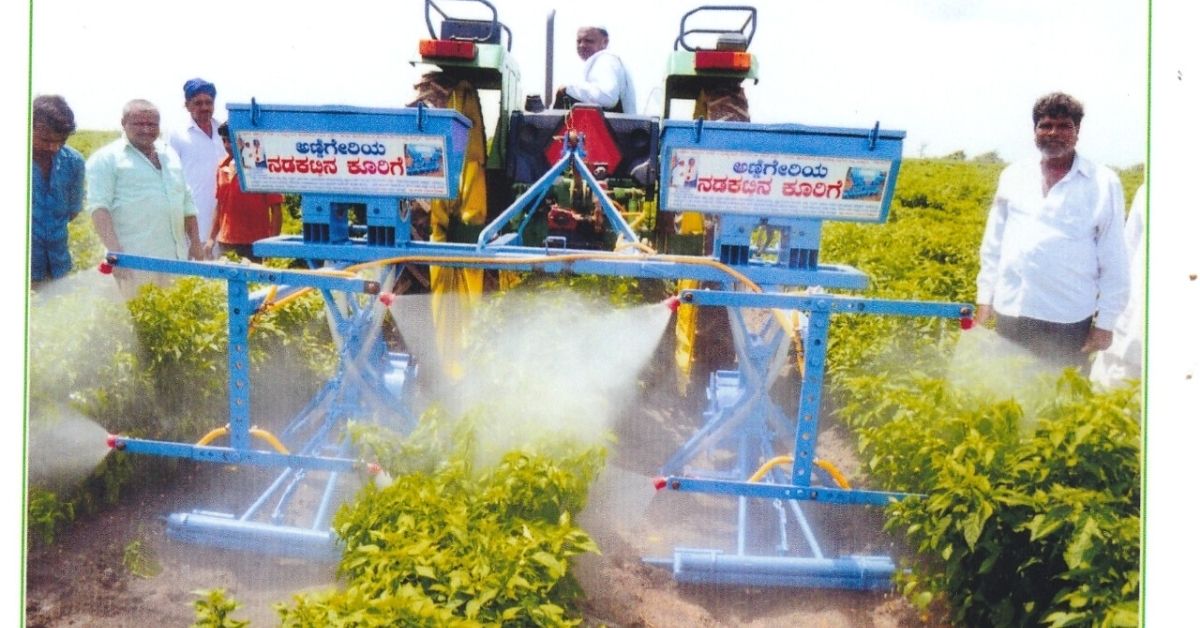
Later, he also built a plough blade that did not require sharpening and lasted for a long duration compared to others in the market. “The blade did not lose its sharpness, which ensured its long life. It could be attached to a tractor as well,” Abdul adds.
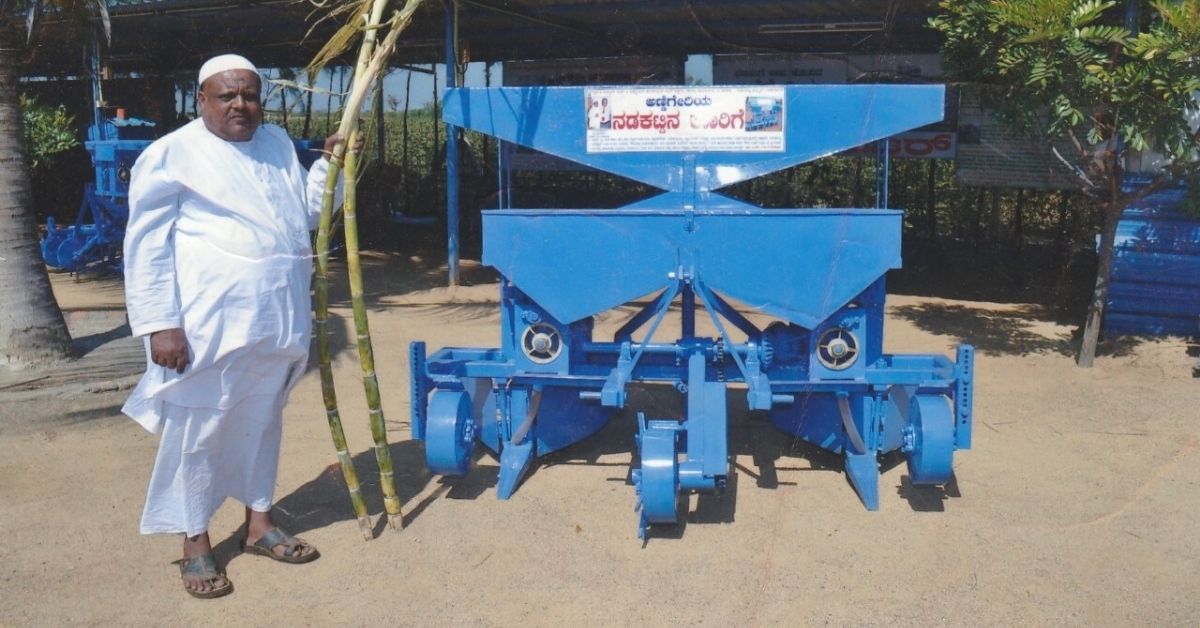
Following this, he built a seed-cum-fertiliser drill that enabled sowing seeds of different sizes with equal spacing. “The equipment is used in sowing a wide variety of seeds from jowar to groundnut. The device also facilitated the dispersal of fertilisers, soil and other organic matter,” he says.
To meet the demands of farmers in Maharashtra, Abdul constructed an automated sugarcane sowing machine. Slowly, his innovations became popular and saw an increase in demand.
Abdul’s 5-in-1 tiller machine
Apart from his innovative pursuit of helping farmers, Abdul also worked to improve the agricultural yield on his farm.
As his father and grandfather suffered losses with erratic rains and limited groundwater reserves, Abdul decided to find an alternative. “In the early 1980s, I planted mango saplings, placed between ber and sapota (chikoo) trees. I planted chillies as an intercrop. But the lack of water killed the plantations. So I switched to growing tamarind as I learned that it required less water and maintenance,” he says.
He sourced 600 saplings and planted them across 6 acres of land by keeping a gap of 20 feet each.
In 1985, the region faced severe droughts, but Abdul managed to source water from a distance of 3 km. “I dug 11 bore wells, but only two yielded water. So I sourced water from a long distance and stored it by creating six farm ponds. They also helped to harvest rainwater during the monsoons. I used the water for flood irrigation of my plantation of 600 saplings,” he says.
“The plants grew well, and feeling confident with its success, I planted more than 1,100 trees in a 10-acre area, making a total of 1,800 saplings,” he says.
But there was another unexpected chapped Abdul faced. “I did not know how to make use of so much tamarind produce. My wife and daughter made pickles and jams to sell in the markets across the state including, neighbouring Hyderabad,” he says.
So, Abdul decided to harvest tamarind and make pickles out of them. “But the process of separating seeds from the tamarind was tedious, and labour shortage made it more difficult. The seeds had to be separated manually and were a time-consuming process,” he explains, building up the crescendo before revealing his next innovation.
After spending nearly Rs 3 lakh and over six months, Abdul conceived a machine that did the job. “The instrument involved a system where the tamarind slid on the tapered peg. This pushed the seeds out from the tamarind pod,” he says, adding that to make tamarind pickles convenient he built yet another device.
“The pickle making required tamarind to be sliced into smaller chunks which again was labour intensive. So, I designed another machine to make the slicing effective and efficient,” Abdul adds.
Over the years, Abdul produced more machines and sold them. His popularity with these niche but problem-solving innovations earned him the name ‘hunase huccha’, meaning ‘tamarind crazy’.
“It was the most difficult innovation of my life as the seeds often got stuck in the tamarind making the separation difficult. I researched and experimented for years to achieve the desired result,” he says.
An Innovation Revolution
Abdul receiving lifetime achievement award at the hands of then President Pranab Mukherji
Abdul has sold thousands of his various innovations to date, he claims with pride.
Shrikanth Jain, one of the farmers who purchased Nadakattin seed-cum-fertilizer drill a few years ago, says, “I used it to sow wheat pulses and other woodgrains. The machine does the job of sowing, dispersing fertiliser, covering the soil, spraying pesticides and saving fuel. It also helps to prevent excess sowing of seeds. Using the device has helped me increase my yield by 20 per cent.”
However, these innovations and his passion for helping the farming fraternity came at a heavy financial loss to Abdul who says, “I struggled with debts all my life and mortgaged part of my agricultural land to invest in research for innovations. I never sell equipment for profits and offer them at make-to-cost, which is about 25 per cent cheaper than the ones in the market. It is a seva (service) for the farmers, and I do not wish to burden them financially.”
Today, Abdul has received funding for his research from the National Innovation Foundation, University of Agricultural Sciences, Dharwad and Karnataka government. He adds, “I received Rs 16 lakh to develop the ploughing machine from the Karnataka government and have also invested other prize money received.”
Elaborating on his innovative process, he says that some innovations happen in months while others take a year or more. “Investing time and money can become very demanding.” But Abdul is relentless and wants to continue his dream of helping farmers. “I believe that the economy of this country runs on farmers. But our community is facing hardships at various levels. I aim to benefit them and ease their difficulty. Innovations can only bring the next revolution in agriculture,” he says.
source: http://www.thebetterindia.com / The Better India / Home> Stories> Innovation> Karnataka / by Himanshu Nitnaware (headline edited) / Edited by Yoshita Rao / February 05th, 2022
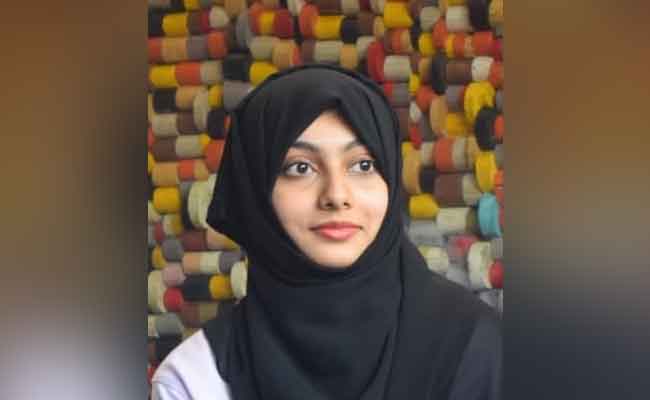
Aysha Merchant, a student of Indian Design School, has secured the 3rd rank in the Interior Design course at Mangalore University. This achievement highlights her hard work, creativity, and commitment to excellence in the field of interior design.
Aysha’s journey in interior design began with a passion for creating aesthetically pleasing and functional spaces.
‘Throughout her course, she consistently demonstrated an exceptional eye for detail and a deep understanding of design principles. Her projects, which often blended innovation with practicality, earned her high praise from both peers and faculty members,’ a press release from the institution stated.
‘During her time at Indian Design School, Aysha participated in numerous design competitions and workshops, further honing her skills and expanding her knowledge. Her ability to think outside the box and her keen sense of style set her apart, making her a standout student in her class,’ the release added.
The 3rd rank at Mangalore University opens up numerous opportunities for her future in the interior design industry.
Aysha expressed her gratitude to her family, friends, and mentors who supported her throughout her academic journey. She said, “This achievement wouldn’t have been possible without the unwavering support of my loved ones and the guidance of my professors. I’m excited to embark on the next chapter of my career and to continue exploring the limitless possibilities in interior design .”
‘As she moves forward, Aysha aims to contribute to the field of interior design by combining her academic knowledge with practical experience. She is enthusiastic about creating unique, sustainable, and innovative designs that can transform spaces and enhance the quality of life for individuals and communities,’ it added.
Aysha Merchant’s accomplishment is a proud moment for Indian Design School and Mangalore University. It shows the quality of education and training provided by the institution and serves as an inspiration to other students pursuing their dreams in the creative arts.
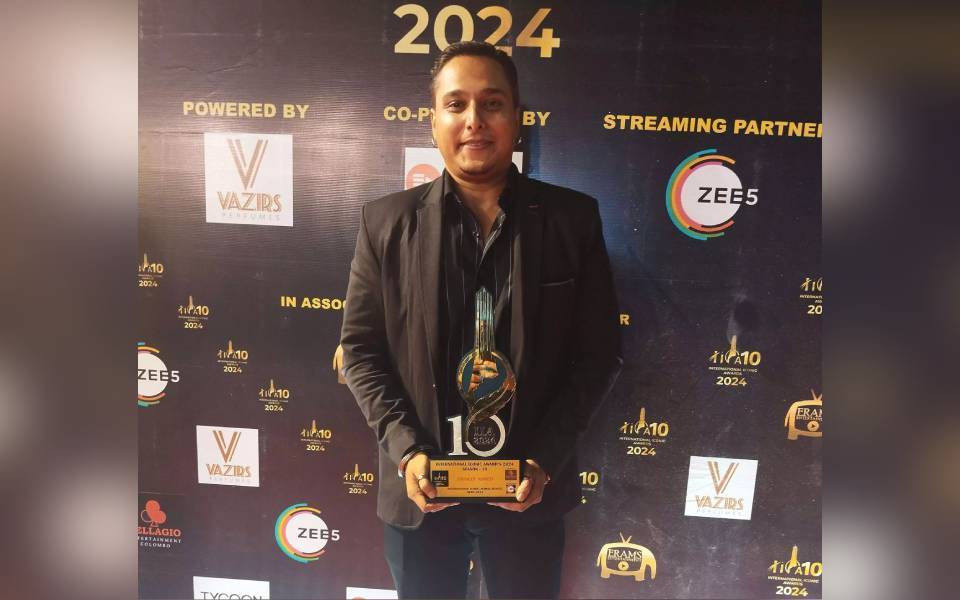
Tauseef Ahmed from Mangalore , a renowned figure in animal rescue, has been awarded the prestigious ‘International Iconic Animal Rescue Hero 2024’ in Mumbai Film City. He was recognized in the social service category for his significant contributions to rescuing animals from the streets of Mangalore over the past 15 years.
Known as Mister Rescuer on Instagram, Tauseef Ahmed has rescued more than 8,000 street animals to date. His dedication extends beyond cats and dogs to include reptiles and birds. Despite facing threats from the cattle mafia, Ahmed’s commitment to animal rescue has continued. His efforts earned him the ‘Best Street Care and Rescue Award’ from India for Animals (IFA) in Hyderabad in 2018.
Originally from Kudremukh in Chikkamagaluru district, Tauseef Ahmed relocated to Mangalore at a young age. His passion for animals led him to join the Animal Care Trust (ACT) in 2010, where he discovered his life’s purpose. He quickly became one of the leading rescuers within the trust. During the devastating floods in Kodagu in 2018, Ahmed’s team played a key role in rescuing hundreds of animals abandoned by their owners, some even untied from their sheds.
In 2019, Ahmed delivered a TEDx talk titled ‘Our Planet, Theirs Too’ at Nitte Deemed to be University, emphasizing the importance of conserving and protecting not only exotic wildlife but also common animals.
Despite holding an MBA degree and owning a real-estate firm, Ahmed remains dedicated to his mission.
He trained in first aid and basic veterinary treatment under Dr. Lakshmi to enhance his rescue efforts during emergencies.
His first book, ‘Straying Around,’ is based on his experiences in animal rescue.
source: http://www.english.varthabharati.in / Vartha Bharati / Home> Karavali / by Vartha Bharati / June 08th, 2024
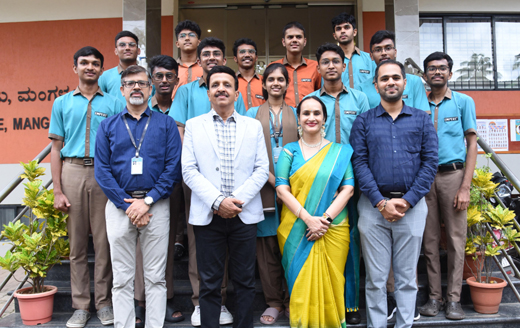
Arjun Kishore of Expert PU College Mangalore has created a new history by securing the first rank in the National Entrance and Eligibility Test for Undergraduate Medical Course this year. By scoring 720 of 720 marks Arjun has brought to the college the distinction of securing the first rank at the national level for the first time.
Its a matter of pride for Mangalore that has been recognised as the hub of education in the world map.
Of the total 1551 students of the college 1508 ie, 97% students have secured eligibility this year. While 14 students have scored 700 and more marks 55 students have scored more than 675 marks.
The same way, 109 students scored more than 650 marks, 176 students more than 625, 271 students more than 600 , 359 students more than 575, 451 students more than 550, 534 students more than 525 , 628 students more than 500, 731 students more than 475, 815 students nore than 450, 895 students more than 425 and 977 students scored more than 400 marks.
Sanjana Santhosh Katti of the college who scored 715 of 720 marks secured AIR 255, Utsav R who score 710 marks secured AIR 533, Aman Abdul Hakim with same marks scored AIR 592, Vignesh M R with 705 marks secured 1114 AIR, Mihir Girish Kamath scoring 705 got AIR1164, Sai Bheshaj G scoring 705 marks got AIR 1223, Lingaraj Hiremath scored 700 marks and secured 1708th rank, Pranav Tata R scored 700 marks and got AIR 173700 Pratheek P Gowda with 700 marks secured 1931 AIR, Akash S Kanakavadi scored 700 marks and got 2013th rank, Sanjan D with 700 marks secured AIR 2110, Swastik Akhil Sharma got 700 marks at 2197th rank and Lochan B H with 700 marks secured 2198th rank.
Among other top scorers we have Mahiz Umar securing 2717 th rank ( 696) , Suhas M 2813 th rank( 695), Srujan P Kallagonal 3092nd rank ( 695), Abhiram Bhat 3166th rank( 695), Srujan Shankar Hirereddy 3214 AIR,( 695), Yashwanth V A 3237 AIR ( 695) , Chirag M Yaligar 3925 AIR( 691), Balasubramanya S K 4317th rank( 600 ), Amar Sanchi 4714rd rank( 690), Nihar SR 690, Gowtham Gowda M J 687, Nesar Mahesh Kumar Saavlekar 686, Himani Patil 686, Rahul M Kalloli 686, Harshith Kamath 685, Adithya Anande 685, Mohammad Sohal Sanadi 685, Sarvajya Basavaraj Hubbali 685, Adithya Rittiganiger 685, Pushyanth Sha M R 681, Abhay R Bhaktha681, Dhanvi K 681, Pranav P Achar 681, Anvitha B N 680, Sai Prajwal Patil 680, Nithin Menezes 680, Rufaida S V 678, Nikitha Y Revadkundi 678, Sanvi M R 678, Achinthya Mottengar 677, Lakshmikanth G 677, Anvith S Patil 676, Sarthak Gani 676, Tejas G Kavali 676, S S Yashas Gowda 675, Nehal Reddy 675, Shashwath Gowda A 675, Amoghavarsha Nesari 675, and Irfan Tahsildar with 675 marks.
While 56 percent students secured eligibty at the national level at Expert the percentage of students securing eligibility is 97, said Prof Narendra L Nayak, the chairman. In the KCET 2024 Nihar S R of Expert PU College Mangalore has secured first rank BNYS and BSc Agriculture. He secured a total of 6 ranks across seven categories of KCET.
The chairman Prof Narendra L Nayak and the Vice Chairperson Dr Ushaprabha addressed the media men .
The Principals of Expert Colleges- Prof Ramachandra Bhat and Dr Vijayan, Sri Ankush the IT Director, Mr Subrahmanya Udupa, Mr Shyam Prasad, Mr Vinay Kumar, Mr Gurudath, Mr Karunakar Balkur, the rank holders and their parents were present in the press meet
source: http://www.mangaloretoday.com / Mangalore Today / Home> Main News / by Mangalore Today News Network / June 06th, 2024
Mohammad Salim, a resident of Shirva, who was on duty and serving in the Indian Army, died due to illness. He passed away on Friday, June 7 at the Military Hospital, Bengaluru. The deceased is survived by his parents, wife, a son and a daughter.
He served in the 196 RT Regiment of Indian Army in Jammu-Kashmir, Delhi, and Secunderabad for 14 years and was currently serving in Haryana. He fell ill due to kidney failure and was admitted to Military Hospital at Bengaluru. Although his mother and wife donated the kidney, the treatment was unsuccessful and he died on Friday morning.
Gurme Suresh Shetty, MLA of Kaup, expressed his condolences and Kaup tashildar Dr Prathiba R visited the residence of the deceased and paid their last respects. Belle village administrator Pradeep Kumar, former president Sudhakar Poojari along with the parents of the deceased, wife and brother among others were present.
source: http://www.daijiworld.com / Daijiworld.com / Home> Karnataka / by Daijiworld media Network – Udupi (VA) / June 08th, 2024
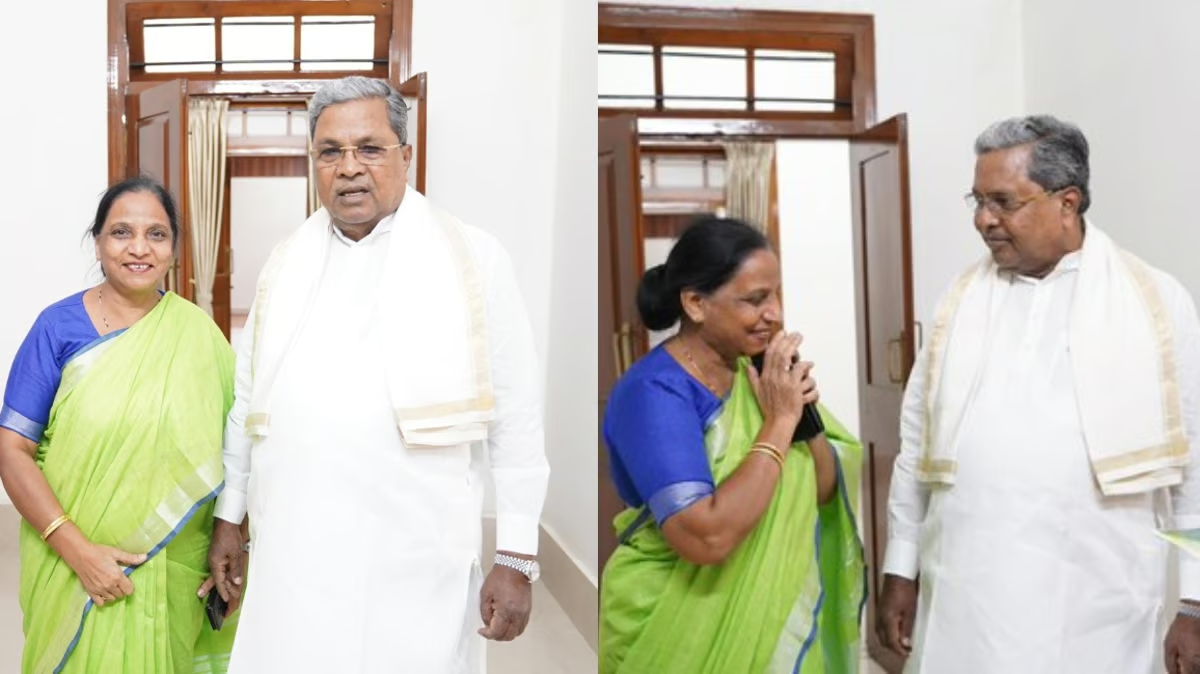
For the uninitiated, Bilkis Bano has no connection to Gujarat. She is a KPCC general secretary from Bhadravathi in Shivamogga, who once used to work closely with the Janata Parivar and has known Chief Minister Siddaramaiah from those days.
Bilkis Bano is KPCC general secretary from Bhadravathi in Shivamogga. Photo | X
Bengaluru :
With a certain Bilkis Bano figuring in the list of Congress nominees, the question on everyone’s mind is: Who on earth is she?
For the uninitiated, Bilkis Bano has no connection to Gujarat. She is a KPCC general secretary from Bhadravathi in Shivamogga, who once used to work closely with the Janata Parivar and has known Chief Minister Siddaramaiah from those days.
Sources said she is Siddaramaiah’s candidate while his’s son Yathindra, who sacrificed his Varuna seat for his father, is the high command nominee.
Other Siddaramaiah MLC nominees are minister NS Boseraju and K Govindraj. Vasanth Kumar and Basanagouda Badarli are AICC president Mallikarjun Kharge’s candidates while Ivan D’souza is said to be Krishna Byre Gowda’s man although he is said to be close to Siddaramaiah too.
It was a surprise that Deputy CM DK Shivakumar’s two nominees, Vijay Mulgund, who was also raided due to his closeness to the KPCC chief, and Vinay Karthik, who is an office bearer in the KPCC, did not make it to the final list.
The 10 Congress MLAs necessary for nomination of Bilkis Bano signed on her nomination and the proposer and seconders will be on Monday.
Sources said Bilkis Bano is respected as a loyal party worker. She is quite close to Bhadravathi MLA Sangamesh for whom she campaigned vigorously and personally led the canvassing in 2023. She has served formerly as the chairman of the Minorities Development Corporation during the previous tenure of Siddaramaiah as CM for about 18 months.
When TNIE tried to reach her on Sunday evening, all three of her numbers were either switched off or not reachable.
source: http://www.newindianexpress.com / The New Indian Express / Home> Karnataka / by Bansy Kalappa / June 03rd, 2024
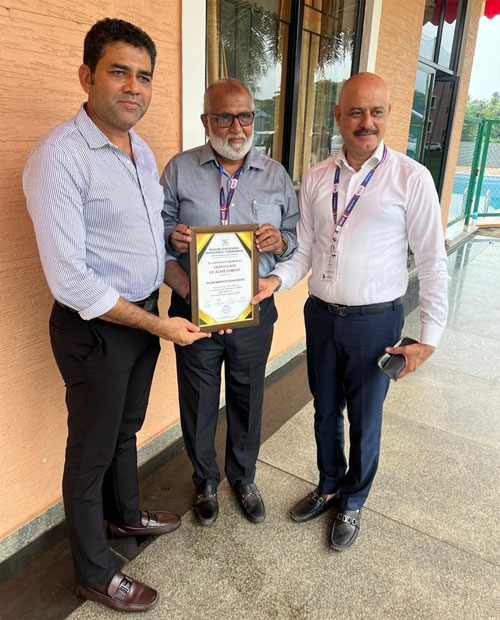
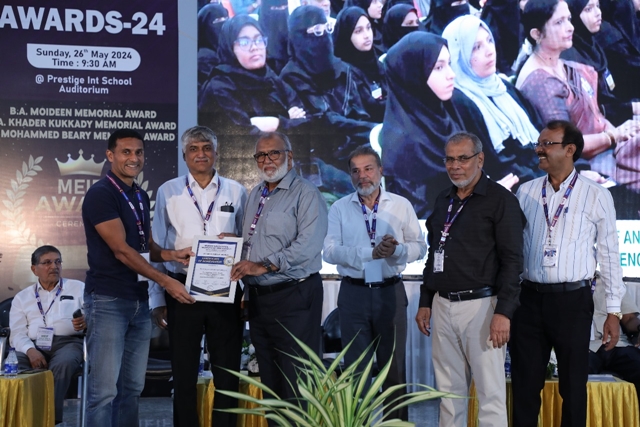
Melkar Women’s PU College, Marnabail, has been awarded with ‘Excellence Award’ by Muslim Educational Institutions Federation (MEIF) for achieving cent percent results in 2nd PUC in science, commerce and arts for the academic year 2024.
S M Rashid Hanji, chairman of Mangaluru Education Enhancement Trust (MEET) received the award on behalf of the management committee of the college during the recent MEIF annual conference held in Mangaluru.
Mohammed Farhaad, pro chancellor of Yenepoya University; Nisar Ahmed, chancellor of Presidency University; Syed Mohammad Beary, chairman of Bearys Group of Institution; Musabba Beary, chairman of MEIF; Iqbal Ahmed, Umar Teekay and others were present.
source: http://www.daijiworld.com / Daiji World / Home> Karnataka / by Daijiworld Media Network – Bantwal (VP) / June 03rd, 2024
Dakhni is not central to local identity in Bengaluru the way it is in Hyderabad, but it is still a fixture of everyday life in the city’s linguistic landscape.
Banglori Dakhni: How a language associated with Hyderabad thrives in Bengaluru too
Dakhni, a non-literary Indo Aryan language usually seen as “Southern Urdu”, is spoken across the entire Deccan and beyond, and is primarily associated with the city of Hyderabad. However, the language is widely spoken across Namma Bengaluru as well, even if it isn’t necessarily part of most portrayals or depictions of the city, or even popular local consciousness.
While around half of what can roughly be called Hyderabad’s core city (i.e. Hyderabad district) speaks Dakhni natively as per Census data (at 43.5%), non-native speakers use the language as a lingua franca as well, forming a cornerstone of local Hyderabadi identity.
In highlighting the language’s ties to Hyderabad, however, there is a tendency to view Dakhni as having a unique base in the city. In doing so, Dakhni’s other major urban varieties, varieties with their own urban presence, history, and patterns of usage, are overlooked.
Dakhni’s urban presence in Bengaluru
Hundreds of kilometres from Hyderabad lies the Deccan’s largest urban centre – Bengaluru, the capital of Karnataka. 12% of the city identified as Urdu speaking in the 2011 Census, and the Urdu most speak is a local variety of Dakhni, often called Banglori Urdu.
Banglori Urdu differs significantly from the variant popularised through Hyderabadi media and pop culture. Dakhni is not central to local identity in Bengaluru the way it is in Hyderabad, nor does it serve the role of lingua franca throughout the city, but it is still a fixture of everyday life and has a prominent place in the city’s linguistic landscape.
Bengaluru’s Cantonment, originally a military township established by the British in 1806, has an especially large concentration of Dakhni speakers, a presence that dates back to the early days of the Cantonment itself. In fact, the township was long referred to by its own name in local Dakhni – lashker, or “army camp”, a literal translation of the word “cantonment”, a name still used by many older speakers. Both Dakhni and Tamil are the most common languages spoken in the Cantonment, with Dakhni especially prominent in the Cantonment’s many bazaars. The “Hindi” many local Tamil speakers know and use is often essentially the Dakhni of their neighbours, picked up just from living in the Cantonment.
Dakhni is also spoken in South Bengaluru, by communities who live alongside Kannada speakers. In this part of the city, the language is primarily only used by its native speakers, since Kannada functions as a lingua franca. Many of these families trace their roots back to across erstwhile Mysore State, from Chikmagalur to Davangere, and their speech is influenced by Kannada. Dakhni’s demographic presence here is quite limited in comparison to in the Cantonment. Famous Kannada poet KS Nissar Ahmed, RJ Danish Sait, and singer Lucky Ali are some well-known speakers of Bengaluru Dakhni. Sait’s popular series of prank calls features many sketches in what is essentially thick Bengaluru Dakhni.
Image credit: Professor Walter Hakala of SUNY Buffalo
Interestingly, Bengaluru’s urban landscape also features a handful of Urdu inscriptions, some with a noticeably Dakhni touch. The 19th century Tawakkal Mastan dargah in Chickpet, for example, one of the city’s oldest dargahs, features a slab with an Urdu inscription recording the death of one Murad Bibi. The inscription features the word form ku instead of Standard Urdu ko, a distinctively Dakhni trait found in both Dakhni classical poetry as well as the speech of modern speakers.
Some features of Banglori Dakhni
Varieties of Dakhni maintain a high level of mutual intelligibility across the wide geographic distribution of the language, and this applies to basic vocabulary, grammar, prosody, pronunciation, and more. Distinctively Dakhni features – ones that set it apart from north Indian Urdu – are generally common across these varieties too: function words like ku, the –ān plural marker, the usage of nako for negation, framing reported speech with kate, the pronunciation of Arabic and Persian q as kh, and more, feature across the Deccan. That said, regional dialects can be quite distinct.
A characteristic feature of Banglori Dakhni is the high frequency of the word particle so, used at the end of sentences. The word is meaningless by itself and is primarily used to add emphasis. Another feature, this one clearly an influence from local languages, is the usage of mā and bā as an expression of familiarity which can also intensify a command or question. The dialect also features distinctive word forms like manje corresponding to Standard Urdu mujhe, as well as tumnā and āpe corresponding to Standard Urdu tumko and āp.
Dakhni’s linguistic diversity is, to a large extent, influenced by the different languages its speakers are surrounded by, languages part of their daily social environment. In Bengaluru, these languages are, as we’ve seen, Tamil in the Cantonment, Kannada elsewhere. These languages have also influenced the prosody of local Dakhni, lending it a certain rhythm and cadence. This adds a fascinating extra layer to Dakhni’s existing linguistic variation, as exploring its dialects necessarily involves looking deeper into each speaker community’s own language contact dynamics with its neighbours.
Dakhni’s prestige in Bengaluru
All Dakhni speaking communities across the Deccan are characterised by their usage of Standard Urdu, based on north Indian literary varieties, as their written and formal language. This binds them to the larger Urdu literary sphere and its developments, centered firmly in far off north India. In addition to not being a lingua franca in the city, Dakhni in Bengaluru also lacks the prestige it does in Hyderabad, something that has a direct, conspicuous effect on the way Dakhni speakers choose to use their language in public.
Urdu was a key element in the formation of Hyderabad’s urban culture and Dakhni became central to the city’s very identity; the language never played play a similar role in Bengaluru’s own development. Speakers in Bengaluru often choose to moderate the “thickness” of their Dakhni, adapting it to a form closer to Standard Urdu while interacting with people from other communities, often subconsciously. This is especially pronounced in commercial interactions with north Indian speakers of Hindi, where Dakhni speakers accommodate their speech variety to be more intelligible.
In many ways, this serves to further reduce the presence of Dakhni in the city, diminishing its visibility while reinforcing the common assumption that Dakhni is “just broken Urdu”. This is in stark contrast to the situation in Hyderabad, where Dakhni is used freely in public, even among non-native speakers; Standard Urdu is only resorted to when the other party doesn’t understand uniquely Dakhni word forms and sentence patterns.
In the Cantonment however, with its distinct settlement history and demographics, Dakhni can be widely heard in public communication, and the language enjoys a higher level of prestige. Speakers in the Cantonment do not see as much need to adapt to Standard Urdu in public communication as elsewhere in the city, and Dakhni, even its thicker versions, can easily be heard.
Unfortunately, speakers of Banglori Urdu are often ridiculed by speakers of Hyderabadi Urdu for the many characteristically Bangalori features of their Dakhni, a good example of how linguistic hierarchies of prestige can – and do – exist even within non-literary languages.
Institutional support for Dakhni in Bengaluru
In addition to its presence in the city, Dakhni also enjoys support from various local institutions. While admittedly, most of them primarily focus on the growth and study of Standard Urdu, they also do their part for Dakhni. One institution is the Karnataka Urdu Academy, whose mandate includes the promotion of Dakhni Urdu. The Academy gives cultural events featuring Dakhni some backing.
The Academy also publishes Standard Urdu and Kannada editions of classical Dakhni literature to bring these works to a wider audience. Notable among these is the Kannada translation of Ibrahim Adil Shah II of Bijapur’s Dakhni masterpiece, Kitāb-e-Nauras.
Another important institution is Bangalore University. Its Department of Urdu has been carrying out important research on Dakhni, most notably under its former Head of Department Professor MN Sayeed, a prominent scholar of Dakhni who personally initiated many students – many of whom are now professors of Urdu specialising in Dakhni in their own right – into the field of Dakhni research. Classical Dakhni literature is even taught in the University’s MA Urdu course. Prof Sayeed, now retired, also runs his own dedicated centre for Dakhni research, the Centre for Daccani Studies. Even now, at the age of 79, he continues to do important research on classical Dakhni poetry.
In associating Dakhni with Hyderabad, a lot of the valuable work and research being done on the language in Bengaluru at these institutions and more, particularly relating to developments in Karnataka, is overlooked.
Dakhni as part of Bengaluru’s urban fabric
It’s easy to forget that south India’s cultural diversity – and by extension, its linguistic diversity – applies to its urban centres as well. Most residents of Bengaluru know of the city’s multilingualism, as a city with a shared Kannada, Tamil, Telugu, and Urdu heritage; Bengaluru’s multilingualism is an integral part of their lived experience in the city. However, in defining local Dakhni in relation to Standard Urdu, the unique features that make the Bengaluru dialect what it is as well, as its own history, are ignored. This is even if they know of Hyderabadi Urdu and acknowledge it as distinct from Standard Urdu.
Appreciating Bengaluru’s variant of Dakhni for its place in the city’s urban fabric, for its history in the city, and its patterns of usage, can offer Bengalureans deeper insights into their own city’s rich diversity, how the city – especially the Cantonment – developed over the centuries, and how different communities navigate communication in Bengaluru. Doing so can also help Bengalureans develop a broader awareness of their own city and the various facets of its very identity. Plus, as translation efforts have shown us, understanding modern Dakhni can serve as a link to understanding the courtly Dakhni poetic tradition of the Deccan Sultanates better.
Karthik Malli is a Bengaluru-based communications professional with a keen interest in language, history, and travel. He tweets at @SandalBurn, and posts on Indian languages at @TianChengWen.
source: http://www.thenewsminute.com / The News Minute / Home> Karnataka / by Karthik Malli / September 13th, 2019