Category Archives: Leaders

Antulay daughter’s eulogy to parents’ love story when they were 28 and 14

MAHARASHTRA :

AntulayMPOs29feb2020

Mumbai:

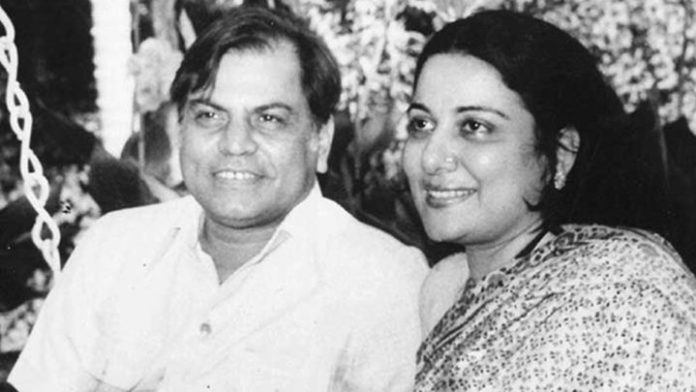
Nearly seven decades after her parents “lived” the love-story of their youth through an exchange of letters, their doting daughter has now published those communication in a book form.

The letters were written by legendary Maharashtra political leader and former Chief Minister and Union Minister, Abdul Rahman Antulay to his home-maker wife Nargis – during their “bethrothal” of four years when she was just 14 and he was all mature at 28 – and also later on after their marriage in May 1959.

Eldest daughter Neelam Mushtaq Antulay had to carry out some major jobs before she could finally compile and create an Urdu and a Hindi book – “Banaam Nargis (‘To Nargis’)”.

First she had to convince her mother to part with them and later painstakingly sift through hundreds of pages of great emotional churning.

“Banaam Nargis” will be released on Saturday at a mega-event by Nationalist Congress President Sharad Pawar and Leader of Opposition in Rajya Sabha Ghulam Nabi Azad, while Chief Minister Uddhav Thackeray will rename the prestigious Anjuman-I-Islam law college in south Mumbai as “Barrister A. R. Antulay College of Law”.

“‘Banaam Nargis’, a collection of entirely personal letters written from a loving boy to his beloved fiance during the conservative era, were more than merely love-letters,” said Neelam.

“I remember from my childhood, how my mother, who treasured a majority of these handwritten letters, (with a fountain pen) — would quietly take them out, read, again and again with a myriad emotions lighting or clouding her face, even after he passed away in December 2014,” Neelam told IANS in a free-wheeling chat on Friday.

She remembers a well known Urdu book, “Zer-e-Lab” – a collection of letters written to renowned Urdu poet Jan Nisar Akhtar — father of equally distinguished son, Javed Akhtar – by his teacher wife, Safiya.

“This got me thinking… Why not highlight my Abbu’s letters to my Ammi? But it took me mountainous efforts to convince my mother before she finally relented over two years ago.

“Today, I consider it my humble tribute to my parents…” Neelam said.

After Nargis parted with her “treasure”, Neelam got down to reading them — around 300 — and many more which she kept aside without even reading, as they were ‘intimately personal’ though her Ammi now had no reservations!

“The letters are clear, concise, to the point.. he wrote prolifically, mostly daily, at times twice daily and posted them… From his bachelor home in Mumbai and Raigad to her parents’ home in Bhiwandi (then called Bhimdi, Thane), unveiling a different era of their lives…,” Neelam says with a heavy heart.

To a query, she points out that “of course, there was a lot of romance” but there was also a lot more.

“He shared with her practically everything… His joys and disappointments, achievements or failures, the highlights or downsides of his blooming legal career after he returned as barrister from Lincoln’s Inn, London, his maiden speech in public life with luminaries like Pandit Jawaharlal Nehru and others present… It opened up a whole new world of my father which I never knew,” said Neelam.

In his inimitable style, Antulay would recount many incidents, anecdotes with references to the then prevalent social, cultural and political events and conveyed a lot more than what he wrote of what was in his heart and mind.

“He ‘lived’ his life with his love (Nargis) through these letters… These pages provide rare glimpses into history… I now feel there was something magical about them…

“Though during their engagement, my mother was too young and many things were beyond her comprehension coming from a highly qualified barrister, but today I understand why she keeps opening the trove to read them again and again,” says Neelam with a smile.

However, Neelam said that her mother was very less “reciprocal” and barely may have replied averaging to 10 per cent – probably one for every 10 letters from her besotted husband!

“But he was never offended and both enjoyed their life, loved their children and brought us all up with dedication and care… Surprisingly, my mother revealed that one day, she destroyed all the letters she had written to him!” said Neelam.

Surprisingly, she is the first member of the family allowed by Nargis to read the letters, described by an editor as “pearls of words and wisdom”.

No other family members – Neelam’s politician husband Mushtaq, sister Shabnam and her husband Justice Amjad Sayed, television personality and upcoming politician brother Naved Antulay, and youngest sister Mubeena and her businessman husband Ejaz Sayed – were allowed access to them.

The earliest of the letters were written by Antulay on 20-10-1957 from ‘Bambai’ (Bombay, now Mumbai) to ‘Bhimdi’, and the last of it was penned by him to Nargis on 22-10-1961 to ‘Bambai’ from London where he was part of a Congress Party delegation.

“I have mostly tried to transliterate the letters in Hindi to retain the special flavour… They are best read in Urdu, followed by Hindi, but any suggestions to translate them in English would kill their very essence,” she laughed.

Neelam is confident that most people “will fall in love with my parents” and learn a lot about life after reading these letters in ‘Banaam Nargis’. (IANS)

source: http://www.indianewengland.com / India New England News / Home> Books / byQuaid Najmi / February 21st, 2020
Maulana Azad: The Voice Behind the Dream for a Unified India

NEW DELHI  :

(This story was first published on 10 November 2017. It has been republished from The Quint’s archives to mark Maulana Azad’s death anniversary.)

“I am an essential element, which has gone into building India. I can never surrender this claim.”

These were the famous words uttered by Maulana Abul Kalam Azad, when he stared at the daunting prospect of Partition. On his birth anniversary, we remember his contribution to the country.

source: http://www.youtube.com / The Quint

Azad was among the many Muslim leaders in India who opposed the Partition of Unified India into Pakistan and Hindustan. As the leader of the All India Congress Committee in 1946, he put forth a Cabinet Mission proposal that advocated a federal structure of government, with autonomy for states. Though the proposal did face a great deal of skepticism, the Working Committee passed it, with even Jinnah agreeing to it for ‘the greater good of Indian Muslims’.

This proposal was certainly considered a breakthrough, as Jinnah and Azad had never enjoyed very good relations, predominantly owing to their opposing stances on Partition. Where one batted for Hindu-Muslim unity under a larger India, the other was vehement on the creation of two separate states. But their souring relations never stopped Azad from attempting to convince Jinnah to consider a ‘unified India’.

For instance, when Jinnah’s clamour for Pakistan grew louder, Azad is known to have sent a telegram insisting on the perils of a two-state ideology. Jinnah is said to have insulted Azad in his response, calling him Congress’ ‘show boy President’.

Don’t you feel that the Congress has made you a show boy President to hoodwink non-Congress parties and other countries of the world? You represent neither Muslims nor Hindus.

Having failed at getting Jinnah to reconsider, Azad then unsuccessfully tried to convince the Congress leaders to wait till a solution could be found. But even Patel, who earlier backed Azad’s proposal, was now vehemently pro-partition. Azad in his autobiography later writes that the party agreed to the Partition as “blindness of Congress leaders to facts, and their anger and frustration clouded their vision.”

According to Azad, as he writes in his autobiography, Nehru too contributed to angering the Muslims, by committing two mistakes which ultimately drove Jinnah to lose faith in the proposal and go through with partition.

The first was when Nehru refused to take two Muslim League leaders as Cabinet Ministers in the UP elections of 1937. The second mistake was when after taking over as the President of the Congress in 1946, he indicated that the earlier Cabinet Mission proposal could be changed, which culminated in Jinnah insisting on the formation of Pakistan.

Maulana had not only opposed Partition as an Indian leader, but also as a Muslim. He was, in fact, of the opinion, that the two-state policy will only “create more problems than solve”.

And true to his word, even today the relations between the two countries are strained at best, despite their shared history.

source: http://www.thequint.com / The Quint / Home> News Videos / November 10th, 2017 / and February 22nd, 2020

Buildings are books someone forgot to burn, says H Masud Taj

Mumbai, MAHARASHTRA / Ottawa, CANADA  :

Architect, poet, professor H Masud Taj is on an India tour to talk about Sinan, Istanbul’s foremost architect, who has arguably built more than any other architect in documented history.

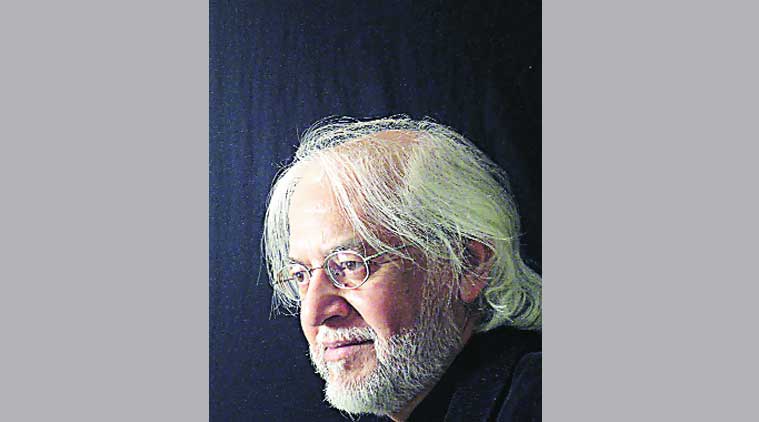
H Masud Taj ( Source: Noah Taj)

H Masud Taj, Adjunct Professor at Carleton University in Canada, was mentored in architecture by Hassan Fathy and in calligraphy by David Hosbrough. His talk on “Sinan:Architect at the Centre of the World” in Delhi drizzled with anecdotes of Ottoman empire’s most celebrated builder, and how history and politics were fertile soil for some of Istanbul’s lasting monuments. Excerpts from an interview:

Where did your love for calligraphy and poetry develop?
In Bombay, at home by the sea with its tidal rhythms, where my father had a divine hand that remains without a tremor even in his 90s and because my mother tongue is Urdu, the most poetic of Indian languages (besides being a descendant of the classical Urdu poet, Ameer Meenai). With a father who was a shayar a mother who tore the last page of Urdu novels to replace it with her own version, with storytellers and musicians for sisters, it just had to happen. And when it did, I was 13 years old, far from home, and far from my mother tongue, in Ooty in a school, grounded on JD Krishnamurti with a sprinkling of Aurobindo, where clouds would descend valleys, enter classrooms and blur categories.

You taught architecture simultaneously at Sir JJ College of Architecture, Rizvi College and Pillai college in Mumbai
Yes, while running an architectural practice in Bombay and consultancy in Delhi besides being a fortnightly op-ed architectural columnist. Now I teach in Canada, practice in India and research in-between in Europe and Turkey. For instance this year the University’s Faculty of Public Affairs, showcased the research and photography I did while reading medieval buildings and Don Quixote, in Toledo, Spain.

In your next book on the Seven Muslim Wonders & the Making of the Modern World, which are the sites you will be exploring?
Those that I have visited in Agra, Cairo, Cordoba, Granada, Isfahan, Istanbul and Mecca. If you add Jerusalem that is eight but one of them is latent in all others just as the sound of alif is latent in all letters of Arabic.

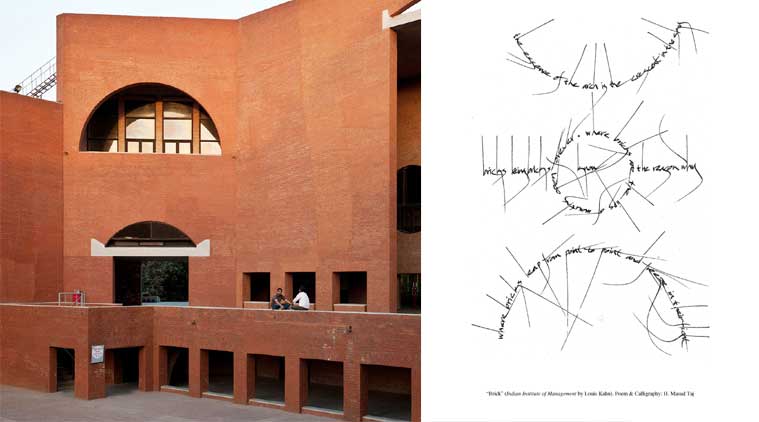
Louis Kahn’s IIM-A building and the poem that Taj wrote, inspired by the building

And where do you see the intersections?
Seven mnemonic monuments embody civilizational ideas. Buildings are books that someone forgot to burn; they await a reading and then paradigms begin to shift and you see the world anew and hopefully the reader will too. For instance, satellite images show that the original Taj Mahal complex extended much further at both ends: across the Yamuna to the royal Mughal garden with a reflecting pool that reveals why the Mughals called it Rouza-e-Munnawara: The Illuminated Tomb (Taj Mahal is a misnomer). However, the real action of the complex was at the other end: the quadrant bazaar as a node of the global Muslim network of an ‘ethically driven commerce’, of poet merchants and Sufi merchant brotherhoods.

What prompted this book?
Many things but the final straw was Jerry Pinto saying I was offering “forever the promise of beauty”. He inscribed that in my copy of his incredible Em and the Big Hoom. He was right.

And when will it be launched?
Ship building is easy; it is the ocean that takes a while.

You were inspired by Louis Kahn’s Indian Institute of Management building in Ahmedabad. You even wrote a poem in calligraphy about it.
As a student, I was at CEPT in Ahmedabad for a month, participating in a workshop designing shells upside down. In the evenings, I’d sprawl on the IIM lawns. Once at dusk, above several storeys of brick arches, right on axis, was the upturned crescent. That’s when the Brick Poemoccurred. Decades later when I began to study Sinan in Turkey, I understood what that poem really meant; poets can lag behind the curve of their poems. I’ll be giving a talk at CEPT and that’s when after more than three decades the Brick Poemwill return to its site.

You have known and been with the legendary Egyptian architect Hassan Fathy and wrote a book on the elusive Indian architect Nari Gandi, apprentice to Frank Lloyd Wright. What were your learnings from and with them that you bring to your work, as a teacher and an architect?
Buildings are prophecies if they are mainstream; or conversations. Gandhi was trapped in his quest for absolute freedom. He excelled as a conversationalist; but did not influence mainstream. Fathy’s prophecies were at mainstream’s edge, yet conversed with the surroundings. Choose between an escapee and an escape-artist.

What does your long poem, which was written while staying in all those houses of Gandhi, say? Could quote a few lines.
Courtyard is silence
To talk of the courtyard
Is to break the spell.

You co-authored a book of poems, Alphabestiary, in which each letter of the alphabet is associated with an animal, such as Ant, Bull, Cat, Dragon, etc. What were you influenced by?
The animal fables of Panchatantra, Aesop Fables; Ibn Arabi arguing for animal rights in the 12th century; the 7th-century father-of-kitten Abu Hurairah. Mostly when we decided to call our son Nuh in Urdu, Nuhh in Arabic, Noah in English, Noé in French. Soon after, Dragonflyfluttered in (its now on YouTube) with a host of animals in its wake turning the oral poet into a one-man travelling zoo. Alphabestiaryis a thin slice, yet featured at the International Festival of Authors in Toronto.

Who, from the past, do you think looks over your shoulder when you write?
Ameer Meenai, and hopefully he can detect Urdu’s fragrance in my English.

Taj has lectured at Nashik, Pune and Delhi and Goa. His talks in Ahmedabad and Mumbai are on July 22 and 24 respectively.

source: http://www.indianexpress.com / The Indian Express / Home> Lifestyle / by Shiny Varghese / September 28th, 2015

Kerala’s first Muslim woman panchayat president no more

Nannammukku (Malappuram), KERALA :

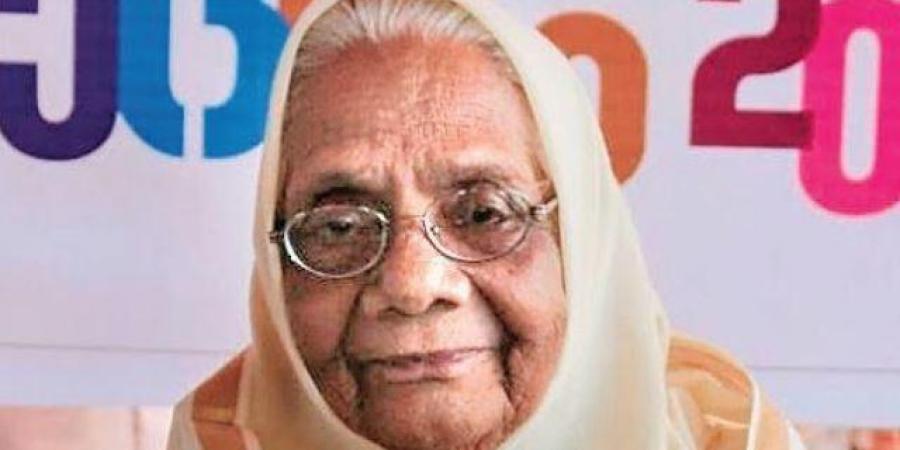
Ayishakutty, 91, the first woman panchayat president from the Muslim community in Kerala, died here on Monday night.

Ayishakutty
Ayishakutty

Malappuram :

Ayishakutty, 91, the first woman panchayat president from the Muslim community in Kerala, died here on Monday night. A native of Nannammukku in Malappuram, Ayishakutty had been undergoing treatment for age-related illnesses and she breathed her last around 11pm.Also known as Ayishakutty Teacher, she became the president of Nannammukku panchayat in 1979. Ayishakutty has been an inspiration to many women as she courageously took up the path of politics and social service at a time when many women, especially from her community, were not allowed to go out of their houses.

Despite warnings not to go out and speak publicly citing gender and religious issues, Ayishakutty chose to get education and interact with people to learn the problems in society. She became the first woman to complete SSLC in Ponnani taluk.  A Congress leader, she is also the first woman panchayat president in Malappuram district. After completing the first term as panchayat president, she served as a member from 1984 to 1991. She became the president of Nannammukku panchayat again in 1995. Apart from being active in politics, she also worked as a teacher at AMLP School, Punnayurkulam, Thrissur.

She is survived by daughters Laila and Jameeela and son-in-law Hamsa. The burial was conducted at the Nannammukku Juma Masjid on Tuesday. Abdul Kareem, the present panchayat president of Nannammukku, said Ayishakutty was a powerful leader who had implemented several development projects in the panchayat. “She had introduced the project to provide land to the landless people in the panchayat. Also, she worked relentlessly to end the drinking water problem and other issues in the agricultural sector in the panchayat,” said Kareem.

She became the president of Nannammukku panchayat in 1979.

source: http://www.newindianexpress.com / The New Indian Express / Home> States> Kerala / by Express News Service / February 26th, 2020

Little-known fact: Aurangzeb had more Rajput administrators than Akbar

DELHI , INDIA :

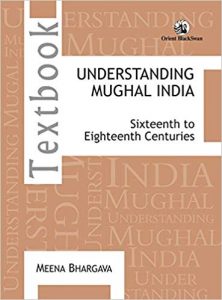
In ‘Understanding Mughal India’, Meena Bhargava writes about how Aurangzeb patronised several Hindu institutions & was supported in the war of succession by Rajputs.

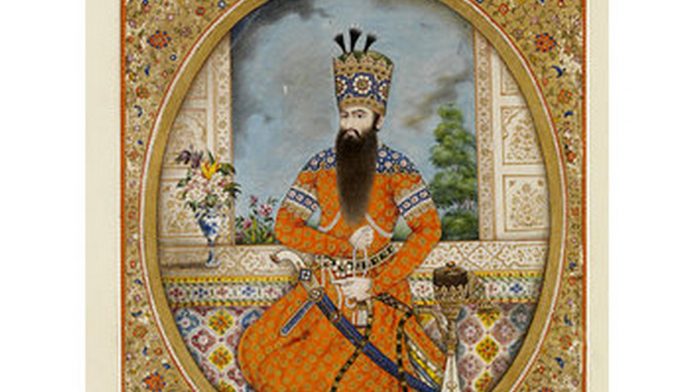
A portrait of Mughal ruler Aurangzeb | Photo: collections.vam.ac.uk/

That Aurangzeb’s orthodoxy and his dedication to his beliefs was personal rather than a matter for political interference is evident in his reactions and responses during the war of succession of 1658, a quadrangular conflict between Dara, Shuja, Aurangzeb, and Murad. Throughout the struggle, Aurangzeb was concerned about Dara’s political manoeuvres. Their individual feelings and religious outlook—which stood in sharp contrast—remained confined to the personal level. Aurangzeb referred to Dara as mushrik (heretic) while Dara called Aurangzeb kotah pyjama (narrow pants), a symbolic attribute of orthodoxy. Both attempted to rally public opinion, but never on religious grounds. In fact, the support that largely came for Aurangzeb was from the Rajputs, notably Rana Raj Singh of Mewar, Raja Jai Singh Kachwaha of Amber, and later, Maharaja Jaswant Singh of Marwar. In this context may be related an interesting nishan that Aurangzeb sent to Rana Raj Singh of Mewar, condemning such kings who practised intolerance that could become the cause of dispute, conflict, and harm to the people, and could ‘devastate the prosperous creations of God and destroy the foundations of the God-created fabric’. Such attitudes of kings, Aurangzeb ordained, deserve ‘to be rejected and cast off’. This document from the Udaipur records is a clear revelation of what Aurangzeb intended as his public policy. It further confirmed that Aurangzeb, in the struggle for succession, did not raise the cry of jihad or Islam in danger, nor did he promulgate a new religious policy contrary to that of his predecessors; neither did Dara claim to be the champion of liberal forces. The issue was not religious or ideological, or whether orthodoxy would triumph or liberalism. It was a question of personal vested interest, political in nature but free from religious connotations, that is: Who would be the emperor of India, Dara or Aurangzeb? It is in such a context that Aurangzeb deserves to be assessed.

Debating Aurangzeb’s leanings—religious orthodoxy or political pragmatism—one needs to ask: Did Aurangzeb really intend, as Jadunath Sarkar suggested, the establishment of dar-ul-Islam or a truly Islamic State in India, the conversion of the entire population to Islam, and the annihilation of dissenters? Or, as Ishtiyaq Husain Qureshi argued, was it rigid adherence to the shari’a and undoing the damage caused by Akbar; or the triumph of Muslim theology, as Shri Ram Sharma asserted? If this was really the case, then the emperor’s personal valour, military skills, and single-minded commitment to achieving territorial expansion and consolidation would stand negated. The biased ideological portrayal of the emperor, regardless of historical accuracy, makes it difficult to explain the increase in the number of Rajput mansabdars in Aurangzeb’s administration as compared to Akbar’s period, and their rise from 24 per cent under Shahjahan to 33 per cent in 1689. Nor can Raghunath Ray Kayastha’s dominance as diwan-i kul be understood rationally. Raghunath Ray not only supported Aurangzeb but also participated in several expeditions of the period. Aurangzeb honoured him with the title of Raja and when Raghunath Ray died in 1664, the emperor, in his obituary written in Ruqa’at-i Alamgiri, remembered him as the greatest administrator he had ever known.

There are well-documented evidences of Aurangzeb’s patronage of various Hindu religious institutions, namely temples, maths, grants to Brahmins and pujaris:

  • Land grants were renewed to the temples at Mathura, Banaras, Gaya, Gauhati, and others, while the emperor is known to have donated ghee for the navadeep in a few temples, including the Mahabateshwar temple at Agra;
  • Gifts were offered to the Sikh gurudwara at Dehradun;
  • Madad-i ma’ash grants, as listed in the Rajasthan documents, were continued to a math of Nathpanthi yogis in pargana Didwana, sarkar Nagor;
  • Grants were also made to Ganesh Bharti faqir and his successors in pargana Siwana with the instructions that the faqir should not be disturbed so he could ‘pray for this sultanat’.
  • The Vrindavan document of 1704 referred to a parwana which sanctioned the rights of Chaitanya gosains who had founded Vrindavan and established pilgrimages in Braj Bhumi, and recognised the right of Brajanand Gosain to receive a fee from the followers of the sect on account of kharj sadir o warid, that is, expenses on guests and travellers from each village. In effect, it was a government levy for the benefit of Brajanand Gosain and his Vaishnavite followers.

From the above description, Aurangzeb’s patronage to temples appears without doubt. And yet some temples were attacked, while others were spared. This aberration in the emperor’s attitude can be explained by only one rationale: it was not iconoclasm, but reprisal for rebellion or political misconduct or disloyalty to the emperor. This exposition can be applied to understand the attack on the Vishwanath temple at Kashi, the Keshav Dev temple at Mathura, and several prominent temples in Rajasthan. In 1669, during a zamindar revolt in Banaras, it was suspected that some of them had assisted Shivaji in his escape from imperial detention. It was also believed that Shivaji’s escape was initially facilitated by Jai Singh, the great-grandson of Raja Man Singh, who had built the Vishwanath temple. It was against this background that Aurangzeb ordered the destruction of that temple in September 1669.

Around the same time, in a Jat rebellion that had erupted in the neighbouring regions of Mathura, a patron of the local congregational mosque was killed, leading to Aurangzeb’s order in 1670 to attack the Keshav Dev temple at Mathura. Temples in Marwar and Mewar were also attacked following the death of Maharaja Jaswant Singh to reprimand and crush the Rathor rebellion and the development of a Sisodia– Rathor alliance. These included temples in Khandela patronised by rebel chieftains; temples in Jodhpur maintained by a former supporter of Dara Shukoh; and the royal temples in Udaipur and Chittor patronised by Rana Raj Singh after the Rana entered into an alliance with the Rathors that signalled the withdrawal of loyalty to the Mughal State. It may be observed that the Rathor rebellion was not a reaction or a protest against the re-imposition of jizya. Instead, this re-imposition, as Abu’l Fazl Ma’muri observed in the context of the suppression of the Satnami revolt and prior to the emperor’s expedition to Ajmer, was meant for ‘the affliction of the rebellious unbelievers’.

MughalBookMPOs24feb2020

This excerpt from Understanding Mughal India: Sixteenth to Eighteenth Centuries by Meena Bhargava has been published with permission from Orient BlackSwan.

source: http://www.theprint.in / The Print / Home>  Page Turner> Book Excerpts / by Meena Bhargava / February 19th, 2020

Take note of this…

Bengaluru, KARNATAKA :

India’s history in currency is the subject of Rezwan Razack’s Museum of Indian Paper Money

Back in timeThe concept of money has existed since almost the beginning of civilization, says Razack / bhagyaprakash k

India’s history in currency is the subject of Rezwan Razack’s Museum of Indian Paper Money

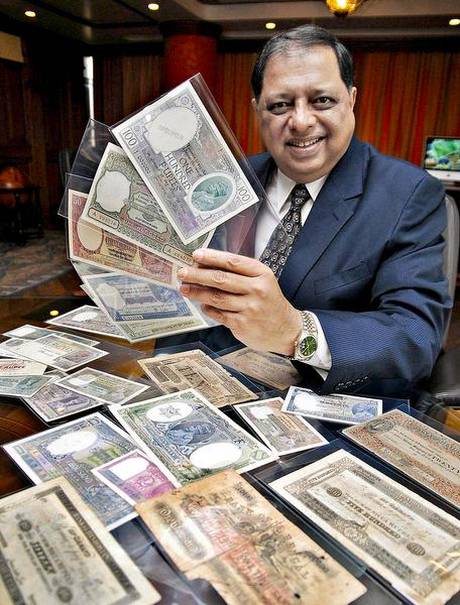
Hailed as the largest collector of Indian currency, Rezwan Razack has opened South India’s first currency museum in Bengaluru. “I am so happy that the former Governor of the Reserve Bank of India, C. Rangarajan inaugurated the museum,” says Razack.

Razack, co-founder and joint MD of Prestige Group, is the Chairman of the International Bank Note Society, India Banknote Collectors’ Chapter, and is recognised for his contribution to the advancement of numismatic knowledge. Razack, who built his collection over 50 years with exhaustive research, enjoys sharing his knowledge with students and encourages budding collectors to promote numismatics as a hobby.

He has co-authored The Revised Standard Reference Guide to Indian Paper Money in 2012, and in 2017 wrote One Rupee One Hundred Years 1917-2017 to mark the centenary of the issuance of the one rupee note. “Rezwan Razack’s Museum of Indian Paper Money will not only be the first of its kind in India, but also the world,” says Razack.

The museum at Prestige Falcon Towers on Bruntun Road, has trained guides to take visitors through the history of currency in India. “The story of money is woven into our very being, uniting us, dividing us, giving us a sense of identity and mapping people or the nation’s power, crises and triumphs. I consider it a comprehensive restoration and preservation of an important national heritage. It is also something that numismatists worldwide will benefit from.”

The initiative, he says, is to help educate, inform and entertain. “The rupee is one thing that is ever present in our lives but never seen as a source of history, information and national pride. I hope visitors understand, enjoy and value this museum of our collective economic heritage.”

The museum displays a diverse collection of Indian paper money and the related material drawn from the Indian subcontinent. “While the concept of money has existed since almost the beginning of civilization, the invention of paper currency is more recent,” says Razack. From the early barter systems and the use of coins as currency, the museum introduces the visitor to paper currency, its origins and its use.

Apart from its selection of banknotes dating back to the early 1800s, an auxiliary collection has also been put together to explain the inspirations and techniques of making paper currency. While original hand-painted essays, patterns, proofs, trials, specimen notes, autographed notes and a rare Star of India Medal demonstrate fascinating aspects of money, meticulously sourced cheques, stamp papers relating to Indian paper money, booklets and banknotes help decode the world of money.

“This museum has been planned meticulously over three years to conform to international standards of lighting and climate control,” says Razack, adding that people don’t often retain paper money “ My visits to cut-note dealers in Chickpet and in Fort Bombay gradually increased my collection,” he says, acknowledging that his persistence paid off.

Razack says his collection includes the oldest surviving note from 1812 of Bank of Bengal right up to the notes of 2017 of all denominations. The rare ones are the early Presidency Banknotes of Bank of Hindostan, Bank of Bengal, Commercial Bank, Calcutta Bank, Bank of Bombay, Bank of Western India, Asiatic Bank and Bank of Madras; British India’s Portrait Notes of Queen Victoria, Portrait Notes of King George V and King George VI; and Indian Notes used in Burma and Pakistan; Notes of Indo-Portuguese and Indo-French Territories and Indian Notes since Independence, also used by Haj Pilgrims and in Persian Gulf States.

There is also a lot of importance behind his book dedicated to the One Rupee note. The first One Rupee Note in India was issued on November 30, 1917. “To celebrate 100 years of the one rupee note in India, my book focusses on the origin and journey of the smallest existing denomination through the century, while examining its genesis. As the general population in India were unacquainted with paper notes until 1917, one of the methods adopted to increase the popularity of the one rupee note was to print a picture of the silver one rupee coin on both sides of the note.”

At Prestige Falcon Towers, 19 Brunton Road, Bengaluru; 10-30 a.m. to 5-30 p.m.; closed on Mondays and public holidays;entry Rs. 100

While the concept of money has existed since almost the beginnings of civilization, the invention of paper currency is more recent

source: http://www.thehindu.com / The Hindu / Home> Features> MetroPlus / by Ranjani Govind / February 17th, 2020

A new kind of capitalism: Innovation and technology will help overcome wealth inequality

Bengaluru, KARNATAKA :

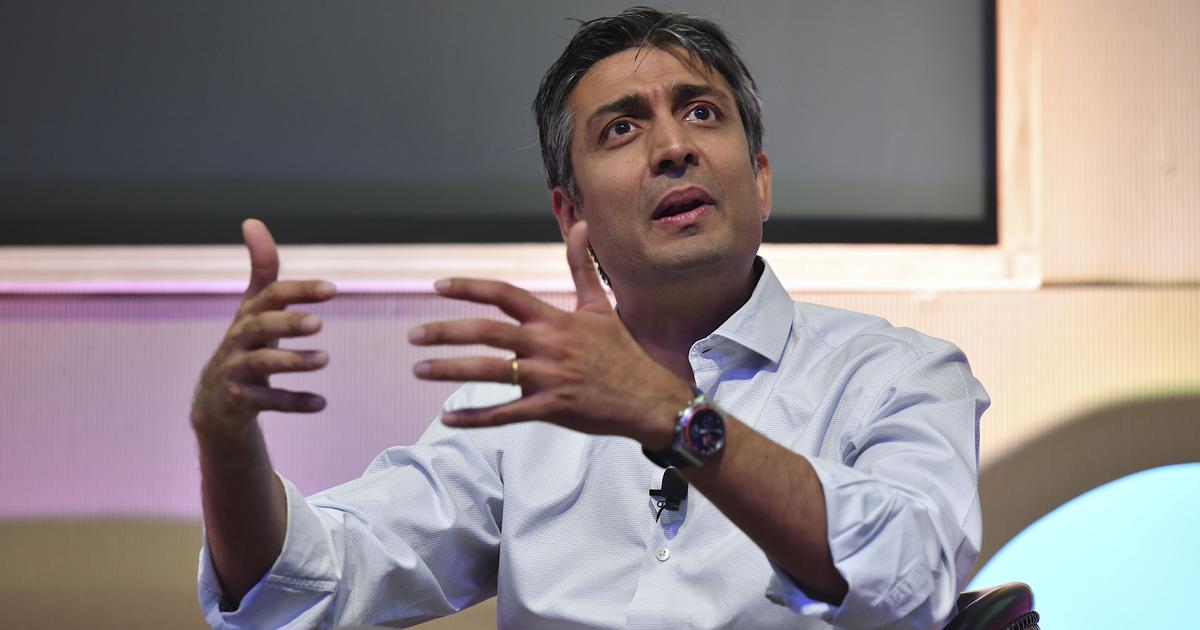
Rishad Premji, chairman of Wipro, says that stakeholder capitalism is increasingly gaining ground.

Wipro chairman Rishaad Premji. | Manjunath Kiran /AFP

No matter how you measure it, inequality has been on the rise since the 1970s.

According to Inequality.org, the richest 1% now own 45% of the world’s wealth , while The Guardian reported that chief executives at FTSE 100 companies in 2017 earned 145 times more than an average worker , up from 47 times in 1998.

This concentration of wealth at the top has emerged as a potential source of conflict in modern society. With new technologies like artificial intelligence, robotics and the internet of things creating opportunities for growth, businesses are increasingly expected to contribute positively to the communities that surround them rather than just chasing profits and maximising returns for shareholders.

In this era, businesses need to have a clear purpose and act as responsible corporate citizens. Stakeholder capitalism is increasingly finding acceptance and is becoming the “right business thing to do.”

New developments can be an amazing social equaliser: 3D printing is democratising manufacturing, while mobile banking provides easy access to banking services and increases the earning power of small businesses. But access to technology often dictates what opportunities are available. A 2019 US Census Bureau report found that a lack of access to the internet has become inherently intertwined with inequality.

So how can these new innovations help companies make the world a better place?

Democratising services

Innovations in the ed-tech space are helping to provide affordable and accessible education across society. In the area of healthcare, technology is bridging the gap between medical practitioners and end-users, enabling early detection, improving well-being and lowering costs. For example, Chikitsak, a portable, easy-to-use and cost-effective medical screening device that can be used by low-skilled healthcare professionals, and Niramai, a low-cost, safe, non-contact and radiation-free breast cancer screening software for early detection.

Water-tech companies like Swajal design, manufacture and assemble water ATMs that vend water at affordable prices using IoT. Agri-tech companies like DeHaat provide an online platform that connects small farmers with micro-entrepreneurs supplying different farm inputs and offering services.

Jobs that require specific motor skills have traditionally been off-limits for those without a full range of physical movements. Robots are expected to take on some elements of these, opening up previously inaccessible jobs to those with disabilities. For those isolated by geography, delivery by drones will enable those normally outside of companies’ high-speed shipping zones to order products at short notice, something usually reserved for more densely populated urban areas.

Being able to order clothes or groceries for delivery within hours rather than days might seem frivolous, but it’s exactly these kinds of services that will bring populations who are at the fringes into mainstream society.

All of the above examples illustrate the power of technology to democratise access and drive affordability at scale. All these may seem too good to be true and there are, as always, reasons to be cautious or skeptical. Advances in technology have historically led to increased inequality, not less, as those that can afford the new developments take advantage of them before less privileged people are able to do so. More basic technology may spread further as a result, but cutting-edge technology often remains in the hands of the rich.

However, unlike in the past, we are increasingly witnessing the power of technology through real-world success stories that have brought the less privileged and unbanked to the mainstream fold. The increasing recognition and growth of impact investing and venture capital focused on social impact startups bode well for the future and will play a key role in making the world flatter and a better place for all.

This is part of a series of articles in partnership with the NASSCOM Technology and Leadership Forum 2020, to be held in Mumbai from February 12-14. Read all stories in the series here.

This article first appeared on Quartz.

source: http://www.scroll.in / Scroll.in / Home> Tech Buzz /  Rishad Premji, qz.com – Quartz / February 11th, 2020

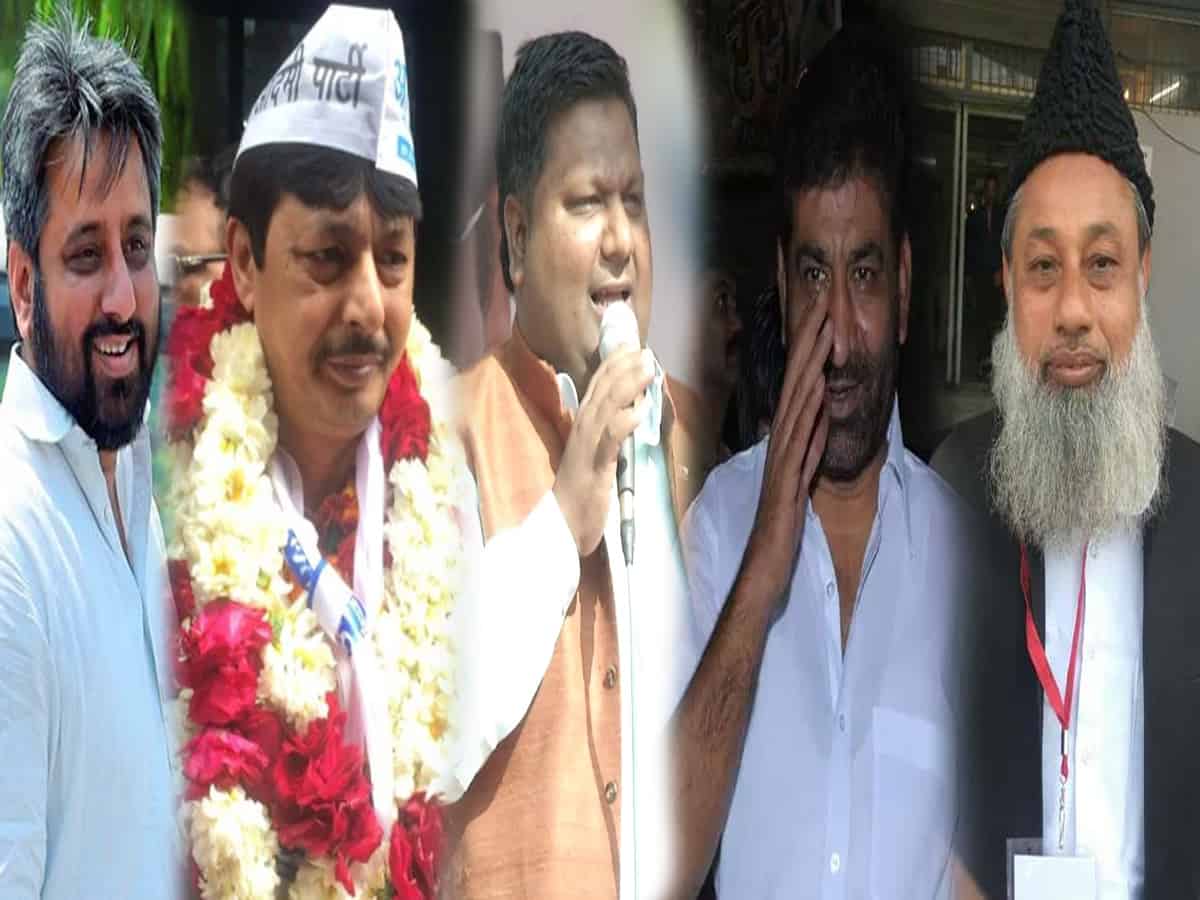
Delhi polls: All five Muslim candidates of AAP won

NEW DELHI :

The victory by AAP clearly indicates that the minority voters from these segments prefer the ruling party.

AAPdelhiMPOs12feb2020

New Delhi :

All five Muslim candidates of Arvind Kejriwal-led- Aam Aadmi Party who contested Delhi Assembly elections have won with significant margin.

The victory of five Muslim candidates put up by the AAP over their BJP and Congress rivals in community-dominated seats in Delhi clearly indicates that the minority voters from these segments prefer the ruling party.

AAP’s Amanatullah Khan again won from the Okhla seat by more than 70,000 votes where Congress candidate Parvez Hashmi failed to save his deposit.

In Seelampur , AAP’s Abdul Rehman defeated the BJP’s Sanjay Jain by the margin of 36,920 votes even as Congress rival Matin Ahmed, who has been a five-time MLA, came a poor third.

In the Ballimaran seat, AAP candidate Imran Hussain won over the BJP’s Lata Sodhi by 36,172 Votes, apart from five-time MLA and ex-minister Haroon Yusuf, who came third.

In Matia Mahal, Shoaib Iqbal won convincingly against Ravinder Gupta of the BJP by the margin of 50,241 votes and Mirza Javed Ali of the Congress .

In Mustafabad, AAP’s Haji Yunus defeated the BJP’s Jagdish Pradhan by a margin of 20,704, even as Congress candidate Ali Mehdi could not cross the five-digit vote figure. Ironically, Mustafabad was one of the three seats won by the BJP in the 2015 Assembly polls.

Reacting to the AAP victory in the Muslim-dominated segments, AAP leader Mehmood Ahmed from Zakir Nagar said: “It’s the work done by Chief Minister Arvind Kejriwal  that gave us this huge victory. We have devoted all our time to public welfare, be it drinking water, sewage, or installing CCTVs.”

source: with IANS inputs

source: http://www.siasat.com / The Siasat Daily / Home> News> Delhi / by Safoora / February 12th, 2020

Saudi NRI promoting education in Hyderabad

Hyderabad, TELANGANA / SAUDI ARABIA :

MMS01MPOs06feb2020

Hyderabad:

 Arshad Pirzada’s successful career in Saudi Arabia has enabled him not only to help his family but also serve the community through education initiatives.

Whether it was learning skills from various General Motors representatives at Al-Jomaih Automotive Company or learning from the Indian expatriates, Pirzada’s hard work has paid off.

“Okay, I had gone to the Kingdom to alleviate the economic woes of my own family. But should one stop there? Shouldn’t he think about the people he has left behind in his city who were in the midst of an economic crisis for a long time?” Pirzada asks looking back at his stay in Saudi Arabia.

The moment one asks Pirzada about the ups and downs in his life, he goes back to the times of grandfather (maternal) who was the Collector of Rychur, formerly a part of Nizam’s Hyderabad State. Those were the days when there was peace and prosperity prevailed. But the 1948 Police Action changed all that.

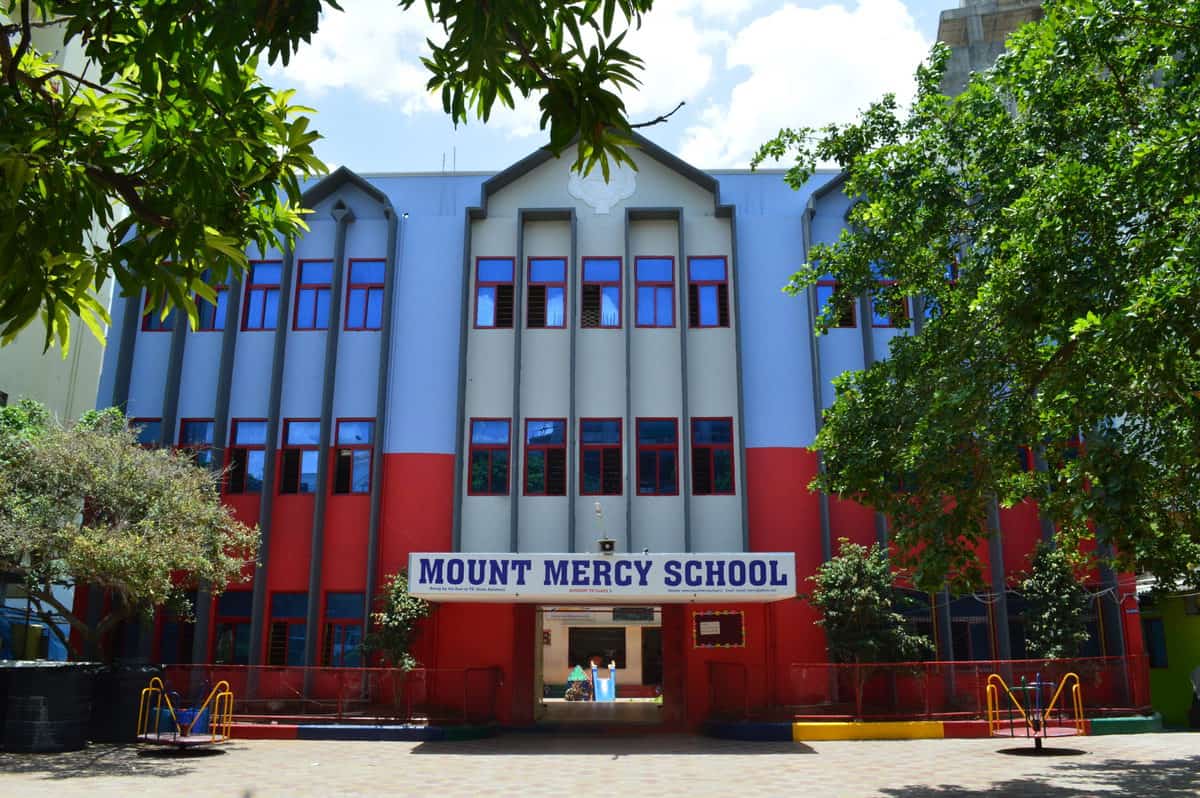
Speaking about how began his journey to educate a miniscule part of the community, he says, “My children are well settled. My wife, on the other hand, is a teacher of Quranic Arabic, author of a book and an entrepreneur in her own right.  She designs and sells mostly Bridal ware. This where my active association with Mount Mercy School comes in,” he informed.

Mount Mercy School
Mount Mercy School

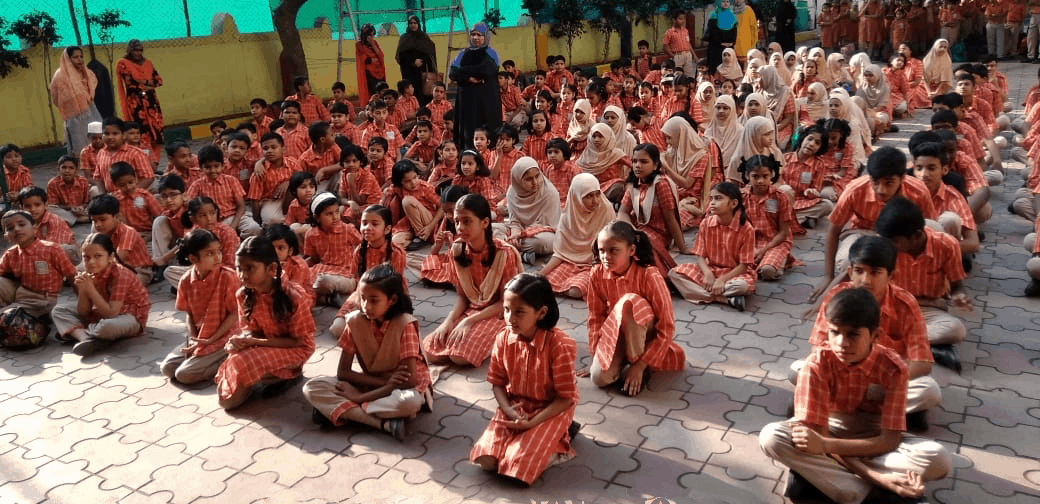
Established in June 1999, the school in its early days has gone through the pangs of growth. There was always a galore of challenges. Initially only 56 students enrolled. Yet, through better infrastructure developed and word of mouth, there are now 850 students.

MMS04MPOs06feb2020

Pirzada mentions, “Not many among us realise how bad the literacy levels are among the Muslims. For example, around 30 to 40 percent of the kids in MMS are first-generation learners who come from families with limited financial resources. Also, whatever money we make is pumped back into the development of facilities at the school.”

He said, “In today’s competitive, globalized market, soft skills are just as important as the hard skills. We also polish the kids and prepare them for interviews for different competitions, contests and tournaments as well.”

Although the journey that lead to him to forming Mount Mercy with others is one that many Hyderabadi gulf migrants will identify with. That too, whether or not they came from the same background as Pirzada.

source: http://www.siasat.com / The Siasat Daily / Home> News> Hyderabad / by Daneesh Majid – Researcher/Writer / posted by Minhaj Adnan / February 04th, 2020

With the End of 2019, A Great Scholar Also Departs for Heavenly Abode

Deoband, UTTAR PRADESH / KENYA / Croydon (South London). UNITED KINGDOM :

With 2019 saying goodbye, Maulana Izhar Ahmad Qasmi, an embodiment great scholarship, piety, humility, patience and perseverance, also said adieu to this mortal world.

Maulana Izhar Ahmad Qasmi, 74, was born in Deoband, India, and breathed his last on 30 December, leaving his family and admirers in tears.

MaulanaIzharMPOs31jan2020

He belonged to a very rare breed of ulema who had dedicated themselves to the service of Islam. His funeral prayer and burial was attended by thousands of his admirers from all over UK.

A widely respected and admired person, Maulana Izhar worked tirelessly to propagate the message of Qur’an without indulging in controversial issues.

In 1970 when Indian Muslims living in Kenya approached the great scholar and rector of Darul Uloom Deoband, late Maulana Qari Tayyab, and requested him to send a scholar to Kenya for their religious guidance, his choice fell on Maulana Izhar, a man Allah SWT had blessed with a spiritual attraction, humility, politeness and deep knowledge of Deen. He convinced Maulana Izhar to accept this responsibility.

From 1970 – 1983, Maulana Izhar served as the Imam in Pangani Mosque of Kenya. Following political unrest in the country, like several other Asians, Maulana Izhar had to migrate to Britain with his family.

In Britain he established the first mosque in Croydon, a town in South London, and served as an Imam for 15 years until he was diagnosed with a brain tumour and had to undergo a delicate surgery in the 90s.

As an Imam Maulana Izhar earned admirable love and respect of the local community. His knowledge of Qur’an and deep love to spread its message earned him wide respect all over Britain.

After his surgery, doctors said that his days were numbered and that he would not be able to survive more than a few days. But Allah SWT’s plans and works in strange and mysterious ways. When He chooses someone for the service of His Deen, He does it in ways that are beyond human comprehension. Not only did Maulana Izhar lived for at least 21 years but also completed his seminal translation and interpretation of Qur’an, titled, Izharul Qur’an in ten volumes, and continued his Qur’anic lectures even after suffering from stroke after his brain surgery and becoming partially paralysed. Gradually he became bedridden and spent the last few years in this condition.  Strangely until it was possible for him to sit in a chair he continued his Qur’anic lectures on Iqra TV without letting the viewers feel that his body was paralysed and that he was bedridden.

A comment on my Facebook from Dr Atif Suhail Siddiqui, University of Yale, says it all about Maulana’s resolve. He writes, ‘You did not mention one of the most important qualities of Maulana: He performed 42 Hajjs. After every Hajj he used to travel to Deoband to see his parents. In Deoband, my house is next door to his. So whenever he came to India, I used to visit him. When his [extended] family members noticed his swollen shoulder, they were shocked. I am a witness to it myself. They immediately called for a doctor who advised them to take him to an orthopaedist. His x-ray showed a fracture in his shoulder. It was then that it was found out that during Hajj he got pushed during tawaf and fell down. Due to the stroke one side of his boy had become so insensitive that he did not feel any pain and did not realise that his shoulder had been fractured. He performed all the arkans of Hajj in this condition and even travelled to Deoband. May Allah SWT shower His mercy on him.’

Despite such severe condition Maulana did not like to take anybody’s help. Another Facebook friend, Chicago based alim, social media activist, blogger  and YouTuber, Mufti Yasir Nadeem al-Wajidi, said that he had seen Maulana performing Tawaf and SaI during Umrah without anybody’s assistance or a wheelchair despite the fact that ‘He was virtually dragging himself.’ He added, ‘On one occasion Maulana said that his ailment and his bedridden condition had become a blessing for him because it allowed him to finish one Qur’an every day. Seeing this [and his contentment] one of his Christian doctors had embraced Islam.’

Among Maulana’s survivors is the renowned Alim of Britain, Mualana Qasim Rasheed, who himself is an institutions-maker. Lest this be confused with merely establishing mosques and madarsas, let me make it clear that he is the founder and chairman of one of the major charity organisations, Al-Khair Foundation , that does not only send food and other temporary aid to the displaced people in war-torn and hit by natural-disaster-hit regions of Africa, Middle East, Bangladesh and Pakistan but has also built schools and health clinics for them. He has also established two secondary schools and two TV channels in Britain. However, most important of all these is a full-fledged hospital in Gaza . I have mentioned it only to reflect on the impact of tarbiyah on one’s children.

May Allah SWT bless Maulana Izhar saheb with huge rewards for his services and bless Imam Qasim Saheb and all the survivors with patience and perseverance to tolerate this loss.

source: http://www.milligazette.com / The Milli Gazette / Home> Online News> Community News / by M Ghazali Khan , The Milli Gazette Online / January 04th, 2020