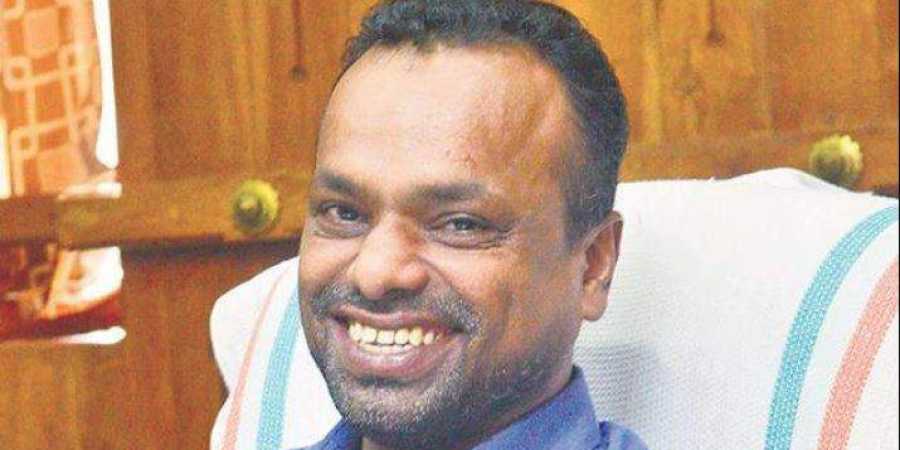
For Abdul Nasar, it was a long journey from an orphanage to the District Collector’s office.
Abdul Nasar
Kollam :
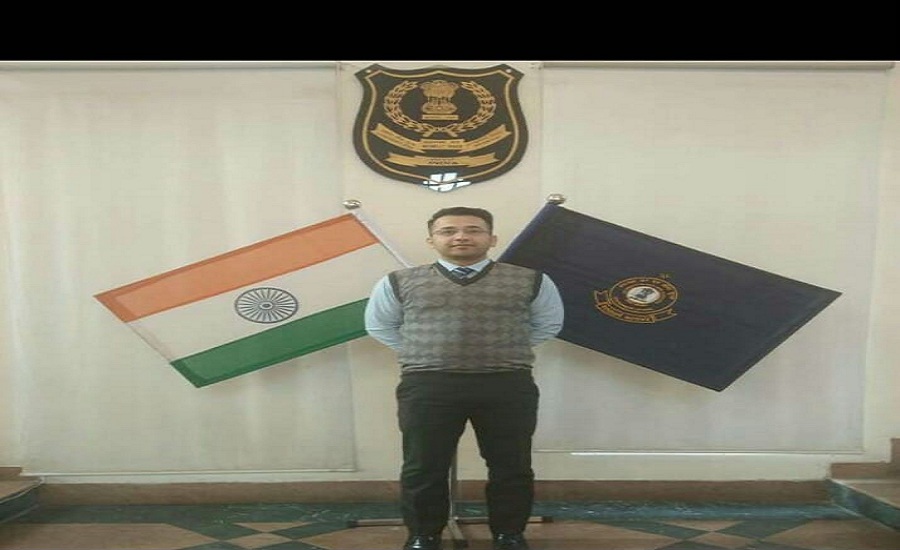
For Abdul Nasar, it was a long journey from an orphanage to the District Collector’s office. The Thalassery man who assumed office as Kollam Collector the other day had lived the hard ways of life, spent childhood in an orphanage and came up to the top fighting all odds in life. Tragedy befell his family when Abdul was just 5. His father Abdul Khadar passed away, leaving his mother Manjumma Hajjumma alone to fend for six kids. The financial crisis pushed Manjumma to send her youngest son Abdul to an orphanage in Thalassery.
He spent the next 13 years at the orphanage. He had worked as a supplier and cleaner in hotels during his school days to fund his education. While pursuing his BA in English Literature at Government Brennen College, Thalassery, Abdul also worked as a telephone operator and a newspaper boy. After his graduation, he worked as a health inspector in Kerala Health Department and then as an upper primary teacher at a school in his village, and finally, after his preparations, he cracked the PSC exam for the post of deputy collector.
He passed the prelims in 2002 and mains in 2004. In 2006, he was appointed deputy collector. During his stint as the State Entrance Exam Commissioner, he was able to convert the exams into an online format. And in October 2017, he was elevated as an IAS officer.
Abdul is all praise for his mother whose hard work is behind all his achievements. “It was her hard work that made me the person I am today,” said the 49-year-old. He also appreciated the support he had received from his wife MK Ruksana, a higher secondary teacher. The couple has three children – Nayeema, an engineering graduate; Nuamul Haq, BBA student; and Inamul Haq, who studies in Class VIII.
source: http://www.newindianexpress.com / The New Indian Express / Home> States> Kerala / by Express News Service / July 04th, 2019
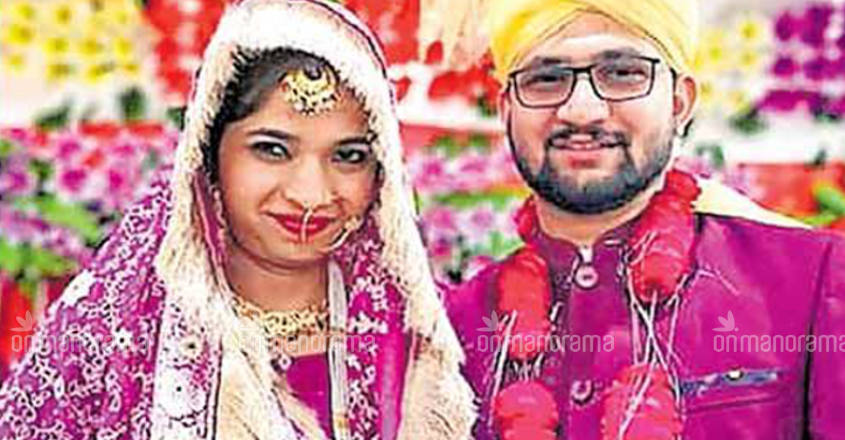
The Nikah between Muhammad Muhsin and Shafaq Qassim was a strictly family-and-friends event
Palakkad:
Pattambi’s young MLA Muhammad Muhsin has married a student from Uttar Pradesh’s Balrampur. The wedding was held in the bride’s hometown.
The Nikah was a strictly family-and-friends event as the bride, Shafaq Qassim, has to fly out to Europe on December 31 for studies leading to a PhD.
Shafaq, who has completed her M Phil from the Jamia Millia University in Delhi, has worked at the National Physical Laboratory there for sometime.
Muhsin and Shafaq knew each other for the last year-and-a-half.
Muhsin, who was a firebrand leader at the Jawaharlal Nehru University in Delhi, is an MLA of the CPI. The bride’s family, however, are Samajwadi Party supporters and they have contributed MLAs to that party.
Muhsin is the son of Puthenpeediyakkal Abubaker Haji and Jameela Begum of Karakkad, Pattambi.
source: http://www.english.manoramaonline.com / OnManorama / Home> News> Kerala / by OnManorama Correspondent / December 23rd, 2018
Anyone travelling on India’s road network in the north of the country may from time to time see a curious little structure standing in isolation by the side of the road. Seemingly unassociated with anything else around them, to the casual observer they can probably be best described as enlarged stone salt/pepper pots.
With all the astonishing monuments that still stand today in this amazing country, it would be all too easy to dismiss these humble little constructions as your car passes them by at speed. However, they have their own story to tell, and one for which we can draw so many parallels with life as we live it today in terms of travel and communication. They are also a type of monument that is slowly disappearing from the landscape of India, so they deserve a little time in the spotlight before it’s too late.
These monuments are known as Kos Minars. A Kos is an ancient Indian unit of distance representing approximately 3.22 kilometers (2 miles), and is 1/4 of a Yojana, a vedic measurement of distance. The use of Yojana scratches back to the ancient vedic texts, and was used by Ashoka in his Major Rock Edict No.13 to describe the distance between Patliputra and Babylone. Minar means ‘Pillar’, so the broad translation of Kos Minar is ‘Mile Pillar’, even though one kos is not strictly speaking an exact mile in measurement. Interestingly, elderly people in many rural areas of the Indian subcontinent still refer to distances from nearby areas in kos.
A Short History of the Kos Minar
The first recorded evidence in India of using something in the landscape to specifically denote distances and routes comes from the 3rd century BC. The Emperor Ashoka established routes linking his capital city of Pataliputra to Dhaka, Kabul, and Balkh, and landmarks in the form of mud pillars, trees and wells helped guide the travelers and provide a sense of how far they had traveled and how much further they had to go. In the majority of cases these landmarks were already pre-existing in the landscape, they were not created specifically for this purpose.
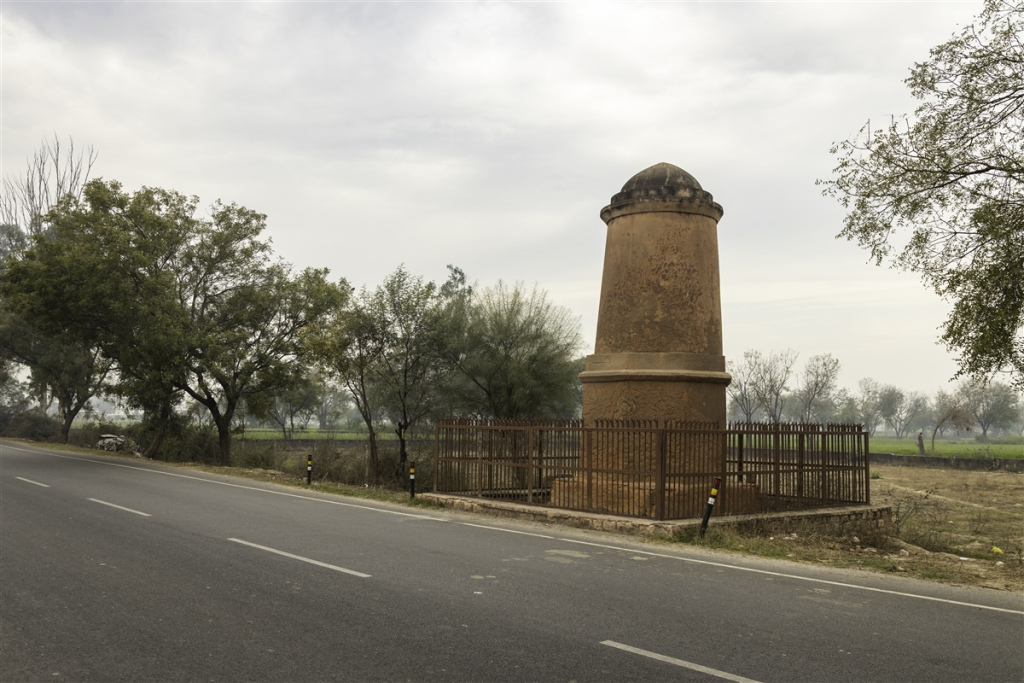
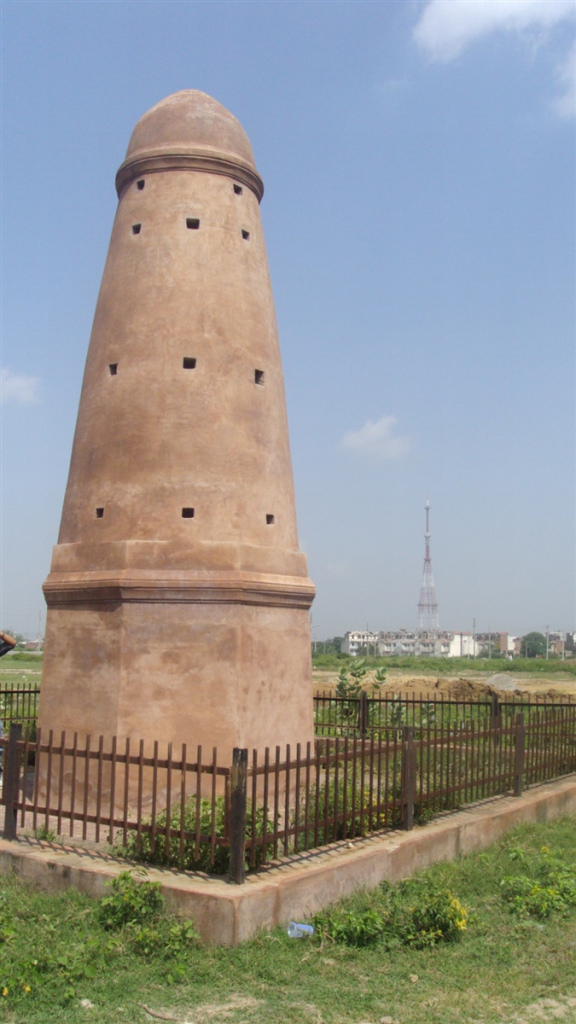
Kos Minar on NH21 near Sahara, between Agra and Fatehpur Sikri, Uttar Pradesh
In India the notion of purposely building structures to physically denote distances in the landscape was first adopted by the Mughal Emperor Babur during his short reign from 1526 to 1530. He ordered one of his central asian nobles, Chiqmaq Beg, to measure the road between his new capital Agra and Kabul in modern day Afghanistan, with the assistance of a royal clerk. He then ordered the raising of distance markers, each twelve yards high and topped with a superstructure having four openings, at every nine kos all along the measured route.
It is not clear how far the builders got with Babur’s instructions, but we do know that the Pashtun ruler Sher Shah Suri who ruled from 1540 to 1555 greatly expanded on this earlier plan. He paid great attention to the development of the road network in northern India, recognising them as arteries to the empire, and erected Kos Minars along the royal routes from Agra to Ajmer, Agra to Lahore, and Agra to Mandu. These three major routes, which were called Sadak-e-Azam, became later known as the Grand Trunk Road.
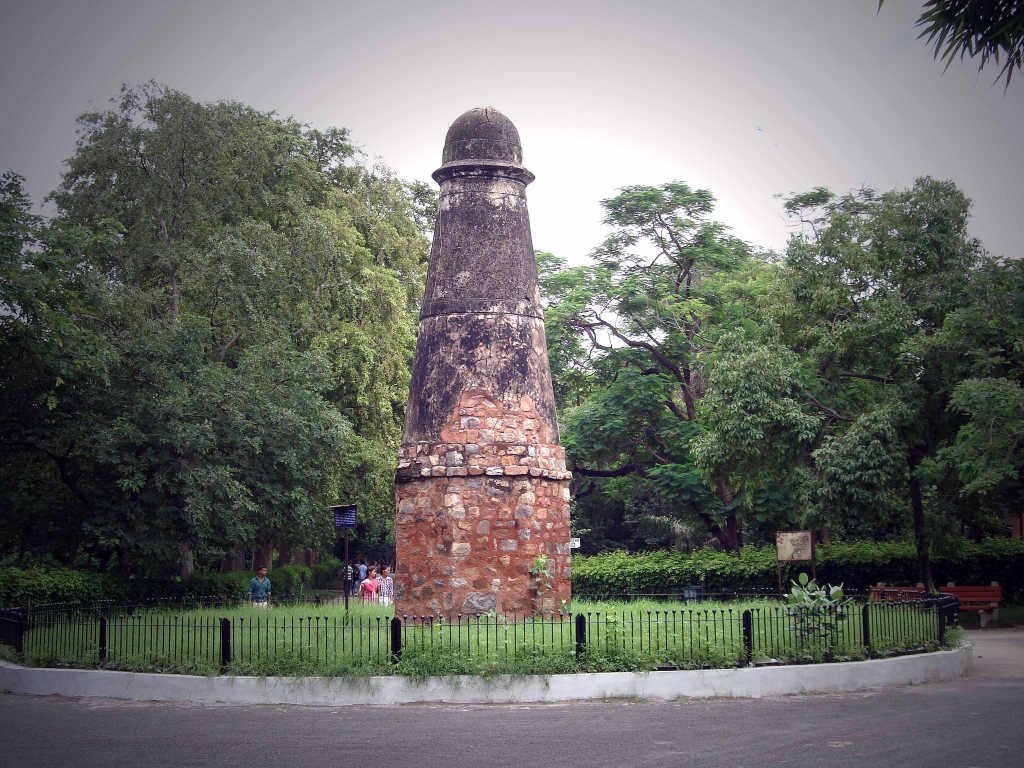
Kos Minar in Delhi Zoo. / (File is licensed under the Creative Commons Attribution-Share Alike 3.0. Source.
Many of the Kos Minars you can see today can probably be attributed to the time of Akbar, who reigned from 1556 to 1605. Abul Fazl recorded in Akbar Nama (the official chronicle of the reign of Akbar) that in the year 1575 Akbar issued an order that, at every kos on the way from Agra to Ajmer, a pillar or a minar should be erected for the comfort of the travelers, so that the travelers who had lost their way might have a mark and a place to rest. Between 1615 and 1618, shortly after Akbar’s reign, early European travelers to India brought back detailed reports of the Kos Minars they had seen, most notably Richard Steel, John Crowther, and the ambassador of King James I, Sir Thomas Roe.
Subsequent Emperors Jahangir and Shah Jahan added to the network of Kos Minars, by now they were an institution. In 1619, Jahangir ordered Baqir Khan, the garrison commander of Multan, to erect Kos Minars from Agra to Lahore. Thirty four of these milestones still exist today in Punjab in varying states of preservation. It is estimated that between 600 and 1,000 minars were erected in total during the Mughal period, but of course today only a fraction of that number still exist.
Construction and Function
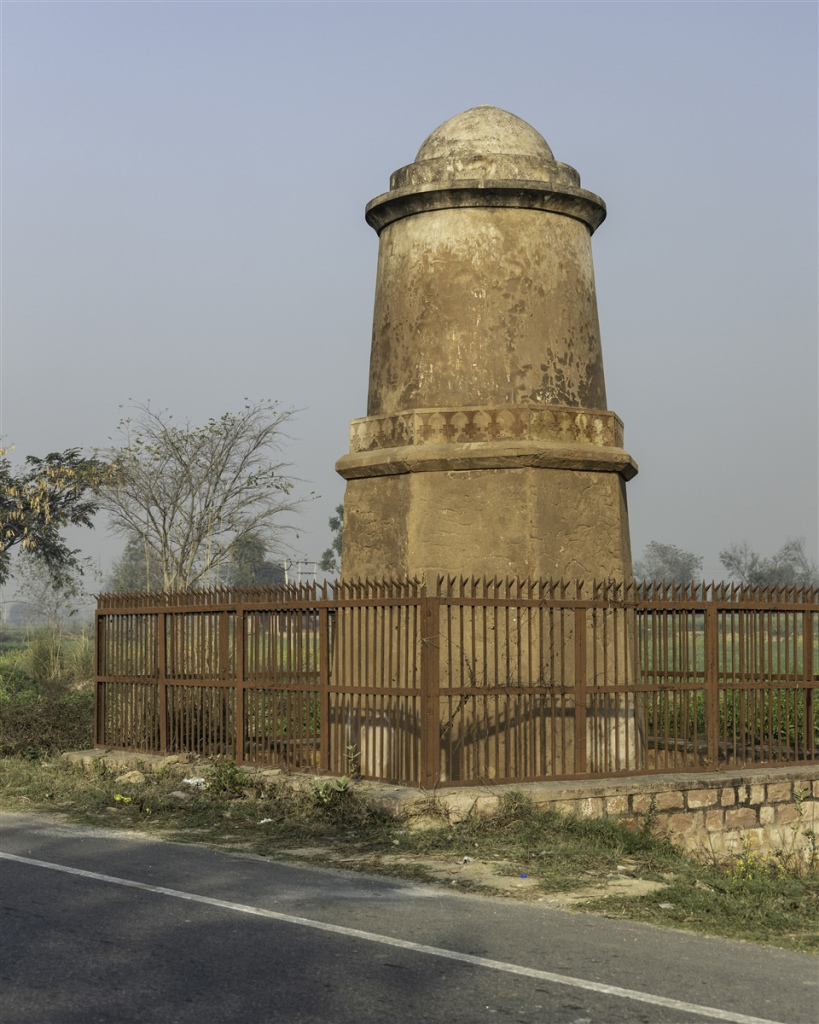
Kos Minars are round pillars around 30 feet high built on a masonry platform. They are completely solid with no stairs or internal rooms, and are mostly made of brick and once covered with lime plaster.
Whilst the features of a Kos Minar generally match each other they are not all identical, there are slight differences depending on location and time of construction/repair.
Kos Minar at Karnal, Haryana
Many of the Kos Minars you can see today stand in isolation, but that was not always the case. As the network of pillars expanded, so did associated structures to complement them and assist the traveler. Scholars believe there were three categories of Kos Minar along the major routes.
The first category is just a standalone Kos Minar with no supplementary infrastructure, erected purely for landmark identification.
The second category of Kos Minar had small associated contemporary buildings, offering limited facilities for the travelers.
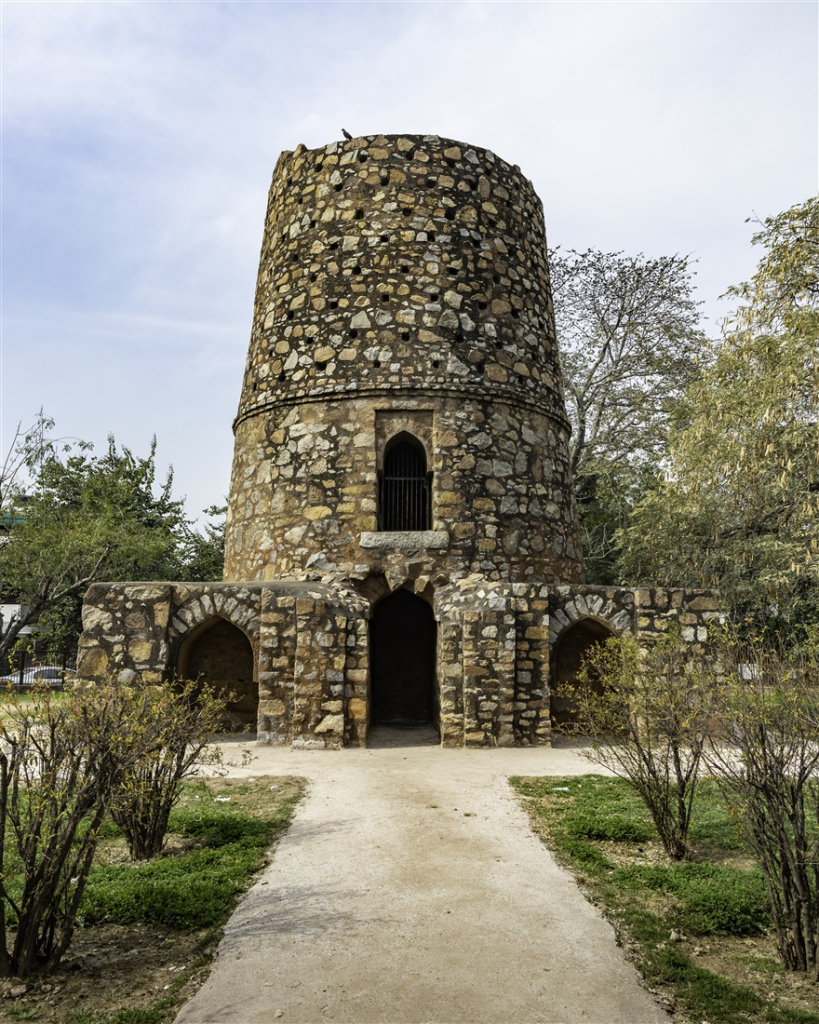
The third category of Kos Minar had substantial additional infrastructure such as sarais (inns), baolis (wells), mosques and other facilities to ensure the safety, security and well-being of the traveler. There is some speculation that Chor Minar in Delhi is one such example, although the passage of time may have blurred that fact and introduced folklore into the narrative for that monument. Throughout most of the world you can see this infrastructure in operation along the major roads of any given country. In the UK we call them “service stations”, which exist at fairly regular intervals along our extensive motorway network.
Chor Minar in the Hauz Khas district of Delhi. / Potentially an example of the third and most extensive type of Kos Minar
These structures not only served to assist the traveler from place to place, but were also instrumental in the day to day governance of the Mughal empire. Horses, riders and drummers were stationed at many of the Kos Minars, relaying royal messages at a much faster speed than would be possible with a single horse and rider from source to destination.
In addition to helping relay messages from place to place, Kos Minars may have also served as a hub of information themselves. Some scholars believe the plastered surface of the Minar would have been covered with information, not just about distances but also recent news and popular slogans. This method of distributing news, information and propaganda throughout an empire was not a new concept. The Roman emperor Caesar introduced a similar model where information he wanted to share with his people was posted daily on wooden boards in the Forum (center) of major cities in the Roman empire.
Today we have technology to help us communicate these things. You can post messages on someone’s “wall”, or provide information to a Facebook group (often geographically centric). For many people, social media began with the advent of Facebook, but this is a modern term that refers to a very old idea that people have been using for thousands of years.
Distribution and Preservation
The passage of time has not been kind to the Kos Minar. Of the approximately 1,000 that once existed in India there are now just 110 examples still standing, the highest concentration is in the state of Haryana, where 49 are to be found.
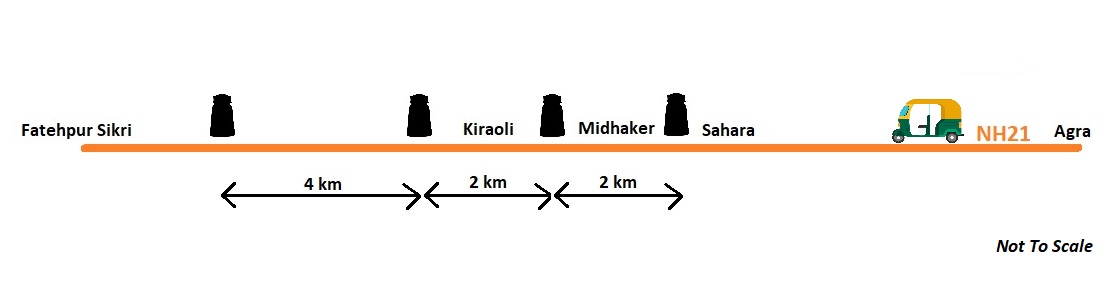
For those who are perhaps traveling to northern India to see the major tourist sites, there is a good stretch of them surviving by the side of NH21 between Agra and Fatehpur Sikri. Hopefully the map below will prove useful for that purpose (click on the image to view larger scale):
Heading away from Agra towards Fatehpur Sikri look out for the following four Kos Minars on the right-hand side of the road :
Kos Minar #1 : Just after the village of Sahara. This Kos Minar (ASI ref: N-UP-A33) is visible and marked on google maps, co-ordinates 27.154760, 77.886290.
Kos Minar #2 : This one (ASI ref: N-UP-A34) is 2 km further on just after the village of Midhaker, and is also visible on Google Maps but not marked, co-ordinates 27.151050, 77.860133.
Kos Minar #3 : (ASI ref: N-UP-A35) is 2 km further on towards Fatehpur Sikri after the village of Kiraoli.
Kos Minar #4 : The final one (ASI ref: N-UP-A36) is after a longer gap of 4 km (clearly we have lost one in middle of these last two).
Although all Kos Minars are now declared protected monuments by the ASI, they remain structures at great risk. What were once meant to show the way to others often now stand in near obscurity, isolated in zoos (Delhi), jungle, car parks, villages, slums, farmlands and even beside railway tracks. Others are being devoured by the rising skyline of rapid development in urban areas, being swallowed up and becoming almost invisible.
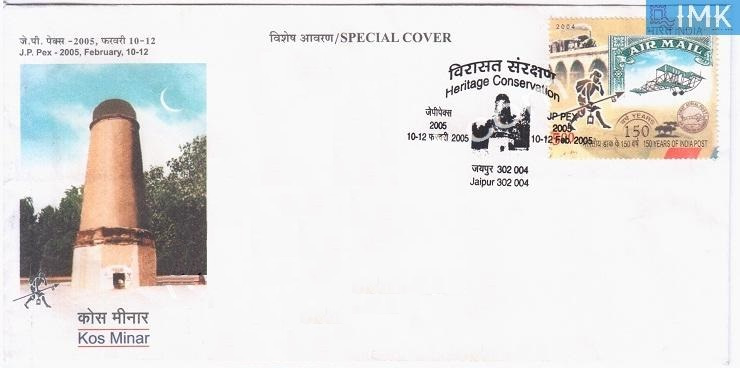
Attempts have been made to increase awareness, most recently in February 2005 when a first day cover was issued depicting a renovated Kos Minar as a symbol for Heritage Conservation.
I hope efforts continue to raise awareness of the Kos Minar, and hopefully ensure they no longer lose their way in the rapidly changing landscape on India.
Please ‘Like’ or add a comment if you enjoyed this blog post. If you’d like to be notified of any new content, just sign up by clicking the ‘Follow’ button.
If you’re interested in using any of my photography or articles please get in touch. I’m also available for any freelance work worldwide, my duffel bag is always packed ready to go…
KevinStandage1@gmail.com
source: http://www.kevinstandagephotography.wordpress.com / Kevin Standage / Home> Agra / by Kevin Standage Photography / May 20th, 2019
The Raja of Mahmudabad has been fighting to claim his inheritance since 1974, despite being branded ‘enemy’ under the Enemy Property Act.
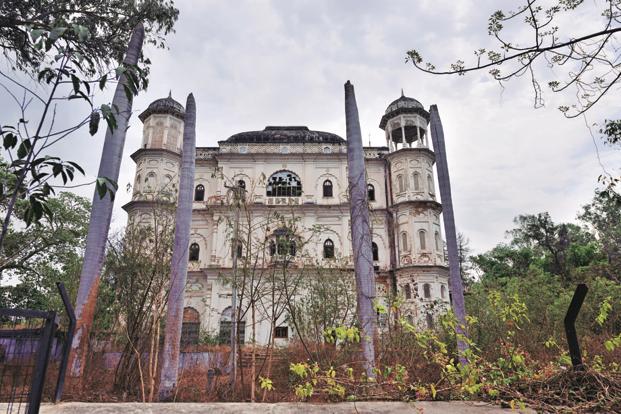
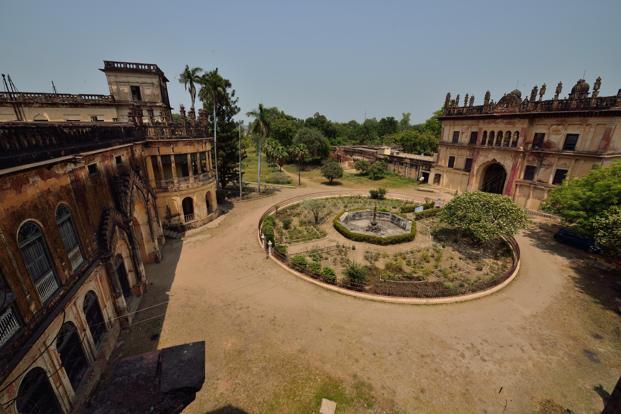
The Butler Palace in Lucknow, one of the ‘enemy properties’ of the Raja of Mahmudabad that is at stake in the court case against the Enemy Property Act. Photos: Pradeep Gaur/Mint
Mahmudabad/Lucknow/New Delhi:
At the entrance of Muqeem Manzil, the sprawling main hall of Mahmudabad Qila (fort), stands a guest table on which is perched a beautiful old world calendar bearing the Mahmudabad crest, two lions flanking a crown. The date card reads 23rd but none of my companions, local Waqf board members and the secretary to the present Raja, can tell me what the day, month or even year is. In many ways the old world calendar stuck on a particular date is an apt metaphor for the current state of the kingdom whose crest it bears.
Since 1974, Mohammad Amir Mohammad Khan, better known as the Raja of Mahmudabad, has been petitioning the government for the return of his properties but apart from a brief respite in 2005, the Raja’s heritage, spread across parts of Lucknow, Sitapur and Nainital, has been mired in litigation with him challenging the highest authority in India; the Indian government itself. It is a heritage that can be traced back to the 16th century and Emperor Akbar’s patronage, but today Khan has to struggle to not be labelled an enemy.
Raja Mohammad Amir Mohammad Khan with younger son Amir Khan.
In 1962 when war broke out between India and China, the government confiscated what it referred to as “enemy properties”, namely properties that belonged to a person or a country who or which was an enemy. This included not just Indian citizens of Chinese ethnicity but also those who had migrated to Pakistan during the partition. The same act was applicable during the 1965 India-Pakistan war. One of the people to migrate was a certain Mohammad Amir Ahmed Khan who had left India in 1947 but for Iraq. He eventually took Pakistani citizenship in 1957. This was the former Raja of Mahmudabad, father of Mohammad Khan, and by all accounts a close associate of Mohammed Ali Jinnah.
“I had just arrived in Cambridge to begin my undergraduate degree when our properties were taken over under the Defence of India Rules in 1965. In those days it took some time for news to travel from here to there and hence I learnt about it only a week after it had actually happened,” the Raja tells us.
An elegant man with just a hint of a British accent, the Raja peppers his conversation with quotes from classical Indian poetry to Western philosophers. Every question posed to him is an opportunity to share an anecdote from his family’s rich history which in modern times overlapped quite a bit with the birth of the nation.
He tells us how it was his uncle, his father’s younger brother, Maharaj Mohammed Amir Haider Khan, a barrister at law who practised in Bombay in the chambers of Sir Jamshedji Kanga, who explained just what the label enemy property meant, and why a huge chunk of his father’s inheritance had been taken over by the government. Interestingly both the Raja’s uncle, Haider Khan and his mother, Rani Kaniz Abid of Bilhera choose to stay on in India after partition and were Indian citizens.
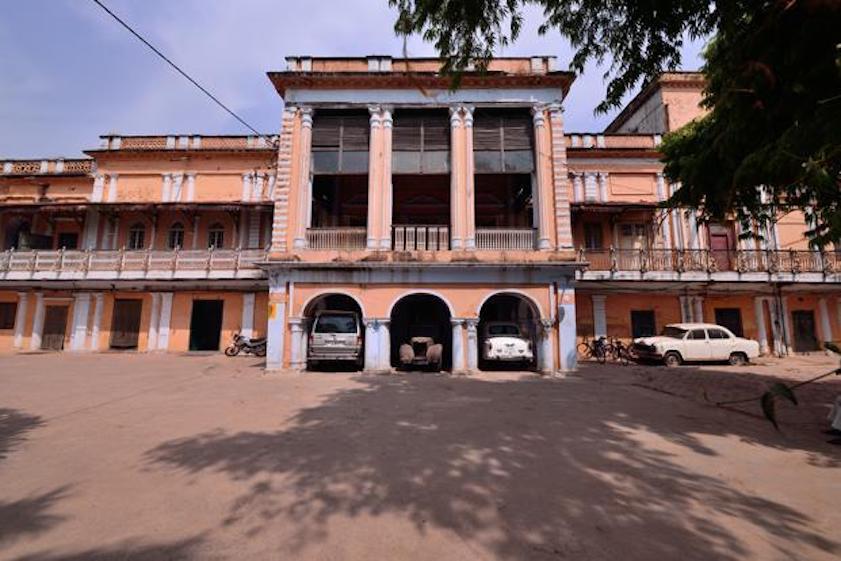
Mahmudabad Mansion in Lucknow.
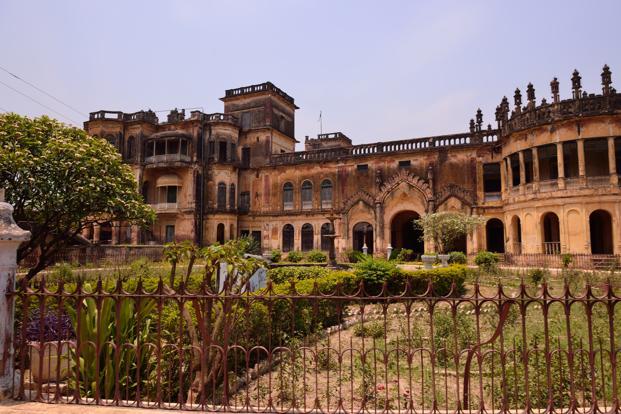
The seized properties included Butler Palace, Mahmudabad Mansion, Lawrie Building and court in Lucknow’s Hazratganj. All these are prime real estate holdings, the court especially is a sprawling marketplace spread over 200,000 square feet.
Apart from these, the Mahmudabad estate’s holdings were spread over Sitapur, Nainital and of course in Mahmudabad itself. While some properties like those in commercial areas already had tenants staying, others were converted into government offices. In fact, Butler Palace situated smack bang in the middle of one of Lucknow’s toniest government colonies used to house the Indian Institute of Philosophical Research. “But it was the taking over of the Qila at Mahmudabad, the ancestral house, which is the venue of all our religious observances throughout the year for the entire community, where my mother actually lived and that was a big shock to me,” recalls the Raja.
The Qila in question is not just the family’s ancestral seat but also the religious and cultural hub of Mahmudabad, home to a large Shia community. Muharram, the first month of the Islamic calendar when the martyrdom of Imam Husain, the grandson of the Prophet, took place, is observed in all its solemnity by the community with the Qila and the shrines built by the Raja’s family as the focal venues.
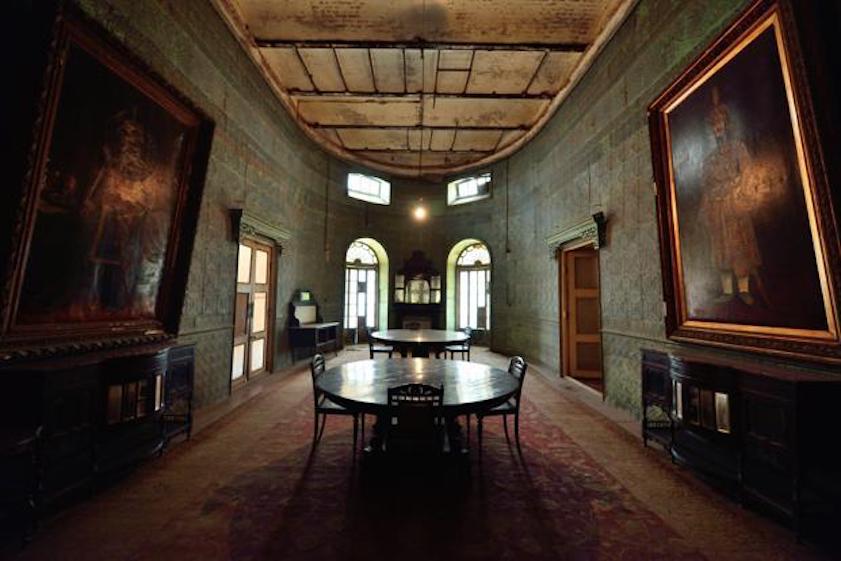
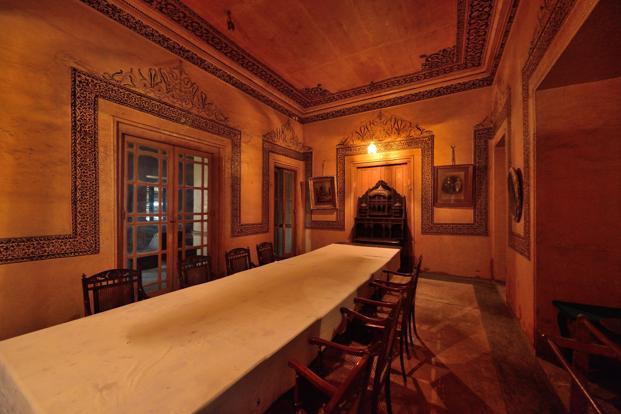
“It is a very important centre for Mahmudabad both culturally and socially. We have scholars who come from far and wide to preach, all local communities, irrespective of their faiths are involved when Muharram is observed. This has been the tradition here for years and nothing can change it,” Ali Mohammad, the Raja’s secretary, explains to us as we walk around the Qila. It is a magnificent structure with colonnaded arches where many rooms still retain their original furniture right down to the beautiful expansive Persian carpets. The Mahmudabad crest shows up everywhere even as portions of the Qila remain locked up, slowly crumbling under the weight of neglect.
The Mahmudabad Qila at Mahmudabad in Sitapur district of Uttar Pradesh.
The Qila was indeed taken over by the government in 1965 but since it is under the Waqf board, under an order of the court it was opened up again in eight months. “During those eight months, my mother, my father’s brother and his wife, who was also my mother’s sister, along with all the retainers, lived in the verandah, enduring what had come to pass. The government knew that substantial parts of the Qila are under the Waqf board and our observances have been taking place for centuries. A place like this could not be used against the disadvantage of the country,” reminisces the Raja.
It is still possible to catch a glimpse of how life would have been at the fort when the kingdom was at its peak. The number of families who live here has greatly diminished but they have all been in the service of the royal family for generations.
Muqeem Manzil, the entrance hall, leads to a library stacked with classics bound to make any book lover’s heart beat faster.
In Mahal Sarah, the ladies section of the fort, a group of women still sits everyday and painstakingly create beautiful chikan outfits under the label Qilasaaz which Vijaya Khan, Rani of Mahmudabad, oversees.
The Raja’s father died in London in 1973 where he moved soon after he took Pakistani citizenship, disillusioned as he was with his experience there.
The interiors of Mahmudabad Qila.
“He was a Shia in a Sunni country, he did not speak any local language and had no roots in the countryside. He had roots only amongst the urban immigrants,” explains the Raja who was 14 years of age when he found out that his father had taken Pakistani citizenship. “I was in school and the term was ending. When I came back, I was told my mother was very unwell. She had a seizure of a terrible sort when she had heard about my father’s citizenship. My father had never asked her to go to Pakistan. It was a foregone conclusion that she would not even countenance it.”
This is a narrative which is slightly at odds with what the current government is pushing with finance minister Arun Jaitley even insisting in a Rajya Sabha debate that the Raja’s father had “sent” his wife and son back to India to claim citizenship.
“I have documentary government proof that we were never anything other than Indians,” claims the Raja.
But why is the Raja’s nationality being discussed in Parliament? The answer to that lies in a process that started in 1974 when he came back to India from Cambridge and petitioned the government to return the properties to the family.
The Enemy Property Act, 1968, categorically defined enemy property as belonging to a citizen of a country which was an enemy and with the passing of the Raja, the properties were bequeathed to his son who was an Indian citizen. Section 18 of the 1968 Act also includes a provision of the properties being returned on a special or general order by the central government, “in such manner as may be prescribed to the owner thereof or to such other person as may be specified in the direction…”
The interiors of Mahmudabad Qila.
The then young Raja met Morarji Desai, the then prime minister, who assured him the file would be examined. The Raja also met Indira Gandhi, the matter was taken up by the Union cabinet and by the end of 1980 he was informed that the properties will be returned to him but then it was said that only 25% of the properties will be returned.
“I was asked to furnish proof that I was my father’s legal heir. A succession certificate was required. The district court in Lucknow in 1986 gave a decision in my favour,” he says.
But the 25% clause remained and it is this that took the Raja to the Bombay high court seeking a return of his property in 1997. In between, there was stint with politics as a two-time MLA from Mahmudabad from the Congress party even though his struggle for his inheritance continued.
The Bombay high court returned the Raja’s entire property to him but the government then took up the matter in Supreme Court. And in 2005, the apex court gave what became a landmark and eventually a very contentious judgement. Declaring that enemy property is only vested with the custodian and that the Raja is a bona fide citizen of the state and not an enemy as defined by the Act, all of the Raja’s properties were returned to him.
It is a day the Raja still remembers clearly because he says that is the day his pride in India and his belief in the nation was reinforced. “It made me proud. I felt an injustice had been reversed,” he recalls.
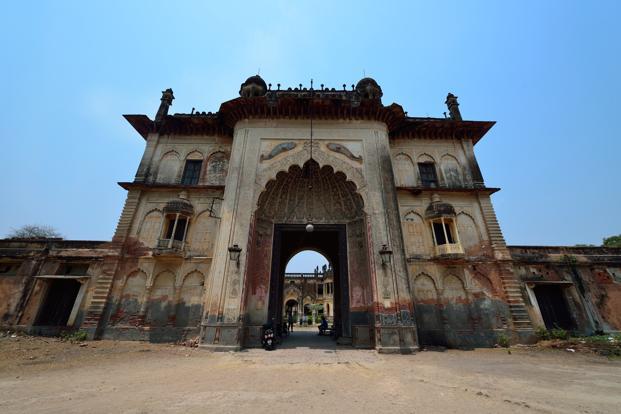
One of the gates of Mahmudabad Qila.
But this was just the beginning of another round of struggle. For while properties like the heritage hotel Metropole in Nainital and Butler Palace in Lucknow were returned to the Raja, the holdings in Lucknow’s prime commercial area were occupied by tenants, most of whom were paying a pittance. Halwasiya court, for instance, which is home to several high-end showrooms, was given out on rent by the Raja’s father on a 90-year lease for a paltry amount of Rs600. After several meetings, perusal of property records, it was decided that the lease will be honoured.
From top brands to iconic restaurants, a lot of big names in Hazratganj, just across the road from Halwasiya court, are housed in Mahmudabad properties and pay rents in the vicinity of Rs500-1,000 per month. In December of last year, the district administration decided to revise the rent of enemy properties. A Hindustan Times report cited a government official as saying that shops run out of enemy property, especially in Hazratganj, will now pay 30% of the market rate which comes to Rs330 per sq. metre. The money will go to the government.
But even as these properties were not returned, work on the others began in full swing. The restoration of Metropole Hotel was undertaken by the Raja’s wife while Butler Palace too was being reimagined in all its previous glory.
“We borrowed from banks, put in our own money, developed Waqf land…and then one fine morning in 2010 I heard that the government is issuing an ordinance that seeks to amend the Enemy Property Act,” he says. It was the Raja’s worst nightmare come true. Overnight his properties were taken back and it was 1965 for the family all over again.
The ordinance which was introduced by the United Progressive Alliance government reportedly amid fears that the Supreme Court judgement will open a Pandora’s box of claims from others across the country, sought to amend the 1968 Act. On 17 March 2017, the amendments to the Act were passed which expanded the definition of enemy from the 1968 Act to include citizens of India who are the legal heirs and successors of the enemy or enemy subject.
The Raja’s family lived in the Mahmudabad Qila before it was seized by the government and handed to the Waqf board.
The amendment also gave the government the right to sell the property, thereby implying that the owner of an enemy property was the state. In effect, all of the Raja’s properties were now the properties of the Indian government, laws of succession, Indian citizenship and the Supreme Court order notwithstanding.
“We fought 40 years for justice. We went to the government, we went to the court…we availed every recourse that is available to the citizen only to be told that it is retrospectively overturned. This is in the teeth of justice inequality,” says Khan, Rani of Mahmudabad.
The daughter of former foreign secretary Jagat Singh Mehta, Khan is a quiet woman who states her family’s disappointment and anger at the ordinance and the subsequent amendment in a definite manner. We are travelling in an ambassador from Lucknow to Mahmudabad as she tells us about the work that had started on all properties and just how cruelly they’ve been allowed to fall apart. Case in point is Butler Palace, which is almost in ruins. Grass as high as an adult’s waist impedes access to the building though it is no deterrent to the vandals who come here as evinced by the empty beer bottles one finds lying next to the gate. “To think there was a time when we would actually come here to have tea in the evening,” says Ali Mohammad, the Raja’s secretary, as he takes us for a walk around the properties in Lucknow.
Every member of the Raja’s family, be it his wife or two sons, is an independent authority on the Enemy Property Act and its amendment. The older son is a professor at Ashoka University who has written several editorials on the Act, while the younger son, who is pursuing his PhD, can discuss every amendment in the new Act threadbare.
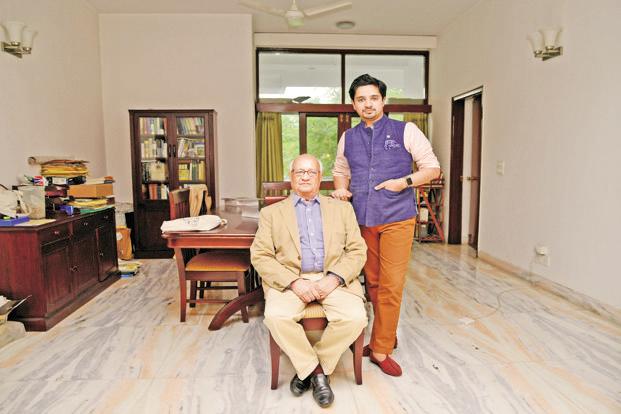
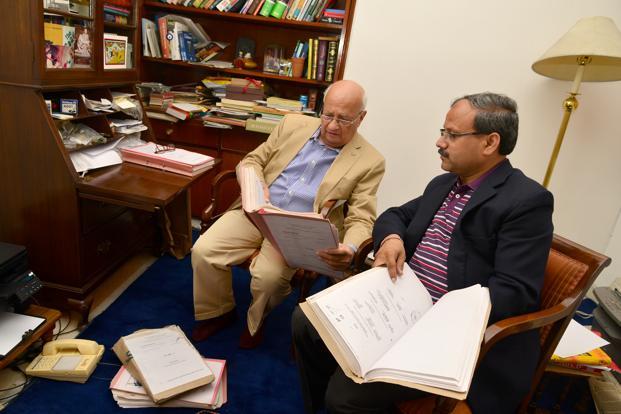
Raja Mohammad Amir Mohammad Khan (left) with the documents of his court case against the Enemy Property Act. Photo: Ramesh Pathania/Mint
There is a palpable sense of anger but what stings most is the usage of the word enemy. “Here I am, sitting next to you and I am an enemy. This Act has created deep distress, especially financial. The only thing we have is the benefit of education which enables us to realize that anger and cynicism are futile,” says Khan, Rani of Mahmudabad.
There is a palpable feeling that the ordinance and the subsequent amendments were brought in to target the family specifically though no one says so outright. In fact, the ruling party’s defence in Rajya Sabha during the debate for the passing of the bill centred mostly around the Raja’s case, with it being said that the former Raja, “who threw his weight behind the idea of a separate Muslim nation” sent his wife and son “back to become Indian citizens and claim Indian property”. Finance minister Jaitley also said that the Raja’s family had lost the title to the properties in 1965 so the question of inheriting these does not arise.
The Raja currently has a writ petition in the Supreme Court but the fate of it remains up in the air. Niraj Gupta, his advocate, worries about the powers vested in the custodian given that the office has come under the radar for some questionable deals. The former custodian of enemy property Dinesh Singh, an IRS officer, was recommended for criminal action by the Central Bureau of Investigation for helping a developer acquire an enemy property.
There have been several cases against enemy properties in Indian courts with few settlements being in the favour of the custodian of enemy property, as neither the rights of the legal heirs of the enemy or the duties of the custodian were ever clearly defined.
However, none of these cases have been as high-profile as that of the Raja of Mahmudabad’s given his family legacy, the association with Jinnah and the sheer magnitude of the real estate at stake. The amendment to the Act, however, removes all ambiguity vis-à-vis ownership while attempting to create a different class of citizens, the children of enemies. This is a clear violation of Article 14 of the Constitution which guarantees the right to equality and it is perhaps on this ground that the amendment can be challenged.
Till then the Raja, who in William Dalrymple’s Age of Kali, had said visiting Mahmudabad brings him “terrible bouts of gloom”, sits in his well-appointed living room in New Delhi waiting to see what new curve ball life throws at him.
“However, I will always be able to say that I did get justice in this country,” he concludes. The semblance of it, in the form of the 2005 Supreme Court judgement is perhaps the only victory he can savour from the fight that has taken over his entire life.
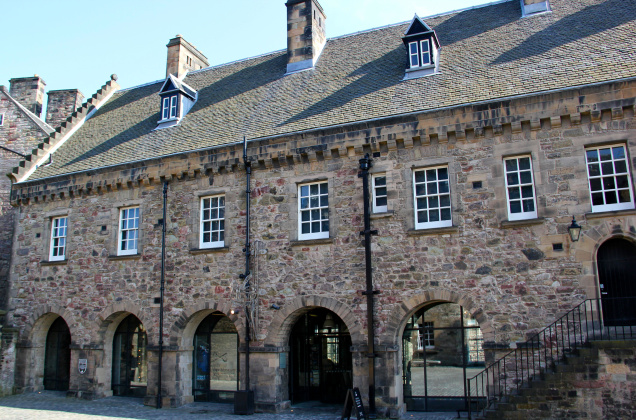
The view of the 12th century edifice at Edinburgh castle that houses the National War Museum.
The legend of Tipu Sultan is still alive in far away Scotland
It is an irony that Tipu sultan, the ‘Tiger of Mysore’, whose birth anniversary celebrations in India became a contentious issue recently, in Scotland whose soldiers and commanders fought for the dissemination of this great warrior king, the only Indian monarch to have died on the battlefield fighting the British, is cherished and commemorated in song, dance, drama, opera, in novel and in paintings. A wealth of personal effects and curiosities of Tipu Sultan have found way to numerous art galleries and museums in Scotland, particularly in its capital Edinburgh.
The participation of the Scots in the affairs of the East India Company began immediately after the unification of Scotland with England through an Act of Union in 1707. Since then Scottish people began coming to India as soldiers, generals, writers, administrators, traders, merchants and missionaries. But they excelled in their service as military generals and commanders. A separate Regiment of foot, the ‘75 Highlanders’ 75th .Highlanders was raised in Scotland to deal with Tipu Sultan. Scottish generals like Sir Hector Munro, Baillie, Beatson, Fraser, Gordon, Dunlop and others participated in the military operations against Tipu. The Scots, more than the English were in the forefront of the British forces in almost all the Mysore wars fought between 1760 and 1799.
After Tipu was finally dismembered by the British under the command of General Arthur Wellesley, the future Duke of Wellington, the images of Tipu Sultan as well as Srirangapatnam proliferated in Britain. No other Indian ruler, against whom the British fought and won, captured the imagination of the average Britisher at home, as much as that of Tipu Sultan. There were tales of mythical proportions in circulation about his valour, reckless energy and merciless acts of tortures meted to the captured British soldiers. It is said that British housewives used to threaten their weeping babies with the ‘arrival of Tipu’ to silence them
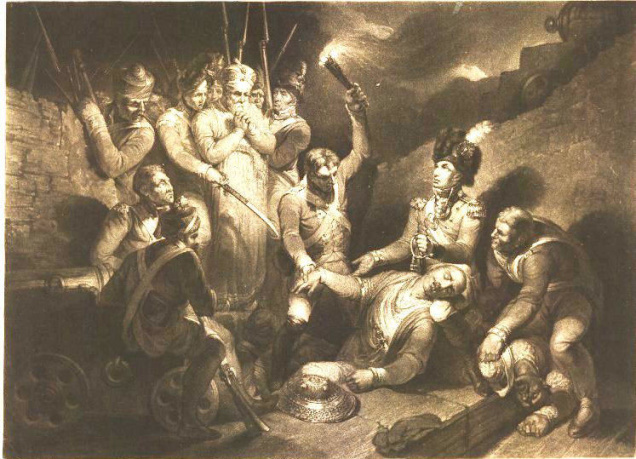
The images of Tipu Sultan and his capital, Srirangapatnam became subjects for paintings and art sketches throughout Britain. When Ker Porter’s Panorama a single large painting of Tipu Sultan was displayed in Edinburgh, there was euphoria among the Scots to have a glimpse of it. The celebrated British painters J.M.W. Turner and J.S. Cotman painted scenes of Srirangapatnam and other places in Mysore besides the portraits of Tipu. Sir David Willkie, the famous painter of the day was commissioned by the widow of Sir David Baird, and his poignant painting Discovering the body of Tipu Sahib on 4 May, 1799, was exhibited in 1838 in the Royal Academy of Arts in London. The Scottish General David Baird had spent several years in Srirangapatnam as a prisoner of Tipu before avenging in the final assault on Tipu.
Alexander Allen an artist of great repute travelled to India to personally see the hill forts in Mysore kingdom before he produced captivating sketches. William Darnell and Beckford also produced several sketches that survive even today. Holmes’ Select Views of Mysore, and Hunter’s Picturesque Scenery in the Kingdom of Mysore also evoked great enthusiasm in Britain. The Mysore wars offered exciting subjects and artists who never even visited India responded to the popular appeal of the Tiger of Mysore. As a result of such prolific paintings, the image of Tipu was so much etched in the collective memory of the Britishers that decades later, when Raja Ram Mohan Roy visited England, he had to confront hostile crowds as he was mistaken to be a descendant of Tipu Sultan. The head gear he wore was similar to the huge turban Tipu wore.
Returning soldiers of Scotland provided Sir Walter Scott with anecdotes for his novels on India. Several dramas and stage plays depicting Tipu and his fall were written and enacted at the Royal Corbug theatre in Edinburgh. Events at Srirangapatnam also appear in the writings of the novelists like Charles Dickens, Wilkes Collins and Jules Verne.
The remnants of Tipu Sultan’s dismantled throne, his numerous swords, daggers, bejewelled sword-belts, hukkas, ivory caskets, and several other artefacts were displayed in Glasgow and Edinburgh besides London.
Tiger in Museum:
In 1999, National Museum of Scotland, Edinburgh, as a part of the bi-centennial celebrations of Tipu’s death, held a special exhibition and decided to make Tipu’s Toy Tiger as a special exhibit along with several other Tipu’s memorabilia. But as the antique Toy Tiger was advised by exerts not to be moved from Victoria & Albert museum, fearing damage in the transit, a replica of it was made for the occasion.
The Toy Tiger is an awesome life size wooden toy seen devouring a European in military uniform. This impressive toy has cast a spell over generations of admirers since 1808 when it was first displayed in the Indian section of Kensington Museum now called Victoria & Albert Museum. The Toy in its body has a mechanical pipe organ hidden and by turning a handle, creates wailing shrieks and a loud roar. The design of this Toy Tiger is said to have been inspired by the death of the son of the Scottish General, Sir Hector Munro, a bête Notre of Tipu Sultan.
Tipu’s Memories at Edinburgh Castle:
The most significant of Tipu’s memories lay at the imposing castle in Edinburgh, Scotland’s capital. This historical castle, perched on a hillock with a commanding site, is a national symbol of Scotland. Inside the castle is located ‘National War Museum’in which the ‘the Battle Honors” of the Scottish Regiments are displayed. Here are seen numerous ornamental swords belonging to the several prominent Scottish Generals who saw action in the Mysore wars. Swords presented to Generals as souvenirs and medals are also on display What is surprising is the words, ‘Carnatic’, ‘Mysore’, and ‘Srirangapatnam’ carved in stone, are seen on the wall of this Museum indicating the importance the Scots bestowed on their combats during the wars against Tipu.
At the Edinburgh International Festival (EIF), held annually in August with several programmes of music, theatre, opera and dance, Tipu’s memories also come alive . The closing ceremony of the EIF held at the Castle is marked by spectacular display of fireworks. The scene is suddenly shrouded in darkness and bellowing smoke as rockets and explosives presents dramatic images of a big hill-fort under siege. This is an imitation of the Mysore wars when Scottish soldiers in India were familiar with such sights when deadly fires were showered on them from the impregnable forts like Nandidurg, Savandurg and Ootradurg in Tipu’s kingdom. It is said that four tons of explosives are used that evening for the celebration of such fireworks. Tipu Sultan, the ‘Tiger of Mysore’ must have died two centuries ago, but his enduring legend continues to be celebrated in far away Scotland with genuine nostalgia.
source: http://www.thehindu.com / The Hindu / Home> Friday Review / by K.S.S. Seshan / Hyderabad – March 17th, 2016
Junaid Ahmed, a 27-year-old alumnus of the prestigious Aligarh Muslim University who completed his engineering from Sharda University
New Delhi :
Junaid Ahmed, a 27-year-old alumnus of the prestigious Aligarh Muslim University who completed his engineering from Sharda University, came third in the civil services final examination 2018, the results of which were declared on Friday evening.
Ahmed’s choice of subject was geography and he took guidance from the Zakat Foundation, an NGO working for community upliftment. Ahmed has been preparing for the exams since 2013.
“I have seen failure before and today, I am completely overwhelmed. This sense of achievement has come with the burden of responsibility,” Ahmed was quoted by News18 as saying. “And I now have to work for the people and make sure the schemes of the government reach beneficiaries.”
Ahmed’s father is a lawyer and his mother a homemaker. He studied in St Mary’s School in Bijnore district’s Nagina town in Uttar Pradesh. He has two sisters and a younger brother.
“I come from a middle-class background – every parent in India wants their child to become an IAS officer, my parents were no different. I was not so keen, but with time I realised I can do it and then prepared myself for it,” he said.
Ahmed said he would like to work towards ensuring that more people from his community appear for the exams. “Many Muslims don’t want to sit for these exams, they think the test would be biased against them,” he said. “Most importantly, their socio-economic condition is not good. I would do my best to inspire more of them and keep them motivated to sit for the exams. The only thing that matters is hard work and focus.”
Zafar Mahmood, founder of Zakat Foundation of India, said, “Junaid joined us at later levels of the UPSC – for the mains. His victory is good news for the efforts of community members – who laboured 10 years ago to make Muslims sit for the exams.”
“If we start looking from independence, until 10 years ago the community’s participation was only 2.5%. We made efforts and started getting results over the last two to three years and held civil services orientation programmes, among other things,” he said. “Now, we see a 5% jump in representation. The participation in exams has improved and so has the quality of aspirants.”
Kanishak Kataria, a B.Tech from IIT Bombay, topped the exam, followed by Akshat Jain, an engineering graduate from IIT Guwahati. Srushti Jayant Deshmukh secured the top spot among women. The top 25 candidates comprise 15 men and 10 women.
source: http://www.caravandaily.com / Caravan / Home> Editor’s Pick> India> Indian Muslim / by Caravan News / April 07th, 2019
Stories of kings and queens fascinate all children and we were no different.
We never grew tired of hearing Amma tell us stories about the Kashi Naresh (king of Banares) and her life in Ramnagar, in present-day Varanasi. Stories of how my seven-year-old aunt was on the lead elephant in the Ramlila celebrations, because the Kashi Naresh was studying in Mayo College; stories of her roza kushai (celebrations when a child fasts for the first time) which had a 16-year-old Bismillah Khan playing the shehnai; stories of my Nani, Begum Hameeda Khatoon attending state dinners in chiffon saris and brocade blouses with matching brocade shoes and a dash of Tangee, her favourite lipstick. We heard of Khan Bahadur Syed Ali Zamin, MBE, our teetotaller Nana raising the toast to the very senior British dignitaries who came with a glass of water! We heard of Nana ensuring that there was a constant supply of Ganga Jal for the young Kashi Naresh studying in Mayo College, since he could only use that pure water. We often heard stories from my grandmother of the jewels in the state treasury; Nana must have described the jewels to her—the keys to the treasury were kept with him and he discharged his duties with utmost integrity and honesty. Another story, and my favourite, was that Nana personally chose the piece of brocade and silk, which went from Benares as Queen Elizabeth’s wedding present.
The rulers of Benares appointed many of their dewans and other officers from the Syed family of Kajgaon, near Jaunpur… Benares State was the biggest employer of our family!
Our childhood was shaped by these stories of a land where the Ganges flowed and the Ganga Jamuni Tehzeeb, as our syncretic culture is referred to, flourished.
A land where there was a Brahmin king and a Muslim dewan!
The rulers of Benares appointed many of their dewans and other officers from the Syed family of Kajgaon, near Jaunpur. In fact, as my aunt says, back then Benares State was the biggest employer of our family!
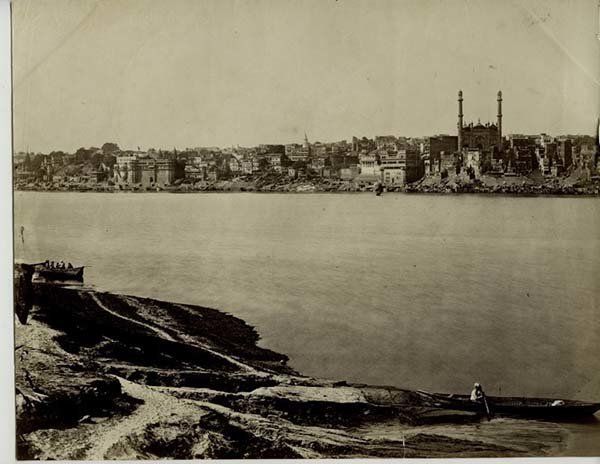
A VIEW OF THE GHATS OF BANARAS FROM RAMNAGAR, IN A PHOTO BY RUST, C.1880’S
Ramnagar, which is 18km from Varanasi, was the capital of the erstwhile princely state under the British Raj. Its history dates back to the ancient Kingdom of Kashi and its Brahmin rulers are said to be the incarnation of Shiva.
Mansa Ram Singh founded the Benares estate and in 1740 his son Balwant Singh became its first Raja. It became a princely state in 1911 under the British government.
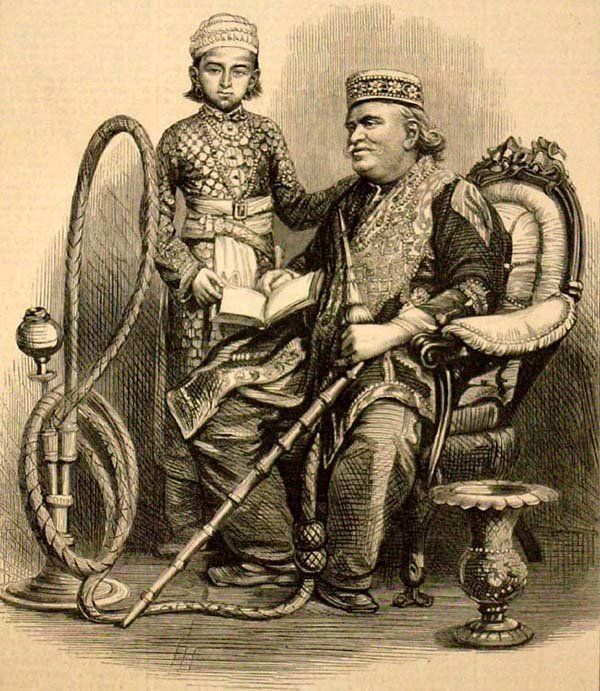
Maharaja Ishwari Prasad Narayan Singh succeeded his uncle and ruled till his death in 1889.
WWW.COLUMBIA.EDU “The Maharajah of Benares,” from the Illustrated London News, 1876
A family tradition begins
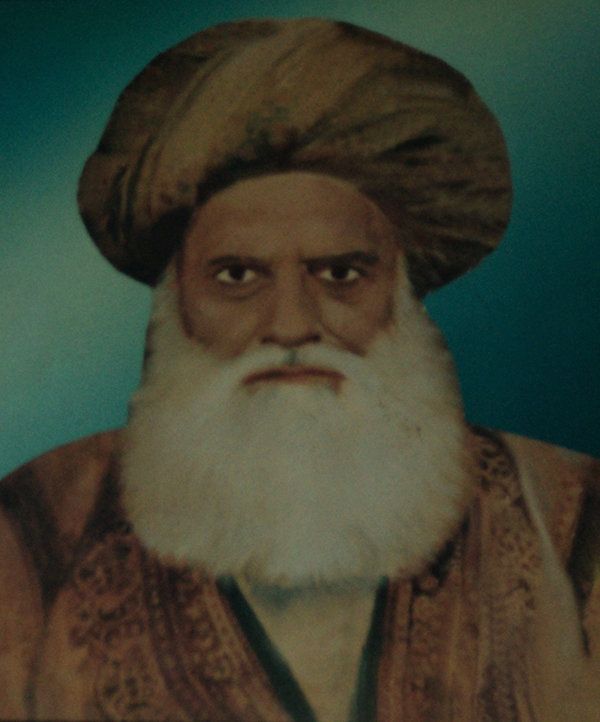
The first dewan from our family was my mother’s great-great-grandfather, Maulana Syed Gulshan Ali, a qualified mujtahid from Najaf in Iraq came in Maharaja Ishwari Prasad Narayan Singh’s reign.
AHMED ZAMIN / Maulana Syed Gulshan Ali
He advised and supported the king’s decision to not get involved in the 1857 Uprising and as chief minister and dewan he was instrumental in getting the estate, which had been confiscated by the British, restored to the Maharaja. According to the family lore, he had the idea of going to England to appeal to the Privy Council for the return of the confiscated land. He took three lakh rupees from the Maharaja and proceeded to the head office of the East India Company in Calcutta (now Kolkata). On the way, he met a British officer associated with Fort William in Calcutta where the head office of the East India Company was located. When the officer discovered that Maulana was a scholar he offered to help him in return for Urdu and Persian lessons. Upon finding out Maulana’s concern, he advised him that there was no need to go to England because the case could be pleaded from India. Maulana stayed in Calcutta for about a year teaching Urdu and Persian to the British officer
His detractors who had spread the rumours that Maulana sahib had decamped with the money were proved wrong when he returned and after deducting his nominal expenses handed over the remaining amount to the Maharaja.
Vignettes to cherish
My cousin Syed Naqi Hasan’s yet-to-be-published memoirs, My Nostalgic Journey, is a storehouse of information and family stories.
His uncle Khan Bahadur Syed Ahmed Hasan CIE was dewan and his grandfather, Syed Ali Sagheer (My Nana’s brother) was a collector in Gyanpur, one of the districts of Benares state. He heard these anecdotes from both our grandfathers and his uncle. Those were the days when elders sat in the courtyard surrounded by the youngsters and told them stories and anecdotes to ensure that family legacies, cultural traditions were carried on. Today’s TV, computers and smart phone have taken this away from us. Oral history will soon die a natural death.
Maharaja Ishwari Parasad Narayan Singh valued Maulana Gulshan Ali’s advice and loyalty so much that when Maulana died, he “wept bitterly and said, ‘Today my father has died.'”
He writes that Maharaja Ishwari Parasad Narayan Singh valued Maulana Gulshan Ali’s advice and loyalty so much that when Maulana died, “Maharaja Ishwari Parsad wept bitterly and said, ‘Today my father has died.'”
Later Maulana Gulshan Ali’s son Syed Ali Mohammad served as Naib Dewan.
AHMED ZAMIN / My grandparents, mother and aunts in their Ramnagar house
My aunt reminisces that amongst the many privileges granted to Maulana and his family by the Maharaja, the most important one was that until the merger of Benares state with India, two white horses were kept in the royal capital of Ramnagar at the State’s expense, and were sent to Kajgaon to be used as Zuljanah (representation of Imam Hussain’s horse) in the Muharram processions.
My elders kept our family’s oral history intact and I share some here.
HTTP://WWW.COLUMBIA.EDU/ “Benares, Maharaja’s Palace,” a professional photo, 1930’s.
Maulana Syed Gulshan Ali’s extraordinary presence of mind and good judgment during the annexation of Awadh by the East India Company in 1856 is still talked about in our family. When the last Nawab of Awadh, Wajid Ali Shah, was deposed and exiled to Calcutta he halted on his way at Benares. It was customary to offer a nazrana usually in the form of gold coins to a visiting king, which the king sometimes doubled and returned to the giver. The dilemma was that not offering a nazrana meant ignoring the king. Offering gold coins was inappropriate because the king was in no position to double it. Maulana thought of presenting the king with tasbih and sajdigah made of khaak e pak or the dust of Karbala where Imam Hussain was martyred, which the Shias revere. It is priceless in terms of its symbolic value and yet not much in monetary terms, which would make giving something in return unnecessary. What could be a better nazrana for a Shia nawab!
His son Maharaja Prabhu Narayan Singh succeeded Maharaja Ishwari Prasad Narayan Singh in 1889 and was the first maharaja of the newly created princely state of Benares in 1911. He died in 1931, and was succeeded by his only son, Aditya Narayan Singh.
Maharaja Aditya Narayan Singh reigned for a very short time.
AHMED ZAMIN / My grandfather Khan Bahadur Syed Ali Zamin
My grandfather, Khan Bahadur Syed Ali Zamin, MBE joined as Chief Secretary of the State in 1939 and the Maharaja died shortly after that.
As the Maharaja was childless he adopted a distant cousin to succeed him. Vibhuti Narayan Singh, the last Maharaja of Benares, was a minor when Maharaja Aditya Narayan Singh died.
Nana [ensured] that there was a constant supply of Ganga Jal for the young Kashi Naresh studying in Mayo College, since he could only use that pure water.
In My Nostalgic Journey, my cousin Syed Naqi Hasan writes that on his deathbed Maharaja Aditya Narayan Singh summoned my grandfather and his adopted son and placed the hand of his son in Nana’s hand and said, “Syed Sahib, I am placing my son under your protection. Please protect him as well as the throne for him.” There were many claimants to the throne. Against all odds, Nana had Vibhuti Narayan Singh perform the funeral rites as required by the Hindu religion to establish his claim to the throne.
As Maharaj Kumar Vibhuti Narayan Singh, a minor, became the maharaja under regency Council of Administration was formed and C.R. Peters Esq was appointed its President and Nana as the Chief Minister was next in line of authority. Peters had to return to England in 1944 after a sudden illness, and Nana was named to act as President of the Council of Administration.
As the President of the Benares State, Nana was responsible not only for the well being of the state but also of his young charge.
Such was the level of comfort of the Maharaja Vibhuti Narayan Singh with our families that he maintained a friendship with the younger generation and decades later in1979, he stayed in the house of my cousin whose husband S.K.R. Zaidi who was the Chief Officer of Reserve Bank of India in Kanpur, rather than a hotel where he wasn’t sure of the purity of the environment. His young son was very keen on cricket and there was a test match between India and Australia in Green Park, Kanpur.
Their children Atiya and Abid Zaidi have fond memories of his charming manners and how the Maharaja floored the servants with his courtesies.
The Maharaja came with his full entourage and was given the lower floor of their huge house, with a kitchen where he could be comfortable.
Maharaja Vibhuti Narayan Singh ascended the throne, before reaching the full legal age on 11 July, 1947, approximately four months short of his 20th birthday. His ascension was speeded up in view of India’s imminent Independence. Charles Allen and Sharada Dwivedi in their book, Lives of the Indian Princes , quote the young Maharaja Vibhuti Narayan Singh as saying that he wanted to finish his education but was told by the political advisor to the Viceroy, Conrad Corfield, “If you waste a day you may not become a Maharaja.” He goes on to add that that the people of Benares were kind to him and how my grandfather, Syed Ali Zamin, who was presiding over the meeting of the Cabinet of Ministers stepped aside and asked him to preside over the meeting so that he “could play a leading part.”
He succeeded to the throne in July 1947 after becoming an adult, a month before India’s independence. The Council of Administration was dissolved after his ascension and the position of President was abolished. Nana became the Dewan.
End of an era
Maharaja Vibuti Narayan Singh signed the Instrument of Accession to India in Oct 1947, and Benares State was merged with the United Provinces now the Indian state of Uttar Pradesh.
In 1948 my grandfather suffered a heart attack while addressing a meeting in Ramnagar, the capital of Benares State, and had to be carried home on a stretcher. He took voluntary retirement from his position as Dewan because of ill health but after helping the young Maharaja to ensure a smooth merger of the state with India.
The last Muslim Dewan of Benares state passed away on 1 November, 1955 a few days before his birthday on the 5th of November.
The Muslim Dewans of Banares
source: http://www.huffingtonpost.in / HuffPost / Home> The Blog / by Rana Safvi / October 27th, 2016
State Sen. Mujtaba Mohammed (D) says Asian Americans should look to the example of African Americans and the civil rights movement.
ILLUSTRATION: DAMON DAHLEN/HUFFPOST; PHOTOS: MUJTABA MOHAMMED / “The African American community is a huge example of inspiration for people of color, for immigrants, to stake your claim for this country, that your voice matters,” says North Carolina state Sen. Mujtaba Mohammed (D).
Every week during May’s Asian Pacific American Heritage Month , HuffPost’s #UpNext Series will highlight Asian Americans who are on the rise in public service. This is part one.
Not every elected official jokes about disappointing their parents “because I ended up becoming a lawyer” or shares what they’ve learned from “Asian uncles,” but North Carolina state Sen. Mujtaba Mohammed does.
“Every Asian uncle talks about how they came with, like, $20 in their wallet,” the Democratic lawmaker told HuffPost, referring to how children of immigrants often grow up hearing their parents and family friends recount the hardships of adapting to the U.S. “My dad has that same stereotypical story that most Asian parents always tell their kids.”
At 33, Mohammed is North Carolina’s youngest state senator, representing parts of Charlotte in a region often seen as a monolith, yet home to the fastest growing Asian-American population in the U.S.
Elected last year after ousting an incumbent in the Democratic primary, Mohammed — like many of the record number of people of color who ran for office in 2018 — saw the election of President Donald Trump as “a huge motivating factor,” he said.
“Donald Trump came along in 2016, and I felt like I needed to step up and do more for our community. A lot of folks, at least in my age group and other kids I grew up around, they ended up becoming doctors and engineers. Political activism is something that’s not very important, unfortunately, sometimes in our community,” he said.
Born in Ohio to parents from Hyderabad, India, Mohammed grew up in Greenville, South Carolina, and Charlotte. His dad worked in retail while his mom raised him and his siblings.
Though his parents pushed him toward medicine and engineering, seeing those fields as markers of success, Mohammed credits their focus on family and community as inspiration for his career in public service.
He noted that in many Asian cultures, “it’s never about you, as opposed to the American individualism that we have,” he said. “It’s always about a team, it’s always about your family. You oftentimes have to make your own personal sacrifices for the good of the family. And that’s kind of how I’ve always, at least as an adult, tried to live my life. It’s part of the reason why I decided to run for office.”
Initially a biology major at the University of North Carolina at Charlotte, Mohammed switched to history and political science before going on to law school.
In diverging from the career paths of many of his doctor/engineer peers, he also saw similarities, envisioning “lawyers as social engineers,” he said. “You get to use the Constitution to protect some of the most vulnerable communities.”
Get involved, because nobody else is going to do it, because there’s not that many of us.”State Sen. Mujtaba Mohammed (D-N.C.)
Mohammed became an attorney at the Council for Children’s Rights in Charlotte, which provides legal services and representation for children, before working as an assistant public defender in Mecklenburg County’s Public Defender’s Office.
He served on the boards of some community nonprofits and as the vice chair of the Mecklenburg County Democratic Party, but he never really thought about running for public office until Trump’s election, when it all “ended up happening really fast.”
Reflecting on Trump’s presidency, he said it has been encouraging to see “so many people stepping up to run for office that look a lot like the people they represent, which is huge.”
Mohammed believes Asian Americans wanting to become more engaged in public service and activism should look to the example that African Americans set during the civil rights movement.
“They never immigrated here. They were forcefully brought to this country, and they had to fight for themselves,” he said. “The African American community is a huge example of inspiration for people of color, for immigrants, to stake your claim for this country, that your voice matters.”
In all fields where Asian Americans are underrepresented, it’s crucial for them “to be at the table” and “begin to write our own narrative,” Mohammed said, advising Asians “to get involved, because nobody else is going to do it, because there’s not that many of us.”
“It’s so important for our young people and our children to think outside of the box and, you know, practice law, go into journalism, get into acting or comedy, because we still don’t have people on television that look like us,” he said. “Don’t expect somebody else to come write your story for you.”
source: http://www.huffingtonpost.in / HuffPost / Home> Edition IN> News> Asian Voices / by Marina Fang, HuffPost / May 08th, 2019
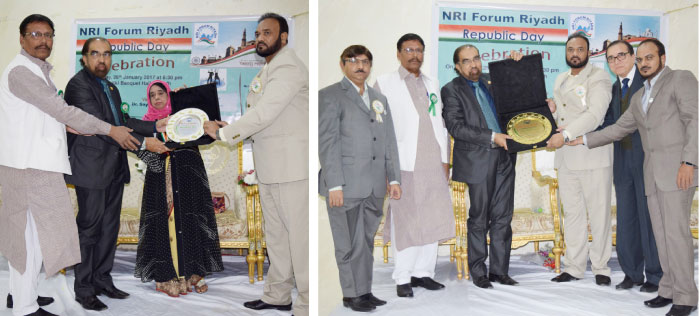
The NRI Forum (NRIF) Riyadh celebrated the 68th Republic Day of India with fanfare here. Patriotic songs and popular Bollywood numbers by eminent singers and the felicitation of Pravasi Bharatiya Sammam and Pravasi Excellence Award winners marked the celebration.
Mrs. Zeenat Jafri was felicitated by NRIF for her latest accomplishment of receiving the Pravasi Bharatiya Samman Award by Indian President Pranab Mukharjee in India. Terming her as the torch-bearer of knowledge and education in the Kingdom, Vice President NRI Forum Dr. Sayeed Mohiuddin said, “Selfless service and utmost dedication are the words that truly describe her.”
“At the time when expatriate community in the capital did not have any educational facility for children of Indian expatriates, Mrs. Jafri ventured into this field by making a small beginning. An educationist herself, she started a school for Indian children at her home. The school, which was established with the blessings and permission of Mrs. Indira Gandhi, groomed by Mrs. Jafri is now known as International Indian School Riyadh (IISR) and is one of the prominent Indian community schools in Saudi Arabia. She was the principal of the girls section of IISR from Aug 1982 to May 2014,” Mohiuddin said.
After receiving the memento of appreciation from eminent community leaders Mohammed Abdulrahman Saleem, Mohammed Quaiser and Syed Akram Mohiuddin, Mrs. Jafri thanked NRIF for the honor and Indian Embassy officials for recommending her name to the Indian government for the prestigious award. She highlighted the importance of education and stressed on the necessity for all to gain knowledge and education. She appreciated the activities of NRIF and assured her support in all possible ways.
Chief Guest Mohammed Abdulrahman Saleem, president Hindustani Bazm-e-Urdu Riyadh, was felicitated by NRIF for receiving the Pravasi Excellence Award by the Confederation of Telangana Associations (COTA) in Hyderabad. A memento of appreciation and floral garland was presented to him. COTA conferred on him this award in recognition of his continuous services spread over four decades.
He founded different professional and cultural organizations and worked for the promotion of Urdu language and literature. An ardent lover of Urdu language and literature, his passion is to keep Deccani Tahzeeb alive and see it flourish.
Saleem thanked the NRIF and highlighted his activities and accomplishments during his long stay in the Kingdom.
Guest of Honor, President Tanzeem Hum Hindustani Mohammed Quaiser congratulated Mrs. Zeenat Jafri and Abdulrahman Saleem for achieving eminent awards.
President NRIF Syed Akram Mohiuddin highlighted the activities of NRIF and said the forum is involved in various activities since its inception, including educational, sports, cultural, religious and other social activities. The memorable ghazal nite by Zulfiqar Ali Khan was a grand success and was very much applauded by the expatriates in the Kingdom.
Eminent Singers of “NRI Melody Makers” — Rahmat Ali Khan, Abdul Qadeer Ali Alvi, Syed Riyaz, Muneer Ahmed and Miss Shreeja Janardhan presented melodious songs to make the evening memorable.
A young student of Al Yara International School Aswin Siva Prasad addressed the gathering on the Republic Day of India and its importance.
General Secretary Nooruddin Jahangeer and Vice President Cultural Affairs Shakeel Mah handled the overall arrangements.
source: http://www.saudigazette.com.sa / Saudi Gazette / Home / February 14th, 2017
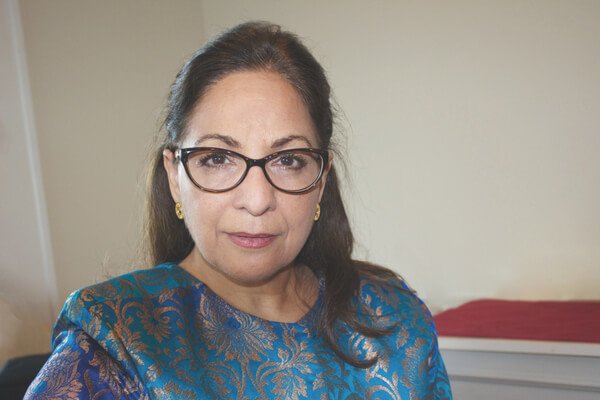
Daisy Khan was just 3 when she put on a pair of red boxing gloves and walked to the front yard of her family home in Kashmir. She had been bullied by a bigger child the day before and her father wanted to teach her how to throw a punch in order to stand up for herself. In those gloves, young Daisy saw the need to not physically fight a bully but to become someone else, someone who fights for what she believes in. And ever since that day in the yard, Daisy has never set down her boxing gloves.
As Founder and Executive Director at the Women’s Islamic Initiative in Spirituality and Equality (WISE) – a women-led organisation committed to peacebuilding, equality and justice for Muslims around the globe – she continues to don her gloves and shows up to the world’s arena every single day.
“It is a moral imperative for people of all faiths to speak out against injustices committed in the name of their religion, because ‘a crime committed in the name of religion is a crime against religion.”
Daisy Khan founded WISE in 2005 to address the propagation of gender inequality in the name of Islam. “Every religion has seen the oppression as well as the emancipation of women. It is a moral imperative for people of all faiths to speak out against injustices committed in the name of their religion, because ‘a crime committed in the name of religion is a crime against religion.’ ” asserts Khan. Among its many successful programmes and actions, WISE partnered with an Afghani WISE woman to conduct the Imam Training Programme to End Violence Against Women (ITP) in 2010 in Afghanistan.
Communities in Afghanistan deeply trust and respect Imams – even the Taliban. With the aim to clarify distorted patriarchal misinterpretations of the Quran, WISE spread the message about girls’ education through 50 of the most respected Imams in Jalalabad and Kabul. Wary at first, the Imams soon embraced the programme as it spoke of women’s rights within an Islamic framework with no ulterior agenda. Daisy emphasises this role of Muslim men who can wield power openly or behind the scenes – whether they reside in conservative, traditional or secular societies – to restore the God-given rights of women. This is reflected in Prophet Muhammed, who honoured his wife Khadijah, gave property rights to women, abolished the pre-Islamic practice of female infanticide, scrupulously helped with chores, respected his daughters and sought his wife’s advice on community affairs. The Prophet, in his last sermon, even emphasised this point by saying “treat your women well and be kind to them for they are your partners and committed helpers.”
Daisy Khan believes that “an essential part of women’s struggle is the demand that their voices be at the forefront of the debates about their roles, responsibilities and status.”
Daisy Khan believes that “an essential part of women’s struggle is the demand that their voices be at the forefront of the debates about their roles, responsibilities and status.” The author and reformer maintains that women advocates who recognise and appreciate the importance of religion in the day to day lives of Muslim women , and who speak with a humane voice – the Islamic voice – are effectively challenging the religious legitimacy of people who use Islam to disadvantage women and girls. “Muslim women activists who tend to avoid Islam altogether suffer from an absence of religious legitimacy which in turn fails to speak to most Muslims,” explains Khan.
Image Credit: Penguin Random House India
WISE established the first Global Muslim Women’s Shura Council to examine issues that Muslim women of all sects were facing worldwide. Its 30 members included women from different nationalities with divergent views and comprised of scholars who were well versed in Islamic law, as well as activists with comprehensive knowledge of contemporary issues faced by Muslim women. The Council has mitigated any criticism because its position papers on FGM, child marriage, domestic violence, adoption and women’s leadership are thoroughly researched, evidence-based and grounded in scripture. The Council discussed how, wherever obstructions have been encountered by women, it has not been by Islam the faith, but by local traditions and customs and interpretations mandated by men in the name of faith. With the support of this council, women would no longer have to rely on the interpretation of male scholars with outdated attitudes toward women.
One woman challenged Daisy Khan. She asked the author – who gave you the authority to create a Muslim women’s shura council? Daisy’s answer was to point to the sky.
However, everyone did not agree. One woman challenged Daisy Khan. She asked the author – who gave you the authority to create a Muslim women’s shura council? Daisy’s answer was to point to the sky. She cited the Quran 42:38–39: “Those who respond to their Lord, and establish regular prayer, whose affairs are conducted by mutual consultation [shura] among themselves, and from what we have provided them, they spend, and who, whenever tyranny afflicts them, defend themselves.”
Khan also shared that there were shura councils dominated by men all over the world and that there were no barriers to women creating one for themselves. It took a number of years to create an effective working structure for the shura council. “I attribute the success of the Council to one key factor – by bringing a religious dimension to Muslim women’s advocacy, we were able to prove that Muslim women’s rights are embedded in Islam,” states Daisy.
Daisy Khan believes that it is important to engage in serious dialogue with people of other faiths, distinctly when religious and ethnic differences become powerful tools that tear the social fabric of society
Daisy Khan believes that it is important to engage in serious dialogue with people of other faiths, distinctly when religious and ethnic differences become powerful tools that tear the social fabric of society. Prior to setting up WISE, Khan co-founded the American Society for Muslim Advancement (now the Cordoba House), with her husband Imam Feisal Abdul Rauf, where she led interfaith collaborative events such as the theatre productions Same Difference and the Cordoba Bread Fest Banquet which saw Christians, Jews and Muslims come together on stage. “If we look at things with human eyes, we see a multitude of perspectives; but with sincere interfaith dialogue, we can step into a space where we see one another as God’s creatures, bound by one compact, by one set of ethical and moral values. In that space, we see with God’s eyes, we see with no astigmatism,” expresses Khan.
The author observes that a vast majority of Muslims reject violence as they continually struggle to divorce themselves from extremism. American Muslims are peaceful and patriotic members of their communities who proactively condemn terrorism – yet, one terrorist attack is used to condemn an entire faith community. “The branding of all Muslims as a national security threat may be popular today, but in reality, it is offensive and counter-productive; it burns bridges, brings in a rhetoric of ignorance on the world stage and allows extremists on both sides to divide us by playing on our worst fears. Now, more than ever, is the time for unity – unity of purpose and unity of achievement. This is a practical unity – one that we can use to build a better future,” emphasises Daisy Khan.
Feature Image Credit: Penguin Random House India
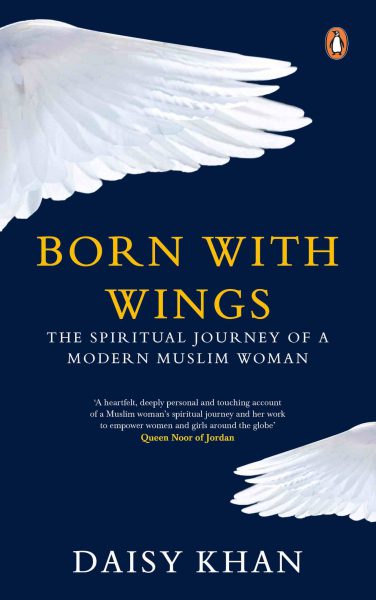
Born With Wings: The Spiritual Journey of a Modern Muslim Woman, by Daisy Khan, has been published in Viking by Penguin Random House India. It is priced at Rs. 599, and is available online and in bookstores.
source: http://www.shethepeople.com / She The People / Home / by Jessica Xalxo / June 19th, 2019