Indian Music Experience (IME), a city-based museum that explores the evolution of Indian music with interactive, multi-sensory exhibits, is organising its grand launch on July 27.
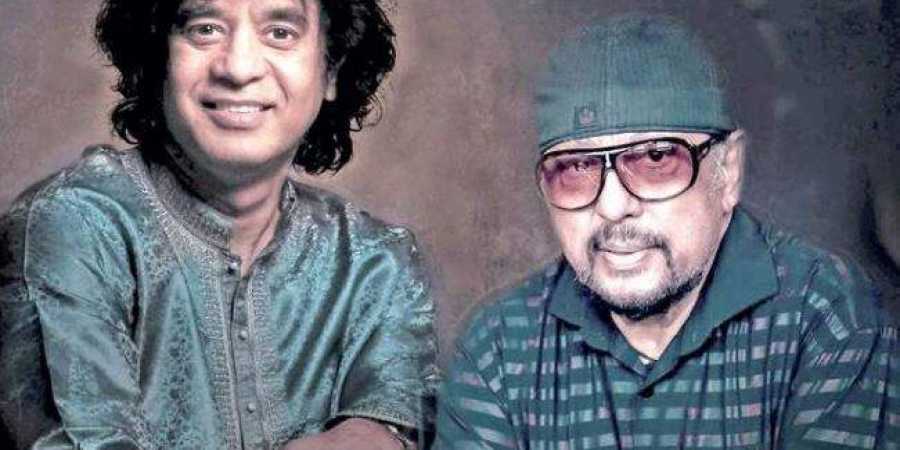
Ustad Zakkir Hussain and Louiz Banks
Bengaluru :
Indian Music Experience (IME), a city-based museum that explores the evolution of Indian music with interactive, multi-sensory exhibits, is organising its grand launch on July 27. Announcing this at a press conference, M R Jaishankar, chairman and managing director of Brigade Group and founder of IME, said, “The grand launch of the IME is a culmination of nearly a decade of effort to set up a truly world-class museum and arts centre in India. We are hopeful that the IME will grow to become a pre-eminent arts hub of the country and preserve and propagate India’s rich cultural heritage to the next generation.”
Many dignitaries, including Tejasvi Surya, member of Parliament, Bengaluru South and S M Krishna, former union minister for External Affairs, were present. On the occasion, there will be musical confluence by Ustad Zakkir Hussain and Louiz Banks at 7pm. Talking about IME, museum director and classical vocalist Manasi Prasad, shared, “The performing arts teach us to create, communicate and collaborate. India has the most diverse musical culture in the entire world and the museum celebrates this. Going forward, the IME aims to be a centre of music education and research, providing a platform for artistes and art lovers.”
The exhibit area of IME consists of eight thematic galleries showcasing various facets of Indian music, an instruments gallery with over 100 musical instruments, three mini theatres, and several computer-based interactive installations that allow visitors to experience the process of music-making. The exhibits feature memorabilia belonging to the Bharat Ratna musicians of the country— Bismillah Khan, Bhimsen Joshi and M S Subbulakshmi.
In addition, it will also feature a rare phonograph and gramophone, a selection of microphones, gramophone records and other artifacts.
The launch will be held at IME grounds in JP Nagar at 4.30pm.
source: http://www.newindianexpress.com / The New Indian Express / Home> Cities> Bengaluru / by Express News Service / July 27th, 2019
Akansha Tiwari is the 2018 topper of Uttar Pradesh Provincial Civil Services (Judicial Service Civil Judge – JR. Div.) Exam
Lucknow:
A total of 38 Muslims, including 18 girls, are among 610 candidates who have passed the Uttar Pradesh Judicial Service Civil Judge (JR. DIV.) Eexam 2018 result of which was declared on July 20.
As many as 07 students from Aligarh Muslim University (AMU) Residential Coaching Academy (RCA) are also among the candidates who have cracked the coveted exam. Among them 03 are non-Muslims.
Uttar Pradesh Judicial Sservice Civil Judge (JR. DIV.) Exam 2018 result was based on Personal Interview conducted from June 21 to July 17, 2019 and UPPSC Civil Judge Main Exam conducted on January 30, 31 and February 01, 2019.
A total of 5,795 students had appeared for the UPPSC Civil Judge Main Exam out of them 1,847 had qualified for Personal Interview. Of them 610 were declared passed.
Among the successful Muslim candidates, Shahnawaz Siddiqui bagged the 11 Rank, Jaseem Khan got 36th Rank whereas Hena Kausar got 93th Rank and Meher Jahan got 97th Rank.
Names of other Muslim judges are Asif Nawaz Khan (96), Umaima Shahnawaz (100), Zishan Medhi (103), Naved Akhter (120), Nazim Akbar (124), Bushra Noor (129) and Bushra Khursheed (160).
Among the successful candidares from Aligarh Muslim University (AMU) are Pratyush Gupta (Rank 78), Asif Nawaz Khan (Rank 96), Meenakshi Bansal (Rank 186), Mehnaz Khan (Rank188), Shamsul Rahman (Rank 273), Shalini Singh (Rank 375) and Farha Naaz Parveen (Rank 469).
Akansha Tiwari of Gonda district is the 2018 topper of Uttar Pradesh Provincial Civil Services (Judicial Sservice Civil Judge – JR. DIV.) Eexam. Harihar Gupta of Nainital stood second while Prateek Tripathi of Azamgarh came third.
source: http://www.ummid.com / Ummid.com / Home> India> Education & Career / by Ummid.com News Network / July 23rd, 2019
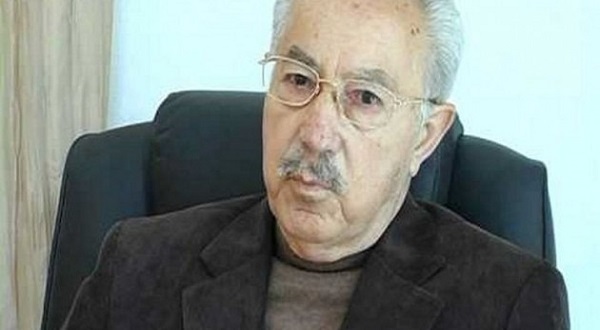
Sheikh Mohammad Munir Ansari conferred with the Star of Jerusalem medal.
Jerusalem (PTI) :
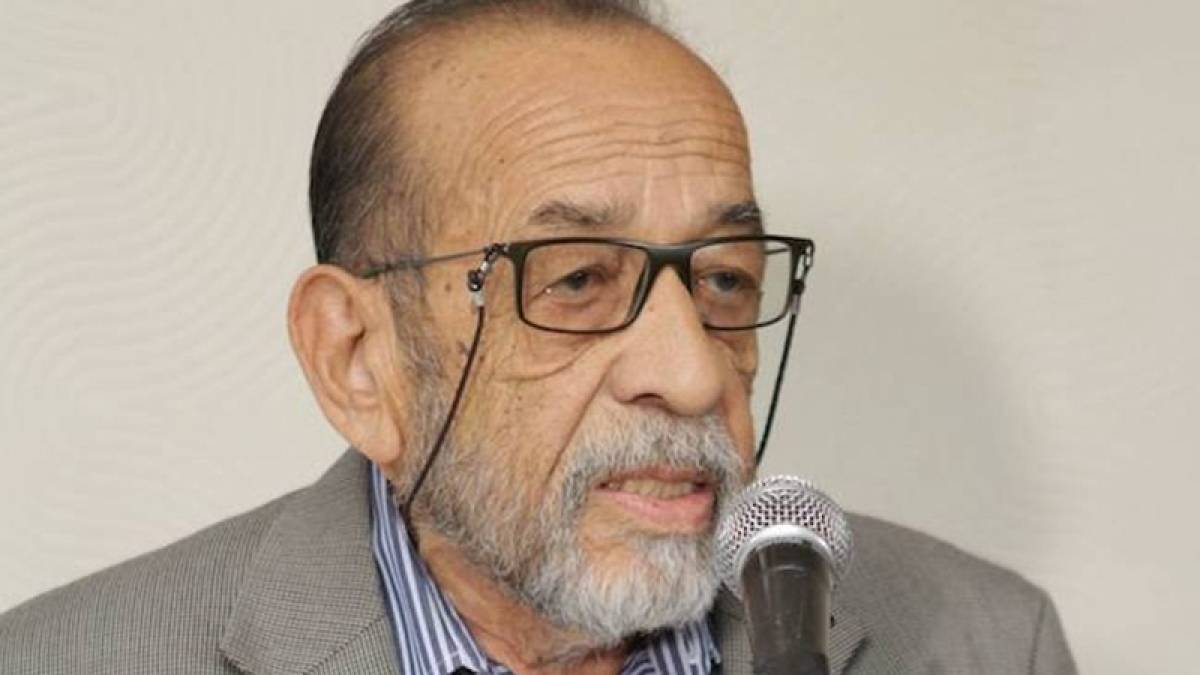
Palestinian President Mahmoud Abbas has conferred Indian-origin Sheikh Mohammad Munir Ansari with the Star of Jerusalem medal – one of the highest honours given to foreign nationals by the Palestinian Authority – for strengthening Indo-Palestine ties. At an event organised to honour 91-year-old Ansari Thursday evening, Abbas thanked him for serving Palestine and Jerusalem with distinction. Ansari, 91, is the Director of Indian Hospice, a unique and historic monument in the heart of Jerusalem, which has become a symbol of India’s heritage and presence in the third holiest city for Muslims going back to over 800 years.
Abbas said the Ansari family’s presence in the old city of Jerusalem reflects the strong traditional ties between Indian and Palestinian people. He called upon for strengthening people-to-people contact between the two sides.
Abbas plans to send Palestinian Prime Minister Mohammad Shtayyeh to India soon to boost tourist inflows from there which can contribute to strong bonding between the two people.
A representative of India, Sunil Kumar, who was present at the event, also appreciated the role played by the Ansari family in strengthening Indo-Palestine ties.
The Indian hospice has been under the direct supervision of a representative from India since 1924. Ansari’s father, Sheikh Nazir Hassan Ansari, was appointed the first Sheikh of the Hospice from whom the mantle passed on to the incumbent who was born in Jerusalem in 1928 and has spent his whole life here.
In 2011, India honoured Ansari with the Pravasi Divas Samman, the highest honour conferred on overseas Indians.
The history of the hospice goes back to about 12th century, when famous Sufi saint from Punjab Baba Fariduddin Ganj-i-Shakar (or Baba Farid, as he is better known) visited Jerusalem on pilgrimage and prayed in seclusion for 40 days at the site.
It later became a pilgrimage site for Indian pilgrims visiting Jerusalem and was dedicated as a charitable Waqf property in trust for a pious purpose.
The place where Baba Farid is said to have prayed has become a major attraction for Indian tourists visiting Jerusalem.
Almost every prominent Indian leader who has visited the region has paid a visit to the site and the hospice continues to host Indians visiting the Holy Land. The hospice also received a grant from the Ministry of External Affairs for its renovation.
source: http://www.caravandaily.com / Caravan / Home> Indian Muslims / by June 15th, 2019
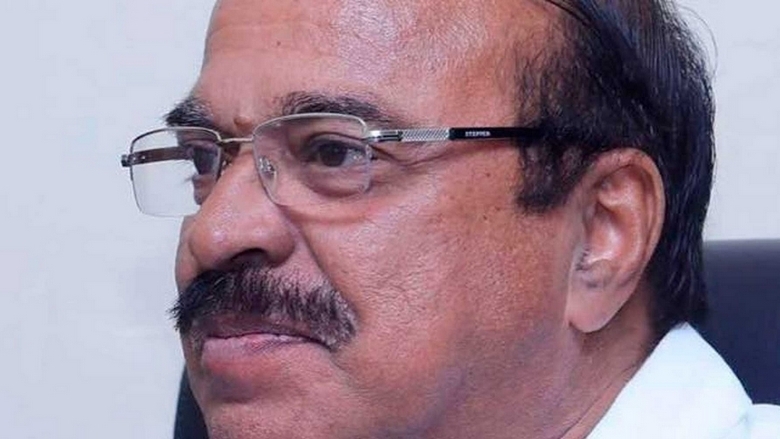
Rahman founded Mina Jebel Ali Canteen and Catering Services, the flagship firm of the Parco group of companies – supplied photo
Rahman had been ill for nearly a year and he had flown to India for treatment.
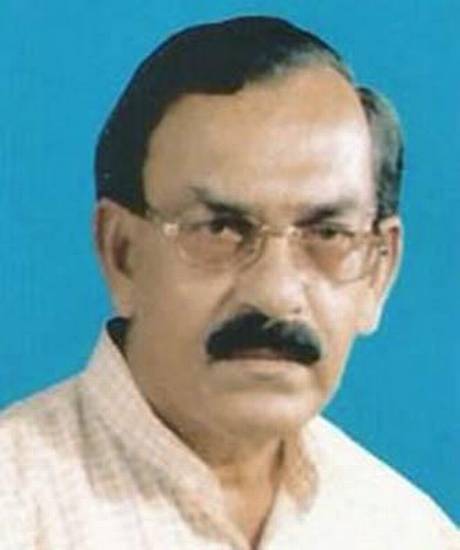
Dubai-based businessman PA Rahman, chairman of Parco Group, died in his hometown in the south Indian state of Kerala on Sunday night. He was 72.
OK Ibrahim, KMCC senior vice-president, told Khaleej Times that Rahman had been ill for nearly a year and he had flown to India for further treatment.
“Relatives and friends who are close to Rahman travelled to India two weeks ago to pay their last respects, as his health continued to deteriorate,” Ibrahim said.
Rahman founded Mina Jebel Ali Canteen and Catering Services, the flagship firm of the Parco group of companies.
Over the last 39 years, he, along with his brothers, built diverse business units with interests in hospitality, retail, manufacturing, real estate, contracting, jewellery, healthcare, restaurants and education, among others.
“These companies are all supported by a large team of dedicated professionals who develop and manage the activities of the group,” said Ibrahim.
He was a successful entrepreneur but, on top of his achievements, people knew him as a community leader who was always willing to help those in need. He did a lot of social work and opened education centres.
He had served as a member of the state council of the Muslim League and a director of the Dubai Middle East Chandrika. He also founded NAM College, Kallikandy, a general degree college located in Kallikkandy, Kannur district, Kerala.
dhanusha@khaleejtime.com
source: http://www.khaleejtimes.com / Khaleej Times / Home> Nation> Dubai / by Staff Reporter, Dubai / July 10th, 2019
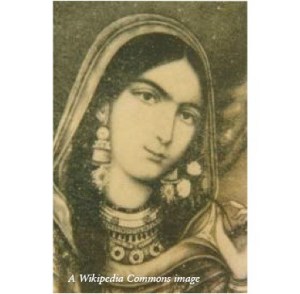
Begum Hazrat Mahal was the last of the official queens of the kingdom of Avadh, or “Oudh” as known to the British imperialists, a large province in northern India.
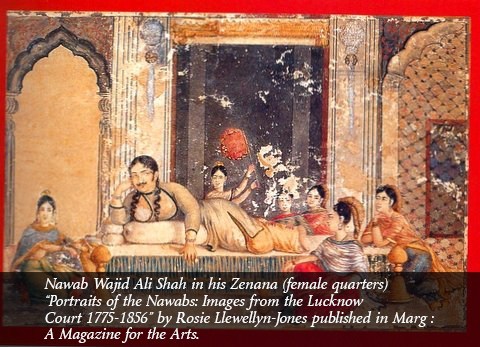
While the details of her birth and family are unclear, it is certain that Begum Hazrat Mahal was not of royal lineage. She is believed to have been a courtesan in the court of the last king of Avadh, Nawab Wajid Ali Shah, starting as a dancing girl named “Mahak-Pari” or fragrant fairy. The Nawab, besotted with the young girl, married her by means of the Shiite tradition of “mutah” marriage or “temporary marriage of pleasure.” It was a convenient method by which the Nawabs could add to their harems, and not technically stray from their marriages.
Mahak-Pari, as she was initially known, gave birth to a male child named Mirza Birgis Qadr Bahadur, and was elevated to the title of Hazrat Mahal Saheba, commonly known as Begum Hazrat Mahal. Transforming from a courtesan—a Pari (fairy)—to a Mahal (a royal queen) was rare, and the good fortune of bearing a male child combined with the right maneuvers in harem politics likely helped the young woman.
In 1856, the administrators of the East India Company annexed the kingdom of Avadh, by means of the infamous Doctrine of Lapse. The British coveted this territory as a great resource for cotton and indigo, and appalled by the debauchery of the Avadh court and its gross mismanagement of revenue, preferred to govern the region directly with a more “conventional” administration.
Nawab Wajid Ali Shah was exiled to Calcutta, and the unhappy king left with a few of his wives, and without most of his large harem, including his “secondary” wives. Begum Hazrat Mahal did not accompany the deposed king, continuing to reside in Lucknow with her young son.
When the Mutiny of 1857 broke out, Avadh was one of the major areas of rebellion as several recruits of the army were from Avadh. People were unhappy about the annexation, the deposition of their king, and the religious insensitivity of the British. The rebels needed a leader to further their cause.
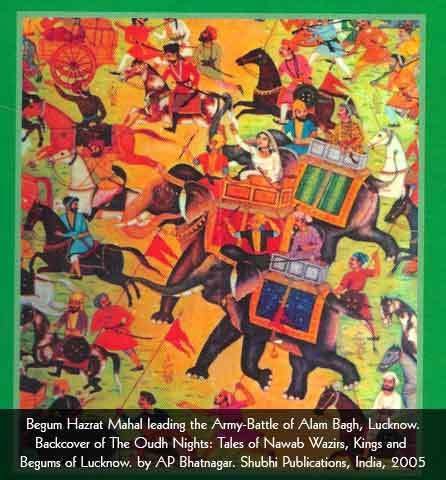
Begum Hazrat Mahal rose to the occasion to help the rebels defend Lucknow against the British troops. To the surprise of her adversaries, she reorganized the army with better co-ordination between the three units of the cavalry, artillery, and infantry. Many times, she rode at the head of the army on an elephant to encourage the soldiers against the advancing British troops.
As in other places, the Indian rebels could not hold out for long against the larger number of British troops, and the queen’s advisors asked the Begum to leave Lucknow in March 1858. She fled to the countryside, continuing her hostilities against the British by issuing orders while in hiding.
On November 1, 1858, Queen Victoria issued a proclamation whose intent was to end the Mutiny, pacify the religious sentiments of the Indians, and formally transfer control of the British territories in India from the East India Company to the British Crown. Begum Hazrat Mahal issued a counter-proclamation in which she argued against every claim of Queen Victoria.
The Begum reminded the Indians that several previous treaties had been violated, that princely heads had either been pensioned or killed, and property worth millions of rupees seized. If the British intent was honorable, why did the British Queen not “restore our country to us when our people wish it?” asked the bold and shrewd Begum. She questioned Queen Victoria’s claim to religious non-interference:
“…to destroy Hindoo and Mussulman temples on pretence of making roads to build churches—to send clergymen into streets and alleys to preach the Christian religion—to institute English schools, and to pay a monthly stipend for learning the English sciences, while the places of worship of Hindoos and Mussulmans are to this day entirely neglected; with all this how can the people believe that religion will not be interfered with?”
Begum Hazrat Mahal forewarned the Indians that their future prospects appeared limited under British rule. “It is worthy of a little reflection, that they have promised no better employment for Hindoostanees than making roads and digging canals.” The Begum’s words were rather prophetic. For decades after 1857, Indians pushed files under British bureaucracy and worked as laborers for the British government in India and overseas.
Begum Hazrat Mahal eventually sought asylum in the kingdom of Nepal, where she lived for the rest of her life. The British administration initially negotiated with her, assuring her a safe return and the possibility of a pension. The Begum, distrusting the British, refused—most likely because British retribution in the immediate aftermath of the rebellion was extremely harsh. While both Hindu and Muslim rebels were ruthlessly punished, there was fear that the Muslims would rise against the British (and Christian power) because it was a hitherto Muslim power that was being displaced, and the repercussions in former-Muslim strongholds such as Lucknow and Delhi were particularly extreme. After their initial negotiations failed, the British labeled the Begum as a woman of “savage disposition.”
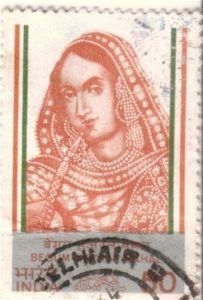
Begum Hazrat Mahal has remained a relatively minor figure in Indian history. Her legacy and her heirs were inadequately honored in the centenary celebrations of the Mutiny held at Lucknow post-Indian independence. Her great-grandsons protested against this oversight by the Indian government, which led Prime Minister Jawaharlal Nehru to order an inquiry into her place of burial. Her grave was discovered near Kathmandu, Nepal, in very poor condition. At this point, a park in Lucknow was named after her to commemorate her memory—this park has very recently been renamed—and later a postage stamp was issued in her honor.
Begum Hazrat Mahal’s legacy was diminished in the changed landscape of India post-1857. Her humble beginnings as a courtesan made her an inadequate role model.
The courtesans at the zenith of Lucknow’s court were no petty “nautch-girls” as described by the Victorian sensibilities of the colonists. They were sophisticated women, well versed in the arts of dance, music, and poetry. Their association with the courts made them extremely wealthy and nineteenth-century British records indicate that they were in the highest income-tax bracket before 1857. While the British derided the courtesans, and the culture they espoused, they did not hesitate to tax them on their “ill-earned” wealth. During the Mutiny, the courtesans monetarily supported the rebels, and their homes became rebel hideouts and secret meeting-venues.
Yet, this courtesan culture, the associated decadence and “debauchery” became a source of embarrassment for late-nineteenth-century Indian nationalists, social reformers, and the emerging middle-class English-educated “elite.” Indian nationalists believed that it was decadence and indolence that had helped the British uproot power in the princely states. A strong, respectable people hoping for self-rule needed to identify with respectable women and men, and a former courtesan-turned-warrior-queen did not fit this idealized image.
A strong and resolute woman, the Begum never gave in to the British, while her husband—a good man and an artist at heart, but weak in resolution—continued to live off the generous pension he received, always short of money, and therefore always acquiescing to the British.
Postage Samp of Hazrat Mahal. www.kamat.com
Several years after the Mutiny, a British painter visited Begum Hazrat Mahal, in Kathmandu, to paint a portrait of her son, Birgis Qadr. As he worked on his task, the painter ventured to ask her whether she would consider returning to Lucknow. Given the fact that much time had elapsed since 1857, the British regime was willing to forgive her and pay her a pension. Her residence in India would be proof of the British paternalistic spirit of forgiveness. Their condition, however, was that she would not be allowed a lavish lifestyle with a large retinue of servants. Perhaps, surprised by, or suspicious of the offer, but more likely annoyed at the continued interference in her life, the Begum refused the gesture, stating, with true Avadhi andaaz (style) “of what use will be the salary, if I am not to spend it upon the servants?”
Begum Hazrat Mahal was buried in a simple grave in the grounds of a mosque she built. Ironically she named it Hindustani Masjid, after the beloved homeland she had left behind, for whose sovereignty she had fought, and in which she has largely been forgotten.
Aarti Johri is a tech-professional turned history buff. This is an extract from her thesis for the Stanford MLA degree. Her articles have been published in the San Jose Mercury News, Stanford’s Tangents Magazine, and others. She serves on the board of SACHI (Society for the Art and Cultural Heritage of India).
source: http://www.indiacurrents.com / India Currents / Home> Features, General / by Aarti Johri / June 11th, 2016
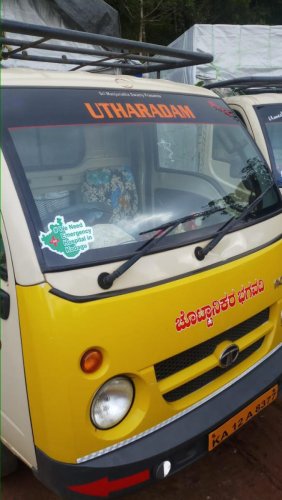
A sticker supporting the campaign for an emergency hospital in Kodagu pasted on a vehicle in Mahadevpet.
In support of the social media campaign ‘We need emergency hospital in Kodagu’, people pasted stickers on their vehicles in Mahadevpet on Tuesday.
During a campaign carried out by the members of Team Coorg, in association with Social Democratic Auto Union, the stickers were distributed to the vehicle riders free of cost.
The riders pasted the stickers on their vehicles, supporting the demand to provide a speciality hospital for Kodagu. The stickers are published by Team Coorg.
Team Coorg Founder President M N Nasir said that the campaign has gathered good response from the people.
Social Democratic Auto Union President Suleiman said that there is a need for a multi-speciality hospital in Kodagu to save lives.
Surpassing all barriers, people should support the movement urging the government to sanction the hospital, he added.
The members of Team Coorg requested the general public avail the stickers and paste them on their vehicles.
Team Coorg members Shamir, Khalil Pasha, Faizal, auto union members Rafique, Jagadish and Akram were present.
source: http://www.deccanherald.com / Deccan Herald / Home> State> Mangaluru / by Adithya K A / DH News Service, Madikeri / July 16th, 2019
Police museum houses rare collection of arms and artefacts from Nizam era
Home to rare and little known police relics from the Nizam era, the Dr. Hankins Police Museum and Discovery Centre at RBVRR Telangana State Police Academy (TSPA) here is a treasure trove for history enthusiasts.
From long-out-of-use police guns to breaking-and-entering tools that burglars depended on many decades ago, the museum is filled with intriguing artefacts that one would hardly find outside its walls. “It is a one-of-its-kind museum in the country with a rich collection of arms, bronze sculptures, artefacts related to communication, forensic science and policing supported by photographs and paintings,” said TSPA director Santosh Mehra.
The museum, which is named after Dr. A.C. Hankin, a European who served as the first Inspector General of Police in Hyderabad Dominions, has an antique collection of arms from the 16th to 20th century, manufactured in Iran, Turkey, England, France, Egypt and China.
One of the major attractions at the museum includes a .2 mm repeating flint pistol with five rounds of storage capacity from the 19th century, also known as ‘Lilliput pistol’. The firearm, which is barely four inches long, was popular in the UK and other European countries.
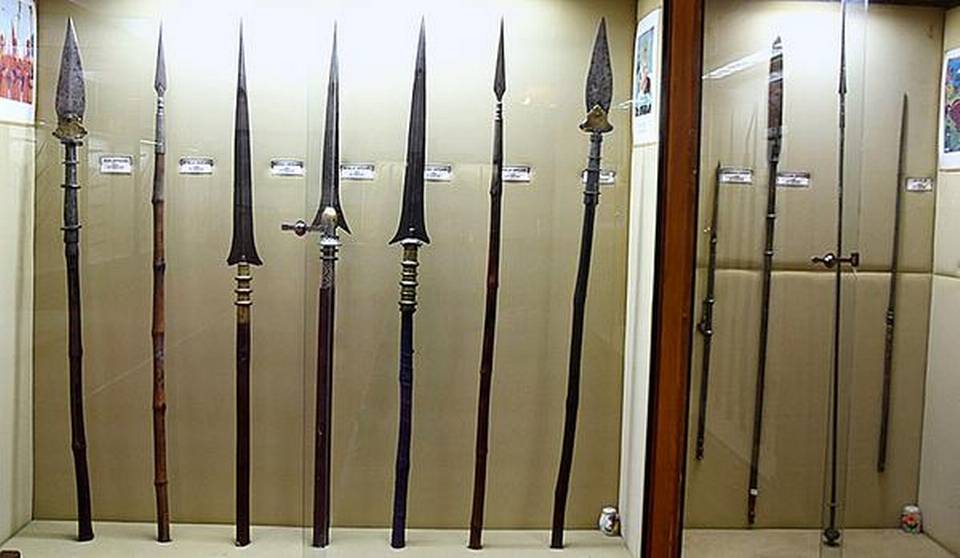
The collection also includes Shamsheer, Patta, Yataghan, Sosun Patta, Saif, Talwar, Fencing, Adi, Dhup, Dao, Ramdao, Tegha, and Zulfiqar swords, apart from arrows, spears, daggers, tabar, axe and cannons.
A copy of FIR of the assassination of Mahatma Gandhi issued by Tughlak Road police in New Delhi on January 30, 1948, is also on display at the museum, which houses a rare photograph of Rani Lakshmibai of Jhansi.
The police gallery also houses counterfeit coins and currency notes of East India Company, Nizam Government, the British empire and Indian union. In addition, one can have a glimpse of hand-held trans-receiver, transmitters, ECIL receiver, TCS Collins receiver remote control, Webel base repeater set and desk microphone.
Set up in 2007, Dr. Hankin police museum is not open to the public. However, Mr. Mehra said school children can visit the museum to see the impressive collections of arms and communication systems to know the history of policing.
Sources in the police department said the museum is likely to be shifted to the Command Control Centre of Hyderabad police coming up on Road No.12 of Banjara Hills. It is also to be made open to the public once shifted there.
source: http://www.thehindu.com / The Hindu / Home> News> Cities> Hyderabad / by Abhinay Deshpande / Hyderabad – July 07th, 2019
He was the first National Coordinator of the SANZAF a faith-based, educational and socio-welfare organisation that helps the Muslim community
Shawkat Ali Thokan / Photo Credit: Twitter
Johannesburg:
Shawkat Ali Thokan, an Indian-origin man considered the pioneer of the Islamic movement in South Africa, was buried here Thursday after he died following a lengthy illness. He was 81. Born in Maharashtra in India, Thokan died on Wednesday and was laid to rest at Westpark Cemetery in Johannesburg.
He emigrated to South Africa with his parents when he was 10. Thokan was the first National Coordinator of the South African National Zakah Fund (SANZAF), a faith-based, educational and socio-welfare organisation that helps the Muslim community.
The organisation in almost five decades has assisted tens of thousands of students at all levels, as well as funding scores of budding entrepreneurs to become self-sufficient through training programmes.
“Sanzaf stands as a monument and symbol of passionate persistence, commitment, dedication, vision and a yearning to succeed – these are the values that he leaves behind,” head of AWQAF SA Zeinoul Abedien Cajee said.
“Even in his last years and days he would still keep a caring eye over AWQAF SA and Sanzaf, attending meetings whenever he could, or keeping in contact by telephone, despite his illness,” Cajee added.
Thokan was also instrumental in setting up the Islamic Medical Association, As Salaam institution for orphans, and in 2000 AWQAF SA, which has assisted all other communities in projects as diverse as boreholes in drought-stricken areas and cataract operations for the destitute.
“During his distinguished career, he was an ardent champion of those in need and worked tirelessly in creating unity and an environment for growth and development,” Sanzaf said in a statement. “He was an inspiration to both young and old and will be fondly remembered by all of those lives he has touched,” it said.
-By Fakir Hassan
source: http://www.freepressjournal.in / The Free Press Journal / Home> World / by PTI / by Fakir Hassan / June 21st, 2019
To increase awareness about menstruation and menstrual hygiene, Syed Sehrish Asgar, the first woman District Magistrate of Budgam in Jammu and Kashmir conducted an all-woman conclave and distributed incinerators and vending machines among girls from government schools of the district
Srinagar:
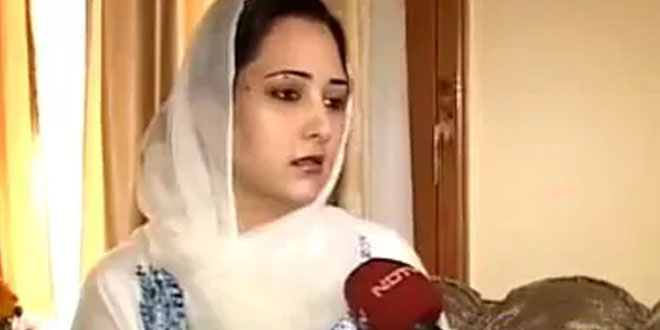
A 33-year-old Kashmiri woman IAS (Indian Administrative Services) officer has gone beyond her routine administrative duties to address an otherwise ‘forbidden subject’ of stress and isolation among young girls in Kashmir during their menstrual periods. Syed Sehrish Asgar, a 2013-batch Indian Administrative Service (IAS) officer, is the District Magistrate (DM) of Budgam. Ms. Asgar is the first woman DM (District Magistrate) of the district since it was formed in 1979. She organised the first-ever all-woman conclave at the district headquarters on Monday to address the problems faced by girl students during their menstruation.
Even discussing this routine biological phenomenon in public in conservative Kashmiri society has remained a taboo. Celebrating womanhood, renowned speakers, all women from various fields, spoke on the rights, legal protection, harassment and related issues of women. The speakers included Munsiff Judge District Court Budgam, Tabasum Qadir Parray, Police Women Cell In-Charge, Budgam, Inspector Gulshana, Social Welfare officer Shaheen Rasool, Chief Education Officer, Fatima Tak, and entrepreneur Rubeena Tabasum.
The speakers dealt with the legal rights of women, domestic violence and sexual harassment at workplaces and informed the participants about various women-specific schemes and government initiatives under various departments.
The programme was attended by female officers of different departments, female media persons associated with national and state agencies and publications and portals along with scores of employees, students and female participants from diverse fields.
Ms. Qadir highlighted the Constitutional provisions and other legal rights and legislations enacted and provisions in CrPc (Criminal Procedure) and IPC (Indian Penal Code) regarding the enforcement of rights of women. Inspector Gulshana shared some life experiences of women’s harassment cases in the district.
Incinerators and vending machines were also distributed among government girls’ schools of the district along with distribution of sanitary napkin packs to orphan students. Ms. Asgar while speaking in the concluding session deliberated in detail about various levels of women empowerment as she stressed upon participants to take initiatives to break the taboo of female inferiority .
She said this is need of modern times that women be part of great changes society is going through and contribute more in social and economic development. She said it is incumbent upon a mature and just society to recognise the role of women and that society cannot be empowered as long as its women are not.
She also spoke about various issues confronting girls in schools like health and hygiene and steps the district administration is taking for empowering women. She further stressed for standing up without fear for enforcement of women’s rights, for taking initiative for career building, overcoming all environmental and family hindrances which may pull oneself down.
Speaking to IANS, Asgar said there has been an alarming 20 per cent dropout rate among girl students because they feel depressed, dejected and stressed during their periods, in a society where even speaking about such a normal biological phenomenon is frowned upon.
With hardly even a place where they can change their sanitary napkins in schools, colleges and other such places, the options become limited for girl students, and they stay home against their wishes, Asgar said, adding that she has decided to fight this out to assure girl students that there is nothing abnormal or unnatural about menstruation. She said
Toilets are either dysfunctional or broken without any privacy at most schools and colleges in our district. This has to change.
“We are installing sanitary dispensers and incinerators at 106 institutions including high and higher secondary schools, colleges, one ITI in Badgam district in addition to Srinagar International Airport and the district development commissioner’s office in Budgam town,” the DM said.
Interestingly, with no budget available for such an unconventional administrative initiative, Ms. Asgar has managed funds from the rural development department and the Airports Authority of India under the corporate social responsibility (CSR) scheme.
Repairs of dysfunctional and damaged toilets at various educational institutions have started. “With the support of parents and school and college administration we are hopeful that the dropout rate among girl students will be brought down to zero,” the energetic DM said.
NDTV – Dettol Banega Swachh India campaign lends support to the Government of India’s Swachh Bharat Mission (SBM). Helmed by Campaign Ambassador Amitabh Bachchan, the campaign aims to spread awareness about hygiene and sanitation , the importance of building toilets and making India open defecation free (ODF) by October 2019, a target set by Prime Minister Narendra Modi , when he launched Swachh Bharat Abhiyan in 2014. Over the years, the campaign has widened its scope to cover issues like air pollution , waste management , plastic ban , manual scavenging and menstrual hygiene . The campaign has also focused extensively on marine pollution , clean Ganga Project and rejuvenation of Yamuna , two of India’s major river bodies.
source: http://www.swachhindia.ndtv.com / NDTV / Home> News / by IANS / July 03rd, 2019
Islamic history expert Prof. P.A. Ibrahim Kutty, 71, a prominent presence in the city’s cultural and literary circles, passed away on Wednesday.
He was the vice president of Kerala History Association and treasurer of Samastha Kerala Sahitya Parishad. His body, kept at his house Nilofer on SRM Road at Kaloor, will be buried at the Kaloor Thottathumpady Juma Masjid on Thursday.
Born in 1948 at Mala, Prof. Ibhahim Kutty had his education in Maharaja’s College, Aligarh Muslim University and Ernakulam Law College.
He had retired as Head of Islamic History Department from the Maharaja’s College in 2001. He was a member of boards in various universities and was the chairman of the Islamic Studies Board in Kerala University, Calicut University and Mahatma Gandhi University.
He is survived by his wife Razia, daughter of former Mayor A.A. Kochunni Master.
source: http://www.thehindu.com / The Hindu / Home> News> Cities> Kochi / by Special Correspondent / Kochi – July 04th, 2019