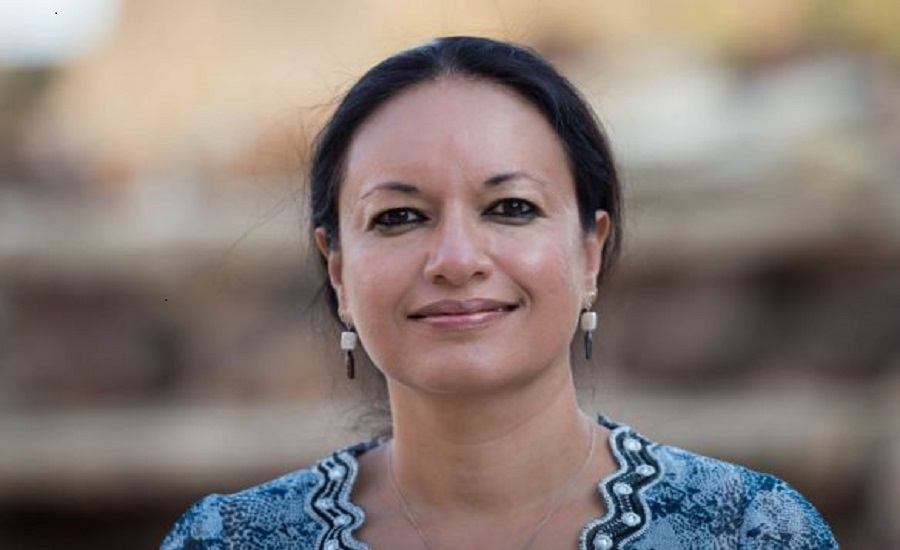
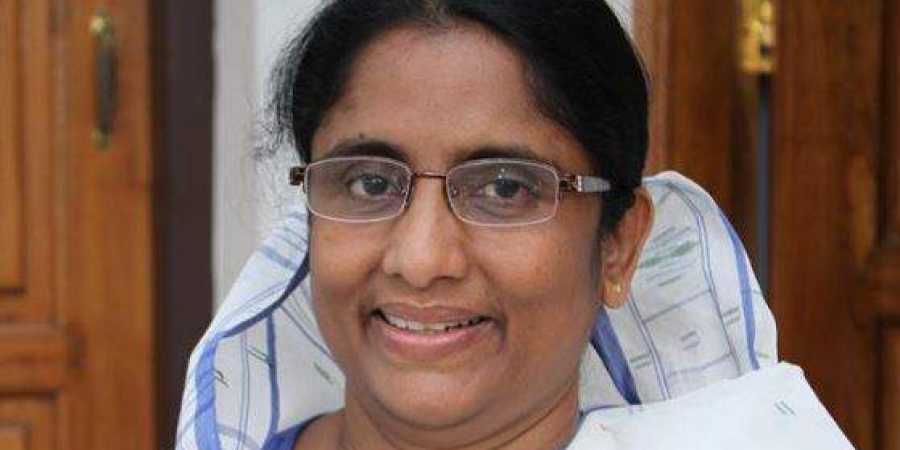
Dr. Nyla Ali Khan has been appointed as a Commissioner on the Oklahoma Commission on the Status of Women. She has been appointed for a five-year term by Senator Greg Treat, who is President Pro Tempora of the Oklahoma Senate.
“The Oklahoma Legislature created the Oklahoma Commission on the Status of Women in 1994 to act as an advisory entity on equity issues relating to gender bias; monitor legislation to determine whether it is discriminatory toward one gender or the other; act as a resource and a clearinghouse for research on issues related to women and gender bias; report annually to the governor, president pro tempore of the Senate, and speaker of the House of Representatives regarding its activities and make recommendations concerning needed legislation or regulatory changes relating to equity and gender bias.”
Dr. Nyla Ali Khan is the first South Asian Muslim member of the Oklahoma Commission on the Status of Women. She said that as a member of the Oklahoma Commission on the Status of Women, she acts as a resource and provides expertise to the Commission. She provides research and information on societal violence and structural inequities that result from deep-rooted prejudices against women. Dr. Nyla Khan said, “The questions to which I seek to provide well-substantiated answers are as follows: How can we, as women, develop the ability to organize and mobilize for social change, which requires the creation of awareness not just at the individual level but at the collective level as well? How can we develop self-esteem for which some form of financial autonomy is a basis? How can we make strategic life choices that are critical for people to lead the sort of lives they want to lead? We require a quality education for these mammoth tasks.”
c.reddirtreport.com
source: http://www.caravandaily.com / Caravan Daily / Home> Indian Muslim / March 12th, 2019
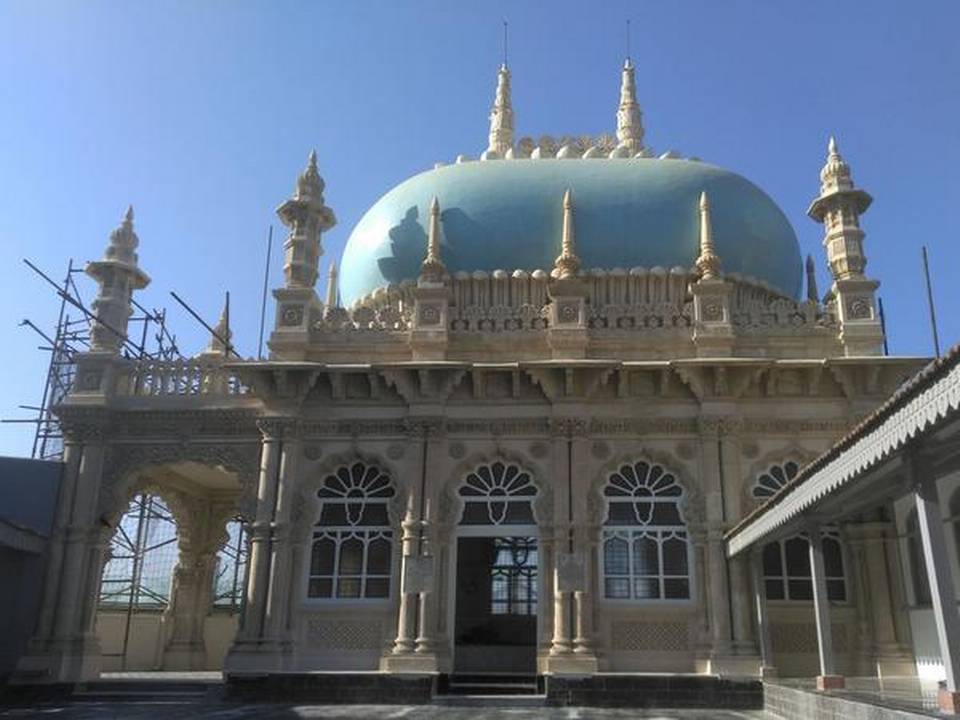
Conservation architect Vikas Dilawari’s work on Worli shrine is a significant chapter in the city’s built heritage
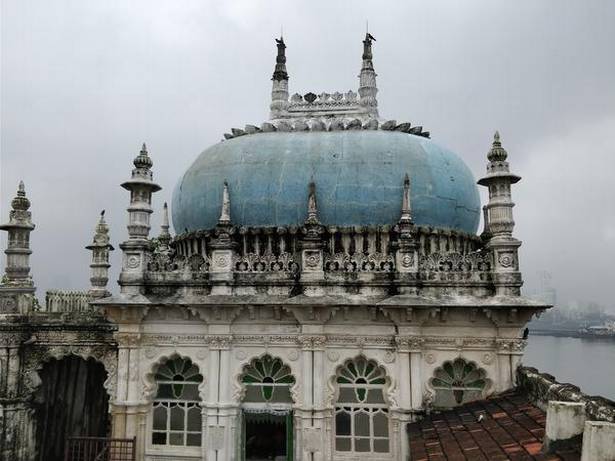
Cocooned in the shielding hold of the bay, just off the arterial, traffic-clogged road that hugs the coastline, is the 111-year-old Ma Hajiani Dargah, restored to its former glory. The restoration of the building began in November 2017 and was completed by conservation architect Vikas Dilawari on April 19, which also marked the eve of Shab-e-Baraat.
The dargah is one of the lesser-known spots of quiet in the city, often interchanged with the more popular Haji Ali Dargah, a stone’s throw away. Built in 1908 when Sir George Sydenham was the Governor of Bombay — primarily in Porbandar stone and basalt ashlar plinth — it is an ideal example of Indo-Saracenic architecture. Subtle influences of the colonial style of construction are evident, particularly in the ornamental work. “This is a very unique building. It is a magical place, of tranquillity, at the tip of the land on a natural rocky outcrop, elevated so gracefully,” Mr. Dilawari said.
Over the years, the dargah’s neighbouring plots of land were sold to private developers. The towering Samudra Mahal — a piece of prime real estate — was where the residence of the Scindias of Gwalior once stood, before being demolished in 1960. “Until a few decades ago, the Mahalakshmi temple, the Haji Ali Dargah, and the Ma Hajiani Dargah would have been the beacons along the coast of Bombay. The proliferation of high-rises without appropriate urban design is certainly impacting the pristine setting, and this might change further with the introduction of the impending coastal road,” Mr. Dilawari said.
A nautical past
The dargah is the site of three graves: Ma Hajiani, Haji Ismail Hasham Yusuf, and his son, Sir Mohamed Yusuf, draped in red and green brocaded chaddars and rose petals. The Yusuf family has been eminent in shipping trade and philanthropy in the city. Haji Ismail Hasham Yusuf founded the Bombay Steam Navigation Company in the late 19th century, and established the erstwhile Marine College at Rashid Mansion in Worli as a charitable institute, later moved to the island of Nhava and still functional as Training Ship Rahaman.
The mausoleum is built in honour of Ma Hajiani, a saint believed to be the sister of Saint Pir Haji Ali Shah Bukhari. The Haji Ali Dargah, houses the tomb of the latter. According to legend, they died at sea and their bodies were washed ashore, a few metres from each other. They were then buried at the respective spots they were found. Subsequently, two tombs were built — Haji Ali for the brother and Ma Hajiani for the sister. At the Ma Hajiani Dargah, women have always been allowed to access the maqbara. Women frequent in large numbers, making offerings of red or green glass bangles: red indicating one’s wish for marriage, and green for offspring.
source: http://www.thehindu.com / The Hindu / Home> Society> History & Culture / by Khorshed Deboo / Mumbai – April 23rd, 2019
Muzammil Sayyed, a trainee at the centre from Latur, said, “We got a boost after three of our seniors cracked the UPSC examination.”
“The cell is good for freshers as it helps in clearing the UPSC preliminary examination,” said Mohammed Mustafa Aejaz.(Pratik Chorge/HT Photo)
The civil services coaching centre at the city’s Haj House, which until now has had limited success in pushing Muslim youth towards civil services, got a boost, after three of its alumni were recently selected by the Union Public Service Commission (UPSC).
Junaid Ahmad, who hails from Bijnaur in Uttar Pradesh and was trained at the IAS and Allied Coaching and Guidance Cell, run by the Centre’s Haj Committee of India (HCI), for two years between 2013 and 2015, ranked third nationally in the UPSC examination. The other two successful aspirants – Zaib Shaikh, from Ahmednagar, and Mohammed Mustafa Aejaz, from Mehboob Nagar in Telangana – were placed at the 225th and 613th positions, respectively.
An HCI official said the news of these achievements has generated a renewed interest and awareness about the coaching facility among the community. “Ever since the UPSC results were declared [on April 5], we have been receiving enquiry calls from all across the country. I still get around 50 calls every day,” he said.
Muzammil Sayyed, a trainee at the centre from Latur, said, “We got a boost after three of our seniors cracked the UPSC examination.”
Last year, as many as 6,732 graduates from across the country had applied for the centre’s entrance test, up from around 1,500 registrations in 2017. This year, the HCI officials expect the number of applications to increase even further – the last day to apply is May 7.
The Cell was established in August 2009, in the backdrop of the Sachar Committee report, which found that Muslims lagged behind most of the other communities in the country in educationally, economically and politically. The report, released in November 2006, pointed out that while Muslims constitute 14% of the Indian population, they only comprise 3% of the civil services and 4% of the police service. Since then, the Muslim representation in civil services has improved to some extent. Of 1,099 candidates who cleared the civil services examination last year 50 (4.5%) were Muslims, the highest since Independence. So far, the coaching centre has produced seven UPSC achievers, including the three who were selected this year. Several other alumni have joined other government agencies, including Reserve Bank of India, Central Excise Department and various state services.
“The cell is good for freshers as it helps in clearing the UPSC preliminary examination,” said Mohammed Mustafa Aejaz.
According to SAM Hashmi, the founder director, who headed the cell between 2010 and 2013, lack of proper leadership at HCI and the cell is to be blamed for its slow progress. “The leaders lacked either academic experience or administrative experience or both,” said Hashmi, who was principal at Akbar Peerbhoy College, Grant Road, and now heads a coaching academy at Mumbra.
In the last ten years, the cell has had four directors. Anwar Khatau, the current director, has previously served at the accounts section of HCI as well as the state’s Maulana Azad Minorities Financial Development Corporation Limited. He was appointed in 2017.
The cell has been experimenting with various coaching techniques, including video lectures and in-person lectures. Last year, the HCI switched back to in-person lectures by faculty from a Pune-based academy, after video lectures by a Delhi-based academy failed to deliver desired results. MA Khan, who was appointed the chief executive officer (CEO) of HCI last year, said the cell is trying to extend every possible support to its students and alumni. “We are providing books, residence and monetary help to our former students for service-specific training at their own place. We have even roped-in non-government organisations for this purpose. We fulfil all the demands of the students of the current batch of the students. In fact, we sought their approval before appointing the faculty,” he said.
Among other changes, the HCI has also done away with the deeniyat (religious knowledge) section of the entrance test and admitted aspirants solely on the basis of their knowledge relevant to civil services. It has also introduced weekly tests and facilitates weekly interactive sessions with faculty. The cell has also encouraged interaction among students, including inter-gender interaction, which was discouraged until now. The students said that the environment at Haj House is conducive for preparing for civil services examinations. “After a year of coaching at Haj House, I stayed here for another year to prepare for the UPSC exam. I will now leave so other students get the opportunity,” said Rais Shaikh, a trainee from Thane.
Sajid Husain, a trainee from Jalpaiguri in West Bengal said that the Haj House facility needs wider publicity. “Many are still unaware of the scheme,” he said.
“There’s a proposal to start such coaching centres at the state-level Haj committee facilities,” said Sayyed.
source: http://www.hindustantimes.com / Hindustan Times / Home> Mumbai / by Hindustan Times, Mumbai / April 22nd, 2019
Former AICC secretary Shanimol Usman feels that the general polls in Kerala will be an evaluation of the misrule of the Pinarayi Vijayan-led LDF Government.
Shanimol Usman. (Photo | Facebook)
The Congress has fielded former AICC secretary Shanimol Usman in the party’s sitting seat of Alappuzha. Following the unexpected withdrawal of incumbent MP KC Venugopal from the fray the UDF entrusted her with the task of retaining her home constituency. In an interview to Express Principal Correspondent Biju E Paul, Shanimol said the LS polls in Kerala will be an evaluation of the misrule of the Pinarayi Vijayan-led LDF Government. Excerpts:
Q: Will Rahul Gandhi’s candidature in Wayanad bolster the prospects of the UDF candidates?
A: Definitely. The UDF winning all the 20 seats in Kerala is a possibility. It will boost the morale of the party workers across the state and help increase my victory margin in the constituency.
Q: Alappuzha is a sitting seat of the Congress. What are the targets of the Congress?
A: The UDF is aiming to increase the winning margin of KC Venugopal in Alappuzha in the 2014 election. The constituency has always been favourable to the UDF which won nine times in the last 13 Parliament elections. The wholehearted support of the fishermen and coastal people was the strength of the UDF in the previous polls. We will simply upset the LDF in the election.
Q: Will your delayed entry impact the poll outcome?
A: Like previous elections, the UDF declared its candidates after many rounds of discussions. It doesn’t affect the winnability of the UDF candidates. This time also, the delay happened and we will cover it through a systematic campaign. The organisational structure of the UDF is strong and active.
Q. What is UDF’s main poll plank?
A: Pure politics is the campaign issue. The communal forces had gained an upper hand after the NDA Government led by Narendra Modi came to power at the Centre. Strong resentment is brewing among the public against the Centre. It is dividing people on communal lines. The LDF Government led by Pinarayi Vijayan divided people on issues like Sabarimala. They hurt people’s sentiments through unnecessary provocations.
Q: What is your opinion about the CPM-led LDF Government in the state?
A: The LDF Government is perpetuating criminal politics. The CBI probe into the Ariyil Shukkoor murder case revealed a CPM leader was behind it. It is again proved in the murder of Shuhaib and the murder of Youth Congress activists Sarath Lal and Kripesh at Kalliyot. The people of the state are fed up with the murder politics of the CPM and the election will be a judgement against the misrule of the CPM.
Q: What are the plans for the development of Alappuzha?
A: KC Venugopal had implemented development worth more than Rs 5,000 crore in the past 10 years in the form of roads, bridges, tourism sector and many more for the constituency. I will continue the development projects initiated by Venugopal. The UDF will implement projects to better the living condition of people of coastal areas, fishermen and coir workers.
Q. Will the stance of SNDP Yogam affect your poll prospects?
A: I will not comment about the stance of the SNDP. The UDF is keeping good relations with all organisations, including religious and social, especially SNDP Yogam. So, the members of these outfits will support me.
source: http://www.newindianexpress.com / The New Indian Express / Home> States> Kerala / by Biju E. Paul / Express News Service / April 04th, 2019
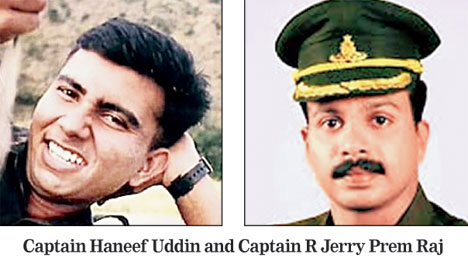
Captain Haneef Uddin was preparing to celebrate his 25th birthday at an altitude of 18,500 ft in Kargil when a bullet fell him in the summer of 1999.
Calcutta:
Captain Haneef Uddin was preparing to celebrate his 25th birthday at an altitude of 18,500ft in Kargil when a bullet fell him in the summer of 1999.
The young officer’s story of valour remains at the centre of a 13-part series on little known heroes of the Kargil war on All India Radio’s FM Rainbow station that is played out at 3pm every Sunday.
On Kargil Vijay Diwas on Thursday, Major Akhil Pratap, an ex-army officer who has been hosting the series, will have family members of 13 such unsung heroes as guests for a live-chat on AIR.
“Kargil was one of those battles which witnessed many casualties. There are several faces whose stories have remained unheard and untold despite all the coverage by the media. I have tried to dust out some of those faces and present them to India,” said Akhil, who was last posted with the Rashtriya Rifles in Jammu and Kashmir in 2010.
“I believe this is the first time that AIR is hosting such a show on the occasion of Kargil Vijay Diwas.”
Born in Delhi, Captain Haneef was a service code officer attached to Rajputana Rifles and posted at Turtuk during the war. His body lay at the height for 46 days before it was handed over to his family.
The army later renamed a sub-sector in Kargil after Captain Haneef.
Apart from Captain Haneef, those feature in the radio series are Captain R Jerry Prem Raj from a small village in Venganoor near Thiruvananthapuram and several others who fell to bullets at Kargil.
“Each of these men had responded to the war-call differently. But they died almost the same way,” Akhil said.
Captain Prem Raj was with his wife on honeymoon in Ooty when a call came from his headquarters and he rushed to Drass.
On the intervening night of July 6 and 7, he was on duty as observation post officer, trying to locate enemy camps. A bullet first hit his shoulder. He fell down, stood up and fired back. A shower of bullets pierced Captain Prem Raj. The army has a hill to his dedication – the gun hill in the Drass sector.
Commissioned in June 1997, Haneef was doing his rounds braving the sub-zero temperature in Turtuk when he suddenly faced a shower of bullets from an altitude.
“Haneef’s parents didn’t seek anything, just his body. The government honoured him with Vir Chakra posthumously,” said Akhil.
Prem Raj, too, was honoured the same for taking bullets in the Drass sector two years after he was commissioned as an artillery officer.
“Prem Raj’s brother is an IAF person and elder to him by three years. Together, the two brothers had brought home several trophies and laurels. But when Prem Raj’s body arrived, his brother stood all alone,” said Akhil. “We want to share these stories with India.”
The Thursday’s live chat is scheduled for 8 am.
source: http://www.telegraphindia.com / The Telegraph, online edition / Home> West Bengal / by Kinsuk Basu in Calcutta / July 26th, 2018
THE TRIBUNE COMMEMORATES JALLIANWALA BAGH CENTENARY
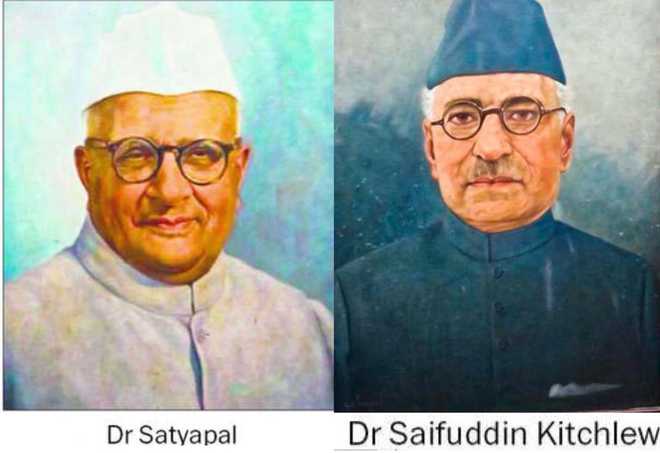
Dr Kitchlew & Dr Satyapal were towering freedom fighters, their arrest led to Jallianwala rally
Dr Saifuddin Kitchlew and Dr Satyapal — a hundred years after Jallianwala, these are the two names with which each conversation about the massacre starts in Amritsar. But in the past 100 years, the governments have rarely mentioned their names.
The meeting that was “dispersed” by General Dyer’s bullets had been called to protest Dr Kitchlew and Dr Satyapal’s arrest. The two towering leaders had emerged as great symbols of Hindu-Muslim unity during the April 6 hartal and, on April 9, people had raised slogans of ‘Kitchlew ji ki jai’ and ‘Satyapal ji ki jai’ during Ramnavami jaloos. It was the collective charm of both the leaders that the Hindus and Muslims were publicly drinking water from the same glass.
Dr Kitchlew’s father Azizudin, a prominent Kashmiri businessman dealing in embroidered shawls, had moved to Amritsar in the 19th century. He sent his son to England and Germany from where he obtained his PhD degree and also developed close ties with Jawaharl- al Nehru. “Kitchlew was widely admired in Amritsar and his picture would be seen hanging in almost every shop as a tribute to the sacrifices he made during the freedom struggle. Tall, fair-complexioned and mostly attired in white khadi, he was known for his unfailing courtesy and winsome smile,” historian Prof VN Datta, hailing from Amritsar, recalled in the preface of a book.
A few days before his death, Dr Kitchlew told Prof Datta that the trouble on April 10 in Amritsar could have been averted had he and Satyapal not been arrested. The government was absolutely despotic and never understood what the people felt and wanted, he said.
After Partition, Dr Kitchlew refused to move to Pakistan and decided to stay back in Amritsar. He, however, was forced to leave the city he loved the most and shift to Delhi after rioters burnt down his four-storey house and the family-owned Kitchlew Hosiery Factory in the heart of Amritsar.
During his last meeting with Dr Kitchlew in Delhi, Prof Datta saw a bare cot, old furniture and broken pieces of crockery eloquently speaking of the financial difficulties he was facing. Yet, there was no bitterness for anyone. “I manage to live because Jawahar sends me some briefs,” he would say.
The last tragic memories of Dr Kitchlew’s family were related to his youngest son Toufique, who spent his last days in penury. Before he passed away, he had expressed a desire to shift to Amritsar and the Punjab Government even annou-nced rent-free accommodation, but the address was never shared with him.
Dr Satyapal, on the other hand, became the Punjab Vidhan Sabha Speaker post-Partition. He had famously said: “I was never a rebel, but to revolt for righteousness is our religion and duty.” He completed his MBBS with a gold medal from Punjab University and became active in the freedom struggle.
Dr Shailja Goyal, a lecturer at DAV College, Jagraon, who has done her PhD on Dr Satyapal, says he was a man of rare integrity and character. She says he was vocal even about the wrongs within the Congress. “He was instrumental in organising the AICC session in Amritsar.” He died in 1954 and his two daughters moved abroad.
Darbari Lal, former Deputy Speaker of Punjab Assembly, says Dr Kitchlew was a powerful orator and his words would sway the masses. “Dr Kitchlew and Dr Satyapal are household names in Amritsar and will surely remain so.”
source: http://www.tribuneindia.com / The Tribune / Home> Punjab / by Vishav Bharti, Tribune News Service, Amritsar / April 13th, 2019
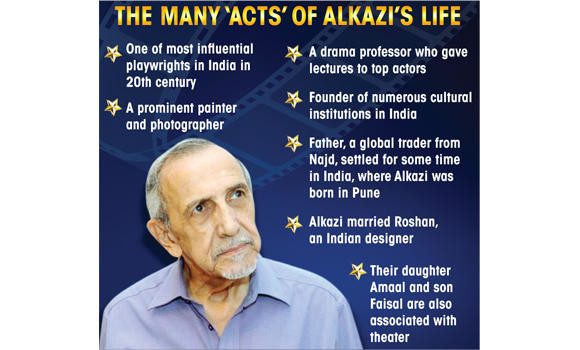
It is a classic case of believe it or not. Ebrahim Alkazi, the celebrated Indian theater director, has his roots in Unaiza in Qassim.
Alkazi’s businessman father, Hamad, came from Saudi Arabia and did business in India in the 1960s and 1970s. That was before the oil boom changed the face of Saudi Arabia.
Alkazi, now 90, went to St. Vincent’s High School in Pune and St. Xavier’s College, Mumbai. He went to London for training at the Royal Academy of Dramatic Art.
On Feb. 20, when Alkazi will be honored at the 2nd Saudi Film Festival in Dammam, it will be like a homecoming for the prodigal son.
“We want to honor pioneers in the field of theater,” said Ahmed Al-Mulla, director general of the festival. “And Alkazi is top on that list.”
Alkazi has played the role of a bridge between Indian and Arab cultures. “We consider him as a treasure and a maker of history. We want to present him as a role model to our Saudi youth,” said Al-Mulla.
He said a documentary on Alkazi will be screened during the opening ceremony, and a book is also being published illustrating his remarkable life and achievements.
Early on in his career, Alkazi got associated with the Bombay Progressive Artists Group, which included M.F. Husain, F.N. Souza, S.H. Raza, Akbar Padamsee, Tyeb Mehta, artists who were later to paint from his plays and design his sets.
As the director of the prestigious National School of Drama, Alkazi revolutionized Indian theater by the magnificence of his vision, and the meticulousness of his technical discipline. He trained many well-known film and theater actors and directors, including Om Puri, Naseeruddin Shah and Rohini Hattangadi. He also founded Art Heritage Gallery in Delhi.
Alkazi’s father spent his life trading between Pakistan, India, Turkey, Kuwait and Lebanon. He settled for some time in India, when his son Ebrahim was born in 1925 in Pune.
His daughter Amaal and son Faisal are also associated with theater.
Alkazi speaks highly about his father and takes immense pride in his Saudi roots and considers his early days in Pune as “the richest moments in my life.”
source: http://www.arabnews.com / Arab News / Home / Jeddah – February 18th, 2015
Education has empowered women and endowed them with a courage to move to the centre stage of life and it is reflected positively in every sphere, said Governor P Sathasivam.
TNIE Verve 2019 Award winners Shine Benaven, Fajeena Kareem, Thesnim Azeez, Chitra Gopinath and Vidya Vinod | T P sooraj
Kozhikode :
Education has empowered women and endowed them with a courage to move to the centre stage of life and it is reflected positively in every sphere, said Governor P Sathasivam. He was inaugurating the second edition of The New Indian Express (TNIE) ‘Verve Awards’ in association with Faizal & Shabana Foundation, at Hyson Heritage here on Sunday.
“Yet in the 21st century there are areas where women are still under-represented such as science, technology, engineering, design, social innovation, etc. We have to bridge the present gender divide in innovation and entrepreneurship sector,” he said.
Presenting the 2019 Verve Awards to five women icons of the Malabar region, the Governor said the winners should encourage girls, especially those from weaker sections of society to come forward.
“The theme for this year’s International Women’s Day was Think Equal, Build Smart, Innovate for Change. Undoubtedly, the theme signals the need for equality.But these five women have equaled or even outdone their male counterparts in the field,” he said.
To celebrate the power and outstanding achievements of women, TNIE group launched the Verve Awards in 2018 in connection with the International Women’s Day. The second edition of the awards were conferred to exemplary women who have carved a niche for themselves through their hardwork and perseverance and have become leading entrepreneurs.
The winners of the second edition of the awards were Chitra Gopinath, Managing Director of Edappal Hospitals Pvt Ltd since 1990 (Life Time Achievement Award), Shine Benaven, proprietress and Managing Partner of Kanate Originals (Innovation Award),Thesnim Azeez, Celebrity Chef, entrepreneur-founder of ‘Thesnim’s school of Recipe Plus’ (Inspiring Icon Award), Vidhya Vinod, entrepreneur, educationist, president and CEO of Study World Education Holding Group (Enterprising CEO), and Fajeena Kareem, Co-founder, chief evangelist and creative director of Kiora Amorez, The Diamond Boutique and Luxury Lounge (Emerging Brand Award).
The award distribution function was attended by The New Indian Express Senior Vice President Vignesh Kumar, Resident Editor (Kerala) Kiran Prakash, General Manager (Kerala) P Vishnu Kumar, and Assistant General Manager (Kozhikode) M Chandrasekharan.
The dais was shared by invited dignitaries such as Gokulam Gopalan, Chairman of Gokulam Group of Companies, and Dr Joseph Sebastian, Director of Faizal & Shabana Foundation.
Prominent business personalities and successful entrepreneurs across the state attended the function. Matria exclusive woman and child hospital, NS Payyoli Mixture, Metrends Shoes and Bags associated with TNIE in felicitating the woman achievers.
source: http://www.newindianexpress.com / The New Indian Express / Home> States> Kerala / by Express News Service / April 08th, 2019
Most people know of this hierarchy but how much do we know of the women behind this great dynasty?
Mughal empire
The Mughal Empire (1526-1707) was established by Babur defeating Ibrahim Lodi in the First Battle of Panipat. His reign went on for four years (1526-1530). His successor was his son, Humayun. Then arrived Akbar, followed by his son Jahangir, followed by Shah Jahan, and the, the last great Mughal ruler– Aurangzeb.
Most people know of this hierarchy but how much do we know of the women behind this great dynasty?
Here’s a list to educate you about the same!
source: http://www.indiatoday.in / India Today / Home> News> Education Today> GK & Current Affairs> History / by India Today Web / New Delhi – May 06th, 2016
Taking up the challenging task of achieving unity and tolerance
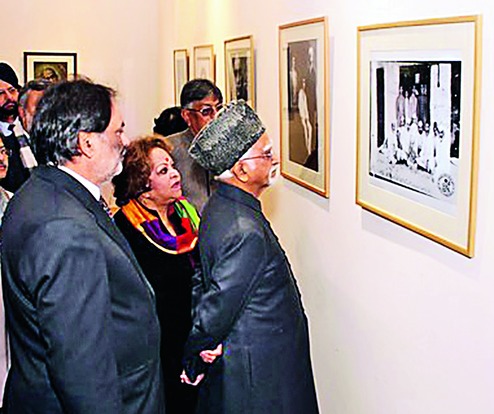
M.H. Ansari viewing an exhibition on Mukhtar Ahmad Ansari at the M.F. Hussain Art Gallery, 2015
Fifty-six is no age to die. Mukhtar Ahmad Ansari, MD, MS, with a tall reputation in London’s Lock Hospital and Charing Cross Hospital, and ‘free Doctor’ to uncountable poor in Delhi, was on a train bringing him back to his hometown, Delhi, from Mussoorie where he had gone to treat the Nawab of Rampur when, on May 10, 1936, a heart attack – his first and fatal – took him away. He was four years short of sixty.
Doctors are human and death’s sudden grasp comes to medical luminaries just as it comes to ordinary mortals. Ansari must have been in some disbelief at his heart’s capitulation. But his death shocked a whole world beyond himself, a world of grateful and trusting patients, former patients, friends, families of patients, countless Congress and Muslim League leaders who were his patients, some of them, and fellow freedom fighters, all. For he had been more, incredibly more, than the ‘good Doctor sahib‘. He had been, for over two decades, a political guide and pathfinder to all those who believed in India’s plural integrity and in India’s destiny as a leader of progressive causes globally.
The Balkan War in 1912 saw 32-year-old Ansari lead a medical team from India to Turkey to help wounded Turkish forces in what was not just a humanitarian act but one that formed lasting bonds, as the medical mission of the doctor, Dwarkanath Kotnis, to China in 1938 during the Sino-Japanese war was to do. The Kotnis Mission has been the subject of a film, Dr. Kotnis Ki Amar Kahani by V. Shantaram, for which K.A. Abbas wrote the script. A film has to come on Dr. Ansari Ki Amar Kahani about that mission’s work. Mrinal Sen could well have made such a film a decade ago but perhaps Javed Akhtar or Shyam Benegal will yet do it, for it cries out, filmographically and civilizationally, to be done.
M.A. Ansari’s life as such needs to be known, not for his sake – he is beyond the reach of recognition or neglect – but ours. Being invited to play a constructive political role in the formulation of the Lucknow Pact between the Congress and the Muslim League in 1916 and to preside over the Muslim League’s sessions in 1918 and 1920, Ansari emerged as a sturdy champion of the Khilafat Movement and Hindu-Muslim unity.
His commitment to that cause soon steered away from League politics, the separate electorates idea and all that was to lead to the demand for Pakistan. This resulted in his becoming inevitably, a general secretary of the Indian National Congress in 1920, 1922, 1926, 1929, 1931 and 1932 and in 1927, its president. A former president of the Muslim League becoming president of the Indian National Congress? Incredible, but incredible things did happen in Gandhi’s and Nehru’s India.
Drawing close to the Mahatma’s eclectic nationalism, Ansari became Gandhi’s ‘Delhi host’ in his old Delhi manor called ‘Darussalam’ and physician to members of Gandhi’s family, including his grandson, Rasik, son of Harilal Gandhi, who contracted typhoid in 1929 while on a visit to Delhi (from eating roadside jalebis, as Rasik himself explained) and in spite of Ansari’s valiant efforts, could not be saved. Gandhi was touring the North West Frontier at the time. Ansari sent him a telegram conveying the news. Gandhi steeled himself. “I loved the boy,” he wrote, “I had placed high hopes on him…” The trauma brought the doctor and the Mahatma closer to one another.
Ansari was instrumental in the founding of the Jamia Millia Islamia, and bringing to it a whole host of nationalists, Muslim and Hindu, to learn and to teach. In return for learning Urdu, Gandhi’s youngest son, Devadas, was recruited to teach the Jamia spinning. Ansari was Jamia’s chancellor when he died.
Liberation from mutual animosity and mistrust among Hindus and Muslims was for him a passion. Ansari was, to use an old-fashioned phrase, a man of God. He was also a man of Science. His being a man of science doubtless had something to do with his harbouring his eminently rational goal of wanting Hindus and Muslims to live in civilized amity, not conflict.
As it happened, on the very day Ansari died, Gandhi was meeting in the Nandi Hills, near Mysore, India’s most famous man of science, Chandrasekhara Venkata Raman. If a man of god can be a man of science, a man of science can be a man of god.
Raman to Gandhi: “The growing discoveries in the science of astronomy and physics seem to me to be further and further revelations of God. (But) Mahatmaji, religions cannot unite. (Only) Science offers the best opportunity for a complete fellowship. All men of science are brothers.”
Gandhi to Raman: “What about the converse? All who are not men of science are not brothers?” ( The Collected Works of Mahatma Gandhi, Volume 62, pages 387-9)
Within a few hours of this conversation, M.A. Ansari, man of science and of god, brother to all who came in contact with him personally, professionally or politically, lay dead in his railway coach.
Gandhi had gone to the Nandi Hills with Sardar Patel, among others, for a ‘health’ sojourn at Ansari’s behest. When the news reached him the next day, he was stunned. Penning a tribute for the Associate Press, he described him as “the poor man’s physician if he was also that of the Princes” and said, “His death will be mourned by thousands for whom he was their sole consolation and guide.” He added: “…He was my infallible guide on Hindu-Muslim questions. He and I were just planning an attack on the growing social evils.”
An attack on social evils. Strong words, scorching words. What was the biggest ‘social evil’ that Gandhi was exercised most about in 1936? Hindu-Muslim mistrust.
He needed a guide from among the Muslim community to tackle this. And, with Ansari, that guide was gone. At a loss to find a successor he turned first to Zakir Husain. “I ask, will you take Dr Ansari’s place?” On Zakir Sahib not agreeing, he turned then to Maulana Azad for that crucial assistance. It is entirely reasonable to suppose that had Ansari lived he would have played a defining role as a symbol, spokesman and strategist for Hindu-Muslim unity in the Constituent Assembly and then, very probably, in 1950, become president or vice-president of India. He would have been only 70, the age at which his grand-nephew, Mohammad Hamid Ansari, first became vice-president of India.
What was the main concern – ‘social evil’ – forcefully, passionately expressed in Vice-President Ansari’s farewell address to Rajya Sabha? The challenge to Hindu-Muslim unity, pluralism, not as mere ‘tolerance’ but in Netaji Subhash Chandra Bose’s words: cultural intimacy.
We know what Vice-President Ansari, descended from that great name in Indian pluralism – Dr M.A. Ansari – who rejected everything that led to Pakistan, has received by way of a ‘reward’.
Seventy five years after the Quit India Movement, 70 years after Independence, we the people of India, brothers and sisters in plural mutuality, must tell the shatterers of India’s unity, Hindu, Muslim and other: Quit, quit terrorizing India.
source: http://www.telegraphindia.com / The Telegraph, online editon / Home> Opinion / by Gopalkrishna Gandhi / August 22nd, 2017