Category Archives: Leaders

Revolutionary heroes

MYSORE :

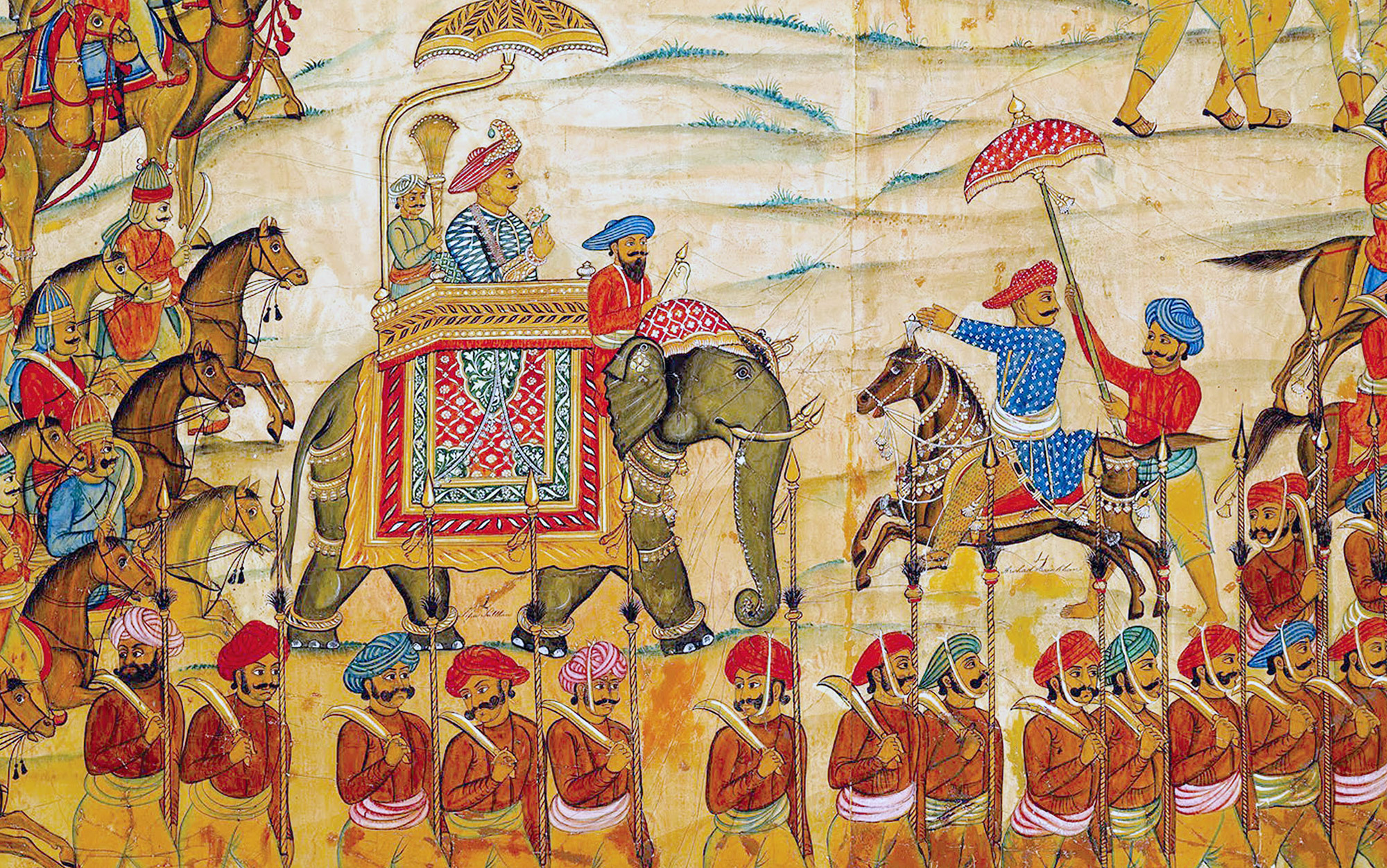
Tipu Sultan, son of Haider Ali, on an elephant in a detail from 'The Battle of Pollilur', 1780, a mural at Daria Daulat Palace, Seringapatam. Photo by Bridgeman Iages
Tipu Sultan, son of Haider Ali, on an elephant in a detail from ‘The Battle of Pollilur’, 1780, a mural at Daria Daulat Palace, Seringapatam. Photo by Bridgeman Iages

If the sultan of Mysore had had a bit more luck, George Washington might be known as the Haider Ali of North America

If the sultan of Mysore had had a bit more luck, George Washington might be known as the Haider Ali of North America. As the ruler of Mysore, a kingdom in what is now southwestern India, Haider fought a series of wars with Great Britain in the latter half of the 18th century, at the onset of the Age of Revolution. While Haider was fighting his last battles against the British, Washington was leading the forces of the nascent United States from the harsh winter at Valley Forge to the final victory at Yorktown.

The circumstances of Haider’s childhood did not seem to mark the young man out for greatness. Born around 1720, Haider soon lost his father, a mercenary officer who died on campaign. Haider followed his father’s path, becoming an officer for the Wodeyar dynasty that ruled Mysore. After many years of service, he grew indispensable to the ruling family, sidelining it entirely by the 1760s. It was a dangerous time to come to power in South Asia. The British East India Company was expanding its power throughout the Subcontinent, at the expense of rulers from Bengal in the east to Haider’s neighbours in the south. Allied with France, however, Haider held off the British advance for another two decades, dying in 1782, just a year before the US triumphed in its own rebellion against Britain.

Haider and Washington never communicated directly with one another, but they fought against a common enemy, and shared a common ally. Like the Mysoreans, the American rebels were members of a global coalition funded by the French government, which saw both uprisings as a chance to humble Britain. In the Seven Years’ War (1756-1763), Britain had ended nearly a century of conflict with its imperial rival in North America by seizing France’s vast territories in Canada and the Mississippi River Valley. Some French observers tried to minimise the extent of the defeat. Voltaire dismissed loss of North America as ‘a few acres of snow’. Yet French policymakers were well aware that Britain had greatly increased its power. Too weak to confront it again on its own, the French government wove a network of alliances, playing on resentments against Britain’s growing control of global trade and rapidly expanding empire. Beginning in the mid-1770s, it sent money and military advisors to both Mysore and the US, aiming to avenge its defeat by stoking colonial rebellions against Britain.

The alliance with France proved critical to the survival of the fledgling US. The memory of French aid, and particularly of the dashing Marquis de Lafayette’s assistance to Washington, has for more than two centuries served as a symbolic origins story of close Franco-American relations. During the Revolutionary War, however, Americans saw themselves not just as allies of France, but as part of a coalition that included Mysore.

Even after the US made peace with Britain in 1783, the American fascination with Haider and his son and successor, Tipu Sultan (1750-1799) lived on. Mysore’s rulers became familiar references in American newspapers, poems and everyday conversation. Yet, within a generation, Americans lost their sense of solidarity with the Indian Subcontinent. Mysore remained under British control, written out of the story of the American Revolution. The US turned its attention to the interior of North America, and to becoming an imperial power in its own right.

Even before the Revolutionary War, American interest in South Asia was lively. In fact, Americans’ rebellion against Britain in part grew out of the connections between America and the Subcontinent. Before the 1770s, Americans were cheerleaders, rather than critics, of British imperialism. The Philadelphia-born poet Nathaniel Evans (1742-1767) commemorated the victory of the East India Company at the Battle of Plassey in 1757, in which Robert Clive had seized control of Bengal:

The world to British valour yields
How has bold Clive, with martial toil
O’er India born his conqu’ring lance?

Sharing in Britain’s glory in this way seemed natural to Americans, who were proud to be part of the British Empire. The East India Company’s growing influence in Bengal enabled it to export large quantities of South Asian goods, particularly textiles, to American ports such as Boston and Charleston. Colonial elites displayed them in their homes with pride, signs that they were part of a global British empire growing rich from the spoils of the Subcontinent.

While Americans were free to purchase these imperial commodities, they were not free to join British merchants in South Asia. Britain’s colonies served to provide the motherland with raw materials. They were not supposed to have direct economic relations with each other, but rather to send their exports to the great trading centre of London. New England merchants in particular resented being pushed to the side of the mercantile system. Following military victories by the East India Company in South Asia, the company’s economic power within the British Empire, including North America, grew even greater, and so too did New England merchants’ resentment.

In 1773, the British government issued the Tea Act, a bill in effect subsidising the East India Company so it could sell tea to North America more cheaply than any other company. The Tea Act was meant to save the Company’s struggling finances, which were sinking under the cost of its expensive wars. By allowing the Company to sell its tea without paying the heavy taxes normally due on tea exports to the colonies, British officials thought they could help the Company while also keeping Americans happy. Because of the taxes levied on it, tea was expensive in the colonies, and tea-loving New Englanders often resorted to buying theirs on the black market. If the Company no longer had to pay these taxes, it could pass the savings on to thirsty American consumers.

Seeing themselves as victims of Britain’s imperial oppression, Americans sympathised with the empire’s other victims: South Asians

The colonists, however, did not respond as the British expected. By granting the East India Company an exemption from the tax, Parliament had confirmed that the tax on tea, passed without Americans’ consent, was there to stay for all other merchants. And the smugglers that the British government hoped to cut out of the tea business were influential members of New England society. On 16 December 1773, economic self-interest combined with principled opposition to taxation inspired a group of protestors to attack a Company shipment of tea, dumping its contents into the ocean.

The Boston Tea Party marked Americans’ growing opposition to British rule, and the beginning of a new perspective on South Asia. The British government retaliated by stripping Massachusetts of its right to self-government. Outraged colonists met in 1774 to form the First Continental Congress. The following year, armed conflict between colonial militias and British soldiers broke out at Lexington and Concord, and the American Revolution was underway. Americans started to see themselves as victims of Britain’s imperial oppression. They were soon sympathising with the empire’s other victims, particularly South Asians.

The American revolt against Britain quickly took on international dimensions. In 1776, the Continental Congress declared independence, transforming the former British colonies into the United States of America. American agents were soon busy seeking international recognition and goodwill from countries including Morocco, the Netherlands and, most importantly, France, Britain’s imperial rival. Within a year, the French government began sending aid to the fledgling US. A year later, in 1778, France and the US officially became allies.

The Continental Congress recognised that it was not France’s only partner against Britain, and looked for ways to cooperate with Mysore, France’s South Asian ally. In 1777, on the advice of Thomas Conway, an Irish-born French military advisor, the American patriots contemplated sending troops to join the French military expedition to the Subcontinent. The provisional American government lacked the resources for such a scheme, so instead it encouraged American privateers to attack the East India Company’s shipping to weaken Britain’s economic grasp on South Asia.

Different state governments also made friendly gestures toward Mysore. In 1781, the Pennsylvania legislature commissioned a warship named theHyder-Ally, an eccentrically spelled tribute to the Sultan of Mysore. This ship sailed the North Atlantic only, far from the Indian Ocean. Its existence, however, demonstrated the affinity American elites felt for Mysore’s cause. Philip Freneau, an ally of Thomas Jefferson and one of the country’s leading poets, wrote a poem in honour of the Hyder-Ally and its namesake, the sultan of Mysore:

From an Eastern prince she takes her name,
Who, smit with freedom’s sacred flame
Usurping Britons brought to shame,
His country’s wrongs avenging.

Clearly, nothing prevented these 18th-century Americans from seeing faraway Asian peoples as exemplars of liberty.

Despite Freneau’s optimistic vision, freedom’s sacred flame did not save South Asia. By the early 1780s, it was becoming clear that Britain would lose the war. Many Americans happily imagined a post-war world in which the East India Company would no longer be a significant force. Britain, however, managed to hold on to its territory in the Subcontinent, resisting the combined forces of Mysore and France.

France’s military support for Mysore and the US helped drive it into crippling debt and push French society toward its own, more radical revolution. Meanwhile, Britain’s finances survived the conflict intact, allowing it to continue an aggressive policy in the Subcontinent after 1783. The cash-strapped French, however, could maintain only a token military presence in the region. The situation left Mysore’s new ruler, Tipu Sultan, to his own devices. He resisted mounting pressure from the British for nearly two decades, succumbing only in 1799. He died beneath the walls of his citadel as he fought a last-ditch battle against the East India Company.

The American government adjusted to the new realities of South Asian politics. New England merchants eagerly sought to trade directly with the Subcontinent. In the first years after the end of the Revolutionary War, they relied on the French colony of Pondicherry on the southeastern coast of the Subcontinent as a port. They soon realised however that they could not enter the region’s most lucrative markets without the permission of the British East India Company. They lobbied for the establishment of American consulates to foster goodwill for American interests. Responding to their pressure, the US government created its first consulate in South Asia in 1792, in Calcutta. Two years later, in Madras, they added another. American consuls in the region were responsible only for relations with the Company. They had no contacts with independent South Asian states such as Mysore, which the American government, like the French, left to fend for itself.

Only recently an enemy of the British empire, America had won independence and become Britain’s junior partner in empire

On a state level, American interest in Mysore disappeared. But many Americans remained fascinated by Haider Ali and Tipu Sultan. When Tipu sent a team of ambassadors to Paris in 1788, in an unsuccessful attempt to restore the Franco-Mysorean alliance, Jefferson, then the American minister to France, reported on the event with keen interest. Like Jefferson, a wide range of Americans were eager to learn more about Mysore. American newspapers of the 1780s and ’90s reported on the country’s desperate struggle with Britain. American textbooks, including Jedidiah Morse’s influential The American Universal Geography (1793), included sections on Mysore. Haider and Tipu seem to have approached the status of household names. In Williams vs Cabarrus (1793), a lawsuit brought before a circuit court in North Carolina, the two parties disputed a wager made on a horse race. One of the horses was named ‘Hyder Ali’ in tribute to Mysore’s former ruler.

Even in the wake of Tipu’s final defeat, in 1799, his struggle for an independent Mysore continued to echo in the imagination of Americans. In his sermon on 4 July 1800, John Russell, a Baptist minister in Providence, warned his audience about the dangers of British imperialism. While many Americans, such as Alexander Hamilton, advocated for closer ties to Britain, Russell insisted that Britain could not be trusted. The ultimate example of British injustice, he argued, was its conquest of Mysore. Deeply moved by what he saw as Tipu’s heroic resistance, Russell told his congregation of Tipu’s death at the hands of British soldiers: ‘here the full heart must have vent… [Tipu Sultan] defended his power with a spirit which showed he deserved it. His death was worthy of a king.’

For Russell, Tipu’s end ought to warn America about the mortal dangers of empire. By the early 19th century, however, America had embarked on its own imperial project. American missionaries fanned out across North America, travelled to the Levant, and poured into South Asia, writing glowing reports back home on the work that the British were doing to ‘civilise’ the world, including the Subcontinent. Only recently an enemy of the British empire, America had won independence and become Britain’s junior partner in empire.

American diplomats, merchants and missionaries in South Asia accepted Britain’s empire in South Asia, working alongside it to profit from local trade or proselytise to potential converts. Over the following decades, foreign policy officials, commercial interests and religious groups pushed for the US to acquire a colonial empire of its own. Just like the British empire Americans had once rebelled against, the US became an imperial power, with colonies stretching from Puerto Rico and Guantánamo in the Caribbean to the Philippines in the Pacific.

Today, with military bases in more than 70 countries across the globe, the US remains an empire. Yet, the generation of Americans who fought for independence from Britain and laid the foundations of America’s identity saw the US as an anti-imperial cause and nation. The founding generation and the children of the founders were fascinated with Mysore and its leaders because they thought Haider Ali and Tipu Sultan embodied American values of resistance to empire and aspiration to freedom. If later generations of Americans had continued to see Haider and Tipu as heroes, had continued to identify with underdogs and anti-imperial causes, then the US, and indeed the world, might look quite different today.

source: http://www.aeon.com / Aeon / Home> Essays / by Blake Smith / Edited by Sam Haselby / December 07th, 2016

___________
Blake Smith is a postdoctoral fellow at the European University Institute in Florence, Italy. His research, focusing on the French East India Company, has appeared in scholarly journals such as French Cultural Studies and the Journal of the Economic and Social History of the Orient, as well as popular media such as The Wire and The Appendix.

The graves unseen by History: The Malabar Struggle and the stories we chose to forget

KERALA :

GravesMPOs10nov2018

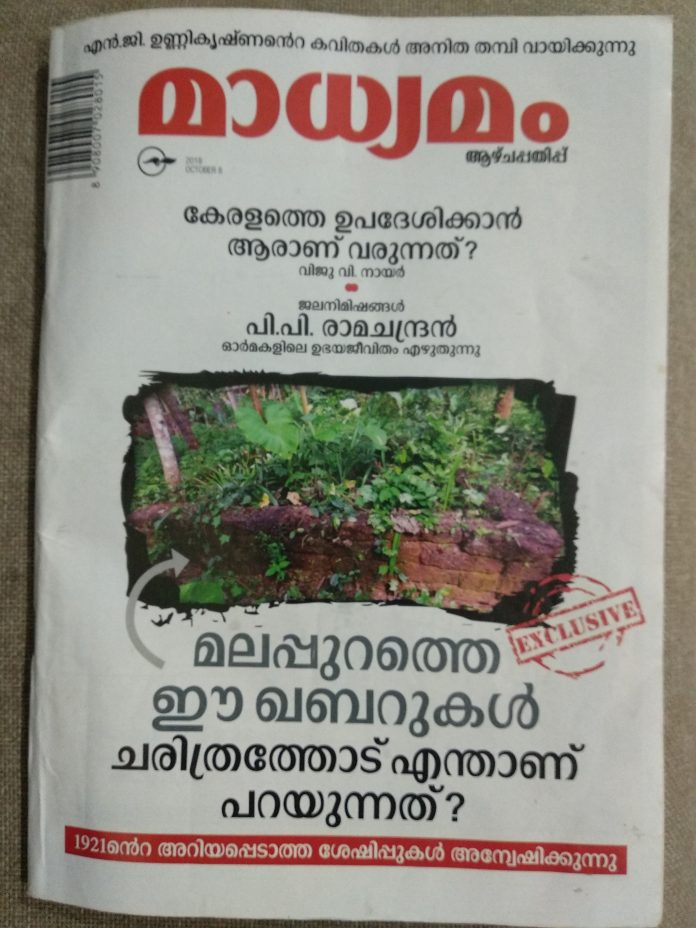
This is the first in the two-part series on the much-forgotten Malabar Struggle and stories of ghastly violence committed by the British in the region around 1921. I Sameel, the author of this article, also looks at why and how such incidents were ‘left out’ or/and ignored by our mainstream historians. This article was originally published by Madhyamam Weekly on October 8, 2018. The article has been translated from Malayalam by Najiya O of TwoCircles.net.  

The Malabar Struggle is a critical time space in the Indian freedom struggle. The different angles of viewing the struggle are evident in the terms of Mappila Rebellion and Malabar Revolt etc. The Malabar Struggle has been significant in influencing the creation of the ‘common’ conscience of ‘modern Kerala’, determining the path of the Indian nationality and the formation of the social identity of Malabar, according to EV Ramakrishnan in Malabarine Kandethal: Padanam, Malabar Desheeyathayude Idapadukal (DC Books, 2008).  However, the Malabar Struggle still remains a critical timespace in the history by the different ‘looks’ mentioned above.

The official statements regarding the Indian freedom struggle either kept silent on the popular protests related to Malabar or mentioned them only casually. There are no evidences for even the Wagon Tragedy, which received a bit more public visibility compared to other incidents related to the Malabar Struggle, to have deeply touched the conscience of Malayalis (EV Ramakrishnan – Page 13). Questions are arising as to why the incidents that led Malabar to a battlefield for nearly a century did not receive the deserving relevance in the historical conscience of Malayali. Even the Wagon Massacre (named as Tragedy in history) gained visibility only through the popular cultural media, including the cinema. As MT Ansari points out in ‘Malabar: Desheeyathayude Idapadukal’ (DC Books, 2008) “Only the Wagon Tragedy of November 20, 1921, can be seen in the nationalist history lessons. As if all the other incidents, whether of Muslims or Hindus, insult us.  However, we do not conceal the Jallianwala Bagh massacre of April 19, 1919 (379 people were killed on the orders of General Dyer, according to official records) and the Chauri Chaura incident in which angry peasants burnt alive 23 policemen on February 5, 1922. Compared to the Malabar Revolt (2,337 people killed, 1,652 injured and 45,404 imprisoned in the Malabar Revolt as per official records – and according to unofficial records, 10,000 were killed, 50,000 imprisoned, 20,000 exiled and 10,000 found missing), other incidents are limited in extensiveness.”

Just like the Malabar Revolution was ignored by the national historical studies, it can also be seen that some significant incidents in it were ignored or only casually mentioned even in the special studies related to it. Important among them is the massacre by the British at Melmuri-Adhikarithodi in Malappuram. This incident comes second only to the bloody Pookkottur battle in the number of people killed among the various incidents in the Malabar Rebellion. While more than 350 people lost their lives at the Battle of Pookkottur, the massacre at Melmuri-Adhikarithodi took the lives of 246 people on October 25, 1921. People including women, children, aged and sick people were forced out of their houses, lined up and shot dead by the Dorset Regiment, an infantry regiment of the British army. However, it has not found a place in the public history. Some incidents including the Melmuri-Adhikarithodi massacre have been totally neglected from the general readings about the violence of the colonial government and massacres that took place in Kerala. And hence, more detailed studies should be carried out about the massacres that took place in Kerala, especially Malabar, during the colonial rule.

Massacres: the seen and unseen

It can be seen clearly that the Punnapra-Vayalar struggle (a communist uprising in the princely state of Travancore, British India, against Prime Minister, C. P. Ramaswami Iyer and the state in which around 1,000 people were allegedly killed) has got much importance in the public readings and history in the studies related to the massacres in Kerala. Though the massacres in the Malabar Revolution including the Pookkottur Battle have been exceptional considering the nature of the struggle and power of the enemy etc when compared to the Punnapra-Vayalar struggle, they are given only lesser attention in the public readings.

The Punnapra-Vayalar incident as such is considered a central theme in the history of struggles in Kerala. But such a position is not given to the Mappila struggles in Malabar in which thousands of people have died. The Melmuri-Adhikarithodi massacre has not become a central theme for even the studies about the Malabar Struggle.

There have been studies on whether the massacres related to the Malabar Revolution were part of the national history or not; but even those studies have not probed into the government terror involved.  Such a probe would be possible only through the historiography centred on these massacres. This article is an effort to discover the material causes and archives from the memory of people and historical remnants of this region for such a historiography. And this effort is relevant as the historical narration of the Malabar Struggle should go beyond the colonial records of RH Hitchcock, GRF Tottenham, CT Atkinson and Divan Bahadur C Gopalan Nair as well as the studies carried out by Dr M Gangadharan and Dr KN Panicker.

The second biggest massacre

“Large gang reported last night 4 miles north-west Malappuram.  Operations undertaken against them by Dorsets, Artillery and armoured cars.  Enemy met in jungle west of Melmuri opposing our troops there and in the houses, refusing to come out when ordered to surrender and offering continued and determined opposition resulting in 246 rebel casualties.”  This was the content of a Telegram [No.S 250/453/G] sent by the General Commanding Officer of Malabar to the Madras Government on October 25, 1921. (GRF Tottenham – ‘The Mappila Rebellion 1921-1922’, Madras Government Press, 1922)

Innocent women and children along with old and sick people were forced out of their houses and shot dead, houses looted and set on fire by the British army’s Dorset Regiment. This took place in the places named Konompara, Adhikarithodi, Melmuri Muttippadi and Valiyattappadi, in a 1.5 kilometre circumference on the Kozhikode-Palakkad national highway, which is 3 kilometres from Malappuram town. This is the Melmuri-Adhikarithodi massacre that took place on October 25, 1921. The soldiers in the companies A and D in the second battalion, Dorset Regiment, reached Konompara in armoured vehicles with cannons under the leadership of Lieutenants Hevic and Goff in the morning and massacred 246 people.

Cannon balls were fired in the beginning with a big sound, said Nambankunnan Moideen of Melmuri Valiyattappadi who was born 10 years after the incident. The frightened people hid in their homes. Then the army entered each and every house and forced everybody out. Those who refused to get out of their houses were forced out by hitting and torturing with the stock and bayonet of guns. Wooden storage boxes named ‘mancha’ and ‘pathayam’ were broken and the contents looted.  Books including the Qur’an, Sabeenappattu (Arabic songs praising prophet Muhammed), baiths (Arabic songs), padappaattu (war songs) etc were piled up in the yard and set ablaze, and then the houses roofed by palm leaves and grass were set on fire.  Then all the men were lined up and shot dead one by one. Those who tried to prevent, including women and children, were also shot dead. The operation which began in the morning came to an end by the long siren of the Army Commandant around noon.  The army was aiming the gun at Chalattil Kalladithodi Moideenkutty Haji on a sideway at Konompara when the long whistle blew and they let him free, said PT Muhammed Master who was four years old at the time and died recently. (Nisar Kaderi – ‘Pookkottur Yuddhavum Melmuri Operationum’, ‘1921 Churul Nivaranam’ – Pookkottur Yuddha Smaraka Samithi Souvenir, 2007)

Hundreds of people were killed in the orchards and courtyards, and about 100 houses were set ablaze in the operation of a few hours.  Some remained in a critical situation as good as dead after having been shot. There were some others who lay abandoned for about four days and then died as there was nobody to take care of them.  The martyrs were buried in the places they lay dead.

The graves in the courtyards

Though most of the studies on the freedom struggle and the Malabar struggle kept silent on this massacre, the graves played an important role in keeping the incident alive in the memories of the region and the generations that followed.  Those who were shot dead in the courtyards in front of the houses were buried there itself. The burial was completed by the people who came from nearby places on the request of Kunjithangal of Malappuram Valiyangadi, the president of the Malappuram Khilafat Committee.

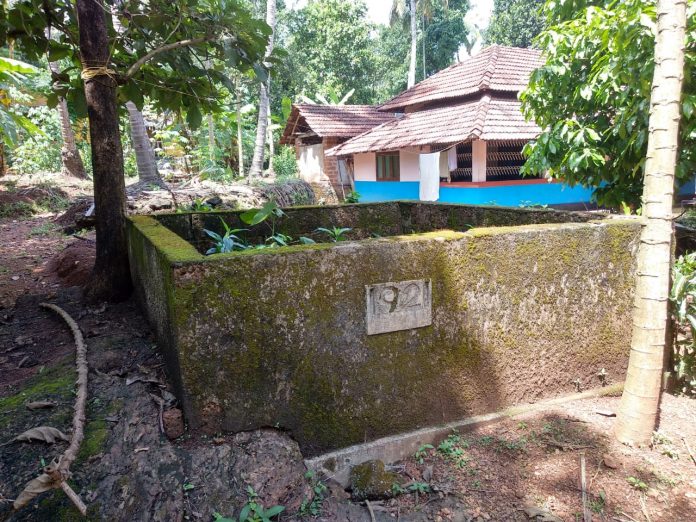
Many people have been buried in a single grave.  Many were buried in the dead of the night out of fear of the army.  While some were buried in the laterite stone quarries (Kalluvettukuzhi) near the houses, in some places women alone dug graves and buried the dead.  Women had to do the burials, which is the duty of the men according to the Islamic belief, as all the men in the locality had fled fearing the army.  One of the graves dug by women, which is only 2 feet in depth, is still there.  Now we have information about only 40 people buried in nine graves out of the 246 martyred.

GravesBookMPOs10nov2018

Daughters shot dead for their fathers

Most of the cruelties done to women, children and the aged by the British army during the Malabar Revolution haven’t been included in the public historical narratives.  What the women, children and the aged experienced at the Melmuri-Adhikarithodi incident were cruelties violating the common norms to be followed even during war time.  Among the graves are those of two daughters who were killed while trying to prevent the army taking away their fathers.

One of them is an 11-year old from the Keedakkadan family at Adhikarithodi.  She was beaten by gunstock when she tried to prevent the British from taking away her father from their house, holding him tight.  When they couldn’t take her apart from the father even after several attempts, the army killed both of them together. It is said that they were visiting the girl’s mother’s house.

The other one is Kadiyamu, daughter of Areeppuram Parakkal Kunjeen Haji of Konompara Cheeranganthodi.  Kadiyamu had come from her husband’s house to take care of her sick and aged father. The army tried to push her off too with gunstock when she tried to prevent them dragging off her aged father who was lying on the big wooden storage container (pathayam). At last, Kunjeen Haji was forcefully taken off to the eastern yard of the house and laid on his front on the ground. Kadiyamu lay on her father to prevent him from getting shot. Finally, both were shot dead. Our pages of history couldn’t document these two brave daughters. And this can be read as evidence for the selected silence of the public mind towards Mappila history and Mappila woman.

While the common historical narrations kept silent about the Melmuri-Adhikarithodi massacre, this history was documented at least to some extent by the Qissappattu, a type of songs popular among the Malabar Muslims earlier. One of them is the work of Yogyan Hamsa Master, a Qissappattu expert. This is found in the ‘Abdurahman Qissappattu’ which he wrote about freedom fighter Muhammed Abdurahman Sahib:

“Lahalakkaar Melmuri parisaramil undarivaal

Lahika padayalar vanna aayudhamaale – avaril

Shatham mail aavaasethum balliya thokkum

Shakthamerum peerankiyum bayanettum bombum

Shabdamilla thuppaakkiyal vedivech chirichum

Lakkum lagaanumilla nattare vadhichum.”  (Yogyan Hamsa Master – Page 51)

(*The army came to Melmuri with weapons including cannons, guns and bombs, learning of the presence of mutineers, and laughed and killed people with silenced guns without any heed)

__________________________________________________

PART : TWO (2)

The graves unseen by History: The Malabar Struggle and the history of the silent

This is the second in the two-part series on the much-forgotten Malabar Struggle and stories of ghastly violence committed by the British in the region around 1921. I Sameel, the author of this article, also looks at why and how such incidents were ‘left out’ or/and ignored by our mainstream historians. This article was originally published by Madhyamam Weekly on October 8, 2018.

The nine graves

  1. Eleven people have been buried in the grave dug in the yard of Areeppuram Parakkal Koyakkutty Haji’s house at Adhikarithodi Vattapparamb.  His grandfather Areeppuram Parakkal Ahmedkutty Haji, his brother Moideenkutty Haji, Kuttirayeen, Marakkar and Konkayan Alavi, along with a man and his daughter from the Keedakkadan family are buried her  daughter is the 11-year old girl mentioned above.

Ahmed Kutty Haji’s daughter Ayisha was only four years old at the time, and she had detailed the incident to her son Yogyan Hamsa Master, who is a well-known Qissappattu writer and singer.  Ayisha died last year at the age of 102. When all the members of the house had been forced out and the house set on fire, the women and children moved to the banana plantation nearby.  It was then that the men were killed using rifles with less sound.

Ahmed Kutty Haji’s neighbor and friend Konkayan Alavi was also caught along with them and shot dead, said the latter’s son Alavi’s son Alavi.  One each in four generations of this family is named Alavi out of respect for Mampuram Syed Alavi Thangal, an Islamic scholar from Yemen who settled in Mampuram, now in Malappuram district.  People used to frequent him for spiritual, religious and social advice. He was known for his anti-British stand in the 19th century. His tomb at Mampuram is considered an important pilgrimage site in Kerala.

Mats were laid out in the laterite stone quarry in the yard of the house and all the dead bodies were kept on them and buried.

2. The dead bodies of five members in the Kappoor family have been buried in the grave dug in the plot behind the GMUP (Government Mappila Upper Primary) School at Adhikarithodi.  Kappoor Mundasseri Yusuf, his son Pokker, Kappoor Moosam, Ayamutti and Mammudu were buried here. None of the direct descendants of the dead live in the place now.

3. Six people were buried in the grave dug near the house of Nanath Kuruvayil Hamsa.  Those buried include Hamsa’s paternal grandfather Nanath Kuruvayil Moidu, his brother Kunjimarakkar and Madambi Kunhimuhammed.

Nanath Kuruvayil Moidu was caught when sitting in his house reading the Qur’an with the belief that ‘they needn’t worry as they hadn’t been involved in anything’.  When Moidu was caught by the army, his 14-year-old son Muhammed protested holding on to his father’s hand but was pushed away, said the latter’s eldest son Moidu (82).  Before leaving, the army also set fire to the roof of the old house, which had been there in the place of Hamsa’s house.

The Thiyya (a lower caste, now in the Other Backward Class category) family of Karattuparamban, who were their neighbours, was the first to help in the shocking time, said Moidu.  The Thiyya family, that had to witness everything helplessly, hurried to put down the fire on the roof as soon as the army left. This can be seen as a small example of which side the lower classes including the Ezhavas (a lower caste, now in the OBC category) and Muslims supported in the Malabar Struggle.

4. Five people have been buried in the grave dug behind the house of Mullappalli Ummer at Kannanthodu in Adhikarithodi Aakkaparamb.  Those buried here include Athimannil Mammootty and one from the Vallikkadan family. Mammootty’s son Kunhimuhammed was dressed up as a girl to save him from the army, said his son Moideen (72).  Everybody was forced out and houses were set fire. All the dead bodies were buried in laterite stone quarries.

5. Four people have been buried in the grave dug near the ancestral house of Areeppuram Parakkal Zakariya at Konompara Cheeranganthodi.  They are Areeppuram Parakkal Kunjeen Haji, his son Ayamu, daughter Kadiyamu and son-in-law Nanath Innyali. A sick Kunjeen Haji had asked his family to take him to a sideway which the British may not notice.  But the family expected the army to let him free as he was sick, said Fathima, granddaughter of Ayamu. Ayamu’s son Vappu Haji (who was 14 years old then) and friend Nanath Kunjalavi Haji were dressed up as girls and kept along with the women to save from the army’s cruelty.

A person from the Vallikkadan family lay seriously injured for four days some distance away.  Bappu Haji, who was a boy then, gave him water to drink. But all the water he drank came out through his large intestine.  Having nobody to treat, he died there on the fourth day and was buried at the same place. As time passed, his grave is no more there.

6. Two persons from the Narippatta Kappoor family have been buried in the grave behind the marketplace at Konompara.  Narippatta Kappoor Ahmed and his son Pokker were shot dead. Seeing the army set fire to their house, they both ran off and hid behind a heap of dried leaves from where they were shot. They were buried there itself.  Another son of Ahmed named Kunjalavi was caught by the army and exiled to the Andaman Islands. Ahmed’s grandson Alavi (son of Moideenkutty) lives here with his family now.

7. One person has been buried in the grave in the courtyard of Nambankunnan Muhammedali at Melmuri Valiyattappadi – his great grandfather Alavi. The army caught him when he was peeping out through the tiny window saying nobody would take him away as he was very old.  When he was sure to be shot, he took ablution and stood facing the qibla (direction of the Holy Ka’aba in Makkah), said his nephew Moideen (87). He recalled that in his childhood there were many coconut palms without head as the top portions had been blown off due to the cannon firing of the army. Alavi’s deadbody was buried by the women of the house at night, and the grave is only two feet in depth.

8. Two persons from the Kappoor family were buried in the grave in the courtyard of Kappoor Usman’s house; they were Kappoor Itheerumma’s father’s brother and grandfather. Itheerumma who had no children died recently.  They are also the brother and son of Ismail aka Ithelu, grandfather of Kappoor Usman. Ithelu was caught by the army and jailed at Rajamundhri in Andhra Pradesh where he died. The army had set fire to their ancestral house nearby. Usman’s father Muhammed Haji recalled getting bullets from the wall when the house, which had been partially burnt, was brought down recently.

9. Four people have been buried in the grave dug near the house of Madambi Ubaid, behind the Central Lower Primary School at Melmuri Muttippadi – Madambi Kunjaramu, Madambi Mammunni, Kaderi Moosa Haji and Cherkkadan Moideen. They were shot dead at the verandah of the ancestral house of the Madambis nearby. This house too carried the traces of bullets penetrating the wall till recently when it was repaired. Kaderi Moosa Haji’s son Mammudu Haji bought this piece of land and donated as Waqf to the masjid at Alathoorpadi nearby in the name of his mother Iyyathukutty Hajjumma, so as not to lose the land, informed writer Umar Melmuri, a descendant of the family.

Some people from the Perumkollan caste had accepted Islam and lived at Vaishyarthodi near Thattanthodi. Three among their later generations were shot dead by the army, and their house set on fire. They were then buried near the well of their house, and the grave was not well protected, said PT Muhammed Master of Alathoorpadi.

Goals of the British homicide

The reason for the British to target Melmuri and Adhikarithodi specifically is the influence that Ali Musliyar, leader of the Malabar Struggle, had in the region. Ali Musliyar had run his Dars (religious education centre) in the mosque at Melmuri Podiyad Parammal and later in the mosque at Melmuri Alathoorpadi. He was there for three years, and so quite naturally, had a considerable number of disciples in the area. Palakkamthodi Aboobaker Musliyar, Congress Khilafat leader in the Kozhikode taluka who was an important personality in the Malabar Struggle, was his disciple at the Dars at Podiyad. (AK Kodoor – Page No 98). Many leaders of the Malabar Struggle were young scholars who were the disciples of Ali Musliyar.

Besides Ali Musliyar, another leader of the Malabar Struggle Variyankunnath Kunhahammed Haji had secretly visited Melmuri several times when he was absconding. Madambi Muhammed of Thathiyil house recalled his father as saying Kunhahammed Haji had come to their house one midnight and asked for rice porridge, but could give him only rice-water with grated coconut as there was no rice porridge. (Nisar Kaderi – Page No 23)

The Battle of Pookkottur was another reason that prompted the British to attack this region. The Battle was fought by the Mappilas against the armed forces of the Leinster Regiment (an infantry wing of the British Army) and the Special Police Force on August 26, 1921, which fell on a Friday.  It had a significant role in setting ablaze the Malabar Struggle.  Though the Mappilas tasted huge manpower loss in the battle, the British government saw it very seriously as the Mappilas got ready to fight the best army in the world without the support of any other army or government.  The planning and organization of the ‘Pookkottur gang’, which had earlier served in the British Indian army and then took part in the Malabar Struggle, had made things grave at a point, according to the note given to the Madras Government by the District Magistrate FB Evans. (Tottenham – Page No 48)  The Melmuri-Adhikarithodi massacre was a part of the military action carried out at Kondotty, Manjeri, Areekod and Malappuram between October 20 and November 10, 1921, in order to catch hold of the Pookkottur gang and its supporters. (Tottenham – Page No 40)

Though carried out in the name of eliminating the Pookkottur gang, the real aim of the massacre was terrifying the common Mappilas who were not directly part of the Struggle.  Those including Nanath Kuruvayil Moidu who was massacred had believed that the army wouldn’t attack them as they had not taken part in the struggle. By killing them, the army sent a clear message to the Mappilas to either be a British-supporter or face death.

Even the British records admit that those massacred were innocent.  A concise explanation of the Malabar Struggle by the Under Secretary of the Madras Government says: “… and on October 25th the Dorsets had killed 246 Mappilas in the Melmuri area. Not all of these probably were active rebels, and the encounter seems to have had a considerable moral effect, for shortly afterwards petitions began to be received from amsams (administrative partition of village in Kerala) in the neighbourhood of Malappuram offering submission.” (Tottenham – Page No 39)  Hitchcock also records that the Dorsets entered each and every house to catch hold of the Mappilas.  The Malappuram Qazi had informed that around a thousand people including women and children from different amsams would be ready to surrender if they got the protection of the British Government, says the letter sent by Evans to Madras on November 2. (Tottenham – Page No 257)

The history of the silent and the silence of history

The silence of the thousands of slaves drowned deep in the Atlantic Ocean on their voyage is louder than the voice of the slaves who were taken from Africa to America crossing the Atlantic, observes Afro-American writer Saidiya Hartman in her first book ‘Scenes of Subjection’.  She says that the unheard voices of the thousands of slaves drowned in the sea should have been the archives instead of the available and oral historical remnants. In a way this points towards the crisis of archives.

Using the hypothesis of ‘the silence of archives’ put forward by Ms Hartman to learn the Melmuri-Adhikarithodi massacre, the question remains as to what tools our history owns to record the 200 people without any remnants, beyond the graves of the available 40 people.  Is a historiography still possible to acknowledge their silence?  Those who have drowned in history thus without any address remind us that the crisis of history is not its voices but its silence. If the Malabar Struggle is the silence in our national history, these graves are the silence inside that silence. This important part in the Malabar Struggle reminds us the importance of probing into the history of those not present too, beyond the written, oral and data/artifact histories.

source: http://www.twocircles.net / TwoCircles.net / Home> Historical Facts> Indian Muslim> Lead Story / Originally printed in Madhyamam Weekly on October 08th 2018 (translated by Najiya. O of TwoCirlcles.net) November 05th, 2018 / The 2nd Part on November 06th, 2018

What happened to the Mughals after the fall of the Mughal Empire?

INDIA :

MughalsMPOs07nov2018

An intense curiosity led me to research on the life of the dynasty after the British took over Delhi on September 14, 1857.

We read and commemorate the heroes who gave their lives in the first war of Indian Independence, every year on their death anniversaries. But spare a thought for those who lived and lived a life worse than death.

Ahmed Ali in his book Twilight in Delhi describes the Delhi Darbar held in 1911 to celebrate the coronation of King George V a few months earlier.

The British Emperor and his wife Queen Mary left the Red Fort, as the Qila-e-Mubarak, was called by the British in a state procession. Almost every prince and ruler and notable attended it and presented tribute to King George V.

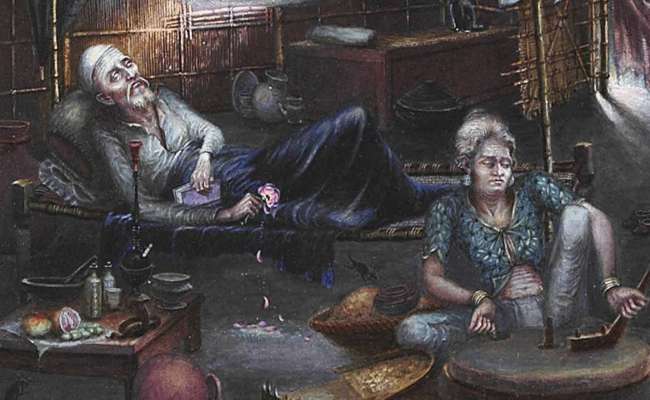
In the background as this princely convoy is moving a beggar known as Bahadur Shah is dragging himself on useless legs, begging on the streets of Shahjahanabad.

Who was this beggar? Why was he named Bahadur Shah?

An intense curiosity led me to research on the life of the Mughals after the fall of Delhi into the hands of the British on September 14, 1857.

Though hardly any English book bar Ahmed Ali’s describes the remaining Mughals, Urdu books of late 19th and early 20th century are full of it.

Ghalib himself describes it in two of his works, Dastanbu and the other is Roznamcha-e-Ghadar. Even though Ghalib was not critical of the British and hoped for their patronage and a pension, he still portrays the desolation of Shahjahanabad.

The major description of the plight of the innocents is found in Khwaja Hasan Nizami’s Begmaat ke Aansu, Zahir Dehalvi’s Dastan-e-Ghadar, Mirza Ahmad Akhtar’s Sawaneh Dehli, Syed Wazir Hasan Dehlvi’s Dilli ka Aakhiri Deedar and from Fughan-e-Dehli or the dirges written by many Urdu poets on the condition of royals left in Delhi.

The prince found begging on the streets of Delhi in 1911 finds mention in Khwaja Hasan Nizami’s (1873 – July 31, 1955) Begmaat ke Aansoo. His name was Mirza Nasir-ul Mulk and after escaping the British wrath in the immediate aftermath of the Uprising he had taken up employment along with his sister in a merchant’s house in Shahjahanabad.

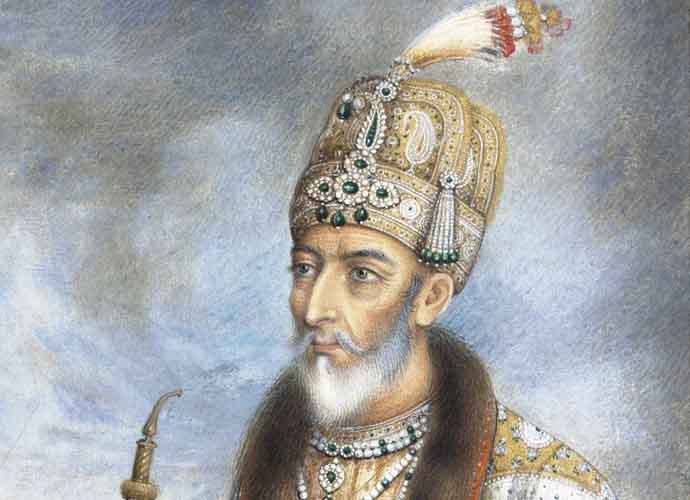
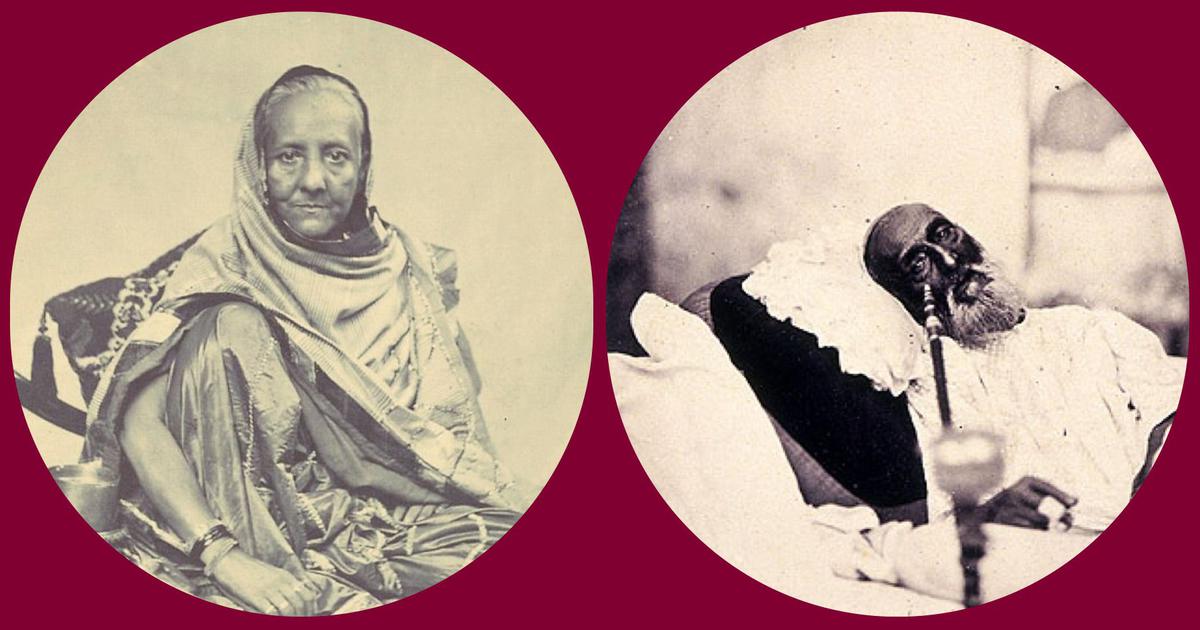
The last Mughal emperor, Bahadur Shah Zafar. (Photo credit: Google)

Later when the British government fixed a pension of Rs5/pm for the Mughal prince and princesses he had stopped working. Soon the pension was squandered away and he was in debt.

After a few years later a peer baba, who looked as if he was from the Timurid-Chengezi lineage used to drag himself around Chitli Qabr and Kamra Bangash area. His legs had been struck by paralysis. He had a bag tied around his neck and he would look at passersby mutely to ask for help. Those who knew who he was would throw in a few coins in his bag.

Someone asked who he was and was told that his name is Mirza Nasir-ul-Mulk and he is the grandson of Bahadur Shah.

Another prince, son of Bahadur Shah Zafar’s daughter Quraishia Begum was also begging on the streets of Shahjahanabad.

Known once as Sahib-e-Alam Mirza Qamar Sultan Bahadur, after the British took control of Delhi he was reduced to begging.

He would come out only at nights as he felt ashamed and embarrassed to be begging on the roads where people bent low to salute him when he rode in the streets.

Mirza Qamar Sultan asked for alms with an aristocratic air. He doesn’t address anyone just cried out, “Ya Allah please get me enough that I can buy provisions for myself.”

Khwaja Hasan Nizami wrote innumerable books on the events of 1857, all based on eyewitness accounts of survivors. One story which I found particularly moving was the story of the daughters of Mirza Kavaish who had been appointed the Heir Apparent of Bahadur Shah Zafar by the British overturning the claims of Mirza Jawan Bakht, the son of Bahadur Shah Zafar’s favourite wife Begum Zeenat Mahal.

In Begmaat ke Aansoo, Khwaja Hasan Nizami has described the story, which he heard from the princess herself.

Her name was Sultan Bano and she was the daughter of Mirza Kavaish Bahadur. When she met Khwaja Hasan Nizami she was 66-years-old but still remembered everything vividly. He recorded it in Begmaat ke Aansoo as Shahzadi ki Bipta.

She tells her story to Khwaja Hasan Nizami:

Although the ghadar took place 50 years ago I still remember it as clearly as if it was yesterday. I was 16-years-old then. I was two years younger than my brother Mirza Yavar Shah and six years older than my sister Naaz Bano, who died.

My name is Sultan Bano. My father Mirza Kavaish Bahadur (he was appointed the Crown Prince by the British in 1856, over the claims of Zeenat Mahal’s son Mirza Jawan Bakht). He was a favorite and able son of Hazrat Bahadur Shah.

We sisters were very fond of our brother Yawar Shah and it was reciprocated fully.

Aqa Bhai had a whole range of tutors who taught him every range of subject and various arts. He had expert calligraphers, Arabic and Persian scholars and ace archers teaching him.

We learnt embroidery, stitching and other household arts from Mughlanis.

The children that Huzur-e-Wala was very fond of would partake breakfast with him every morning. Zill-e-Subhani was very fond of me and I was always called for breakfast with him.

We didn’t observe purdah then or now. Strangers would come and go from the zenana mahal without a problem. But I was shy and I always kept my head covered and didn’t like coming in front of strange men. But I had to obey the orders of the Huzur, even though various male cousins also came there.

The saving grace for me was that because they were in the presence of the Emperor they all kept their gaze lowered. No one could look up or speak out of turn.

As per custom, Huzur-e-Moalla would offer a morsel from some special dish to a few of his children, that person whether young or old, male or female, would get up from their seat and go close to him and present three salams by bending from the waist.

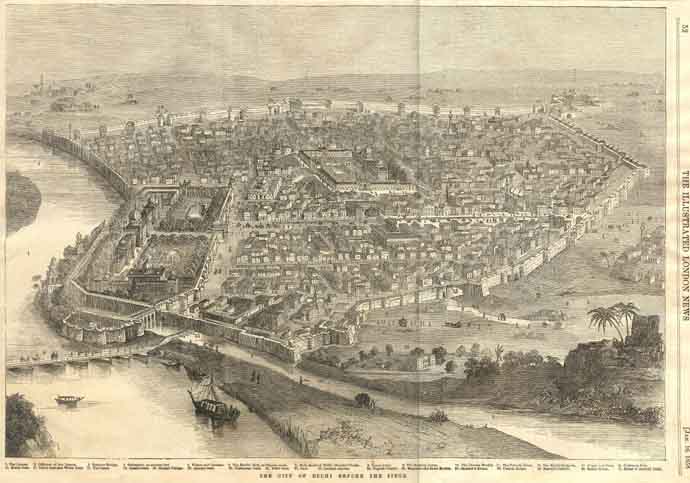
Shahjahanabad, Old Delhi. (Photo credit: Wikimedia Commons)

One day I was called and Huzur gave me a portion of a special Irani dish that had been mde that day. He said, “Sultana, you only peck at your food. It’s good to be respectful but you should not go to the extent that you get up hungry from the dastarkhwan.”

I presented three salams to him but only I know how I went there and came back. I was quaking and tripping over my feet.

Alas! Where did those happy days go? What happened to that era?

We would be roaming about in our palaces without a concern. Zill-e-Subhani’s shadow was on our head and we were addressed as Malika-e-Alam. Such are the ups and downs of life.

I remember the day clearly when Huzur-e-Moalla was arrested in Humayun’s maqbara and a gora shot my Chachajaan Mirza Abu Bakr Bahadur then Mirza Sohrab ran towards him with a naked sword. But he was shot by another gora and he fell down with an aah on chahchajaan’s corpse and died. I was standing there, still as a statue watching it mutely.

A khwaja Sara came and said, “Begum why are you standing here? Your Abbajaan is calling you.”

In a state of stupor I followed him.

Near the river gate, my father, Mirza Kavaish Bahadur was seated on a horse, bare headed and anxious. Abbajan’s hair was covered in dust and straw. He started crying when he saw me and said, “Farewell Sultana, I too am leaving. The light of my life, my young son, who I wanted to see with a sehra of pearls and flowers hiding his face in his wedding, was killed in front of my eyes by a Sikh soldier. ” I screamed loudly and started calling out, “O my brother Yawar.”

He dismounted and pacified naaz Bano and me and said, “Beti, now the goras are looking for me. I don’t know how much longer I can escape them or how much longer I have before my life is snuffed out. You are Masha Allah young and sensible pacify your younger sister and place your trust in God and be patient.

“I don’t know what will happen to either of us. I don’t want to leave you both alone but one day or the other you will be orphaned. Naaz Bano is a child, look after her and live a righteous life.

“Naaz Bano you are no longer a princess don’t throw tantrums or make demands. Just give thanks to Allah and eat whatever you can get. If someone is eating, don’t look at them or people will say Princesses are very greedy.”

He put us in charge of the Khwaja Sara and said, “Take them to where the other members of our family have gone.”

He embraced us and spurred his horse into the jungle. That was the last we saw of him and have no idea what happened to him after that. The Khwaja Sara was an old servant of our family and he set of with us. Naaz Bano walked for a little while but she had never walked in her pampered and protected life and soon her legs gave way.

She started crying. I had never walked much myself but somehow I managed and pulling Bano along stumbled my way through the streets where we once rode elephants in state processions.

A thorn pricked Naaz Bano’s foot and she fell down crying. I picked her up and tried to remove the thorn. The accursed Khwaja Sara kept watching, making no effort to help. He started pushing us to hurry up.

Naaz said, “Apajan I can’t walk anymore. Please ask the steward to send a palanquin for us.”

I started pacifying her through my tears. My heart felt as if it would burst with sorrow.

The Khwaja Sara said rudely, “That’s enough. Make a move now.”

Naaz Bano was high-spirited and was used to obeisance from servants and would always keep them in their place. She scolded the Khwaja Sara. The accursed man flew into a rage and slapped the poor orphaned princess.

Bano trembled with shock. No one had ever laid a hand on her. Even I started crying along with her. The Khwaja Sara walked off leaving the two of us crying there.

Somehow the two of us stumbled our way to the dargah of Hazrat Nizamuddin Auliya rahmatallah alaihe.

Thousands of people from Delhi and our family had taken refuge here. Each was caught up in their own troubles and fears. No one was talking to the other or enquiring after them.

A wave of epidemic diseases, which spread in the wake of the ghadar, claimed my sister’s life.

I was now all-alone.

Though peace returned to Delhi, there was no peace for me.

The British govt fixed a pension of Rs 5/pm for all of us and I still get that.

source: http://www.dailyo.in / DailyO.in / Home> Art & Culture / by Rana Safvi  / November 18th, 2016

Africa will witness massive growth in education in the next 15 years: Sajitha Bashir

Thiruvananthapuram, KERALA :

Bashir said in the next 15 years, Sub-Saharan Africa is poised for major education growth with the governments’ policy to form two million classrooms with two million teachers.

Thiruvananthapuram :

Africa is going to witness a major boom in primary and secondary education in the years to come, Sajitha Bashir, practice manager for education at the World Bank, told Express.

Bashir said in the next 15 years, Sub-Saharan Africa is poised for major education growth with the governments’ policy to form two million classrooms with two million teachers. Sajitha, vice-chairperson of the Vakkom Moulavi Foundation and closely related to the visionary, said she has been travelling across Africa and studying the progress achieved by countries in the Sub-Saharan regions in education as a senior World Bank official.

The World Bank team is into the design of the projects, monitoring, accountability, impact and financial implications. Bashir, an alumnus of the London School Of Economics, said there is a lot of improvement in the 48 African countries she is looking after, including Ethiopia, Sudan, Kenya, Rwanda and Tanzania. She said after the intervention of the World Bank, children have entered the system in Africa and this is a major development.

However, she said while children in South Africa, Zimbabwe, Kenya, Mauritius, Ghana and Botswana perform extremely well, children of countries like Nigeria, Ethiopia, Republic of Congo and Democratic Republic of Congo (DRC) are very poor in learning.

She also said the performance of children in international-level tests is bad and most children in several African countries are not even able to read a paragraph properly. The World Bank official also said the bank is even financing the production and distribution of school textbooks in African countries. Interestingly Dr Bashir said, “The high population rate is another factor creating a hindrance to the educational progress in these African countries and the fertility rate is 4 to 5 per cent which means a woman bears 4 or 5 children and this is a big challenge.”

source: http://www.newindianexpress.com / The New Indian Express / Home> Cities> Thiruvananthapuram / by Arun Lakshman / Express News Service / November 05th, 2018

Begum Hamida Habibullah

Hyderabad, TELANGANA / Lucknow, UTTAR PRADESH :

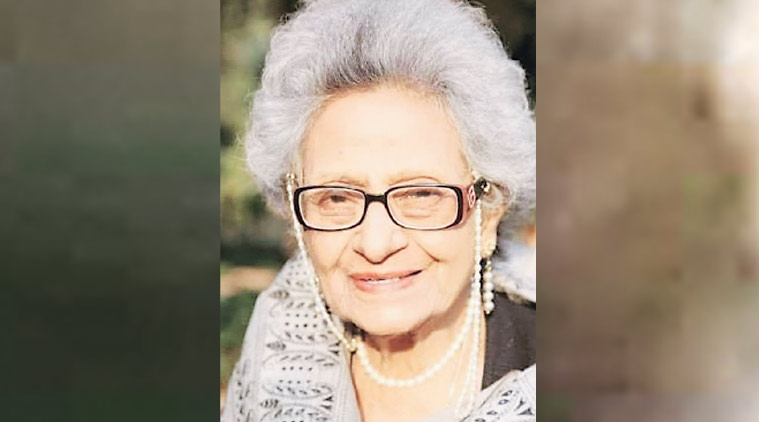
Begum Hamida Habibullah (1916-2018): Leader and enabler of women’s education in an eventful age

Born in 1916, she led a life and played a role that were not only unusual but also a testament to the times that made it possible.

Begum Hamida Habibullah

Begum Hamida Habibullah, who would have been 102 years old next November, died in Lucknow Tuesday. A woman with an unusual profile in an eventful period, she was a leading political figure and an enabler of education for women. Born in 1916, she led a life and played a role that were not only unusual but also a testament to the times that made it possible.

The daughter of Nawab Nazir Yar Jung Bahadur, once acting Chief Justice of Hyderabad High Court, Begum Hamida spent her childhood and early years in Hyderabad. A gold medallist from Osmania University, she also did a two-year teachers’ training course from Whitelands College (Putney), London.

Her marriage and work took her to Uttar Pradesh where she was among the founders of the Self Employed Women’s Association (SEWA); she worked hard to get it through the early years, long before it became a well-established brand.

She was married to Major General Enaith Habibullah, who fought in World War II, including in the battle of El Alamein in North Africa, and was also the founder commandant of the National Defence Academy, Khadakwasla.

Begum Hamida’s active political career began after her husband retired in 1965, when she was elected as an MLA from Haidergarh (Barabanki). She was minister for social and Harijan welfare, national integration and civil defence during 1971-73, and tourism minister during 1971-74.

These were times when the Uttar Pradesh Congress was among the most powerful committees in the country, and Begum Hamida served as a member, executive committee, of the UPCC until 1980. She was also elected to the All India Congress Committee from 1969. She headed the Mahila Congress in UP during 1972-76. Later, she went on to become a Rajya Sabha member from 1976 until 1982.

Furthering women’s education in the region is what is recognised as her true calling. She was the president of the Avadh Girls’ Degree College (AGDC), Lucknow’s first English degree college for girls, from 1975. She was also president, from 1975, of Talimgah-E-Niswan College, an institution of 3,500 catering to the education of Muslim girls and founded by her mother- in- law, the late Begum Inam Habibullah.

Her grand-nephew, writer Omair Ahmed, recalls how she represented an era when the Indian subcontinent was in the throes of the anti-colonial struggle but one could drive from “the military base in Rawalpindi to Srinagar”, where her husband was posted.

Omair Ahmed remembers how Begum Hamida casually mentioned the “beautiful drives” from Rawalpindi to Srinagar that she and “Bubbles” went on. “The ‘Bubbles’ she was referring to was her husband, Major General Enaith Habibullah. He was given the nickname because Habibullah sounds a bit like ‘hubble bubble’, the British slang for a hookah.”

Begum Hamida’s son, Wajahat Habibullah, is a former bureaucrat who served in Rajiv Gandhi’s PMO and retired as India’s Chief Information Commissioner.

source: http://www.indianexpress.com / The Indian Express / Home> India / by Seema Chisti, New Delhi / March 14th, 2018

The progressive princess of Hyderabad

Hyderabad :

Princess Durru Shehvar

Princess Durru Shehvar ushered modernity into Nizam’s household

The name of Durru Shehvar, the elder daughter-in-law of the Nizam of Hyderabad ,  Mir Osman Ali Khan, is remembered for the social and philanthropic work she so zealously engaged in Hyderabad. Born in Turkey, brought up in France but married to the son of the world’s richest man, the Nizam of Hyderabad, Princess Durru Shehvar chose to spend her last years in London. She brought modernity to the Nizam’s household and worked for the upliftment of women in Hyderabad.

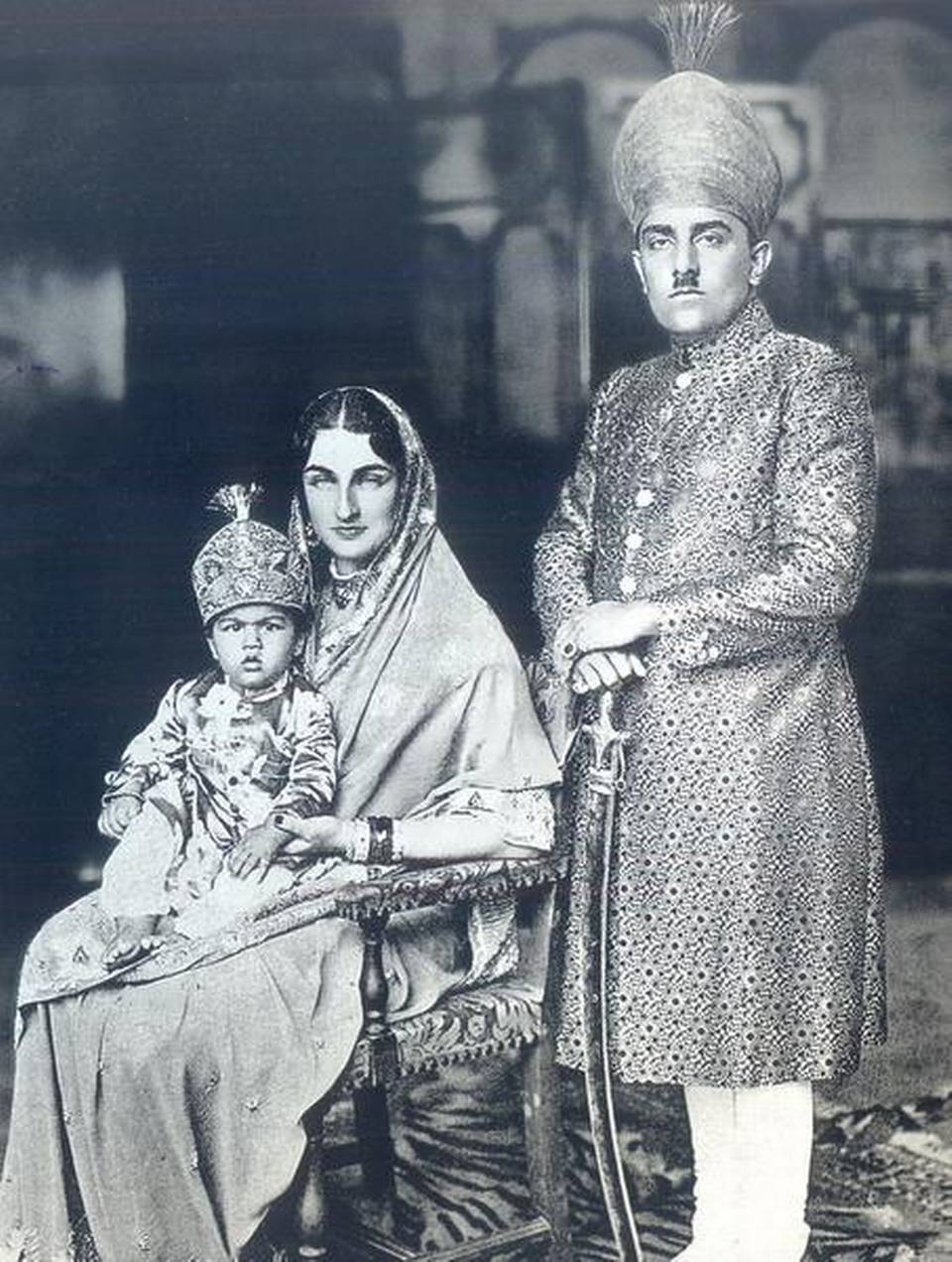
Her marriage with prince Azam Jah Bahadur, the elder son of the seventh Nizam, Mir Osman Ali Khan, resulted in the union of two illustrious Muslim families, the Turkish Caliphate and the Asaf Jahis of Hyderabad. Durru Shehvar, the only daughter of Abdul Majjid II, the Caliph of Turkey was born in 1914 and brought up with modern education, training in martial arts and was intended to succeed her father.

Nizam and the exiled Caliph

In March 1924 after Turkey became a Republic, the Caliphate was abolished and the royal family expelled. Abdul Majjid and his family settled in Nice, a southern French Mediterranean port city. The British Red Cresent Society , friendly with the deposed ruler appealed to Muslim rulers around the world to come to the aid of the impoverished Caliph. Persuaded by Maulana Shaukath Ali and his brother, Maulana Mohammad Ali, Nizam Mir Osman Ali Khan decided to send a life-time monthly pension of 300 pounds to the deposed Caliph, and allowances to several individuals in the family.

When Durru Shehvar, came of age, she was sought in marriage by several Muslim Royals including the Shah of Persia and the King of Egypt for their heirs. Shaukat Ali prevailed on the Nizam to send a proposal to the Caliph asking for Darru Shever’s hand for his elder son, Prince Azam Jah. The deposed Caliph could hardly reject the offer from his benefactor.

But it was not that easy; the Mehr (the bride money) of 50,000 pounds that the Caliph demanded for his daughter was “too big”, the Nizam felt. But with the intervention of Shaukath Ali, the Caliph proposed to offer for the same Mehr, the hand of his brother’s daughterNiloufer, for the Nizam’s younger son, Prince Mauzam Jah. The Nizam readily agreed and sent his two sons to France.

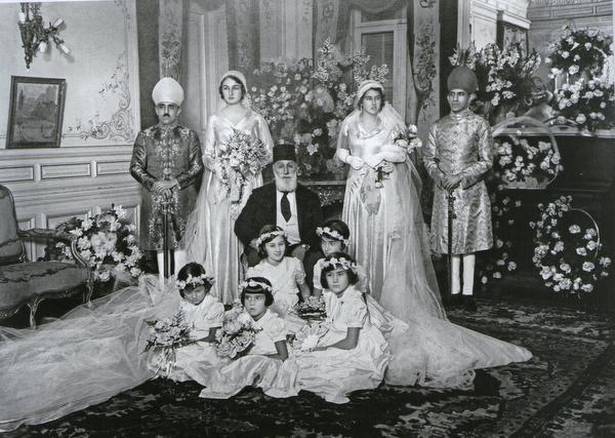
The marriage of Princess Durru Shehvar with Prince Azam Jah, along with that of Prince Mauzam and Niloufer took place in Nice, in France, on 12 November, 1931, in a simple ceremony attended by only a simple affair with only the members of Sultan’s family at Nice, a few Turkish nobles and friends as well as representatives of the Nizam — Sir Akbar Hydari and Nawab Mehdi Yar Jung, who happened to be in Europe at that time to attend the Round Table Conference. The Khalifa himself performed the ceremonies. All the offices and educational institutions in the Nizam’s dominions were given a holiday on the day.

A photograph of the princess and her family

Meeting the Mahatma

After a month of festivities in Nice, the Princes with their concerts set sail from Venice to India on December 12, 1931. The ship they were travelling in also contained a star co-passenger, Mahatma Gandhi, who was returning after attending the Second Round Table conference in London. Shaukat Ali, who was accompanying him, having known Gandhi’s sympathy for the exiled Caliph for whose restoration, he pleaded during his non-cooperation struggle, arranged a meeting of the young Hyderabadi Royals with Gandhi on the board of the ship.

However, there was a hitch Gandhi who was traveling in III class would not step into Ist. class where the young couples stayed; nor would the Hyderabad Princes be willing to go to III class where Gandhi stayed. Shoukath Ali, worked out a compromise and the meeting of Gandhi and the newly weds took place in a lounge in the II class.

Active in Hyderabad

In Hyderabad, Durru Shehvar soon identified herself with the people . With a great passion for providing health care and education for common people, she set up a general and children’s hospital in Purani Haveli, which still runs in her name. A Junior College for girls in Yakutpura, Bagh-e-Jahanara, is also run on the funds she provided. She inaugurated the Ajmal Khan Tibbiya College Hospital in Aligarh Muslim University (AMU) . The Nizam called her his precious Jewel (Nagina) and encouraged her to participate actively in Hyderabad’s social life. The proud father -in -lawloved to point out how Durru Shehvar was taller than his son. In the company of her friend Rani Kumudini Devi, she rode horses, drove cars and played Tennis. With her beauty and charm, etiquette and dress sense, she transformed Hyderabad’s social circuit.

Durru Shehvar also laid the foundation stone of the Begumpet Airport building in 1936. Until then a small strip at Hakimpet served as the airport for Hyderabad. She ensured her sons, Prince Mukarram Jah and Prince Muffakam Jah, received the best possible western education in Europe and married Turkish brides, as she desired. Mukarram studied in Eton, where India’s first prime minister, Jawaharlal Nehru had earlier studied. Years later, Mukarram, declared heir to Hyderabad throne, at the suggestion of his grandfather, Mir Osman Ali Khan, served as Honorary Aid De Camp (ADC) to Prime MinisterNehru!

Durru Shehvar was fluent in French, English, Turkish and Urdu and even contributed articles to French magazines. She believed that women should earn their own living and worked hard to remove the practice of purdah. However, there was a great gulf between the Princess and the Prince, Azam Jah and their marriage fell apart within few years. It is an irony that when she was born, her father, the Caliph was the head of all the Muslims in the world; but was overthrown and sent away in exile. After her marriage, Hyderabad state was abolished and integrated with the Indian Union in 1948. She faced fame and power as well as adversary, displacement and agony, all with equanimity, and won the hearts of the people in Hyderabad, where she spent most of her adult life.

Princess Durru Shehvar, after shifting permanently to London, frequented the city. Her last visit to the city was in 2004, two years before she passed away in London at the age of 92. With her death, ended a glorious chapter of Hyderabad.

source: http://www.thehindu.com / The Hindu / Home> Society> History & Culture – Nizam Matters / by KSS Seshan / October 30th, 2018

How Bahadur Shah Zafar’s daughter had to flee from Delhi after he lost his empire

INDIA :

A translation of one of the many stories collected by Khwaja Hasan Nizami about the survivors of the Mughal emperor’s family.

BahadurShahMPOs01nov2018

Khwaja Hasan Nizami wrote numerous books on the events that unfolded in 1857, all based on eyewitness accounts of the survivors. Begamat ke Aansu: Tears of the Begums are stories collected by Khwaja Hasan Nizami from the survivors of the Mughal family after the fall of Delhi in September 1857, when they had to flee from the Red Fort. Begamat ke Aansu was originally published in 1922 and has been reprinted many times since. This story is one of the accounts from Begamat ke Aansu. It describes Kulsum Zamani Begum’s escape from the Red Fort.

This is the true story of a female dervish who suffered through the travails of life. Her name was Kulsum Zamani Begum, and she was the pampered daughter of Delhi’s last emperor, Abu Zafar Bahadur Shah. Although she died a few years ago, I have heard her story from her own mouth many times. She was a sincere devotee of Mehboob-e-Ilahi Khwaja Nizamuddin Auliya and was so attached to his dargah that she would often come there. I would talk to her there and listen to her tragic tale. Whatever I have written down has been told to me either by her or her daughter, Zainab Zamani Begum, who is still alive and lives in Pandit ka Kucha.

Her story is narrated below in her own words:

“The night my Babajan lost his empire and the end was near, there was a tumult in Lal Qila. The very walls seemed to be weeping.

“The pearly white marble palaces had been blackened by soot from the gunfire and cannon shots in the past four months. No one had eaten for a day and a half. Zainab, my daughter, was a year-and-a-half old and crying for milk. Neither I nor any of the foster mothers were lactating because of the hunger and trouble all around us. We sat disconsolately when Hazrat Zill-e-Subhani’s special khwaja sara came to call us. It was midnight and the pin-drop silence was broken by intermittent cannon shots. We were terrified, but since Zill-e-Subhani had called us, we immediately left our palace and presented ourselves before him.

“Huzur sat on his prayer mat with a rosary in his hands. I stood before him and presented three salutations. Huzur called me close to him with great affection and said, ‘Kulsum, I entrust you to the care of Khuda. If fate permits, we will meet again. Go away immediately with your husband. I am also leaving. I don’t want to separate myself from my beloved children at this stage, but I don’t want to embroil you in my problems. If you are with me, destruction is certain. Maybe if you are alone, God will open a path of escape for you.’

“He raised his shaking hands in prayer and cried out to Allah, ‘Dear god, I entrust this orphan girl into your care. Brought up in magnificent palaces, they now venture into the wilderness and desolate jungles. They have no friends or protectors. Please protect the honour of these princesses of the Timurid dynasty. Preserve their honour. The entire Hindu and Muslim population of Hindustan are my children and trouble surrounds them all. Don’t let them suffer because of my actions. Give them relief from all troubles.’ With that, he patted my head, embraced Zainab, gave a few jewels to my husband Mirza Ziauddin, and sent us off along with Nur Mahal Saheba, who was Huzur’s begum.

“We left the Qila before dawn. My husband, Mirza Ziauddin, and the Badshah’s brother-in-law, Mirza Umar Sultan, accompanied the three women: myself and two other ladies, Nawab Nur Mahal and Hafiza Sultan, whose daughter was married to one of the emperor’s sons.

“When we climbed into our bullock cart, it was dawn. Only the morning star still twinkled in the sky, and all the other stars had vanished. We cast a last glance at the royal palace. We wept and yearned for what had once been our happy abode. Nawab Nur Mahal’s lashes were laden with tears and the morning star was reflected in them.

“We left the Lal Qila forever and reached Kurali village, where we rested for a while in the house of our cart driver. We were given bajra roti and some buttermilk. We were so hungry that the food tasted better than biryani and mutanjan.

“That night was spent peacefully, but the next day jats and gujjars from nearby areas came to loot Kurali. They were accompanied by hundreds of women who encircled us like witches. They took away all our jewellery and clothes. While these coarse women snatched the jewellery off our necks, we got a whiff of their breath which smelt so foul that we felt nauseous. After this, we didn’t even have enough money to buy ourselves our next meal. We didn’t know what was in store for us now.

“Zainab began to howl with hunger. A zamindar was passing by and I cried out, ‘Bhai, please give some water to this baby.’ The blessed man brought some water in an earthen cup and said, ‘From today, you are my sister and I’m your brother.’

“He was a well-to-do person from Kurali, and his name was Basti. He brought his cart and said he would take us wherever we wanted to go. We asked him to take us to Ijara, where Mir Faiz Ali, who was the shahi hakim and a long association with our family, lived. But when we reached Ijara, Mir Faiz Ali was extremely discourteous and refused to shelter us. ‘I am not going to destroy my house by giving you shelter,’ he told us.

“We were heartbroken and didn’t know what to do. Penniless and homeless, we were scared of the British forces chasing after us. Those who were eager to follow every glance of our eyes and obey even our slightest gestures had now turned away from us.

“And then there was Basti, who didn’t leave our side and fulfilled his covenant of calling me his sister. We left Ijara and set our destination as Hyderabad.”

Kulsum Zamani Begum eventually reached Hyderabad with her family and lived there for some time. For some time her husband made a living by making and selling calligraphic pieces and teaching the Quran but as the British influence spread to Hyderabad and they lived in fear of being arrested they were more or less housebound. Whatever jewellery had escaped loot on the way to Hyderabad had been sold off.

The son of Bahadur Shah Zafar’s spiritual master Kale Miyan Saheb Chisti Nizami Fakhri, heard of their plight and arranged finances for them. They left for Mecca to make the Hajj pilgrimage. Basti, who had stood by them like a rock, was sent home from Bombay with whatever reward they afford for his invaluable services.

“Aboard the ship, whoever heard that we were the Shah-e-Hind’s family was eager to meet us. We were all dressed in the clothes of dervishes. One Hindu, who owned a shop in Aden and had no idea who we were, asked us which sect of fakirs we belonged to. The question inflamed our wounded hearts. I replied, ‘We are the disciples of the Mazloom Shah Guru. He was our father and our guru. Sinners have snatched away his crown and separated us from him and exiled us into the wilderness. Now he longs for us, while we are restless and yearn for a glimpse of his face. That is the truth of our faqeeri.’

“The Hindu began to cry when he heard our story and said to us, ‘Bahadur Shah was our father and guru but what could we do? It was Lord Ram’s will, and an innocent man was destroyed.’”

They lived in Mecca for several years before returning to Delhi.

“When we came back, the British government took pity on us and fixed a sum of ten rupees per month for us. I laughed at this pension. They had taken away my father’s empire and offered us ten rupees as compensation.

“But then I remembered, this land belongs to god and he gives it to whoever he wants and takes it as he pleases. Man can do nothing about that.”

BahadurShah02MPOs01nov2018

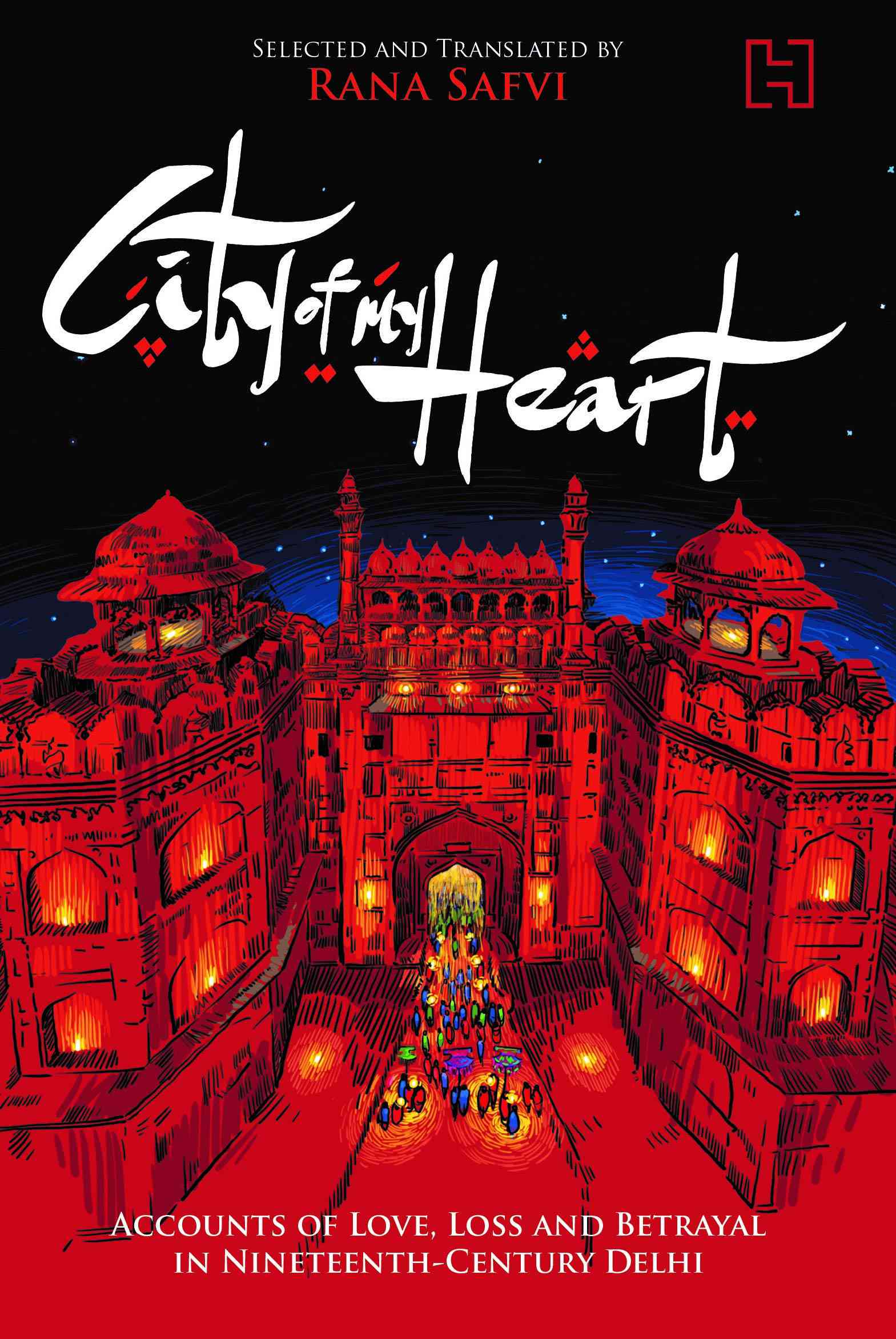
Excerpted with permission from City Of My Heart: Accounts Of Love, Loss And Betrayal In Nineteenth-Century Delhi, Selected and Translated by Rana Safvi, Hachette India.

source: http://www.scroll.in / Scroll.in / Home> Book Excerpt / by Khwaja Hasan Nizami & Rana Safvi / November 01st, 2018

A monument of generosity

Lucknow, UTTAR PRADESH / NEW  DELHI  :

BadaImambaraMPOs28oct2018

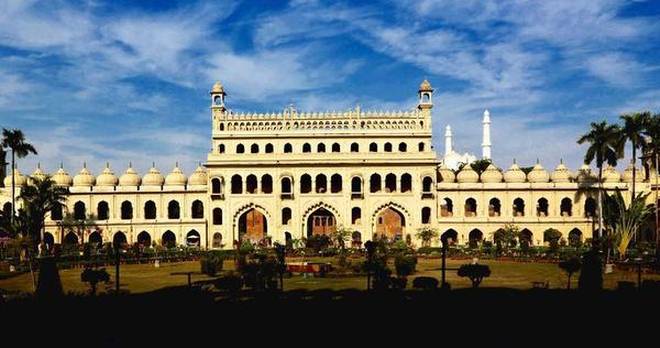
In the Bara Imambara which was built to employ people struck by a famine in 1784

I grew up in Lucknow amidst magnificent Nawabi architecture, in the syncretic and gentle culture of Awadh. It was a way of life where others were given more importance over the self. “Pehle aap (you first)” was a commonly used phrase while speaking. It is always a pleasure to return to the city that is said have once been ruled by Lakshman; where excavations show a continuous settlement dating from the first millennium BCE through the early Gupta, medieval and modern periods.

In 1732, Mughal emperor Muhammad Shah appointed Saadat Khan Burhan-ul-Mulk as the governor of Awadh. With Faizabad as his capital, Burhan-ul-Mulk was first in the line of rulers, known as the Nawabs of Awadh, whose contribution to Indian culture and history is invaluable. Asaf-ud-Daula, the fourth Nawab of Awadh, shifted the capital from Faizabad to Lucknow, and from 1775 to 1856, Lucknow was built by the Nawabs as a unique architectural city with a syncretic culture.

Features of Nawabi architecture

The geography of Lucknow meant that stone and marble, the main features of Mughal architecture, had to give way to lakhauri brick-and-lime plaster buildings. The main features of Nawabi architecture were bulbous domes, vaulted halls, chhatris and double arches, with the inner one pointed and the outer one foliated, but the main improvisation given the resources and the unavailability of stone was the beautiful stucco ornamentation on buildings along with plaster decoration in the interior. The stucco work gave a deep relief even on flat walls, but unfortunately, much of it has been lost in repairs and whitewashing. The variety of motifs ranging from floral designs, false arches and false domes that produce an exceptional surface articulation of walls, columns and ceilings remain for us to marvel at.

Many stunning religious and secular buildings were constructed, but as the Nawabs were Shia, magnificent imambaras were their special contribution to architecture. An imambara is the place where congregational assemblies are held to commemorate the sacrifices of Imam Hussain, the grandson of Prophet Muhammad who was martyred along with friends and male members of his family in the Battle of Karbala by Yezid, the ruler of Syria.

Of these buildings, nothing is grander than the Bara Imambara, built as a relief measure for a populace stricken by famine in 1784. Construction continued till the famine ended. It was a hard time for all, including the elite. To ensure that they were not embarrassed to be seen working for daily wages, it is said that payment was made at night. This gave rise to the saying, “Jisse na de Maula, use de Asaf-ud-Daula (he who doesn’t receive from Allah is provided for by Asaf-ud-Daula)”.

Nawab Asaf-ud-daula (1775-1797 CE) chose Kifayatullah as the main architect. The place chosen had the hut of an old woman, Laso Saquum, in which she kept a small tazia, a replica of the shrine of Imam Hussain. She was reluctant to give her land but when Asaf-ud-daula promised to keep her tazia in the imambara, she gave the land for free. The tazia is kept there even today. The architect only asked for land for his burial as fees. He is buried, along with Asaf-ud-Daula, in the central hall of the imambara.

Inside the Imambara

One can enter it through one of the two three-arched gateways separated by a grassy forecourt. Once you enter the second gateway, the sheer size and magnificence of the Bara Imambara affects you. On the left is the exquisite seven-level Shahi Baoli (stepwell), initially dug as a well during construction. As it was a perennial source of water, it was built as a guesthouse later. On the right is the Asafi mosque on a raised plinth flanked by minarets with an impressive flight of steps. It faces Mecca.

The main hall with its vaulted roof is one of the largest of its kind in the world. It is unsupported: no column, pillars, wood or iron was used here. Its unique architectural design gave birth to the famous bhool bhulaiyya, which is above the hall and came about unintentionally to support the weight of the building. This is a labyrinth of more than 1,000 passageways and 489 identical doorways. It is among the few existing mazes in the world. Its acoustics are such that a match being struck on the other side of the hall can be heard. I like exploring it but always with a guide. After all, one must live to explore another day!

source: http://www.thehindu.com / The Hindu / Home> Opinion> Columns> Where Stones Speak / by Rana Safvi / October 28th, 2018

Uncommon gesture: Minister tips cook Rs. 25k, trip to Umrah

KARNATAKA :

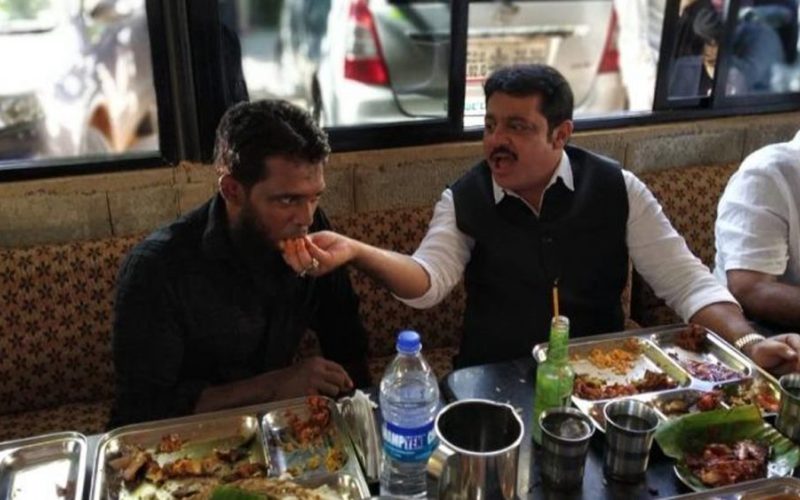
Image Courtesy: The News Minute

Mangaluru :

Impressed by the culinary skills of a Mangaluru cook, Karnataka minister gifts a cash of 25,000 as a tip and a pilgrimage to holy Makkah to perform Umrah.

According to reports, the Minister for Food and Civil Supplies BZ Zameer Ahmed Khan on Thursday (October 18) was in the coastal district for an official review meeting.

He went to ‘Fish Market,’ a seafood restaurant in Lower Bendoor for lunch along with the President of Wakf Committee UK Monu, Former MLA Mohiuddin Bawa and UT Iftikhar Ali, brother of minister UT Khader.

Haneef Mohammed, the 48-year-old chef and co-owner of the restaurants served the minister the local delicacies such as stuffed Pomfret and Green Tawa Pomfret along with rice preparations.

Such was the flavour and aroma of the sumptuous meal that the minister made the cook sit next to him, fed him a mouthful from his own plate.

“As I entered, the minister greeted me warmly. He made me sit next to him, fed me a mouthful of food and told me that he had never eaten such an appetising course of fish,” said the father of six, reported TNM.

Post lunch, he promptly handed over a hefty tip of Rs 25,000 to Haneef with a promised that he would pay for his Umrah (Islamic pilgrimage) as well.

Haneef, who has been a chef for the last 18 years, serving fish as his speciality said he never come across by such benevolent offer.

He distributed Rs 25,000 out of the tip to all the employees at his restaurant.

The legislator, who holds the post of Minority Welfare alongside the portfolio of Hajj and Wakf, famed for his generosity.

source:  http://www.siasat.com / The Siasat Daily / Home> Bangalore> Featured News> News> Top Stories / by Safoora / October 23rd, 2018

Another historical for Kannada

KARNATAKA :

MahmoudGawanMPOs26ocy2018

Chandrashekhar Kambar’s new historical play, Mahmoud Gawan, based on the life of the merchant who arrived in Bidar and later became the Prime Minister of the Bahmani Sultanate, will be released on Sunday

The word “global” is something that we come across not infrequently in literary discussions in recent times. It seems to be used in a very complimentary manner too. When we study it more closely, we see its multiple uses, ranging from the highly complimentary to the particularly disturbing connotations (especially, in the political and economic aspects of the so-called “globalization” phenomenon). Depending on the context, the philosophy implied in this use is vastly interesting.

In this context, dipping into pardonable autobiography, I must confess that my early acquaintance with the kind of writings I found in Chandrasekhar Kambar (this was back in 1964) was very new to my navya taste-buds of those days. This was around the time he wrote Helatini Kela . But, by the time Jokumaraswami arrived, I had begun to sense the fascinating spread of his literary intentions. The play seemed to insist on a message of passion (closely related to sexuality, the body, as well as the body politic!). The legitimacy of this passion was far more powerful than any petty legal correctness, or any mundane understanding of what constitutes the “moral” in our society. I was of course reminded of Lawrence. Kambar was utilizing passion as a powerful motive-free force, and constantly pushing at obstructions in its way. I became an avid follower of Kambar’s growth as a writer. His use of “sexuality” as a central and powerful theme and his struggle out of its grasp.

The latter part of his career witnesses an attempt to cover areas of creativity which could not be accommodated inside the constrictions of this strong force (note, however, a sliver of this sexuality is noticeable even in his latest play,Mahmoud Gawan ). I would assert that it is this constant and consistent presence which turns all of Kambar’s writing into his legitimate oeuvre.

Here was a writer, who, on the one hand was close to the North Karnataka folk and at the same time could engage the political and the modern predicament of our lives. You see this everywhere beginning from Helatini Kela , Rishyashringa , or Jokumaraswamy to the recent works like Shikharasoorya , Shivana Dangura orMahmoud Gawan . I would like to go back to what I began with, the idea of the “global” in relation to Kambar’s works. In what sense is Kambar global? It is true that at least in one of the recent novels globalisation and neo-colonialism figure predominantly (in Shivana Dangura ).

Could we try to identify an effort, more indirect, and subtler perhaps, to highlight an earlier moment in history, a moment that marked the international and inter-cultural ferment that characterised North Karnataka in his play, Mahmoud Gawan ? Interestingly, the choice of language in Gawan is not the kind of North Karnataka folk that Kambar worked with in say Helatini Kela or Jokumaraswami. I would describe the language of Gawan as Kambar’s idea of “neutral” Kannada, a conscious avoidance of the folk dialect. Again, look at the choice of the central figure in this play, Gawan. Hee is a foreigner, a non-Kannada person. He enters the world of Bahamani politics in the North Karnataka of fourteenth and fifteenth centuries. All these, I would venture to suggest, point towards a movement, a possibility, beyond the strictly local and Kannada contexts. In other words, Kambar is found testing his talent in handling something beyond what could be identified as exclusively Kannada, Karnataka. The significance of this kind of language use is for Kambar like playing a field without his arch-player—the folk tongue! Does he succeed in working this language, playing in this new field? Perhaps in a manner that is different from say Jokumaraswamy , where he is using sexual passion in order to design and project the drama experience, he is trying to move into other spaces in which his choice of an “other” Kannada could function adequately. This kind of language lends itself more easily to translation across other linguistic contexts. The absence of localism in itself is a strong pointer towards achieving such a global presence.

Could we simply say perhaps that Kambar moved from passion to politics—apparently, it seems so. This also begs the question, why? It is my opinion that an author like Kambar, a writer of immense literary imagination, constantly feels the need to move out of his familiar area of creativity and attempts to work in other new areas. As a result, politics becomes the main driving force in a play like Gawan . Overall, he succeeds in creating a layered experience of such historical and political play-fields. In Gawan , you see an extension of the literary Kambar, of Kambar’s entire literary oeuvre. And to say that is to acknowledge a serious happening in contemporary Kannada literature.

Finally, I invite my reader to look at Mahmoud Gawan, the protagonist. Here is a foreigner, theoretically foreign to the land and its language. His wisdom and his calming presence, his overarching ambition to unite people, places, religions, and gods—these are things crucially and painfully relevant to us and our times, times of cruelty and abhorrent insensitivity. In times where you see the cream of the population failing to respond to the degradation of all that is human, all that is noble and valuable in human experience.

In Gawan’s cosmos, Allah and Vitthala still fuse brilliantly—one as the implied presence and the latter as the explicit presence in the final scene. The play moves towards a certain sense of legitimization of this conclusion, the hope of better times to come. In a way, the encompassing presence of Gawan—the philosopher, educator, the saint, foreigner, and a soldier—should take us back to the classical idea of the function of literature, what literature should do—“to educate and entertain.” A closer look at the play would also perhaps clear our hearts and minds, making us look around at our own times with a sharply critical eye.

(Mahmoud Gawan by Chandrashekhar Kambar will be released on October 28 at 10. 30 a.m., Indian Institute of World Culture, B.P. Wadia Road, Bangalore).

(The author is a critic and musician of repute)

source: http://www.thehindu.com / The Hindu / Home> Features> Friday Review / by Dr. Rajeev Taranth / October 26th, 2018