Unveiling a tale that is sure to tease your taste buds, we trace the gastronomic journey of Mughal cuisine in India from Babur to Aurangzeb.
One of the most powerful dynasties of the medieval world, the Mughals are entwined inseparably with India’s history and culture. From art and culture to architecture, they bequeathed to this country a substantial legacy that lives on even today.
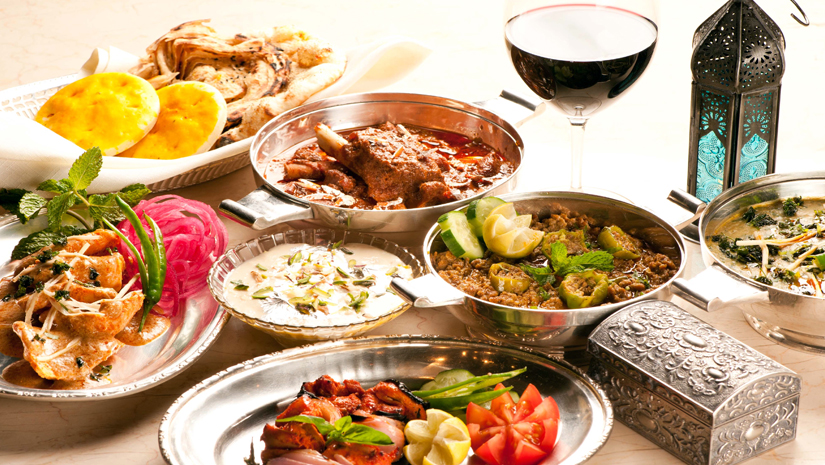
But what often gets forgotten is that they also left us a rich culinary legacy — the deliciously complex blend of flavours, spices, and aromas called Mughlai cuisine.
Tracing the origins of this cuisine in India, we unveil a tale that is sure to tease your taste buds!
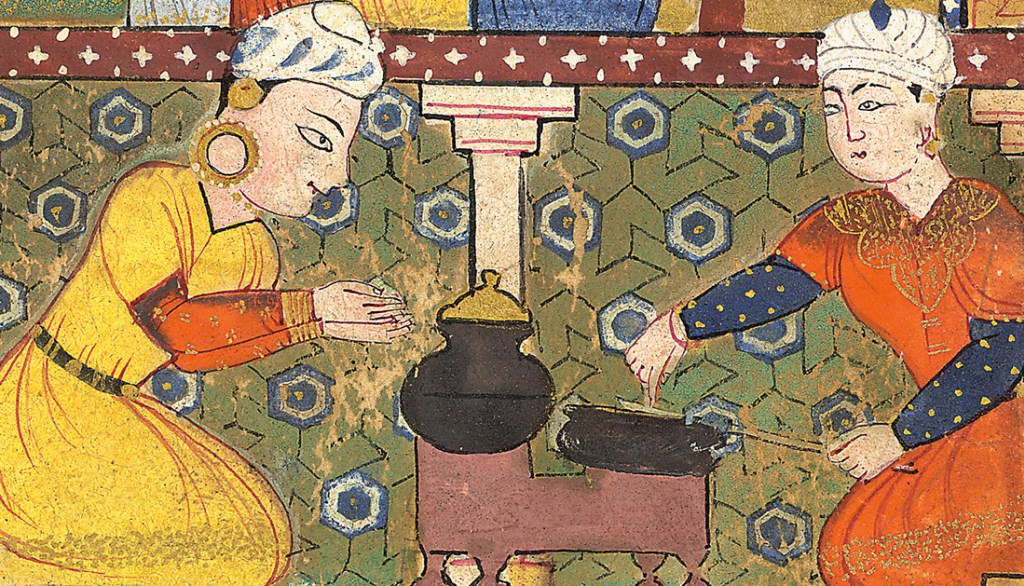
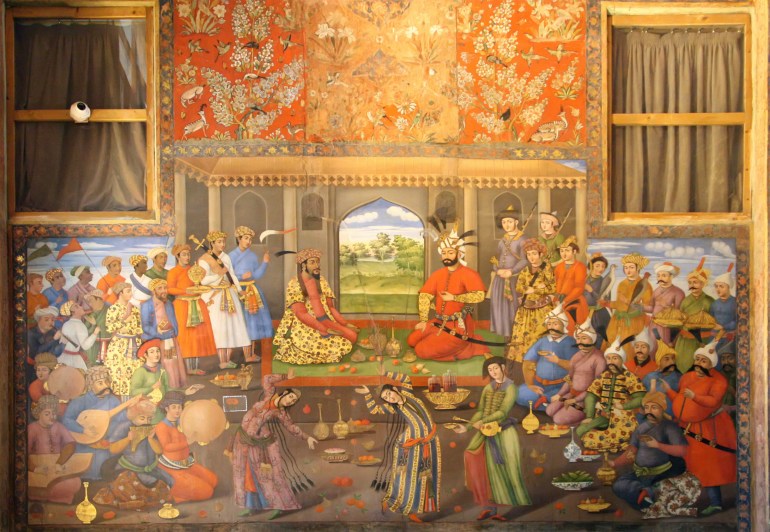
Lavish and extravagant in taste, the Mughals were connoisseurs of rich, complex and sumptuous recipes. Creating such dishes meant that cooking in royal kitchens was a riot of colours, fragrances, and harried experiments.
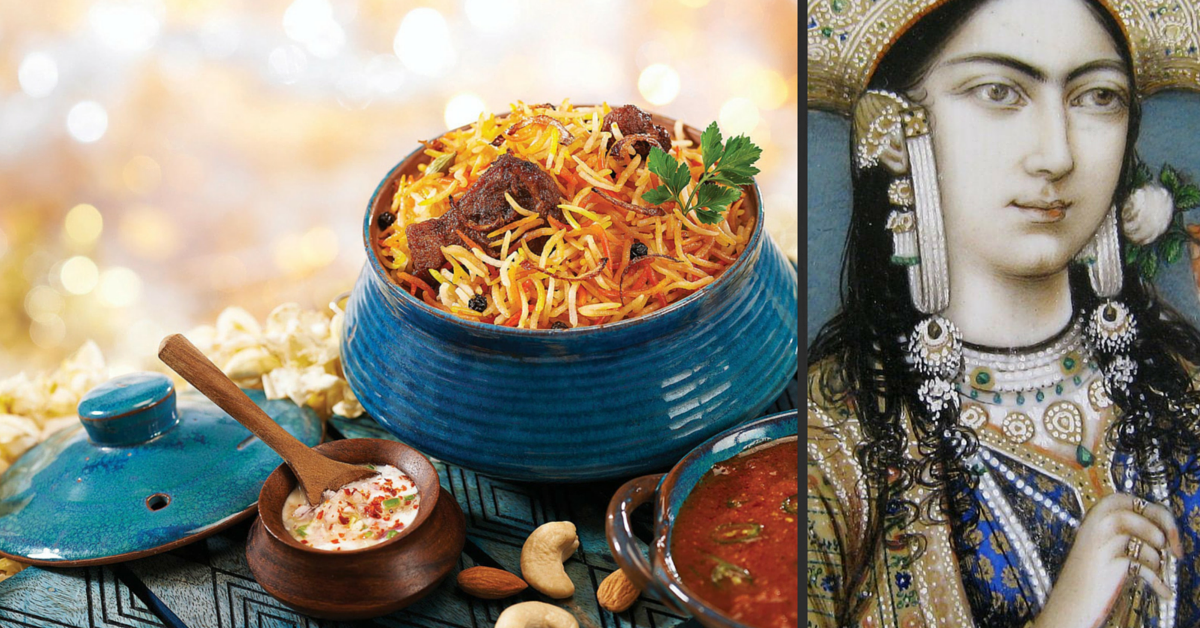
Curries and gravies were often made richer with milk, cream and yoghurt, with dishes being garnished with edible flowers and foils of precious metals like gold and silver.
It was also not uncommon for the shahikhansama (chief cook) to consult with the shahihakim (chief physician) while planning the royal menu, making sure to include medicinally beneficial ingredients. For instance, each grain of rice for the biryani was coated with silver-flecked oil (this was believed to aid digestion and act as an aphrodisiac).
Flavour-wise, the royal cuisine of the Mughals was an amalgamation of all kinds of culinary traditions: Uzbek, Persian, Afghani, Kashmiri, Punjabi and a touch of the Deccan. Interestingly, Shah Jahan’s recipe book Nuskhah-yi Shah Jahani reveals much about the intermingling of these traditions in the imperial kitchens, including a fascinating account of the then-world’s largest sugar lump!
As for the contributions of the Mughal emperors themselves, each of them added his own chapter.
The foundation, of course, was laid by Babur — the dynastic founder who brought to India not just an army, but immense nostalgia for a childhood spent in the craggy mountains of Uzbekistan.
Not a fan of Indian food, he prefered the cuisine of his native Samarkand, especially the fruits. A legend has it that the the first Mughal emperor would often be moved to tears by the sweet flavour of melons, a painful reminder of the home he’d lost. Interestingly though, he loved fish – which he did not get back in Uzbekistan!
Historical accounts also reveal the prevalence of cooking in earth ovens — earthen pots full of rice, spices and whatever meats were available would be buried in hot pits, before being eventually dug up and served to the warriors. As this suggests, Babur’s cooks were primarily attuned to war campaign diets and employed simple grilling techniques that utilised Indian ingredients.
On the other hand, Humayun — an emperor who spent much of his life in exile — brought Persian influences to the Mughal table. More accurately, it was his Iranian wife Hamida who introduced the lavish use of saffron and dry fruits in the royal kitchens during the first half of the 16th century.
Humayun was also immensely fond of sherbet. So beverages in the royal household began being flavoured with fruits. As such, ice was brought from the mountains to keep the drinks cool and palatable.
However, it was during Akbar’s reign that Mughlai cuisine truly began evolving. Thanks to his many marital alliances, his cooks came from all corners of India and fused their cooking styles with Persian flavours.
The result? Some of the most unique, elaborate and delicious meals in Mughlai food.
Take, for instance, the magnificent Murgh Musallam, a whole, masala-marinated chicken stuffed with a spice-infused mixture of minced meat and boiled eggs before being slow-cooked.
Or Navratan Korma (curry of nine gems), a deceptively delicious dish prepared from nine different vegetables coated in a subtly sweet cashew-and-cream sauce.
Interestingly, Akbar was a vegetarian three times a week and even cultivated his own kitchen garden — the emperor ensured that his plants were carefully nourished with rosewater so that the vegetables would smell fragrant on being cooked!
Akbar’s wife, Jodha Bai, is also believed to have introduced panchmeldal (also called panchratna dal) into the predominantly non-vegetarian Mughal kitchen, along with a handful of other vegetarian dishes. It became such a big hit with Mughal royalty that by the time Shah Jahan took over the throne, the court had its own shahi panchmel dal recipe!
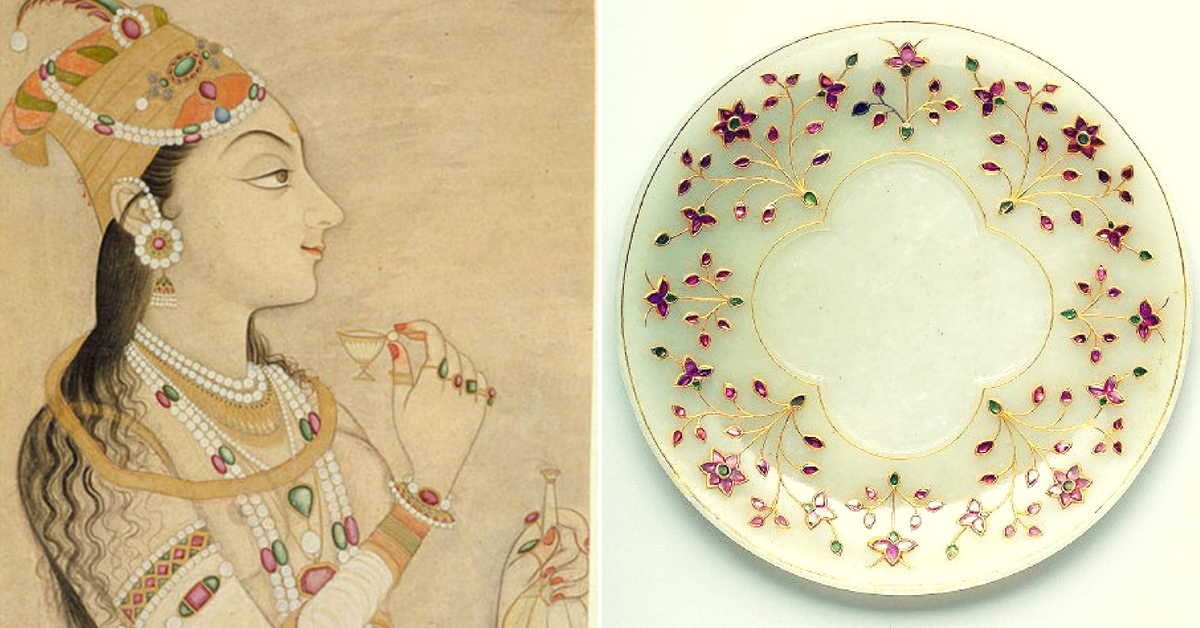
Mughlai cuisine continued to evolve swiftly during Jehangir’s reign. The reins of the empire lay with his twentieth wife, Mehr-un-Nisa (better known as Nur Jahan). An enormously powerful figure at the royal court, the empress would often be gifted unique preparations by visiting traders from European nations such as France, Britain and Netherlands.
A true aesthete by nature, Nur Jahan used these ideas to create her legendary wines, rainbow-coloured yoghurt and dishes decorated with pretty patterns of rice powder glaze and candied fruit peels!
Noor Jahan (left) and her plate — it was decorated with an inlay of rubies, emerald and gold thread.
However, it was during the reign of Jehangir’s son that the Mughal cuisine reached its zenith. The greatest of the Mughals in pomp and show, Shah Jahan’s first step was to enlarge the menu devised by his father and grandfather.
He instructed his cooks to add more of spices like haldi, jeera and dhania to royal recipes for their medicinal properties. Interestingly, a legend has it that his cooks also added red chilli powder to keep evil spirits at bay!
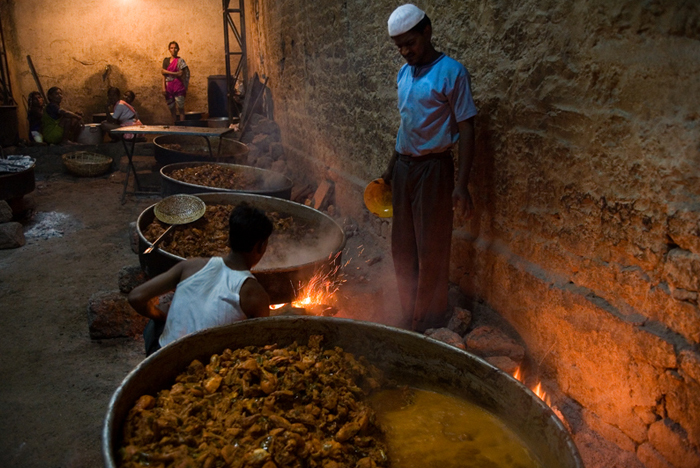
Another legend explains the origins of the nihari, a spicy meat stew that is slow-cooked overnight in large cauldrons called shab deg. This is how the story goes:
In the 17th century, soon after Shah Jahan established his capital in Delhi, a virulent flu swept through the sprawling city. It was then that the shahi khansama and the shahi hakim joined their hands to devise a robust spice-packed stew that would keep the body warm and fortified!
Interesting, another popular story traces the origins of biryani to Mumtaz Mahal, Shah Jahan’s beautiful queen who inspired the Taj Mahal.
It is said that Mumtaz once visited the army barracks and found the Mughal soldiers looking weak and undernourished. She asked the chef to prepare a special dish that combined meat and rice to provide balanced nutrition to the soldiers – and the result was the biryani of course!
The extravagance of Mughlai cuisine during Shah Jahan’s reign was toned down by his son Aurangzeb.
The most religious and frugal of all the Mughal emperors, Aurangzeb fancied vegetarian dishes like the aforementioned panchmel dal more than the roast meat dishes that found favour with his uncles and brothers.
According to Rukat-e-Alamgiri (a book with letters from Aurangzeb to his son), Qubooli — an elaborate biryani made with rice, basil, Bengal gram, dried apricot, almond and curd — also held a place of pride on the dining table of Aurangzeb.
It was also during Aurangzeb’s reign the intermingling of Mughal and Deccan culinary traditions gained momentum (the kitchen moved with the emperor when he went on wars). During this time, Agra and Delhi started to lose their preeminence as hubs of Mughal culture, with the focus shifting to cities like Hyderabad and Lucknow.
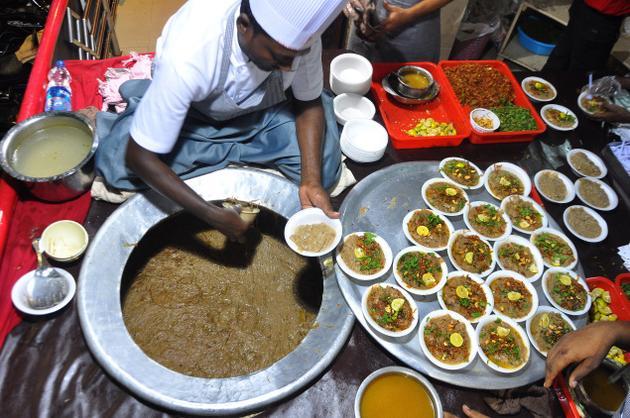
Take, for instance, haleem, present-day Hyderabad’s favourite Ramzan street food which also has a prized Geographical Indication (GI) tag.
A deliciously thick paste of meat, wheat, spices and ghee, haleem‘s first recorded appearance in India was in the 16th century according to the historical text Ain-i-Akbari.
Written by Abul Fazl, the book also mentions that there was a Minister of Kitchen during the reign of Akbar.
While the dish’s exact origins are difficult to pinpoint, haleem is believed to have made its gastronomical journey to the Deccan during the Mughal era.
In the years to come, the secrets of the imperial kitchens gradually made their way across the country — not just to the royal kitchens of princely states but also to the gullies and bazaars of many Indian towns.
And over the centuries, they made their way to fancy restaurants, old-school outlets and home delivery services in bustling cosmopolitan cities.
So the next time you dial for Mughlai paratha and Reshmi Tikka, spend a minute thinking about (and perhaps, thanking) all those food-loving emperors, their fashionable wives and their hardworking khansamas!
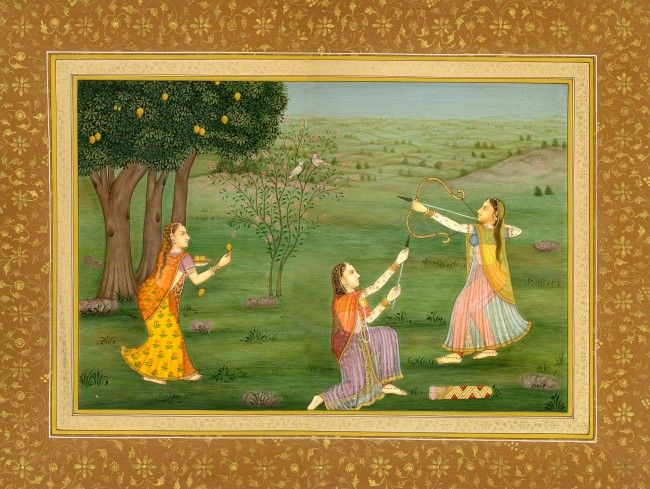
Interestingly, the tale of Mughal culinary culture is incomplete without a mention of the dynasty’s fondness for mangoes!
A sole exception to this rule, Babur had little time for mangoes. However, such was Humayun’s love for the fruit that he took care to ensure a good supply of mangoes (through a well-established courier system) while on the run from India to Kabul.
A painting of royal women shooting down mangoes during the Mughal era.
Akbar built the vast Lakhi Bagh near Darbhanga, growing over a hundred thousand mango trees. This was one of the earliest examples of the grafting of mangoes, including the Totapuri, the Rataul and the expensive Kesar.
Shah Jahan’s fondness for mangoes was so deep that he had his own son, Aurangzeb, punished and placed under house arrest because the latter kept all the mangoes in the palace for himself!
In fact, Jehangir and Shah Jahan even awarded their khansamas for their unique creations like Aam Panna, Aam ka Lauz and Aam Ka Meetha Pulao (a delicate mango dessert sold all through the summer in Shahjahanabad). It was also mangoes that Aurangzeb sent to Shah Abbas of Persia to support him in his fight for the throne!
(Edited By Vinayak Hegde)
source: http://www.thebetterindia.com / The Better India / Home> Food> History> India / by Sanchari Pal / August 31st, 2018
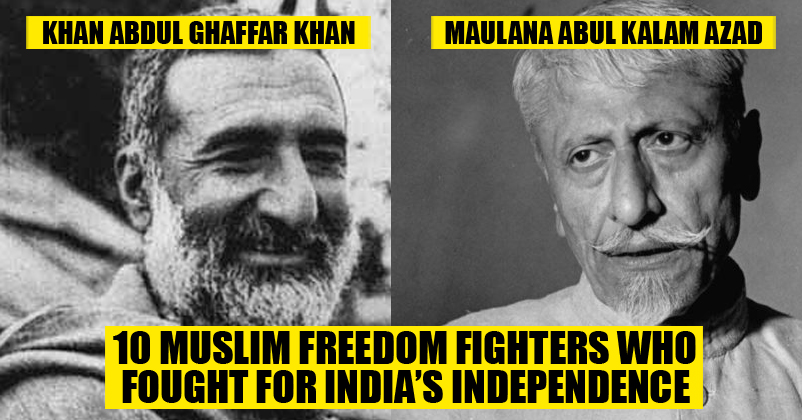
Ironically, in our present day India, even freedom fighters are judged on the basis of their religion. Many people believe Muslims didn’t contribute to India’s Independence from the British rule. To make it worse, there are not many sources available that disclose Muslims’ contribution to India’s Independence.
To break the myth of every person who believes Muslims have given no contribution to India’s history, we have tried to come up with a list of 11 Muslim fighters who fought for India’s Independence and are still present somewhere in India’s history.
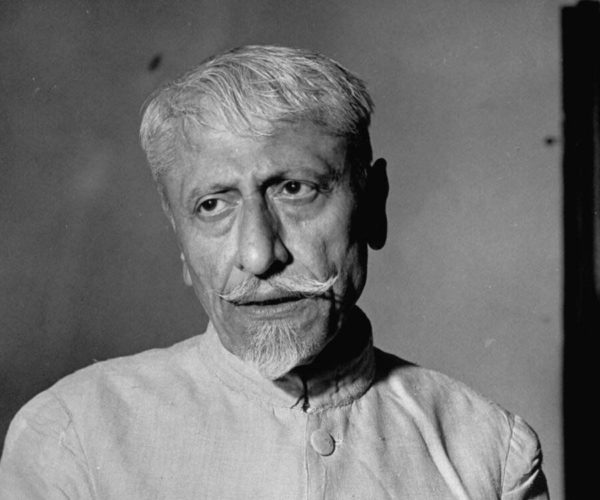
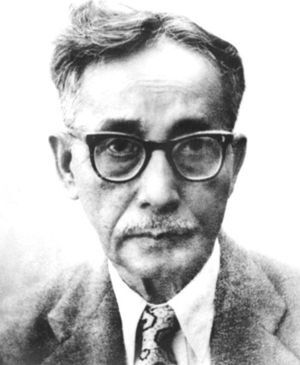
Maulana Abul Kalam Azad
One of the greatest freedom fighters of India, Maulana Abul Kalam Azad, is our first name of Muslim Freedom Fighters. His service to the nation didn’t just stop after India became independent, he continued serving India till his last breath. He first took part in India’s Independence aged just 16. In his second stint as Congress President, He started the Quit India Movement. He was the first education minister of India. He was conferred a Bharat Ratna in the year 1922. Maulana Abul Kalam Azad, after serving the country for over 50 years, breathed his last on 22 February 1958.
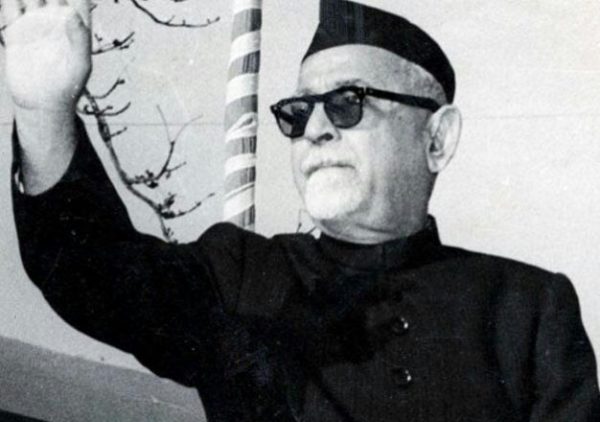
Dr. Zakir Husain
Another Bharat Ratna awardee, Dr. Zakir Husain was the third president of independent India and also the first Muslim president of India. He was a stern follower of Mahatma Gandhi’s non-violence policies. He believed that education was essential to make the Indian youth capable of fighting against the British and thus focused on empowering the education system. He acted as the Vice Chancellor of Jamia Millia Islamia for 22 years (1926-48) and made it one of the finest educational institute of India. He died on 3 May 1969 becoming the first Indian president to die on duty.
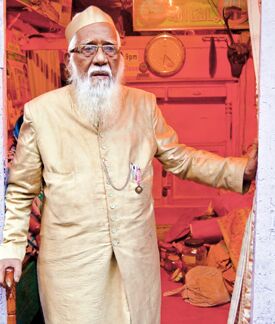
Syed Mohammad Sharfuddin Quadri
A forgotten hero of India’s freedom struggle, Syed Mohammad Sharfuddin Quadri is included in our list for his supreme acts of nobility. He joined India’s freedom struggle during the Salt Satyagraha movement in 1930. He ably supported Mahatma Gandhi in every struggle and was imprisoned in the same cell as Mahatma Gandhi. Even after independence, he stayed away from politics and still continued to contribute his bit to the nation. He died on 30 December 2015, at the age of 114, 8 years after getting awarded with a Padma Bhushan.
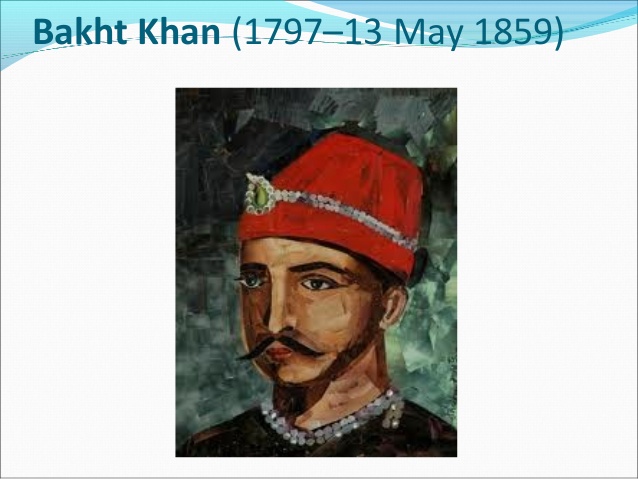
Bakht Khan
Hailing from Bijnor district of Uttar Pradesh, Bakht Khan was a major part of the rebellion of 1857. An experienced army-man, Bakht Khan served as a Subedar in the Army of East India Company. Bakht Khan took command of the rebel forces. He lacked ammunitions, food and other necessities and still managed to improve the standard of rebellion forces drastically. His strong and powerful rebellion activities prompted the British rulers to launch a man hunt. In May of 1859, the British had their prime target, Bakht Khan, shot dead.
Muzaffar Ahmed
Born in the present day Bangladesh, Muzaffar Ahmed initiated a magazine Navayug to promote the nationalist feeling amongst the Indian youth. He was one of the founders of the communist party of India. He was jailed several times for his involvement in various conspicuous deaths of British officers. The headquarters of Communist Party Of India in Kolkata is named after him. He died in Kolkata in the year 1973.
Mohammad Abdur Rahiman
Born in the Thrissur district of Kerala in the year 1898, Mohammad Abdur Rahiman was known for his heroics in restoring peace in the riot affected areas of 1921. He was jailed for two years for the same. He practised Salt Satyagraha and was again sentenced for rigorous imprisonment for 7 months. He mobilised the Muslim masses against the two nation theory of Muslim league Party. Soon after addressing a public meeting at Kodiyathur on 23 November 1945, he breathed his last.
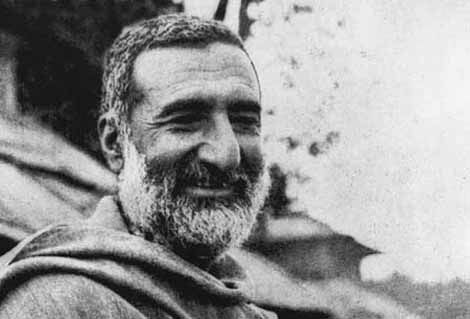
Khan Abdul Ghaffar Khan
Known as ‘Frontier Gandhi’, Khan Abdul Ghaffar Khan was one of the major reasons behind the Britishers leaving India. He pioneered the famous Khudai Khidmatgar (“Servants of God”) movement in 1929 and it successfully guided it to its Destiny. After independence, he opposed the partition of India but failed. He moved to Pakistan and started a movement for a separate Baloch province. He was jailed many times for the same cause. He died in 1988. During that period, a war was going on between the Afghani rebels and soviet forces. However, both sides halted their proceedings to lend a tribute to this legend.
Abbas Ali
Inspired by Bhagat Singh and Chandrashekhar Azad, Abbas Ali joined the Indian freedom movement in his teenage after completing his education. He joined the Indian National Army (INA) or the ‘Azad Hind Fauj’ and was subsequently court-martialled and sentenced to death. However, before he could serve his punishment, India attained independence and Abbas was eventually set free. He was in jail for over 50 times all throughout his life and stayed in jail for 19 months when Indira Gandhi imposed the emergency. He died on 11 October 2014 due to a heart failure.
Asaf Ali
When tons and tons of freedom fighters were getting jailed everyday, Asaf Ali stepped up and fought their legal battles to bail them out. He was even jailed alongside Jawaharlal Nehru. He participated in the ‘Quit India Movement’ and did everything he could for helping India achieve independence. On 1 April 1953, Asaf Ali died in Bern (Switzerland) while serving as India’s representative. A postal stamp was issued in his honour in 1989.
Maulana Mazharul Haque
Born in Patna district of Bihar on 22 December 1886, Maulana Mazharul Haque was known for his his social works during the famine of 1897. He became the Vice Chairman of Bihar Congress Committee and started taking part in the freedom struggle. He played a major role in making the Non-Cooperation and Khilafat Movements and the Champaran Satyagraha a success. He died in January 1930 before which he donated every single bit of his property for encouraging education. In his honour, in April 1988, the Maulana Mazharul Haque Arabic and Persian University was founded at Patna.
Not just these 10, there are many many more of such brave souls who fought for their nation while being active followers of Islam. Maghfoor Ahmad Ajazi, Saifuddin Kitchlew, Moulvi Mohammad Baqir, Vakkom Majeed and many more names can be added to this list.
Yes patriotism is a religion in itself and tagging it with another religion is completely unacceptable. Do let us know if you know about other such Muslim Freedom Fighters in our comments section below.
source: http://www.rvcj.com / RVCJ / Home> Extras / by Kashif Sheikh / February 13th, 2017
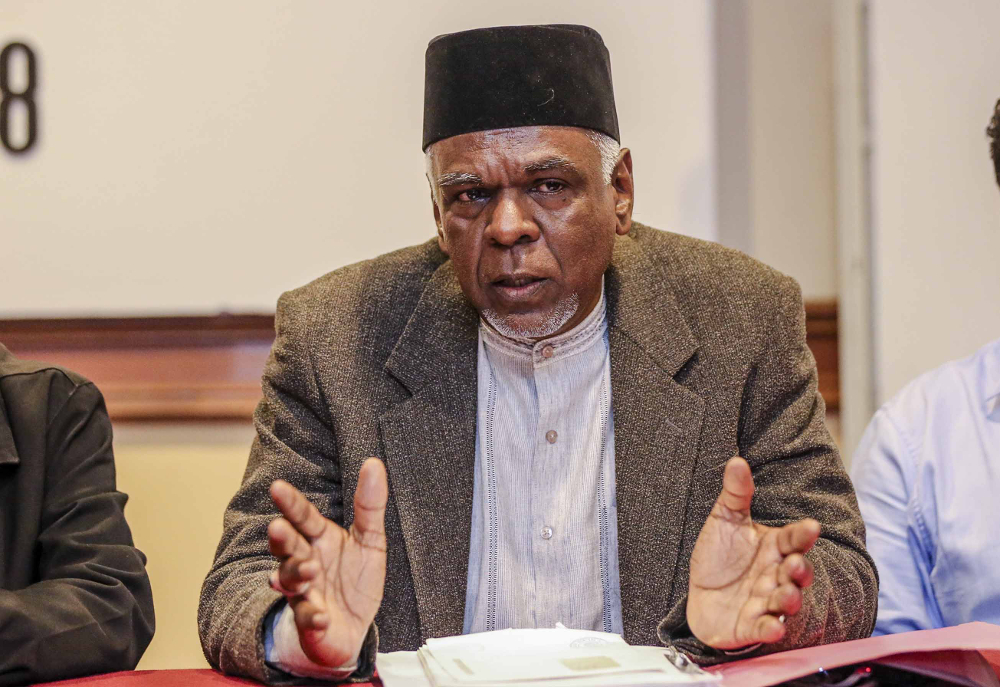
Muslim People’s Coalition president Amir Amsaa Alla Pitchay speaks during a press conference in Kuala Lumpur August 5, 2018. — Picture by Firdaus Latif
Kuala Lumpur :A group comprising mostly Indian Muslims urged the government today to appoint a senator to champion minority rights.The Malaysia Muslim People Coalition (Irimm) headed by Amir Amsaa Alla Pitchay, who used to be president of the pro-Barisan Nasional (BN) Malaysian Indian Muslim Congress (Kimma), also declared their support for the Pakatan Harapan (PH) government.
“We (Irimm) do not have any senatorship to highlight or voice our grievances from the grassroots through to the ministry level,” said Irimm president Amir Amsaa Alla Pitchay.
“This kind of things is where PH has to engage and appoint a person in every state to help the community,” he added.
Irimm, with just over 5,000 members nationwide, was formed in 2012 to champion the cause and help Muslim-minority communities in the country.
Amir Amsaa said he hopes that with the support of the PH government, more large scale events and welfare programmes can be organised and executed by Irimm.
He added the coalition was in the process of reaching out to Prime Minister Tun Dr Mahathir Mohamad and Deputy Prime Minister Datuk Seri Dr Wan Azizah Wan Ismail to arrange a meeting to officiate their support towards PH.
“We hope to have large scale events with the government’s support, as we are also looking to have the support of the ministers to help the causes we are championing,” he said.
source: http://www.malaymail.com / Malay Mail / Home> Malaysia / by Emmanuel Santa Maria Chia / August 05th, 2018
Bijnor, Rohilkhand (Mughal Empire) / BRITISH INDIA :
On India’s independence day we remember a forgotten hero from our history
Bakht Khan: Winner of a lost battle
Second of July 1857, a hot humid day some one hundred and fifty-five summers ago, a contingent of about 250 men in their Bareilly regiment uniforms arrives in Dilli of the time, the world renowned Red Fort to be precise. Mounted on their horses, they march past the Laal Purdah [1][entrance to the private chambers of the last Mughal King]. The General of the regiment marches too albeit without the customary bowing down of his head; much to the outrage of those present at the court. But what happens next would seem rather more sacrilegious. That unbending commander of the arriving regiment, a tall and corpulent man of Rohilla stock appears least caring about the sensation he creates and the protest that comes his way, he moves forward and ‘salaams’ the King as if he is an equal.[2] But the King, Zille Sub-haani, Khaleefatur Rehmani, Khudawand e Majaazi, Hazrat Abul Zafar Sirajuddin Bahadur Shah Zafar is helpless.
The man in the eye of this little storm was General Bakht Khan, Commander of the Neemuch brigade, of the Army of East India Company, among the true heroes of 1857, who had arrived to make a fight against the Company which till now he had served.
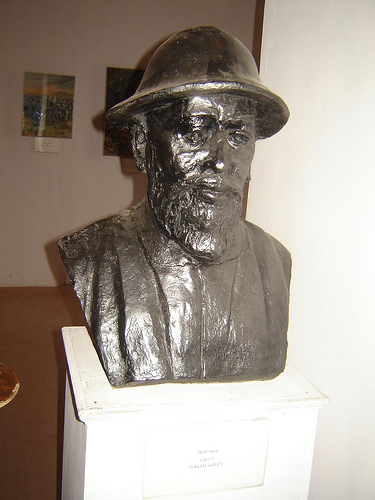
General Bakht Khan’s bust in Red Fort museum.
He was described as “a much garlanded and battle hardened veteran of Afghan wars, with huge handlebar moustache and sprouting sideburns…. Known personally to several of the British officers” [3] His reputation as an able administrator and a shrewd military strategist had reached Delhi much before his arrival.
The poor Mughal King, after much reluctance, decides to award the just landed General ,a royal sword and a buckle but Bakht Khan still refuses to present the ‘nazar’ (a mandatory monetary gift to be offered to the King) when meeting him. Soon after, this Khan then begins to give a piece of his mind to the king, he begins, “Your good for nothing princes [sons] enjoy full powers over your military. Give all the power to me as no one else but I know the norms of the English army, who knows them better than me?” This was blunt and undiplomatic at its best, but the man in question, meant business. He was duly appointed the Governor General of the army, effectively displacing Mirza Mughal the headstrong son of Zafar.
Reading literature about 1857 revolution became quite an obsession with me since a teenager, our shared history of the sub-continent, India, Pakistan and Bangladesh. A familiar heritage we possess, a common thread running through our past. History is journalism with hindsight and this special journalism about 1857 period transports us to a novel world inducing in us a sense of déjà vu. It was through these readings that I ‘discovered,/em>’ Bakht Khan. But it was not love at first sight; I must tell you, what with his being a man with a pot belly that did not make him a fine horseman! Add to it the derision he was subjected to contemptuously for the reason of his being a Wahabi. But more surprising were the contradictions that I began noticing in various descriptions about him. A few, mostly historians from the east, respected him as one of the bravest soldiers and the real hero of 1857 Ghadar while the rest seem to scorn him just for being a Wahabi. This term in itself is quite controversial, even today, just as it was in those days.
Wahabism is the name given to Islamic philosophy instituted by Muhammad ibn Abdul Wahab Najdi[1703-1792] in 7th Century Arabia; the intention was to practice Islam it in its purity just as Prophet Muhommad (peace be upon him) did. William Dalrymple elaborates General Bakht Khan‘s Wahabism thus, “Like a Wahabi ,” he says, “Bakht Khan disdained earthly rulers, whom he regarded as unIslamic, and longed instead for a properly Islamic regime.” [4] He cites his Wahabist thoughts to be a cause of his failure. Interestingly , Bakht Khan fought under a king who was the embodiment of everything a true Wahabi abhors.
What is astonishing is that in almost every account about the man, his being a Wahabi is essentially stressed, perhaps to draw attention to his real or imagined fanaticism. Some of the earlier prominent revolutionary figures like Syed Ahmed Shaheed and Shah Ismaeel Shaheed were self-proclaimed Wahabis. Let’s see what Bakht Khan‘s Wahabism was like.
His Wahabism was said to have been inspired by his spiritual mentor, Moulvi Srafaraz Ali, a master teacher of Algebra and Geometry and with a thorough knowledge of Tafseer[Quranic interpretations] and Hadeeth [Prophet Muhammad‘s sayings]. Moulvi Sarfaraz Ali was entitled as Imam of Mujahideen and his orations exhorted people to join this revolution. It was he who had motivated his initially reluctant disciple Bakht Khan to join this momentous struggle. In the pre- revolution time, Moulvi Sarfaraz Ali was regarded as one of the brightest jewels in Delhi’s intellectual crown, by no less than Sir Sayyed Ahmad Khan himself. So it was Moulvi Sarfaraz Ali who urged Bakht Khan to fight against the infidel Christians for the honor of his country. Interestingly this ‘accusation’ of his being a Wahabi also betrays probable renaissance Islamic nature of the revolution of 1857.
Being a Wahabi, Bakht Khan was against the veneration of Sufi shrines, which was/is quite a rampant practice among a large section of the Indian Muslims. The Wahabis disapprove of it as being nearer to idol worship and a tendency picked up from their Hindu brothers. What is important to be noted and not to be overlooked is; this Wahabism of Bakht Khan and his mentor Moulvi Sarfaraz Ali was borrowed not from Abdul Wahab Najdi of Saudi Arab but from Shah Waliullah Muhaddith Dehalvi [1703-1762], the father of Islamic reform movement in India. This reform movement aimed at eliminating all non-Islamic innovations and practices from the religion and restoring a strict Islamic monotheism, among Indian Muslims. Shah Waliullah, was the first one to translate Quran into Persian and anticipated many modern, social, economic and political thoughts, such as social reform, equal rights, labour protection, and welfare entitlement of all.
Where is Indian account of 1857 war of freedom?
P.C. Joshi in his work, Inquilab 1857 makes a significant observation about this term, Wahabi. He says that, “The use of the term Wahabi is not at all correct, because the political ambitions and social views of allegedly Indian Wahabis , were not based on Abdul Wahab of Najad but on the man who came before him. He was Shah Waliullah [died:1762]. That’s the reason, some supporters of Islamic renaissance like, Ubaidullah Sindhi [1861-1948], Ghulam Sarvar and [Hakeem]Ajmal Khan have preferred to call themselves as Waliullahi or the followers of Shah Waliullah. But I have maintained this word due to its popular use and historical importance.” [6] His Wahabism thus had Indian roots. Hence despising the Rohella Subedar as a Wahabi is to belittle the efforts he made for a unified fight against our former rulers. It is unfair to the man in question who is among the real heroes of the mutiny. Noted historian Irfan Habib too condemns the practice of labeling and cornering him as a Wahabi and describes Bakht Khan as, “the republican minded commander–in-chief in Delhi, who is most unfairly portrayed as a Wahabi in some modern accounts.” [7]. Wahabi or not, what is important to notice, is that he struggled for unity among the different religious sects and led the Fauj-e-Hindustani and fought for a unified and free India. Barun De admires this General of Bareilly for providing the quintessential unity that was severely lacking among the ranks of the rebels. He terms Bakht Khan a true leader and lauds his efforts at unifying different forces of the time, as worth studying. [8]
My attempt here is to present a brief sketch of this Great General as a figure who, till his last struggled for the dream of a Free and Unified India where harmony among the different ethnic groups was his top priority.
His Origins:
Bakht Khan was of Rohilla [Afghan] stock. His grandfather Ghulam Qadir Khan came to Lucknow to make a living. His father Abdullah Khan, said to be a very handsome man, was married to an Awadh Princess. Bakht Khan was formerly a Subedar in the 8th Foot Artillery at Bareilly and had served the British for over forty years and fought bravely in Afghan wars. He had progressed quite rapidly and was appointed in a high-ranking position there. Interesting to note, is his close friendship with many British officers, under whom he had served and imbibed the art of war. Colonel George Bourcheir was educated in Persian by him, and who describes his tutor as, “very fond of English society …..[and] a most intelligent character.”[9] But quite a few disagreed and called him, a fat guy, socially ambitious and an incompetent horseman, probably the worst insult for a soldier, in those times. His commanding officer, Captain Waddy [BHA], describes him thus, “ He is sixty years of age and is said to have served the Company for forty years; his height 5 feet 10 inches; 44 inches round the chest ; a very bad rider owing to a large stomach and thick thighs but clever and a good drill” [10] When the revolution began he was already in his native town of Bareilly and his fame as a fine administrator and a brave and especially able army commander had spread in the country. He had arrived in Delhi with a huge contingent of 7000 [according to another source, 14000] cavalry and hundreds of infantry and a treasure from Bareilly.
Bakht Khan as an Administrator:
It is indeed quite fascinating to know Bakht Khan’s efforts in trying to enforce some kind of sense and sensibility, onto the madness of loot, plunder and sheer chaos of the Delhi of 1857 uprising. He tried every trick in the book to restore law and order amid that disturbing pandemonium .Munshi Jeevan Lal, [11] the overweight Mir Munshi [Chief Assistant] of Resident of Delhi, Sir Thomas Metcalfe [who was working as a British spy, describes how General Bakht Khan went about restoring order amidst that unprecedented anarchy spread after the arrival of the rebels, in the capital. It’s a human thing to love admiration; but when it comes from the enemy, it becomes doubly significant.
Munshi Jiwan Lal in the notes to his British Masters appreciates measures taken by Bakht Khan. There were to be no taxes on salt and sugar, looting [by the just arrived rebel soldiers]had to be stopped else their plundering hands would be cut off, shopkeepers were to be given full protection and even encouraged to use weapons[if they had none, then would be duly provided from the state armory], soldiers were to be removed from the Dilli bazaars as it created difficulties for the general public and relocated in camps outside Delhi gate, their salaries were to be restored and promises of jagirs were made to them in return of their services to the army. He further informs that the General’s men had also killed three spies working for the British [M.Baqar Ali, father of Muhammad Husain Azad, the famous Urdu writer, too, had complained in his first report that, he is followed by the spies of Bakht Khan wherever he goes,[12]
The Metcalfe’s Munshi tells his masters that General Bakht Khan was soft spoken to his men but also remained firm that, they should not cross their line of duty even in the smallest measure. Impressive army parades were conducted by him from Delhi Gate to Ajmeri Gate. Many important petitions from various kings, Nawabs, Rajas, and officials of courts, were forwarded to the King and replies were received through the office of Governor General Bakht Khan; chief among them were, Qudratulla Khan, Risaldar of Awadh, Khan Bahdur Khan, Rao Tula Ram. A ruqqah was also addressed to the Patiala Rajah, conveying pardon of the King for his faults, many other such instances of accessing the King through the General can be found in different accounts of history. [13] Here he was playing the role of a keen diplomat. His honest and sincere attempts at running the administrative affairs efficiently at court and his diplomacy with the men of importance are discernible from these accounts. The steps he took to restore a sense of sanity in those insane times are evidently commendable but somehow go unnoticed by his critics.
Bakht Khan as a military strategist:
The General was a shrewd military strategist. What he achieved at the battle field of Delhi becomes more significant considering the dire circumstances he worked in. He had little support from his own army factions and was constantly attacked and maligned by some hostile elements from within. His strategies on the battle field, his trying to sabotage the passages that took supplies to their camp, invention of rota system and his playing the mind games with the enemy, all are indeed splendid. Richard Barter gives tribute to this great man thus: “Thanks to the system organized by Bakht Khan…..We were scarcely able to stand….” [14] He was speaking, worn out at the battle ground along with his soldiers, thanks to the new General’s machinations. Their frustration grew to the extent that some of the British soldiers seeing no sign of relief wanted to kill themselves on purpose, and some even did.
Be it propelling a contingent to Alipore or setting up a new rota system intended to engage the British forces on a daily basis, and which meant leaving them no respite from the combat, General Bakht Khan always worked on new strategies to defeat his enemy. Soon after his arrival, on the ninth of July he made a massive attempt to destroy the British forces and one of his strategies was to clothe his men in British white uniforms. This took the opponents by surprise and a deep access was gained into their camp. Such regular expeditions by Bakht Khan frustrated the enemy to the extent that, they began losing all hope of capturing Delhi again. He succeeded as he knew the British tactics inside out .His long service to them had at last, paid off.
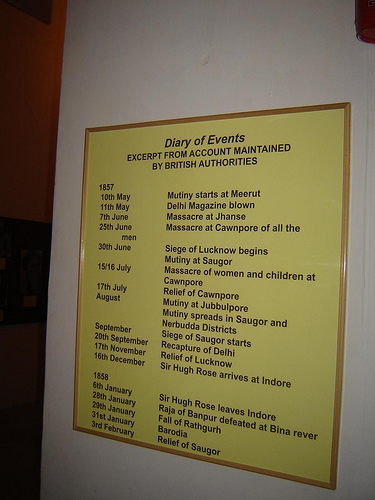
“Mutineers” or Freedom fighters?: Museum at Red Fort continues to insult our heroes by calling them “mutineers.”
But unfortunately the fact that Bakht Khan’s attempts had been gaining success went unreported, unrealized at Delhi court due to the absence of a parallel intelligence system like their adversary had. The British had knit an intricate network of spies throughout the city and at the Red Fort. Reports about every single move of the King, the parleys held at the court, the movements of the rebel forces and their strategies planned for the future attacks, reached the British ears without fail. Many prominent and respected people were on their payroll. But sad to say, no such system was in place, at the other end of the battle camp. W. Dalrymple observes sharply, “The lack of intelligence reaching the city meant that no one among the rebels realized how successful Bakht Khan’s tactics were proving” [15] They didn’t know how fragile the British forces had become and what a tremendous pressure Bakht Khan‘s tactics had put on them. Unfortunately this ignorance about his success was perceived to be his seeming failure and this set his detractors buzzing. Mirza Mughal had nursed a grudge since the General caused his removal from the military affairs. Bakht Khan’s undiplomatic ways too didn’t help. He was ruthless enough to ask the princes to keep away from military and administrative affairs as he believed ‘everyone knew that they were good for nothing fellows’. It was but an ugly truth.
Bakht Khan informed the king that Prince Khizar and others were stashing away the taxes collected from the city traders and due to this salaries of the army could not be paid. Prince Khizar was asked to return the booty. The commoners were pleased with him while the Mughal princes vowed vengeance. Undoubtedly Bakht Khan was a man of the world but he was not at all, worldly. He frequently failed to decipher his detractor’s nasty plans and eventually became a victim to their malice.
The Neemuch brigade-his force- was well-known for its valor; but the two of its generals Ghaus Khan and General Sidhari Singh [supporter of Mirza Mughal] parted ways, from Bakht Khan, as they couldn’t digest the fact that, an officer of the similar rank as theirs should get so much importance from the King. During the battles he was left alone to fend for himself. A most ridiculous charge of his being a British spy also came along. All this put him under great pressure and he had to issue a statement denying all these charges. Whether it was failure to capture the army bastions at Alipur, Manali Bridges and the Ridge and almost all the failures were wrongly attributed to the General. Zafar too now was infected with doubt and the devious designs of his foes resulted in Bakht Khan’s removal as Governor General by the end of July. A Court of Administration was established to run the affairs of the Mughal Darbar. The General and his Bareilly brigade kept their distance from it but their assaults grew weaker and the tremendous pressure that he was able to put on the British began to diminish. Dalrymple remarks, “…the end of Bakht Khan’s military system brought instant relief to the British on the ridge”. [16]. It is indeed saddening that such lowly games of selfishness and rivalry did the good General in and ultimately caused the struggle for freedom, a catastrophic damage, giving a boost to the enemy. Richard Barter joyously announced that, “And so, when we were scarcely able to stand, the attacks ceased, as if by a dispensation of Providence, and gave our force the repose they so much needed.”[17]. The one man who possessed the potential for defeating the enemy was thus, rendered impotent.
As no intelligence about the success of the good General’s methods reached the court and Delhites, it led to huge misgivings about his military forays. Resentments, against this good soldier soon began to build up. As mentioned earlier, he was accused of being a British stooge himself. His own colleague from the Neemuch Brigade Sidhari Singh accused him thus. Other former co-workers too were not far behind. Gauri Shankar [who was himself a British spy] and Talyar Khan, on 20th August, arranged for a Sikh to proclaim that Bakht Khan provides all information about the court happenings to the enemy. But the truth was found out and the witness was rejected for his false claims. The General himself issued a public statement denying this in the presence of Mirza Mughal and other army generals.
The ever eternal quintessential factors of jealousy envy and contempt did this great warrior in. Quite perceptibly his disenchantment began to grow. He became more cautious but continued to be at the forefront of the war and the biggest headache for the British. He marched towards Najaf Garh separate from the Neemuch brigade as his own soldiers refused to take orders from him (and resultantly was smashed by their rivals). Like before, the General was unjustly blamed for this fiasco, as well. Nevertheless Bakht Khan still remained defiant. He was unrelenting and rejected Zafar’s suggestion of opening the gates of Delhi, if the British could not be defeated. He elaborated on some new strategies and it was quickly reported by the spies present at the court to the Gora Sahibs. Needless to add this rendered his plans useless. His failures thus began mounting up. Yet he succeeded in defeating the opponents at the Delhi Gate even in those final hours, and kept a strong vigil at the Ajmeri Gate till the last moments of the war.
Despite his failures, more due to the non co-operation of his team than his own faults, what he did achieve was the delay in recapturing of Delhi by the British, as long as he could. The erstwhile Dilli would have been rounded up, quite early in the day, had it not been for the efforts of General Bakht Khan Rohilla.
Memorial for British soldiers at Delhi Ridge. No memorial for Indian soldiers though.
His military achievements despite the hostilities he faced were amazing; be it capturing three hundreds of British horses taking supplies to their masters, or one of his final determined attacks with his Bareilly and Neemuch troops, which forced the British to make a hasty retreat, from Hindu Rao’s house. Bakht Khan’s advance up to the house of Hindu Rao was no mean achievement; it threatened to cut off the British troops from their camp.[18] Had he been supported efficiently by his own people at the time, his success rate would have been much higher. Miyan Muhommad Shafi , in his famous work, Pehli Jang-e-Azadi-Waaqeyaat wa Haqaayeq, blames this sorry state of affairs on the conspiracies hatched against Bakht Khan by the unfortunate and unreasonable Mughal Princes, who conspired against him, unaware of their approaching terrible end. He says, “The courtiers created havoc each and every time and put blame on him for everything going wrong, without providing him with any kind of general support. All this and the corruption at the court and among the army rank and noncompliance of the troops, disheartened this most able of the fighters, Bakht Khan and after being relieved from his various significant positions , he got reduced to taking care of his own original regiments alone. This turn of events and colossal difference of opinions, among the different elements at the court, led eventually to the downfall of Delhi, the arrest of Zafar and slaughtering of his sons, not to mention hundreds and thousands of Delhites being butchered and displaced, forever.”[19] But in the mayhem of 1857 mutiny what was more tragic perhaps, was the ruin of Shehar e Dilli and its uniquely rich Ganga –Jamuni Tehzeeb. It died forever.
It was but for Bakht Khan‘s efforts that the rebel forces cold hold on for a longer period. It is an irony that they all blamed him; his enemies could be found easily on both sides of the divide. When the scene grew bleaker and the British forces entered the city gates, he continued persuading Zafar to join him in the inevitable retreat as the area outside Delhi was still under the rebel control and help could be at hand. The former Subedar in his last ditch attempt, insisted to Zafar, that, the name and status of Mughal King would surely bring victory to the Indians. Never say die spirit of Bakht Khan is here for all of us to see. The fragile eighty year old King Zafar, last descendant of the Timuri lineage had even agreed initially. But schemers like Hakeem Ahsanullah Khan, the court physician and Mirza Ilahi Bakhsh, father in law of Zafar’s deceased heir Mirza Fakhru, superseded the Khan one more time, eventually leading the last Timur to be a hapless royal British prisoner.
At this juncture, Bakht Khan speculated on the reasons of their defeat. He explicated that, their choosing of Delhi as their bastion of the battle was erroneous from the day one. He also faulted the princes and especially Mirza Mughal who’s imprudent handling of the affairs at the battle field did greater damage to the cause. This Prince was the one who possessed no experience of any war and had taken up the cudgels only for bragging about his bravery.[20]
Bakht Khan’s administrative skills added to his superb military zeal had proved to be a deadly combination for the enemy. Alas, his spirit was broken by his own men and he had to retreat and disappeared. There are different theories about his departure. It is said he went to Awadh and fought against the British, one more time. A few others opine that he was killed in a battle and a few more say he escaped to Nepal, never to be seen again. This last version seems more authentic.
The Hindu-Muslim equation of the time and Bakht Khan’s role in it:
In his legendary fight at Delhi of 1857, Bakht Khan’s zealous efforts at maintaining Hindu-Muslim unity are outstanding. More so as he is accused of being a Wahabi; this becomes doubly significant.
A general peace had always prevailed among the Hindus and Muslims of Delhi. Turmoil seemed to brew when Hindu sepoys killed five butchers for slaughtering some cows. The fear of inter-communal clashes strengthened the already existing general disillusionment among the Delhi masses [especially among the Ashraaf or high class people] about the rebellion and the uncouth rebels, popularly called, Purabiya or Tilanga. The British were sitting with their fingers crossed, hoping for a bloody game to begin on the day of approaching Baqrid. They expected violence, as Muslims would slaughter the cow which would anger Hindus as it is deemed holy in their religion. But to the disappointment of the British, Bahadur Shah Zafar himself assured a group of Hindu generals about his intention of banning the practice of sacrificing a cow, with immediate effect. Bakht Khan through his order of 30th July saw to it that this order was strictly implemented. He thundered that whoever was found guilty of slaughtering cow, ox, or buffalo, would be considered an enemy of the state and of the king respectively, and would be punished with death![21]
He didn’t stop at that. He sent out a written proclamation to Delhi’s Kotwal on 31st July and 2nd of August 1857 to the effect that, every morning and evening, it should be announced to the people that this order against cow slaughter should be strictly followed, and anyone found guilty would be severely punished. He also saw to it that an alleged fanatic Moulvi Muhammad Sayyed found enticing people for jihad was reined in. The restraining of the fanatic elements and banning cow slaughter were big steps towards restoring communal peace and harmony, at the time and proved a great boost to restoring trust. Hindu Muslim enmity had to be avoided at any cost, so as not to allow the enemy to make a profit out of it. Bakht Khan made it the central point of his fight and this is admirable.
However the Good General is also blamed for drawing together Delhi ulemas [supposedly against the wishes of King Zafar ]and making them sign a fatwa to urge the Muslims to fight against the British, taking it to be their religious duty. But it must be noted that, it was a call for a mutual struggle, for the honor of the motherland. Barun De makes a valid point, when he articulates, “All listened to the call of dharma or deen. In this sense, Christianity was the symbol of intrusive colonialism, seen as a bourgeois crusade for market globalization, much as it is being seen by neoconservatives today [22) This was something quite remarkable about the 1857 revolution. We can call it a golden period of proverbial Hindu-Muslim harmony.
1857, Ghadar
Here in lies an amazing story of the people, fighting an enemy hundred times stronger than them. These people were the poor, the workers, the weavers, the peasants; all joined hands together to resist the injustice they were subjected to, since last hundred years or so. More admirable is the fact that, despite huge caste disparities, clan conflicts, geo-ethnic varieties and most of all those bona fide religious differences, Hindus, Muslims and Sikhs became united for the cause of India/Hindostan. Esteemed historian Irfan Habib finds this assimilation exceptional. The astonishing fact, he says is that, “…on many occasions largely Hindu contingents elected Muslim officers and, similarly, contingents with a largely Muslim composition chose Hindus as their officers. The fact that this was not anywhere done consciously makes it a particularly notable example of inter-religious solidarity among the Bengal Army sepoys.” [23]
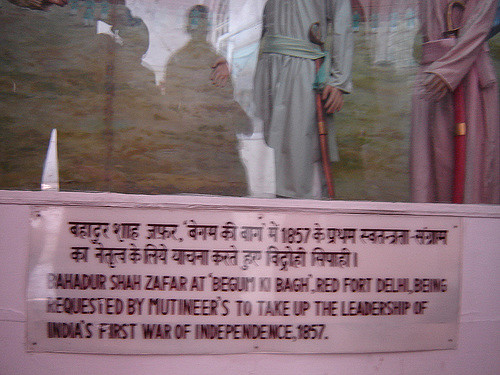
This message of unity in diversity is indeed the most outstanding lesson; we get to learn from 1857 uprising. The little armies from all over India grouping in Delhi to fight under the leadership of a Muslim King, is a grand testimonial in itself. This Muslim King had been a titular figurehead of the erstwhile India, for quite some time, but still thought to be a figure of authority. It was a matter of belief, of faith, for the Indians. They still believed or wished to believe in Bhadur Shah Zafar being Baadshah-e-Hindostan.
At the risk of digression, allow me to drift and explore this phenomenon a bit more. It was a fact that all army contingents, from all over the erstwhile British Raj territories, moved towards Delhi and gathered at the Lal Qilaa to win blessings from a Muslim king. Today this may seem beyond belief but back then, in 1857; it came most naturally to the Indians of the time. William Dalrymple astutely remarks that, “The rip in the closely woven fabric of Delhi’s composite culture, opened in 1857, slowly widened into a great gash, and at Partition in 1947 finally broke into two. As the Indian Muslim elite emigrated en masse to Pakistan, the time would soon come when it would be almost impossible to imagine that Hindu sepoys could ever have rallied to the Red Fort and the standard of a Muslim emperor, joining with their Muslim brothers in an attempt to revive the Mughal Empire.” [24]
It was due to the unmistakable aura that surrounded the Mughal Empire. Bahadur Shah Zafar possessed that unique trait of being a Benevolent Baadshaah who alone had the power of rendering a sense of strong unity among the varied regions and natives of India.
Now coming back to our General, he proved to be a perfect foil to Bahadur Shah Zafar. H.L.O.Garret, keeper of the records of the government of Punjab, in his 1933 account of the rebellion enlightens us that Bahadur Shah Zafar was only a nominal ruler of a dying Delhi; he duly informs, “The actual military operations were directed by Bakht Khan, on whom a royal decree conferred the title of Commander-in –Chief.” [25] C.T. Metcalfe notes that despite Bakht Khan’s removal from his post at the Delhi Durbar, King Zafar trusted him all along and used to urge him to put up a brave fight as before.[26] Bakht Khan’s endeavors in executing the commands of his king at putting up a unified frontagainst the colonizers, is something fascinating. But strangely enough we do not find many mentions to him in our history books.
The year 1857 strikes a resonance in our hearts even after one hundred and fifty five years. We identify with this first war of independence. The Mughal authority had eroded long before this date; but many critics say, what died in 1857 was hope; hope for freedom, for unity. After 1857, India could never be the same again. The unique aura of Mughal Mystique died too in September of 1857. This aura symbolized a most beautiful land, varied and various in so many ways yet presenting an amalgamation so unique so endearingly rich that the world still fails to offer another such prototype. Bahadur Shah Zafar was an unwilling and hesitant hero standing at complete disparity with the General. The General believed in action. It is this action that makes General Bakht Khan Rohilla a True Hero and those among us who wish to dismiss him as just a sundry character, for them let me quote T.S.Eliot here, They know and do not know, what it is to act or suffer,
They know and do not know, that action is suffering,
And suffering is action.
It is action, our striving for it and the resultant suffering that teaches us the ways of surviving/winning life. It is our action, our Karma that makes our destiny.
In this regard Bakht Khan became a winner of the war, despite losing the battle.
—
Asma Anjum Khan is Assistant Professor of English in Maharashtra
Bibliography:
1-Lal Purdah- the Red colored curtain at the doorway to the Mughal king’s private chambers.
2-Memoirs of Hakeem Ahsanullah Khan-p.8
From:The Last Mughal- William Dalrymple, 284
3-Bourchier, Eight Months,44n],from: The Last Mughal, William Dalrymple,285
4-Ibid-286
5-ibid-285
6-Inquilab 1857, P.C.Joshi, Urdu Translation, pub: Taraqqi Urdu Taraqqi Urdu Bureau ,secondedition1983,105[References]
7-Irfan Habib, History from Below- Frontline, issue dated, June 29,2007,pg.16
8-Baun De ,Frontline issue dated ,June 29,2007,Pg 9 (Scholars Iqbal Husain and Rajat Kanta Roy too endorse his views.)
9-Bourchier-Eight Months,44,[quoted in Last Mughal,285]
10- H.L.O. Garret, The Trial of Bahdur Shah Zafar,King by Committee,8[ quoted in Gimlette’s post script to the Indian Mutiny]
11–Metcalfe,Two Native Narratives, Narrative of Munshi Jeevan Lal
12-William.Dalrymple,The Last Mughal,302
13-H.L.O.Garret, The Trial of Bhadur Shah Zafar, The Physician’s Testimony ,[Hakeem Ahsanullah Khan was the royal physician]
14-Barter Richard, The Siege of Delhi,36, The Last Mughal.
15-William Dalrymple-The Last Mughal,292
16-Ibid,294
17- Barter Richard, The Siege of Delhi ,[from:William.Dalrymple, The Last Mughal, 294]
18-William Dalrymple, The Last Mughal,357
19-Miyan Muhommad Shafi,Pehli Jang e Azadi –Waqyaat wa Haqaayeq,Urdu,288-89, edition,2007
20- Ameer Ahmad Alavi,Bahadur Shah Zafar,[Urdu]Lucknow, 1955,138-9,[ through [P.C.Joshi, Inquilab 1857-112-114,Urdu , ed.1983,Taraqqi Urdu Bureau ]
21-Press List of Mutiny Papers, no.120/143, 7 Zilhaj,21-RY,29 July 1857
and
Press List of Mutiny Papers, no.111,[c] 332,8 Zilhajj 21 –RY,30 July,Spear,pg.207 [from Iqbal Husain]
22-Barun De, The Call of 1857,Frontline ,issue dated, June 29,2007,pg.8-9
23-Irfan Habib, History from below ,Frontline issue dated June 29,2007,pg.14
24-William Dalrymple, The Last Mughal, 484
25-H.L.O.Garret, the Trial of Bahadur Shah Zafar, King by Committee, 7
26-C.T.Metcalfe, Two Native Narratives of the Mutiny in Delhi,[1974] 213
The following books helped too in making of this essay:
1-1857 ke chashm e deed Halaat[Almaroof Daastaan e Ghadar]-Syed Zaheeruddin Dehalvi.ed:2006
2-The Other Side of Medal by Edward Thompson, translated by Shaikh Hassamuddin, first edition,1982,Urdu Academy New Delhi Publication
3-Bakht Khan [Marathi]–by Iqbal Husain,2008, National Book Trust ,edition 2010]
source: http://www.twocircles.net / TwoCircles.net / Home> Articles / by Asma Khan for TwoCircles.net / August 15th, 2012
In the morning I woke up to messages of hope and happiness as is usual on India’s (71st) Independence Day. Family groups were full of photographs of our younger children dressed in saffron and green, as they went to their schools to celebrate Independence Day.
We watched the speech of Prime Minister Narendra Modi from the Red Fort, and posted messages and stirring poems on Twitter and Facebook. There was so much happiness and bonhomie, when suddenly I got a link to a tweet from a friend:
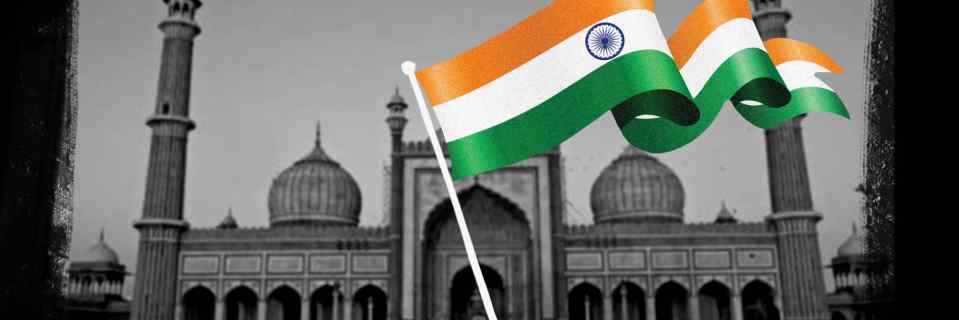
A bunch of people waving the flag in Delhi’s iconic Jama Masjid is hardly anything I should be upset about. In fact, the national flag on the historic Jama Masjid instills pride in me.
Why then, was I upset?
I was upset at the words that were deliberately aimed at hurting and demonising the community that prays in that mosque.
“71 साल बाद जामा मस्जिद दिल्ली की छाती पर चढ़कर हमने कार्यकर्ताओं के साथ राष्ट्रीय ध्वज फहराया, वन्दे मातरम”
“After 71 years, along with karyakartas (workers) I have climbed onto the ‘chest’ of Jama Masjid, and waved the national flag. Vande Mataram.”
Inherent to his speech is the message that the mosque, and by extension Muslims, have never hoisted the tricolour.
By the way, the call Madar e Watan Bharat ki Jai was given by Azimullah Khan in 1857, while fighting in the first war of Indian Independence. Honoring our motherland is not new to us. Perhaps Mr Singh (who tweeted the message) had missed this tweet by Sumer about flag hoisting at the Jama Masjid.
How Jama Masjid Area Celebrates I-Day
Mr Singh and his companions were 71 years too late, as the Indian Flag has been flying proudly in the hearts of every Indian, regardless of their religion. But yes, we fly the flag with love and respect, because we are Indians, not because we want to ‘otherise’ Indians.
Many flag-hoisting ceremonies were held in the Walled City. Flags were hoisted in homes, offices and public areas on 15 August.
As Abu Sufiyan, a resident of Old Delhi says, they came at noon, hoisted the flag, and left. No one objected or opposed them as flags were being hoisted everywhere. But he adds, “the enthusiasm with which Independence Day is celebrated in Old Delhi, where Red Fort is located, would be difficult to find anywhere else. They (Mr Singh and companions) may have climbed onto the steps of Jama Masjid after 71 years, but we have been hoisting the flag every year, in and around Jama Masjid.”
Sheeba Aslam Fehmi who runs the Walled City Café and Lounge at a little distance from the Jama Masjid, posted on her Facebook page this 15 August:
“We, living in and around Jama Masjid area, are used to several hoisting of the Tricolor on 15th August each year. Not only at the public spots like Azad Hind Hotel, right behind the main Gumbad of the Historic Jama Masjid, we have flags of all sizes on full mast at various establishments including all the schools, hotels, shops etc.
I just spoke to the local MLA Asim Ahmad Khan who has hoisted the Indian Flag at various spots in his constituency where Jama Masjid is located.
The celebrations and merry making is on since the day of full dress rehearsal only. Patriotic songs are played loudly in the narrow alleys of Jama Masjid.
If you want to witness the people’s celebration of the Independence day, come, take a stroll in the Jama Masjid bylanes.”
Ashok Mathur says, “I have been celebrating Independence Day since 11 AM today, and hanging over not one but many roof tops in the Pahari Imli and Matia Mahalarea of my Muslim friends flying kites, with music and fanfare, which started with the whole group singing the national anthem at the beginning… since I was a vegetarian among all others, someone quickly got kaddu ki sabji and chana from his home nearby… it was the tastiest kaddu that I have ever had… this is the spirit with which we live here.”
Role of Jama Masjid in India’s Freedom Struggle
Today, let’s examine the role of Jama Masjid in India’s Freedom Struggle.
As Hilal Ahmed, Assistant Professor, Centre for the Study of Developing Societies says, “The Red Fort and Jama Masjid have always been the symbols of political inspiration for Indian masses, irrespective of religion or caste, during the colonial period. Leaders from different backgrounds and ideologies used the mimbar (pulpit) of the mosque to deliver political messages. From Swami Shradhanand of the Arya Samaj to Gandhi, Nehru and Azad – leaders of all sects delivered speeches here.”
He adds:
It is worth noting that Jinnah never delivered any speech inside the Jama Masjid, though he participated in a procession of the League in 1946. Unfortunately the Hindu right-wing want to convert everything into ‘Hindu and Muslim’. Making Jama Masjid an anti Hindu/India symbol is part of this political campaign.
Hilal Ahmed, Assistant Professor, Centre for the Study of Developing Societies
1857 Uprising
The Jama Masjid has not only been a place for congregational prayers since the time it was built in 1650, but also a witness to India’s history. Since it had been such a symbol of togetherness and rebellion against British power in 1857, after the uprising, the British occupied the mosque and stopped people from offering prayers within its premises. Its gateways were guarded by British Indian troops to prevent entry.
The Jama Masjid was used as a mess, with horses tied along its corridors, with alcohol being freely consumed by the troops.
In the months of May-September, the sepoys and natives of India rose up against the East India Company, under the banner of Mughal Emperor Bahadur Shah Zafar. Fierce battles were fought in the summer and monsoon months of 1857, in and around the walled city of Shahjahanabad. Jama Masjid, as the centre of Shahjahanabad, was also central to this fight.
The mosque was the focal point for gatherings during the siege of Delhi in the 1857 Uprising.
It was on the walls of Jama Masjid that posters were put up by the forces who were trying to create a communal divide among India’s people. These were immediately taken down upon the then Mughal emperor Bahadur Shah Zafar’s orders. Maulvi Mohammad Baqar countered these posters in his newspaper The Delhi Urdu Akhbar, in which he said that Hindus and Muslims were ahl e watan (compatriots), and had been living together for a thousand years.
It was as a result of this that the British confiscated Jama Masjid and planned its demolition. It was only in 1862, following innumerable petitions by Muslims, that the British government returned the mosque to the original inhabitants.
Secular Nature of Jama Masjid
The nationalist movement and Hindu-Muslim unity took giant steps forward after World War I during the agitation against the Rowlatt Acts, and the Khilafat and the Non-Cooperation Movements. As if to declare before the world the principle of Hindu-Muslim unity in political action, Swami Shradhanand, a staunch Arya Samajist, was asked by Muslims to preach from the pulpit of the Jama Masjid at Delhi, while Dr Saifuddin Kitchlu, a Muslim, was given the keys to the Golden Temple, the Sikh shrine at Amritsar.
The entire country resounded with the cry of ‘Hindu-Muslim ki Jai’.
It was this mosque where, on 4 April 1919, Swami Shraddhanand, dressed in saffron robes, addressed the people gathered there, asking them to unite, saying that the need of the hour was Hindu-Muslim unity, against the common enemy, the British.
He started his speech with a Vedic mantra to which the congregation replied ‘Ameen’. He went on to exhort all Indians to purify their hearts with the ‘water of love’ of the motherland in ‘this national temple’, and become brothers and sisters.
I wish he would come back and again deliver a speech on unity only this time the common enemy is hatred and those who preach hatred.
It was in this mosque that Maulana Abul Kalam Azad delivered his historic speech in October 1947, which reminded them of their sacrifices for India, and exhorted them not to leave their motherland since the Prophet had said, ‘Allah had made the whole world a mosque’, and so the question of pure (Pak) and impure land does not arise.
In fact it was contrary to the ideals of Islam:
“Musalmano’n, my brothers,
Today you want to leave your motherland. Have you thought of the result of this step? … Close the door from which communalism has entered…”
(24 min onwards)
“Where are you going? And why are you going? Behold, the towers of this historic Masjid bend to ask you: lift up your gaze and see. The dome of this Shahjahani mosque asks you where you have lost the pages of your history. The sacred relics of your ancestors ask you, in whose care you are leaving them?”
“The sounds of ‘Allahu Akbar’ echoing from this mosque, ask you, on whose mercy are you leaving them? The walls and doorways of this mosque call out to you, again and again. O! those who are leaving, a time may come when you could lose your identity…
Don’t you remember that it was only yesterday that your caravans had performed ‘Wuzu; (Ablutions) on the banks of Jamuna. And today you are afraid to live here.
Remember that you have nourished Delhi with your blood.”
A simple study of literature written about the Freedom Struggle in the 19th and 20th centuries, will reveal that indeed not only Delhi, but India has been and is being nourished by the blood of Muslims. They are as much Indian as anyone else. 71 years ago, India was divided. I was not born then, but I am living now, and I will fight bigotry and hatred.
This Independence Day, let’s pledge to get freedom from hatred, bigotry and attempts to divide Indians on religious and sectarian lines.
Hindi hain hum watan hai Hindustan hamara.
(Rana Safvi is the founder and moderator of the popular #shair platform on Twitter, which is credited for reviving popular interest in Urdu poetry. She tweets@iamrana. This is an opinion piece and the views expressed are the author’s own. The Quint neither endorses nor is responsible for them.)
source: http://www.thequint.com / The Quint / Home> Big Story> Hot News> Videos / by Rana Safvi / August 15th, 2018
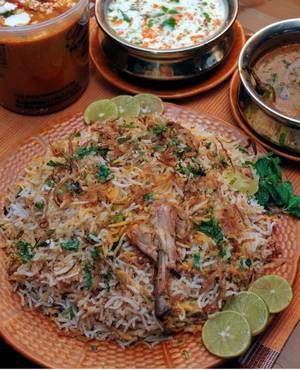
Royal spread:The ‘Khwan Nemat-e-Asafia’ lists 15 types of biryanis such as Biryani Rumi, Biryani Mahboobi, Biryani Nargis, Biryani Hazar Afreen.
The world knows them for fabulous jewels and splendid palaces. But not many know that the erstwhile Hyderabad rulers had a weakness for a rich diet as well.
Sample this: Biryani Dulhan, Yeqni Palou Shirazi, Khorma Murgh, Qhalia Chamkura, Kabab Gul Khatai. A ‘shahi’ spread any which way. If your mouth is doing a tango, you are not to be blamed.
Now, one can try out these dishes. Urdu daily Siasat has stumbled upon a dog-eared copy containing a list of 680 formulae used by the royal kitchenette of the 6{+t}{+h}Nizam, Mir Mahboob Ali Khan (1866 – 1911). The newspaper plans to publish the recipes in Urdu and English on art paper shortly. The book, titled Matbaqe Asafia, is expected to hit the market in the next two months.
“It will be in time for Ramzan, the month of fasting,” Siasat ’s Editor Zahed Ali Khan says.
Tell me what you eat and I will tell you what you are. A look at the recipes and the ingredients that go into making these sumptuous dishes give an inkling of the royal taste — cuisine that is never clichéd. Every formula differs from the other in the set of instructions and ingredients.
The ‘Khwan Nemat-e-Asafia’ lists 15 different types of biryanis such as Biryani Rumi, Biryani Mahboobi, Biryani Nargis, Biryani Hazar Afreen. As the name suggests, the ‘Dulhan Biryani’ is highly decorated with a fried banana in covering of ‘warq’ (silver foil).
Besides, there are 18 kinds of pulav , 16 of khichidi , 48 of do-pyaza , 21 variants of khorma , 45 of kabab and 29 types of naan . Besides, there are 25 varieties of chutneys (condiments) and 33 types of achaar . Apart from an assortment of spices and dry fruits, the ingredients also include a generous sprinkle of perfumes and sandal.
But some of the formulas could be a recipe for sickness, given the heavy doze of ‘pure ghee’ suggested. There are also some recipes, which, if tried now could land one in trouble. For instance, the book contains formulas for cooking animals which now attract provisions of the Wildlife Act. “But we don’t propose to include such recipes since they are banned now”, Mr. Khan says.
So gourmets, get ready for a royal repast.
Come Ramzan and the Siasat daily plans to publish a list of 680 formulae used by the royal kitchenette of the sixth Nizam, Mir Mahboob Ali Khan
source: http://www.thehindu.com / The Hindu / Home> National> Andhra Pradesh / by J.S. Ifthekhar / Hyderabad – May 13th, 2013
Come Ramzan and the Siasat daily plans to publish a list of 680 formulae used by the royal kitchenette of the 6 Nizam, Mir Mahboob Ali Khan
The world knows them for fabulous jewels and splendid palaces. But not many know that the erstwhile Hyderabad rulers had a weakness for a rich diet as well.
Sample this: Biryani Dulhan, Yeqni Palou Shirazi, Khorma Murgh, Qhalia Chamkura, Kabab Gul Khatai. A ‘shahi’ spread any which way. If your mouth is doing a tango, you are not to be blamed.
Now, one can try out these dishes. Urdu daily Siasat has stumbled upon a dog-eared copy containing a list of 680 formulae used by the royal kitchenette of the 6 Nizam, Mir Mahboob Ali Khan (1866 – 1911). The newspaper plans to publish the recipes in Urdu and English on art paper shortly.
The book, titled Matbaqe Asafia, is expected to hit the market in the next two months.
“It will be in time for Ramzan, the month of fasting,” Siasat’s Editor Zahed Ali Khan says.
Tell me what you eat and I will tell you what you are. A look at the recipes and the ingredients that go into making these sumptuous dishes give an inkling of the royal taste — cuisinethat is never clichéd. Every formula differs from the other in the set of instructions and ingredients.
The ‘Khwan Nemat-e-Asafia’ lists 15 different types of biryanis such as Biryani Rumi, Biryani Mahboobi, Biryani Nargis, Biryani Hazar Afreen. As the name suggests, the ‘Dulhan Biryani’ is highly decorated with a fried banana in covering of ‘warq’ (silver foil).
Besides, there are 18 kinds of pulav, 16 of khichidi, 48 of do-pyaza, 21 variants of khorma, 45 of kabab and 29 types of naan. Besides, there are 25 varieties of chutneys (condiments) and 33 types of achaar. Apart from an assortment of spices and dry fruits, the ingredients also include a generous sprinkle of perfumes and sandal.
Piece of advice
But some of the formulas could be a recipe for sickness, given the heavy doze of ‘pure ghee’ suggested. There are also some recipes, which, if tried now could land one in trouble. For instance, the book contains formulas for cooking animals which now attract provisions of the Wildlife Act.
“But we don’t propose to include such recipes since they are banned now”, Mr. Khan says.
So gourmets, get ready for a royal repast.
source: http://www.thehindu.com / The Hindu / Home> News> Cities> Hyderabad / by J.S. Ifthekhar / Hyderabad – May 13th, 2013
Jalgaon Municipal Corporation Election Results Live:
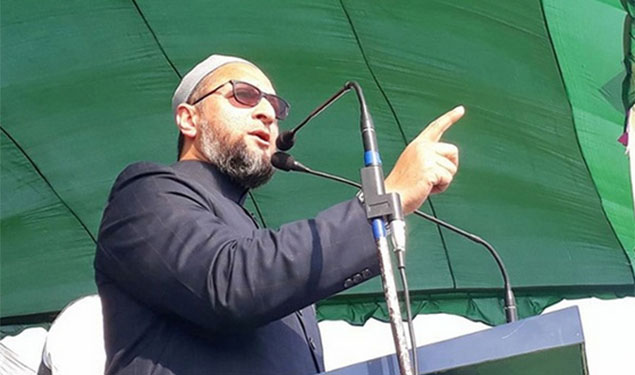
In a surprising comeback after recent defeats in Nanded Municipal Corporation and other elections, Asaduddin Owaisi’s All India Majlis-e-Ittehadul Muslimeen (AIMIM) won 03 seats in Jalgaon Municipal Corporation (JMC) 2018 elections results of which were declared today afternoon.
AIMIM’s victory in 2018 Jalgaon Municipal Corporation (JMC) elections is significant as the Congress, Nationalist Congress Party (NCP) and Samajwadi Party (SP) have completely wiped off from the Jalgaon civic body while Shiv Sena somehow won just 15 seats.
It was the Bhartiya Janata Party (BJP) Tsunami in Jalgaon which ended more than 40 years dominance of Sureshdada Jain. The Bhartiya Janata Party (BJP) which had just 15 members in the last boday has come out with a spectacular performance by winning 57 of the total 75 seats of Jalgaon Municipal Corporation (JMC).
Besides AIMIM which had fielded Muslims in the areas dominated by Muslims, the BJP had also fielded Muslim candidates in these areas for the 2018 Jalgaon elections. With some of the Muslims winning the 2018 Jalgaon elections on BJP tickets, the number of Muslims in Jalgaon Municipal Corporation (JMC) is bound to improve.
In the run-up to the Jalgaon Elections, AIMIM MLAs Imtiyaz Jaleel and Waris Pathan had camped in the city while Asaduddin Owaisi addressed rallies in the last leg of campaigning. As usual Asaduddin Owaisi’s election rallies in Jalgaon attracted good crowd which has also converted in votes.
The AIMIM had fielded 06 candidates in Jalgaon. Out of them 03 have won. They are Bagban Riyaz Ahmed Abdul Kareem, Deshmukh Sunnabi Raju and Shaikh Syeda Yusuf.
Live Updates
02:45 pm The Bhartiya Janata Party (BJP) which had just 15 members in the last boday has come out with a spectacular performance by leading in 57 of the total 75 seats of Jalgaon Municipal Corporation (JMC) where counting of votes for the 2018 local body elections is still underway.
The BJP led by Girish Mahajan and Shiv Sena led by Sureshdada Jain have formed a pre-poll alliance for the 2018 Jalgaon elections. Trends at 02:45 pm showed the BJP leading in 57 seats whereas its alliance partner Shiv Sena is ahead in 15 seats. Others are leading in the remaining 03 seats.
Facing a humiliating defeat in the elections, none of the Congres, NCP, SP and Asaduddin Owaisi’s AIMIM candidates are in the race anywhere in the city.
12:00 pm The BJP led by Girish Mahajan and Shiv Sena led by Sureshdada Jain have formed a pre-poll alliance for the 2018 Jalgaon elections. Trends at 12:00 pm showed the BJP leading in 57 seats whereas its alliance partner Shiv Sena is ahead in 14 seats.
11:30 am The Bhartiya Janata Party (BJP) and Shiv Sena are heading for a landslide victory in Jalgaon where counting of votes for 2018 Jalgaon Municipal elections is still underway.
The BJP led by Girish Mahajan and Shiv Sena led by Sureshdada Jain have formed a pre-poll alliance for the 2018 Jalgaon elections. Trends at 11:30 am showed the BJP leading in 31 seats whereas its alliance partner Shiv Sena is ahead in 23 seats.
10:45 am The Bhartiya Janata Party (BJP) and Shiv Sena are leading in 03 seats each in Jalgaon where counting of votes for the 2018 Jalgaon Municipal Corporation (JMC) elections is still underway.
10:10 am Counting of votes in Jalgaon where polling to elect new body of the Jalgaon Municipal Corporation (JMC) was held on Wednesday has started today morning at 10:00 am amid tight security.
Poll officers had earlier said that counting of votes will be done in Jalgaon to count votes in 19 prabhags comprising of 75 members. The process started with counting of Postal Ballots, if any. After this, votes registered in Electronic Voting Machines (EVMs) are being counted.
08:45 am Counting of votes in Jalgaon where polling to elect new body of the Jalgaon Municipal Corporation (JMC) was held on Wednesday will start today i.e. Friday August 03, 2018 at 10:00 am, State Election Commission officials said.
Poll officers said counting of votes will start in Jalgaon to count votes in 19 prabhags comprising of 75 members. The process will start with counting of Postal Ballots, if any. After this, votes registered in Electronic Voting Machines (EVMs) will be counted.
08:00 am Voting ended on Wednesday August 01 in Jalgaon which registered a polling percentage of somewhere near 57 percent, election officials said adding that the actual figure is yet to be calculated.
Polling was held on Wednesday in 19 prabhags of 75-member Jalgaon Municipal Corporation (JMC) in North Maharashtra. Last time the city had registered 63 per cent voting, an official said. TheJalgaon Civic Body is currently ruled by Khandesh Vikas Aghadi.
In the 2018 Jalgaon Municipal Corporation (JMC) elections, Surshdada Jain’s Khandesh Vikas Aghadi has formed an alliance with the Bhartiya Janata Party (BJP). Jain is contesting the 2018 Jalgaon Municipal electiosn on Shiv Sena symbol.
The BJP, which is ruling in Maharashtra, is contesting the Jalgaon Maha Nagar Palika elections 2018 under the leadership of Water Resources Minister Girish Mahajan instead of Eknath Khadse. Jalgaon is the stronghold of Khadse. But he was asked to resign from the Fadnavis cabinet after allegations of graft. Since then his relationship with the BJP leadership is not in good terms.
Besides, BJP, Shiv Sena, NCP and Congress, Assaduddin Owaisi’s All India Majlis-e-Ittehadul Muslimeen (AIMIM) is also contesting Jalgaon Municipal Election 2018. AIMIM Cheif Asaduddin Owaisi and party MLAs Imtiyaz Jaleel and Waris Pathan have extensively campaigned for the AIMIM candidadtes. The AIMIM has fielded 06 candidates in mostly Muslim pockets of Jalgaon.
Samajwadi Party (SP) of Abu Asim Azmi which could not win any seat in the last election has again fielded its candidate in the 2018 polls. The SP candidates are contesting in 06 wards of the city.
While Congress and NCP have formed pre-poll alliance, AIMIM and SP are contesting the Jalgaon local body election separately.
According to the State Election Commission, a total of 303 candidates from different parties, including a good number of independents, are contesting the 2018 Jalgaon Municipal Corporation (JMC) elections. There are 3,65,072 registered voters in Jalgaon.
Khandesh Vikas Aghadi of local stalwart Sureshdada Jain had won 33 seats in the Septmber 2013 elections. The Bhartiya Janata Party (BJP) had won 15 seats, Maharashtra Navnirman Sena (MNS) had won 12 seats and the Nationalist Congress Party (NCP) had won 11 seats. The Congress and Samajwadi Party (SP) had also contested the last election. But they could not win any seat.
source: http://www.ummid.com / Ummid.com / Home> India / by Ummid.com News Network / August 03rd, 2018
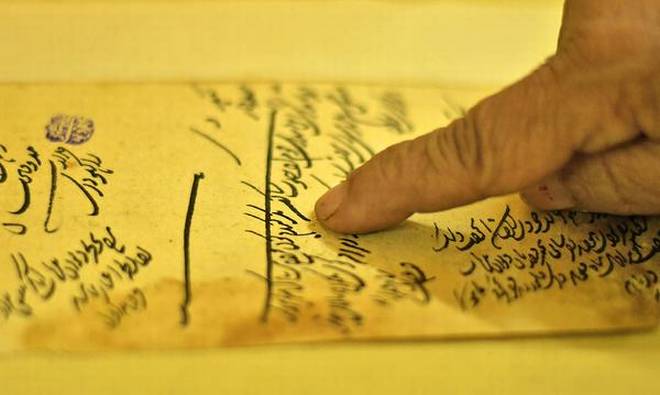
The king’s notes: The Yaddasht-i-Ahkam-i-Muqaddas with Aurangzeb’s imperial instructions. | Photo Credit: G. Ramakrishna
1.5 lakh indelible ink documents preserved in Hyderabad
Think Mughals and you think of Delhi and Agra. But few know that it is Hyderabadthat houses the largest collection of written communications of their reign.
The Telangana Archives and Research Institute holds a whopping 1.55 lakh documents — all on handmade paper — including 5,000 from the period of Shah Jahan (1628-1658) and another 1.5 lakh of Aurangzeb (1658-1707). No other archive in the country, not even the National Archives in New Delhi, boasts of such a collection: it gives a graphic picture of the mansabdari system, military administration and revenue machinery of the Mughals in the Deccan. Written in Persian in Shikasta script, cursive style, the documents are linked and arranged in chronological order — date, month and regnal year-wise.
Slew of orders
The documents include Farman (order of the emperor), Nishan (order of a member of the royal family), Yaddasht-i-Ahkam-i-Muqaddas (memorandum containing imperial orders), Parwana (orders issued by higher authorities), Siyaha-Huzur (proceedings of the provincial court), Roznamcha-i-Waqai (daily news report), Qabzul Wasil (bill payments) and Arz-o-Chihra (documents on personnel and horses).
Aurangzeb spent 13 years as the subedar of Deccan during the reign of Shah Jahan and had vast experience in political and other matters. Even after he ascended the throne on July 25, 1658, he continued to focus on the Deccan to check the activities of his rebellious son Mohammed Akbar and on conquering Bijapur and Golconda, which he did in 1687.
According to State Archives director Zareena Parveen, the accountant-general of the erstwhile Hyderabad State, Syed Muhibuddin, went to Aurangabad (the headquarters of the Mughals) for an inspection in 1916 when he discovered a large number of old documents lying in the vaults of Fort Ark.
He took keen interest in preserving them and reported the matter to Daftar-i-Diwani, the administrative wing of Hyderabad State, headed by the superintendent Syed Khurshid Ali. Steps were taken to shift them to Daftar-i-Diwani, which eventually became State Archives. The paper, made by Chinese professionals, has withstood the vagaries of time. The papers remain intact even after water seeped into the archives a few years ago. “In fact they became brighter as it washed away the acidic material that covered the indelible ink used by the Mughals,” said Ms. Parveen.
An expert in Persian herself, Ms. Parveen arranged the documents chronologically, deciphering the contents, and put them in non-acidic dockets.
The documents reveal Aurangzeb’s administrative skills. The Yaddasht-i-Ahkam-i-Muqaddas shows reports on recommendations of pay hikes for staff sent to the emperor, who also had spies to report on negligence, and actions against the government.
source: http://www.thehindu.com / The Hindu / Home> News> Cities> Hyderabad> Sunday Special / by M. Rajeev / Hyderabad – August 11th, 2018
All communities loved and trusted him, but he rose to be the Muslim most loved by India’s Hindu majority in our entire history, possibly since Mughal Emperor Akbar.
On his third death anniversary, it’s a reckless way to assess the life of one of India’s most loved public figures, but let’s list some of what former president APJ Abdul Kalam wasn’t.
He wasn’t really a scientist in the classical sense of the term. He didn’t have many peer-reviewed publications. He wasn’t the father of the Indian nuclear bomb. It had been put together collectively by two generations of Department of Atomic Energy (DAE) scientists.
He didn’t quite have the gift of oratory and mostly repeated his platitudes. In a Raisina Hill mansion peopled before him by great men of letters, he wasn’t much of a writer either. He never got married, was not a family man. Nor was he a politician or public figure by upbringing or training. Most of his life was spent in the secretive world of weapon-designing. And, much as he loved to recite Sanskrit shlokas and play the rudra veena, he was a simple, God-loving Muslim.
Then think about what he ended up becoming.
He came to be hailed among our greatest scientists ever, in the class of C.V. Raman and Jagadish Chandra Bose, way above his mentors’ generation of Homi Bhabha and Vikram Sarabhai or his peers in DAE, ISRO and DRDO. He is immortalised in our collective memory as the man who gave us our nuclear deterrent. He became our most popular public speaker across generations, geographies and demographics in India, and never spoke at a hall less than bursting at the flanks with standees.
The books he wrote, India 2020, for example, were in the nature of pontifical DIYs but became the biggest non-fiction sellers in our history and shall remain so for a long time. He became the leader most loved by our children after Chacha Nehru, a benevolent Nana Kalam. His stature grew so phenomenally that he became our most political president, and in an entirely wise and non-partisan manner.
All communities loved and trusted him, but he rose to be the Muslim most loved by India’s Hindu majority in our entire history, possibly since Mughal Emperor Akbar. Way more than Maulana Azad or any other. The perfect detox to Jinnah.
And finally, a fact that even I, with my thick skin, was too scared to put in the list of what he wasn’t: He never had a real doctorate, a PhD. His doctorates were all honoris causa but “Dr” fitted him brilliantly, and not even his worst critics dared to highlight this.
So what did he have that lifted him to such love and respect?
He acquired moral authority that few Indians have had since Independence. It came from his humility, to begin with. You never heard him claim credit for any ISRO-DRDO achievements, never a boast, never heard him complain about anybody or anything. Surely, for somebody who worked all his life in a secretive tech establishment behind an iron curtain of bureaucracy, he had had his share of complaints. He never played to the gallery or used these as excuses for failure.
In April 2001, I wrote the first of my two National Interests deeply critical of him and the failures of DRDO under him (‘Kalam’s Banana Republic’), and the next time I ran into him, literally, jogging from the opposite direction in south Delhi’s Siri Fort Sports Complex, where he walked in the evenings (he lived in a DRDO guesthouse in the Asian Games Village next door), he noticed I was avoiding eye contact in fright. He stopped, with a big smile, and said he wanted to tell me how much he enjoyed that article and how he agreed with it entirely.
“I hope the authorities read it also. There are very serious challenges and shortcomings in DRDO. We need to do something,” he said, as I searched his face for sarcasm. But as anybody who got to know Kalam over time, he never spoke between the lines.
His nomination as president was a Vajpayee-Advani masterstroke. Theirs was India’s first BJP-led government and they were conscious of the need to look-feel inclusive. Someone already a national hero with a Muslim name was going to be an asset. But the way Kalam grew with the job surprised them as well.
His was a most reassuring presence during the stand-off with Pakistan (Operation Parakram) when, for at least a year, we remained a hair-trigger away from war. His was just the healing touch India needed after the Gujarat riots. He intervened with great circumspection and maturity, not sounding partisan in the least, and yet letting his mind be known. His was the most effective intervention of all and delivered in such a sophisticated manner that even the Hindus only ended up respecting him more.
The legacy of Kalam is more profound than just this, though. How profound was underlined by former prime minister Manmohan Singh in Karan Thapar’s fine interview with him for the India Today Group.
He reminded us that without Kalam’s intervention, there would have been no nuclear deal with the US. As the monsoon session of Parliament began in 2008, and Prakash Karat announced that he was withdrawing support to the UPA and would also vote with the BJP to bring down the government on the nuclear deal, the numbers were stacked against Manmohan Singh. He won his riskiest political battle with the defection of Mulayam Singh Yadav.
Originally, and particularly given his Muslim vote bank, Mulayam was strongly opposed to the nuclear deal. The Congress reached out to Mulayam for a backroom give-and-take. But Mulayam needed a fig leaf. This was provided by Kalam as he came out strongly in endorsement of the agreement. From that moment on, Mulayam and Amar Singh only parroted: If Dr Kalam says it’s fine, it must be so. In fact, if you go back to the parliamentary debate on that confidence motion, see the passion with which Asaduddin Owaisi defends the nuclear deal, turning his politics inside out. Kalam, the patriot, provided the cover there too.
Surprisingly, this still remains a relatively less remembered intervention and has not been noted prominently in countless obituaries and tributes written on him. But the fact is, until then, not just the “secular” parties but even the nuclear-scientific establishment had grave suspicions about the deal that would separate military from the civil and bring both out of the closet. Kalam settled these.
He could do it only because he always put the nation first. Just a year earlier, the Congress had humiliated him by denying him a second term that he had agreed to accept if there was unanimity. The Congress vetoed it. This was a perfect moment for Kalam to get even and also return the favour to the BJP, which had rewarded him with Bharat Ratna and the presidency.
So here are some other things Kalam wasn’t. He wasn’t petty, cynical, selfish, vengeful, unprincipled, egoistic. That’s why a billion-plus remember him as their most loved leader in decades.
Postscript: My favourite Kalam story is among my earliest. In 1994, India was hit by the so-called ISRO spy scandal. It was alleged — and widely believed — that two eminent ISRO scientists had been caught by Pakistani intelligence in a honey trap using two Maldives women, and had passed strategic rocket secrets to them. Investigating the story for India Today, I found the entire plot fishy and fictional. The story the magazine published demolished the Kerala Police and Intelligence Bureau case, the scientists were freed with full vindication and honour, cases withdrawn and ultimately the Supreme Court ordered cash compensation to those framed.
One of the scientists, Nambinarayanan, acknowledged as much in his recent autobiographical account. But early on, it was very stressful to go against the folklore that had already been built. And even in those pre-internet days we who busted the myth were subjected to enormous abuse.
Subsequently, at an Army Day (January 15) reception, Kalam, then head of DRDO, caught me for a couple of minutes’ chat. He poked me gently in my chest, to the left, and said, what you have done is like applying balm to the wounds on our hearts. I asked him what that was about. The ISRO story, he said. Those scientists are wonderful people and totally innocent, this false case would have destroyed my ISRO (where he had originally worked), he said. You can read that story on India Today’s website.