Category Archives: Leaders

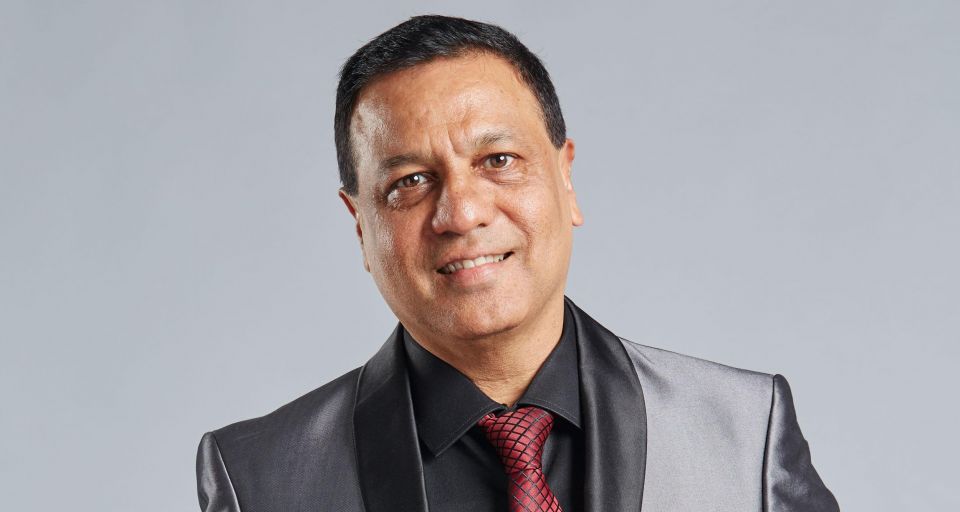
Transforming healthcare for the better: Dr Shafi Mulk

ANDHRA PRADESH , INDIA / UNITED ARAB EMIRATES :

[SPONSORED CONTENT] Dr Shafi Ul Mulk had an idea that grew into a vision for change. Today, that vision is a reality, having grown his multiple dual concept diagnostic centres into a leading healthcare brand in the region
DrShafiUlMulkMPOs12sept2018

Through his healthcare services, Dr Mulk touches millions of people from around the world and has been celebrated on many prestigious forums. He has also added significant feathers to his illustrious cap, being honoured with Forbes magazine’s Top 100 Indian Entrepreneurs and Leaders in the Middle East two years in a row.

HUMBLE BEGINNINGS

The origins of Global Hawk were not unlike some world-renowned companies of today. Dr Mulk started with a personal staff of only two, working in Hamriya free zone, Sharjah. Dr Mulk created his company – the internationally acclaimed Global Hawk chain of diagnostic centres (that utilizes Global Hawk’s innovative technology in telemedicine and teleradiology).

THE START OF SUCCESS

The company grew quite rapidly, expanding across the globe and into a world-renowned healthcare empire worth more than US$200 million. The phenomenal success of the establishment can be directly attributed to the visionary leadership of Dr Mulk, who is widely considered the pioneer of teleradiology in the region.

His brainchild, Global Hawk Telemedicine/Teleradiology with IT solutions including RIS, Mulk Digitizers and Mulk Viewers products installed globally in major hospitals and medical centres have revolutionized the healthcare industry. In fact, the runaway success of Global Hawk Telemedicine encouraged him to start the chain of Global Hawk Imaging and diagnostic centres (GHID) which eventually led him to a number of accolades and international awards.

FAST RISE TO THE TOP

From a single branch in Deira, GHID has grown rapidly with many centres across multiple locations all with state of the art radiological technology, all the main imaging modalities – including open and closed MRI, CT scan, CBCT, 2D, 3D/4D Ultrasound, Digital Mammography, Bone Densitometer as well as top rated clinical laboratory diagnostic devices, all under one roof.

The centres are today considered as one of the best in terms of state-of-the-art, high-quality diagnostic imaging services and patient-centred care. With its goal of becoming a dedicated healthcare provider and imaging resource and research centre across the globe, GHID serves as a gateway to international expert standards diagnostic opinions – while also streamlining management and investigative recommendations.  Today, this is a vital requisite in the current medical environment.

THE NEXT STEP: MORE GROWTH

Dr Mulk’s company has spearheaded an AED250 million expansion plan, which includes a chain of Global Hawk Diagnostic Centres with dedicated PET-CT / MRI and Cyclotron unites across the GCC, India and Eastern Europe, and a chain of Global Hawk multi-speciality Polyclinics and Medical Centres. The group is also looking to start a 50 bed Mulk oncology charity hospital in India, as well as Mulk speciality hospitals in the UAE.

BACKGROUND IN EDUCATION

Dr Mulk’s passion for innovation and medical technology can trace its roots from his impressive educational experience. A prominent neurovascular radiologist in the UAE, his formative medical education began at Kurnool Medical College, Andhra. He also has completeld fellowships at Michigan, USA and Multon Keynes, UK.

Being a passionate teacher, he freely shares his knowledge by teaching university students and mentoring junior radiologists. Dr Mulk has been consistently invited to speak at major international forums of radiology and imaging, as well as healthcare entrepreneur platforms. He was honoured as a guest speaker by the Arab Health Committee and International Health Organisations for his overall contribution to the Healthcare Sector, resulting from his wealth of experience in Radiology for two decades.

THE MAN BEHIND THE BUSINESS

Dr Mulk’s zeal and enthusiasm for success doesn’t limit itself to the professional fields, but also in his love for sports. A former national Bandminton player, he was named a ‘young Hopeful of India’ by a leading Indian Sportstar magazine at the age of 13. An ardent supporter of Badminton Associations of the region and sponsor of major Badminton tournaments, he is one of the top ranked players in the UAE, with winning accolades in the Masters Men event of the UAE Open Championship of 2016 and 2017.

But one of the most essential characteristics of his personality is his compassionate outlook towards the community. Dr Mulk is a well-respected member of various social and Islamic organizations in India and the UAE, and he actively engages in various charitable activities focusing on building a better tomorrow.

A true believer in strenghth of the family unit, Dr Mulk candidly acknowledges that the support he receives from his soulmate, Dr Yasmeen Ul Mulk, and their sons Zoheb Ul Mulk and Zain Ul Mulk is what most encourages him to follow his passion.

INTERNATIONAL RECOGNITION

Dr Mulk scored a double win at the Annual Health Awards in the UAE this year, winning the Distinguished Achiever award in Healthcare and Innovative Technology. These accolades add to his illustrious list of accolades and awards in 2017 alone; including being honoured with the World Healthcare Innovative Entrepreneuier of the year 2017, by the Global Association of Physicians of Indian Origin and the Indian Business Exceppent Awards – IBPC 2016 and 2017 – from H.H. Sheikh Nahyan Bin Mubarak Al Nahyan.

He has also received the Star Quality Award in Geneva 2014, The World Inspirational Company USA awards in 2015, as well as the International Medical Quality Award May 2016, which was held in Monte Carlo, Monaco.

Dr Mulk and his company have also been honoured and lauded with the ‘World’s Greatest Brands’ and ‘World’s Greatest Leader’ awards in 2017.

source: http://www.arabianbusiness.com / Arabian Business / Home> CEO> Business / by Global Hawk / July 23rd, 2017
A forgotten freedom fighter

Ganjam(near Srirangapatna) –  Bengaluru, KARNATAKA :

MuslimVelloriMPOs09sept2018

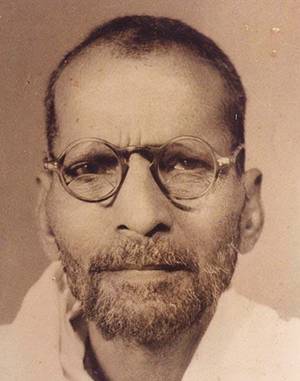
Muslim Vellori, a prominent but not so well-known freedom fighter, did not restrict his public role to the freedom struggle but also played a prominent role in social service

The name of Muslim Vellori does not ring a bell now, but for an older generation of Bangaloreans, particularly Muslims in the city, that name is remembered with a sort of awe as he was a valiant freedom fighter. Born Mohammed Abdul Wahid Khan in 1883 in Ganjam near the historic town of Srirangapatna, Khan grew up to be known as ‘Muslim Vellori’ as he spent most of his childhood studying in a madrasa (Islamic seminary) in Vellore. Even though his father was in the army, Vellori grew up to develop an aggressive anti-British sentiment.

Vellori began working in a shipping company owned by his relatives in Bombay (now Mumbai) after completing his studies in Vellore. His granddaughter Dr. Shakira Khanum, who now teaches in Al-Ameen College, recalled an incident that Vellori had narrated to her. “Once, in Bombay, a Britisher made fun of his beard. My grandfather, who hated the British, was so livid that he almost shot the man,” said Khanum. Working in a shipping company at the time also ensured that he was among the few privileged Indians who could travel as his work took him beyond the shores of India. Vellori travelled to Burma, Sumatra and Java (now part of Indonesia), Mauritius, Ceylon (now Sri Lanka), Madagascar and to several cities in the Middle East. It was during his travels that he met Mahatma Gandhi in Durban. Gandhi and Vellori supposedly became quite close and the former had a formative influence on Vellori’s life.

As Vellori came of age, he came to acquire a reputation of being a fiery orator and through the course of his life took part in many anti-colonial struggles all over the country. He is particularly remembered for his role during the Khilafat movement (1919-1922) where he met many prominent freedom fighters including Mahatma Gandhi, the Ali brothers: Mohammed Ali and Shaukat Ali, Dr. Mukhtar Ahmed Ansari, Hakim Ajmal Khan, Saifuddin Kitchlew. Even the great poet Mohammed Iqbal is supposed to have lauded him for his passionate speeches when he exhorted the audience to support the Khilafat movement in Mumbai. Vellori was jailed several times for his provocative speeches and was even incarcerated in Bangalore Central Jail between 1924 and 1927. Even in prison, he is supposed to have been a recalcitrant internee and often questioned the authority of the jailers.

Vellori did not restrict his public role to the freedom struggle but also played a prominent role in social service. He raised funds to found orphanages in Mysore (now Mysuru) and Cuddapah (now Kadapa). Considering that he was close to several Congress leaders in the state and was recognised as a prominent Muslim leader who staunchly opposed the two-nation theory, he was nominated to the Mysore Legislative Council and was a member in the 1950s during the chief ministership of Kengal Hanumanthaiah. In later years, Jawaharlal Nehru called on him when he visited the state. Towards, the end of his long life Vellori became bitter as he was marginalised by the state leadership of the Indian National Congress and was ignored by the Muslims of the state who no longer felt that he was a suitable leader. An early resident of Jayanagar, Vellori died on Oct. 31, 1977.

(Information for this article has been gleaned from a short booklet published by Vellori’s granddaughter, Dr. Shakira Khanum, who teaches Hindi at Al-Ameen Degree College in Bangalore. Dr. Khanum has also painstakingly collected much of the supporting evidence for her grandfather’s illustrious life including a letter from Tulsidas Jadhav, who was Gandhi’s secretary briefly, attesting to Vellori’s close connections with the father of the freedom movement.)

source: http://www.thehindu.com / The Hindu / Home> Society> History & Culture / by Vikhar Ahgmed Sayeed / August 02nd, 2018

Tinsel-edged memories: glory days of Central Talkies in Tiruchi

Trichy, TAMIL NADU :

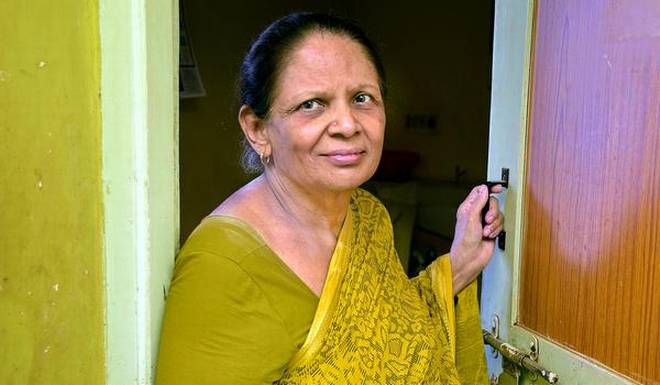
Remembering the past S Rahima, daughter of A M Shahul Hameed. | Photo Credit: M MOORTHY

A film industry stalwart’s daughter recalls the glory days of Central Talkies in Tiruchi

The glossy reprints on S Rahima’s bed are all that remain of a golden era that once defined her life as the daughter of film producer and theatre owner AM Shahul Hameed. The black-and-white pictures, taken in shooting spots and actors’ homes, hark back to a time when the sheen of show business was cemented by real relationships.

For movie buffs in Tiruchi, Central Talkies on Eda Street, Gandhi Market, once used to be the theatre to catch big banner productions of the day.

Started by Shahul Hameed in 1947, the 22,000 square foot complex opened for business with Payithiyakaran, the Tamil film produced by and starring N S Krishnan, the actor’s first assignment after his acquittal in the Lakshmikanthan murder case.

“My father was already constructing the theatre when he was running his rice business in the 1940s,” says Rahima. “Everything, from equipment to seating, was imported from England.”

Shahul Hameed also marketed films through his company called Central Talkies Distributors.

“He was the sole distributor of the 1958 Hindi film Madhumati in Tamil Nadu (starring Dilip Kumar and Vyjayanthimala Bali). He screened it at a special matinee show for the family in Central Talkies. Madhumati ran for over 100 days in the State, without dubbing,” says Ms Rahima.

Philanthropists

Shahul Hameed was the son of A Mohamed Hussain, a freedom fighter and prominent syrup merchant in Gandhi Market. Interestingly, though partially obscured by encroachments, it is still possible to see a plaque with Hussain named as the benefactor who gifted the Gandhi Market arch to the city of Tiruchi in 1928.

A.M. Shahul Hamid, movie producer and theatre owner, in an official portrait after receiving the Khan Bahadur title from Lord Mountbatten in 1945. | Photo Credit: SPECIAL ARRANGEMENT

Son Shahul Hameed made his name as a rice merchant, with his Hameedia Rice Mill based in Ariyamangalam. “Like my grandfather, my father was a philanthropist who would readily donate to any worthy public cause,” says Rahima, who is one of seven children born to Shahul Hameed’s second wife.

“He was honoured for his services to the British Government during the Second World War with the title of Khan Bahadur and a gold medal by [the last Viceroy of India] Lord Mountbatten in 1945.”

After Independence, then-Prime Minister Jawaharalal Nehru lauded Shahul Hameed’s generous donation of several truckloads of rice to the Indian troops fighting the Indo-Chinese war in 1962.

Central Talkies also brought the merchant into contact with prominent Indian film personalities.

“Quite early on, my father had gained a reputation as a saviour of films that were stuck in production due to financial problems,” says Rahima. “He helped TR Ramanna to successfully complete the production of Koondukili (1954), and Chinnappa Thevar’s Thaikkupin Tharam (1956), but only as a friendly gesture. Father never indulged in moneylending, because it is against our religious beliefs,” she says.

Becoming a producer

In 1962, Shahul Hameed helped actor-director AP Nagarajan with money to complete the shooting of his directorial debut Vadivukku Valaikappu, starring Sivaji Ganesan, Savitri, VK Ramasamy, MN Rajam and others.

After much persuasion, Shahul Hameed eventually agreed to Nagarajan’s request to produce the film Navarathri in 1964.

“All the stars were signed on for a salary of ₹3 lakhs each,” remembers Rahima. “In those days, you could buy a bungalow for ₹1 lakh in Thillai Nagar.”

A landmark 100th film for Sivaji Ganesan, the movie earned positive reviews for the nine distinct roles essayed by the thespian. It was subsequently remade in Telugu in 1966 with the same title and Akkineni Nageswara Rao in the lead, and in Hindi in 1974 as Naya Din Nayi Raat with Sanjeev Kumar.

Tragedy strikes

The success of Navarathri led to Nagarajan proposing his next film, a mythological, to be produced by Shahul Hameed, in 1965. Originally advertised as Siva-Leela, this was to be later renamed as Thiruvilaiyadal.

“These days, people would probably object to a Muslim producing a Hindu mythological film, but my father never let class or creed affect his friendships,” says Rahima. “He took a personal interest in the film’s production.”

Inspired by the Thiruvilaiyadal Puranam, a collection of 64 Saivite devotional stories written in the 16th century, the film was a critical and commercial success, running for over 25 weeks in theatres.

But it also had a thread of tragedy attached to it, for this was to be Shahul Hameed’s last production.

“A few days after the completion of filming, my father fell sick due to a heart ailment, and passed away on May 20, 1965, at the age of 58. It was as if the light went out of our life immediately,” says Rahima.

Finale

While Thiruvilaiyadal did well, winning awards and setting new standards for Tamil epic films, the lives of Shahul Hameed’s family members were thrown into turmoil.

“My husband Mohamed Kasim had been running the Central Talkies on lease on behalf of my father. Though we initially had a good run, with major films releasing here, my husband was unable to sustain the business due to rising rents,” says Rahima.

Mounting debts forced Shahul Hameed’s heirs to close down Central Talkies in 1983. The complex was sold in 1993.

“The trauma of losing Central Talkies affected my husband’s mental health badly, and he was confined to bed for 18 years,” says Rahima, who nursed him until his death on August 29, 2002.

Living in dire straits in rented accommodation near the Airport, Rahima, now a 70-year-old who suffers from age-related ailments, is supporting an adult son with neurological problems. Protracted property disputes have estranged her from her relatives, says Rahima.

The days of glittering movie premieres are a distant memory. Finding money to pay the bills is a daily challenge for this senior citizen.

source: http://www.thehindu.com / The Hindu / Home> Entertainment> Movies / by Nahla Nainar / August 31st, 2018

Mohammed Kamaluddin Ahmed, ex-minister & ex-ambassador, passes away

Hyderabad, TELANGANA :

Hyderabad:

Mr Mohammed Kamaluddin Ahmed, Ex-Central Minister and ex-ambassador to the Royal Kingdom of Saudi Arabia, passed away in Hyderabad in the wee hours of Sunday, September 2, 2018.

Mr Kamaluddin was elected as Member of Parliament for four times. 3 times in 1989, 1991 & 1996 from Hanamkonda & 1 time from Warangal. He had been the Member of Parliament from Warangal from 1980 to 1984. Earlier he was also elected as MLA twice. From Cherial assembly constituency in 1962 & from Jangaon assembly constituency in 1967.

He also served as APSRTC Chairman from 1970 to 1973. He served on several posts including APCC President and NABAD Chairman.

Mr Kamaluddin was born in Maddur Mandal of Salakpoor Village. He was the senior Telangana leader, a good politician & a good advocate. He was a good scholar as well.

He was undergoing treatment at Apollo Hospital, Hyderabad.

source: http://www.siasat.com / The Siasat Daily / Home> Hyderabad> News / by Rasia / September 02nd, 2018

Nagpur Muslims’ Innovative Community Empowerment Campaign

Nagpur, MAHARASHTRA :

SarfarazAhmedMPOs03sept2018

If there’s one overarching lesson from the past few decades about how to break the cycles of poverty and unemployment, it’s the power of mentoring — and of intervening early, ideally in the high school age, that is the time a child’s career is being formed. A new wave of Muslim social entrepreneurs have embarked on path-breaking initiatives in Nagpur and neighbouring Kamptee township with a potential to redefine the community’s social, developmental and educational agenda. A number of innovative initiatives have been launched and their synergy is expected to help the community address a number of critical issues. Nagpur’s model of synergizing multi sectoral approaches is emerging a game changer for the community and has the potential of becoming a replicable model.

Several Commissions were appointed by the government to study the socio economic conditions of Muslims in India.The Sachar Committee and the Justice Ranganath Mishra Commission (2008) recommended a series of affirmative actions to be taken by the Government in order to restore justice to Muslims and improve their plight to the level of national averages.

In order to create awareness about various socio-economic and educational issues of the community specific to the region, and working out local applicable solutions, a think-tank, the Centre for Social Research and Empowerment (CSRE) was launched under the mentorship of Zafar Mahmood, Chairman of Zakat Foundation of India. CSRE is a non-governmental, non-political and non-profit organization.

One of the key objectives of CSRE is to sensitise people to the new changing economic, educational and social environment and to empower them to successfully navigate it. CSRE identified that quality education and proper choice of careers could underpin all these areas and an increase in the community’s participation in various services would have a multiplier effect for generating a life- changing transformation for the community.

The CSRE has been promoted by senior professionals drawn from a vas diversity of professions. It functions unlike the usual career guidance centres being run by government or community organisations. It is managed by sectoral experts and is designed to assist individuals in making and implementing informed educational and occupational choices. Since these professionals are familiar with the governance processes they can enable the aspirants to take the right step on the right ladder.

Among the key mentors at CSRE are: Syed Wasif H. Naqvi (IFS), Ex. Principal Chief Conservator of Forests, Govt of Maharashtra Abdul Rauf Shaikh, Ex. CEO Maharashtra Waqf Board, Mohd Ishaq Shaikh, Ex Director General of MERY, Water Resources Department, Bashir Ahmed Shaikh, Retd Principal District Judge and Judicial Member, State Consumer Forum, Aftab Alam Khan, former Sr. Manager Bank Of Maharashtra, Majeed Parekh, Islamic scholar, Mujib Khan, Ex. Dy. Commissioner, Zafar Iqbal and Hamid B.K. Quraishi, both senior technocrats with the State Govt, Khwaja Rabbani Ex-Director of Archaeology, Mujeebuddin Siddiqui, Senior Mineral Economist, Abdul Waheed, former AGM, State Bank of India, Zafar Khan, former Principal, Qidwai High School and Jr.College, Faiz Waheed, technocrat and social entrepreneur, Rizwan Mirza, Chartered Accountant. Mushtaque Ahsan Quraishi, prominent social organizer and Qutub Zafar advocate and social activist. Irshad Khan, a young research associate handles the backroom pertains.

A R Shaikh and S W H Naqvi are the key architects of the centre and are steering a series of free Career Guidance Camps and Seminars s in local schools and colleges. Apart from guiding students on career choices experts from concerned fields also providing useful tips on various competitive examinations.

Shaikh feels that if the financial strength of Wakfs is properly tapped it can solve all major problems of the community. Most of the 27 state Waqf boards are headed either by not-too-highly qualified CEOs or by government officials holding the post as additional charge.

The Sachar Committee had said, “Up to 200 Group A officers are needed to service the Waqf affairs across India” and recommended, “The government may, therefore, consider creating a new cadre of officers to be recruited by the UPSC so that they can deal with the specific affairs of the Waqfs efficiently.”

The centre has become an established brand in Nagpur. It offers extension services in the field of student scholarships, career counseling, career selection, and entrance exams for professional and technical courses, recruitment in Govt. and Public Sector, job alerts, financial support and guidance for education, online services at nominal charges, etc. Afroz Jahan Memorial Trust, Amravati is a philanthropic partner, providing financial support to the Centre.

A Public Library cum Study Centre has been set up at Jafar Nagar Line with the support of local citizens and the Jafar Nagar Mosque. The centre is expected to be a one point reference and guidance interface for career and competitive examinations. It will soon be upgraded to a digital library with virtual class room facility.

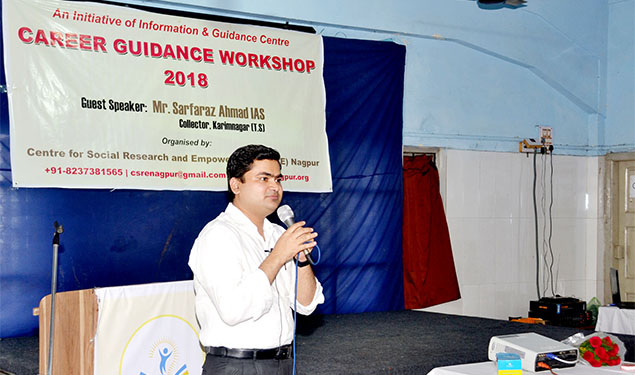
CSRE recently climaxed its third career expo with focus on competitive examinations. Sarfaraz Ahmad IAS Distt Collector of Karimnagar, Telangana and recipient of the 2017 Prime Minister’s Deen Dayal Upadhyay Grameen Kaushal Yojana (DDU-GKY) award for achieving the best performance in employment for unemployed youth, emphasized that aspirants for civil services should shed they myths about civil services.

Ahmed said that the civil series examination is basically aimed at selecting administrators and not subject expert’s. Hence it is focused on assessing the students’ contextual approach to the subject and his analyltical abilities. He also said that most of the successful candidates make the grade not in their first attempt but in later attempts. It was therefore necessary that a candidate should work hard and determinedly with a mission approach to the examination.

A R Shaikh dwelt on various Careers available for students after 12th standard. Mujibuddin Siddiqui explained the importance of timely of goal setting. Afsha Nahid Khan of Andhra Bank outlined the various opportunities in a banking career. Sumit Ramteke who recently cracked the UPSC for Astt Commandants exams focused on the pattern of UPSC examinations and various techniques for qualifying them.

source: http://www.ummid.com / Ummid.com / Home> Education & Career / by Moin Qazi, ummid.com / August 30th, 2018

03 Muslims among 66 cleared by UPSC in Civil Services 2017 Reserve List

UPSC Civil Services 2018 Result: 

The Union Public Service Commission (UPSC) on Thursday released the UPSC Civil Services 2017 Reserve List giving the names and roll numbers of 66 more candidates among them 03 are Muslims.

With this the number of Muslims, who cracked the UPSC Civil Services 2017 exams, went to 54. The UPSC had announced the Civil Services 2017 results on April 27, 2018. A total of 990 candidates, including 51 Muslims, were recommended by the UPSC for various top government posts.

The 03 Muslims who found their place in the UPSC Civil Services 2017 Reserve List are Syed Fraz Haider Nabi, Saqib Yousuf and Mohammed Ali.

“The results of the Civil Services (Main) Examination, 2017 were declared on 27.04.2018 recommending 990 candidates in order of merit for appointment to IAS, IFS, IPS and Central Services Group ‘A’ and Group ‘B’ against 1058 vacancies”, the UPSC said.

“The Commission, in accordance with the Rule 16 (4) & (5) of the Civil Services Examination Rules, was also maintaining a Consolidated Reserve List in order of merit below the last recommended candidate under the respective categories”, it said.

“As sought by the Department of Personnel & Training, the Commission has now recommended 66 candidates which include 48 General, 16 OBC, 01 SC and 01 ST, to fill up the remaining posts based on the Civil Services Examination, 2017”, it said.

The Civil Services (Preliminary) Examination, 2017 was conducted on 18th June, 2017. 9,57,590 candidates applied for this examination, out of which 4,56,625 candidates actually appeared. 13,366 candidates qualified for appearance in the Written (Main) Examination held in October – November, 2017. Of them, 2568 candidates qualified for the Personality Test conducted in February – April.

source: http://www.ummid.com / Ummid.com / Home> Education & Career / by ummid.com news network / September 01st, 2018

Foundation of first ‘world class’ educational institute for minorities to be laid next month

UTTAR PRADESH  / NEW DELHI :

The foundation for the first of the five proposed “world class” educational institutes for minorities is set to be laid early next month, Union Minority Affairs Minister MukhtarAbbas Naqvisaid on Thursday.

Naqvi said that 16-acres land has been acquired in the Mewat district  of Haryana  at a “scenic locale” and its foundation would be laid in the first week of September.

“Mewat, being the most backward district, needs such an institute more than any other place in the country. We hope the institute would be ready and running by 2021,” Naqvi said.

He said the institute would have a provision of education from primary up to the diploma and degree levels besides centres for skill development.

It will also have a coaching centre for competitive exams besides hostels with modern facilities, he added.

“It will be an education, skill and a knowledge hub,” he said.

The Minister clarified that the institute would be open for all communities.

The Maulana Azad Education Foundation would be the governing body of the institute but it would be run by “reputed private and government organisations”.

“We are in talks with a few Indian and foreign organistations which have shown interest in running this institute on the PPP (public-private-partnership) mode,” Naqvi said.

–IANS

mak/prs

(This story has not been edited by Business Standard staff and is auto-generated from a syndicated feed.)

source: http://www.business-standard.com / Business-Standard / Home> News-IANS / August 30th, 2018

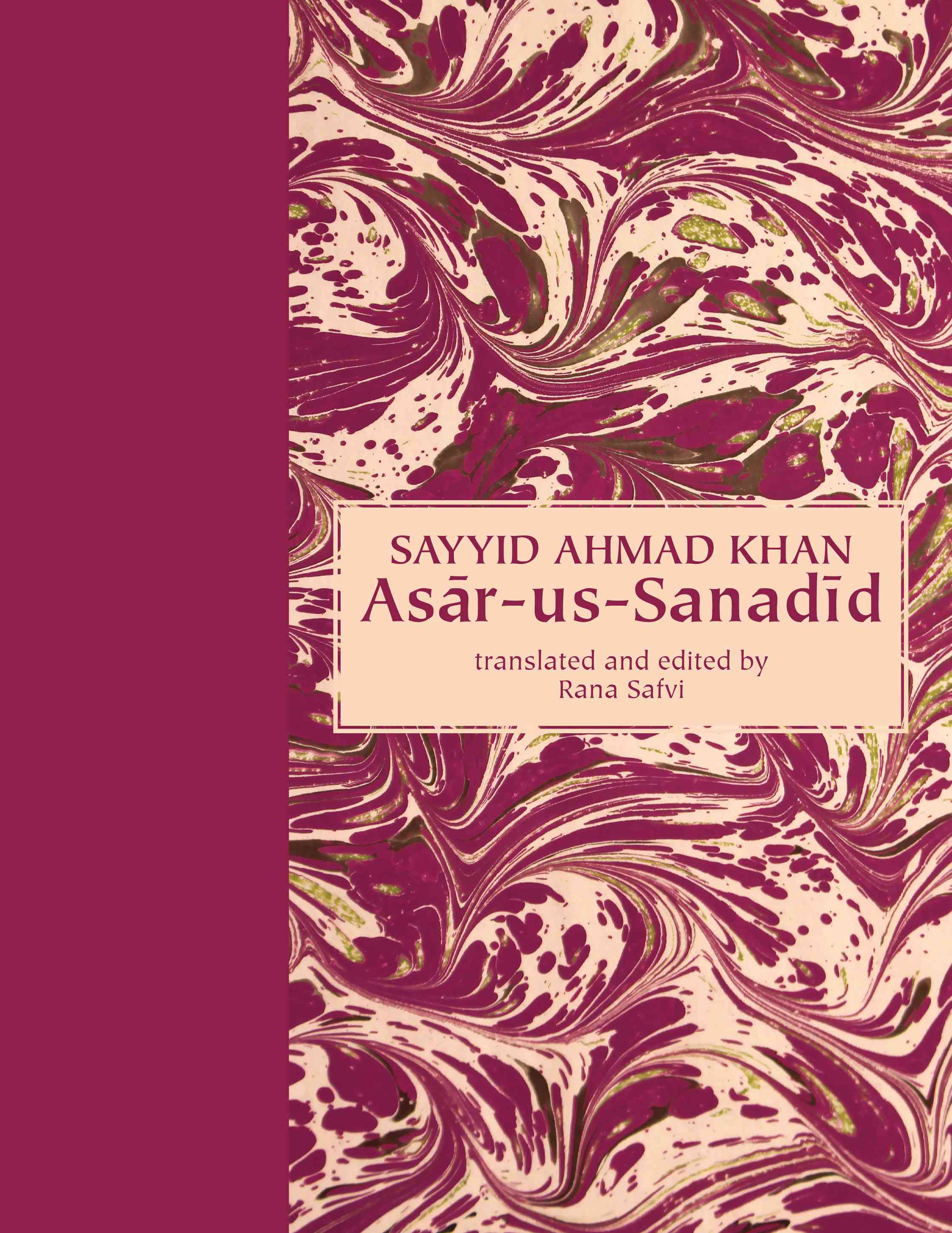
Sayyid Ahmad Khan’s 19th-century books on the pre-1857 monuments of Delhi are now in English

DELHI :

In the two volumes of ‘Asar-us-Sanadid’, Sir Sayyid combined anecdotes with rigorous measurements and descriptions.

Asar01MPOs31aug208

Introducing Asar-us-Sanadid

by Rana Safvi

Asar-us-Sanadid by Sir Sayyid Ahmad Khan is an important book for many reasons. It was the first time that a book on this scale describing Delhi’s monuments had been written. The first volume was published in 1847 and a second volume in 1854. Though both had the same name and were about Delhi, they were very differently written. The first was an anecdotal description of the buildings, while the second took a more scientific approach with historical references, and the dimensions of the monuments.

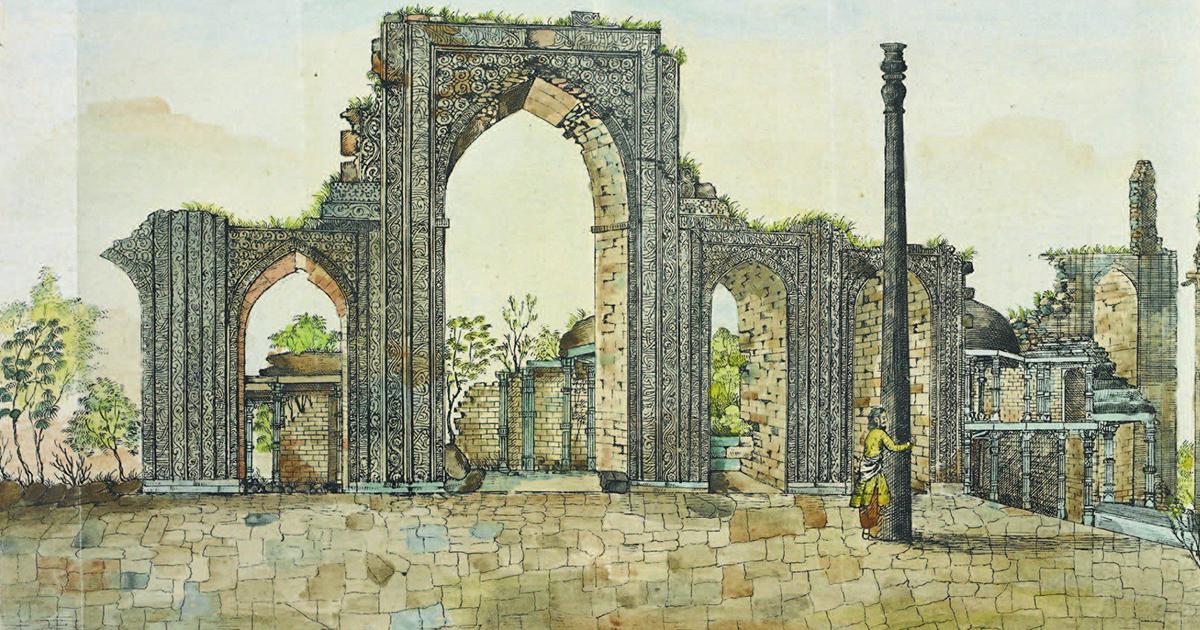
It was also the first time in India, that a book had lithographically produced illustrations. As many as 130 illustrations of Delhi’s monuments were drawn by Faiz Ali Khan and Mirza Shahrukh Beg. The drawings were probably based on rough sketches provided by Sayyid Ahmad Khan himself. He made many sketches – a fact he mentions in the book – and also copied the inscriptions on each of the monuments, often at great risk to life and limb, as in the case of the Qutub Minar, where he hung down from the top of the minaret in a basket held by ropes. It was the first time that inscriptions on the buildings were noted down.

Asar-us-Sanadid is an invaluable work. Both editions – Asar-1 and Asar-2 (published in 1847 and 1854, respectively) – were written before the Uprising of 1857. As is well known, much of Shahjahanabad changed during and in the aftermath of the events of 1857. The British broke down many structures to make governance easier and there was massive restructuring, in particular, of the Red Fort.

Later, when Lutyens’ Delhi was being built, many more changes were brought about, not to mention the changes that are still taking place today. Thus, in his descriptions of the buildings and monuments of Delhi prior to 1857, Sayyid Ahmad Khan gives us a glimpse of lost glory. For students of history and heritage this is where its greatest importance lies.

The partition and transfer of population in 1947 meant that the landscape of medieval Delhi was changed further. Today urban development has resulted in encroachment and destruction or alteration of many more monuments.

Mehrauli is the first documented city of Delhi and it was from here that the Tomaras, Chauhan and early Delhi Sultans ruled. As it was a hilly and wooded area it become a favourite of the Mughals too, with the last two emperors shifting here during the monsoons. The last Mughal building is the Zafar Mahal, situated in Mehrauli, which was the royal residence during those months.

A unique festival called Phool Waalon ki Sair was also celebrated in the monsoons under the last two Mughal emperors.

The excerpt below describes some of the buildings in Mehrauli.

The Bagh e Nazir is now Ashoka Mission. According to some monks I spoke to there, the family of Nazir Roz Afsun fared very badly in the riots which took place during the partition of India in 1947, and the lone survivor, a young boy, migrated to Pakistan.

In 1948 Prime Minister Jawaharlal Nehru gave the land as a gift to the famous Cambodian monk Dharmvara Mahathera on behalf of the Indian state for the purpose of opening a Buddhist institute. It was he who founded the Ashoka mission there. It is now the Official Buddhist Mission in Delhi, known as Ashoka Mission.

The Hauz e Shamsi is a poor reflection of what it was, and though the pavilions of the Jharna still stand forlorn, they are desolate. The water is a dirty and stagnant pool and gone are the diving competitions or sliding stones. The mango orchard has disappeared and there are only residences in the area. One can only thank Sir Sayyed for a glimpse into that era when emperors and their consort picnicked here.


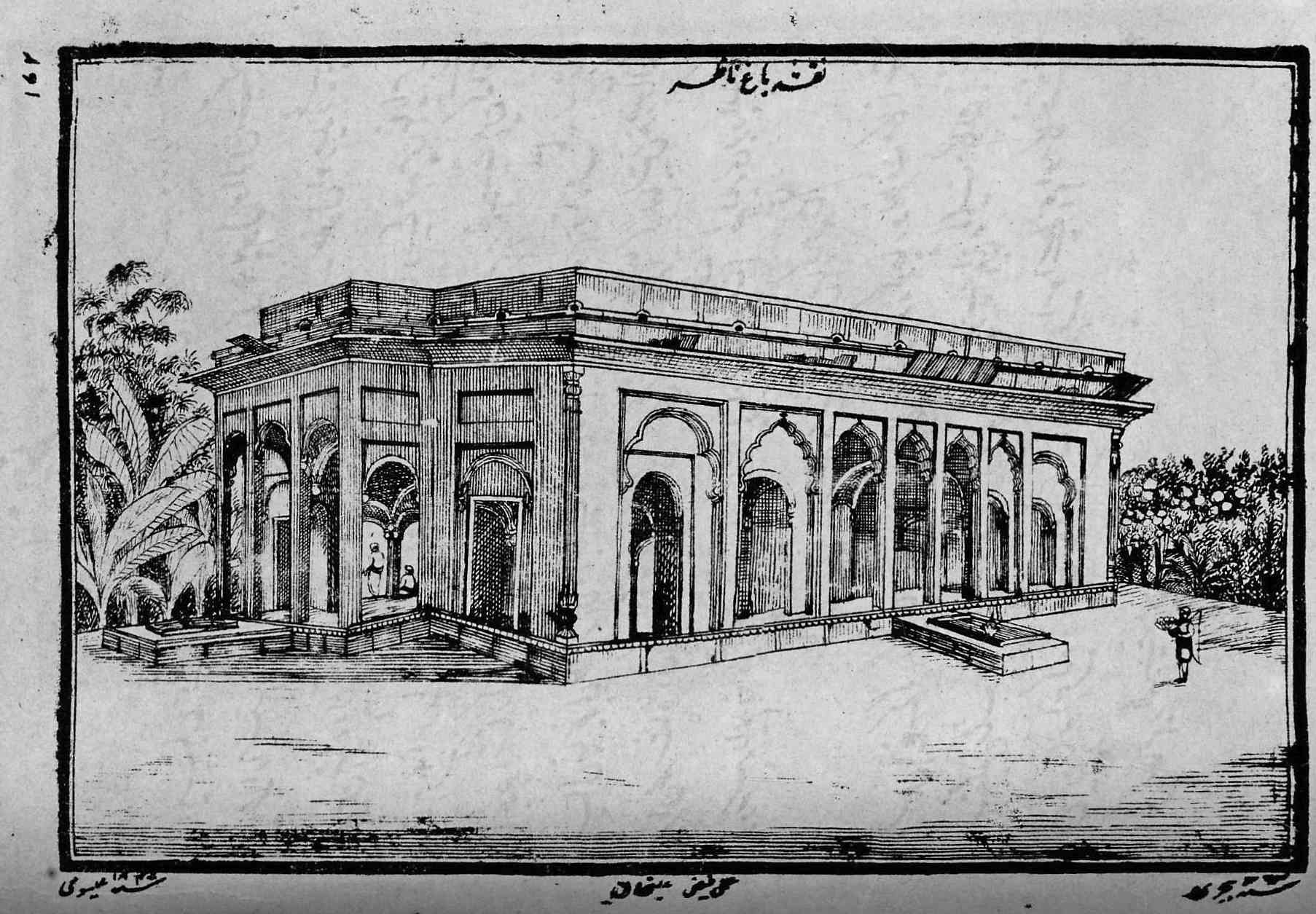
Bagh-E-Nazir

This is a beautiful, attractive, verdant and luxuriant garden near the waterfall of Qutub Sahib [in the Mehrauli area]. It is still very well maintained, with blooming flowers and green trees. The buildings around it are still intact and thousands of people come here during the Phool Walo’n ki Sair procession, to enjoy its beauty. The spectacle is as entertaining as though one were at a fair. This garden was built by Nazir Roz Afzun during the reign of Muhammad Shah Badshah. I will write down the verses inscribed on the entrance as they give the date of the construction and name of the builder:

By the orders of Muhammad Shah Adil,
Whose head bears the sacred crown.
He founded this garden near [the shrine and tomb of] Qutub Sahib,
And has adorned it with the flowers of paradise.
It should remain green till the Day of Judgment,
By the Grace of the Holy Quran.
The year of its construction,
Was found to be the blessed date,
AH 1116 in the thirty-first regnal year of Muhammad Shah.

Bagh-e-Nazir | Courtesy: National Archives of India, New Delhi

A wall surrounds the garden and there are red sandstone buildings of great attraction built all around, within the wall. There is one building in the middle of the garden that is the biggest and best of all the buildings there. Thus I am attaching its sketch here.

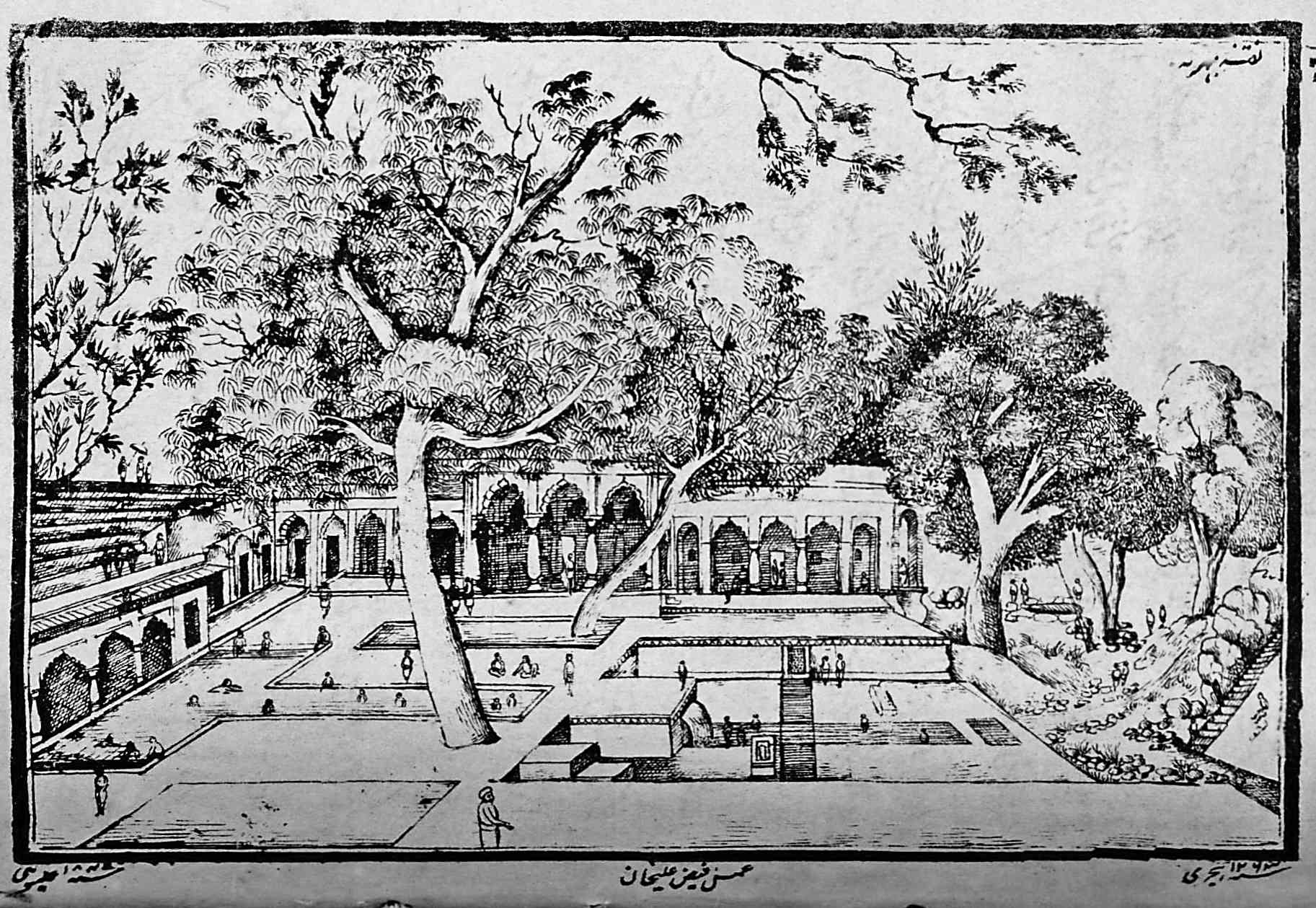
Jharna
This is a place for recreation and pleasure; it is exotic and unearthly, elegant and refined, interesting and delightful, happiness-bestowing and heart-pleasing. Qutub Sahib’s waterfall [jharna] is famous for its verdant green trees and reminds one of heaven. Initially, Sultan Firoz Shah had constructed a dam here and the wall of the waterfall is that dam. It is still intact.

He had diverted the excess water of Hauz-e-Shamsi reservoir into Naulakh canal [nala] towards the moats of Tughlaqabad Fort. After some years however, the fort was abandoned and water stopped going to that area. The excess water from the Hauz-e-Shamsi then started flowing into the jungles from this dam and was wasted. Nawab Ghazi-ud-Din Khan Firoz Jung built a tank, water channels, and chutes for the water to flow through. The waterfall is an awesome spectacle and pleases the heart, causing the spectator to involuntarily exclaim in delight. There are various buildings around this waterfall which I will describe here.

Jharna | Courtesy National Archives of India, New Delhi

Pavilion on the western side
On the western side, adjoining the wall of the dam stands a pavilion at an elevation of 11 feet and 5 inches. It has three arches, and the waterfall cascades down on it. There is an attractive tank in front of it, into which people jump from the roof of this building. During the Phool Walo’n ki Sair festivities people diving into this tank and swimming in it, make for a huge spectacle. They use various diving styles including somersaulting into the water, they also make a pyramid by climbing onto the shoulders of men standing below until the man at the top of the pyramid reaches tree-branch height. Then those at the bottom dive into the tank and all those on their shoulders plunge into the tank. This is called a “tree dive” [darakht kakudna] or a “wild growth dive” [jhad-jhankar ka kudna].

There are thirteen small water pipes under the roof of this building and water from the waterfall flows down through these, via the pavilion, and into the tank. There is a 3.2-feet wide water chute inside the pavilion which falls from a height of 4.3 feet into the tank. There are niches built under the chute in the pavilion wall, and water flows over lighted lamps that are placed within the niches.

This 25-feet square tank has an opening of 1.7 feet for water to flow into it and is 7.6 feet deep. There is a 22 feet long, 6 feet wide and 3.6 feet deep water-channel, which flows out of this tank in a 5.6 feet cascade and is joined by two smaller cascades from the north and south. There are beautifully carved stone chutes [salami pathar] measuring 3 feet 7 inches, to receive the cascade. The water winds its way down the carvings on the chute creating a mesmerising effect.

The water channel in front of this pavilion is 26 feet long, 6 feet wide and 2 feet deep, while the water channel in front of the smaller cascades is 15.3 feet wide, 2.9 feet wide and 8 feet deep. All the water collects at this point and flows into the jungle. The waterfall passes over all these pavilions and the water channel, and in reality it is a truly spellbinding sight. The sound of the flowing water mingles with the singing of the nightingale, the chirping of doves, peacocks dancing and the sounds of merriment of finely attired men and women. It is a mesmerizing scene, which could put Raja Indra’s assembly in the shade.

Pavilion on the northern side
There is a very attractive double pavilion on this side. Muin-ud-Din Muhammad Akbar Shah Badshah built the double pavilion in his reign, around three years ago. These are the most attractive buildings in the place.

Pavilion on the southern side
There is a three-arched pavilion in this area, with two smaller pavilions on its sides which gives it the impression of being five arched. In addition to this there are two doors next to it, thus making it seven arched. This pavilion was built around 50 years ago in the reign of Shah Alam by Shahji’s brother, whose name was Sayyid Muhammad.

Pavilion on the eastern side
There are only mountains on this side and no buildings, but Muhammad Shah Badshah built a stone slide [phisalna pathar] 18 feet 3 inches long and 7 feet 7 inches wide.

The mango orchard
There are many mango trees in this area. People tie swings to the branches and have fun swinging on them. Numerous dancing and singing girls gather here to enjoy themselves. In short, this place is magical and the mind boggles at its attractions. There is also a grave here with the following verse inscribed on it:

Abid who was wise, learned, pious and man of intellect,
Was martyred by a dishonest robber.
The invisible crier told me the chronogram of his death,
The soul of Abid, the martyr entered paradise [in] AH 1209.

Hauz-E-Shamsi
This reservoir [hauz] was one of a kind. Sultan Shams-ud-Din Altamash built it during his reign and that is why it is famous as Hauz-e-Shamsi. Once upon a time this reservoir was made of red sandstone but now all the stone has been torn off and it is just a simple reservoir and that’s why people call it Qutub Sahib’s reservoir, while some still call it Hauz-e-Shamsi. The water from here feeds the waterfall and also fed the moats of Tughlaqabad in olden days.

It is difficult to imagine there is a reservoir of this size on the face of earth. It is spread across 276 bighas [a land measurement] and its water reaches eight provinces [subahs]! The pavilion has been built around the mark of a hoof which people call the hoofprint of the Prophet’s celestial steed Buraq, but to me it seems a made-up story. God alone knows the truth.

Auliya Masjid
On the eastern side of the Hauz-e-Shamsi is a platform and on it another smaller platform about a gaz or so with a small wall. According to legend, Hazrat Khwaja Qutb-ud-Din Bakhtiyar Kaki and other Sufi saints undertook their spiritual retreat/penance [chillah] on it. They built the mosque with their own hands, bringing baskets [of mud from the reservoir] and that’s why it is called Auliya [The Saint’s] Mosque. Now people have plastered it with mortar and lime.

AsarUsSanadidMPOs31aug2018

Excerpted with permission from Asar-us-Sanadid, Sayyid Ahmad Khan, translated and edited by Rana Safvi, Tulika Books.

source: http://www.scroll.in / Scroll.in / Home> Book Excerpt / by Sayyid Ahmed Khan & Rana Safvi / August 31st, 2018

Thread together the life of the renowned painter, Syed Haier Raza, at the Piramal Museum of Art in Mumbai

Barbaria (Narsingpur District) MADHYA PRADESH / NEW DELHI :

S.H. Raza: Traversing Terrains which opened at the Piramal Museum of Art, Mumbai, will be on view till 16 December 2018. Through the paintings, photographs, diary extracts, and written correspondence between the artist and his contemporaries of the renowned Indian painter, the exhibition presents the story of Raza’s life from the early 1940s to the late 1990s.

RazaMPOs31aug2018

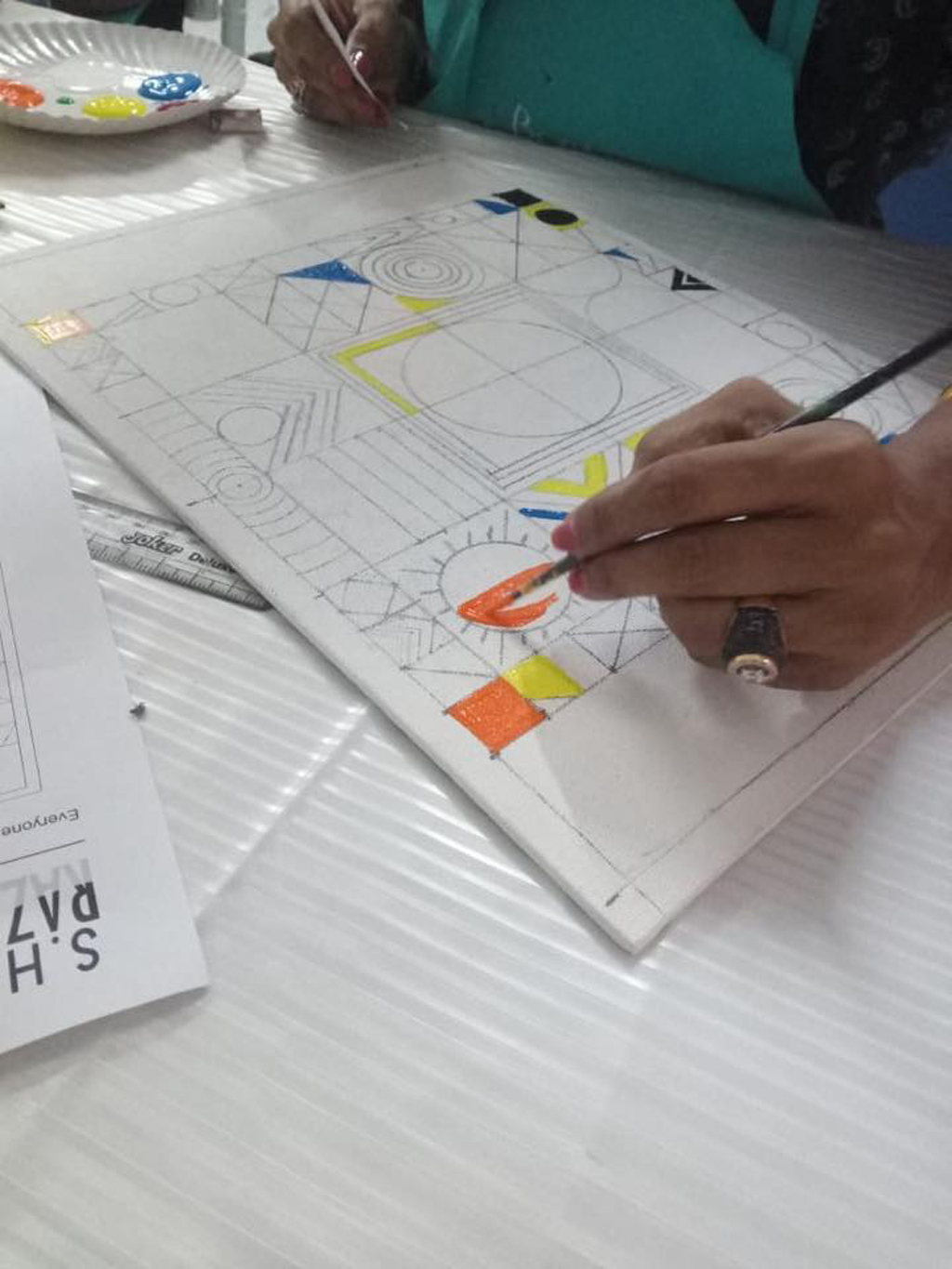
A painting workshop that individuals can choose to participate in.
An extensive outreach programme has been put together that draws upon key themes in Raza’s work and the narrative focus of the exhibition to make it accessible and engaging. A host of events including talks, film screenings, workshops and walkthroughs designed to increase the accessibility of Raza’s work for a wide range of audiences are also scheduled.
Programmes like Cycle 16 which will allow visitors to engage with the artists in residence and their on-going projects and a children’s workshop called Raza’s Bindu, which introduces children to the world of art using the most recognizable symbol from Raza’s work, the bindu, are to be held.
A second edition of Art Night Friday, part of the newly established Mumbai Midtown Arts Collective, will take place in late-September. Piramal Museum of Art will hold guided tours in English and Marathi till 10 pm. Towards the end of the month, Connect the Dots 2 is scheduled to be hosted. In this adventurous programme, participants will trace the footsteps of Raza by visiting locations around Mumbai that he frequented.
The registration for a few events is free or starts at INR 650. While most programmes will be held at Piramal Museum of Art in Lower Parel itself, ‘Connect the Dots’ will begin at Jehangir Art Gallery.
Find more information here.
source: http://www.outlookindia.com / Outllook India / Home> Outlook Travel News> Listing / by OT Staff / August 30th, 2018

Nur Jahan: The Mughal queen who wielded the musket

NEW DELHI , INDIA  :

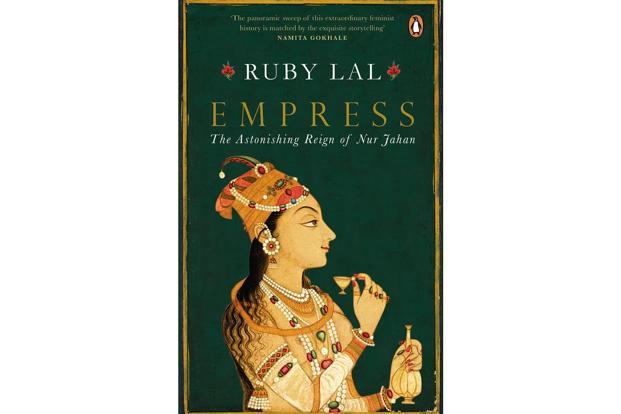
Ruby Lal’s book gives a new life to Nur Jahanas Jahangir’s co-sovereign, a position never held by any Mughal woman

EmpressNurJahan01MPOs31aug2018

While there may be more than a grain of truth in Jahangir’s devotion to his beloved spouse (it has been the subject of several movies), Nur Jahan’s political acumen and gallantry make her phenomenal career trajectory seem inevitable.

The polemical potential of Ruby Lal’s new book is apparent from its title, even before we get to the text proper. Empress: The Astonishing Reign Of Nur Jahan takes the spotlight away from Jahangir, one of the Great Mughals, to shine it on his 20th and favourite wife, who, as Lal proposes, not only scaled untold heights during his reign but also announced herself to be his “co-sovereign”.

“Scholars have for some time acknowledged her power, almost in bullet points, but never in any concrete way thought through it,” says Lal, who teaches at Emory University in the US, on email. “There is still the tendency in scholarly and other writings to lock Nur’s power in a romantic story with Jahangir: in fact, that romance becomes the explanation for her rise.”

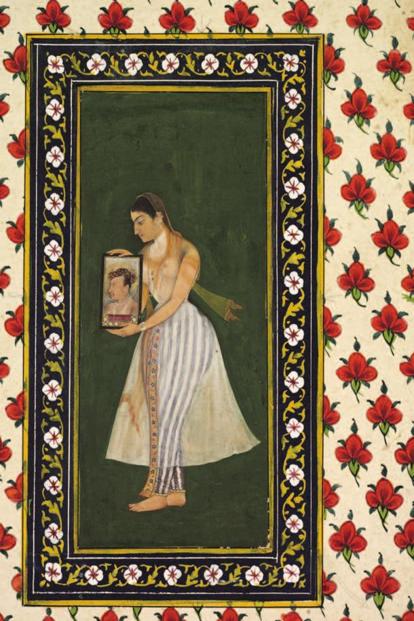
While there may be more than a grain of truth in Jahangir’s devotion to his beloved spouse (it has been the subject of several movies), Nur Jahan’s political acumen and gallantry make her phenomenal career trajectory seem inevitable. Lal begins, for instance, with a spectacular scene of a hunt, in which a musket-bearing Nur Jahan kills a man-eating tiger in Mathura, where the royal cavalcade made a stop on its way to the Himalayan foothills in the autumn of 1619. Nur, 42 at the time, had been married to Jahangir, her second husband, since 1611. It was a fate her parents, Ghiyas Beg and Asmat Begum, could never have foreseen when their daughter, Mihr un-Nisa, was born in 1577 by the roadside outside Kandahar, as they fled their home in Herat.

Hounded out of Persia due to religious persecution, Beg sought Akbar’s patronage in the late 16th century, and it was generously provided. Eventually decorated as I’timad ud-Daula, or the Pillar of the State, by his regal son-in-law, Beg went on to assume the highest rank in Jahangir’s service. His family did well by the Mughal rulers too. Beg’s son, Asaf Khan, would turn out to be the future emperor Shah Jahan’s father-in-law. But it was Beg’s daughter, Mihr un-Nisa, honoured by her royal husband as Nur Jahan, or the Light of the World, who assured him a place in history.

EmpressNurJahan02MPOs31aug2018

If Nur was exemplary for being the first woman in the subcontinent to exercise direct executive privilege, she was doubly impressive for achieving such a status as a rank outsider. “Remember, she was not a Mughal by bloodline,” says Lal, “not like Queen Elizabeth I (of England) or Queen Christina (of Sweden), who were from royal families.” Nur’s elevation, in the context of her times, was certainly unprecedented, though women in the Mughal harem, especially the elders, often did act as confidantes, advisers and counsellors to the emperor.

Gulbadan Banu Begum, Babar’s daughter and Akbar’s aunt, and Hamideh Begum, Akbar’s mother, were matriarchs to reckon with. Nur’s mother, a lady of refinement and education, was credited with the discovery of an itar (perfume) while boiling petals to make rosewater. But no one went as far as Nur, who made appearances on the imperial balcony, issued firmans (orders) and had coins embossed with her own image—all of which were kingly prerogatives. A skilled marksman, Nur would also lead an army later in life in a failed attempt to rescue Jahangir when he was held hostage by one of his aggrieved officials.

Although the Mughal harem has claimed the attention of scholars, Ira Mukhoty’s recent feminist history, Daughters Of The Sun: Empresses, Queens And Begums Of The Mughal Empire, breathed fresh life into it, making it accessible and emotionally absorbing to the common reader. Lal’s book, replete with research but also narrated with a sense of drama befitting a novel, complements it beautifully.

With the paucity of first-person testimonies from the women of the era, it is not surprising that much of the narrative of Empress is pieced together from observations left behind by Nur Jahan’s contemporaries in the footnotes and interstices of archival documents. “The records are plenty and rich,” says Lal, emphatically, “it’s how you approach the courtly documents, paintings, poetry, coins, architecture, and even legends.”

The British diplomat Thomas Roe, for instance, who visited Jahangir’s court to woo him for exclusive trading rights, was piqued by Nur’s bossiness. But her charisma, intelligence and stately demeanour didn’t escape him. “Noormahel fulfils the observation that in all actions of consequence in Court, a woman is not only always an ingredient, but commonly a principal drug of most virtue,” he noted, “and she shows that they are not incapable of conducting business, nor her self void of wit and subtlety.” It’s not hard to imagine why tales were spun around Jahangir’s early infatuation with Nur, since the days he was Prince Salim. Some chroniclers even claim that young Mihr was married off to a fellow Persian nobleman, Ali Quli, to keep her away from the smitten crown prince.

Yet it would be patently unfair to reduce Nur’s influence to her “womanly wiles”. As an astute observer of court politics, she played her hand shrewdly. Initially, she forged an alliance with the ambitious Prince Khurram (later Shah Jahan), but then Nur got her only daughter, Ladli Begum (by her first husband), married to the younger Prince Shahryar, hoping to push the latter for the throne. With Jahangir’s health worsening due to his addiction to alcohol and opium and civil wars breaking out between factions of the royal family, Nur became increasingly anxious about her hold over the palace. The last straw was the ascension of Shah Jahan to the throne after Jahangir’s death when he stripped Nur of her privileges. She was packed off to live on a modest pension away from the court. In exile, too, she conducted herself with the dignity and grace suited to her station as a noblewoman. Known for her philanthropic work for the poor, she also built a tomb for her parents in Agra that would become the model for the Taj Mahal.

Nur Jahan was neither a Machiavellian dissenter nor a feminist rebel, as Lal writes tellingly. She seemed to have accepted the “emphatically patriarchal” norms of her time, the rules of the feudal, aristocratic world she spent her life in. “I do not believe feminist history should be one in which the woman is always a winner,” says Lal. “It is (rather) what she does, and how effectively she does it, despite all odds. Vulnerability is feminist history.”

source: http://www.livemint.com / Live Mint / Home> Lounge> Leisure / by Somak Ghoshal / August 31st, 2018